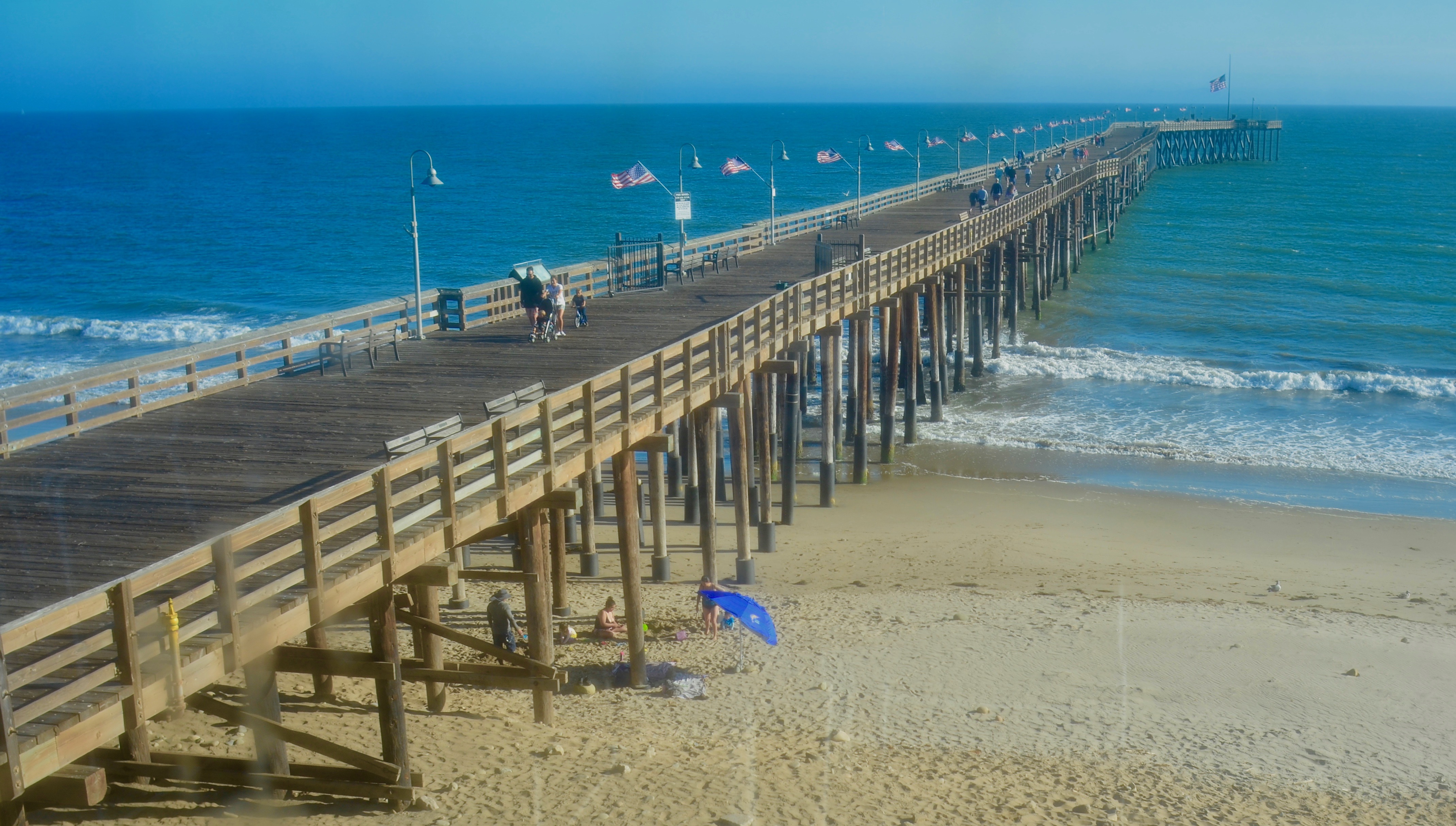
Over And Under, Ventura Beach, California, 2019
By MICHAEL PERKINS
COMPOSITION IN PHOTOGRAPHS IS NOT MERELY A MATTER of getting everything you want into the frame, whether your subject is crowded or stark. It’s about both the arrangement of objects or patterns in a given space and the relationships those things have with each other. It’s a process which often makes photography as frustrating as it is thrilling. Or maybe a more precise way to say it is, composition is the frustration you endure to get to the thrill.
Yeah, I like that a little better.
Part of the method of composition, in what is essentially a flat plane, is the arrangement of your subject in such a manner that it creates the illusion of depth, a kind of invitation to the eye to look further “in”. There have been entire libraries filled with references to these so-called “leading lines” such as the trail-off on the pier you see in this ocean view. Everyone mentions it because, well, goldarn it, for a cheap little trick, it works pretty well. This particular image is about as rudimentary an example of faux depth as you can find, but nailing it involves a lot of little things that are quite variable from one situation to another.
Ansel Adams once half-jokingly said photography was largely about knowing where to stand, and it’s still the best compositional advice I’ve ever heard. Certainly in the case of this photo, where I chose to stand (a decision I changed and re-changed across the space of several minutes) made a huge difference in how the depth effect displayed the picture’s information. I was originally walking toward the pier at beach level, at which angle the front-to-back view of the pier tended to emphasize the information most near at hand, with the rest of the pier dramatically foreshortened or “squished”, like the contracted bellows of an accordion, and objects at the far end of the pier greatly reduced in detail or prominence. Standing beside the pier rendered it as a long left-to-right line reminiscent of a snake or a train. Lots of detail but not much drama, and no practical way to show the entire structure.
Walking to the second-floor landing of a beach restaurant at the head of the pier, however, gave me a sensation of distance that appeared natural and yet was a little more dramatic, the lines of the pier converging as they reached the horizon, just like your ninth-grade mechanical drawing teacher taught you to do. But that’s the process of composition in a nutshell: a combined approach consisting of what to include and how to include it, or like Ansel says, knowing where to stand.


WAITING IN THE WINGS
By MICHAEL PERKINS
PHOTOGRAPHS ARE DOCUMENTS THAT ARE SHAPED BY PERFORMANCES. That sentence, at this point in history, seems so obvious that it seems superfluous to even state. But it wasn’t always seen that way.
The camera, at its creation, was feared and reviled as the very opposite of an art instrument, characterized as a soulless machine that recorded without seeing, without interpreting. Whereas the painter filtered the world through the experiences and emotions coursing through his heart and mind, the photographer just held a box, and the box merely measured light. The box was seen as a cold, lifeless thing could never render a breathing, living world. Could it?
But the box, it turned out, was never merely held, never just pointed, and its eye never merely etched data on a plate. How it was held, what it was pointed at made a crucial, measurable difference. What it framed and what it excluded made other differences. And then there was the eye of the thing. Turned out, even that glassy orb could, in time, be adjusted, made more sensitive, more attentive. In fact, photography was becoming, after the science was scoped out, a performer’s medium, no less than a person holding an instrument called a paintbrush, or striking an instrument called a piano. There was an expectation, an anxiety involved in the act, a desire to get it right. Each single photograph was subtlely different from all others, and the difference was in the nature of the performance.
I go through this meditation (or one like it) whenever I am on the eve of tackling a photographic subject that has eluded me for a long period of time. As you read this, I’m only days away from making a pilgrimage of sorts to such a subject, something that will be hard to re-visit in the future, and for which a lot of very fast, do-or-die decisions will be made in the moment. Well, do-or-die is a little dramatic: there is, after all, nothing really important on the line here. The subject matter doesn’t involve a breaking news event, nor will my success or failure in bringing back the pictures I want have any impact on life as we know it.
I just want to get it right.
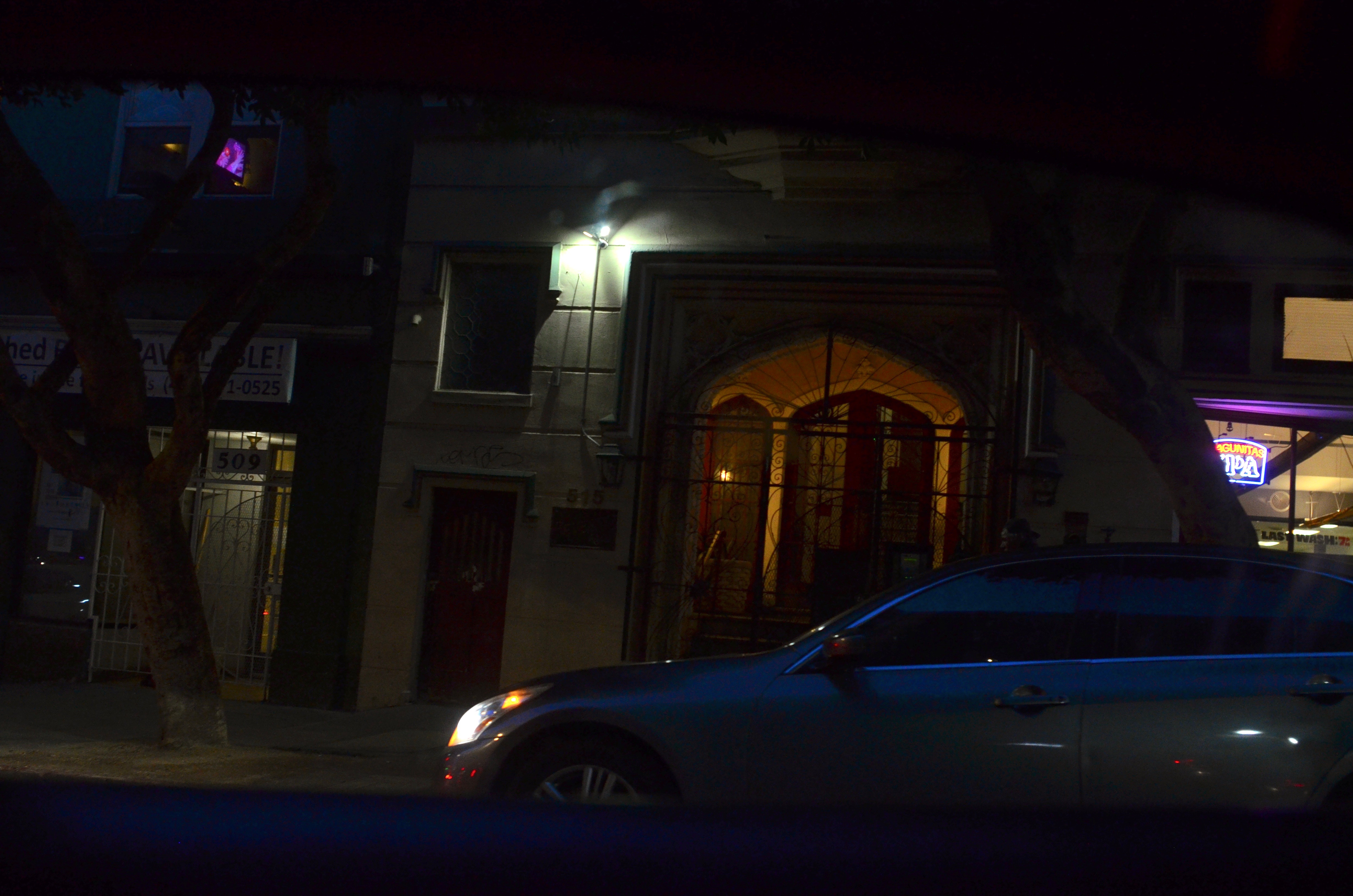
The image seen here is of an access gate that is as close as I have ever gotten to my subject in the past. It is also the least beautiful feature of said subject, hence my annoying case of nerves.
My anxiety, though truly laughable/pathetic, accompanies things that I care about, and maybe that’s a good definition of art….an attempt to make sense of the things we care about. Just pointing a box cannot produce that feeling. But photography has never really been about the box, has it?
Share this:
Posted by Michael Perkins | August 4, 2019 | Categories: Americana, Commentary, Conception | Tags: Interpretation, Technique | Leave a comment