JUMPING OFF THE TOUR
By MICHAEL PERKINS
VISITOR ATTRACTIONS CREATE THEIR OWN KIND OF PECULIAR GRAVITY, in that many of them develop an “official” way to take in their delights, pulling you toward what they believe to be the center of things. From the creation of tourist maps to the arrangement of signs on paths, many famous “places to see” evolve systems for how to “do” parks, recreation areas, even ancient ruins. Some hot spots have even been so obvious as to mount signage right next to the “Kodak moment” view that, of course, you will want to to snap, since everybody does. And from here, folks, you can clearly see the royal castle, the original temple, the stunning mountain vista, etc., etc.
But predictability, or an approved way of seeing a particular thing, is the death of spontaneity, and certainly a danger signal for any kind of creativity. Photography is the visual measure of our subjective experience. It’s supposed to be biased toward our individual way of taking a thing in. Grading our reactions to visual stimuli on the curve, taking us all down the same path of recommended enjoyment, actually obviates the need for a camera. Just freeze the “correct” view on the gift store’s postcard assortment, and, presto, we can all have the same level of enjoyment. Or the same low point of banality.
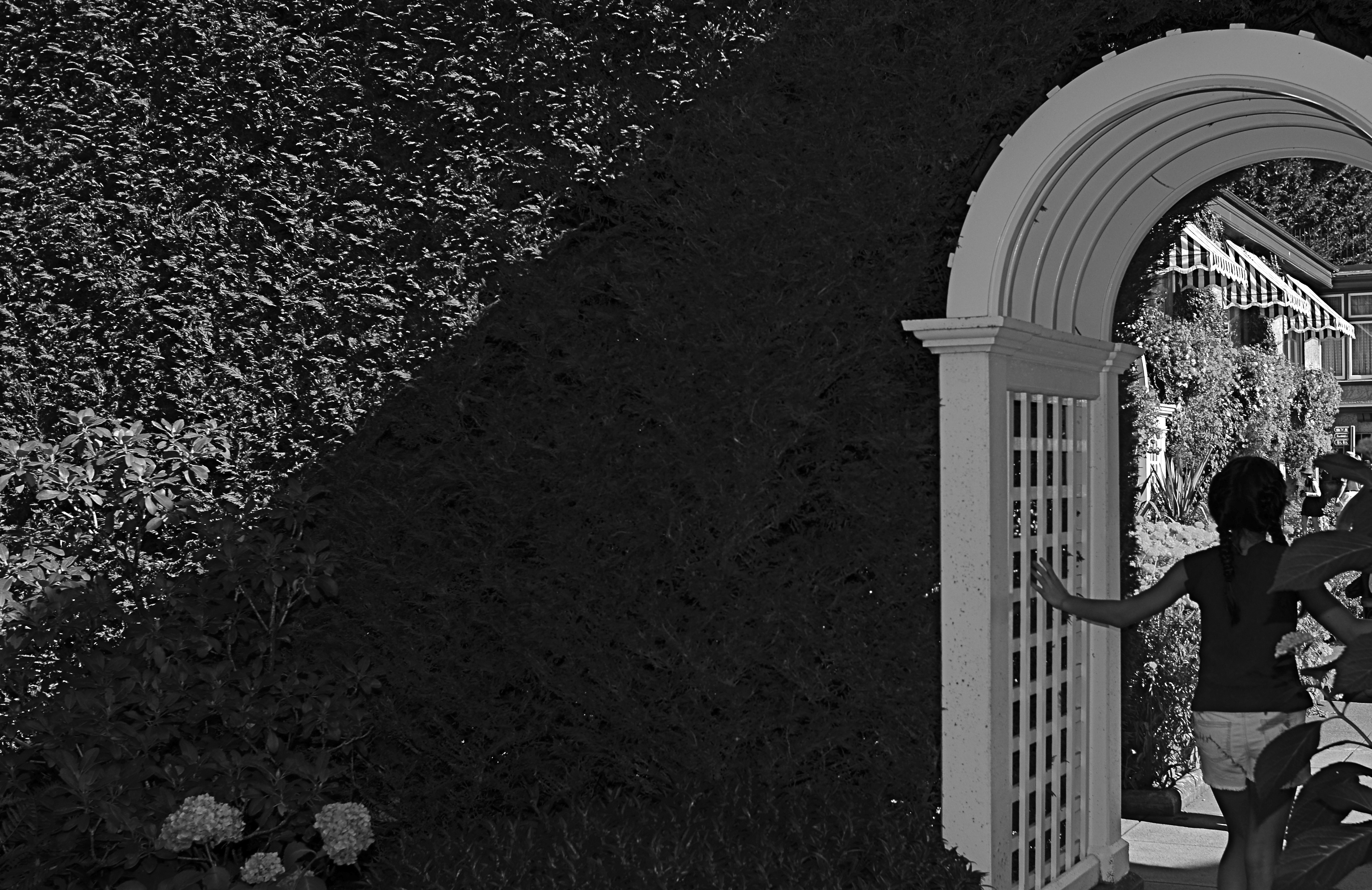
About To Be (2016) 1/200 sec., F/5.6, ISO 100, 24mm.
Recently I visited the amazing Butchart Gardens, a botanical bonanza on the island of Victoria in British Columbia. If ever there was a place where you’d be tempted to tick off “the sights” on a mental checklist, this cornucopia of topiary choreography is it, and you will find it truly tempting not to attempt your “take” on its most photographed features. But an experience is not a triptych, and I found my favorite moments were near the fringes or niches of the property, many of which are as stunning as the most traveled wonders along the approved paths.
To my great surprise, my favorite shot from the tour wasn’t one of the major sites or even a color image, but a quick glimpse of a young girl hesitating in the narrow, arched portal that separated one side of an enormous hedge from the other. She only hesitated for a few seconds before walking into the more traveled courtyard just adjacent, which is, itself, recorded thousands of times a day. But that brief pause was enough. She had become, to me, Alice, dawdling on the edge of a new Wonderland. The arch became all mystery to me, but the picture needed to be simplified to amplify that feeling, relegating the bright hues to secondary status. And while it indeed seems counterintuitive to take a black and white image in the midst of one of the world’s great explosions of color, I gladly chose the mono version once I had the chance to compare it to the original. Some things just work.
One thing that never works is trying to make your personal photographs conform with what the designer of a public place has recommended as the essential features of that place. Your camera is just that….your camera. Shoot with someone else’s eye, and you might as well just frame the brochure.
GRAVEYARD SHIFT
By MICHAEL PERKINS
THERE IS, ALMOST CERTAINLY, A STORY BEHIND THE PHOTOGRAPH BELOW. Unfortunately, I don’t know what it is. And probably never will.
Images often state or at least imply a narrative, allowing the photographer to relate a dimensional story within the confines of a flat, static frame. It’s kind of a miracle when that happens, but there are also those pictures in which, although part of a story has been captured in mid-flight, the whole of the tale will never be revealed. Sometimes it’s because I flat-out don’t possess the skill to tell it properly. Sometimes it’s because, although I set out to tell something in a coherent fashion, I mucked it up in execution. And, in the most interesting/frustrating of cases, it’s because the photo simply contains too little content or context to make a story emerge.
Yet, these are the images that, perversely, I find myself returning to, as if staring at them multiple times will somehow solve the puzzle. It usually doesn’t, but that’s okay, since these “quandary” pictures also become some of my favorites. Maybe it’s because they’re orphans. Maybe I actually like that they defy explanation. It’s like reading Ulysses. I don’t get it, But then again, nobody else does, either.
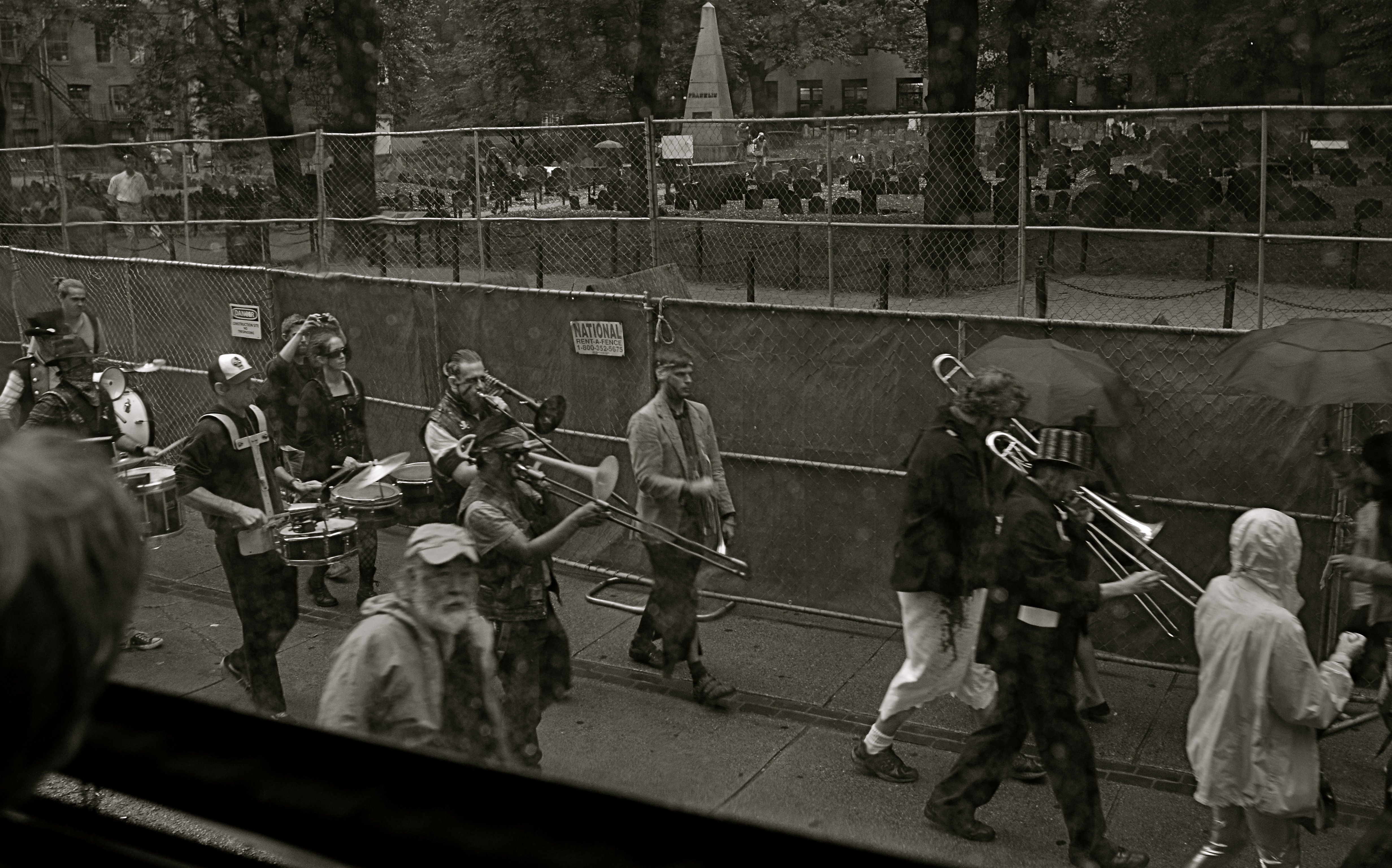
All Together, Now, With Gusto.
This particular question mark of a picture was snapped in Boston on a day soaked in enough rain to chase my wife and myself off a local walking tour around the Commons, trading squishy sneakers for butt lumps on a bus that spent 10% of its voyage hipping us to the local scene and 90% gridlocked in Beantown traffic, which is about average, as I understand it. There was, as a consequence, plenty of time to snap things out of the windows, even though the rain played serious hell with both focus and resolution. After a while, however,even the doomed task of trying to shoot anything usable became a kind of pastime all its own, especially after the driver was forced to retrace the same circle of traffic hell for a second or third go-round.
The scene you see here is in front of a historic graveyard right in the heart of the commons, a “who’s who” of honored dead, where, so say the locals, you can sit in a bar drinking a cold Sam Adams, and gaze out the window at (say it with me) a cold Sam Adams. What inspired the ragtag orchestra you see marching in front of the illustrious headstones, sans any insignia, uniforms, or sense of self-preservation is, and will remain, beyond me. What they were marching for, who their intended audience or cause might be….all of it is forever a befuddled “huh?”. Bonus round: what with the light being so meager amidst the downpour, I had dialed down to a pretty slow shutter speed, so even basic sharpness was DOA for this particular frame.
Somehow, however, I love this picture, even more than if it made any actual sense. Unmoored from reality, I can make up a dozen might-be scenarios that explain it, and so it actually has more entertainment value than many of my so-called “successful” photographs. Or maybe I just like sitting in a pew at the Church of Weird every once in a while. And, on particularly dreamy days, I can stare at this band of gypsies and wish I could take up a tuba and head their direction for a bit.
After all, they know where they’re going…
THE GOLDEN HALF-RULE
By MICHAEL PERKINS
THE STREET-HARDENED CRIME PHOTOGRAPHER ARTHUR FELLIG (1899-1968), who adopted the pseudonym “Weegee” was often asked the secret of his success as the journalist who best captured the stark essence of mobster arrests, gruesome murders, and various other manifestations of mayhem and tragedy. He had answered the “how do you do it” question so many times that he developed a uniform shorthand response which passed into photographic lore and stamped itself onto the brains of all future street shooters. The secret: “f/8 and be there.”
The “f/8” part spoke to the fact that Weegee, who seldom shot at any other aperture, was more interested in bringing back a usable picture than in creating great art. In the days before autofocus, shots taken on the fly at medium distance would almost always be reasonably sharp at that depth of field, no matter how sloppy the shooter’s finer focusing technique. Besides, since he was capturing sensation, not romance, why bother with subtle nuance? Weegee’s pictures were harsh, brutal, and grimy, just like the nether worlds they depicted. They were known for their high contrast and for the atomic blast of hard flashgun light he blew into the faces of society mavens and thugs alike. We’re talking blunt force trauma.
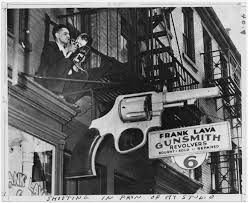
Familiar with action on both ends of guns, Arthur “Weegee” Fellig was the ultimate chronicler of America’s dark side.
The second half of Weegee’s golden rule was far more telling for any photographer purporting to be an effective narrator. When Fellig spoke of “being there” he was not only referring to arriving on a crime scene ahead of any competition (which he guaranteed by grabbing early bulletins from the police-band radio in his car and having a mobile darkroom in his trunk), but in being mentally present enough to know when and what to shoot, with very little advance prep. The bulkiness of the old Graphlex and Speed Graphic press cameras (the size of small typewriters) meant that shooting twenty frames in as many seconds, as is now a given with reporters, was technically impossible. Time was precious, deadlines loomed, and knowing when the narrative peak of a story was approaching was an invaluable instinct, one which distinguished Weegee from his contemporaries. Opportunities were measured in seconds, and photogs learned to nail a shot with very little notice that history was about to be on the wing.
There will always be arguments about the finer points of focus and exposure, with most debates centering on the first half of Weegee’s prime directive. However, for my money, the urgency of being ably to identify immediacy and grab it in a box far outweighs the niceties of art. Many a Pulitzer Prize-winning image is under-exposed or blurs, while many a technically perfect picture actually manages to drain a scene of any human emotion. Make it f/8, f/4, hell, take the damned thing with a pinhole if need be. But be there.
YOU’RE IN THE PICTURE
By MICHAEL PERKINS
THE BEST PHOTOGRAPHS ARE NOT STAND-ALONE WORKS OF ART, BUT CONVERSATIONS BETWEEN ARTIST AND AUDIENCE. You don’t just stride up to that framed image on the wall and let its wonderfulness wash over you; you bring what you have been, over a lifetime, to it, comparing those two entities side by side, and even assigning your own truth to the photo, “deciding” what it means. The pictures don’t speak to you: you debate with each other.
Think about the images that, over a lifetime, have reached you in the deepest way. Did those photographs bring you something that you didn’t already have, or was it echoed, defined, re-purposed, based on who you’ve been thus far, or how you see? How else to explain why a picture moves one person to tears, while it leaves another completely nonplussed? Of course, some photographs almost accidentally produce a similar result to a wide variety of viewers, but there are far more of them where the messaging is muddled, imprecise.
And that’s a good thing.
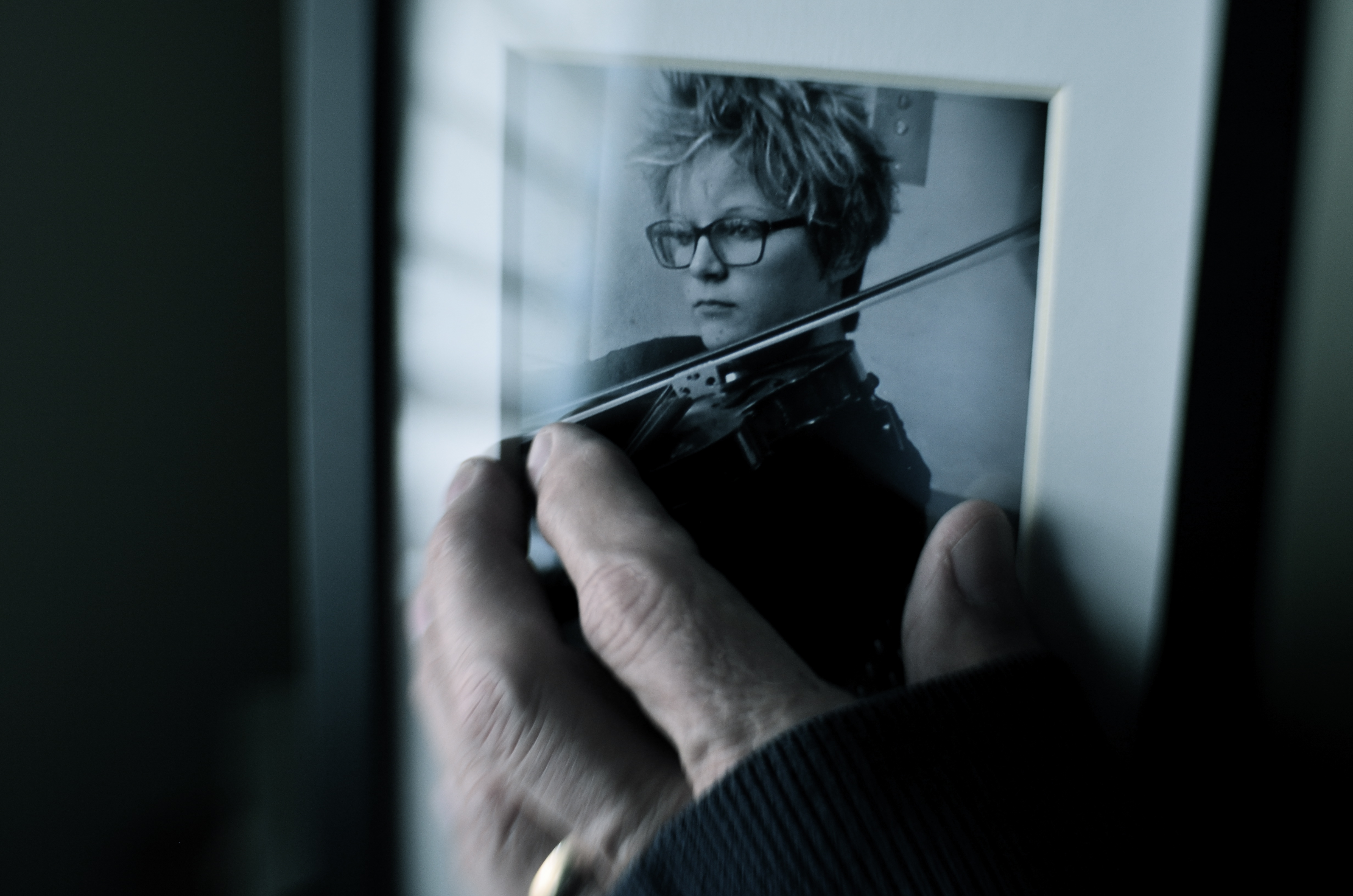
One way to repurpose a photograph is to make it part of another photograph. Or not.
I made the above image several days ago purely as an experiment, using an earlier one of my pictures as a prop within what’s obviously a staged shot. The completed “new” photograph was part of an assignment by an image sharing group I belong to, which laid down several elements that had to be in the final picture: a hand covered by something, that same hand touching something, and a de-saturated color palette. Beyond that, I had complete control of how those elements would be combined or interpreted.
The reason I began to play with some older pictures was chiefly to see if I could take a photo made with one specific mood in mind and re-purpose it within a new context, making the image elicit something completely different. So, without further background or explanation, the challenge to you: what does this particular image (which has an older image within it) convey to you, if anything? What is the dominant mood or the implied backstory? And even if what you’re seeing is not the same as what I set out to “say”, does the picture have any relevance for you personally? Does it have any narrative value, or is it merely an exercise in technique?
Context isn’t everything in a photograph, but neither is any image is absorbed in a vacuum. We color our approach to it in some way, becoming, in essence, its co-creator. You may not be in the frame, but you’re definitely in the picture.
MORE FROM LESS, LESS FROM MORE
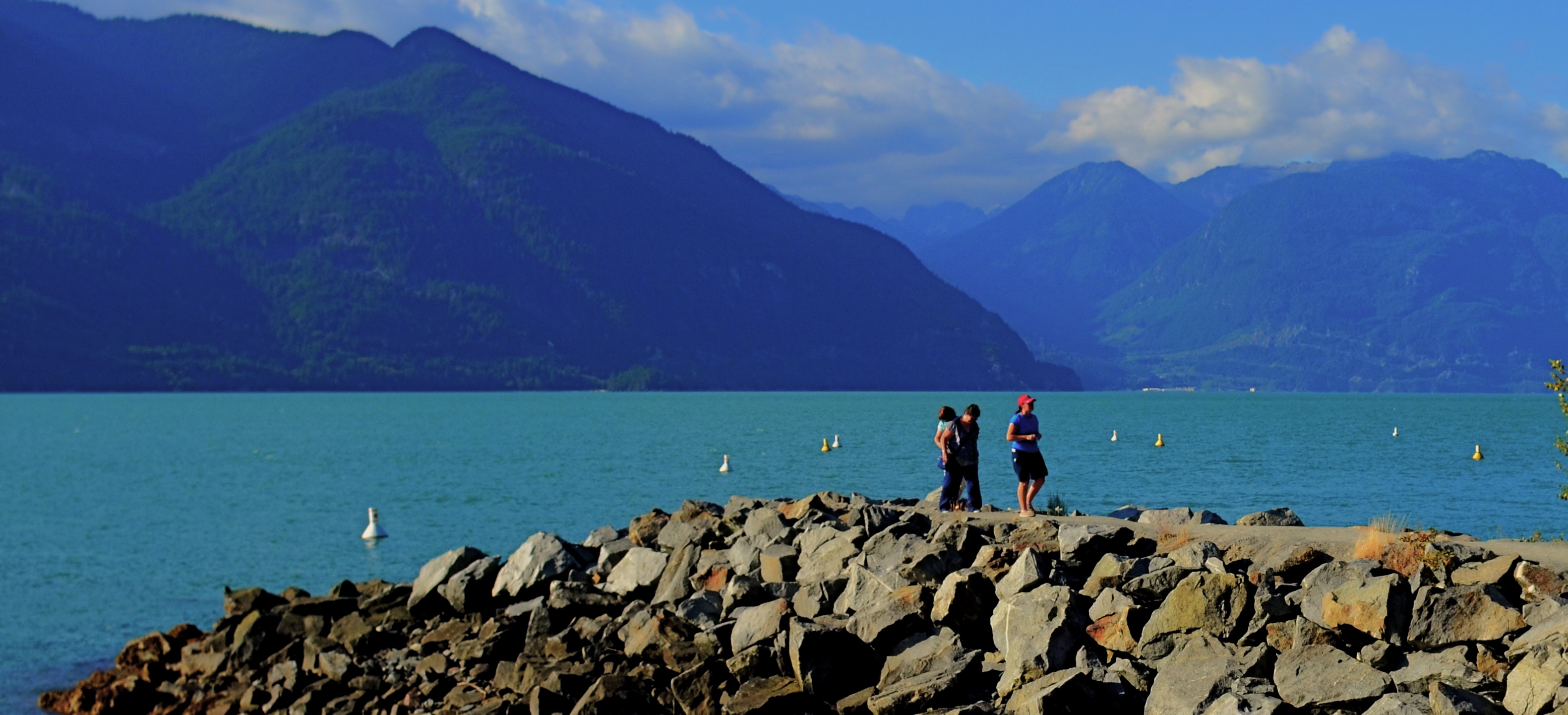
That Day At The Jetty (2016). A cropped edit of an originally larger 24mm wide-angle shot.
By MICHAEL PERKINS
EVERY PHOTOGRAPHIC LENS EVER MADE CREATES ARTIFACTS, distinct biases in the ways it renders the world it sees. When you shoot with a particular piece of glass, you’re also inviting in whatever flaws or limits are baked into that optic’s design and science. If you are the kind of shooter that constantly switches out lenses, this present less of a problem, since you’re used to snapping on the exact glass you need for every kind of shooting situation.
If, however, you try, like myself, to go nearly a day at a space with a minimum of gear, then you start to look for lenses that do most of what you want in most settings. Occasionally, this means compromising on, or even missing, a shot; but, by and large, it makes you more mindful of the image-making process from minute to minute. You plan better and react faster.
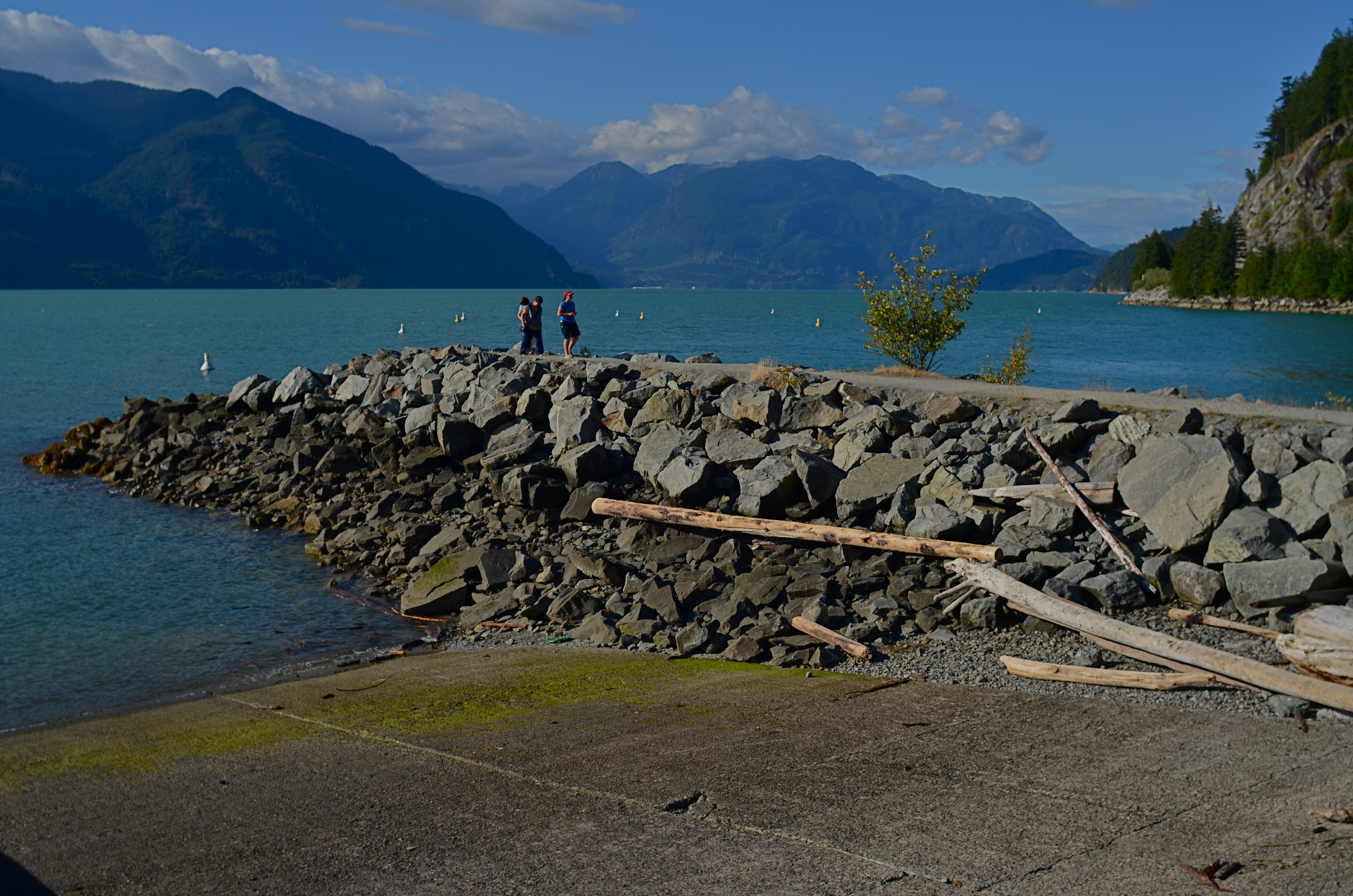
The original 24mm master shot, which is either fuller or too crowded, depending on one’s viewpoint.
In the case of one of photography’s most popular categories, that of landscape work, there seem to be two main types of lenses that do most of the heavy lifting: the ultra-wide angle, which convey “openness” and scope, and zooms, which help isolate specific parts of vast vistas. There are certainly situations in which both are ideal, but, on average, were I to be traveling very light for the day, I would probably take most of the day’s images with the ultra-wide, even if there was a particular area inside a larger scene that was more “important” than its surroundings, a situation in which most of us might utilize the zoom.
This goes to my belief that the composing process almost never stops with the click of the shutter. Rather, the click is just phase one, and a master shot that allows for many post-shot “re-thinks” is the best one to have. Let’s say, for the sake of argument, that the center of an immense mountain range is where the light or the subject story is strongest in a given image. If my master shot is a taken with a zoom, I’ve lost the ability to later discover additional approaches that remain possible if I have a wider shot’s worth of information from which to select. Starting with the larger shot, I can shift the cropping to any aspect ratio I want, change the balance of the composition, re-orient the linearity (to create a faux panorama, as in the top shot here) or even realize that there was an even stronger story to be told outside of the frame I originally envisioned with the zoomed master shot. Here’s the core point: it’s easier to have more picture than you need and pare some stuff away than to narrow your options beforehand and trust that you’ve nailed it, meanwhile ruling out any potential re-takes or second thoughts.
I do, of course use zooms at times, but, like my external flashes and tripods, I find fewer uses for them with each passing year. It’s odd how you can come to feel greater freedom with fewer tools. But sometimes it’s like the time Itzhak Perlman busted a string just before a concert, then performed the program on just three strings, to the utter amazement of the critical world. Photography proves time and again that there are times when the image’s “melody” magically comes forward. In spite of.
DATING YOUR EX
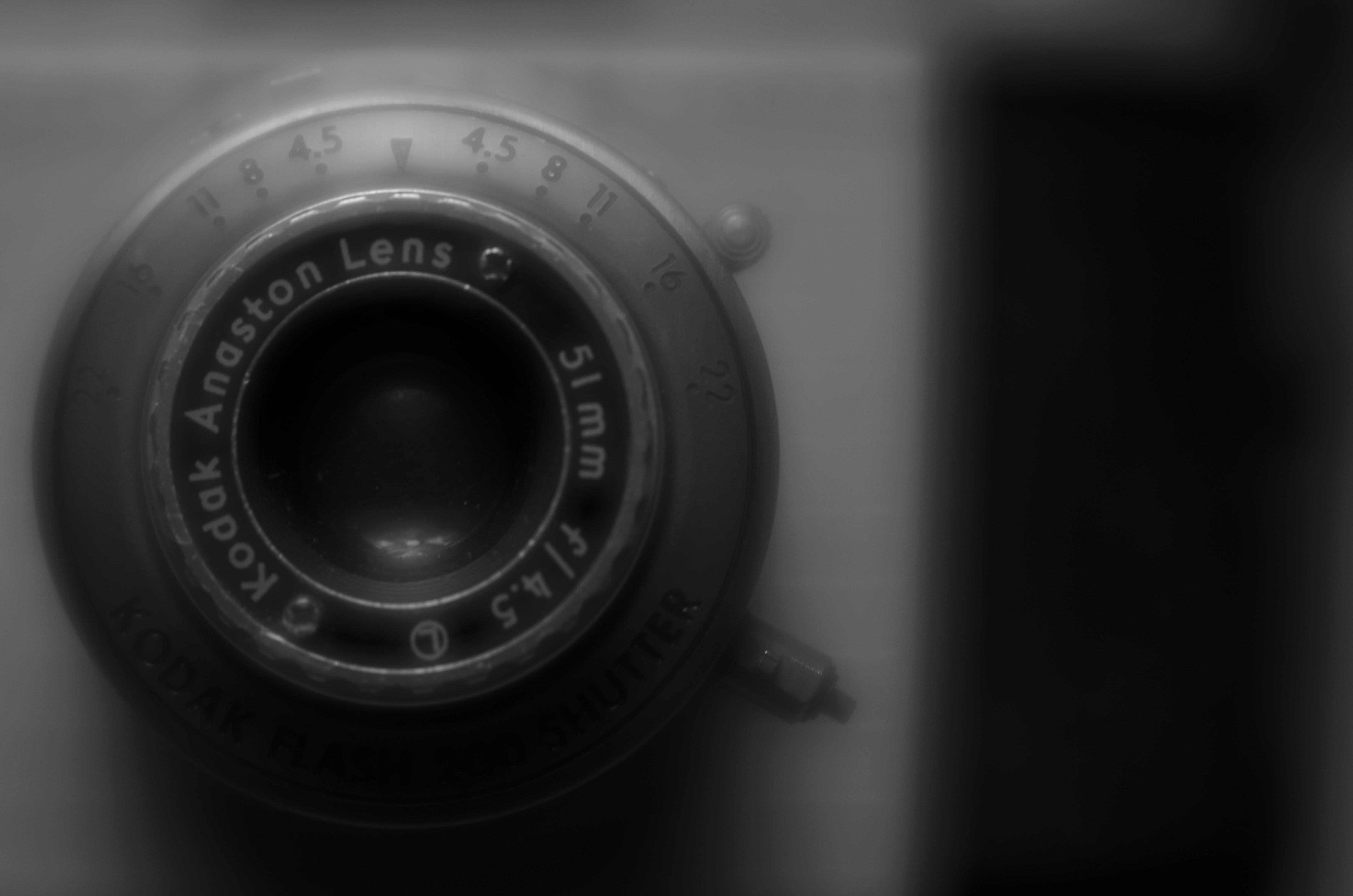
Sometimes your new favorite gear is actually your old favorite gear.
By MICHAEL PERKINS
SOME PHOTOGRAPHERS’ EQUIPMENT CASES ARE LIKE MARY POPPINS’ CARPET BAG: once they’re opened, you are just certain someone’s going to haul a floor lamp out of the thing. I myself hate being laden with a punishing load of gear when on a shoot, so I spend as much time as possible mentally rehearsing before heading out, trying to take just one lens which will do 90% of what I’ll need and leaving the rest of the toys at home. I developed this habit mainly because most of my work is done in a field orientation. Were I more consistently a studio homebody, then I could have everything I own just inches away from me at all times. So it goes.
What happens with my kind of shooting is that you fall in and out of love with certain gear, with different optics temporarily serving as your “go to” lens. I personally think it’s good to “go steady” with a lens for extended periods of time, simply because you learn to make pictures in any setting, regardless of any arbitrary limits imposed by that lens. This eventually makes you more open to experimentation, simply because you either shoot what you brung or you don’t shoot at all.
This work habit means that I may have half a dozen lenses that go unused for extended periods of time. It’s the bachelor’s dilemma: while I was going steady with one, I wasn’t returning phone calls and texts from the others. And over time, I may actually become estranged from a particular lens that at one time was my old reliable. I may have found a better way to do what it did with other equipment, or I may have ceased to make images that it was particularly designed for….or maybe I just got sick to death of it and needed to see other people.
But just as I think you should spend a protracted and exclusive period with a new lens, a dedicated time during which you use it for nearly everything, I also believe that you should occasionally re-bond with a lens you hardly use anymore, making that optic, once again, your go-to, at least for a while. Again, there is a benefit to having to use what you have on hand to make things happen. Those of us who began with cheap fixed-focus toy cameras learned early how to work around the limits of our gear to get the results we wanted, and the same idea applies to a lens that may not do everything, but also may do a hell of a lot more than we first gave it credit for.
Re-establishing a bond with an old piece of gear is like dating your ex. It may just be a one-off lunch, or you could decide that you both were really made for each other all along.
SERVING UP SOME NUTS
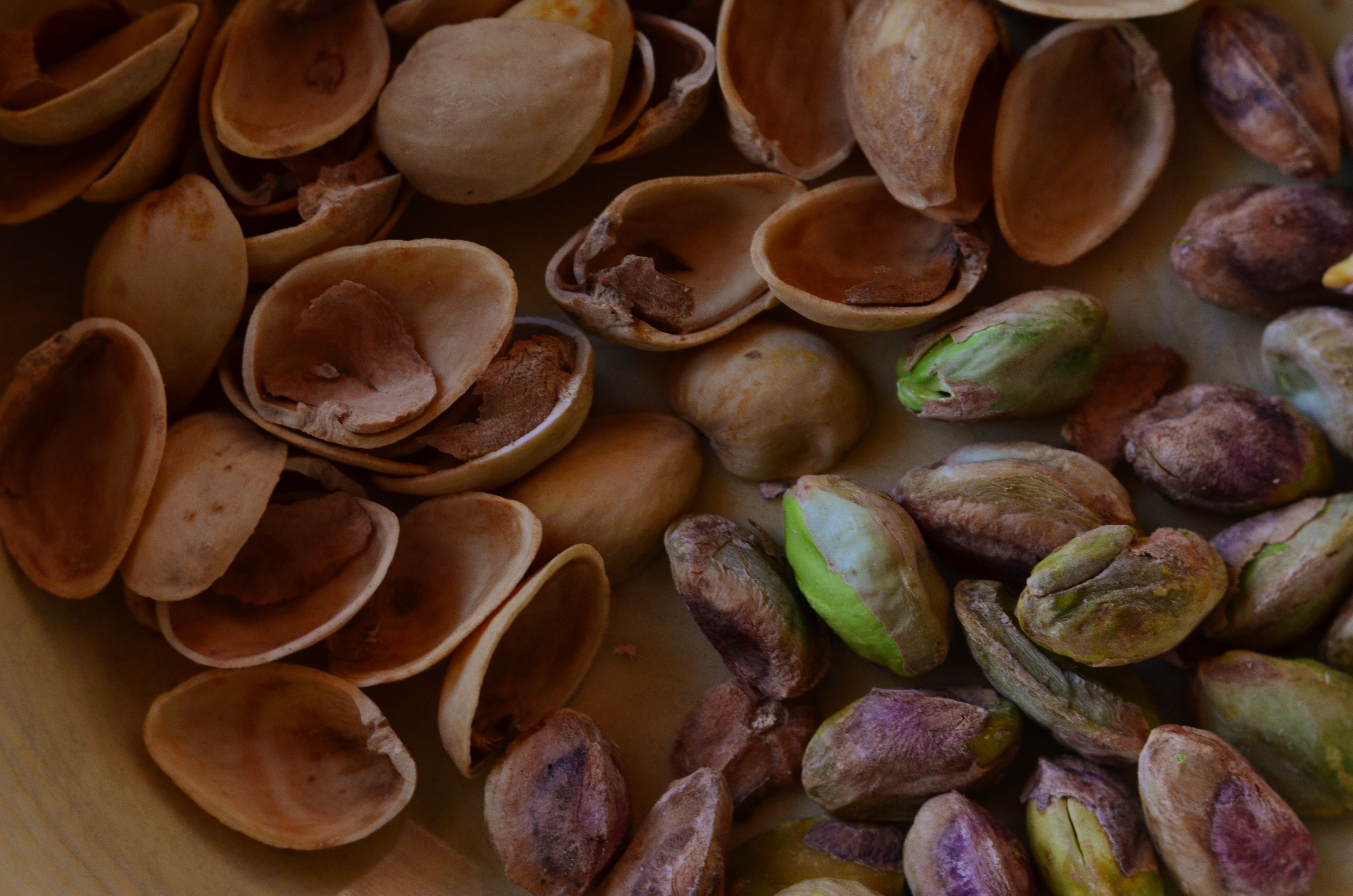
The Haves And The Have-Nots (2017)
By MICHAEL PERKINS
COMPOSITION IN PHOTOGRAPHY WOULD BE A SNAP (sorry) if the camera actually possessed not just an eye, but also a brain. But that’s where you come in.
When the human eye takes in a scene, the brain automatically ranks all the information within it, basically making a composition of priority. We “see” some things and “don’t see” others, based on how our grey matter ranks the importance of everything in our field of vision. A camera cannot make these fine decisions: it merely makes a light record of what it’s pointed at. That accounts for the fact that our “perfect” landscape, the one we ourselves recalled from the first day of vacation, comes back, in a mere photo, complete with electrical wires, distracting signs, junk near the beach, and any other number of things our brains filtered out of the original viewing experience.
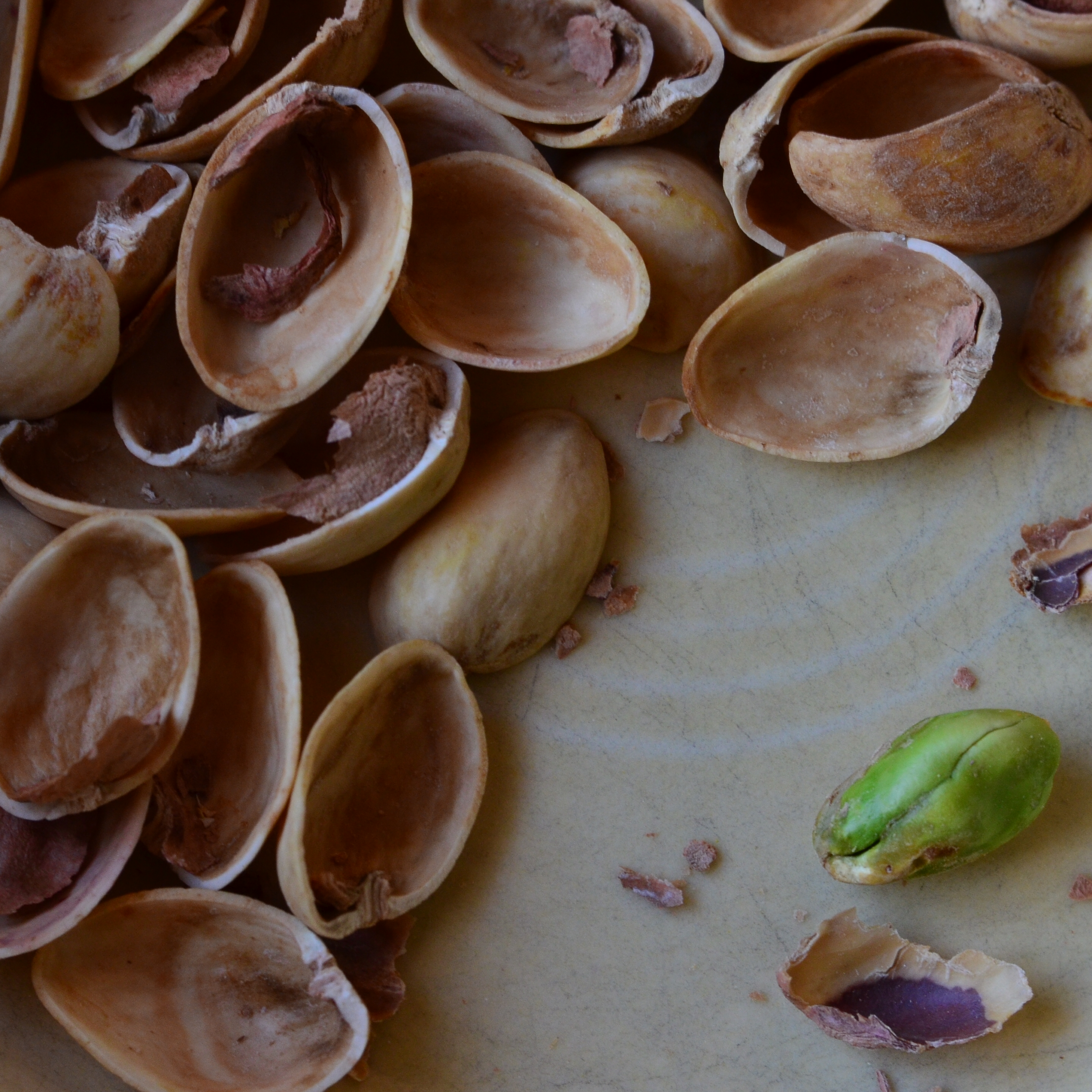
Last Man Standing (2017)
Composition is thus a matter of our deliberately arranging things by priority, making an argument for our audience to Look Here First, Only Look Here, Give Greater Weight To This Over That, or any other messaging we desire. In sales terms, it’s what pitchmen call Asking For The Order. Simply, composing a photograph means setting the terms of engagement for the viewer’s eye.
With still-life photographs, the shooter has the greatest degree of control and responsibility. After all, our subject is stationary, easily moved and arranged to our whim. You pretty much are lord of your domain. That being said, it’s wise to use this luxury of time and control to envision as many ways as possible to convey your message. The image at the top of this page, for example, is crowded, but the nut shells and the unshelled nuts are a study in textural contrast. There’s lots of color and detail, with one side being somewhat blanched while the other is rough and complex. That’s one way of making the image.
For comparison, in the second frame, the terms of engagement are completely different. The pile of shells at left is more sharply contrasted with the single nut at right. The nut carries the only vivid color in the image; it’s an outlier, a misfit…maybe the last man/nut standing? The simplification of the composition lets it breathe a little, allowing the viewer to speculate, invent. Are the shells symbolic of a mound of nuts that have already been polished off in some grand snacking orgy? Why was one lone nut left to tell the tale? And so on.
Change the arrangement of subjects in a scene and you’ve changed the terms of narration, or even insisted that there is no narration, just patterns, light, or abstraction. Whichever path you choose, no composition comes to the camera “ready to eat”, as it were. You have to tell your camera’s mechanical eye what to see, and how to see it.
COME TO THE DUMB SIDE
By MICHAEL PERKINS
“I dream with my eyes open.”—-Jules Verne
THE MAKING OF A GOOD PHOTOGRAPH IS A CHALLENGING ENOUGH ENTERPRISE that it’s understandable that many a photographer loses either his emotional balance or his sense of humor or both in the process. As artistes, we are so very, very earnest in our pursuit of the image that we can become a little, well tedious. All work and no play makes Jack take four hours to take a picture.
I always believe that, when you are mired in a problem, the bravest thing you can do is to, well, run away. Call it play, call it goofing off, call it cleaning out the pipes, or call it late to supper: the idea is to change the conversation. Of course, if you’re physically stuck in a rain-soaked duck blind awaiting the annual return of the pied-billed grebe, it’s a little tough to break camp (or your concentration) for the salvation of play. Besides, if the pied-billed grebe is your idea of a good time, then godspeed, John Glenn, and please don’t expect us to sit through your slides upon your return. Not without beer, anyway.
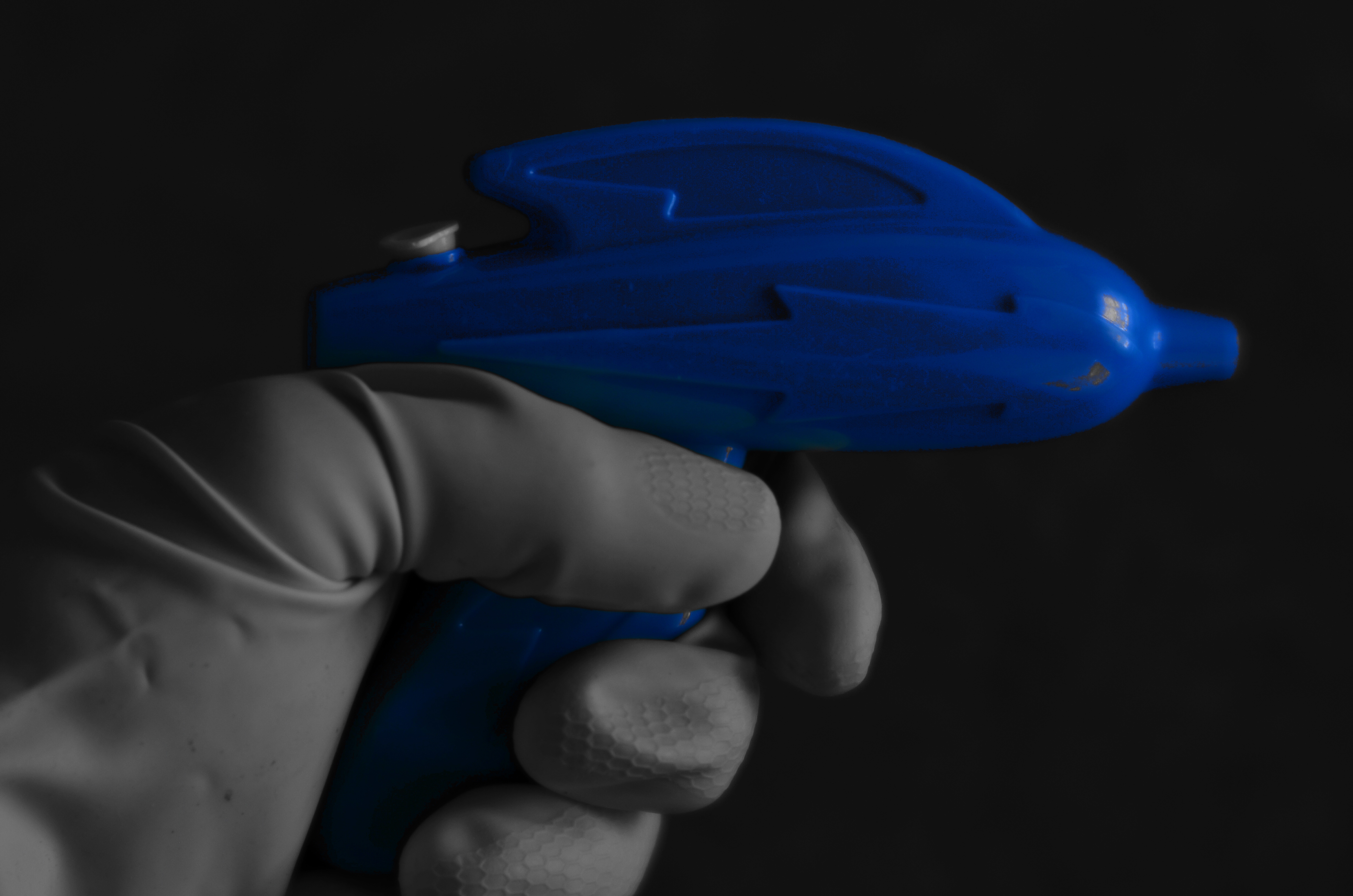
Suddenly, Flash Held The Upper Hand (2017). Heavy on the nonsense. Because sometimes you need it.
No, I’m talking about the value, the actual soul-salvaging power of stupid. The palate-cleansing function of creating the visual equivalent of a stuck-out tongue. In taking the time to solve the problems involved in the creation of a “dumb picture”, you are also exercising the muscles of your mind that have been cramped up in your more serious work.
I’m reminded of the process used at the little building on the weird end of the Warner Brothers lot where Looney Tunes shorts were created. It was a working method which startled messengers and delivery boys alike, who often entered the office to see Chuck Jones, Friz Freleng, and other animators capering about in animal costumes or funny hats as other Tuners recorded their gyrations with 16mm home-movie cameras, the better to animate you with, Grandma. Now some of you troublemakers might be tempted to remark, “but they were making cartoons. How is that serious work?”, to which I reply that perhaps you and I had better take this outside and settle the matter like gentlemen.
The above shot is the result of one dollar in investment (the weird squirt gun, complete with cosmic lighting bolt), a little rooting around under the sink (for the work glove), and ten minutes of fanciful fun. Not being fortunate enough to have Buster Crabbe here to model my fantasy (he’s in Actor Hell learning how to better deliver his lines), I managed to use my own left hand to wield my weapon while shooting with my right. And if you think you can do that without looking stupid….well, I’m just as glad the wife didn’t walk in on me, especially since I had been tasked, on this particular day, with kitchen duty.
Which is all to say, as if it needed repeating (or even peating) that fun is essential to the process of photography. When the well runs dry, you’d better re-fill it quick…with water, Mr. Bubble, Cherry Kool-Aid, or a nice, refreshing bucket of stupid.
Ahhhhh.
EXPEDITIONARY
By MICHAEL PERKINS
“THE WORLD IS TOO MUCH WITH US“, goes the classic Wordsworth sonnet, which points out that, not only do we miss seeing much of that which is most essential in our lives, we may not even know what we don’t know. And, in the general realm of art, and specifically in the art of photography, what survives in our visual record is limited to what we believed was important…at the time.
Reality is constantly morphing, and try as we might to use our cameras to bear witness to The Big Stuff, we neglect the fact that much of which we regard as anecdotal, as the “little stuff”, might just be biggest of all in the long run. The decisions required by art in the midst of history are terrifying. What image to make? What event to record? What kind of case to make for ourselves, as agents of our time?
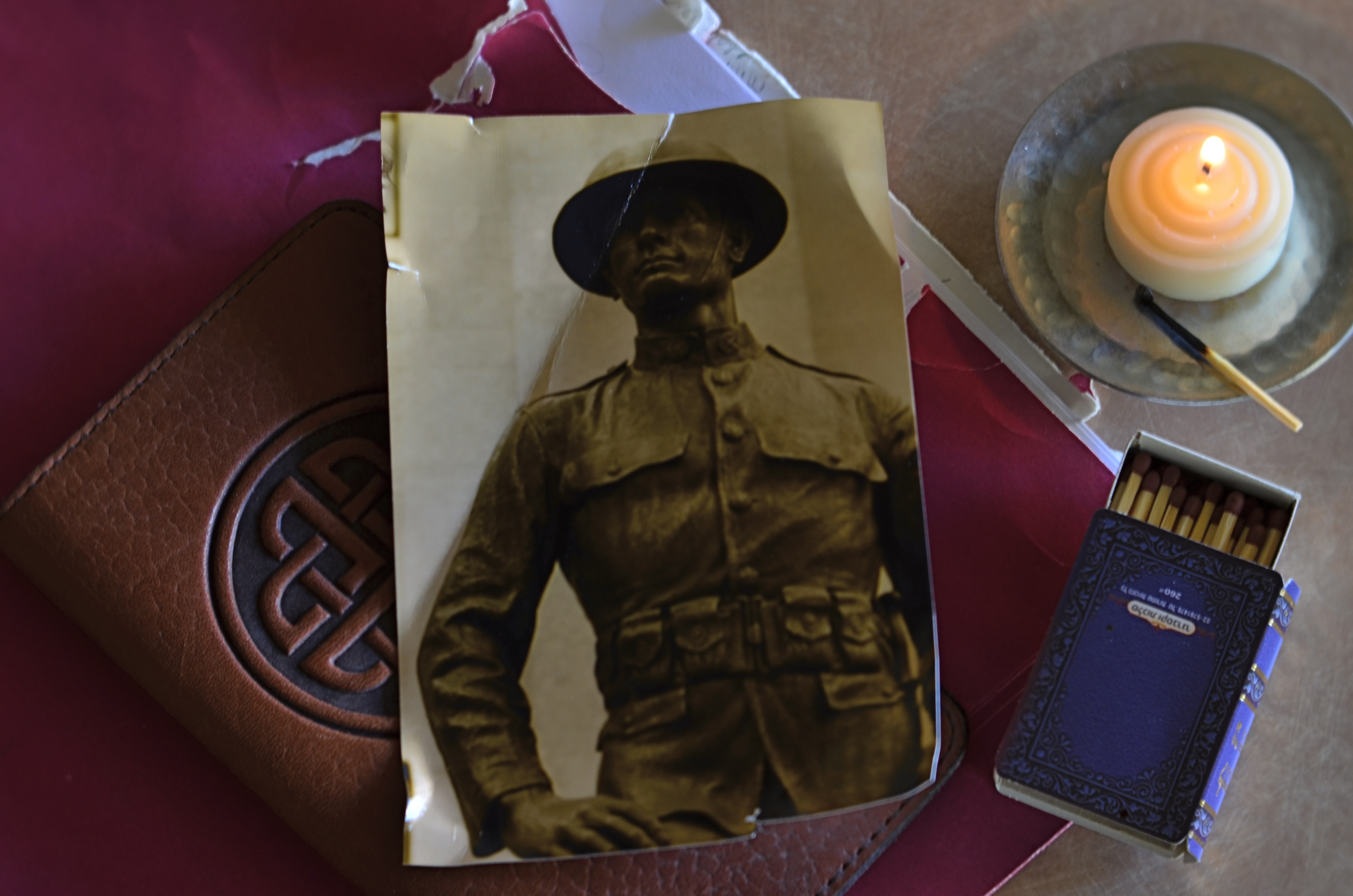
History’s biggest events can boil down to a handful of iconic images.
This year, 2017, marks the one-hundredth anniversary of the United States’ entry into what was then called The Great War. The term was grandiose, and dire, denoting a conflict that was, for the first time, truly global, a tsunami of slaughter so vast that it had been, heretofore, simply unimaginable. And yet, in time, the phrase was abandoned, because we had rendered it obsolete, by the obscene act of ordering up a sequel. And so we began to take the greatest mass murders of all time, and merely number them, as if they were nothing more than sequential lines on an endless horizon. And with these wars, for the first time, came pole-to-pole photographic coverage, an unprecedented, ubiquitous visual chronicle. Again, the questions: did we get it right? Did we make the pictures that needed to be made?
Who can know? The blood that soaks the battlefields also waters the grass that eventually covers them over. The din of death becomes the silence of lost detail. Photographs curl, tear, burn, vanish, become memories of memories. We hope some small part of our art becomes an actual legacy. And again, we ask: what did we miss? Whose stories did we neglect? Which evidence did we ignore? The world, always too much with us, forces us, now as then, to edit on the fly, hoping we can at least strive, against all odds, to be reliable narrators.
THE OTHER SIDE OF SOFT
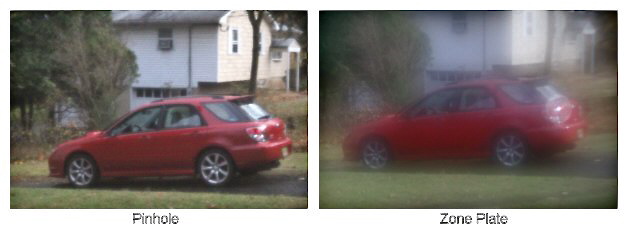
A side-by-side comparison of the two main systems of “lensless” photography, the pinhole and the zoneplate.
By MICHAEL PERKINS
PHOTOGRAPHERS (AND HUMANS IN GENERAL) ARE CONTRARY. Tell them they’re forever stuck with a bones-basic camera and they’ll spend every night and weekend either trying to devise a more sophisticated device or work three jobs so they can buy one. And the obverse is also true: present shooters with an infinite number of hi-tech choices designed to deliver unprecedented precision, and they’ll perversely start to pine for the “lost innocence” or “authenticity of the bare-bones rig.
What else can account for the recent surge in lensless photography, and the creation of images with cameras that are more technically handicapped than even one’s first point-and-shoot? Of course, the very first image capturing was done without a lens, with the ancient Greeks creating pictures on the inside back panel of a camera obscura box, using nothing but a small pinhole to generate a dim, soft-focused image of the chosen subject. The early nineteenth century replaced the hole with custom-designed glass optics, and photography moved quickly from a scientific experiment to a global rage.
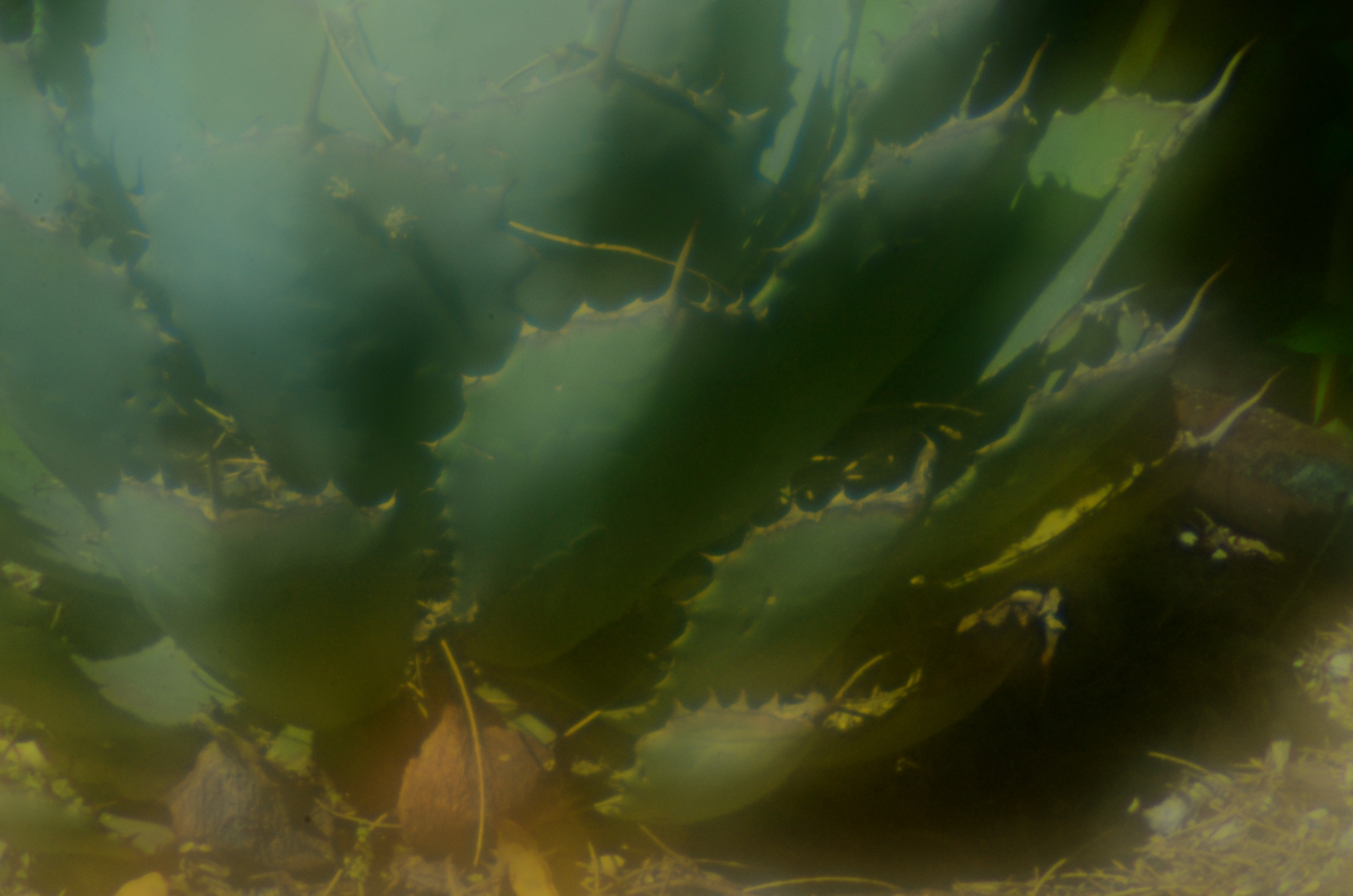
Zoneplates create a dreamy, hazy over-layer on top of lensless cameras’ typical soft focus.
But, of course, for photographers, no part of their art’s history is really “past”, and so we now see a small explosion of new pinhole devices for both film-based and digital cameras, from specially manufactured pinhole body caps (used in place of a lens) to cardboard kits available as DIY projects to recently dedicated pinhole plug-in optics for the Lensbaby series of lenses. The idea remains the same: small apertures, virtually infinite depth of field, soft focus, and looong exposures.
The other variable in this craze is the popularity of zoneplates, which, unlike the refracted light in a pinhole, works with more scattered diffracted light, creating a halo glow in the high contrast areas of subjects, as if the soft-focus is also being viewed through a gauzy haze. A zoneplate is really like a bulls-eye target, a plate where both opaque and transparent “rings” combine to disperse light widely, delivering a dreamier look than that seen in a pinhole image. The other big difference is that a zoneplate has a much larger light gathering area and a wider aperture, so while a pinhole opening might equate to a stop as small as f/177, the zoneplate could be as wide as, say, f/19, making handheld exposures (and visualizing through a viewfinder) at least feasible, if tricky.
Of course, both kinds of lensless imaging are extremely soft, rendering a precise depiction of your subjects impossible. However, if light patterns, shapes, and mood outweigh the importance of sharpness for a certain kind of picture, then pinholes and zoneplates are cheap, fairly easy to master (you don’t have much control, anyway), and a little bit like stepping back in time.
It’s contrary….but ain’t we all.
HOLDING HANDS IN THE DARK
By MICHAEL PERKINS
ONE THING OF WHICH THE PHOTOGRAPHIC COSMOS IS NOT IN SHORT SUPPLY IS THE SELF-PORTRAIT. What might have been a specialized kind of image-making just a few scant years ago is now, in the mobile era, a flat-out obsession. We snap ourselves being happy, being moody, eating a cheeseburger, or giving that cheeseburger a thumbs up with friends, etc, etc. We make more photographs than ever of our faces, and, it could be argued, say less and less in the process.
I think that a good self-portrait, if it is to say or imply anything true about the life behind the face, requires a little prep time, or at least a pre-conceived notion of what one is trying to reveal about that person. That said, I think our concept of a selfie is, at the very same time that it’s overdone, is also far too narrow. Simply speaking, there are other parts of our physical envelope that convey information about who we are and what we’ve been in the world. The hands, for example.
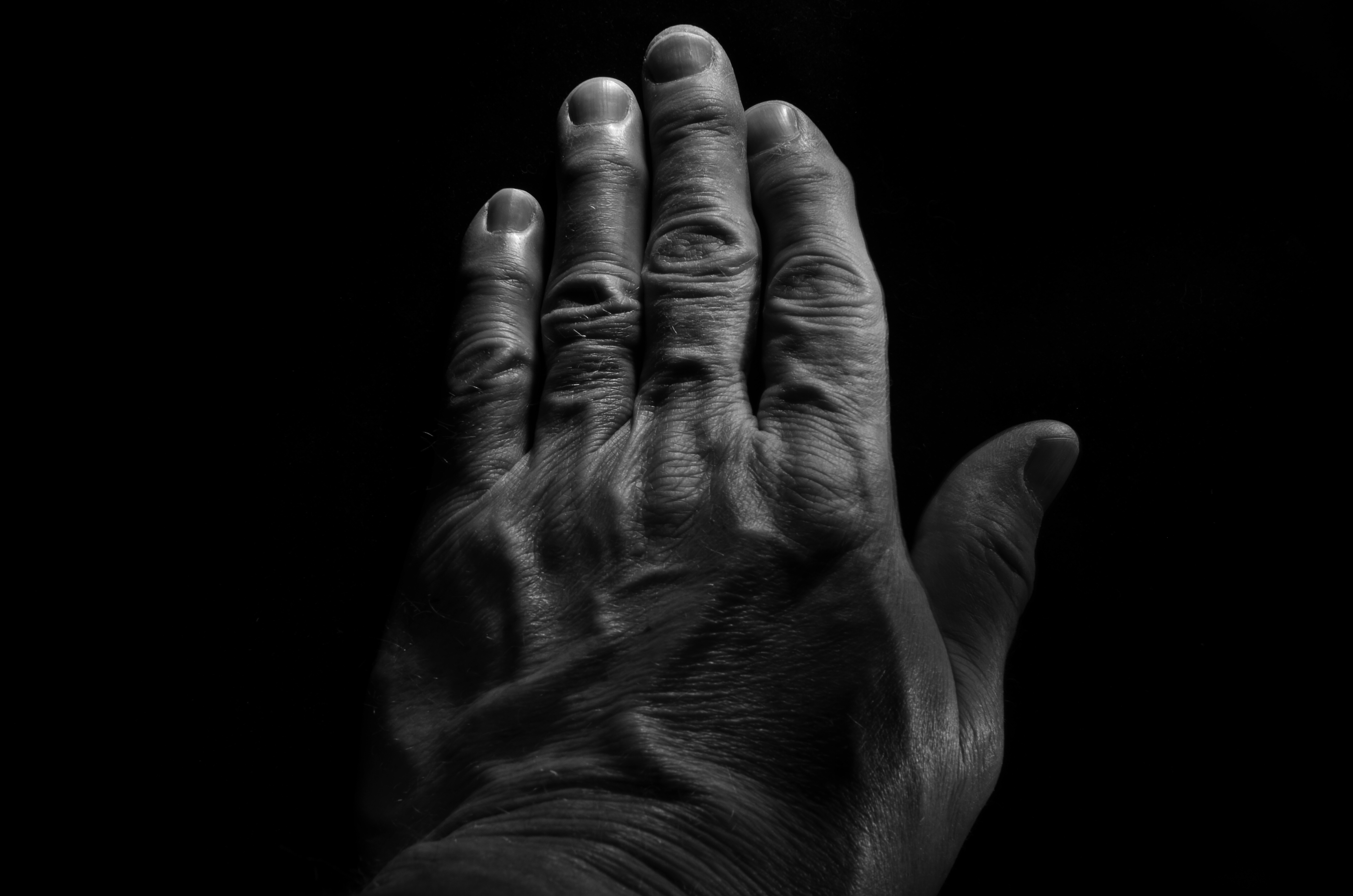
Pax Humana (2017). Hand-held LEDs used to “light-paint” in the dark can create interesting textures in human skin. 18 sec., f/16, ISO 100, 35mm.
If the eyes are the window to the soul, the fingers are the foot-soldiers who carry out the orders that the soul dreams up. The mind behind the face can certainly shine through a good facial portrait, but consider that the hands are the real agents of change in a person’s life. They lift: they move: they put plans into action. Moreover, hands bear the traceable time-stamps of all that agency. Each wrinkle and scar is a document of both deliberate action and unforeseen consequence. Hands belong in any serious study of a person’s life, no less than the face. The trick, as with photographing every other subject, is in getting the image you want.
I find, for example, that normal room light keeps a lot of fine detail from registering in an image, since human skin is highly reflective, causing the grain of the skin to wash out. One way to get around that is to use light painting, a technique we’ve discussed here before. Set up your composition and focus with the camera on a tripod in normal light, then leave everything in place until nightfall and make the image in a completely darkened room while experimenting with a range of exposure times. Your only illumination will be a small hand-held LED, such as a miniature key chain flashlight….nothing wide-beam or super-powered. Use a wireless remote to trigger your shutter, then “write” light paths over the hand, slowly tracking the LED over small areas until all have been “hit” before the trigger snaps back shut.
In the above example, I wanted greater contrast between the hills and valleys of my knuckles, veins, etc., and I wanted to minimize the shine-making effect of the light, so I lit from an angle, sideways from the tips of the fingers. That bumped up the pores and hairs into starker relief as well. Two things to remember: using short stabs of light, that is, turning the LED rapidly on and off, is better than a continuous beam, since you can pinpoint the effect more precisely. Also, using a very small aperture (f/16 here) provides maximum depth of field and enhanced detail. Other than that, it’s truly trial-and-error. This frame, as an example, is one of forty attempts, so it’s not a project you do on the fly. But this, I feel, is my hand, my real hand, its labors and history in full view. And it’s as much a portrait as any face can ever provide.
THE NEW ERA OF TESTIMONY
By MICHAEL PERKINS
WHETHER THERE IS CONSENSUS ABOUT THE PRESENT OR FUTURE STATE OF THE NATURAL WORLD, we are certainly in the midst of the most muscular conversation about its fate than many of us have ever known. That means that we are changing and challenging our relationship to the globe almost daily…and, along with that relationship, the way that we see, and visually report upon it. That generates a new emphasis on bearing witness to what the planet is/can be/ might be.
I call it the new era of testimony.
The birth of photography coincided with the first great surge of cross-continental expansion in America, as well as an explosion in invention and mechanization. The new system for making a physical record of the world was immediately placed into service to help quantify the scope of the nation…to measure its mountains, track its rivers, count its standing armies. Photographers like Timothy Sullivan and William Henry Jackson lugged their cameras east-to-west alongside geological surveys, railroad agents, and the emerging naturalist movement. While some shooters chose to capture the creation of new trestle bridges, others helped poets illustrate their Walden-esque reveries. In all cases, photography was tasked with the job of showing the natural world and our interaction with it. Most importantly, the images that survive those times are a visual seismograph on both the grand and grotesque choices we made. They are testimony.
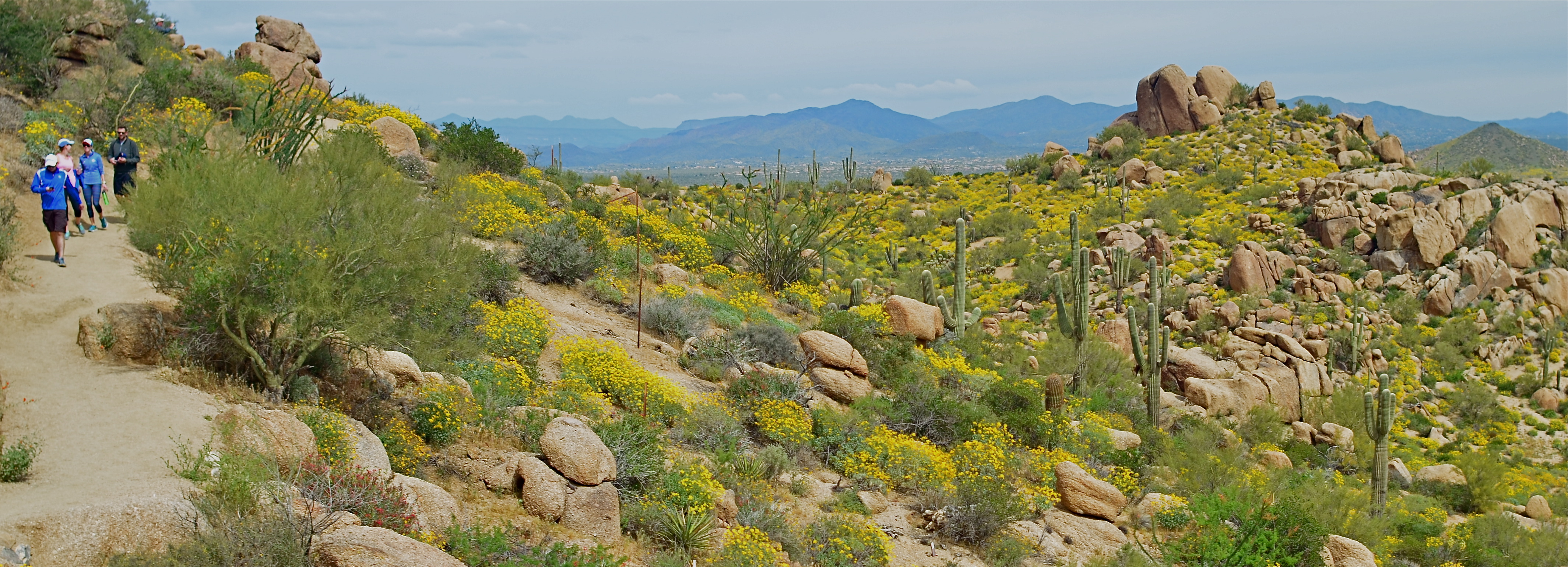
Brittle Bush In Bloom (2017)
And now is a time of radical re-evaluation of what that interaction should look like. That means that there is a visual story to tell, one of the most compelling and vital that photography has ever told. Regardless of your personal stances or stats, man’s place on the planet will be in a state of fundamental shift over the coming decades. And the images that this change generates will define both photography as an art and ourselves as stewards of an increasingly fragile ecology.
Ansel Adams, for all his gorgeously orchestrated vistas, was, I believe, mistaken in almost deliberately subtracting people from his grand scenes, as if they were irrelevant smudges on nature’s work. It doesn’t have to be that way. We need not make war on our native world. But whatever we do, we need to use the camera to mark the roads down which we have chosen to walk. Whether chronicling wise or foolish decisions, the photograph must be used to testify, to either glorify or condemn our choices going forward.
AT WAR WITH THE OBVIOUS
“I had this notion of what I called a democratic way of looking around, that nothing was more or less important. It quickly came to be that I grew interested in photographing whatever was there, wherever I happened to be. For any reason.” –William Eggleston
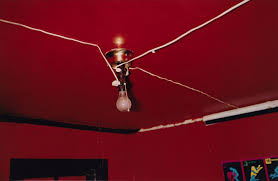
It’s a red ceiling. Don’t, says William Eggleston, look for anything else.
By MICHAEL PERKINS
MOST PHOTOGRAPHERS ARE NOT PRIME MOVERS, in that the majority of us don’t personally carve out the foundations of new truths, but rather build on the foundations laid by others. Art consists of both revolutionaries and disciples, and the latter group is always the larger. With that in mind, it’s more than enough for an individual shooter to establish a single beachhead that points the way for those who follow, and to be able to achieve two such breakthroughs is almost unheard of. Strangely, one of the photographers who did just that is, himself, also almost unheard of, at least outside of the intellectual elite.
William Eggleston (b. 1939) can correctly be credited as one of the major midwives of color photography at a time that it was still largely black and white’s unwanted stepchild. Great color work by others certainly preceded his own entry to the medium in 1965, but the limits of print technology, as well as a decidedly snobby bias toward monochrome by the world at large, slowed its adoption into artsy circle by decades. After modeling himself on the great b&w street shooters Robert Frank and Henri Cartier-Bresson, Eggleston practically stumbled into color, getting many of his first prints processed at ordinary drugstores rather than in his own darkroom. His accidental discovery of the dye-transfer color process on a lab’s price list sparked his curiosity, and he soon crossed over into brilliantly saturated transparencies, images bursting with radiant hues that were still a rarity even in major publications. Eggleston’s work was, suddenly, all about color. That was Revolution One.
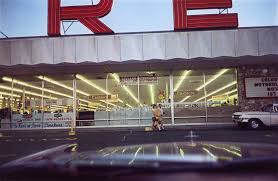
Is it Eggelston’s job to provide the story context for this image? Or yours? or neither?
Revolution Two emerged when he stopped worrying about whether his pictures were “about” anything else. Eggleston began what he later termed his “war with the obvious”, eschewing the popular practice of using photographs to document or comment. His portfolios began to center on mundane subjects or street situations which fell beneath the notice of most other shooters. The fact that something was in the world was, for Eggleston, enough to warrant having a picture made of it. A street sign, an abandoned tricycle, a blood-red enameled ceiling..anything and everything was suddenly worth his attention.
Reaction in the photographic world was decidedly mixed. While John Szarkowski, the adventurous director of photography at the New York Museum Of Modern Art, marveled at a talent he saw as “coming out of the blue”, making Eggleston only the second major color photographer to exhibit at MOMA, others called the work ugly, banal, meaningless. Even today, Eggleston’s subjects elicit reactions of “…so what??” from many viewers, as if someone told them the front end of a joke but omitted the punch line. “People always want to know when something was taken, where it was taken, and, God knows, why it was taken”, Eggleston remarked in one interview. “It gets really ridiculous. I mean, they’re right there, whatever they are.”
However, as can frequently happen in the long arc of photographic history, Eggleston’s work reverberates today in the images created by the Instantaneous Generation, the shoot-from-the-hip, instinctive shooters of the iPhone era who celebrate randomness and a certain hip detachment in their view of the world. As a consequence of Eggleston’s work, images have long since been freed of the prison of “relevance”, as people rightfully ask who is qualified to say what a picture is, or if there is any standard for photography at all. Thus does the obvious become a casualty of war.
FROM A DARK PLACE
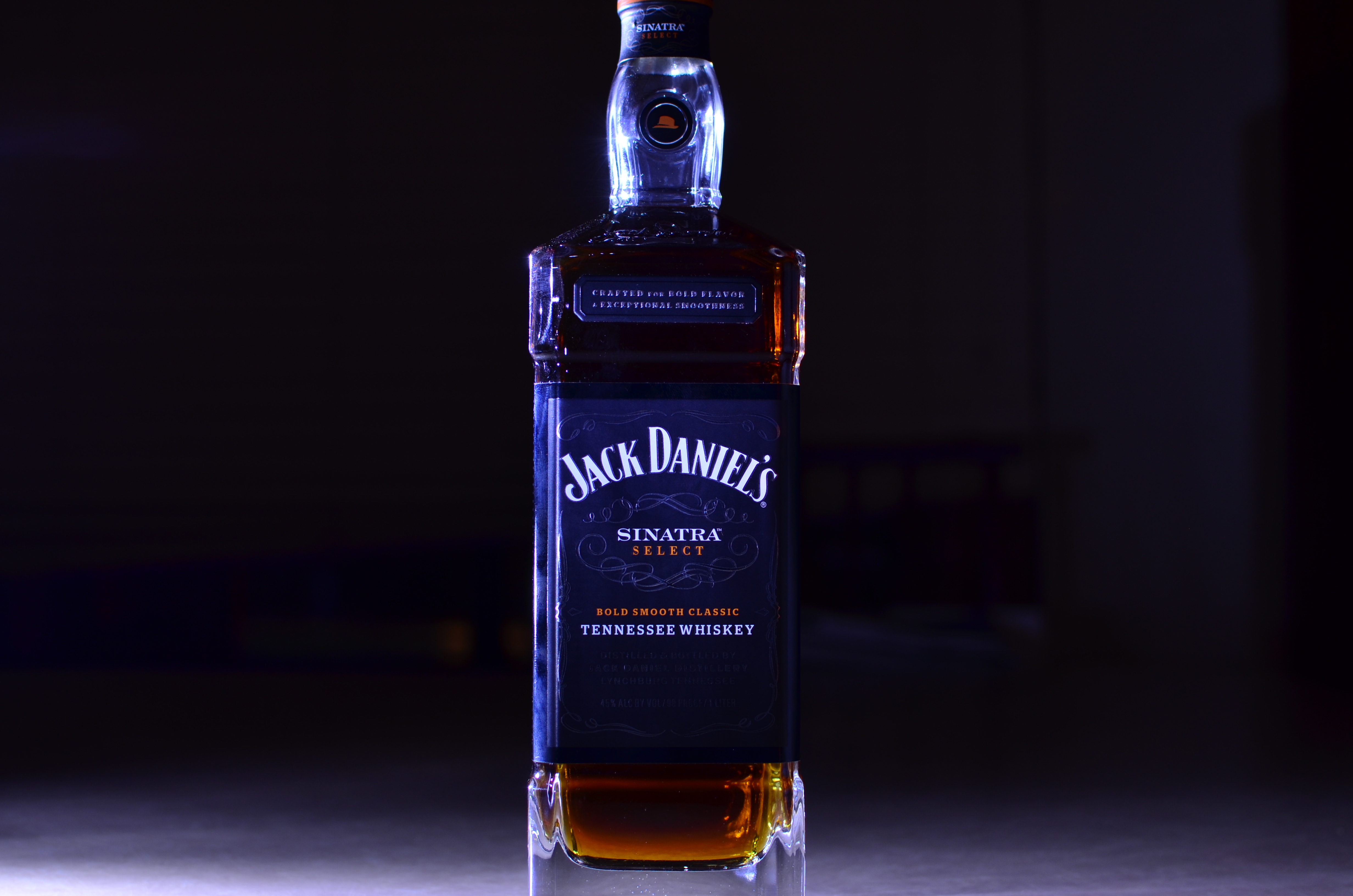
A fifteen-second “light painting” exposure with the product illuminated in a dark room with a hand-held LED.
By MICHAEL PERKINS
THE STANDARD RECIPE FOR A PHOTOGRAPHIC “PRODUCT SHOT” is rooted in the formal studio lighting set-up. Regardless of whether you’re trying to create an idealized picture of a bottle of soda or a grand piano, the traditional approach is to set up a careful balance of artificial lights, then measure and meter until the object is lit wonderfully from every angle. It’s a system honored by time and tradition, with millions of magazine ads and commercials to attest to its appeal.
Which is fine, except I just happen to find it boring.
Instead of starting with a fully lit room and tweaking towards the ideal, I prefer, with the technique known as light writing, to start at the opposite end of the equation…with a totally dark room, the object in question, and a small, handheld LED, using each shot to light various contours of the object and comparing the results over several dozen frames. Instead of instantaneous exposures, I hold my lens open for as long as it takes for me to move my little torch into place, click on for several seconds at a time, then click off, re-position, and apply lighting to another surface on the object, repeating until I use a remote to close the shutter for good. Results vary wildly from frame to frame, and there is a lot of experimentation to get the look I want, simply because, well, I have no idea what that is when I start.

Slightly different tracking with the LED produces a completely different lighting effect.
I may begin by imagining the object as being lit from the side, then try a few takes where the light source comes from above, or even behind. Unlike a traditional studio lighting scheme, light painting allows me to break the rules of nature completely, creating light patterns that could never be achieved in nature. I can spend several seconds arching the LED from one side to another, like a rapidly crossing sun, with the final image bearing every trace of where I’ve tracked over a long exposure.
If I change my mind about what to illuminate in the first ten seconds, for example, I can just adjust it in the next ten. I just re-position the lamp and either augment or erase what’s been stored in the camera in the moments prior. Most importantly, it gives me an infinite number of choices for showcasing the object, settling for a fairly realistic depiction or an utter fantasy or something in between. Comparing the two examples shown here of a series on a whiskey bottle shows how even minute variations in the application of the light give the object a distinctly different identity. And with light painting, the shooter exercises much finer control than is possible with even the best studio set-up….and at a fraction of the cost.
Whether you’re molding an image from a room full of lights or building illumination beam by beam in a darkened room, the whole idea is control. Light painting generates a lot of randomness, and requires a patient eye, but the sheer variety of interpretations it gives you can teach you a lot about the infinitesimal things that can mold a picture, bring more of them under your command.
VISUAL SHORTHAND
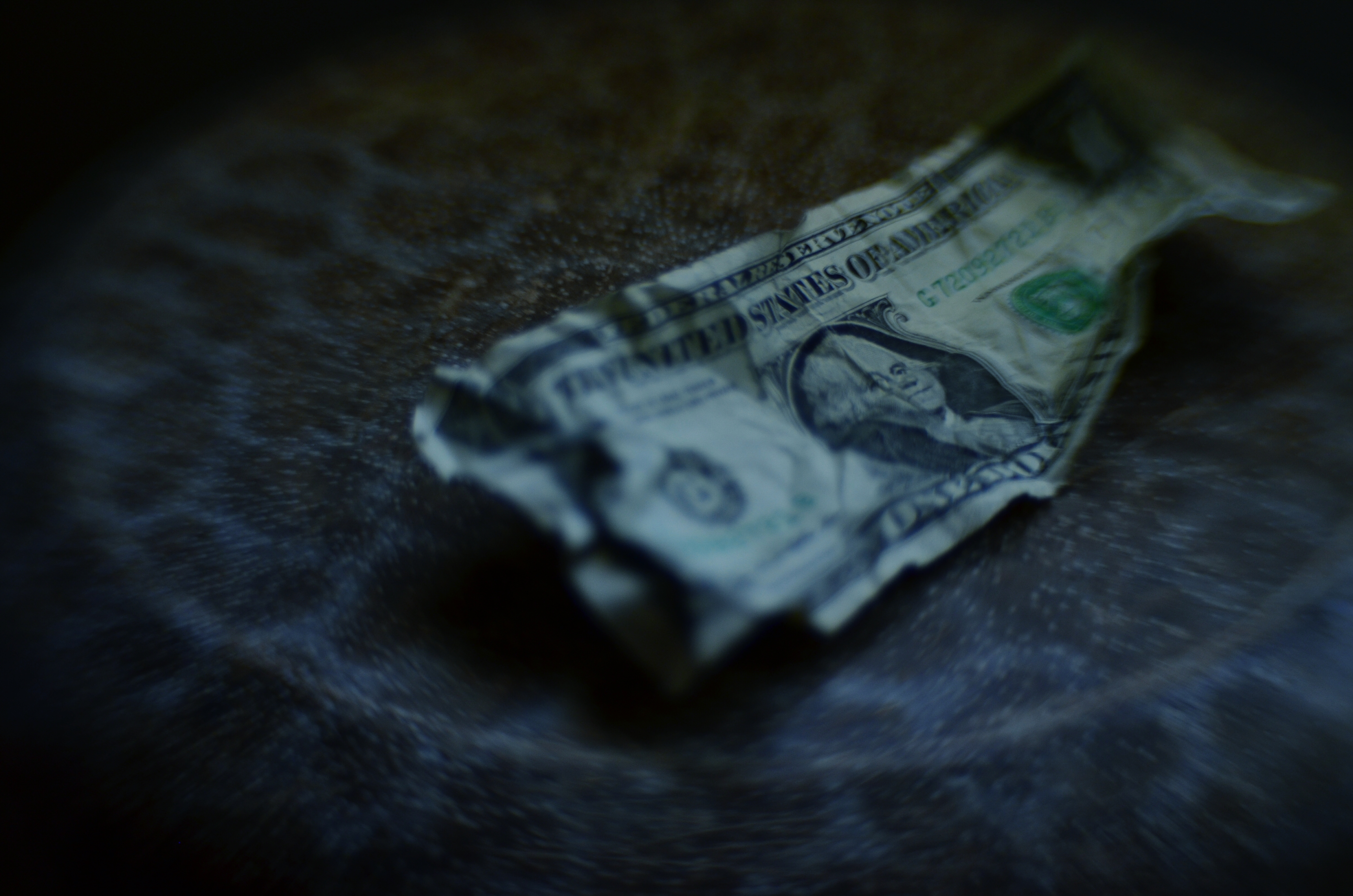
On The Barrelhead (2017). Given your mind’s files on what, visually, a “dollar” is, not much literal detail is needed to convey said object in a photo.
By MICHAEL PERKINS
ONLY A SMALL PERCENTAGE OF OUR MIND’S INNER LIBRARY OF ACCUMULATED DATA is at the top of our consciousness. Staying aware of everything we’ve learned in our lives, every minute of the day, would obviously lead to a mental train wreck, as the vital and the trivial created an endless series of collisions between what we need to know and what we need to know right now. The brain, acting as a wonderful prioritizing network, moves information to the foreground or tucks it toward the back, as needed.
The visual patterns we’ve developed over a lifetime are also at work in how we create and interpret photographs. We know in an instant when we’ve seen something before, and so we process known objects in a kind of short-hand rather than as something we’re viewing for the first time. This allows us to make camera images that are abbreviated versions of things we first encountered long ago, images that merely suggest things, rather than delineate them in full detail. Call it abstraction, call it minimalism, heck, call it a ham sandwich if that helps. It merely means that we can use our brain vaults to show parts of things, and count on our memories to recognize those things solely from the parts.
Focus is but one such way of supplying visual information to the brain, and its selective use allows the photographer to convey the idea of an object without “spelling it out”, or showing it in absolutely documentarian terms. In the image above, our collective memory of the contours and details of a dollar bill are so deeply ingrained that we don’t actually need to see all of its numbers, letters, and images in full definition. Focus thus becomes an accent, a way of highlighting some features of a subject while downplaying others.
It may be that, in photographing selective aspects of objects rather than showing their every detail, we are teaching the camera to act like the flashing fragments of memory that our mind uses to transmit information….that is, teaching a machine to see in the code that we instinctively recognize. Is all interpretation just an attempt to ape the brain’s native visual language? Who knows? All that we really have to judge an image by is the final result, and its impact upon other viewers like ourselves.
COUNTRY MOUSE, CITY MOUSE
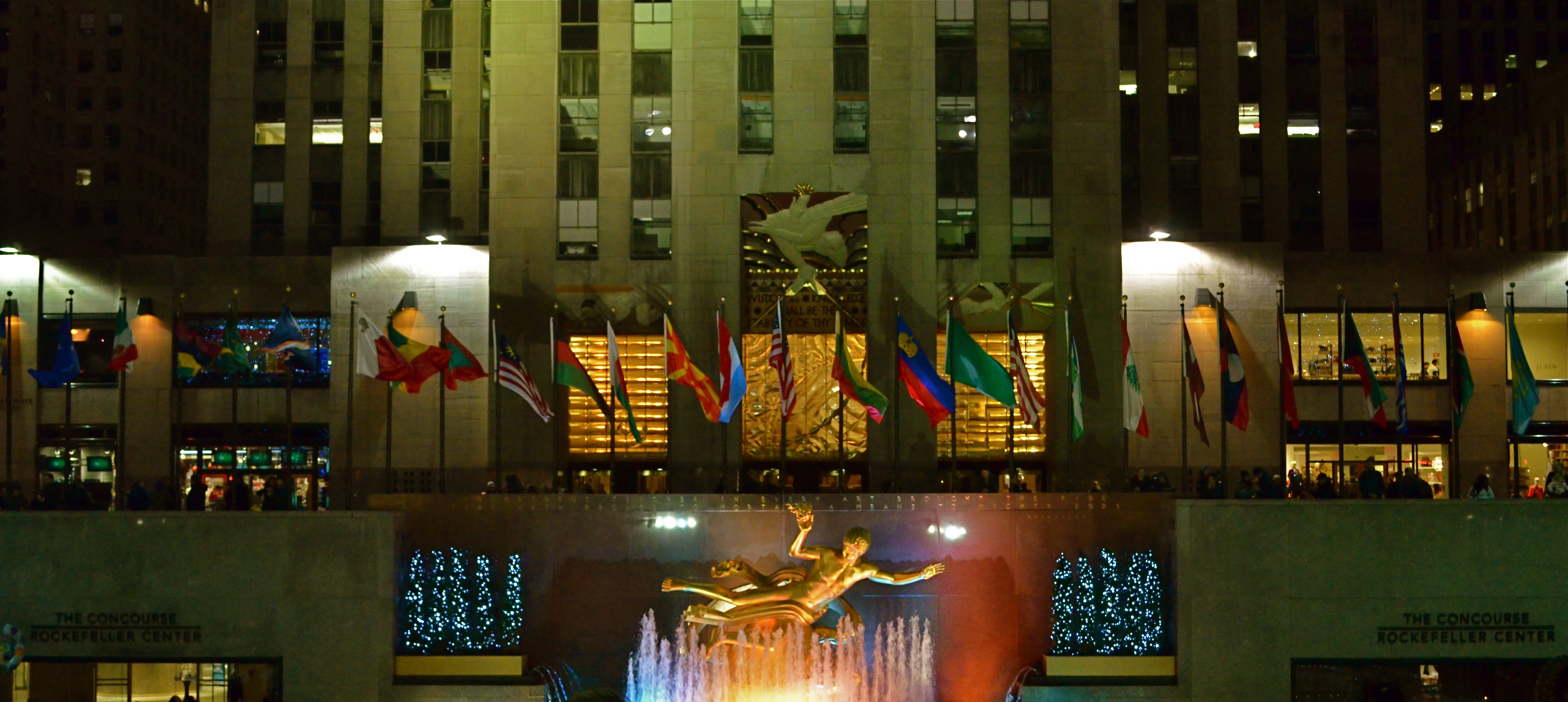
I love landscapes, but cityscapes send me off the launch pad.
By MICHAEL PERKINS
EVERY ARTIST MUST KNOW WHICH CANVAS (or platform) is best for his particular work. And while photography is so rangy and wide, trying to find an area of speciality is no great challenge, so long as you are honest with yourself as to what your eye can effectively deliver. Do portraits alone help your vision pour forth? Then move in that direction, certainly. Drawn to minimalism as a way of expression? Then simplify, my son, simplify, and go in peace.
In fact, my own visual bias, if that’s the word, runs counter to my earliest influences. The first photographs that made me gasp in awe were, in fact, landscapes, since, as a boy, I collected many travel slides and magazines which emphasized life in the natural world. However, my second great influence was that of the great urban photographers, both journalists and poets, whose medium was the man-made, and not the organic, type of mountain. And even though I continued to marvel at the stunning statements made by naturalist shooters, I came to know that I did not have anything particularly wise or wonderful to contribute in that area.
I love nature. It is restorative, contemplative, and any other “ive” you choose. However, I cannot, personally, produce anything poetic or glorious in depicting it. I envy ecumenical writers like Walt Whitman, who reveled in both mountain and city street alike, describing both with incredible passion and power. As a photographer, however, I decided long ago to shoot where my eye is most organically excited…and that’s the city. I can never completely abandon scenic subjects, since I continue to hold out hope that one or another of them will make my heart leap to my throat, and, in turn, make a great vision leap into my camera.
Of course, the longer you make photographs, the more universal your purely technical competence becomes, in that you can deliver a serviceable picture regardless of the assignment. But a photograph is never merely a recording, and simply making an adequately composed, reasonably exposed frame is no greater an achievement than waiting the requisite number of minutes to soak a tea bag. It’s not so much knowing how to make the picture as wanting to, since that desire is the principal difference between acceptable and exceptional. Of course, passion is also not enough, any more than technical acumen is. But when the two meet, they will produce your best work.
As in the author’s mantra “write what you know about”, “shoot what you feel” must surely be a kind of aspirational prayer for better pictures. Can anyone say if a tree is less beautiful than a skyscraper? Not with any true authority. Point that camera where your heart points, and it’s hard to go far wrong.
THE LOVE OBJECT
By MICHAEL PERKINS
IN EARLIER OUTINGS, WE HAVE DISCUSSED THE VALUE of knowing how sunlight enters your house at all times of the day. Knowing where bright spots and slatted beams hit the interior of your home in different hours gives you a complete map of “sweet spots” where natural light will temporarily isolate and flatter certain objects, giving you at least several optimized minutes for prime shooting each day.
Keeping this little time-table in your head allows you to move your subjects to those places in the house where, say, the daily 10 a.m. sun shaft through the family room window will give you a predictably golden glow. For me, that location is my living room window, across which the southwestern sun tracks east/west, and the object is my white baby grand piano.
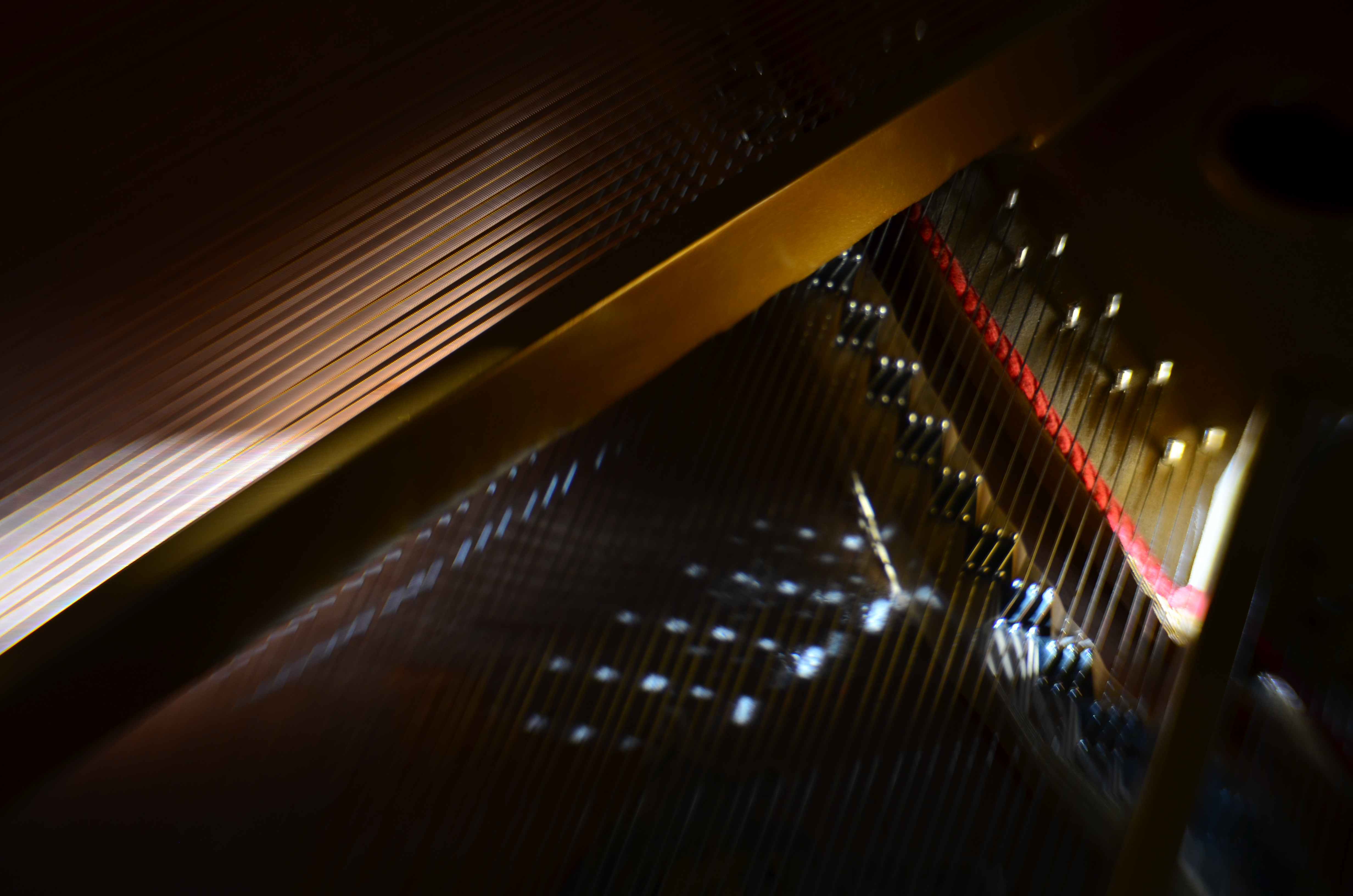
Cordophone Chroma (2017).
Pianos, to me, are divinely complex gadgets, creations of the first great industrial age, their impossibly intricate mechanics offering thousands of possibilities for macro shots, fisheye explosions, abstract compositions, shadow studies, and delicate ballets of reflections as the morning sun dances across harp, strings, and hammers in an endless kaleidoscope of radiance. I have long since tracked how the sun showcases different parts of the piano as the day progresses, and how that corresponds to the instrument’s various sections and subsections.
Hard-wiring that schedule into my skull over the years means I know when a shot will work and when it won’t, making the object more than just something to shoot. It becomes, in effect, an active kind of photo laboratory, a way of teaching and re-teaching myself about the limits of both light and my own abilities. Better still, the innate intricacy of the piano as an object guarantees that I can never really get “done” with the project, or that something that was a mystery in January will become a revelation by June.
What gives this process a special lure to me is my endless effort to exploit natural light to the full, believing, as I do, that nearly every other less organic form of illumination is measurably poorer and less satisfactory than that which comes plentifully, and for free. The house I live in has thus become, over the years, a kind of greenhouse for the management of light, an active farm for harvesting the sun.
BLUR IS THE NEW SHADOW
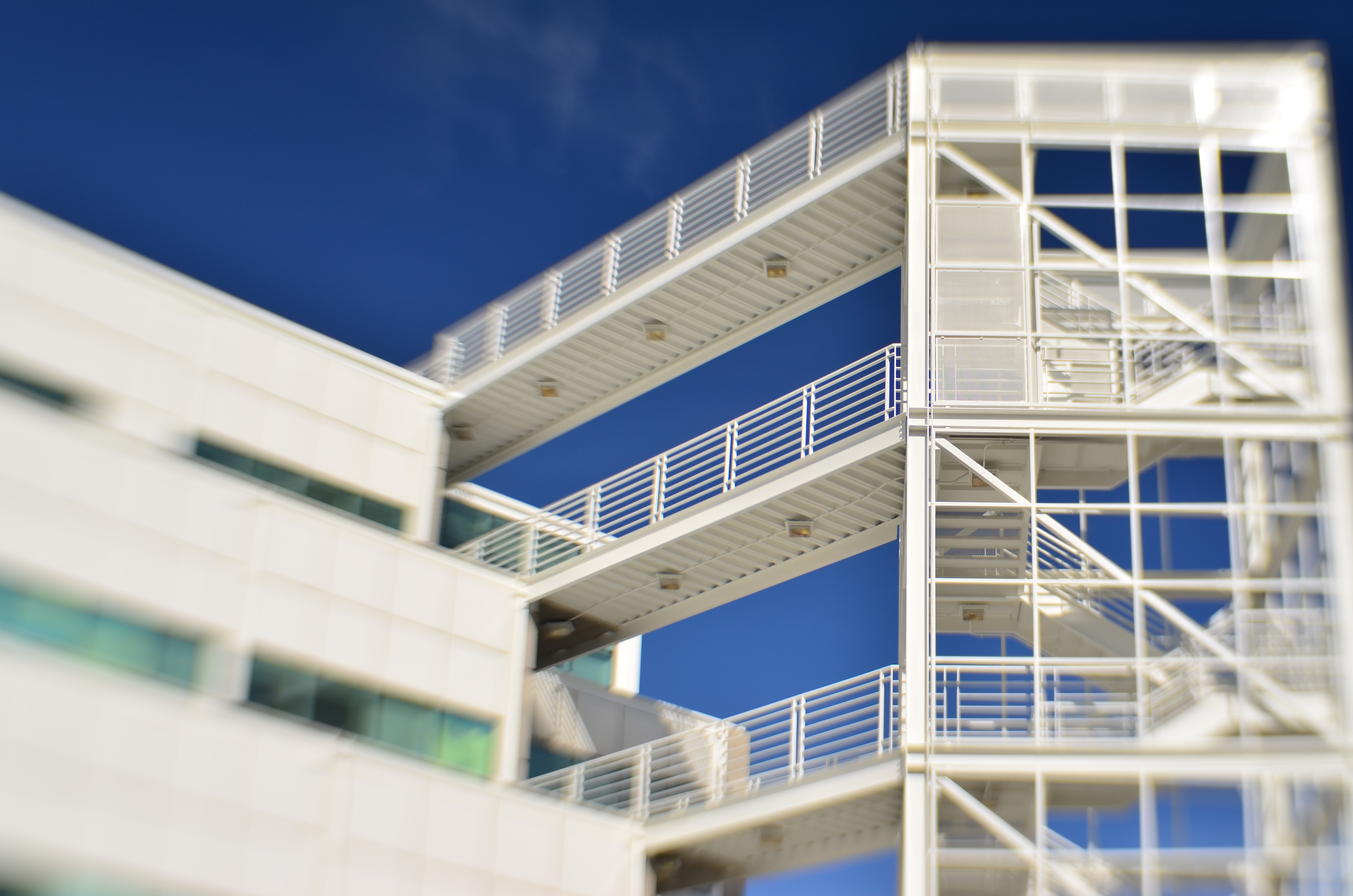
Modern art lenses allow different parts of objects that are all in one focal plane to be selectively blurred.
By MICHAEL PERKINS
I’M INCREASINGLY FASCINATED BY PHOTOGRAPHS THAT SUPPRESS INFORMATION, choosing to selectively conceal details rather than merely delineate everything in the frame in the same exhaustively sharp detail. At the same time, I hate it when this technique is referred to as being “painterly”, as if, after all this time, photos are still striving for the same pedigree that daubers automatically inherit merely by picking up a brush. Photographs are not, and should not try to be, paintings, just as a shoe should not try to pass as a glove. Love the function of the art you have, and leave the mimicry to the mockingbirds.
The “painterly” tag used to be tied mainly to anyone shrouding their images in shadow, as if we were all bucking to be the next Rembrandt or Reubens. And certainly the use of darkness in photography creates a kind of mysterious minimalism, telling more by showing less. We linger over what’s left out of a photo, and the deliberate subtraction of detail simplifies a composition to its barest terms. When there is less to see, you eye goes like a laser to what remains. It’s a big, bright “this way, dummy” arrow pointing toward the heart of the picture.
In the same way, the current wave of photographers are using blur to punch up the impact of images. Any Google search of the phrase “blur my photos” unearths a wellspring of apps that allow any part of any frame to be selectively de-focused, in most cases (as happens with apps) after the picture is taken. Long regarded as the stuff of artifact or accident, blur is now being arranged, managed, and chosen as a tool to remove distracting detail from compositions, or to render them softer and more intimate. In the above image, separate elements of the structure, all of which lie generally in the same focal plane, can be selectively softened so that one can become dominant, while the other is abstracted. This particular shot is done with a Lensbaby Sweet 35 lens, which allows the “sweet spot” of focus to be rotated to any location the shooter desires, although there are many paths to similar results.
Both apps and lenses, which include newly reworked versions of old optics, offer a return to the randomness from which early photographers longed to escape. Lomography, the revival of flawed and cheap cameras from the film era, actually touts blur as a strength, an arty accent much to be desired. To be totally counter-intuitive about it, blur is edgy. Of course, some blur is just another kind of visual noise, and if it’s applied too carelessly or too much, it actually pulls the eye away from the main message of a picture. However, it’s thrilling just to see the sheer breadth of approaches that are suddenly available everywhere, most of them cheap, fast and easy. Blur can “sharpen” a picture just like darkness can “illuminate” one. It’s the new shadow.
TEN NO’s AND A YES
By MICHAEL PERKINS
THERE ARE CERTAINLY MANY MORE PICTURES BEING TAKEN than there are great pictures taken. That’s as it should be. Anything at which you wish to be excellent only comes about once you’ve learned what not to do, and that means lots of errors, lots of images that you feel compelled to destroy almost as quickly as you’ve created them. You must, must, must, take all the bad pictures right alongside the good ones. At first, the garbage will outnumber the groceries.
And then, some day, it doesn’t.
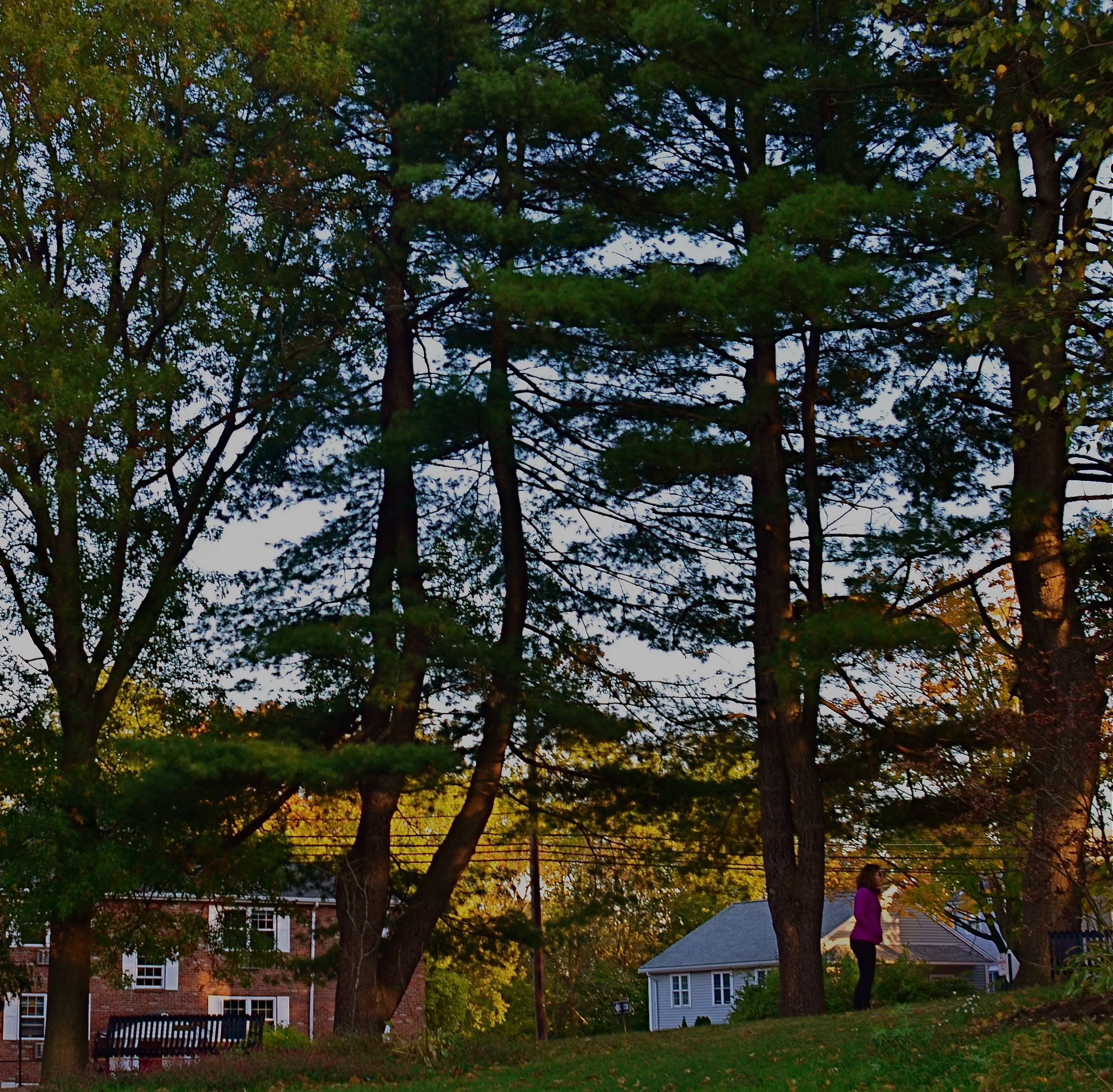
We all have pictures that worked out that we almost didn’t take in the first place.
I am an A.B.S. (Always Be Shooting) shooter. I mean, I make myself at least try to make a picture every….single…day. No excuses, no regrets, no exceptions. Reason? I simply don’t know (and neither do you) where the good pictures are going to come from. For me to give myself permission not to try on a given day means I am risking that one of those potentially golden pictures will never be born. Period period period.
In a way, I often think photo technique guides from years gone by had things backwards. That is, they often made suggestions of great opportunities to take great pictures. You know the list: at a party: on a vacation: to capture special moments with loved ones, etc., etc. However, none of these traditional “how-to” books included a category called “just for the hell of it”, “why not?”, or, in the digital era, “whattya got to lose? You’re shooting for free!” These days, there are virtually no barriers to making as many pictures as you want, quickly, and with more options for control and creativity, both before and after the shutter click. So that old “ideas” list needs to be re-thought.
To my thinking, here’s the one (yes, I said ONE) suggestion for making pictures, the only one that matters:
TAKE THE SHOT ANYWAY.
And to purify your thinking, here’s my larger list, that of the most commonly used excuses not to shoot. You know ’em. You’ve used ’em. And by doing so, you’ve likely blown the chance at a great picture. Or not. You won’t know, because you didn’t TAKE THE SHOT ANYWAY. Here are the excuses, in all their shameful glory:
I haven’t got the right lens/camera/gear. There’s not enough light. I don’t do these kinds of pictures well. I don’t have my “real” camera. There’s nothing to take a picture “of”. Everyone takes a picture of this. I’ll do it later. It probably won’t be any good. There are too many people in the picture. There isn’t enough time.
Train yourself to repeat take the shot anyway, like a mantra, whenever any of these alibis spring into your head. Speed up your learning curve. Court the uncertain. Roll the dice. Harvest order from chaos. Stop waiting for your shot, your perfect day, your ideal opportunity.
Take the shot. Anyway.
LYING WITH A STRAIGHT(ER) FACE
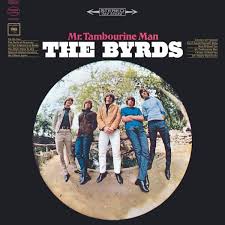
Most of us discovered the effects of fisheye lenses as part of the visual signature of rock’n’roll.
By MICHAEL PERKINS
THE NAME OF THIS BLOG, THE NORMAL EYE, IS A REFERENCE to the old nickname for fixed-focus “prime” lenses, non-zoomable glass like 35 and 50mm, that were once dubbed “normal” since they delivered the sense of space and proportion most closely resembling that of human vision. I’ll leave other combatants to decide whether this renders prime lenses “truer” in any way (those of you who think you know what “truth” is, advance to the fine arts class), but one things seems clear (that is, not cloudy): wide angle lenses, say 24mm or wider, tell a somewhat different truth, and thus create a distinct photographic effect.
Ultra-wides can generate the sensation that both proportion and distances (mostly front-to-back) have been stretched or distorted. They are thus great for shots where you want to “get everything in”, be it vast landscapes or city streets crowded with tall buildings packed into close quarters. They don’t really photograph things as they are, but do serve as great lenses for the deliberate effect of drama. I don’t use super-wides for too many situations, but, when I do, I make up for lost time by going overboard…again, largely as an interpretative effect.
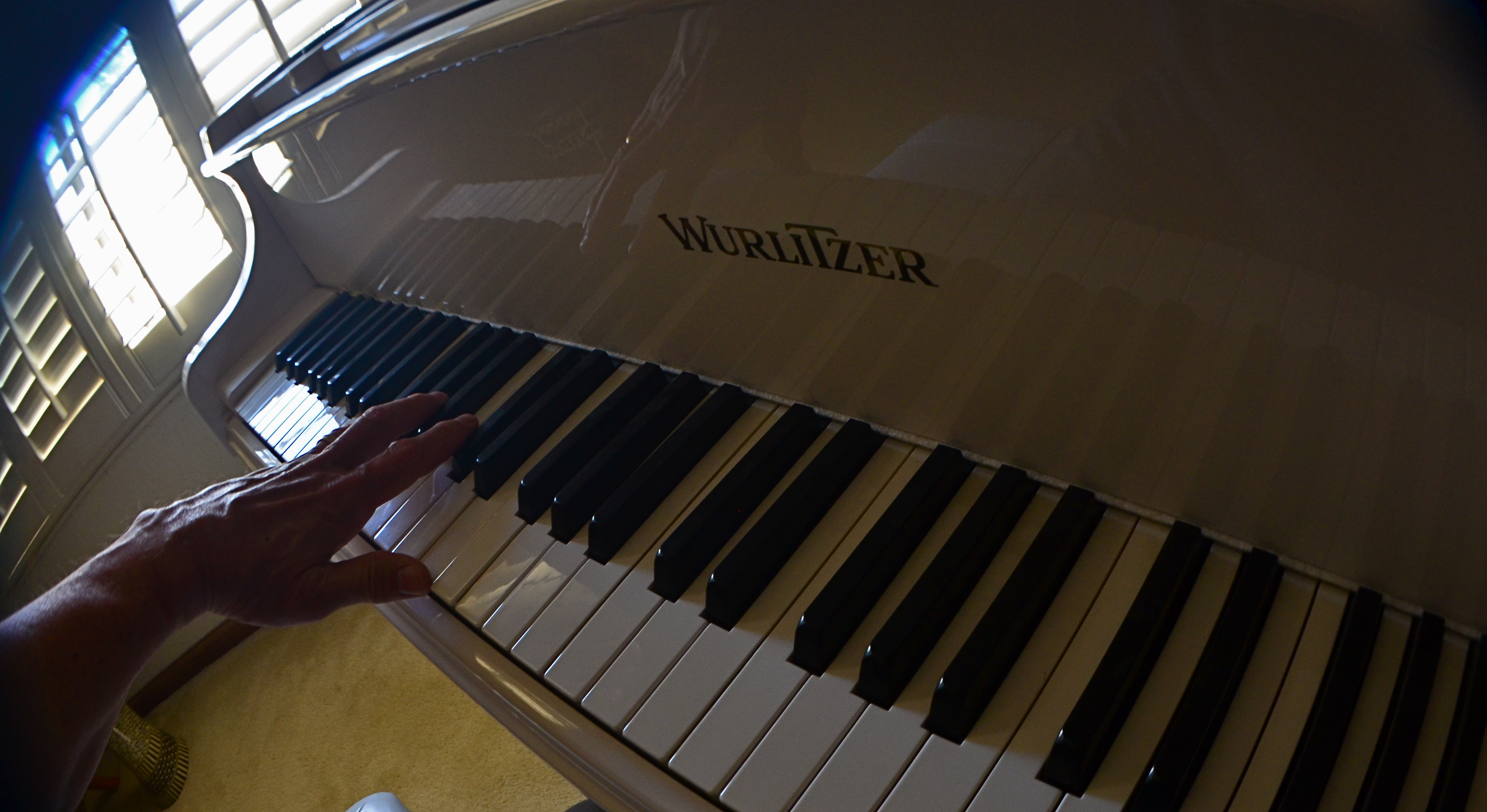
Duets (2017). Rather than “reality”, this is more like a fisheye version of “hallucination-lite”.
Nothing shoots wider than the fabulous fisheye lens, introduced in the 1920’s as a meteorological research tool, and shooting as wide as 8mm with a viewing arc of anywhere from 100 to 180 degrees. Starting in the 1960’s, the fisheye’s unique optics crept into wider commercial use as a kind of funhouse look, the circular image in which all extremes of the rounded frame bend inward, creating the feel of a separate world isolated inside a soap bubble. Some of our most iconic cultural images used this look to suggest a sense of disorientation or dreamlike unreality, with classic album covers like the Byrds’ Mr. Tambourine Man, the Beatles Rubber Soul and Jimi Hendrix’ Are You Experienced? using fishes to simulate the psychedelic experience. Far out, man.
However, used sparingly as simply a more extreme wideangle, the fisheye can create a drama that conforms more to a rectangular composition, especially when the inner core of the image is cropped into a kind of “mailbox” aspect, resulting in an image that is normal-ish but still clearly not “real”. Tilting the lens, along with careful framing, can keep the more extreme artifacts to a minimum, adding just enough exaggeration to generate impact without the overkill of the soap bubble. As with any other effects lens, it’s all a matter of control, of attenuation. A little of the effect goes a long way. I call it lying with a straighter face.
Fisheyes are a specialized tool, and, for most of photography, the optical quality in all but the most expensive ones have kept most of us from tinkering with the look to any significant degree. However, cheaper and optically acceptable substitutes have entered the market in the digital era, along with fisheye-“look” phone apps, allowing the common shooter to at least dip a toe into the pool. Whether that toe will look more like a digit or a fleshy fish hook is, as it always was, a matter of choice.

