the photoshooter's journey from taking to making

Latest

HOW TO NOT DO

By MICHAEL PERKINS

THIS FORUM HAS NEVER REALLY BEEN ABOUT GEAR, being an examination of why we make photographs rather than what specific equipment we use to do so. Of course, pictures aren’t born in a vacuum, so, even with the purest artistic motives, you still need a mechanism of some kind to carry out your wishes…and that means that some of what we discuss here is very much about what happens in them little magic light boxes. Still, this awareness has never led us into actual recommendations for specific products, as there are simply too many such advisories littering up the webby highway without me jumping into the fray.

Such neutrality about suggesting what to buy, however, can be maintained if I am listing reasons not to buy a camera, as such cautions transcend brands and models. That is, no matter why you decide to go gear shopping, there are things that should always be borne in mind, if our point is the motivation behind photography and not the devices we use. Call it a “how to not do” list. So, assume for a moment that you are suddenly in the market for a new gadget and consider the following.

DO NOT buy a camera because your friend, uncle, friend at the factory or buddy at the camera store uses it. Unless they are also going to take your pictures for you, their advice is so subjective as to be worthless.

Even in the age of easy online returns, do yourself a favor and DO NOT buy a camera that you’ve never held in your hand. The ergonomic layout of cameras varies widely from maker to maker, and it really does make a difference where they stick the buttons.

DO NOT buy any more camera than you need for what you do right now. It’s all right to select a few features that you may eventually use, even if you don’t use them at present. But that’s a far cry from buying a device that is drowning in options, seldom-used features, and infinite sub-menus. Pay good money for just the camera you need, with a smidge of extra growth room built-in. If you later find that you’ve outgrown the camera, then and only then is it time to trade up. Gear that is too strong on extra gizmos only gets partly used and can be intimidating enough to wind up in the hall closet a year later, after you’ve gone back to your cell phone.

DO NOT assume that the latest thing is the greatest thing. Manufacturers make their profits on the backs of customers who can be made to feel dissatisfied with what they own, and obsolescence is built into their marketing. There is aIso the problem that some companies’ models decrease in quality or precision as the brand ages (or as they chase greater profits). If your camera helps you take good pictures easily, and without a lot of exotic setup or detours, then keep it until it disintegrates in your hand.

DO NOT purchase equipment that places unnecessary obstacles between your conception and the finished product. If going from framing to shooting involves too many steps, your camera is taking your attention away from seeing, and that means missing shots. Making a picture should be as effortless as 1, 2, 3. If you already are on step 5 before you even click the shutter, get another camera.

DO NOT initially over-invest in a battalion of specialized lenses. You will eventually get to the point where lugging all that load will prove either inconvenient or painful or both, and many a photographer has eventually winnowed down his/her “must-carry” gear to a single lens that delivers 90% of what they want 90% of the time. Think about how much fun it is to lug around a lot of devices that only do a single task, and then run in the opposite direction.

Finally, DO NOT buy a camera that you are not head-over-heels, OMG, stop-the-presses in love with. Anything less will also wind up in the aforementioned hall closet.

Smmary: photography is about the gear….sometimes, but mostly it’s about everything else. Sexy ads and four-star reviews are deliriously distracting, and we all love to dream. But mostly, we’re here to make pictures.


OPENING DAYS / CLOSING NIGHTS

By MICHAEL PERKINS

IT’S NOT HYPERBOLE TO SAY THAT THE GREAT HIBERNATION, our global banishment from our regular lives, feels a bit like living through a war. As in a traditional conflict, there are separations, sudden deaths, deprivations, and a feeling of “where have I been?” that accompanies our every venture outside our safe zones. So many of us have simply backed out of the flow of time that, as in times of war, we are startled by what has been altered or even vanished since the last time we cautiously emerged to explore the sites of our old existence.  And that shock, in turn, informs all of our art, including, of course, photography.

The first thing that we notice is that so many things that were solid and substantial before we ducked under cover have been either greatly altered or completely vaporized. And the sensation is not limited to things that were already crumbling, but also includes things that were just becoming part of our world in the moments immediately before the lockdown. Places that just cut their ribbons of newness a heartbeat ago, but which already find themselves neutralized, obsolete. Of course, society is always closing chapters and tearing down buildings, in a cycle of goodbyes that seem almost normal, pandemic or no. But the toll created by our withdrawal from the daily parade also lists things that were just getting started, the space between their grand opening days and dark closing nights shrunk by circumstance . And our photographs of those things, taken either before or after these brief appearances, are poignant images of what might have been, a measure of the gap between our hopes and the ruthless randomness of this strange new world.
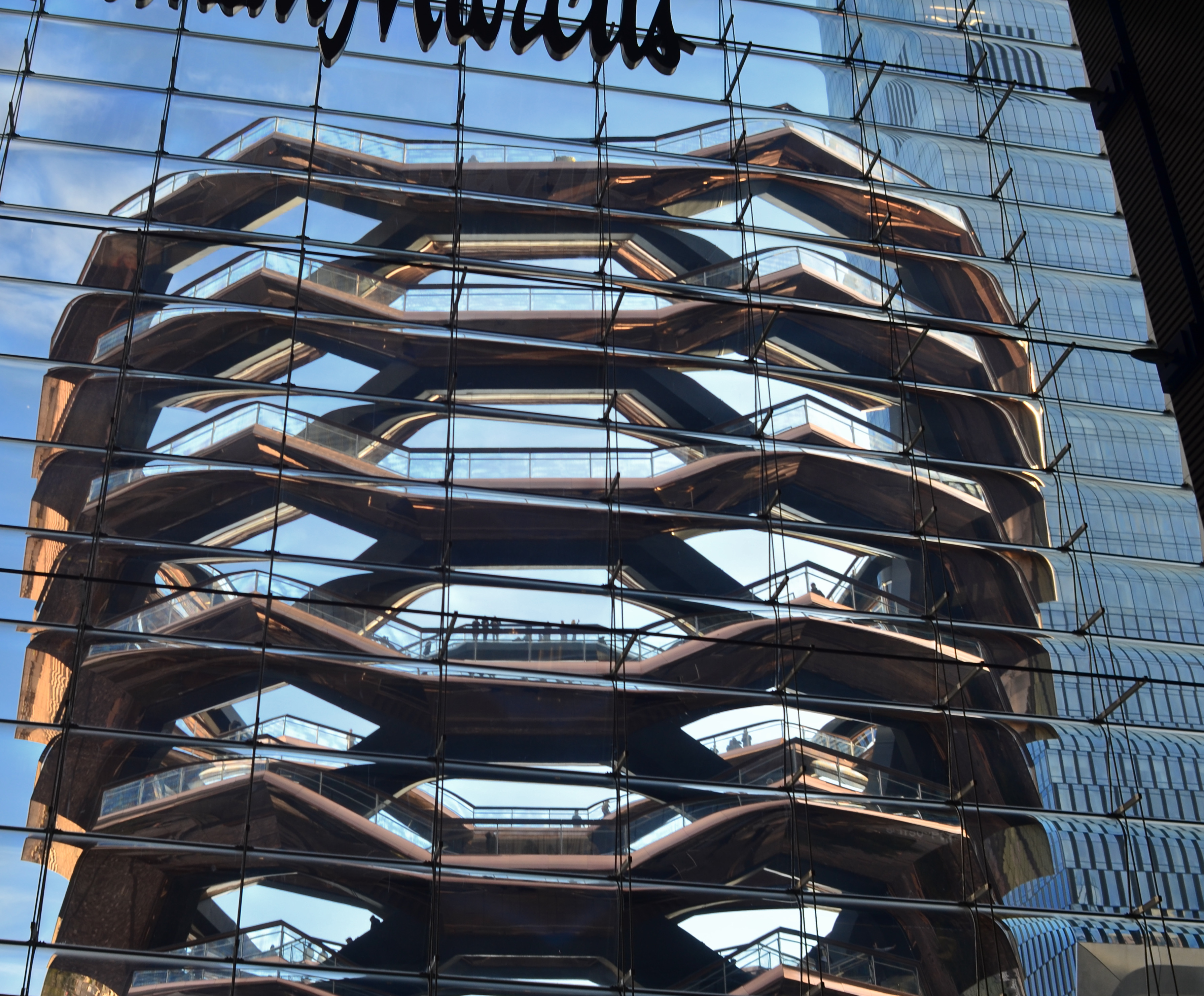
The now-vacant “Vessel” stands opposite Hudson Yards’ Public Square in the long-ago Manhattan of 2019.

As one example, consider this image of Vessel, a bold (and controversial) open-air attraction that acts as a kind of visual rendezvous at the head of the massive new Hudson Yards district in Manhattan. Part sculpture, part observation deck, part tourist trap, the structure sits opposite the main entry to the Yards’ Public Square mall. Built at a cost of 200 million dollars, it rose to sixteen floors, honeycombed 154 flights of stairs, and became an instant hit with visitors, who were admitted via free but timed tickets. Vessel’s very bigness rendered its actual value as art moot; like the Eiffel Tower (to which it was compared) or Niagara Falls, it just was, and, in so being, became part of what you do when you “do” New York. It opened to the public in March of 2019.

You can guess a lot of what followed. As NYC locked down, retail took a major hit and retail on the massively ostentatious scale seen at Hudson Yards took an even bigger one. Leases were renegotiated, then abandoned outright. The project (still unfinished) that was designed to reconfigure an entire economic sector of the Apple was down on one knee. And something weirdly symptomatic of the times occurred with Vessel; people started to jump off of it to their deaths. Last month (January 2021), the structure was closed “indefinitely”, its term as a pet chunk of Americana capped at just under two years’ time.

I was lucky enough to photograph Vessel in person, creating day and night images that now seem as bizarre as launch-party pix of the Hindenburg or snapshots from Titanic. Photographers often catch a flavor of a time by accident, and many of our personal archives are populated by things we never thought of as perishable or mortal at the moment we shot them. Vessel is just one very public barometer of Dreams Gone Wrong, visions that deserve to be preserved inside our magic light boxes, either as tributes to our dreams or tombstones to our folly.
WE ARE ALL BURT LANCASTER NOW

By MICHAEL PERKINS

I REMEMBER BEING FASCINATED as a child by the 1963 film The Birdman Of Alcatraz, based loosely on the life of murderer Robert Stroud, whose accumulated crimes drew him a life sentence, much of it spent in solitary confinement. The movie, starring Burt Lancaster, centered on Stroud’s almost accidental introduction to birds, an improvised pastime which blossomed into an extensive and self-taught study of ornithology. The story’s biggest impact on me was the idea that someone could center on the smallest scintilla of hope, something others around you might ignore or simply not see at all, and that such small things might lead beyond mere survival to a kind of separate peace, even wisdom. In retrospect, I probably should have chosen a better model than that of a total psychopath. Still, the idea of being able to successfully navigate isolation was one that occasionally fascinated me over a lifetime. It’s also come to mind a great deal over the past year.

To paraphrase a cliched expression, we are all Burt Lancaster now; we have all learned to place greater focus on smaller worlds, and it is no accident that one of the biggest growth industries during our Global Great Hibernation has been the hobby of birdwatching. It’s cheap, it’s relatively easy to break into, and it’s as close as your window. More importantly, it’s a reassurance that life, or some semblance of it, has gone on, even if all we can do is watch as it wafts by. Like Stroud, we are all improvising to reduce the ache of greatly reduced circumstances. And like prisoners everywhere, confined behind either tangible or figurative bars, we are able, maybe for the first time, to see, in depth, something that was all but invisible to our previous system of seeing.

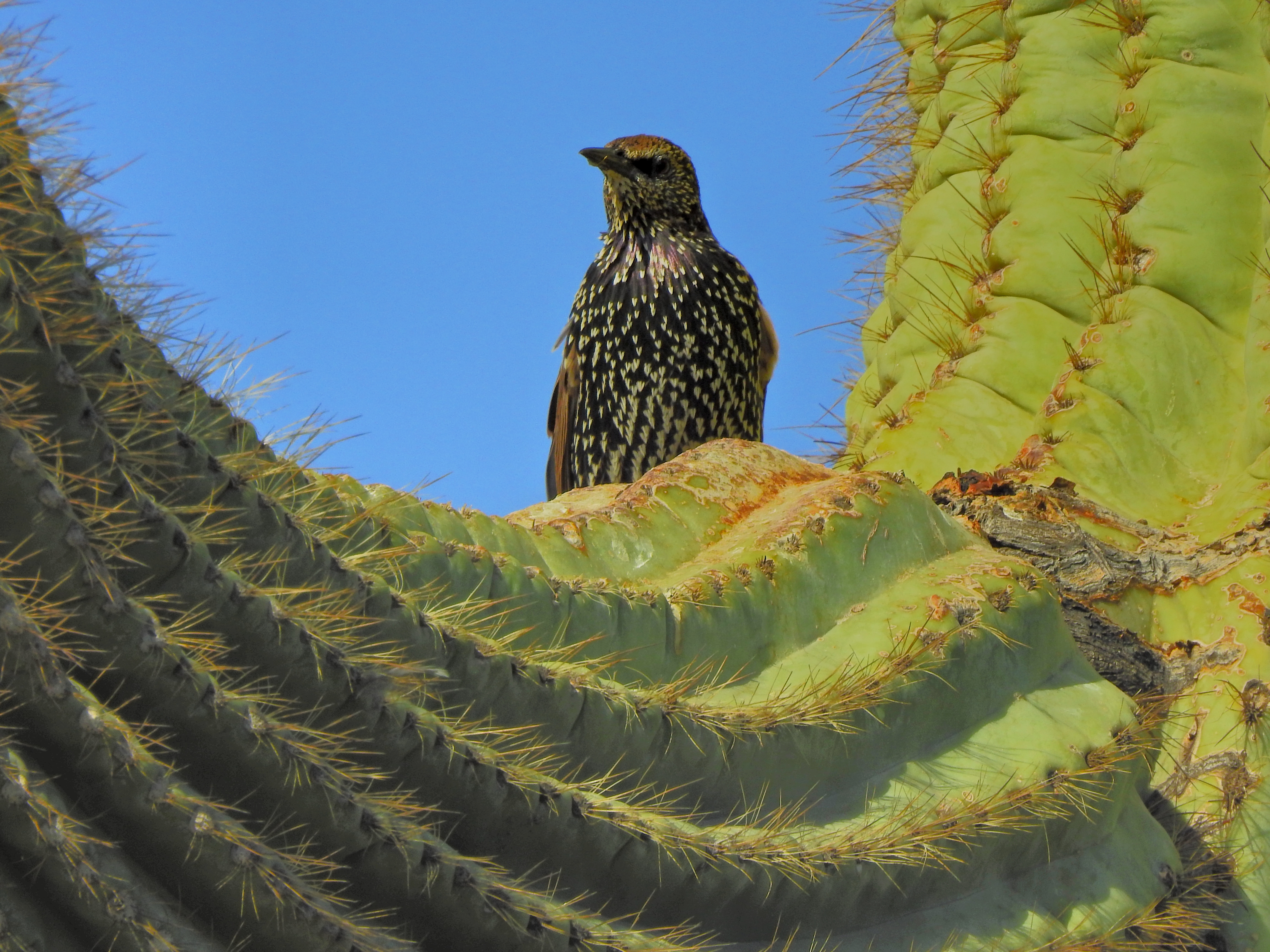
Nobody puts Baby in the corner, but you can occasionally put Starling in the circle.

For photographers, including this one, birds can be a metaphor for many things we already value about our art. Color, motion, texture, context, even a kind of portraiture…all are addressed in trying to assign traits or personalities to flying creatures. Working from the long, empty days, we slow down and deepen our observational powers. We view things in finer depths and degrees, in inches rather than miles now. I will freely admit that my own photographic coverage of birds had been, during The Before Times, confined to the easiest, most obvious captures; flocks caught accidentally in a vast beach vista; raptors in zoo cages; the occasional comic shot of a gull stealing a hot dog, etc. The quarantine has altered all that, stretching time like taffy, elongating our implementation of any undertaking from hours to days. But this is not an effort to overprescribe a general therapy for everyone; your “birds” may be furniture, the veins of a leaf, still lifes of your accumulated buffalo nickels. This is why we have congregations of varying denominations. While I am worshipping at the first temple of the ruby-throated sparrow, you may bow your head at the Community Church of the Holy Art Deco Ashtray or some such. The idea is that photography always benefits from patience and deliberation. Snap shots are marvelous manifestations of our impulses, but they are not the products of quiet contemplation.

My point is that there is room in your photography for both the spontaneous and the deliberative. In my case, tiny tweeters have become a kind of surrogate for human subjects, as I find myself searching their faces for traces of motive, emotion, even joy. Unlike the Birdman of Alcatraz, most of us will eventually be sprung, released back into the larger work yard, hopefully having learned a little more about playing well with others. And the pictures we made behind walls will be, in lasting ways, capable of taking grander flight.

COMP RULE #1 (There is no #2)


Lots to see here. Maybe too much.

By MICHAEL PERKINS

IN BEGINNING FORMAL INSTRUCTION IN PHOTOGRAPHY, students are typically steeped in whole systems of procedure on the creation of a composition. In this pursuit, we’ve all trudged through swamps of techno-sludge, from “golden triangle” to “rule of thirds” to “leading lines”, along with dozens of other schemes for organizing visual information within the frame. Many of these credos are, in fact, valuable in training the eye to prioritize the data in their pictures and streamline their effectiveness, and I applaud their use. What irks the semanticist within me, however, is when these tips are referred to as rules. That’s when things wander into the weeds.

This is not mere finicky wordplay on my part; first, the idea of the word “rules” being applied to something as mutative as art makes no sense to me. It is in the defiance of accepted norms that art fully triumphs, and photography cannot breathe if it’s drowning in its own catechism. I understand that we humans love to list things, to map steps out in order of perceived importance. However, when it comes to arranging the photographic frame, I contend that all the approaches we learn about are merely that…approaches, and that, were I to grudgingly use the word rule in regard to composition, that there would only be one: engage the eye.

What else is there? Photographs begin as one person’s vision sent forth with the aspiration of becoming a shared experience. To that end, everything is about grabbing the viewer’s eye and effectively saying, here is where I want you to look; here is the order of importance among the things in this picture. All of the tricks taught about composition are merely a means to acheiving, by many roads, this one objective. Use whatever graphs, spirals, force perspectives or focus tricks you like, or mix them all together; if they don’t result in a conversation between you, the picture and the audience, then you have nothing except mere technical mastery. And just as there are paintings that are more expert in execution than in emotional effect, there are millions of wondrous exposures that communicate nothing.

In the inset above, the original of a street scene image is an attempt to express the size and energy of an urban neighborhood. There’s nothing technically wrong with the picture, but, after looking at it for several weeks, I decided that the energy of the shot lay not in the car traffic or even the height of the buildings, but in the conversation between the two men at left. In the cropped version of the shot, seen directly above, this relationship is pushed to the foreground, without losing the feel of the city’s busy energy or scope. Certainly, basic compositional rules might have pronounced the first shot “balanced”, but it’s the deliberate intervention taken to create the tighter version that is an act of composition. And, of course, this is not meant to hold my own work out as an example to be followed. It’s just an illustration of the point that rule-breaking is where pictures begin, not where they go to die. Even though a picture is mounted on a wall with the help of a hammer and nail, no one would argue that either the hammer or the nail is what makes the picture compelling. Engage the eye, and you will have faithfully executed the only compositional “rule” that matters.

A SHADE-Y BUSINESS

By MICHAEL PERKINS

PHOTOGRAPHY WAS NO SOONER OUT OF THE CRADLE than it was being aggressively tweaked and twiddled with, in a thousand myriad experiments aimed at improving it both technically and aesthetically. Seldom has the birth of an art form been accompanied by a surge of re-inventive energy equal to or greater than its release of creative energy. Photographs were both art and science, a strange hybrid of human expression and mechanical reproduction. One of the earliest and most consistent treasure hunts in the young craft was the quest for color, simulated and daubed on at first, then integrated into the actual making of the picture in-camera.  In this age, which could be labeled Photography Century III, we use color mostly without thinking, even though it is one of the most crucial elements in how we tell stories in pictures.

Although the first practical color films date back to the early 1930’s, mostly by way of Kodachrome and its later imitators, the majority of important photographs for the first half of the twentieth century were taken and published in monochrome. In the minds of the pros like Ansel Adams, early printing processes for color were unsteady or “untrue”, with only mass-circulation magazines using them with any regularity (with a ton of touch-up) until well after World War II. After all the G.I. Joes and Janes came home, the tidal wave of leisure culture that accompanied them also brought a new explosion in amateur color photography, although it was not until the 1970’s that the economy of global film sales truly tipped in favor of the rainbow. Today, for many, monochrome is now a nostalgic effect, a quaint way of recalling the “look” of earlier photographic eras.

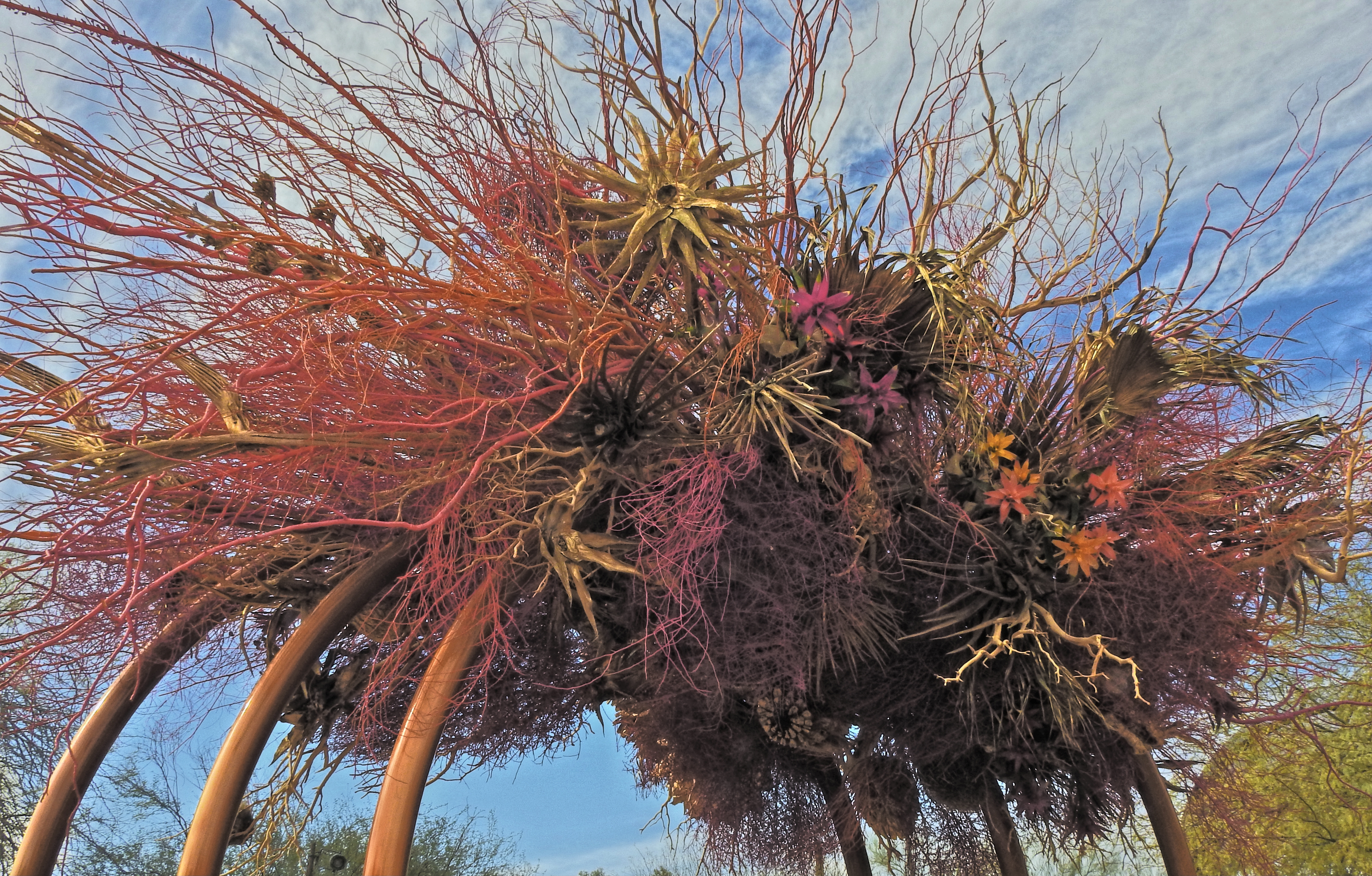
“Wind”, an art installation by Natasha Lasitsa and Daniel Schultz

In 2021, our attitude about hue is all over the road. Some still obsessively pursue the most accurate depiction of “natural” colors as is technically possible, while, for many others, color is negotiable, malleable. We acknowledge its power as an expressive tool, but we tinker with it for interpretative purposes more than ever before. We even seek out software designed to re-produce the color errors or biases of bygone brands of film stock, seeking a color that is technically “wrong” in order to get the right “feel”. We shoot with color as we use any other modern means of expression, which is to say, with an overlay of irony.

In making an image like the one seen here, the very nature of the subject is a kind of unreality, since the desert blooms and bushes used in this art installation have been dyed before the work was assembled, in an array of colors that is nothing like the limited palette they would display in their natural state. The resulting work is thus a kind of psychedelic fever dream of a desert scene. Do I record this as I find it? Do I remix the colors even further to interweave my own mood into it? Just trying to render an accurate record of this object with the color films of long ago would have been enough to send the most battle-hardened photo editor into choleric fits, and yet today, we accept that color is, as with any other element in a photograph, precisely what we say it is, and nothing more. In a way, we’ve come full circle to photography’s earliest days, before the development of actual color film, when painters touched up black-and-white images with whatever arbitrary color choices they thought “completed” the picture. Is it art? Is it not? The answer is, it is ours, a response which silences all other questions.

COMPETING WITH WHOM?

By MICHAEL PERKINS

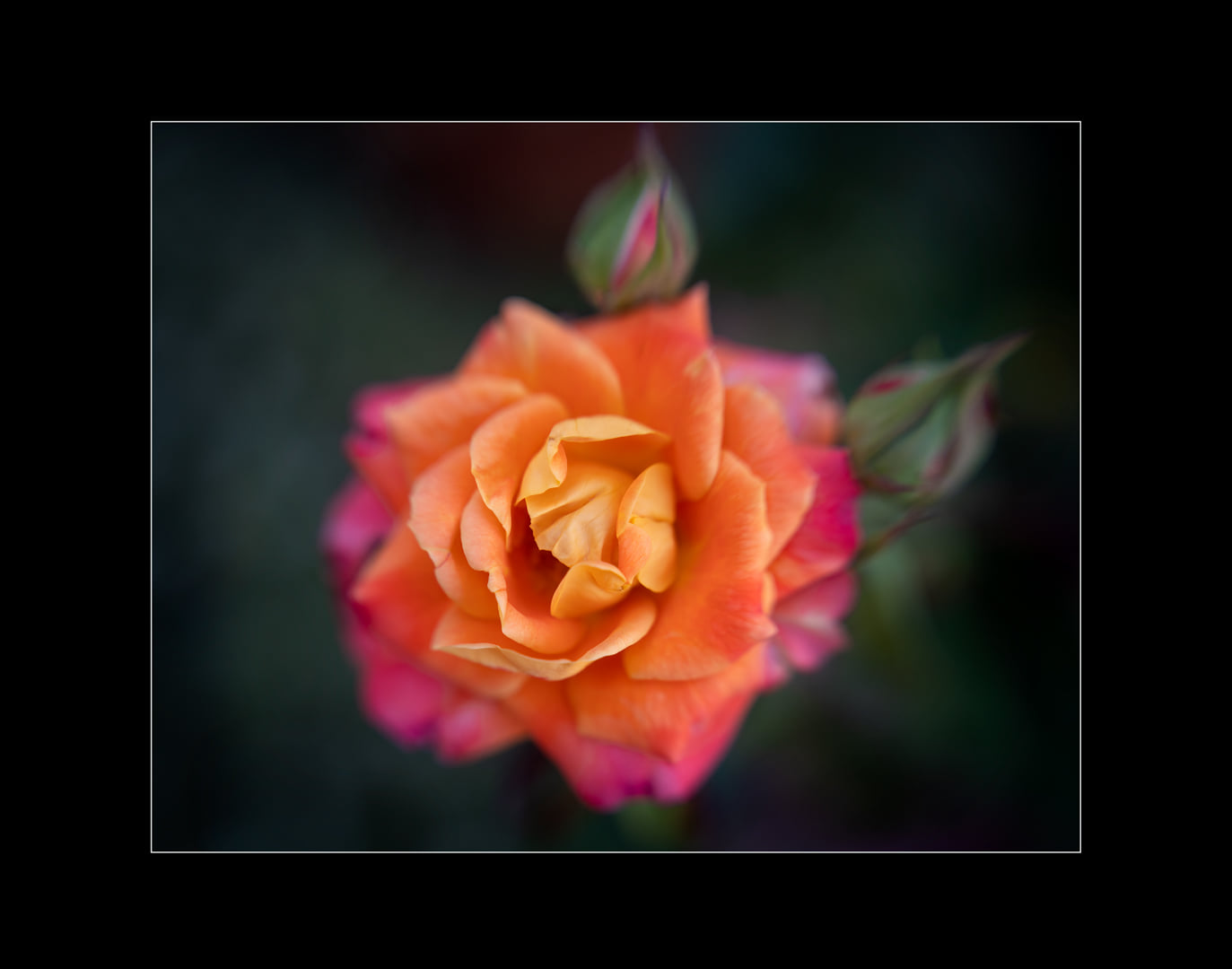
THE IMAGE YOU SEE HERE IS NOT MINE, although I’d gladly claim it anyday. It was taken by a lady named Judith Shields, an enthusiastic amateur who recently entered it in a photographic contest and apparently earned some distinction with it. Where she finally placed in the winners’ circle is not as significant, however, as the fact that she was docked points by the judge of the competition because the center of the flower, being fairly open, did not conform to his concept of what constituted a “correct” depiction of the subject. Or something. Since the remark makes no sense whatsoever in terms of either art or photography, it understandably sparked an online thread about (1) why such a criterion should even be considered, and, as the conversation blossomed out, (2) what the value of photographic contests even is in the first place.

In the interest of transparency, let me state unequivocally, that the idea of pitting artists against each other and weighing their efforts as you might evaluate tomatoes at the state fair is anathema to me on its face. I realize that a select number of such contests actually result in increased prestige or opportunity for photographers, but that number is extremely small, and usually tied to specific professional organizations that are, in turn, linked to the print industry. Many more of these runoffs, though, are little more than vanity projects, and the value of both the judges and the judging varies wildly. To look at Ms. Shields’ picture and see anything else besides beauty and technical mastery is to pretty much miss the overall point of photography in particular, or art in general. Shooters take the world as they find it, and deciding not to make an image of a flower because it’s not at the right stage of “readiness” is beyond silly. And then there is the nagging question of who these judges are, and who, exactly, entrusted them with the safekeeping of All Photographic Truth.

And this doesn’t even begin to cover the profit angle of photo contests, hundreds of which not only charge admission fees, but which also post arcane terms of agreement that, if carefully examined, preserve the creator’s “copyright” while allowing the hosts of the contest near- complete control of what happens to the artist’s pictures, issues ranging from where they can be published to how they can be cropped or contextualized. Ms. Shields’ flower could, under the terms of such rules, be used to promote fertilizer or cheeseburgers, should the contest gods be so inclined, and she might have no say whatever in the matter. Finally, the idea of competition among artists flies in the face of a photographer’s duty to himself or herself, which is to produce the work and live by the work, without needing to offer either explanation or alibi. The fact that this beautiful picture exists is enough to justify that existence, in that it was the creation of a person of sensitivity and vision. What crown or laurel, conferred on it by any outside jury, can add a scintilla of extra value beyond that?

Volumes could be written about judges and critics who initially disqualified what, in time, became the world’s photographic literature on the basis of this or that arbitrary rule or regulation. Pictures by Alfred Steiglitz, Walker Evans, Robert Frank and others were once routinely dismissed based on arcane concepts of composition, light, focus or other arbitrary standards that have no place in art. Finally, either a work connects with people or it doesn’t, a truth that no panel of curators or judges can alter by sniffing around the edges looking for something to make themselves seem more important. At last, it’s the pictures that either speak or don’t.

This one does.

WALT-ISM

Fan Dancers, 2020

By MICHAEL PERKINS

TO PERFECT THE PRACTICE OF PHOTOGRAPHY, YOU MUST FIRST ENDEAVOR to perfect yourself. Cameras are merely recording devices, and rather dumb ones at that, without the guidance of the human eye. And keeping that eye, and the spirit that animates it, free of pollution or imperfection, is the work of a lifetime.

Seeing well often entails slowing down the very process of seeing, of letting time refine your way of taking in information. Call it contemplation, call it concentration, but know that making images is chiefly abetted by improving how you perceive the world. How can it be otherwise? At times like this, I head for the pages of Leaves Of Grass, Walt Whitman’s grand map for becoming a human, perhaps the greatest literature ever created in America. He rings inside my head every time I slow myself enough to perceive the world on its terms, rather than on my own. And when his astonishing language and the glory of the world converge, I feel like I have at least a fighting chance to make a picture that I may, in time, cherish.

To me, every hour of the day and night is an unspeakably perfect miracle.

Give me, odorous at sunrise, a garden of beautiful flowers where I can walk undisturbed.

I believe a leaf of grass is no less than the journey-work of the stars.

Re-examine all that you have been told; dismiss that which insults your soul. 

Armed with such words, or words that likewise define truth for yourself, you find that the pictures come, first in a trickle, then in a floodtide. The world is filled with images that are virtually waiting to jump into your mind and your camera. Open the door and bid them welcome.

SMUDGES OF MEMORY

By MICHAEL PERKINS

AS A METHOD OF INFORMATION STORAGE, the human mind leaves a lot to be desired. We take comfort in the belief that our inner vaults contain flawless, “official” versions of our accumulated experiences, but, in time, we realize that our memories are, at best, unreliable narrators, and, at worst, bald-faced liars. Our master files, our records of “what really happened” are as riddled with drop-outs, jump cuts, and gravy stains as any other account that has been told and retold over time. Small wonder that the devices we use to aid our recollections, such as photographs, can, themselves either reveal or conceal varying editions of “the truth”.

When you pair imperfect beings with even more imperfect machines tasked with documenting the big deals in their lives, you get inaccuracy piled on inaccuracy. When we are feeling generous, we label the inaccuracies “interpretations”. When we more clinical, we call them “flawed”. Thing is, there are many parts of our lives that no longer exist in the physical universe, or are at least placed beyond our reach. Many of these parts have left no trace in the world except the images made of them. Our actual vacations, long gone, are supplanted in memory by our pictures of those vacations, eventually becoming that experience in a much more real sense than whatever fragmented mental archives exist of the true event. The pictures remain static, and thus seem permanent, fixed, but over time they will be judged against the changing context of our faulty inner files.

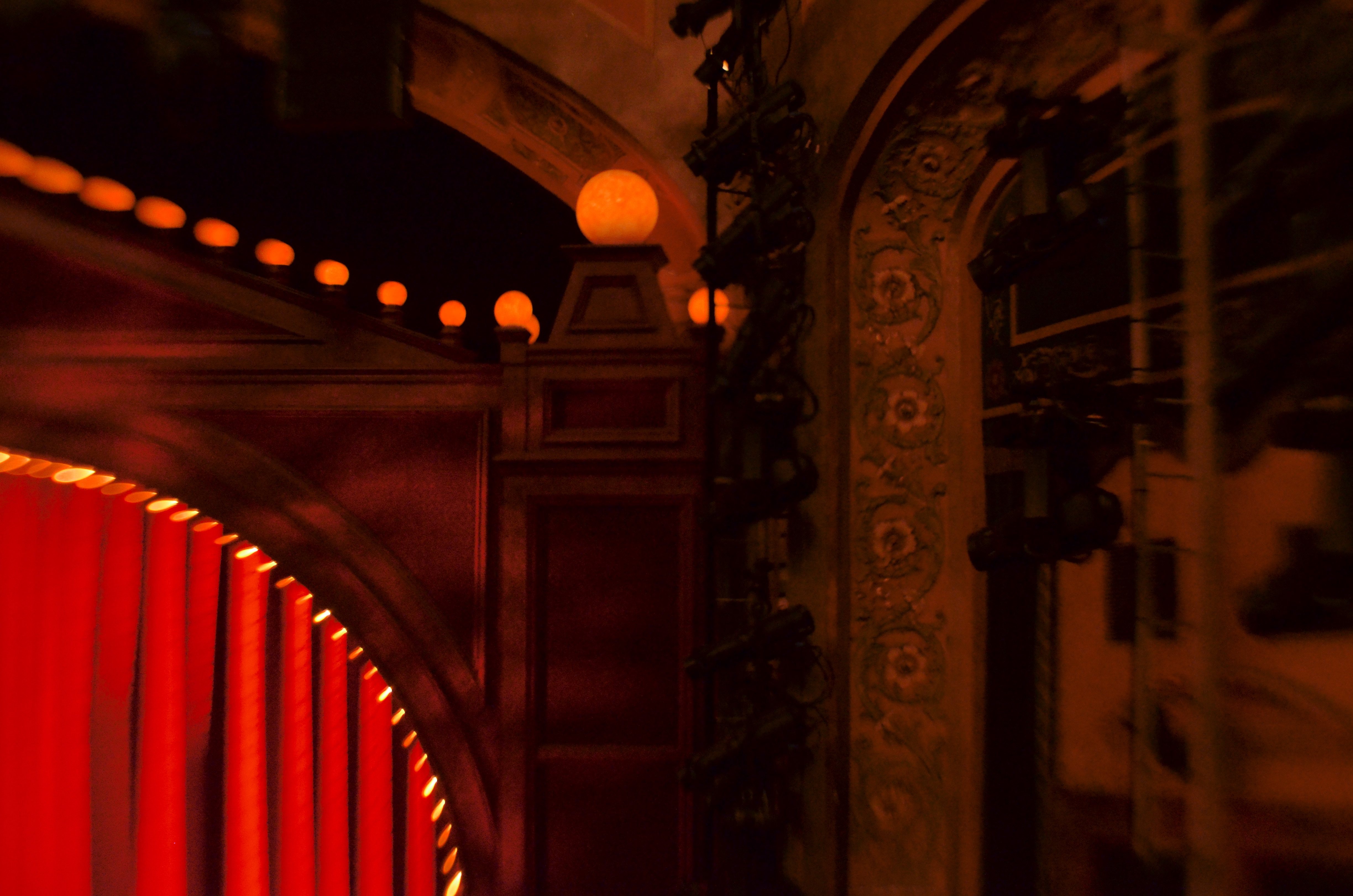
In the present era, when many of the things that we have captured in cameras are, for the moment, physically unavailable to us, the symbolic power of pictures of events past is amplified greatly. The image seen here, deliberately shot to be a bit dreamy, is open to multiple interpretations beyond the restricted scope of the original location. I know, mentally, that it was taken inside a Broadway theatre, but I can no longer swear to the name of the actual venue or what I saw there. In the absence of the fullness of my own memory, this picture has now become all theatres, in all cities, at all points in time. And while it looks like that’s what I was going for at the time, the point is that even the events that I believe I clearly remember are victims of my own brain decay over time, with the pictures I made of them expanded in their value, since they are now open to wider and wider impact as symbols. The pictures are less about what happened and more about the magic of what I prefer to have happened. The hard, clean line of reality is supplanted by the smudge of memory.

That is the amazing elasticity of a photograph. It is both truth and lie, symbol and substance. Photography is an art because it is so magically malleable, because an image can bear the personal stamp of its creator, no less than a statue or a painting. Designed to immortalize parts of our world, they do precisely that, often having a life of their own beyond the physical limits of the things they were used to depict. If that’s not art, what is?

NEARLY NAKED

By MICHAEL PERKINS

No One Knew What Lay Within, 2021.


ONE OF THE BY-PRODUCTS OF PROLONGED ISOLATION is the re-training of the artist’s eye, as more and more information is gleaned from fewer and fewer sources. The lifer convict thus knows more about masonry than the non-prisoner, simply because he is forced to stare at it longer. Or, to put it another way, as a person’s physical world contracts, as it has for many in the present era, things that are repeatedly re-seen can reveal more data than those that are quickly glimpsed. Notice that I am into my fourth sentence before uttering the dread word minimalism. And yet here we are.

I almost never deliberately seek out minimal compositions, at least not as part of some aesthetic religion; that is, I don’t set set out to make pictures that are, as I call them, “nearly naked”, stripped of all decoration or ornament. However, during the various stages of the creation of an image, I often decide that simpler is better, and re-set my course accordingly. And, as the worldwide Forced Hibernation has dragged on, I have found that a certain streamlining of many of my pictures is kicking in organically. Some of it occurs because I am forced to work with the same limited subject matter again and again, since traveling to a wider numbers of locations is presently off the menu. That can mean doing more than one “pass” on some pictures, and discovering. in that process, that I can, indeed, say more with less.

Those who already possessed sage wisdom or a certain Zen zeal might remark here that I should always have been on this journey, this growing sense of how to go about de-cluttering my vision. And to that, I would answer a resounding “maybe”. The image you see here is so simple a composition that I always would have approached it without the need for passing airplanes, utility poles, the surrounding parking lot, etc. However, where, before, I might have favored more detailed tableaux, I am finding, in a newly compelling way, that increasingly simpler pictures are calling to me these days. Likewise the rendering of excess detail or texture, which you’ll see is fairly absent from this picture. Does this mean I am growing as a person? Let’s not get ahead of ourselves. I am making pictures in a different creative environment for the moment, albeit with no guarantees that my technique will be fundamentally altered once I’m allowed out of the house more often (this site is three miles from my home). Still.

“There are two ways to be rich” children’s author Jackie French Koller wrote in 1948. “One is by acquiring much, and the other is by desiring little”. So, while I’m looking more intently at the masonry within my cell these days anyway, I might as well find out if that richer way of seeing will follow me once I’m sprung. In the words of another sage, Chuck Berry, “C’est la vie, say the old folks, it goes to show you never can tell…”

RADICAL RE-ASSIGNMENT

By MICHAEL PERKINS

YEARS AGO, A BROAD STUDY ON HOW OUR BRAINS INTERPRET COLOR included an experiment in which the familiar hue “cues” stored in our brains were upended, much to the dismay of selected test audiences. In one such experiment, an assortment of familiar foods had their native colors radically reassigned, resulting in green beef, pink peas, turquoise potatoes, and so forth. In many cases, the test group found that the meal, which they had been informed had been prepared from highest-quality ingredients, was simple inedible. Merely changing the color of something “known” had rendered it alien.

Almost immediately after mastering the accurate rendering of color, which took decades, photographers began deliberately toying with “wrong” representations of color in various film, and later, digital processes, the object being to challenge how we digest what we see, and to re-imagine the familiar as the strange. One such method which has survived to the present day is infrared photography, in which, through either filters or re-engineered sensors or both, we reconfigure cameras to “see” the light wavelengths that are typically invisible to the naked eye. The results, which can reverse the object-shadow relationship and freakishly re-color skies and landscapes, are the stuff of dreams.

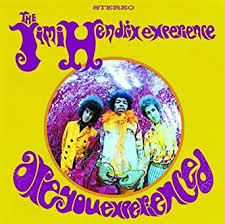
One of the best-known infrared images (which is also shot with a fisheye lens, for double freakiness) is the cover of the classic Are You Experienced? album by Jim Hendrix (see insert at left). The average DSLR can be rigged to shoot infrared, and the web is a-slosh with tutorials on how to shortcut and/or cheat if you don’t want to do costly camera conversions or arcane calculations.

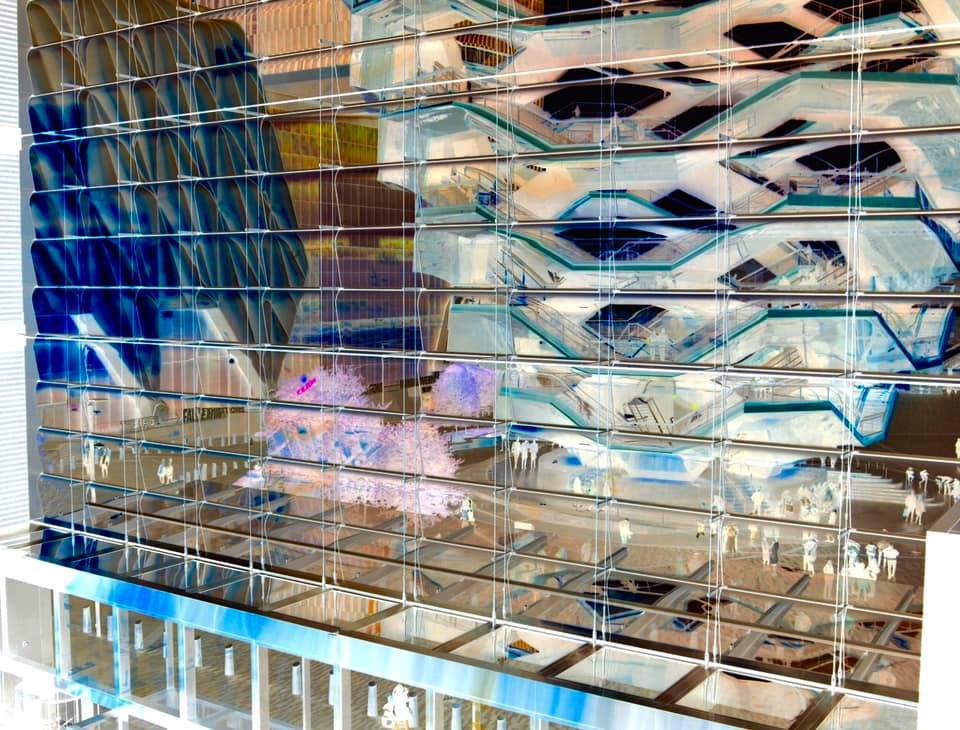
Hudson Yards And Vessel, 2019. A fake infrared created with the free phone app Negative Me.

My own cheapo-cheapo alternative to true infrared has been in the use of phone apps like Negative Me, which renders a fake negative of any image shoved through it. This achieves the first part of infrared, in that it reverses the relationship between an object and its shadows or textures. Sending that image back to your phone allows for all the color tweaking and contrast enhancement you’d use for any image, depending on how deranged/extreme you want the result to be, aping another aspect of true infrared. There are people who love the look of monochrome infrared, and, for those folks, I’d recommend skipping the phone adjustment of the negative image completely just sending it back to your main suite of processing software to either re-color or convert to mono, since that seems to preserve sharpness and allow for finer-tuning. As with many app-PC-laptop conversions, the fewer copies of copies of copies you can avoid, the better. For the record, the image seen here was master-shot on a DSLR, sent to my phone, sent to Negative Me, sent back to my phone image file, tweaked, sent to Facebook, then sent back to Photos for Mac. A long way around the horn, admittedly, and yet it’s still passable, in that it doesn’t look any more unreal than you’d expect.

As with the green steaks, you may decide that you don’t have a lot of, um, appetite for the infrared look at all. Even better: doing a quickie mock-up of what a real infrared might look like could save you time, trouble and dough on a pricey experiment. Or, like me, you might decide that you use this kind of effect just enough to justify doing a “not bad” version of it for cheap. In any event, just have fun.

And remember, no dessert until you finish your pink peas.

A SOFTER TOUCH

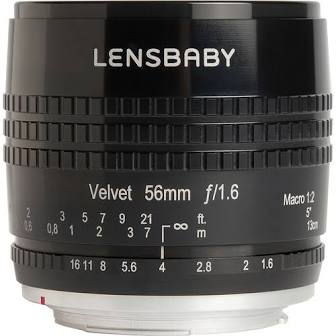
At its widest apertures, the Lensbaby Velvet 56 lens adds an overlay of glowing softness to focused images.

By MICHAEL PERKINS

THE CREATORS OF THE OPTICAL REVOLUTION known as Lensbaby lenses are more than mere inventors; many are also refugees from the conventional rules of professional photography, or, more precisely, the predictability that adherence to mere technical “perfection” can produce. From their first product over fifteen years ago through their constantly expanding line of lenses and accessories, LB is about embracing the same random artifacts (blur, flares, bokeh, chromatic aberration, etc.) that engineers have forever labored to design out of camera gear and allow them to be put back into the making of pictures, but at the shooter’s whim rather than as mere accidents.

Over the years, The Normal Eye has devoted nearly twenty posts to the unique freedom this concept confers on photography, allowing users to, in the company’s words, “see in a new way.”  In my own work, which was shaped over fifty years ago by the influence of print journalists, the idea of control once consisted of adherence to a rigid rulebook governing acceptable precision and uniform sharpness. As I have grown older, however, I have learned that there is more than one way to define control, and that gear that helps me work more instinctively might have to step outside the bounds of mere technical “rightness”. 

The Lensbaby Velvet 56.

Nowhere is that newfound freedom more manifest than in the Lensbaby “Velvet” prime lenses, available in a variety of mounts for DSLRs and mirrorless bodies in 28, 56 and 85mm focal lengths. Like all LB optics, these lenses are completely manual, and thus will not share complete shooting data with your camera. For those who seldom shoot on “M” and thus have more limited experience making all the decisions that govern the creation of a shot, this will present a bit of breaking-in, but with that forced preparation comes the habit of deliberately, intentionally creating a photograph. The risks are all yours, but so are all the benefits. As in the days of film, shooting with a Lensbaby entails slowing down and making a plan. These lenses are not for snapshots. 

At its wider apertures (f/1.6 to 5.6), the Velvets create an overlay of glow over your images, almost as if they were lit from within or behind, even as the details within them remain focused (see above image). To picture the effect, think of the shortcut Hollywood studios used to produce soft, almost airbrushed portraits of the stars with either gauze or vaseline placed ahead of their lenses. Now, imagine what it can do for your own dreamy portraits. This is not the “low-fi” randomness of cheap, plastic, light-leaking toys, but the “alternate-fi” of real choice. 

For any kind of standard street or landscape work, narrower apertures in the Velvets produce conventional sharpness that matches any general-purpose lenses. The V’s are also extremely effective as macros, with a 1:2 ratio (reproducing objects at half-size). Thus, armed with three strong talents in a single lens, the Velvet can easily be left on your camera for extended stretches as an all-purpose go-to. Better still,  the softer Velvet effect, as well as the effects of any LB optic, is achieved totally in-camera, without the need of additional post-processing.  

In my own work, the harsh detail and sharper edges inherent in architectural or urban scenes can, with my Velvet, take on a warm, even nostalgic feel, selectively smoothing surface textures and lending the whole scene a sort of idealized, fantasy appearance. For sample images from Flickr members around the world, click on the link to their Velvet 56 page. There’s also my own Lensbabyland  gallery tab at the top of this page, as well as a shortcut to the first day of Lensbaby’s Shoot Extraordinary workshop for 2020, a great source of inspiration for newcomers.

Lensbabys are not intended as the solution to every photographic challenge. They are augmentations to your existing technique, not a replacement for it. And, yes, I know the term art lens can sound a bit snotty, but, when you generate effects that once were the province of chance or accident and purposely harness them as tools in the making of your images, that certainly bespeaks an “artistic” attitude, and many agree that the LB line of products help you deliberately and uniquely shape your vision. There is more than one kind of photographer, and thus there must be more than one kind of control.


THE CHEETA IN ALL OF US

By MICHAEL PERKINS (author of the new image collection FIAT LUX, available from NormalEye Press)


IF YOU ARE IN THE RANKS OF THOSE PHOTOGRAPHERS who still shoot film on occasion, you will, in the return to your old analog ways, find yourself suddenly cured of a habit we all have acquired to varying degrees since the dawn of digital. The instantaneous feedback of the pixelated life has taught us the now-instinctual reflex of what is called chimping, or the practice of checking our screens immediately after every click, ostensibly to determine if we’re getting things right/wrong. The name of this syndrome may have come from the “ooh-ooh-ooh!” sound made by chimpanzees when they are excited…like when they nail an exposure perfectly and can’t wait to get a perfunctory agreement grunt from the next chimp over. All ape references aside, to look is human, or, as Tarzan discovered, there’s a little Cheeta in all of us (sorry).

Chimping has changed the rhythm of photography from shoot/shoot/shoot/shoot/wait….(and eventually)view to shoot/look/share/shoot/look/share(and occasionally) delete. There is no equivalent to chimping in the film world, since there is no way to instantly review one’s results. In anaog shooting, correction from frame-to-frame is a matter of calculation and informed guesswork, and the results….well, they kind of define the phrase “delayed gratification”, don’t they? Chimping is a product of the very opposite…..which is the utter obliteration of the space between desire and payoff. So is this a good thing?

Every time you sneak a peek at your screen, you are, however briefly, taking your mind out of “shooting mode”. You are also taking your eye off of whatever subject you just shot, which may still be developing or changing. It’s conceivable, then, that while you are reviewing a shot that may/may not be any good, a shot that may/may not be better is invisible to you, simply because you are not looking at it. In some instances, this may be no big deal. For instance, if you are doing a leisurely shoot of a landscape or a sleeping child, breaking the thought flow to review images in between frames may not be a problem at all. On the other hand, if you’re following a sports event or a flitting bird, you could easily miss out on what’s happening by cooing over what’s already happened.

Of course, it’s easy to make broad generalizations on the value/risk of any shooting rhythm, and, like the commercial says, ask your doctor is chimping is right for you. It’s principally interesting to consider its value, however, simply because it is such a recent part of photography, and one which has become part of everyone’s work flow largely without our being aware of its encroachment. Maybe it’s caught on for purely social reasons, like our desperate need, via social media, to post and be liked. That’s the part of chimping I most disdain; its use as an instant booster shot of validation, our bid for more immediate applause. I can’t say I’m without guilt in making use of it myself, but I love to occasionally work in an older medium in which you build confidence by making a plan, setting an intention, and focusing solely on making the picture, not drooling over how fast you might garner applause for the result. I will always fail at totally suppressing my own inner Cheeta, but I can dream, can’t I?


SAY NO MORE

Huck Took The Shortcut, 2021

By MICHAEL PERKINS

THE ABILITY OF A PHOTOGRAPH TO PRETTY MUCH ILLUSTRATE EVERYTHING IN LIFE can tempt shooters to try to do exactly that; to pack a universe of stuff into every frame. In the minds of some of us, the camera is an information-gathering machine, and so, the more information, the better. But if we call to mind the photographs that have affected us most profoundly, we may see that there’s a hierarchy in the way information is presented in many of those uber-keeper photos. Everything in the world is not a number one priority; events and experiences are always ranked higher in importance than some and lower than others. And the photograph that shows too much may actually not communicate anything particularly well. Things need to be chosen and unchosen in order for a picture to breathe.

As a consequence, rather than showing four hundred trees of equal size and detail in a frame, we deputize one or several trees to stand for the entire forest. In any routine edit, we decide to crop out things which are part of the scene but which either don’t, narratively speaking, carry their weight, or, worse, act as distractions. It’s not only all right not to show everything, it’s a really important part of the covenant between artist and audience.

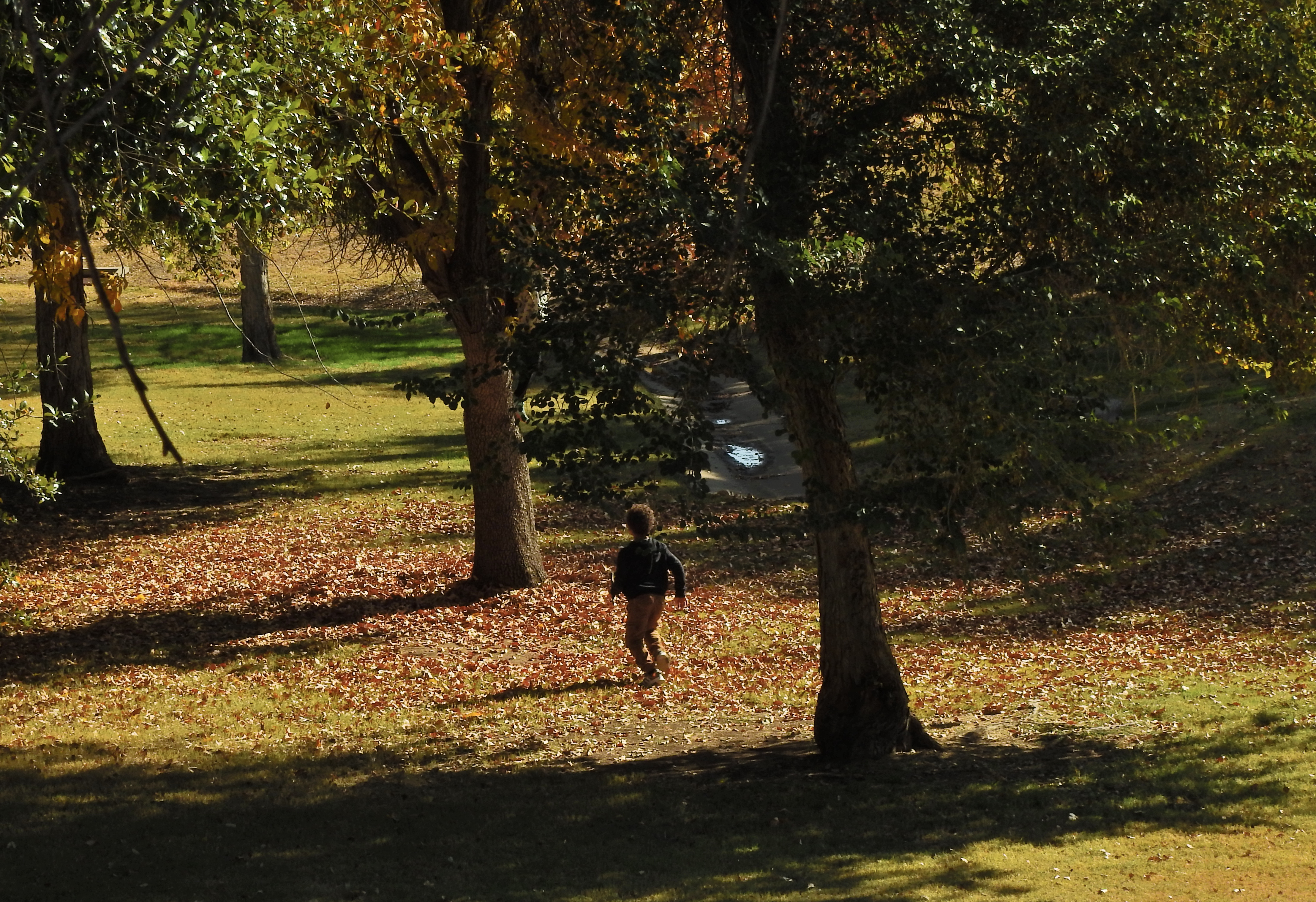
When you leave out some kinds of information, you’re respecting your viewer’s intelligence, since you’re recognizing that you both share a vast store of common experience, some of it so obvious that it can merely be implied and yet understood. As a very simple example, in the image seen here of a young boy running through the woods, his body language conveys all that’s needed for a complete understanding of the scene. Every part of his physical energy advertises the freedom and excitement he is experiencing, even though the picture provides little more than his silhouette and nothing whatever of his features. Would he be any more clearly delineated as a happy young boy if you were to show his smiling face? And as to the surrounding trees; they are, in life, rich in texture, but the prevailing shadow doesn’t keep them from being identified as trees, and so, really, how much better could that work, even if they were all in complete sunlight?

I’m only occasionally an advocate of minimalism for its own sake, mainly because in many cases it’s not the right approach. But over-delivering on information, while creating a thorough “document” of a scene, also has the potential for short-circuiting an image’s impact. As is often the cases, the best rules are the ones that come equipped with tons of exceptions.


MERCY BOKEH

By MICHAEL PERKINS

PHOTOGRAPHS ARE NEGOTIATIONS between primary, secondary, and even tertiary levels of information, and how they will be arranged in a frame. You either feature or mute that information in order to direct attention to the primary story you’re trying to tell. The simplest example of this process is the selective focus engineered into many shots, with important details being rendered in sharpness while the rest of the competing data goes soft to help isolate the main message of the picture. In its simplest application this means a clearly focused foreground and a blurred background.

The blur used to be the eye’s clue that the information in that part of the picture was not a priority. Thinking in terms of portraits, for example, your subject is clearly defined, with the space  behind it dulled or diminished. You make that choice by selecting your depth of field and shoot accordingly. However, recent trends in the making of a photograph have elevated the status of the blurs themselves to something that needs to be chosen, or shaped for artistic purposes. In other words, the part of an image that is inherently unimportant, by virtue of being out of focus, is now a source of attention as to what kind of blur is being created. This formerly fussy concept of bokeh is popping up in more and more advertising copy for the sale of lenses. A given piece of glass is now touted as having great bokeh, which somehow makes it more desirable than some other piece of glass.

I love the way this zoom focuses on foreground objects; its background textures, not so much.

Bokeh is really nothing more than the quality of the shapes that occur when a particular lens breaks up light in its non-focused areas. Some people use the terms “buttery” or “geometric” or “dreamy” to describe the work of a given optic, and some lenses are actually marketed based on how this texture is rendered. I can only speak to this fascination from my own viewpoint, and so you have to plug in your own approach to photography, and whether the non-essential part of a picture is now, strangely, important to you.…important enough to influence your purchase of one hunk of gear over another. I admit that some bokeh acts as a beautiful backdrop to a foreground subject, but I also contend that, as seen in the above image, some lenses can actually render it in a way that is distracting, even irritating. However, whether I admire the swirls and ellipses of some forms of bokeh, I don’t see it as anywhere near as important as what I’m trying to feature in front of it. If all things in a frame are of equal importance, why not just shoot everything at f/11 and make sure it’s all recorded at the same sharpness?

I think that, in photography, as in many other art forms, we can become fascinated with effects rather than substance, and that, if you don’t know what you’re trying to get a picture to say, you can become more interested in how cool something looks instead of what a picture’s narrative is supposed to be. Bokeh can be lovely, but giving it too much prominence is a little like sitting in a theatre and intensely watching what the third Roman to the left is doing with his toga while Marc Antony is at center stage delivering his big speech. Things in a good picture must be arranged in a hierarchy, some priority of intentions, in order to communicate effectively. And if I have my choice between a bird and a blur, I will unapologetically choose the bird every time.

QUIETING THE STORM

By MICHAEL PERKINS

THEY HAVE KNOWN EACH OTHER FOR WHAT FEELS LIKE FOREVER, and yet the time that’s passed between them seems like mere minutes. They elicit envious sighs when they are seen, perpetually locked arm in arm. They are the proof that love can last, that some things can actually be eternal. That a promise matters.

They walk a little slower.

They measure out their days in tiny things. Small wins. A nice cup of tea. A shared confidence. A fond memory. Maybe even a joke they’ve told so many times that they’ve both memorized it.

And they seek the sunshine.

Carefully, deliberately, they move through yet another sunset. Is it one of their last? A world races past them with its myriads miracles and miseries. It’s all a blur to them, and not just because they’ve misplaced their glasses. Their focus on each other remains sharp and sure; it’s the rest of the world that’s fuzzy, that’s uncertain.

They hardly have separate heartbeats anymore. When one sniffs, the other sneezes. And the most amazing thing that starts each day is their first glimpse of the other.

The calendar tells them that a lifetime has gone bay since first they said yes to each other.

And yet, it seems a matter of a moment.

They make a pretty picture.


THE CONSPIRATOR

(2021 marks the beginning of The Normal Eye’s tenth year. Endless thanks to our longstanding friends and newest arrivals. Please share what you find useful in our latest or archived pages and alert us to what we can do better. Peace to all.) 

By MICHAEL PERKINS


PHOTOGRAPHER LUCAS GENTRY has been mentioned in many of those handy web searches that collate the most memorable quotes about camera work, little bon mots that help spice up term papers and make bloggers (ahem) sound erudite. His single sentence, “Photography has nothing to do with the camera” is guaranteed to provoke either agreement or argument, depending on whom you share it with. I tend to camp with the “agreement” team, although I would perhaps amend his statement to assert that photography can have everything…or nothing to do with the camera. Taking a picture without some kind of gear is impossible, and every camera, good or bad, can produce some kind of picture. But, beyond that, the possibilities are wide open, and nothing is guaranteed.

We have all been assisted by a piece of equipment that helped us generate the image we had in mind, but first we had to have the vision. A camera is, first and foremost, a recording instrument, like a microphone. It does, to use a hideously overused term, capture something, but like a microphone, it can preserve either cacophony and rhapsody. Another famous photographer made this issue even more poetic by stating that a picture is made either in front of or in back of the camera. Those of you who have traveled through these pages with us over the years know that this sentiment is one of my guiding principles. As I frequently say, masterpieces have been taken with five-dollar disposables, while unspeakable horrors have been committed with Leicas. And vice versa.

We live in a progressive consumer culture, an endless cycle of buy-and-buy-again. We are trained to desire the Next Big Thing. Something shinier, sexier, newer. As a matter of fact, newness alone is often enough to part many fools with their wallets because they are led to believe that the best camera is the one they don’t yet own. If you know someone like this, scribble a deed to the Brooklyn Bridge on a cocktail napkin and get them to sign it immediately. In the meantime, let me assert that working a little longer with a slightly “outdated” camera that you understand and can bend to your will is preferable to jumping to one that is so difficult to master that it actively conspires against your success. I’m not talking about taking the logical upward step to the next level of gear that you’ve naturally evolved to; I’m talking about feverishly convincing yourself that you will be a better photographer once you’ve bought X or Y camera. Remember Mr. Gentry’s truth: it has nothing to do with the camera. Equipment is not magic. You will not win the Grand Prix because you bought a Ferrari.

Establishing the best possible bond between yourself and your machine of choice makes a difference in your work, because you are directing that work, which means knowing what the machine can deliver. If you don’t have that relationship with your camera at present, work until you get it. If you can’t master the device you currently own, you’ll be even further behind the curve with a camera you have to catch up with. Don’t expect to create art that’s alive by relying on an inanimate object to do the heavy lifting. When we refer to the “normal eye” in the official name of this blog, we’re talking about developing a way to see, to get back in touch with your vision, to “normalize” it. That means taking responsibility for your work, not delegating it to the gear. Forget everything else about photography, but remember that your camera can either be an ally….or a conspirator.


THE YEAR OF UPHILL WALKING

By MICHAEL PERKINS

LIKE MANY, I WOULD HAVE A HARD TIME pinpointing the first photograph I shot after formally going into the Great Hibernation of 2020. The designated do-or-die date for heading ourselves into the bunker was fairly elastic, person-to-person, with some of us taking cover early in the spring, while others were forced to stay in-pattern for longer. I can determine, from the very type of pictures I took in this strange year, which were shot After The Before Times, but it would be mere guesswork to say that this image or the other was the first “confinement” photo per se.

But I can detect a change in the subject matter and viewpoint of those first days. I will always recall the realization that, as my world proceeded to shrink, my photography would become more introspective. This meant that my reaction to the sudden flood of spare time was, at least on good days, to luxuriate in the freedom it gave me; the leisure to select, to plan, to choose in the process of making pictures. As a consequence, in reviewing the year’s photographic yield, I find myself not so much choosing “favorites” or “bests” from the thousands of snaps I took in quarantine, but instead looking for the truest depictions of where my head was, and still is. This is all to say that I resisted getting in a year-to-year contest of some sort with myself over technique or skill and tried to concentrate on emotional accuracy.

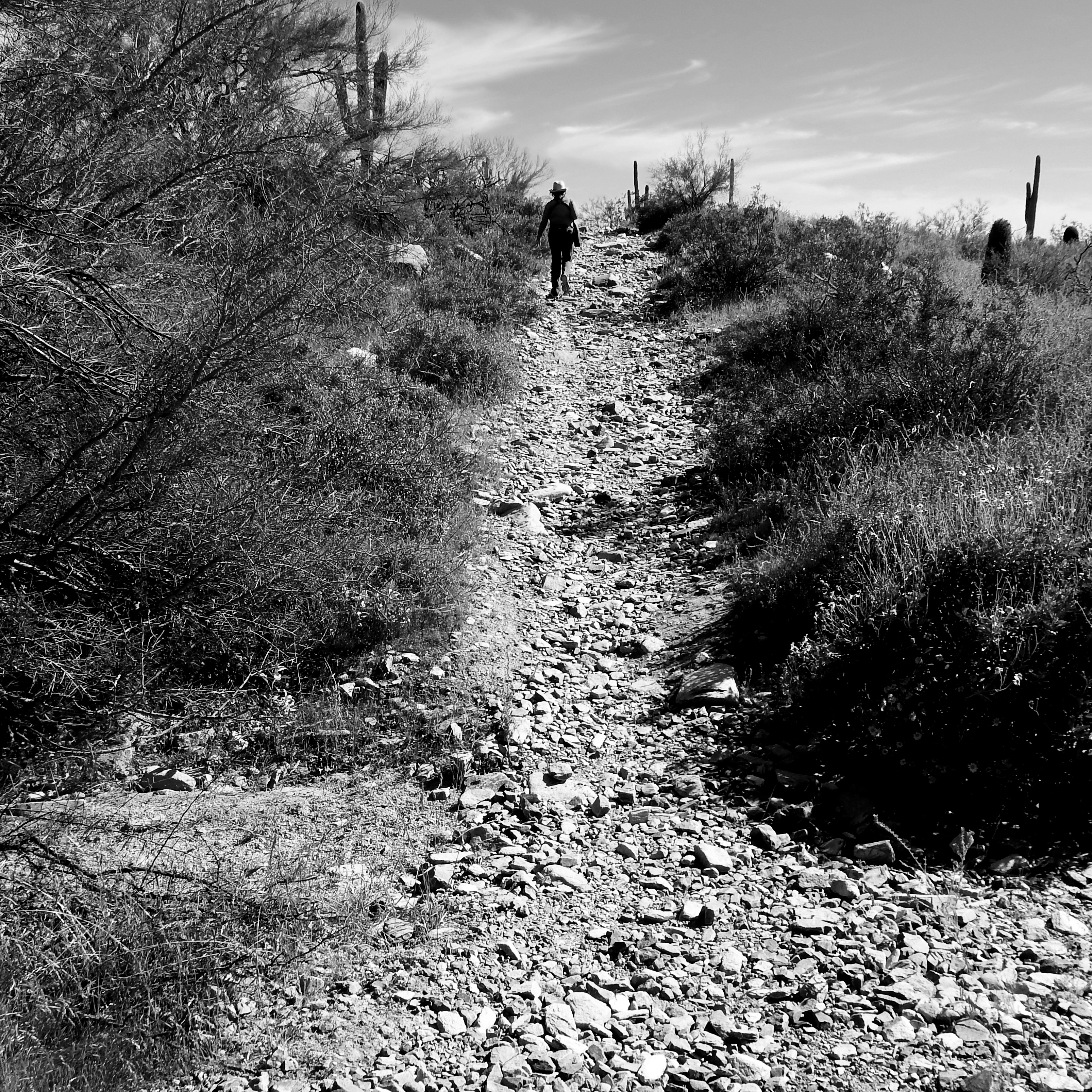
Running Up That Hill, March, 2020

This picture is not technically distinctive by any measure, nor is it particularly original, but it is true to where I was when I made it. In what could be called The Year Of Uphill Walking, it projects that struggle to just keep climbing, across rocky, barren terrain, in anxious anticipation of what may lie over the next horizon, and without the blandishment or warmth of color. No destination is sure, or even promised; no arrival time is predicted; only the journey itself exists. If I had to deliberately try to show what 2020 felt like, I couldn’t have found a more appropriate visual metaphor than this picture. This is not me being a superb planner of shots. This is me, months after the fact, marveling that some measure of this madness somehow organically made it into my camera. I never went out formally looking for a way to give expression for my feelings; I merely let the process happen through me, to be a barometer of what I thought it important to see and record.

Maybe that’s the way I should always make pictures. Sometimes I think I understand my process and other times I feel like it’s leading me around by the nose. I hope to re-discover genuine hope in 2021, but, if I…we, have to settle for less, I pray that I’ll at least find a way to tell stories about how that felt. And I hope I’ll remember how to put one foot in front of the other.


SETTINGS

Fan Dance, 2020

By MICHAEL PERKINS

A PURELY TECHNICAL ANALYSIS OF A PHOTOGRAPH understandably centers upon the measurable aspects of their capture…..aperture, exposure rate, focus, et cetera. However, in any full understanding of why an image works (or fails to), the photographer him/herself has to be factored in, alongside any purely mechanical settings, because, when you change life for the photographer, everything else in the picture is changed as a consequence. That’s the most determinative factor for photography in this grotesque year. We have been altered in ways great and small, and that will have made all the difference in what we see, and what we say about it with a camera.

For me, as in the case of so many others, these months have meant the struggle to expand my own photographic strengths, even as the physical plane in which I operate has been increasingly restricted. Many of us who have never experienced the isolation of exile, imprisonment or war now have at least an inkling of how those events cut people off from each other, challenging us to glean more and more life experience from less and less sensory input. In the face of the ever-present need to keep shooting, there are the increasingly narrow choices of what to shoot, with many sites and subjects closed off, at least for the duration. We have all become experts on every nook and light change in our immediate environments, and have discovered that, yes, there may be a 35th different way of photographing a window, a door, or our own faces.

Looking over my own output for the year, I see a definite bent toward minimalism, an almost ruthless appetite for reducing compositions to their raw essences. I am shooting things closer, abstracting the contexts of familiar objects in an effort to see them anew. I have thrown off most standard approaches to exposure, shooting in the sparest light that I can; and I have re-imagined more and more shots as monochromes, seeing even color as an unneeded distraction in these spare times. Mostly, I have been faced, as have so many, with a nearly zen approach to things I have photographed many times over the years, searching for new secrets in old friends.

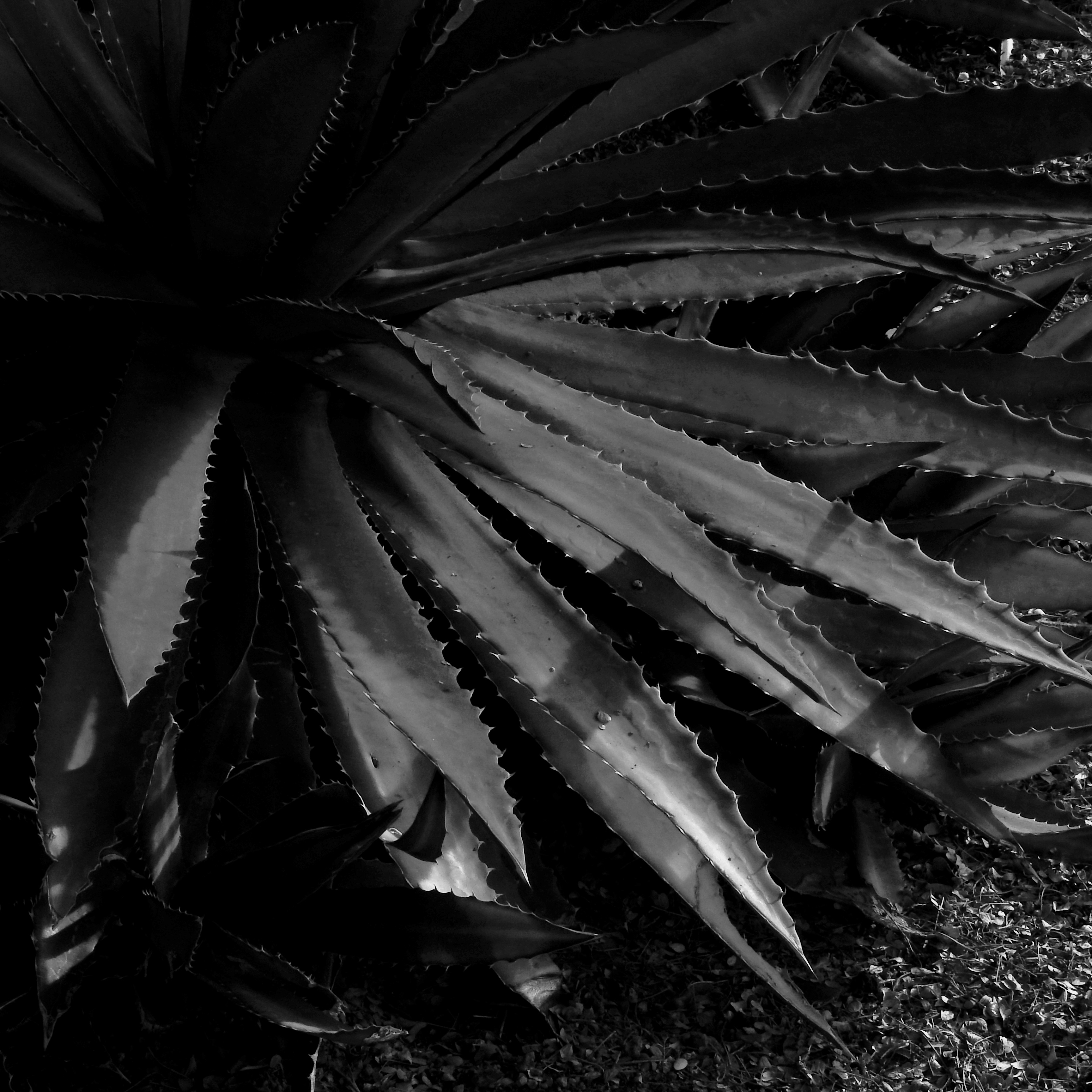
For one example; as a consequence of the pandemic, I find myself walking again and again through a few designated-safe gardens and parks, which means a lot of repeated shots of the kind of subjects I find most difficult to put my stamp on, which is landscape work. Give me a crowded, noisy metropolis and I’m right at home, whereas I have to emotionally educate myself to be at ease in a natural setting. Sad, I know, but there it is. And so, I experiment a lot with seeing patterns in plants, trees, terrain, in terms of raw design, such as in the agave plant seen here. Another fortunate corollary was the acquisition of a camera, early in the year, that finally enabled me to shoot birds with greater precision, which allows the winged wonders to become something of a substitute for traditional portrait work on humans. As I learn to read their feathered faces, I am somewhat consoled, even as I miss their human equivalents.

And so it goes. Change life for the photographer, and you change the photographs. And since this little small-town gazette has always been about intentions, rather than equipment, it’s important for us to do a skull, at year’s end, on how we’ve changed the way we approach using the Magic Light Boxes in our lives. We are different people now, and, if we’re honest and awake, amazing pictures will come about as a result.

ILLUMINATED

By MICHAEL PERKINS

MAN’S FIRST MAJOR QUEST WAS THE SIMPLE EFFORT TO EMERGE FROM THE DARK; the darkness of his own ignorance; the shadows of isolation, the dimness of despair. Looking back, the discovery of fire was perhaps the single greatest forward leap in our early evolution. Once we could make light, we could channel many other of our other energies, with the idea of illumination governing every one of our creative urges, literally and metaphorically. Photography is but one very direct example of what happens when you learn to, as George Eastman termed it, “harness” light.

This year, in many deeply profound ways, we have all had to make almost daily choices between light and darkness, certainly in the dire life decisions fate has placed before us, but also in the things we choose to create. Making images of the holidays that are cheery and bright used to be the most instinctual thing for us; after all, we have had a lifetime of practice. But when the light from which we craft those pictures becomes endangered, when it comes horribly close to being extinguished altogether, that’s when our artistry must double down, digging deeper to extract as much brightness as we can. Many of us have managed it in unprecedented new ways; many more would be well to practice it a lot more in the tough months to come.

Some of that effort will come from inside our cameras.

“Just What I Wanted….”

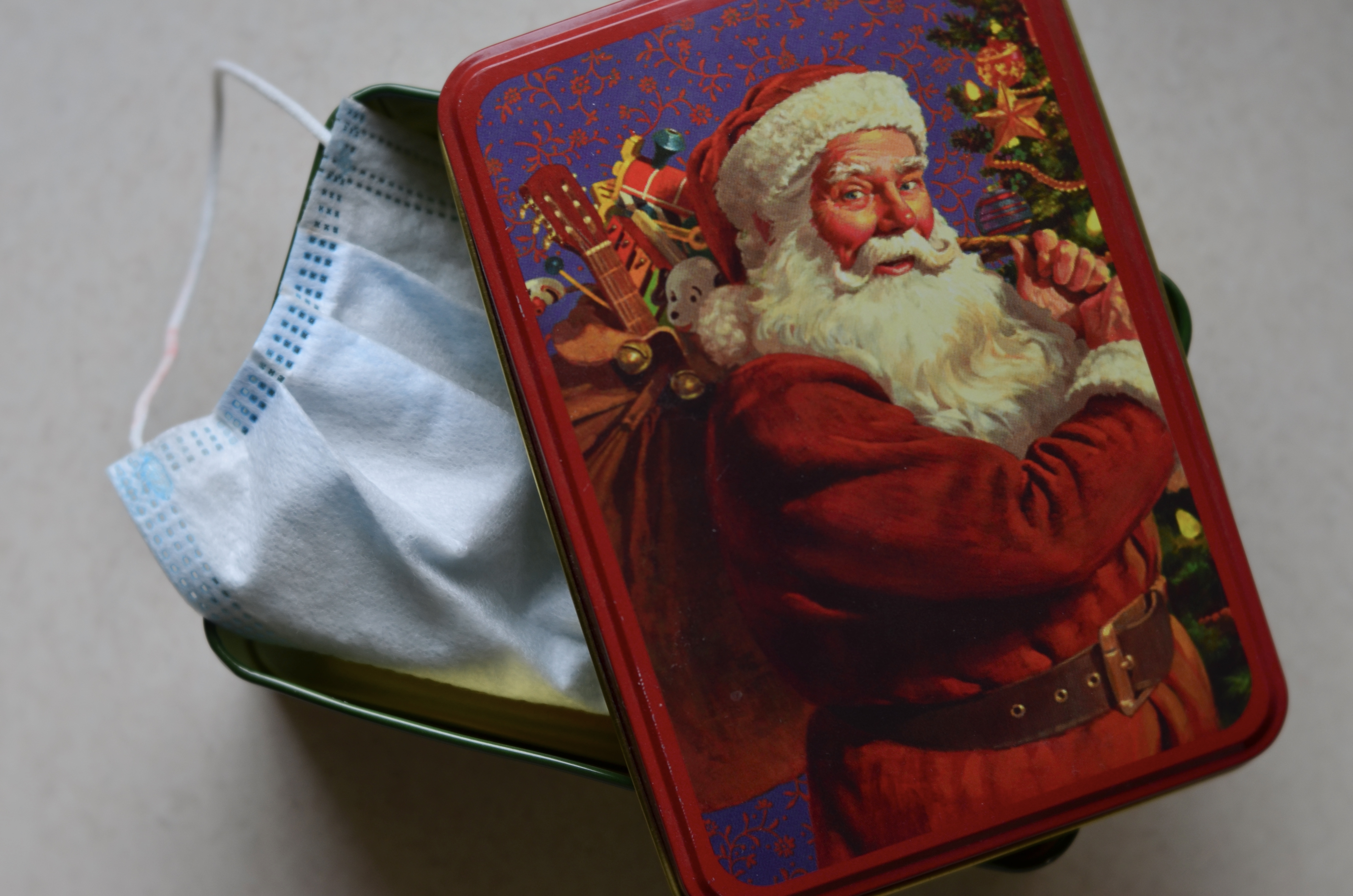
I don’t consider this image to be negative, or pessimistic. I have made, and will continue to make, those wonderful postcard creations we all strive for in normal times. But art can instruct or lead, as well as charm, and as a consequence, this is the Christmas photograph I most want to sign my name to in this season. Making others safe is the best way to make ourselves safe, and delaying our immediate gratification is the best way to ensure that we’ll be around to, humanly, ask for even more of life, later on.

And so a Merry Christmas to all. We have spent nearly a year trying to get off Nature’s “naughty” list, and now we must do much better at getting off each other’s. If there’s anything to all that storied “good will toward men” stuff, we need to make it more manifest. And make pictures of it that not only document, but illuminate.

ACCIDENTALLY ON PURPOSE

By MICHAEL PERKINS (author of the new image collection FIAT LUX, available from NormalEye Press)

FOR PHOTOGRAPHERS OF A CERTAIN AGE, that is, those who began in film and switched to digital, there was something unambiguously known as “a mistake”, by which we meant something that showed up in your final image that you either blew in execution or didn’t plan for. Smears on the lens, accidental double-exposures, lens cap left on….you get the idea. In the pre-ironic days of film, goofs were just that…goofs. They weren’t made to suggest a retro feel or simulate the look of….anything. They were merely flaws.

In the digital era, we still commit errors that wind up in our images, often for the same reason we committed them in the analog age. What’s different is that we often make these “mistakes” on purpose now, to create a mood that we associate with a romanticized view of film. One such accident that we generate intentionally purpose is lens flare.

To grossly over-simplify things (and to thus infuriate the high priests of tech), flare occurs when light enters a lens at such an angle that it is refracted or bounced within the mechanism of the lens on the way to the sensor and creates a wild, often prismatic shape that remains a permanent part of the photograph. The intensity of these bright spots is often determined by how complex the given lens is, since the more parts there are within the optic, the more places there are for the light to scatter and split. Sometimes a flare’s contours, which can tend to be roughly hexagonal, mimic the shape of the aperture opening within the shutter. Many people guard against flares simply by using a lens hood or by being careful not to shoot directly into light, and photographers are all over the road as to whether the effect is annoying or artistic. Flares are as old as cameras themselves, and they happen for much the same reasons on digital gear as on analog equipment.

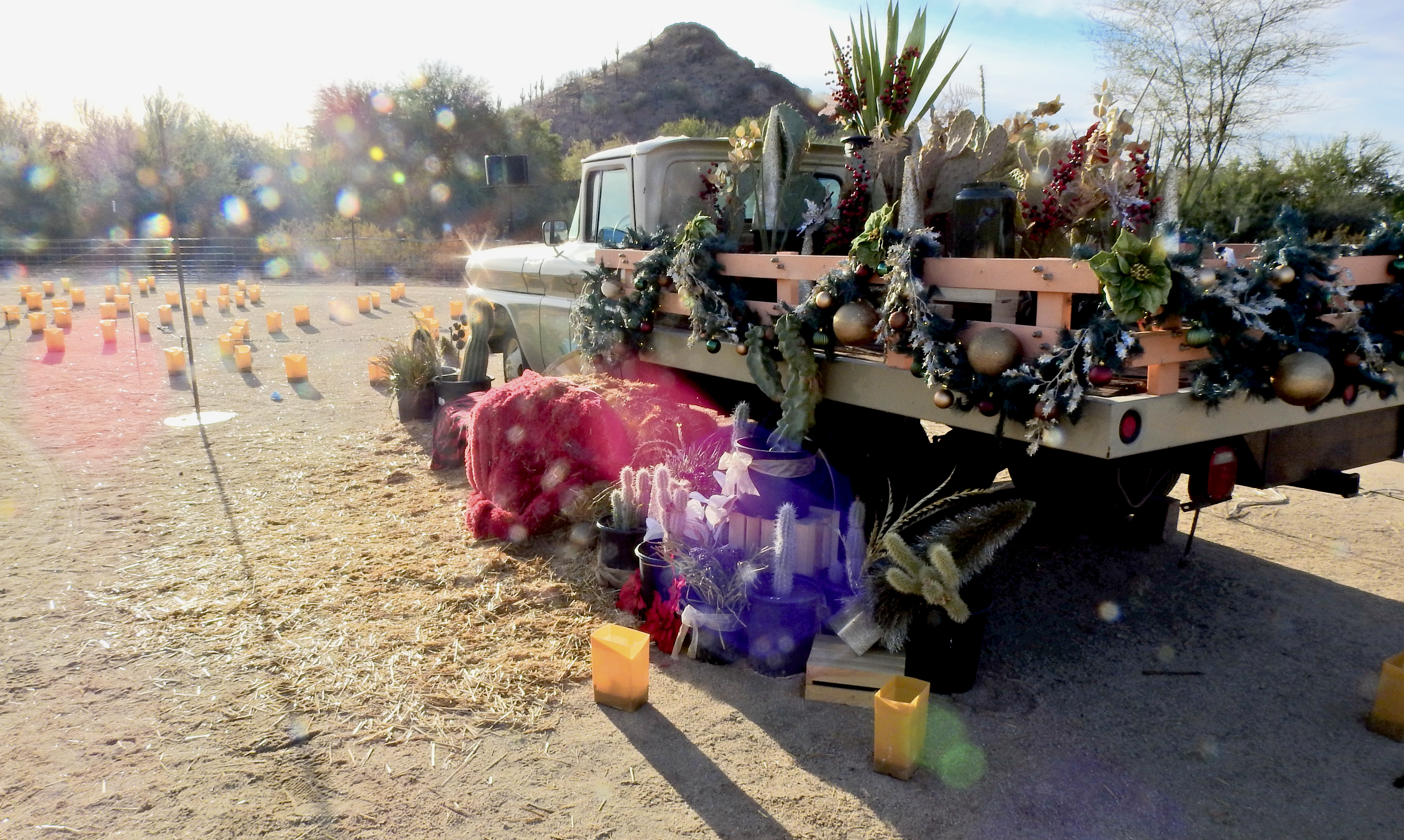
DreamHauler, 2020

The ironic part, which has grown out of several generations of digital post-production, is that what was once regarded as a “mistake” is now one of the most common tools in nearly every editing suite on the market. Like vignetting at the corners, graininess (for that gritty, low-fi look!) and other things that used to be regarded as imperfections, flaring is just as likely to be added into a photo after it’s shot, for an “artifact” that has been called everything from “authentic” to “dramatic” by many a game designer or A-list movie director. J.J. Abrams loves the effect so much that he has used it in his Star Trek reboots, as well as the film Super 8, to both cheers and jeers. Michael Bay also adds flare, mostly to his CGI processes. The search for the look has even led several filmmakers to swap out recently designed lenses, which lessen the look, to old optical glass, that has more of it.

The image you see here, just so there’s no debate, featured flares which were (a) created in the moment and are (b) a total accident. I actually shot about a half dozen frames of this particularly enchanted truck, and chose this one for the keeper when I saw how it (quite by chance) enhanced the mood of what I was after. I assure you that I am far too un-hip to have conceived of this effect in advance of my shoot. So, in other words, I got this digitally on-demand look the analog way…that is, because I didn’t know quite what I was doing. However, if it ever wins any awards, I can alway say that I meant to do it that way, hee hee. In photography we deal in truth, lies, and a lot of stuff that lives between the two poles. This one comes from that mystery middle.

Or maybe it’s gremlins, I dunno.