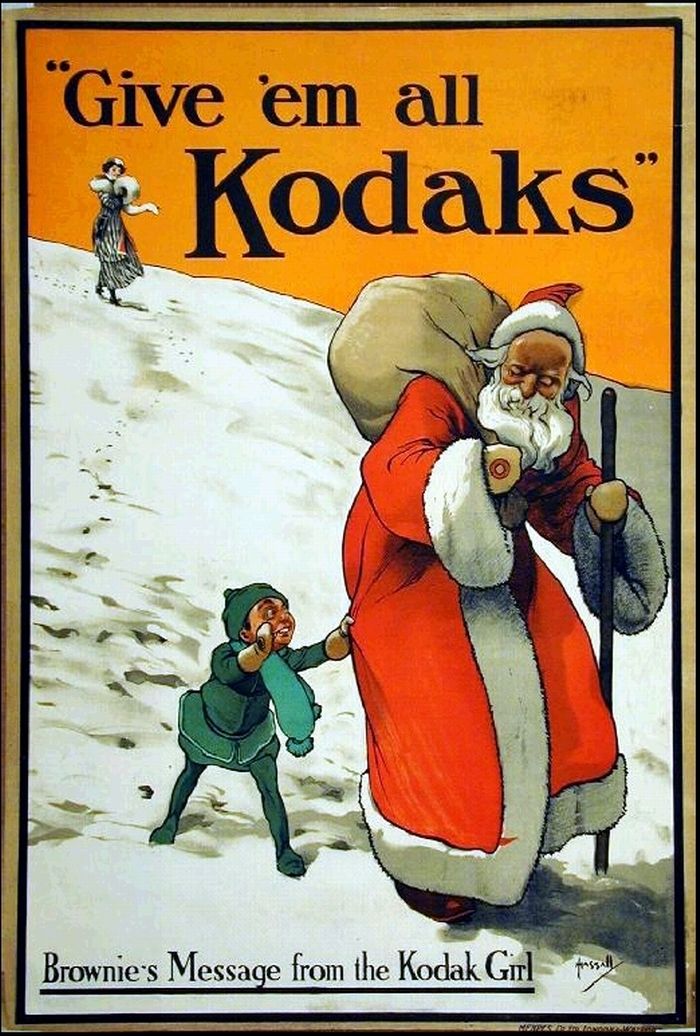
The Kodak Girl (n the distance) sends an urgent message to St. Nick on how to provide the perfect Christmas in this early 20th-century ad.
By MICHAEL PERKINS (author of the new image collection FIAT LUX, available through NormalEye Press)
EASTMAN KODAK WAS THE FIRST COMPANY to truly democratize photography, taking it from a tinkerer’s hobby or the domain of the studio professional and placing it in the hands of the average consumer. A streamlined process for producing modestly-priced, easily operated cameras, as well as the introduction of roll film and standardized processing, made it possible for anyone to capture memories on a reasonable budget. To do this quickly, Kodak, well before 1900, also became one of the first and best early forces in the use of mass marketing. And one of the biggest pillars in the foundation of that effort was Christmas.
For the near decade that The Normal Eye has been in business, we have always dedicated one annual post to the nostalgia and pure brilliance of Kodak’s Christmas ad campaigns. Being a company that fostered the creation of indelible memories (the well-known “Kodak Moment”), the creators of the Brownie camera sold us not merely the means of making pictures, but the motivation for doing so, capitalizing on the special sentiment that permeates the holiday season. The question was not “should I buy a camera?” but “why aren’t you already taking pictures as fast as you can squeeze a shutter?”. The Eastman company achieved the ultimate goal for a manufacturer, that is, creating a market that had never existed before and inventing the means to fill said market. Using full color photographs in their magazine ads in the early 20th century, an era which was still typified by painted or drawn illustrations, the company showed people using their cameras to freeze-frame both special occasions and everyday events, all the while reinforcing the idea that going so was easy and fun.
And when it came to Christmas specifically, Kodak, well before 1920, developed two key ambassadors to drive home the message. First was the pre-cheesecake pin-up known only as The Kodak Girl, who was shown clicking off memories in a variety of settings, and featured on calendars, packaging, and roll-outs for new products. As a back-up, the company became one of the first to enlist Santa Claus himself as a pitchman, which even the wizards at Coca-Cola would not do until 1930. The combination was the stuff of dreams, as well as of profits. Kodak cameras were not merely another element of the Big Day; they were a guarantee that the Big Day would be a success. A great holiday was a nice thing, but a great holiday caught in pictures was on another level entirely.
Wish fulfillment, or the possibility thereof, is so woven into the appeal of photography, that, once cameras and film were standardized and simplified, the hobby really didn’t need a big nudge to become a worldwide habit, as it remains to this day. But, as they say in the ad biz, you must always be Asking For The Order, and lots of our hard-wired desire to Say It In Pictures was inextricably linked, from the earliest days of the medium, to the consumption of products. “Open Me First”, the tag on Kodak gifts asked in over a generation of seasonal ads, and we certainly did. The message was, and remains, you can’t call it a life event until you’ve started taking pictures of it. That is both photography’s curse, and its blessing.





COLLISIONS OF CONVENIENCE
By MICHAEL PERKINS
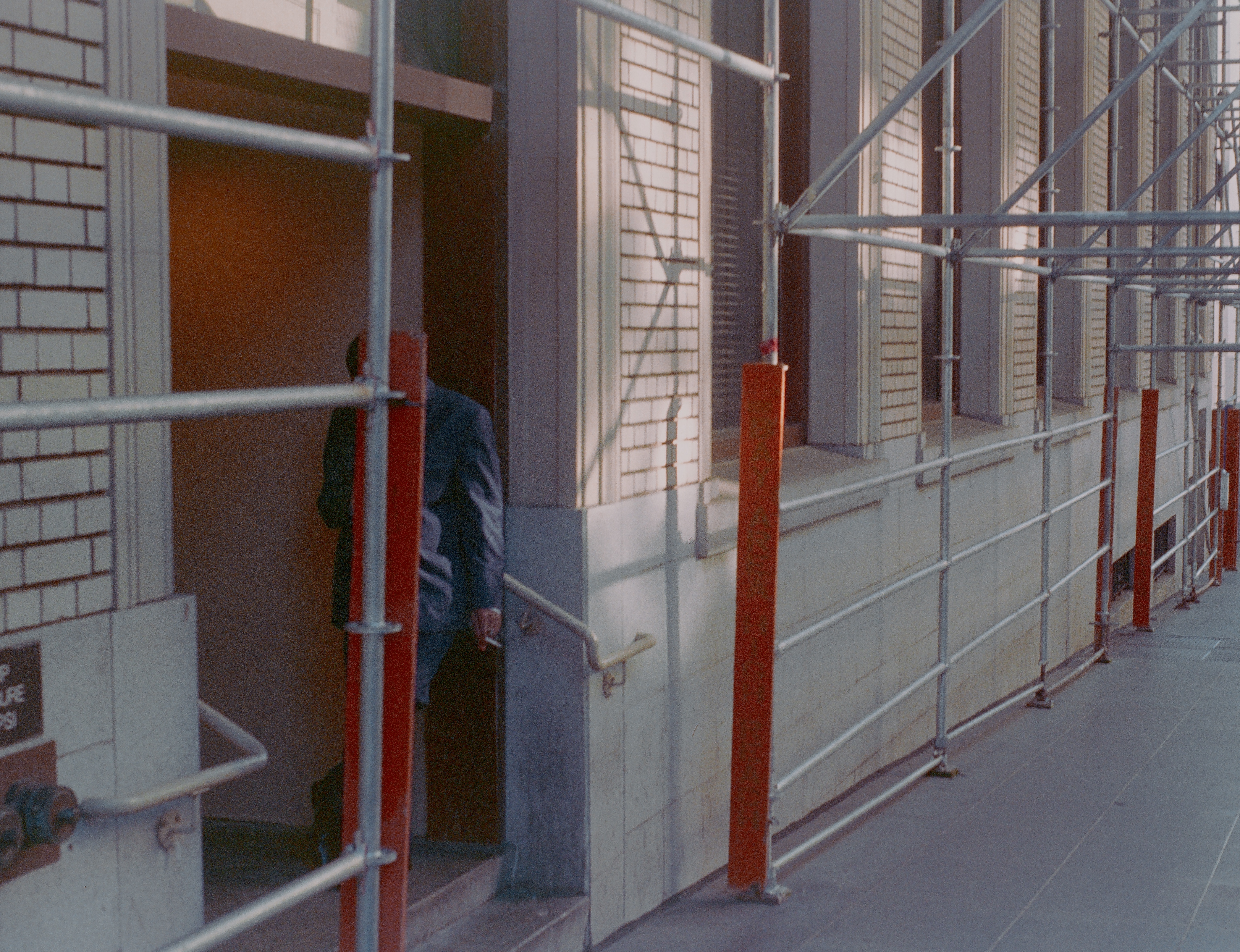
UNLIKELY JUXTAPOSITIONS are the very essence of photography. We use the camera to extract the mood from one time of day and paste it over the atmosphere of another. We put light in places where once was only darkness. We take the colors of joy and superimpose them over somber scenes. We shove the past up against the present and force the two of them to become BBFs. And so, as picture makers, we should be comfortable when elements that seem to have nothing in common co-exist comfortably within a single image.
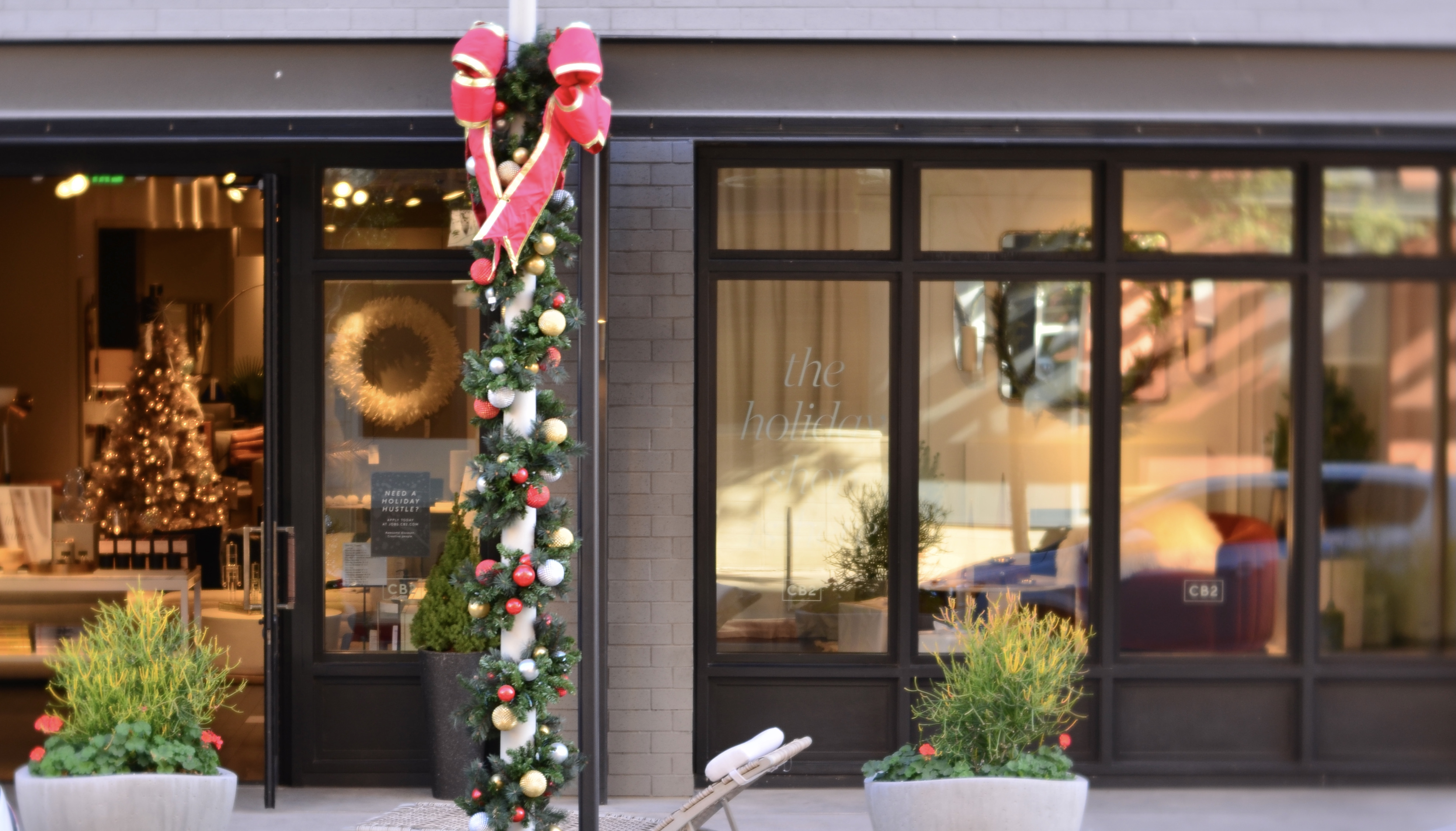
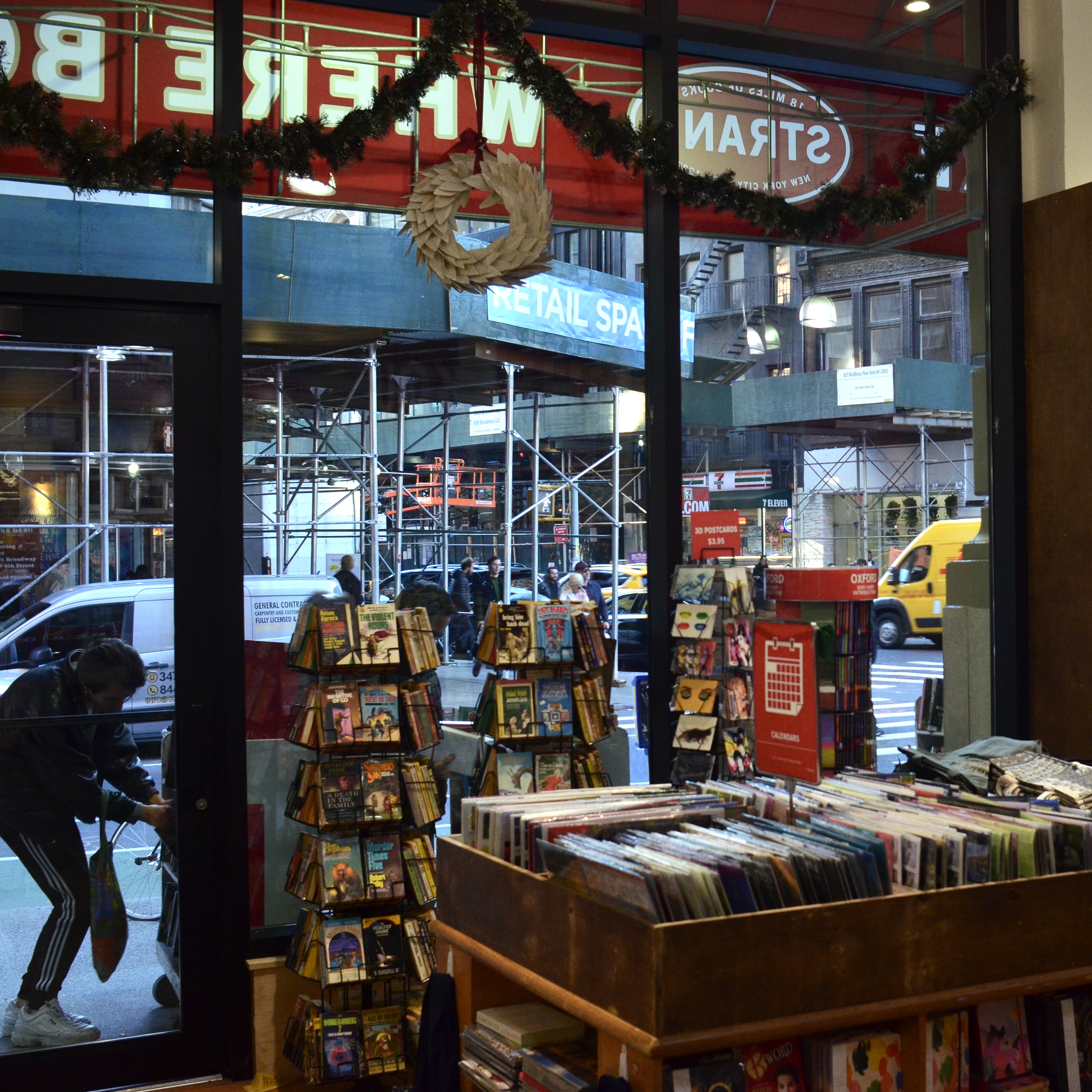
That said, this picture, which pretty much fell into my lap last year, feels very much like the kind of improvisation that informs the re-imagining of practically every rite and routine right now, rather than a “fun” idea from 2019. That is, in the present state of affairs, observers might understandably react to, say, a wedding rehearsal inside a bookstore with a big, “um, sure, why the hell not?” In this way, the great hibernation has made more of us think like, well, photographers.
Here’s why: shoot enough photos and you will inevitably become more limber in your idea of what fits or doesn’t fit within a single frame. Quite simply, the randomness of life will force you to look at seemingly exclusive realities and admit that, yes, they actually do justify each other in your final composition.
And just as so many non-shooters have learned, in plague times, to accommodate plans “B”, “C”, “D”, photographers must stay in the game, stay loose, and conclude that, yes, all things considered, holding a wedding in a bookstore is a pretty dope idea.
Share this:
Posted by Michael Perkins | October 18, 2020 | Categories: Americana, Composition, Conception | Tags: Commentary, Street Photography | Leave a comment