THE GRADUAL REVEAL
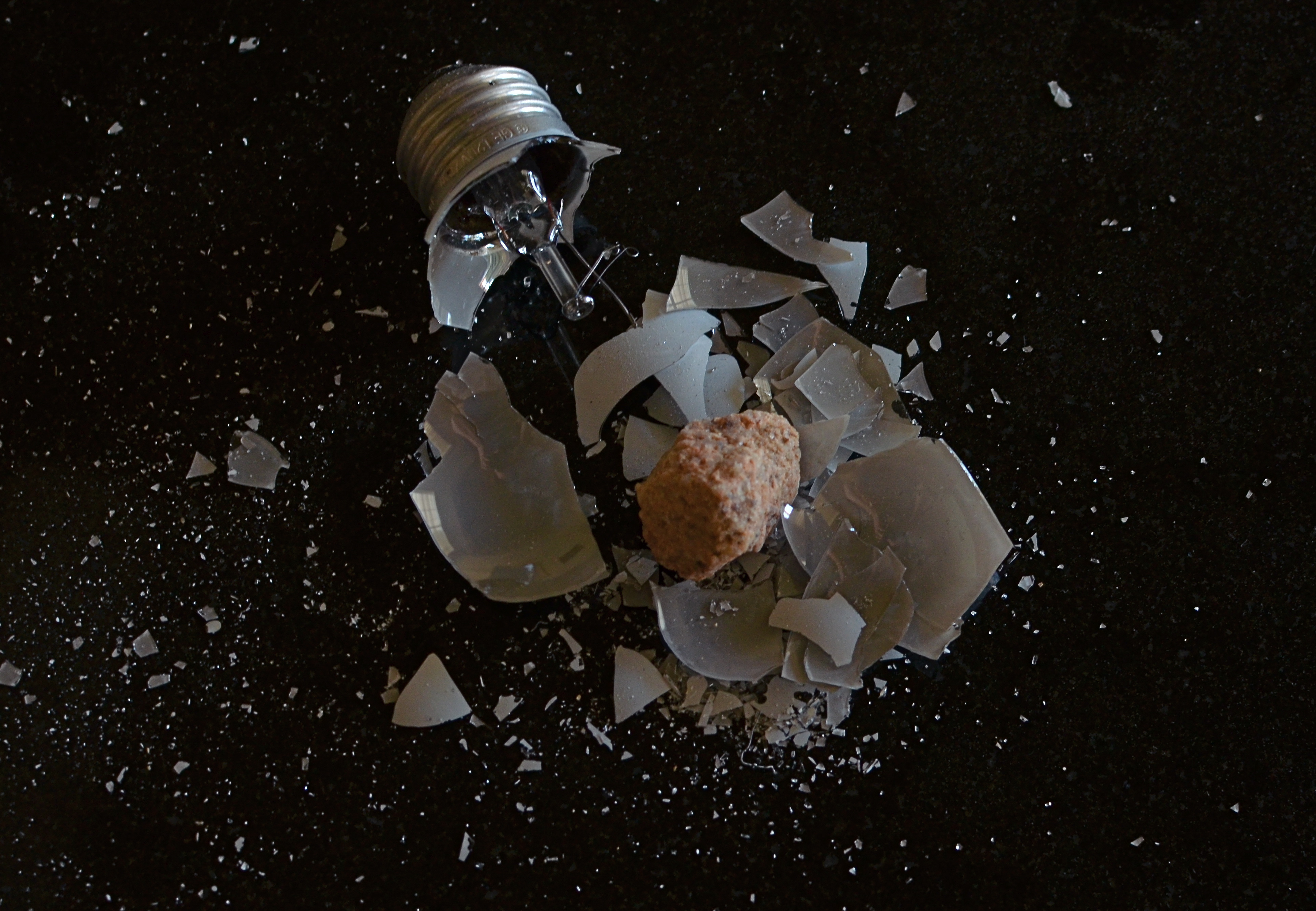
A cosmic disaster on a tabletop far, far away. 1/40 sec., f/5.6, ISO 400, 35mm.
by MICHAEL PERKINS
CREATING FANTASY IMAGES ON A TABLETOP IS A LITTLE LIKE WATCHING YOUR GRANDMA IN THE KITCHEN, if your grandma (like mine) was the “I-don’t need-no-recipe”,a dash here, a pinch there kind of cook. Sometimes I think she just kept chucking ingredients into the pot until it was either the right color or the correct thickness. All I know is, when she was done, it “ate pretty good”.
I use the same approach when I am building compositions from scratch. You’re not sure what the proportions are, but you kind of know when you’re done.
One of the photo sharing sites that I recommend most enthusiastically is called UTATA, a site which promotes itself as “tribal photography” since it require a certain level of communal kick-in from all its members, posing workshop assignments and themes that take you beyond merely posting your faves. Operating in tandem with its self-named Flickr group, UTATA is about taking chances and forcing yourself, often on a deadline, to see in new ways. If it sounds like homework, it’s not, and even if you have no time to work the various challenges, you’ll still reap a vast wealth of knowledge just riffing through other people’s work. Give it a look at http://www.utata.org.
One of the site’s recent so-called “weekend projects” was to photograph anything that in any way depicted broken glass. No special terms beyond that. Cheap glass, wine glass, churchy stained glass, pick your texture, pick your context. I decided to so something with a shattered light bulb, but with a few twists. Instead of just breaking the bulb and shooting a frame, I opted to place the bulb in a food storage bag, then hammer it until it burst. Due to the sudden release of pressure when light bulbs are breached, they don’t just crack, they sort of explode, and, given the chemical treatment of the glass, there is a lot of pure white dust that accompanies the very fine glass particles. Breaking the bulb inside the bag allowed me to retain all that sediment, then make it more visible by pouring the bits out onto a black, non-reflective surface…in this case, a granite tile that I use to model product shots on.
I already liked the look of all the atomized white dust across that dull blackness, rather like a “star field”, or a cluster of debris, scattered across a vast void in space. The effect was taking shape, but the “garbage cook” inside my head was still looking for one more ingredient. The great thing about building a fantasy visual is that it doesn’t have to make “sense”….it just needs visual impact sufficient to register with the gut. If the micro-fine bits of the bulb represented some kind of space catastrophe, where was the cause? Inner stresses, like volcanoes, rupturing the Mother Bulb asunder like the planet Krypton? No, wait, what if something collided with it, some asteroid-like something that spelled doom for Planet G.E.? A quick trip out to the back yard gave me my cosmic cataclysm….I mean chunk of quartz, and the rest was just arrangement and experiment.
What does it all mean? Heck, what does beef stew mean? Making a picture can be like gradually adding random veggies and spices until something tells you it’s “soup”. And with tabletop fantasies, you get to play God with all the little worlds you’ve created.
Hey, over a lifetime, plenty of other people will take turns blowing up your work.
Why not you?
follow Michael Perkins on Twitter @MPnormaleye.
YOU ARE THE CAMERA
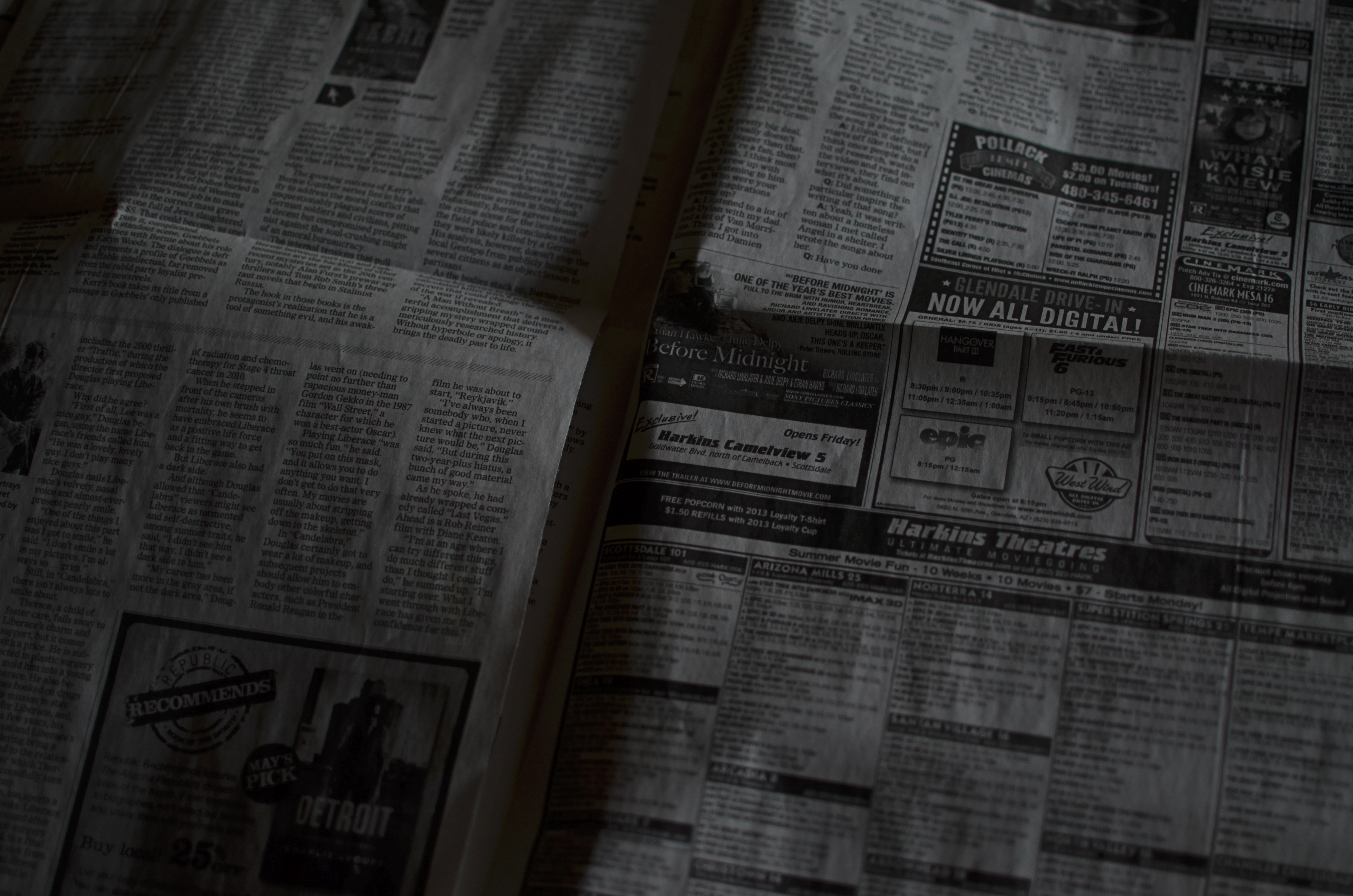
Dark Days for the printed page. 1/80 sec., f/1.8, ISO 100, 35mm.
By MICHAEL PERKINS
THE MOST ANNOYING COMMERCIAL ON TELEVISION AT PRESENT is the one from Apple reminding you that more people take pictures with the iPhone5 than with any other camera in the world. Now, I understand that The Men Who Would Be Steve at Apple need to assert their dominance in a rapidly accelerating race between smartphone camera brands. It’s just good business, and all that. Granting that, let’s agree that their statement is essentially meaningless for photography.
Apple can claim that their photo gadget is in more hands than anyone else’s? Ho-hum. The Kodak Brownie was able to make the same claim over 100 years ago, and successfully defend it for almost another fifty. We’re number one, sis-boom-bah, and what does that have to do with the kind of pictures that are being taken? The iPhone5 is a technical marvel on many levels, and it contains, among many other toys, a reasonably reliable, limited point-and-shoot-camera. You will always be able to get some kind of image on it under nearly any circumstances.
However, the Apple TV ad, while factually accurate, is artistically false, since it leads one to the spurious conclusion that more iPhone5 pictures means more excellent pictures. And there isn’t a camera, cheap or cherry, that can make that statement. I get just as agitated when trendo camera mags try to imply that if your gear costs thousands, your pictures will look like a million.
We’ve had almost two hundred years to shake off this childish notion. Equipment does not equal excellence. Convenience, speed, affordability, flexibility…cameras can make all these claims. But they do not confer the title of photographer on anyone.
Only you can do that.
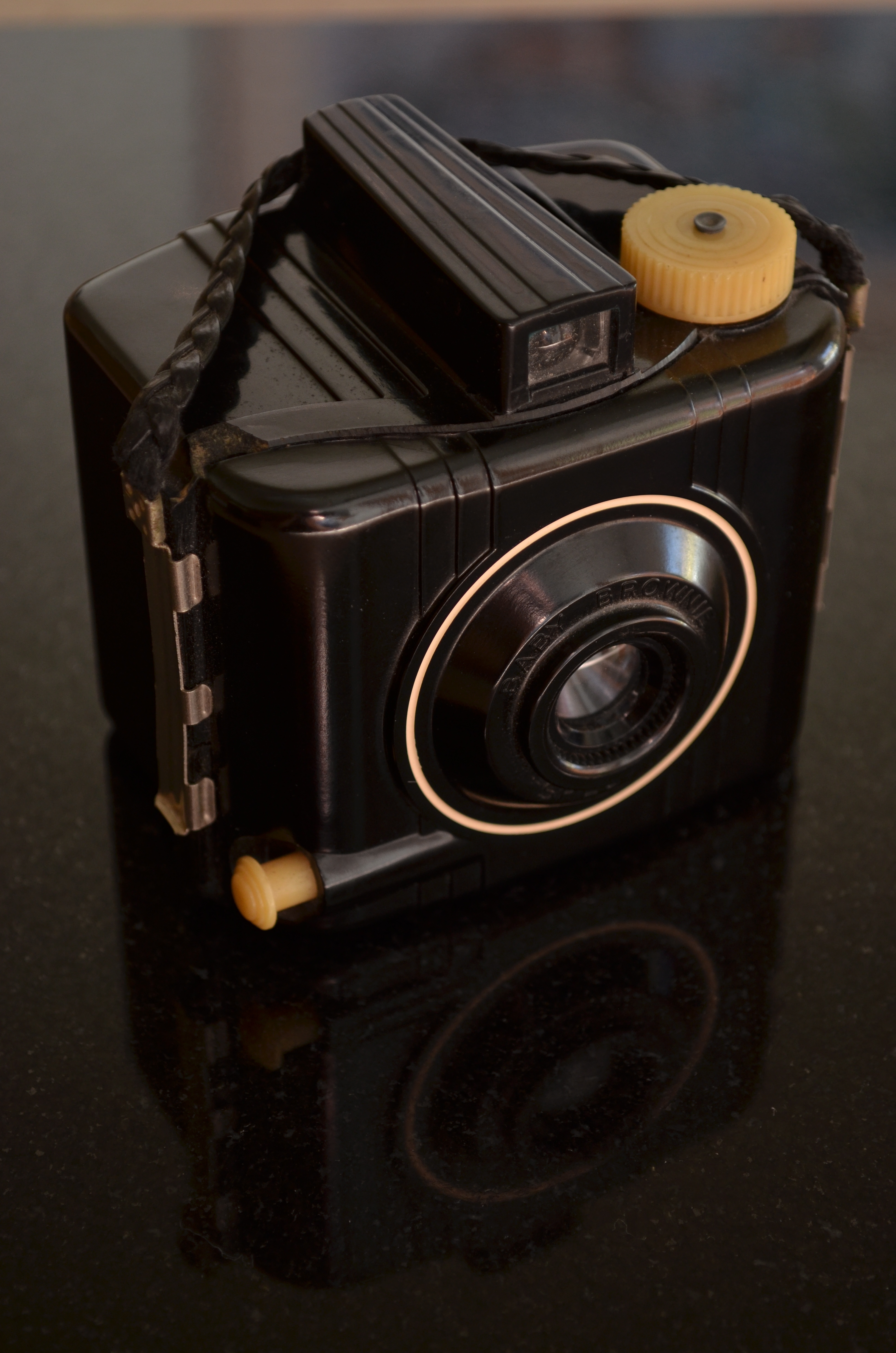
There used to be more of these than any other camera in the world, and so what?
And you can do it with a cheap piece of garbage, or a technical wonder, or any equipment stage in between. The idea is all. Everything else is just tinkering.
Here’s another piece of lunatic logic coming from another direction:
The idiotic recent decision of the Chicago Sun-Times to lay off all of its staff photographers, replacing them with freelancers (whom they will train on iPhones!), is not a lousy idea because there aren’t enough low-cost cameras out there to afford them some kind of coverage on their stories. It’s a lousy idea because it’s based on a flawed concept: the belief that photography is a universal skill, and that bystanders with smartphones are the equal of seasoned visual journalists, imbedded in their communities and schooled in its sources. They are not, and can never be.
Sadly,you can bet that editors across the nation are watching to see if the Sun-Times gets away with it. And they just might. Of course the quality of image reporting will take a hit, but since people are leaving the traditional newspaper as if it has leprosy anyway, will the customers know the difference? Look for this horrible move to be duplicated at a newspaper near you, since it’s (a) cheap, (b) easy to explain failure some other way, and (c) oh, yeah did I mention it’s cheap? Ironic sidebar: this is, officially the first time a newspaper has opted for less technology to become more competitive.
Expensive cameras and decent salaries are certainly no guarantee of good news coverage, but a staff loaded with veterans of wars, uprisings, elections, disasters and human interest is. The fact that several of them are Pulitzer Prize winners isn’t exactly a disqualifier, either.
You are the camera. You make the picture, regardless of the technology at hand. Forget that, and you might as well be holding a canned ham.
follow Michael Perkins on Twitter @MPnormaleye.com
Related articles
MUTATION
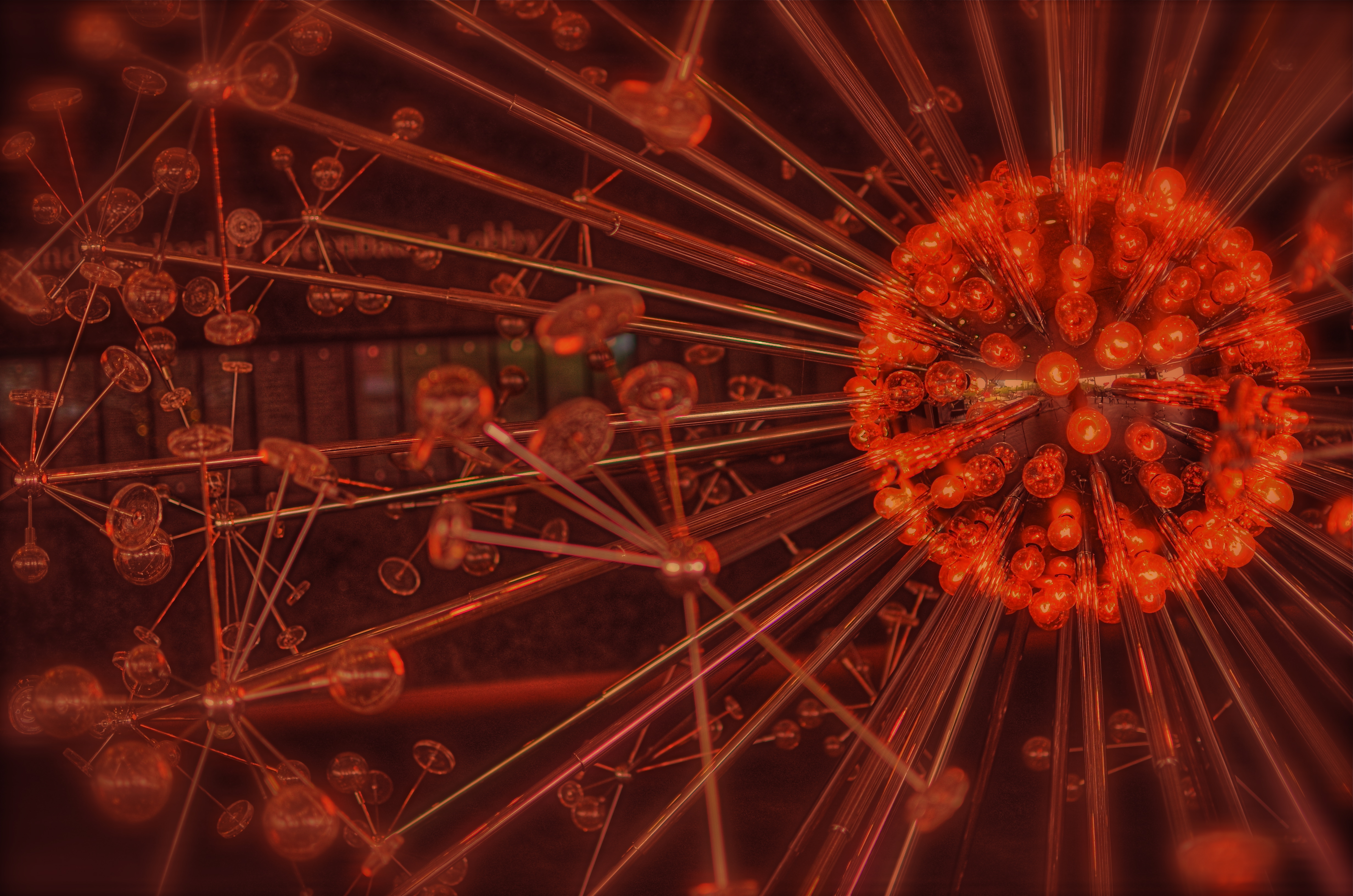
Okay, this has a LOT of processing. Love me or hate me based on whether it worked. 1/500 sec., f/1.8, ISO 100, 35mm.
BY MICHAEL PERKINS
NOT CONTENT TO BE AN ART ON ITS OWN TERMS, PHOTOGRAPHY IS ALSO CONSTANTLY RE-INTERPRETING ALL THE OTHER ARTS AS WELL. Ever since imaging fell out of the cradle in the early 1800’s, several of us have always been looking at the works of others and saying, “eh, I can probably do something with that.”
Yeah, not too presumptuous, right? And the trend has continued (some say worsened) to the present day. Half the time we are creating something. The other half of the time we are tweaking, mocking, honoring, loving, hating, shredding, re-combining, or ragging on somebody else’s work. Are these mashups also art? Are we co-creators or just cheesy thieves?
And does it matter?
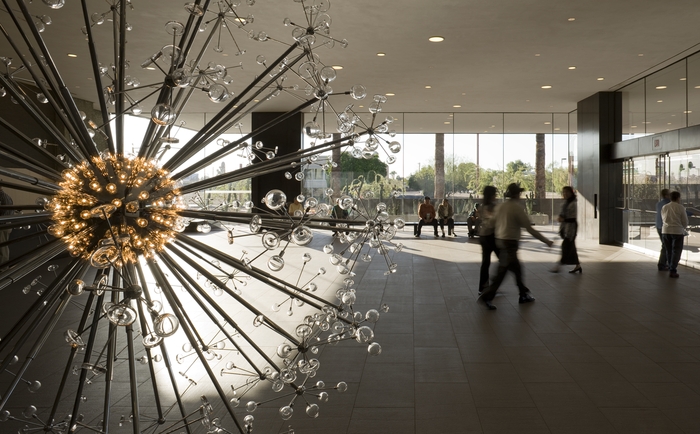
The Last Scattering Surface as it appears in the lobby of the Phoenix Art Museum.
The Phoenix Art Museum greets customers with a stunning original sculpture in glass and plexi right at the entrance to its ticket lobby. A huge installation of light bulbs, mirrored surfaces and reflective discs, Josiah McIlheny’s The Last Scattering Surface resembles a brightly burning orb (planet? asteroid? dwarf star?) surrounded by jutting rods that carry the central sphere’s light along “rays” to a series of circular satellites (moons? craft? debris?) Like many examples of pure design it is both everything and nothing, that is, it is mutative based on your observation. So, in a way, as in the manner of a photographer, you are already a participant in the co-creation of this object just by looking at it. Does this mean that it’s less theif-ish to go ahead and mutate the man’s work?
Well, there’s probably a lively back-and-forth on that.
For my own “take”, I wanted to remove the background walls, visitors, ambient blurry light from other junk, to isolate this nova-like work in “space”. I only had one frame that I liked from my short blast of shots, so I duped it, slammed the contrast real light/real dark on the pair, and did an exposure fusion in Photomatix. Adding a little edge blur and a re-tinting to the composite gave me the look of an interstellar explosion.
I freely advertise that I am making a semi-original re-mix on a completely original work. It’s not much more radical than shooting with a filter on the lens, or choosing black and white for a color subject, and yet, it always feels funny to try and make something beautiful that was beautiful in the first place.
But art is supposed to be about starting conversation, so consider this mine.
I just did my talking with a box instead of a mouth.
follow Michael Perkins on Twitter @ mpnormaleye.com
“SNAPSHOT” MOMENT, “SESSION” MINDSET
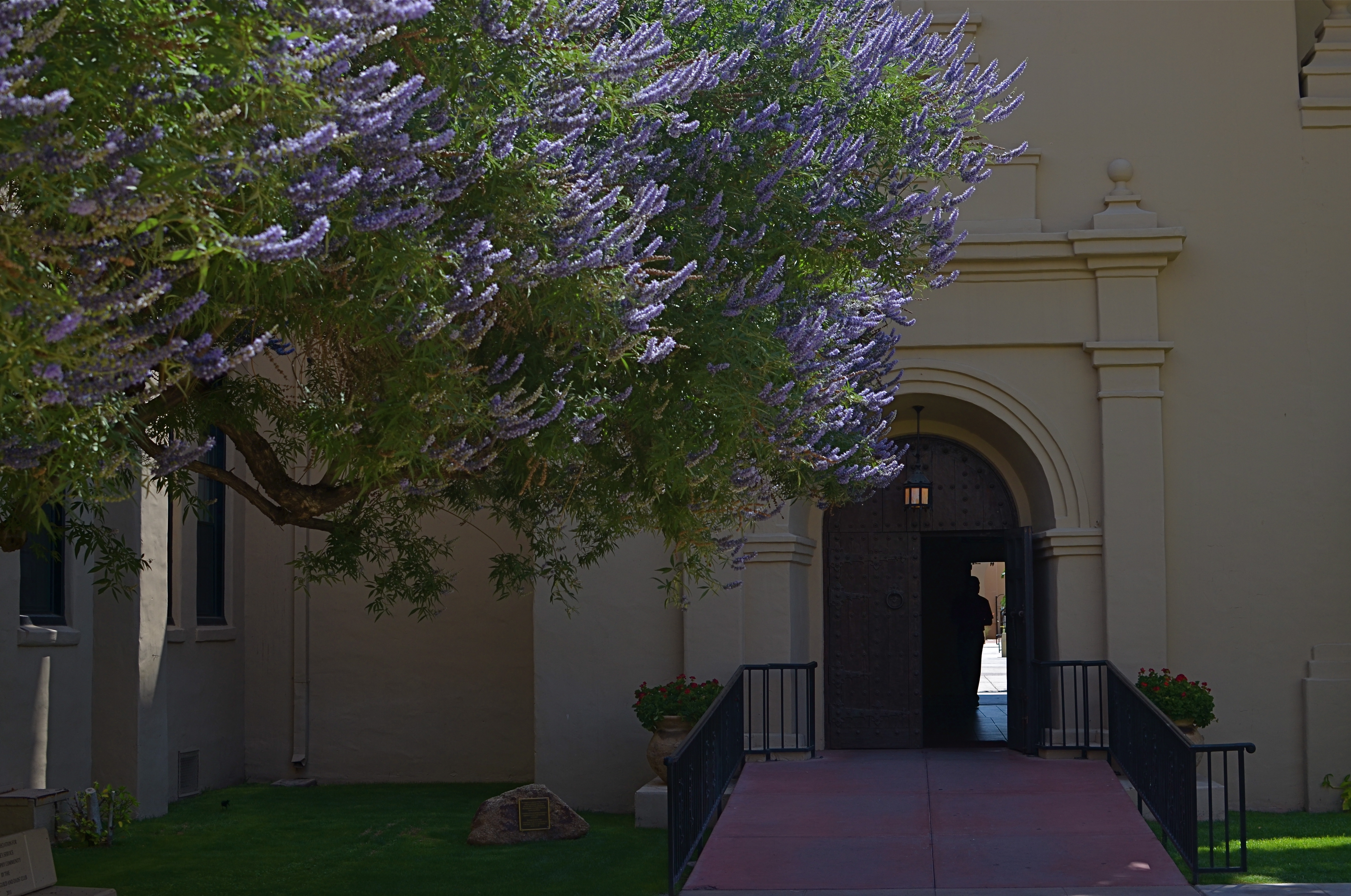
The light on the tree’s blossoms will be gone in three minutes. Best decision in the moment: slight underexposure to combat the mid-morning sun. 1/640 sec., f/5.6, ISO 100, 35mm.
By MICHAEL PERKINS
THE GREATEST ENEMY OF THE AMATEUR PHOTOGRAPHER IS TIME. Not the time spent perfecting our “eye”, nor the years invested in learning how to realize what we visualize. Sadly, the most tyrannical toll that time takes on us is in the meager number of moments in which we have to create most of our shots. Time…enough of it to work, to feel, and to act, is the only unbridgeable gap between ourselves and most of the pros.
I say “most” because some of the best photographers live absolutely in the moment, as in the case of imbedded journalists or sports shooters. No, what I’m talking about is the appointment that pros get to set for sessions, shoots that require set-up, tests, the issuance of permits, the re-routing of traffic. It’s not hard to see that a shooter for National Geo is at greater leisure planning his shot of a majestic waterfall than you are when your tour group is taking the tram from one Breathlessly Beautiful Natural Wonder to the next, all in time to rendezvous back at the terminal for a box lunch and precisely fifteen minutes in the gift shop. It’s not remarkable that millions of images are taken in Yellowstone each year. What’s amazing is that any of them work out.
Just saying.
Fact is, amateurs often can’t get the luxurious arrangements for creativity that are a given for the pros. And yet, since we don’t want our stuff to look like it was shot out the window at 55mph, we have to strive to combine the brief windows of our snapshot moments with the trained eye of a session mindset.
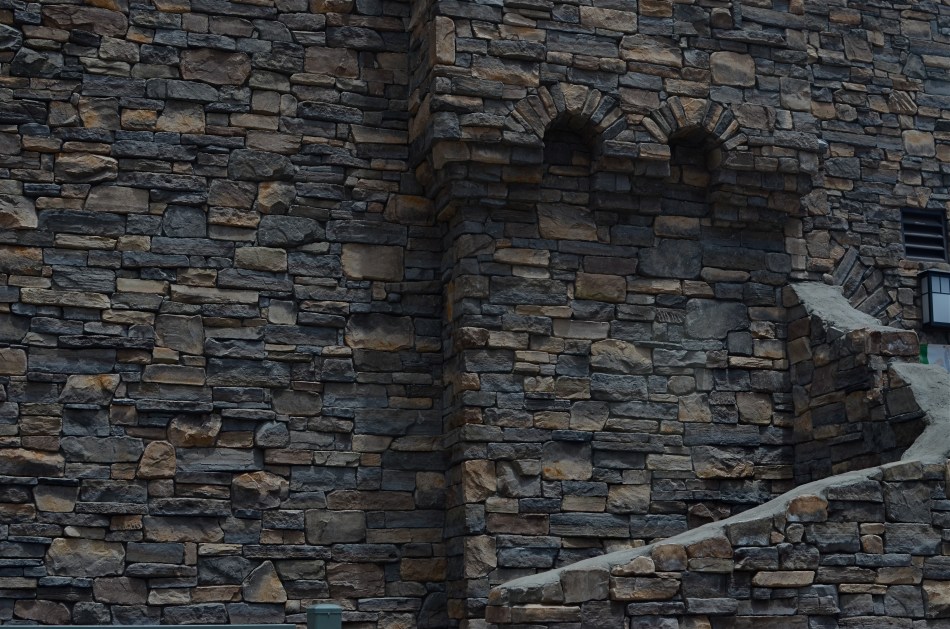
- Taken on pure impulse from a car as I was just about to drive off the property of this unique library. No planning except a fast exposure to give some depth to the stone textures. 1/640 sec., f/5.6, ISO 100, 35mm.
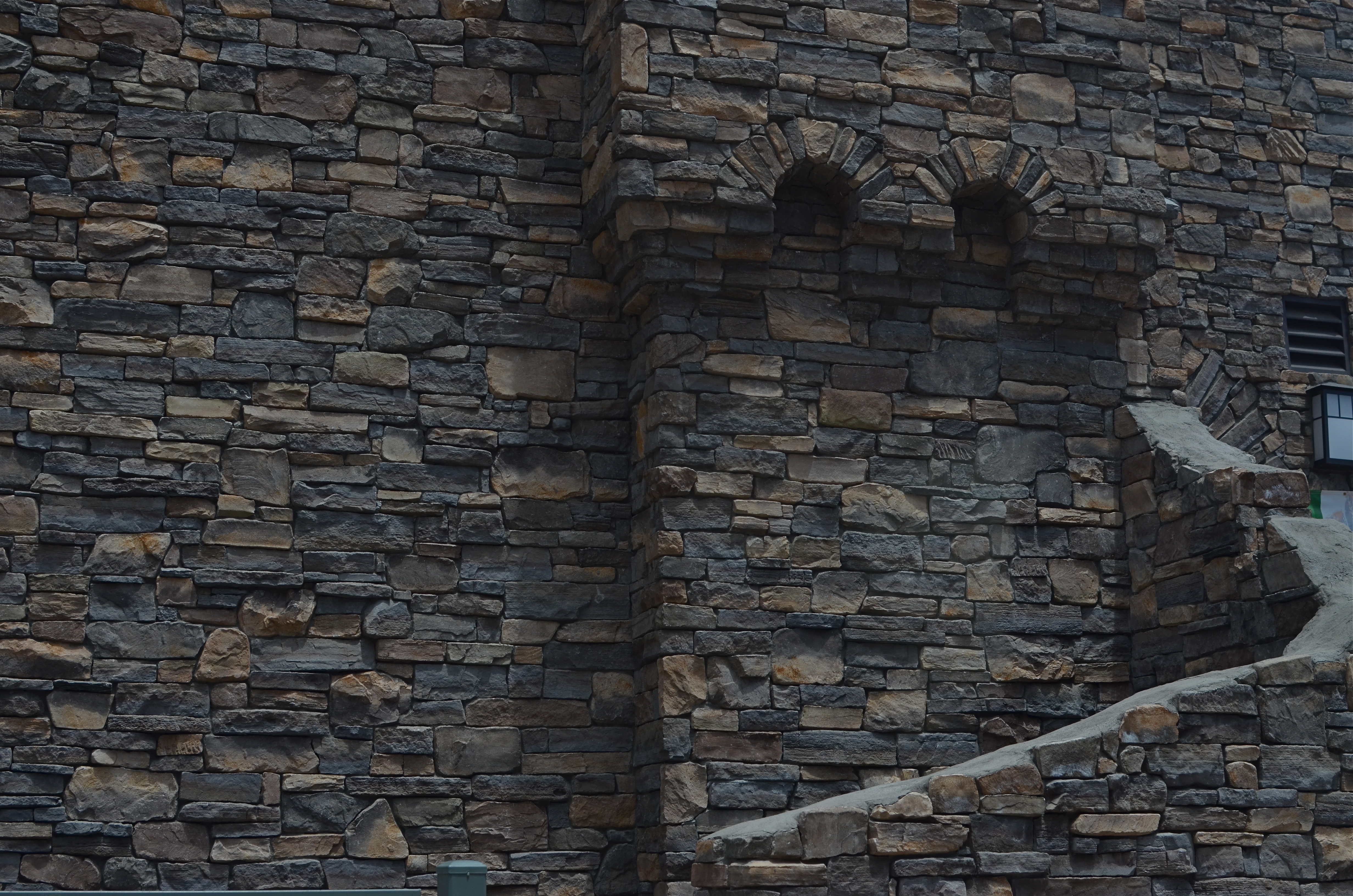
This is why it’s so important to always be shooting. Everyday. Good subject or bad. Great weather or lousy. Always. Because only the repetitive exercise of framing up and clicking off thousands of shots burns ways of seeing, ways of evaluating, into your brain, letting you make ever more complex calculations in increasingly shorter time. Shooting all the time speeds the arrival of the day when you can, in most cases, set and shoot and know that most of it will look intentional, done with some purpose in mind.
Repetition really is the best teacher, and the more direct control you take over your shooting, the more the universal laws emerge. At this focal length, certain things always happen. Under these lighting conditions, some things are always true. You’ll have your own truths, but, over time, they will be self-evident, because you will have faced these situations so many times that the essence of what you need for a shot will start to be as obvious as a glowing coal.
Time, or the lack of it, can rob us of the smart spontaneity we need in snapshot settings. However, the time we have invested learning how to shoot can give us a session mindset, and that affords us more control.
Are my snapshots better than anyone else’s? I doubt it. But over time, they are definitely better than my snapshots used to be.
Hey, I’ll take it.
follow Michael Perkins on Twitter @mpnormaleye
Related articles
- Snapshot (photography) (itscitrarizqinow.wordpress.com)
THE EASIEST ABSTRACTION
By MICHAEL PERKINS
YOU’VE HEARD THE JOKE ABOUT THE WRITER WHO TAGGED A NOTE TO A FRIEND BY SAYING, “If I’d had more time, I’d have written you a shorter letter”. That line speaks volumes about how we increase the power of communication by leaving things out. Just as great books are not so much written as re-written, so photographs often gain in eloquence when everything but the essence of the message is pared away.
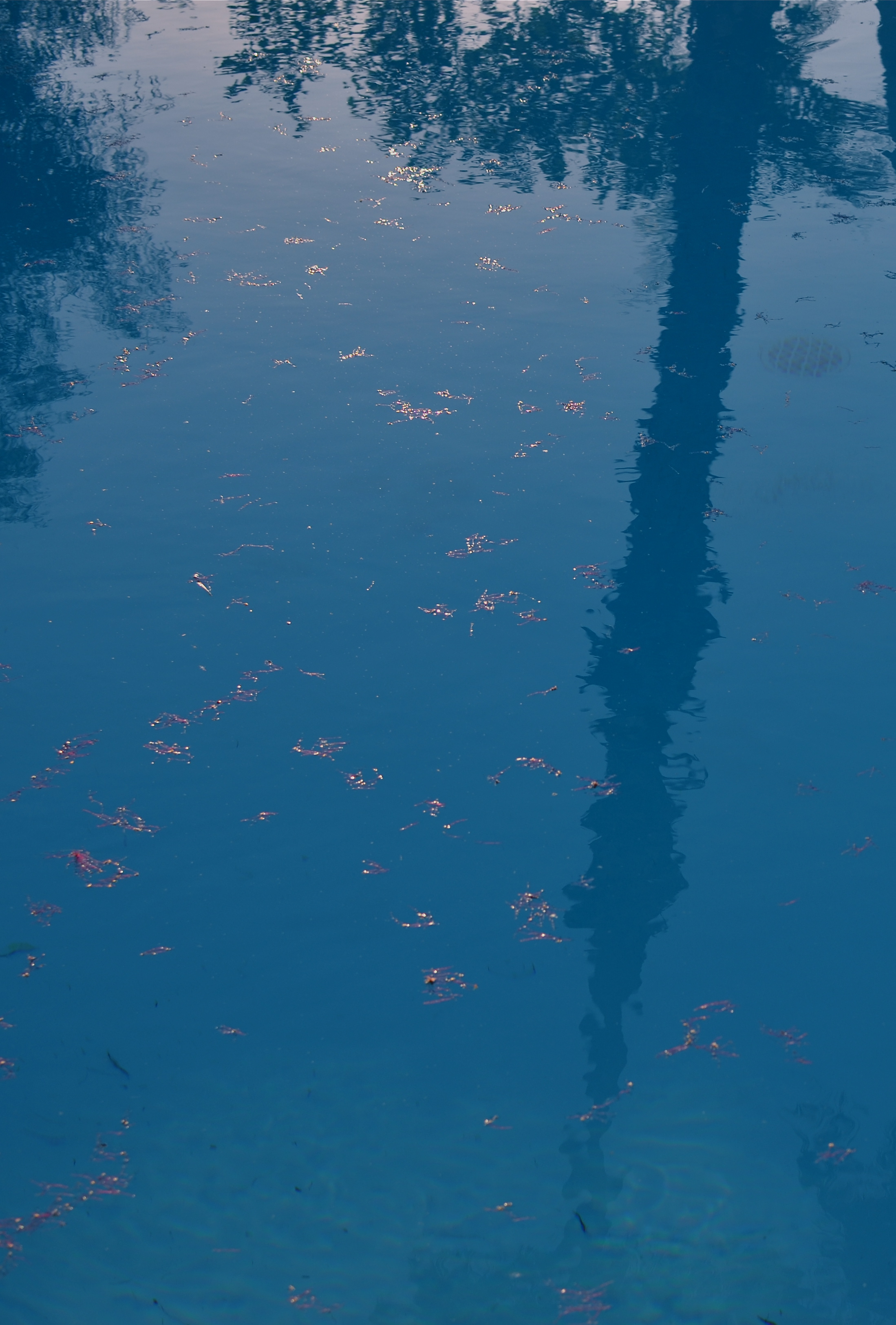
You already know a tree “goes with” this reflection..but is it needed to complete the image? 1/500 sec., f/5.6, ISO 100, 35mm.
It means being your own best editor, and, to do that, you have to be able to hate on your own work a little bit. Tough love and all that. Spare the picture and spoil the image. No sacred cows, just because they are your cows. There is no avoiding the fact that no real art comes about unless you take direct, often brutal action, to overcome the imperfections of a raw first effort. You have to intervene, again and again, in the shaping of your conception.
You can probably infer from all this that I am no fan of automodes, or of any other abdication of responsibility that lets a device, for Pete’s sake, dictate the outcome of image-making.
A few basic truths to keep before you:
Your camera is a machine with an eye attached.
You are an eye with a brain attached.
One of you is supposed to be in charge.
Guess which one.
When we merely snap a scene, freezing an arrangement of whatever we see in frame, we are only making a record. Creativity comes with abstraction, of exploring what is beyond the obvious cause-and-effect. The standard approach to showing things should actually be called the “average” approach. Look, here’s a tree, and, below, here is its shadow. Behold, here’s a scenic object next to the water, and, in the water, a reflection of that object. This simple reproduction of “reality” involves craft, to be sure, but something that falls short of art. Abstracting, adding or taking away something, and actively partnering with the viewer’s imagination take the photograph beyond a mere recording.
And that, boys and girls, is where the “art” part comes in.
Take away even a single obvious element and you change the discussion, for better or worse. Does the tree always have to be accompanied by its shadow? Does the mountain and its reflection always need to be presented as a complete “set”? It’s interesting to take even the “perfect” or “balanced” shots we cherish most and again take the scissors to part of them. Can the picture speak louder if we trim away the obvious? Can the image turn out to be something if it just stops trying to be everything?
The easiest abstractions come from changing small things, and editing can often, oddly, be an act of completion. Pictures taken in the moment are convenient, but too many images are trusted to the ease of leaning on automodes, and almost no photo is fully realized “straight out of the camera.” Believe this if you believe nothing else: nothing truly excellent ever results from putting your imagination in neutral. You have to decide whether you or the machine is the principal picture-taker.
That decision decides everything else.
Follow Michael Perkins on Twitter @mpnormaleye
IT’S NOT EASY BEIN’ GREEN
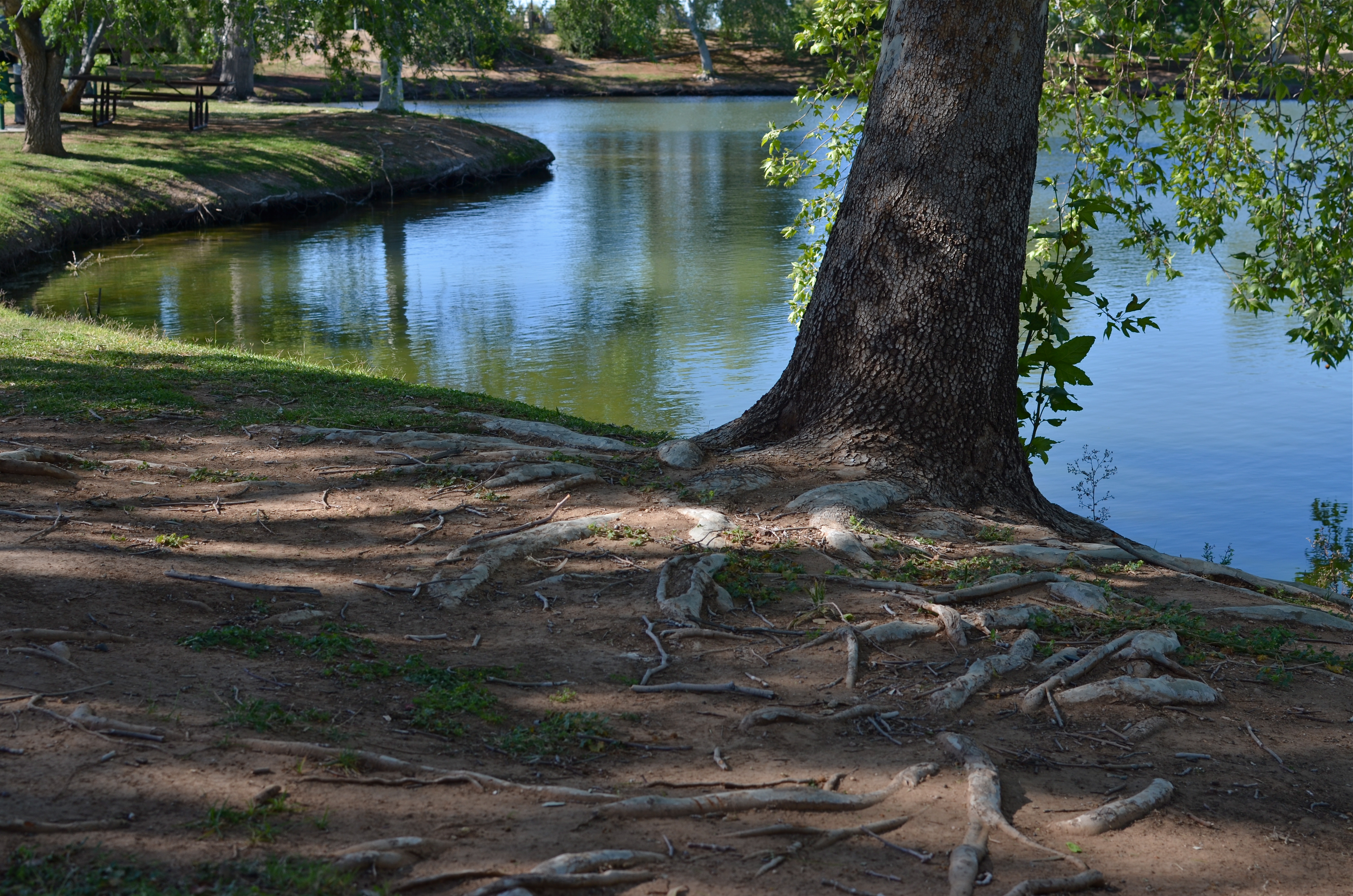
This is the desert? A Phoenix area public park at midday. There is a way around the intense glare. 1/500 sec., f/5.6, ISO 100, 35mm, straight out of the camera.
By MICHAEL PERKINS
FOR YEARS I HAVE BEEN SHOOTING SUBJECTS IN THE URBAN AREAS OF PHOENIX, ARIZONA, trying to convey the twin truths that, yes, there are greenspaces here, and yes, it is possible for a full range of color to be captured, despite the paint-peeling, hard white light that overfills most of our days. Geez, wish I had been shooting here in the days of Kodachrome 25. Slow as that film was, the desert would have provided more than enough illumination to blow it out, given the wrong settings. Now if you folks is new around here, lemme tell you about the brilliant hues of the Valley of the Sun. Yessir, if’n you like beige, dun, brown, sepia or bone, we’ve got it in spades. Green is a little harder to come by, since the light registers it in a kind of sickly, sagebrush flavor….kind of like Crayola’s “green-yellow” (or is it “yellow-green”?) rather than a deep, verdant, top-o-the-mornin’ Galway green.
But you can do workar0unds.
In nearby Scottsdale, hardly renowned for its dazzling urban parks (as opposed to the resort properties, which are jewels), Indian School Park at Hayden and Indian School Roads is a very inviting oasis, built around a curvy, quiet little pond, dozens of mature shade trees that lean out over the water in a lazy fashion, and, on occasion, some decorator white herons. Thing is, it’s also as bright as a steel skillet by about 9am, and surrounded by two of the busiest traffic arteries in town. That means lots of cars in your line of sight for any standard framing. You can defeat that by turning 180 degrees and aiming your shots out over the middle of the pond, but then there is nothing really to look at, so you’re better off shooting along the water’s edge. Luckily, the park is below street level a bit, so if you frame slightly under the horizon line you can crop out the cars, but, with them, the upper third of the trees. Give and take.
There is still a ton of light coming down between the shade trees, however, so if you want any detail in the water or trees at all, you must shoot into shade where you can, and go for a much faster shutter speed….1/500 up to 1/1000 or faster. It’s either that or shoot the whole thing at a small f-stop like f/11 or more. In desert settings you’ve got so much light that you can truly dance near the edge of what would normally be underexposure, and all it will do is boost and deepen the colors that are there. There will still be a few hot spots on projecting roots and such where the light hits, but the beauty of digital is that you can click away and adjust as you go.
It’s not quite like creating greenspace out of nothing, but there are ways to make things plausibly seem to be a representation of real life, and, since this is an interpretive medium, there’s no right or wrong. And the darker-than-normal shadows in this kind of approach add a little warmth and mystery, so there’s that.
It was “yellow-green”, wasn’t it?
Hope that’s not on the final.
(follow Michael Perkins on Twitter @mpnormaleye)
CONTAIN YOURSELF
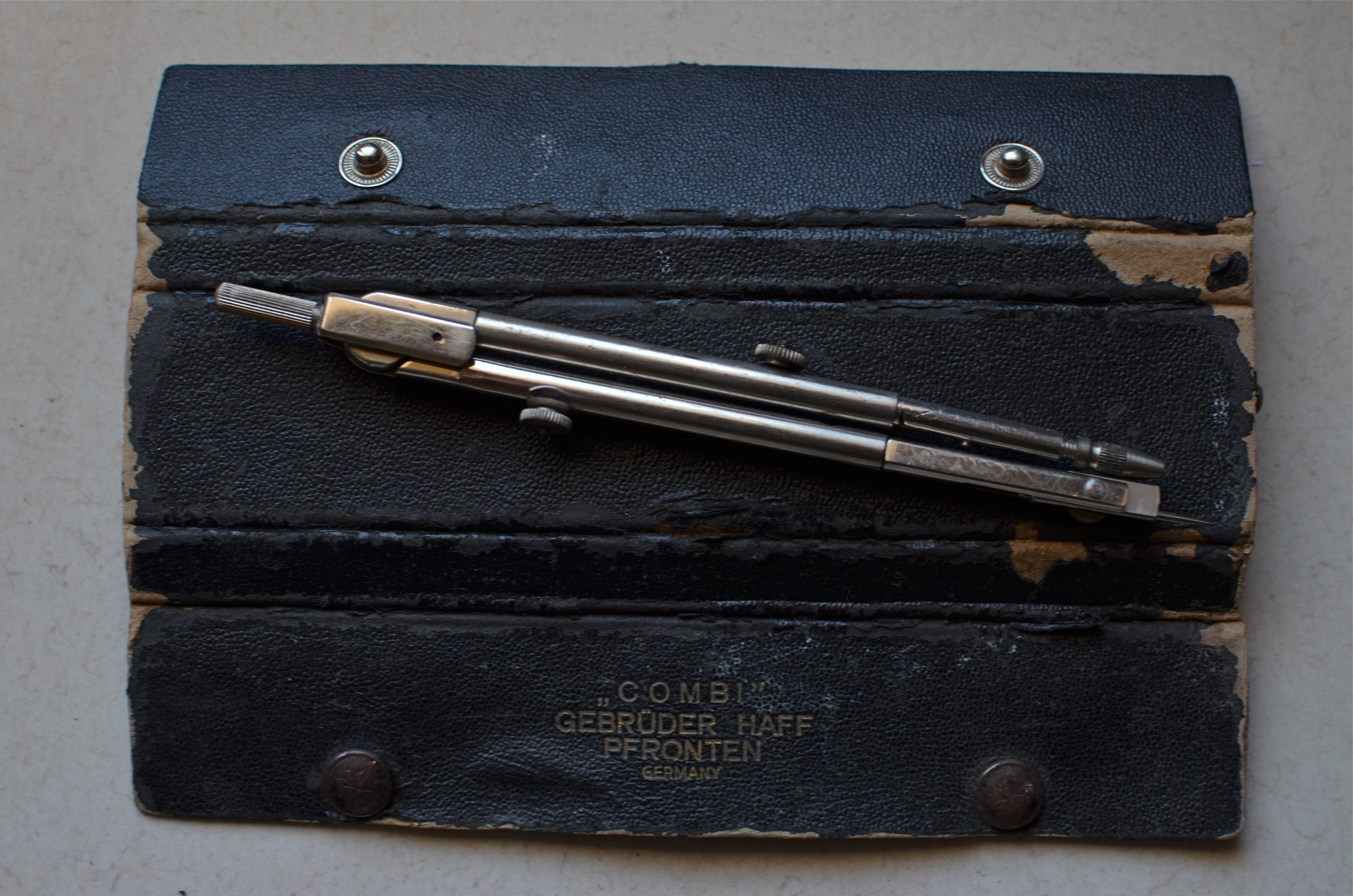
The Things They Carried: my wife’s father’s leather instrument case and compass. 1/60 sec., f/5.6, ISO 250, 35mm.
By MICHAEL PERKINS
WE LIVE IN AN AGE IN WHICH MOST OF OUR LIVES ARE EXHAUSTIVELY OVER-DOCUMENTED. We are, compared to our recent ancestors, photographically bitmapped from cradle to grave with a constellation of snaps that practically draw an outline around us and everything we do.
Globally, we will take more photographs in two minutes today than the entire world took over the entire 19th century.
That said, it’s amazing how few photos taken of, or by, us really look deeply into our souls, or whatever it is that animates us, makes us truly alive. It’s not that there aren’t enough pictures of us being taken: it’s how inarticulate so many of them are.
But go back just a generation or two, and observe the contrast. Far fewer images of most lives. And, with their increasing rarity or loss, more and more value attached to each and every one of those images that survives. Grandfather is gone, leaving only a handful of curled, cracked, and browning snapshots to mark his passing. But how rich the impact of those remaining pictures. The thirst for more, for a greatest number of clues to who this person was!
How to increase or deepen his spirit without having him here?
Explore the things he left behind. The tools he touched. The places where he invested his spirit, his aura. The parts of the world that he deemed important.
And I say: if you love someone, and have to let them go, use your camera to sniff around the found objects of their lives. It may not conjure them up like a holograph of Obi-Wan, but it will focus your thoughts about them in away which is nearly, well, visual.
I fell in love with the worn little instrument case you see at the top of this page. It belonged to my wife’s father, a man whose life was cut short by illness, a life under-represented in photographs. He made his living with his wits and with his hands. The compass which was carried in this case was a tool of survival, something he used to make his living, to measure out his skill and art. It’s a treasure to have it around to look at, and it’s a privilege to be able to photograph its worn corners, its tattered grain, its rusted buttons. Time has allowed it to speak, louder than its owner ever can, and to act as his visual proxy.
I’ve explored this theme in past posts, because I feel so strongly about the expressive power of things as emblems of lives. Long before our every action could be captured in an endless Facebook page of banal smartphone snaps, images had to work a lot harder, and say more. I’m not saying you should spend the next six months of your life raiding your closets for Ultimate Truth. I am saying you might be walking past a chunk of that Truth every day, and that it might just be worth framing up.
And thinking about.
(let’s help each other find amazing images! Follow Michael Perkins on Twitter @mpnormaleye.)
Related articles
- Behind the lens (theoriginalblogofthecentury.wordpress.com)
- Old Photographs Given New Life (modcloth.com)
IT TAKES A THIEF
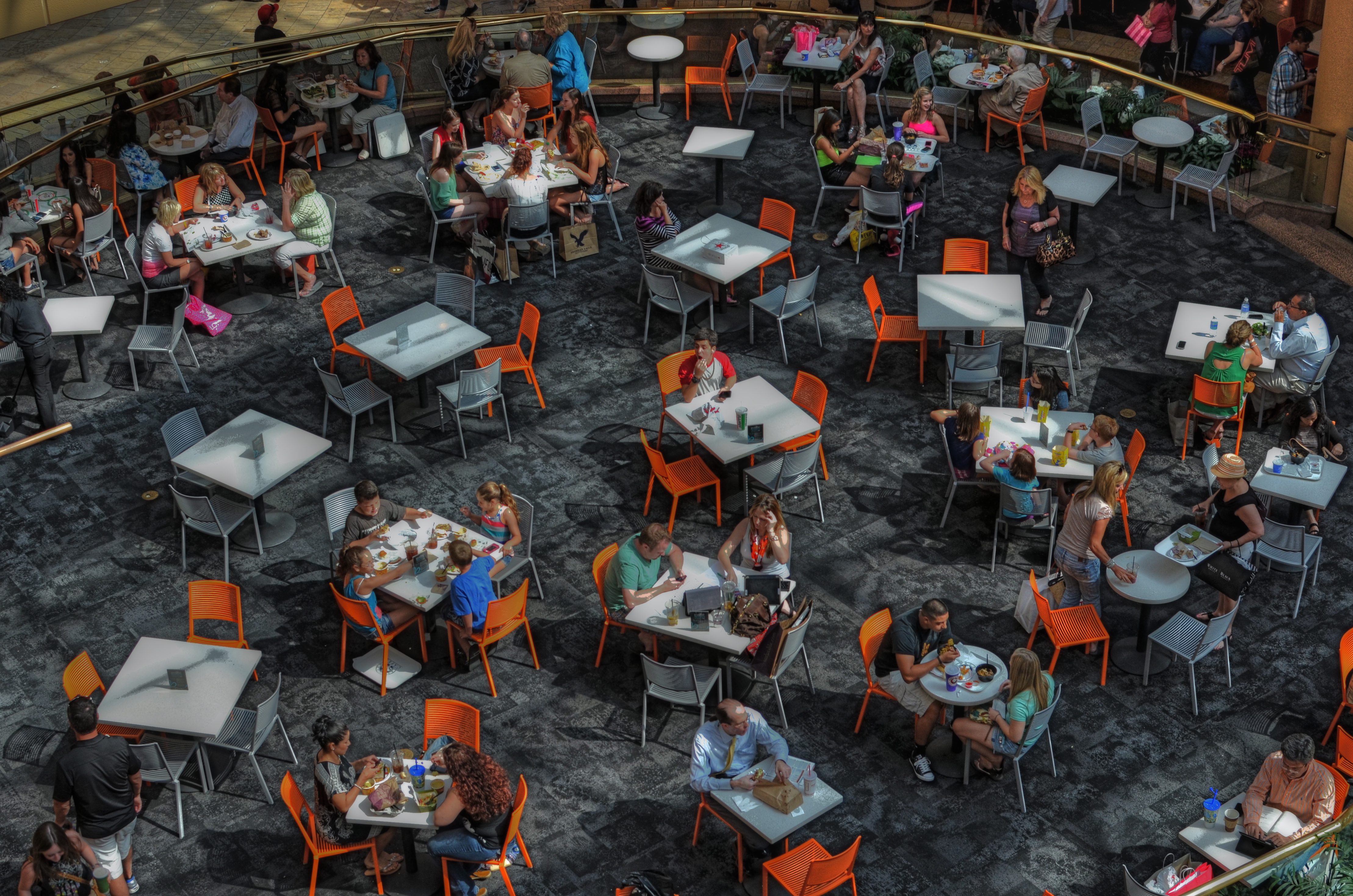
In this composition, people become mere design elements, or props. To get this look, a single exposure was duped, the two images were re-contrasted, and then blended in the HDR program Photomatix for a wider tonal range than in “nature”.
By MICHAEL PERKINS
THE GREAT STREET PHOTOGRAPHERS OF OLD WERE ALL WILY, SLY THIEVES, capturing their prey in emulsion. Yes, I know that the old superstition isn’t literally true. You can’t, in fact, imprison someone’s soul inside that little black box. And yet, in a sense that is very personally felt by many of our subjects today, we are committing an “invasion” of sorts, a kind of artsy assault on the self. Oddly, the same technique that gets you admired when you successfully capture a precious quality of someone else’s face makes you despised when you’re sneaking around to get my picture. Whether street shoots are inspired or reviled is largely a matter of who is being “violated”.
We’ve all heard about Henri Cartier-Bresson, covering the bright chrome trim of his Leica with black electrical tape, the better to keep his camera “invisible” to more of his subjects, as well as the through-the-overcoat candids shot on the New York subway by Walker Evans. And then there is the real risk to personal safety, (including being arrested, jailed, and physically threatened) undertaken by Robert Frank when taking the small-town shots for his legendary street collection, The Americans in the 1950’s. And while most of us aren’t risking incarceration or a punch in the snoot when framing up a stranger, sensitivity has accelerated, as cameras have proliferated into the millions, and personal privacy has, in the digital era, been rendered moot.
Every street shooter must therefore constantly re-negotiate the rules of engagement between himself and the world at large. Is the whole of society his canvas, or is he some kind of media criminal, seeking to advance his own vision at the expense of others’ personhood? I must admit that, at times, I tire of the endless calculation, of the games involved in playing “I’m-here-I’m-not-really-here” with individuals. When my fatigue reaches critical mass, I pull back…..way back, in fact, no longer seeking the stories in individual faces, but framing compositions of largely faceless crowds, basically reducing them to design elements within a larger whole. Malls, streets, festivals…the original context of the crowds’ activities becomes irrelevant, just as the relationship of glass bits in a kaleidoscope is meaningless. In such compositions, the people are rendered into bits, puzzle pieces…things.
And while it’s true that one’s eye can roam around within the frame of such images to “witness” individual stories and dramas, the overall photo can just be light and shapes, arranged agreeably. Using color and tonal modification from processing programs like Photomatix (normally used for HDR tonemapping) renders the people in the shot even more “object-like”, less “subject-like”(see the link below on the “Exposure Fusion” function of Photomatix as well). The resulting look is not unlike studying an ant farm under a magnifying glass, thus a trifle inhuman, but it allows me to distance myself from the process of photostalking individuals, getting some much-needed detachment.
Or maybe I’m kidding myself.
Maybe I just lose my nerve sometimes, needing to avoid one more frosty stare, another challenge from a mall cop, another instance of feeling like a predator rather than an artist. I don’t relish confrontations, and I hate being the source of people’s discomfiture. And, with no eager editors awaiting my next ambush pic of Lindsey Lohan, there isn’t even a profit motive to excuse my intrusions. So what is driving me?
As Yul Brynner says in The King & I, “is a puzzlement.”
(follow Michael Perkins on Twitter @mpnormaleye and on Flickr at http://www.flickr.com/photos/mpnormaleye)
Related articles
PICTURES FULL OF PICTURES
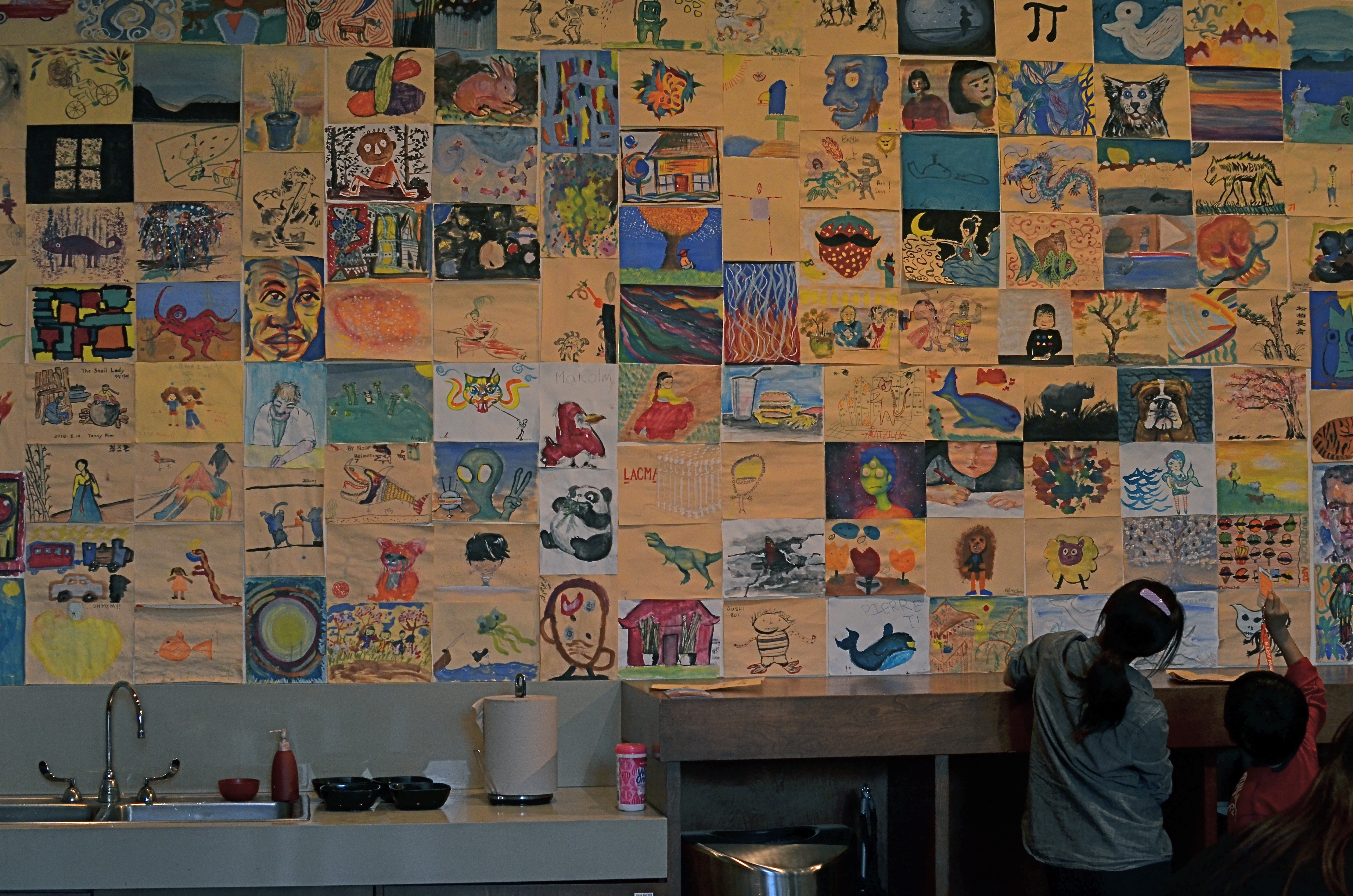
That’s my picture, right up there. 1/60 sec., f/5.6, ISO 400, 35mm.
By MICHAEL PERKINS
THE FRAME, AS IT HAS BEEN EMPLOYED IN PHOTOGRAPHY, is the visual element that truly sets the terms on which we will engage a picture. The decision of what to include or exclude in the shooter’s specifically defined little universes is the closest one can come to absolute godlike power. Frames enter us into an informal agreement with the photographer, a handshake deal that, yes, we will accept that you are presenting a world bordered by your own vision…whatever its strengths and limits. We enter an image by plunging past the edge of the frame, like the holiday party in Mary Poppins leaping into a sidewalk chalk sketch.
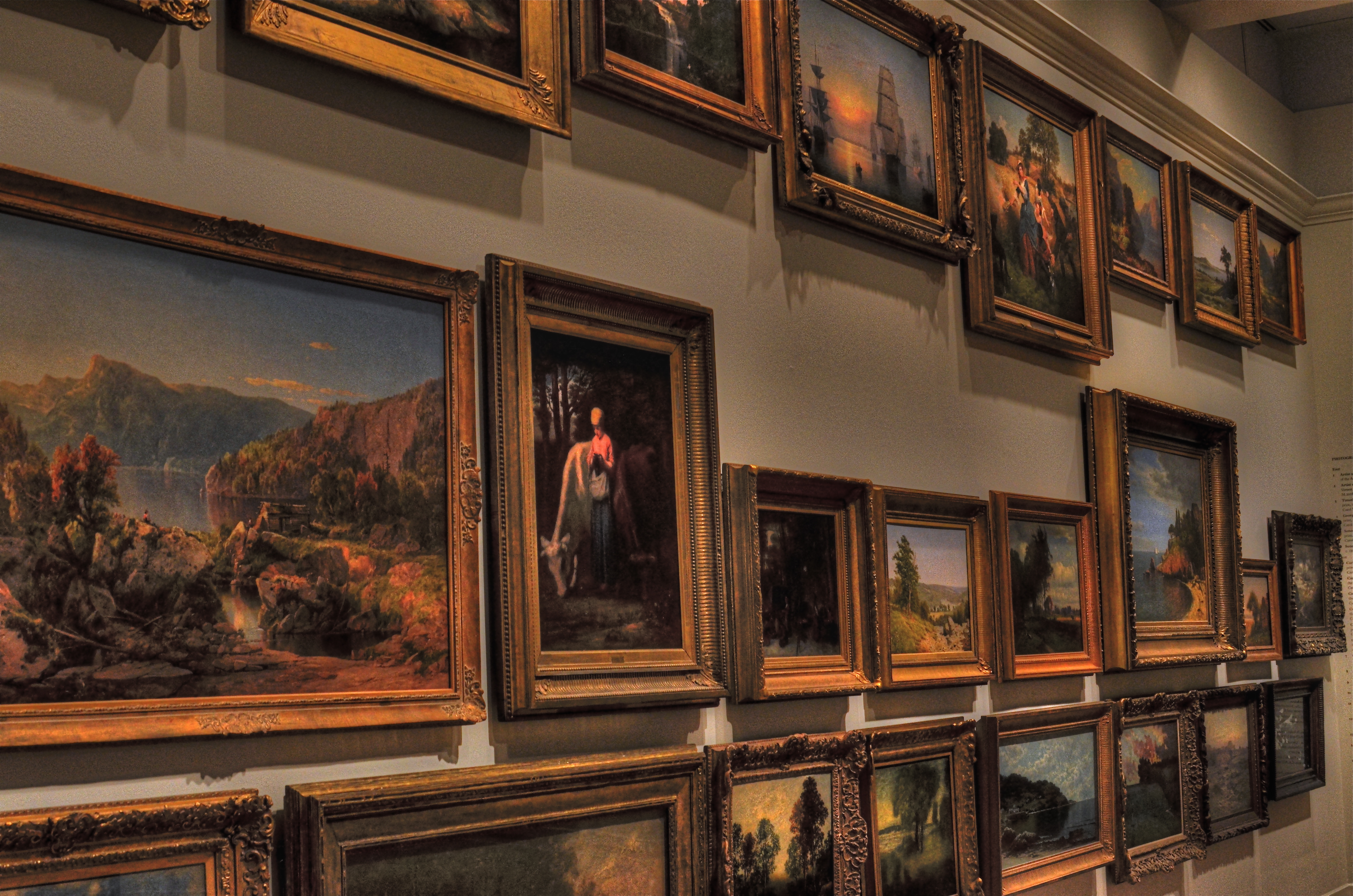
Pictures of pictures.
The fun variant in this happens when arrangements of smaller frames arranged within the master frame suggest themselves as a composition that can tell a story all by itself. Odd as it sometimes seems to take “pictures of pictures”, the results can be wonderful, or at least something beyond the mere act of recording. An image showing a wild mass of pinned-up photos of missing persons which is oddly more powerful than a portrait of any one person within it. A wall of randomly sized works within a gallery. A totality of small pictures achieved by merely stepping back, and providing the group with a defining perimeter.
I recently had the good luck to wander into a room within the Los Angeles County Museum of Art (LACMA) that took me beyond the formal exhibits to a place where a completely new kind of art is constantly being generated. In this room, a children’s art studio, there are no “schools” of painting or “periods” of drawing, just the energetic surge of young minds bursting into productivity on a daily basis. And there, along an entire wall of the workshop, stretched an enormous montage of works of every kind. No themes, no commonalty of conception, just raw, unafraid imagination. The wall, and the two people scanning it (one adult, one child) provided all the story anyone could ever need. The picture took itself.
The frame can frame other frames, and, in doing so, tell very specific truths. It’s a gift when it happens. And there isn’t a photographer alive who doesn’t love a freebie.
(follow Michael Perkins and share your own images on Twitter @mpnormaleye)
FIND THE OUTLIERS
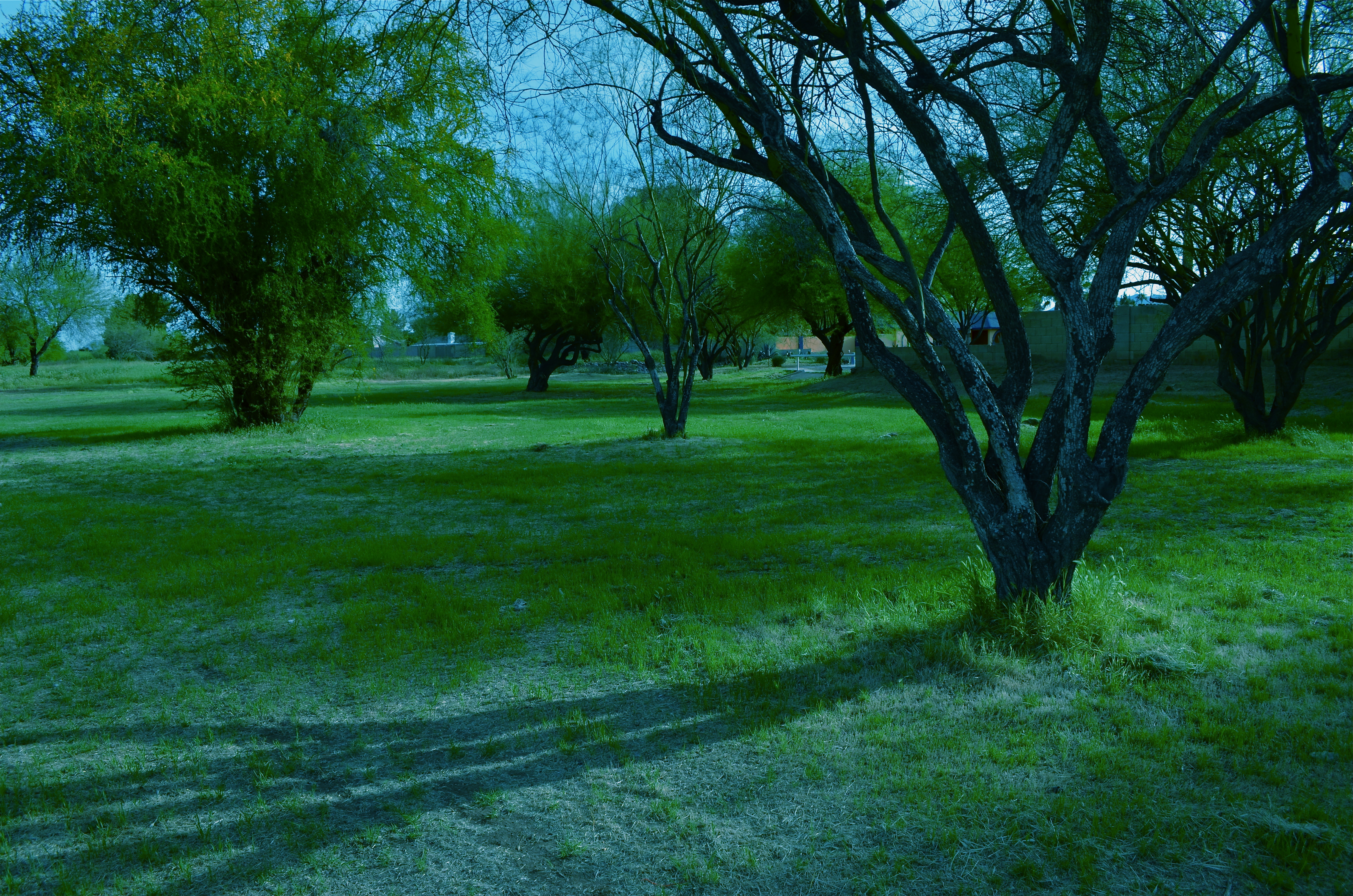
Not the kind of space you’d expect to see in a visually crowded suburban environment. And that’s the point. 1/320 sec., f/8, ISO 100, 18mm.
By MICHAEL PERKINS
EVERY TIME MY WIFE AND I TRAVEL, A STRANGE PHENOMENON OCCURS. We will be standing on the exact same geographic coordinates, pointing separate cameras in generally the same general area. And, invariably when she gets her first look at the pictures I took on that day, I will hear the following:
Where was THAT? I don’t remember seeing that!? Where was I?
Of course, we see differently, as do any two shooters. Some things that are blaring red fire alarms to one of us are invisible, below the radar, to the other. And of course we are both right. And valid. Admittedly, I do seem to come back with more strange, off-to-the-side-of-the road oddities than Marian does, but that may be due more to my wildly spasmodic attention span than any real or rare “vision”. Lots of it comes because I consciously trying to overcome the numbing experience of driving in a car. I have to work harder to take notice of the unconventional when repeatedly tracking back and forth,day after day, down routine driving routes. Familiarity not only breeds contempt, it also fosters artificial blindness. The “outliers” within five miles of your own house should glow like fluorescent paint….but often they seem cloaked by a kind of habit-dulled camo.
Once detected, outliers don’t quite fit within their neighboring context. The last Victorian gingerbread home in a clutch of tract houses. The old local movie theatre reborn as a Baptist church. Or, in a place like Phoenix, Arizona, where urban development is not only unbridled but seemingly random, the rare “undeveloped” lot, crammed between more familiar symbols of sprawl.
The above image is such an outlier. It’s about an acre-and-a-half of wild trees bookended by a firehouse,
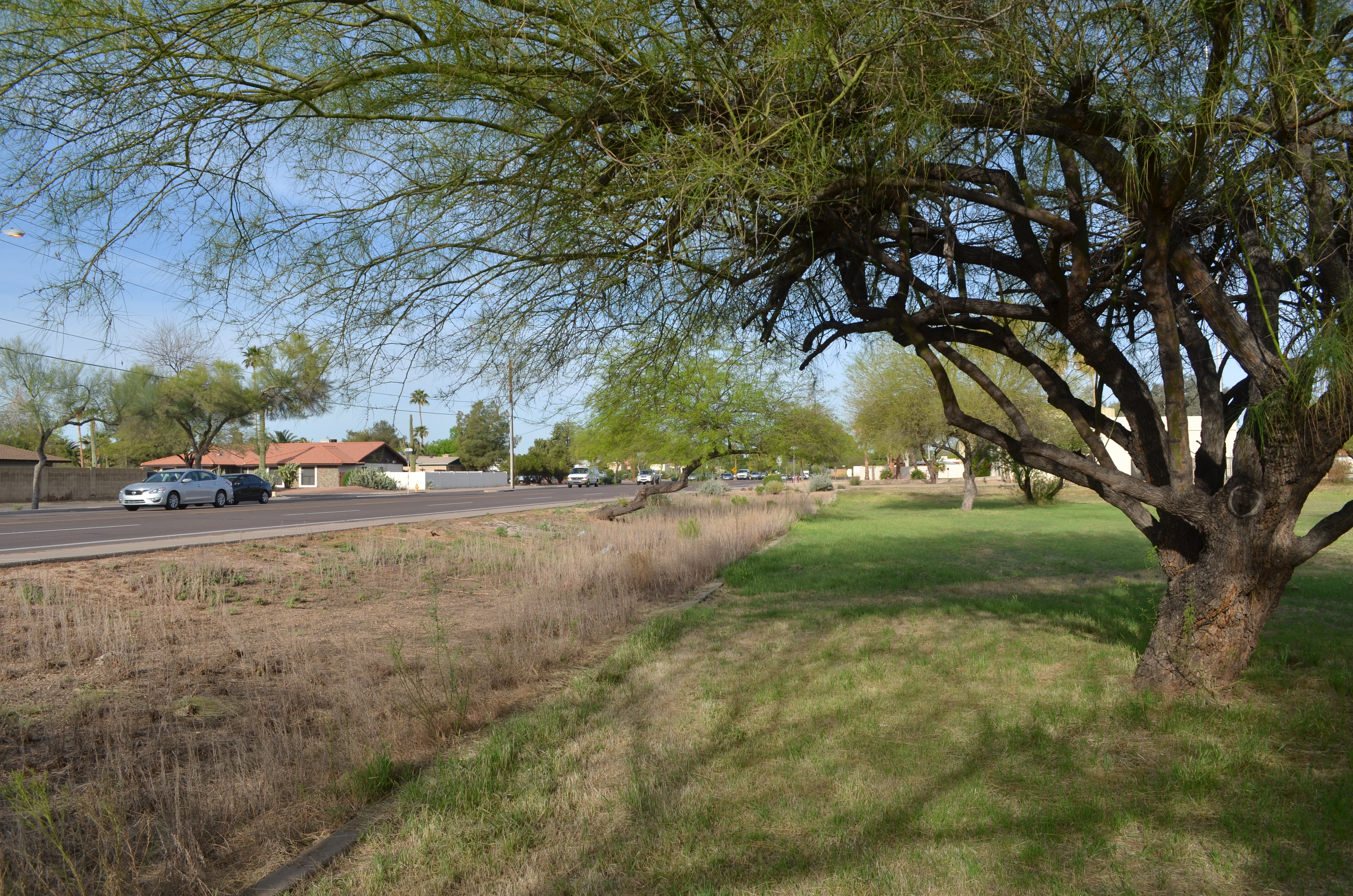
The sprawl-laden neighborhood that surrounds my “enchanted forest” Hey. it”s all about the context.
a row of ranch houses, and a busy four-lane street. Everything else on the block screams “settled turf”, while this strange stretch of twisted trunks looks like it was dropped in from some fairy realm. At least that’s what it says to me.
My first instinct in cases like this is to get out and shoot, attempting, as I go, to place the outlier in its own uncluttered context. Everything else around my “find” must be rendered visually irrelevant, since it adds nothing to the image, and, in fact, can diminish what I’m after. Sometimes I also tweak my own color mix, since natural hues also may not get my idea across.
Even after all this, I often find that there is no real revelation to be had, and I must chalk the entire thing up to practice. Occasionally, I come back with something to show my wife. And I know I have struck gold if the first thing out of her mouth is, “Where is THAT?”
To paraphrase the old proverb, behind every great man is a woman who rightfully asks, “Do you know what you’re doing?”
Sometimes I have an answer….
JUDGING BOOKS BY THEIR “COVERS”
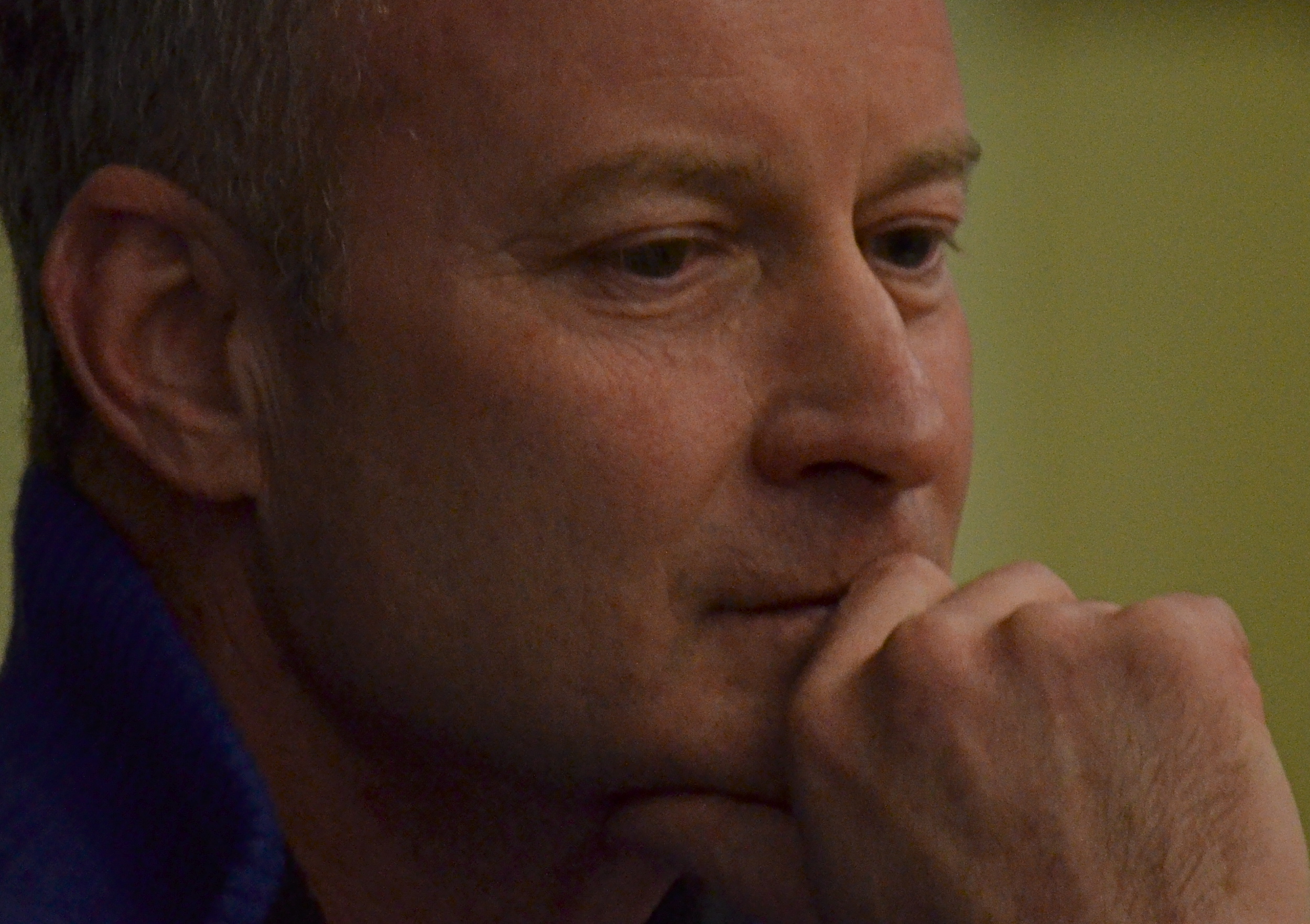
A pensive moment with Timothy Egan, “Opinionator”columnist for the New York Times and Pulitzer prize-winning author of “The Worst Hard Time”. 1/80 sec., f/6.3, ISO 1600, 300mm.
By MICHAEL PERKINS
THE TUCSON FESTIVAL OF THE BOOK, not yet five years old, has quickly evolved into one of the premier annual events in the publishing world. Hosted over an entire weekend in March during spring break on the University of Arizona campus, it showcases hundreds of authors and thousands of titles that range in content over the entire spectrum of the printed word. It is also one of the most hassle-free environments for candid photography of many world-famous authors, with an atmosphere which is intimate, informal, and bristling with energy.
In the simple discussion forums and panels of the TFOB, authors occupy the immediate space of their readers in a way that fires their features with zeal, a quality that lends itself powerfully to seeing the very faces of books. It’s a shooter’s smorgasbord, and the meeting spaces are compact enough (usually University classrooms) that a good medium zoom boosted to about 1600 ISO will give you captures fairly free of noise and a real feeling of being there. In these smaller settings, a relaxed feeling pervades, with authors evolving into stage performers rather than lecturers. The result is no bloodless reading, but a kind of theatrical sales pitch on behalf of the author’s ideas, one part poet and one part Professor Harold Hill from The Music Man.
I started shooting at TFOB four years ago and have learned more each year about circumventing the less-than-ideal lighting scheme (there really isn’t any) and clicking off hundreds of “drat!” images that fell short of what I was seeing. Shooting inside by flourescent light always means taking sample images with various white balances and making changes on the fly, as well as compensating for the light fall-off and additional vibration risk that occurs when you’re fully zoomed in.
Best thing is, though, there are almost no visual distractions to lead the eye away from the authors, since
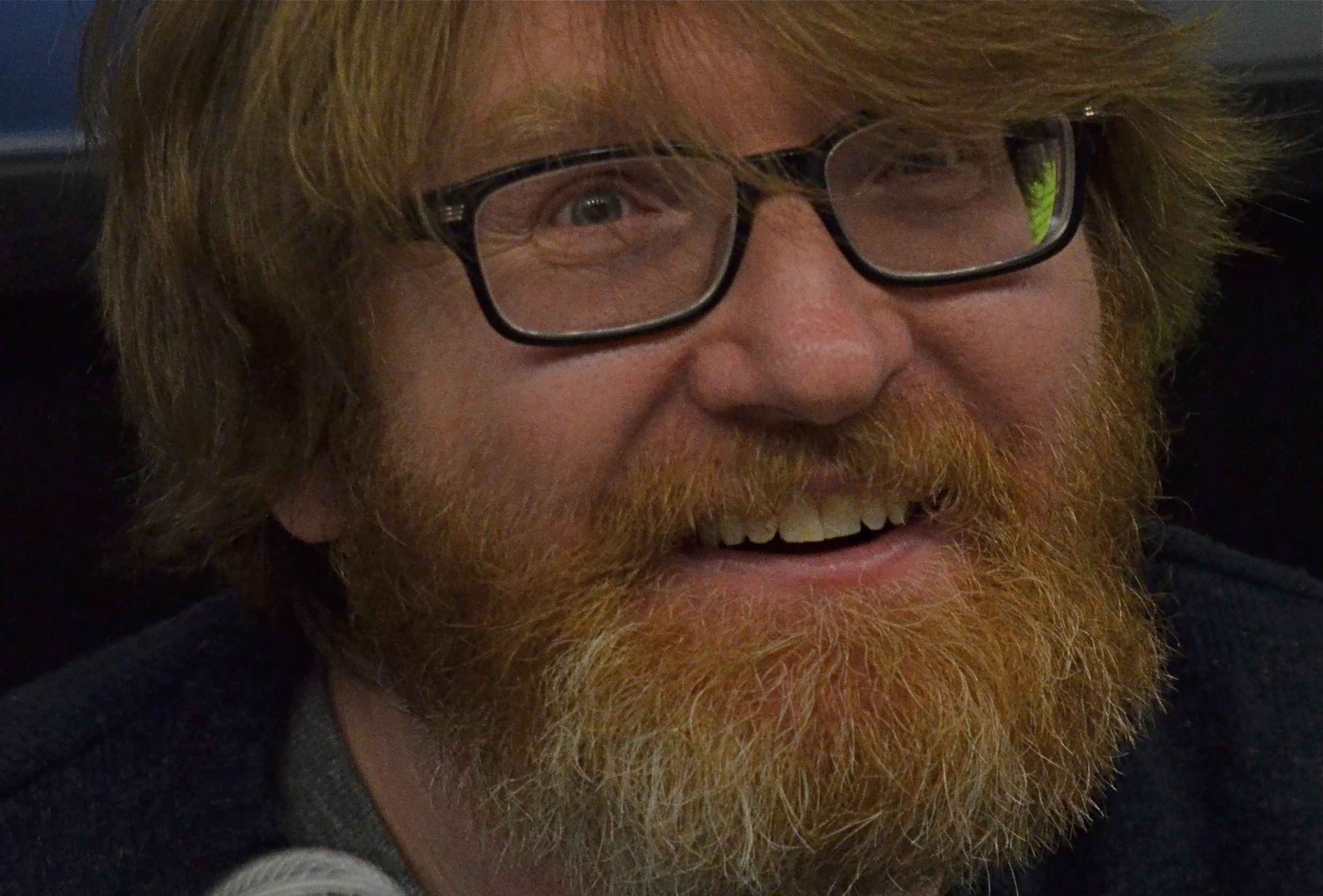
Culture hero Chuck Klosterman, author of “Sex, Drugs, and Cocoa Puffs”. 1/100 sec., f/6.3, ISO 1600, 116mm.
for the most part they stand before blackboards or blank walls. The shots don’t have to be simplified….they are already pretty stark. In addition, you can just frame head shots for the middle third of the subject’s faces, since you aren’t really there to capture their haircut or the water bottles and mics nearby.
Do yourself a favor and investigate a trip to the southwest each March for this amazing event.
If you love books, it’s essential. If you study faces, it’s the icing on the cake.
(NOTE: follow Michael Perkins on Twitter for the “Normal Eye Clicks Of The Day” and “Today in Photo History” at http://www.twitter.com/mpnormaleye. Share your own images with me, especially Instagram and phone snaps. You are always a vital part of this conversation.)
Related articles
- 5 ways to find favorite authors at book festival (azstarnet.com)
- Tucson book festival author inspired by grandkids (azstarnet.com)
PULL DOWN THE NOISE
by MICHAEL PERKINS
PHOTOGRAPHY OFTEN SPEAKS LOUDER IN A SOFTER VOICE. Think about it. If you accept the idea of visual information as a sort of “sound”, then it’s easy to see why some images don’t make a direct connection with viewers. They are busy, overloaded with information, or, in this metaphor, noisy, loud. Cachophonous. Chaotic. Too many “sounds” competing for attention. In a visual image, “noise” can be anything that keeps anyone from hearing the “voice” of your image. To be seen more clearly, pictures need to go soft, in order to be heard louder.
That usually means simplifying the image. Shaping its tone, its framing, its central message. In photography, we all make the mistake of trying to show everything, and, in the process, creating an overdose of data that sends the viewer’s eye wandering all around the picture, trying to find something, anything, to focus on. We present a three-ring circus where just one would be more than adequate.
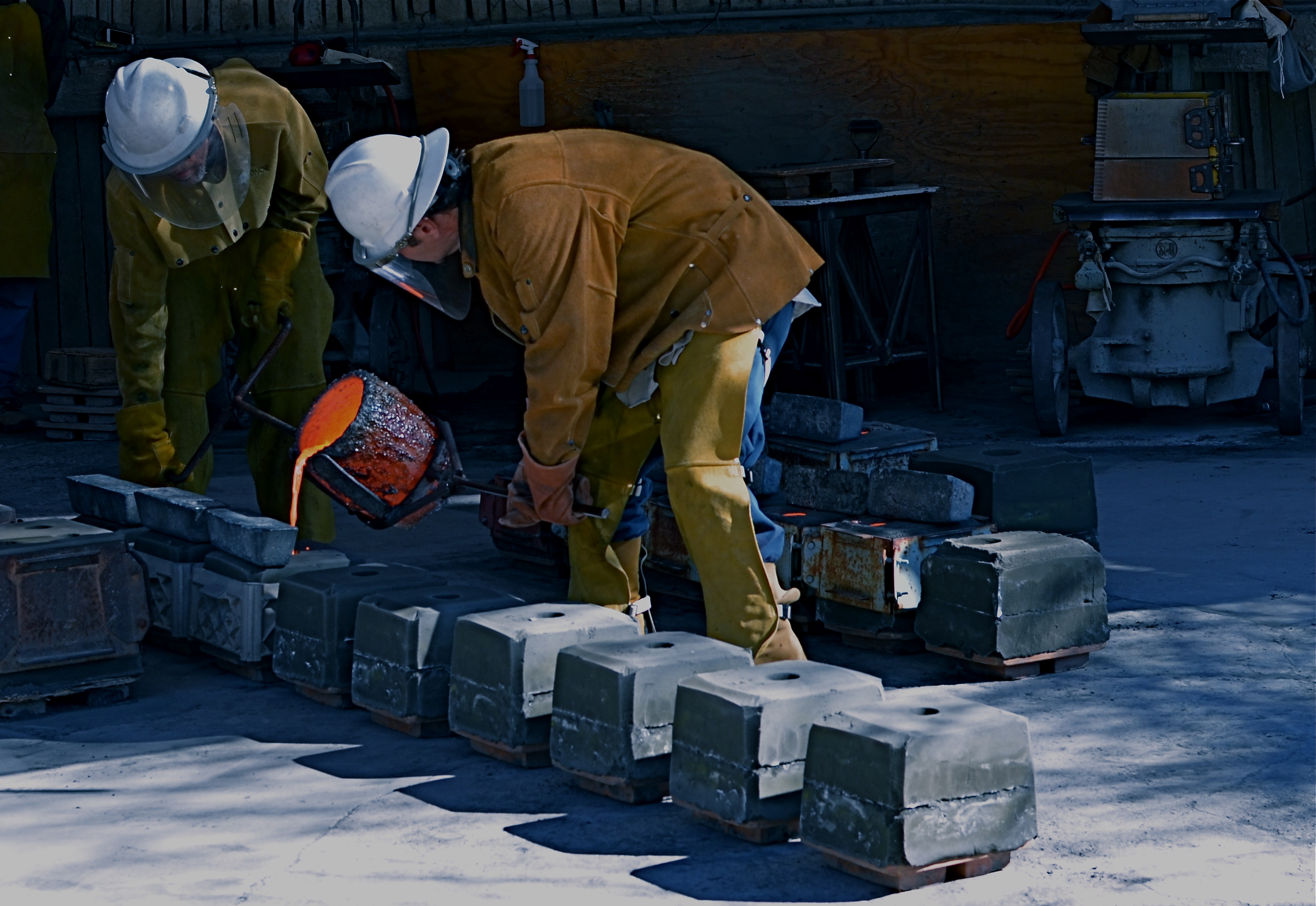
A “perfect” exposure would have inhibited the drama inherent in this situation. So we made it more imperfect.
On a recent trip to an art studio in Paradise Valley, Arizona, I was lucky enough to be present when artisans were pouring molten bronze into decorative molds for all us green “touristas”. Capturing the scene “as is” was easy, as I had plenty of time to calculate exposure and lighting. As a result, I got a lot of “acceptable” pictures good enough for the average postcard, but their storytelling quality was only so-so, since they were almost too full of color, detail and people/props. In the moment, I merely recorded a group of people in a crowded shop doing a job. The tonal balance was “perfect” according to the how-to books, as if I had shot the images on full auto. In fact, though, I had shot on manual, as I always do, so where was my imprint or influence on the subject? The pictures weren’t done.
Back home, when my brain had time to go into editor mode, I realized that the glowing cup of metal was the only essential element in the pictures, and that muting the colors, darkening the detail and removing extra visual clutter was the only way that the center of the shot could really shine.
With that in mind, I deepened the shadowy areas, removed several extraneous onlookers and amped up the orange in the cup. Seems absurdly simple, but as a result, the image was now a unique event instead of a generic “men at work” photo. The picture had to use a softer voice to speak louder.
Great picture? Not yet.
But, hey, I’m still young.
Best thing about the creative process, unlike banking, building or brain surgery, is the luxury of do-overs. And doing over the do-overs, over.
Related articles
- On the Nature + Purpose of Photography (statenislandstories.wordpress.com)
FROM TOY TO TOOL
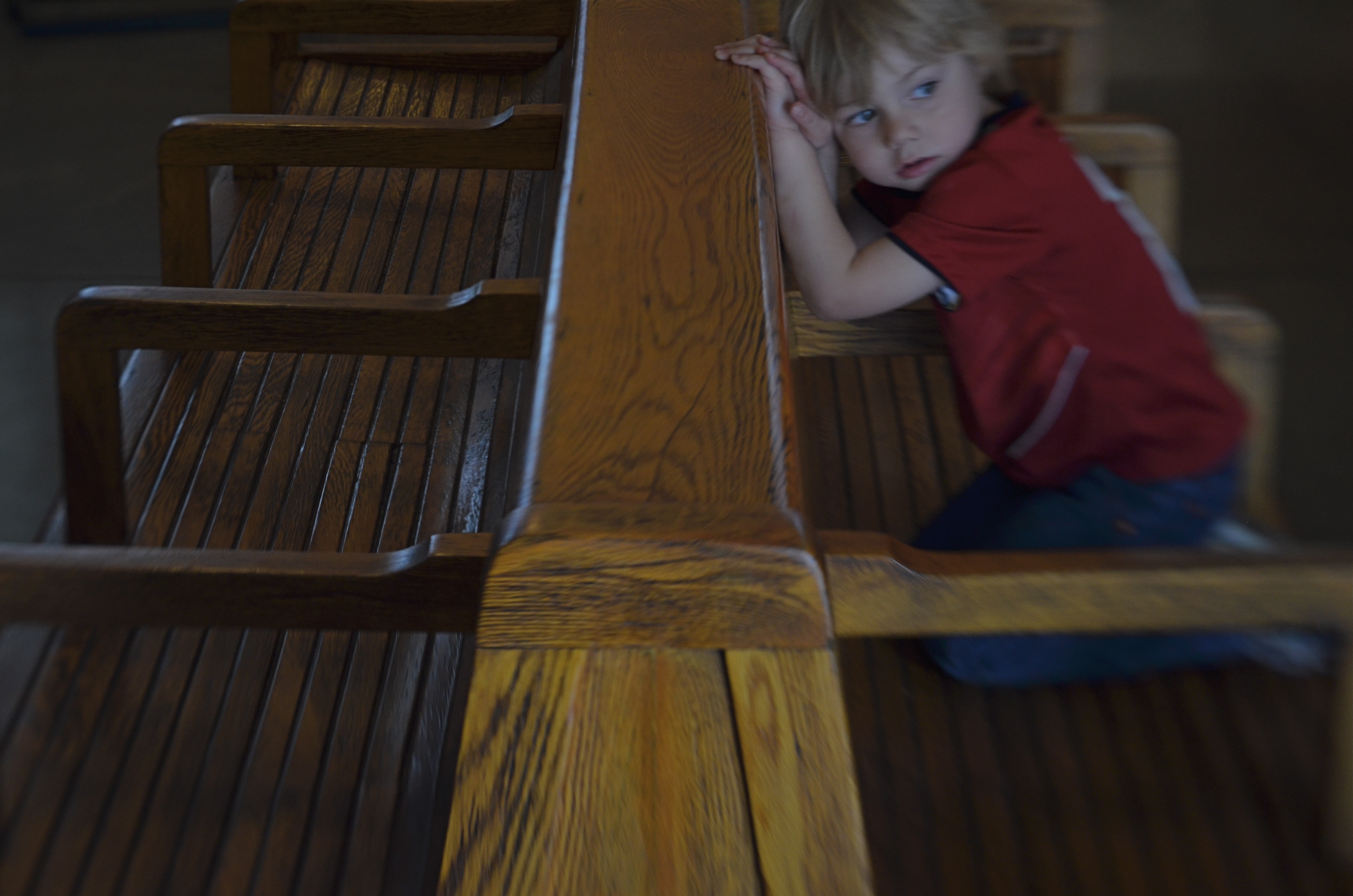
Selective focus can help direct your viewer’s eye. Taken with a Lensbaby Spark lens at 1/80 sec., f/5.6, ISO 320, 50mm.
By MICHAEL PERKINS
A LONG STANDING BIT ON THE DAVID LETTERMAN SHOW, rather than claiming to be entertaining, actually poses the question of what entertainment actually is. Entitled “Is This Anything?”, the feature consists of about thirty seconds of acts or feats that might be amazing (like juggling), might be banal (like, um, juggling) or might qualify as merely strange. After the curtain is drawn, Dave and Paul briefly discuss the merits of what ever strangeness just transpired, and ask each other if “that was anything”. Sometimes there is no clear-cut decision. The show has disclaimed responsibility, and entertainment remains in the eye of the beholder.
That’s how you can feel the first time you use a Lensbaby.
Released several years ago to inventor Craig Strong’s great monetary benefit, the Lensbaby comes in a variety of
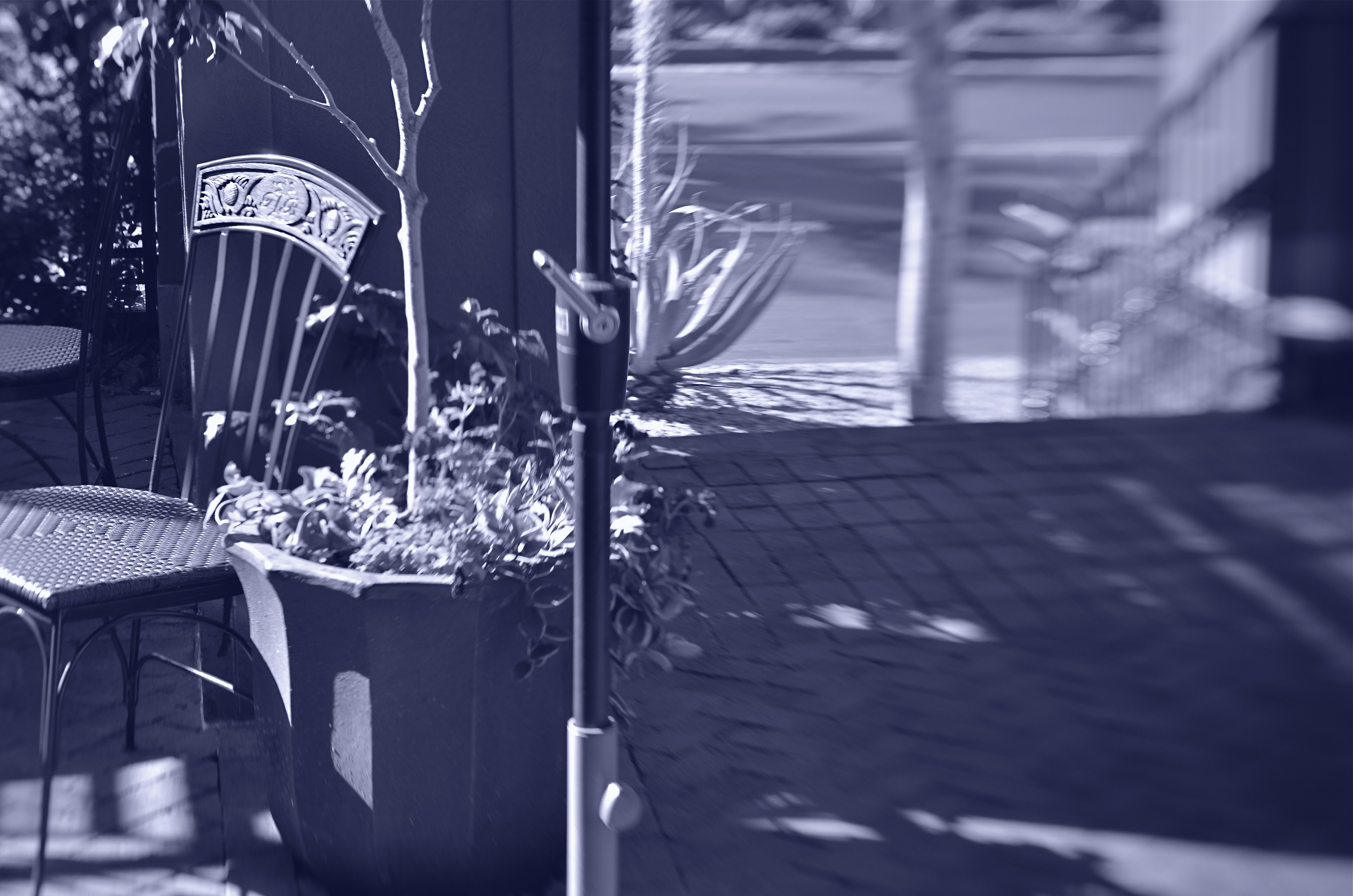
levels but is essentially an affordable tilt-shift attachment, a way to soften focus over selective areas of the frame while rotating the “sweet spot” of sharper focus wherever the shooter feels it should go. Now, essentially, selective focus is really part of every photo ever taken, since a choice of depth-of-field is made every time the shutter snaps. Lensbaby, however, offers the chance to pre-design the precise level of left-right, high-low focus, in the camera, and before the shot is taken. No post-processing is needed, and each use of the effect is completely under the shooter’s control, and at a fraction of what dedicated DSLR lenses cost.The Lensbaby effect is understandably an attractive gimcrack for the instinctive subculture of lo-fi photography, they of the hipster nonchalance and light-leaking, fixed-focus plastic cameras. Hey, it looks freaky, random, edgy. But, like everything else in your kit bag, it’s either toy or tool. The verdict as to which it is comes out one picture at a time.
So far I am whelmed….not overwhelmed, not underwhelmed. For one thing, Lensbabies are a lot of extra work. The entry-level model, the Spark, is actually a lens within a springy plastic bellows. You have to hold your camera body, delegate fingers from both hands to rotate the axis of the front of the lens, squeeze the bellows to bring part of the frame into focus (the Spark’s “sweet spot” is fixed at f/5.6), allocate another finger for the shutter, and click. At least you can’t carp about not having enough creative control. There’s more than enough of that, especially at first, to O.D. on. Your chosen area of focus can be held in place more easily with upgrade models (which also include additional optics and add-ons), but the Lensbaby is truly best for shoots where you have a lot of time to think, plan, and create….the very opposite of the “shoot from the hip” attitude embraced by the lomography crowd. You will take a lot of pictures that miss by inches, or fractions of inches.
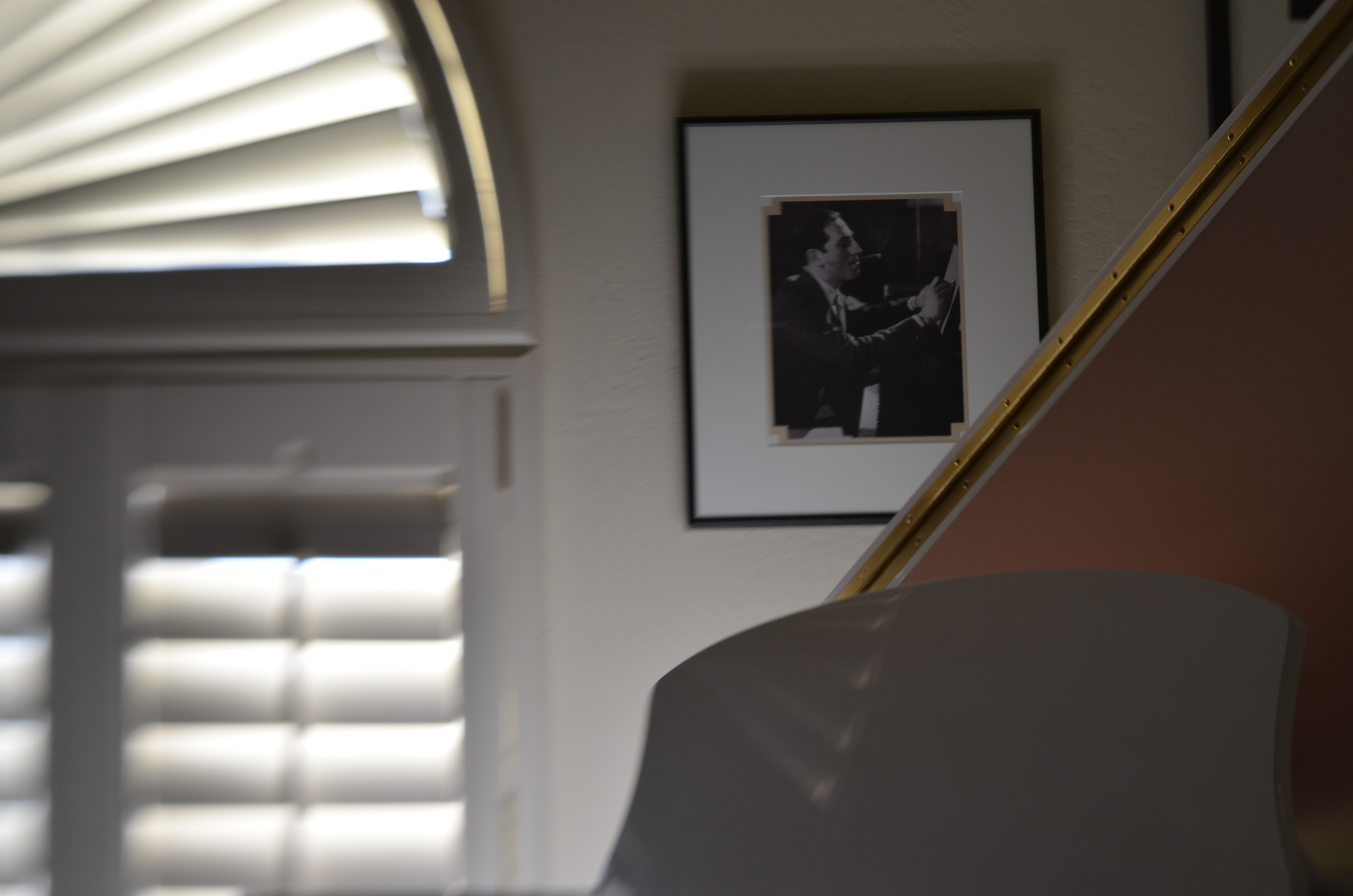
Lensbaby Spark gives you some of the control of a custom lens for under $80.
What will move me from whelmed to overwhelmed will be finding those images where the Lensbaby effect actually aids my storytelling, yet does not define it, as in the lucky shot at the top of this post. The camera gadgets I eventually consign to the “toy” pile go there because they call too much attention to what they can do, not to what I can do using them. The”tools” pile contains the gear that is essential to my saying something in a distinctly different voice. Finally, the two piles are divvied up only after taking lots of pictures and asking a ton of questions (a few gimmicks, like fisheye, have spent time in both piles; hey, I’m not above just playing around).
I sympathize with Letterman’s dilemma when he ironically asks, “Is this anything?” Selective focus is a way to install big neon pointers into your pictures, a more emphatic command to look over here. It’s also a way to amplify the drama of certain data or simplify cluttered compositions. I get it.
But it needs to be about much more than that. Or, more correctly, I have to help it.
Related articles
- My Lensbaby SCOUT, baby! (greyiscolour.wordpress.com)
GET LOST
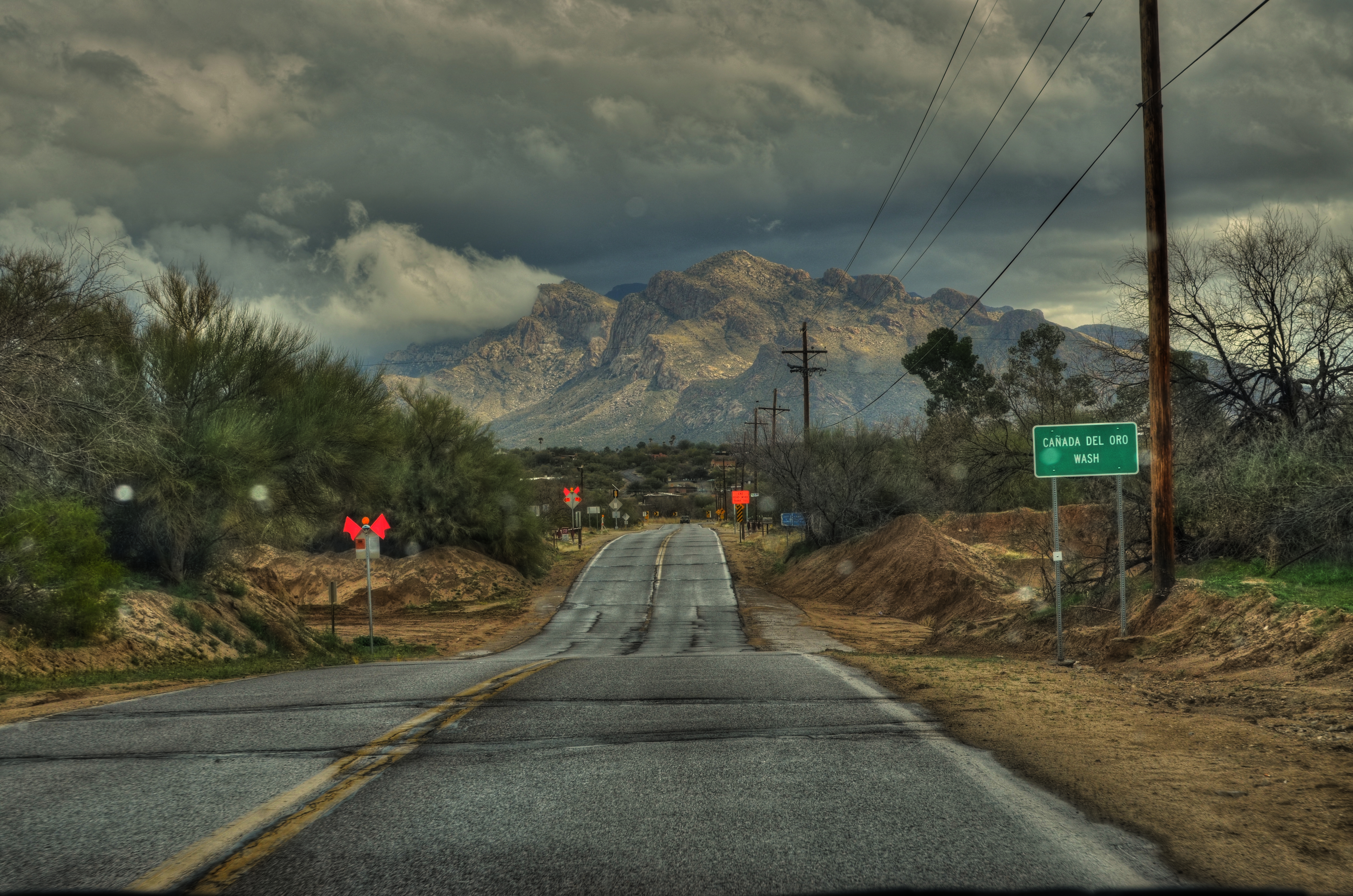
Straight through the windshield, using a technique I like to call “dumb luck”. Original shot specs: 1/320 sec., f/8, ISO 100, 35mm.
By MICHAEL PERKINS
PHOTOGRAPHY IS 10% PLANNING, 90% SERENDIPITY. Yes, I know. we would all rather believe that most of our images spring from brilliant conceptions, master plans, and, ahem, stunning visions. But a lot of what we do amounts to making the most of what fate provides.
There is no shame in this game. In fact, the ability to pivot, to improvise, to make the random look like the intentional…all of these things reveal the best in us. It exercises the eye. It flexes the soul. And, in terms of images, it delivers the goods.
Getting lost (geographically, not emotionally) is less an emergency than in ages past. Armed with smartphones, GPS, and other hedges against our own ignorance, we can get rescued almost as soon as we wander off the ranch. It is easier than ever to follow the electronic trail of crumbs back to where we belong, so drifting from the path of righteousness is no longer cause for panic. Indeed, for shooters, it’s pure opportunity.
Okay, so you’re not where you’re supposed to be. Fine. Re-group and start shooting. There is something in all these “unfamiliar” things that is worth your gaze.
Last week , my wife and I decided to trust her car’s onboard guidance system. The results were wrong but interesting. No danger, just the necessary admission that we’d strayed really far afield of our destination. We’re talking about twenty minutes of back-tracking to set things right.
But first….
One of the rural roads we drifted down, before realizing our error, led us to a stunning view of the back end of Tucson’s Catalina mountains, framed by small town activity, remnants of rainfall, and a portentous sky. I squeezed off a few shots straight out of the windshield and got what I call the “essence” exposure I needed. That single image was relatively well-balanced, but it wouldn’t show the full range of textures from the stormy sky and the mountains. Later, in post, I duplicated the one keeper frame that I got, modifying it in Photomatix, my HDR processing program. Adding underexposure, deeper contrast, and a slight rolloff of highlights on the dupe, I processed it with the original shot to get a composite that accentuated the texture of the clouds, the stone,, even the local foliage. A sheer “wild” shot had given me something that I would have totally missed if the car’s GPS had actually taken us to our “correct” destination.
What was ironic was that, once we got where we were going, most of the “intentional” images that I sweat bullets working on were lackluster, compared to the one I shot by the seat of my pants. Hey, we’ve all been there.
Maybe I should get lost more often.
Actually, people have been suggesting that to me for years.
Especially when I whip out a camera.
Related articles
NO TEACHER, NO GURU, NO METHOD
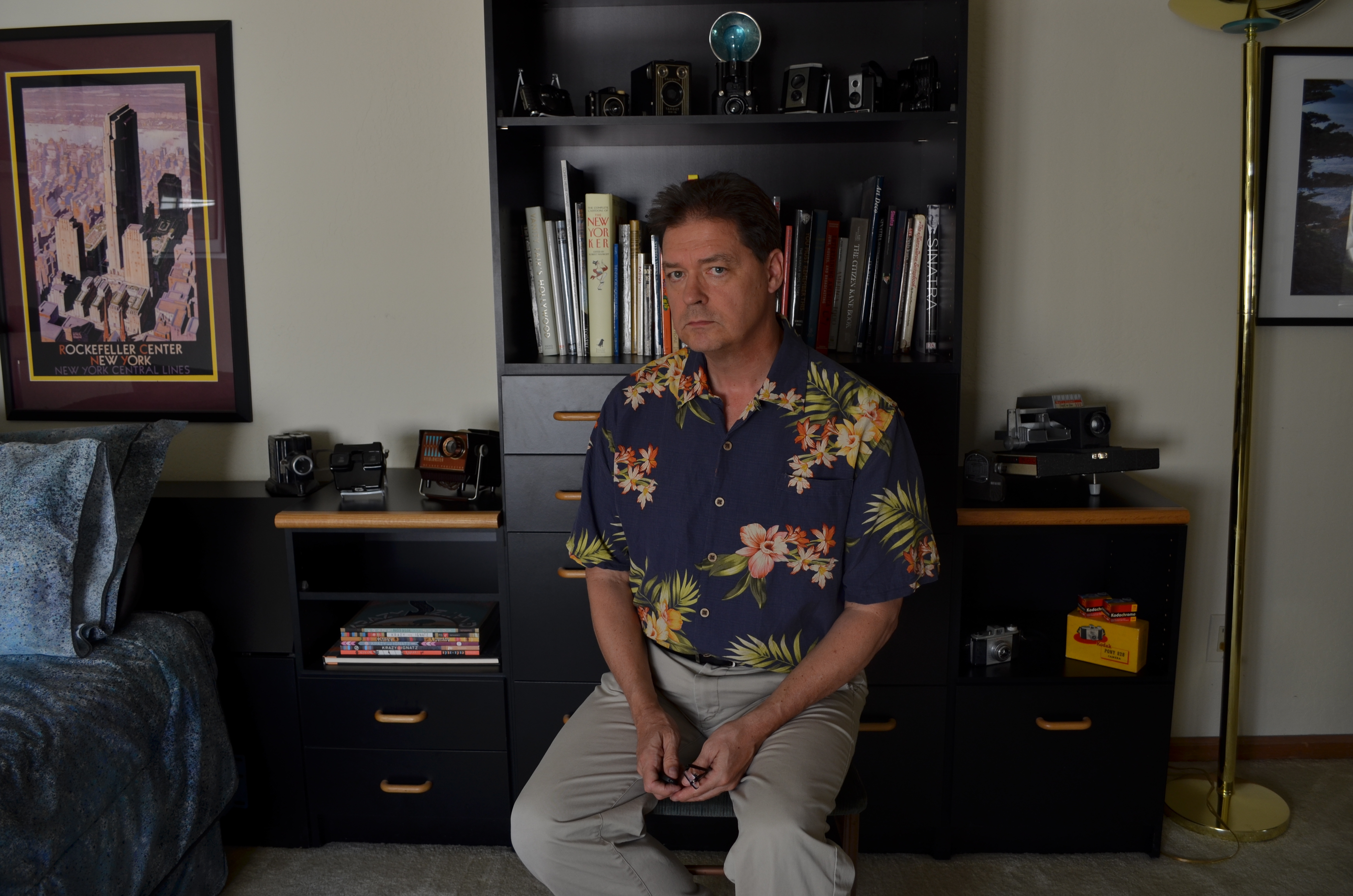
Waiting for inspiration. Yeah, how’s that workin’ out for ya?
By MICHAEL PERKINS
THERE MAY NOT BE SUCH A THING IN PHOTOGRAPHY AS “STYLE”.
Hmm? Come again? No way for the artist to brand his persona on his output, to accumulate a body of work stamped with his own exclusive, and wonderful, identity?
Well, given the special nature of photography, maybe not. Think about it. We all emerged as the quasi-legitimate spawn of painting. Yes, you can struggle and wriggle, but The Brush is essentially our aesthetic daddy, the most important shaper of our inherited rules on what to look at, how to see. Of course, we were no sooner whelped than we began dissing the old man, saying we were not at all like painting, that our means of measuring the world was distinct, different, revolutionary. The upshot is that the typical artists’ claim to a personal style, an identifiable visual signature, may not be, in image-making, how we do business at all.
Van Morrison (God’s gift to moody poets) summed it all up in the title of one of his classic albums, No Teacher, No Guru, No Method. And that means that, unlike the painters of antiquity, none of us shoots enough of any one approach to the world to claim that any of us has a “style”. Think about your own images. Is every one of them representative of one kind of thought? Or do you, like most of us, flit from one dynamic to another? Are any of you 100% committed to landscapes? Sacred subjects? Abstractions? Street? Cute kitties? No, and none of us ever were.
One of the most frustrating things about reviewing the careers of the greatest poets (there’s that word again) of photography is that there is no central thread, no typical image for many of the masters. What is the iconic signature of a Steichen, an Avedon, a Weston? Review forty years of photographs from Alfred Eisenstadt during his tenure at Life magazine and pick out one picture which defines him. You can’t. There is no Mona Lisa moment. And perhaps there shouldn’t be.
I’ve been shooting for over forty years, and if someone were to ask me to select one image that absolutely represented the essential me, I’d be dumbstruck. And maybe that’s to be expected. The world’s most democratic medium is also democratic toward its subject matter as well. In photography, unlike painting, everything can be a picture. Anything can be plucked out of the continuity of time and frozen for us to ponder, worship, objectify, or loathe.
We are all self-taught, self-created, without antecedent or influence. No Teacher, No Guru, No Method. It should make us feel free, and can, of course, make us terrified as well.
Here’s the central nugget of that freedom feeling: photography isn’t here “because of”, or “in order to”, or “so that”…..it’s just here.
And that is enough.
(follow Michael Perkins on Twitter @mpnormaleye.)
Related articles
- Edward Steichen’s great American Dream (japantimes.co.jp)
- Not your average photography book (audreysnaturequestphotography.wordpress.com)
LOOK THIRTY FEET FURTHER
By MICHAEL PERKINS
ONE SURE THING ABOUT TAKING IN “THE SIGHTS” AT THE AVERAGE TOURIST ATTRACTION. You will be channeled, herded, if you will, toward exactly what the proprietors want you to see. This insures most people their coveted “Kodak Moment”, with Mom and the kids standing at the precisely picturesque sweet spot at the cathedral, the ruins, the monument, the mountain, etc. In fact, Kodak worked with parks for years to actually post signs near such perfect vistas, a polite way of yelling OVER HERE, STUPID at passersby. Thanks for the flash cards, guys.
Obviously this attempt to guide visitors to the “good stuff” can result in the occasional great image. But you and I know that, for the most part, it amounts to the completion of a homework assignment. You know, like the opposite of fun, spontaneity, um, photography.
Tomorrow, class, bring a picture of yourself standing in front of a famous landmark. And remember to smile.
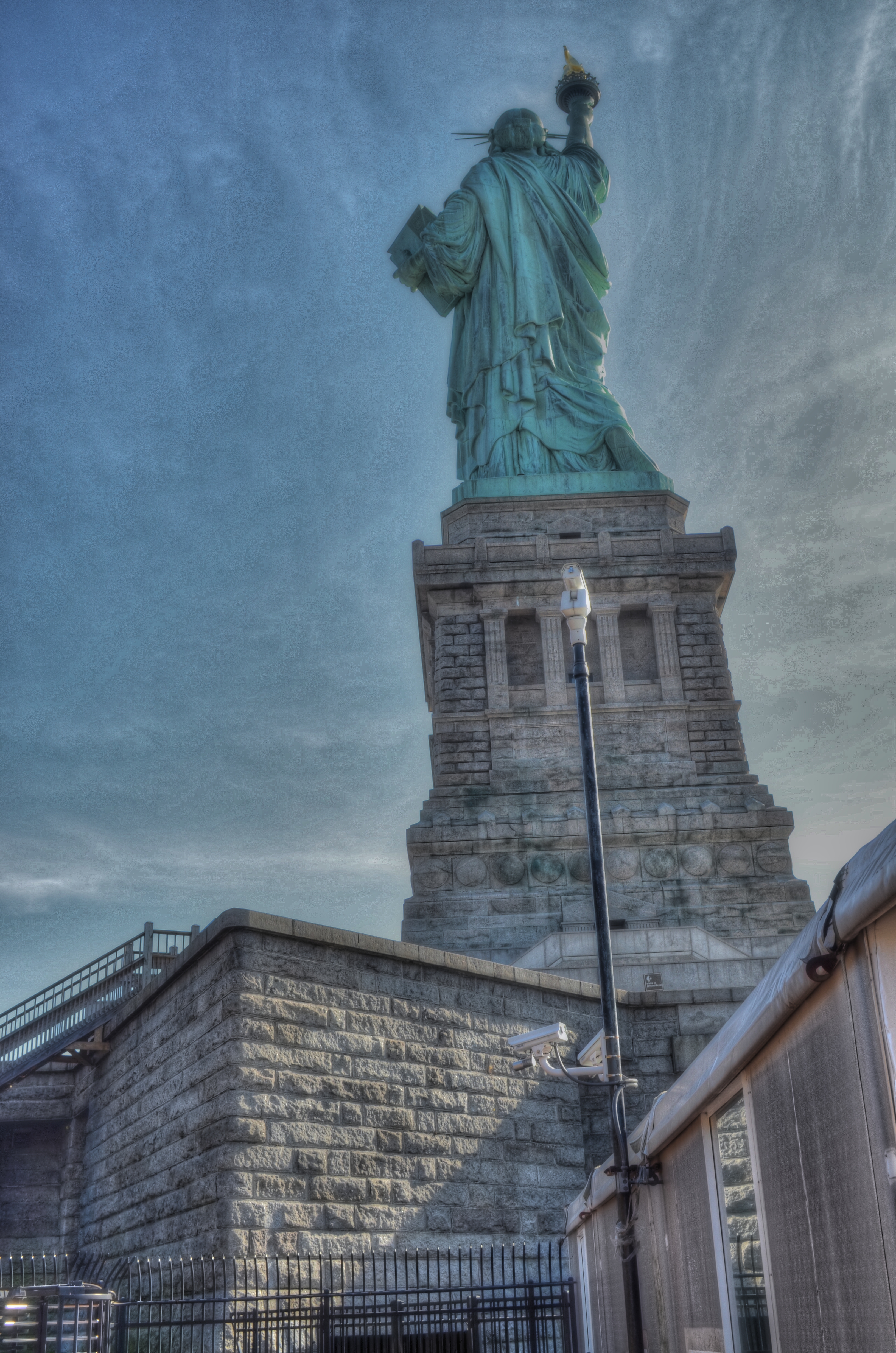
So go ahead and shoot the obvious thing. Just try to find another way to see it.
I’m a big one for wandering away from the tour group….not so far as to wander aimlessly into a scary forest full of monsters, just far enough to take in the entire area while the guide drones on.
I’m not so much interested in what’s available to photograph as I am in what else is available to photograph.
Sometimes, of course, you are better off just taking your approved thirty seconds in front of the waterfall and moving on. Other times you hit something, sometimes by just looking thirty feet further.
Do I have an example? Thought you’d never ask…
There is an over-hyped old house-turned-souvie shop in La Jolla, California (one of the most gorgeous coastal towns in the west) that sits atop a subterranean cave which looks out onto the ocean. Once inside the shop, the able-boded (and those who do not suffer claustrophobia) pay to enter an extremely dark, steep, damp and cramped staircase that takes them down below the house to the cave.
Now, for a guy with a camera constantly hanging from his neck, taking anything like a usable shot in this crimped cavern is largely a crap shoot, since light is, let us say, at a premium. So the “officially” cool thing, was, for me, frustrating to say the least, and I trudged up The Staircase From Hell (my knees aren’t what they used to be) to re-enter the shop at the earth’s surface. So far, so pointless.
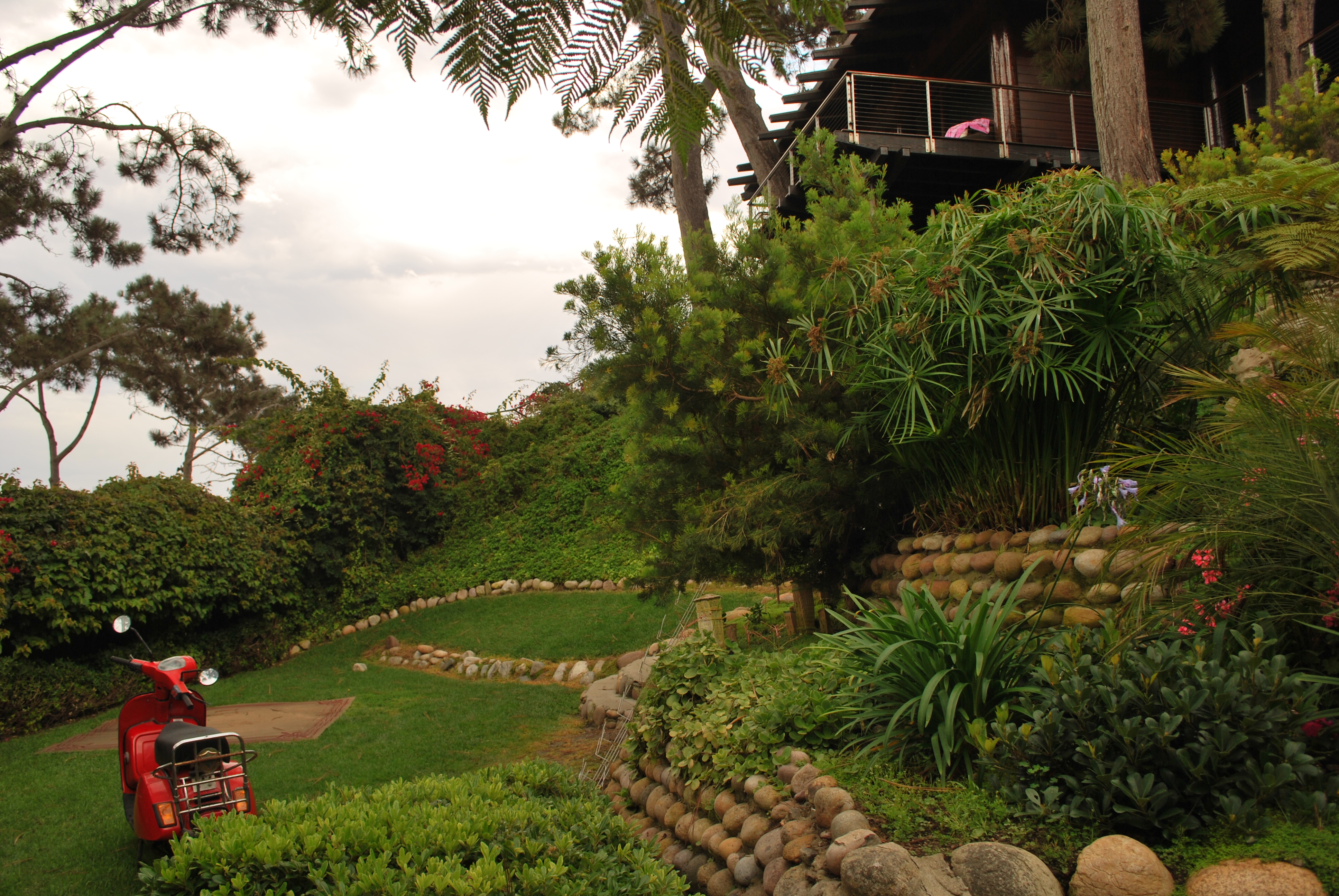
Pictures are where you find them, often tucked away behind so-called “attractions”. 1/100 sec., f/6.3, ISO 100, 18mm.
While my wife performed her mandatory inspection of the store’s copious supply of trinkets, I walked outside, then, instead of going back to the street, wandered around to the back of the building. Lucky choice. Suddenly I was in someone’s backyard, a hilly, curvy, strange little lot that could prove to be a nightmare for whatever neighborhood kid was doomed to cut the owner’s grass. It was only a matter of being curious enough to go about thirty feet off the official path….and yet here was the relief I wanted from chronic tour disease. An actual human habitation, complete with Hobbit-like stone landscaping and an extremely cool red scooter to counter-balance the rain-rich greens. Here was a picture I wanted. The “famous” view had shown me nothing. The “unimportant” view had given me everything.
Hey, I regularly get lost anyway. Why not have some fun doing it?
Now, where did my mommy go?
ESCAPE FROM PLANET PORTRAIT
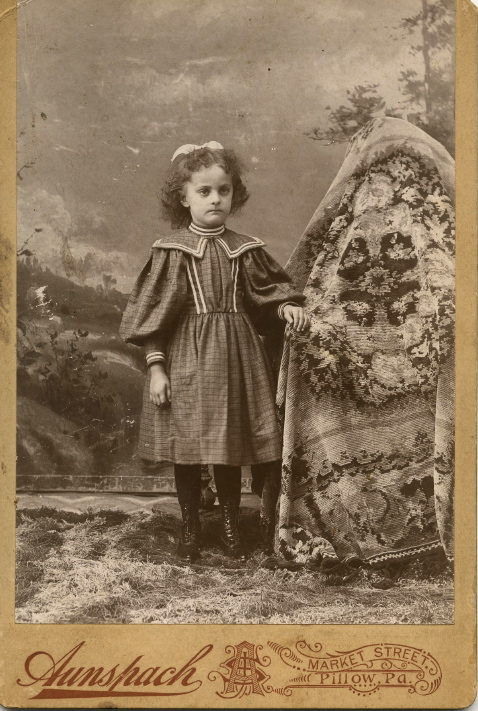
Does this child look happy to you? Does she look like she even has a pulse? Surely we do better kid portraits today, er, don’t we?
By MICHAEL PERKINS
TO HEAR US TELL IT, WE ALL REALLY LOVE OUR KIDS. Assuming that to be true, why do we still subject them to the greatest act of photographic cruelty since Tod Browning’s Freaks? I speak of course, of the creatively bankrupt ritual of studio portraits, many of them cranked out at department stores or discount mills, too many of them making our beloved progeny look like waxworks escaped from a casting call for Beetlejuice.
We can surely do better.
I’m on record as believing that children are the noblest work of nature, coming into the world bearing only joy and untainted by the cynical clown olympics that comprise our “adult” way of thinking. And since we all probably feel the same way, why do so many of us park the little dears in front of hideous backdrops, surround them with absurd props, and gussy them up as everything from fairy princesses to ersatz puppies to fake cherubs?
Part of this ridiculous tradition owes its origins to the early days of photography, when a portrait sitting was the one means by which people who might never leave behind any other visual record of their lives were placed in formalized settings for an “official” rendering of their features. Slow film speeds and primitive lighting dictated that parents “leave it to the pros”, giving these modestly gifted artists decades of practice in weaving imaginary dream framings for our precious kids. (Full disclosure: Yes, I know that the image at left is a leftover from the Victorian age. I didn’t post any contemporary images because (a) many of them are almost this bad and you already get the idea, and (b) I wasn’t eager to be beaten to a pulp by any proud parents.)
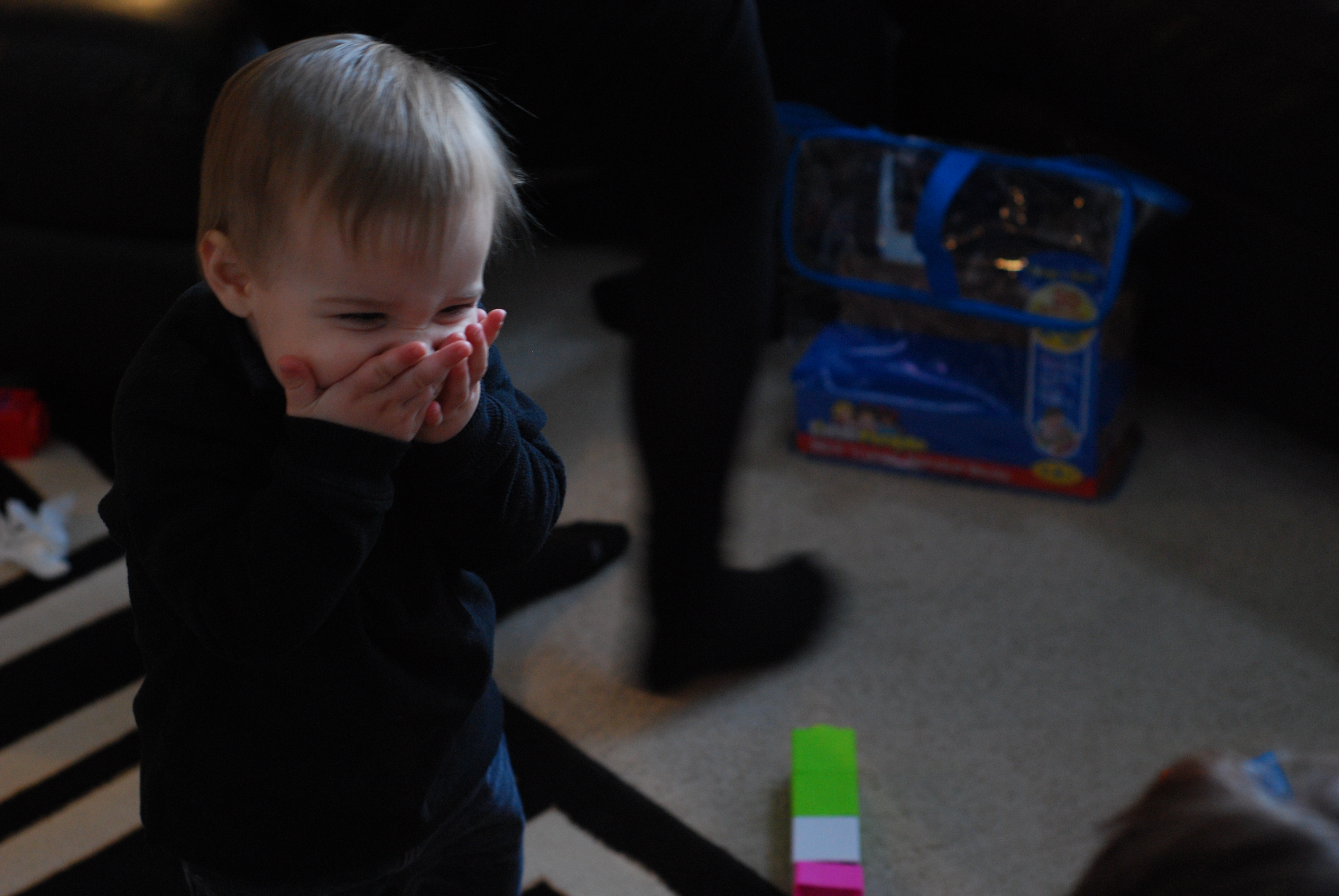
Get out of your comfort zone and into your child’s.
Could it be more obvious, billions of Instamatics and Instagrams later, that this sad ritual hasn’t had any fresh air pumped into it since the golden age of Olan Mills class pictures? Even the most elementary “how-to” books on candid photography have been telling us the same thing for nearly a century: don’t formalize the setting, formalize your thinking. Let your child show you what he is, in his own environment. That means that you need to shoot constantly and invisibly, getting out of the kid’s way. No 3-2-1 “Cheese!” commands, no “sit up straight and don’t slouch” advice, no arbitrary situation.
Sure, you can basically plan how you will shoot your child, but allow him to unfold before your ready camera and gain the confidence to react in the moment. Stop trying to herd him into a structure or a setting. If at all possible, allow him to forget that you’re even in the room. Witness something wonderful instead of trying to construct it. Be a fly on the wall. The child is pitching great stuff every time he’s on the mound. Just make sure you’re behind the plate to to catch it.
Dirty little secret: there is nothing “magical” about most studio portraits. In fact, many of the results from the photo mills are just about the most un-magical pictures ever taken, although there are signs that things are changing. It simply isn’t enough to ensure a perfectly diffused background and an electronically exact flash. Even today’s most humble personal cameras have amazing flexibility to capture flattering light and isolate your subject from distracting backgrounds. And going from standard “kit” lenses (say, an 18-55mm) to an affordable prime lens (35mm, 50mm) gives us insane additional gobs of light to work with, all without using the dreaded pop-up flash, the photographic equivalent of child abuse.
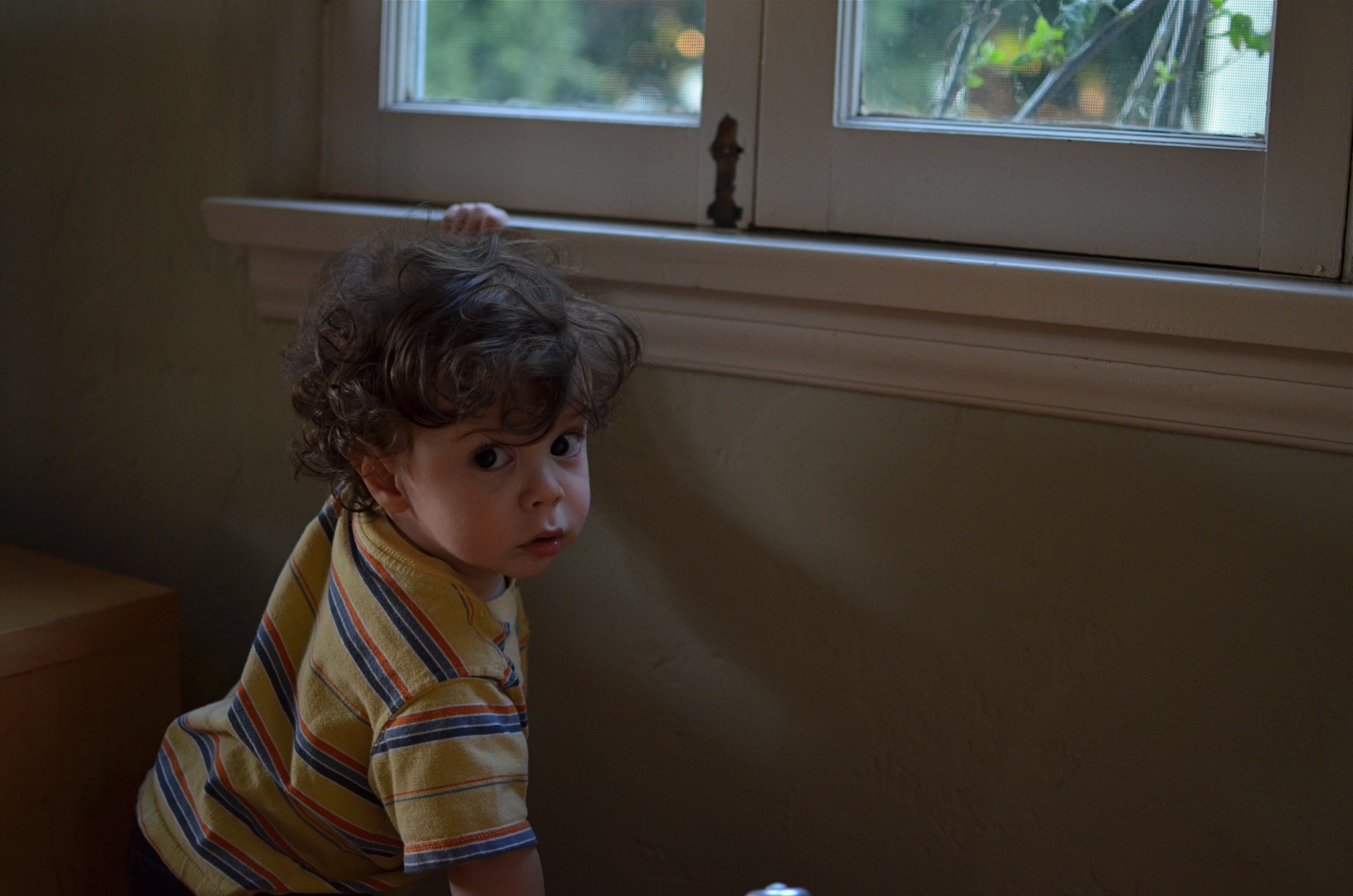
It don’t gotta be perfect. It does gotta be honest.
Doing it yourself with kid portraits is work, make no mistake. You have to be flexible. You have to be fearless. And you have to know when something magical’s about to happen. But it’s your child, and there is no outside contractor who has a better sense of what delight he has inside him.
Besides, isn’t it likelier that he will show you the magic in his own back yard than in a back room at K-Mart? Give him something that he loves to do, the better to forget you’re there, and crank away. I mean shoot a lot. And don’t stop.
You’re the expert here.
Don’t outsource your joy.
STRING THEORY
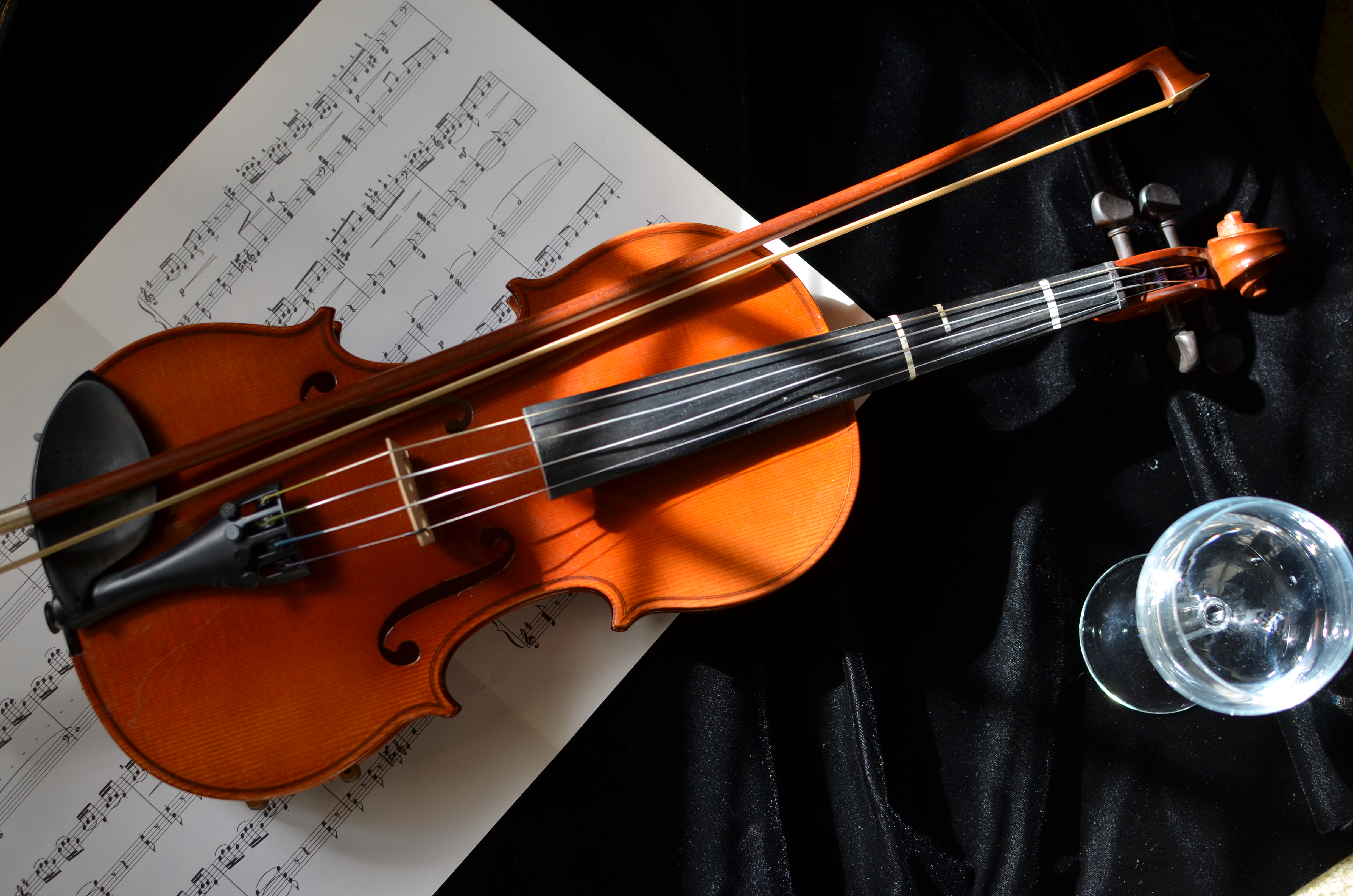
Repose. 1/250 sec., f/3.5, ISO 125, 35mm prime lens.
By MICHAEL PERKINS
CERTAIN INANIMATE OBJECTS INTERACT WITH THE LIVING TO SUCH A LARGE DEGREE, that, to me, they retain a certain store of energy
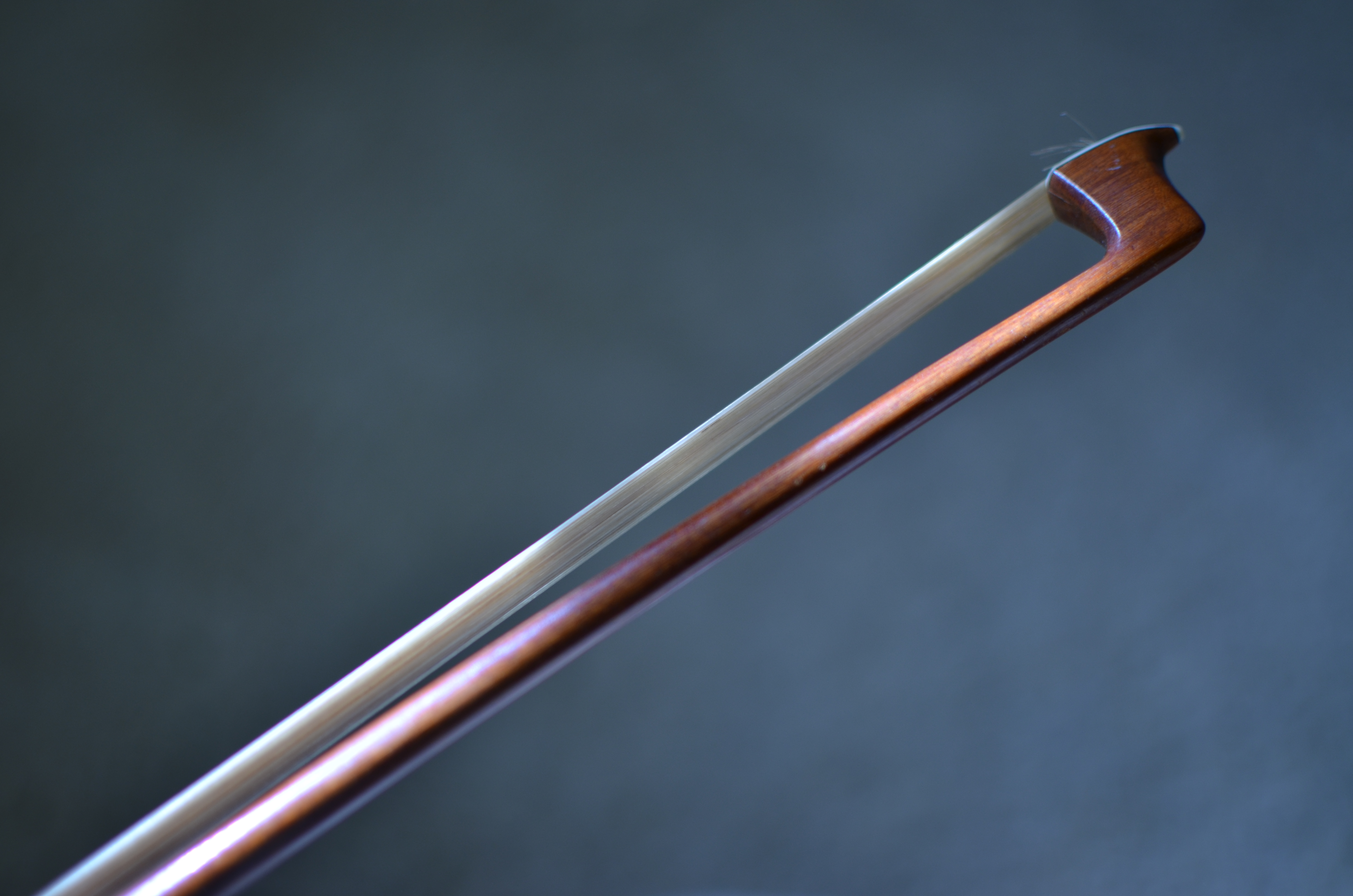
Just horsehair and wood, but it has an elegance all its own.
even when standing alone. Things that act in the “co-creation” of events or art somehow radiate the echo of the persons who touched them.
Musical instruments, for my mind’s eye, fairly glow with this force, and, as such, are irresistable as still life subjects, since, literally, there is still life emanating from them.
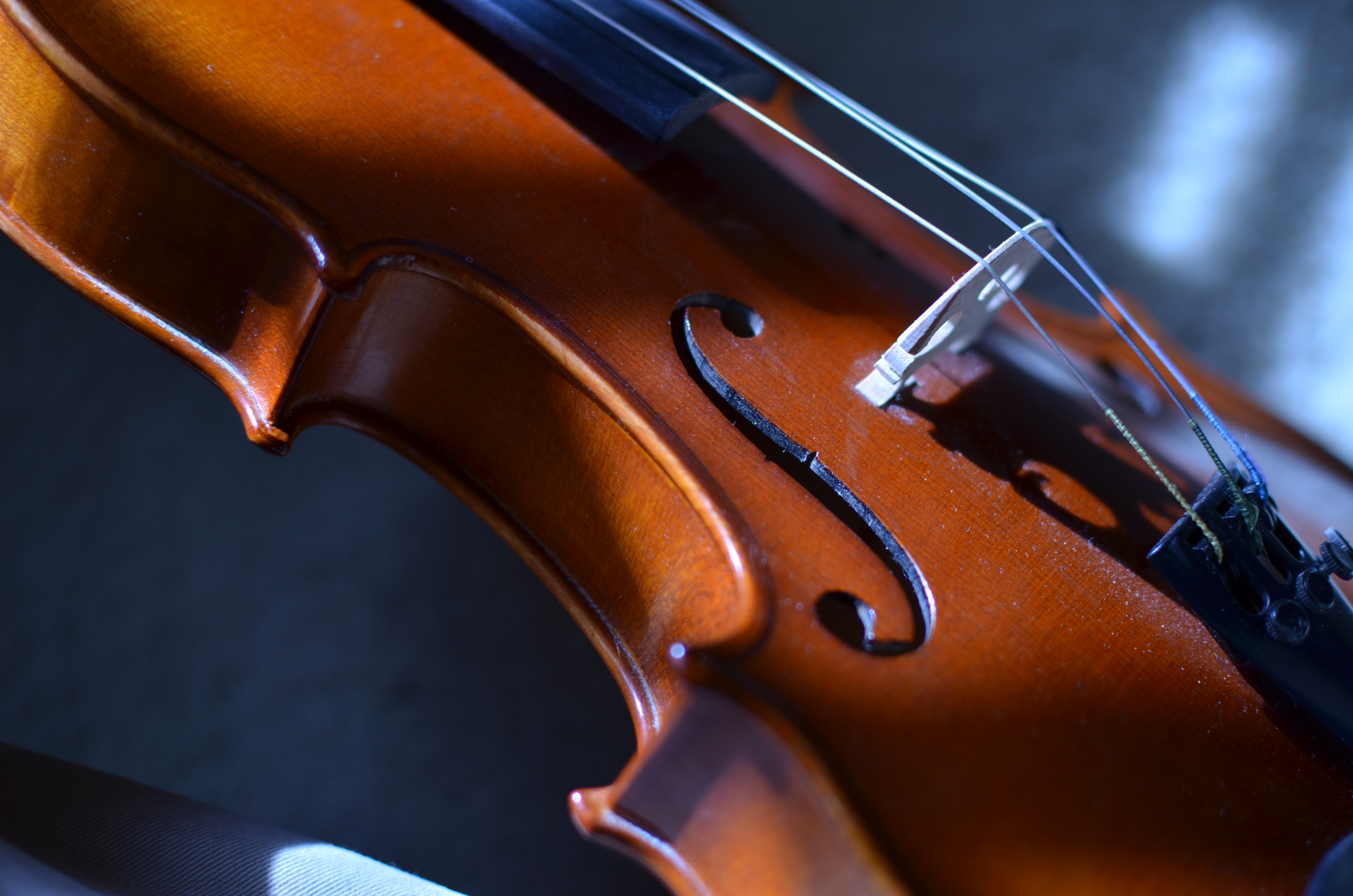
Staging the object just outside the reach of full light helped the violin sort of sculpt itself. 1/800 sec., f/2.5, ISO 100, 35mm prime lens.
A while back I learned that my wife had, for years, held onto a violin once used for the instruction of one of her children. I was eager to examine and photograph it, not because it represented any kind of technical challenge, but because there were so many choices of things to look at in its contours and details. There are many “sites” along various parts of a violin where creation surges forth, and I was eager to see what my choices would look like. Also, given the golden color of the wood, I knew that one of our house’s “super windows”, which admit midday light that is soft and diffused, would lend a warmth to the violin that flash or constant lighting could never do.
Everything in the shoot was done with an f/1.8 35mm prime lens, which is fast enough to illuminate details in mixed light and allows for selectively shallow depth of field where I felt it was useful. Therefore I could shoot in full window light, or, as in the image on the left, pull the violin partly into shadow to force attention on select details.
Although in the topmost image I indulged the regular urge to “tell a story” with a few arbitrary
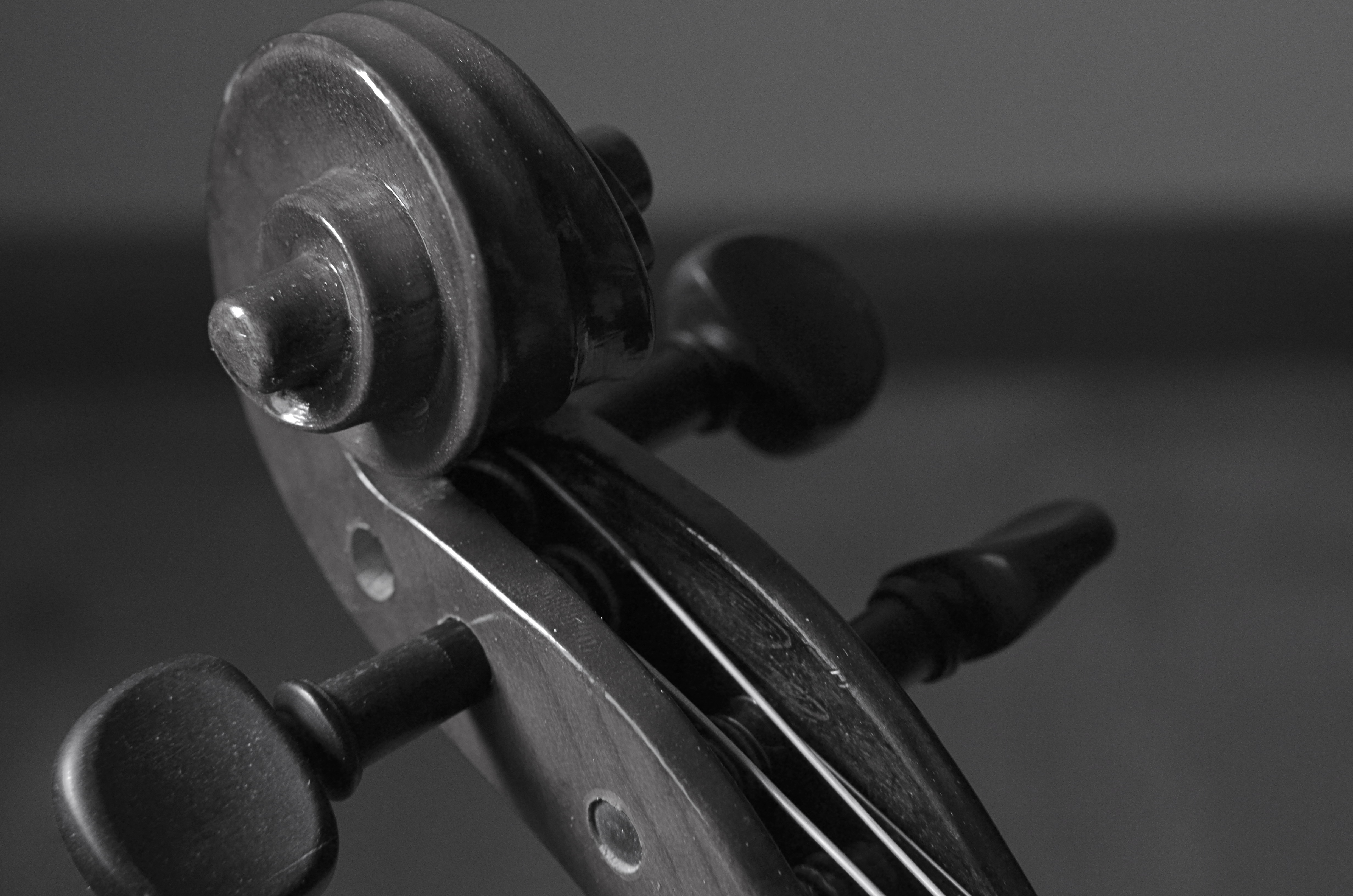
The delight is in the details.
props, I was eventually more satisfied with close-ups around the body of the violin itself, and, in one case, on the bow. Sometimes you get more by going for less.
One thing is certain: some objects can be captured in a single frame, while others kind of tumble over in your mind, inviting you to revisit, re-imagine, or more widely apprehend everything they have to give the camera. In the case of musical instruments, I find myself returning to the scene of the crime again and again.
They are singing their songs to me, and perhaps over time, I quiet my mind enough to hear them.
And perhaps learn them.
VINTAGE VESSEL
By MICHAEL PERKINS
 ALTHOUGH SHOOTERS FANCY THEMSELVES “INTERPRETIVE VISUAL POETS”, a big part of photography is also the dutiful marking of time, the chronicling of things that are in the process of going away. The medium of image-making itself is one long history of mutation, evolution and imminent obsolescence, so why should we shy away from recording those things in our world which are always going extinct? Think of the world as one big repeat of your eighth-grade class picture. Yeah.
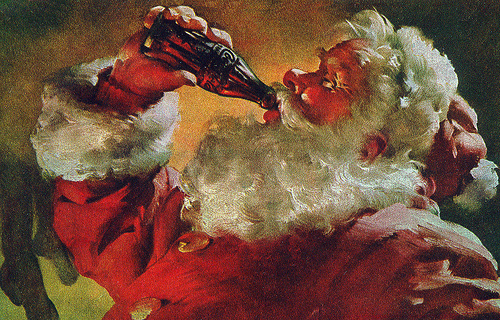
I am a lifelong Coca-Cola buff. Part of this fascination comes out of a career in mass media advertising and marketing, where Coke has largely shown the rest of the world how a brand is created and sustained. This fizzy (and guilty) pleasure is probably unique among all of the products ever marketed in the industrial world, coming, as it does, with its own traditions, mythology, and iconography. From the annual seasonal Haddon Sundblom illustrations of Santa Claus pausing to refresh himself to our present-day polar bear soda fantasies, Coke has established a legacy of style and, yes, a certain visual vocabulary. We may argue “new recipe” versus “classic formula”, but we know what Coca-Cola should look like.
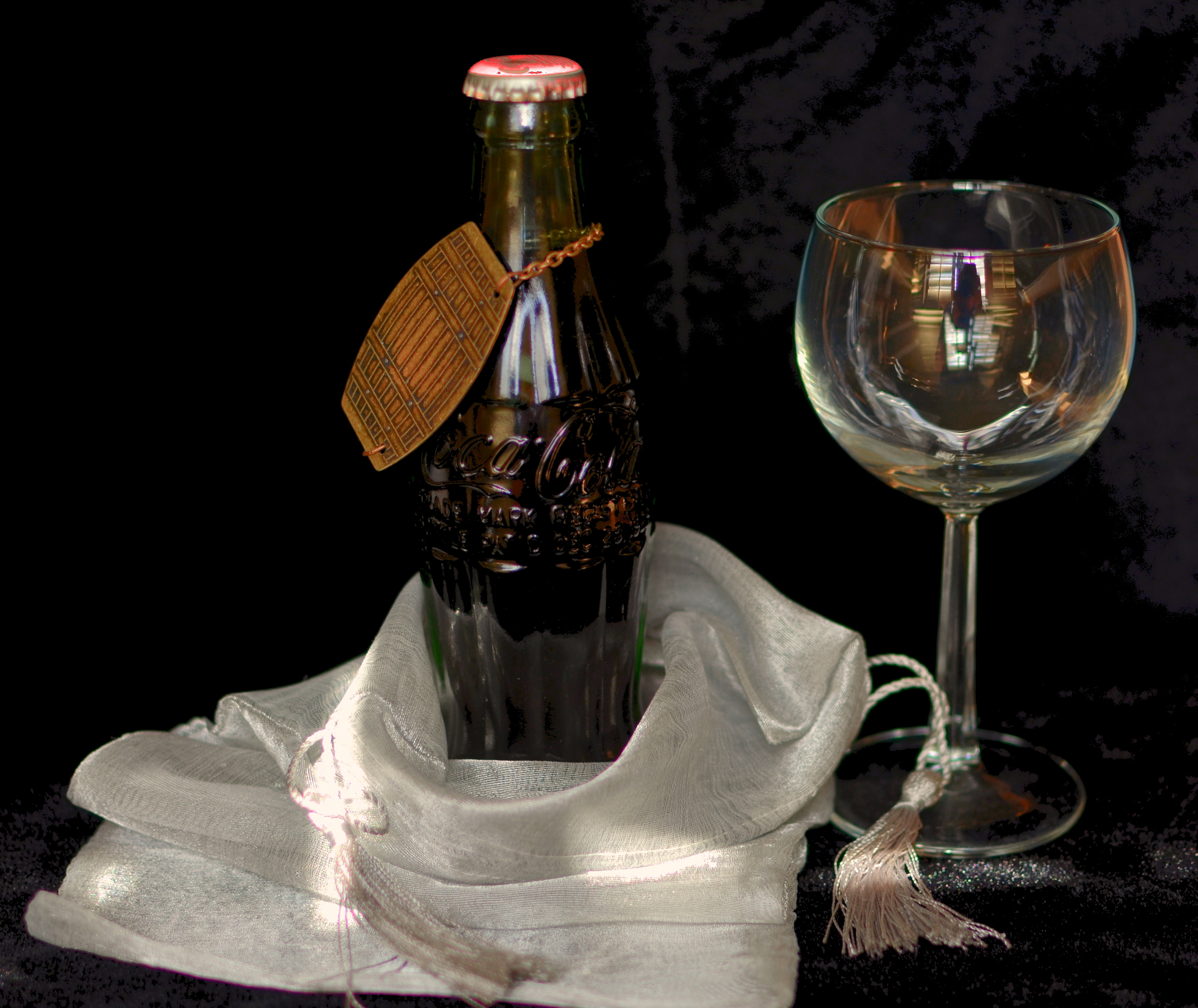
I can suggest an elegant cheese to accompany this unique ’95 vintage. Something in a discreet Velveeta, perhaps? A tone-mapped blend of 1/320 and 1/620 sec. exposures on a Nikon 35mm prime lens, both at f/2.5 and ISO of 100.
One of the “looks” that we expect is the sinuous curl of the so-called “contour” bottle, introduced in 1916 and maintained as a constant of style well into the 21st century. This distinctively shaped design was so quintessentially American that it was originally nicknamed the “Mae West” due to its, er, curvaceous dimensions. And when it comes to Coca-Cola, icons die hard. Years after this traditional container has ceased to be the dominant delivery system for Coke products, current commercials still show customers lifting, ta da, a glass bottle to their joyful lips. In everyday practice, of course, nearly all Coke sold in America is encased in plastic, with, by 2012, only a single bottling plant in Winona, Minnesota continuing to refill the 6.5- ounce “green glass” bottles, or “bar Cokes”. By October, rising costs and diminishing returns called a halt to it all, and the last bottles rolled off the line to a chorus of pop culture weeping and wailing.
Some small glass bottles of Coke will continue to be sold at retail going forward, but their graphics are painted on, rather than molded into the glass. Call me a purist, but, as a fan of tabletop still lifes, I thought it was high time the original hand-sized, green glass, America-won-the-war Coca-Cola bottle posed for its closeup. I decided to add a little pomp by way of props to suggest Everyman’s Drink as a fine vintage, but, hey, we all know damn well that we never, ever had a glass of wine that came close to the first burpy sting of a cold swig of The Real Thing.
It’s fun mocking up product shots. It’s even more fun when it’s an act of love.
Still, maybe all those kids singing on the side of a hill in that old TV ad were on to something.
I’d like to buy the world a Coke……
THE ROOMS DOWN THE HALL
By MICHAEL PERKINS
 FOR THESE PAGES, IT WAS NEVER MY VISION TO MERELY POST PICTURES. Not, at least, without some kind of context. Just meeting a regular deadline with the “picture of the day” held as little interest for me as maintaining a diary, an oppressive regularity that I have resisted my entire life. For the most part, the images on THE NORMAL EYE are here to anchor my thoughts about what it feels like to be enticed, seduced, enthralled, and, yes, disappointed by photography, to caption the frames with some semblance of the creative process, at least as I had the poor power to see it at the time.Like all blogs, it is written on my own very personal terms. I am always thrilled to harvest reaction and comment, since, as Ike Turner once sang, “was my plan from the very began”. But the important thing is to get the thoughts right, or at least to use them as a guide to the shots. Thus, the mission is neither words nor pictures, but some kind of handshake symbiosis between the two.
However, since day one, I have reserved several gallery pages on which visual info is pretty much all there is, since I also believe that it is important to react to photographs on a purely visceral basis. If the blog is the main hall in the house, think of these as the rooms down the hall that you never thought to explore.
I have tried to give each gallery its own general feel, since there are different “themes” which motivate our taking of pictures, and I thought, for this post, it might be helpful to underscore those themes just enough to justify how they were organized. I have now also given them specific names instead of the A-B-C tags they had previously.
Here’s the new rundown:
Gallery A is now “HDR”, since I think that this process affords very specific benefits for reproducing the entire range of visible light in a way that, until recently, has been impracticable for many shooters. No tool is suitable for every kind of shooting situation, but HDR comes close to reproducing what the eye sees, and can enhance detail in fascinating ways. There is a lot controversy over its best use, so, like everywhere else on this blog, your opinions are invited.
The former B gallery is a collection of impulse shots. All of these images were taken in the moment, on a whim, with only instinct to guide me. No real formal prep went into the making of any of them, as they were the product of those instants when something just feels right, and you try to snag it before it vanishes. We’ll call these “SNAP JUDGEMENTS”.
And finally, the photos formerly known as Gallery “C” are now renamed “NATURAL STATE”, as these portraits are all shot using available light, captured without flash or the manipulation of light through reflectors, umbrellas, or other tools.
Let me state here that your participation in this forum was always the centerpiece of my doing it in the first place, and your ideas and suggestions have always inspired me to try to be worthy of the space I’m taking up. I also have enjoyed linking back to your individual sites and visions. It’s a great way to learn.
So please know that, when you click the “like” button at the bottom of these posts, or take the time to type a comment, it does help me see what works, as well as what needs to be done better. I don’t believe that art can grow in a vacuum, and I thank everyone for giving these pages shape and form.
And thanks for exploring all the rooms in my house.
 thenormaleye