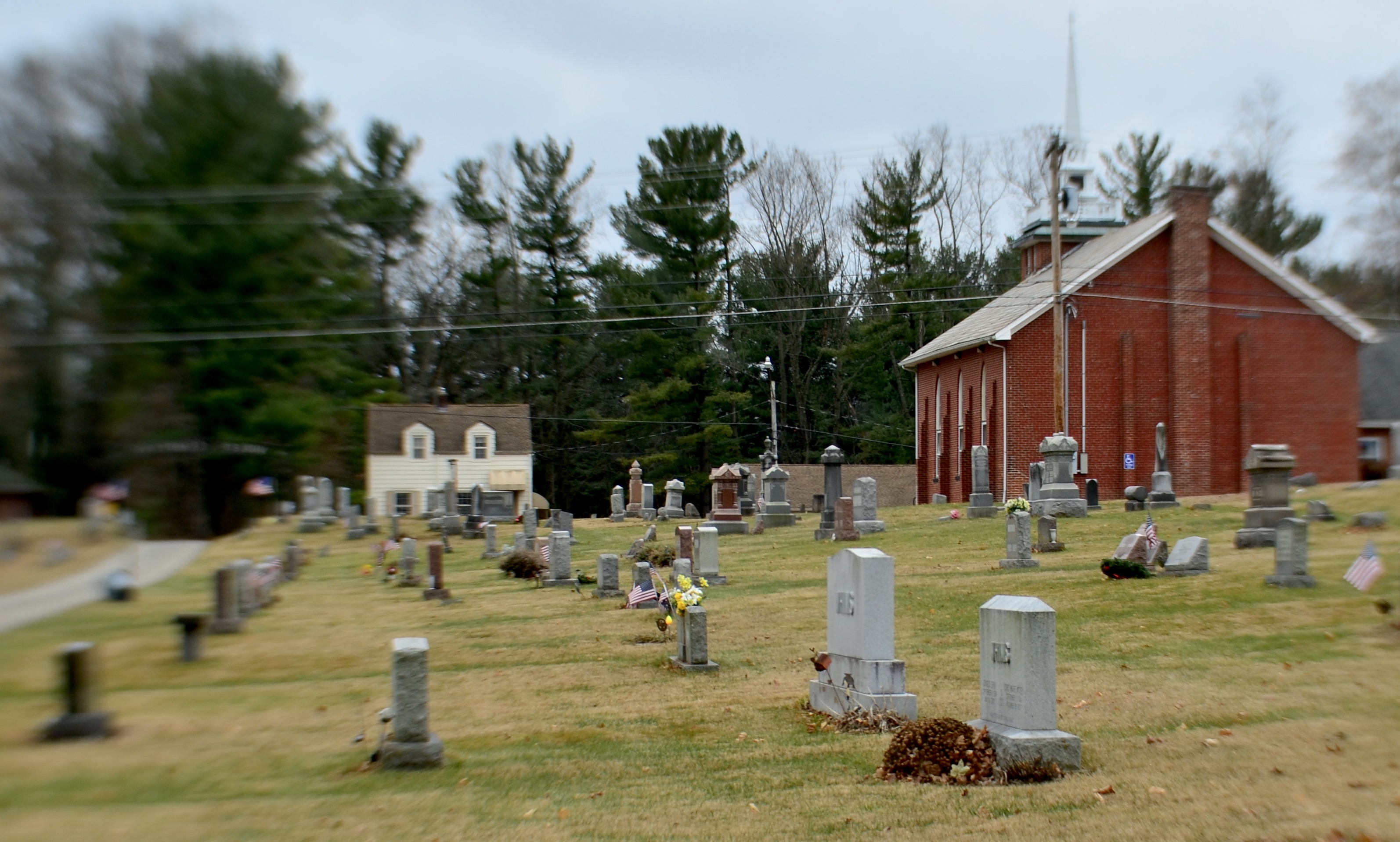
Violet Cemetery, Pickerington, Ohio, 2019
By MICHAEL PERKINS
THERE ARE STILL PLACES ACROSS AMERICA where all the needs of life seem to be concentrated into very compact spaces. Small towns where the eating places, the living places, working places, worshiping places and dying places are all within a few blocks of each other, all of them viewable, knowable to everyone, all the time. The unchecked sprawl of modern life has left such villages behind, so isolated that they may as well be contained within a snow globe, their functions blended together like a box of inter-melted crayons. In such towns, photographs of a very different nature can be made.
The idea of a local main street moving seamlessly from the business section to residential houses to graveyards to a children’s playground now runs counter to the way we plan things. In little cities all functions orbit each other tightly, like animals sharing the same watering hole. Maybe some of these burgs were, originally, just that….replenishment stops, a place to change horses, grab a meal before heading back onto the trail, a collection point for outlying farms or ranches. In terms of the images that can be created in these out-of-the-way places, they are chronicles of a different kind of rhythm. They simply have to result in different kinds of pictures.
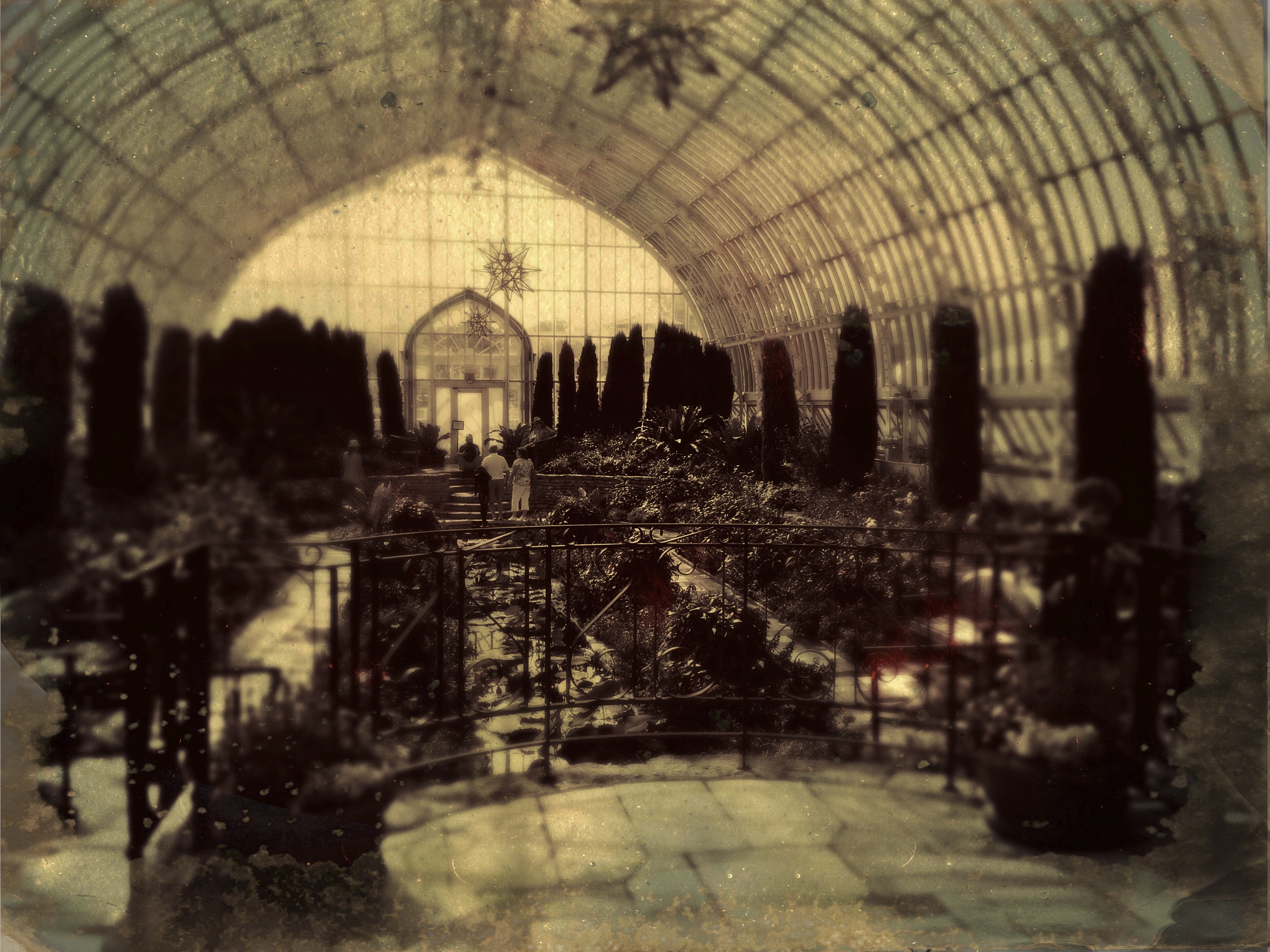
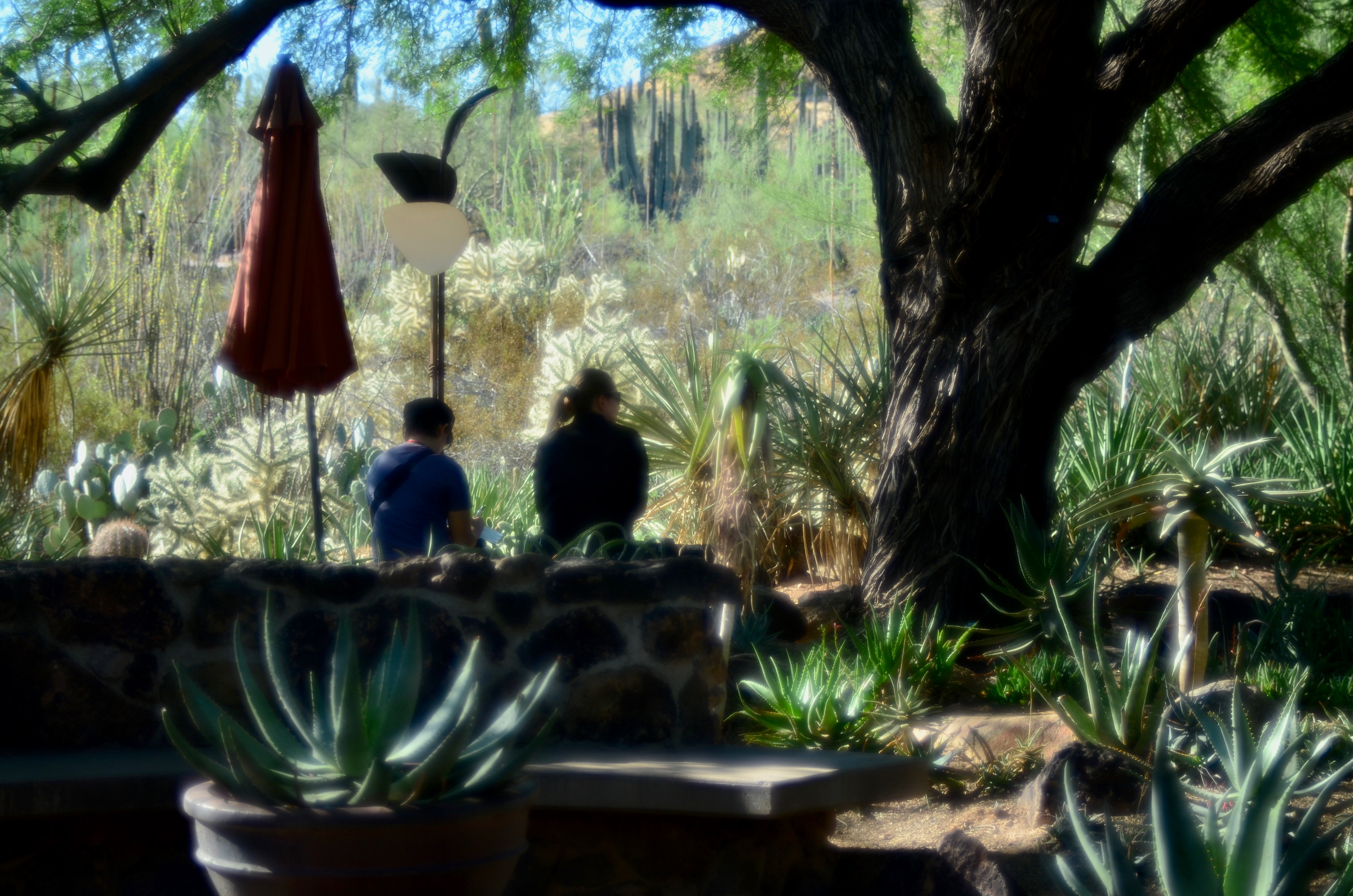
In traveling through such towns, I invariably stop at local churchyards. In a strange way, by containing the remains of our all too temporary shells, the yards themselves achieve a kind of permanence. Things go there and stay there. No one digs up a cemetery to build a supermarket. Its space remains apart, freed even more of the constraints of time than the towns which they occupy. And here, in the aftermath of the greatest interruptions we can ever face, there is order. A grave is just one more thing that falls to the human need to organize. To make sense of it all. We lay out parcels with a certain arbitrary logic. Grandpa is in section 3-A, while the mayor and his family are in 4-D, and so forth. Churches in such towns taper off into the sky with stiff steeples, and brick and marble perpetuate the illusion that everything in the area, in some way, lasts. In terms of technique for these oddly reassuring patches of quiet, I often will play around with selective focus, since that dreamy half-state seems to align with my interior dialogue. Our pasts are as strange in their own way as our presents, and the standard rules for picture-making are vaporous, like ghosts.
Small towns are often liberally dotted with antique stores, as if objects themselves have need of a graveyard, a place to be collected beyond anyone’s needs or desires. The way we say farewell to things is often impossible to measure visually, but we carry cameras along wherever we go, because, well, you never know. When life’s various elements slip away there is often nothing to mark their passage. And yet sometimes there is just a little. And sometimes we can see it. And steal it. And hoard it.






FINDING THE RIGHT FACE
Mother Courage, 2019
By MICHAEL PERKINS
HISTORY DOES NOT HAPPEN WITHIN THE STORMY SURGE OF A CROWD, but with the quiet, agonized turning of individual hearts. One heart at a time, that’s how the world is turned…..or overturned.
Protests and demonstrations are a natural magnet for photographers. They appeal to the journalist in all of us, as street photography meets street theatre in a roiling mix that maybe, just, maybe will allow us to trap history inside our magical boxes. Thing is, certain surface elements of marches and public gatherings are dismayingly uniform: the sea of signs, the crush of bodies, the speaker’s rostrum….and masses of angry/jubilant faces. Photographers realize that world-changing events are really about faces, more than any other visual element. We look for features that record the raw essence of those events: pity, fear, exhilaration, relief, anger. Finding the right face within a mass gathering is the toughest assignment for anyone hoping to use a camera to record the over-large mash-up of sensations within a movement. A solid wall of people with signs isn’t the real story: what brought individuals to the site is the only message that can be trusted. You must fan past the mass of noise to find the quiet at the center.
You need not pick a side in a struggle to record what it costs people to invest their energy in having picked one themselves. The woman seen here, standing near an improvised speaker’s platform, may never have seen herself as a force to change the world. She is not triumphant: she is not a bomb-hurler: she doesn’t share in the giddy me-tooism of youth: she may actually wish she were somewhere else, even as something has told her she must be only here, right now. The parade/protest will rage on in big waves of zeal, but her emotion, at least in this moment, is not one of celebration. She is not having a good time. But written in her apprehension is something universal, eternal.
The human race seems, age after age, to be in search of the same basic things. The drama in our lives is defined by the path we choose to reach those things. And all of our quests force their way up into our features. Our faces betray what path we’re on, and why. There is no wisdom in the mob, unless it is in the wisdom of one face after another, all of whom, on the same day, strangely found themselves standing in the same spot.
Share this:
Posted by Michael Perkins | December 18, 2019 | Categories: America, Commentary, Editorial | Tags: Candids, Street Photography | Leave a comment