IF YOU SEE IT, IT MATTERS
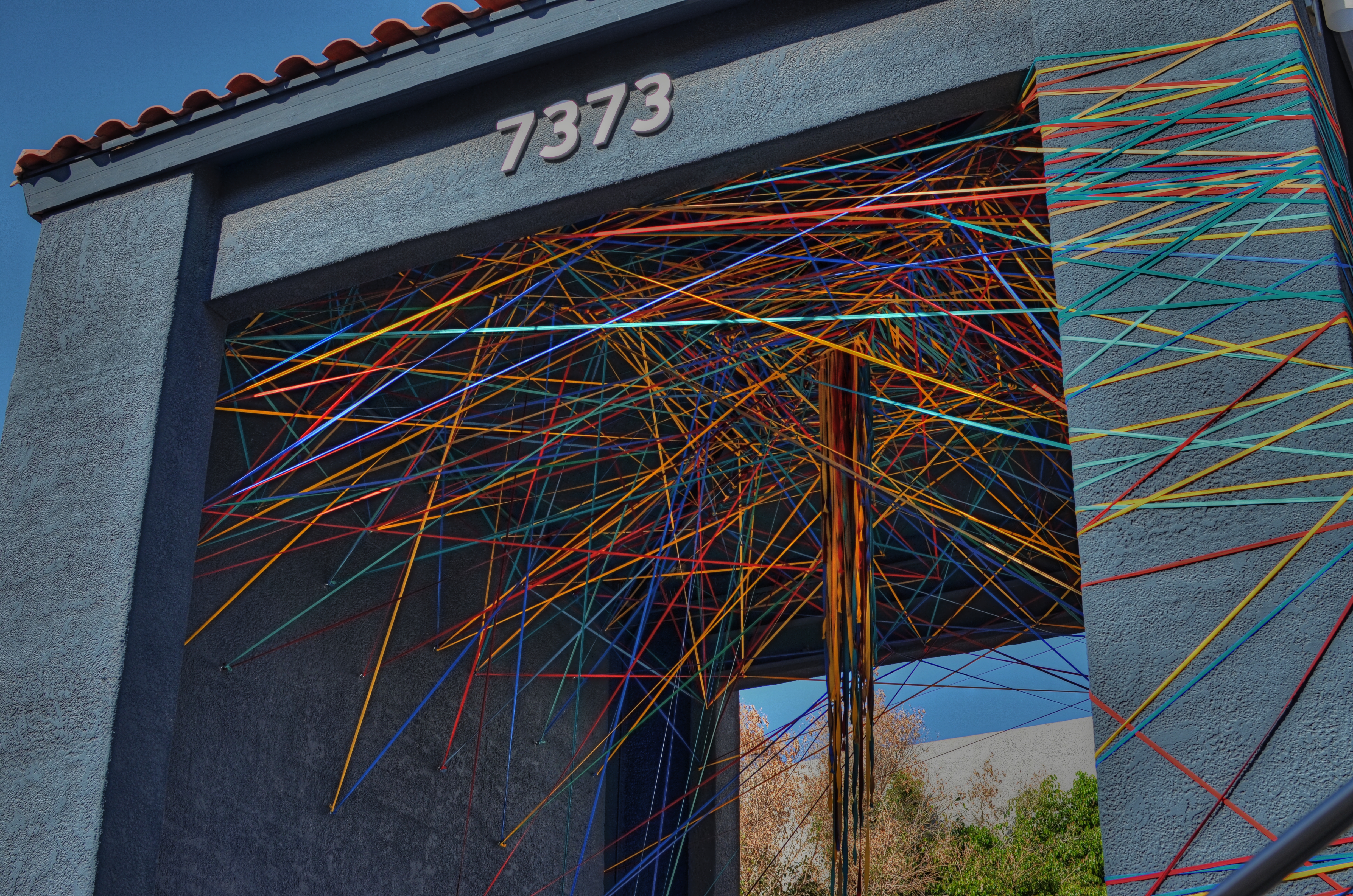
1/320 sec., f/5.6, ISO 100, 35mm.
By MICHAEL PERKINS
TOO MUCH OF THE TIME, WE ARE SHOOTING PHOTOGRAPHS TO NOT ONLY BE SEEN BUT “APPRECIATED“. This can become an emotional and artistic trap, since art is not designed to be juried. We’d all like the world to “get” what we do, but it’s all too easy to bend the arc of what we create until it matches the trajectory of what the world will approve.
Think for a moment about how such a tactic can cripple you as a photographer. I mean, stop you in your tracks.
Consider: many photographers will logically move, over time, from showing the world fairly literally to suggesting a special viewpoint, seeing it in a more abstract fashion. They learn to tell more by showing less, by being selective. This is a perfectly logical part of their development, but as a consequence, some of their pictures will inevitably leave some viewers behind. Suddenly, their images are “arty”, or “intellectual”, or whatever other word can be hurled at them to dismiss what they are doing.
But that’s okay. I’m not saying that you should live your life eating worms and striving to be a tortured genius. I just mean to suggest that your vision belongs to you. It’s validity cannot be diminished, unless you do it yourself. Here’s one of my favorite quotes from Life and Look magazine photographer Elliot Erwitt on this :
To me, photography is an art of observation. It’s about finding something interesting in an ordinary place… I’ve found it has little to do with the things you see and everything to do with the way you see them.
What a great concept. The thing you are shooting is not content. The way you shoot it is. That means viewpoint and personal interpretation must be more important that objects or subjects. If they are not, there’s no way in hell to make photography be about anything but recording. If they are, thought, ah, then, anything’s possible.
Bottom line, if you aren’t true to your vision, it’s a cinch that no one else ever will be, either.
So there.
GET THEE TO A LABORATORY
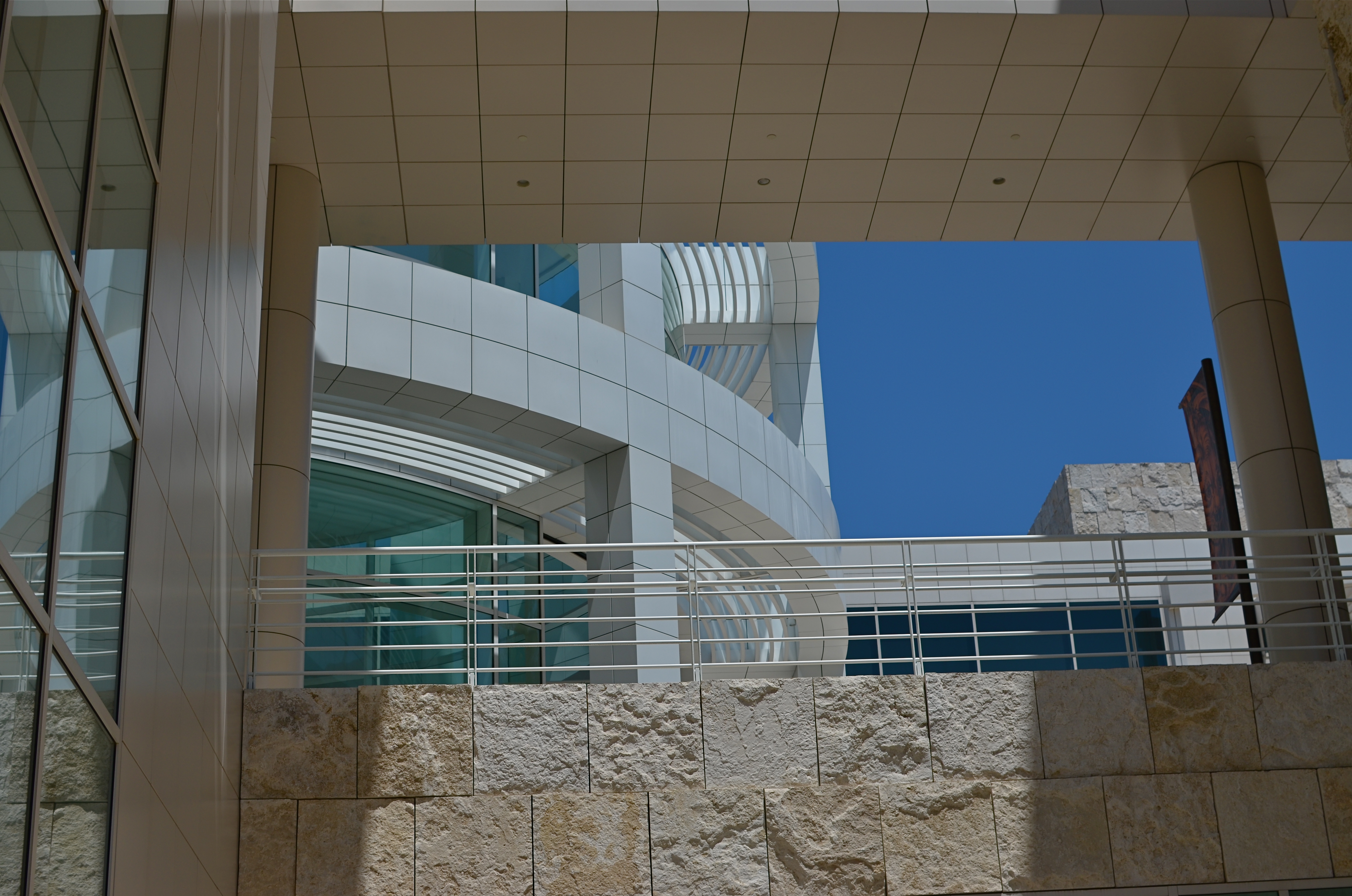
The Visitor Center at Los Angeles’ Getty Museum. 1/1600 sec., f/5.6, ISO 100, 35mm.
by MICHAEL PERKINS
PHOTOGRAPHIC SUBJECT MATTER, ONCE YOU’VE TRAINED YOURSELF TO SPOT IT, is always in ready supply. But, let’s face it: many of these opportunities are one-and-done. No repeats, no returns, no going back for another crack at it. That’s why, once you learn to make pictures out of almost nothing, it’s like being invited to a Carnival Cruise midnight buffet to find something that is truly exploding with possibilities, sites that actually increase in artistic value with repeat visits. I call such places “labs” because they seem to inspire an endless number of new experiments, fresh ways to look at and re-interpret their basic visual data.
My “labs” have usually been outdoor locations, such as Phoenix’ Desert Botanical Gardens or the all-too-obvious Central Park, places where I shoot and re-shoot over the space of many years to test lenses, exposure schemes, techniques, or, in the dim past, different film emulsions. Some places are a mix of interior and exterior and serve purely as arrangements of space, such as the Brooklyn Museum or the Library of Congress, where, regardless of exhibits or displays, the contours and dynamics of light and form are a workshop all in themselves. In fact, some museums are more beautiful than the works they house, as in the case of Guggenheim in NYC and its gorgeous west coast equivalent, The Getty museum in Los Angeles.
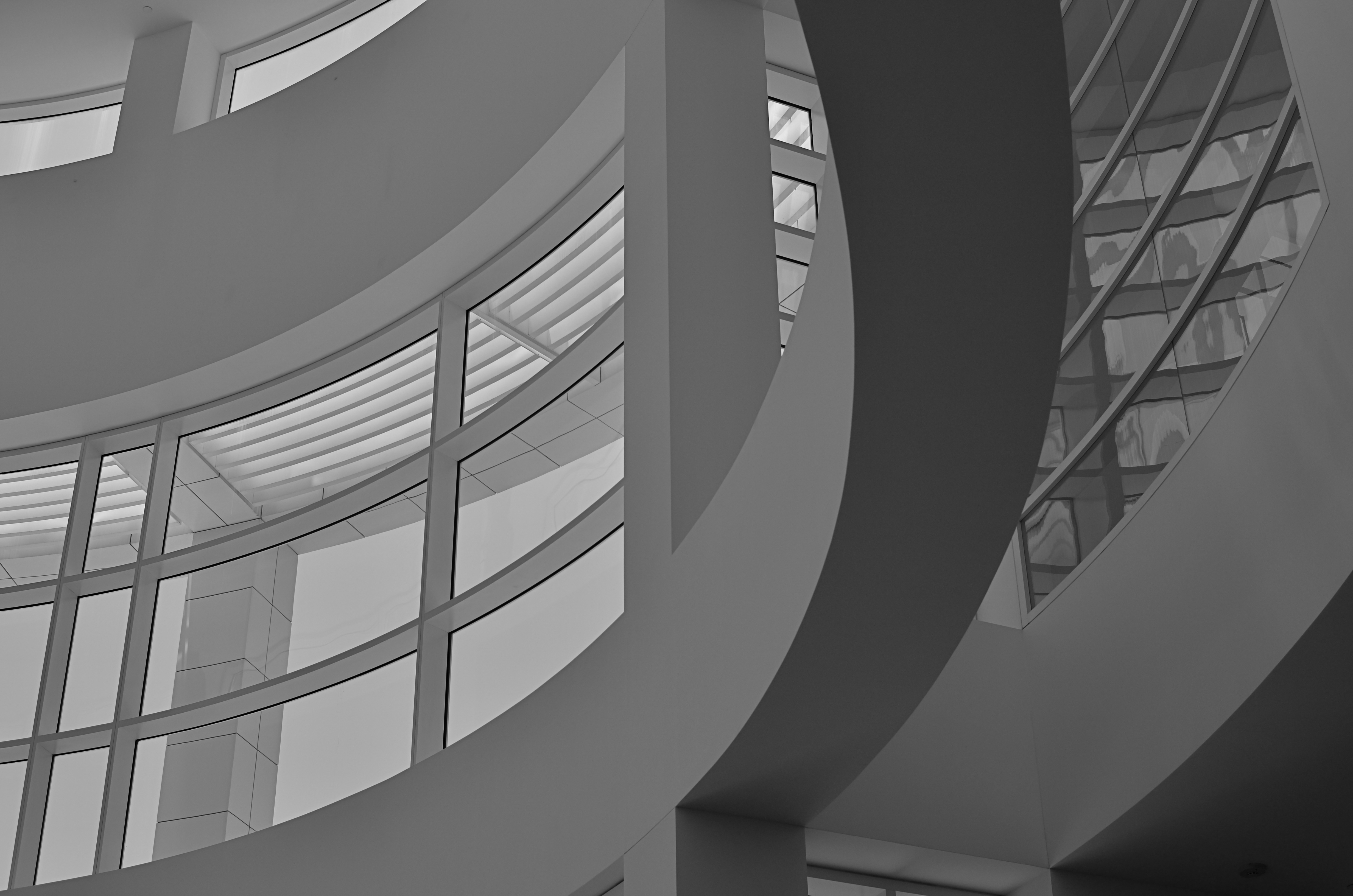
No color? No problem. Interior view of the Getty’s visitor center. 1/640 sec., f/5.6. ISO 100, 35mm.
Between the gleaming white, glass-wrapped buildings of this enormous arts campus and its sinuous, sprawling gardens (not to mention its astounding hilltop view), the Getty takes one complete visit just to get yourself visually oriented. Photographically, you will find a million isolated tableaux within its multi-acre layout upon subsequent trips, so there is no end to the opportunities for exploring light, scale, abstraction, and four full seasons of vibrant color. Not a color fan? Fine. The Getty even dazzles in monochrome or muted hues. It’s like Toys ‘R’ Us for photogs.
I truly recommend laying claim to a laboratory of your own, a place that you can never truly be “finished with”. If the place is rich enough in its basic components, your umpteenth trip will be as magical as your first, and you can use that one location as a growth graph for your work. Painters have their muses. Shooter Harry Calahan made a photographic career out of glorifying every aspect of his wife. We all declare our undying love for something.
And it will show in the work.
GOING (GENTLY) OFF-ROAD
By MICHAEL PERKINS
WHEN YOU’RE BEHIND THE WHEEL, SOME PHOTOGRAPHS NAG THEIR WAY INTO YOUR CAMERA. They will not be denied, and they will not be silenced, fairly glowing at you from the sides of roads, inches away from intersections, in unexplored corners near stop signs, inches from your car. Take two seconds and grab me, they insist, or, if you’re inside my head, it sounds more like, whatya need, an engraved invitation? Indeed, these images-in-waiting can create a violent itch, a rage to be resolved. Park the car already and take it.
Relief is just a shutter away, so to speak.
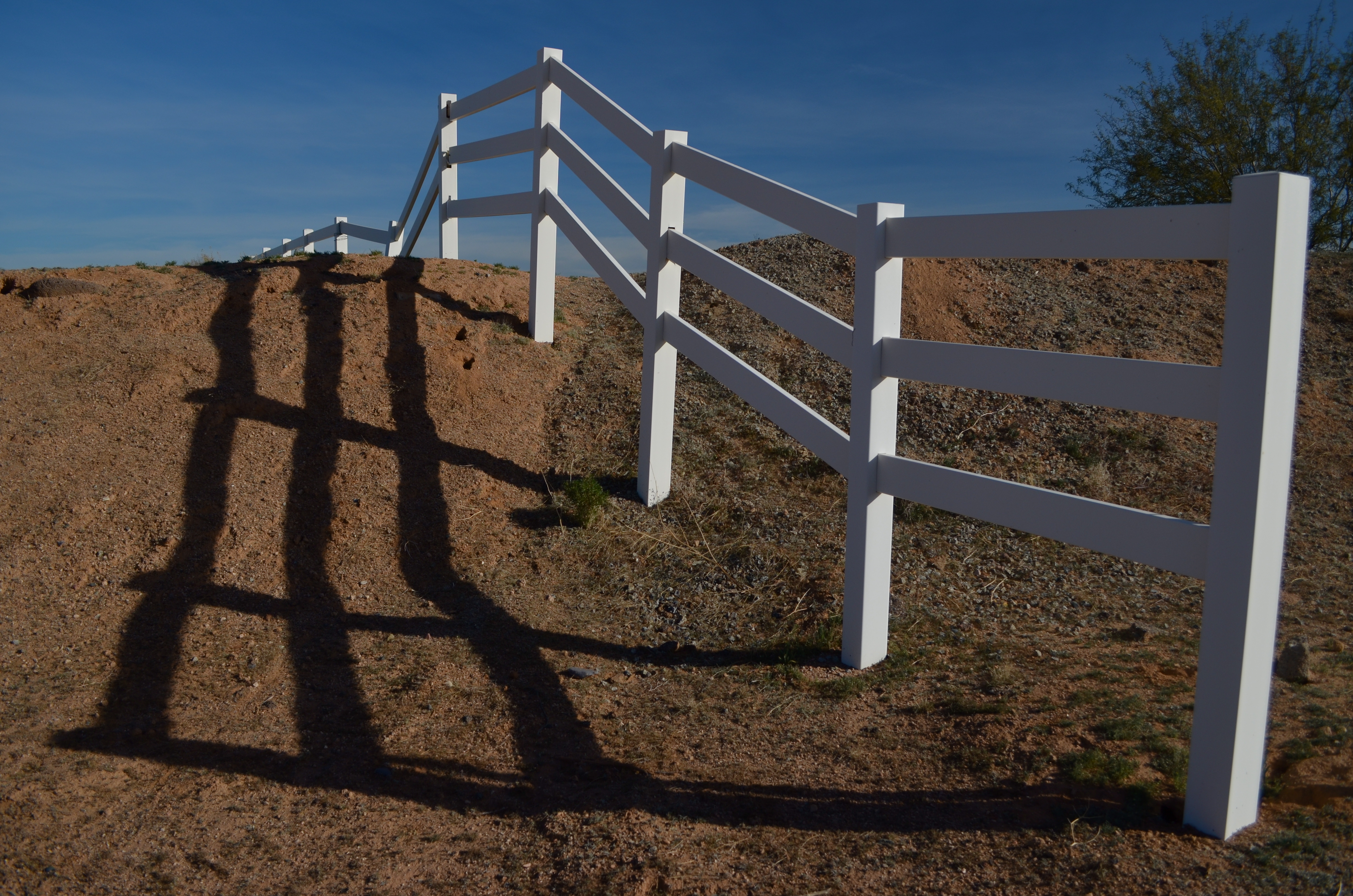
Wait too long and the light will break: 1/800 sec., f/5.6, ISO 100, 18mm.
The vanishing upward arc and sinuous mid-morning shadows of this bit of rural fencing has been needling me for weeks, but its one optimal daily balance of light and shadow was so brief that, after first seeing the effect in its perfection, I drove past the scene another half dozen times when everything was too bright, too soft, too dim, too harsh, etc., etc. There was always a rational reason to drive on.
Until this morning.
It’s nothing but pure form; that is, there is nothing special about this fence in this place except how light carves a design around it, so I wanted to eliminate all extraneous context and scenery. I shot wide and moved in close to ensure that nothing else made it into the frame. At 18mm, the backward “fade” of the fence is further dramatized, artificially distorting the sense of front-to-back distance. I shot with a polarizing filter to boost the sky and make the white in the wood pop a little, then also shot it in monochrome, still with the filter, but this time to render the sky with a little more mood. In either case, the filter helped deliver the hard, clear shadows, whose wavy quality contrasts sharply with the hard, straight angles of the fence boards.
I had finally scratched the itch.
For the moment….
SUBDIVISIONS
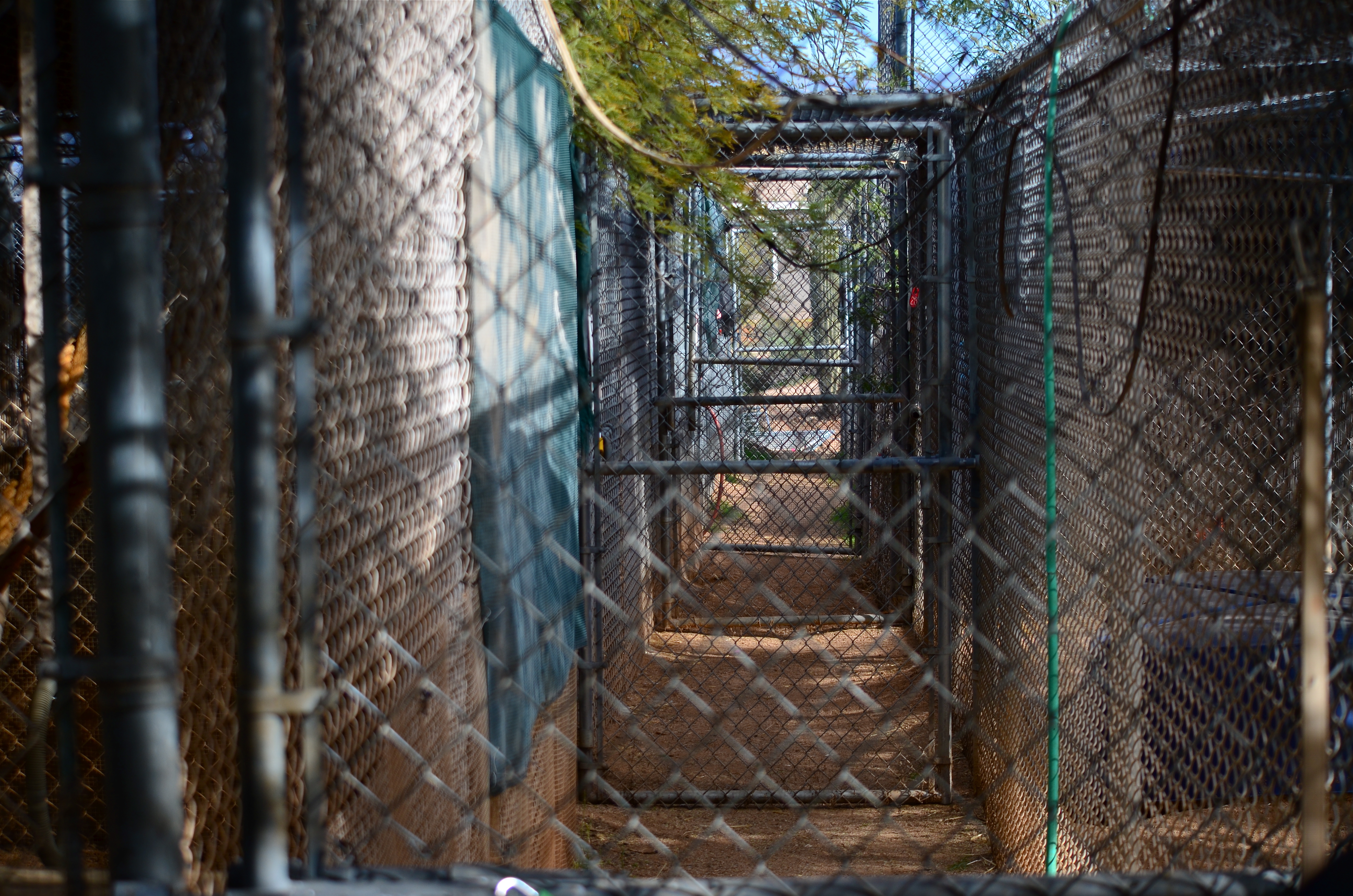
Compartments, 2014.
By MICHAEL PERKINS
SPACE, BY ITSELF, DOESN’T SUGGEST ITSELF AS A PHOTOGRAPHIC SUBJECT, that is, unless it is measured against something else. Walls. Windows. Gates and Fences. Demarcations of any kind that allow you to work space compelling into compositions. Arrangements.
Patterns.
I don’t know why I personally find interesting images in the carving up of the spaces of our modern life, or why these subdivisions are sometimes even more interesting than what is contained inside them. For example, the floor layouts of museums, or their interior design frequently trumps the appeal of the exhibits displayed on its walls. Think about any show you may have seen within Frank Lloyd Wright’s Guggenheim museum, and you will a dramatic contrast between the building itself and nearly anything that has been hung in its galleries.
What I’m arguing for is the arrangement of space as a subject in itself. Certainly, when we photograph the houses of long-departed people, we sense something in the empty rooms they once occupied. There is fullness there inside the emptiness. Likewise, we shoot endless images of ancient ruins like the Roman Coliseum, places where there aren’t even four walls and a roof still standing. And yet the space is arresting.
In a more conventional sense, we often re-organize the space taken up by familiar objects, in our efforts to re-frame or re-contextualize the Empire State, The Eiffel, or the Grand Canyon. We re-order the space priorities to make compositions that are more personal, less popular post card.
And yet all this abstract thinking can make us twitch. We worry, still, that our pictures should be about something, should depict something in the documentary sense. But as painters concluded long ago, there is more to dealing with the world than merely recording its events. And, as photographers, we owe our audiences a chance to share in all the ways we see.
Subdivisions and all.
AMPLIFIER
By MICHAEL PERKINS
EVERY MAJOR CITY AROUND THE WORLD THAT BOASTS BOTANIC GARDENS OR PLANT CONSERVATORIES HAS EXPERIENCED THE STRANGE MIXTURE of biology, art, and science created by the glass installations of Dale Chihuly. Beginning as a starving student in Venice in the late ’60’s, Chihuly has carved out a unique niche for himself as the premier maestro of art glass creations, marked by strange, venous bulbs, eerie tendrils, and massive towers of color, all wrought together in a psychedelic weave of texture and (frequently) enormous scale. If Peter Max blew glass instead of spewing paint, he’d be Dale Chihuly. Like Max, Chihuly has benefited greatly from the ever-hot debate over the permanence or value of his work. And if you don’t like it, he, in the words of Liberace, cries all the way to the bank.
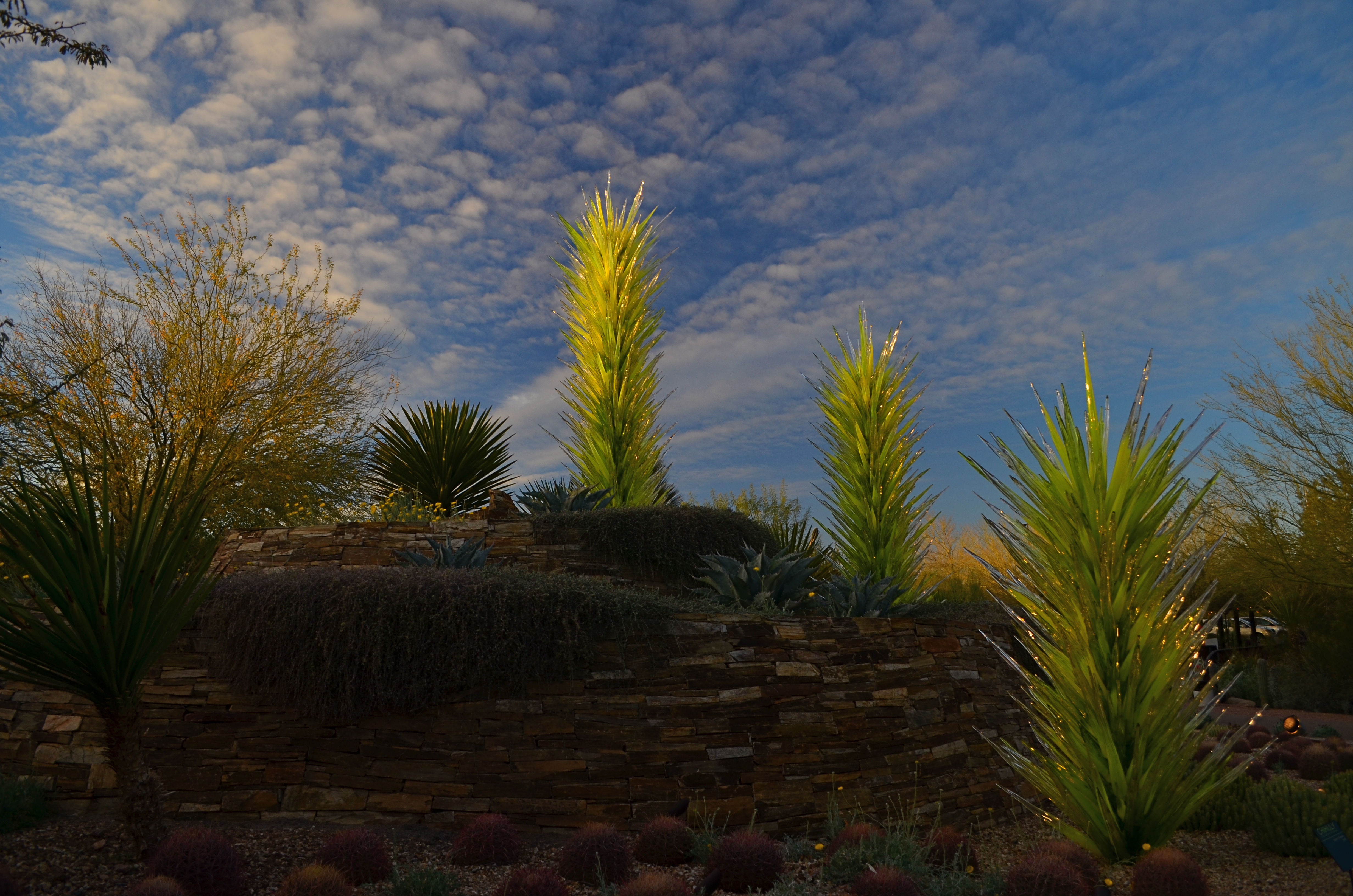
Doubling up on color by combining intense Arizona sunset light with some help from a polarized filter. 1/125 sec., f/5.6, ISO 100, 18mm.
For the botanical denizens of the non-profit universe, however, the Chihuly phenomenon does have one indisputable trait: it puts butts in the seats. Gardens the world over record insane increases in attendance far beyond their normal “fan base” when Dale’s gorgon-like creations hit town and go mano-a-mano with their daisies and daffodils. For photographers, the juxtaposition of the organic and the “alt-ganic” is irresistible, and, here in the southwest, where sun is all, the extreme effects of our desert light give Chihuly’s glassworks a supernatural quality.
The Arizona “golden hour” just before final sunset produces very deep and intense color, and the Chihuly works installed at Phoenix’ Desert Botanical Garden catch it like neon prisms. Go a little further and add, say, a polarizing filter to this natural amplification of color, and the hues go into overdrive. It’s Golden Hour on steroids.
The three glass “bushes” in the above frame, installed permanently at the DBG’s guest arrival area, are high enough above average terrain to act as light blotters for the late afternoon light. The addition of the polarizing filter seems to double the effect, although it will deepen and darken shadows in other parts of the images, and so exposure choices become a mite trickier. In this case, the striated clouds overhead also benefited from the tweak as they stood in sharper contrast against the sky, but, full disclosure, that part was dumb luck.
But hey, even dumb luck can make you a little smarter. And buy you a bigger chunk of “luck” next time. Does Dale do it for me as an artist? Does it even matter? His stuff creates light opportunities, and you can serve me up a plate of that anytime.
DISTORTION AS DESIGN
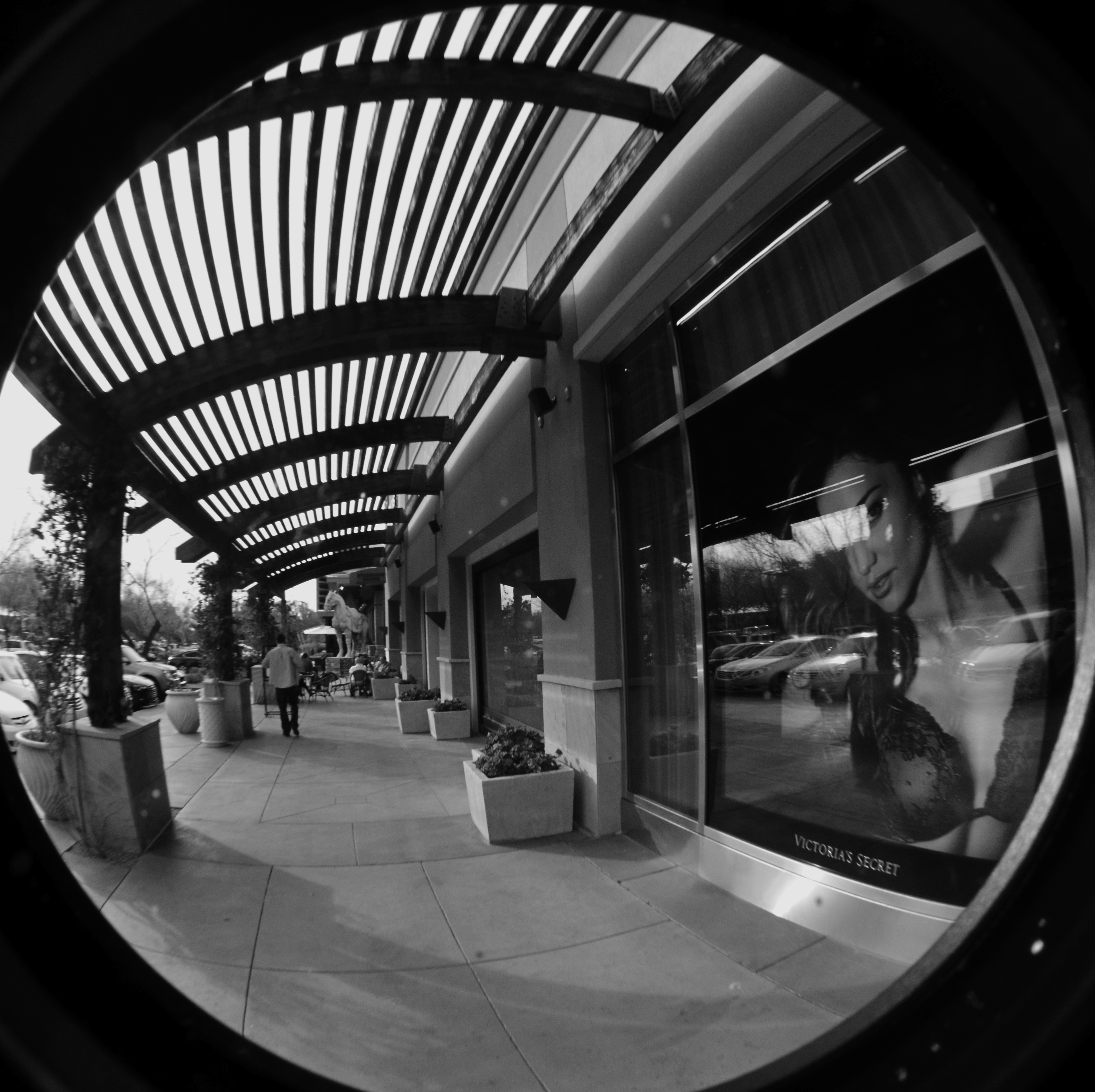
Overhead parallels bent with a fisheye to yank the eye for forcefully into the frame, maybe impose a little claustrophobia. 1/80 sec., f/22. ISO 640, 8mm
By MICHAEL PERKINS
BORN INTO A PAINTER’S WORLD, PHOTOGRAPHY NATURALLY INHERITED THAT DISCIPLINE’S BIAS TOWARD SHOWING THE WORLD “AS IT IS“, and, in fact, the first fifty years of photographic images seem to be in a neck-and-neck race with painting for the best rendering of the world at large. Then the 20th century kind of dope-slapped humanity’s collective sense of “reality”, as a world war, the onrush of science, and the rise of secular thought combined to question what the hell we needed with reality, anyway. The arts were shaken to their foundations, and photography and painting spiraled off onto wild new side roads. All bets for what defined a “picture” were off.
That’s not to say that photography has remained visually unbound through the decades. It almost acts like the flow and ebb of the surf. Photos surge toward pure documentation, then pull back into pure effect. They roll forward into an absolute deconstruction of the real world, then clamber back into the safety of literal pictorialism. One day we’re trying to recreate a wilderness landscape with perfect fidelity; the next day we’re reducing all “subjects” moot, reducing everything to shape and light.
I have had to spend many years getting comfortable with abstractions in my photography. It’s not like I don’t have ideas that wander far from the visual mainstream. If anything, I’ve had to learn to trust those visions, to stop worrying about whether they have “value” versus some rigid, if invisible,standard. While some shooters started with an absolutely open attitude toward the camera, pointing, framing and living completely by whim or instinct (the Instagram and Lomo kids of my Stone Age), I was absolutely, unwaveringly serious about arranging or capturing things as I literally saw them. It was a very clenched approach, even if it did teach me the physics of the medium. I had to learn to hold things very tightly before learning to let anything go.
And it took a very long time.
The great gift of the digital era is that many “accounting” issues (how much film do I have left? where can I go to get these processed? do they sell my kind of film in this end of town?) are just plain gone, and, with them, a little of the constipated approach that they imposed on me. At my age, it no longer matters a damn how long I shoot, how many times I “fail”, or who does or does not choose to anoint the results. There are no teachers or parents left to show off for, no competition with anyone except myself. I am free to use surfaces as straight lines or use distortion as a design element.
The truth speaks with forked tongue: in some ways I am glad that I am no longer young, since I have finally lived long enough to “age” into my photographic niche. And it also makes me sad that I am no longer young, because I really want to run with this ball, and I realize that Time might knock my legs out from underneath me before I make it all the way down the field. Still, we are here, and here is where we have to concentrate our energy. It’s the only control we have. Or, in the words of Edna St.Vincent Millay:
My candle burns at both ends; It will not last the night;
But ah, my foes, and oh, my friends— It gives a lovely light.
DRIVING THE IMAGE
 By MICHAEL PERKINS
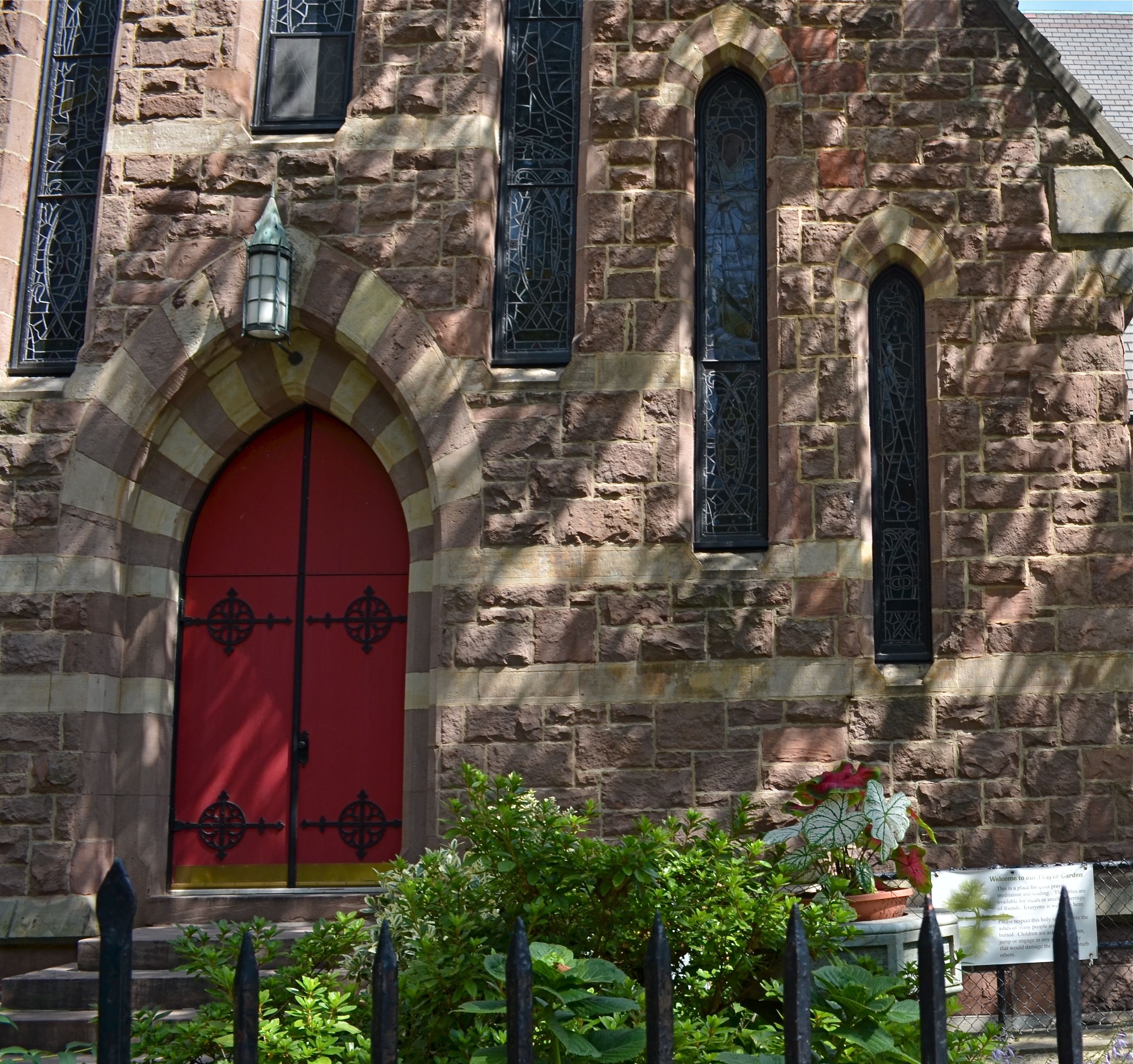
YOU CAN FILL A LIBRARY SHELF WITH OPPOSING ARGUMENTS ON LIGHT’S ROLE IN PHOTOGRAPHY, not necessarily a debate on how to capture or measure it, but more a philosophical tussle on whether light is a mere component in a photograph or enough reason, all by itself, for the image to be made, regardless of the subject matter.
The answer, for me, is different every time, although more often than not I make pictures purely because the light is here right now, and it will not wait. I actually seem to hear a clock beginning to tick from the moment I discover certain conditions, and, from that moment forward, I feel as if I am in a kind of desperate countdown to do something with this finite gift before it drifts, shifts, or otherwise mutates out of my reach. Light is running the conversation, driving the image.
“In the right light, at the right time, everything is extraordinary”, the photographer Aaron Rose famously said, and I live for the chance to ennoble or, if you will, sanctify something by how it models or is embraced by light. Certainly I usually go out looking for things to shoot, but time and time again something shifts in my priorities, forcing me to look for ways to shoot.
The practical world will look at a photograph and ask, understandably, 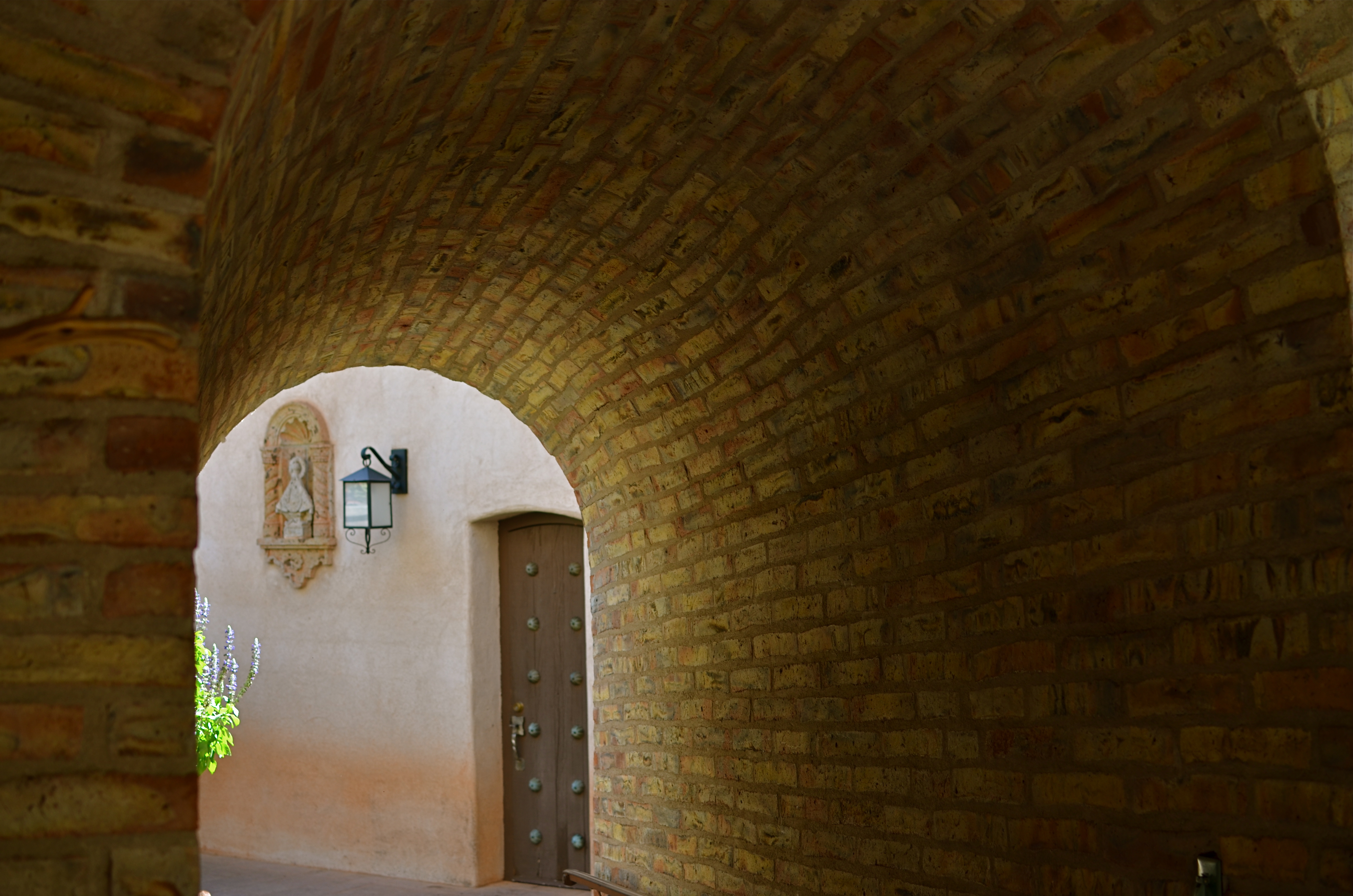 “what is that supposed to be?”, or, more pointedly, “why did you take a picture of that?” This makes for quizzical expressions, awkward conversations and sharp disagreements within gallery walls, since our pragmatic natures demand that there be a point, an objective in all art that is as easily identifiable as going to the hardware for a particular screw. Only life, and the parts of life that inspire, can’t ever function that way.
We often decide to make an important picture of something rather than make a picture of something important. That’s not just artsy double-talk. It’s truly the decision that is placed before us.
Alfred Steiglitz remarked that “wherever there is light, photography is possible”. That’s an unlimited, boundless license to hunt for image-makers. Just give me light, the photographer asks, and I will make something of it.
CROP YOUR WAY TO SUCCESS
By MICHAEL PERKINS
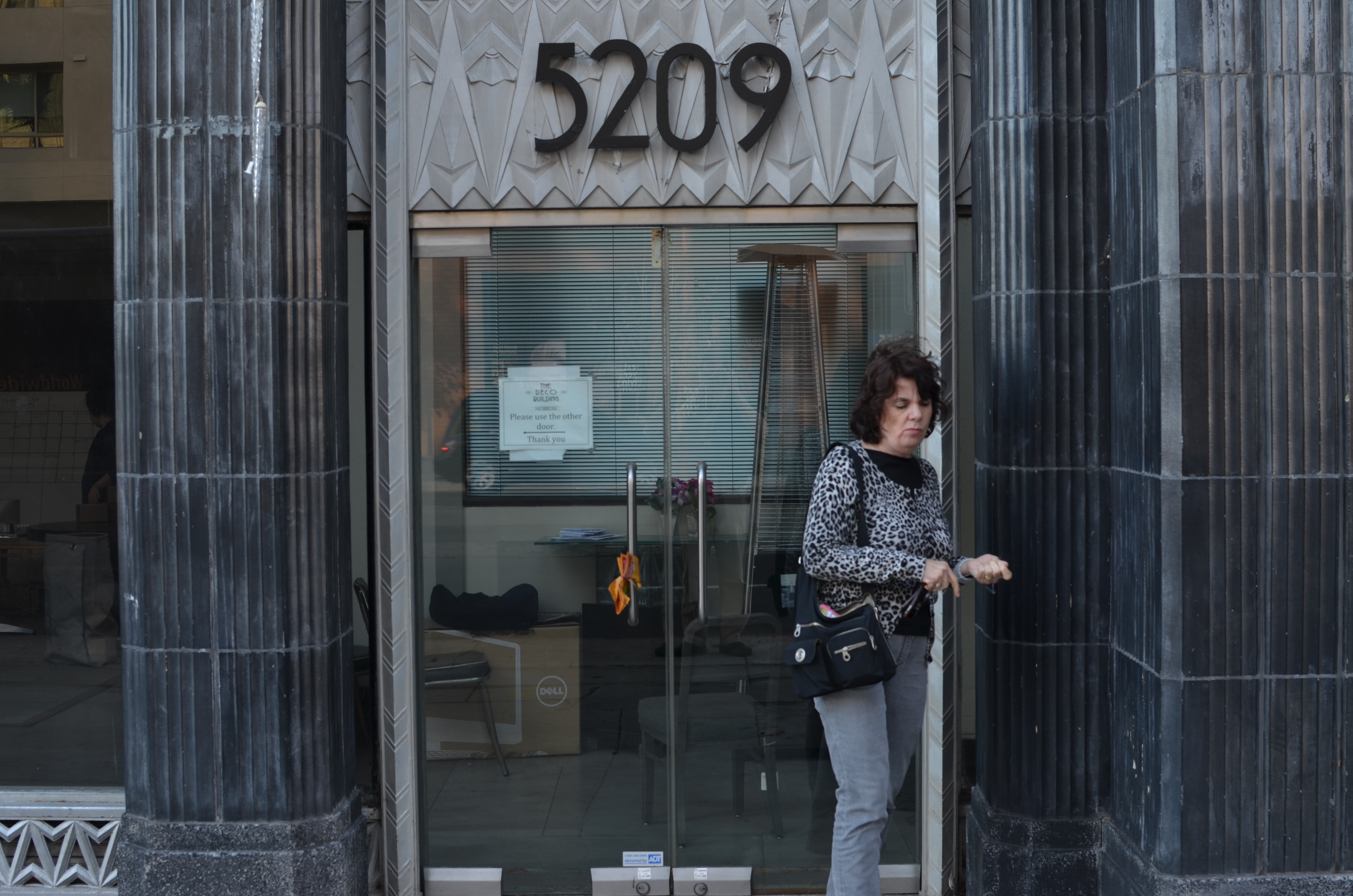
Whoops, I wasn’t ready. 1/100 sec., f/5.6, ISO 100, 35mm.
THOSE OF US WHO HAVE LOGGED SOME TIME IN THE WAITING ROOMS OF PEDIATRICIANS can recall struggling through the “Hidden Pictures” page of Highlights For Children magazine. I would love to tell you that I always found 100% of cartoonist John Gee’s camoflaged squiggles by the time the receptionist invited me into the examining room. But I would be lying.
That said, there are many times when, as photographers, we play the same game with our images, especially the ones in the “doesn’t work” pile. Loving at least the idea behind what we were originally after, we pore over every pixel in the frame, repeating the vain mantra there must be a picture in here somewhere. Often, the photo simply returns to the Hall of Shame despite our best efforts to redeem it. Sometimes, the crop tool is your unexpected best friend.
I recently looked at a failed candid of my wife outside one of my favorite buildings in Los Angeles, the “Deco” Building (real name) at the corner of La Brea and Wilshire near the museum district. A combination of wind and facial expression had spoiled the quickie portrait, but the address panel over Marian’s head contained something I could use if I re-purposed the picture.
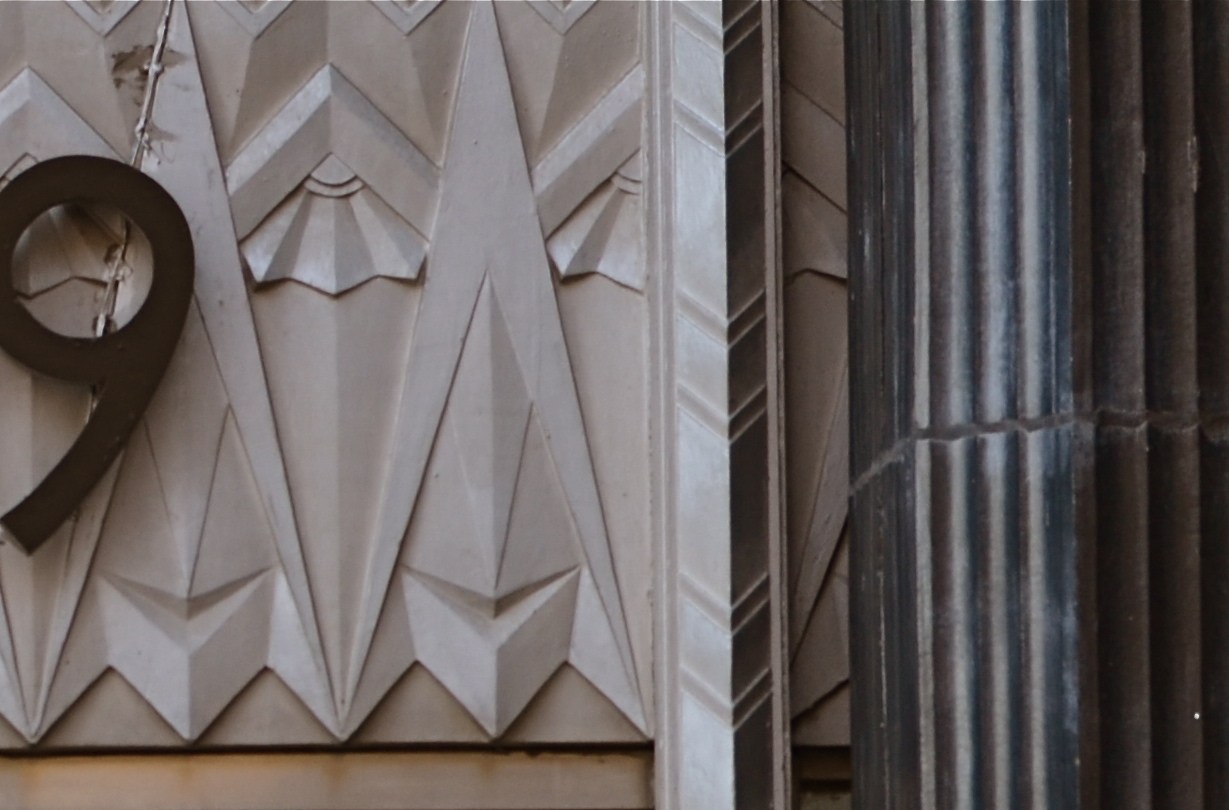
I gave the above shot a severe haircut and wound up with this. Hmm, maybe this was all the picture I needed in the first place.
In the space of a few inches of the building’s entrance was a miniature representation of the best features of the entire building; its wild pattern of chevrons and zigzags. I had already done a master shot of about 90% of the front of the place, but a study of its details started to sound appealing. Cropping away more than 2/3rds of the original shot reduced the sharpness a little, but since I always shoot at the highest file size possible, I just squeaked by.
For a moment, I found that I had redeemed all those failed sessions with Highlights.
Watch out, New York Times crossword. You’re next.
DO SOMETHING MEANINGLESS
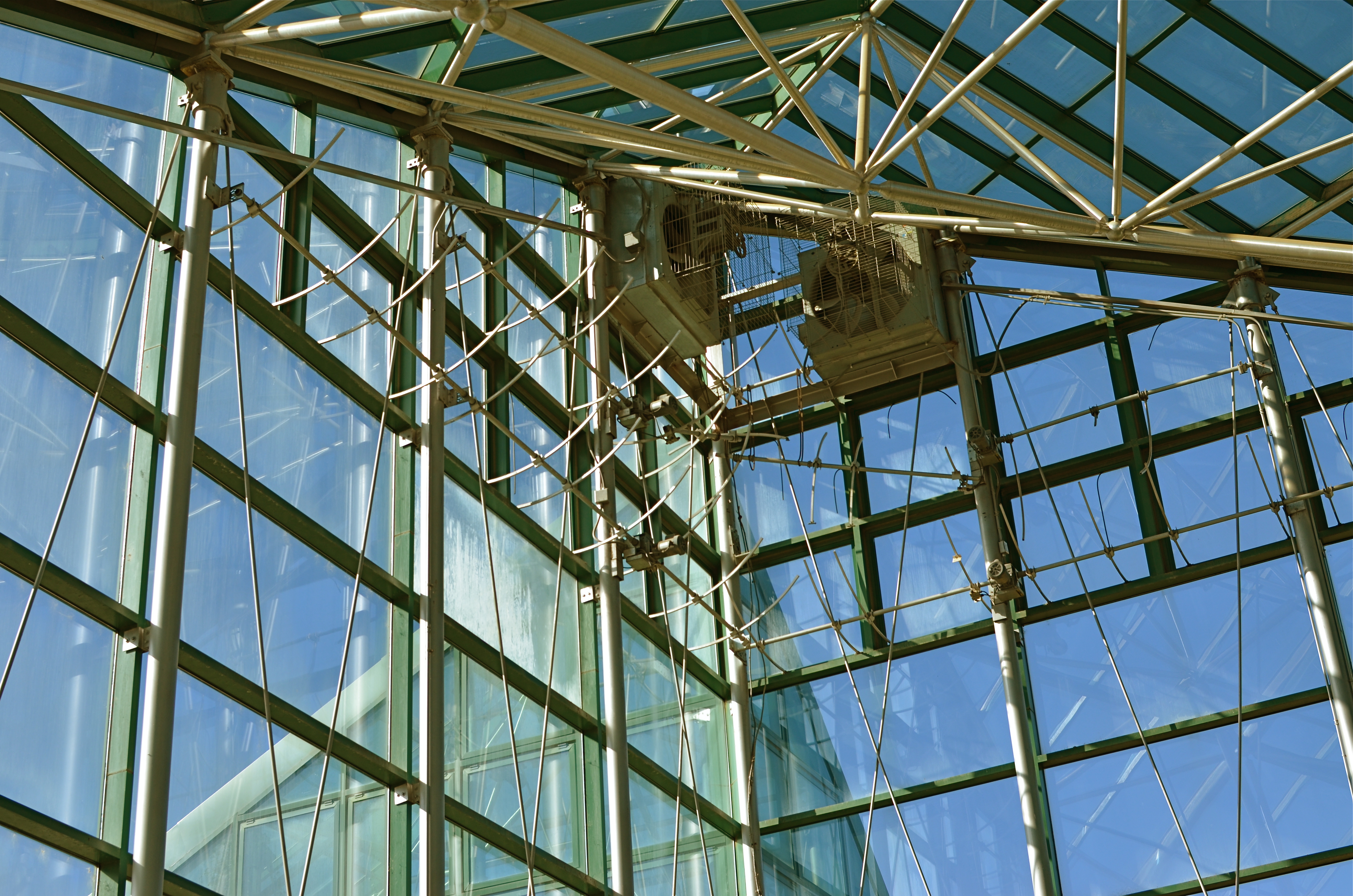
The subject matter doesn’t make the photograph. You do. A pure visual arrangement of nothing in particular can at least teach you composition. 1/400 sec., f/5.6, ISO 100, 35mm.
By MICHAEL PERKINS
SHOOT WHAT YOU KNOW. SHOOT WHAT YOU LOVE. Those sentences seem like the inevitable “Column A” and “Column B” of photography. And it makes a certain kind of sense. I mean, you’ll make a stronger artistic connection to subject matter that’s near and dear, be it loved ones or beloved hobbies, right? What you know and what you love will always make great pictures, right?
Well….okay, sorta. And sorta not.
I hate to use the phrase “familiarity breeds contempt”, but your photography could actually take a step backwards if it is always based in your comfort zone. Your intimate knowledge of the people or things you are shooting could actually retard or paralyze your forward development, your ability to step back and see these very familiar things in unfamiliar ways.
Might it not be a good thing, from time to time, to photograph something that is meaningless to you, to seek out images that don’t have any emotional or historical context for you? To see a thing, a condition, a trick of the light just for itself, devoid of any previous context is to force yourself to regard it cleanly, without preconception or bias.
Looking for things to shoot that are “meaningless” actually might force you to solve technique problems just for the sake of solving, since the results don’t matter to you personally, other than as creative problems to be solved. I call this process “pureformance” and I believe it is the key to breathing new life into one’s tired old eyes. Shooting pure forms guarantees that your vision is unhampered by habit, unchained from the familiarity that will eventually stifle your imagination.
This way of approaching subjects on their own terms is close to what photojournalists do all the time. They have little say in what they will be assigned to show next. Their subjects will often be something outside their prior experience, and could be something they personally find uninteresting, even repellent. But the idea is to find a story in whatever they approach, and they hone that habit to perfection, as all of us can.
Just by doing something meaningless in a meaningful way.
TAKING / BRINGING
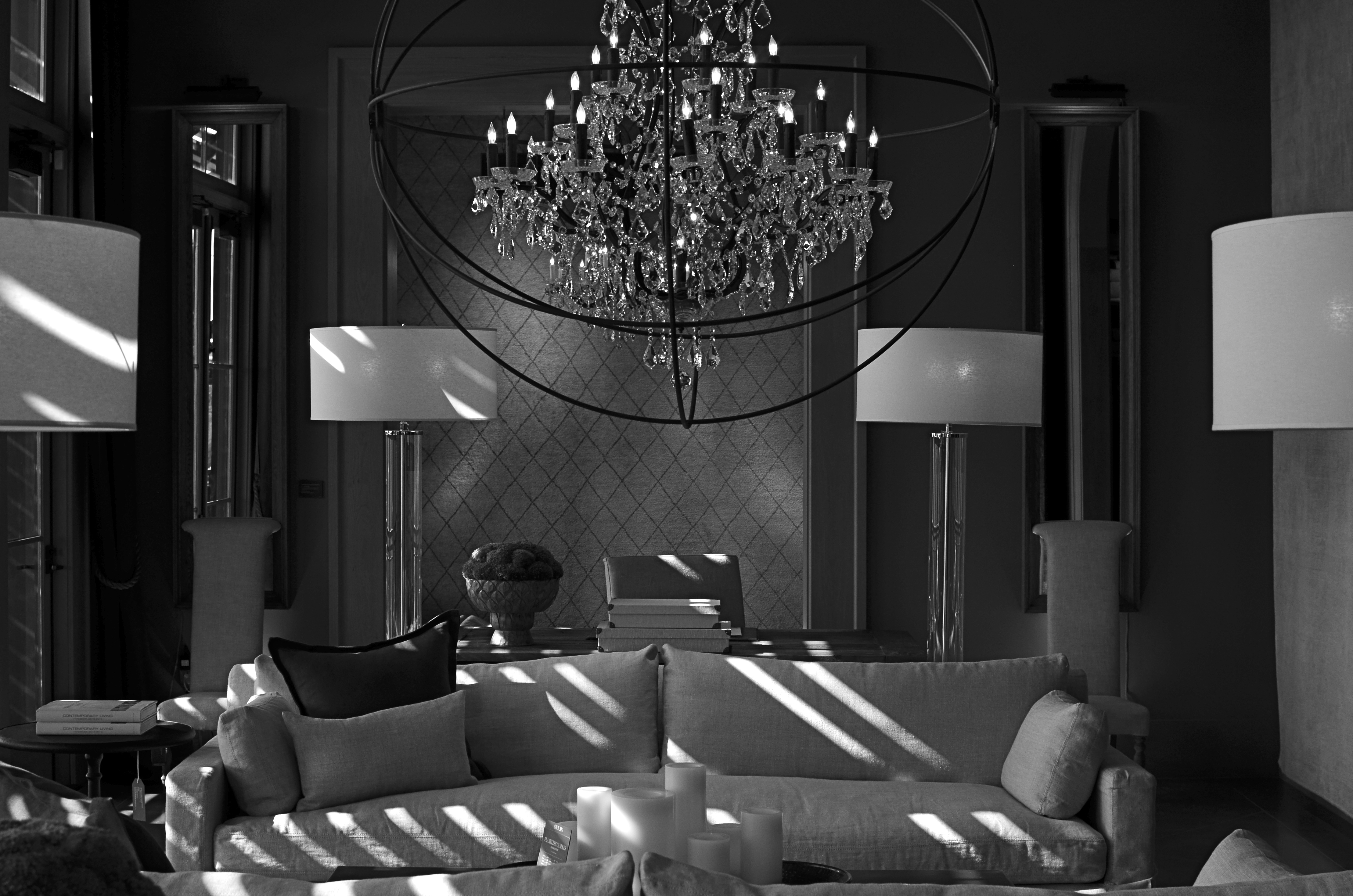
The Room Where Nothing Happens. Or Not. 1/100 sec., f/5.6, ISO 160, 35mm.
By MICHAEL PERKINS
INTELLECTUALLY, I KNOW THAT PHOTOGRAPHS DON’T NECESSARILY HAVE TO BE “ABOUT”, well, anything, but that doesn’t stop the 12-year-old photo newbie deep inside me from trying to produce images with “meaning” (yawn). Some reason to look. A subject. A story line. A deliberate arrangement of things for the purpose of communicating…something. Itchy and twitchy within my artist’s skin as I always am, I am never more out of my element than when I make a picture that is pure composition and form, a picture that has no reason to exist except that I wish it to.
As I get older, I get looser (no G.I. tract jokes about the elderly, please), and thus making what you might call “absolute” images gets easier. I just had to learn to give myself permission to do them. Unlike Atget, Brassai, and half a dozen early pioneering photographers, I don’t have to take pictures to earn my bread, so, if I capture something that no one else “gets” or likes, my children will not starve. Still, the act of making photographs that carry no narrative is far from native to me, and, if I live to be 125, I’ll probably learn to relax and really do something okay by about 93.
The process can be a head-scratcher.
The above image is an “absolute” of sorts, since I have no emotional investment whatever in the subject matter, and have nothing to reveal about it to anyone else. The arbitrary and somewhat sterile symmetry of this room, discovered during a random walk through a furniture store, just struck me, and I still cannot say why. Nor can I explain why it scores more views on Flickr over some of my more emotional work by a margin of roughly 500 to 1. A whole lot of people are seeing something in this frame, but I suspect that they are all experiencing something different. They each are likely taking vastly varied things from it, and maybe they are bringing something to it as well. Who knows what it is? Sense memory, a fondness for form or tone, maybe even a mystery that is vaguely posed and totally unresolved.
“Even though there are recognizable objects making up the arrangement, the result is completely abstract.There isn’t a “human” story to tell here, since this room has never been inhabited by humans, except for wandering browsers. It has no history; nothing wonderful or dreadful ever happened here. In fact, nothing of any kind ever happened here. It has to be form for its own sake; it has no context.
I liked what happened with the very huge amount of soft window light (just out of frame), and I thought it was best to render the room’s already muted tones in monochrome (it wasn’t a big leap). Other than that, it would be stupid to caption or explain anything within it. It is for bringers and takers, bless them, to confer meaning on it, if they can. As I said earlier, it’s always a little scary for me to let go of my overbrain when making a picture.
Then I remember this is supposed to be about feeling as well as thinking.
***Deep breath***
Next.
Follow Michael Perkins on Twitter @MPnormaleye.
Related articles
- First Critique (cohensrphotography.wordpress.com)
THREE STRIKES AND YOU’RE…IN?
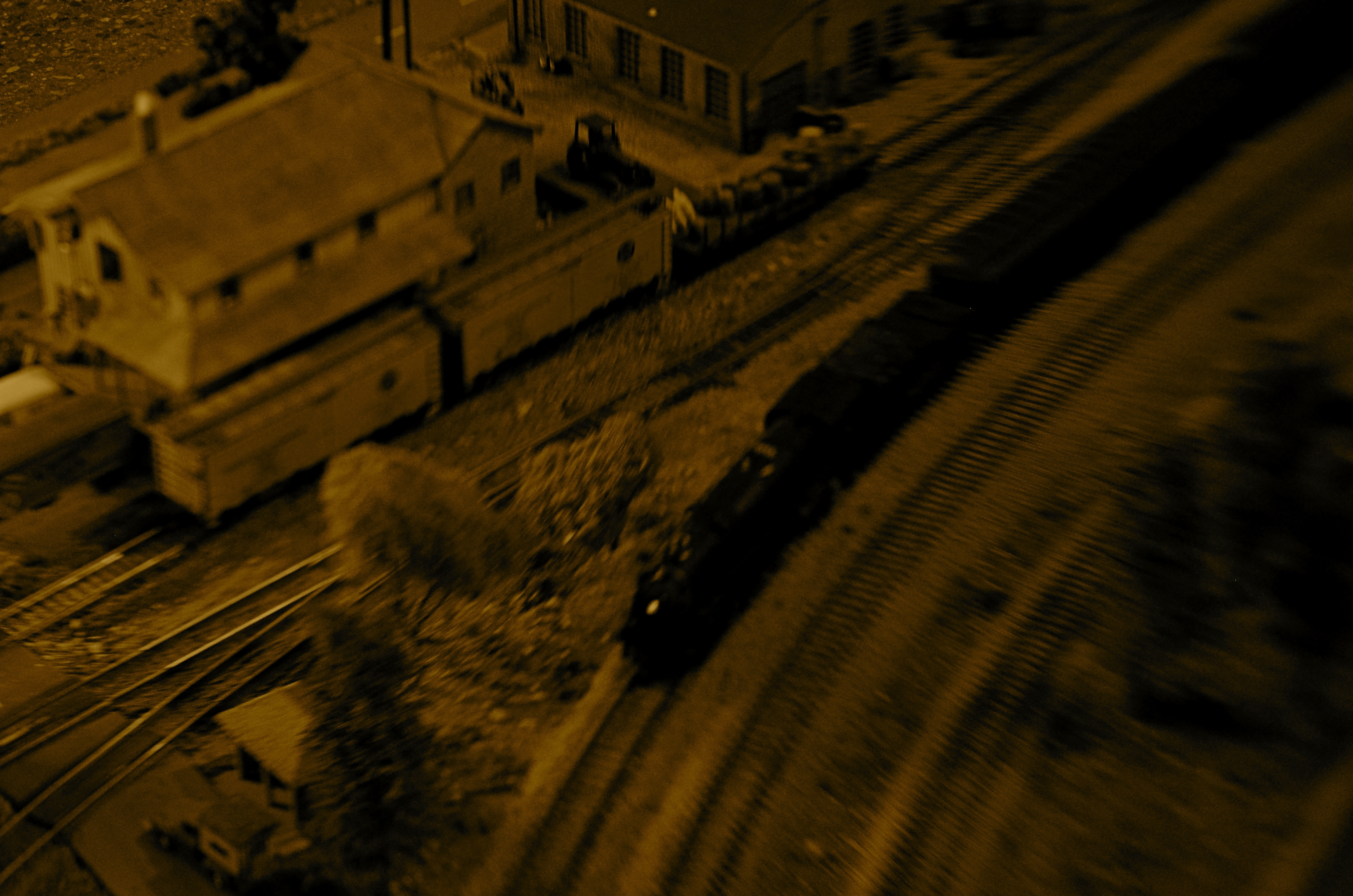
“Wreck Of The Old ’87”. Wreck is right. 1/80 sec., variable depth of field created with a Lensbaby attachment, ISO jacked to 640, 35mm.
By MICHAEL PERKINS
WHEN SORTING MY IMAGES INTO KEEPERS AND CLUNKERS, I ALWAYS SUFFER THE SAME BIAS. Whereas some people might be too eager to find reasons why a picture should be inducted into the former group, I nearly always search for reasons to toss them into the latter one. I always know right away what I’ve failed to achieve in a given frame, and its flaws glow like safety orange in my brain to the point where I not only can’t credit myself for the photo’s stronger elements, I can no longer even see them. I therefore consign many pictures to the rubbish heap, a few of them prematurely.
Usually, however my first call is the right one. I very seldom revisit a picture I initially disliked and find something to redeem it. So it was kind of headline news when I recently “saved” a photo I had originally (and wisely) savaged. Hell, I’m still ambivalent, at best, about it, but I can’t truly classify it as an outright Lost Child anymore.
It came from a random day of practice I had undertaken with a Lensbaby, one of those effects lenses designed to give you the ability to manually throw parts of your image out of sharp focus, in fact to rotate around and create various “sweet spots” of sharpness wherever you want to. I don’t use the thing a lot, since it seems, on some level, damned silly to put defects into your pictures on purpose just to convince yourself you are, ahem, an artiste. But, all work and no play, etc. etc., so I was clicking away inside a dimly lit building at a railway museum in which a huge layout of miniature train dioramas is a regular attraction. I seemed to be going out of my way to create a picture that would normally be “three strikes and you’re out”…..that is:
poorly lit, and loving it
poorly focused, otherwise known as, sure, I meant to do that, and
a half-baked attempt to make something fake appear real.
Only one of the shots sparked my interest at all, purely because it seemed to contain a sort of… mystery. So many dark corners. So many unexplained details. A very disorienting, dreamlike quality that had to have jumped into the camera without any help from me. It looked both hyper-real and utterly false, simultaneously fearsome and fascinating. Again, this all happened in spite of, not because of, any action on my part. I added no post-processing to the shot, except to desaturate it and slather on a layer of sepia. Other than that, I left it in its original sloppy, random state.
And then I decided it was still junk and forgot about it for a few months.
Just why I have, in recent days, tried to rehabilitate my thinking about it is anyone’s guess. Like I sad at the top, I look for reasons to reject my work, not excuse it. This has little to do with modesty. It’s just an admission that control is so much a part of my make-up that I recoil from images where I seem to have absolutely relinquished that control. They scare me a little.
But they thrill me a little too. And, as Vonnegut says, so it goes.
Perhaps the best thing is to maintain the Keepers and Clunkers piles, but add a third, labeled “Not Really Sure”.
Follow Michael Perkins on Twitter @mpnormaleye.
Related articles
- Peering Through a Shaft of Light (johnbee.ca)
SECOND SIGHT, SECOND LIFE
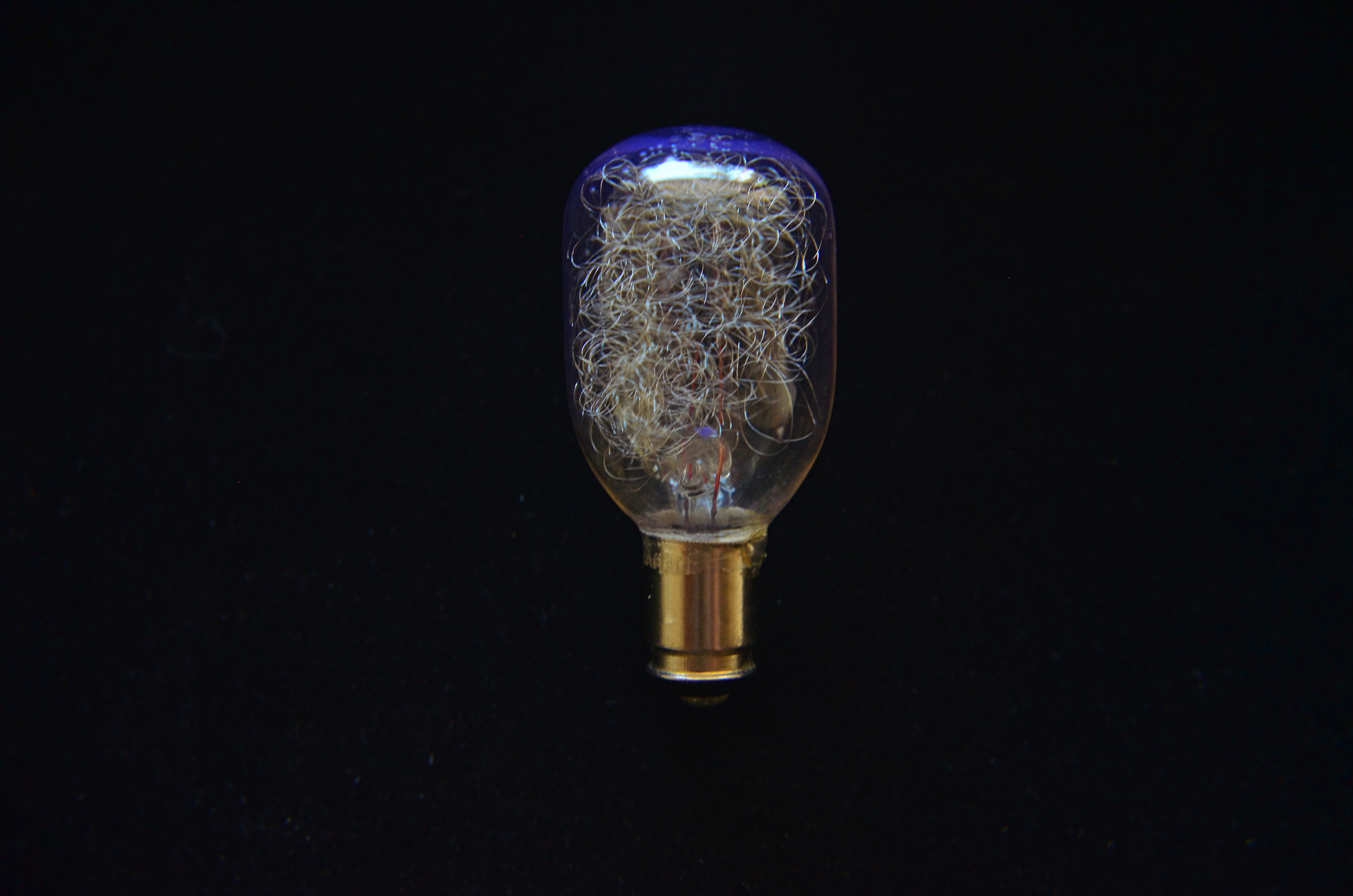
Pragmatically “useless” but visually rich: an obsolete flashbulb glows with window light. 1/80 sec., f/5.6, ISO 640, 35mm.
By MICHAEL PERKINS
A DECADE-AND-A-HALF INTO THE TWENTY-FIRST CENTURY, we are still struggling to visually comprehend the marvels of the twentieth. As consumers, we race from innovation to innovation so amazingly fast that we scarcely apprehend the general use of the things we create, much less the underlying aesthetic of their physical forms. We are awash in the ingenuity of vanishing things, but usually don’t think about them beyond what we expect them to supply to our lives. We “see” what things do rather than seeing their essential design.
As photographers, we need not only engage the world as recorders of “reality” but as deliberate re-visualizers of the familiar. By selecting, magnifying, lighting and composing the ordinary with a fresh eye, we literally re-discover it. Second sight gives second life, especially to objects that have outlasted their original purpose. No longer needed on an everyday basis, they can be enjoyed as pure design.
And that’s exciting for anyone creating an image.
The above shot is ridiculously simple in concept. Who can’t recognize the subject, even though it has fallen out of daily use? But change the context, and it’s a discovery. Its inner snarl of silvery filaments, designed to scatter and diffuse light during a photoflash, can also refract light, break it up into component colors, imparting blue, gold, or red glows to the surrounding bulb structure. Doubling its size through use of “the poor man’s macro”, simple screw-on magnifying diopters ahead of a 35mm lens, allows its delicate inner detail to be seen in a way that its “everyday” use never did. Shooting near a window, backed by a non-reflective texture, allows simple sculpting of the indirect light: move a quarter of an inch this way or that, and you’ve dramatically altered the impact.
The object itself, due to the race of time, is now “useless”, but, for this little tabletop scene, it’s a thing made beautiful, apart from its original purpose. It has become something you can make an image from.
Talk about a “lightbulb moment”….
Follow Michael Perkins on Twitter @mpnormaleye.
Related articles
- “A Sight Into My Photographic Mind” (Perspective) (mrphotosmash.wordpress.com)
HOLDING BACK
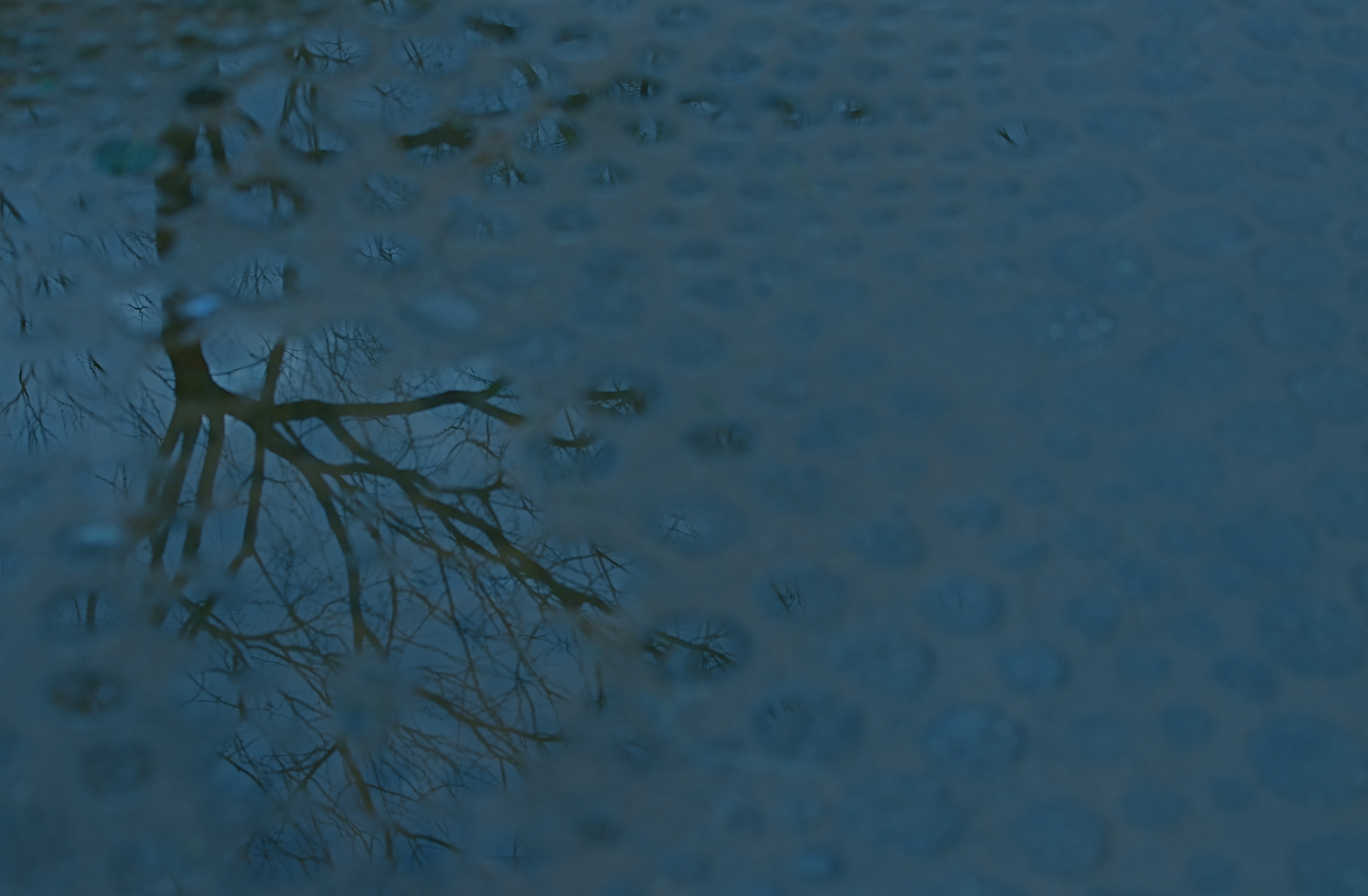
Rainy day dream away: 1/160 sec., f/4.5, ISO 100, 35mm.
By MICHAEL PERKINS
THE MIND WANTS TO PAINT ITS OWN PICTURES, and often responds better to art that veils at least part of its message in mystery. The old vaudeville adage, “always leave them wanting something” is especially applicable in the visual arts, where, often as not, the less you show, the better it connects with the viewing public. It’s precisely because you didn’t show everything that your work may reach deeper into people’s imaginations, which are then invited to “partner” in providing what you merely suggested.
This is why radio created more personal “pictures” than television, why an abstract suggestion of on-screen romance is more erotic than full-on depiction of every physical mechanic of an encounter, and why, occasionally, deciding to hold back, to withhold “full disclosure” can create an image that is more compelling because its audience must help build it.
Given the choice between direct depiction of an object and referential representation of it in a reflection or pool of water, I am tempted to go with the latter, since (as is the stated goal of this blog) it allows me to move from taking a picture to making one. Rendering a picture of a tree is basically a recording function. Framing a small part of it is abstraction, thus an interpretive choice. And, as you see above, showing fragments of the tree in a mosaic of scattered puddles gives the viewer a chance to supply the remainder of the image, or accept the pattern completely on its own merits. Everyone can wade in at a level they find comfortable.
I don’t always get what I’m going for with these kind of images, but I find that making the attempt is one of the only ways I can flex my muscles, and ask more of the viewer.
It’s the kind of partnership that makes everything worthwhile.
(follow Michael Perkins on Twitter @mpnormaleye)
Check out the excellent minds of our newest followers:
http://www.en.gravatar.com/insideoutbacktofront
CAUGHT IN THE CROSSFIRE
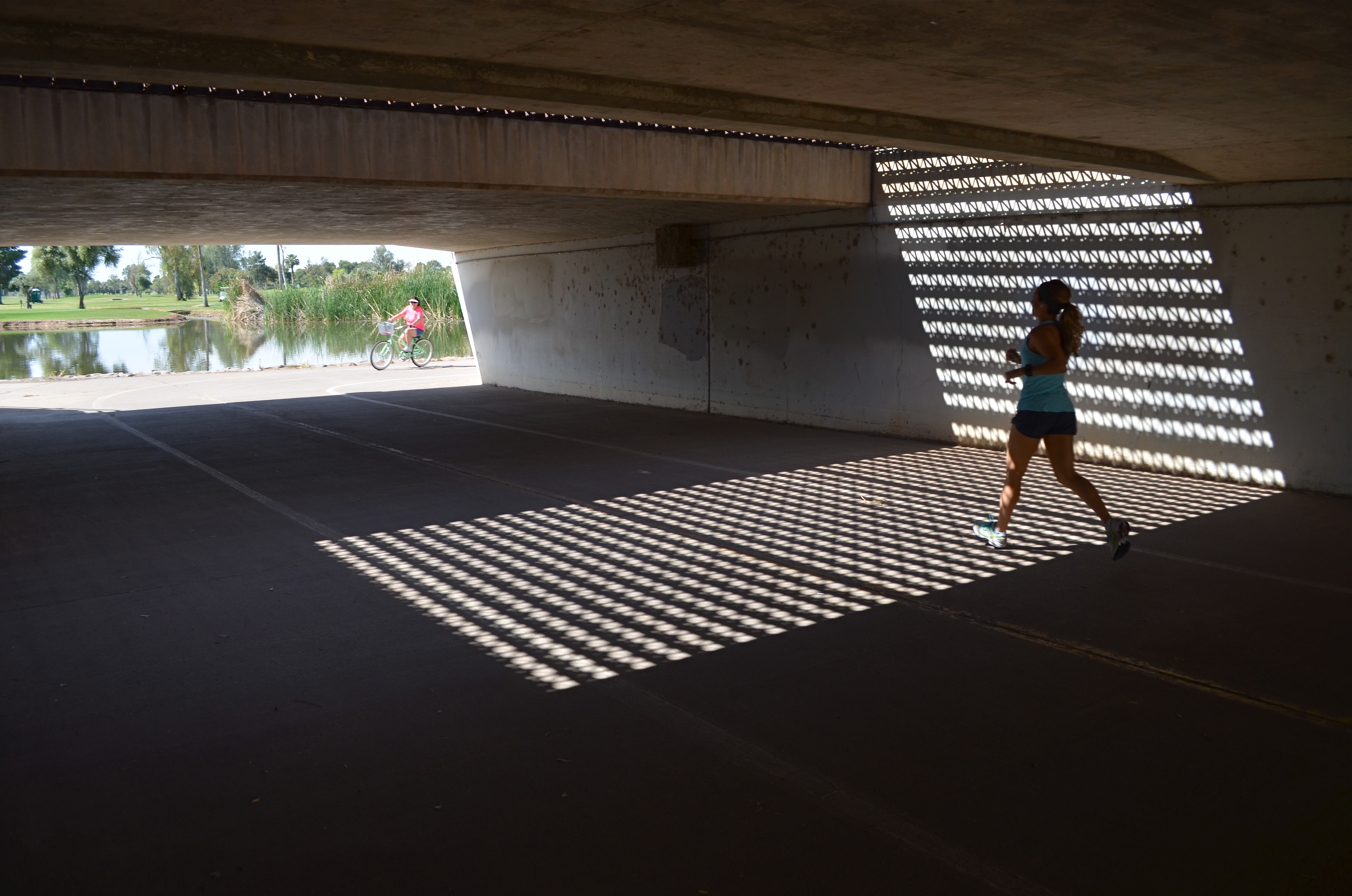
The jogger that saved my shot, albeit unwittingly. 1/250 sec., f/5.6, ISO 100, 18mm.
By MICHAEL PERKINS
THERE HAS BEEN A LOT OF MENTION, OF LATE, OF THE PHENOMENON KNOWN AS “PHOTOBOMBING“, the accidental or intentioned spoiling of our perfect Kodak moments by persons inserted into the frame at a crucial instant. Whether they block the bride’s face, eclipse Grandma’s beloved puppy, or merely pop up annoyingly behind the cute couple, they, and the images they ruin, are one of the hottest posting sources along the photo-internet galaxy right about now.
But fate photobombs us every day, and often drops a gift out of the sky, and into our pictures. The two-fold trick is to (a) be ready to improvise and (b) be grateful for the chance for something altogether different from what we originally conceived.
Happened to me several weeks ago. Total accident, since the thing I shot in the moment was not what I had started out for at all. Real simple situation:an underground walkway from one low-lying section of a city park to another, the sidewalk taking a short cut under a bridge. Overhead, six lanes of unheeding street-level traffic. Below, a concrete tunnel of sorts, with sunlight from the park illuminating either open end.
Oh, and the grate. Should mention that a section of the street overhead was, instead of solid roadbed, an open-pattern, structural steel grid, with dappled geometrics of light throwing a three-sided pattern of latticed shadows onto the side walls and floor of the tunnel below. Nice geometry. Now, I wasn’t looking to shoot anything down here at all. Like the chicken, I just wanted to get to the other side. But I had my wide-angle on, and a free light pattern is a free light pattern. One frame. A second, and then the bomb: a jogger, much more acquainted with this under-the-road shortcut than me, crossing from over my right shoulder and into my shot. Almost instinctively, I got her in frame, and relatively sharp as well.
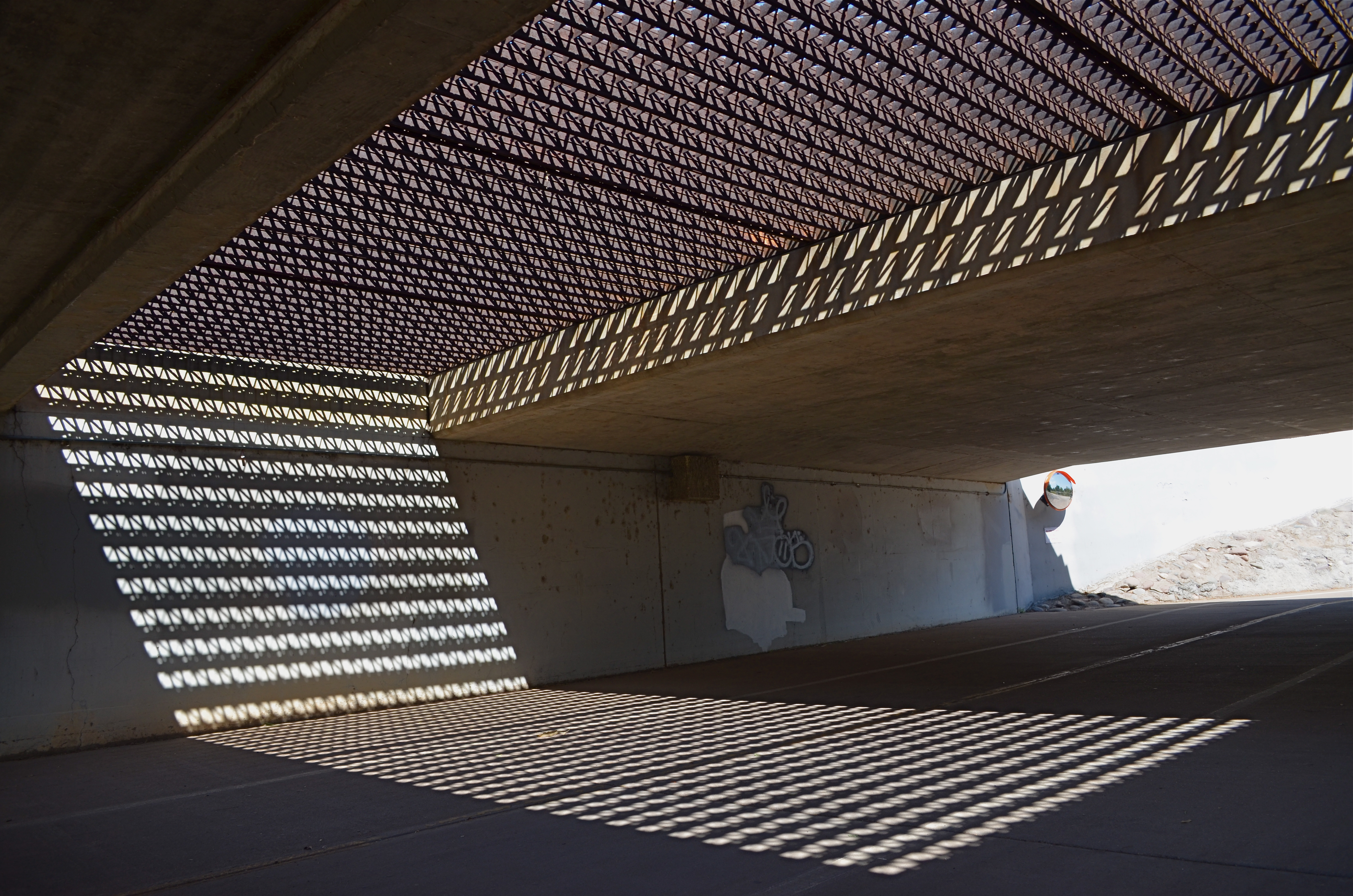
Same settings as in the “jogger” frame, but a little colder minus the human element. A matter of taste.
Not content to have caught the big fish of the day, I took the opposite angle and tried again to recoup my “ideal shot”, minus the human element. But something had changed. Even so, I still needed a gentle nudge from Fate to accept that I had already done as well as I was going to do.
My battery died.
I limped home, then, during my upload, found that what I had been willing to reject had become essential. I wish it was the first time I’ve had to be taught this lesson.
But I’d be lying.
Photobombed by circumstance.
And grateful for it.
follow Michael Perkins on Twitter @MPnormaleye.
MUTATION
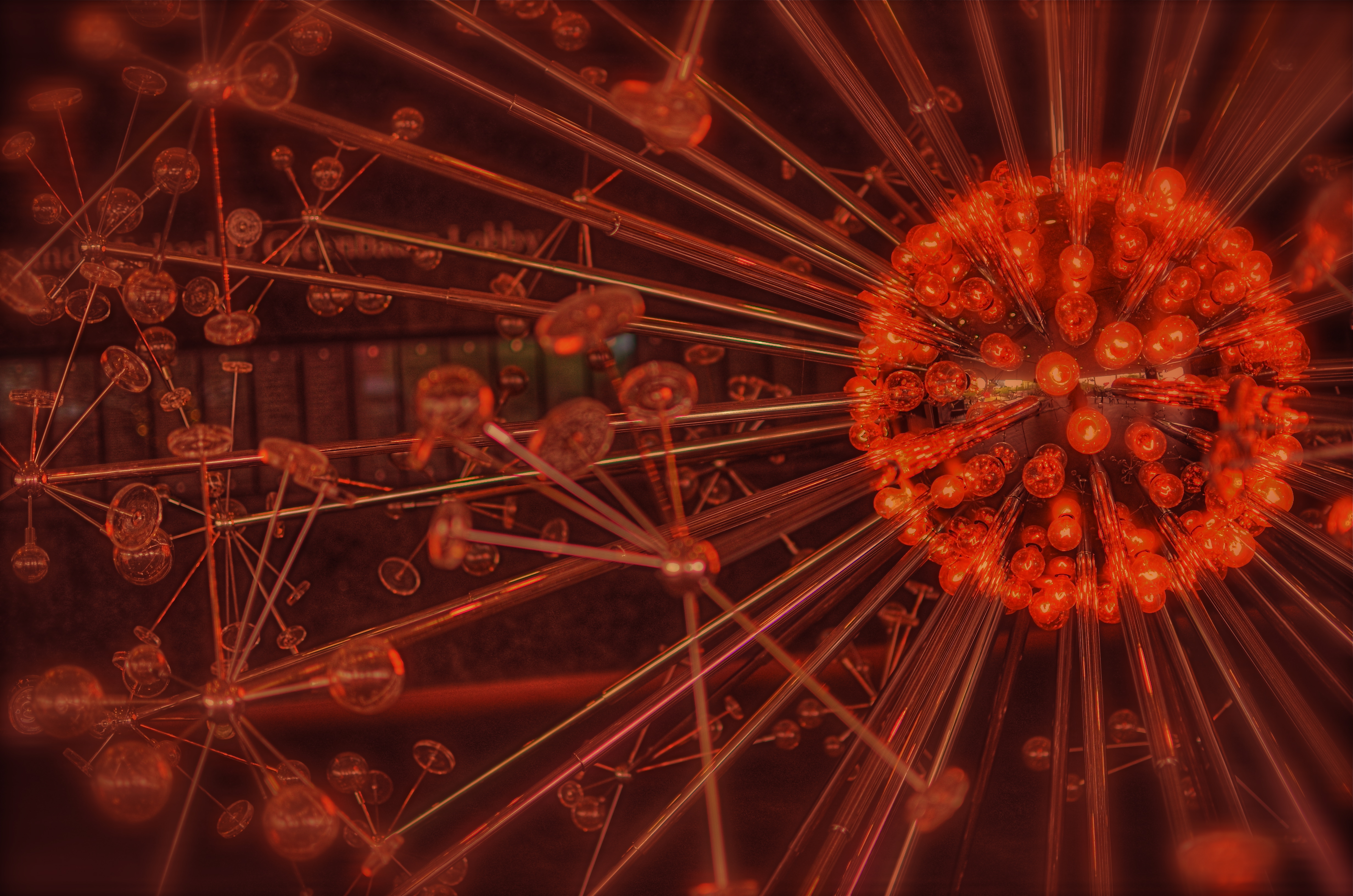
Okay, this has a LOT of processing. Love me or hate me based on whether it worked. 1/500 sec., f/1.8, ISO 100, 35mm.
BY MICHAEL PERKINS
NOT CONTENT TO BE AN ART ON ITS OWN TERMS, PHOTOGRAPHY IS ALSO CONSTANTLY RE-INTERPRETING ALL THE OTHER ARTS AS WELL. Ever since imaging fell out of the cradle in the early 1800’s, several of us have always been looking at the works of others and saying, “eh, I can probably do something with that.”
Yeah, not too presumptuous, right? And the trend has continued (some say worsened) to the present day. Half the time we are creating something. The other half of the time we are tweaking, mocking, honoring, loving, hating, shredding, re-combining, or ragging on somebody else’s work. Are these mashups also art? Are we co-creators or just cheesy thieves?
And does it matter?
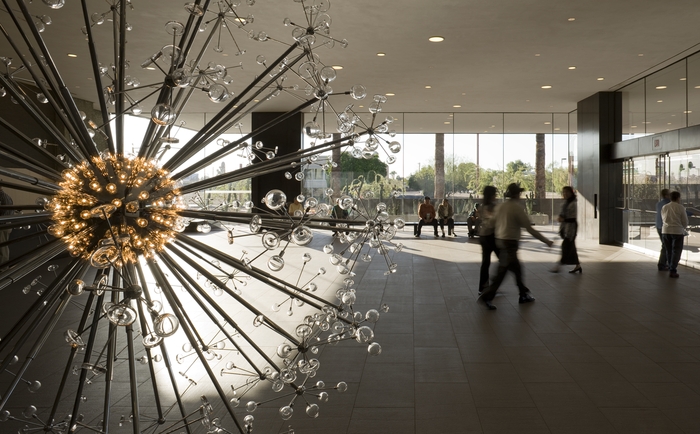
The Last Scattering Surface as it appears in the lobby of the Phoenix Art Museum.
The Phoenix Art Museum greets customers with a stunning original sculpture in glass and plexi right at the entrance to its ticket lobby. A huge installation of light bulbs, mirrored surfaces and reflective discs, Josiah McIlheny’s The Last Scattering Surface resembles a brightly burning orb (planet? asteroid? dwarf star?) surrounded by jutting rods that carry the central sphere’s light along “rays” to a series of circular satellites (moons? craft? debris?) Like many examples of pure design it is both everything and nothing, that is, it is mutative based on your observation. So, in a way, as in the manner of a photographer, you are already a participant in the co-creation of this object just by looking at it. Does this mean that it’s less theif-ish to go ahead and mutate the man’s work?
Well, there’s probably a lively back-and-forth on that.
For my own “take”, I wanted to remove the background walls, visitors, ambient blurry light from other junk, to isolate this nova-like work in “space”. I only had one frame that I liked from my short blast of shots, so I duped it, slammed the contrast real light/real dark on the pair, and did an exposure fusion in Photomatix. Adding a little edge blur and a re-tinting to the composite gave me the look of an interstellar explosion.
I freely advertise that I am making a semi-original re-mix on a completely original work. It’s not much more radical than shooting with a filter on the lens, or choosing black and white for a color subject, and yet, it always feels funny to try and make something beautiful that was beautiful in the first place.
But art is supposed to be about starting conversation, so consider this mine.
I just did my talking with a box instead of a mouth.
follow Michael Perkins on Twitter @ mpnormaleye.com
 thenormaleye