WORKING THE BLINDS
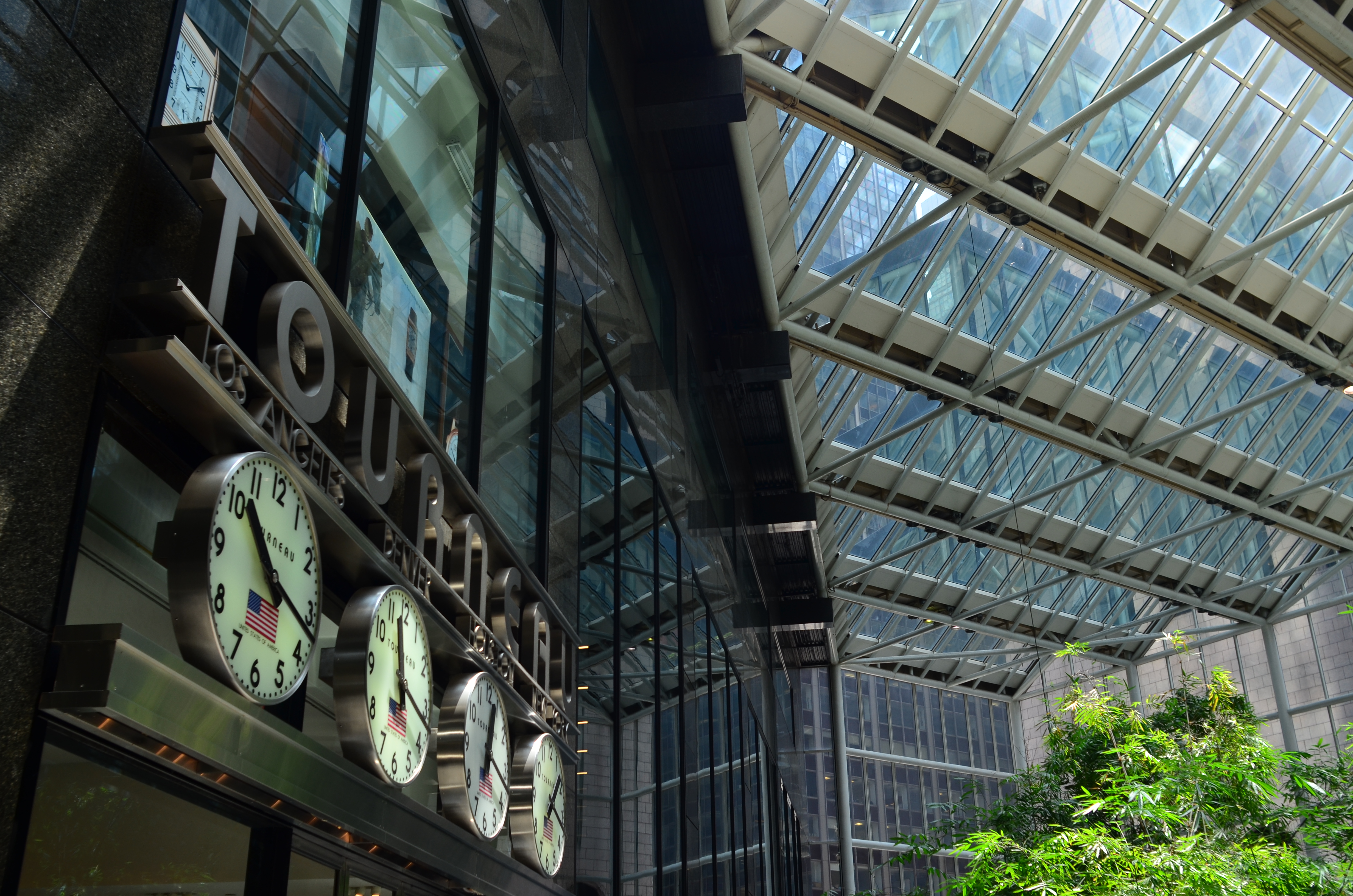
I love this building, but the real star of this image is light; where it hides, bounces, conceals, and reveals.
By MICHAEL PERKINS
ONE OF THE MOST CHALLENGING ASPECTS OF URBAN PHOTOGRAPHY, versus shooting in rural settings, is the constant variability of light. On its way to the streets of a dense city, light is refracted, reflected, broken, interrupted, bounced and just plain blocked in ways that sunshine on a meadow can never be. As a result, shooting in cities deals with direct light only intermittently: it’s always light plus, light in spite of, light over here, but not over there. And it’s a challenge for all but the most patient photographers. Almost every frame must be planned somewhat differently from its neighbors, for there can be no “standard” exposure strategy.
I often think of city streets as big window sills sitting below a massive set of venetian blinds, with every slat tilted a little differently. And I personally greet this condition as an opportunity rather than a deficit, since the unique patterns of abstraction mean that even mundane scenes can be draped in drama at any given moment. That’s why, as I age, I’ve come to highly value selective lighting, for mood, since I’m convinced that perfectly even lighting on an object can severely limit that selfsame drama.
I’m also reminded of the old Dutch masters painters, who realized that a partially dark face contains a kind of mystery. Conversely, a street scene that contains no dropouts of detail or light makes everything register just about the same with the eye, and can keep your images from having a prominent point of interest. Darkness, by contrast, asks your imagination to supply what’s missing. Even light is a kind of full disclosure, and it can rob your pictures of their main argument, or the “look over here” cue that’s needed to make a photograph really connect.
Back to street photography. Given that glass and metal surfaces, the main ingredients in urban structures, can run a little to silver and blue, I may actually take an unevenly lit scene and either modify it toward those colors with a filter, or simply under-expose by a half-stop to see how much extra mood I can wring out of the situation, as in the above image of an atrium in midtown Manhattan. Think of it as “working” those big venetian blinds. Cities both reveal and conceal, and your images, based on your approach, can serve both those ends.
THE LOOK OF SILENCE
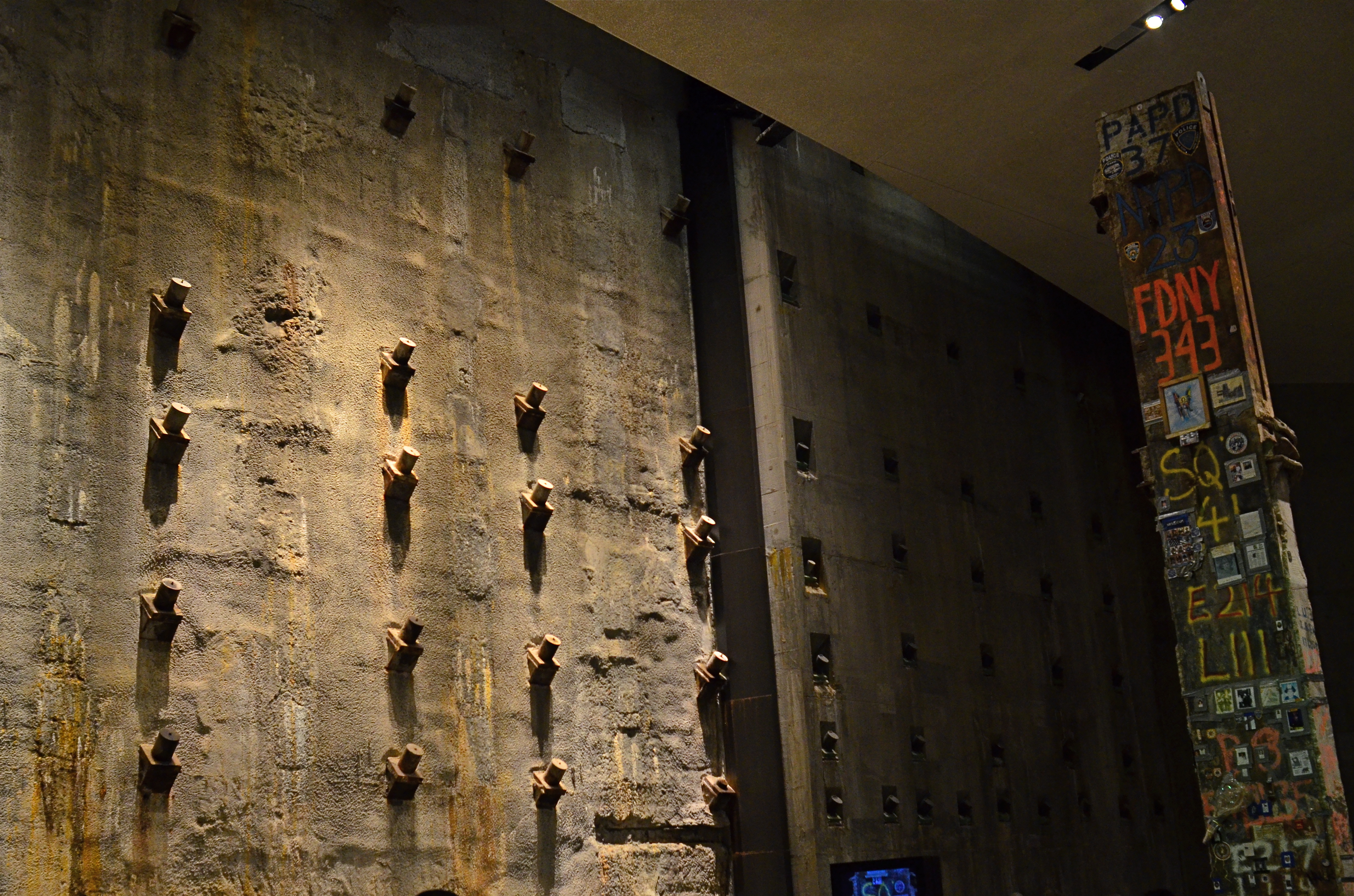
Slurry Wall And Hero’s Girder, 2015. The 9/11 Memorial Museum in New York is a cathedral of grim silence.
By MICHAEL PERKINS
AS THE MOST PHOTO-DOCUMENTED EVENT IN HUMAN HISTORY, the attacks of September 11, 2001 have spawned images that can never be unseen. Images that tear at you, slam you in the back of the head, wring tears and rage from you, stun you mute.
As the keeper and curator of many of the most powerful of these images, the 9/11 Memorial Museum in lower Manhattan has achieved a tough but fair balance of emotion and academia. Given the staggering number of people whose personal stake in this space covers every human motive and perspective, the making of this part-exhibit-part-shrine may have been one of the most thankless jobs imaginable.
And yet the job has been done, with eloquence and a spare, stark restraint that is poetic. Visiting the museum is no easy task. As Shakespeare said, if you have tears to shed, prepare to shed them now. But visit you should, and, yes, there is something that a camera can capture there without being crass or irreverent. The designers have seen to it.
 Firstly, they have guaranteed that the main central exhibits of debris, personal documents, voice messages and news video are completely off-limits to any kind of photography. Walk in there, and you’ll know why. Those who accidentally caught this epic horror in the moment of its occurrence will never be equaled or surpassed by anyone taking a casual snap on a smartphone anyway, and trying to do so would be like setting off sparklers at a requiem mass.
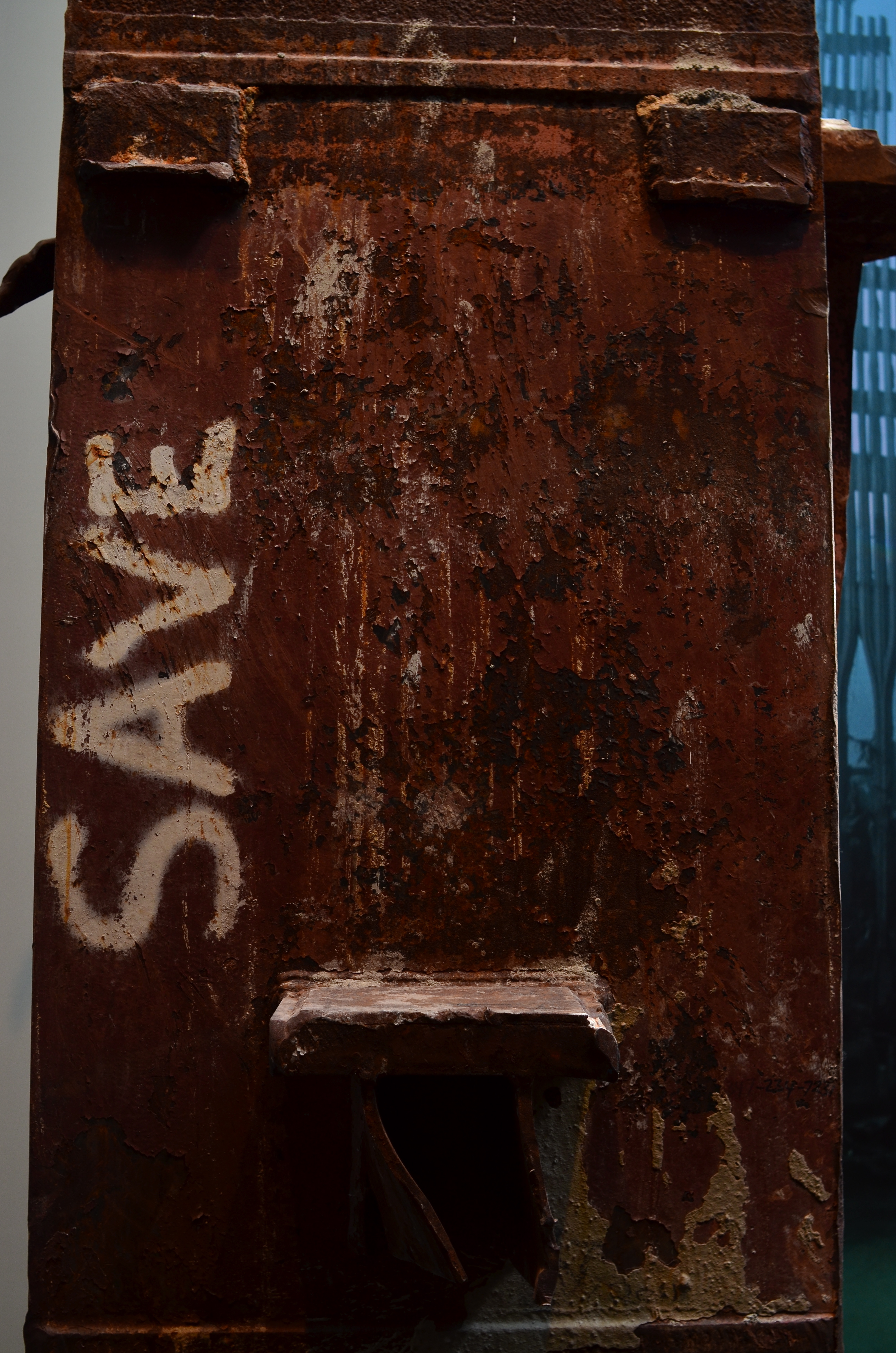
No, the real photographic opportunities are in the dark, cavernous spaces under the surface of the street, dim caves that make you feel as if you yourself, are, for a moment, trapped, running out of light and time. The enormous foundation known as the slurry wall, which, in surviving the titanic forces of the towers’ collapse, kept the Hudson River from flooding all of lower Manhattan. The rusted girder that, like a day-glo-autographed tombstone, bears the signature of every working company of first responders that slaved away at Ground Zero, first as rescuers, next as salvagers, always as heroes.
It is here, in the quiet arrangement of these incredibly scaled spaces, that the 9/11 Memorial Museum becomes more spiritual than any hour you will ever pass in church. It is in these dark, harrowing parts of the hall that you fully sense what a slender thread we all hang from, and understand that light and darkness struggle for the same real estate, now as then.
I’LL JUST HAVE A LIGHT SANDWICH
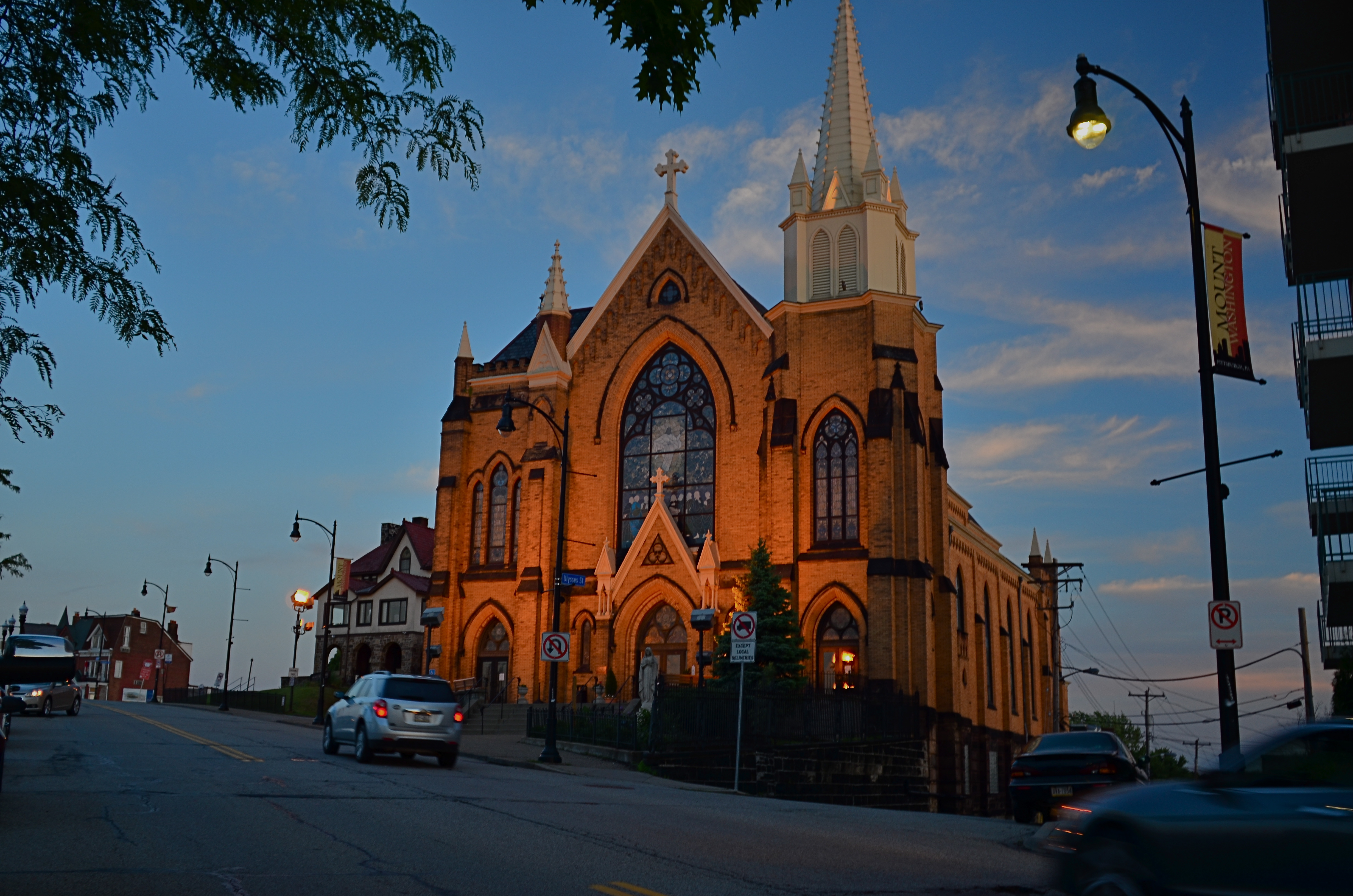
Learning to dissect your “happy accidents” might allow you to start doing better stuff on purpose.
By MICHAEL PERKINS
SOMETIMES FACING OUR OWN PHOTOGRAPHIC WORK is less like dredging up memory and more like staring into the face of a complete stranger. Even seconds after the shutter snaps, a real distance widens between what we did in the moment and what we hold in our hands. Who did this? What were we thinking? Why did this work (or, in many cases, not work)?
Shooting quickly on the street worsens this feeling of alienation. We might not have even been so mindful of all the factors at work in a picture while it was being made, which makes learning from both the duds and the keepers that much more difficult. Learning to completely deconstruct a shot is, therefore, one of the most valuable skills for any photographer. It’s not always an easy thing.
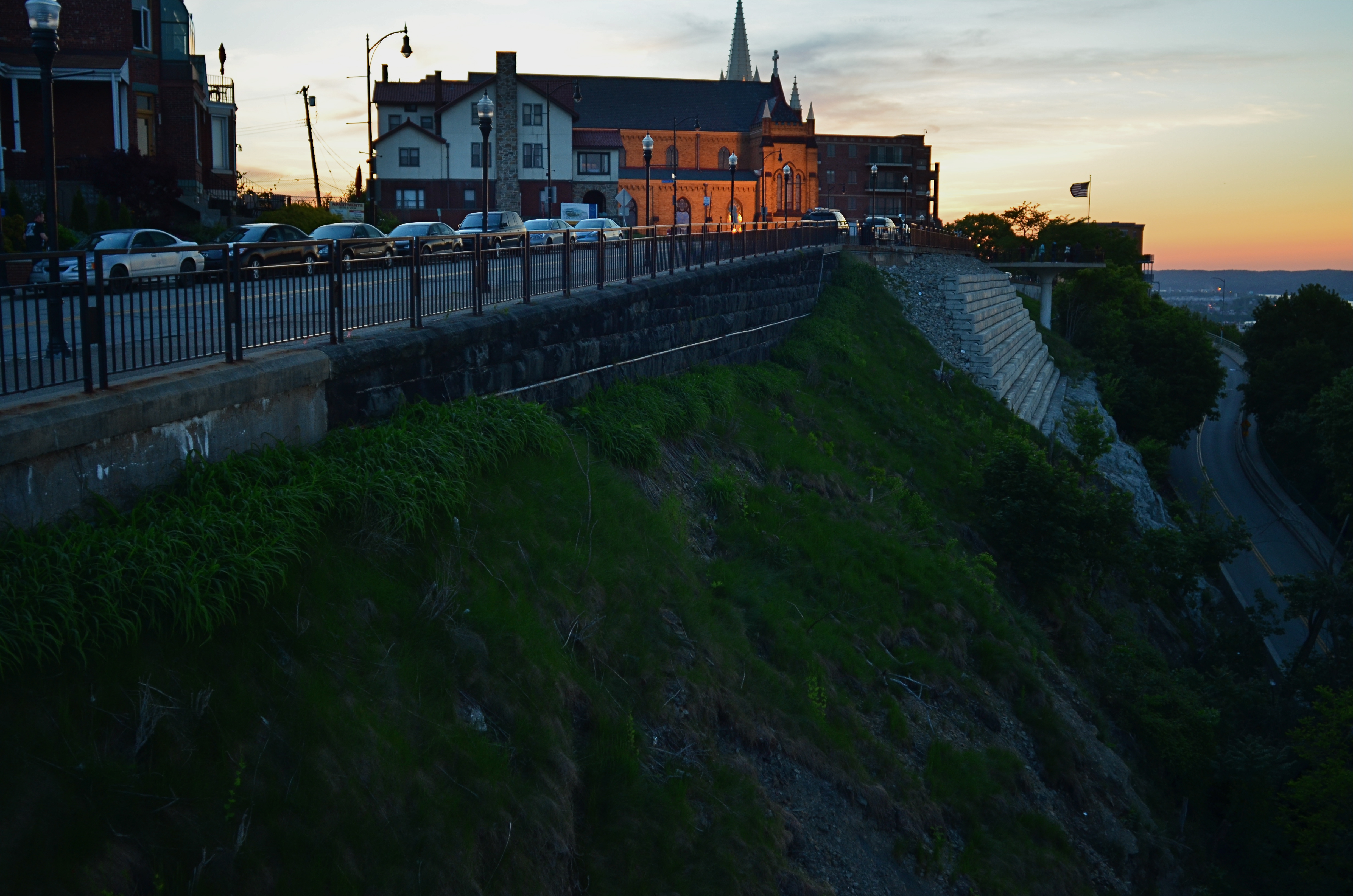
In the above shot, there are a number of contributing factors at work, not all of them in play for any other single shot taken on the afternoon I made it. For starters, I was lucky enough to be about 200 feet above average terrain, so the golden light of early dusk is hitting the face of the church pretty hard, as well as adding to the deepening blue of the sky. Secondly, I am shooting with my camera set on “vivid”, building even more saturation into the shot. At the same time, I am shooting through a polarizing filter, which, while not working fully at this late hour of the day, is also deepening the sky. Finally, the church, which is already glowing from the sunset light, is also being floodlit with sodium lamps, amping up the orange tones and contrasting even harder against the sky.
The effect is a kind of “light sandwich” four layers deep, a combo that only works for this particular shot. One or two shots later in the same sequence, these same conditions rendered the colors over-rich and pretty unreal in appearance. Sadly, I can’t even take credit for having deliberately planned the shot in this way, since, if I had, I probably would have chosen a slightly faster shutter speed and avoided the softness in the passing cars. Still, as I dissect it after the fact, it’s good practice to be able to do a post-Sherlock to see exactly what happened, in case I ever do want to manipulate a photo in this general way.
Ot I could just say, “cool” and move on.
And, sure, I’ve done that too.
THE OPPOSITE OF OBVIOUS
Mount Washington, the urban district that sits on a bluff overlooking downtown Pittsburgh, Pennsylvania. 1/60 sec., f/1.8. ISO 250, 24mm.
By MICHAEL PERKINS
IT GOES BY MANY NAMES: THE MONEY SHOT, THE GOLDEN ANGLE, THE POSTCARD VIEW. Travel enough and you will snap one. The all-roads-lead-to-this-picture, must-shoot frame that defines a town or city. Rattle off the names from Eiffel to Empire State. Drawn like moths to flame, we make the same treks that millions before us have made to capture the classic destination, the local Mecca. Do we truly believe that we, the 400,000,000th visitor to the special site, will capture something that someone else missed? Well, yes, we do. For all the other tourists, it’s just a Kodak moment, but once we focus our lens, boy, it’ll be a moment for the ages. Or not.
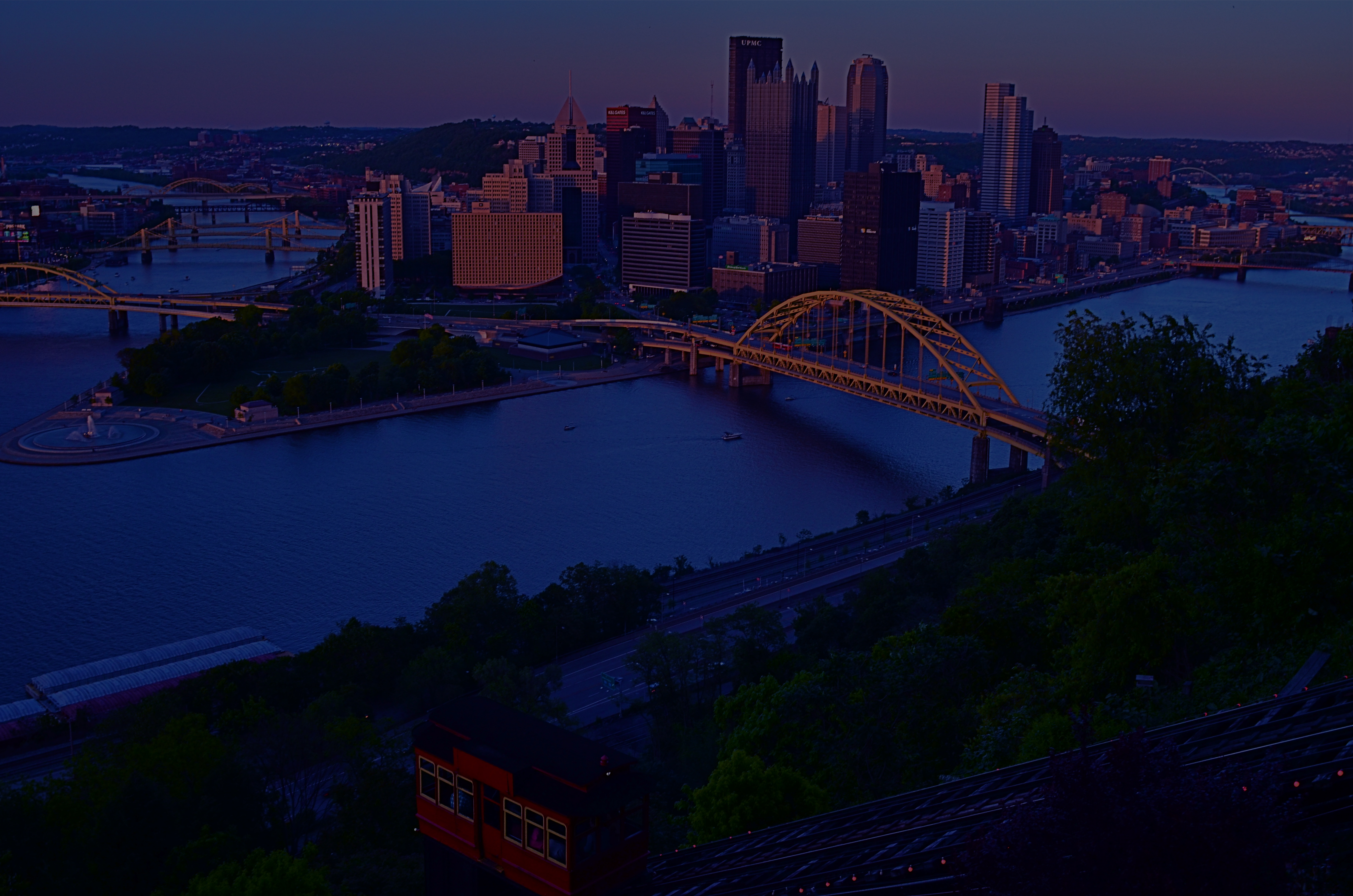
The standard souvenir view of downtown Pittsburgh from the top of Mt. Washington.
But I also believe in the value of the dead opposite of the obvious shot, the image taken 180 degrees away from the holy object we all think we must shoot. The hiding-over-my-shoulder treasure that no one came to take, but which might just qualify as a treasure hidden in plain sight. What’s across the alley from the Alamo? What’s a half a block to the left of Notre Dame? Or, in the case of Pittsburgh, Pennsylvania, what happens when you deliberately turn away from the most desired view in the city?
The iconic downward vista of the Steel City, at precisely the point where the Allegheny and Monongahela Rivers blend at the town’s terminus to form the Ohio, is chiefly shot from atop Mount Washington, a district reached via the romantic, cable-driven incline service that has trucked commuters up the Mount and down for over a century. Add the souvie shop and the walk-out view platforms at the top, and it’s one of the most obvious cases of here, take this picture in all of American tourism.
But the Mount, an old urban neighborhood unto itself, is like a flatland city dropped on top of a lumpy cliff, its streets rising and falling like a stone roller coaster. The sheer suddenness of its drop-offs and the skyward pitches of its roofs lends a zany angularity, its tiered vistas contrasted by the glass and steel of contemporary Pittsburgh just below. Think Rio with Czechs and Germans.
There’s something of a religious pilgrimage quality to taking your shot at a popular attraction, but it takes mere minutes to scout around beyond the crowds to what lies immediately beyond. The opposite of obvious is often a synonym for discovery.
LAST ONES OUT
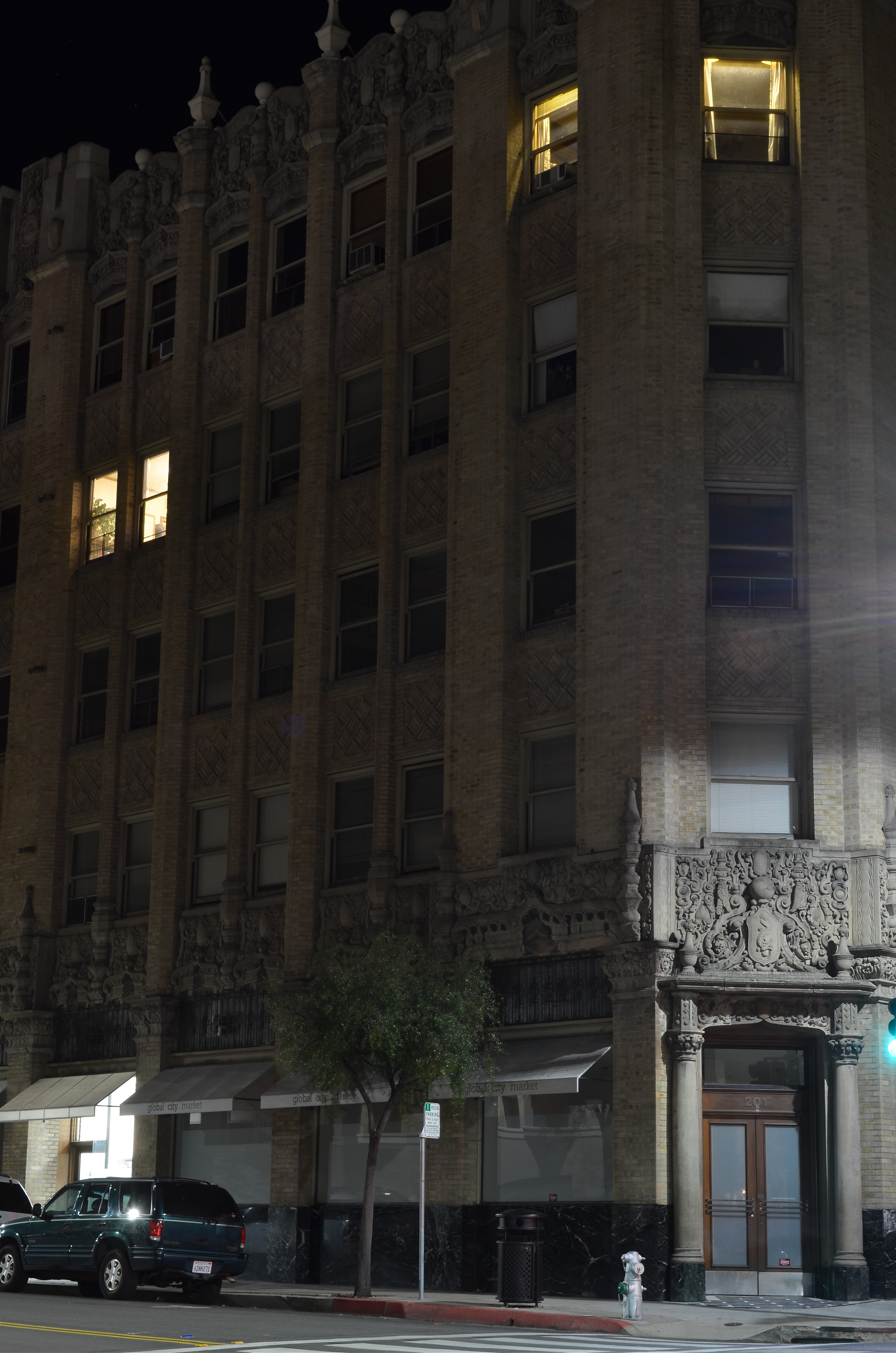
“Yes, I’d like a medium pepperoni sent over to..”
By MICHAEL PERKINS
CITIES NEVER COMPLETELY CLOSE. We prefer to think of the urban workday as a uniform morning-to-afternoon stretch, but in truth, our concrete forests always harbor legions of people at the margins of those arbitrary time boundaries. Someone has to take out the trash, hunker over the overdue report, or merely cringe at the thought of going home to whomever. I never took a nighttime photo of a city building that was completely dark unless it was in the aftermath of a sudden power cut. There are always the little twinkles of activity, the randomly lit windows, here and there, that remain.
And each window is a story.
Mind you, the story may not ever be revealed in full. We seldom know who’s burning the midnight oil, just as we can’t but guess about their motives, dreams, or dreads. But the light created by their presence is enough to shape images with a little mystery, and that is at the soul of urban photography. In the daytime, everything is evenly lit, and the “after hours” people are rendered invisible. After dark, however, their special qualities shine forth, shaping the mood and character of the most mundane building. Or image.
Some lights are on because other lights are on. If Man “A” is staying at his desk way past dinner, then the lights at Diner “B” must remain on as well, ’cause Daddy needs him a sandwich, and yes, just one more cup of coffee. We don’t see those connections, but we know they, and many others, are there, keeping the lights on, keeping the human drama going. A second look at the city after hours allows us to document part of that drama, and, as is usual in photography, that glimpse may be all we need to whip up a little whimsy.
EMPTY TABLES
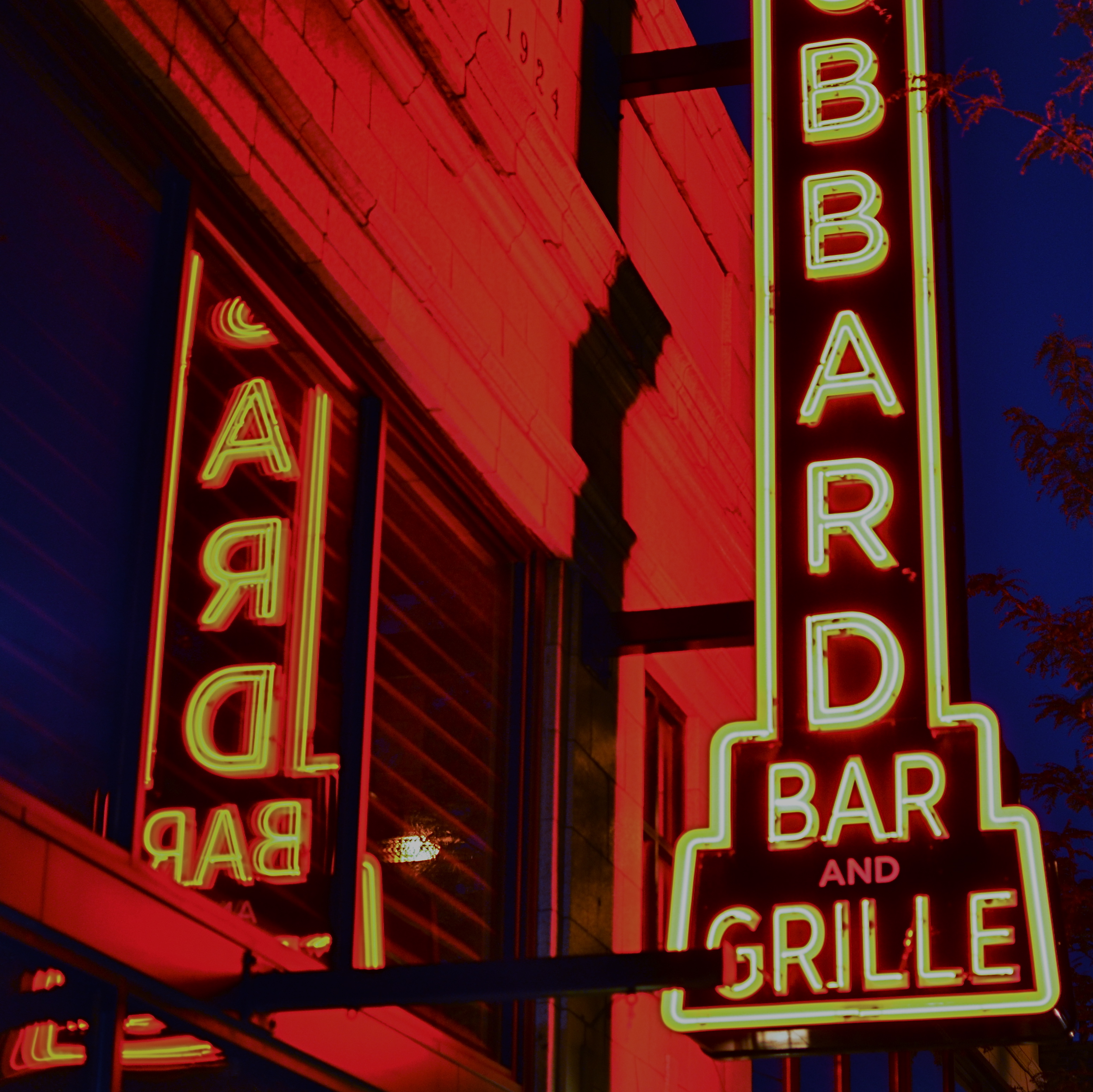
“Each place I go….only the lonely go….”
By MICHAEL PERKINS
FEW OF US CAN CHANNEL FRANK SINATRA’S VOCAL ACUMEN, but we can all relate to the urban movies that he started running in the projection rooms of our minds. For most of his career, The Voice was a very visual actor, shaping sound into virtual landscapes of lonely towns, broken-hearted guys wandering the waterfront, and blue mornings where the sun rises on you and ….nobody else. Frank could smile, swagger, strut and swing, for sure, but he was the original king of desolate all-nighters, our tour guide to the dark center of the soul.
He was also, not coincidentally, a pretty good amateur photographer.
I tend to see restaurants, bars, and city streets in general through the filter of Sinatra’s urban myths. Tables covered with upturned chairs. The bartender giving the counter one more weary wipedown. Dim neon staining rain-soaked brick streets. Curling blue-grey wisps of cigarette smoke. And shadows that cover the forgotten in inky cloaks of protection. Give me eight bars of “One For My Baby” and I’m searching for at least one bar that looks like the last act in a Mamet play.
It becomes a kind of ongoing assignment for photographers. Find the place that strikes the mood. Show “lonely”. Depict “Over”. Do a portrait called “Broken-hearted Loser.” There are a million variations, and yet we all recognize a slice of every one. Like Frank, we’ve all been asked by the host if he can call us a cab. Like Frank, we’ve all wondered, sure, pal, but where do I go now?
It’s not often a pretty picture. But, with luck, it’s sometimes a pretty good picture.
TEMPORARILY ACTUAL
It’s the truth. It’s actual. Everything is satisfactual. –lyrics from the Oscar-winning song Zip-A-Dee-Doo-Dah
By MICHAEL PERKINS
PHOTOGRAPHY WAS ERRONEOUSLY BILLED, EARLY IN ITS DEVELOPMENT, as a mere recording of reality. This was, of course, an attempt to characterize the picture-making process as more bloodless, less artistic than painting, which was an interpretation of the world. What early haters of the camera failed to realize, of course, was that photographers were just as selective in their depiction of life as painters, since their medium too, was an interpretation…..of isolated moments, of preferred angles, of temporary actuality.
If you look at individual frames within a strip of motion picture film, it becomes perfectly clear that each still image is a self-contained world, with no way to intuit what has come before a given moment nor what will come next. Thus, no one frame is “reality” but a select sample of it. In daily photography, our choice of angle, approach, and especially light can allow us to create an infinite number of “realities” that only exist in the precise moment in which we see and freeze them.
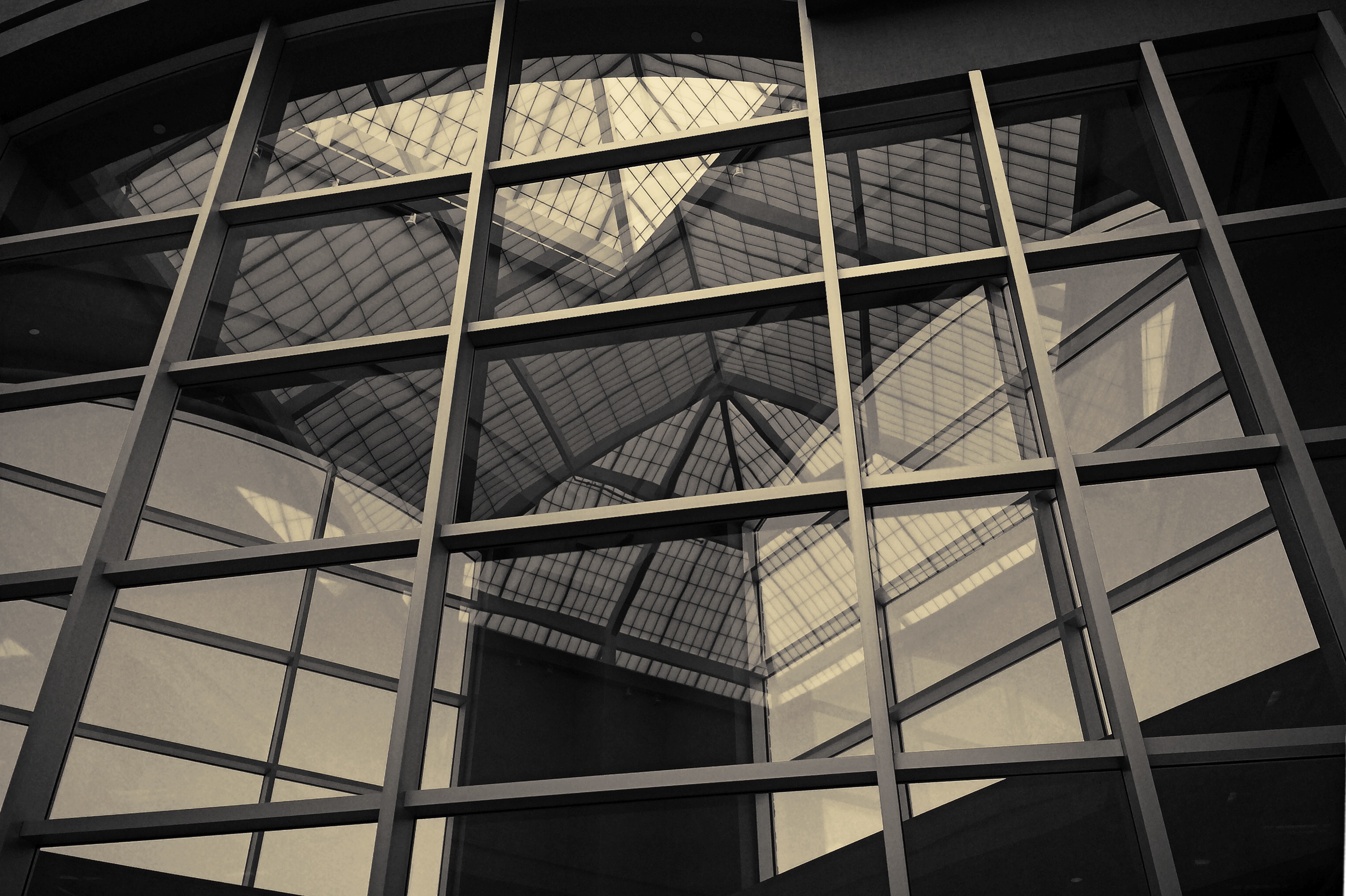
Let’s look specifically at light. As it’s jumbled in multiple reflections, light is particularly precious to the photographer’s eye, since a captured image may recall an effect that even people within inches of the shooter could not see. In the above photo, for example, this mosaic of reflections inside the vestibule of a high-ceilinged building was visible from several specific positions in the foyer. Move yourself three feet either way, however, and this pattern could not be seen at all. In other words, this photographic “reality” came briefly into existence under the most controlled conditions, then was gone.
John Szarkowski, the legendary director of photography for the New York Museum of Modern Art, dedicates an entire section of his essential book The Photographer’s Eye to what he calls “Vantage Point” and its importance to a mastery of the medium. “Pictures (can) reveal not only the clarity but the obscurity of things…and these mysterious and evasive images can also, in their own terms, seem ordered and meaningful.”
Photography is about viewing all of reality and extracting little jewels from within it.
That’s not mere recording.
That’s creation.
GRABBING THE GLOW
By MICHAEL PERKINS
EVERY PHOTOGRAPH YOU TAKE IS OF CONSEQUENCE.
That doesn’t mean that every subject you shoot will “matter”, or that every mood you capture will be important. Far from it. However, every frame you shoot will yield the most positive thing you could hope for in your development. Feedback. This worked. God, this didn’t. Try again with more of this. One more time, but change the angle. The light. The approach. The objective. Nothing that you shoot is time wasted, since the positive and negative information gleaned is all building toward your next ah-ha miracle.
 Your greatest work has to come as the total of all the building blocks of all the little details you teach yourself to sweat. And that is why you must, I repeat with religious fervor, Always Be Shooting. Something from a photo that won’t change the world will wind up in the photo that will. The what-the-heck experiment of today’s shot is the foundational bedrock of tomorrow’s. You are always going to be your most important teacher, and you get better faster by giving your muscles lots of exercise.
Light changes, those hundreds of shadows, flickers, hot spots and glows that appear around your house for minutes at a time during every day, are the easiest, fastest way to try something…anything. A window throws a stray ray onto your floor for three minutes. Stick something in it and shoot it. A cloud shifts and bathes your living room in gold for thirty seconds. Place a subject in there to see how the light plays over its contours. Shoot it, move it, shoot it again. Lather, rinse, repeat.
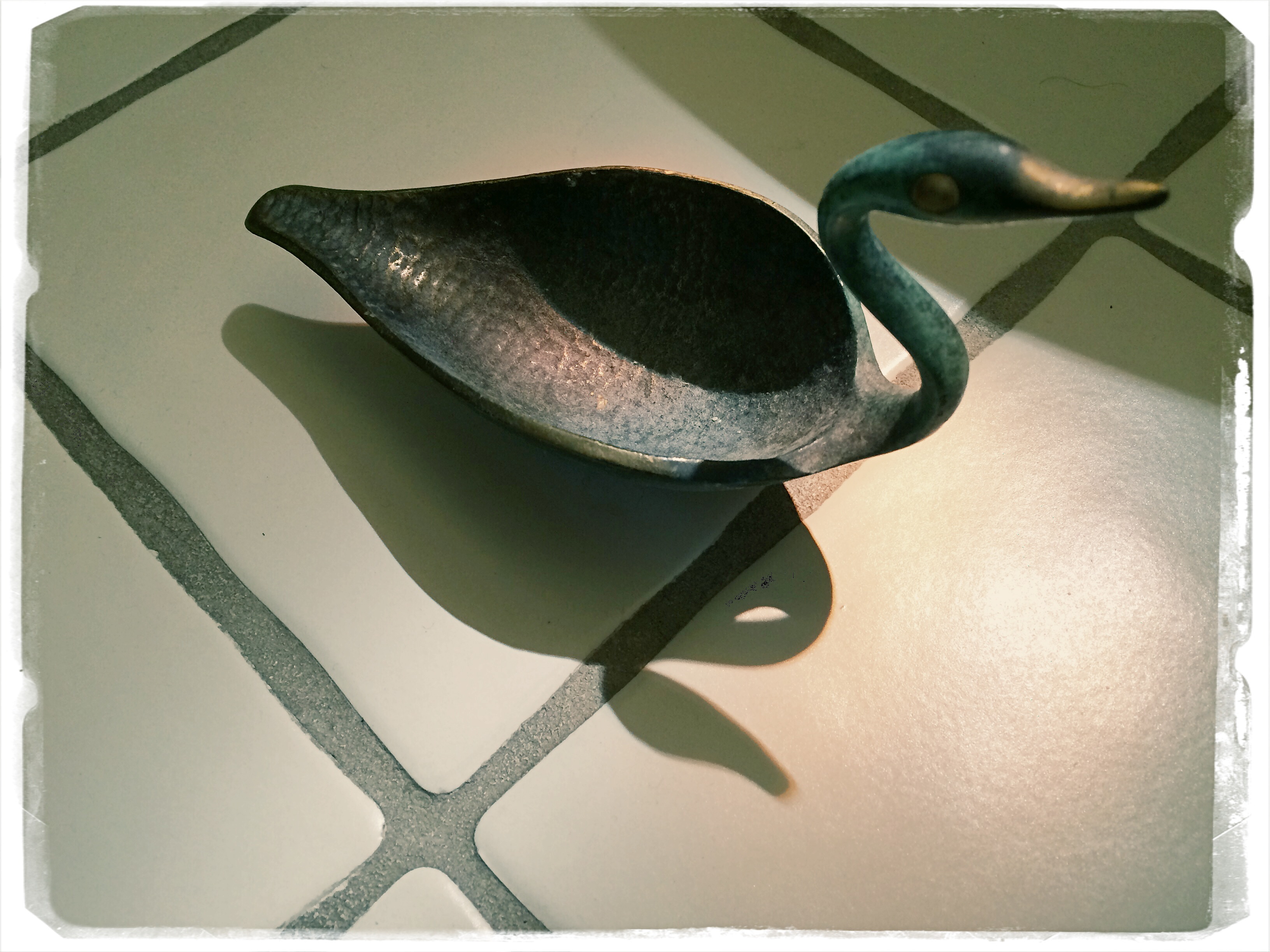
The image at left came when a shaft of late afternoon light shot through my bathroom window for about three minutes. I grabbed the first thing I saw that looked interesting, framed it up, and shot it. Learned a little about shadows in the process. Nothing that will change the world. Still.
Many cheap, simple opportunities for learning get dumped in your lap everyday. Don’t wait for masterpiece subject matter or miracle light. Get incrementally better shooting with what you have on hand. Grab the little glows, and use spare minutes to see what they can do to your pictures. And, on the day when the miracle saunters by, you will be ready.
A GAME OF INCHES
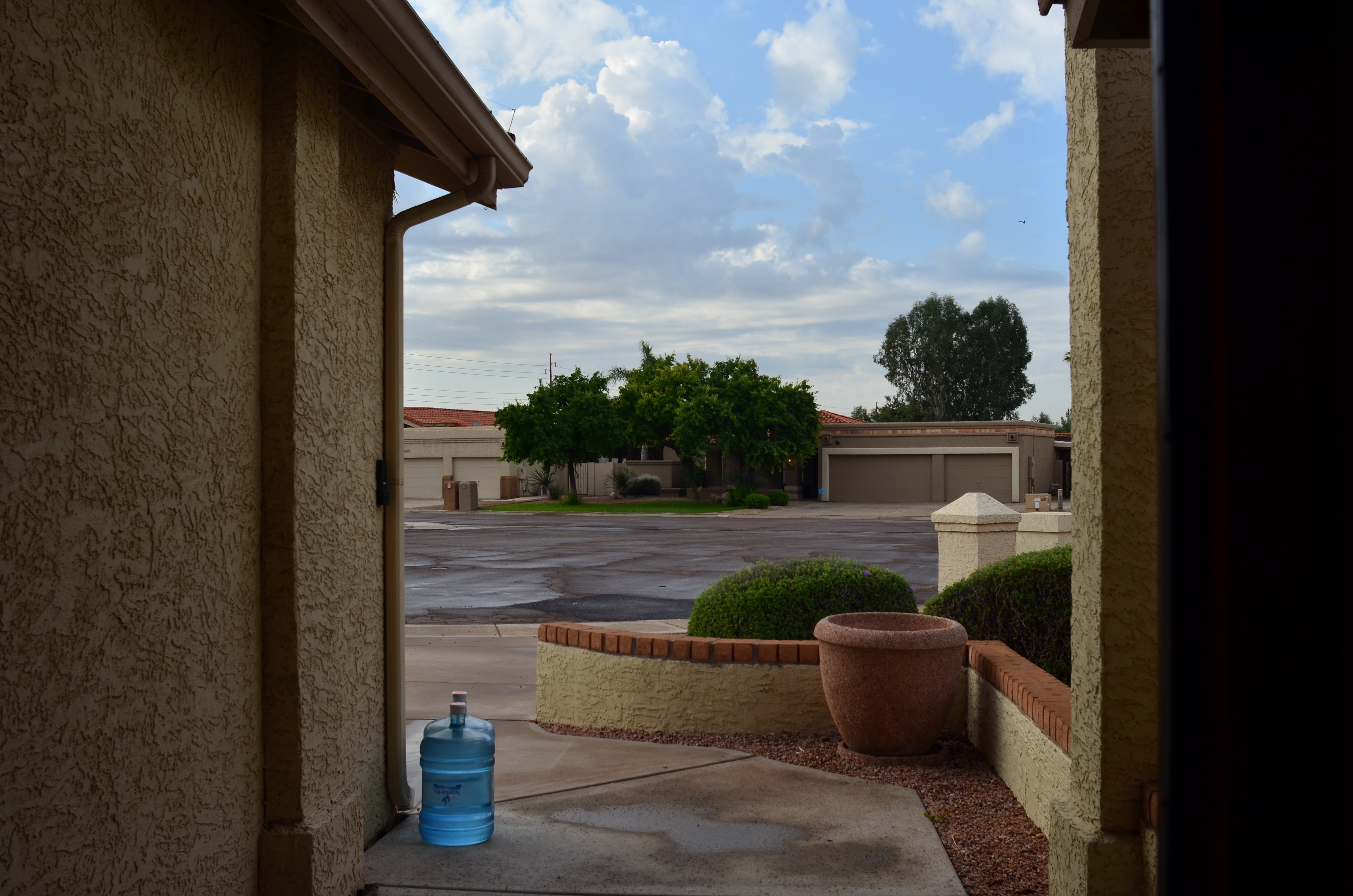
An okay idea for a picture, but, as it turned out, merely okay. 1/200 sec., f/5.6, ISO 100, 24mm.
By MICHAEL PERKINS
PHOTOGRAPHERS PROGRESS FROM WHAT I CALL SNAPSHOT MENTALITY TO “CONTACT SHEET” MENTALITY as we move from eager beginners to seasoned shooters. Many of the transitional behaviors are familiar: we actually learn what our cameras can do, we begin to pre-visualize shots, we avoid 9 out of the 10 most common errors, etc. However, one of the vestiges of snapshot mentality that lingers a while is the tendency to “settle”, to be, in effect, grateful that our snap resulted in any kind of a shot, then moving too quickly on to the next subject. It’s a little like marrying the first boy that ever asked you out, and it can prevent your hanging around long enough to go beyond getting “a” shot to land “the” shot.
In snapshot mentality, we’re grateful we got anything. Oh, good, it came out. In contact sheet mentality, we look for as many ways to visualize something as possible, like the film guys who shot ten rolls to get three pictures, seeing all their possibilities laid side-by-side on a contact sheet. The film guys stood in the batter’s box long enough to make a home run out one of all those pitched balls. With the snapshot guy, however, it’s make-or-break on a single take. I don’t like the odds. My corollary to the adage always be shooting would be always shoot more.
All of which is to plead with you to please, please over-shoot, especially with dynamic light conditions that can change dramatically from second to second. In the shot at the top, I was contending with speedily rolling overcast, the kind of sun-clouds-sun rotation that happens when a brief rain shower rolls through. My story was simply: it’s early morning and it just rained. This first shot got these basics across, and, if I were thinking like a snapshot photographer, I would have rejoiced that I nailed the composition and quit while I was ahead. However, something told me to wait, and sure enough, a brighter patch of sunshine, just a minute later, gave me a color boost that popped the page much more effectively. Same settings, same composition. The one variable: the patience to play what is, for shooters, a game of inches. A small difference. But a difference, nonetheless.
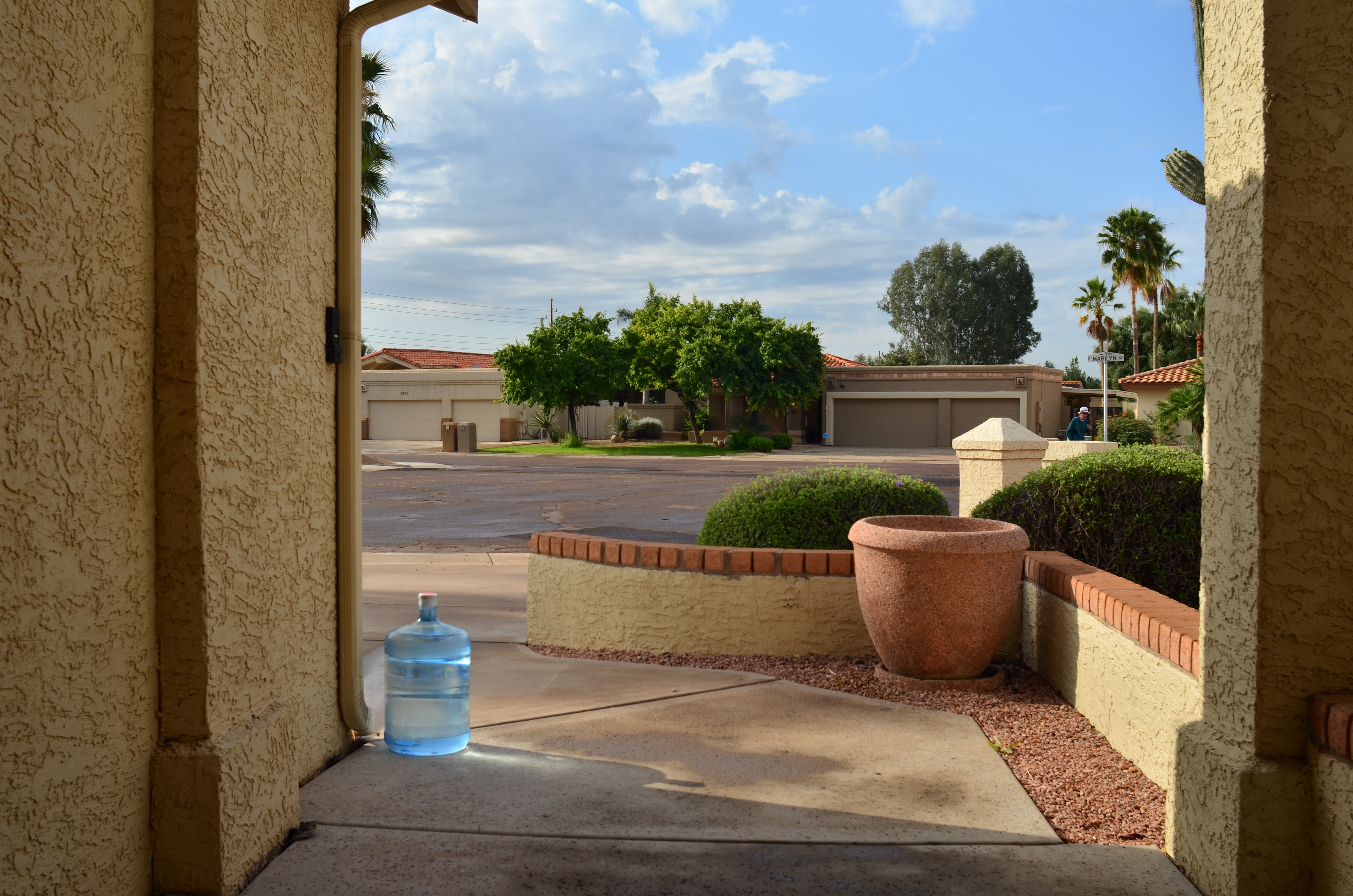
And that’s what these little blurbs are. Not examples of groundbreaking art, just illustrations of the different ways to approach a problem. Digital shooting is cheap shooting, nearly free most of the time. Shouldn’t we, then, give ourselves at least as many editing choices as film guys who shot rolls of “maybes” at great expense, in search of their “yeses”? Hmm?
THE FAULT IN OUR DEFAULT
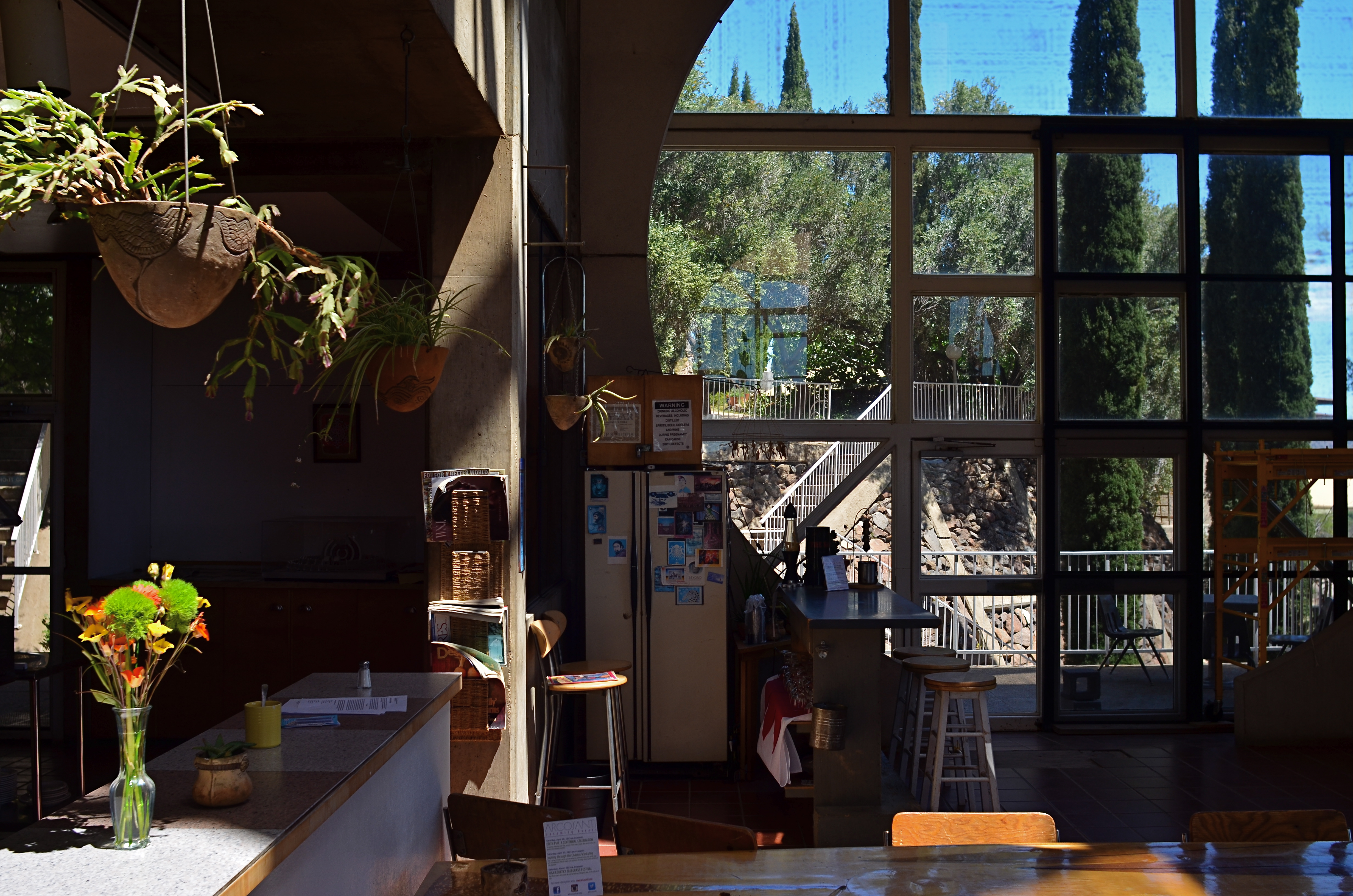
Potential nightmare: uneven light and wildly varied contrast. But I can save this shot because I can take direct control of camera settings.
By MICHAEL PERKINS
CHILDREN THINK THAT HAPPINESS RESIDES IN ALWAYS BEING TOLD “YES”. Of course anyone who has ever (a) been a child or (b) had to deal with one knows that this is actually the worst of strategies. Even without being Tiger Moms, we can all pretty much agree that there are many times when telling a kid “NO” will improve, perhaps even save, his life. Negative responses carry important information. They can be guidelines. Most importantly, they convey that there are limits, consequences.
“NO” also helps you be a better photographer.
In the ’60’s, one of the most basic cameras ever sold, the teen-marketed Polaroid Swinger, had a shutter that you pinched to check if you had enough light to make a picture. If the word “YES” appeared in the viewfinder, you were solid. “NO”, given the simplicity of the gadget, meant, sorry, point this thing somewhere toward, you know, actual light. Easy. Unmistakable. Take the picture with a “NO”, and it’s on you.
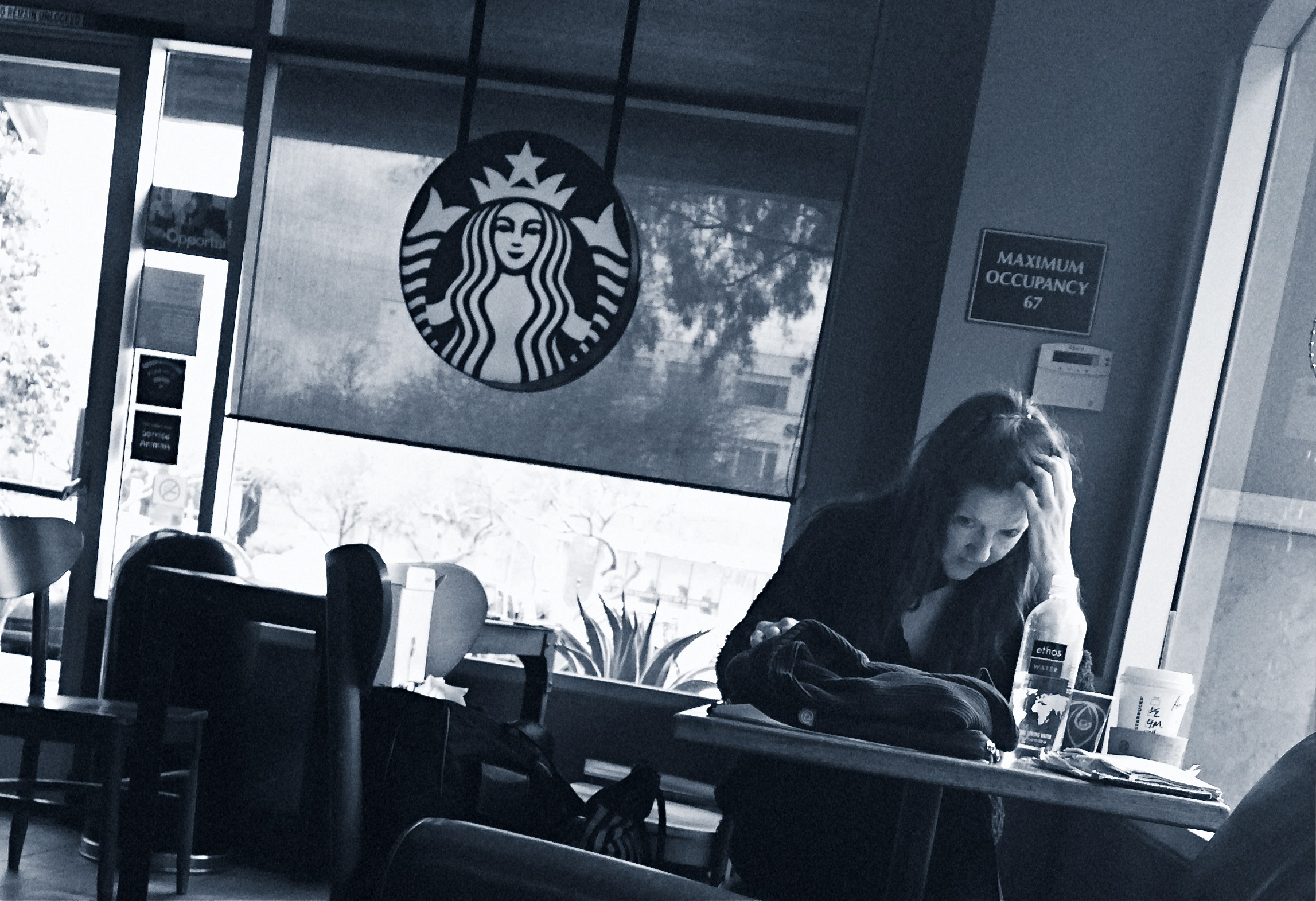
Similar light conditions to the scene shown above, but now the phone camera has decided for me, to jack up the ISO, degrading the image. And there wasn’t a thing I could do to prevent it.
DSLR’s still flash a similar warning. With Nikon it’s “subject is too dark”. But the camera isn’t a mean parent that won’t let you choose ice cream over asparagus. It’s being a good parent that’s trying to give you a happy outcome. By contrast, smartphone cameras are bad parents. They never tell you “no”. If anything, their attitude is, point anywhere you like, anytime you like, darling. Mommy will still make a picture for you. That’s because the emphasis of design and use for smartphones is: make it simple, give the customer some kind of result, no matter what. You push the button, sweetheart, and we’ll worry about all that icky science stuff and give you a picture (image at left).
The default function of smartphone cameras is wondrous. You get a picture, every damn time. Never a blank screen, never a “no”. But in low-light situations, to accomplish this, the camera has to jack up the ISO to such a ridiculous degree that noise goes nuclear and detail goes buh-bye. The device has been engineered to make you happy over everything else, and its marketers have determined that you’d rather have a technically flawed picture than no picture, so that’s the mission. And that guarantees that your photography will linger in Average-land pretty much forever.
With iPhones, you have no override. You have no thumbs-up-thumbs-down decision. You have, actually, no input at all except your choice of subject and composing style. Now, you may think that this “frees” you, with the camera “getting out of your way”, and all, but it really means that, even if you have a better idea for making an image than your camera does, you cannot act upon it. Cameras that say “NO” are also saying, “but if you try something else, you will get to “YES” (image at top). Cameras that only say “YES” are really saying, “I know best. Leave it to me.”
Which of course, is something you heard all the time, years ago.
When you were a child.
WHEN THE WALL IS ALL
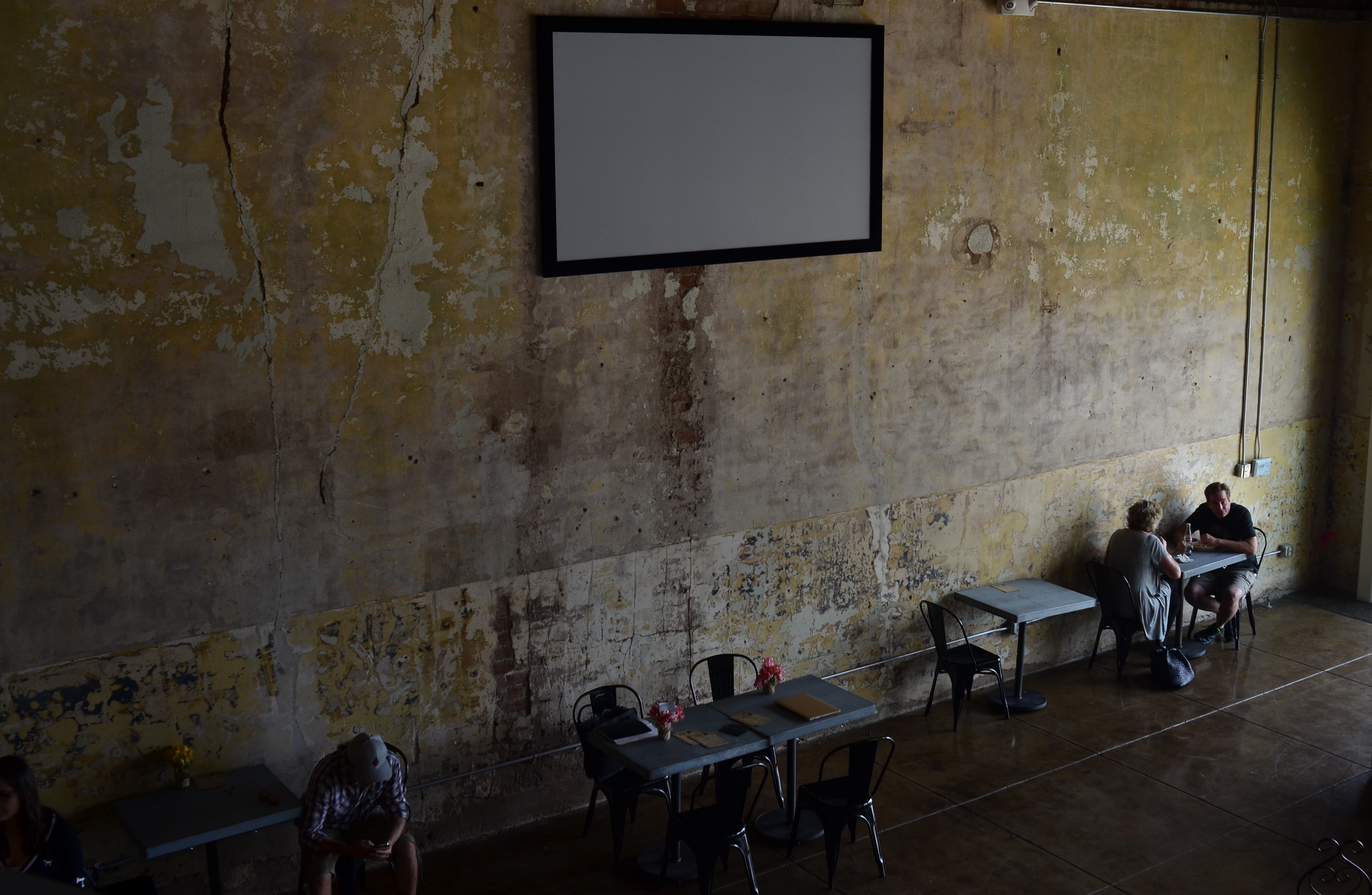
As light “decays” down the wall from right to left, it reveals tiny variances in color.
By MICHAEL PERKINS
COLOR, IN REAL LIFE DOES NOT RESEMBLE SOMETHING FLATLY FILLED IN BY A CRAYON. Light never plays across surfaces in an even, unbroken tone, so, in a photograph, there really is no such thing as a “blue” wall, or a “brown” floor. Both the wall and the floor contain endless varieties and gradations of their general hue, changing inch to inch, atom by atom. Wonderfully, photography has been on a continuous upward curve over time to record these variances with better and better fidelity. As a result, we don’t just shoot tone, we shoot texture.
One way to heighten the registry of those textures, those colors-within-colors along a surface, is to vary the amount of light that hits it at different points. There’s a reason why Rembrandt and other masters of the “Dutch-lit” school used minimal or irregular light to illuminate their subjects. Light playing unevenly over fruit and the human form was simulated in their paintings by pigment colors that shimmered and smoldered: had they painted colors in a flat, uniform tone it would have read as dull as dishwater and Rembrandt and the other little daubed Dutch boys would have had to get day jobs.
In photographs, sometimes texture emits such a powerful visual impact that it’s enough to carry an entire image with little or no other subject matter. In the above picture, watching the window light at the right of the frame decay gradually as it “walks” across the distressed wall actually speaks louder than the solitary couple at the upper-right-hand corner. In such a picture, the wall becomes all, the changing colors highlighting small detail in the concrete and brick.
As usual, I learn a great deal by looking at how other people address this phenomenon. There are so many astounding ways to harness even a small bit of light via photography as it exists right now, and the best thing is, things will only improve from here, for anyone shooting at any level.
THE TAKEAWAY
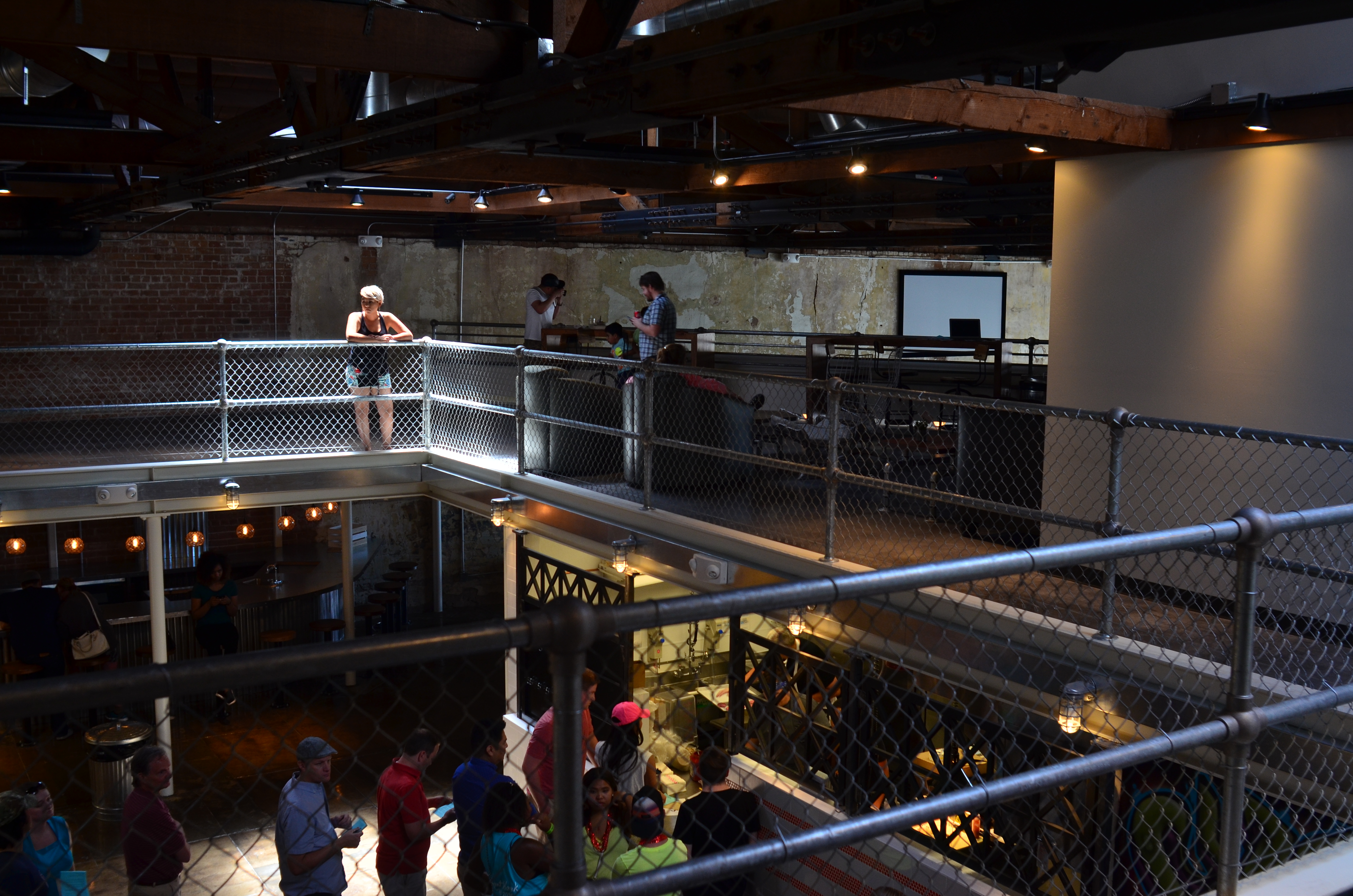
The girl bathed in ceiling light is a nice start, but this picture needs some help to get where it’s going.
By MICHAEL PERKINS
IT IS SAID THAT THE GODDESS ATHENA WAS BORN, FULLY GROWN AND ARMORED, out of the forehead of Zeus. Other than being the only case where a man experienced anything that approached labor pain, the story always reminds me that ideas rarely arrive in their final form, especially in photography. If Athena had a Leica, she probably could have taken perfect shots without needing to compose or plan. We mere mortals are forced to either (a) report to hate-crazed photo editors, or (b) learn how to crop.
Many shots are created in stages, and there’s no shame in the game, since our original conception undergoes many phases from the first spark to something we’d actually hang on a wall. Creation itself is a process, which is why photographers should actually embrace the stages their work will pass through. The more thought that is applied to making an image, the better chance that the best way of doing something will reveal itself. Of course, it can also reveal the fact that there is nothing really to work with, in which case, hey, the bar should be open now, let’s go lick our wounds.
The original shot shown above is not yet a good photograph, but a good beginning for a 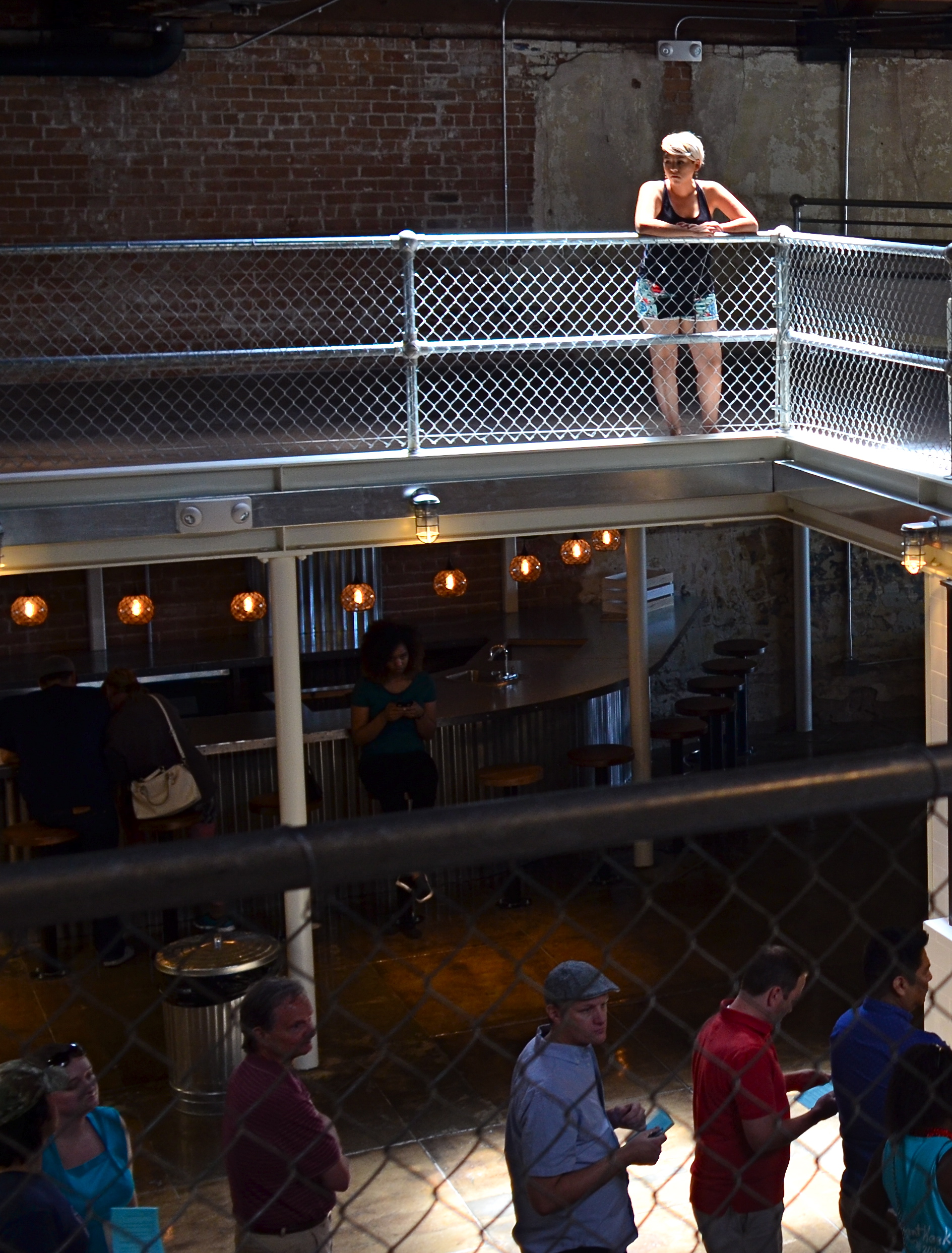 photograph. The lady bathed in light seems certainly to have been pre-selected to be the focal point of the picture, but there are way too many competing elements around her, robbing her of the prominence she deserves in the final frame. So let’s get after it.
First, none of the information on the left side of the frame makes it any clearer that she’s alone or that she’s on the second floor of the building. We can make that plain with half the acreage, so snip. Similarly, the guys in shadow to her right aren’t part of the story we are crafting for her. If she’s isolated, let’s make her isolated and be unmistakable about it. She’s “apart” already from the sea of people below her. She’s geographically and physically separated from them, but the extra guys make the argument weaker, so, snip, away they go.
Finally, the entire upper-floor/lower-floor line of sight will be accentuated if we crop for a portrait orientation and move the frame so she is on the upper-right-hand corner of it. It forces the eye to discover the story of the picture vertically, so snip and we’re done.
So, at the end, we did not make any changes via processing, only the old scissors. Taking things away, not adding them on, actually made the picture work better. Fate gave me the girl and the wonderful light she was bathed in, but there was work to do. She didn’t arrive, ready to party, like Athena, but she’s a little closer to goddess status after some adjustment.
YOUR FLASH AIN’T NOTHIN’ BUT TRASH
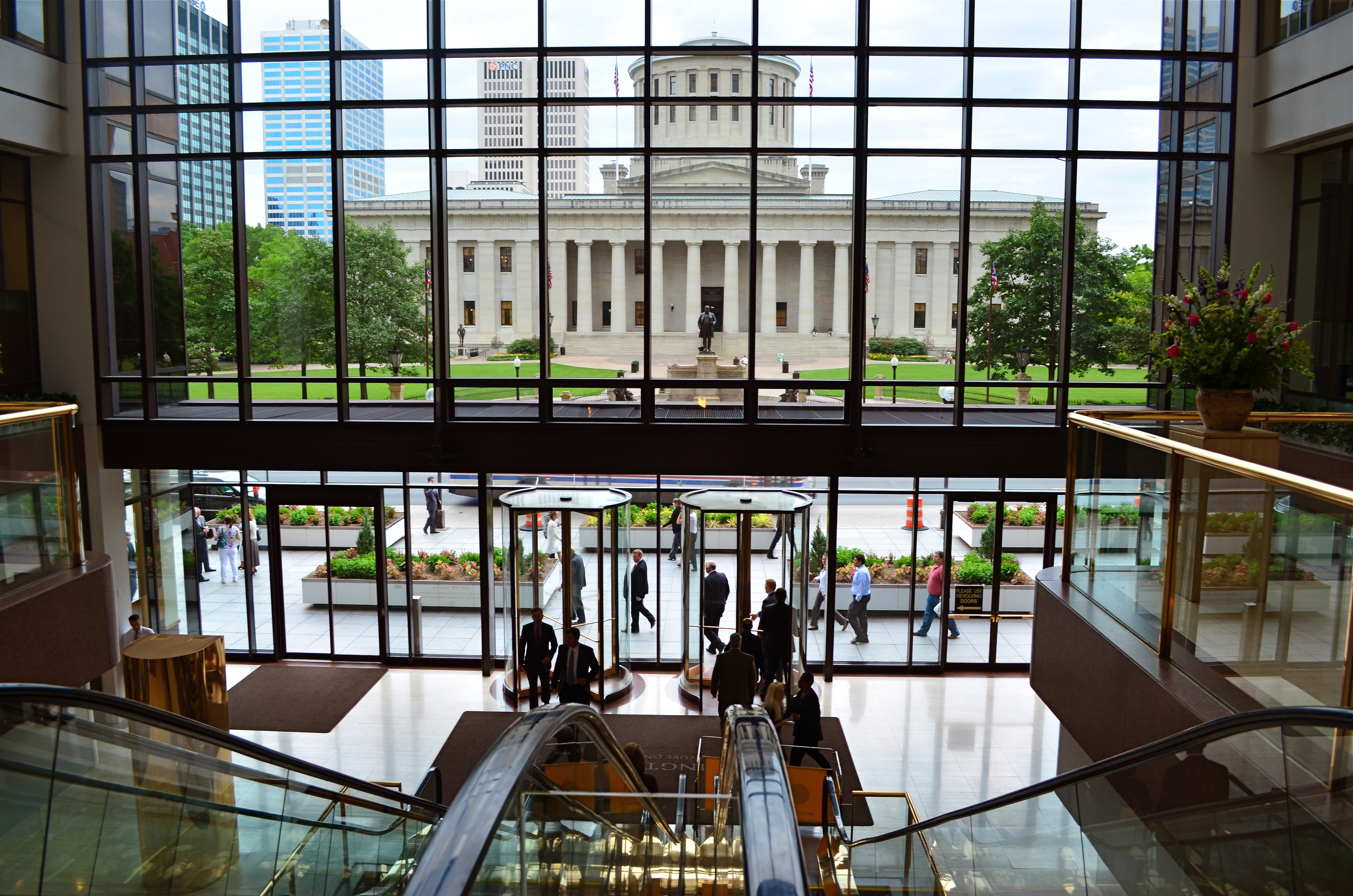
Learning to make the maximum use of light means you can leave your flash off more often. 1/60 f/5.6, ISO 100, 18mm.
By MICHAEL PERKINS
PHOTOGRAPHY HAS NEVER SUCCESSFULLY ADDRESSED ITS BIGGEST, AND MOST LONG-STANDING WEAKNESS, that of providing natural illumination in all shooting situations. Worse, it has generated tons of tweaks and workarounds to compensate for this weakness, instead of solving the central problem. As a result, we have limped our way through nearly two centuries of devices and processes designed to create momentary fake lighting…the lame legacy of flash.
Instead of finding recording media that absorbs and spreads light adequately, from salt paper prints to roll film to pixels, we have invented one torchy crutch after another, each adding expense, bulk and even greater uncertainty to our results. The ignition of aluminum powder may have given way to pop-ups with red-eye protection, but the essential error in our thinking persists. We don’t need better flash: we need cameras good enough for there to be no flash.
Flash is like a bratty kid in a restaurant. He won’t sit up straight, spits his chewed broccoli back into his napkin, splashes water on everyone, talks with his mouth full, and eats his dessert first. And his mother dresses him funny. And yet we can’t rub this punk out, no matter how we try.
Testify: a recent B&H Photo catalogue boasts eight pages of flash equipment, most of it aftermarket gear designed to muffle, bounce,, amplify, soften or re-direct flashes that are too harsh, too faint, too in-line with the “optical axis”, or otherwise inefficient. Many manufacturers of DSLRs practically admit that their on-camera units are too limited for custom lighting, selling you their costly, brand-related off-camera units, cables, transmitters and widgets. Ca-ching. Photographically speaking, this is like telling you that the house on which you just took a 30-year mortgage is really a dump, but the place down the street is divine.
It was decades before film was fast enough to be used in more than a few specific situations, so flash. It’s still too expensive for most people to get lenses that are speedy enough to keep from blasting bleachingly hard light in people’s faces, so flash. And, sadly, many of us still believe that popping that little beast up in a 50,000-seat concert hall will magically help us counter the 300,000 square feet of darkness between us and the stage, so…flash.
Digital image sensors might eventually evolve sufficiently for different parts of them to register light individually, eliminating the need for extra bursts of artificial light, and our own best practices in the use of natural light can all but eliminate the need to pop up the pop-up. But we are farther away than we should be from a flashless world. It’s not that we don’t all know that the way we currently use it is idiotic. But for now, we have to keep promising that bratty kid that if he takes just one more bite of spinach, we’ll get him ice cream. Jeez.
NAIL YOUR FOOT TO THE FLOOR
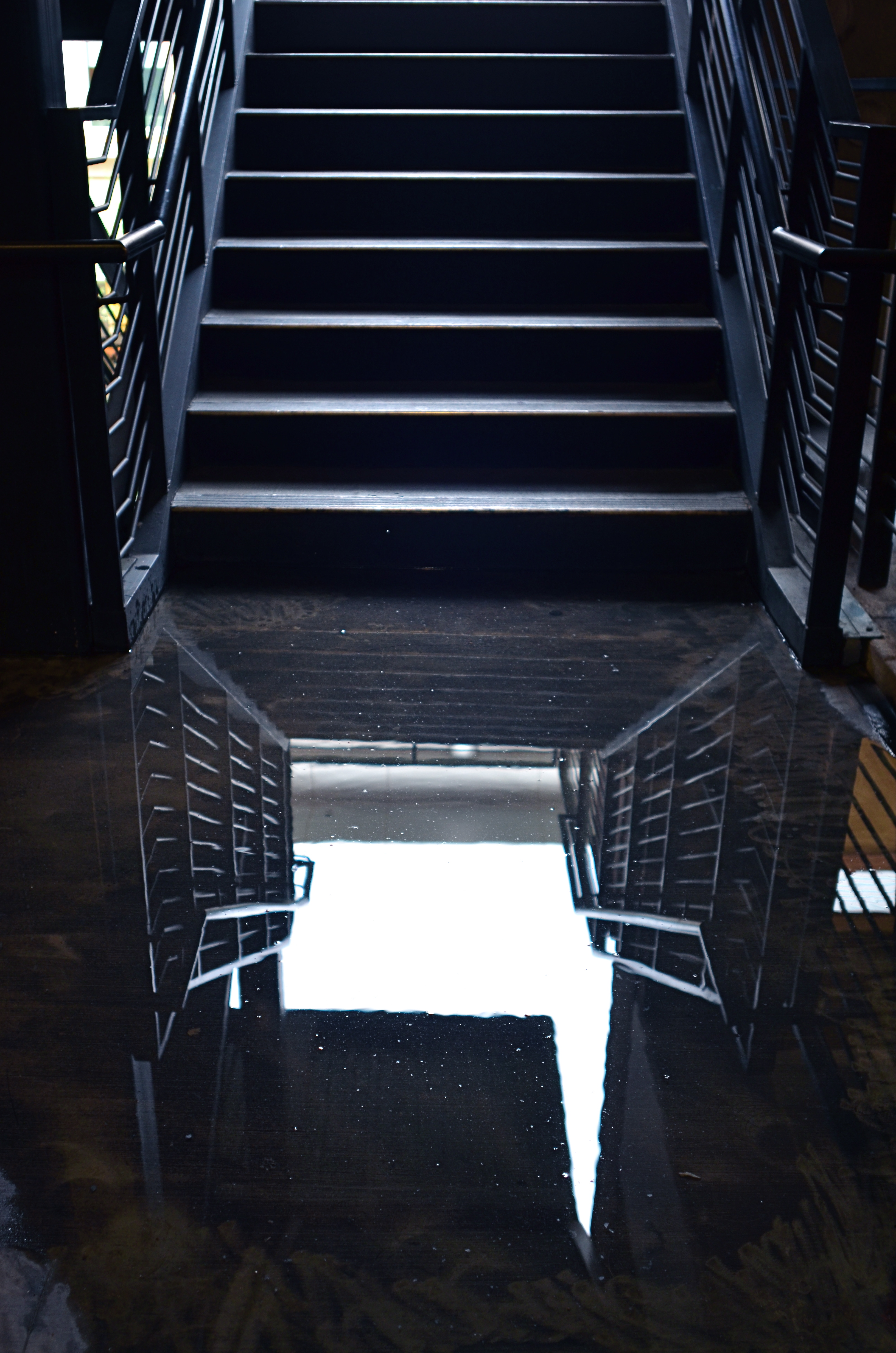
I shot this on a day when I was forcing myself to master a manual f/2.8 lens wide open, and thus shoot all day in only that aperture. That made depth-of-field tricky.
By MICHAEL PERKINS
PHOTOGRAPHY PLACES YOU IN PLENTY OF SITUATIONS WHERE YOU ARE, TO SOME DEGREE, OUT OF CONTROL. From light conditions to the technical limits of your gear to erratic weather, we have all experienced that sinking feeling that accompanies the realization that, to a great extent, we are not in the driver’s seat. Gotta wait til the sun’s up. Gotta wait for the flash to recycle. Gotta cool my heels til these people get out of the frame. Gotta getta bigger bottle of Tums.
So why, given the frequent cases in which we naturally run off the rails, would I recommend that you deliberately hobble yourself, in effect putting barriers in your own way when shooting images? Because, quite simply, failure is a better teacher than success, and you never forget the lessons gained by having to work around a disadvantage. Not only am I encouraging you to flirt with failure, I’m suggesting that there are even perfect days on which to do it…that is, the many days when there is “nothing to shoot”.
It’s really practical, when you think of it. Go out shooting on a day when the subject matter is boring, a day on which you could hardly be expected to bring back a great picture. Then nail your foot to the floor in some way, and bring back a great picture anyway. Pick an aperture and shoot everything with it, without fail (as in the picture at left). Select a shutter speed and make it work for you in every kind of light. Act as if you only have one lens and make every shot for a day with that one hunk of glass. Confine your snaps to the use of a feature or effect you don’t use or understand. Compose every shot from the same distance. The exercise matters less than the discipline. Don’t give yourself a break. Don’t cheat.
In short, shoot stuff you hate and make pictures that don’t matter, except in one respect: you utilized all of your ingenuity in making them. This redeems days that would otherwise be lost, since your shoot-or-die practice sessions make you readier when the shots really do count.
It’s not a lot different from when you were a newbie a primitive camera on which all the settings were fixed and you had zero input beyond framing and clicking. With “doesn’t matter” shooting, you’re just providing the strictures yourself, and maneuvering around all the shortcomings you’ve created. You are, in fact, involving yourself deeper in the creative process. And that’s great. Because someday there will be something to shoot, and when there is, a greater number of your blown photos are already behind you.
IF HUE GO AWAY
By MICHAEL PERKINS
IT SEEMS UNGRACIOUS FOR A PHOTOGRAPHER TO COMPLAIN ABOUT AN OVER-ABUNDANCE OF LIGHT, since that’s basically the currency we trade in. More typically we gripe about not being able to bring enough of the stuff into a shot. I mean, the entire history of the medium is one big let-there-be-more-light prayer. But that’s not to say that light can’t create annoyance when you’re in a place where there is glorious, radiant illumination of….acres of nothing.
I’m not talking about sunlight on endless expanses of starched plain. I refer here to subject matter that is so uninteresting that, even though a bumptious bounty of light is drenching everything in sight, there is nothing to make a photograph of. Nothing that compels, inspires, jars or even registers. I recently made my annual return to a festival that, due to my frequent farming of it over the years, has now bottomed out visually. There is nothing left to say about it, although all that “nothing” is stunningly lit at this time of year.
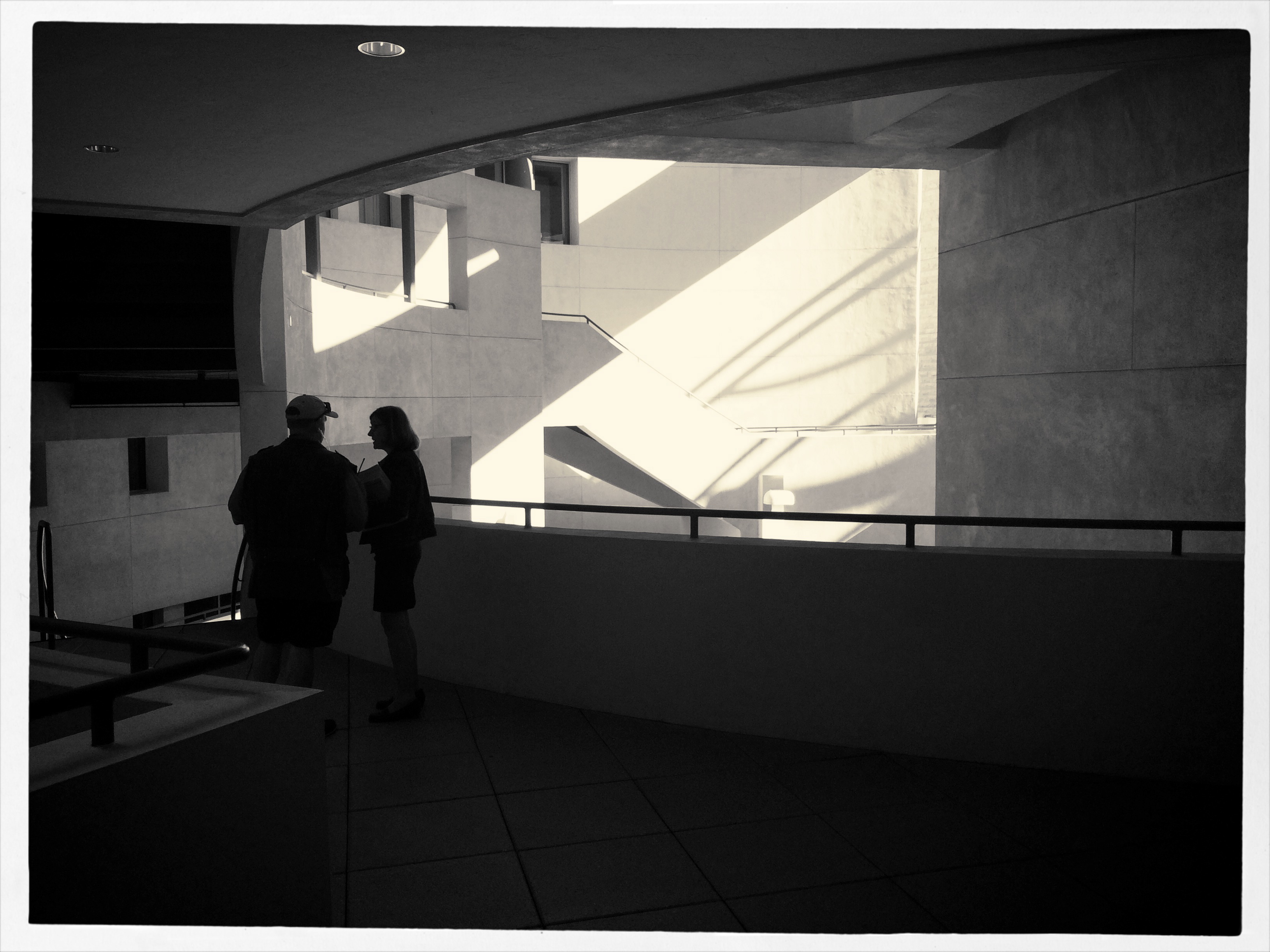
The light patterns seen here were warm and inviting in color. That’s not what I wanted.
In fact, it’s only by shooting just abstracted shapes, shades and rays, rather than recognizable subjects, that I was able to create any composition even worth staying awake for, and then only by using extremely sharp contrast and eliminating color completely. To me, the only thing more pointless than lousy subject matter is beautiful looking lousy subject matter, saturated in golden hues, but signifying nothing. Kinda the George Hamilton of photos.
So the plan became, simply, to turn my back on the bright balloons, food booths, passing parade of people and spring scenery that, in earlier years, I would have been happy to capture, and instead render arrangements without any narrative meaning, just whatever impact could be seen using light as nearly the lone element. In the above picture, I did relent in keeping the silhouetted couple in the final picture, so that it’s not as “cold” as originally conceived, but otherwise it’s a pretty stark image. Photography without light is impossible, but we also have to refuse to take light “as is” from time to time, to do our best to orchestrate it, much as we would vary shadings with pencil or crayon. We know that the camera loves light, but it’s still our job to tell it where, and how, to look.
MAGICAL ORPHANS
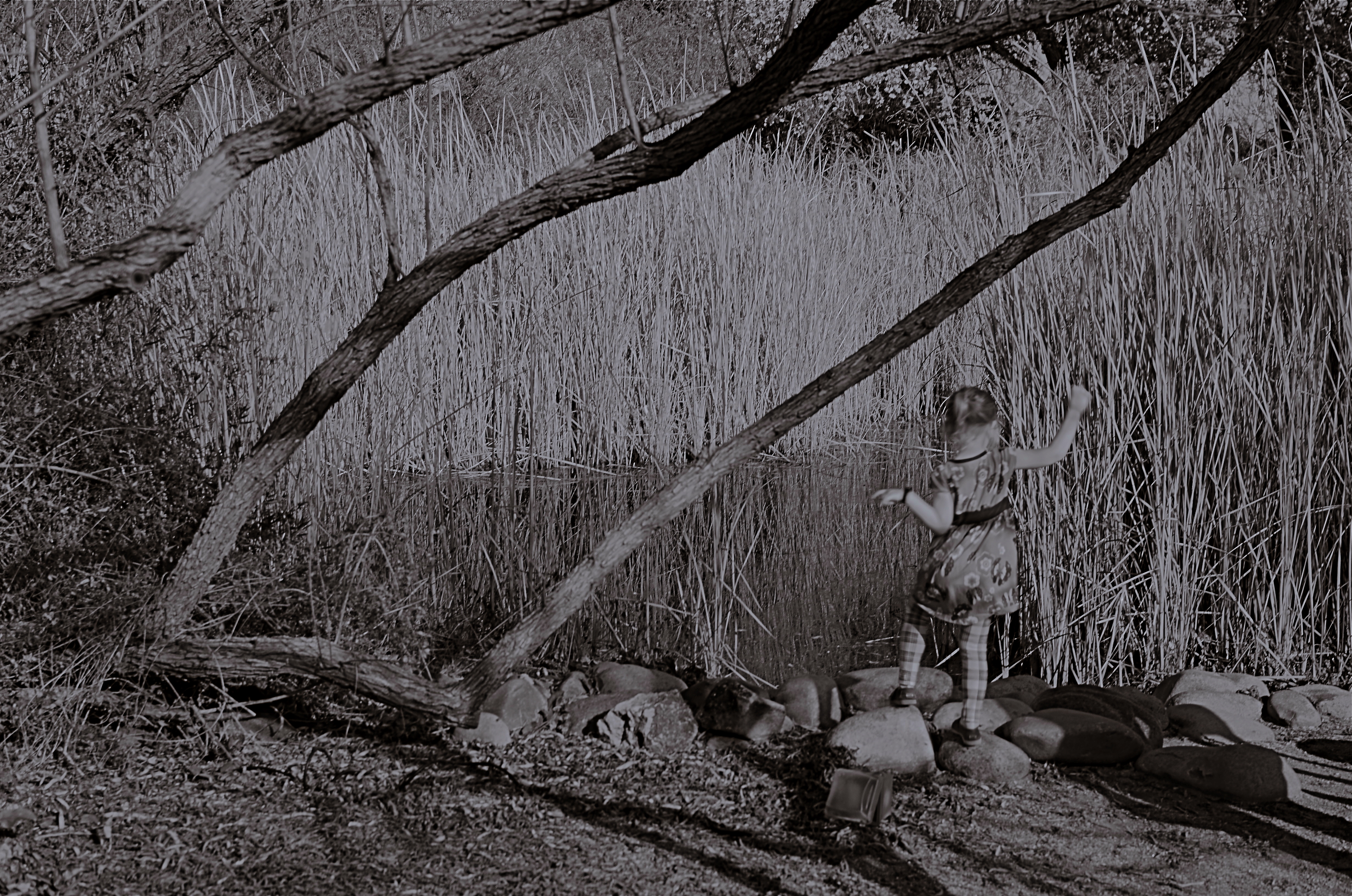
She Of The Reedy River, 2015.
By MICHAEL PERKINS
WE HAVE ALL EXPERIENCED THE SHOCK OF SEEING OURSELVES IN A CERTAIN KIND OF PHOTOGRAPH, a strange combination of framing, light or even history that makes us actually ask, “who is that?? before realizing the truth. Of course we always know, intellectually, that a photo is not an actual visual record of events but an abstraction, and still we find ourselves emotionally shocked when it’s capable of rendering very familiar things as mysteries. That odd gulf between what we know, and what we can get an image to show, is always exciting, and, occasionally, confounding.
Every once in a while, what comes out in a picture is so jarringly distant from what I envisioned that I want to doubt that I was even involved in capturing it. Such photographs are magical orphans, in that they are neither successes nor failures, neither correct or wrong, just…..some other thing. My first reaction to many of these kinds of shots is to toss them into the “reject” pile, as every photo editor before 1960 might have, but there are times when they will not be silenced, and I find myself giving them several additional looks, sometimes unable to make any final decision about them at all.
The above shot was taken on a day when I was really shooting for effect, as I was using both a polarizing filter to cut glare and a red 25 filter to render severe contrast in black and white. The scene was a reedy brook that I had shot plenty of times at Phoenix’ Desert Botanical Garden, but the shot was not planned in any way. As a matter of fact, I made the image in about a moment and a half, trying to snap just the shoreline before a boisterous little girl could get away from her parents and run into the frame. That’s all the forethought that went into it.
With all the extreme filtration up front of the lens, I was shooting slow, at about 1/30 of a second, and, eager to get to the pond, the child was just too fast for me. Not fast enough to be a total blur, but fast enough for my lens to render her softly, strangely. And since every element in a picture talks to every other element, the rendering of the reeds, which was rather murky, added even more strangeness to the little girl, her face forever turned away, her intent or presence destined to remain a secret.
I might like this picture, but I worry that wanting to like it is making me see something in it that isn’t there. Am I trying to wish some special quality into a simple botched shot, acting as a sort of self-indulgent curator in search of “art”?
Can’t tell. Too soon.
Check with me in another five years or so.
(DON’T) WATCH THIS SPACE
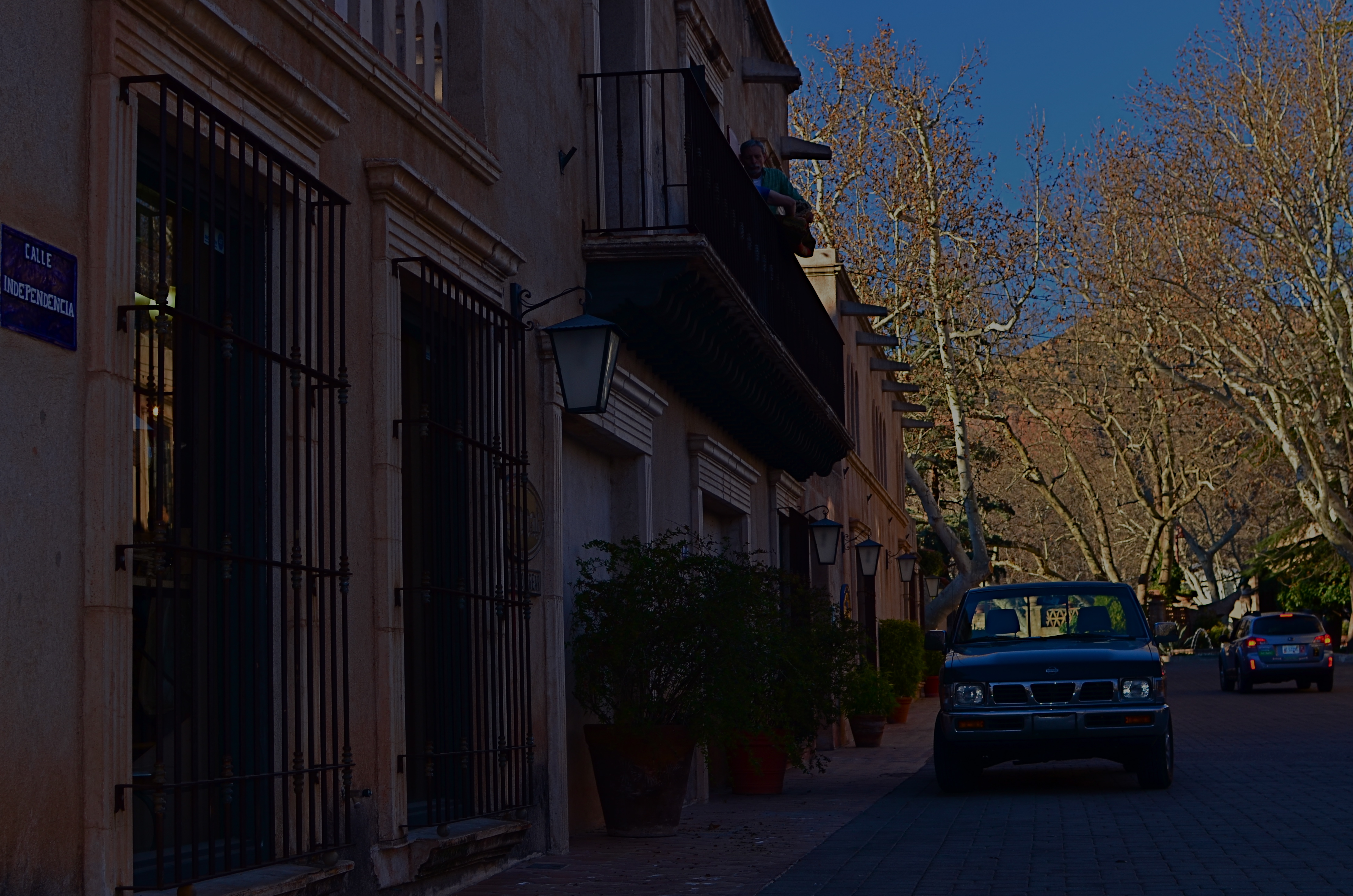
Calle Independencia, 2015.
By MICHAEL PERKINS
CALL IT “EYE-HERDING”, if you will, the art of channeling the viewer’s attention to specific parts of the photographic frame. It’s the first thing we learn about composition, and we address it with a variety of techniques, from depth-of-field to color manipulation to one of my favorites, the prioritizing of light. Light values in any image do have a hierarchy, from loud to soft, prominent to subordinate. Very few photos with uniform tone across the frame achieve maximum impact. You need to orchestrate and capitalize on contrast, telling your viewers, in effect, don’t watch this space. Watch this other space instead.
In many cases, the best natural ebb and flow of light will be there already, in which case you simply go click, thank the photo gods, and head home for a cold one. In fact, it may be that “ready to eat” quality that lured you to stop and shoot the thing in the first place. In many other cases, you must take the light values you have and make the case for your picture by tweaking them about a bit.
I have written before of the Hollywood fakery known as “day for night”, in which cinematographers played around with either exposure or processing on shots made in daylight to simulate night…a budgetary shortcut which is still used today. It can be done fairly easily with still images as well with a variety of approaches, and sometimes it can help you accentuate a light value that adds better balance to your shots.
The image at the top of this page was made in late afternoon, with pretty full sun hitting nearly everything in the frame. There was some slightly darker tone to the walls in the street, but nothing as deep as you see here. Thing is, I wanted a sunset “feel” without actually waiting around for sunset, so I deepened the overall color and simulated a lower exposure. As a result, the sky, cliffs and dogwood trees at the far end of the shot got an extra richness, and the shop walls receded into deeper values, thus calling extra attention to the “opening” at the horizon line. The shot also benefits from a strong front-to-back diagonal leading line. I liked the original shot, but with just a small change, I was asking the viewer to look here a little more effectively.
Light is a compositional element no less important than what it illuminates. Change light and you change where people’s eyes enter the picture, as well as where they eventually land.
FREEZING GOODBYE
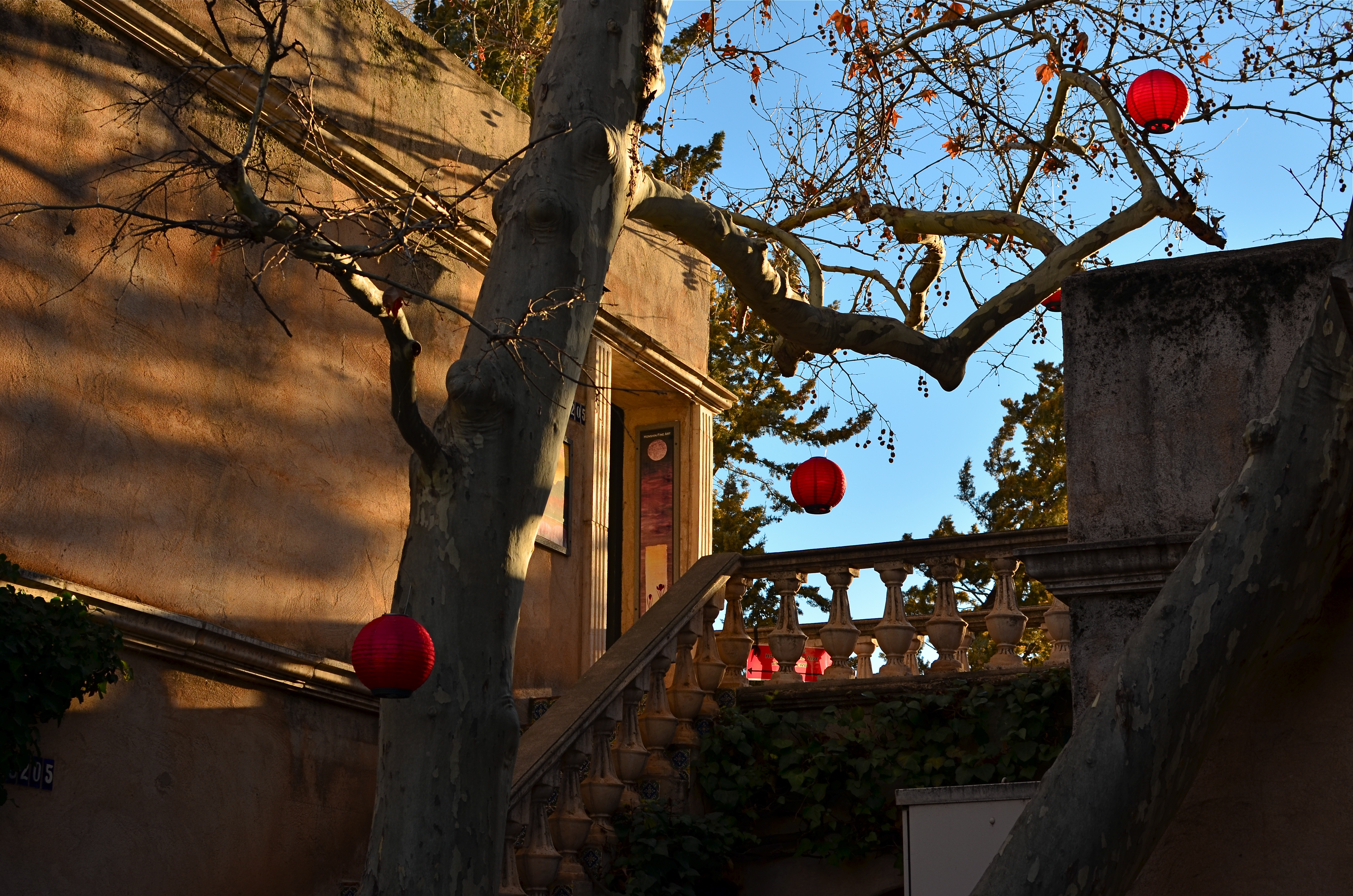
1/125 sec., f/5.6, ISO 100, 35mm.
By MICHAEL PERKINS
PHOTOGRAPHERS HAVE A CERTAIN LOVE FOR LIVING AT THE EXTREMES, in seeing how far we can stretch the limits of light, or at least our ability to harness it. It’s strange: we have plenty of the stuff available to us during the meat of the day, but it’s where night and day perform a kind of “changing of the guard” where we really like to go stealing those renegade rays of near-dark and almost-bright. We love to go trapping along the seams of light, chronicling the nether territory where night and day get spliced together.
Lately I seem to have been lucky enough to do what I call “chasing” light, standing in deep shadow as the last rays of gold fade just ahead of me. There’s an expectant quality to it, a preciousness. Suddenly it’s undeniable that something unique is dying, that another measure of our mortality is about to be checked off the list, to be irretrievably gone. It’s only the promise of another day that makes this bearable…that, and our small attempts to, if you will, freeze the goodbye.
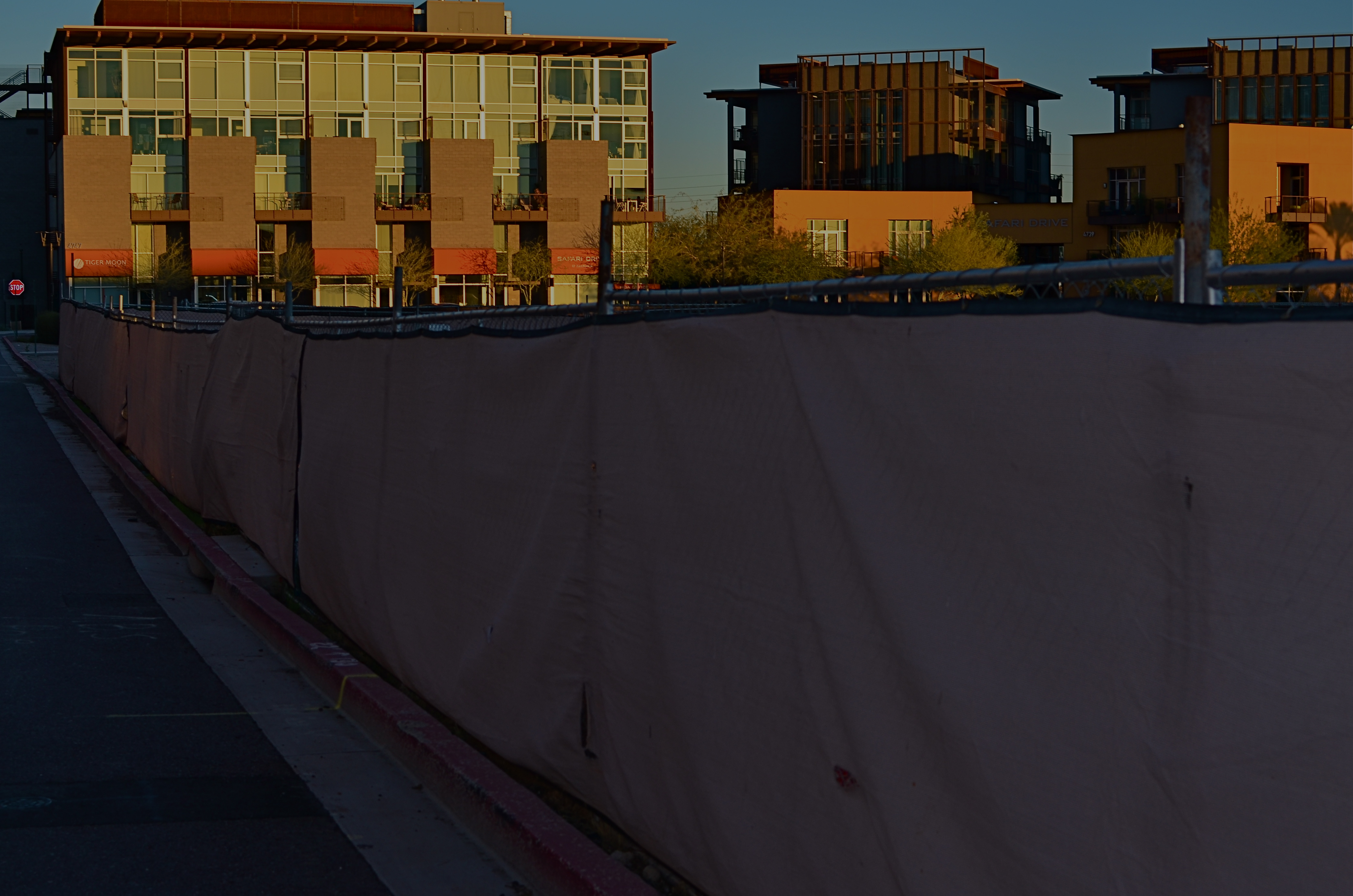
1/125 sec., f/5.6, ISO 100, 35mm.
The contrast between light and shadow at this time of day is profound, and it’s easy to either blow out the highlights or lose a ton of narrative detail in the darkness, or both. There is also incredible minute-to-minute change in the balance between dark and light, making every frame you take a kind of all-or-nothing proposition. Seconds after you’ve tried a picture, you’re actually now after a completely different picture, and so the wonderful shoot-adjust-reshoot cycle made possible by digital is an even more amazing tool.
There are amazing opportunities for image-making in both pure day and pure night. But treat yourself to the nether world between the two, and freeze a goodbye or two, if you can.
It’s wondrous out here on the borderline.
PRECISION C, FEELING A
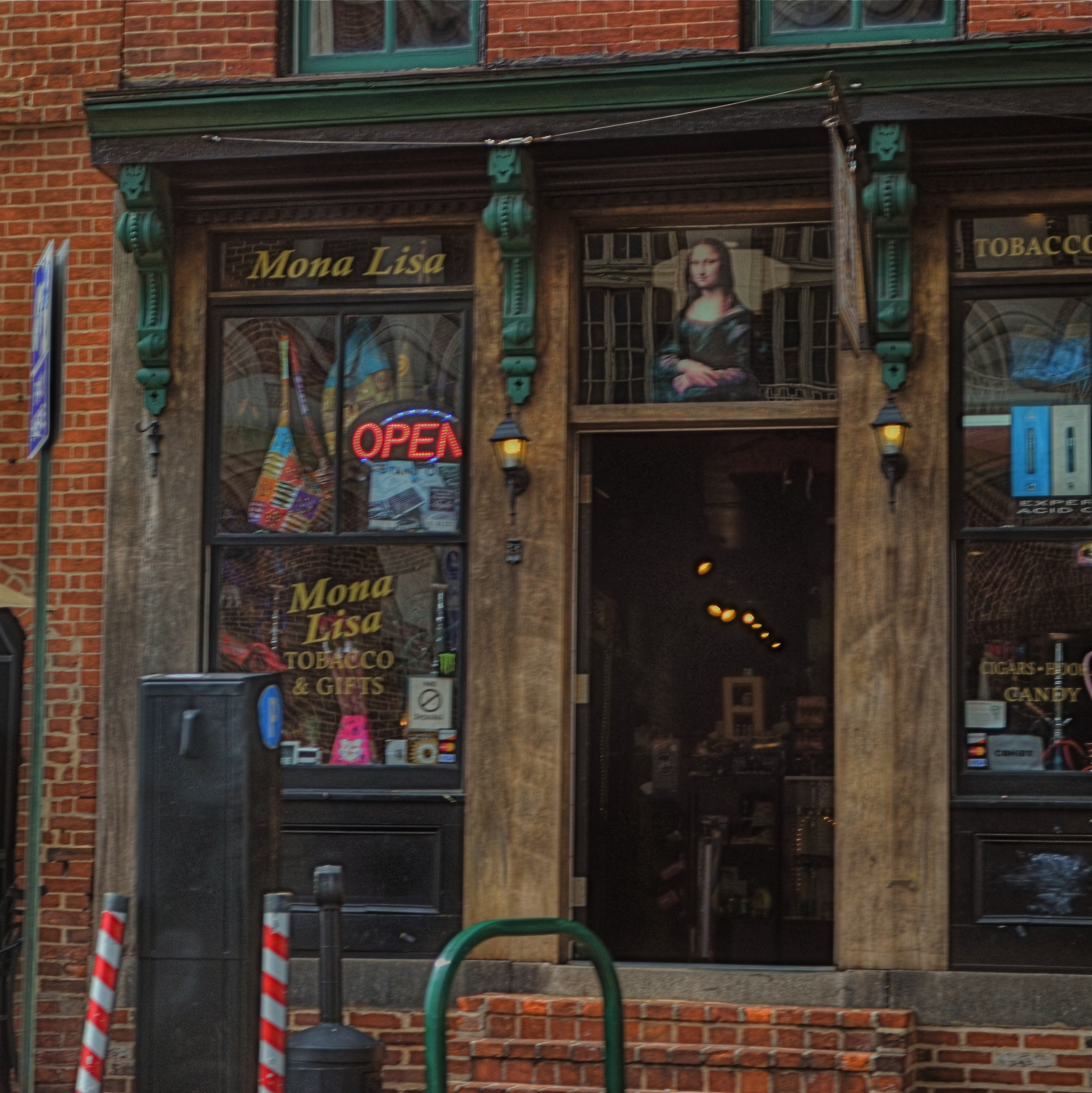
Mona Lisa Smoke Shop, Washington D.C., 2013.
By MICHAEL PERKINS
IF YOU TRAVEL ENOUGH, YOU’LL DISCOVER THAT, OF ALL THE TIMES YOU WANT to take a photograph, there are only a few times in which acceptable picture-making conditions are actually present. For all too many subjects that you experience on the fly, only a small percentage of them allow you the time, light, information or opportunity to do your best. And yet…you do what you must, and trust to instinct and chance for the rest.
Immediately upon arrival in a new town, my mind goes to one task, and one task only: sticking anyone else with the driving, so I can take potshots out the car window as I see fit. I have no need to head the posse or lead the expedition. You be in charge, big man. Get me to the hotel and leave me to make as many attempts as possible to put something worthwhile inside my camera.
Of course, this means that I have to pay at least some attention to how insanely you drive…shortcuts, rapid swerves, jolts and all. And, hey, couldn’t you have lingered a millisecond longer after the light went green, since I was just about to create an immortal piece of street art, instead of the muscular spasm I now have frozen forever on my memory card?
When shooting from a car, there are lots of things that go out the window (sorry), among them composition, exposure, stability, and, most generally, focus. En route to L’Enfant Plaza in Washington D.C. a few years ago, I fell in love with the funky little tobacco shop you see here. The colors, the woodwork, the look of yesteryear, it all spoke to me, and I had to have it. So I shot it at 1/250 sec, more than fast enough to freeze nearly anything in focus, unless by “nearly anything” you mean something that you’re not careening past at the pace of the average Tijuana taxicab. Result? Well, I didn’t wind up with unspeakable blur, but it’s certainly softer than I wanted. Of course, I could have offered an acceptable alibi for the shot, something based on some variant like, “of course, I meant to do that”, that is, until I outed myself in this post, just now.
But we try. Sometimes it’s the fleeting nature of things seen from car windows that make the attempt even more appealing than the potential result. In that instant, it seems like nothing’s more important than trying to take a picture. That picture. I won’t get ’em all. But as long as I live, I hope I never lose that mad, what-the-hell urge to just go for it.
So okay, seeing as this is a photo of a tobacco shop, this is where one of you cashes in the “close, but no cigar” gag line.
Go ahead, I’ll give you that one.
DOCUMENTARY OR DRAMA?
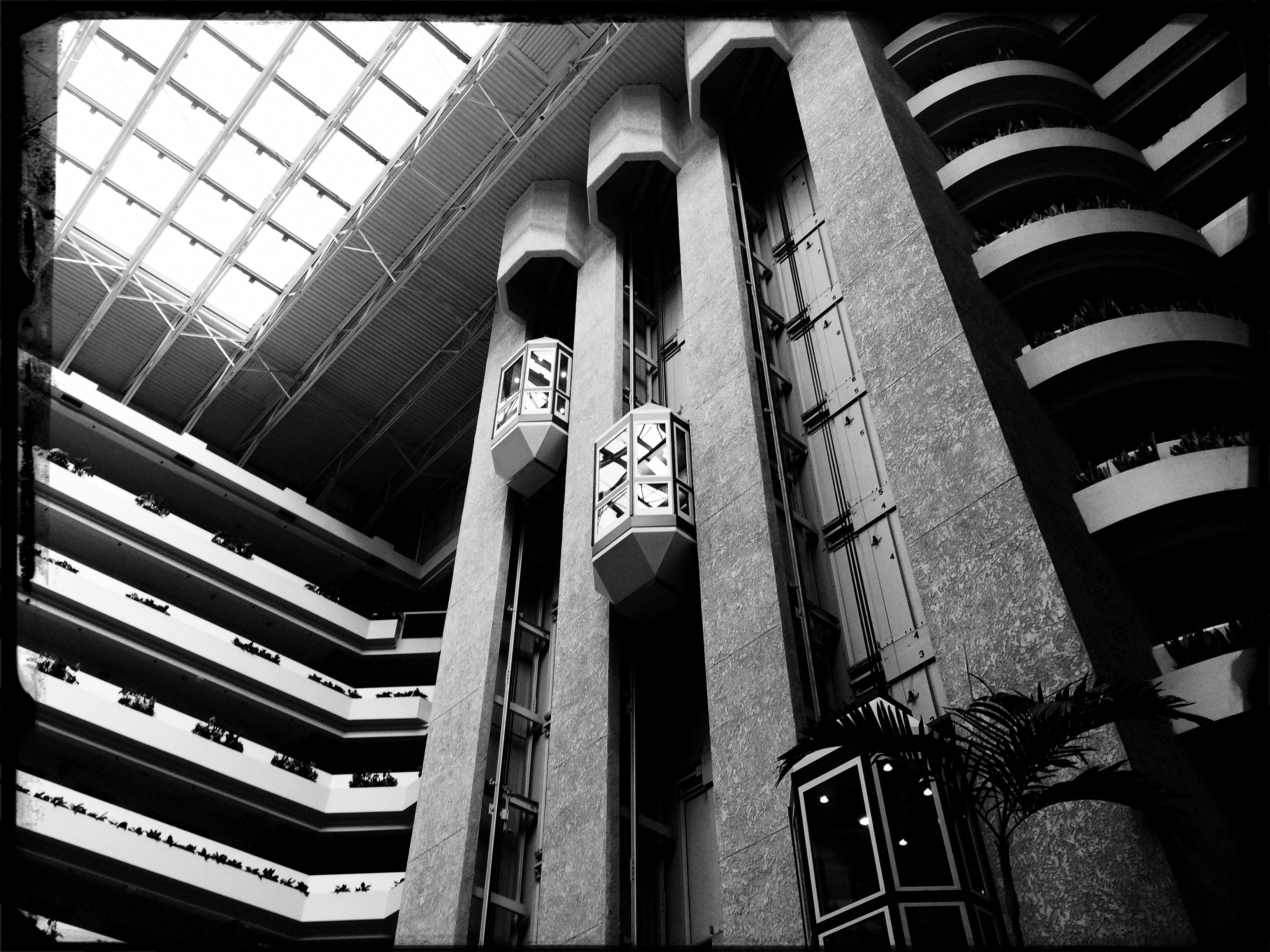
Creative use of contrast and texture can amp up interest in a shot that is overly pretty.
By MICHAEL PERKINS
I RECENTLY HEARD AN INTERESTING CRITIQUE OF A DRAMATIC CONTENDER for Best Film in the 2015 Oscar race. The critic in question complained that the film in question (Boyhood) was too realistic, too inclusive of banal, everyday events, and thus devoid of the dynamics that storytellers use to create entertainment. His bottom line: give us reality, sure, but, as the Brits say, with the boring bits left out.
If you’re a photographer, this argument rings resoundingly true. Shooters regularly choose between the factual documentation of a scene and a deliberate abstraction of it for dramatic effect. We all know that, beyond the technical achievement of exposure, some things that are real are also crashingly dull. Either they are subjects that have been photographed into meaninglessness (your Eiffel Towers, your Niagara Fallses) or they possess no storytelling magic when reproduced faithfully. That’s what processing is for, and, in the hands of a reliable narrator, photographs that remix reality can become so compelling that the results transcend reality, giving it additional emotive power.
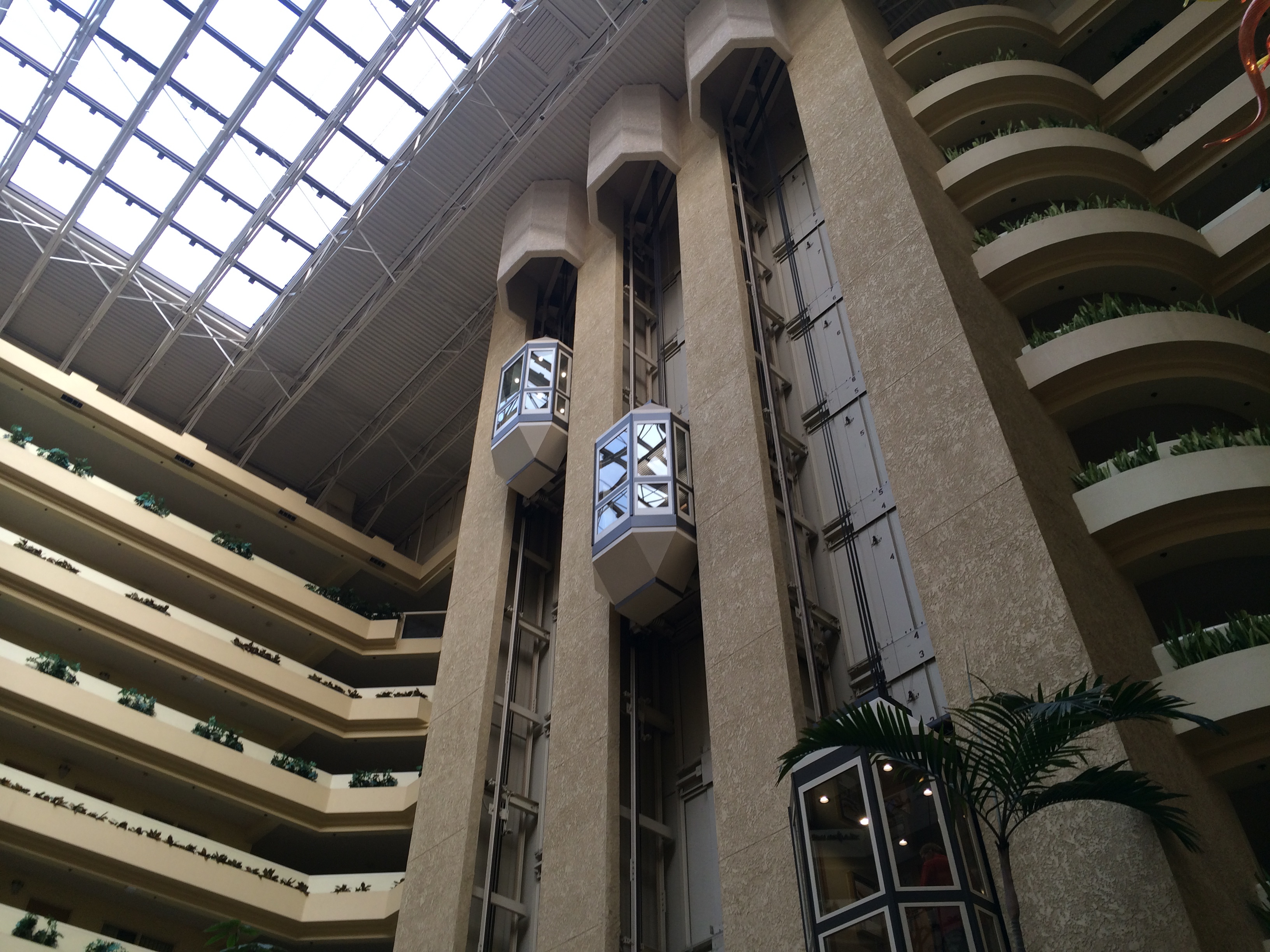
The original. Workable composition, but hampered by its realism.
This is why colors are garish in The Wizard Of Oz, why blurred shots can convey action better than “frozen” shots, and why cropping often delivers a bigger punch and more visual focus than can be seen in busier compositions. Drama is subject matter plus the invented contexts of color, contrast, and texture. It is the reassignment of values. Most importantly, it is a booster shot for subjects whose natural values under-deliver. It is not “cheating”, it is “realizing”, and digital technology offers a photographer more choices, more avenues for interpretation than at any other time in photo history.
The photo at left was taken in a vast hotel atrium which has a lot going for it in terms of scope and sweep, but which loses some punch in its natural colors. There is also a bit too much visible detail in the shot for a really dramatic effect. Processing the color with some additional grain and grit, losing some detail in shadow, and amping the overall contrast help to boost the potential in the architecture to produce the shot you see at the top of this post. Mere documentation of some subjects can produce pretty but flaccid photos. Selectively re-prioritizing some tones and textures can create drama, and additional opportunity for engagement, in your images.
 thenormaleye