FACE TIME
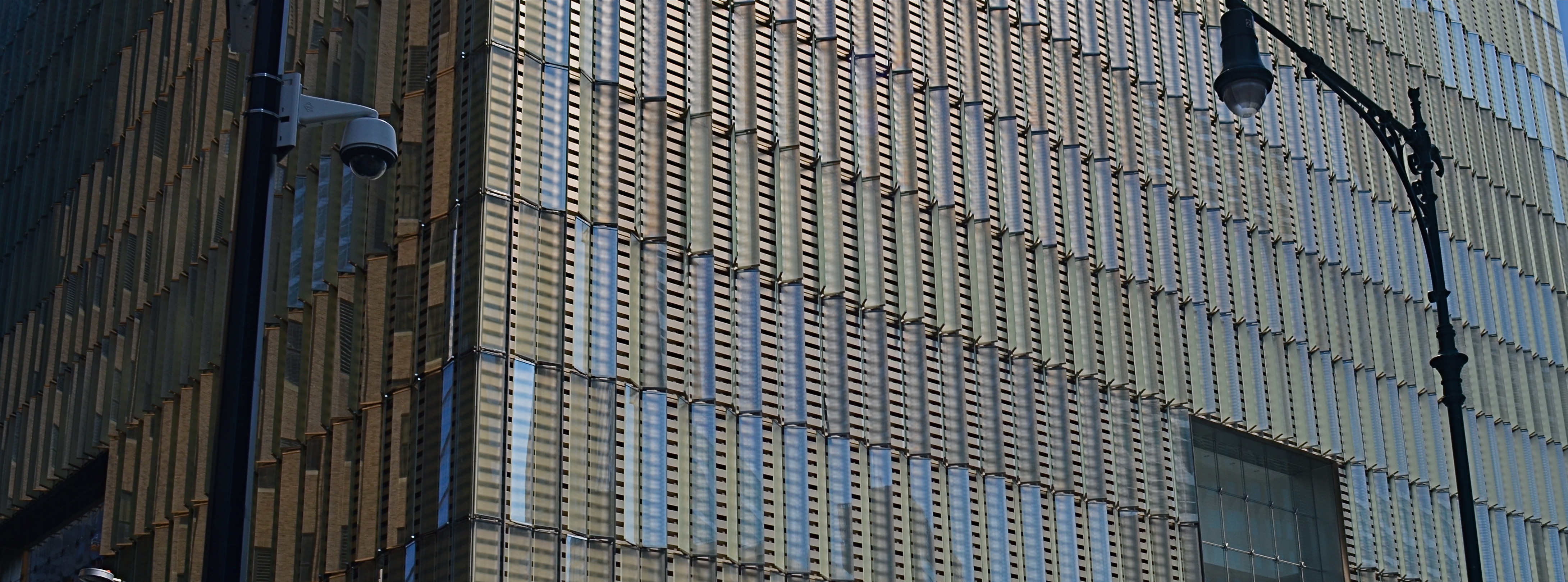
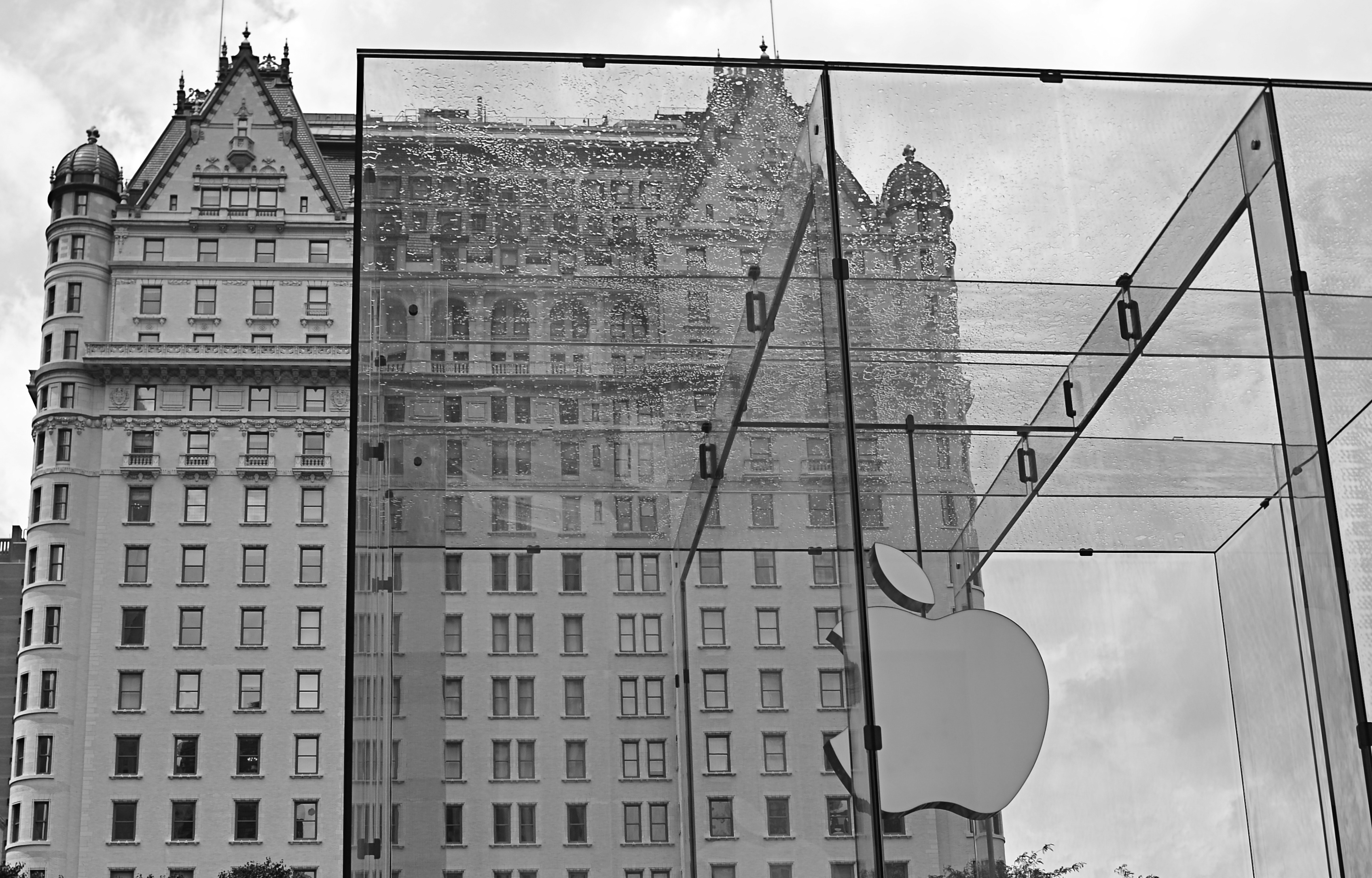
The resurrected World Trade Center, as seen at eye (rather than “craning neck”) level. 1/125 sec., f/5.6, ISO 100, 24mm.
By MICHAEL PERKINS
I AM OFTEN ASKED WHY ARCHITECTURE FIGURES SO STRONGLY in my photography, and I can only really put part of my answer into words. That’s what the pictures are for. I imagine that the question itself is an expression of a kind of disappointment that my work doesn’t focus as much on faces, as if the best kind of pictures are “people pictures”, with every other imaging category trailing far behind. But I reject that notion, and contend that, in studying buildings, I am also studying the people who make them.
Buildings can be read just as easily as a smile or a frown. Some of them are grimaces. Some of them are grins. Some of them show weary resignation, despair, joy. Architecture is, after all, the work of the human hand and heart, a creative interpretation of space. To make a statement? To answer a need? The furrowed brows of older towers gives way to the sunny snicker of newborn skyscrapers. And all of it is readable.
In photography, we are revealing a story, a viewpoint, or an origin in everything we point at. Some buildings, as in the case of the first newly rebuilt World Trade Center (seen above), are so famous that it’s a struggle to see any new stories in them, as the most familiar narratives blot the others out of view. Others spend their entire lives in obscurity, so any image of them is a surprise. And always, there are the background issues. Who made it? What was meant for it, or by it? What world gave birth to this idea, these designs, those aims?
Photography is about both revelation and concealment. Buildings, as one of the only things we leave behind to mark our having passed this way, are testaments. Read their faces. No less than a birthday snapshot, theirs is a human interest story.
WHEN TOY BECOMES TOOL
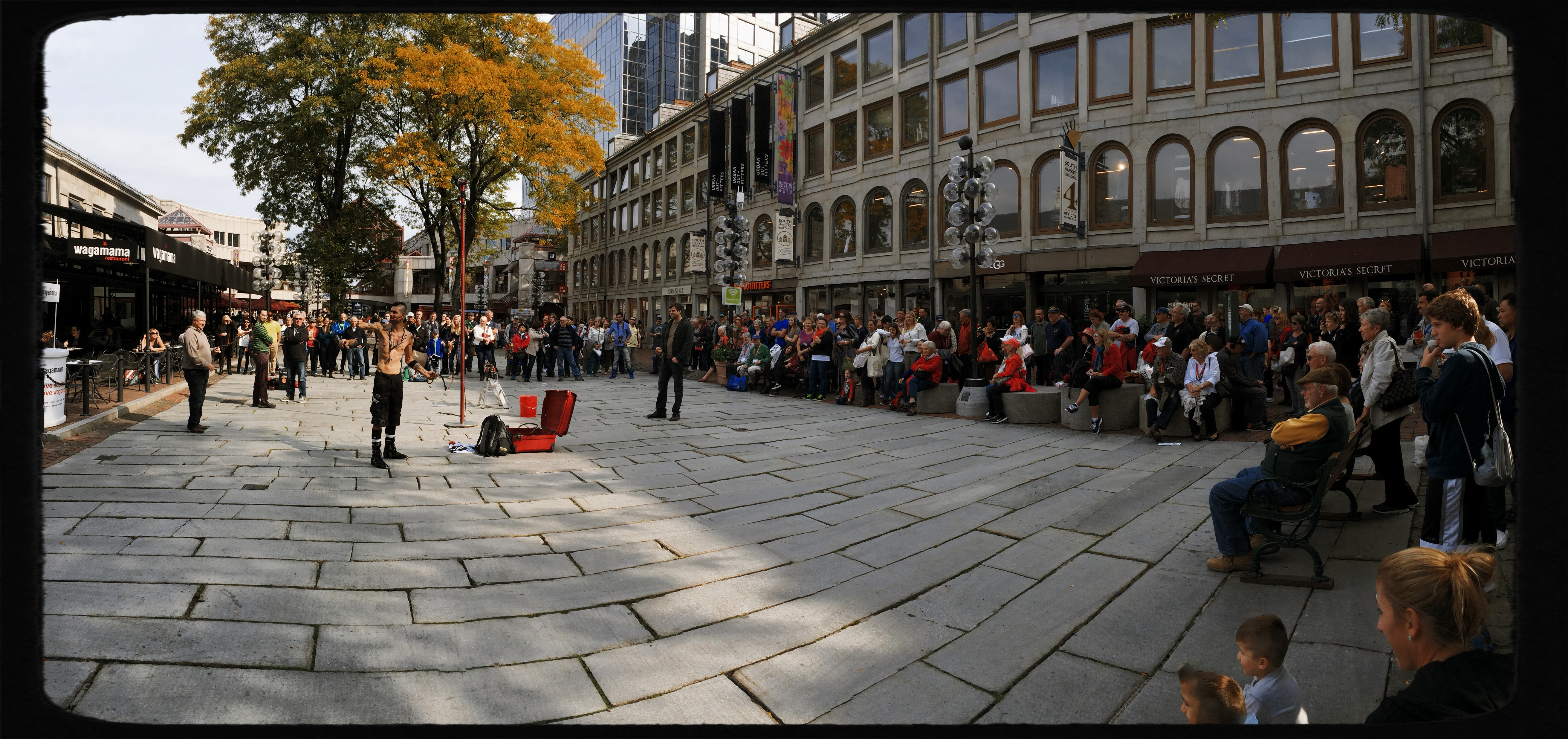
It’s possible to get a truly steady wide-angle image from iPhone’s in-camera pano tool. But it takes some real work, and not a little luck.
By MICHAEL PERKINS
EVERY TECHNICAL ADVANCEMENT IN THE HISTORY OF PHOTOGRAPHY has been a double-edge sword, creating either novel gimmickry or a wider array of serious technique, depending on who’s playing the game. The most popular tools available to the widest number of users, from fisheye lenses to phone app filters, illustrate this point again and again. Some people pick up these new features, play with them for a bit, then abandon them forever, while others use them as a way to expand their approach to visualizing an image.
I have written here before about iPhone’s in-camera panoramic tool, which I expect was originally included as a family-friendly option, perfect for making sure that everyone on the Little League team or the family reunion could be captured in one frame, the app instantly stitching a series of narrower photos taken in real time during a left-to-right pan. And, while it can certainly serve in that snapshot-y task, it creates its own set of technical problems. Nonetheless, I have become convinced, over the last few years, that it can lend additional ooomph to serious image making if (a) one is extremely selective in what is shot with it, and (b) the built-in shortcomings of the app can be worked around in the moment.
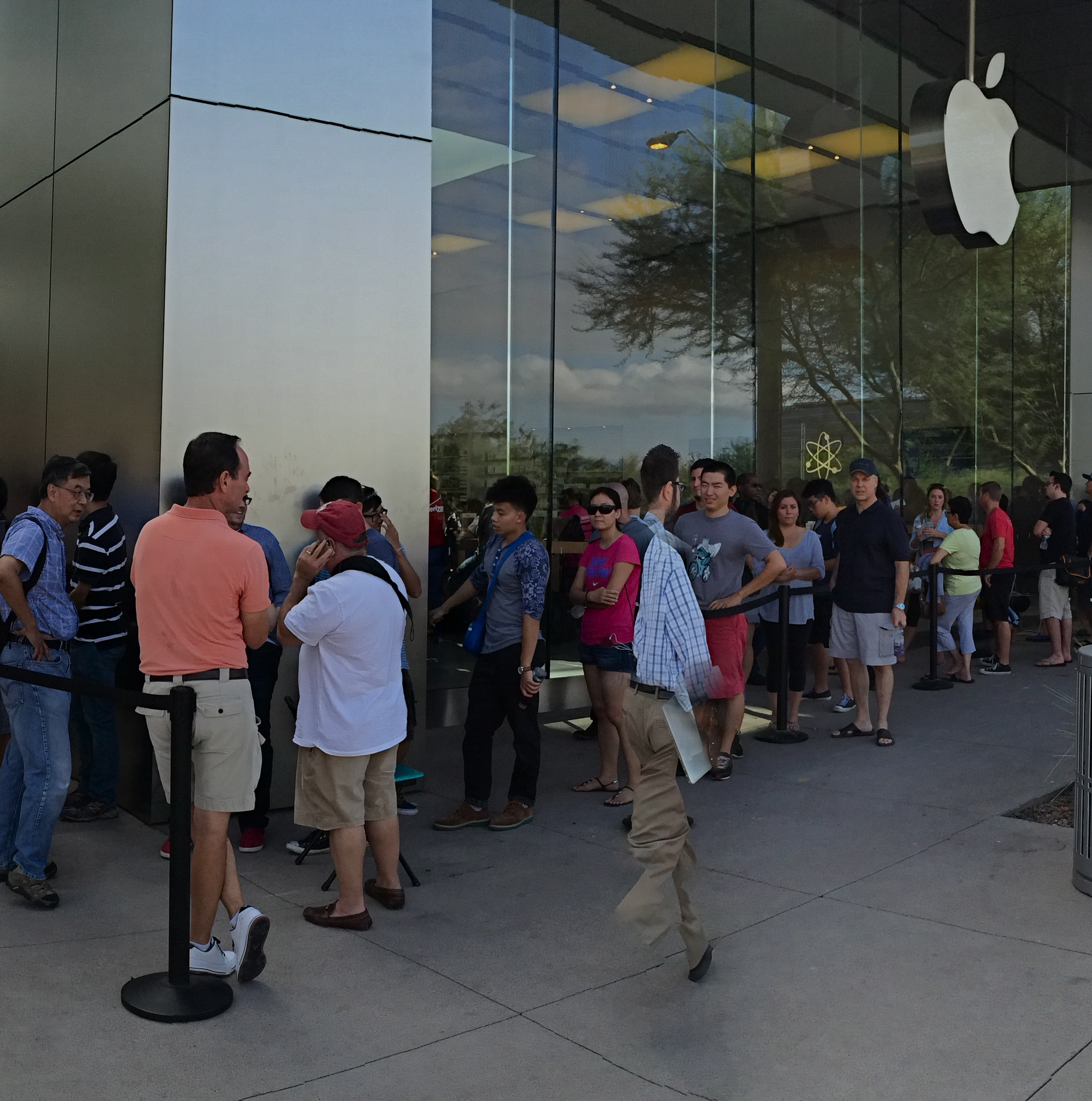
When people move through your iPhone pano panning sweep, they get kind of “scissored away”.
As with any other technical toy/tool, the results depend on how well you understand the strengths and weaknesses of iPhone’s pano app and plan your shots. Since you pan by pivoting your body (as if it’s the hub of a wheel), you can’t maintain the same distance from your entire subject as you move the camera left to right. That means that the center of that pivot, or what’s dead ahead of you, will tend to distort outward, like the center of a fisheye shot. Depending on what’s at the middle of your shot and how far you are from it, this can give you some unwanted funhouse results.
Also, in what is odd for a tool that’s designed to take pictures of lots of people, using the iPhone pano app to shoot a live, moving crowd is truly hit-or-miss. If a person moves through your picture as you are panning in the same space they occupy, they may be recorded as a slice or a piece of themselves, being caught partly in some of the picture’s vertical “tiles” but absent from the ones directly adjacent to it, causing them to register as a disembodied leg or a slivered torso floating in the air (see left).
In the shot at the top of this page, I was lucky that the street magician at left was standing still during the time I panned across him (once I’ve recorded his part of the frame, he can do what he likes, since the lens no longer “sees” that part of the picture). Likewise the crowd, enthralled by his performance, was remaining pretty static as I completed the pan across their part of the frame. The result has all the story-telling power of an ultra-wide shot, and, because of the composition, actually uses the fisheye-ish bulge to make the segmented pavement appear to be radiating outward from the performer.
And of course there is the subject itself, which has to benefit from all that left-right arrangement of information if you want to avoid just taking the picture for the sake of the effect alone. And there we have the balance between toy and tool that every photographer hopes to strike. Toys get cast aside once boredom sets in. Tools stay around and add to your work in very real ways.
THE LAST OF MANY GOODBYES
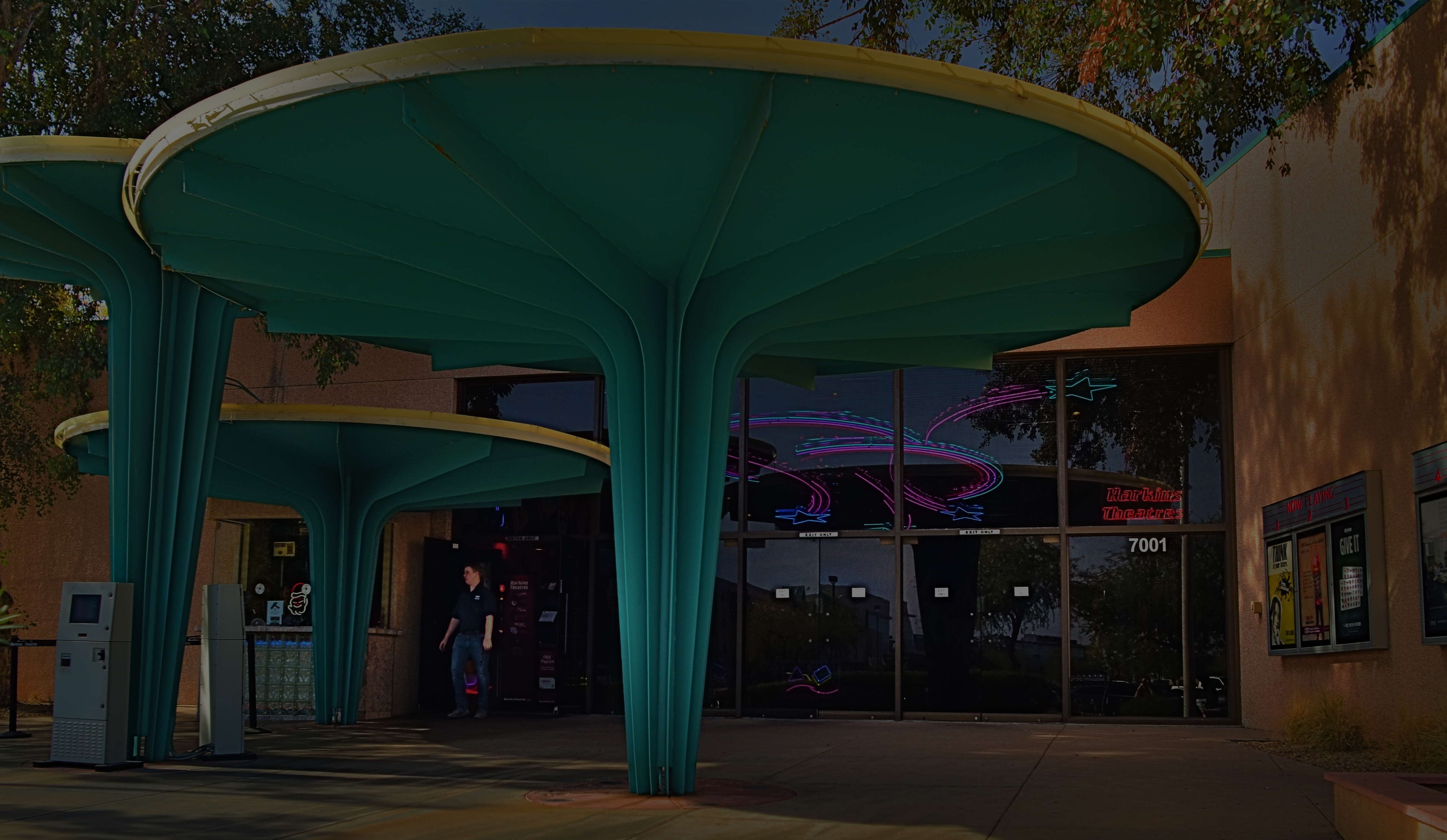
Scottsdale, Arizona’s gorgeous little art-house complex, the Camelview Theatre, on the afternoon of its final day, December 10, 2015.
By MICHAEL PERKINS
ON THE SPOCK SIDE OF OUR BRAINS, OF COURSE WE KNOW that there is nothing particularly magical about buildings per se. Stone and steel cannot, after all, generate memory or experience; they merely house the people who do. Still and all, the loss of certain edifices engenders a purely emotional response in us, perhaps because special things can no longer happen there, and the physical proof that any of it happened at all is being rendered, at least physically, into dust. That puts us in the realm of dreams, and that’s where great photographs are born.
When a place that is special to us is about to wink out of existence, everyone who used that place stamps it with their own stories. We went to school here. This is where I proposed to your mother. The bandstand was here, along this wall. So personal a process is this that our farewell photographs of these places can take on as many different flavors as the number of people who walked their halls. And, as a result, it’s often interesting to compare the final snaps of important places as filtered through the disparate experiences of all who come to reflect, and click, in the shadow of the wrecking ball.
I have attended many an opening at theatres, but I always make a point to attend their closings. Not the end of a certain film or engagement, but the final curtain on the theatres themselves. How best to see their final acts? As a quiet, gentle sunsetting, as with the above image of Scottsdale, Arizona’s Camelview theatre, shuttering in deference to a bigger, newer version of itself at the end of 2015? Or, in the colorful confusion of the venue’s final night, with crowds of well-wishers, local dignitaries and well-wishers crowding into the final screening?
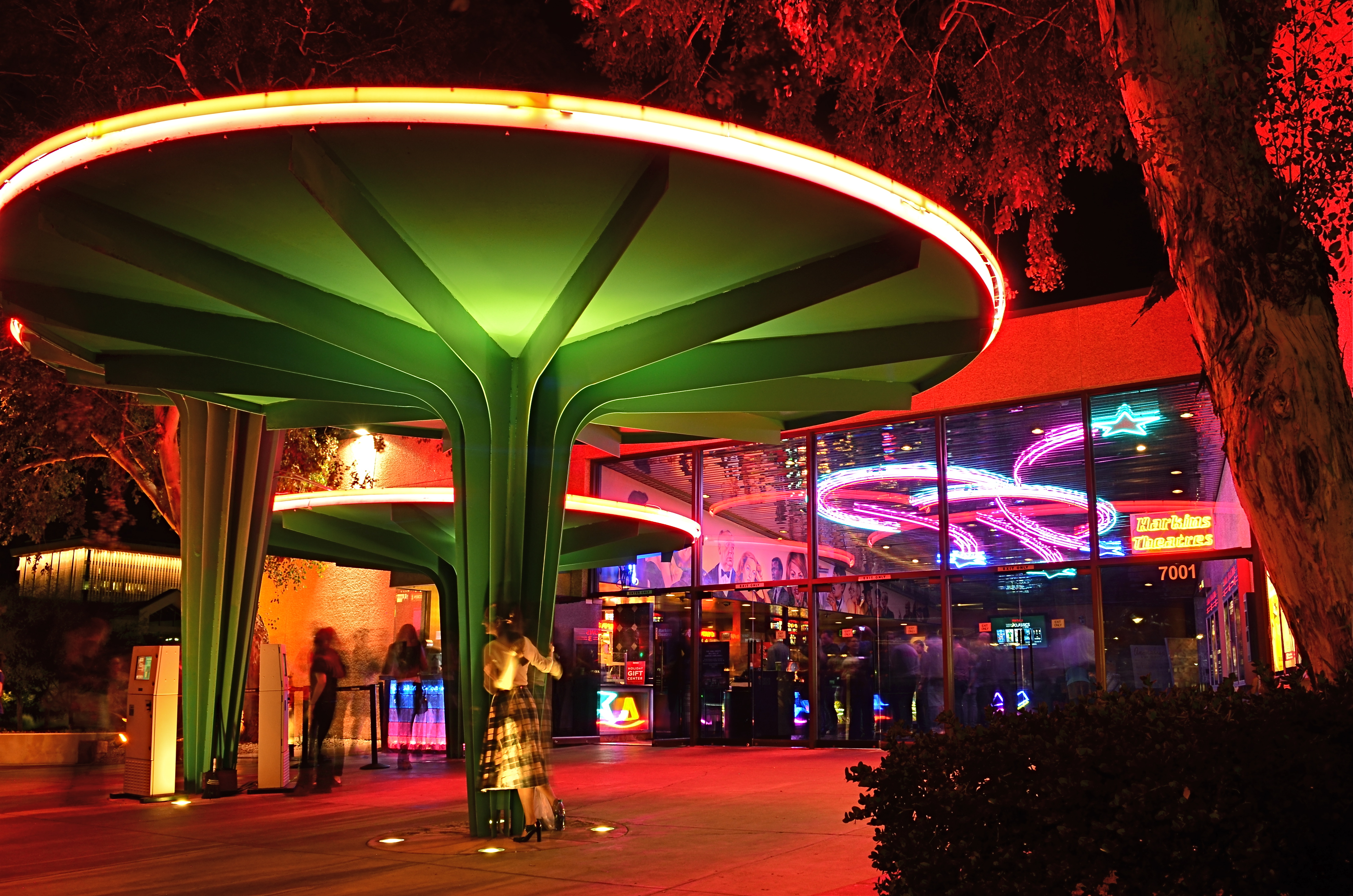
Later that same day: the Camelview’s last neon-lit night of glamour.
Each view projects my own feelings onto the resulting images, whether it be a golden dusk or a frenetic, neon-drenched, tomorrow-we-die send-off, complete with champagne and cheers. The introspective daytime shot has no teeming crowds or fanfare. The night, with its ghostly guest blurs (a result of the longer exposure) features people who are as fleeting as the theatre’s own finite run. Both are real, and neither is real. But they are both mine.
Buildings vanish. Styles change. Neighborhoods evolve. And photographic goodbyes to all these processes are never as simple as a one-size-fits-all souvenir snap. People, and memories, are too customized for that. As with movies themselves, there is always more than one way to get to the final fadeout.
INTERACTIONS
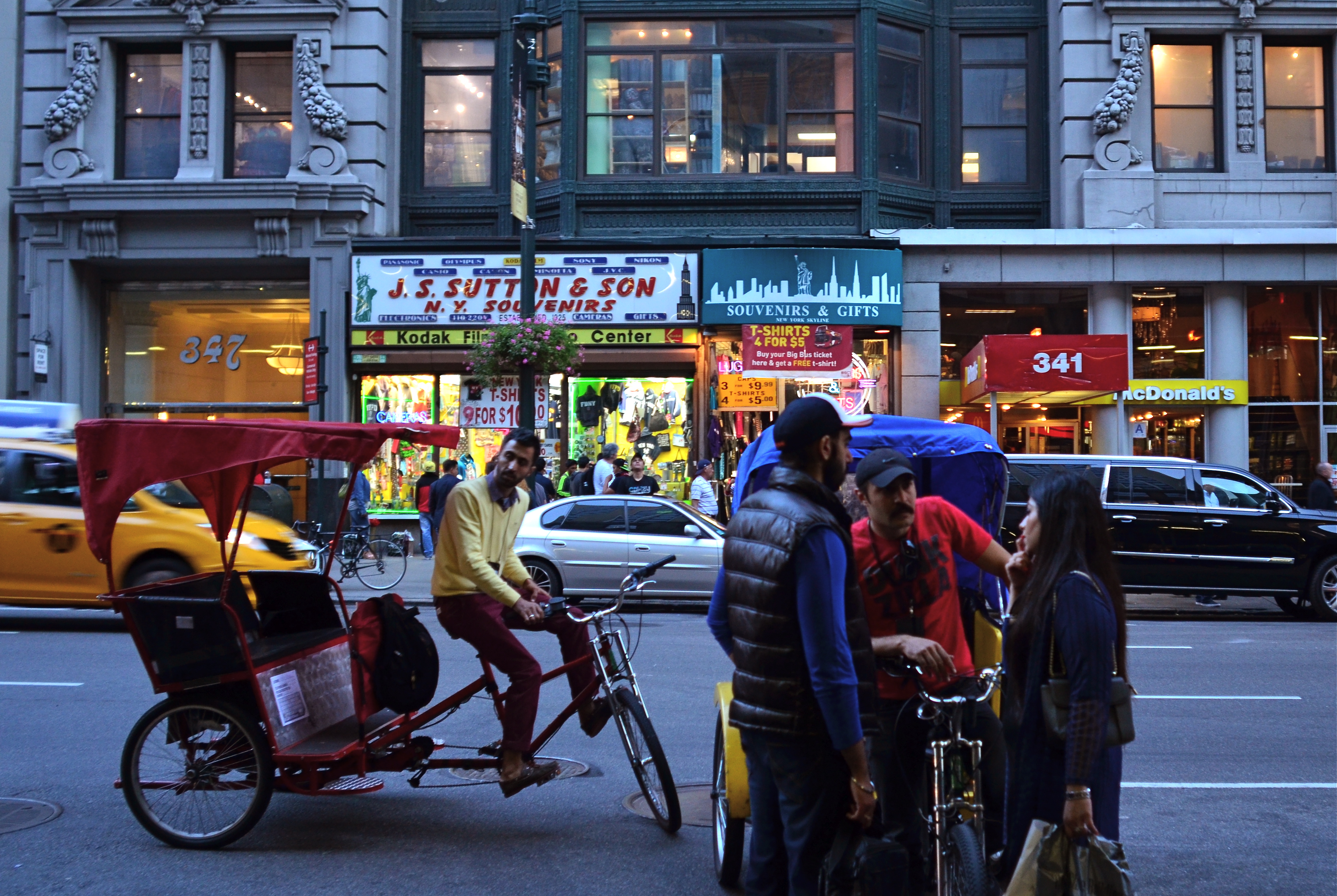
All Around The Town, 2015. 1/50 sec., f/5.6, ISO 320, 24mm.
By MICHAEL PERKINS
IT’S FAIRLY EASY TO FIGURE OUT WHERE TO TAKE YOUR CAMERA if you are trying to visually depict a vibe of peace and quiet. Landscapes often project their serenity onto images with little translation loss, and you can extract that feeling from just about any mountain or pond. For the street photographer, however, mining the most in terms of human stories is more particularly about locations, and not all of them are created equal.
Street work provides the most fodder for storytelling images in places where dramatically concentrated interactions occur between people. One hundred years ago, it might have been the risk and ravage of Ellis Island. On any given sports Sunday, the opposing dreams that surround the local team’s home stadium might provide a rich locale. But whatever the site, social contention, or at least the possibility of it, generates a special energy that feeds the camera.
In New York City, the stretch of Fifth Avenue that faces the eastern side of the Empire State Building is one such rich petri dish, as the street-savvy natives and the greener-than-grass tourists collide in endless negotiation. Joe Visitor needs a postcard, a tee-shirt, a coffee mug, or a discounted pass to the ESB observation deck, and Joe Hometown is there to move the goods. Terms are hashed over. Information slithers in and out a dozen languages, commingling with the verbal jazz of Manhattan-speak. Deals are both struck and walked away from. And as a result, stories flow quickly past nearly every part of the street in regular tidal surges. You just pick a spot and the pictures literally come to you.
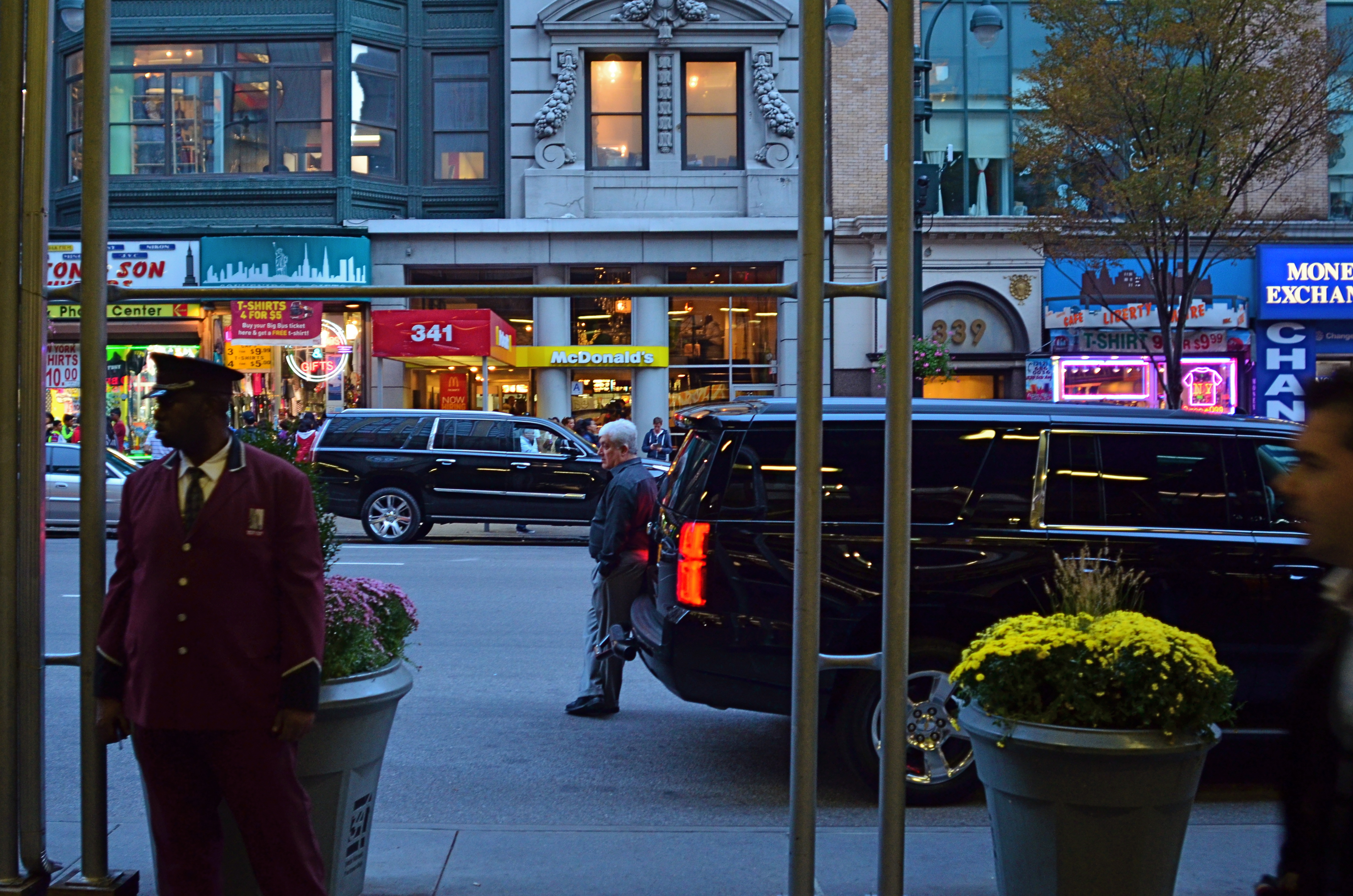
At Their Posts, 2015. 1/50 sec ., f/5.6, ISO 500, 24mm.
In these images, two very different tales unfold in nearly an identical part of the block. In the first, bike rickshaw drivers negotiate a tourist fare. How long, how far, how much? In the second, two regulars demonstrate that, in New York, there is always the waiting. For the light. For parking. For someone to clear away, clear out or show up. But always, the waiting. These are both little stories, but the street they occur on is a stage that is set, struck and re-set constantly as the day unfolds. A hundred one-act plays a day circle around those who want and those who can provide.
Manhattan is always a place of great comings and goings, and here, in front of the most iconic skyscraper on earth, those who haven’t seen anything do business with those who’ve seen it all. Street photography is about opportunity and location. Some days give you one or the other. Here, in the city that never sleeps, both are as plentiful as taxicabs.
SEE DICK THINK.
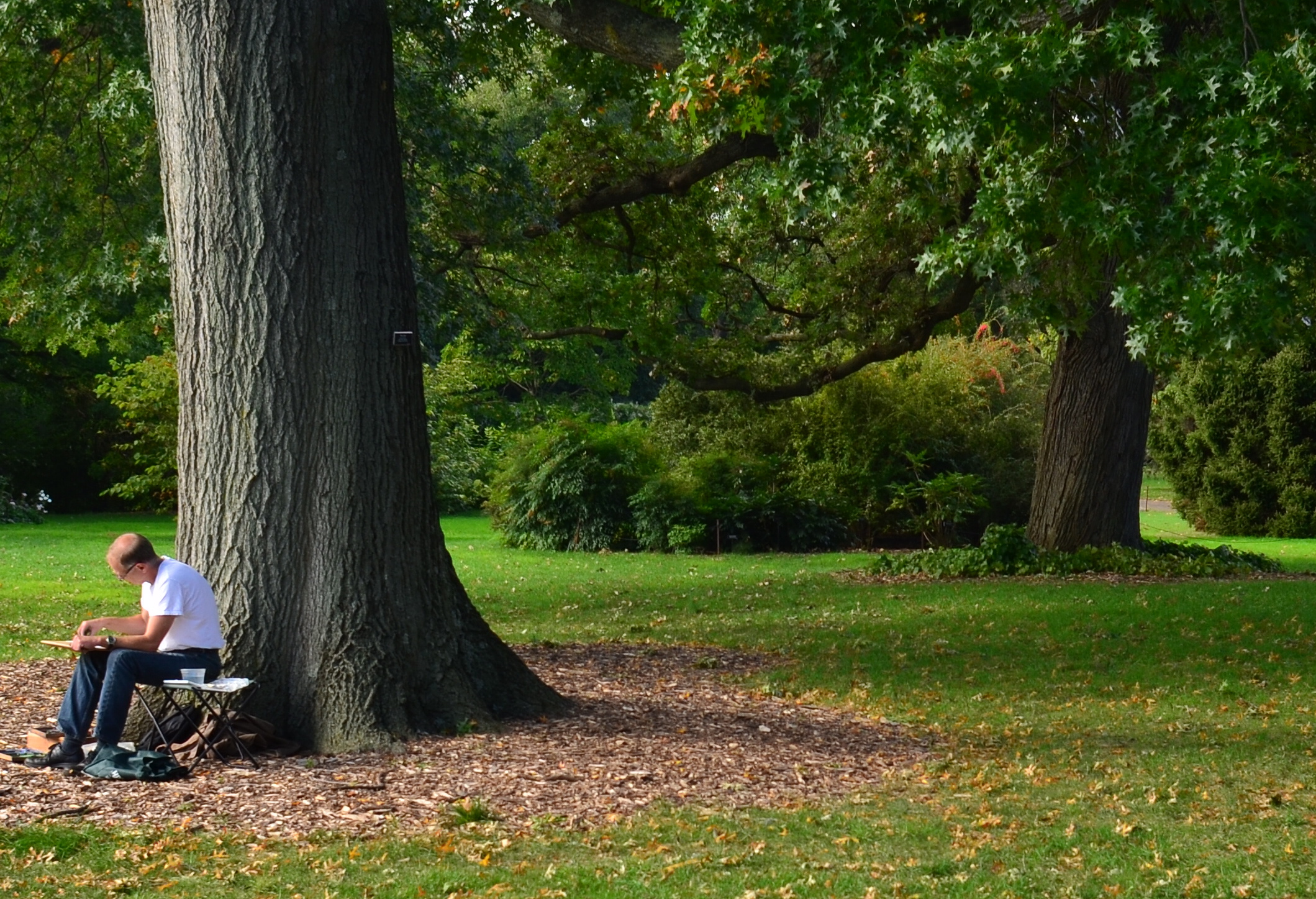
Slow yourself down by shooting someone who is slowing himself down.
By MICHAEL PERKINS
FORGET BLOWN EXPOSURES, SHAKY SNAPSHOTS, AND FLASH-SATURATED BLIZZARDS. The hardest thing to avoid in the taking of a picture is winding up with a picture full of other people taking a picture. Hey, democracy in art, power to the people, give every man a voice, yada yada. But how has it become so nearly impossible to keep other photographers from leaning in, crossing through, camping out or just plain clogging up every composition you attempt?
And is this really what I’m irritated about?
Maybe it’s that we can all take so many pictures without hesitation, or, in many cases, without forethought or planning, that the exercise seems to have lost some of its allure as a deliberate act of feeling/thinking/conceiving. Or as T.S. Elliot said, it’s not sad that we die, but that we die so dreamlessly. It’s enough to make you seek out things that, as a photographer, will actually force you to slow down, consider, contemplate.
And one solution may lie in the depiction of other people who are, in fact, taking their time, creating slowly, measuring out their enjoyment in spoonfuls rather than buckets. I was recently struck by this in a visit to the beautiful Brooklyn Botanical Gardens on a slow weekday muted by overcast. There were only a few dozen people in the entire place, but a significant number of those on hand were painters and sketch artists. Suddenly I had before me wonderful examples of a process which demanded that things go slowly, that required the gradual evolution of an idea. An anti-snapshot, if you will. And that in turn slowed me down, and helped me again make that transition from taking pictures to making them.
Picturing the act of thought, the deep, layered adding and subtracting of conceptual consequence, is one of the most rewarding things in street photography. Seeing someone hatch an idea, rather than smash it open like a monkey with a cocoanut does more than lower the blood pressure. It is a refresher course in how to restore your own gradual creativity.
MODEL CITIZENS
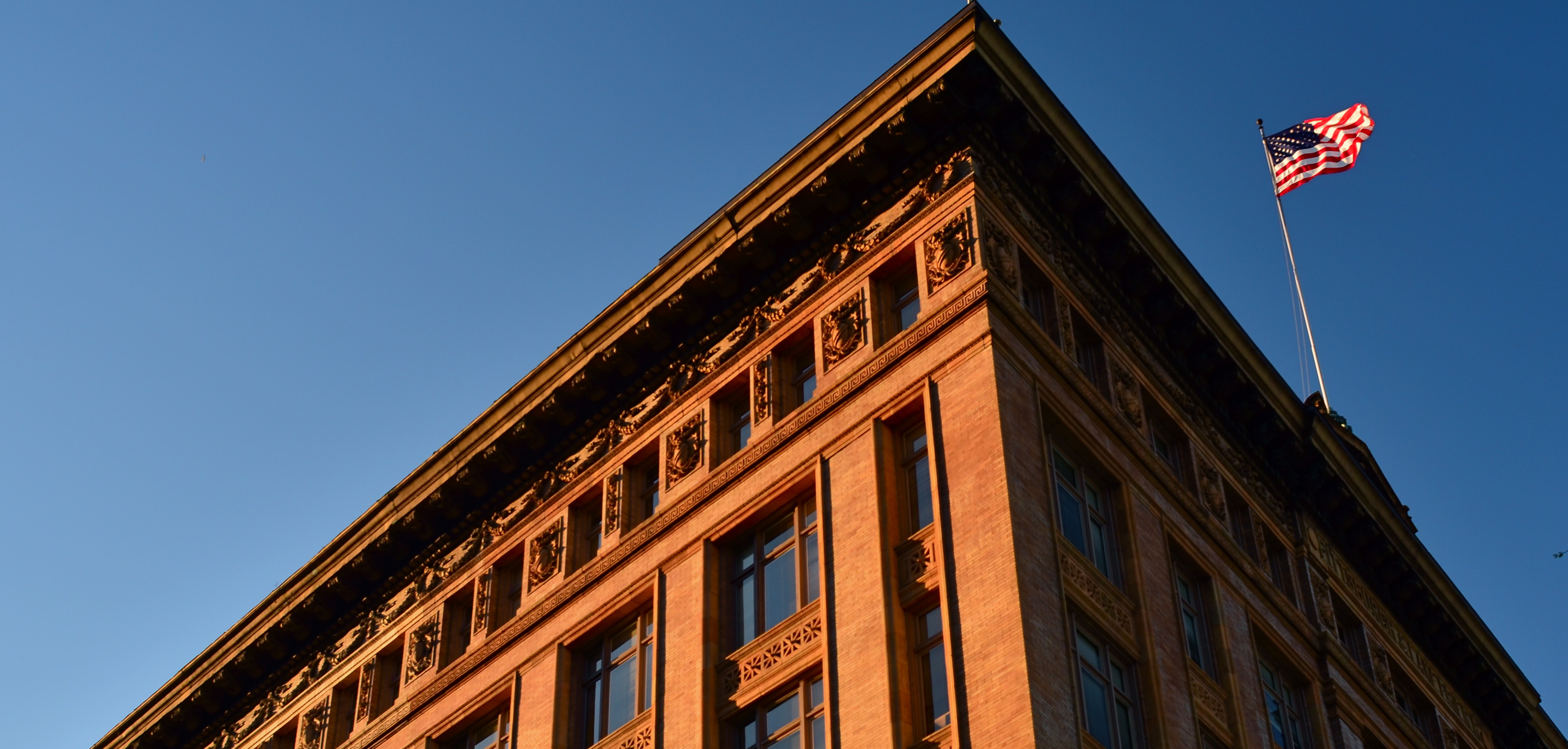
Cities can suggest any place, any time, even within your most familiar neighborhoods.
By MICHAEL PERKINS
THE ROLE OF THE URBAN PHOTOGRAPHER IS TO REKINDLE OUR RELATIONSHIP to our cities, to ignite a romance that might have gone cold or fizzled out. We grow up inside the buildings and streets of our respective towns one day at a time, and, while familiarity doesn’t always breed contempt, the slow, steady drip of repetitive sequence can engender a kind of numb blindness, in that we see less and less of the places we inhabit. Their streets and sights become merely up, down, in, out, north side or east side, and their beauty and detail dissolve away before the regular hum of our lives.
An outside eye, usually trained on a camera, is a jolt of recognition, as if our city changed from a comfy bathrobe into a cocktail dress. We even greet images of our cities with cries of “where’s THAT????”, as if we never saw these things before. The selective view of our streets through a camera, controlling framing, context, color and focus, enchants us anew. If the photog does his job properly, the magic is real: we truly are in new territory, right in our own backyards.
A city with iconic landmarks, those visual logos that act as absolute identifiers of location, actually are easier for the urban photographer, since their super-fame means that many other remarkable places have gone under-documented. Neighborhoods are always rising and falling, as the Little Italys fade and the Chinatowns ascend. Yesterday’s neglected ghetto becomes today’s hip gallery destination. Photographers can truly rock us out of the lethargy of daily routine and reveal the metropolis’s forgotten children in not only aesthetic but journalistic ways, reminding us of problems that need remedy, lives that plead for rescue.
The photographer in the city is an interpretive artist. His mantra: hey, townies, you ain’t seen nothin’ yet.
THE GENESIS OF REAL
By MICHAEL PERKINS
“(the book is) flawed by meaningless blur, grain, muddy exposure, drunken horizons, and general sloppiness, (showing) a contempt for quality and technique…” –Popular Photography, in its 1958 review of The Americans
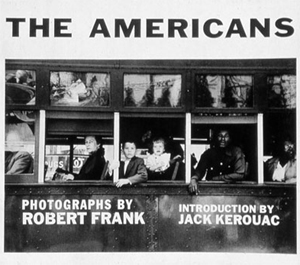 THOSE WORDS OF DISDAIN, designed to consign its subject to the ash heap of history, are now forever attached to the photographic work that, instead of vanishing in disgrace, almost single-handedly re-invented the way the world saw itself through the eye of a camera. For to thumb through Robert Frank’s 1958 collection of road images, The Americans, is to have one’s sense of what is visually important transformed. Forever.
In the mid-1950’s, mass-market photojournalist magazines from Life to Look regularly ran “essays” of images that were arranged and edited to illustrate story text, resulting in features that told readers what to see, which sequence to see it in, and what conclusions to draw from the experience. Editors assiduously guided contract photographers in what shots were required for such assignments, and they had final say on how those pictures were to be presented. Robert Frank, born in 1924 in Switzerland, had, by mid-century, already toiled in these formal gardens at mags that included Harper’s Bazaar and Vogue, and was ready for something else, a something else where instinct took preference over niceties of technique that dominated even fine-art photography.
Making off for months alone in a 1950 Ford and armed only with a 35mm Leica and a modest Guggenheim grant, Frank drove across much of the United States shooting whenever and wherever the spirit moved him. He worked quickly, intrusively, and without regard for the ettiquette of formal photography, showing people, places, and entire sub-cultures that much of the country had either marginalized or forgotten. He wasn’t polite about it. He didn’t ask people to say cheese. He shot through the windshield, directly into streetlights. He didn’t worry about level horizons, under-or-over exposure, the limits of light, or even focal sharpness, so much as he obsessed about capturing crucial moments, unguarded seconds in which beauty, ugliness, importance and banality all collided in a single second. Not even the saintly photojournalists of the New Deal, with their grim portraits of Dust Bowl refugees, had ever captured anything this immediate, this raw.
Frank escaped a baker’s dozen of angry confrontations with his reluctant subjects, even spending a few hours in local jails as he clicked his way across the country. The terms of engagement were not friendly. If America at large didn’t want to see his stories, his targets were equally reluctant to be bugs under Frank’s microscope. When it was all finished, the book found a home with the outlaw publishers at Grove Press, the scrappy upstart that had first published many of the emerging poets of the Beat movement. The traditional photographic world reacted either with a dismissive yawn or a snarling sneer. This wasn’t photography: this was some kind of amateurish assault on form and decency. Sales-wise, The Americans sank like a stone.
Around the edges of the photo colony, however, were fierce apostles of what Frank had seen, along with a slowly growing recognition that he had made a new kind of art emerge from the wreckage of a rapidly vanishing formalism. One of the earliest converts was the King of the Beats Himself, no less than Jack Kerouac, who, in the book’s introduction said Frank had “sucked a sad poem right out of America and onto film.”
Today, when asked about influences, I unhesitatingly recommend The Americans as an essential experience for anyone trying to train himself to see, or report upon, the human condition. Because photography isn’t merely about order, or narration, or even truth. It’s about constantly changing, and re-charging, the conversation. Robert Frank set the modern tone for that conversation, even if he first had to render us all speechless.
WRITE YOUR OWN STORY
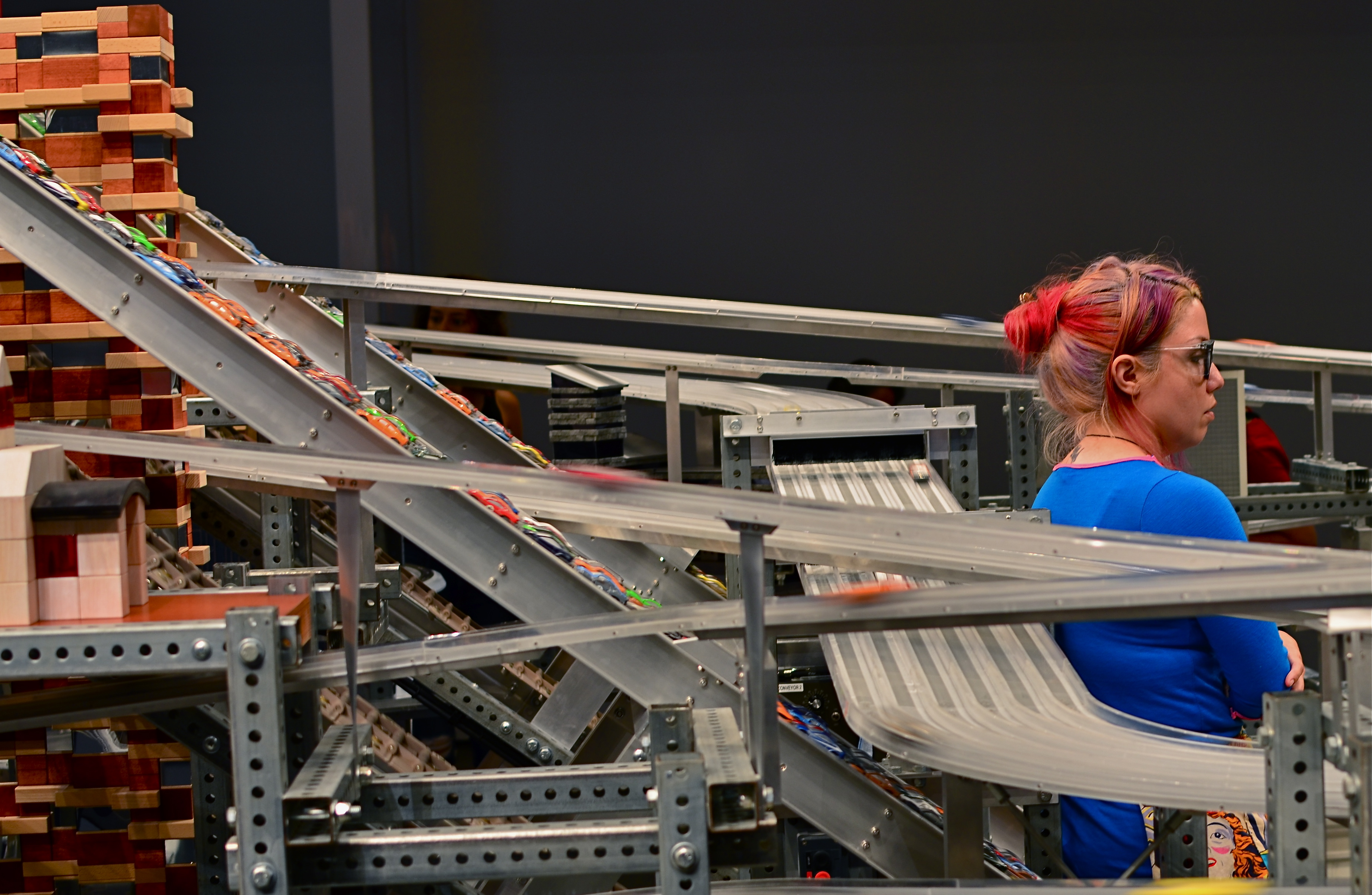
On Stand-By, 2015. 1/25 sec., f/3.5, ISO 100, 35mm.
By MICHAEL PERKINS
THE OLDEST CONSISTENT ROLE OF PHOTOGRAPHY IS AS NARRATIVE, its storytelling ability borrowed from painting but later freed, as painting would also be, from representations of mere reality. Before the beginning of the 20th century, photographs held moments, chronicled events, froze people in time. Over the next hundred tumultuous years, every part of the narrative process for all arts would be challenged, shattered and reassembled several times over. We pretend there are still rules that always apply to what an image says to us, but that is really only sentiment. Some photographs simply are.
What they are is, of course, both fun and infuriating for creator and audience alike. We wonder sometimes what we are supposed to think about a picture. We take comfort in being led a certain way, or in a set sequence. Look here first, then here, then here, and draw such-and-such a conclusion. But just as music need not relate a story in traditional terms (and often does not) the photograph should never merely present reality as a finished arrangement. The answer to the question, “what should I think about this?” can only be, whatever you find, whatever you yourself see.
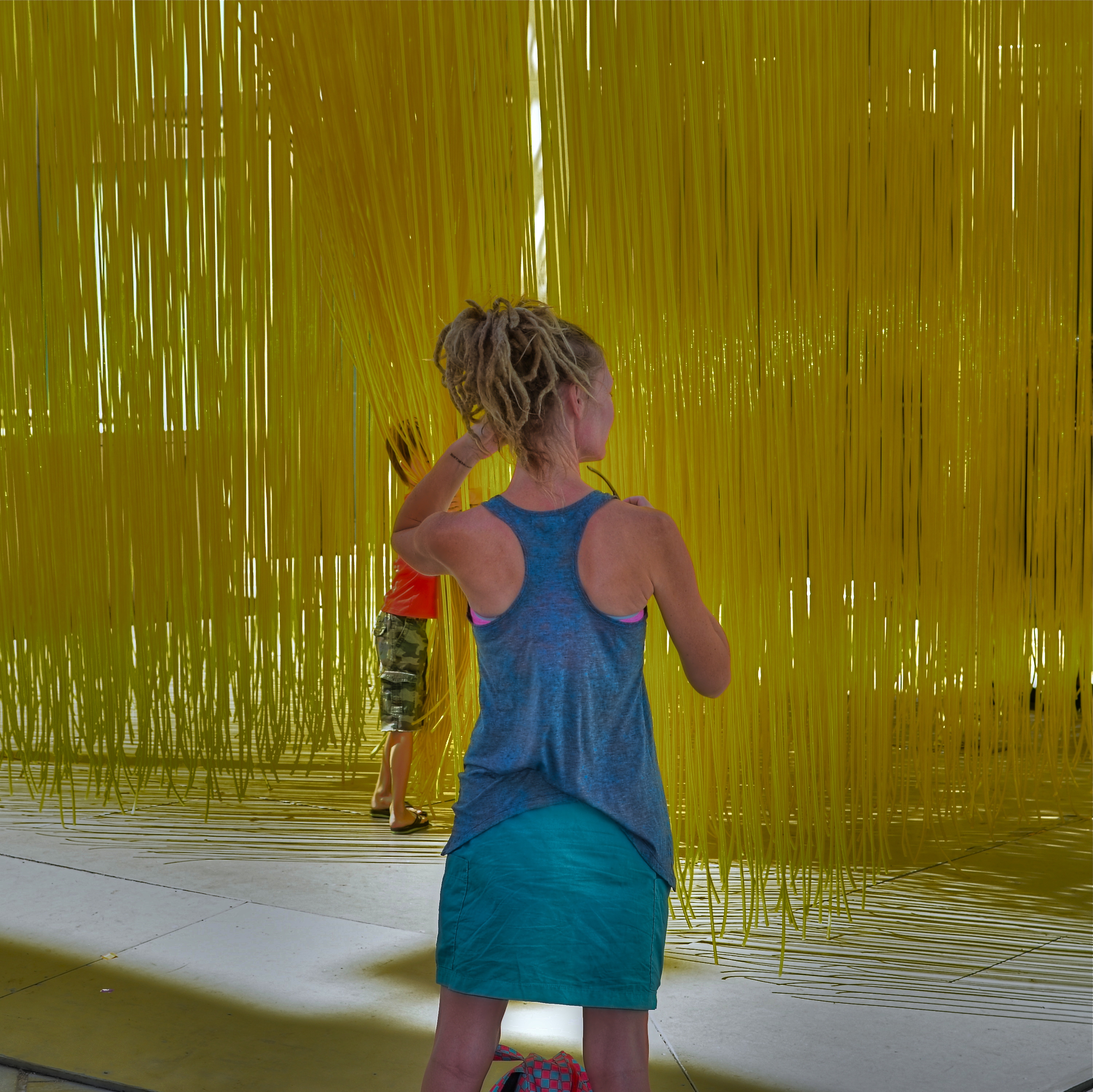
Strands, 2015. 1/200 sec., f/5.6, ISO 100,35mm.
I love having a clear purpose in a picture, especially pictures of people, and it has taken me years to make such images without the benefit of a deliberate road map. To arrange people as merely elements in a scene, then trust someone else to see what I myself cannot even verbalize, has forced me to relax my grip, to be less controlling, to have confidence in instincts that I can’t readily spell out in 25 words or less.
What are these people doing? What does their presence reveal beyond the obvious? Is there anything “obvious” about the picture at all? Just as a still life is not a commentary on fruit or a critique of flowers, some photographed people are not to be used in the service of a story. They can, in the imaginations of viewers, provide much more than that. Photography is most interesting when it’s a conversation. Sometimes that discussion takes place in strange languages.
THE SINGLE BULLET THEORY
Many of your own best pictures are single-take, all-or-nothing shots. There’s a reason for that.
By MICHAEL PERKINS
Okay, Wang, I think that’s enough pictures of the parking lot. —Rodney Dangerfield, Caddyshack
IF YOU WERE TO EXPRESS TODAY’S PHOTOGRAPHIC FREEDOM IN TERMS OF FIREPOWER, it would be fair to say that many of us have come to shoot in a somewhat scatter-shot fashion, like someone sweeping a machine gun. Indeed, digital allows us to overshoot everything to such a degree that doing so becomes our default action, because why would you take one picture of your child digging into birthday cake when fifty will do just as well?
Some over-shooting is really what pro photogs used to call “coverage” and is actually beneficial for particularly hard subjects. Awe-inspiring sunsets. A stag at bay. The fiery burst from a Hawaiian volcano. Such subjects actually warrant a just-one-more approach to make sure you’ve thought through every possible take on something that can be interpreted in a variety of ways, or which may be vanishing presently. But that’s a lot different from cranking off four dozen clicks of the visitor’s center at Wally World.
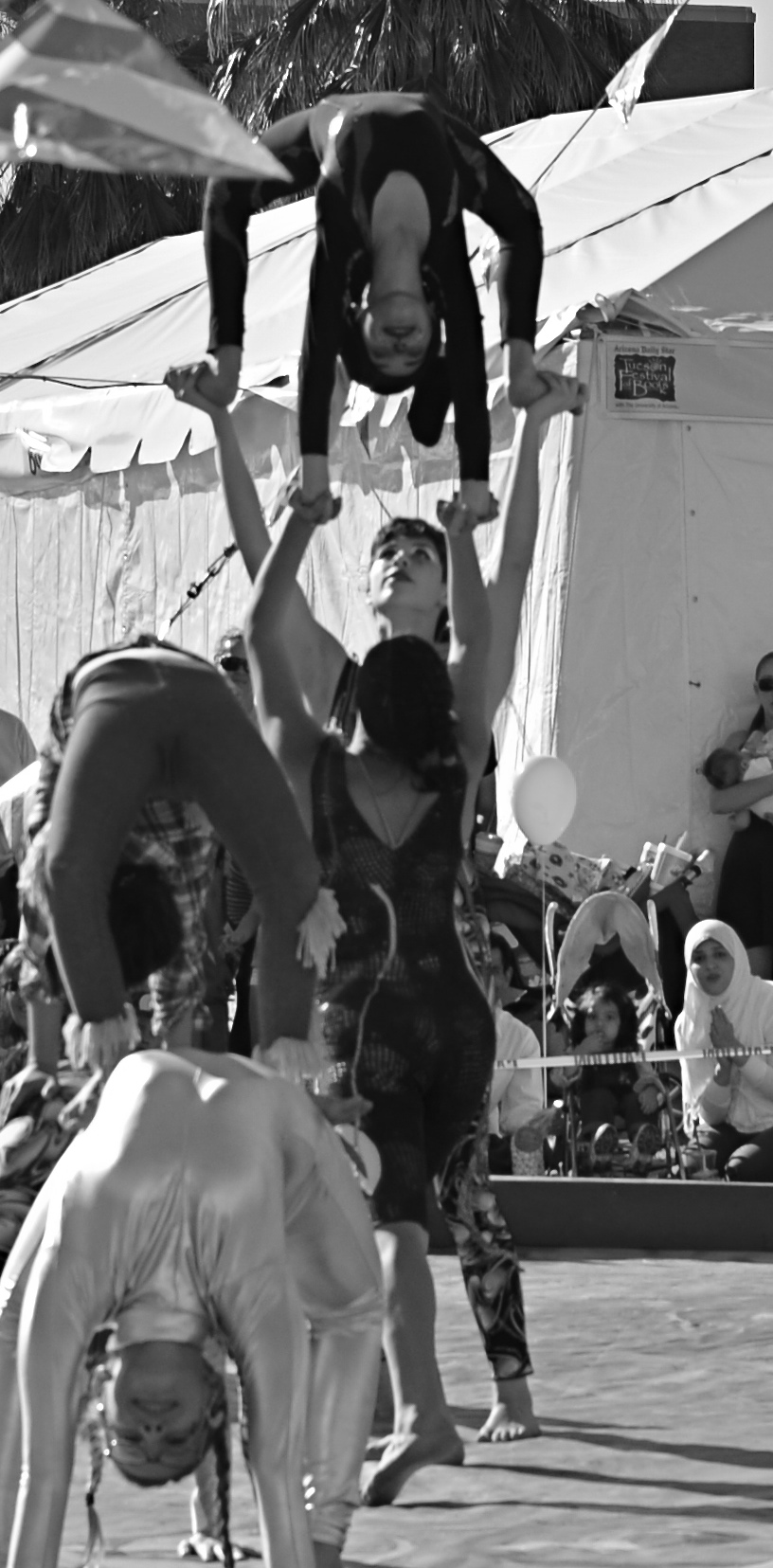
Shoot things reactively.
Shooting better isn’t always assured by merely shooting more. Instead of the machine gun technique, we might actually improve our eye, as well as our ability to strategize a shot, by limiting how many total tries we make at capturing an image. My point is that there are different “budgets” for different subject matter, and that blowing out tons of takes is not a guarantee that Ze Beeg Keeper is lurking there somewhere in the herd.
So put aside the photographic spray-down technique from time to time and opt for the single bullet theory. For you film veterans, this actually should be easy, since you remember what it was like to have to budget a finite number of frames, depending on how many rolls you packed in. Try giving yourself five frames max to capture something you care about, then three, then one. Then go an entire day taking a single crack at things and evaluate the results.
If you’ve ever spent the entire day with a single focal length lens, or fought severe time constraints, or shot only on manual, you’re already accustomed to taking a beat, getting your thinking right, and then shooting. That’s all single-take photography is; an exercise in deliberation, or in mindfulness, if you dig guru-speak. Try it on your own stuff, and, better yet, use the web to view the work of others doing the same thing. Seek out subjects that offer limited access. Shoot before your walk light goes on at an intersection. Frame out a window. Pretend an impatient car-full of relatives is waiting for you with murder in their hearts. Part of the evolution of our photography is learning how to do more with less.
That’s not only convenient, in terms of editing. It’s the very soul of artistry.
TESTIMONY
by MICHAEL PERKINS
I SEE MANY, MANY HOMELESS PEOPLE THESE DAYS. Sometimes on
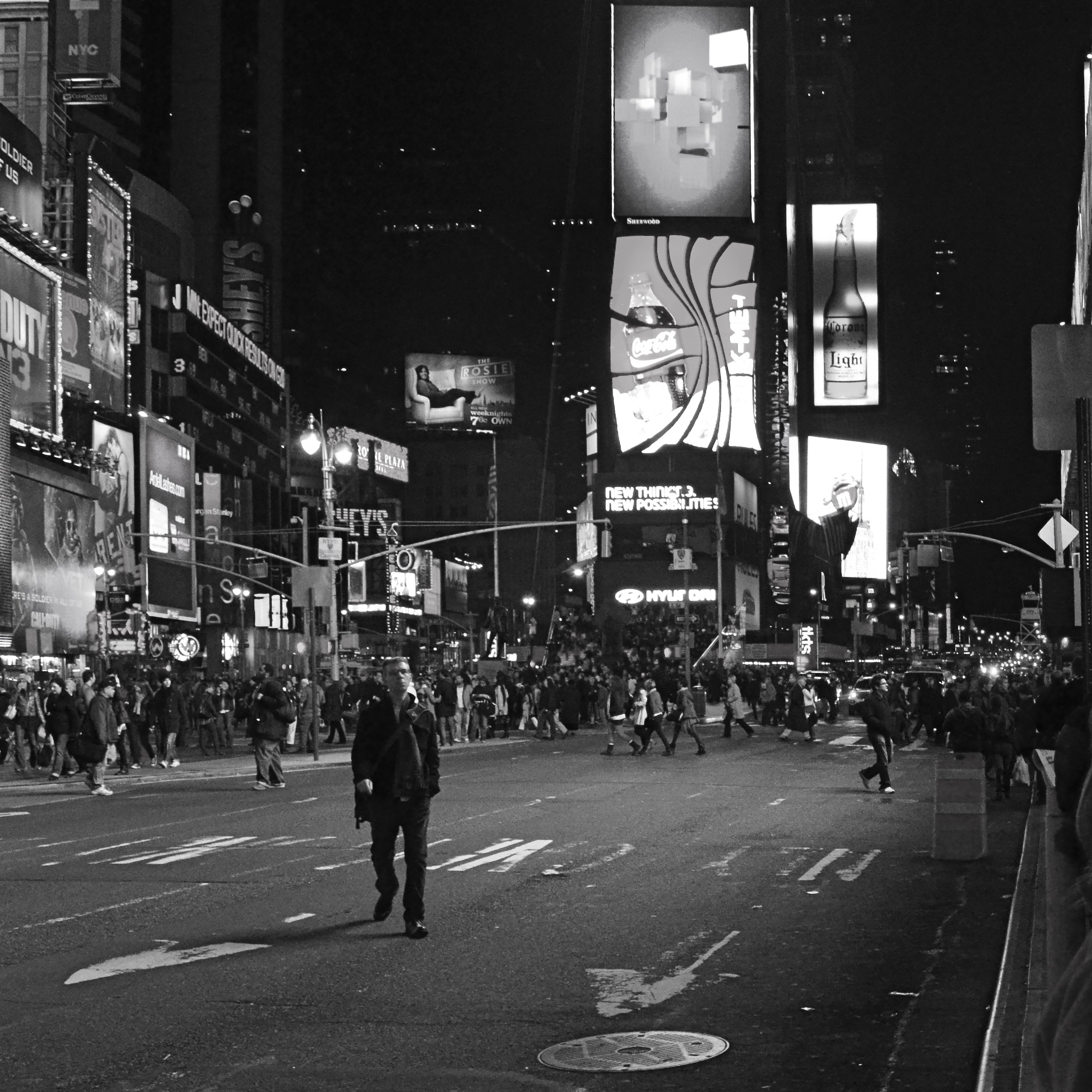
People are not merely props.
the streets of my home city. More occasionally on the streets of other towns. And every single day, without fail, on every photo upload site in the world. Many of the uploaders think this is “street photography”.
Many of the uploaders need to think again. Hard.
The mere freezing in a frame of someone whose lousy luck or bad choices have placed him on the street is not, of and by itself, some kind of visual eloquence. Not that it can’t be, if some kind of story, or context, or statement accompanies the image of a person driven to desperation. But not the careless and heedless snaps that are, I will say, stolen, at people’s expense, every day, then touted as art of some kind. The difference, as always, is in the eye of the photographer.
Many millions of people have been “captured” in photographs with no more revelatory power than a fire hydrant or a tree, and just catching a person unawares with your camera is no guarantee that we will understand him, learn what landed him here, care about his outcome. That’s on you as a photographer.
If all you did was wait until someone was fittingly juxaposed with a row of garbage cans, a grimy brick wall, or an abandoned slum, then lazily clicked, you have contributed nothing to the discussion. Your life, your empathy, your sense of loss or justice….all must interact with your shutter finger, or you have merely committed an act of exploitation. Oh, look at the poor man. Aren’t I a discerning and sensitive artist for alerting humanity to this dire issue?
Well, maybe. But maybe not. Photographs are conversations. If you don’t hold up your end of it, don’t expect the world to pick up the slack. If you care, then make sure we care. After all, you’ve appropriated a human being’s image for your own glory. Make sure he gave that up for something.
VIRTUAL SHOPLIFTING
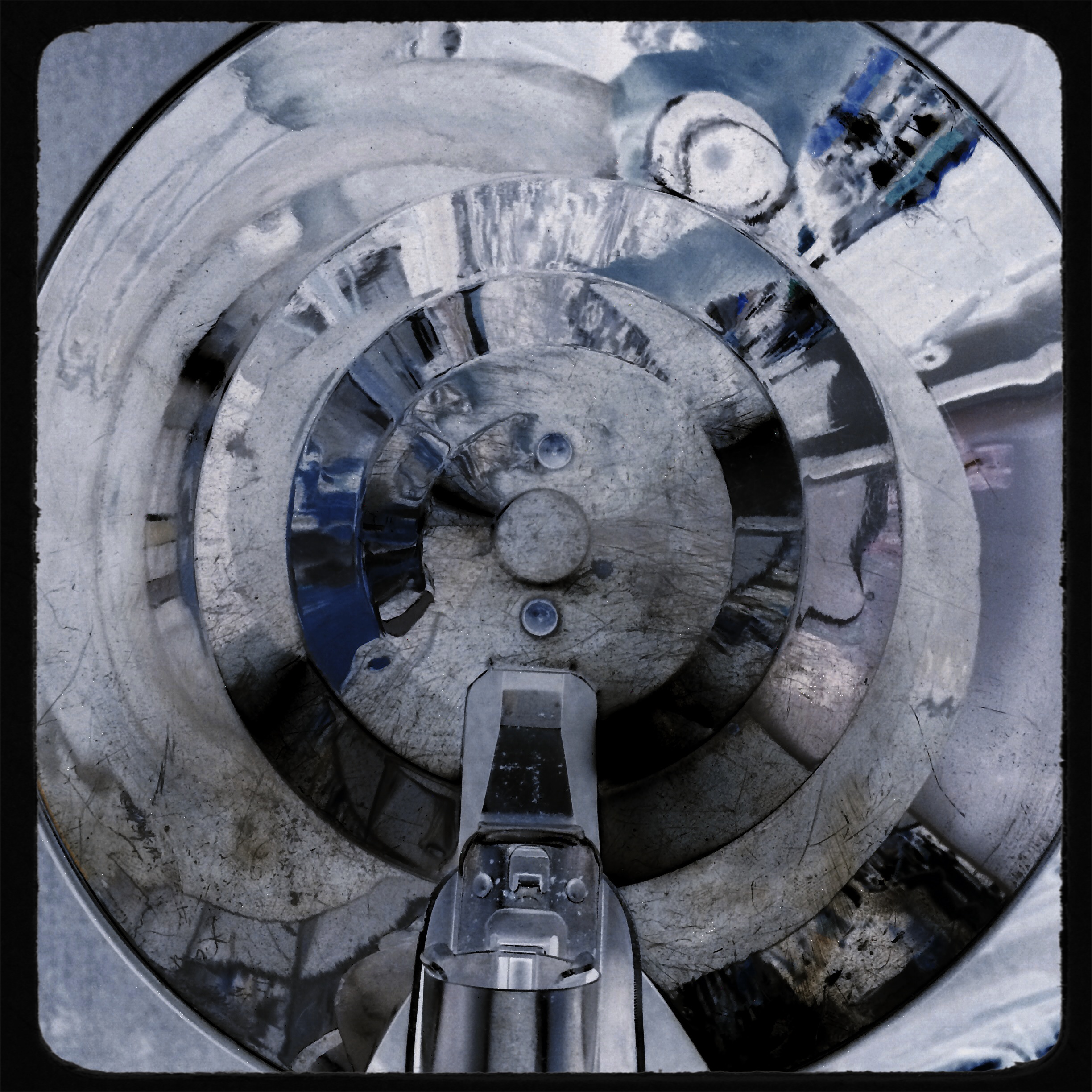
Thrift shop still-life: a mobile phone close-up of an antique camera flash pan, negatized in post-editing.
By MICHAEL PERKINS
ONE OF THE EMERGING OPPORTUNITIES FOR PHOTOGRAPHERS is the newly accepted way not to look like a photographer, a kind of invisibility based on strange public perceptions. This has only become possible with the arrival of the smartphone, and, although insane logically, it affords a new freedom to street photographers.
It’s simple, if crazy: carry an actual camera inside a phone, just as many millions of others do, and you’re somehow “safe” or trustworthy, not one of predatory, intrusive “professionals” with obvious cameras who are out to trick you, track you, capture your soul in their satanic box. Now, how we explain away the fact that the phone camera is far more stealthy, far more insidious and far more omnipresent than, say, a Canon or Nikon is anybody’s guess. But, dopey or not, this new code is now hard-wired into people’s brains as it regards street work. So little camera=harmless. Big camera=end of the world as we (or over-zealous mall cops)know it. You figure it out.
So, when it comes to grabbing quick snaps in stolen moments, it’s becoming harder not to embrace the crazy and just use a smartphone as your default street tool. I’m not completely there yet, but when I’m surrounded by things that I will either never see again, or have never seen before, it’s tempting to play spy shooter with the little clicker.
Some of the greatest sources of still life material, for example, are the dense shelves of flea markets, antique shops and thrift stores. You don’t want to buy this stuff, since (a) you can’t afford it and (b) the Mrs. will send both it and you to Goodwill, but the occasional odd item might just make a decent abstract bit of design. Camera gear from yesteryear is always an easy sell, and I was ecstatic to do a virtual shoplift on the ancient flash attachment you see above as a fun way of re-purposing an object through selective framing and processing.
It’s frustrating to find more and more places where it’s easier to negotiate a nuclear treaty than get an okay for regular photography, so it’s no shock that more and more inroads are being made for mobile cameras and the access that no one feels like denying them. And they say I’m nuts.
WORKING THE BLINDS
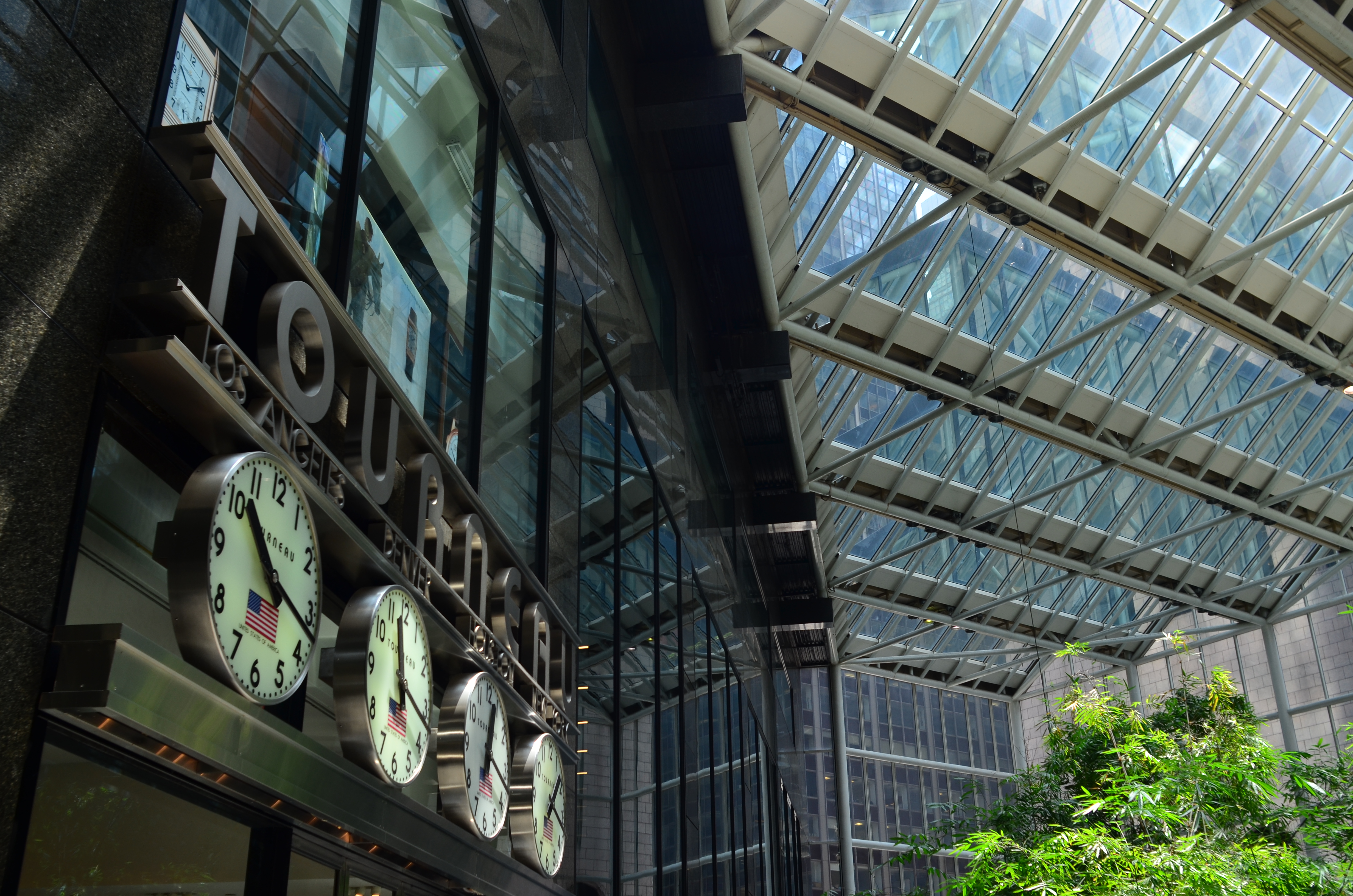
I love this building, but the real star of this image is light; where it hides, bounces, conceals, and reveals.
By MICHAEL PERKINS
ONE OF THE MOST CHALLENGING ASPECTS OF URBAN PHOTOGRAPHY, versus shooting in rural settings, is the constant variability of light. On its way to the streets of a dense city, light is refracted, reflected, broken, interrupted, bounced and just plain blocked in ways that sunshine on a meadow can never be. As a result, shooting in cities deals with direct light only intermittently: it’s always light plus, light in spite of, light over here, but not over there. And it’s a challenge for all but the most patient photographers. Almost every frame must be planned somewhat differently from its neighbors, for there can be no “standard” exposure strategy.
I often think of city streets as big window sills sitting below a massive set of venetian blinds, with every slat tilted a little differently. And I personally greet this condition as an opportunity rather than a deficit, since the unique patterns of abstraction mean that even mundane scenes can be draped in drama at any given moment. That’s why, as I age, I’ve come to highly value selective lighting, for mood, since I’m convinced that perfectly even lighting on an object can severely limit that selfsame drama.
I’m also reminded of the old Dutch masters painters, who realized that a partially dark face contains a kind of mystery. Conversely, a street scene that contains no dropouts of detail or light makes everything register just about the same with the eye, and can keep your images from having a prominent point of interest. Darkness, by contrast, asks your imagination to supply what’s missing. Even light is a kind of full disclosure, and it can rob your pictures of their main argument, or the “look over here” cue that’s needed to make a photograph really connect.
Back to street photography. Given that glass and metal surfaces, the main ingredients in urban structures, can run a little to silver and blue, I may actually take an unevenly lit scene and either modify it toward those colors with a filter, or simply under-expose by a half-stop to see how much extra mood I can wring out of the situation, as in the above image of an atrium in midtown Manhattan. Think of it as “working” those big venetian blinds. Cities both reveal and conceal, and your images, based on your approach, can serve both those ends.
TAKE ME OUT TO THE “ALL” GAME
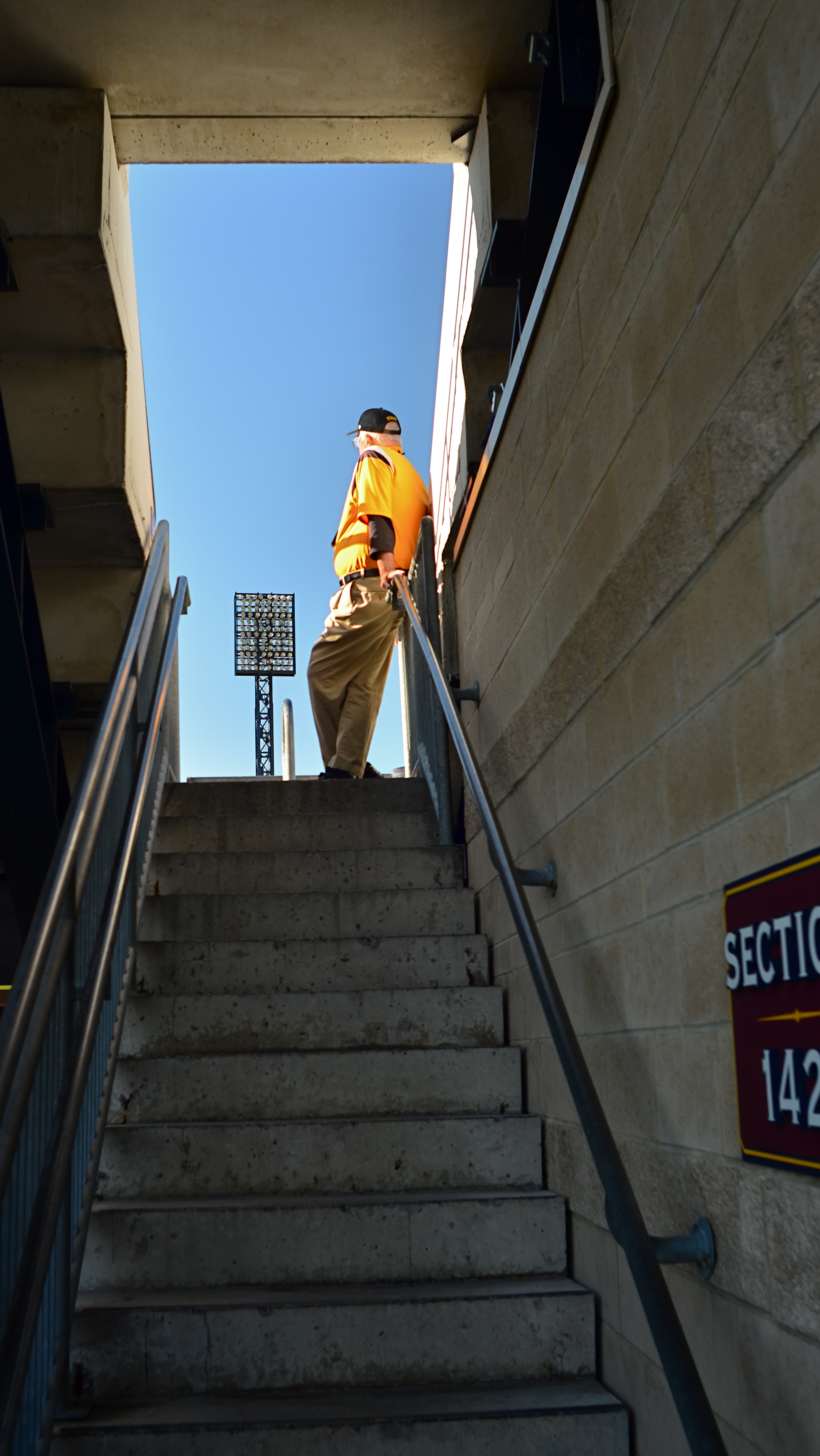
Baseball is a game about anticipation. Photos of it should show that feeling as well.
By MICHAEL PERKINS
YOU SEE RIDICULOUS ARTICLES FROM TIME TO TIME claiming that baseball has been replaced as America’s Pastime. Such spurious scribblings invariably point to game attendance, TV ratings, or some other series of metrics that prove that football, basketball, and, who knows, strip Scrabble have reduced baseball to some quaint state of irrelevancy. All such notions are mental birdpoop for one salient reason. No one is giving due attention to the word pastime.
Not “passion”. Not “madness”. Not even “loyalty”. Pastime. A way of letting the day go by at a leisurely pace. A way to gradually unfurl afternoons like comfy quilts. People-watching. Memory. Sentiment. Baseball is for watchers, not viewers, something that television consistently fails to realize. It’s the stuff that happens in the pauses, of which the game has plenty. Enjoying baseball, and photographing it as an experience, is about what happens in the cracks.
Images are waiting to be harvested in the dead spots between pitching changes. The wayward treks of the beer guys. The soft silence of anticipatory space just before the crack of a well-connected pitch. TV insists on jamming every second of screen time-baseball with replays, stat tsunamis, and analysis. Meanwhile, “live”, in the stadium, the game itself is only part of the entertainment. Sometimes, it actually drops back to a distant second.
Only a small percentage of my baseball pictures are action shots from the field: most are sideways glances at the people who bring their delight, their dreams, and their drama to the game. For me, that’s where the premium stories are. your mileage may vary. Sometimes it’s what’s about to happen that’s exciting. Sometimes it’s the games you remember while watching this one. There are a lot of human factors in the game, and only some of them happen between the guys in uniform.
Photography, as a pastime, affords a great opportunity to show a pastime. America’s first, best pastime.
It’s not just a ballgame. It’s an “all” game.
Root, root, root.
EAVES-EDITING
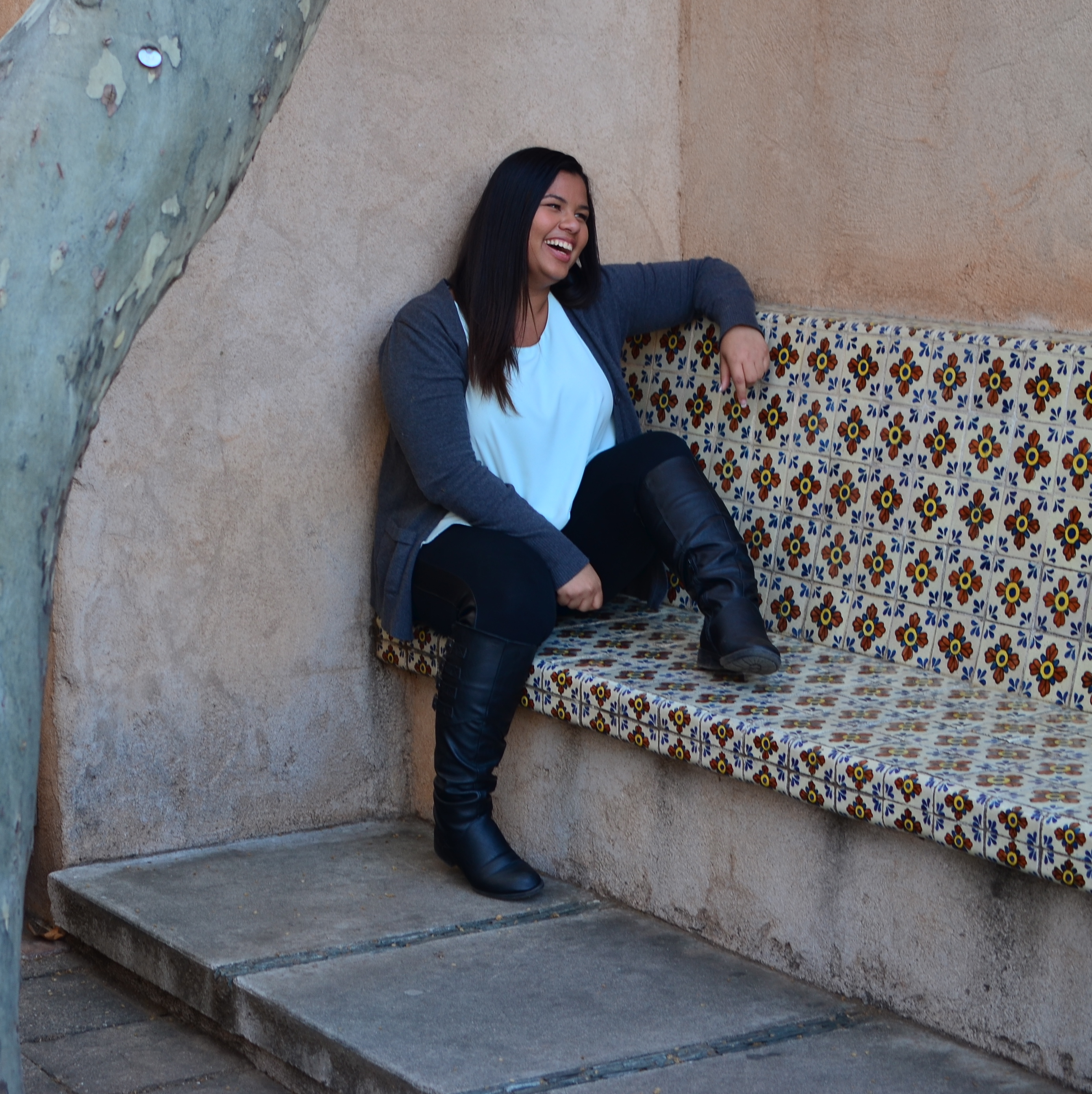
Anatomy Of A Laughing Fit: Going…
by MICHAEL PERKINS
ONE OF THE SIDE BENEFITS OF PHOTOGRAPHY is that you don’t always have to pick your own subject. Sometimes someone else’s idea of a potentially good image can be yours as well. You simply camp yourself right next to where they’re working and pick off your own shots of their project. Assuming that everyone’s polite and there are no issues of neighborly nibbing, it can work. Just ask anyone who’s clicked away at a presidential press conference or the sudden exit of a celebrity through a side entrance.
Of course, when literally dozens of cameras are trained on a single event, its likely that everyone will come away with the same photos, or very nearly. The moment the prime minister points to drive home his main point, click. The instant when the judges place the tiara on the winning Miss Tomato Paste candidate, click. Sometimes, however, you can kind of “eaves-edit” on just one other shooter’s set-up and edit the shots a different way than he does. You’re not running the session, but you could come away with a better result than he does, based on your choices.
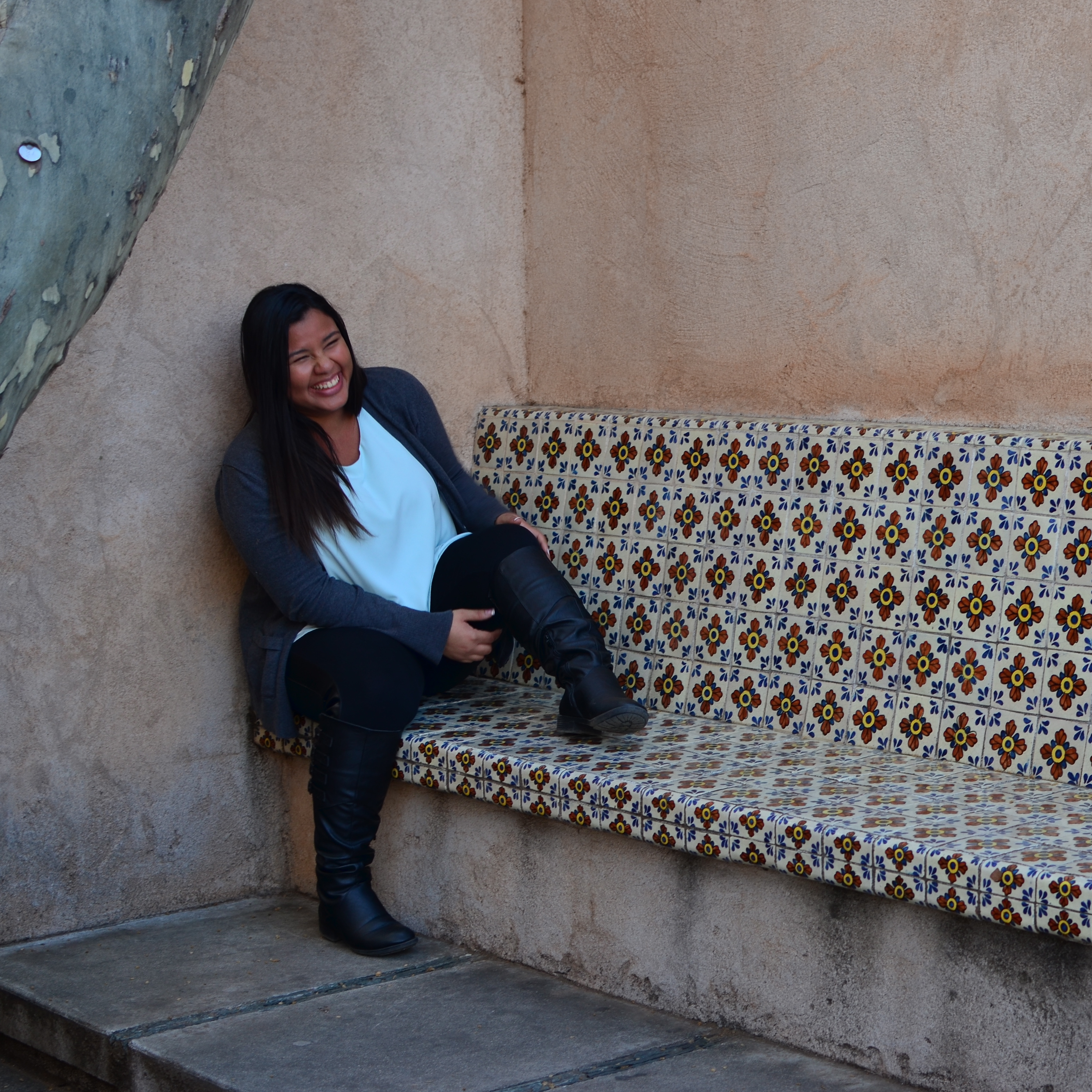
Going….
I recently came upon a man shooting a girl in the streets of a kind of faux-village retail environment in Sedona, Arizona. Obviously, the main feature was the lady’s infectious and natural smile. As I came quietly upon them, however, Mr. Cameraman was having a problem keeping that smile from exploding into a full-blown laughing fit. Ms. Subject, in short, had the mad giggles.
Now, from that point onward, I have no idea of what he went home with in the way of a final result, as I had decided that the crack-ups would make better pictures than a merely sweet set of candids. It just seemed more human to me, so I only shot the moments in which she couldn’t compose herself, and took off from there.
I didn’t want to overstay my welcome, so I snapped my little chunk of Mr. Cameraman’s moment and sneaked off, like fast. As I slinked away, I could still hear Ms. Subject telling him, through fits of laughter, “I am so sorry.” She may have been, but I wasn’t.
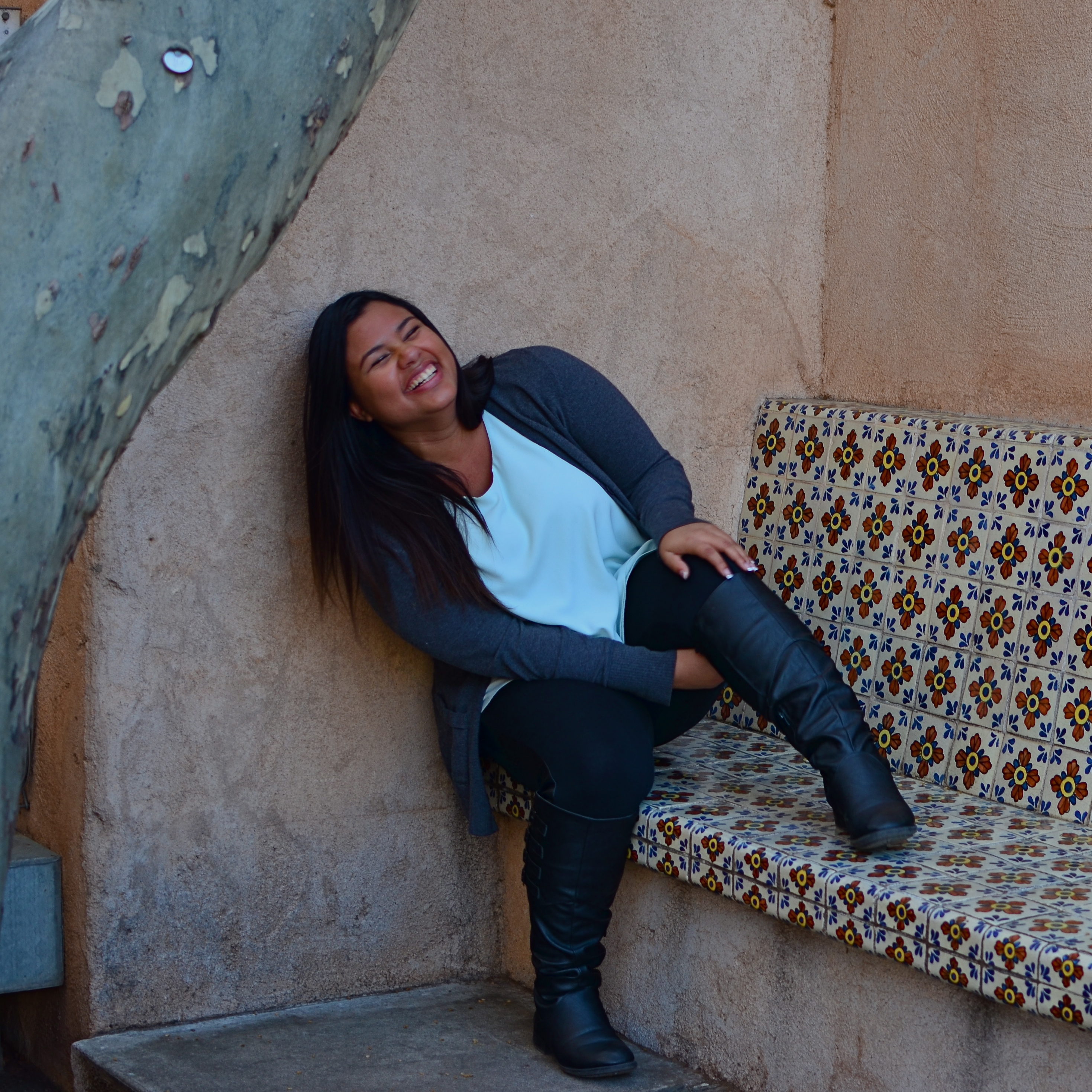
…..Gone.
WHOOPS. YAY.
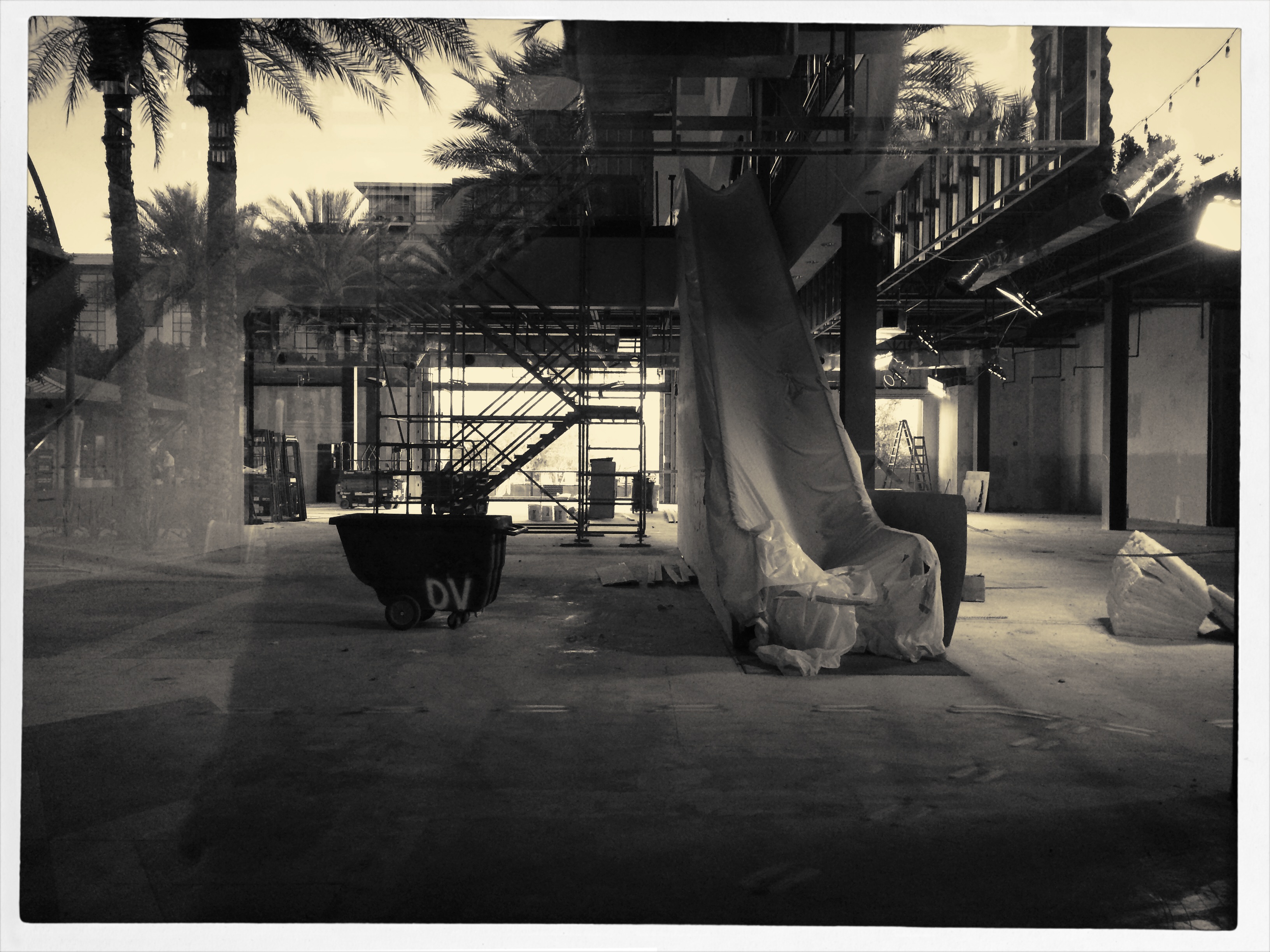
Strike The Set, 2015. A world that never was, and can never be again.
By MICHAEL PERKINS
I HAVE A THEORY THAT “SERENDIPITY” is just “dumb luck” for pretentious people. Somehow it makes our random discoveries and unplanned miracles sound cooler if we attribute them to some grand lining-up of the planets, as if we apes really meant to discover fire. So, fine. Consider this an incident of serendipity, although it’s mainly a case of “I stepped in sugar instead of….” well, you get the idea.
Setting the scene: a suburban mall near me recently closed its enormous bookstore, applying a dark sheet of tint on the building’s huge windows so gawkers couldn’t spy on the joint’s sad makeover as a furniture store. Of course, if you want to make people curious about something, blacking out the windows is a pretty effective tactic, and there are always plenty of people smashing their faces up against the impermeable tint every day to see what a bookstore looks like when it has, you know, no books in it. I am usually first in line for this ritual.
For some reason this week, a small peephole has been opened in the sheeting, allowing one to see the place’s vast, empty floor, its draped escalator, and an iron tangle of scaffolding, as well as a huge infusion of light from an open-work area at the opposite side of the store. It isn’t quite the “ruin porn” that photographers of dead malls love to record just ahead of the wrecking ball, but eerie enough to make me want to shove my phone camera up against the peephole to try to capture it.
Given the very wide-angle of such devices, however, I discovered, after the click, that the lens had also picked up a portion of the window next to the peephole, a portion still covered by tint and capable of reflecting the scene behind me….various buildings and landscaping of the rest of the mall. Even stranger, the “other” reality behind me melded, through the blurred outline of the peephole and variances of light, with the scene inside the store, as if they were all part of one dreamy landscape, a Hollywood set in transition. Giddy at what I had grabbed by accident, I shot a second frame to compose things a bit better, then converted it to monochrome with a filter that simulates a platinum print effect, an effort to eliminate mismatches in color and tone between the two worlds.
Sinatra once said that “the professional is the guy who can do it more than once”, so this image ranks me solidly among the amateurs. But so what. Whoops. Yay.
ACCUMULATIONS
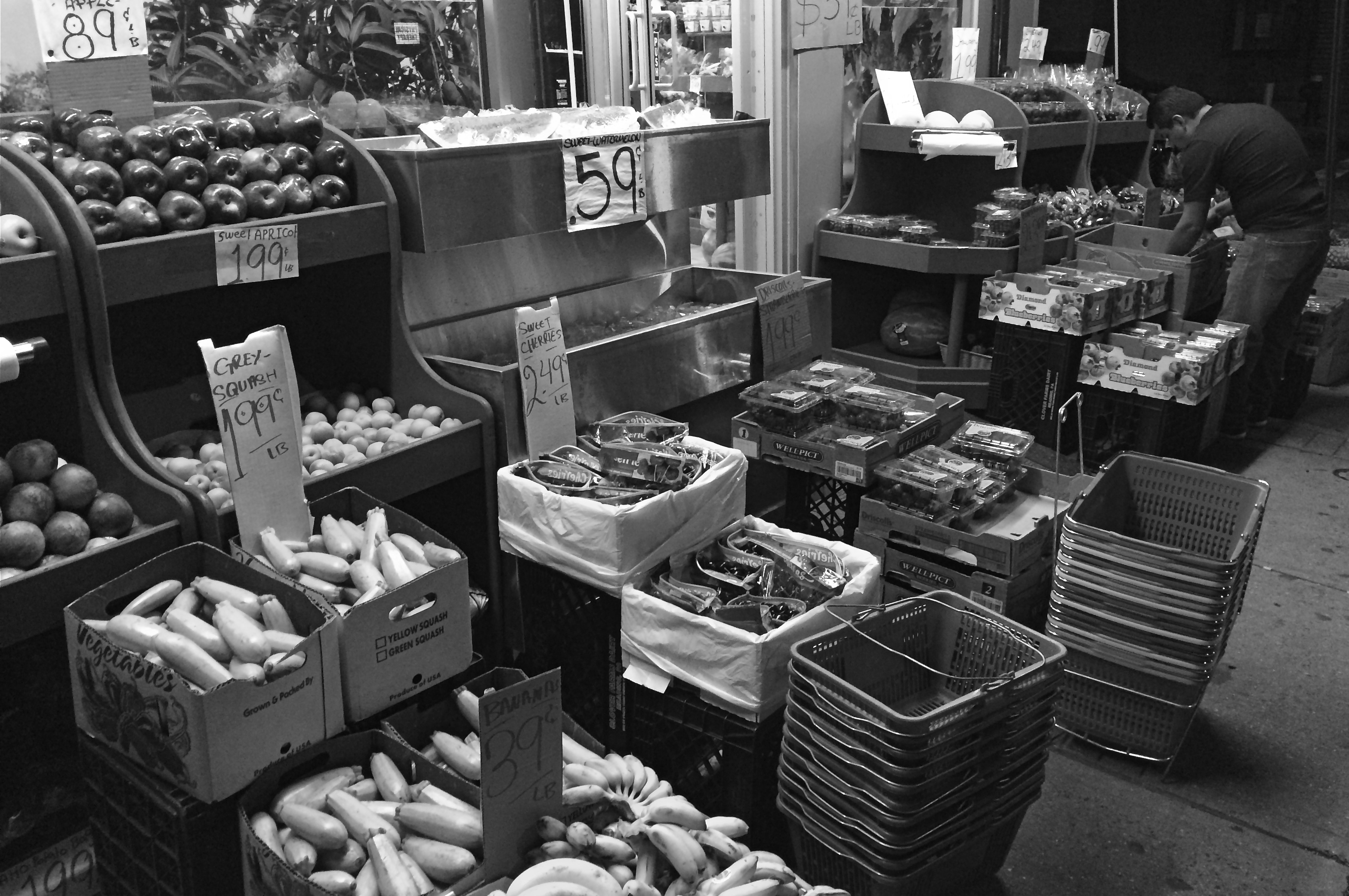
Brooklyn Market, 2014.
By MICHAEL PERKINS
STREET PHOTOGRAPHY CONSISTS MOSTLY OF SHOWING PEOPLE in the full context of their regular worlds.
In terms of portraits or candids, it’s usually sufficient to showcase those we know in controlled environments….family gatherings, special occasions, a studio setting. However, to reveal anything about the millions of strangers we encounter over a lifetime, we only have context to show who they are and what they do. To say something about these fascinating unknowns, we truly need the “props” that define their lives.
I never thought it was that profound to just snap a candid of someone walking down the street. Walking to where? To do what? To meet whom? Granted, a person composed as part of an overall street scene can be a great compositional elements all by him/herself, but to answer the question, who is this person? requires a setting that fixes him in time, in a role or a task. Thus pictures of people doing something, i.e., being in their private universe of tools, objects, and habits…now that can make for an interesting study.
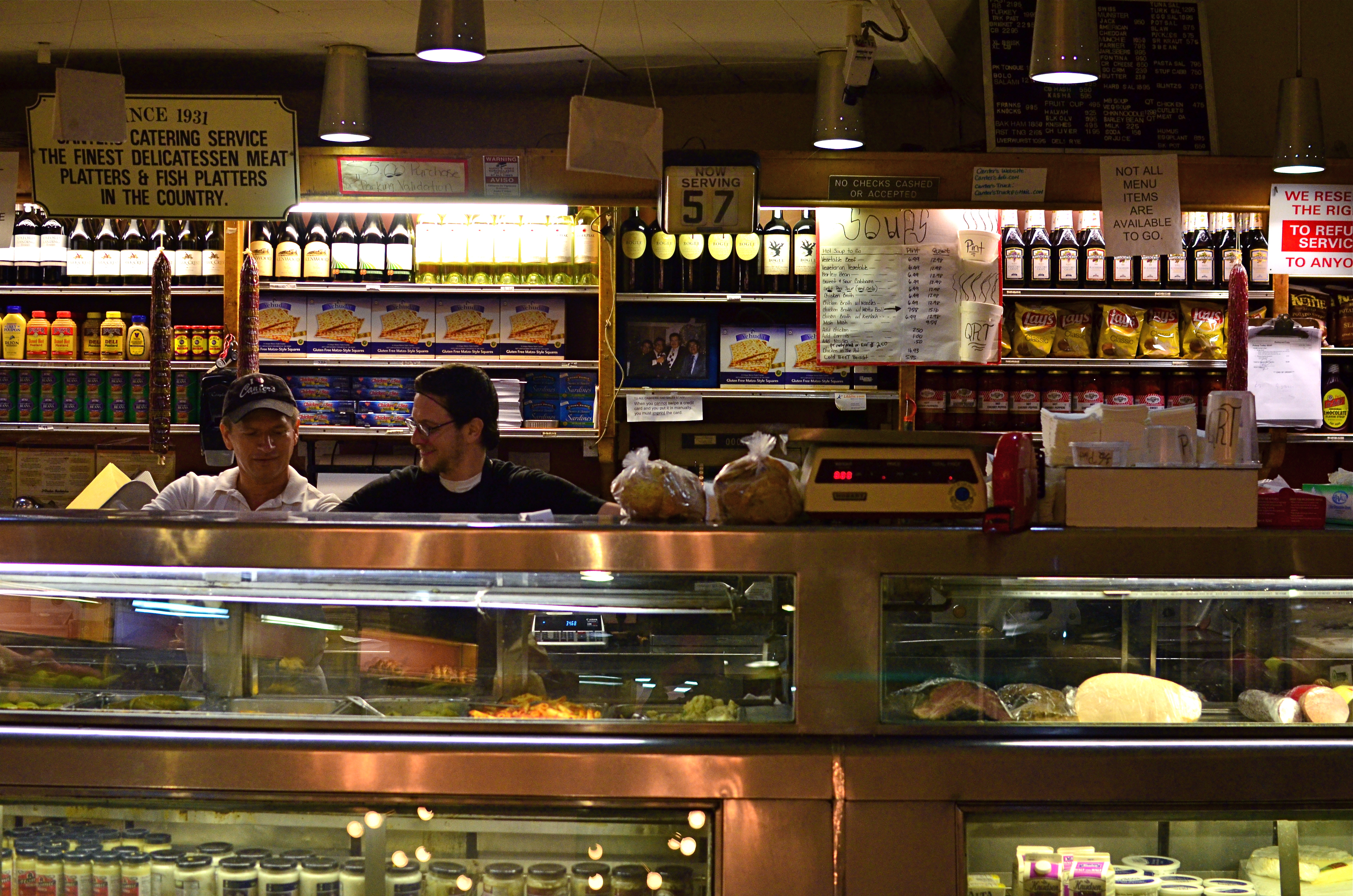
Canter’s Deli, Los Angeles, 2014.
We now have successful reality TV shows like Somebody’s Gotta Do It which focus on just what it’s like to perform other people’s jobs, the jobs we seldom contemplate or tend to take for granted. It satisfies a human curiosity we all share about what else, besides ourselves, is out there. Often we try to gain the answer by sending probes to the other side of the galaxy, but, really, there’s plenty to explore just blocks from wherever we live. Thing is, the people we show make sense only in terms of the accumulations of their lives…the objects and equipment that fill up their hour and frame them in our compositions.
The legendary Lewis Hine made the ironwalkers of Manhattan immortal, depicting them in the work of creating the city’s great skyscrapers. Others froze workers and craftsmen of every kind in the performance of their daily routines. Portraits are often more than faces, and showing people in context is the real soul of street photography.
TESTIMONY
By MICHAEL PERKINS
PHOTOGRAPHY WAS IN ITS INFANCY WHEN IT WAS FIRST PRESSED INTO SERVICE as a reportorial tool, a way of bearing witness to wars, disasters, and the passing parade of human folly and fashion. Since that time, at least a part of its role has been as a means of editorial commentary, a light shone on crisis, crime, or social ills. The great urban reformer Jacob Riis used it to chronicle the horrific gulf between poor and rich in the legendary photo essay How The Other Half Lives. Arthur Rothstein, Dorothea Lange and Lewis Hine, among many others, turned their cameras on the desperate need and changing landscape of America’s Great Depression. And now is the time for another great awakening in photography. It’s time to show where our cities need to go next.
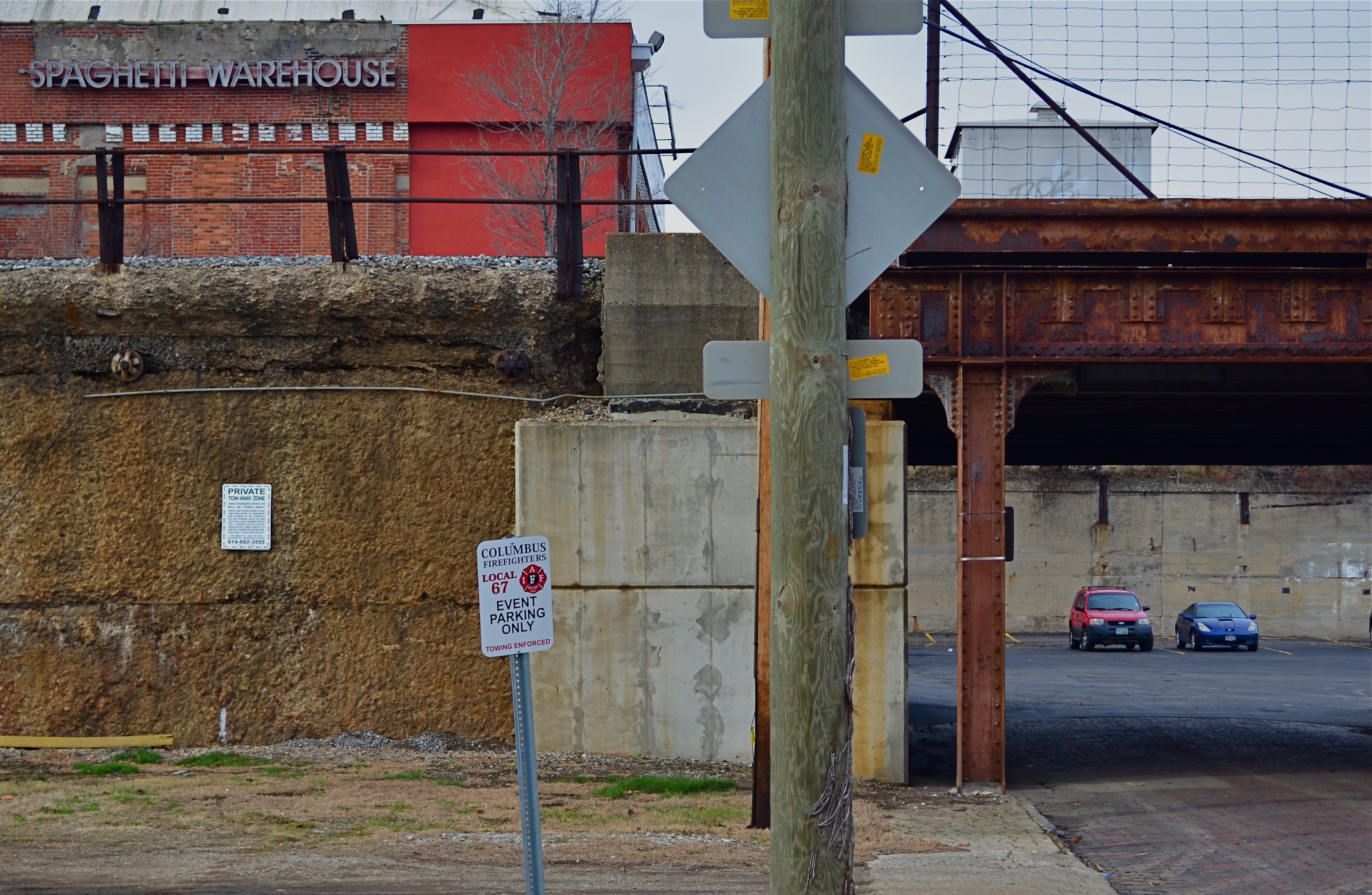
America’s infrastructure is at a crossroads. And that means that photographers are, as well.
Politics aside, the rotting state of our urban infrastructures is an emergency crying out for the visual testimony that photographers brought so eloquently to bear on poverty and war in ages past. The magnifying glass needs to be turned on the neglect that is rapidly turning America’s urban glory into rust and ruin. And no one can tell this story better than the camera.
We can fine-tune all the arguments about how to act, what to fund, and how to proceed. That’s all open to interpretation and policy. But the camera reveals the truths that are beyond abstraction and opinion. The underpinnings of one of the world’s great nations are rapidly dissolving into exposed rebar and pie-crust pavement. If part of photography’s mission is to report the news, then the decline of our infrastructure is one of the most neglected stories in the world’s visual portfolio. Photographers can entice the mind into action, and have done so for nearly two centuries. They have peeled back the protective cover of politeness to reveal mankind at its worst, and things have changed because of it. Agencies have been formed. Action has been accelerated. Lives have been changed. Jobs have been created.
It didn’t used to be an “extra credit” question on the exam of life just to maintain what amazing things we have. Photographers are citizens, and citizens move the world. Not political parties. Not kings or emperors. History is created from the ground up, and the camera is one of the most potent storytelling tools used in shaping that history. The story of why our world is being allowed to disintegrate is one well worth telling. Capturing it in our boxes just might be a way to shake up the conversation.
Again.
QUICK, NOBODY POSE
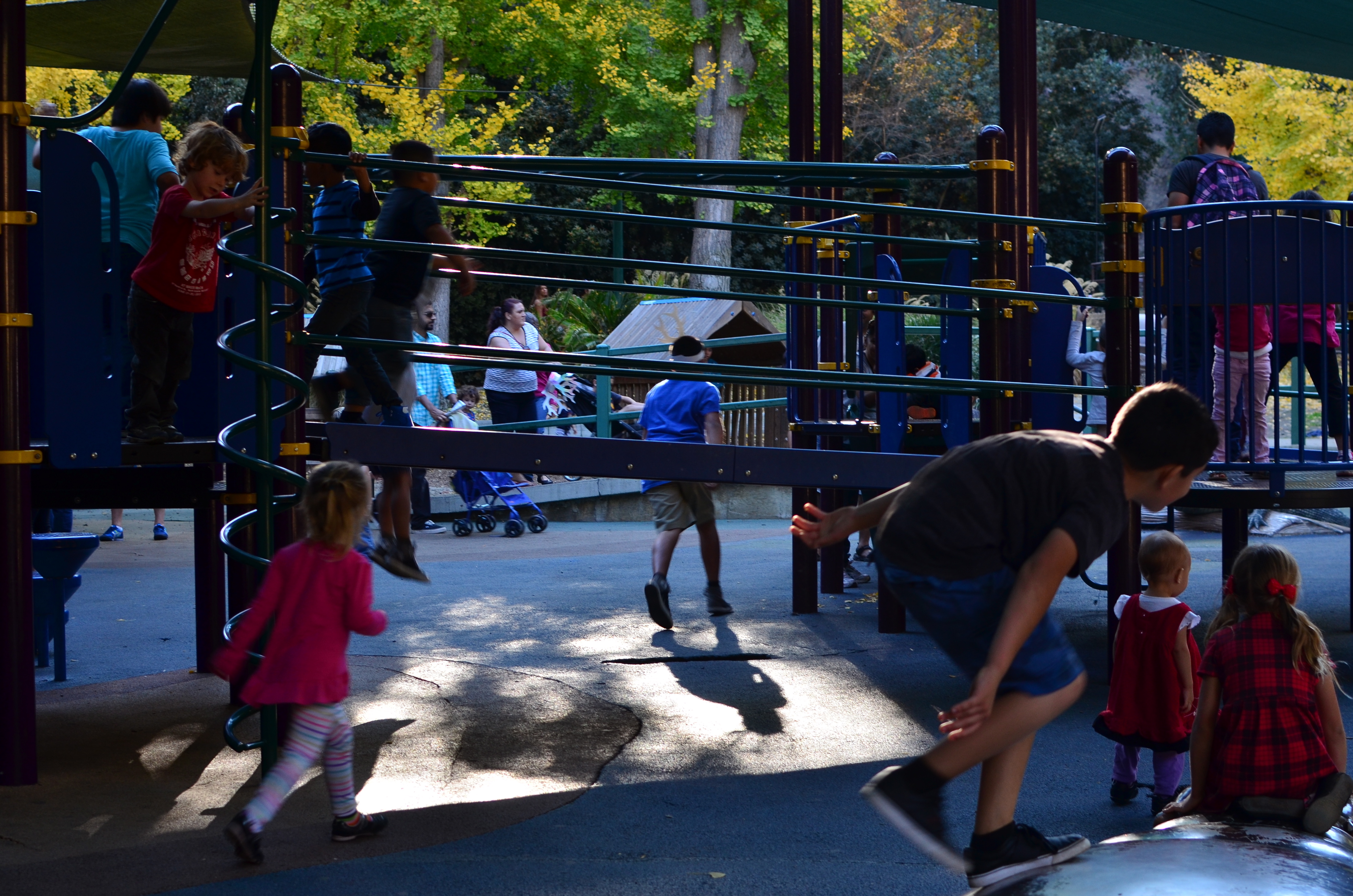
Even at the Los Angeles Zoo, the most interesting animals are on the opposite side of the bars. 1/80 sec., f/4, ISO 200, 35mm.
By MICHAEL PERKINS
FOR PHOTOGRAPHERS, HARNESSING THE NATURAL ENERGY OF A CHILD is a little like flying a kite during a thunderstorm was for Ben Franklin. You might tap into a miraculous force of nature, but what are you going to do with it? Of course, there’s big money in artificially arranging light and props for formalized (or rather, idealized) portraits of kids. It’s a specialty art with specific rules and systems, and for proud parents, it’s a steady market. We all want our urchins “promoted” to angel status, albeit briefly. However, in terms of photographic gold, you can’t, for my money, beat the controlled chaos of children at play. It’s street photography with an overlay of comedy and wonder.
However, attempting to extract a miracle while watching kids be kids is like trying to capture either sports or combat, in that it has a completely different dynamic from second to second, so much so that you should be prepared to shoot a lot, shifting your focus and framing on the fly, since the center of the action will shift rapidly. I don’t necessarily believe that there is one decisive moment which will explain all aspects of childhood since the creation of the world, but I do think that some moments have a better balance between sizes, shapes, and story elements than others, although you will be shooting instinctively for much of the time, separating the wheat from the chaff later upon review of the results.
As with the aforementioned combat and sports categories, the spirit that is caught in a shot supersedes technical perfection. I’m not saying you should throw sharpness or composition to the wind, but I think the immediacy of some images trumps the controlled environment of the studio or a formal sitting. Some artifacts of blur, inconsistent lighting, or imprecise composition can be overlooked if the overall effect of the shot is truthful, visceral. The very nature of candid photography renders all arbitrary rules rather useless. The results justify themselves regardless of their raggedness, whereas a technically flawless shot that is also bloodless can never be justified on any grounds.
Work the moment; trust it to develop naturally; hitch a ride on the wave of the instantaneous.
ABSOLUTES
By MICHAEL PERKINS
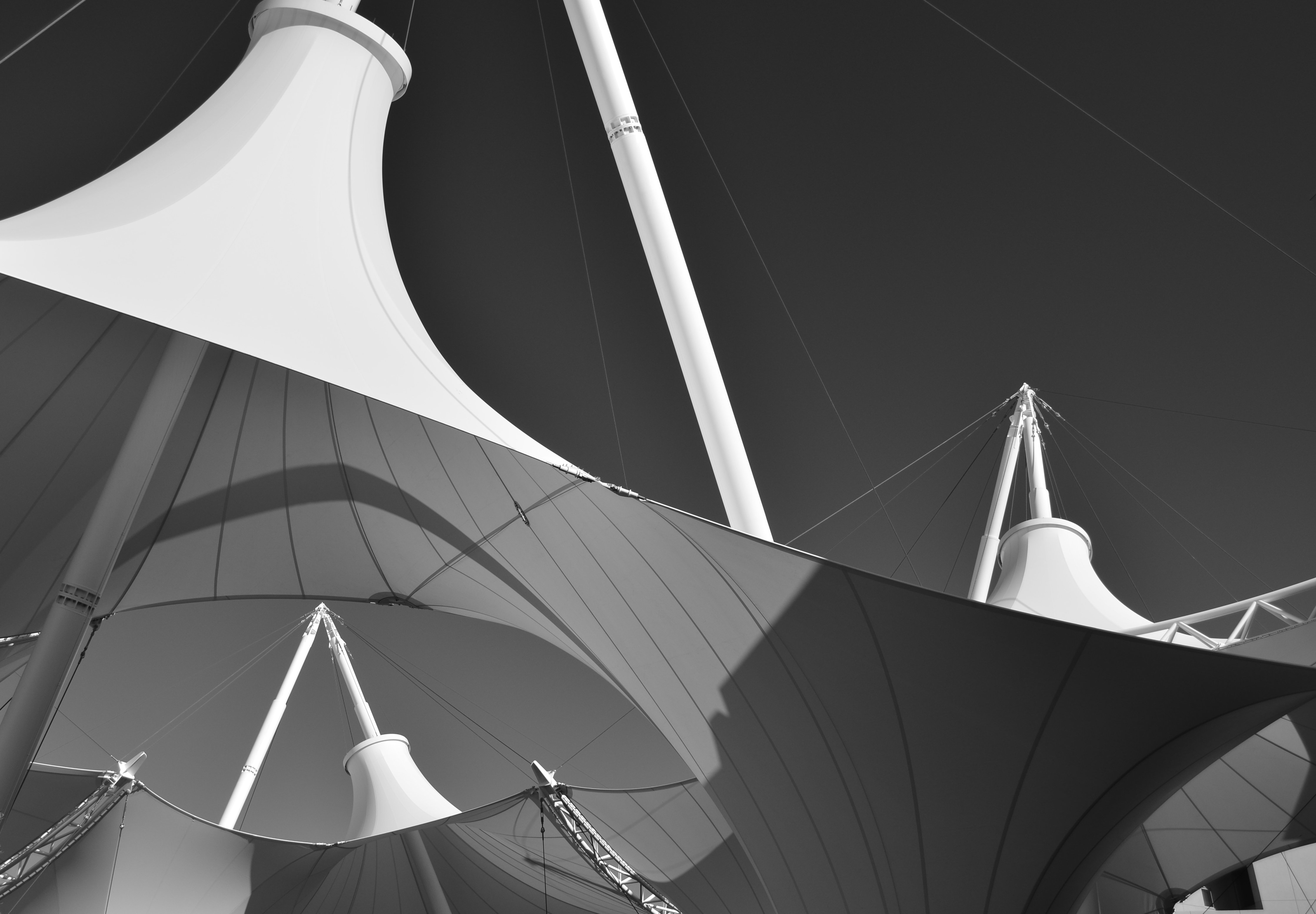
“PHOTOGRAPHY DEALS EXCLUSIVELY WITH APPEARANCES” remarked Duane Michals years ago, “but, nothing is what it appears to be.” That’s a remarkably clear summation of the terms under which, with greater regularity, I approach things with my camera. In over fifty years of clicking away, I have never really felt like my work was reportage, or the recording of “reality”, but rather the use of reality like another paint brush or tube of color towards the more general goal of making a picture. What I wind up with certainly “appears” like something, but it’s not really a literal representation of what I saw. It is the thing I pointed the lens at, but, if I am lucky, it’s got some other extra ingredient that was mine alone. Or so I hope.
This idea that appearances are just elements in the making of something personal seems to be borne out on those photo “field trips” where instructors take a small mob of shooters out onto the street, all of them assigned to photograph the same subject or scene. Seldom is there a consistent result as these half dozen noobs frame up a common object, a phenomenon which argues for the notion of photography as interpretation, not just the making of a visual record. Consider: if the machine really were all, every one of the students’ images should look remarkably alike, but they generally don’t. How could they, when the mystery link in every shooter’s work flow has to be the “filter” of his or her own experiences? You show how a thing appears, but it doesn’t match someone else’s sense of what it is. And that’s the divine, civil argument our vision has with everyone else’s, that contrast between my eye and your brain that allows photographs to become art.
I think that it’s possible to worry about whether your photograph “tells a story” to such a degree that you force it to be a literal narrative of something. See this? Here’s the cute little girl walking down the country lane to school with her dog. Here’s the sad old man sitting forlornly on a park bench. You can certainly make images of narrowly defined narratives, but you can also get into the self-conscious habit of trying to bend your images to fit the needs of your audiences, to make things which are easy for them to digest.Kinda like Wonder Bread for the eye.
As photographers, we still sweat the answer to the meaningless question, “what’s that supposed to be?”, as if every exposure must be matched up with someone who will validate it with an approving smile. Thing is, mere approval isn’t true connection….it’s just, let’s say, successful marketing. Make a picture in search of something in yourself, and other seekers will find it as well.
FISHING FRIDAYS?
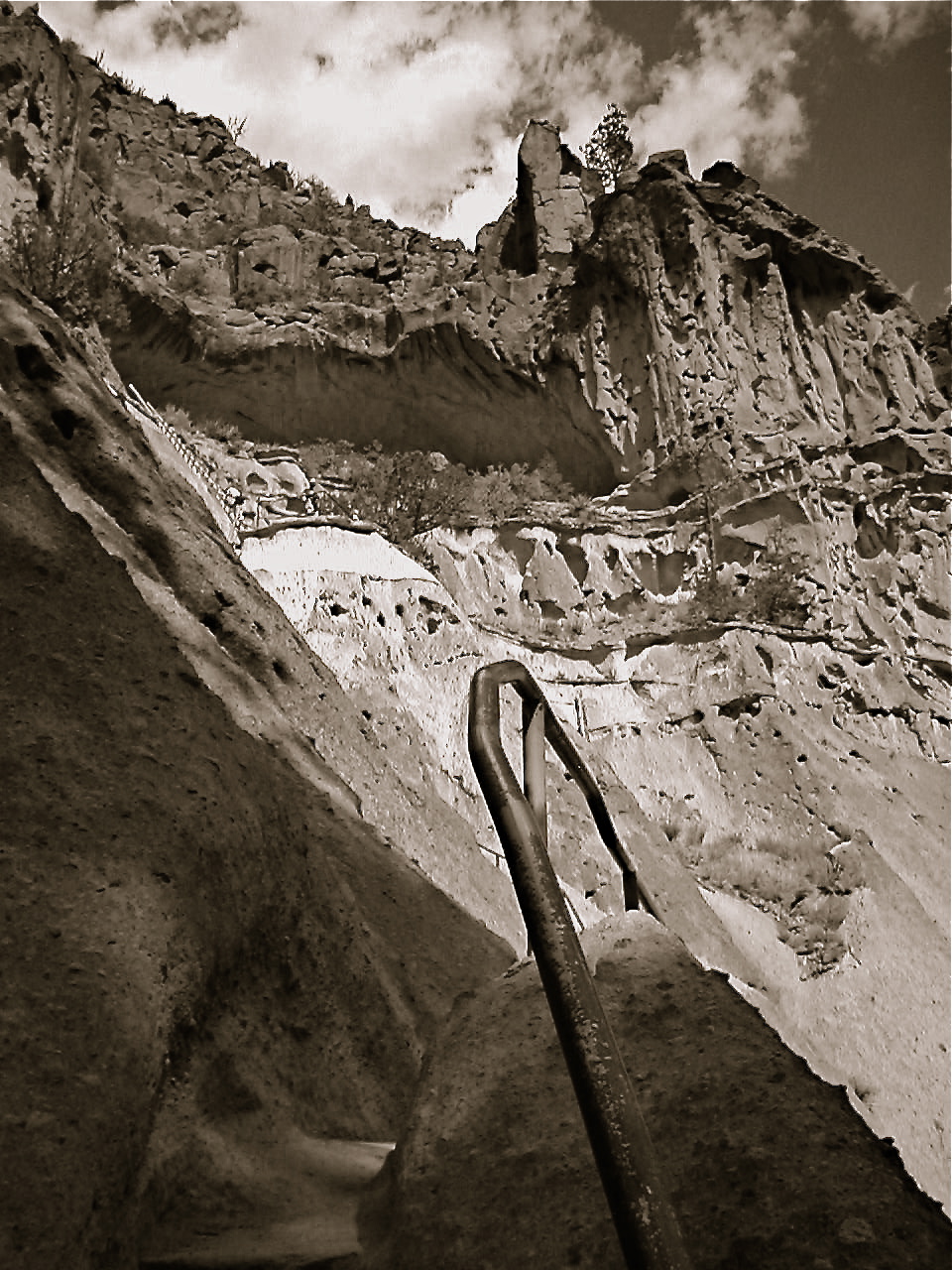
Bandolier National Monument, New Mexico, nearly ten years and four cameras ago. Did the shot achieve everything I was seeking? Hardly. Still, it emerges now as a qualified success rather than an outright dud.
By MICHAEL PERKINS
I HAVE NEVER PARTICIPATED IN THE STRANGE NEW RITUAL known as “Throwback Thursday”, the terminally adorable craze involving the online resurrection of antique photos of oneself or friends, the purpose of which is apparently to celebrate our poor tonsorial and wardrobe choices of bygone days. I keep most historic depictions of myself under lock and key for a reason, and making myself look retroactively more idiotic than I am already, well, someone needs to explain to me where the “fun” part comes in. Just because I was once stupid enough to sport a shag cut doesn’t mean a record of that sad choice constitutes entertainment in the interweb age.
As a photographer, however, I can certainly see the wisdom of re-evaluating the images themselves, meaning how they were shot, or whether, under the microscopes of time and wisdom, they deserve to be aesthetically exonerated. Humane anglers have always practiced the “throw the small ones back” rule when fishing, the idea being that, given a chance, a minnow might grow into a respectable catch, and I think it’s normal to revisit old photos from time to time, as a record of one’s growth. I would even argue that a “Fishing Friday” each week would be good for the needful habit of self-editing, or just learning to see, no less than spending one’s Thursdays with painful reminders that hot pants really aren’t a fashion statement.
Yes, I am an aging crank. And yes, I do believe, as Yogi Berra once said, that nostalgia ain’t what it used to be. But I also believe in learning from one’s photographic mistakes, and reviewing old prints and slides actually does give you a pretty reliable timeline on your development. As a matter of fact, I am on record as believing that failures are far more instructive than successes when it comes to photography. You study and ache and cogitate over failures, whereas you seldom question a success at all. Coming up short just nags at you more, and the surprising thing about latter-day re-examinations of your photographic work is that you will also find things that actually worked, shots that, for some reason, you originally rejected.
Recently, the Metropolitan Art Museum mounted a show of Garry Winogrand’s amazing street work drawn from the hundreds of thousands of images that he shot but never processed or saw within his own lifetime. His is an extreme case, but, even at our end of the craft, we generate so many photos over a lifetime that we are constantly challenged to have a true sense of what we did even last year, much less decades ago. When we “throw back” to images of our dear departed dog blowing out his birthday candles, we should also shovel into the past for the instructive, potentially revelatory work that might be lurking in other shoeboxes. It’s free education.
 thenormaleye