THE CHOICE
Does the structure of your photography protect you, or contain you?
By MICHAEL PERKINS
ANYONE WHO REGULARLY VISITS THESE PAGES already knows that I advocate of doing as much of your photography in as personal and direct a way as possible. While I am completely astonished by the number of convenience items and automatic settings offered to the casual photographer in today’s cameras, I believe that many of these same features can also delay the process by which people take true hands-on control of their image-making. I regard anything that gets in between the shooter and the shutter as a potential distraction, even a drag on one’s evolution.
Tools are not technique. Here are two parallel truths of photography: (1) some people with every gizmo in the toy store take lousy pictures. (2) some people with no technical options whatsoever create pictures that stun the world.
From my view, you can either subscribe to the statement, “I can’t believe what this camera can do!” or to one which says, “I wonder what I can make my camera do for me!” The very controls built into cameras to make things convenient for newcomers are the first things that must be abandoned once you are ready to move beyond newcomer status. At some point, you learn that there is no way any camera can ever contain enough magic buttons to give you uniformly excellent results without your active participation. You simply cannot engineer a device that will always deliver perfection and perpetually protect you from your own human limits.
Innovators never innovate by surrounding themselves with the comfortable and the familiar. For photographers, that means making decisions with your pictures and living with the uneven results in the name of self-improvement. This is a challenge because manufacturers seductively argue that such decisions can be made painlessly by the camera acting alone. But guess what. If you don’t actively care about your photos, no one else will either. There may not be anything technically wrong with your camera’s “choices”. But they are not your choices, and eventually, you will want more. The structure that at first made you feel safe will, in time, start to feel more like a cage.
Tools are not technique.
THE SHORT AND WINDING ROAD
There is no tradition in photography. There is only now.
By MICHAEL PERKINS
PHOTOGRAPHY USED TO LITERALLY BE A MATTER OF MATH. Formulating formulae for harnessing light, predicting the reactivity of chemicals, calculating the interval between wretched and wonderful processing. And all that math, measured in materials, apprenticeship, and learning curves, was expensive. Mistakes were expensive. The time you invested to learn, fail, re-learn, and re-fail was expensive. All of it was a sustained assault on your wallet. It cost you, really cost you, in terms a math whiz could relate to, to be a photographer.
Now, the immediacy of our raw readiness to make a picture is astounding. Well, let’s amend that. To anyone picking up their first camera in the last thirty years, it’s pretty astounding. For those who began shooting ten years ago, it’s kinda cool. And for those falling in love with photography now, today, it’s……normal. Let’s pull that last thought out in the sunshine where we can get a good look at it:
For those just beginning to dabble in photography, the instantaneous gratification of nearly any conceptual wish is normal. Expected. No big deal. And the price of failure? Nil. Non-existent. Was there ever a time when it was a pain, or an effort just to make a picture, you ask Today’s Youth? Answer: not to my knowledge. I think it and I do it. If I don’t like it, I do it again, and again, faster than you can bolt down a burger on a commuter train. It’s just there, like tap water. How can I not be, why should I not be, absolutely fearless?
To take it further, Today’s Youth can learn more in a few months of shooting than their forebears could glean in years. And at an immeasurably small percentage of the sweat, toil, tears and financial investment. They can take a learning curve of rejected photos and failed concepts that used to be a long and winding road for pa and grandpa and compress it into a short and straight walk to the mailbox. And they are not sentimental, since they will not be spending enough time with any technology of any kind long enough to develop a weepy attachment for it, or for “how things used to be”. DSLR? Four-Thirds? Point and Shoot? Hey, anything that lets them take a picture is a camera. Make it so they can flap their eyelash and capture an image, and they’re in.
For some of us, hemmed in by experience, the limits of our technical savvy, and yes, our emotions, photography can be a somewhat formal experience. But for the many coming behind us, it’s just a reflex. A wink of the eye. Any and everything is an extension of their visual brain. Any and everything leads to a picture.
These new shooters will stop at nothing, will quake at nothing, will be awed by nothing, except ideas. They will be bold, because there is no reason not to be. They will take chances, since that, from their vantage point, is the only logical course. Photography is dead, long live photography.
The great awakening is at hand.
60 SECONDS TO HAPPINESS
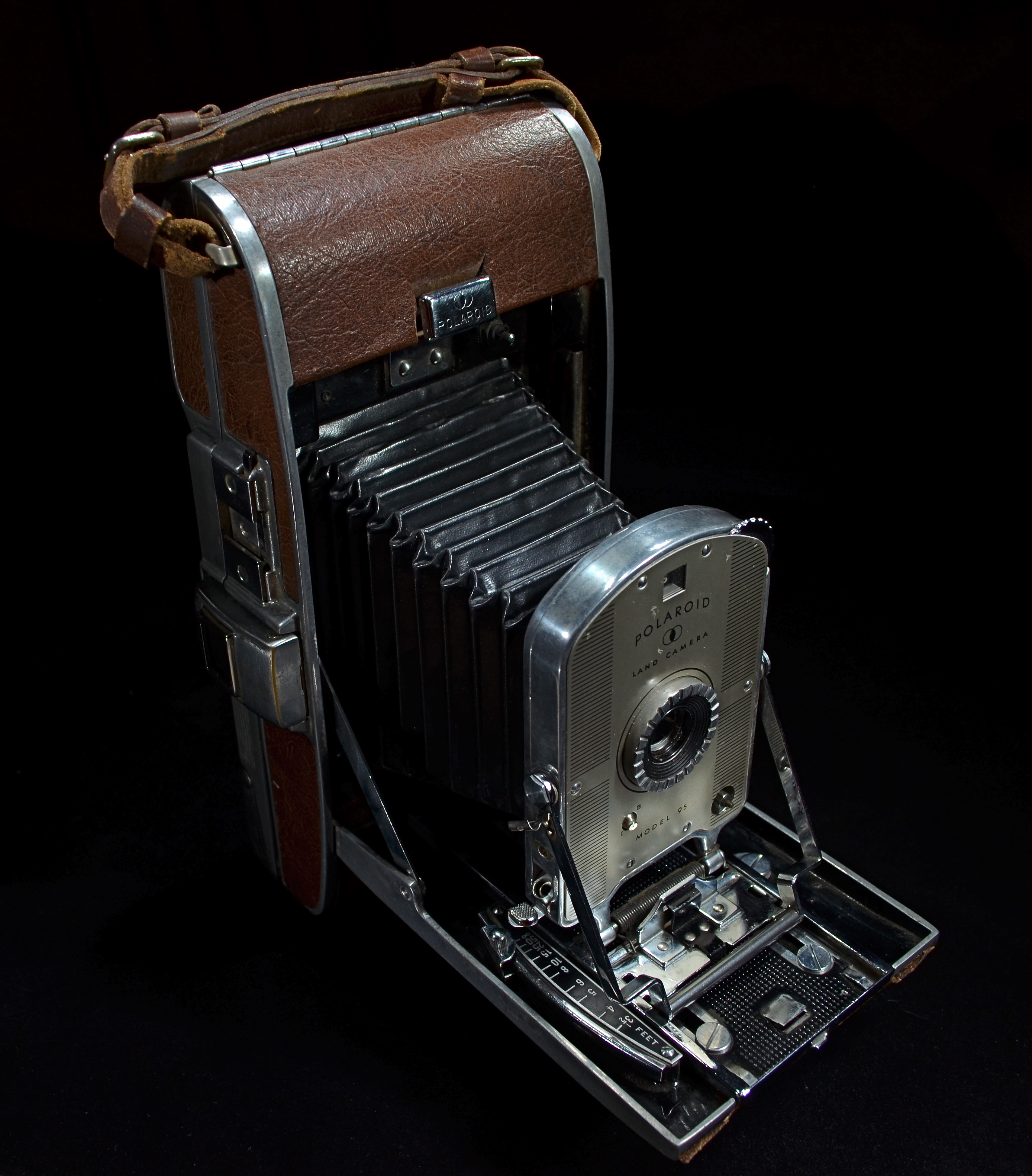
The first of its kind: A model 95 Polaroid Land Camera, circa 1948. Light-painted in darkness for a 15 second exposure at f/5.6, ISO 100, 18mm.
By MICHAEL PERKINS
I REMEMBER, YEARS AGO, HEARING A COMMERCIAL FROM AN OLD RADIO SERIAL IN WHICH THE SPONSOR, Ovaltine, rhapsodized about the show’s latest mail-in “premium”, a genuine Captain Midnight Shake-Up Mug, which, according to the ad copy, was made of “exciting, new PLASTIC!!” It struck me, as a child of the ’50’s, that there actually had been a time when plastic was both exciting and new. The “latest thing” in an age which was bursting with latest things, an unparalleled era of innovation and miracle. Silly Putty. Rocket Ships. Television.
And your photographs….delivered in just one minute.
The introduction of the Polaroid Land Camera, Model 95, in 1948 was one of those “exciting, new plastic” moments. Developed by inventor Edward Land, the device was, amazingly, both camera and portable darkroom. Something mystical began to happen just after you snapped the shutter, an invisible, gremlins-in-the-machine process that accomplished the development of the image right in the camera. Open the back of the thing 60 seconds later, peel away the positive from the negative (a layer of developing gel lay in-between the them) and, sonofagun,you had a picture. Black and White only. Fragile, too, because you immediately had to dab it with a stick of smelly goo designed to keep the picture from browning and fading, a procedure which created the worldwide habit of fanning the picture back and forth to speed up the drying process (sing it with me: shake it like a Polaroid). And then you got ready for company. Lots of it.
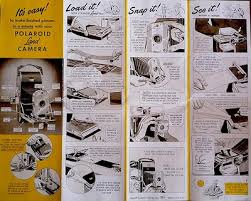
Original Polaroid User’s Flyer. Easy, right?
When you brought a Model 95 (unofficially dubbed the “Speedliner”) to a party, you didn’t just walk in the door. You arrived, surrounded by an aura of fascination and wonder. You found yourself at the center of a curious throng who oohed and ahhed, asked endlessly how the damn thing worked, and remarked that boy, you must be rich. Your arrival was also obvious due to the sheer bulk of the thing. Weighing in at over a pound and measuring 10 x 5 x 8″, it featured a bellows system of focusing. Electronic shutters and compact plastic bodies would come later. The 95 was made of steel and leatherette, and was half the size of a Speed Graphic, the universal “press” cameras seen at news events. Convenient it wasn’t.
But if anything about those optimistic post-war boom years defined “community”, it was the Polaroid, with its ability to stun entire rooms of people to silent awe. The pictures that came out were, somehow, more “our” pictures. We were around for their “birth” like a roomful of attentive midwives. Today, over 75 years after its creation, the Polaroid corporation has been humbled by time, and yet still retains a powerful grip on the human heart. Unlike Kodak, which is now a hollowed out gourd of its former self, Polaroid in 2014 now makes a new line of instant cameras, pumping out pics for the hipsters who shop for irony on the shelves of Urban Outfitters. Eight photos’ worth of film will run you about $29.95 and someone besides Polaroid makes it, but it’s still a gas to gather around when the baby comes out.
So, a toast to all things “new” and “exciting”. But I’ll have to use a regular glass.
For some reason, I can’t seem to locate my Captain Midnight Shake-Up Mug.
PENCIL LINE, INK LINE
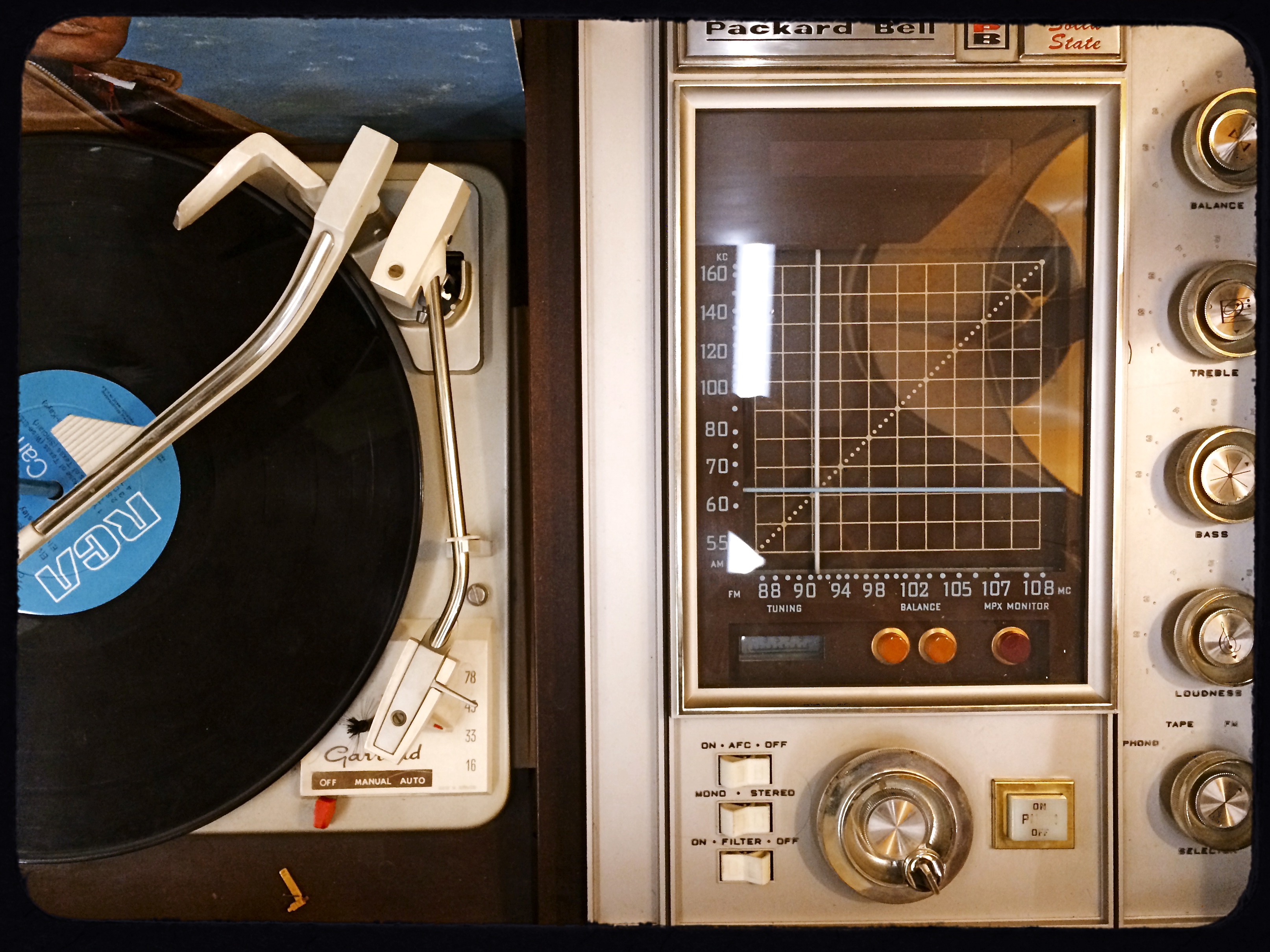
True Stereophonic Reproduction, 2014. Shot on the fly with an iPhone at my favorite junk store.
By MICHAEL PERKINS
MY FATHER, AS A GRAPHIC ARTIST, USED TO WARN ME ABOUT COMMITTING MYSELF TOO EARLY. Not in terms of personal relationships, but as it applied to the act of drawing. “Always lay down all your potential pencil lines first”, he advised, “and then decide which ones you want to ink.” The message was that flexibility was as valuable a drafting tool as your 2H pencil or your Rapidograph pen, that delaying your final vision often helped you eliminate the earlier drafts and their respective weaknesses. I still value that advice, as it has a current corollary in the making of my photographs, largely as a consequence of the smartphone revolution.
Once phones began packing cameras that could actually deliver an image better than a Crayola shmear on a wet cocktail napkin, photographers who still chiefly relied on their traditional cameras suddenly had the luxury of a kind of optical “sketch pad”; that is, an easy way to pre-visualize a composition with a basic machine that you could use for a study, a dress rehearsal for a more precise re-imagining with a more advanced device. For many of us, the larger display area of a phone can often “make the sale” for a shot in a more compelling way than the smaller monitor on our grown-up camera, and, at the very least, we can judge how a photo will “play” less conspicuously than by lugging about more visually obvious hardware. It’s a fast way to gather a lot of preliminary ideas, especially in locales where you’re free to come back later for the serious shoot.
I especially like trolling through vintage stores, trying to find antique items that, in themselves, make for impromptu still-life subjects. Sometimes, to be honest, I go home with a pocket full of puckey. Sometimes, I decide to go back and do a more thorough shoot of the same subject. And sometimes, as in the above image, I decide that I can live with an original “sketch” with just a little post-tweaking. The exercise does one important thing, in that it reminds you to always be shooting, or at least always thinking about shooting.
I know people who have completely stopped even carrying DSLRs and other, more substantial gear in their everyday shooting, and, while I can’t quite get there yet, I get the idea on many levels. Hey, use a fine stylus, a sharp crayon, or a charred stick, dealer’s choice. Just get the sketch.
POST No. 200: LET’S SEE WHAT HAPPENS
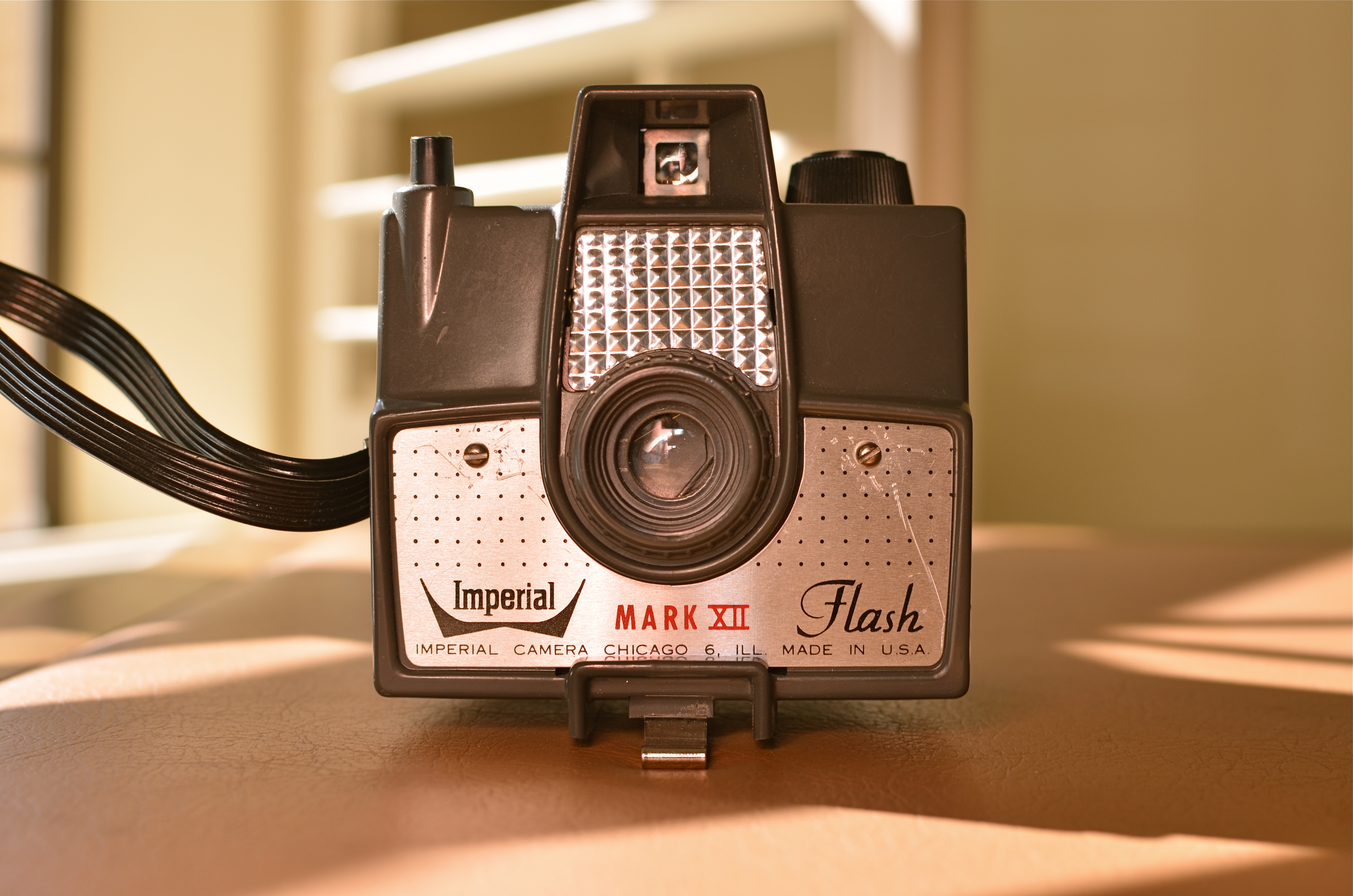
Let There Be (A Way To Catch) Light: The Imperial Mark XII, my first camera. 1/200 sec., f/5.6, ISO 125, 35mm.
By MICHAEL PERKINS
TIME, AT MY LOCATION IN LIFE, NOW PROCEEDS LIKE A CRUISE MISSILE, OR FASTER. Some days the signposts are zipping by so quickly that I seem to be inside a blender going full tilt puree.
I began THE NORMAL EYE as a kind of “let’s see what happens” project in 2012. Back at the starting line, 200 posts ago today, I wondered if I could even get to 200 words. Then a lucky accident occurred. Photography, which, over a lifetime has been an unfailing miracle of discovery for me, willed that passion onto my pages. Maybe it’s the kind of writing that is available to me, to all of us, as a unique feature of the present world. Maybe I had to live this long to become a chronicler for my eye and the soul that stands behind it.
As a broadcaster, I made my living for over thirty years writing advertising copy, news features, presentations, columns and tutorial material, but always for someone else, always to other agendas beyond my own. But, even while I was working for everyone else but myself, photography served as one of the very few constants in my life, and one of its principal sources of joy. Happy problem: I feel like I need another whole life to try to realize what I can now visualize. If I have any regret, it is that I learn everything the hard way, the slow way, experientially. If I could conceptualize the finer points of the art of imaging without running it personally through my own fingers, I would. It would save time, a premium item at any age, but beyond price from where I stand now.
When I first began clicking away as a kid with a kamera, I knew nothing but that I wanted to make pictures. I was divinely unaware of how truly ignorant I was and keen for the fray. My father, being a graphic artist, subscribed to Life magazine when it was still the premier photo newsmagazine in the world, tearing out the images in every issue and organizing them into a morgue file. There was the world in our garage, alphabetized as a ready reference on any subject. Want to know how to draw a giraffe? Look in the G folder.
But something else was happening as well. I was getting a crash course from the leading photographers on the planet as to how to see, how to show what you saw, how to make others see. I had my own version of the twelve apostles in the works of Alfred Eisenstadt, Gordon Parks, Larry Burrows, Richard Avedon, Otto Karsh, Margaret Bourke-White, and a half dozen others. Inside this special Bible I studied chapters and verses from the books of Aperture, F-stop, Exposure, Tri-Pan X, Graphlex. Praise the Lord and pass the polarizing filter.
As photographers, we all know that our favorite picture is the one we haven’t taken yet, since therein lies the potential for everything. I have to approach this blog the same way. Your input and my impatience have both fueled the fun and the fury of THE NORMAL EYE, and I hope to continue the affair as far as it will take us. I can’t focus for infinity, since I don’t know how far away that is. But, with your help, I can definitely manage 200 words at a time.
Thanks for coming here.
THE BOOK OF KODAK
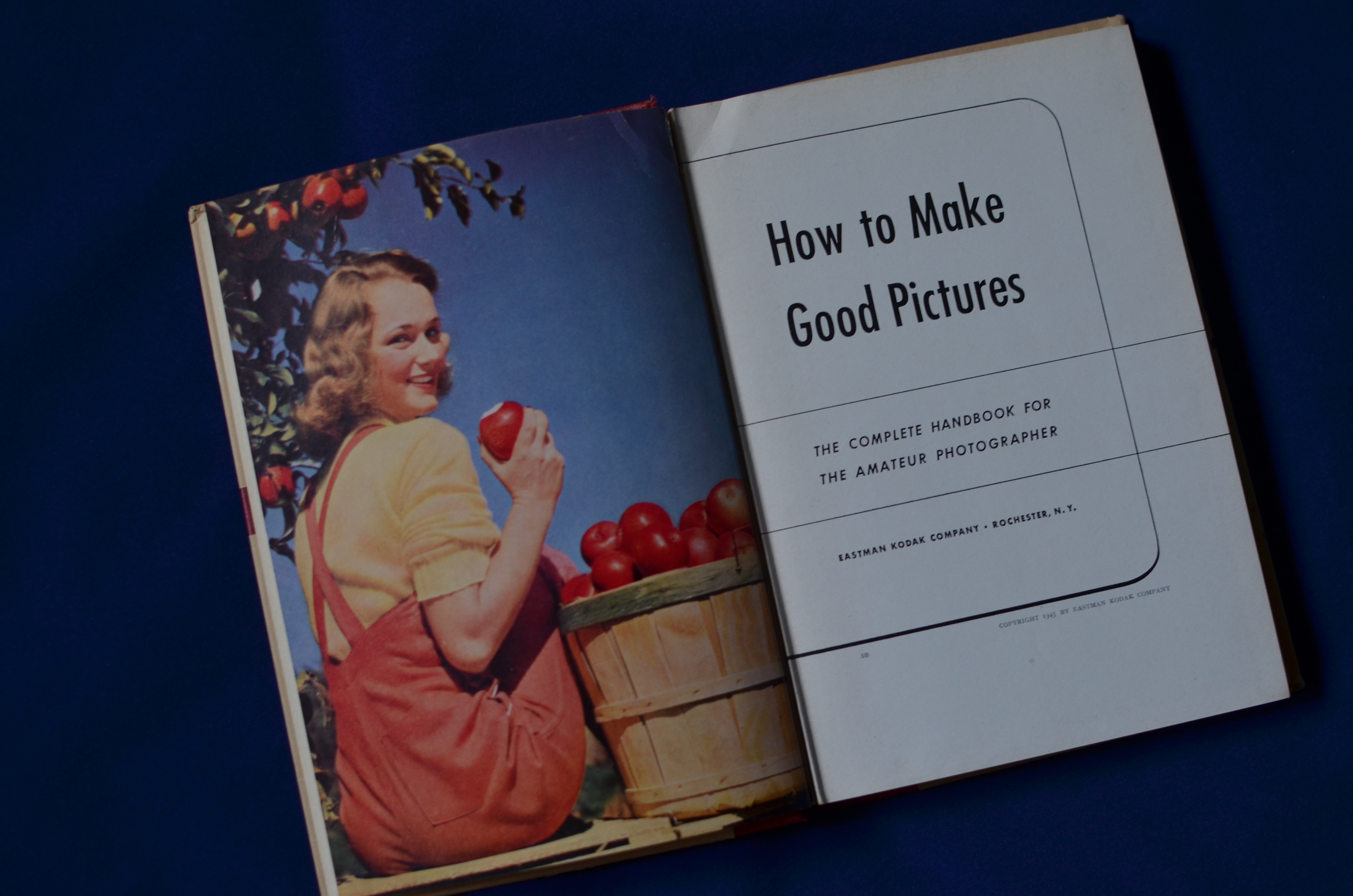
The Long-Distance Runner: The Most Successful Photography Instruction Series In History, Eastman Kodak’s How To Make Good Pictures (28th Edition,1943-47). From the collection of the author.
By MICHAEL PERKINS
KODAK’S SAD AND WOBBLY RE-EMERGENCE FROM BANKRUPTCY, announced this week, finalizes the process of “saving” a famous name, while annihilating the legacy of innovation that made that name great for over a century. Having already said goodbye to Kodachrome, most of its other trademark films, and camera production itself, Kodak will now concentrate on “imaging products”, which, for, most of us, means “printers”. Most of the news coverage of this corporate resurrection will “focus” (sorry) on what the new company stock will be worth, who goes, who stays, and a few scant mentions of the company’s original role as camera producer to the world.
That will leave a significant part of the story untold.
Certainly, George Eastman’s genius for marketing helped develop the first flexible roll films, then ingeniously created a market for them by putting a basic, usable camera in the hands of the Everyman. Nearly everyone has heard the slogan Kodak created to demonstrate how truly effortless its products had made photography: you press the button and we do the rest. But none of that would have guaranteed the company’s growth if Kodak has not also decided to become photography’s first great mass teacher, creating pro-active education programs to guarantee that, not only could Uncle Clem snap a photo easily, he could snap a good photo easily. What had once been a dark art for a select cabal of techno-wizards became, under Kodak’s outreach, something that could anybody could do.
And Kodak was going to show you how to do it.
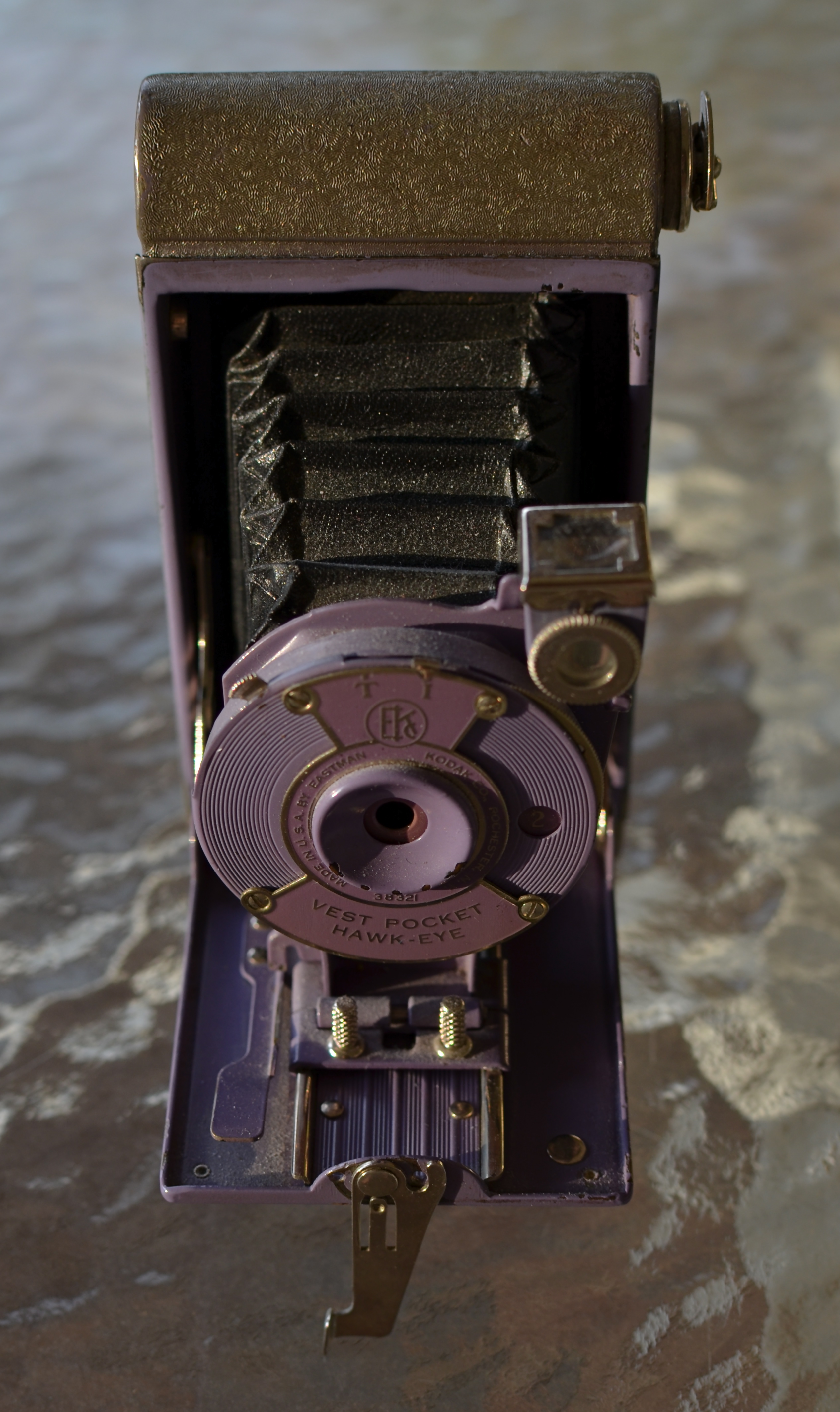
There was a time when this Kodak Vest-Pocket Hawkeye was truly intimidating. How To Make Good Pictures made it your friend.
Beginning before the end of the Victorian era, the company began to publish the first of an endless stream of practical guides on technique and simple theory aimed at the average shutterbug. Starting in 1898 with Picture Taking And Picture Making (115 pages of tips in a cardboard cover for fifty cents!), Eastman Kodak moved to 1905’s The Modern Way In Picture Making, and, finally, to the most successful photo instruction series in history, How To Make Good Pictures, introduced in 1912 and revised continually until finishing up with its 37th edition, in 1995. Over the years the “make” in the title had been changed to “take”, and its 1890’s essays on bromide paper, collodion matte, and ground-glass focusing had evolved, over the decades, to instructions on the use of flash, color, drop-in film cartridges, and “how to tell a picture story” with your Kodacolor slides. Hundreds of printings and millions of sales later, How To Make Good Pictures forged an ironclad link between consumer and company in a way no corporation before or since has done.
To everything there is a season. Kodak’s (now historically) tragic failure to see digital photography as a viable consumer revolution, until it was too late, is a matter of raw record. The company that taught the world to see had a blind spot, a fatal one, and the irony that nearly all of the rest of the industry developed digital technology by applying processes originated (and patented) by Kodak makes the story even sadder.
But, once upon a time, the Eastman Kodak Company not only knew what the future of photography was going to look like, it wrote a handy dandy little book that told everyone how to master that future.
Follow Michael Perkins on Twitter @MPnormaleye
Related articles
- Kodak moments are just a memory as company exits bankruptcy (kansascity.com)
NO CLEAR “BLACK AND WHITE” ANSWER
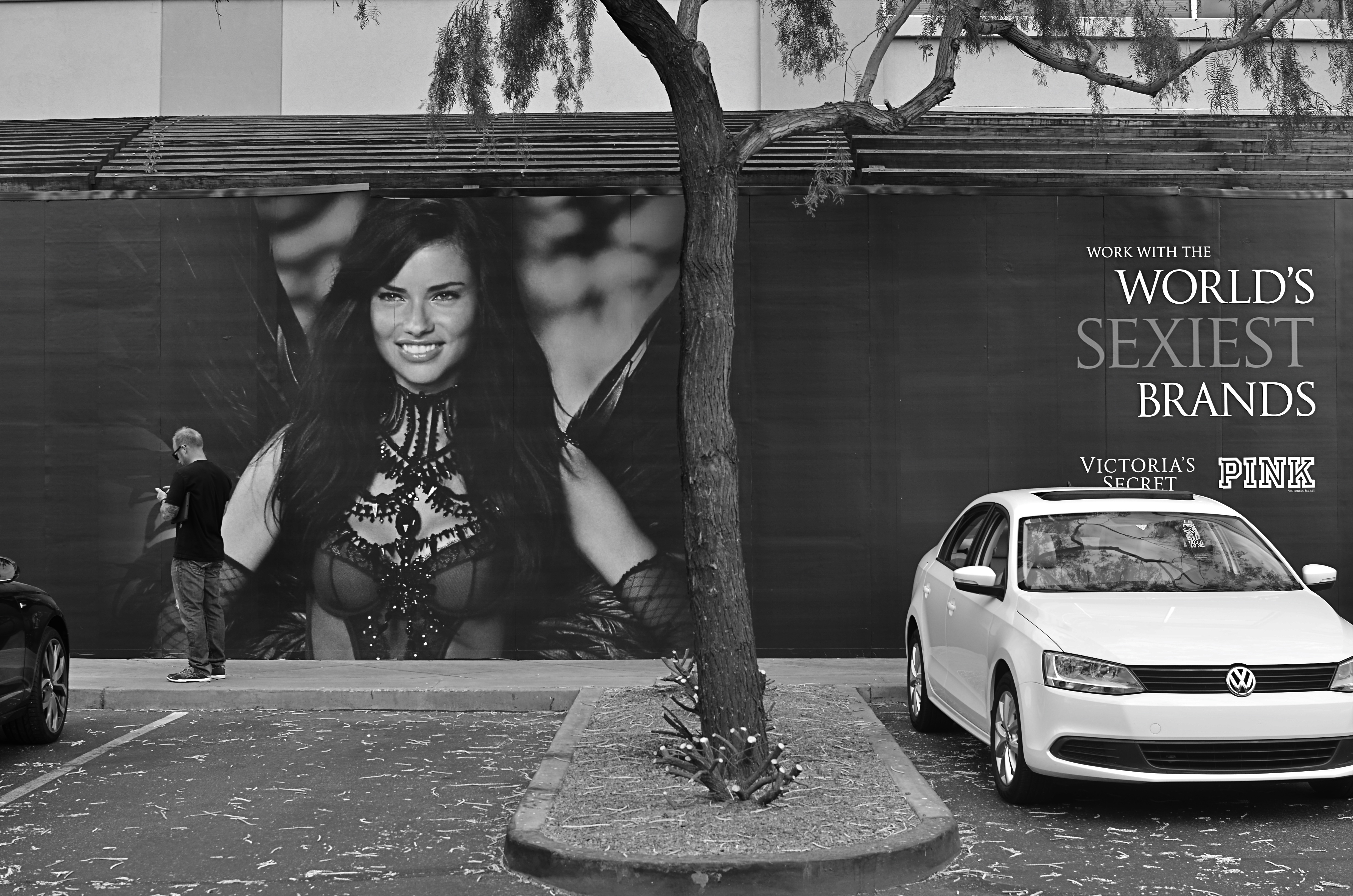
Hey, He’s just not that into you: In-camera monochrome, on a Nikon d5100: 1/200 sec., f/5.6, ISO 100, 35mm. Street photography sometimes benefits from a limited tonal range.
By MICHAEL PERKINS
SHOOTING IN BLACK AND WHITE, BEFORE THE DIGITAL ERA, WAS AN ACTIVE, RATHER THAN A PASSIVE CHOICE. You had to decide, before loading your camera, what an entire roll of film would be able to capture in terms of color/no color. There was no way to change your mind until that roll was completed and replaced. As you pre-chose film speed, light sensitivity, or special processing considerations, you also committed, before Frame One, to a single tonal option.
If you are really getting long in the tooth, you can remember when monochrome was the default choice for most of your film shoots. Economy was one factor, and, for certain shooters, including many of the pros, there was a lack of confidence that color films could render nature reliably. Giants like Adams, Edward Weston and others eschewed color throughout most of their careers, since they feared that either garish emulsions or the limits of extant printing processes would betray them in a way that black and white would not. And of course, in a world in which post-processing meant the skillful manipulation of a negative and the mastery of print-making, monochrome was simply an easier beast to tame.
Wow, are we ever in a different place.
Today, we can change our “film speed”, light sensitivity, and every kind of color emphasis frame-by-frame, and for many of us, color is our first choice, with many monochrome images post-processed from shots that were originally multi-hued. Photoshop and countless other programs allow us to have it all, with endless nuanced permutations from a single capture. Black and white is now often an “effect”, an after-thought derived later rather than sooner in our thought process. Oh, look what happens when I push this button. Cool.
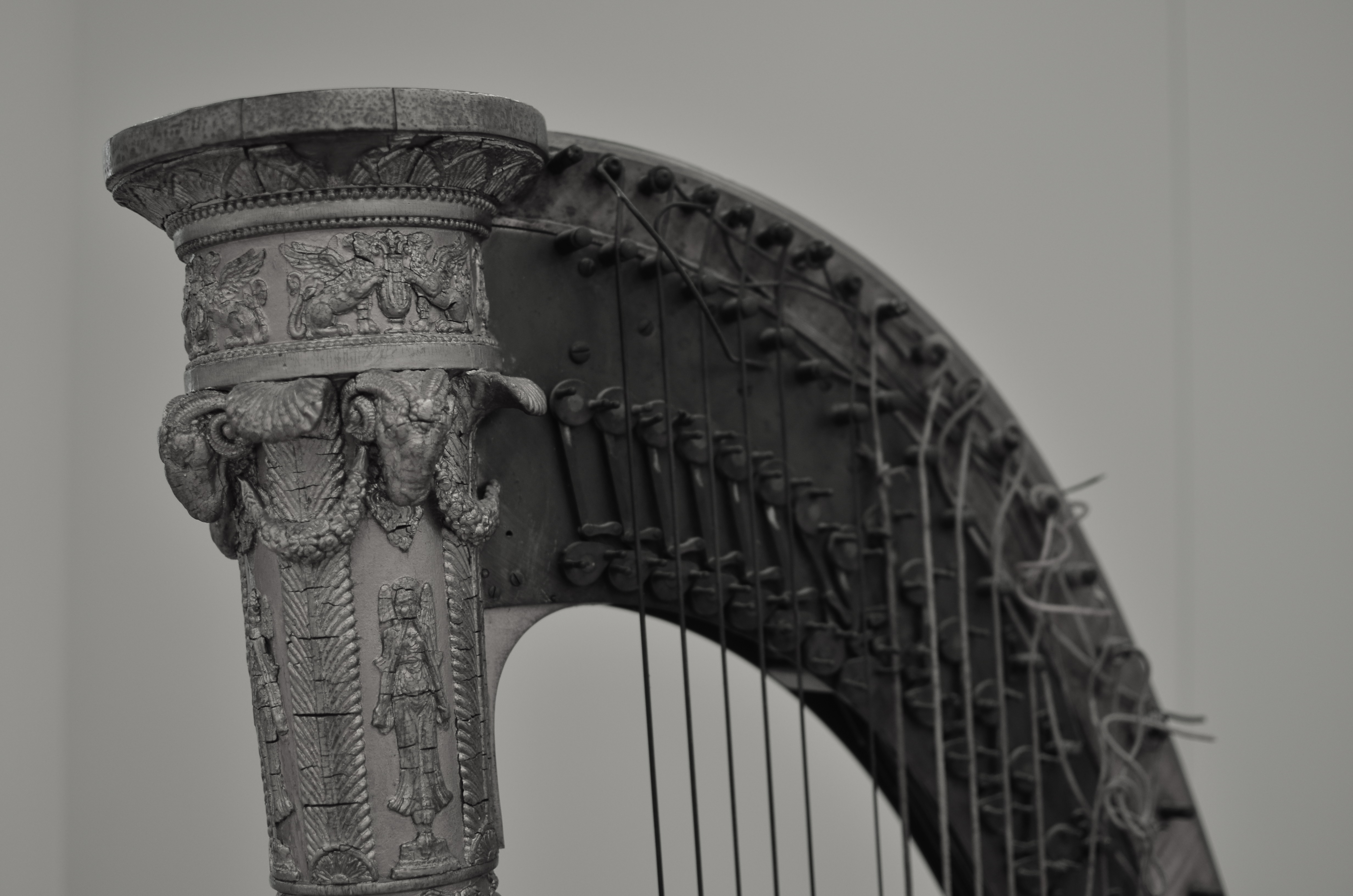
Shot in color, de-saturated in post. A boring shot in color becomes super-bland when rendered in monochrome. Blame the shooter, not the mode.
Most users’ manuals for today’s cameras, especially DSLRs, actually advise converting color images to b&w in “post” rather than enabling the camera’s picture controls to shoot monochrome in the first place. The prevailing opinion seems to be that results will be better this way, since processing offers finer-tuned controls and choices, but I take issue with that, since I believe that color/no color as a choice is best made ahead of the shutter click, no less than choices about aperture or DOF. You need to be thinking about what black & white can bring to your shot (if anything) as part of your pre-shoot visualization. The tonal story in a picture is simply too important for you not to be planning it beforehand.
The quality of in-camera monochrome modes for both Nikon and Canon are both perfectly adequate to give you a workable image versus converting the shot later with software, and that’s good, because getting the shot right in the moment is better for the result than infinite knob-twiddling after the fact. Monochrome is a tool for telling a story or setting a mood. It makes sense that its use be tied to what you are trying to achieve as you are planning it….not slathering it on later as an oh-this’ll-be-keen novelty. That’s Instagram technique, not photographic technique.
One great habit to retain from the days of film: anticipate your need, and shoot according to that need. Plan ahead. “Fix it in the lab” only works for shots with slight imperfections, frames in which the concept was sound enough to warrant painting away a few flaws. Going to black and white to save an iffy shot is a Hail Mary pass at best.
As as we all know, you don’t always get what you pray for.
That’s the truth. In black and white.
Follow Michael Perkins on Twitter @MPnormaleye.
Related articles
- Capturing Texture in Black & White Photography (jdgilchristphotography.wordpress.com)
- Black and White used like Color (atmtxphoto.com)
POP’S MAGIC PICTURE BOX (Father’s Day 2013)
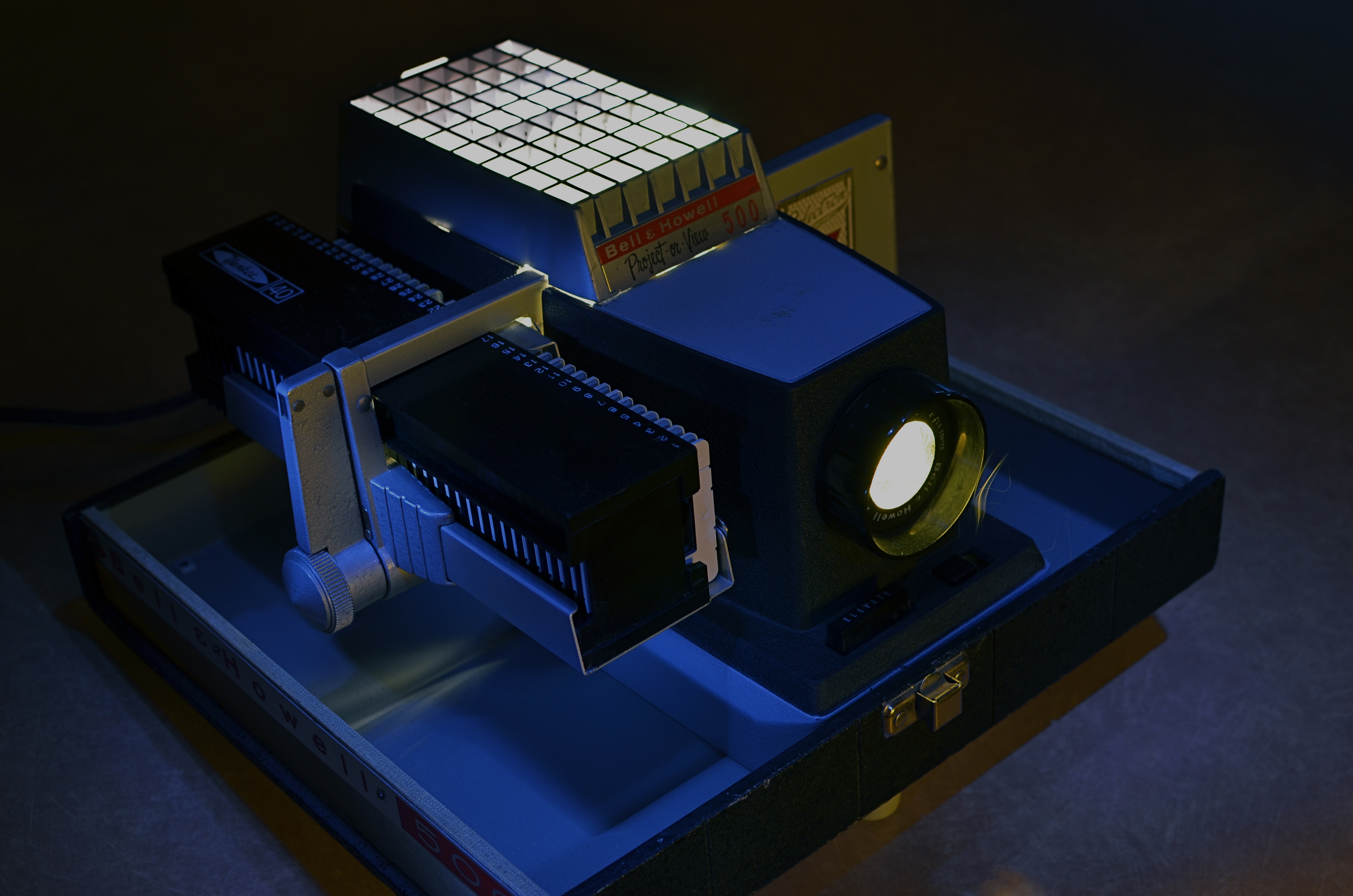
Magic in the darkness: my father’s Bell & Howell 500 projector, circa 1963. Image time-exposed and selectively light-painted in absolute dark. 10 sec., f/5.6, ISO 100, 35mm.
By MICHAEL PERKINS
YEARS AFTER, AS A YOUNG BOY, I FIRST SAW KODACHROME SLIDES PROJECTED ONTO OUR LIVING ROOM WALL, I learned that the first popular projectors had actually been called “magic lanterns” How right they were, and what an incredible spell these flashes of color and light wove for a little boy breathless in the familiar, yet miraculous dark.
It wasn’t that, as a family, we didn’t have dozens of albums crammed with traditionally processed prints of our most treasured moments. It’s just that, in the shadows, those clear, color-soaked images, half a wall in size, took on a life of their own. Bigger. More immediate. And as communal as a trip to the theatre. Only this was our theatre….our lore, our legend, writ large, compelling somehow in its size and scale.
Father’s Day is always a poignant time for me, since my life is insanely blessed. For me to be in the last third of my own life, and to still have the author of so many of my dreams still on the scene, still available to teach and direct my visions, as he did so ably then….well, it’s everything, that’s all.
As a father myself, I learned that it’s not always possible to transmit your passions to your children. Sometimes they don’t want to follow dear old Dad into whatever passionate pursuits he’s chosen for his own life. The fact that, sometimes, your kids “get” what even a part of you is really about is amazing, and, in the case of my father, I was lucky enough to be struck by the same lightning that hit him when it came to the graphic image….drawn or painted, realized in solid space in sculpture, or frozen on film. Photographs to him were another way of teaching himself to select, to edit, to choose something magical to depict or interpret, and he let me be the sorcerer’s apprentice.
Early into the Christmases of my adolescence, the power of our family albums was left in the dust as our memories began to shine and glow in our living room with the arrival of Dad’s new Bell & Howell 500 slide projector. It was Cinemascope, Cinerama, and the video wall from The Jetsons all in one, and I was mesmerized. The arrival of every yellow, flat box of new Kodak slides, all the way from the regional processing plant in Findley, Ohio, was like the reveal of a stage magician. I had caught the fever. I wanted to make pictures, too.
I wanted to make pictures like his.
The best statement I can make, all these years later, about the wonder of projected images was expressed several years ago on the Mad Men TV series, when adman Don Draper has the chance to make a fictional pitch to Eastman Kodak on how to market and name its new series of home slide projectors. And, even though our home projector used a “cube” tray instead of the wheel on Kodak’s “Carousel”, the magic was the same. Draper’s pitch began with the very essence of family memory:
“In Greek, ‘nostalgia’ literally means ‘the pain from an old wound’.
It’s a twinge in your heart, far more powerful than memory alone.
This device isn’t a spaceship, it’s a time machine. It goes backward and forwards, and it takes us to a place where we ache to go again.
It’s not called ‘The Wheel’. It’s called ‘The Carousel’ It lets us travel the way a child travels…around and around and back home again.
A place where we know we are loved. “
On this Father’s Day, as on every other, my heart is filled with memories and gratitude for the love that created them, but also a special thanks for a father who taught me the adventure, the patience, the joy of making an image. Armed with his trusty Kodak Pony 828, he taught me how to celebrate the triumphs and live with the failures, and, most importantly, to always go back to the well for another try. As both a photographer and graphic artist, he showed me that the concept is all, that it’s worth fighting for, worth worrying about, worth loving as your own special treasure.
Thanks, Dad. I love you.
Follow Michael Perkins on Twitter at MPnormaleye.
Related articles
- The best product placement in the TV shows (brandsandfilms.com)
- It’s a Magic Lantern (wordwenches.typepad.com)
WHAT’S YOUR TREE?

Detail of a restuarant that I’ve shot dozens of frames of, over the past five years. However, ask me if I could shoot it everyday for a solid year. I’m thinking not.
By MICHAEL PERKINS
ONE MAN’S DEDICATION IS ANOTHER MAN’S OBSESSION. Whether we view a person as passionately committed or someone who should just be, well, committed is largely a matter of perception. Nowhere is this truer than in the artistic world. Walk into any gallery, anywhere, and you will engage with at least one fixation on excellence that you believe is proof that grant money is dispensed far too freely. If this were not so, there would only be the need for one artist. The rest of us would be manning xerox machines. That’s why some people believe Thomas Kincade was a prophet, while other believe he was just, well, a profit.
Usually these debates are accompanied by too many beers, more than a few elevations in volume, and at least one person who gets his feelings hurt. Such is life, such is expression. We just guarantee your right to try it. We don’t guarantee anyone’s obligation to buy it.
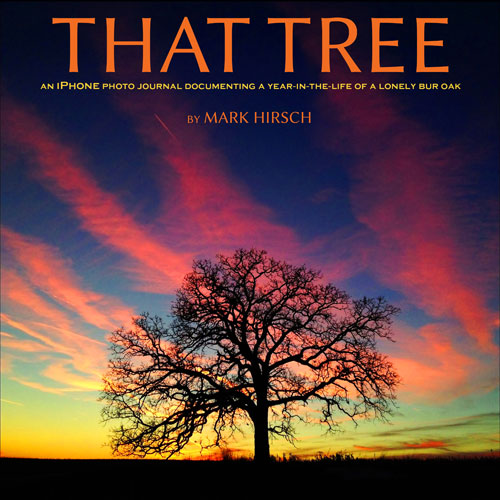 Discussion of the new book That Tree by Mark Hirsch (due in August) will fuel many such lager-lubricated chats, and some of them will be heated, I’m sure. The book actually demonstrates two separate obsessions, er, passions. First, Hirsch, a professional photographer, wished to create a substantial project for which he would set aside his Top Gun-level camera gear and shoot exclusively with his new iPhone. Second, early on in the project, he took the dare/suggestion from a friend to limit his subject matter to a single tree, an unremarkable bur oak that he had passed, without noticing, daily for almost nineteen years.
Think about this, now.
Looking back over the subjects that I personally have been drawn to revisit time and again, I’m damned if I can find even one with enough visual gold to warrant mining it for 365 images. the closest two subjects would be a small restaurant in Scottsdale, Arizona called Zinc Bistro, and the campus of cliffside art galleries at the Getty Center above Los Angeles. And I have cranked out a ton of frames of both subjects, looking for a truth that may or may not be there to see…but not a year’s worth. I personally believe that I might conceivably be able to find that much mystery and beauty in my wife’s face….in fact, I shoot her as often as I can. However, long before a project of this scope could be completed, she would have taken out a contract on my life. True love will only take you so far.
I have got to see this book.
Mark Hirsch will either become my new synonym for Latest Photo God Almighty or another amusing asterisk in the broad sweep of imaging history.He will also provide strong talking points for those who champion the iPhone as a serious photographic instrument. For that alone, the book has value.
Either way, it ain’t gonna be boring.
Follow Michael Perkins on Twitter @MPnormaleye.
Related articles
- Photographer documents a year in the life of a tree on his iPhone (guardian.co.uk)
YOU ARE THE CAMERA
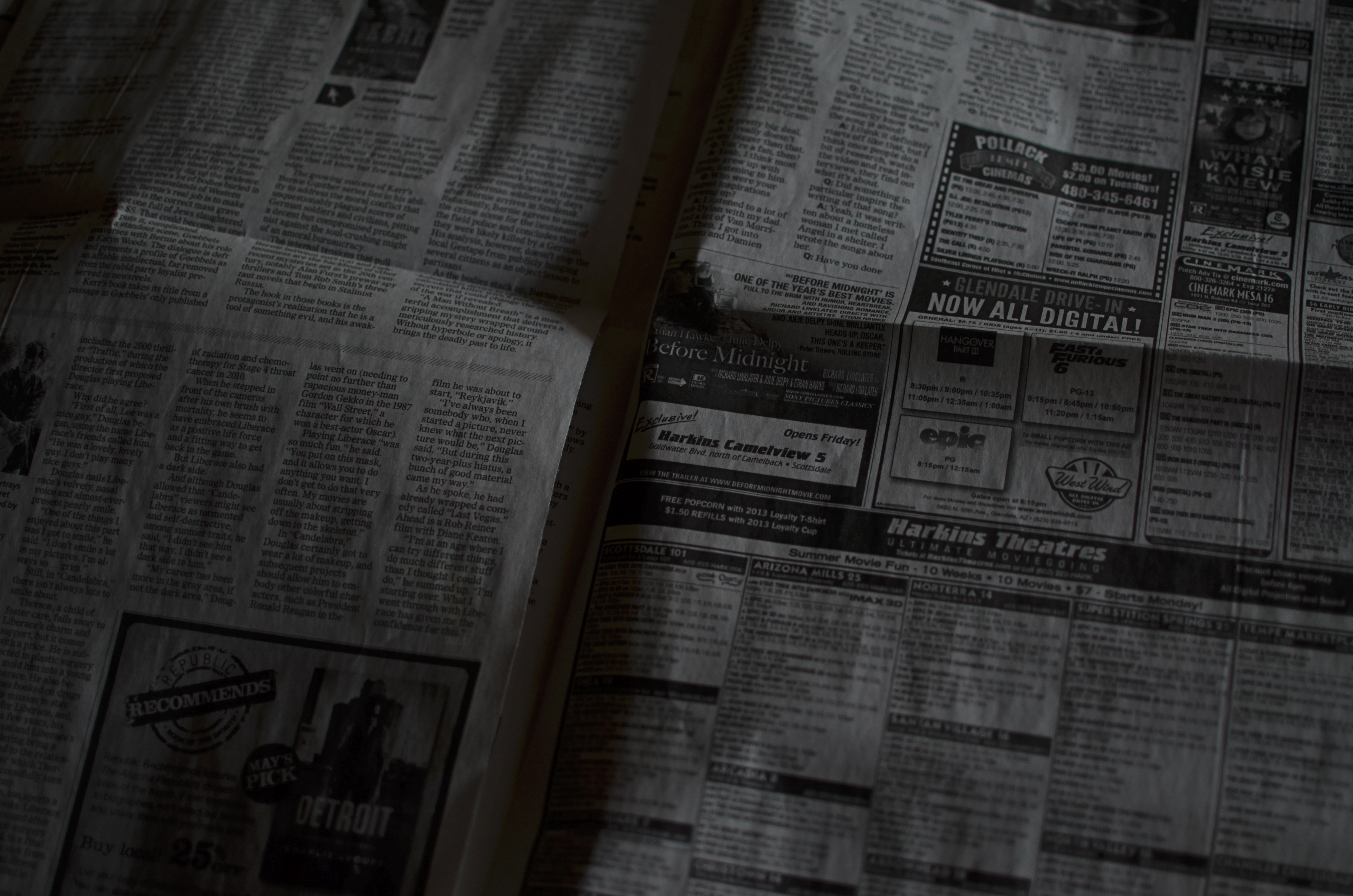
Dark Days for the printed page. 1/80 sec., f/1.8, ISO 100, 35mm.
By MICHAEL PERKINS
THE MOST ANNOYING COMMERCIAL ON TELEVISION AT PRESENT is the one from Apple reminding you that more people take pictures with the iPhone5 than with any other camera in the world. Now, I understand that The Men Who Would Be Steve at Apple need to assert their dominance in a rapidly accelerating race between smartphone camera brands. It’s just good business, and all that. Granting that, let’s agree that their statement is essentially meaningless for photography.
Apple can claim that their photo gadget is in more hands than anyone else’s? Ho-hum. The Kodak Brownie was able to make the same claim over 100 years ago, and successfully defend it for almost another fifty. We’re number one, sis-boom-bah, and what does that have to do with the kind of pictures that are being taken? The iPhone5 is a technical marvel on many levels, and it contains, among many other toys, a reasonably reliable, limited point-and-shoot-camera. You will always be able to get some kind of image on it under nearly any circumstances.
However, the Apple TV ad, while factually accurate, is artistically false, since it leads one to the spurious conclusion that more iPhone5 pictures means more excellent pictures. And there isn’t a camera, cheap or cherry, that can make that statement. I get just as agitated when trendo camera mags try to imply that if your gear costs thousands, your pictures will look like a million.
We’ve had almost two hundred years to shake off this childish notion. Equipment does not equal excellence. Convenience, speed, affordability, flexibility…cameras can make all these claims. But they do not confer the title of photographer on anyone.
Only you can do that.
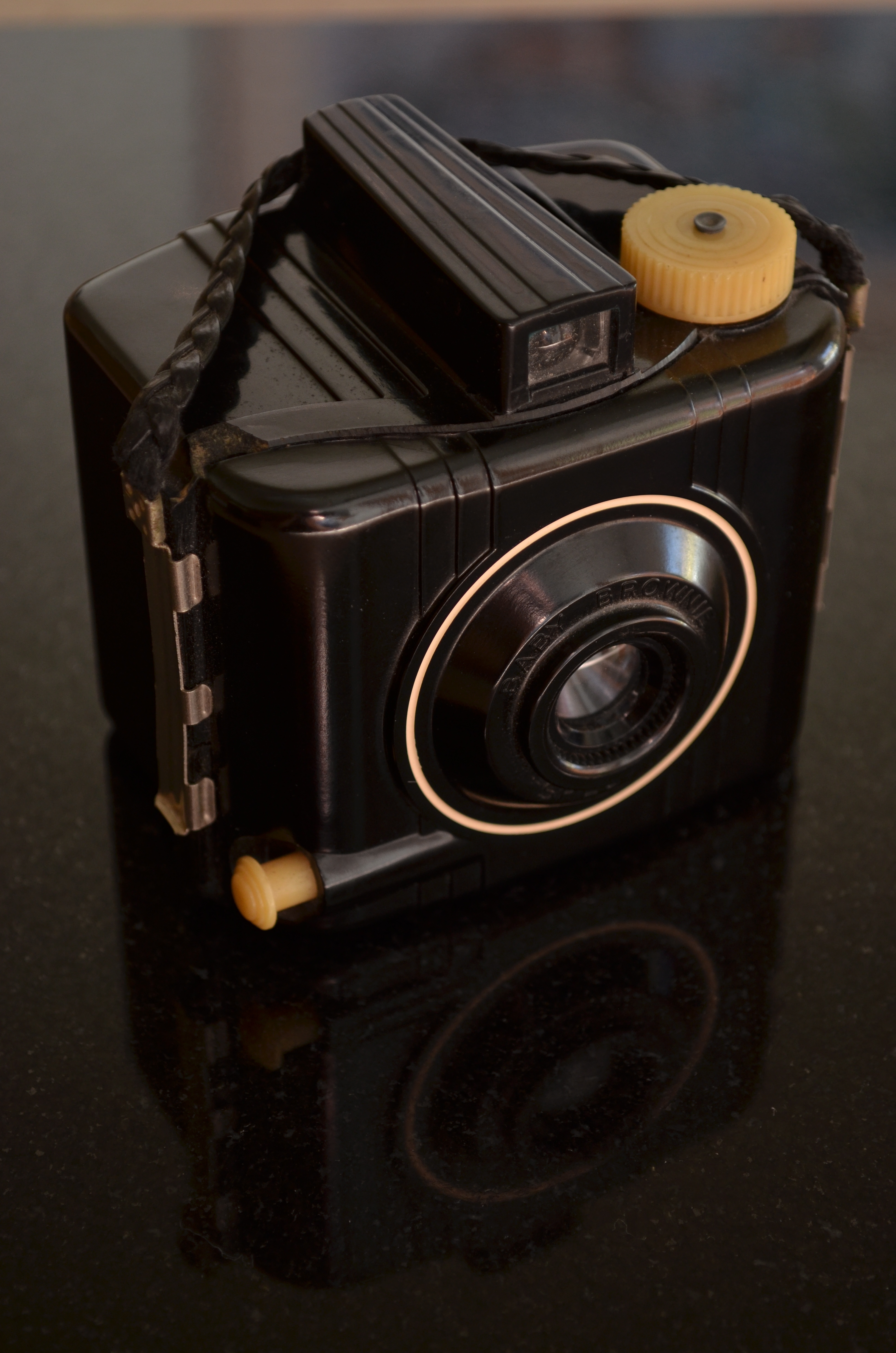
There used to be more of these than any other camera in the world, and so what?
And you can do it with a cheap piece of garbage, or a technical wonder, or any equipment stage in between. The idea is all. Everything else is just tinkering.
Here’s another piece of lunatic logic coming from another direction:
The idiotic recent decision of the Chicago Sun-Times to lay off all of its staff photographers, replacing them with freelancers (whom they will train on iPhones!), is not a lousy idea because there aren’t enough low-cost cameras out there to afford them some kind of coverage on their stories. It’s a lousy idea because it’s based on a flawed concept: the belief that photography is a universal skill, and that bystanders with smartphones are the equal of seasoned visual journalists, imbedded in their communities and schooled in its sources. They are not, and can never be.
Sadly,you can bet that editors across the nation are watching to see if the Sun-Times gets away with it. And they just might. Of course the quality of image reporting will take a hit, but since people are leaving the traditional newspaper as if it has leprosy anyway, will the customers know the difference? Look for this horrible move to be duplicated at a newspaper near you, since it’s (a) cheap, (b) easy to explain failure some other way, and (c) oh, yeah did I mention it’s cheap? Ironic sidebar: this is, officially the first time a newspaper has opted for less technology to become more competitive.
Expensive cameras and decent salaries are certainly no guarantee of good news coverage, but a staff loaded with veterans of wars, uprisings, elections, disasters and human interest is. The fact that several of them are Pulitzer Prize winners isn’t exactly a disqualifier, either.
You are the camera. You make the picture, regardless of the technology at hand. Forget that, and you might as well be holding a canned ham.
follow Michael Perkins on Twitter @MPnormaleye.com
Related articles
SEVEN MORE WONDERS OF THE WORLD
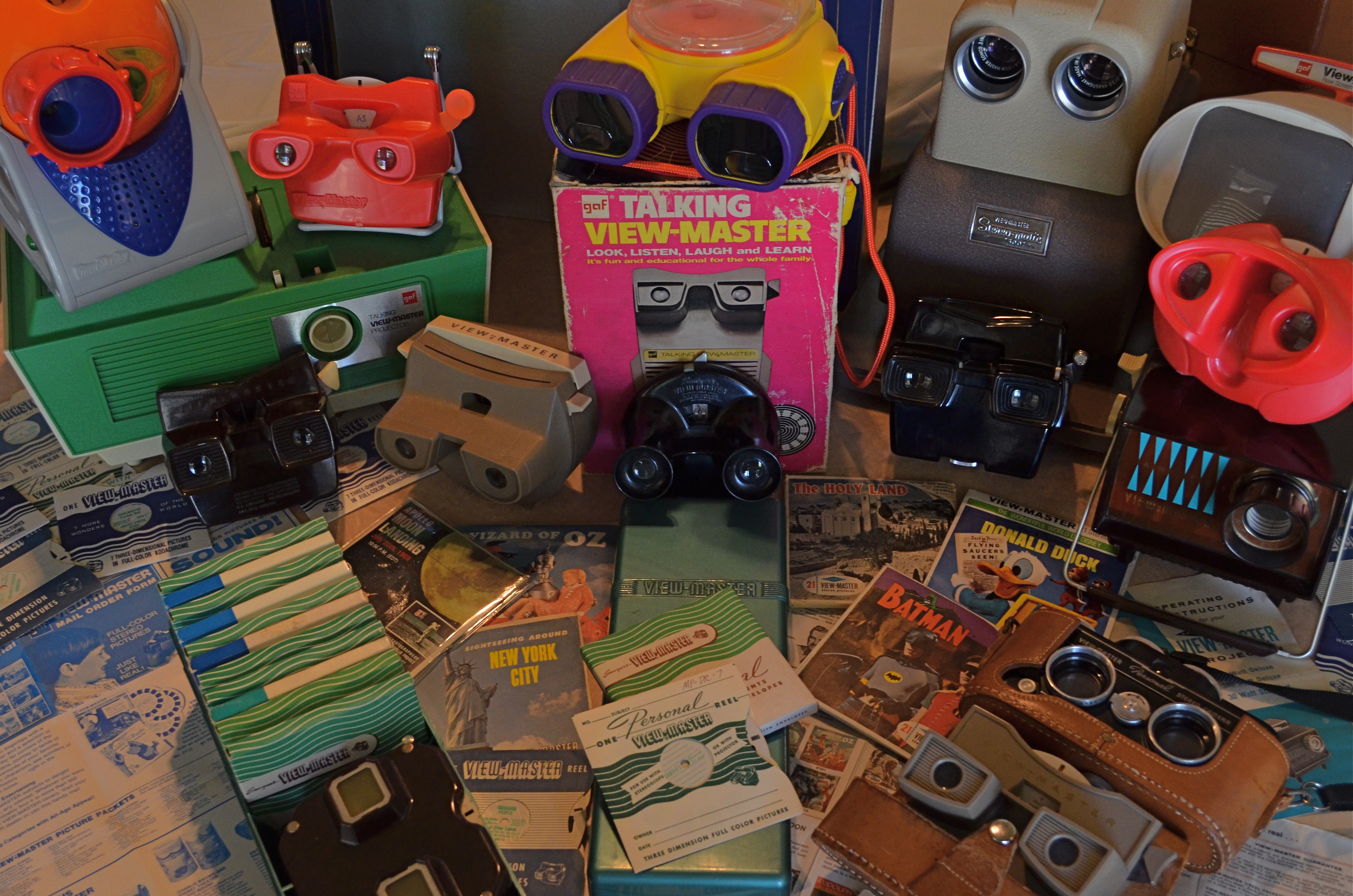
Class Picture: A small sampling of the massive product line from over sixty-four years of View-Master. 1/80 sec., f/5.6, ISO 640, 24mm.
By MICHAEL PERKINS
I’LL NEVER KNOW THE NAMES OF MANY OF THE PHOTOGRAPHERS THAT HAD THE GREATEST ROLES IN SHAPING MY EARLY WAY OF SEEING. The most important primary influences on my visual style in childhood weren’t the guys who received billing in the very public credits of Life, Look, or National Geographic, but the nameless freelancers whose work popped out of the small 3-d Kodachrome squares mounted in white cardboard View-Master reels. To this day, I can directly link the way I visualize images to VM’s crew of uncredited shooters, with their full-color highlight tours of everything from Yosemite to Notre Dame. Truly, from the first brown bakelite Model “D” viewer I received as a boy, through endless model variations over the next fifty years, I framed my own method for telling a picture story after the scenes in those little blue envelopes which bore the portentous legend, Seven More Wonders Of The World.
If you’ve been out of short pants for a while, you might not know that these little middle-tech stereoscopic beauties are still around, although just barely. View-Master has provided diversion and delight for three generations of devotees the world over, but the ride, billions of reels and zillions of memories later, might finally be crawling to a halt. More on that in a moment.
The co-invention of a photographer/tinker and a postcard salesman, View-Master cranked out its first rudimentary viewers and travel titles in 1939, more or less growing out of its appearance at the New York World’s Fair, where its souvenir views of “The World Of Tomorrow” made their debut. One of the earliest VM subjects was the then-new Boulder (later Hoover) Dam, setting the tone for the format’s explanatory “texts”, image descriptions short enough to make Tweets look encyclopedic, all crammed to fit inside the tiny caption window resting between your eyes. View-Master was largely an adult amusement for its first decade, catering to the armchair traveler with an endless catalogue of national parks, castles, cathedrals, and natural wonders, selling through a network of dealerships at camera shops and the souvenir stands at various travel attractions. Many of the format’s contributing scenic photographers also made some side money as VM sales agents, criss-crossing the country by car, shooting a little here, selling a little there.
By the early 50’s, View-Master grew from single-subject reels to three-reel packets and from travel images to its first children’s titles. Entering into a contract with Walt Disney studios, the VM format made a seismic shift toward youth fare with cartoon and TV shows, movies, even their own original fairy tale and nursery titles, shot with tiny clay figures arranged in their own miniature tabletop dioramas. And of course “the scenics”, as they were called, rolled on to chronicle many more World’s Fairs, canyons, mountains, parks, even NASA flights.
Depending on when you first encountered the format, View-Master was made either by Sawyers, GAF, Tyco, Fisher-Price, or Mattel, and the classic viewer was joined by projectors (2-D and 3-d), stereo cameras for making your own reels, “talking” viewers with internal phonographs to announce the captions, home “theatre” sets, storage cases and a slew of other short-and-long-term products.Now for the inevitable “passage of time” part: by the start of the 21st century, View-Master’s ancestral factory in Portland, Oregon closed its doors and production was moved to Mexico. And in 2013, there is, after sixty-four years, the clear possibility that the View-Master division of Mattel will be leased to a separate company, spun off like a despised stepchild, if not discontinued altogether.
Why the nostalgia? Because my whole orientation toward trying to tell a compelling, simple story in pictures, nurtured later by more famous photographers, cut its baby teeth on View-Master images: the composition, the angle, the way of leading the viewer’s eye into a frame and nailing it there….that’s all part of the “reel” world of my early, baby-sized eyes. There is no wasted space, no cute artiness in a View-Master image. It is all practical information, all shorthand communication. And even though the kiddie titles have long dominated the format’s output, there are, amazingly, still artists who create everything from complete tours of the Lewis & Clark expedition to edgy art exhibits with View-Master. And in a world that still embraces lo-tech imaging artifacts like plastic toy cameras and artificial “retro” platforms like Instagram, it seems that VM could still be an instrument for at least some kinds of photo expression.
Or, as with our tearful farewell to Kodachrome a few years back, we might, at least, cast a fond backward glance at the little box that gave us the world.
Seven wonders at a time.
THE EASIEST ABSTRACTION
By MICHAEL PERKINS
YOU’VE HEARD THE JOKE ABOUT THE WRITER WHO TAGGED A NOTE TO A FRIEND BY SAYING, “If I’d had more time, I’d have written you a shorter letter”. That line speaks volumes about how we increase the power of communication by leaving things out. Just as great books are not so much written as re-written, so photographs often gain in eloquence when everything but the essence of the message is pared away.
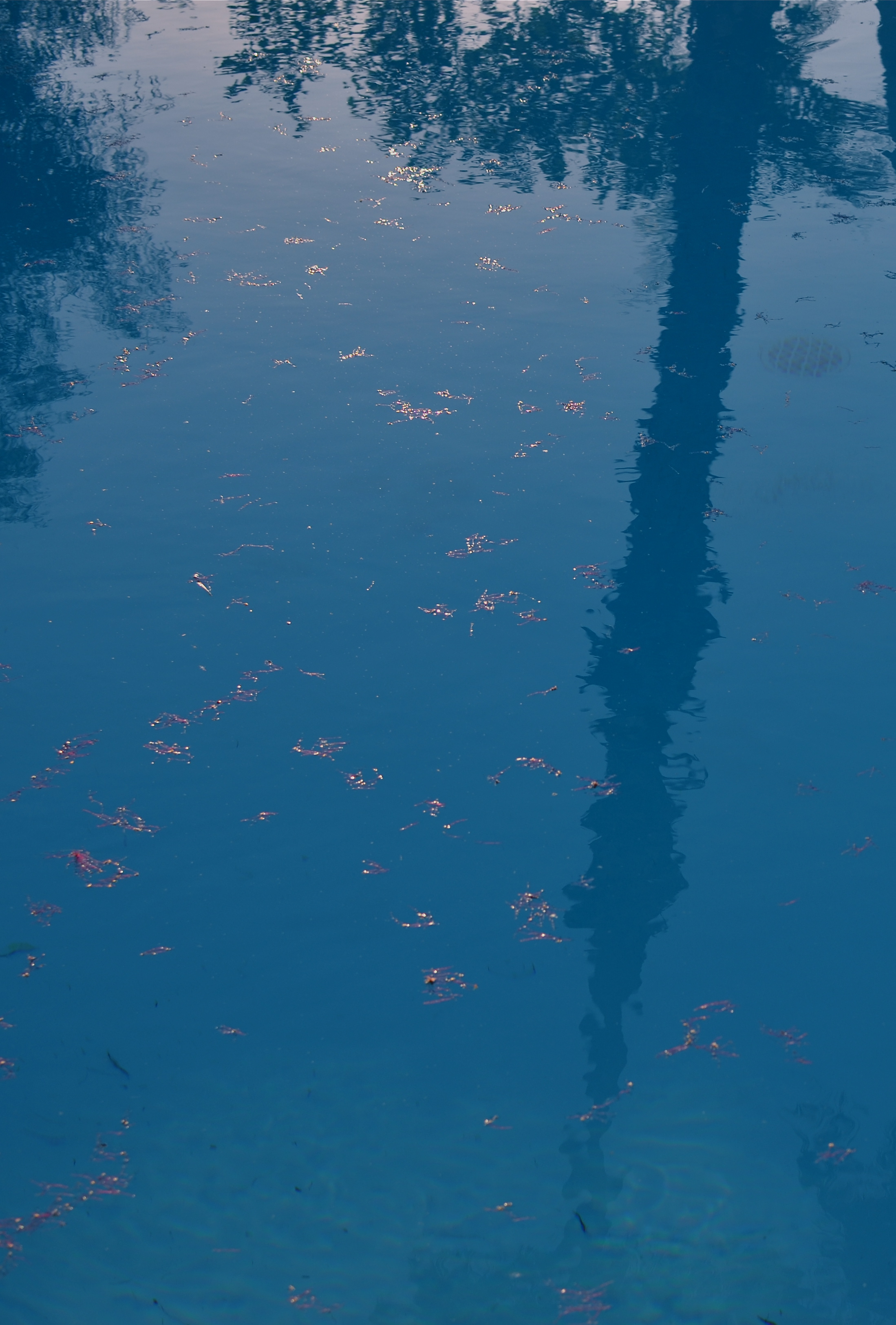
You already know a tree “goes with” this reflection..but is it needed to complete the image? 1/500 sec., f/5.6, ISO 100, 35mm.
It means being your own best editor, and, to do that, you have to be able to hate on your own work a little bit. Tough love and all that. Spare the picture and spoil the image. No sacred cows, just because they are your cows. There is no avoiding the fact that no real art comes about unless you take direct, often brutal action, to overcome the imperfections of a raw first effort. You have to intervene, again and again, in the shaping of your conception.
You can probably infer from all this that I am no fan of automodes, or of any other abdication of responsibility that lets a device, for Pete’s sake, dictate the outcome of image-making.
A few basic truths to keep before you:
Your camera is a machine with an eye attached.
You are an eye with a brain attached.
One of you is supposed to be in charge.
Guess which one.
When we merely snap a scene, freezing an arrangement of whatever we see in frame, we are only making a record. Creativity comes with abstraction, of exploring what is beyond the obvious cause-and-effect. The standard approach to showing things should actually be called the “average” approach. Look, here’s a tree, and, below, here is its shadow. Behold, here’s a scenic object next to the water, and, in the water, a reflection of that object. This simple reproduction of “reality” involves craft, to be sure, but something that falls short of art. Abstracting, adding or taking away something, and actively partnering with the viewer’s imagination take the photograph beyond a mere recording.
And that, boys and girls, is where the “art” part comes in.
Take away even a single obvious element and you change the discussion, for better or worse. Does the tree always have to be accompanied by its shadow? Does the mountain and its reflection always need to be presented as a complete “set”? It’s interesting to take even the “perfect” or “balanced” shots we cherish most and again take the scissors to part of them. Can the picture speak louder if we trim away the obvious? Can the image turn out to be something if it just stops trying to be everything?
The easiest abstractions come from changing small things, and editing can often, oddly, be an act of completion. Pictures taken in the moment are convenient, but too many images are trusted to the ease of leaning on automodes, and almost no photo is fully realized “straight out of the camera.” Believe this if you believe nothing else: nothing truly excellent ever results from putting your imagination in neutral. You have to decide whether you or the machine is the principal picture-taker.
That decision decides everything else.
Follow Michael Perkins on Twitter @mpnormaleye
SKIN IN THE GAME
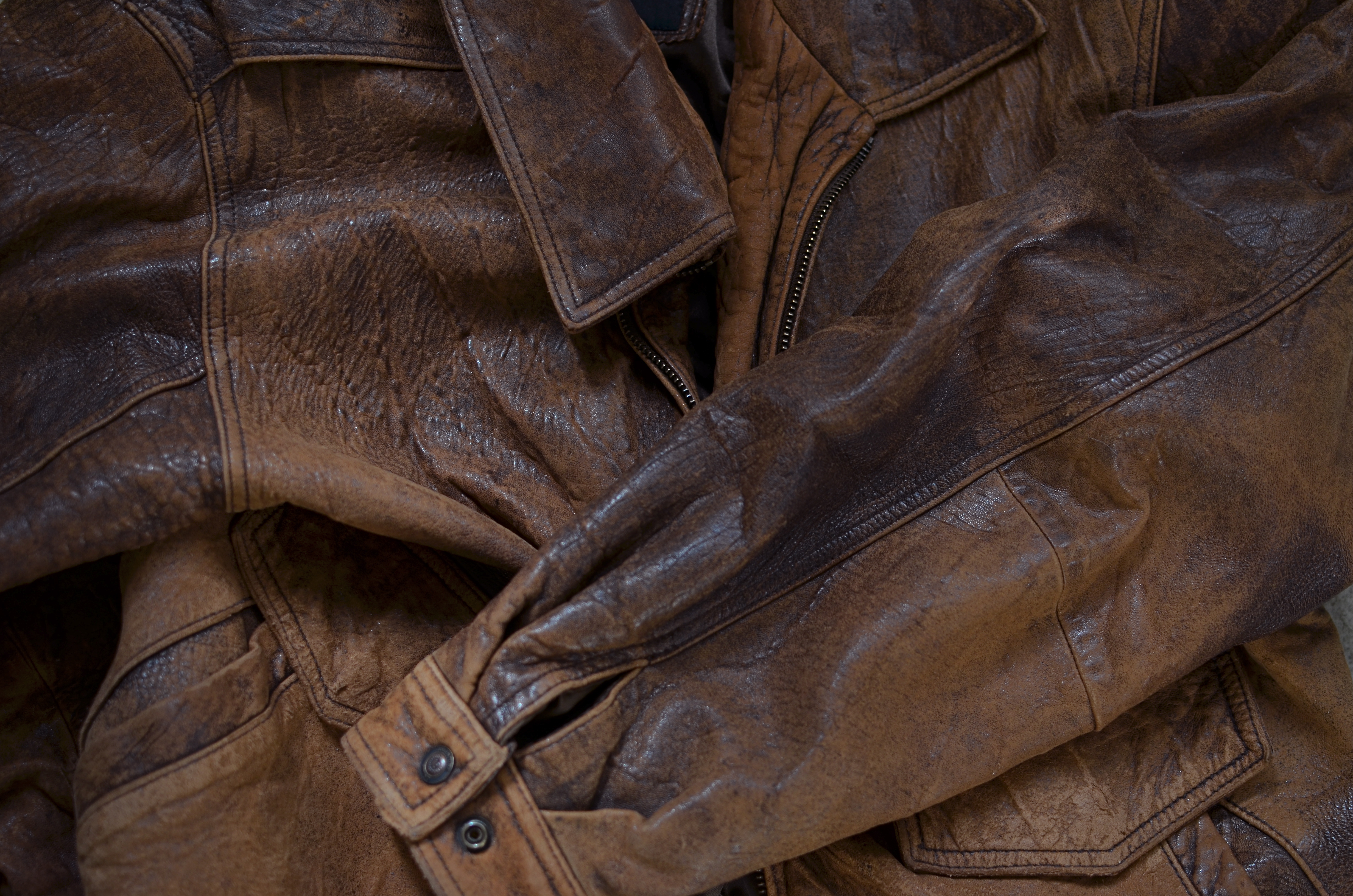
“Old Faithful”, the jacket that has accompanied me on more shoots than any other single piece of “gear”. 1/200 sec., f/2.8, ISO 100, 35mm.
By MICHAEL PERKINS
THE ONE PIECE OF “EQUIPMENT” THAT HAS SEEN ME THROUGH THE TRANSITION FROM FILM TO DIGITAL is not a hunk of techno gear. In fact, it has not directly figured in the taking of even a single picture. I was reminded of its amazing longevity a few months ago, as I was going through a 2002 shoot done in Ireland. Among my own shots was a pretty good candid of me, taken by my wife, as I crouched to line up a shot next to a road heading to the Ring of Kerry. And there “it” was with me.
In fact, it was keeping me warm and dry.
Context: I never took the plunge of the eager amateur and purchased one of those puffy, sleeveless photog vests, honeycombed with a zillion pockets, pouches and secret compartments, much as I never painted the words CAMERA NERD on my face in day-glo orange. Chalk it up to self-consciousness. I figured it was hard enough to blend in and keep people relaxed in a shooting situation without looking like a cross between a spinster butterfly hunter and a middle-school lab assistant. Call me vain.
And you’d be right.
So, a plain brown leather jacket. Gimme three good pockets and call it day. And thus it was that, for the next thirteen years or so, I have had “skin in the game”, skin that has survived exploded pens, leaked batteries, rotten weather on two sides of the Atlantic, and more scrapes, tears, and rips than I care to recall. It has also helped keep countless camera straps from inscribing a permanent groove in my left shoulder, and, here in the Land Of Incipient Arthritis, I appreciate that more than I can say.
Such service calls for a little respect, and so, in the name of the weirdest still lifes ever, I figured it was time for Old Faithful to pose for a portrait of its own. Originally I thought to lay it out straight, the way they show off famous duds at the Smithsonian. But what really caught my eye was that, texture-wise, it is almost six different jackets, from the glossy sheen of an old horse saddle to the frayed look of something that’s been making out with a cheese grater.
At the last, I simply experimented with a few crumpled waves of grain, as if the jacket had been hastily tossed aside, which, trust me, it has been, on countless occasions.
Best thing is, when I’m ready, it’s still there.
I’m not a big fan of good luck charms, but maybe some things protect against bad luck, and that’s no easy feat, either. Either way, me and what Kipling would have called my “Lazarushian leather” and I will keep signing up new missions.
At least until one of our arms fall off.
THE GOLDEN AGE OF JUST OKAY
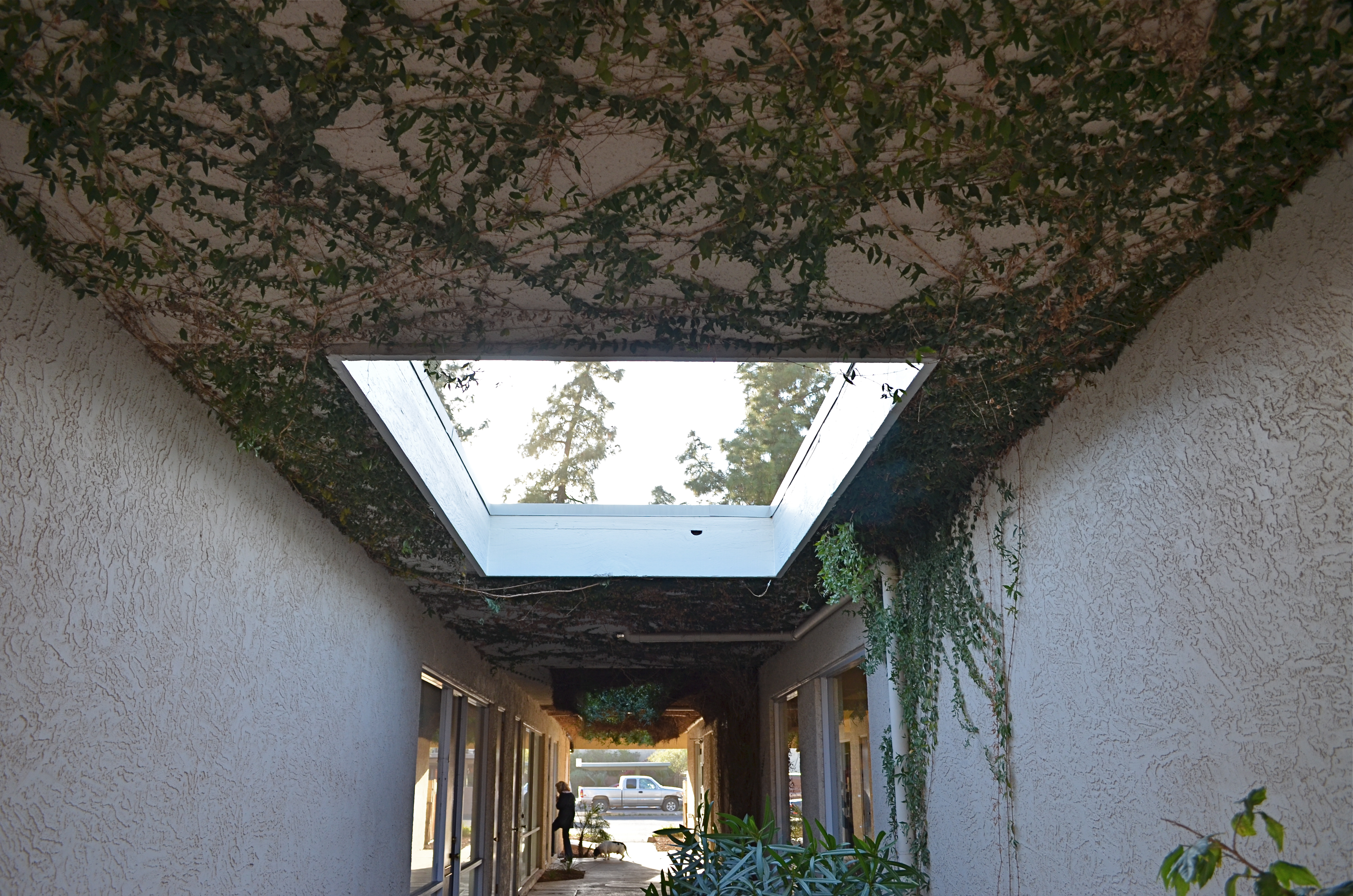
Plenty of mistakes made on this one. Is it a success or a failure? Does it matter? All that’s important is that you, not the camera, is making the picture. Manual mode, 1/100 sec., f/5.6, ISO 100, 18mm.
By MICHAEL PERKINS
WE ALL SAY IT: THERE ARE NO SHORTCUTS TO SUCCESS.
We all say it. None of us believes it. It’s just not, well, American to throw aside our national myths, and the folk tale of the lucky, quick genius who zooms to the head of the line to fame, bounding in front of all the sloggers and suckers, is intoxicating. One blinding inspiration, we tell ourselves, just one great notion, and we can bypass all that “practicing and patience” stuff, the same virtues we feel honor bound to extol in others. In anyone else but me.
Me, I’m taking the shortcut.
So now is about the time when the photography angle of this rant should kick in, right?
Okay, here goes.
As the automode functions of cameras have grown ever more complex, they have made taking a perfectly acceptable picture effortless. Great for immediate gratification. Not so great for the art of photography. Think about it. It has become so fabulously easy to point and get something that isn’t too bad, that we are bypassing the slower, uglier, but eventually more satisfying process that comes with trial, error, recalculation, and risk. We produce more error-free pictures than ever before, but, to do that, we have to hang our own creativity…..the raw, sloppy process of imagineering our own vision…on the wall. We get fat and lazy. And so do our pictures.
Now that I have successfully defended my title as the great Grinch Buzzkill, trying to rid Whoville of good, clean camera fun, let me just ask one more question. Do we want a large mountain of “okay” pictures, taken, to an ever greater degree, by our cameras, or a smaller, more amazing pile of remarkable pictures borne of our own sweat and struggle? Tricky part: there is no right or wrong answer, just a choice to be made based on your own expectations. Turning off the “green zone” of guaranteed effect modes and really educating ourselves as to what is going into the making of our pictures means turning off a snapshot mentality and opting for the unpredictable.
Hey, I’m not suggesting you go all Matthew Brady and lug around forty pounds of wet plates and a covered wagon full of caustic chemicals just to take a birthday picture of Grandma blowing out her candles. But we can probably aspire to more than just the golden age of okay.
We already know how easy it is to take a picture. Now we need to rediscover how hard it can be, and what miracles can spring from our minds when we get our hands dirty and go down the rockier path.
WHEN THE NOISE DIES
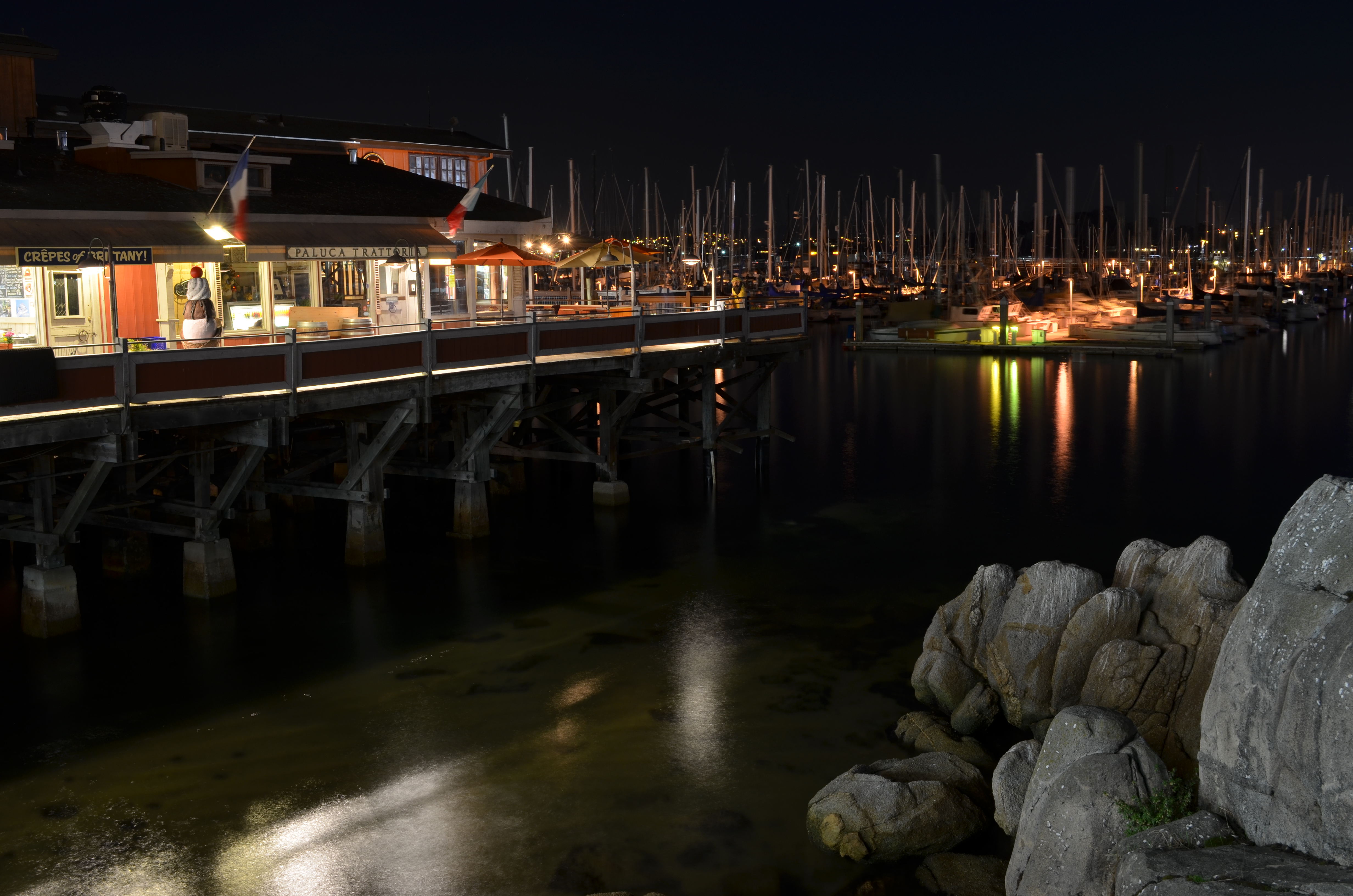
In the day, this place is a madness of color and noise. At night, you have its wonders all to yourself. Fisherman’s Wharf in Monterey, California. 25 second exposure at f/10, ISO 100, 24mm.
By MICHAEL PERKINS
AMERICA IS A LOUD PLACE. IF WE DON’T HEAR NOISE WHEREVER WE GO, WE CREATE OUR OWN. It is a country whose every street rings with a cascade of counterpointed voices, transactions, signals, warnings, all of it borne on the madly flapping wings of sound. There are the obvious things, like car horns, screeching tires, soaring planes, thundering rails, somebody else’s music. And then there are the almost invisible hives of interconnecting lives that tamp vibration and confusion into our ears like a trash compactor.
We no longer even notice the noise of life.
In fact, we are vaguely thrown off-balance when it subsides. We need practice in remembering how to get more out of less.
That’s why I love long night exposures. It allows you to survey a scene after the madding crowd has left. Leaving for their dates, their destinies, their homes, they desert the fuller arenas of day and leave it to breathe, and vibrate, at a more intimate rhythm. Colors are muted. Shadows are lengthened. The sky itself becomes a deep velvet envelope instead of a sun-flooded backdrop.
The noise dies, and the quiet momentarily holds the field.
The above image is of Monterey’s Fisherman’s Wharf, one of the key tourist destinations in California, a state with an embarrassment of visual riches. During the day, it is a mash of voices, birdcalls, the deep croak of harbor seals, and the boardwalk come-ons of pitchmen hawking samples of chowder along the wharf’s clustered row of seafood joints. It is a colorful cacophony, but the serenity that descends just after dark on cold or inclement nights is worth seeking out as well.
Setting up a tripod and trying to capture the light patterns on the marina, I was stacking up a bunch of near misses. I had to turn my autofocus off, since dark subjects send it weaving all over the road, desperately searching for something to lock onto. I am also convinced that the vibration reduction should be off during night shots as well, since….and this is counter-intuitive….it creates the look of camera shake when it can’t naturally find it. Ow, my brain hurts.
The biggest problem I had was that, for exposures nearing thirty seconds in length, the gentle roll of the water, nearly imperceptible to the naked eye, was consistently blurring many of the boats in the frame, since I was actually capturing half a minute of their movement at a time. I couldn’t get an evenly sharp frame, and the cold was starting to make me wish I’d packed in a jacket. Then, out of desperation, I rotated the tripod about 180 degrees, and reframed to include the main cluster of shops along the raised dock near the marina. Suddenly, I had a composition, its lines drawing the eye from the front to the back of the shot.
More importantly, I got a record of the wharf’s nerve center in a rare moment of calm. People had taken their noise home, and what was left was allowed to be charming.
And I was there, for both my ear and my eye to “hear” it.
Thoughts?
Related articles
- Vibration Reduction (nikonusa.com)
OPTING FOR IMPERFECTION

When additional detail needs to be extracted from shadows and from the texture of materials, HDR (High Dynamic Range) is a great solution. This shot of the entrance to the New York Public Library is a three-exposure bracket composited in Photomatix. Is this process great for all images of the same subject? See a different approach below….
By MICHAEL PERKINS
SOMETIMES I LOSE MY WAY, CREATIVELY. Given that cameras are technical devices and not creative entities, we all do. We have been given, in today’s market, wonderful aids to seeing and interpreting what we consider noteworthy. Technological advances are surging so swiftly in the digital era that we are being given scads of pre-packaged effects that are baked into the brains of our cameras, ideally designed to help us calculate and fail less, succeed and create more. To that end, we are awash in not only genuinely beneficial shortcuts like programmable white balance and facial recognition, but “miniature”, sketch, selective desaturation, and, recently, in-camera HDR options as well. Something of a tipping point is occurring in all this, and maybe you feel it as strongly as I do; more and more of our output feels like the camera, the toys, the gimmicks are dictating what gets shot, and what it finally looks like.
Here’s the nugget in all this: I have been wrestling with HDR as both a useful enhancer and a seductive destroyer for about three years now. Be assured that I am no prig who sees the technique as unworthy of “pure” photography. Like the old masters of burning and dodging, multiple exposure, etc., I believe that, armed with a strong concept, you use whatever tool it takes to get the best result. And when it comes to rescuing details in darker patches, crisping up details in certain materials like brick and stone, and gently amplifying color intensity, HDR can be a marvelous tool. Where it becomes like crack is in coming to seem as if it is the single best gateway to a fully realized image. That is wrong, and I have more than a few gooey Elvis-on-black-velvet paintings that once had a chance to be decent pictures, before they were deep-fried in the conceptual Crisco of bad HDR. Full disclosure: I also have a few oh-wow HDR images which delivered the range of tone and detail that I honestly believe would have been beyond my reach with a conventional exposure. The challenge, as always, is in not using the same answer to every situation, and also to avoid using an atomic bomb to swat a fly.
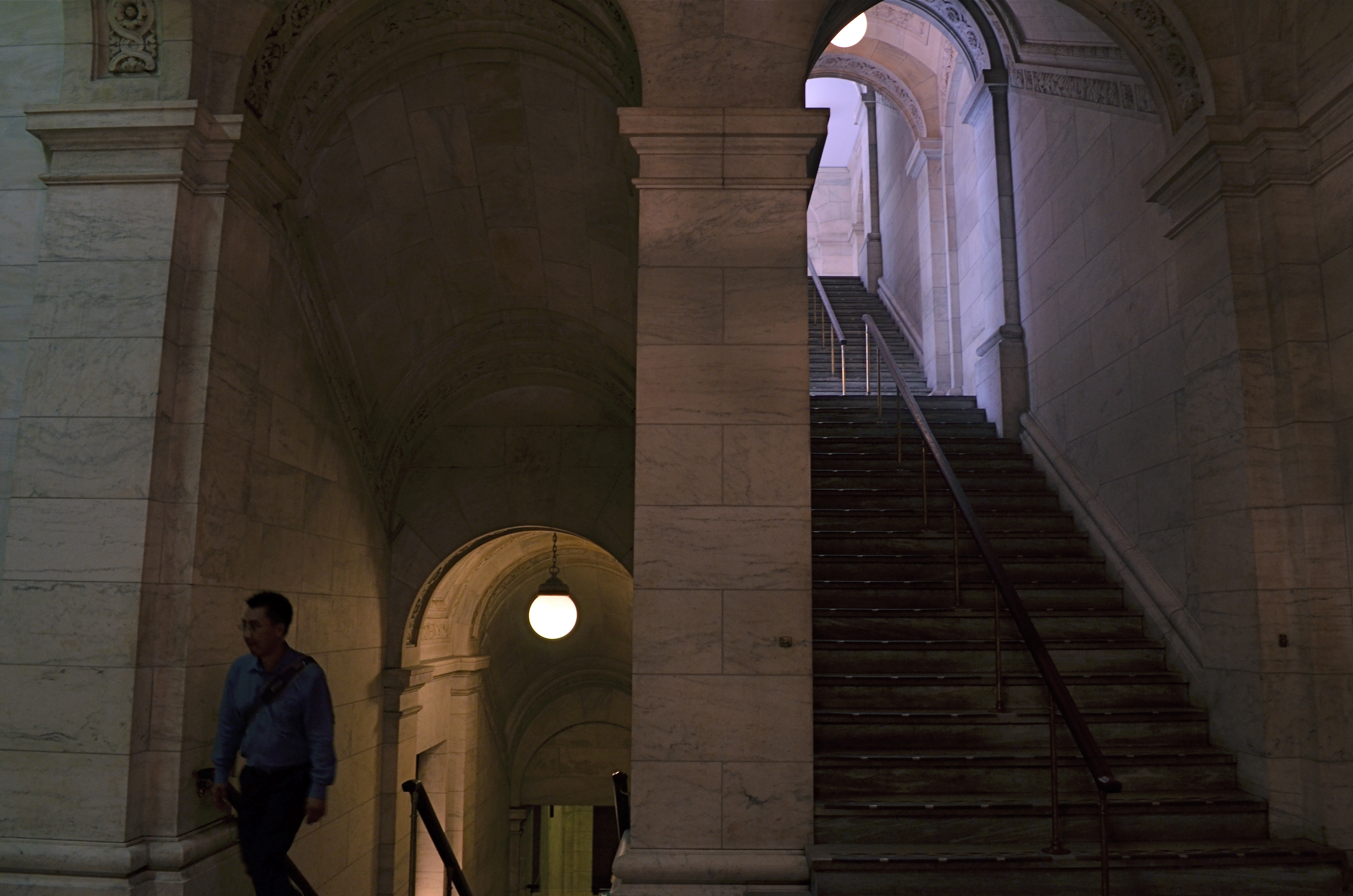
Same library, different solution: I could have processed this in HDR in an attempt to pluck additional detail from the darker areas, but after agonizing over it, I decided to leave well enough alone. The exposure was a lucky one over a wide range of light, and it’s close enough to what I saw without fussing it to death and perhaps making it appear over-baked. 1/30 sec., f/6.3, ISO 320, 18mm.
Recently, I am looking at more pictures that are not, in essence, flawless, and asking, how much solution do I need here? How much do I want people to swoon over my processing prowess versus what I am trying to say? As a consequence, I find that images that I might have reflexively processed in HDR just a few weeks ago, are now agonized over a bit longer, with me often erring on the side of whatever “flaws” may be in the originals. Is there any crime in leaving in a bit more darkness here, a slight blowout in light there, if the overall result feels more organic, or dare I say, more human? Do we have to banish all the mystery in a shot in some blind devotion to uniformity or prettiness?
I know that it was the camera, and not me, that actually “took” the picture, but I have to keep reminding myself to invest as much of my own care and precision ahead of clicking the shutter, not merely relying on the super-toys of the age to breathe life into something, after the fact, that I, in the taking, could not do myself. I’m not swearing off of any one technique, but I always come back to the same central rule of the best kind of photography; do all your best creative work before the snap. Afterwards, all your best efforts are largely compensation, compromise, and clean-up.
It’s already a divine photographic truth that some of the best pictures of all time are flawed, imperfect, incomplete. That’s why you go back, Jack, and do it again.
The journey is as important as the destination, maybe more so.
Thoughts?
Related articles
BOXFULS OF HISTORY
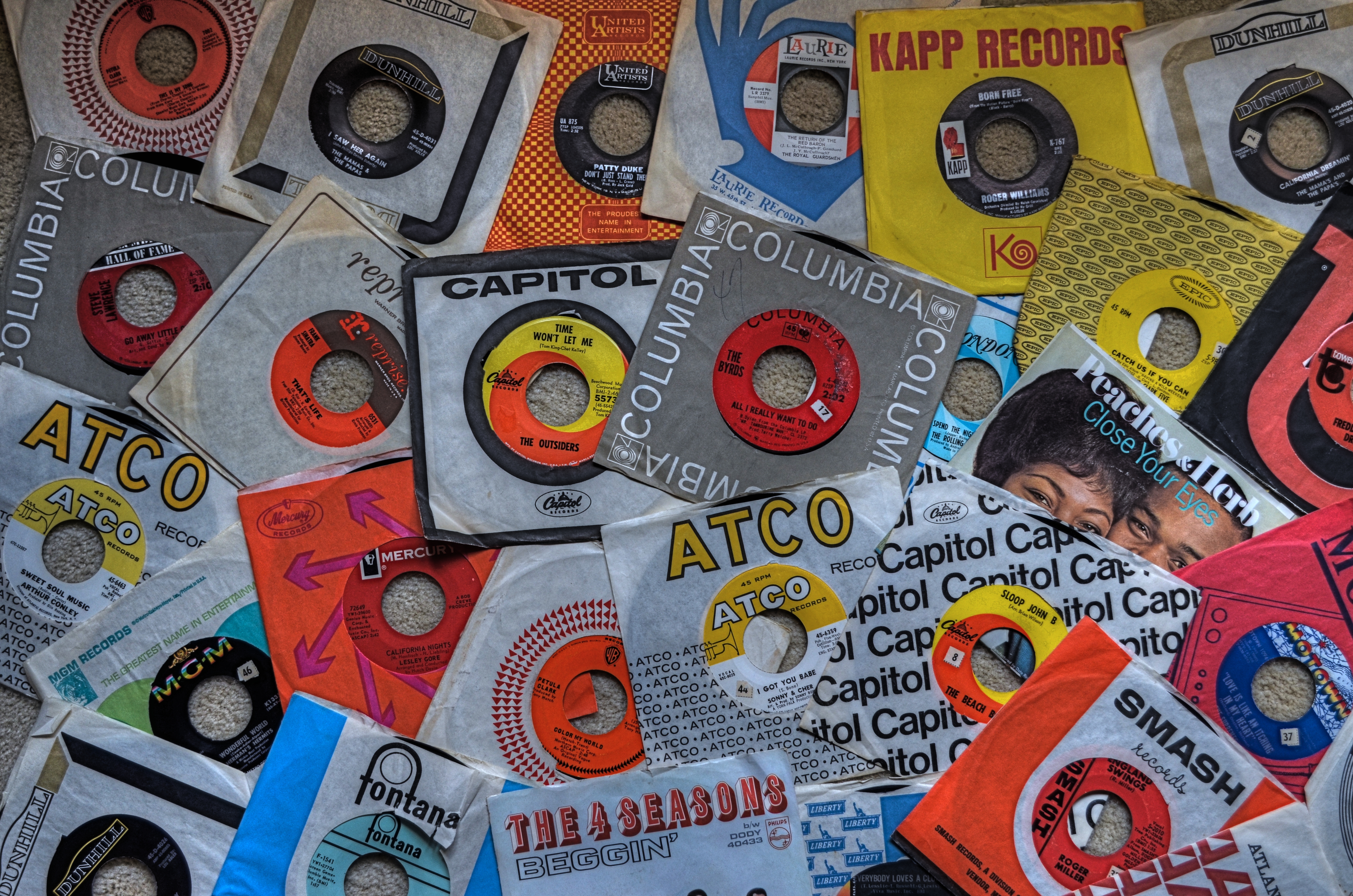
Once, these objects were among the most important in our daily lives. Seen anew after becoming lost in time, they show a new truth to our eyes. 1/60 sec., f/4.5, ISO 100, 30mm.
By MICHAEL PERKINS
THERE ARE DAYS WHEN THERE IS NOTHING TO SHOOT, or so it seems. The “sexy” projects are all out of reach, the cool locales are too far away, or the familiar themes seem exhausted. Indolence makes the camera feels like it weighs thirty pounds, and, in our creative doldrums, just the thought of lifting it into service seems daunting. These dead spots in our vision can come between projects, or reflect our own short-sighted belief that all the great pictures have already been made. Why bother?
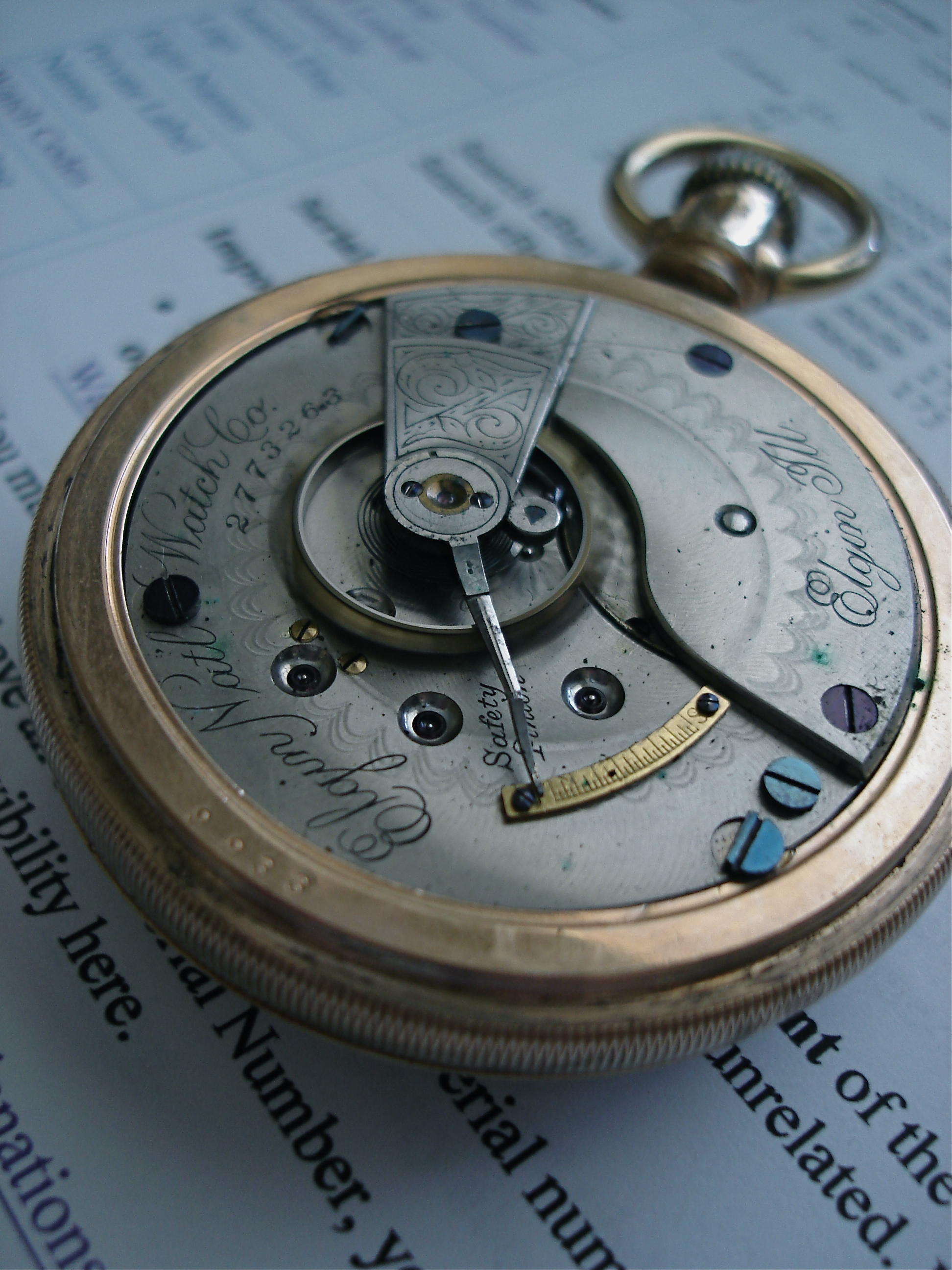
“Time is wasting”… but need not be wasted. Find the small stories of lost objects lurking in your junk drawers. 1/30 sec., f/2.8, ISO 200, 7.9mm.
And yet, in most people’s immediate circle of life there are literally boxfuls of history …..the debris of time, the residue of the daily routines we no longer observe. In Raiders Of The Lost Ark, the villain Rene Belloq makes the observation that everything can be an archaeological find:
Look at this pocket watch. It’s worthless. Ten dollars from a vendor in the street. But I take it, I bury it in the sand for a thousand years, and it becomes priceless.
Subjects ripe for still lifes abound in our junk drawers, in the mounds of memorabilia that our loving friends or spouses dreamily wish we would give to the Goodwill. Once ordinary, they have been made into curiosities by having been taken out of the timeline. In many ways, our camera is acting as we did when we first beheld them. And getting to see something familiar in a new way is photography’s greatest gift, a creative muscle we should all be seeking to flex.
Call it “seeing practice.”
Ordinary things are no longer ordinary once they are removed from daily use. Their context is lost and we are free to judge them as we cannot when they are part of the invisible fabric of daily habit. For example, how ordinary are those old piles of 45-rpm records on which we no longer drop a needle? Several revolutions in sound later, they no longer provide the same aural buzz they once did, and yet they still offer something special in the visual sense. The bright colors and bold designs that the record labels used to grab the attention of music-crazed teenagers in the youth-heavy ’60’s are now vanished in a world that first made all “records” into bland silver-colored CDs and then abolished the physical form of the record altogether. They are little billboards for the companies that packaged up our favorite hits; there is no “art” message on most of the sleeves, as there would have been on album covers. They are pure, unsentimental marketing, but the discs they contain are now a chronicle of who we were and what we thought was important, purchases which now, at the remove of half a century, allow us to make a picture, to interpret or re-learn something we once gave no thought to at all.
Old trading cards, obsolete clothing, trinkets, souvenirs, heirlooms….our houses are brimming with things to be looked at with a different eye. There is always a picture to be made somewhere in our lives. And that means that many of the things we thought of as gone are ready to be here, again, now. Present in the moment, as our eyes always need to be.
The idea of “re-purposing” was an everyday feat for photographers 150 years before recycling hit its stride. Everything our natural and mechanical eyes see is fit for a second, or third, or an infinite number of imaginings.
Your crib is bulging with stories.
All the tales need is a teller.
Thoughts?
A QUIET VOICE, A STILL SOUL
By MICHAEL PERKINS
As I have practiced it, photography produces pleasure by its simplicity. I see something special and show it to the camera. A picture is produced. The moment is held until someone sees it. Then it is theirs. -Sam Abell, STAY THIS MOMENT, 1990
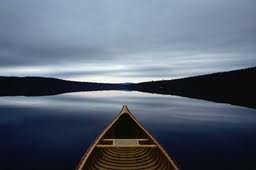
The voyage and the vehicle: Sam Abell’s classic image of a canoe on Maine’s Allagash River, the cover image for his book, 1990’s Stay This Moment.
THERE ARE PHOTOGRAPHERS THAT ARE SO AMAZINGLY ADVANCED that they make their images, wrought with love, ferocity, daring, and single-minded purpose, seem not merely visionary but inevitable. We see what they have brought us and exclaim, “of course”, as if theirs is the only way this message could possibly have been crafted, as if its truth is so self-evident that to have to formally recognize it is almost needless overkill. We confirm and validate that, for these pictures, the machine has truly been placed in the service of a soul, and one which writes fluently while we stumble with numb gestures.
One such soul resides in the work of Sam Abell.
If his name doesn’t roll off the top of your tongue alongside those of the obvious Jedi knights of photography, it’s because, for most of his forty-plus year career, he has kept a lower profile than Amelia Earhart, producing amazing work beneath the masthead of National Geographic magazine along with a host of other special commissions. When Sam came to to Geographic in 1967 as an intern, he already had four years of “hard” experience producing images for the University of Kentucky’s school of journalism to his credit, but the magazine’s photo editor, Robert Gilka, was hesitant to hire him, worried that his work was “too artistic”, too personal in its beauty to survive in the service of journalism.
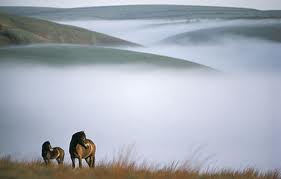
For Abell, it’s all about the patience. How long do you wait for the horse to wistfully glance over his shoulder? As long as it takes…..
With help, Sam Abell learned the balance for getting the facts for stories and getting the truth implied in their locales. Even when those stories’ words shouted with urgency, Sam’s notes were always on the soft pedal. Their poignancy fades in and builds, rises to your attention and then rivets it in place. Writing in his 1990 collection Stay This Moment, Abell declares that the test of great pictures is that “they cannot be memorized”. Small wonder that he began, early in life, to pursue a career on the cello. Smaller wonder yet is that the patience of that instrument is “heard” in the music of his pictures.
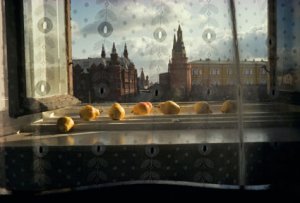
Always, a human context. Sam Abell capture of the iconic buildings of the Kremlin, framed by ripening fruit and lace curtains.
Even more muted than the images Sam creates is his technical approach to taking them. For much of his early career, he shot breathtaking landscapes with a simple 35mm camera, often a Leica reflex or rangefinder, mounted with standard or “normal” lenses ranging from 28 to 35mm, generating the least amount of distortion and rendering the most natural relationship of sizes and distances. For years, the most advanced tools in his bag were a sturdy Gitzmo tripod and the slowest, richest films he could find, frequently Kodachrome 25 and 64. The tripod delivered the stability needed to produce slow, sensual exposures; the ‘Chrome delivered texture and nuance beyond the power of hand-held shots. However, the most vital weapon in Abell’s arsenal is his astonishing patience, the wisdom, which flies in the face of traditional journalism photography, to wait for the story in a picture to slowly unfold, like the petals of a flower. Some of the best images Abell placed in National Geographic over the years took nearly a year to create. It happens when it happens, and once it does, God is it worth it.
The number of printed collections of Sam’s work are few and far between, given his enormous output, but diligence rewards the curious. Among the most available of them is the collaboration undertaken with historian Steven Ambrose, Lewis & Clark: Voyage of Discovery ( 2002), for which Sam created images of the surviving sections of the legendary explorers’ trail to the Pacific; Amazonia (2010), an essay on the kind of delicate ecosystems that are vanishing from the earth; and Life of a Photograph (2008), an examination of how his most famous pictures were built, stage by stage. And, of course, there is the luxuriant (and hopelessly out-of-print) Stay This Moment (1990), the companion book to his mid-career exhibition at New York’s International Center for Photography. Buy it in a used book shop, grab it on e-Bay, scour your local library, but find this book.
More importantly, find Sam’s work…any of it…and savor every detail. For copyright protection purposes, I have deliberately kept the illustrations in this article constrained to minimal resolutions. Find the real stuff, and see what Abell’s amazing sweep and scope can do at full-size. This blog is chiefly about how I, as a rank amateur, struggle with my own creative conundrums. But it is also about knowing what teachers to bend toward. Sam Abell, who literally teaches in mentor programs all over the country, has a powerful gift to impart. “What is right?”, he asked in 1990. “Simply put, it is any assignment in which the photographer has a significant emotional stake.” He also emphasized an important distinction (one of my favorites) in his remarks to a young photography student. Don’t say, he said, I took this picture.
Say instead, I made this picture.
Of course.
Thoughts?
Related articles
- Sam Abell Interview (keronpsillas.com)
- The Life of a Photographer – Sam Abell (billives.typepad.com)
GOING FOR BROKE
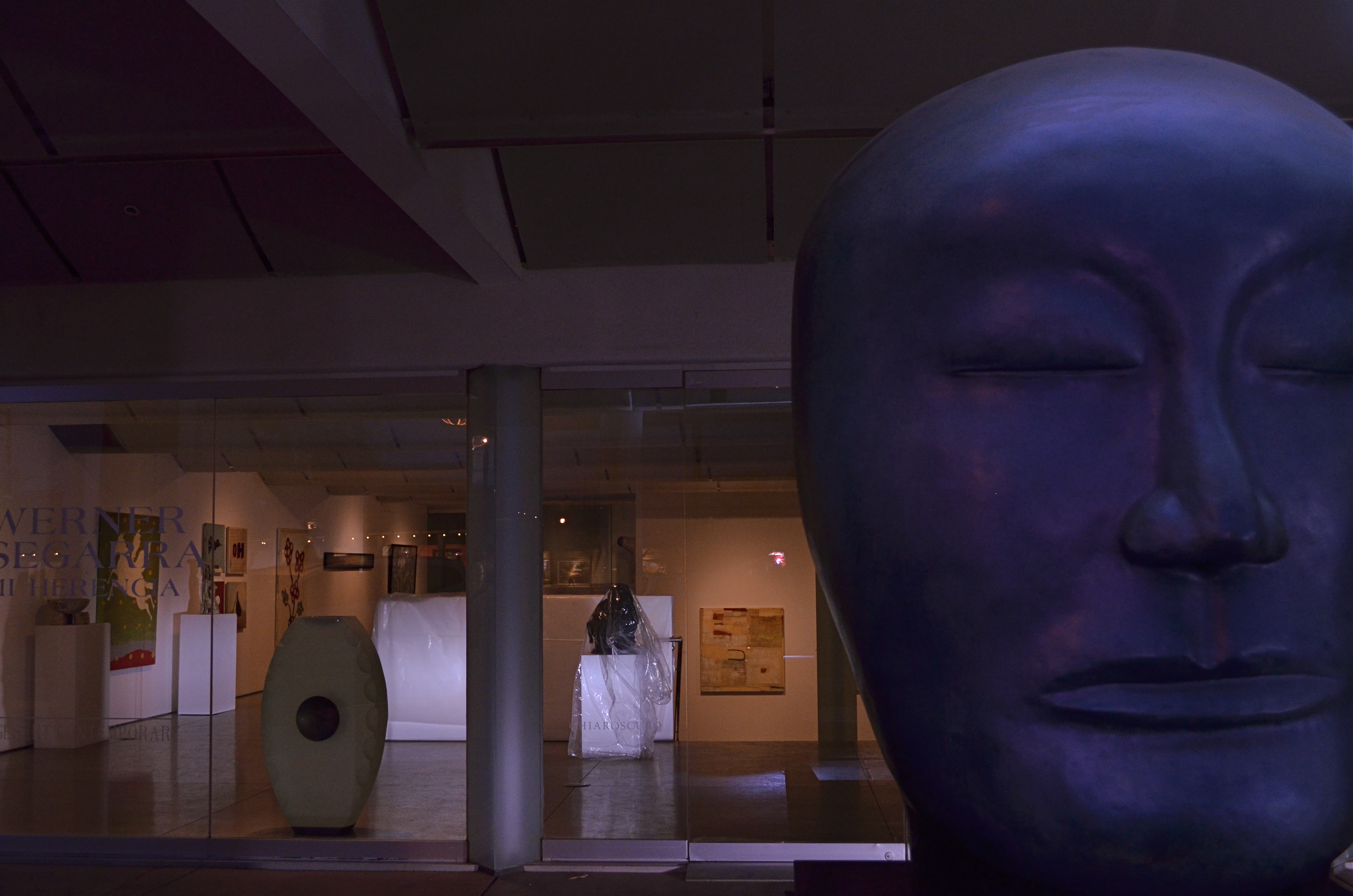
Some people are over the whole “art” thing. Certainly this cynical fellow has seen it all. I used a primitive flash bounce to illuminate his darkened features. 1/40 sec., f/5, ISO 500, 22mm.
By MICHAEL PERKINS
I HAVE READ MORE THAN A FEW ARTICLES OF LATE by professional photographers who confess that they occasionally get stuck in teaching mode, even to the detriment of their own love of shooting. One such author went to far as to recall a recent concert he had attended, camera-less, only to observe, with snotty amusement, the attempts of a young woman to capture action on the far-off stage area. His first reaction was to disdain not only her limited camera but to catalogue all her most heinous errors in composition, exposure, and use of flash, as he mentally predicted how poor her results would be and how she was, essentially, wasting her time.
Then something shifted in his thinking. Instead of being depressed at what hadn’t worked, the woman’s energy revealed that she was actually making the most of the moment; learning, through trial and error, what to do or not do in future. At the end of his essay, he came to realize that “she is a better photographer than me”, since she was taking risks, pushing the limits of her own skills, and developing her craft, one frame at a time, while he had left his own camera at home and was learning nothing. His point hit home with me, since it is a recurring theme of this blog and a key belief among those I respect most in the imaging world.
In brief:
Shoot. Shoot some more. Dare to fail. Be willing to take more “bad” pictures than the next guy. Get your head out of academic minutia and into the doing of it. Screw up, suck up, but above all, show up.
Ready to play.
Sometimes, just the sheer unwillingness to go home empty-handed provides you with real delight. Last week, I was making the rounds at an area gallery district, the type that does nightly “art walks” as a way of speed-dating potential customers. Many of the best shots I get in these surroundings are near or just after dark, and I always like peeping into the windows of shuttered businesses at night, since some key character of light and mood invariably occurs. For the shot shown above, I fell in love with one gallery that had a kind of sentry posted outside, in the form of an enormous sculpted head. Its aloof expression reminded me of a cross between Easter Island and Blue Man Group, and I really wanted him/her/it to be a part of the shot. However, I had not brought an external flash unit with me, and the sculpture was reading 100% dark in contrast to the interior of the gallery. I was desperate, but not desperate enough to use straight-on pop-up flash, which would have blown the face out completely and destroyed any chance at a moody feel.
Time to improvise.
Having left my bounce card at home as well (I was on foot and truly traveling light), I noticed that the head was underneath a low over-hanging porch roof, something you just must have on the front of an Arizona business in summer. Going totally into what-the-hell mode, I stuck my flat left hand just under the bottom of the pop-up flash and angled it upward about 15 degrees to create a crude bounce off the roof ceiling, allowing the light to soften as it came down upon the top of the head. It took a few tries to avoid creating an uber-white Aurora Borealis effect on the ceiling, and I had to move my feet around to figure out how to get some of the light to cascade down the head’s front and illuminate its features. I also had to bump the ISO up a bit to compensate for the fall-off in the flash at the distance I was standing, but, at the end, I at least got something. Moreover, like the woman at the concert, what I had picked up in technique more than compensated me for the fact that the shot wasn’t strictly an award winner.
I have been playing around with primitive flash bouncing for a while now, and the results run the gamut from god-awful to glad-I-did-that. But it’s all a win no matter how each individual shot plays out, because every image brings me closer to the cumulatively evolved instinct that, someday, will give me great pictures. The baby will eventually be born, but the midwife has to do the front-end work. Nothing I will ever shoot will be captured under perfect conditions, so why drop dead of old age waiting for that to happen? We’re almost to the end of Century Two in this game of writing with light, and all the easy pictures have already been shot, so what’s left will have to be hewed out by hand.
I suggest that we occasionally get our nose out of books (and, duh, blogs too) and start carving.
SMALL MAY BE ALL
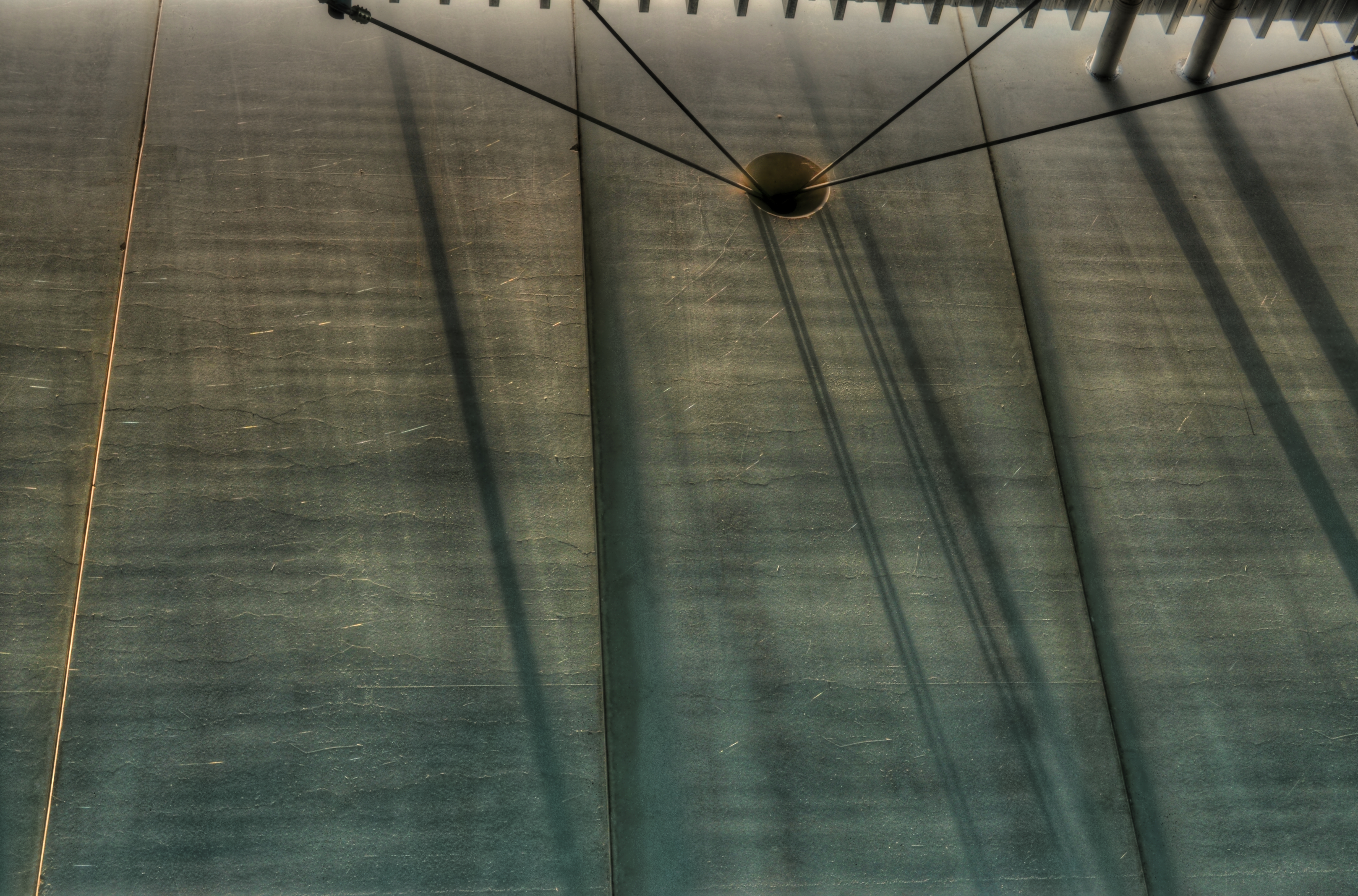
Along came a (light) spider. Intense mid-day light on Summer Solstice 2012 creates dramatic shadows and heightened texture in this HDR image.
By MICHAEL PERKINS
SOME SUBJECTS SEEM AS IF THEY ARE GOING TO FOLLOW A SURE PATH, then dog-leg on you in the doing. Last week I was fascinated to attend a celebration of the summer solstice in a building designed to highlight the drama of its unique light. Phoenix’ Burton Barr Library reading room, an enormous space bordered by shaded glass on its north and south faces and slab concrete for its west and east walls, has, since its opening, hosted an annual midday demonstration by its architect, Will Bruder centered on the longest day of the year. First, a capacity crowd watches intense light crawl dramatically down the library’s west wall, seeming to sweep shadows downward like a rapidly descending curtain until the entire west surface fairly glows with light. For a few minutes, under this enhanced illumination,what normally appears as a seamless monolith of concrete shimmers with a million tiny fractures, creases, and flaws, rendering the usually dull surface alive with small but perceptible dances of color.
Immediately following this subtle but sweet show, as the sun travels to the west over the top of the library, the same display begins in reverse on the east wall, as shadows begin to crawl up from the floor and eventually confine sunlight on the concrete surface to a narrow slit at its top. The same intense reveal on every facet of the slab’s surface is seen again, and, along the ceiling, the library’s carefully designed support pillars, all positioned under individual circular skylights in the reading room’s roof, begin to resemble glowing candles. The entire phenomenon, subtle and quiet, yet beautiful in aspect, is all completed within a half hour.
In that half hour, my original shooting strategy, an overall wide shot to show the amazed onlookers inside the vast room, craning their necks to observe the miracle between rows of book shelves, moved from “sure thing” to “what was I thinking”? As it turned out “the story” was too big to be trusted to a big picture (!), and I came to realize that the heart of the light effect might best be told, for me, in one part of one wall. All the other props inside the structure provided so much visual information that nothing true was going to emerge in any attempt at an overall “coverage” image. I decided to show the shadowy tendrils trailing from a single part of the ceiling structure, but to shoot a three-shot bracket of exposures, all at ISO 100, to be combined later in High Dynamic Range software, to glean as much information (and the widest range of tone) on the texture revealed by the travel of the light across the wall.
The result was a shot that eliminated the rest of the overall solstice story as I tried instead to show object, shadow and detail combining as elements in one integrated design. It’s up to anyone as to whether I made the correct decision, but it’s safe to say that it was correct for me at the time. Sometimes a thing is interesting to look at by itself, for itself, without context or alibi. Of course I realize that I have provided both those things by writing this, but this forum is dedicated to the urge that makes us all throw something at the wall (excuse the expression) to see if anything sticks, so maybe it’s not wrong to give this a bit of backstory. Eventually, however, it’s either a picture or it’s not.
Thoughts?
Related articles
- Spiritual Significance of the Summer Solstice (aquariuschannelings.com)
 thenormaleye