CHANGE OF PLAN
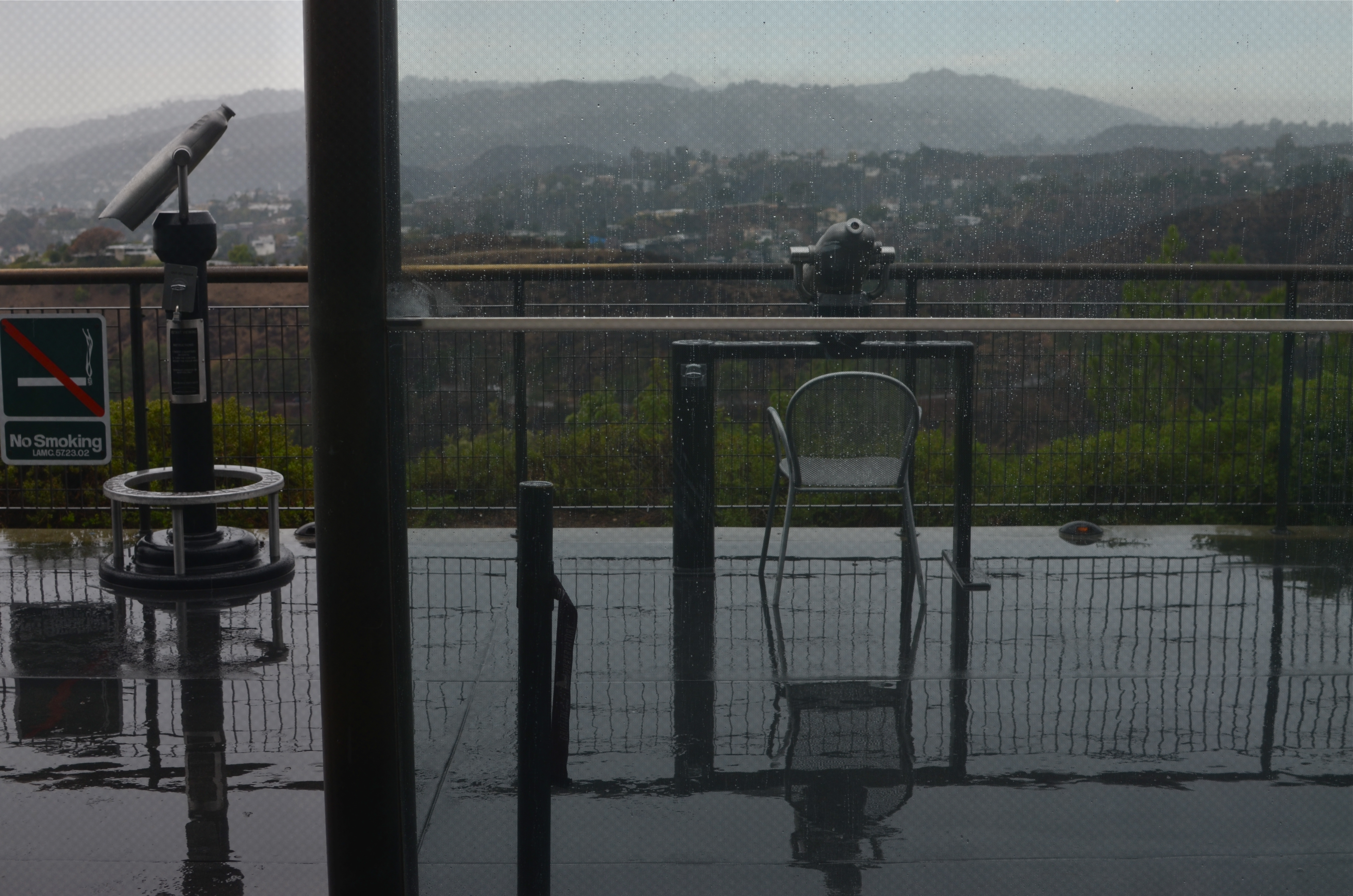
Rainy day, dream away. Griffith Observatory under early overcast, 11/29/13. 1/160, f/5.6, ISO 100, 35mm.
by MICHAEL PERKINS
VISUAL WONDERS, IN EVERY HOUR AND SEASON, ARE THE COMMON CURRENCY OF CALIFORNIA’S GRIFFITH OBSERVATORY. The setting for this marvelous facility, a breathtaking overlook of downtown Los Angeles, the Hollywood Hills, and the Pacific Ocean, will evoke a gasp from the most jaded traveler, and can frequently upstage the scientific wonders contained within its gleaming white Deco skin.
And when the light above the site’s vast expanse of sky fully asserts itself, that, photographically, trumps everything. For, at that moment, it doesn’t matter what you originally came to capture.
You’re going to want to be all about that light.
Upon my most recent visit to Griffith, the sky was dulled by a thick overcast and drenched by a slate-grey rain that had steadily dripped over the site since dawn. The walkways and common decks were nearly deserted throughout the day, chasing the park’s visitors inside since the opening of doors at noon. By around 3pm, a slow shift began, with stray shafts of sun beginning to seek fissures in the weakening cloud cover. Minute by minute, the dull puddles outside the telescope housing began to gleam; shadows tried to assert themselves beneath the umbrellas ringing the exterior of the cafeteria; the letters on the Hollywood sign started to warm like white embers; and people of all ages ventured slowly to the outside walkways.
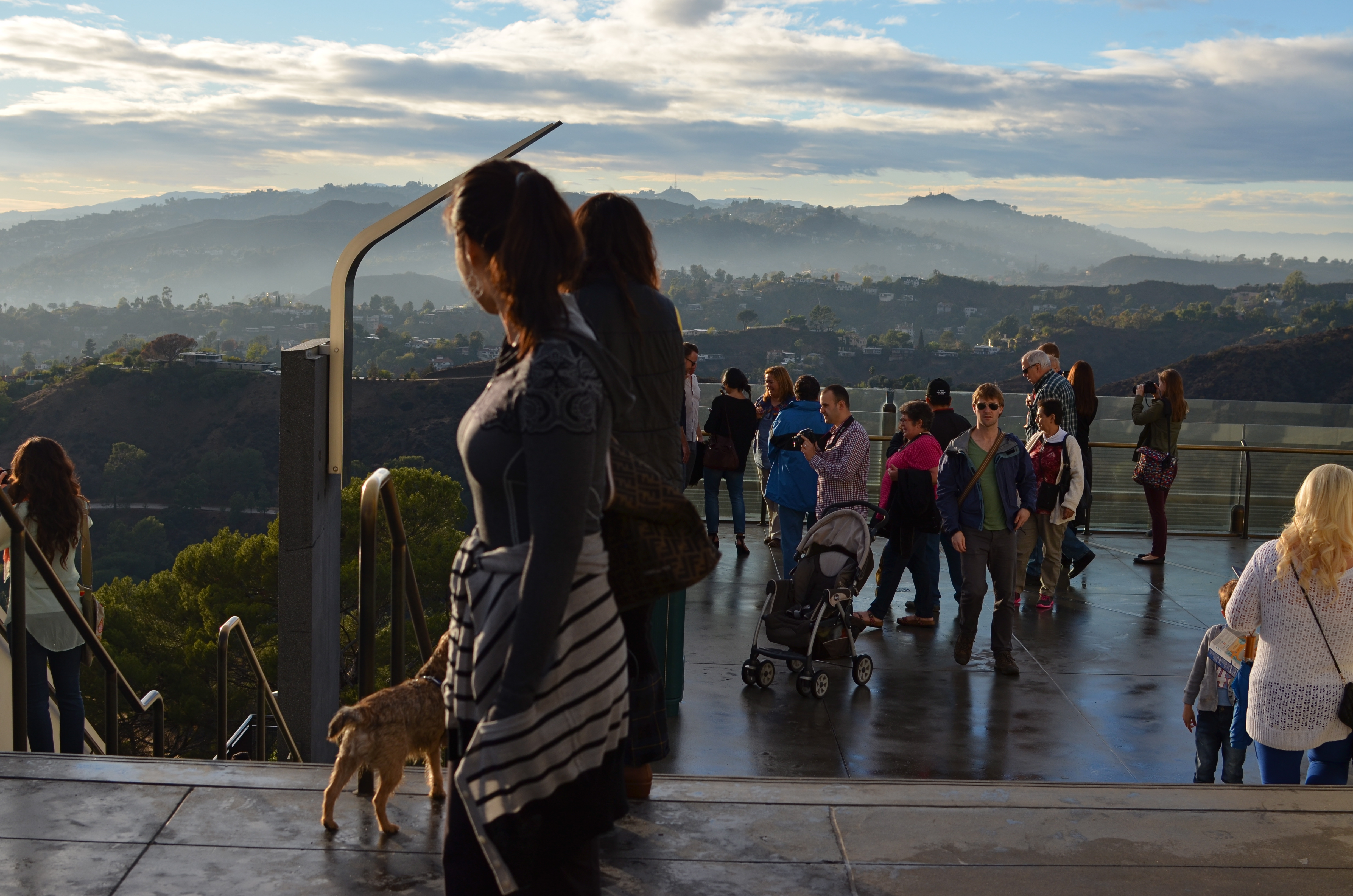
The moment the light broke, Griffith’s common areas after the rain,11/29/13. 1/640 sec., f/5.6 (this image), f/6.3 (lower image), ISO 100, 35mm.
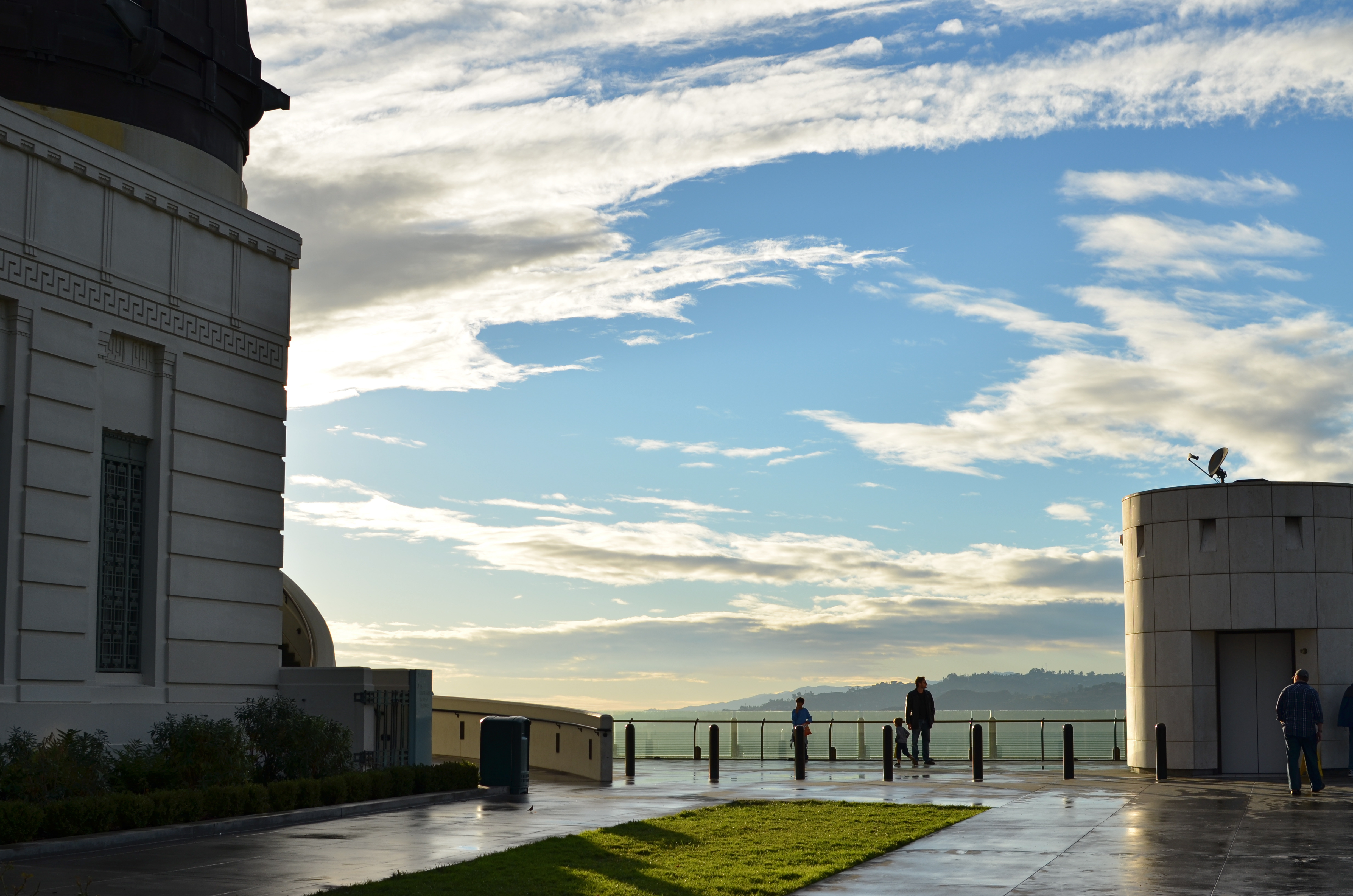
By just after 5 in the afternoon, the pattern had moved into a new category altogether. As the overcast began to break and scatter, creating one diffuser of the remaining sunlight, the fading day applied its own atmospheric softening. The combination of these two filtrations created an electric glow of light that flickered between white hot and warm, bathing the surrounding hillsides with explosive pastels and sharp contrasts. For photographers along the park site, the light had undoubtably become THE STORY. Yes the buildings are pretty, yes the view is marvelous. But look what the light is doing.
Like everyone else, I knew I was living moment-to-moment in a temporary, irresistible miracle. The rhythm became click-and-hope, click-and-pray.
And smiles for souvenirs, emblazoned on the faces of a hundred newly-minted Gene Kellys.
“Siiingin’ in the rainnnn…”
Related articles
FRAGMENTING THE FRAME
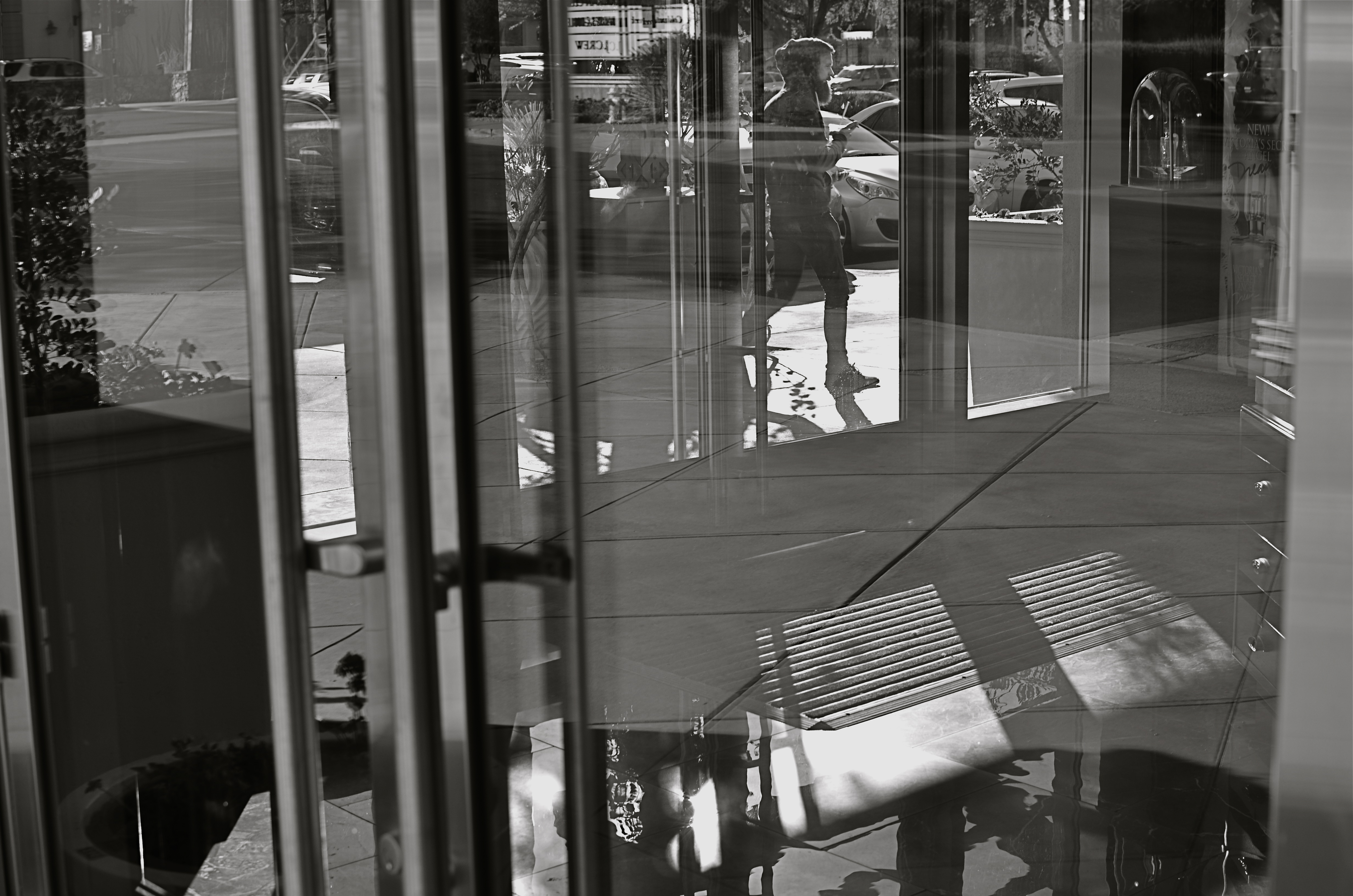
1/160 sec., f/5.6, ISO 100, 35mm.
By MICHAEL PERKINS
I HAVE MADE A CONSCIOUS EFFORT, IN RECENT YEARS, TO AVOID TAKING A “STRAIGHT SHOT” OUT OF, OR THROUGH A WINDOW, of using that rectangle or square as a conventional means of bordering a shot. Making a picture where a standard view of the world is merely surrounded by a typical frame shows my eye nothing at all, whereas the things that fragment that frame, that break it into smaller pieces, bisecting or even blocking information…..that’s fascinating to me.
This is not an arbitrary attempt to be “arty” or abstract. I simply prefer to build a little mystery into my shots, and a straight out-the-window framing defeats that. My showing everything means the viewer supplies nothing of his own. Conversely, pictures that both reveal and conceal, simultaneously, invite speculation and encourage inquiry. It’s more of a conversation.
Think about it like a love scene in a movie. If every part of “the act” is depicted, it’s not romantic, not sexy. It’s what the director leaves out of the scene that fires the imagination, that makes it a personal creation of your mind. Well-done love scenes let the audience create part of the picture. Showing everything is clinical….boring.
With that in mind, The Normal Eye’s topside menu now has an additional image gallery called Split Decisions, featuring shots that attempt to show what can result when you deliberately break up the normal framing in and out of windows. Some of the shots wound up doing what I wanted: others came up short, but may convey something to someone else.
As always, let us know what you think, and thanks for looking.
Related articles
- Framing Framing Framing!!! (destynimcbeth.wordpress.com)
THE LIVING LAB
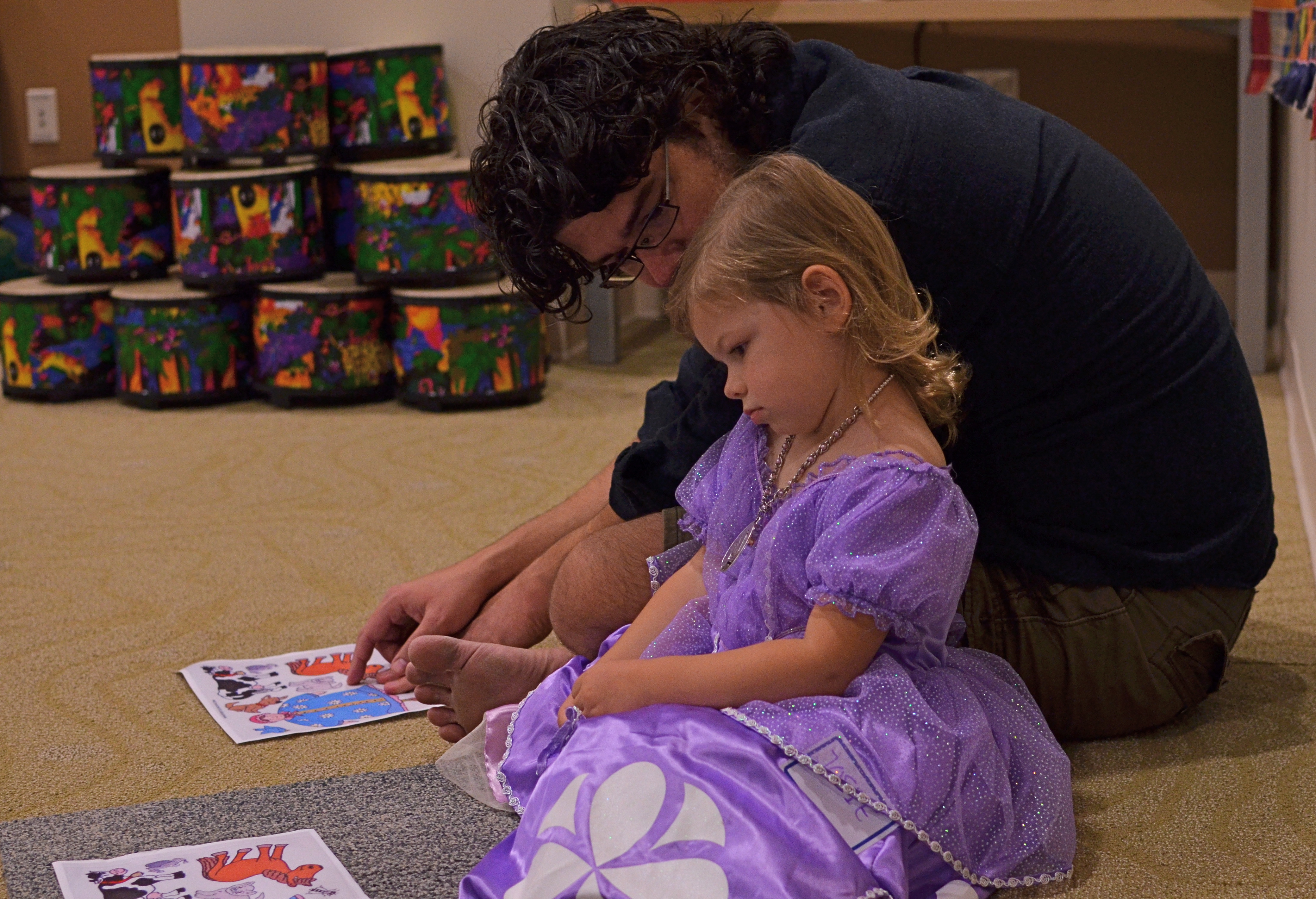
A quick father-daughter conference. 1/60 sec., f/3.5, ISO 640, 35mm.
By MICHAEL PERKINS
THE GREATEST GIFT A SMALL CHILD HAS TO GIVE THE WORLD IS THE VAST, UNMINED ORE OF POSSIBILITY residing inside him. Wow, that really sounded pretentious. But think about it. He or she, as yet, has no wealth to offer, no fully developed talent, no seasoned insight, no marketable skills. It is what he or she has the potential to be that tantalizes us, and our cameras. It is what is just about to be available from these fresh, just-out-of-the-oven souls that amazes us, the degree to which they are not yet….us.
As a photographer, I find there is no better education than to be plunged into the living laboratory of cascading emotion that is a cluster of kids, and the more chaotic and unrehearsed the setting, the richer the results. It’s like shooting the wildest of competitive sports, where everything unfolds in an instant, for an instant. You ride a series of waves, all breaking into their final contours with completely different arcs and surges. There is no map, few guarantees, and just one rule: remain an outsider. The closer to invisibility you can get, the truer the final product.
I volunteer with an educational facility which designs many entry-level discovery workshops and playdates involving young families, requiring a lot of documentary photographs. What would be a chore or an extra duty for overworked administrative staff becomes an excuse, for me, to attend living labs of human experience, and I jump at the chance to walk silently around the edges of whatever adventure these kids are embarked on, whether a simple sing-a-long or a class in amateur dance.
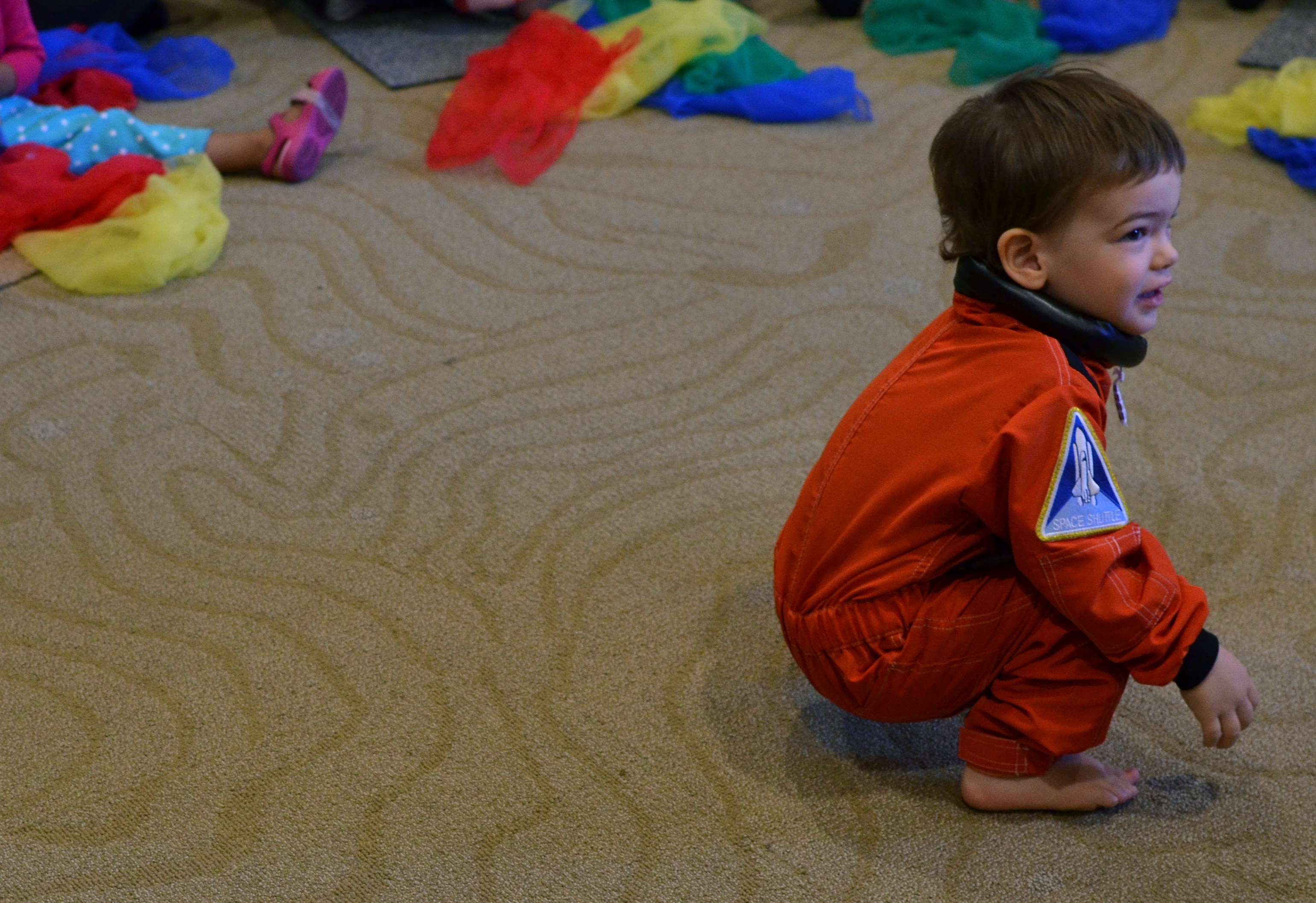
We have lift-off. 1/60 sec., f/3.5, ISO 640, 35mm.
Everything feeds me. It’s a learn-on-the-fly crash course in exposure, composition, often jarring variations in light, and the instantaneous nature of children. To be as non-disruptive as possible, I avoid flash and use a fast 35mm prime, which is a good solid portrait lens. It can’t zoom, however, so there is the extra challenge of getting close enough to the action without becoming a part of it, and in rooms where the lighting is iffy I may have to jack up ISO sensitivity pretty close to the edge of noise. Ideally, I don’t want the kids to be attending to me at all. They are there to react honestly to their friends, parents, and teachers, so there can be no posing, no “look over here, sweetie”, no “cheese”. What you lose in the total control of a formal studio you gain in rare glimpses into real, working minds.
The yields are low: while just anything I shoot can serve as a “document” for the facility’s purposes, for my own needs I am lucky to get one frame in a hundred that gives me something that works technically and emotionally. But for faces like these, I will gladly take those odds.
Who wouldn’t?
Follow Michael Perkins on Twitter @MPnormaleye.
GOING OFF-MENU
By MICHAEL PERKINS
I AM ALREADY ON RECORD AS A CHAMPION OF THE ODD, THE OFF-KILTER, AND THE JOYFULLY STRANGE IN AMERICAN RETAIL. As a photographer, I often weep over the endangered status of the individual entrepreneur, the shopkeeper who strikes out in search of a culturally different vibe, some visual antidote to the tsunami of national chains and marts that threatens to drown out our national soul. Sameness and uniformity is a menace to society and a buzzkill of biblical proportions for photography. Art, like nature, abhors a vacuum.
It is, of course, possible that someone might have created a deathless masterpiece of image-making using a Denny’s or a Kohl’s as a subject, and, if so, I would be ecstatic to see the results, but I feel that the photog’s eye is more immediately rewarded by the freak start-ups, the stubborn outliers in retail, and nowhere is this in better evidence than in eateries. Restaurants are like big sleeves for their creators to wear their hearts on.
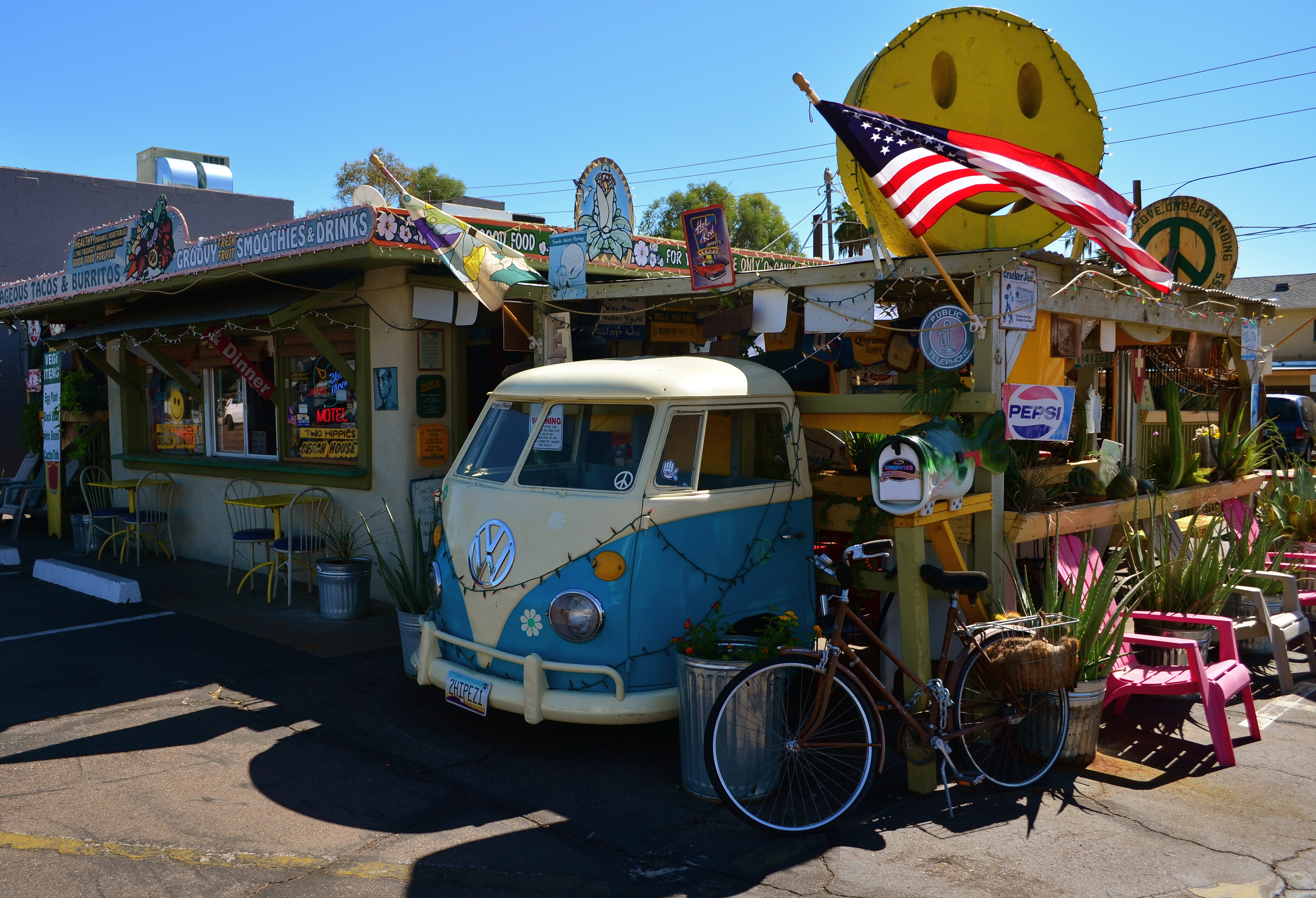
The surf is seldom “up” at the Two Hippies’ Beach House Restaurant in Phoenix, AZ, but the joint is “awash” in mood. 1/640 sec., f/5.6, ISO 100, 18mm.
That’s why this divinely misfit toy of a diner, which was hidden in plain sight on one of the main drags in central Phoenix, has given me such a smile lately. I have never eaten at the swelegant Two Hippies’ Beach House, but I have visually feasted on its unabashed quirkiness. And if the grub is half as interesting as the layout, it must be the taste equivalent of the Summer of Love.
Even if the food’s lousy, well, everyone still gets a B+ anyway for hooking whoever is induced to walk in the door.
On the day I shot this, the midday sun was (and is) harsh, given that it’s, duh, Arizona, so I was tempted to use post-processing to even out the rather wide-ranging contrast. Finally, though, I decided to show the place just as I discovered it. Amping up the colors or textures would have been overkill, as the joint’s pallette of colors is already cranked up to 11, so I left it alone. I did shoot as wide as I could to get most of the layout in a single frame, but other than that, the image is pretty much hands-off.
Whatever my own limited skill in capturing the restaurant, I thank the photo gods for, as the old blues song goes, “sending me someone to love.”
Trippy, man.
Follow Michael Perkins on Twitter @MPnormaleye.
ON THE ROAD TO FINDOUT
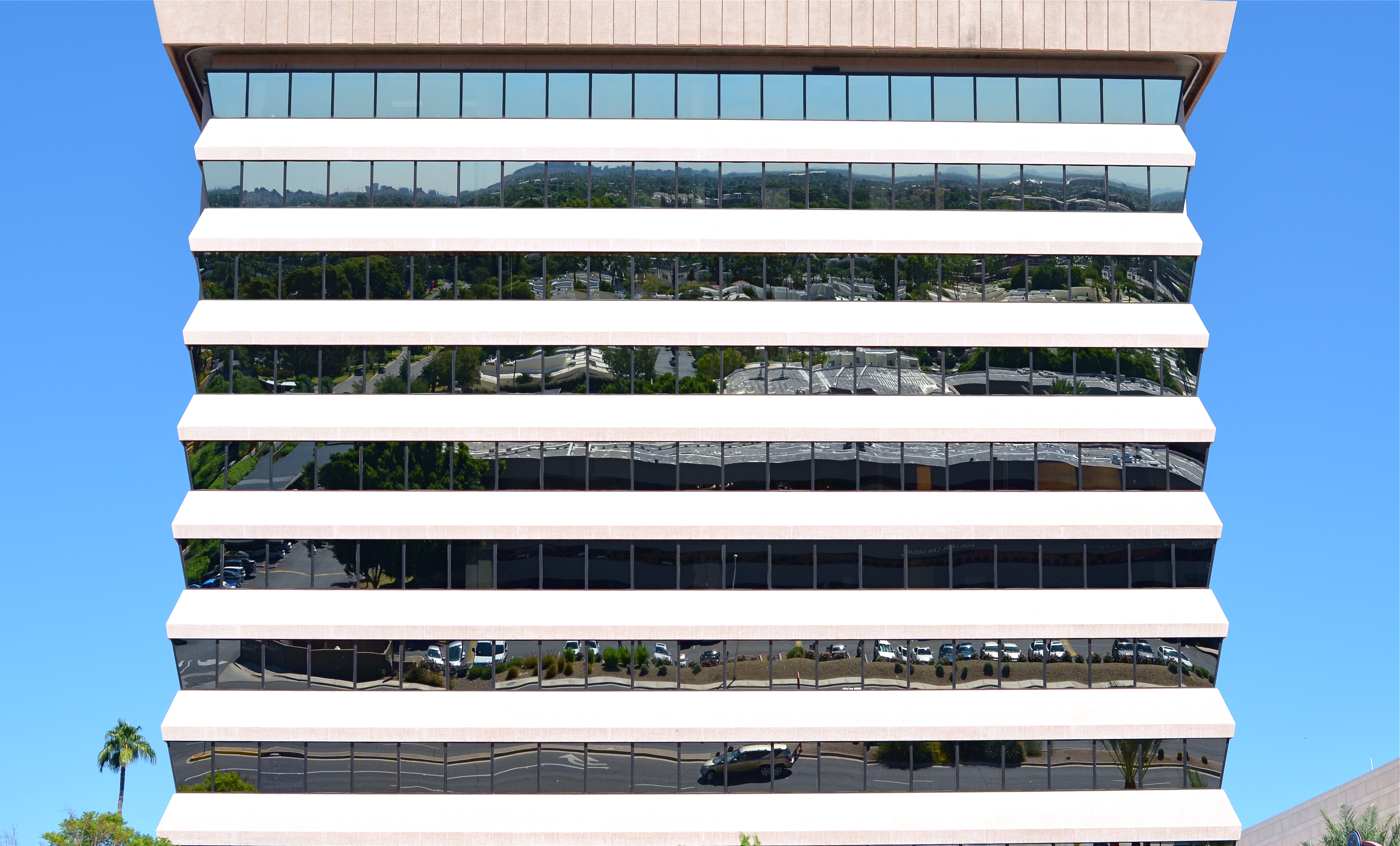
A box of mirrors: 1/500 sec., f/5.6, ISO 100, 35mm.
By MICHAEL PERKINS
LATELY I’VE TAKEN TO GRABBING LYRICS OR TITLES FROM POP SONGS TO SUM UP WHAT I WANT TO SAY IN A GIVEN POST, and apparently I haven’t yet kicked the habit. Like the searcher in Cat Stevens’ early ’70’s tune, I am sure that (a) I don’t really know where I’m going most of the time, and (b) the place I’m eventually going to will explain all, eventually. Pretty sunny outlook for a burned out old flower child, I’ll admit, but, especially in photography, the journey is the quest. What we encounter “on the road to findout” is worth the price of the trip.
That’s a fancy-pants way of saying that, frequently when I’m on a photo walkabout, I only think I know what I’m looking for. Sometimes I actually snag the object of the expedition, then find that it’s as disappointing as winning that cheap plush toy that looked so wonderful behind the carnival barker’s counter. Such a thing happened this week, when I drove five miles out of my way to revisit a building that had grabbed my attention several months prior. Short term result: mission accomplished…building located and shot. Long term result: what did I think that was going to be? Ugh.
I was walking off my mild disappointment, heading back to my car, and then the mundane act of stowing my camera forced me to rotate my gaze just far enough to see what the midday light was doing to the building across the street. It’s masses of glass looks rather flat and dull by morning, but, near noon, it becomes a slatted mirror, kind of a giant venetian blind, reflecting the entire street scene below and across from itself. The temporary light tilt transforms the place into a surreal display space for about thirty minutes a day, and, had I not been standing exactly where I was across the street at that moment, I would have missed it, and missed the building as a subject for the next, oh, 1,000 years.
Kurt Vonnegut had a dear friend from Europe who always parted from him by hoping that they would meet again in the future if the fates allowed. Only the idiom got crumpled a little in translation, coming out as “if the accident will”. Vonnegut loved that, and so do I.
On the road to findout, we may take wonderful pictures.
If the accident will.
Follow Michael Perkins on Twitter @MPnormaleye.
THE BOOK OF KODAK
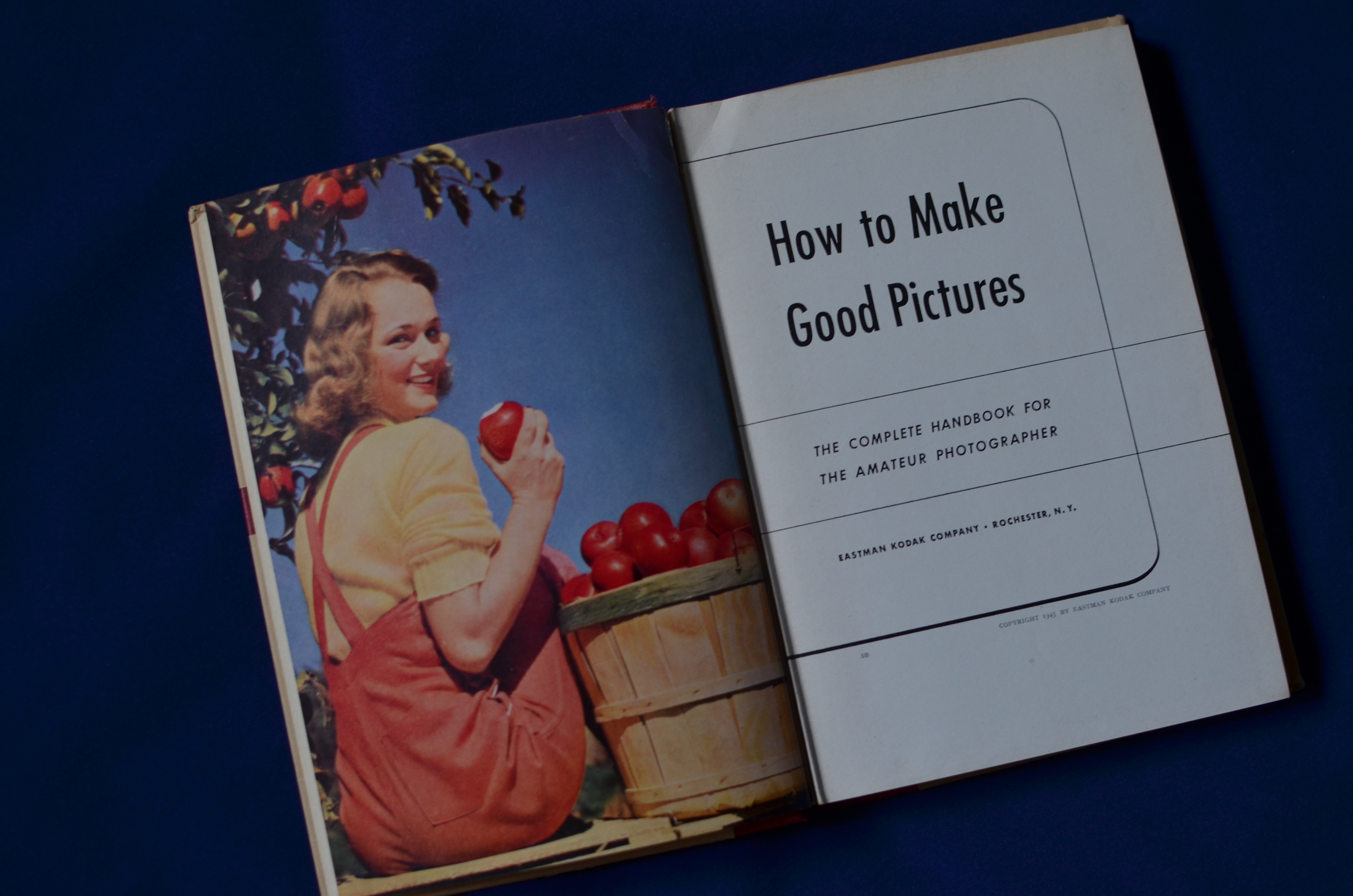
The Long-Distance Runner: The Most Successful Photography Instruction Series In History, Eastman Kodak’s How To Make Good Pictures (28th Edition,1943-47). From the collection of the author.
By MICHAEL PERKINS
KODAK’S SAD AND WOBBLY RE-EMERGENCE FROM BANKRUPTCY, announced this week, finalizes the process of “saving” a famous name, while annihilating the legacy of innovation that made that name great for over a century. Having already said goodbye to Kodachrome, most of its other trademark films, and camera production itself, Kodak will now concentrate on “imaging products”, which, for, most of us, means “printers”. Most of the news coverage of this corporate resurrection will “focus” (sorry) on what the new company stock will be worth, who goes, who stays, and a few scant mentions of the company’s original role as camera producer to the world.
That will leave a significant part of the story untold.
Certainly, George Eastman’s genius for marketing helped develop the first flexible roll films, then ingeniously created a market for them by putting a basic, usable camera in the hands of the Everyman. Nearly everyone has heard the slogan Kodak created to demonstrate how truly effortless its products had made photography: you press the button and we do the rest. But none of that would have guaranteed the company’s growth if Kodak has not also decided to become photography’s first great mass teacher, creating pro-active education programs to guarantee that, not only could Uncle Clem snap a photo easily, he could snap a good photo easily. What had once been a dark art for a select cabal of techno-wizards became, under Kodak’s outreach, something that could anybody could do.
And Kodak was going to show you how to do it.
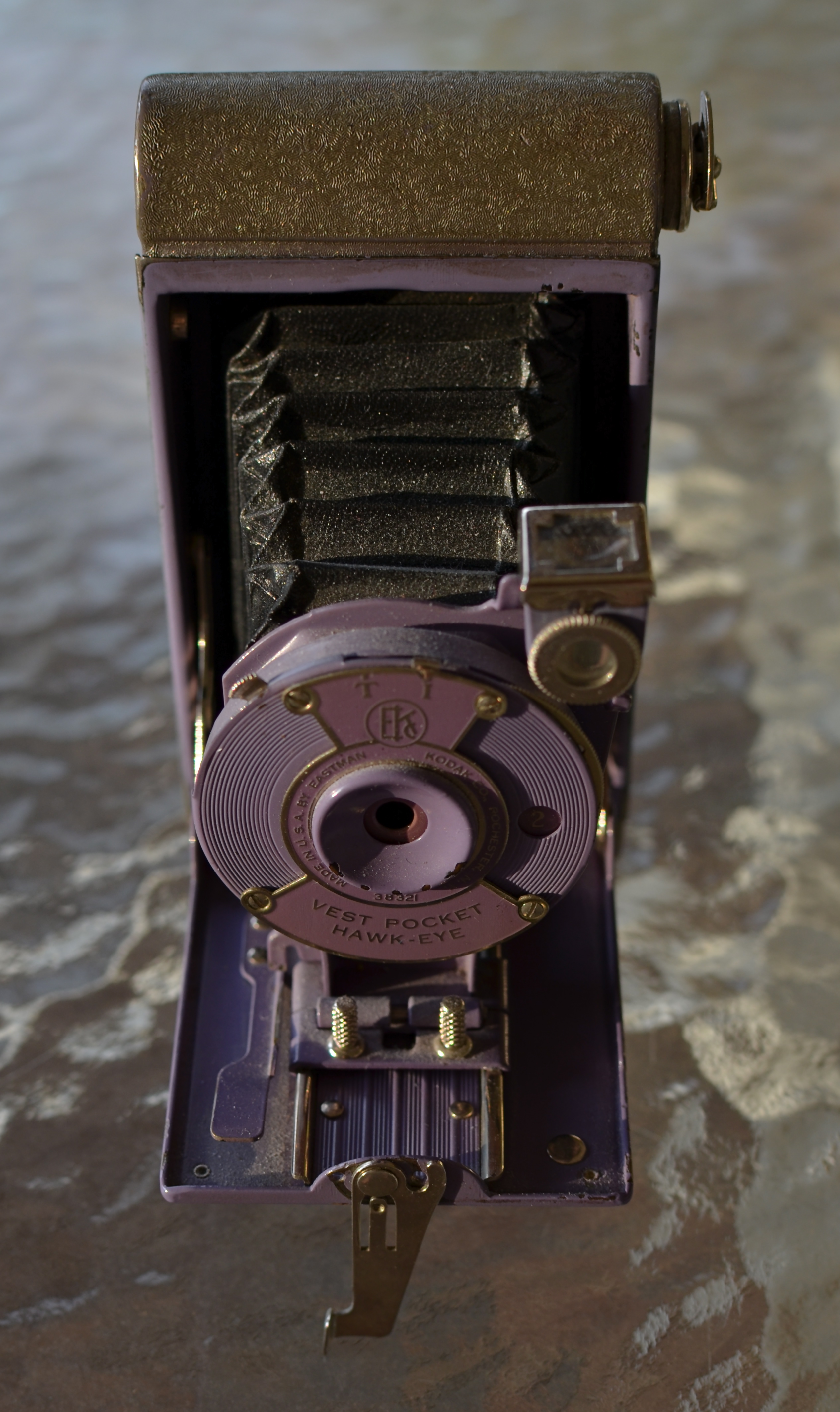
There was a time when this Kodak Vest-Pocket Hawkeye was truly intimidating. How To Make Good Pictures made it your friend.
Beginning before the end of the Victorian era, the company began to publish the first of an endless stream of practical guides on technique and simple theory aimed at the average shutterbug. Starting in 1898 with Picture Taking And Picture Making (115 pages of tips in a cardboard cover for fifty cents!), Eastman Kodak moved to 1905’s The Modern Way In Picture Making, and, finally, to the most successful photo instruction series in history, How To Make Good Pictures, introduced in 1912 and revised continually until finishing up with its 37th edition, in 1995. Over the years the “make” in the title had been changed to “take”, and its 1890’s essays on bromide paper, collodion matte, and ground-glass focusing had evolved, over the decades, to instructions on the use of flash, color, drop-in film cartridges, and “how to tell a picture story” with your Kodacolor slides. Hundreds of printings and millions of sales later, How To Make Good Pictures forged an ironclad link between consumer and company in a way no corporation before or since has done.
To everything there is a season. Kodak’s (now historically) tragic failure to see digital photography as a viable consumer revolution, until it was too late, is a matter of raw record. The company that taught the world to see had a blind spot, a fatal one, and the irony that nearly all of the rest of the industry developed digital technology by applying processes originated (and patented) by Kodak makes the story even sadder.
But, once upon a time, the Eastman Kodak Company not only knew what the future of photography was going to look like, it wrote a handy dandy little book that told everyone how to master that future.
Follow Michael Perkins on Twitter @MPnormaleye
Related articles
- Kodak moments are just a memory as company exits bankruptcy (kansascity.com)
THE COLORS OF DREAMS
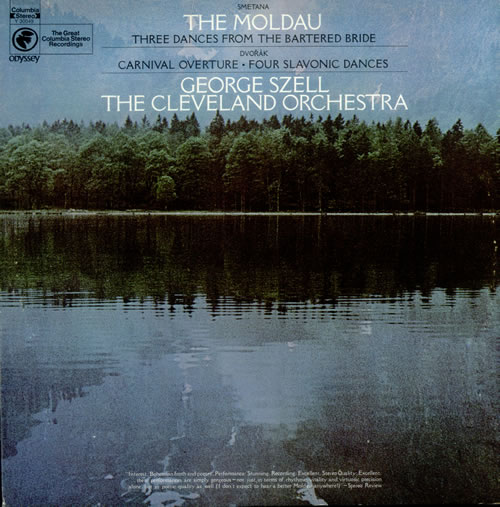
I will never know the name of the stock photographer at Columbia Records who shaped me with this image. But I know his genius.
By MICHAEL PERKINS
ONE OF THE TRICKIER PARTS OF BEING MY AGE is that I have been carrying around certain creative influences inside my skull for so many consecutive decades that their origins often blur. Who said it? Where did I brush up against that angle, that idea? Where did I see it? Book? Movie? Conversation? Who brought me into contact with this treasure? Inspiring mentor? Loving teacher? Teaching lover?
Of course, it can be argued that what you walked through the door to discover matters more than the door itself.
Maybe. But for me, the door and the room it leads to are two halves of one whole.
For most of my life, I have been fascinated by the intentional “un-realing” of color, the hypnotic spell of hues that weren’t “that way in nature”, but, through interpretation, could add drama and impact, even magic to the final version of an image. About a week ago, I was reminded of one important reason why I feel that way.
Researching composer Bedrich Smetana’s gorgeous musical love poem to his homeland, The Moldau, I set eyes on an image that I had not seen for over forty years; the cover photograph for a recording of Moldau by George Szell and the Cleveland Orchestra that I purchased in the 1970’s. My own copy of the original LP is long gone, but I still own a reissue of the performance, music that afforded my teenage self a serenity, a dream quality, a magic that travels within me to this day. In true “multi-media” fashion, I never listened to the original album without its cover within clear sight, its blue-green image of a soft-focus lake and forest quieting my nerves, inducing the music’s spell again and again.
One one level I knew that the colors in the photograph were not “natural” in the strictest sense, but they were nonetheless hypnotic. Through them, I saw Smetana’s homeland, its villagers, its folks rituals, and the beautiful river Vlatava. For me, the picture was the music, and the music was the picture. Energy flowed seamlessly from one conception of beauty to the other.
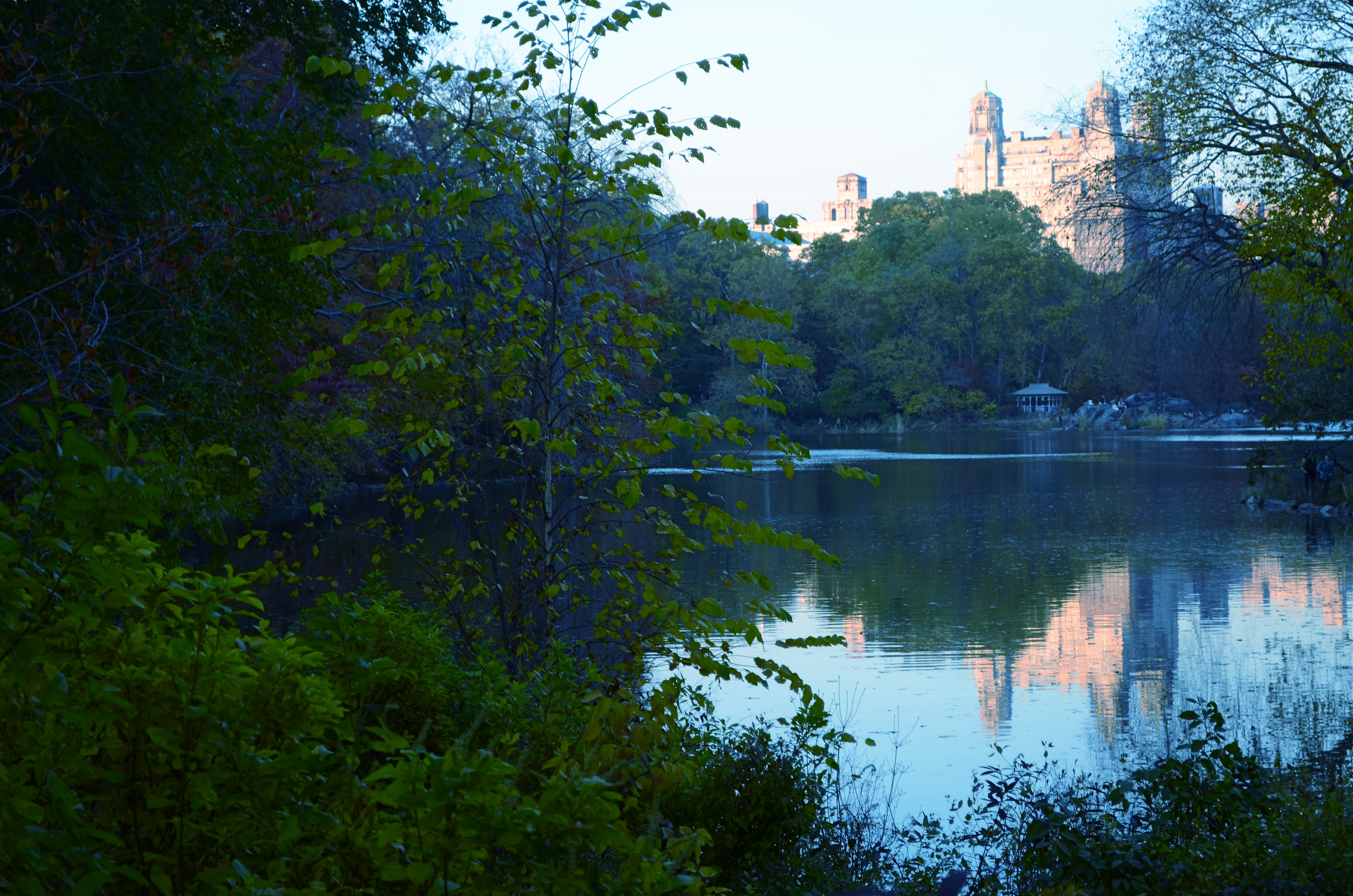
The Lake, Central Park West, NYC., 2011. 1/80 sec., f/5.6, ISO 160, 50mm.
Some of my own work, naturally, strives for this quality, the ability of a photograph to unchain the mind, to allow feelings to flow, to allow color to be abstracted, just like language or music. Some will call it influence, others imitation. I prefer to think of it as respect. And while I will never know the name of the stock photographer whose image was probably slapped onto The Moldau’s album cover as a clerical afterthought, I love it when I see his work leak through my fingers, if only a little.
Shade your dreams however you like.
And let the music surrender its colors.
Follow Michael Perkins on Twitter @MPnormaleye.
THE WOMAN IN THE TIME MACHINE
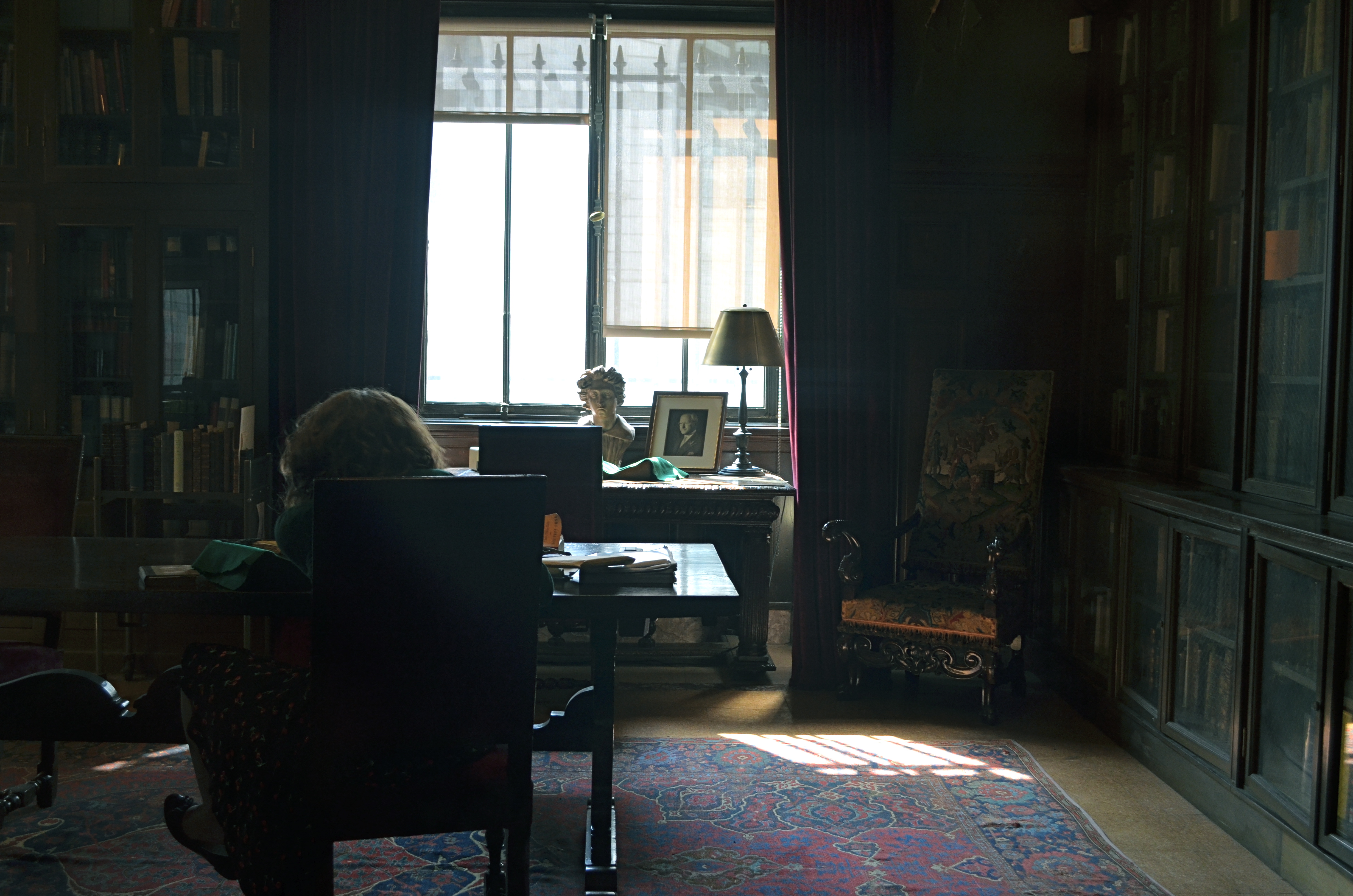
Where is this place? And how is it here, now? 1/40 sec., f/5.6, ISO 320, 24mm.
by MICHAEL PERKINS
THERE ARE TIMES WHEN A CAMERA’S CHIEF FUNCTION IS TO BEAR WITNESS, TO ASSERT THAT SOMETHING FANTASTIC REALLY DID EXIST IN THE WORLD. Of course, most photography is a recording function, but, awash in a sea of infinite options, it is what we choose to see and celebrate that makes an image either mundane or majestic.
And then sometimes, you just have the great good luck to wander past something wonderful. With a camera in your hand.
The New York Public Library’s main mid-town Manhattan branch is beyond magnificent, as even a casual visit will attest. However, its beauty always seems to me like just “the front of the store”, a controlled-access barrier between its visually stunning common areas and “the good stuff” lurking in untold chambers, locked vaults and invisible enclaves in the other 2/3 of the building. I expect these two worlds to be forever separate and distinct, much as I don’t expect to ever see the control room for electrical power at Disneyland. But the unseen fascinates, and recently, I was given a marvelous glimpse into the other side at the NYPL.
A recent exhibit of Mary Surratt art prints, wall-mounted along the library’s second-floor hall, was somehow failing to mesmerize me when, through a glass office window, I peeked into a space that bore no resemblance whatever to a contemporary office. The whole interior of the room seemed to hang suspended in time. It consisted of a solitary woman, her back turned to the outside world, seated at a dark, simple desk, intently poring over a volume, surrounded by dark, loamy, ceiling-to-floor glass-paneled book shelves along the side and back walls of the room. The whole scene was lit by harsh white light from a single window, illuminating only selective details of another desk nearer the window, upon which sat a bust of the head of Michelangelo’s David, an ancient framed portrait, a brass lamp . I felt like I had been thrown backwards into a dutch-lit painting from the 1800’s, a scene rich in shadows, bathed in gold and brown, a souvenir of a bygone world.
I felt a little guilty stealing a few frames, since I am usually quite respectful of people’s privacy. In fact, had the woman been aware of me, I would not have shot anything, as my mere perceived presence, however admiring, would have felt like an invasion, a disturbance. However, since she was oblivious to not only me, but, it seemed, to all of Planet Earth 2013, I almost felt like I was photographing an image that had already been frozen for me by an another photographer or painter. I increased my Nikon’s sensitivity just enough to get an image, letting the light in the room fall where it may, allowing it to either bless or neglect whatever it chose to. In short, the image didn’t need to be a faithful rendering of objects, but a dutiful recording of feeling.
How came this room, this computer-less, electricity-less relic of another age preserved in amber, so tantalizingly near to the bustle of the current day, so intact, if out of joint with time? What are those books along the walls, and how did they come to be there? Why was this woman chosen to sit at her sacred, private desk, given lone audience with these treasures? The best pictures pose more questions than they answer, and only sparingly tell us what they are “about”. This one, simply, is “about” seeing a woman in a time machine. Alice through the looking-glass.
A peek inside the rest of the store.
Follow Michael Perkins on Twitter @mpnormaleye.
Thanks to THE NORMAL EYE’s latest follower! View NAFWAL’s profile and blog at :
“SNAPSHOT” MOMENT, “SESSION” MINDSET
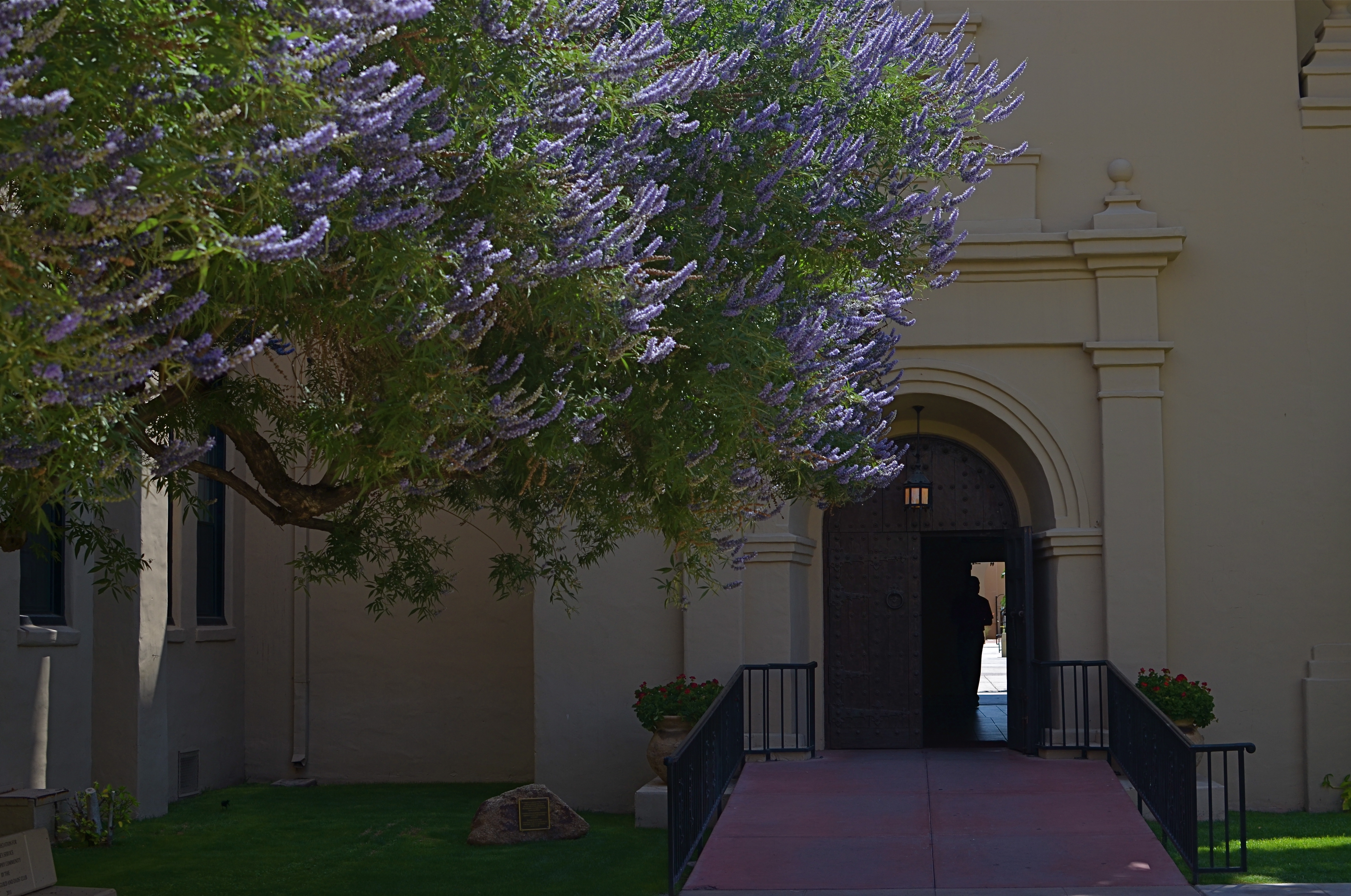
The light on the tree’s blossoms will be gone in three minutes. Best decision in the moment: slight underexposure to combat the mid-morning sun. 1/640 sec., f/5.6, ISO 100, 35mm.
By MICHAEL PERKINS
THE GREATEST ENEMY OF THE AMATEUR PHOTOGRAPHER IS TIME. Not the time spent perfecting our “eye”, nor the years invested in learning how to realize what we visualize. Sadly, the most tyrannical toll that time takes on us is in the meager number of moments in which we have to create most of our shots. Time…enough of it to work, to feel, and to act, is the only unbridgeable gap between ourselves and most of the pros.
I say “most” because some of the best photographers live absolutely in the moment, as in the case of imbedded journalists or sports shooters. No, what I’m talking about is the appointment that pros get to set for sessions, shoots that require set-up, tests, the issuance of permits, the re-routing of traffic. It’s not hard to see that a shooter for National Geo is at greater leisure planning his shot of a majestic waterfall than you are when your tour group is taking the tram from one Breathlessly Beautiful Natural Wonder to the next, all in time to rendezvous back at the terminal for a box lunch and precisely fifteen minutes in the gift shop. It’s not remarkable that millions of images are taken in Yellowstone each year. What’s amazing is that any of them work out.
Just saying.
Fact is, amateurs often can’t get the luxurious arrangements for creativity that are a given for the pros. And yet, since we don’t want our stuff to look like it was shot out the window at 55mph, we have to strive to combine the brief windows of our snapshot moments with the trained eye of a session mindset.
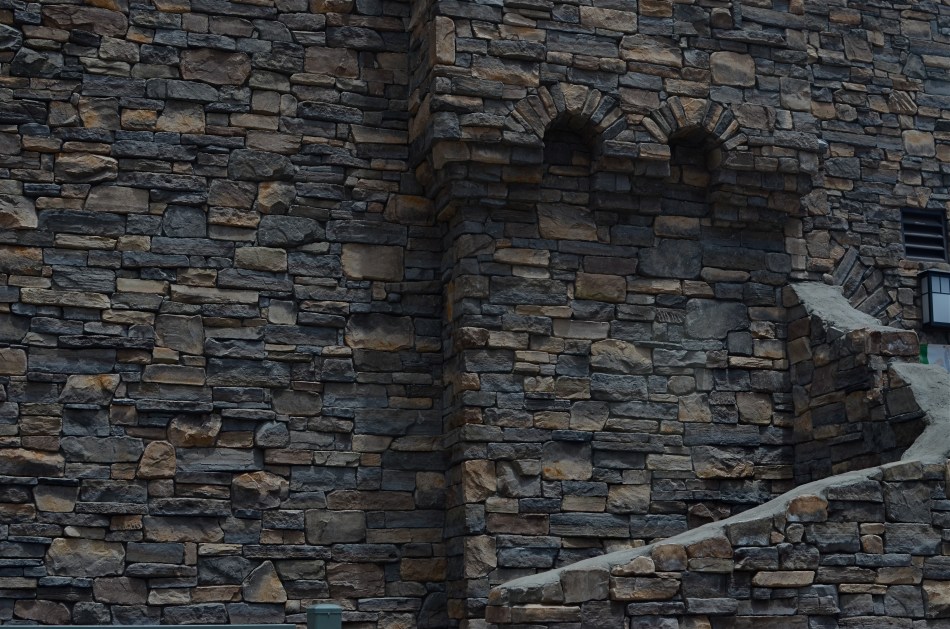
- Taken on pure impulse from a car as I was just about to drive off the property of this unique library. No planning except a fast exposure to give some depth to the stone textures. 1/640 sec., f/5.6, ISO 100, 35mm.
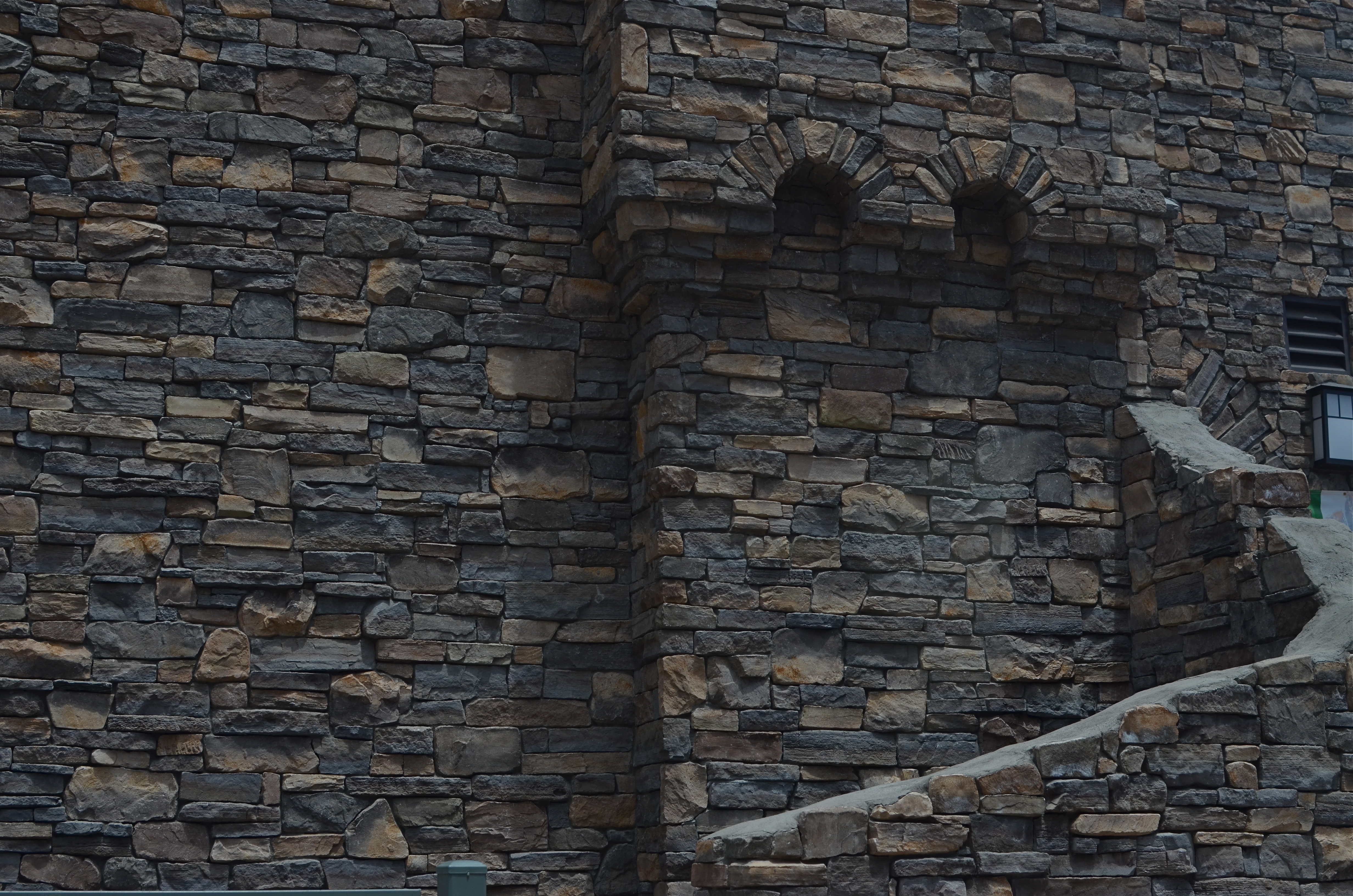
This is why it’s so important to always be shooting. Everyday. Good subject or bad. Great weather or lousy. Always. Because only the repetitive exercise of framing up and clicking off thousands of shots burns ways of seeing, ways of evaluating, into your brain, letting you make ever more complex calculations in increasingly shorter time. Shooting all the time speeds the arrival of the day when you can, in most cases, set and shoot and know that most of it will look intentional, done with some purpose in mind.
Repetition really is the best teacher, and the more direct control you take over your shooting, the more the universal laws emerge. At this focal length, certain things always happen. Under these lighting conditions, some things are always true. You’ll have your own truths, but, over time, they will be self-evident, because you will have faced these situations so many times that the essence of what you need for a shot will start to be as obvious as a glowing coal.
Time, or the lack of it, can rob us of the smart spontaneity we need in snapshot settings. However, the time we have invested learning how to shoot can give us a session mindset, and that affords us more control.
Are my snapshots better than anyone else’s? I doubt it. But over time, they are definitely better than my snapshots used to be.
Hey, I’ll take it.
follow Michael Perkins on Twitter @mpnormaleye
Related articles
- Snapshot (photography) (itscitrarizqinow.wordpress.com)
LET THE LIGHT BE THE STORY
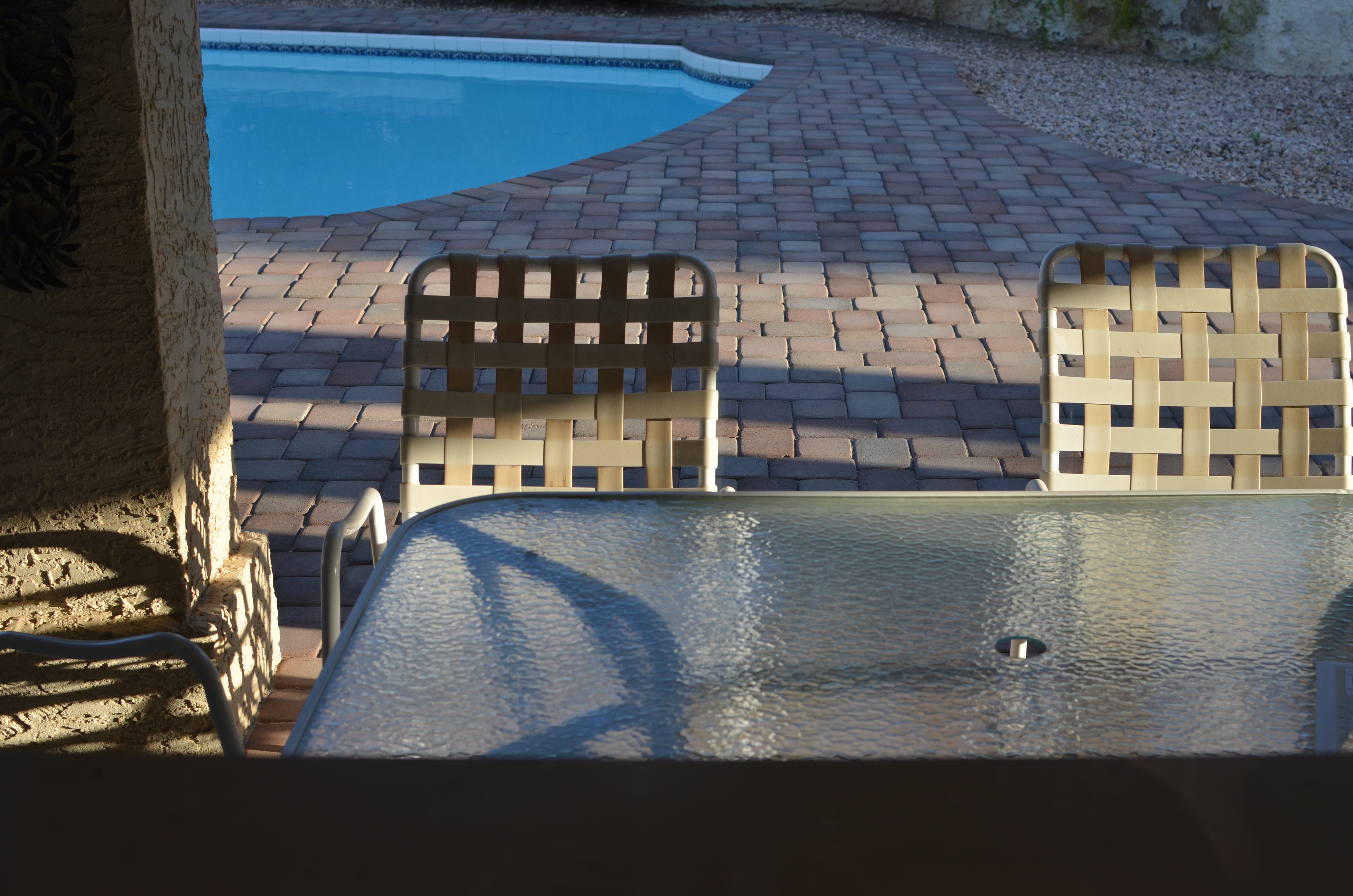
Ordinary, familiar objects, yes, but, for a few moments. their display of light was all the “subject” I needed. 1/200 sec., f/5.6, ISO 100, 35mm.
By MICHAEL PERKINS
ONE OF THE THINGS I OCCASIONALLY MISS ABOUT WORKING WITH PRIMITIVE CAMERAS is that the terms of success and failure are so stark. As Yoda says, you either do or do not…there is no “try”. If you have a limited piece of gear, it will always be capable (or incapable) of exactly the same things. That argument is settled, and so you have to find good pictures where they naturally occur….truly thinking outside (or without) the box.
The fact that you will get little or no extra help from the camera is initially limiting, but also, in a strange way, freeing.
On the other hand, the better your equipment, the more opportunities you have to counter iffy lighting conditions in your subjects. Photography today is about almost never having to say, “I couldn’t get the shot”…..at least not because of a lack of sufficient light. It’s just one more imperfect thing that shooting on full auto “protects” you from. But the argument could be made that ultra-smart cameras give you an output that, over time, can be stunningly average. The camera is making so many decisions of its own, in comparison to your measly little button flick, that every shot you “take” is pushing you further and further away from assuming active control of what happens.
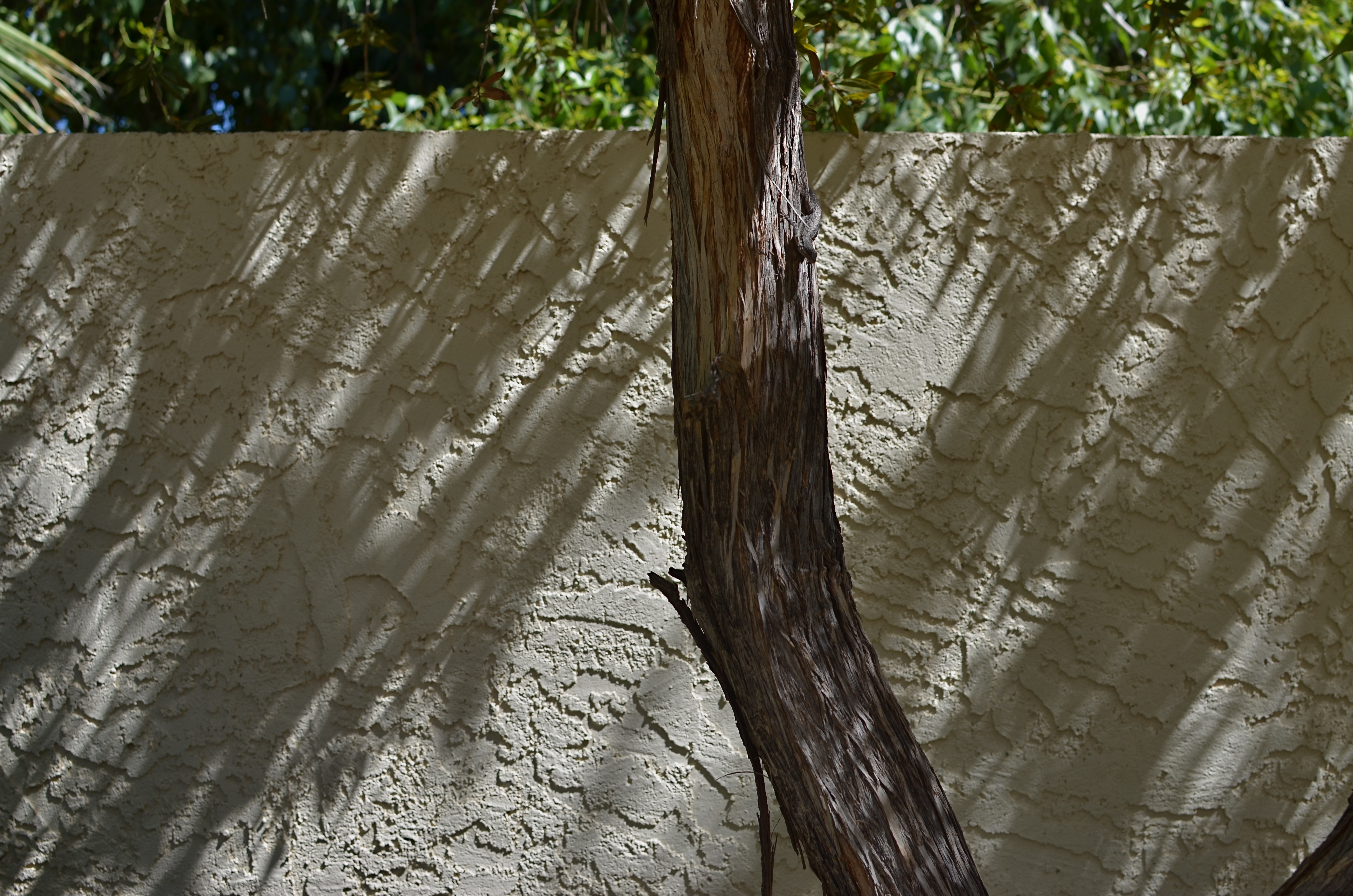
Early morning shadows shift suddenly, presenting many different ways to see the same subject. 1/400 sec., f/5.6, ISO 100, 35mm.
Hunting for images that you could capture with virtually no “help” from your camera is a more active process, since it involves planning. It means looking for pictures that your camera may not be able to grab without your specific input. And one great way is to shoot images that don’t matter in themselves, so that you are letting the light, and not the subject, be the entire story. That, and shooting on manual.
Back yards are great because they are convenient stages for light tracking. You can see the light conditions shift over the course of an entire day. Better still, it’s familiar territory that can only become more familiar, since it’s so close at hand, and available anytime. Since you will have more “what am I gonna shoot?” days than “amazing” days over a lifetime, fill them up by giving yourself a seminar in “this is what the light does”. Believe me, something worth keeping will happen.
Early morning, just after dawn, is the best time to work, because the minute-to-minute changes are so markedly unique. Wait too long and you lose your window. Or maybe you’re there in just another few minutes, when something just as good may present itself. I also like to work early because, living in the desert, I will have hours and hours of harsh, untamed light every day unless I plan ahead. It’s just too retina-roastingly bright, too much of the time.
Edward Steichen taught himself light dynamics by spending months shooting the same object in the same setting. Hundreds, sometimes thousands of frames where nothing changed but the light. He put in the time taking scads of images he knew he would never use, just to give him a fuller understanding of how many ways there were to render an object. He benefited, zillions of frames later, when he applied that knowledge to subjects that did matter.
The greatest photographer of the 20th century became “that guy” because he was willing to take more misses than anyone else in the game, in order to get a higher yield of hits down the road.
Shooting just for a better understanding of light is the best photo school there is, and it’s cheap and easy in the digital age. No chemicals, no glass plates, nothing in the way but yourself and what you are willing to try.
I like the odds.
(follow Michael Perkins on Twitter @mpnormaleye)
Related articles
- Street Photography Tips, Techniques and Inspirations (itscitrarizqinow.wordpress.com)
- How to break through the bottleneck of photography skills (ghjg85.wordpress.com)
IT’S NOT EASY BEIN’ GREEN
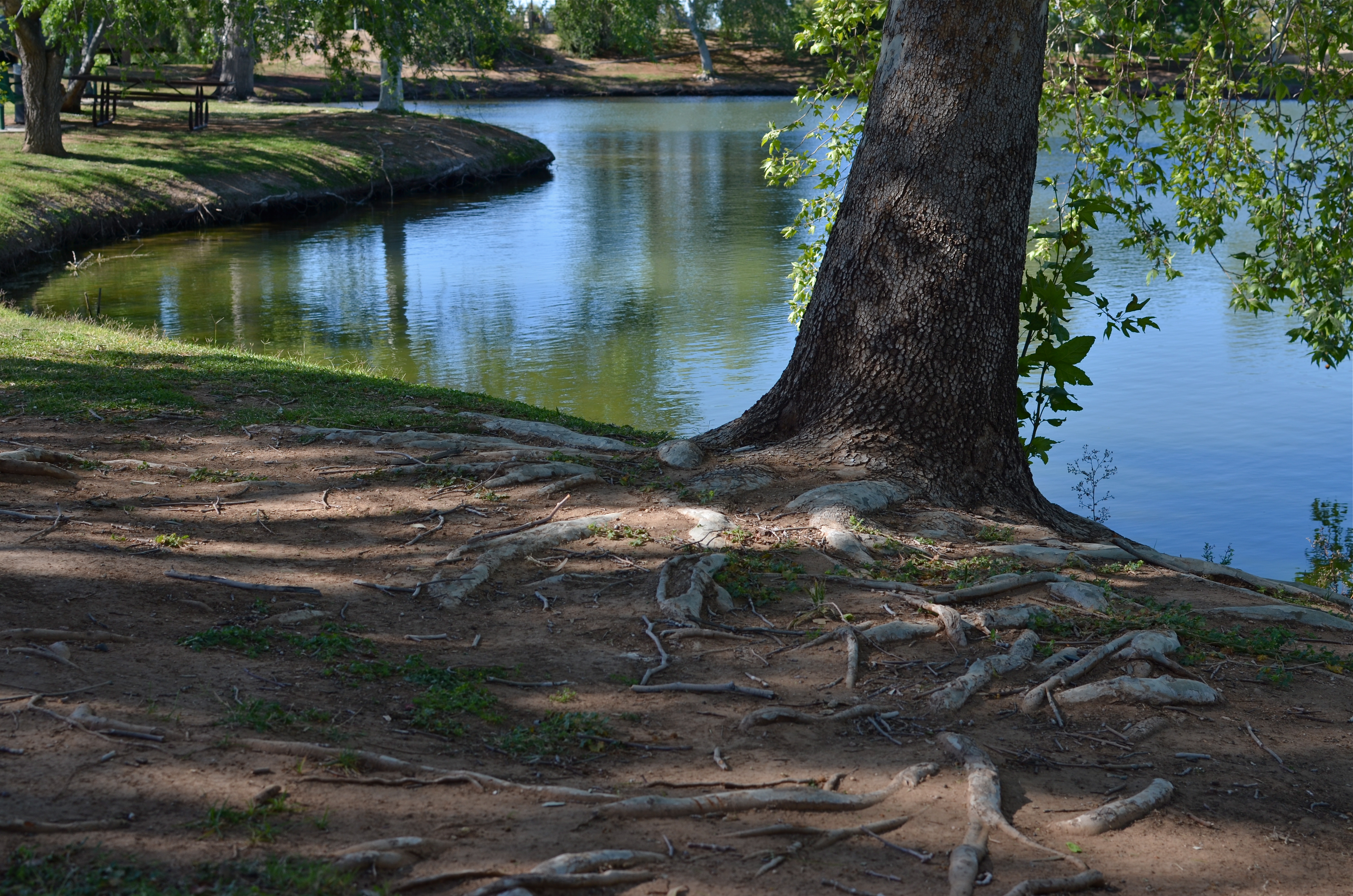
This is the desert? A Phoenix area public park at midday. There is a way around the intense glare. 1/500 sec., f/5.6, ISO 100, 35mm, straight out of the camera.
By MICHAEL PERKINS
FOR YEARS I HAVE BEEN SHOOTING SUBJECTS IN THE URBAN AREAS OF PHOENIX, ARIZONA, trying to convey the twin truths that, yes, there are greenspaces here, and yes, it is possible for a full range of color to be captured, despite the paint-peeling, hard white light that overfills most of our days. Geez, wish I had been shooting here in the days of Kodachrome 25. Slow as that film was, the desert would have provided more than enough illumination to blow it out, given the wrong settings. Now if you folks is new around here, lemme tell you about the brilliant hues of the Valley of the Sun. Yessir, if’n you like beige, dun, brown, sepia or bone, we’ve got it in spades. Green is a little harder to come by, since the light registers it in a kind of sickly, sagebrush flavor….kind of like Crayola’s “green-yellow” (or is it “yellow-green”?) rather than a deep, verdant, top-o-the-mornin’ Galway green.
But you can do workar0unds.
In nearby Scottsdale, hardly renowned for its dazzling urban parks (as opposed to the resort properties, which are jewels), Indian School Park at Hayden and Indian School Roads is a very inviting oasis, built around a curvy, quiet little pond, dozens of mature shade trees that lean out over the water in a lazy fashion, and, on occasion, some decorator white herons. Thing is, it’s also as bright as a steel skillet by about 9am, and surrounded by two of the busiest traffic arteries in town. That means lots of cars in your line of sight for any standard framing. You can defeat that by turning 180 degrees and aiming your shots out over the middle of the pond, but then there is nothing really to look at, so you’re better off shooting along the water’s edge. Luckily, the park is below street level a bit, so if you frame slightly under the horizon line you can crop out the cars, but, with them, the upper third of the trees. Give and take.
There is still a ton of light coming down between the shade trees, however, so if you want any detail in the water or trees at all, you must shoot into shade where you can, and go for a much faster shutter speed….1/500 up to 1/1000 or faster. It’s either that or shoot the whole thing at a small f-stop like f/11 or more. In desert settings you’ve got so much light that you can truly dance near the edge of what would normally be underexposure, and all it will do is boost and deepen the colors that are there. There will still be a few hot spots on projecting roots and such where the light hits, but the beauty of digital is that you can click away and adjust as you go.
It’s not quite like creating greenspace out of nothing, but there are ways to make things plausibly seem to be a representation of real life, and, since this is an interpretive medium, there’s no right or wrong. And the darker-than-normal shadows in this kind of approach add a little warmth and mystery, so there’s that.
It was “yellow-green”, wasn’t it?
Hope that’s not on the final.
(follow Michael Perkins on Twitter @mpnormaleye)
FROM TOY TO TOOL
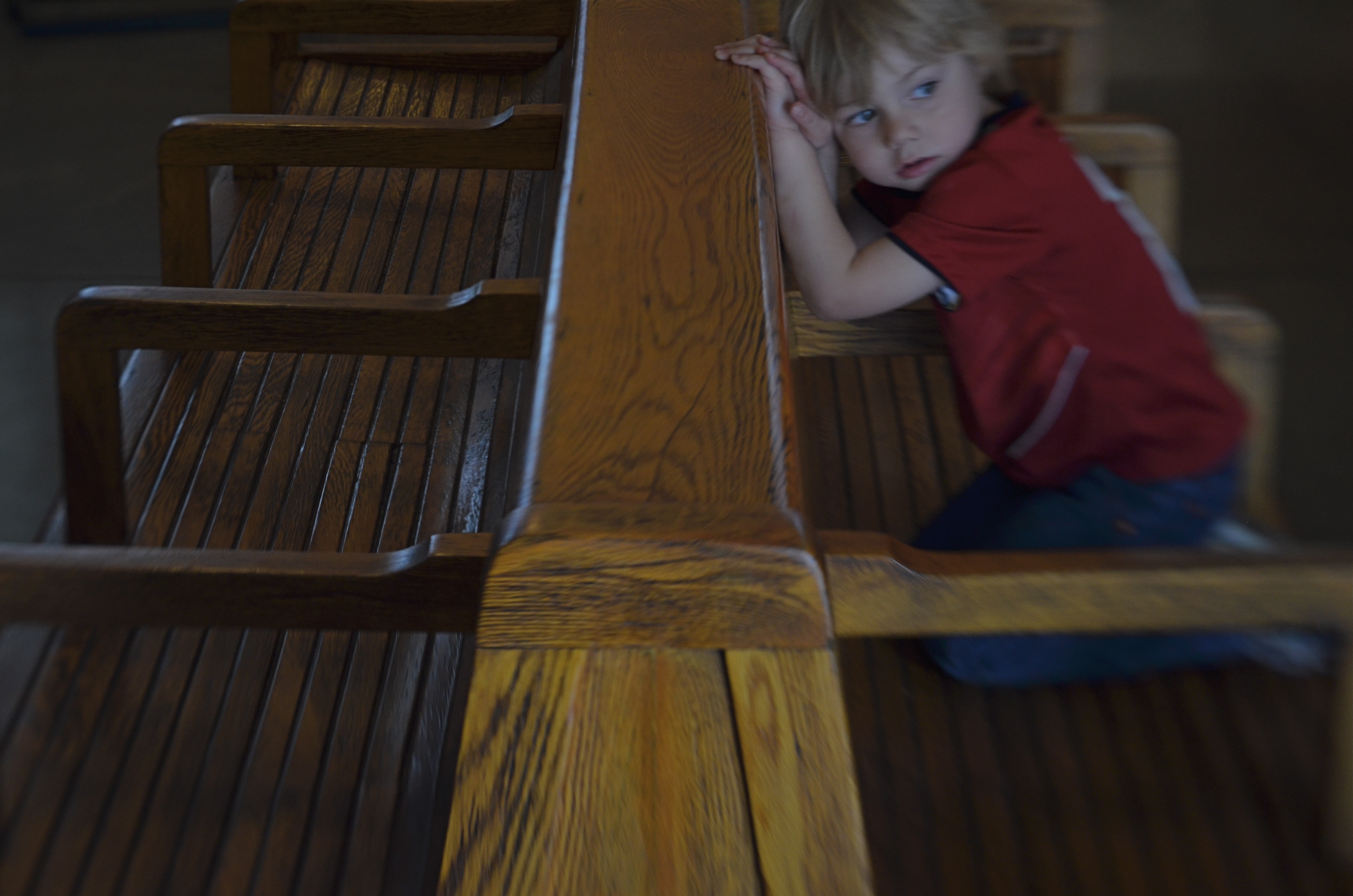
Selective focus can help direct your viewer’s eye. Taken with a Lensbaby Spark lens at 1/80 sec., f/5.6, ISO 320, 50mm.
By MICHAEL PERKINS
A LONG STANDING BIT ON THE DAVID LETTERMAN SHOW, rather than claiming to be entertaining, actually poses the question of what entertainment actually is. Entitled “Is This Anything?”, the feature consists of about thirty seconds of acts or feats that might be amazing (like juggling), might be banal (like, um, juggling) or might qualify as merely strange. After the curtain is drawn, Dave and Paul briefly discuss the merits of what ever strangeness just transpired, and ask each other if “that was anything”. Sometimes there is no clear-cut decision. The show has disclaimed responsibility, and entertainment remains in the eye of the beholder.
That’s how you can feel the first time you use a Lensbaby.
Released several years ago to inventor Craig Strong’s great monetary benefit, the Lensbaby comes in a variety of
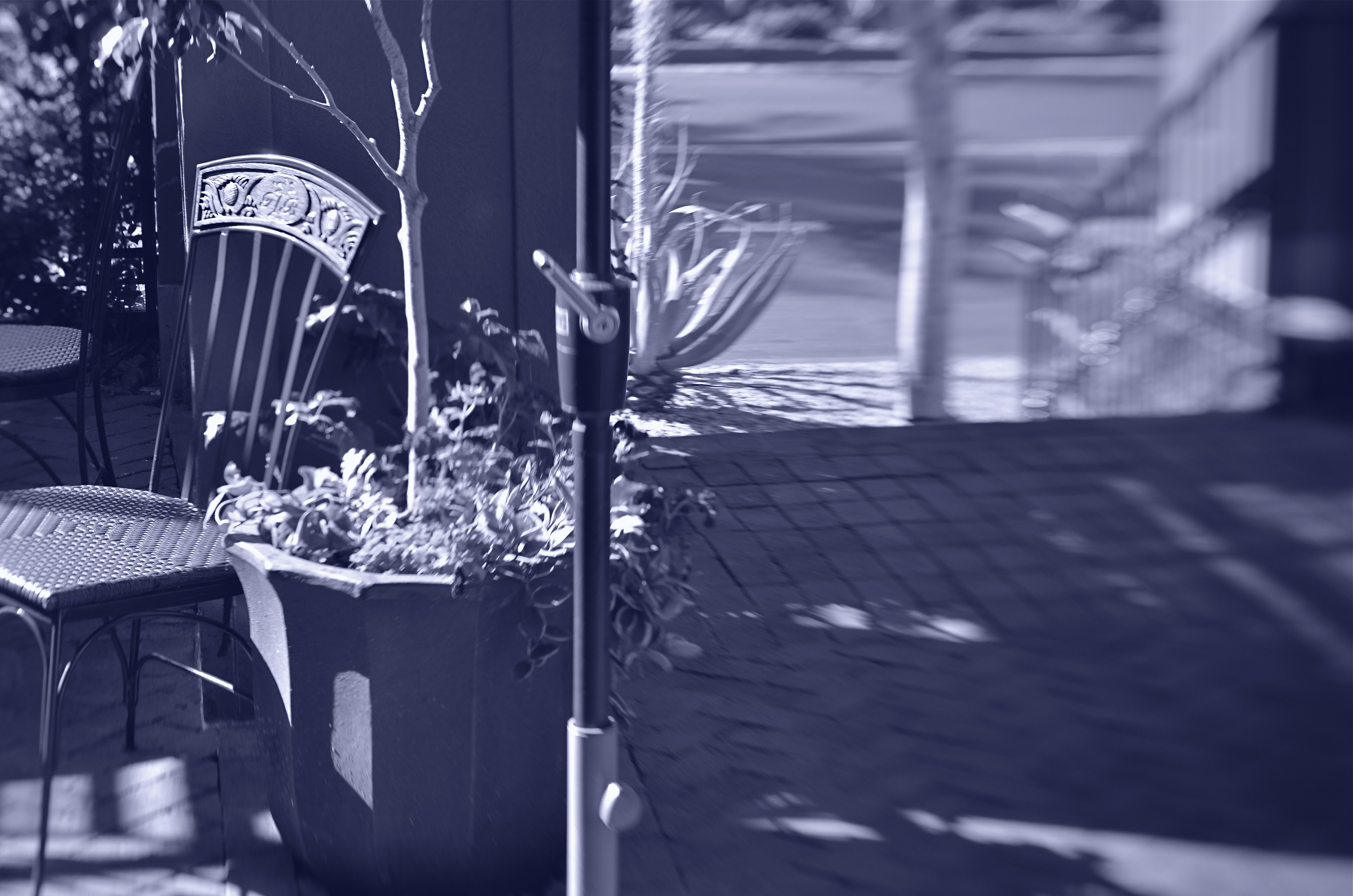
levels but is essentially an affordable tilt-shift attachment, a way to soften focus over selective areas of the frame while rotating the “sweet spot” of sharper focus wherever the shooter feels it should go. Now, essentially, selective focus is really part of every photo ever taken, since a choice of depth-of-field is made every time the shutter snaps. Lensbaby, however, offers the chance to pre-design the precise level of left-right, high-low focus, in the camera, and before the shot is taken. No post-processing is needed, and each use of the effect is completely under the shooter’s control, and at a fraction of what dedicated DSLR lenses cost.The Lensbaby effect is understandably an attractive gimcrack for the instinctive subculture of lo-fi photography, they of the hipster nonchalance and light-leaking, fixed-focus plastic cameras. Hey, it looks freaky, random, edgy. But, like everything else in your kit bag, it’s either toy or tool. The verdict as to which it is comes out one picture at a time.
So far I am whelmed….not overwhelmed, not underwhelmed. For one thing, Lensbabies are a lot of extra work. The entry-level model, the Spark, is actually a lens within a springy plastic bellows. You have to hold your camera body, delegate fingers from both hands to rotate the axis of the front of the lens, squeeze the bellows to bring part of the frame into focus (the Spark’s “sweet spot” is fixed at f/5.6), allocate another finger for the shutter, and click. At least you can’t carp about not having enough creative control. There’s more than enough of that, especially at first, to O.D. on. Your chosen area of focus can be held in place more easily with upgrade models (which also include additional optics and add-ons), but the Lensbaby is truly best for shoots where you have a lot of time to think, plan, and create….the very opposite of the “shoot from the hip” attitude embraced by the lomography crowd. You will take a lot of pictures that miss by inches, or fractions of inches.
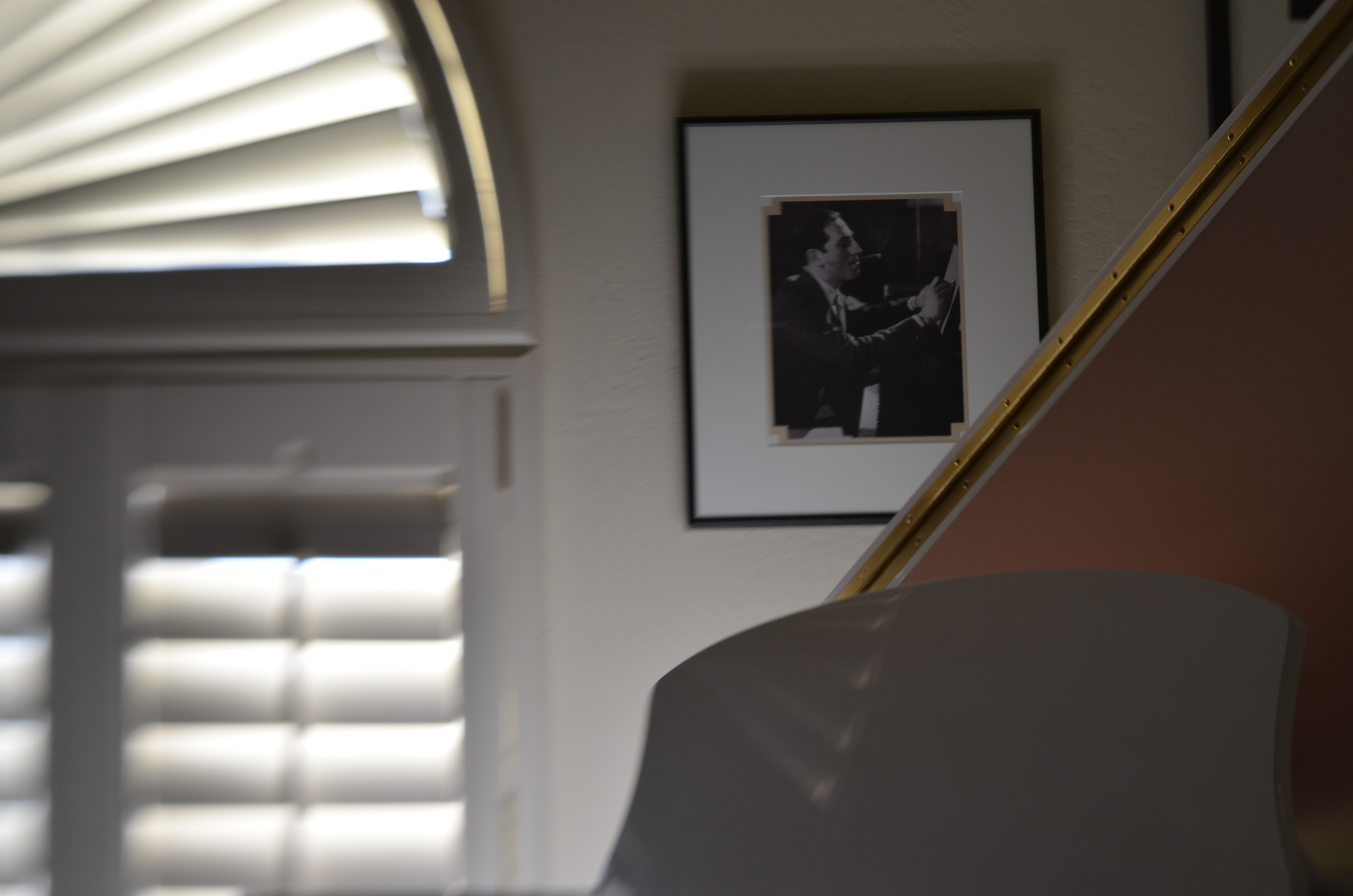
Lensbaby Spark gives you some of the control of a custom lens for under $80.
What will move me from whelmed to overwhelmed will be finding those images where the Lensbaby effect actually aids my storytelling, yet does not define it, as in the lucky shot at the top of this post. The camera gadgets I eventually consign to the “toy” pile go there because they call too much attention to what they can do, not to what I can do using them. The”tools” pile contains the gear that is essential to my saying something in a distinctly different voice. Finally, the two piles are divvied up only after taking lots of pictures and asking a ton of questions (a few gimmicks, like fisheye, have spent time in both piles; hey, I’m not above just playing around).
I sympathize with Letterman’s dilemma when he ironically asks, “Is this anything?” Selective focus is a way to install big neon pointers into your pictures, a more emphatic command to look over here. It’s also a way to amplify the drama of certain data or simplify cluttered compositions. I get it.
But it needs to be about much more than that. Or, more correctly, I have to help it.
Related articles
- My Lensbaby SCOUT, baby! (greyiscolour.wordpress.com)
GET LOST
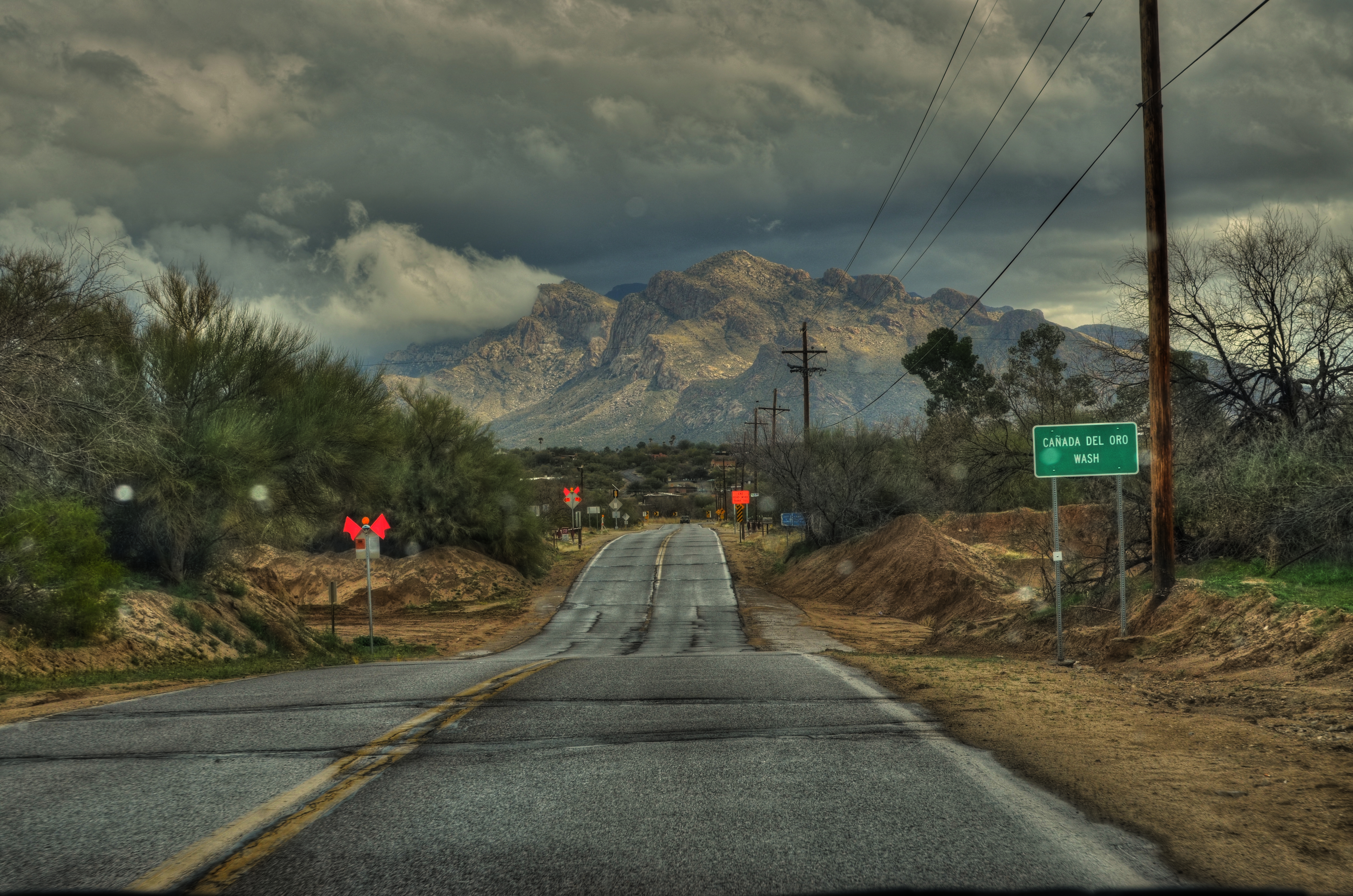
Straight through the windshield, using a technique I like to call “dumb luck”. Original shot specs: 1/320 sec., f/8, ISO 100, 35mm.
By MICHAEL PERKINS
PHOTOGRAPHY IS 10% PLANNING, 90% SERENDIPITY. Yes, I know. we would all rather believe that most of our images spring from brilliant conceptions, master plans, and, ahem, stunning visions. But a lot of what we do amounts to making the most of what fate provides.
There is no shame in this game. In fact, the ability to pivot, to improvise, to make the random look like the intentional…all of these things reveal the best in us. It exercises the eye. It flexes the soul. And, in terms of images, it delivers the goods.
Getting lost (geographically, not emotionally) is less an emergency than in ages past. Armed with smartphones, GPS, and other hedges against our own ignorance, we can get rescued almost as soon as we wander off the ranch. It is easier than ever to follow the electronic trail of crumbs back to where we belong, so drifting from the path of righteousness is no longer cause for panic. Indeed, for shooters, it’s pure opportunity.
Okay, so you’re not where you’re supposed to be. Fine. Re-group and start shooting. There is something in all these “unfamiliar” things that is worth your gaze.
Last week , my wife and I decided to trust her car’s onboard guidance system. The results were wrong but interesting. No danger, just the necessary admission that we’d strayed really far afield of our destination. We’re talking about twenty minutes of back-tracking to set things right.
But first….
One of the rural roads we drifted down, before realizing our error, led us to a stunning view of the back end of Tucson’s Catalina mountains, framed by small town activity, remnants of rainfall, and a portentous sky. I squeezed off a few shots straight out of the windshield and got what I call the “essence” exposure I needed. That single image was relatively well-balanced, but it wouldn’t show the full range of textures from the stormy sky and the mountains. Later, in post, I duplicated the one keeper frame that I got, modifying it in Photomatix, my HDR processing program. Adding underexposure, deeper contrast, and a slight rolloff of highlights on the dupe, I processed it with the original shot to get a composite that accentuated the texture of the clouds, the stone,, even the local foliage. A sheer “wild” shot had given me something that I would have totally missed if the car’s GPS had actually taken us to our “correct” destination.
What was ironic was that, once we got where we were going, most of the “intentional” images that I sweat bullets working on were lackluster, compared to the one I shot by the seat of my pants. Hey, we’ve all been there.
Maybe I should get lost more often.
Actually, people have been suggesting that to me for years.
Especially when I whip out a camera.
Related articles
LET THERE BE (MORE) LIGHT
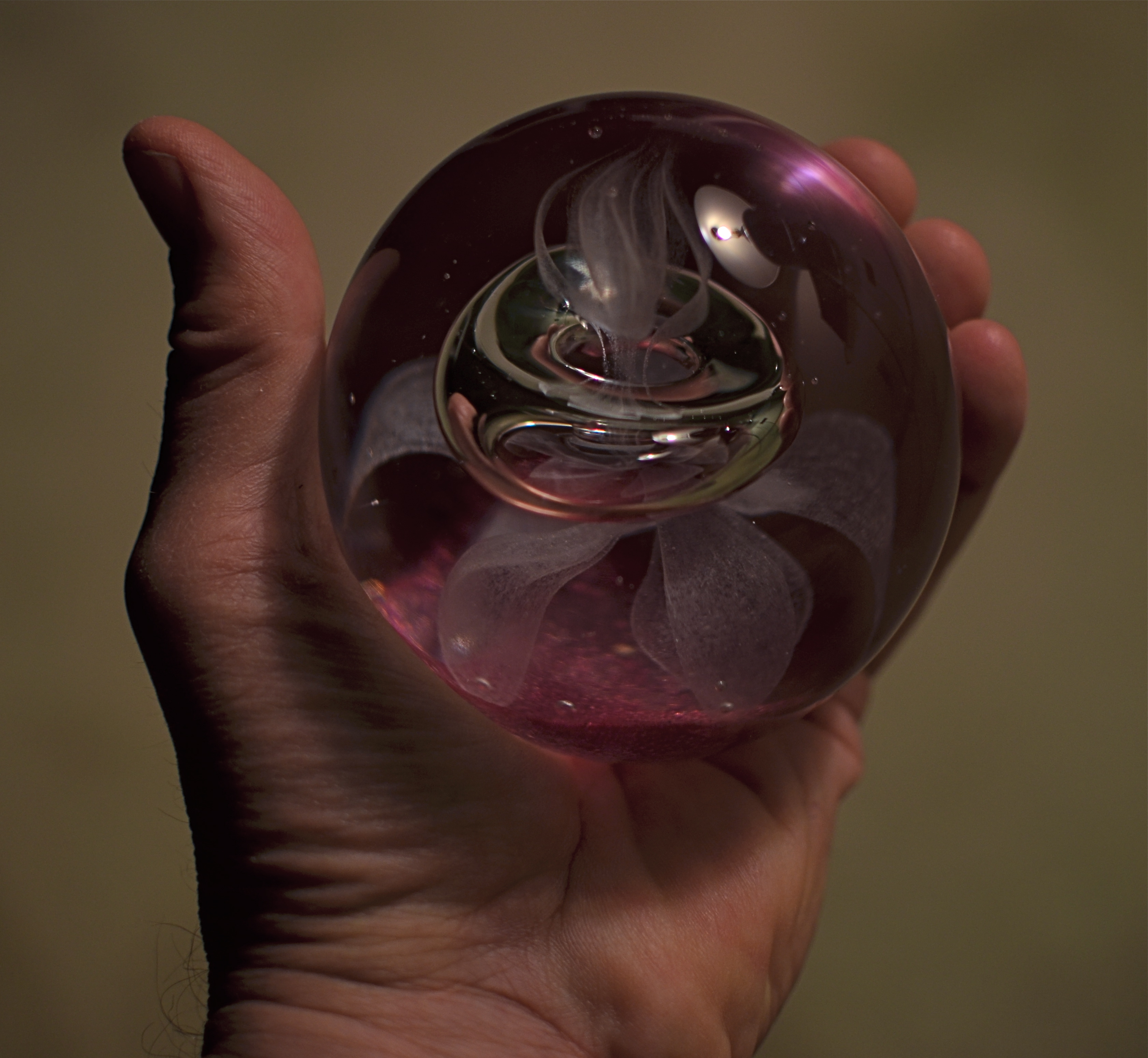
A new piece of glass makes everything look better….even another piece of glass. First day with my new 35mm prime lens, wide open at f/1.8, 1/160 sec., ISO 100.
By MICHAEL PERKINS
I HAVE RECENTLY BEEN EXPERIENCING ONE OF THOSE TIME MACHINE MOMENTS in which I am, again, right back at the beginning of my life as a photographer, aglow with enthusiasm, ripe with innocence, suffused by a feeling that anything can be done with my little black box. This is an intoxication that I call: new lens.
Without fail, every fresh hunk of glass I have ever purchased has produced the same giddy wonder, the same feeling of artistic invincibility. This time out, the toy in question is a Nikon f/1.8 35mm prime lens, and, boy howdy, does this baby perform. For cropped sensor cameras, it “sees” about like the 50mms of old, so its view is almost exactly as the human eye sees, without exaggerated perspective or angular distortion. Like the 50, it is simple, fast, and sharp. Unlike the 50, it doesn’t force me to do as much backing up to get a comfortable framing on people or near objects. The 35 feels a little “roomier”, as if there are a few extra inches of breathing space around my portrait subjects. Also, the focal field of view, even wide open, is fairly wide, so I can get most of your face tack sharp, instead of just an eye and a half. Matter of preference.
All this has made me marvel anew at how fast many of us are generally approaching the age of flashless photography. It’s been a long journey, but soon, outside the realm of formal studio work, where light needs to be deliberately boosted or manipulated, increasingly thirsty lenses and sensors will make available light our willing slave to a greater degree than ever before. For me, a person who believes that flash can create as many problems as it solves, and that it nearly always amounts to a compromise of what I see in my mind, that is good news indeed.
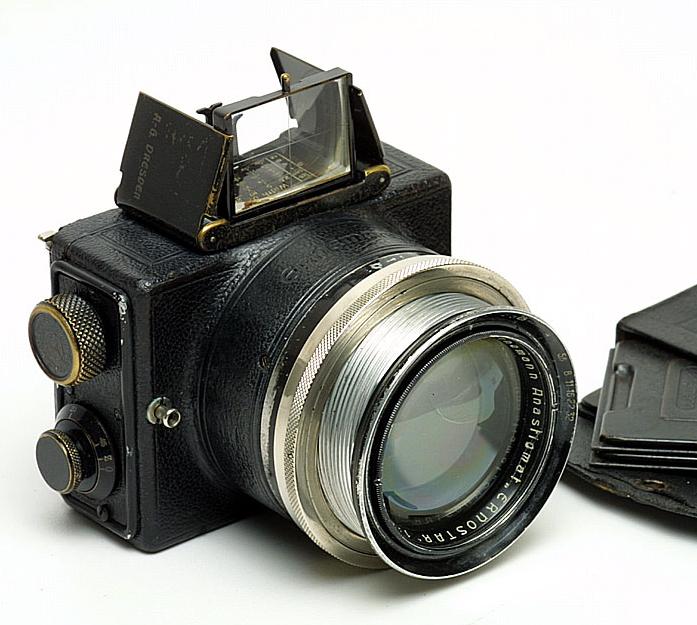
The Ermanox, perhaps the first camera designed to free mankind from the tyranny of flash.
It also makes me think of the first technical efforts to illuminate the dark, such as the camera you see off to the left. The Ermanox, introduced by the German manufacturer Ernemann in 1924, was one of the first big steps in the quest to free humankind of the bulk, unreliability and outright danger of early flash. Its cigarette-pack-sized body was dwarfed by its enormous lens, which, with a focal length of f/2, was speedy enough (1/1000 max shutter) to allow sharp, fast photography in nearly any light. It lost a few points for still being based on the use of (small) glass plates instead of roll film, but it almost single-handedly turned the average man into a stealth shooter, in that you didn’t have to pop in hefting a lotta luggage, as if to scream “HEY, THE PHOTOGRAPHER IS HERE!!” In fact, in the ’20’s and ’30’s, the brilliant amateur shooter Erich Solomon made something of a specialty out of sneaking himself and his tiny Ermanox into high-level government summits and snapping the inner circle at its unguarded best (or worst). Long exposures and blinding flash powders were no longer part of the equation. Candid photography had crawled out of its high chair… and onto the street.
Today or yesterday, this is about more than just technical advancement. The unspoken classism of photography has always been: people with money get great cameras; people without money can make do. Sure, early breakthroughs like the Ermanox made it possible for anyone to take great low-light shots, but at $190.65 in 1920’s dollars, it wasn’t going to be used at most folks’ family picnics. Now, however, that is changing. The walls between “high end” and “entry level” are dissolving. More technical democracy is creeping into the marketplace everyday, and being able to harness available light affordably is a big part of leveling the playing field.
So, lots more of us can feel like a kid with a new toy, er, lens.
Related articles
- Prime Lenses (nikonusa.com)
- Understanding Focal Length (nikonusa.com)
THE OTHER 50%
By MICHAEL PERKINS
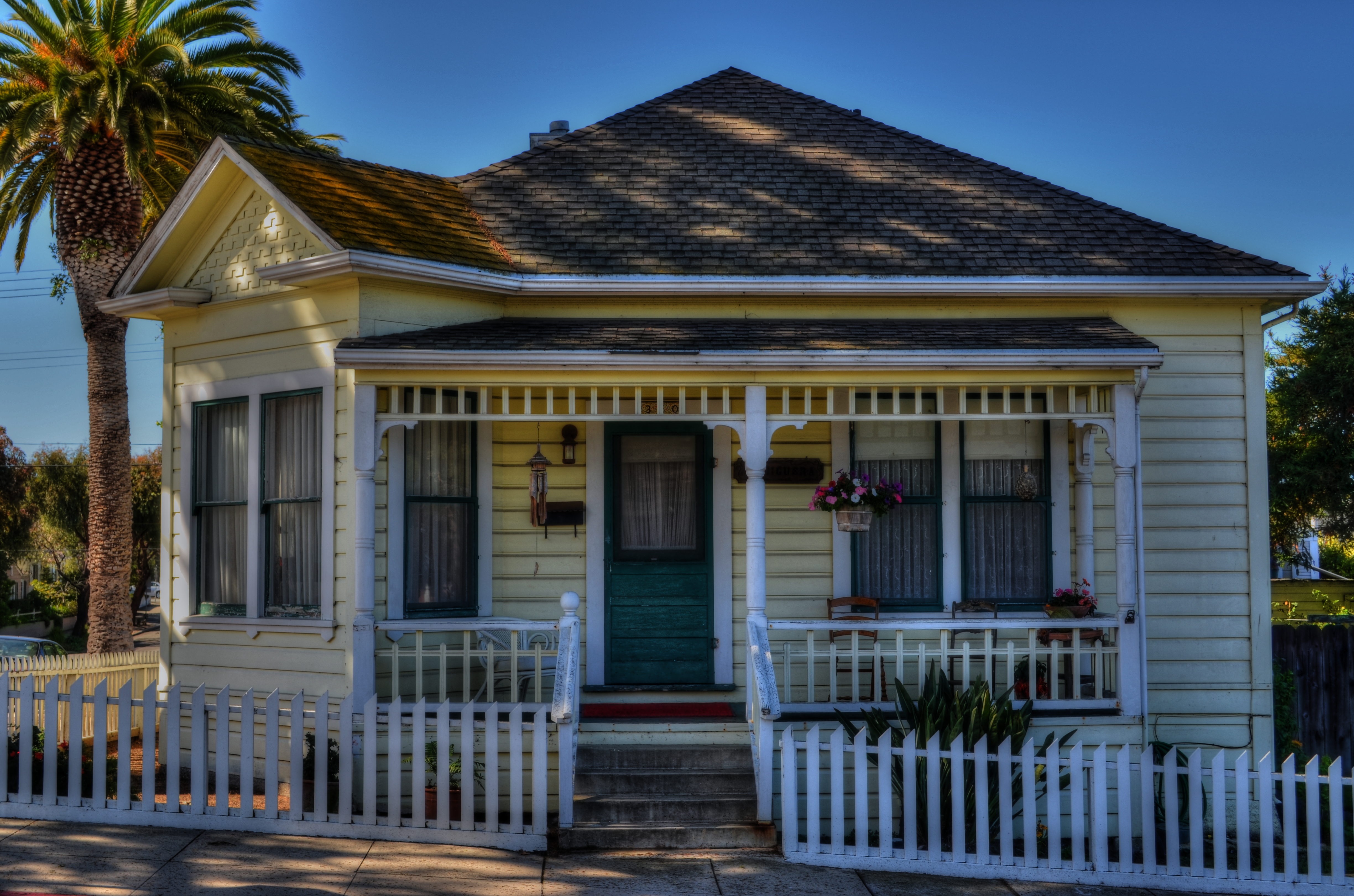
The American Dream, Pacific Grove, California, 2012. A three-exposure HDR with shutter speeds ranging from 1/100 to 1/160, all three shots at f/8, ISO 100, 32mm.
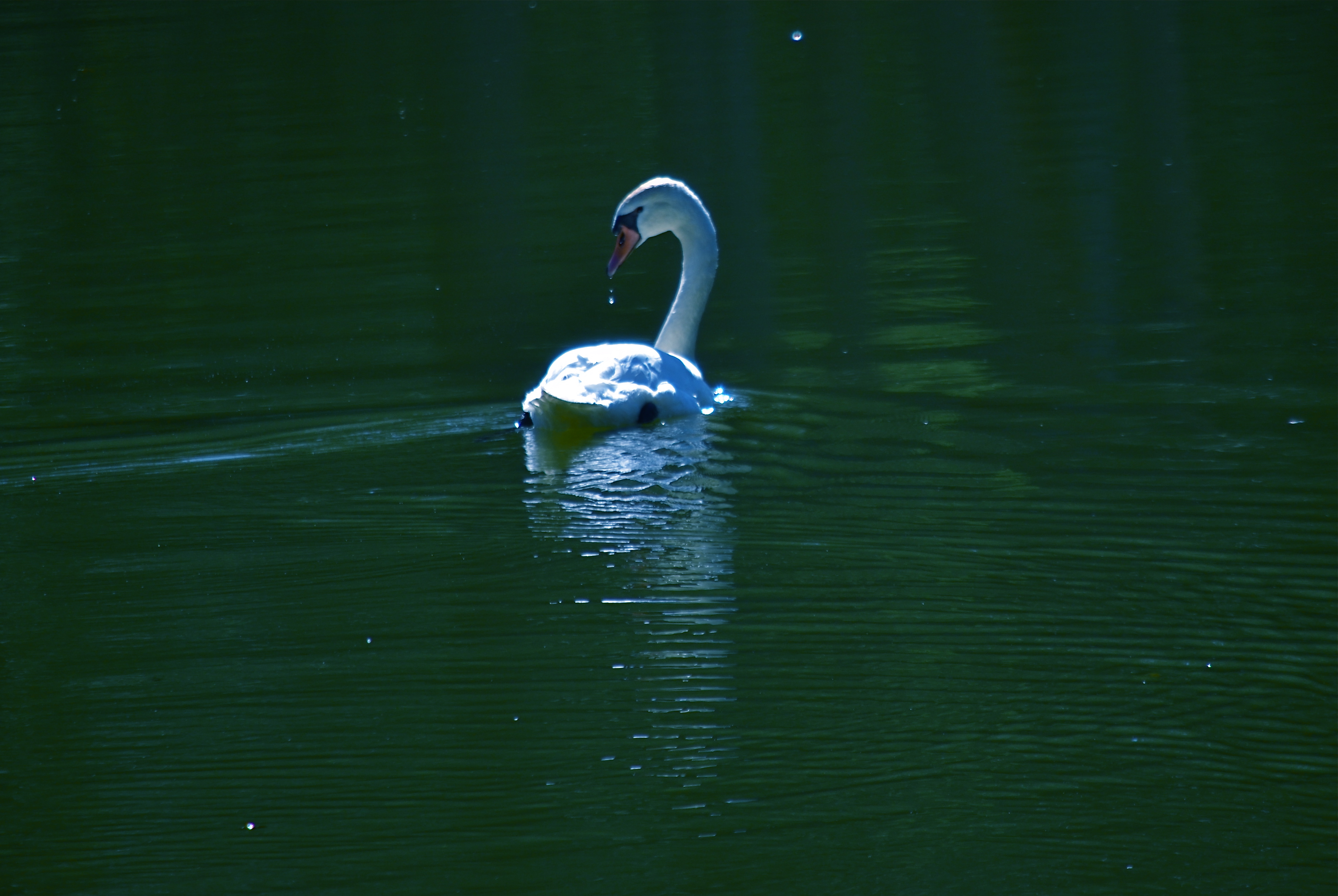
Serene On Green, near Yosemite National Park, 2012. 1/640 sec., f/5.6, ISO 100, 300mm.
THE LAST SUNDAY EDITION OF THE NEW YORK TIMES FOR 2012 features its annual review of the year’s most essential news images, a parade of glory, challenge, misery and deliverance that in some ways shows all the colors of the human struggle. Plenty of material to choose from, given the planet’s proud display of fury in Hurricane Sandy, the full scope of evil on display in Syria, and the mad marathon of American politics in an electoral year. But photography is only half about recording, or framing, history. The other half of the equation is always about creating worlds as well as commenting on them, on generating something true that doesn’t originate in a battlefield or legislative chamber. That deserves a year-end tribute of its own, and we all have images in our own files that fulfill the other 50% of photography’s promise.
This year, for example, we saw a certain soulfulness, even artistry, breathed into Instagram and, by extension, all mobile app imaging. Time ran a front cover image of Sandy’s ravages taken from a pool of Instagramers, in what was both a great reportorial photo and an interpretive shot whose impact goes far beyond the limits of a news event. Time and again this year, I saw still lifes, candids, whimsical dreams and general wonderments of the most personal type flooding the social media with shots that, suddenly, weren’t just snaps of the sandwich you had for lunch today saturated with fun filters. It was a very strong year for something personal, for the generation of complete other worlds within a frame.
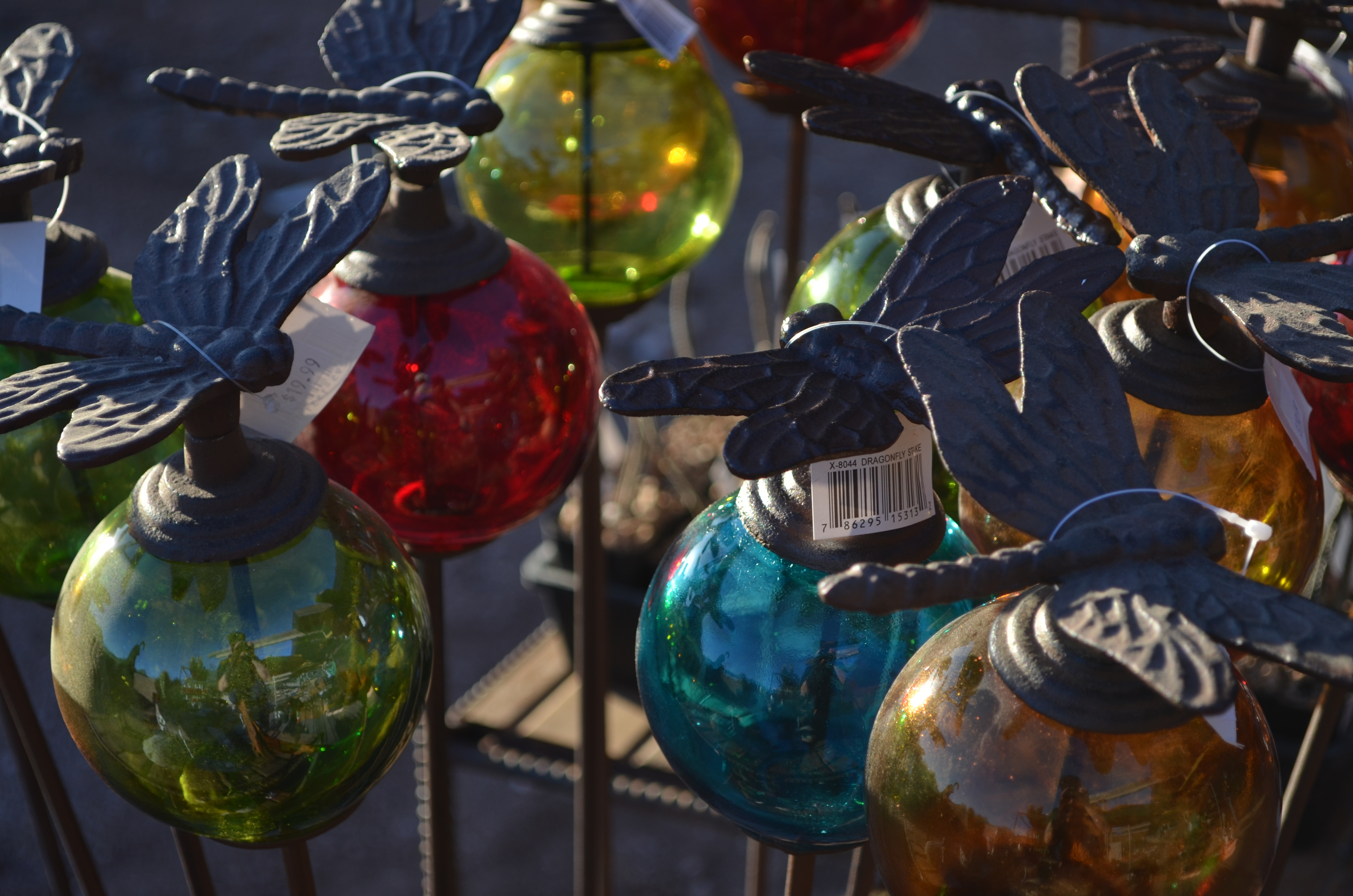
Dragonfly Globes, Tempe, Arizona, 2012. 1/200 sec., f/5.6, ISO 100, 55mm.
I love broad vistas and sweeping visual themes so much that I have to struggle constantly to re-anchor myself to smaller things, closer things, things that aren’t just scenic postcards on steroids, although that will always be a strong draw for me. Perhaps you have experienced the same pull on yourself…that feeling that, whatever you are shooting, you need to remember to also shoot…..something else. It is that reminder that, in addition to recording, we are also re-ordering our spaces, assembling a custom selection of visual elements within the frame. Our vision. Our version. Our “other 50%.”
My wife and I crammed an unusual amount of travel into 2012, providing me with no dearth of “big game” to capture…from bridges and skyscrapers to the breathlessly vast arrays of nature. But always I need to snap back to center….to learn to address the beauty of detail, the allure of little composed universes. Those are the images I agonize over the most at years’ end, as if I am poring over thumbnails to see a little piece of myself , not just in the mountains and broad vistas, but also in the grains of sand, the drops of dew, the minutes within the hours.
Year-end reviews are, truly, about the big stories. But in photography, we are uniquely able to tell the little ones as well. And how well we tell them is how well we mark that we were here, not just as observers, but as participants.
It’s not so much how well you play the game, but that you play.
Happy New Year, and many thanks for your attention, commentary, and courtesy in 2012.
Related articles
- 10 social mobile photography trends for 2013 (davidsmcnamara.typepad.com)
- Old-Timer Joins Instagram, Schools Everyone With Poignant Flood Photos (wired.com)
I SEE YOUR FACE BEFORE ME
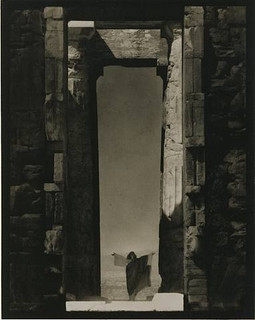
Edward Steichen’s amazing 1921 portrait of dance icon Isadora Duncan beneath a massive arch of the Parthenon in Greece, an image which recently surged to the top of my mind. See a link to a larger view of this shot, below.
By MICHAEL PERKINS
THE IMAGES SIT AT THE BOTTOM OF THE BRAIN, LIKE STONE PILLARS IN THE FOUNDATION OF AN IMMENSE TOWER.The structures erected on top of them, those images we ourselves have fashioned in memory of these foundations, dictate the height and breadth of our own creative edifices. Between these elemental pictures and what we build on top of them, we derive a visual style of our own.
In my own case,many of the pillars that hold up my own house of photography come from a single man.
Edward Steichen is arguably the greatest photographer in history. If that seems like hyperbole, I would humbly suggest that you take a reasonable period of time, say, oh, twenty years or so, just to lightly skim the breadth of his amazing career….from revealing portraits to iconic product shots to nature photography to street journalism and half a dozen other key areas that comprise our collective craft of light writing. His work spans the distance from wet glass plates to color film, from the Edwardian era to the 1960’s, from photography as an insecure imitation of painting to its arrival as a distinct and unique art form in its own right.
At the start of the 20th century, Steichen co-sponsored many of the world’s first formal photographic galleries, and was a major contributor to Camera Work, the first serious magazine dedicated wholly to photography. He ended his career as the creator of the legendary Family Of Man, created in the early 1950’s and still the most celebrated collection of global images ever mounted anywhere on earth. He is, simply, the Moses of photography, towering above many lesser giants whose best work amounts to only a fraction of his own prodigious output.
Which is why I sometimes see fragments of what he saw when I view a subject. I can’t see with his clarity, but through the milky lens of my own vision I sometime detect a flashing speck of what he knew on a much larger scale, decades before. The image at left recently rocketed to my mind’s eye several weeks ago, as I was framing shots inside a large government building in Ohio.In 1921, Steichen journeyed to Greece to use the world’s oldest civilization basically as a prop for portraits of Isadora Duncan, then in the forefront of American avant-garde dance. Framing her at the bottom of an immense arch in the ruins of the Parthenon, he made her appear majestic and minute at the same time, both minimized and deified by the huge proportions in the frame. It is one of the most beautiful compositions I have ever seen, and I urge you to click the Flickr link at the end of this post for a slightly larger view of it. (Also note the link to a great overview of Steichen’s life on Wikipedia.)
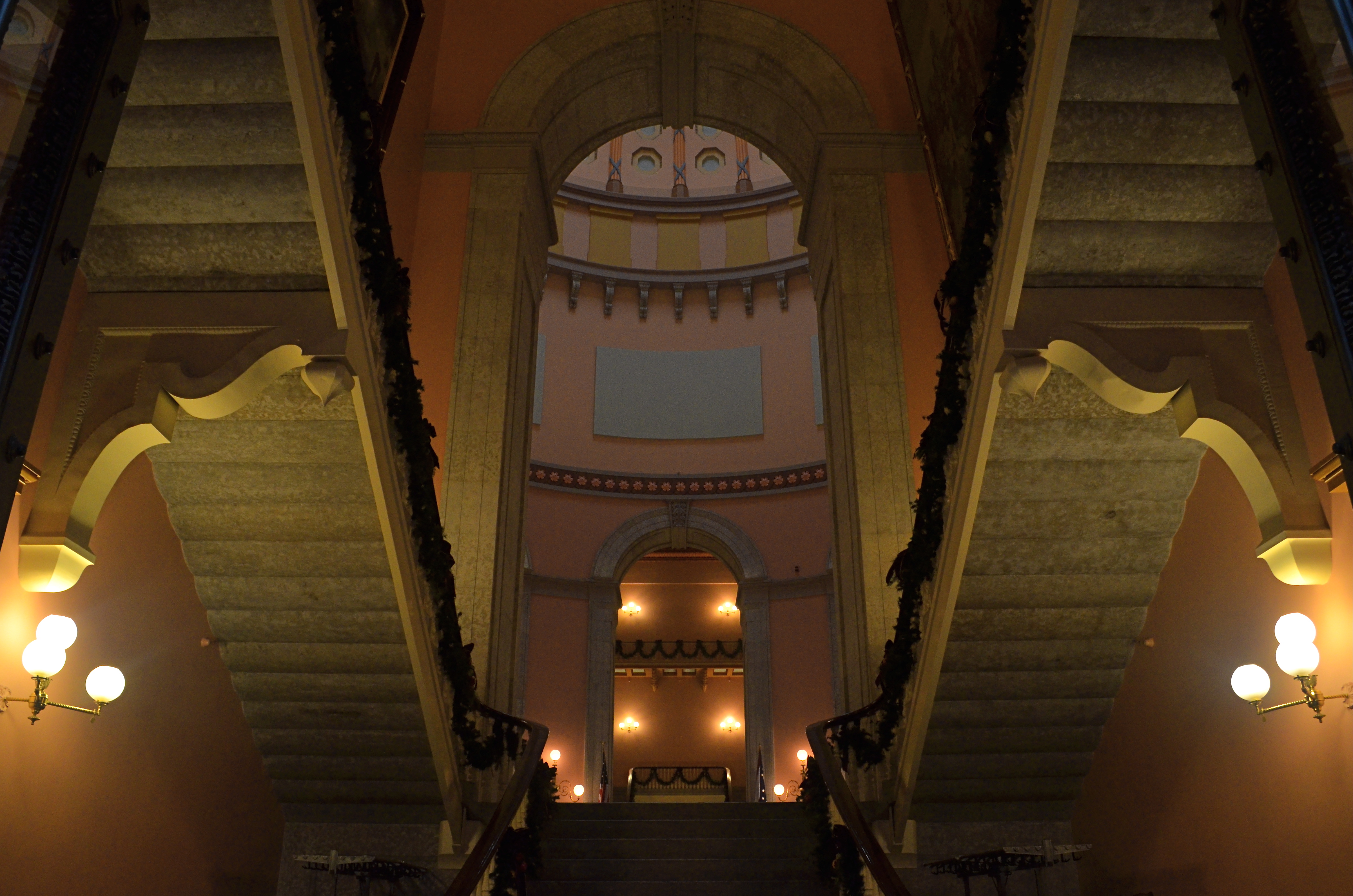
Uplighting creates a moody frame-within-frame feel at the Ohio Statehouse building, in a shot inspired by Edward Steichen’s images of massive arches. 1/30 sec., f/8, ISO 800, 18mm.
In framing a similarly tall arch leading into the rotunda of the Ohio Statehouse in Columbus, I didn’t have a human figure to work with, but I wanted to show the building as a series of major and minor access cavities, in, around, under and through one of its arched entrance to the central lobby. I kept having to back up and step down to get at least a partial view of the rotunda and the arch at the opposite end of the open space included in the frame, which created a kind of left and right bracket for the shot, now flanked by a pair of staircases. Given the overcast sky meekly leaking grey light into the rotunda’s glass cupola, most of the building was shrouded in shadow, so a handheld shot with sufficient depth of field was going to call for jacked-up ISO, and the attendant grungy texture that remains in the darker parts of the shot. But at least I walked away with something.
What kind of something? There is no”object” to the image, no story being told, and sadly, no dancing muse to immortalize. Just an arrangement of color and shape that hit me in some kind of emotional way. That and Steichen, that foundational pillar, calling up to me from the basement:
“Just take the shot.”
Related articles
- The Photograph as a Social Statement (halsmith.wordpress.com)
- Picture Imperfect (andrewsullivan.thedailybeast.com)
- http://www.flickr.com/photos/quelitab/5793648357/lightbox/
- http://en.wikipedia.org/wiki/Edward_Steichen
TURNING UP THE MAGIC
By MICHAEL PERKINS
CHRISTMAS IS SO BIG THAT IT CAN AFFORD TO GO SMALL. Photographers can, of course, tackle the huge themes….cavernous rooms bursting with gifts, sprawling trees crowning massive plazas, the lengthy curve and contour of snowy lanes and rustic rinks…..there are plenty of vistas of, well, plenty. However, to get to human scale on this most superhuman of experiences, you have to shrink the frame, tighten the focus to intimate details, go to the tiny core of emotion and memory. Those things are measured in inches, in the minute wonder of things that bear the names little, miniature, precious.
And, as in every other aspect of holiday photography, light, and its successful manipulation, seals the deal.
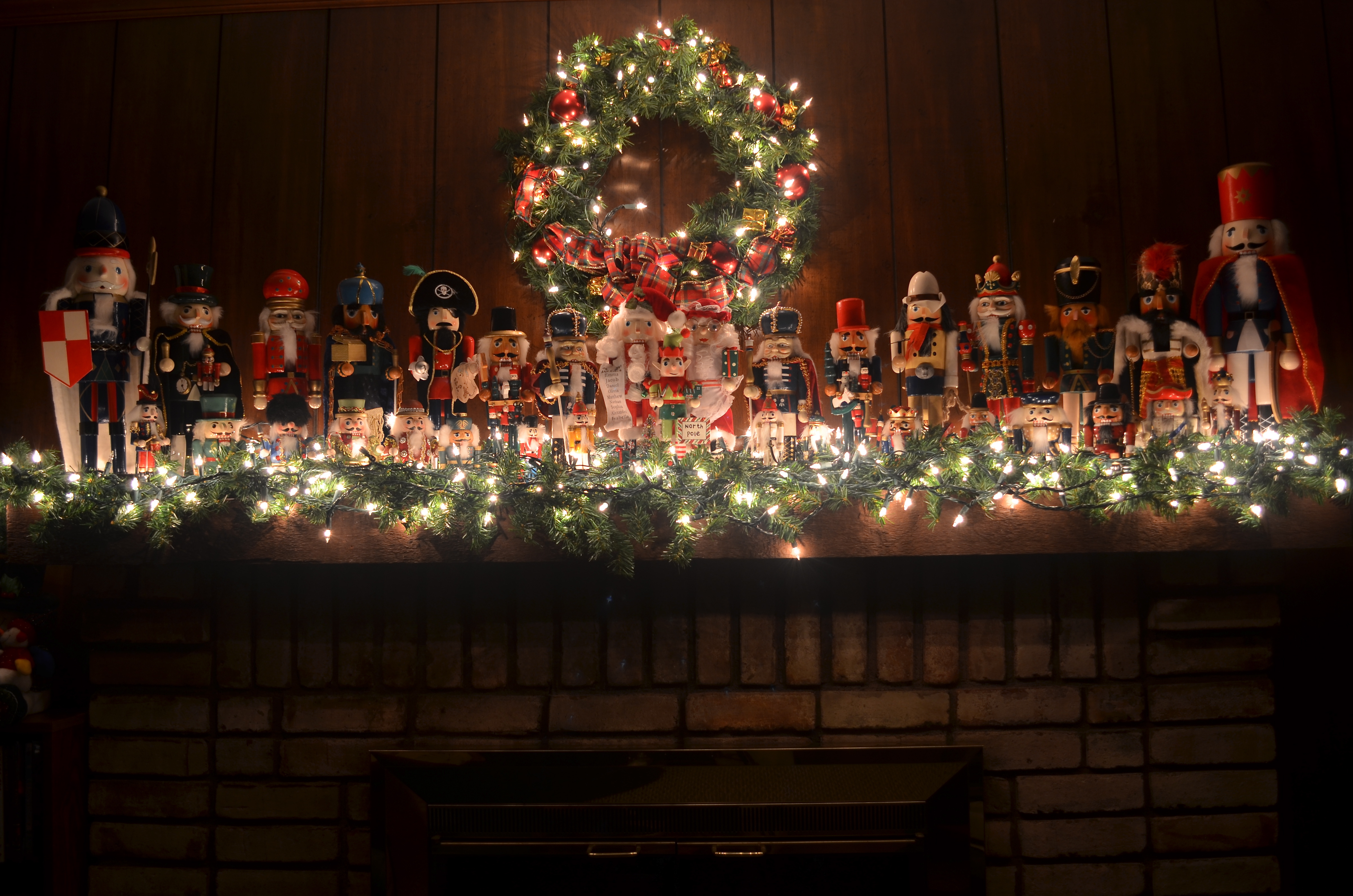
A proud regiment of nutcrackers, made a little more enchanting by turning off the room light and relying on tiny twinklers. 1/2 sec., f/4, ISO 100, 20mm
In recent years I have turned away from big rooms and large tableaux for the small stories that emanate from close examination of corners and crannies. The special ornament. The tiny keepsake. The magic that reveals itself only after we slow down, quiet down, and zoom in. In effect, you have to get close enough to read the “Rosebud” on the sled.
Through one life path and another, I have not been “home” (that is, my parents’ home) for Christmas for many years now. This year, I broke the pattern to visit early in December, where the airfare was affordable, the overall scene was less hectic and the look of the season was visually quiet, if no less personal. It became, for me, a way to ease back into the holidays as an experience that I’d laid aside for a long time.
A measured re-entry.
I wanted to eschew big rooms and super-sized layouts to concentrate on things within things, parts of the scene. That also went for the light, which needed to be simpler, smaller, just enough. Two things in my parents’ house drew me in: several select branches of the family tree, and one small part of my mother’s amazing collection of nutcrackers. In both cases, I had tried to shoot in both daylight and general night-time room light. In both cases, I needed some elusive tool for enhancement of detail, some way to highlight texture on a very muted scale.
Call it turning up the magic.
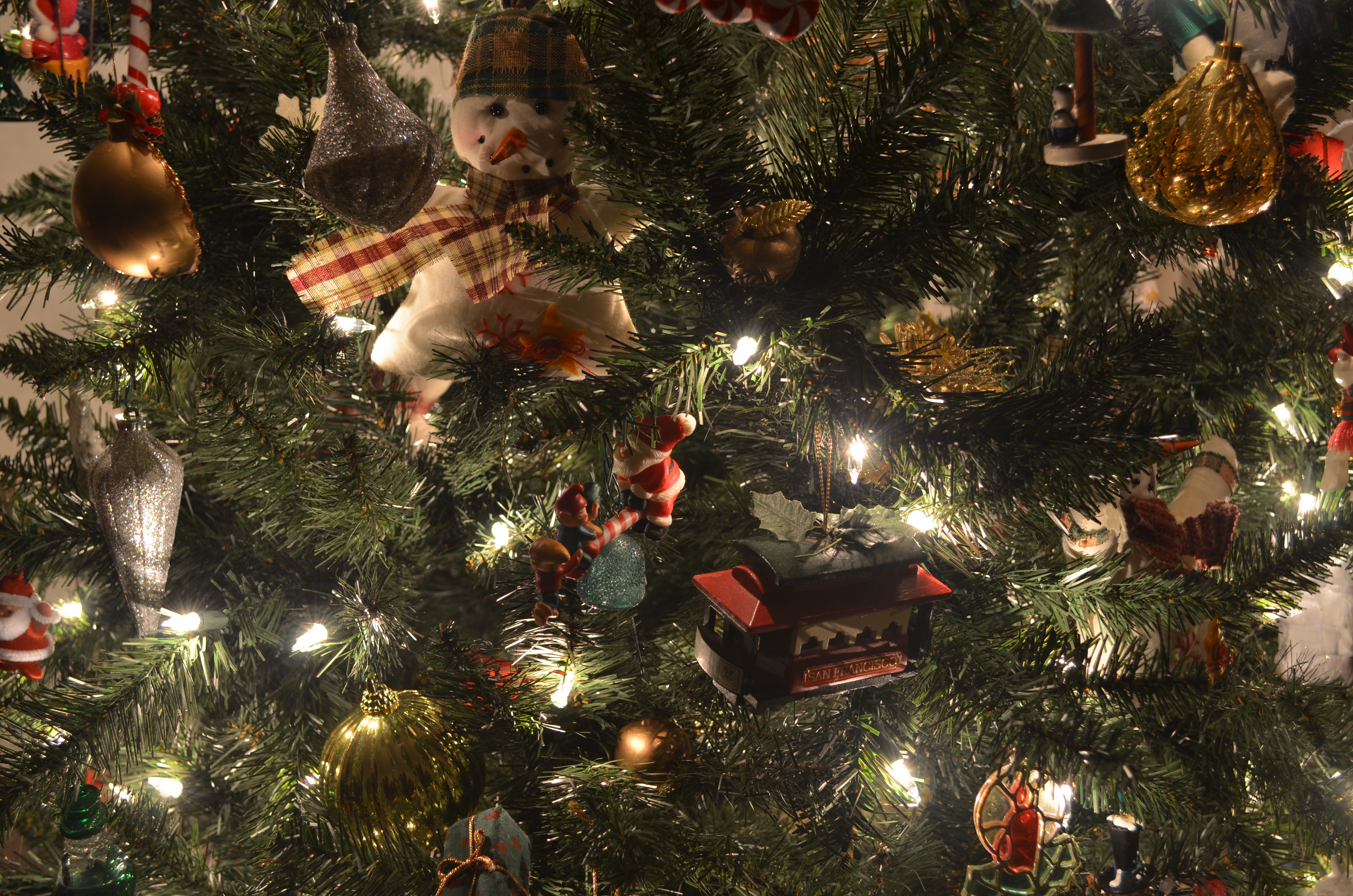
Use of low-power, local light instead of general room ambience enhances detail in tiny objects, revealing their textures. 1/2 sec., f/4, ISO 100, 20mm.
As it turned out, both subjects were flanked by white mini-lights, the tree lit exclusively by white, the nutcrackers assembled on a bed of green with the lights woven into the greenery. The short-throw range of these lights was going to be all I would need, or want. All that was required was to set up on a tripod so that exposures of anywhere from one to three seconds would coax color bounces and delicate shadows out of the darkness, as well as keeping ISO to an absolute minimum. In the case of the nutcrackers, the varnished finish of many of the figures, in this process, would shine like porcelain. For many of the tree ornaments, the looks of wood, foil, glitter, and fabric were magnified by the close-at-hand, mild light. Controlled exposures also kept the lights from “burning in” and washing out as well, so there was really no down side to using them exclusively.
Best thing? Whole project, from start to finish, took mere minutes, with dozens of shots and editing choices yielded before anyone else in the room could miss me.
And, since I’d been away for a while, that, along with starting a new tradition of seeing, was a good thing.
Ho.
Related articles
- How to Take a Picture of Your Christmas Tree (purdueavenue.com)
ONE LESS MESS TO SWEAT
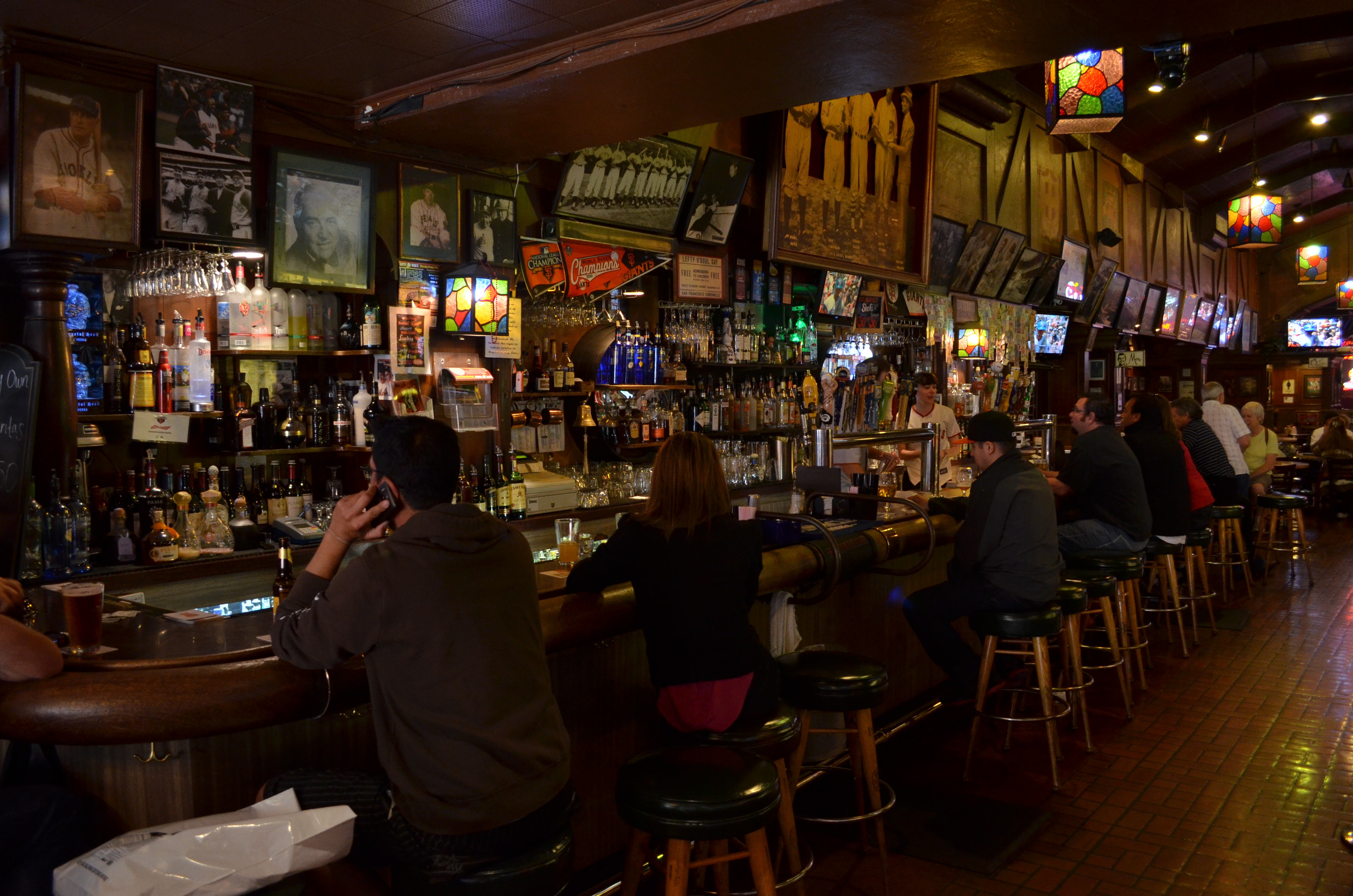
Lefty O’Doul’s bar, near Union Square in San Francisco. Lovely place, great grub, but a dark cavern where light goes to die. Modern DSLRs allow this to be a handheld shot with a minimum of noise: 1/20 sec., 5/5, ISO 640, 18mm.
by MICHAEL PERKINS
EVERY TIME I READ SINCERE ARGUMENTS FOR THE SUPERIORITY OF FILM OVER DIGITAL, the debate seems a little more lopsided on the side of sentiment than on the side of reason. The whole thing can make me a little….tired. As I write this, Arizona Highways has just released its annual collection of the fifty best images ever published in that august standard of print photography, and, yep, you guessed it, only about the last three images are digital. It’s an aesthetic bias which AH will only abandon once the entire rest of the world regards film as a quaint artifact of The Good Ole Days, but, God bless ’em, they are true believers. As for myself, I am in no huge hurry to see film go the way of the Hostess Twinkie. However, I do readily admit that it’s my heart casting that vote, and not my head.
Emulsions or pixels? Your preference still comes down to what you need to do and how you need to do it. That means that many of us will choose one medium or the other because it either enables or constricts our art…..in other words, a simply practical judgement, not one based on our fondness for what we are used to. Earlier this year, I applauded National Public Radio’s commemoration of the 150th anniversary of the battle of Antietam (one of the first Civil War skirmishes to be photographically documented), by commissioning their own photog to shoot some of the same battle sites as Alexander Gardner had done in 1862, using the same kind of coated glass plate process. Were the results fascinating? Certainly. Are they likely to create a run on camera stores for collodion? Don’t hold your breath.
Photography is a constant process of knocking down more obstacles between what you are shooting at and the imagination you are shooting with. You need to keep the camera from fighting you, due to its inability to react, think, discriminate or judge the way that only you can. To that end, you have to be in a constant flow of improvement, simply because your mind is always traveling on a faster track than even the best camera, and that instrument must be corralled into helping, and not hindering, the task of getting your vision into that box.
One of the most helpful such advances for me has been the accelerated performance of DSLRs in low-light situations and the improvement in picture quality at increasingly higher ISO settings. In the film world of “ago”, if you wanted to shoot at 800 speed ASA, you had to have a camera loaded with 800 speed film. If you then, five minutes later, wanted to shoot at 100 speed ASA you would need to reload your camera with that speed of film, or have a whole separate camera that was loaded with it. And so on.
Not the best for flexibility. Or spontaneity.
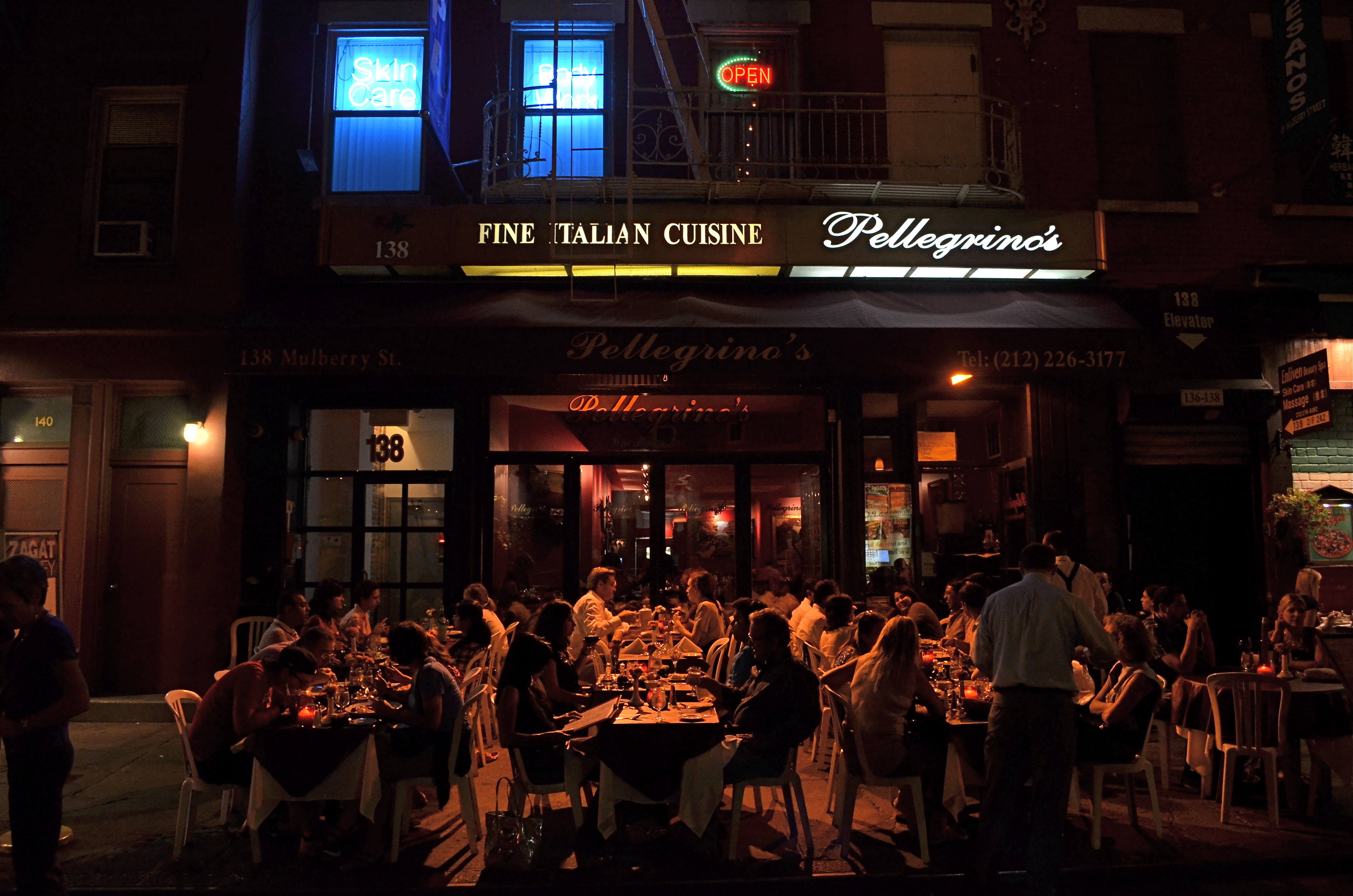
Pellegrino’s Restaurant, Little Italy, New York City. Handheld. Street photography gets an amazing boost from cameras that feed on low light. 1/50 sec., f/5.6, ISO 640, 18mm.
This rocketing forward of the technology that gives us sharp, nearly noise-free pictures, handheld and at fast exposure times, in all but the most hopeless lighting scenarios, is now filtering down to even the most rudimentary camera phones.It’s not alarmist or false to declare that the days of the compact point-and-shoot are officially numbered. With ISO now delivering better results in so many shooting situations, I can now go nearly anywhere and have a shot at getting a shot. That puts me at a distinct advantage over the most proficient shooters and the best cameras of barely a generation ago.
Does that guarantee I’ll bring back a winner? Nope. But the point is, more and more, if I don’t get the shot, it’s on me. I can’t blame my failure on balky technology, at least not in this particular case.
And it means I can spend more time shooting, dreaming, doing, instead of crossing my fingers and hoping.
Related articles
- Camera+ 3.6 is here: “It’s a camera, not a flight simulator!” (taptaptap.com)
- Is a DSLR right for you? (fatwallet.com)
LOOK THROUGH ANY WINDOW, PART TWO
By MICHAEL PERKINS
I WILL DO ANYTHING TO PHOTOGRAPH BOOKSTORES. Not the generic Costco and Wal-Mart bargain slabs laden with discounted bestsellers. Not the starched and sterile faux-library air of Barnes & Noble. I’m talking musty, dusty, crammed, chaotic collections of mismatched, timeless tomes…. “many a quaint and curious volume of forgotten lore” as Poe labeled them. I’m looking for places run by dotty old men with their glasses high on their forehead, cultural salvage yards layered in multiple stories of seemingly unrelated offerings in random stacks and precarious piles. Something doomed by progress, and beautiful in its fragility.
I almost missed this one.
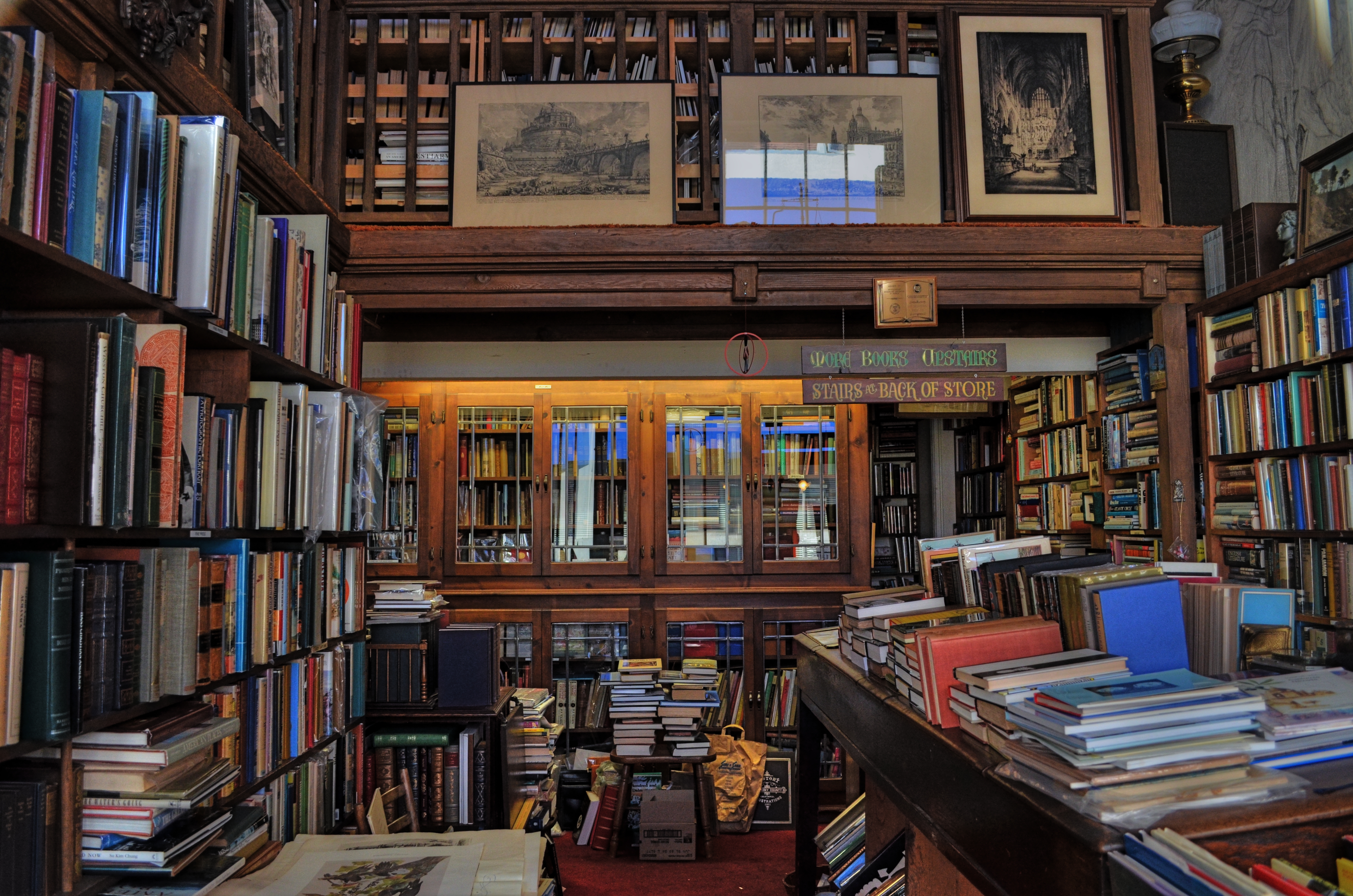
Through the window, and into a forgotten world. A fake two-shot HDR from a single exposure at 1/80 sec., f/5, ISO 400, 18mm.
In my last post, I commented that, even when your photography is rules-based….i.e., always do this, never do that, there are times when you have to shoot on impulse alone and get what you can get. It sometimes begins when you’re presented with something you’re not, but should be, looking for. A few weeks ago, I was spending the afternoon at one of Monterey, California‘s most time-honored weekly rituals..the marvelous, multi-block farmers’ market along Alvarado Street. The sheer number of vendors dictates that some of the booths spill over onto the side streets, and that’s where I found The Book Haven. The interior of the store afforded an all-in-one view of its entire sprawling inventory, but the crush of tourists bustling in and out of its teeny front door meant that any image was going to look like the casting call for The Ten Commandments.
I had to come back, when both the store and I were alone.
With the limited amount of time I had in town, that meant that I would have to stroll by just hours ahead of my plane for home. Heading out at 8:30 in the morning, I had obviously solved the problem of “too many people in the picture”, but I had traded that hassle for a new one: the store would not be open for another three hours.
For the second time in a week (see “Look Through Any Window, Part One”) I was forced to shoot through a window, but at least there was enough light inside to illuminate nearly all of the store’s interior. To avoid a reflection, I would have to cram my lens right up against the glass. Once my autofocus stopped fidgeting, I could only obtain the framing I wanted by shooting through a narrow open place on the center of the front door, standing on tiptoe to hold the composition. I also had to keep the ISO dialed low enough to not create extra noise, but high enough so I could take a fairly fast handheld exposure and get as much detail from the dark corners as possible. Balancing act.
Let’s see what happens.
In viewing the image later, I saw that there wasn’t enough detail to suit me, either in the individual books or the darker spaces around the store, so I pulled a small cheat. Making a copy of the shot, I pulled down the contrast, boosted the exposure, and sucked out some shadow, then loaded both shots into Photomatix, fooling the HDR program into thinking they were two separate exposures. Photomatix is also a detail enhancer program, so I could add sharper textures to the books and a richer range of tones than were seen in the original through-the-window shot.
Hey, you can’t have it all, but, by at least trying, you get more than nothing.
And sometimes that’s everything.
Nice bookstore.
LOOK THROUGH ANY WINDOW, PART ONE
By MICHAEL PERKINS
THE COMMON THREAD ACROSS ALL THE PHOTO HOW-TO BOOKS EVER WRITTEN IS A WARNING: don’t let all the rules we are discussing here keep you from making a picture. Standardized techniques for exposure, composition, angle, and processing are road maps, not the Ten Commandments. It will become obvious pretty quickly to anyone who makes even a limited study of photography that some of the greatest pictures ever taken color outside the classical lines of “good picture making.” The war photo that captures the moment of death in a blur. The candid that cuts off half the subject’s face. The sunset with blown-out skies or lens flares. Many images outside the realm of “perfection” deliver something immediate and legitimate that goes beyond mere precision. Call it a fist to the gut.
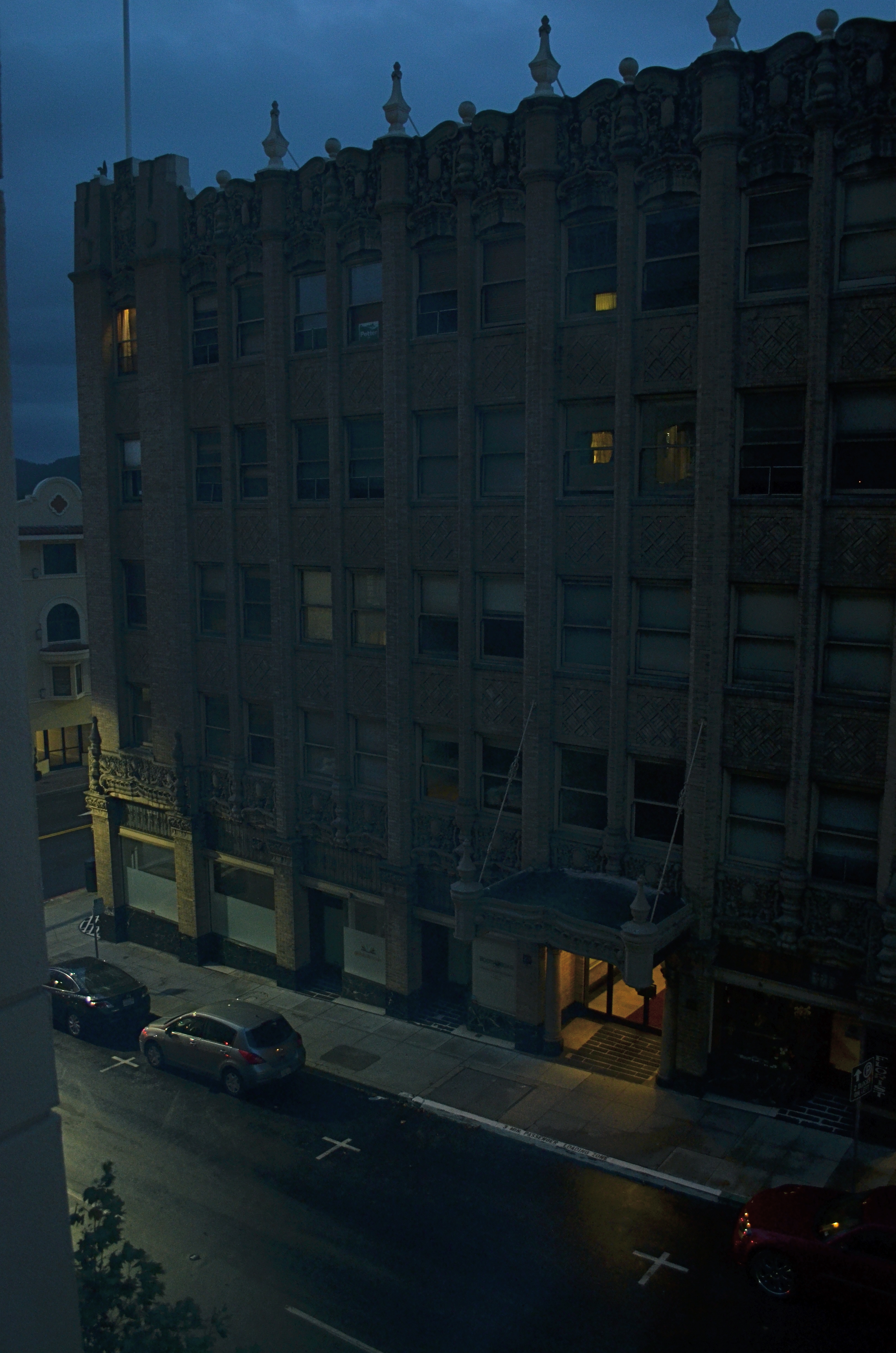
The dawn creeps slowly in on the downtown streets of Monterey, California. A go-for-broke window shot taken under decidedly compromised conditions. 1/15 sec., f/3.5, ISO 640, 18mm.
Conversely, many technically pristine images are absolutely devoid of emotional impact, perfect executions that arrive at the finish line minus a soul. Finally, being happy with our results, despite how far they are from flawless is the animating spirit of art, and feeling. This all starts out with a boost of science, but it ain’t really science at all, is it? If it were, we could just send the camera out by itself, a heart-dead recording instrument like the Mars lander, and remove ourself from the equation entirely.
Thus the common entreaty in every instruction book: shoot it anyway. The only picture that is sure not to “come out” is the one you don’t shoot.
The image at left, of a business building in downtown Monterey, California was almost not taken. If I had been governed only by general how-to rules, I would have simply decided that it was impossible. Lots of reasons “not to”; shooting from a high hotel window at an angle that was nearly guaranteed to pick up a reflection, even taken in a dark room at pre-dawn; the need to be too close to the window to mount a tripod, therefore nixing the chance at a time exposure; and the likelihood that, for a hand-held shot, I would have to jack the camera’s ISO so high that some of the darker parts of the building would be the smudgy consistency of wet ashes.
Still, I couldn’t walk away from it. Mood, energy, atmosphere, something told me to just shoot it anyway.
I didn’t get “perfection”. That particular ideal had been yanked out of my reach, like Lucy pulling away Charlie Brown’s football. But I am glad I tried. (Click on the image to see a more detailed version of the result)
In the next post, a look at another window that threatened to hold a shot hostage, and a solution that rescued it.
Related articles
- 7 Ways to Inject More Creativity Into Your Photos (blogworld.com)
 thenormaleye