SEE DICK THINK.
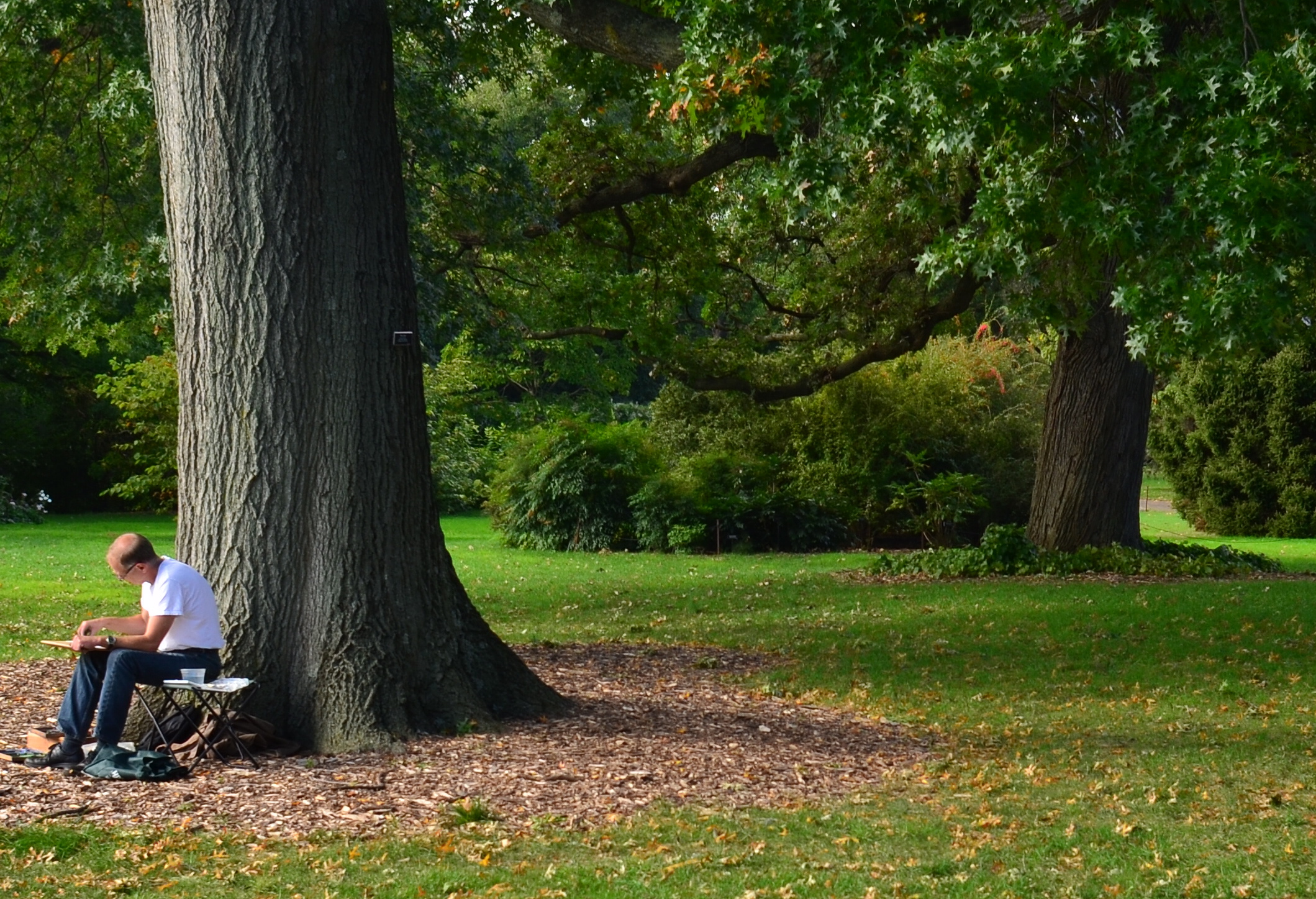
Slow yourself down by shooting someone who is slowing himself down.
By MICHAEL PERKINS
FORGET BLOWN EXPOSURES, SHAKY SNAPSHOTS, AND FLASH-SATURATED BLIZZARDS. The hardest thing to avoid in the taking of a picture is winding up with a picture full of other people taking a picture. Hey, democracy in art, power to the people, give every man a voice, yada yada. But how has it become so nearly impossible to keep other photographers from leaning in, crossing through, camping out or just plain clogging up every composition you attempt?
And is this really what I’m irritated about?
Maybe it’s that we can all take so many pictures without hesitation, or, in many cases, without forethought or planning, that the exercise seems to have lost some of its allure as a deliberate act of feeling/thinking/conceiving. Or as T.S. Elliot said, it’s not sad that we die, but that we die so dreamlessly. It’s enough to make you seek out things that, as a photographer, will actually force you to slow down, consider, contemplate.
And one solution may lie in the depiction of other people who are, in fact, taking their time, creating slowly, measuring out their enjoyment in spoonfuls rather than buckets. I was recently struck by this in a visit to the beautiful Brooklyn Botanical Gardens on a slow weekday muted by overcast. There were only a few dozen people in the entire place, but a significant number of those on hand were painters and sketch artists. Suddenly I had before me wonderful examples of a process which demanded that things go slowly, that required the gradual evolution of an idea. An anti-snapshot, if you will. And that in turn slowed me down, and helped me again make that transition from taking pictures to making them.
Picturing the act of thought, the deep, layered adding and subtracting of conceptual consequence, is one of the most rewarding things in street photography. Seeing someone hatch an idea, rather than smash it open like a monkey with a cocoanut does more than lower the blood pressure. It is a refresher course in how to restore your own gradual creativity.
MAKING LIGHT OF THE SITUATION
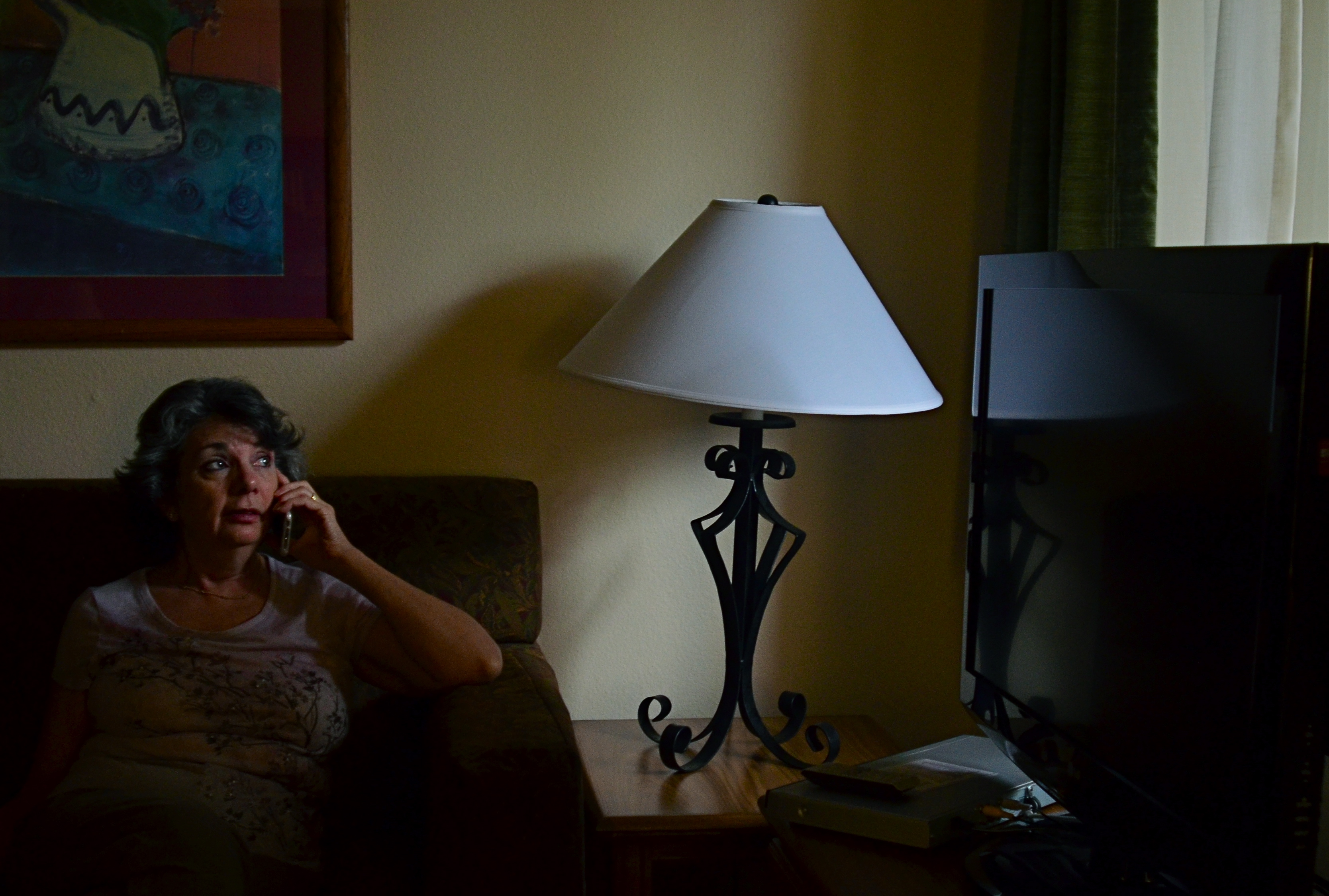
One lady, one source of light, one shot: 1/40 sec., f/1.8, ISO 640, 35mm.
BY MICHAEL PERKINS
IN PORTRAITS, PHOTOGRAPHERS SOMETIMES HAVE TO SUBSTITUTE INTIMACY FOR TECHNICAL PERFECTION. We understandably want to come as near as possible to meticulously modulated light in telling the story of a face, and so we try to ride the line between natural, if inadequate light, and light which is shaped so much that we dull the naturalness of the moment.
It’s a maddening tug of war. If we don’t intervene, we might make an image which is less than flattering, or, worse, unfit for publication. If we nib in too much, we get a result whose beauty can border on the sterile. I find that, more often than not, I lean toward the technically limited side, choosing to err in favor of a studied snapshot rather than a polished studio look. If the face I’m shooting is giving me something real, I worry more about throwing a rock into that perfect pond with extra tinkering.
If my subject is personally close to me, I find it harder, not easier, to direct them, lest the quality I’m seeing in their natural state be replaced by a distancing self-consciousness. It puts me in the strange position of having to wait until the situation all but gifts me with the picture, as adding even one more technical element can endanger the feel of the thing. It’s times like this that I’m jammed nose-up against the limits of my own technical ability, and I feel that a less challenged shooter would preserve the delicacy of the situation and still bring home a better photograph.
In the above frame, the window light is strong enough to saturate the central part of my wife’s face, dumping over three-fourths of her into deep shadow. But it’s a portrait. How much more do I need? Would a second source of light, and the additional detail it would deliver on the left side of her head be more “telling” or merely be brighter? I’m lucky enough in this instance for the angle of the window light to create a little twinkle in her eye, anchoring attention in the right place, but, even at a very wide aperture, I still have to crank ISO so far that the shot is grainy, with noise reduction just making the tones flatter. It’s the old trade-off. I’m getting the feel that I’m after, but I have to take the hit on the technical side.
Then there was the problem that Marian hates to have her picture taken. If she hadn’t been on the phone, she would already have been too aware of me, and then there goes the unguarded quality that I want. I can ask a model to “just give me one more” or earn her hourly rate by waiting while I experiment. With the Mrs., not so much.
Here’s what it comes down to: sometimes, you just have to shoot the damned thing.
TESTIMONY
by MICHAEL PERKINS
I SEE MANY, MANY HOMELESS PEOPLE THESE DAYS. Sometimes on
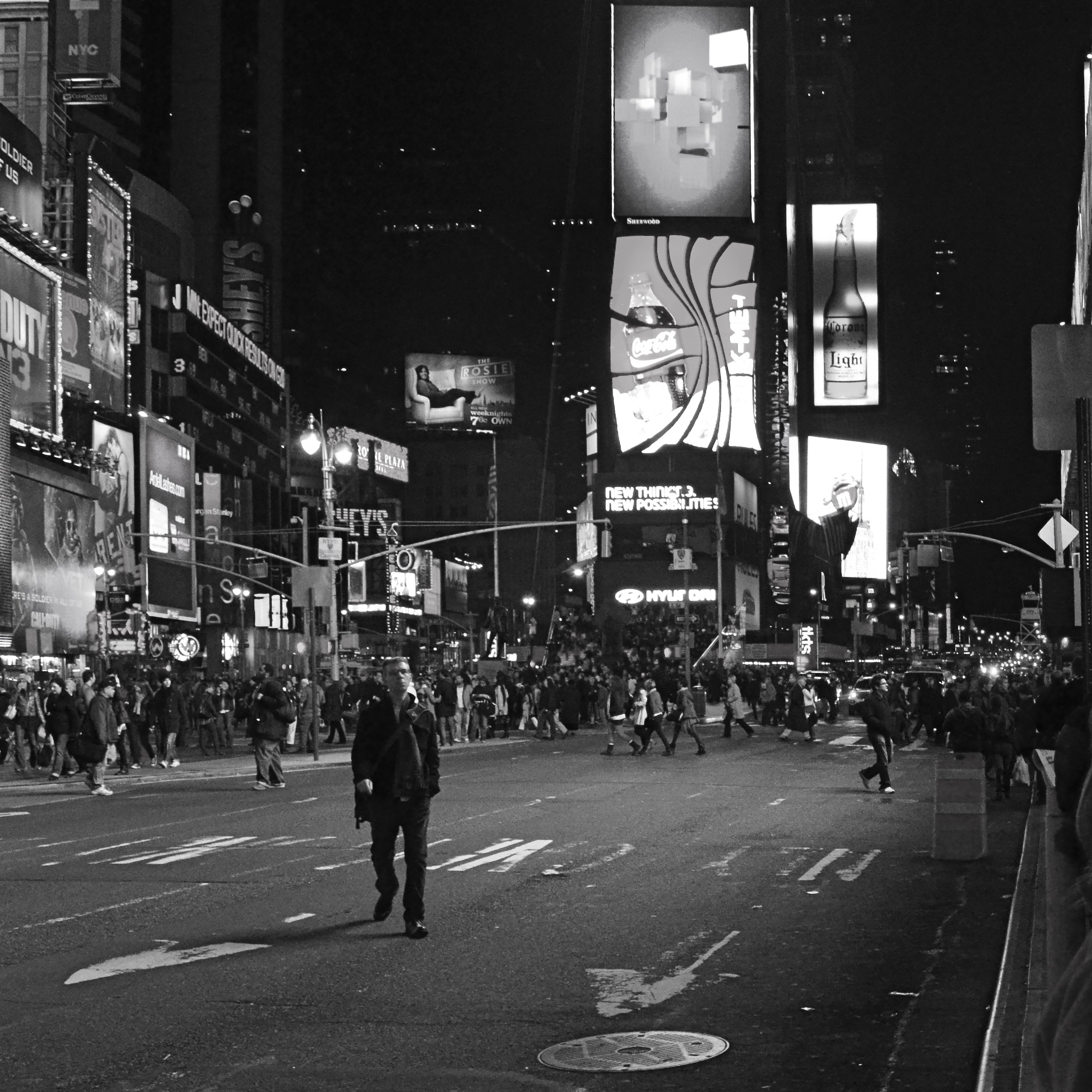
People are not merely props.
the streets of my home city. More occasionally on the streets of other towns. And every single day, without fail, on every photo upload site in the world. Many of the uploaders think this is “street photography”.
Many of the uploaders need to think again. Hard.
The mere freezing in a frame of someone whose lousy luck or bad choices have placed him on the street is not, of and by itself, some kind of visual eloquence. Not that it can’t be, if some kind of story, or context, or statement accompanies the image of a person driven to desperation. But not the careless and heedless snaps that are, I will say, stolen, at people’s expense, every day, then touted as art of some kind. The difference, as always, is in the eye of the photographer.
Many millions of people have been “captured” in photographs with no more revelatory power than a fire hydrant or a tree, and just catching a person unawares with your camera is no guarantee that we will understand him, learn what landed him here, care about his outcome. That’s on you as a photographer.
If all you did was wait until someone was fittingly juxaposed with a row of garbage cans, a grimy brick wall, or an abandoned slum, then lazily clicked, you have contributed nothing to the discussion. Your life, your empathy, your sense of loss or justice….all must interact with your shutter finger, or you have merely committed an act of exploitation. Oh, look at the poor man. Aren’t I a discerning and sensitive artist for alerting humanity to this dire issue?
Well, maybe. But maybe not. Photographs are conversations. If you don’t hold up your end of it, don’t expect the world to pick up the slack. If you care, then make sure we care. After all, you’ve appropriated a human being’s image for your own glory. Make sure he gave that up for something.
TAKE ME OUT TO THE “ALL” GAME
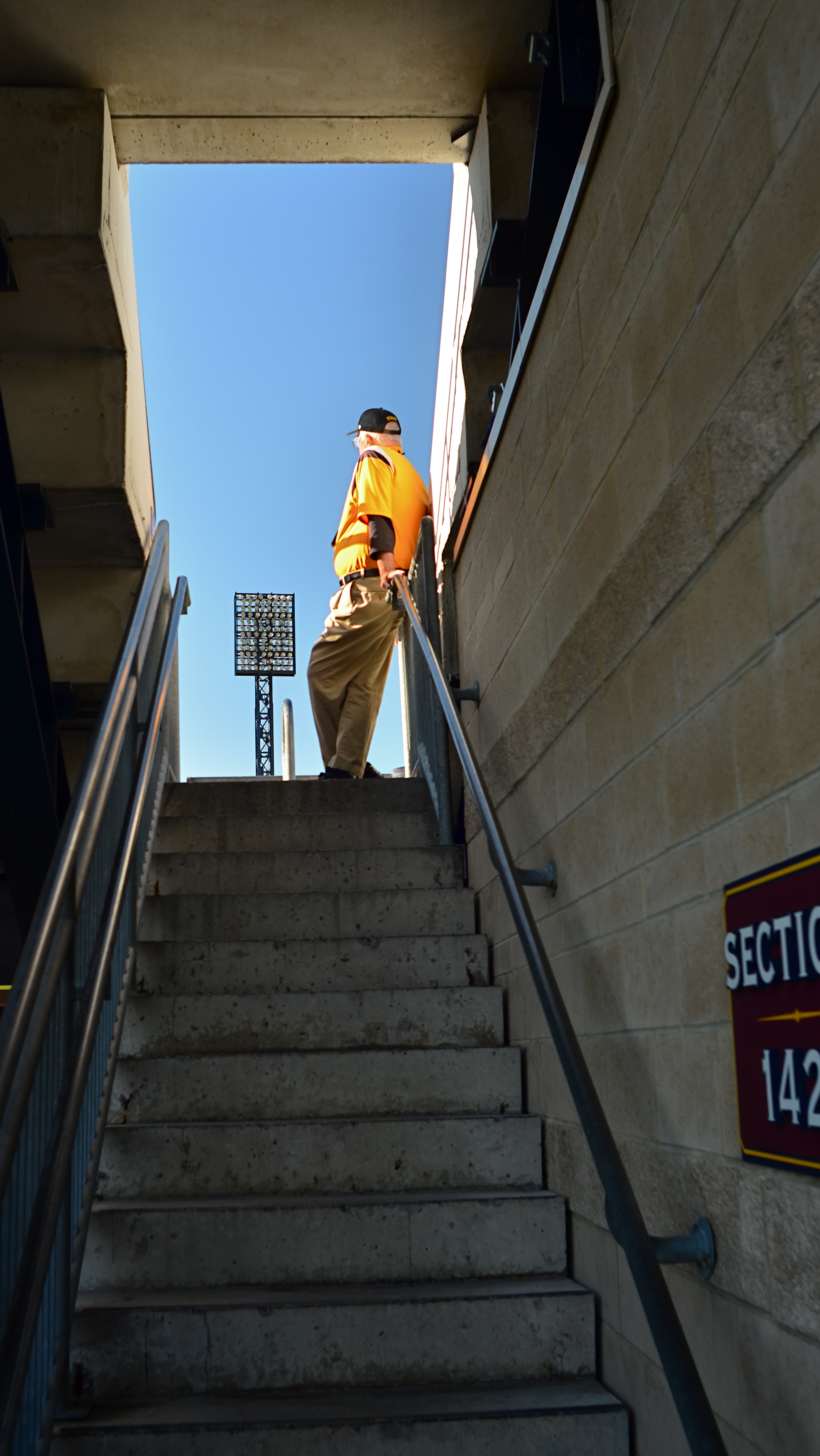
Baseball is a game about anticipation. Photos of it should show that feeling as well.
By MICHAEL PERKINS
YOU SEE RIDICULOUS ARTICLES FROM TIME TO TIME claiming that baseball has been replaced as America’s Pastime. Such spurious scribblings invariably point to game attendance, TV ratings, or some other series of metrics that prove that football, basketball, and, who knows, strip Scrabble have reduced baseball to some quaint state of irrelevancy. All such notions are mental birdpoop for one salient reason. No one is giving due attention to the word pastime.
Not “passion”. Not “madness”. Not even “loyalty”. Pastime. A way of letting the day go by at a leisurely pace. A way to gradually unfurl afternoons like comfy quilts. People-watching. Memory. Sentiment. Baseball is for watchers, not viewers, something that television consistently fails to realize. It’s the stuff that happens in the pauses, of which the game has plenty. Enjoying baseball, and photographing it as an experience, is about what happens in the cracks.
Images are waiting to be harvested in the dead spots between pitching changes. The wayward treks of the beer guys. The soft silence of anticipatory space just before the crack of a well-connected pitch. TV insists on jamming every second of screen time-baseball with replays, stat tsunamis, and analysis. Meanwhile, “live”, in the stadium, the game itself is only part of the entertainment. Sometimes, it actually drops back to a distant second.
Only a small percentage of my baseball pictures are action shots from the field: most are sideways glances at the people who bring their delight, their dreams, and their drama to the game. For me, that’s where the premium stories are. your mileage may vary. Sometimes it’s what’s about to happen that’s exciting. Sometimes it’s the games you remember while watching this one. There are a lot of human factors in the game, and only some of them happen between the guys in uniform.
Photography, as a pastime, affords a great opportunity to show a pastime. America’s first, best pastime.
It’s not just a ballgame. It’s an “all” game.
Root, root, root.
EAVES-EDITING
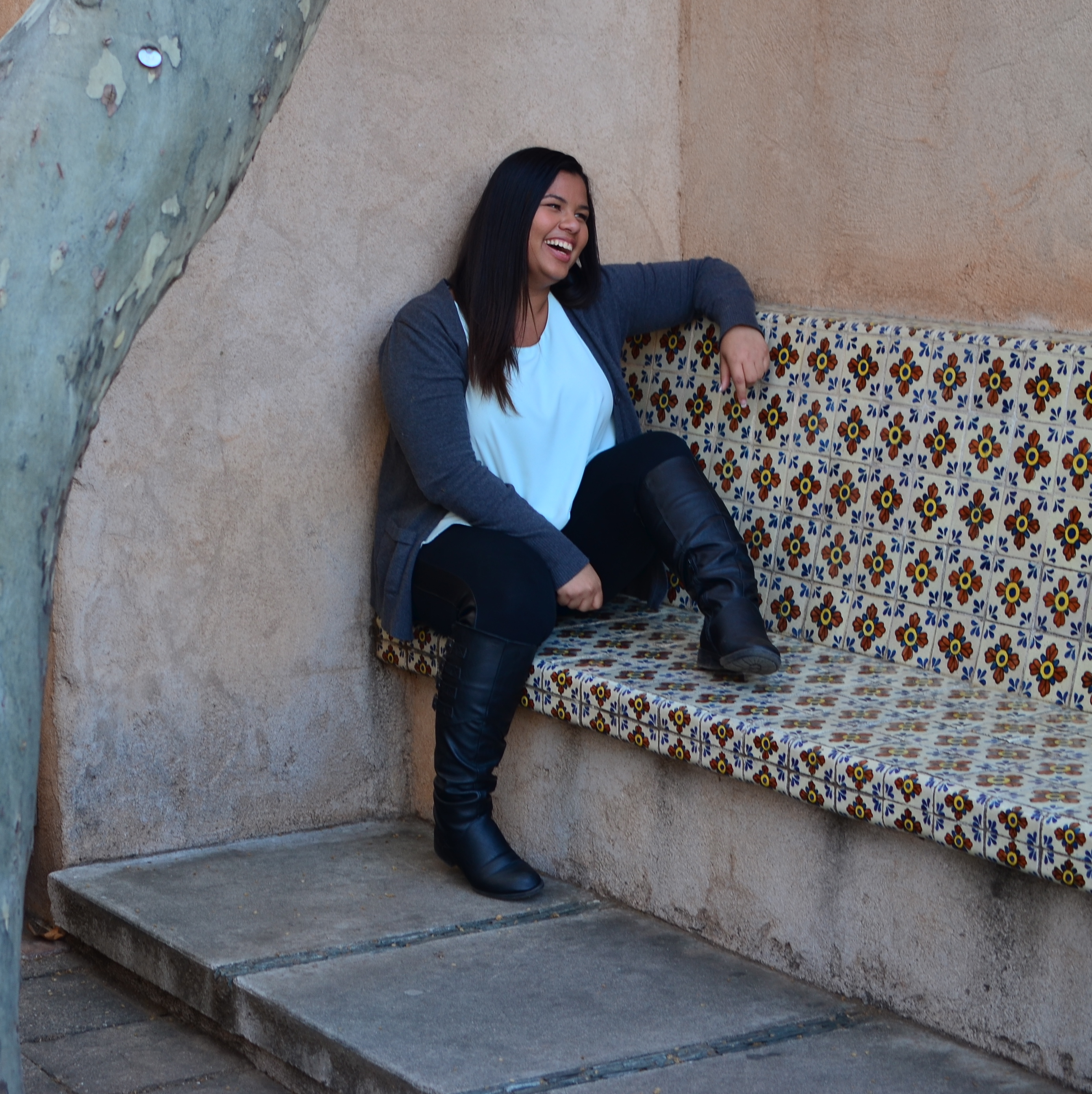
Anatomy Of A Laughing Fit: Going…
by MICHAEL PERKINS
ONE OF THE SIDE BENEFITS OF PHOTOGRAPHY is that you don’t always have to pick your own subject. Sometimes someone else’s idea of a potentially good image can be yours as well. You simply camp yourself right next to where they’re working and pick off your own shots of their project. Assuming that everyone’s polite and there are no issues of neighborly nibbing, it can work. Just ask anyone who’s clicked away at a presidential press conference or the sudden exit of a celebrity through a side entrance.
Of course, when literally dozens of cameras are trained on a single event, its likely that everyone will come away with the same photos, or very nearly. The moment the prime minister points to drive home his main point, click. The instant when the judges place the tiara on the winning Miss Tomato Paste candidate, click. Sometimes, however, you can kind of “eaves-edit” on just one other shooter’s set-up and edit the shots a different way than he does. You’re not running the session, but you could come away with a better result than he does, based on your choices.
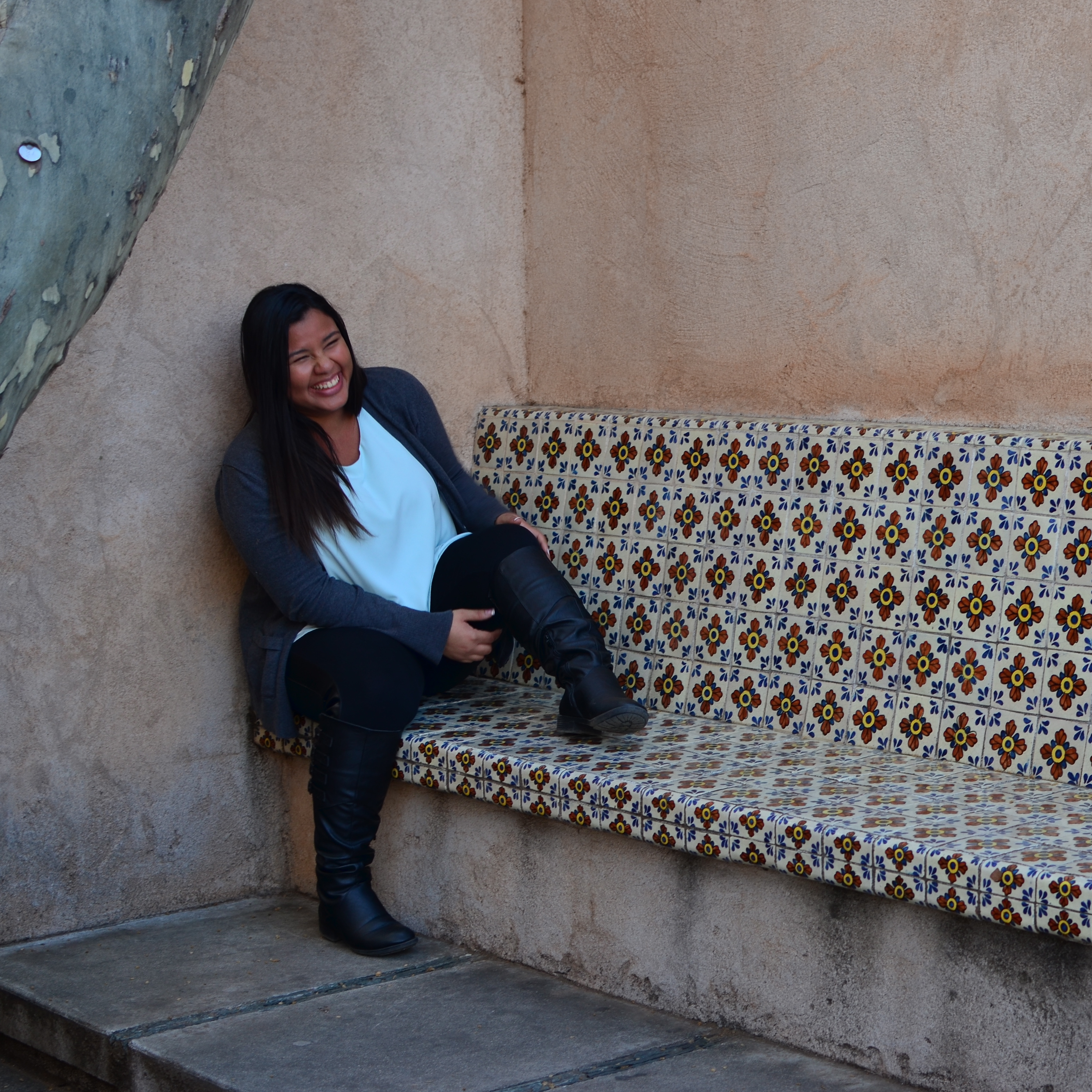
Going….
I recently came upon a man shooting a girl in the streets of a kind of faux-village retail environment in Sedona, Arizona. Obviously, the main feature was the lady’s infectious and natural smile. As I came quietly upon them, however, Mr. Cameraman was having a problem keeping that smile from exploding into a full-blown laughing fit. Ms. Subject, in short, had the mad giggles.
Now, from that point onward, I have no idea of what he went home with in the way of a final result, as I had decided that the crack-ups would make better pictures than a merely sweet set of candids. It just seemed more human to me, so I only shot the moments in which she couldn’t compose herself, and took off from there.
I didn’t want to overstay my welcome, so I snapped my little chunk of Mr. Cameraman’s moment and sneaked off, like fast. As I slinked away, I could still hear Ms. Subject telling him, through fits of laughter, “I am so sorry.” She may have been, but I wasn’t.
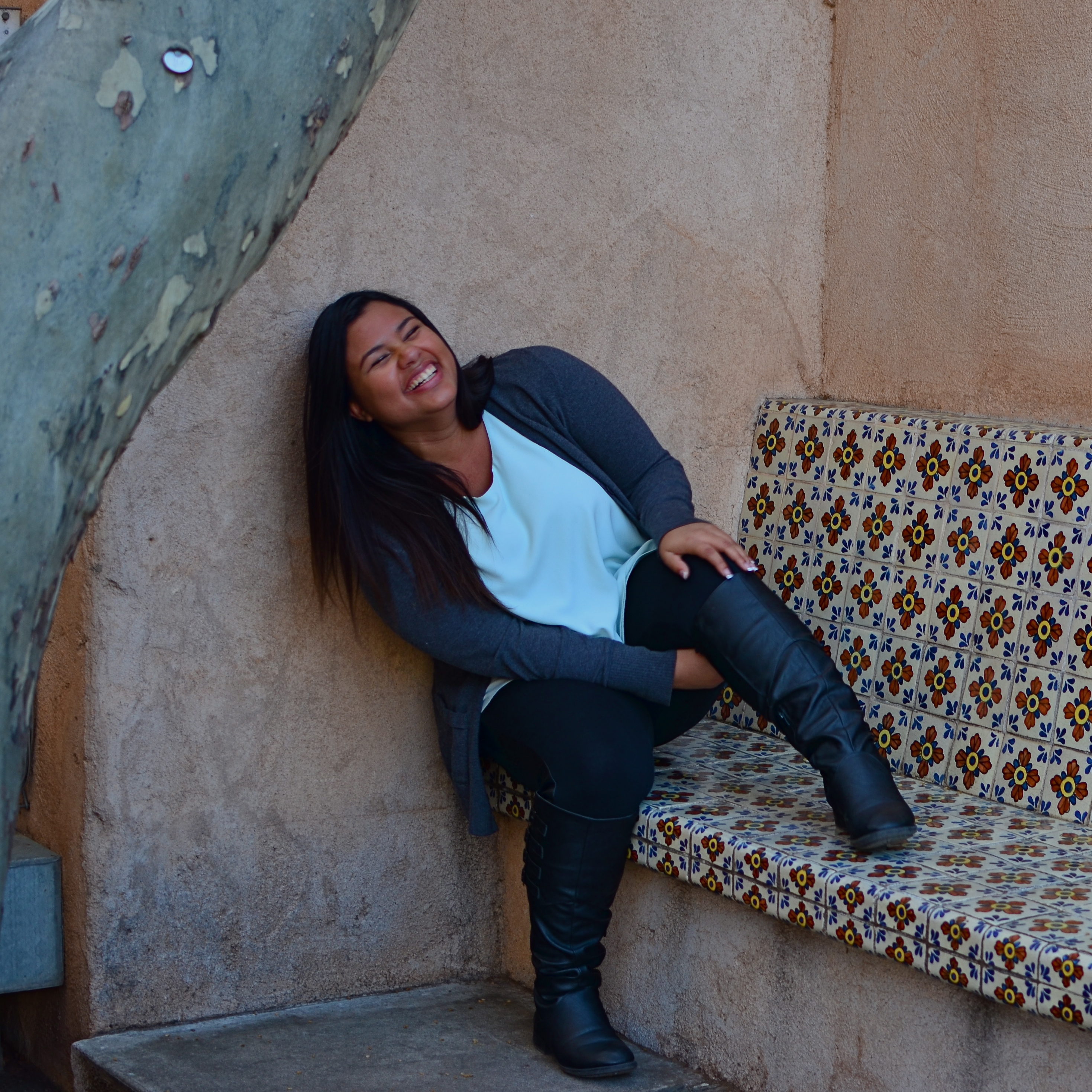
…..Gone.
AND FEATURING LINDA ON LENS
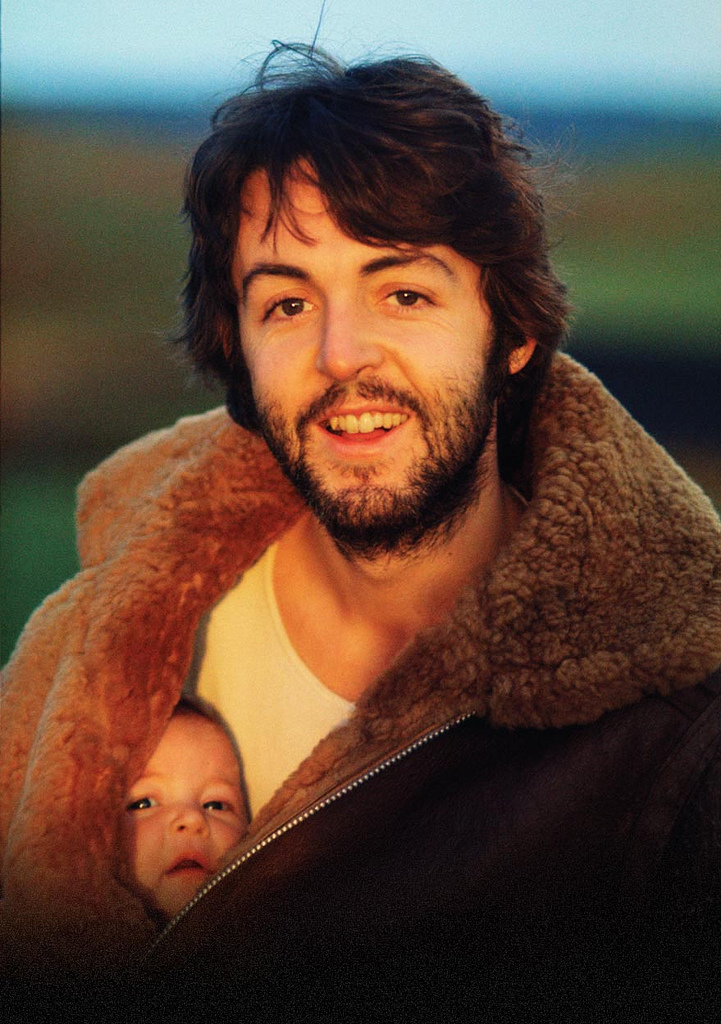
Even if you don’t know her work, you know her work. Linda McCartney’s classic portrait of her husband and a friend made album art history in 1970.
By MICHAEL PERKINS
ONCE LINDA EASTMAN BECAME LINDA McCARTNEY, the world ignorantly chose to define her as rock’n’roll arm candy basking in the reflected sun of her globally famous husband. In fact, however, by the time she chose to rock a family, she had already created a self that would outlast her role as a reluctant musician and perennial target of every wise-ass disk jockey from London to New York. She did it with a remarkable, natural eye for composition and the untrained instinct to know where to click, and when. While her bandmates wielded electric axes to give voice to their muses, Linda wailed with a Hasselblad.
By the time she became a Mrs. Beatle, Linda had already become the first great photographer in rock history, pioneering an intimate, direct style that humanized its bright lights and consigned the formal portraits of the record label’s in-house shooters to the dustbin. It is work that, finally, in recent years, has been allowed to glow as the star trove that it is, eclipsing her much-derided designations as Yoko With A Tambourine, A Pig With Wings, or whatever other lame tag the hacks in the rock press felt like hanging on her. Recent showings of her work in America, Europe, even South Korea continue to celebrate her instinctual knack for showing the human inside the star. And none of it was by the book.
She didn’t ignore the rules; she simply didn’t know they existed. She never had a formal studio, shopping for backgrounds and locales on the fly. She never used flash, ever, believing that it was bulky and off-putting. She attended exactly one class on photography, was told she had talent, and never went back for lesson two. She gave away original negatives of her top shots to friends, finding herself with nothing to sell to publishers except the “shoves”, lesser takes which, somehow, were still better than what everyone else was doing with this crazy longhair music.
What kind of photographer was this? Linda never posed people, forgot to re-calculate the ASA (ISO) settings when switching from color to black and white, sent the magazines blurred concert shots. And despite her never joining the ranks of the camera-ly cultured, the true souls of the Rolling Stones, The Doors, The Yardbirds, Jimi, Janis, Dylan, and, most notably, the Beatles shone forth in her grainy frames. Linda Eastman McCartney captured the dawning genius in them all, before the crank-up of the hype machines, before the twilight of the vultures, before rock careened from the summer of love to the winter of our discontent.
After Paul, the images were family candids, and yet the vision shone forth, most famously in her shot of baby Mary peeking out of her Beatle daddy’s jacket on a morning stroll, the rear-cover photo for the McCartney album in 1970. From that point on, the farm and the fam were everything, the road and the tour bus, not so much. She chose to settle for being Mrs. Paul, the girl who couldn’t sing but who hitched a ride on one of the biggest pop rockets of the ’70s. Decades later, what her eye saw way back then seems inevitable, her work the official chronicle of so many moments that mattered. Linda left us in 1998, but she left us that eye. It is a smiling eye, an innocent one, and one which was magnificently focused on the stuff of dreams.
JOY GENERATORS
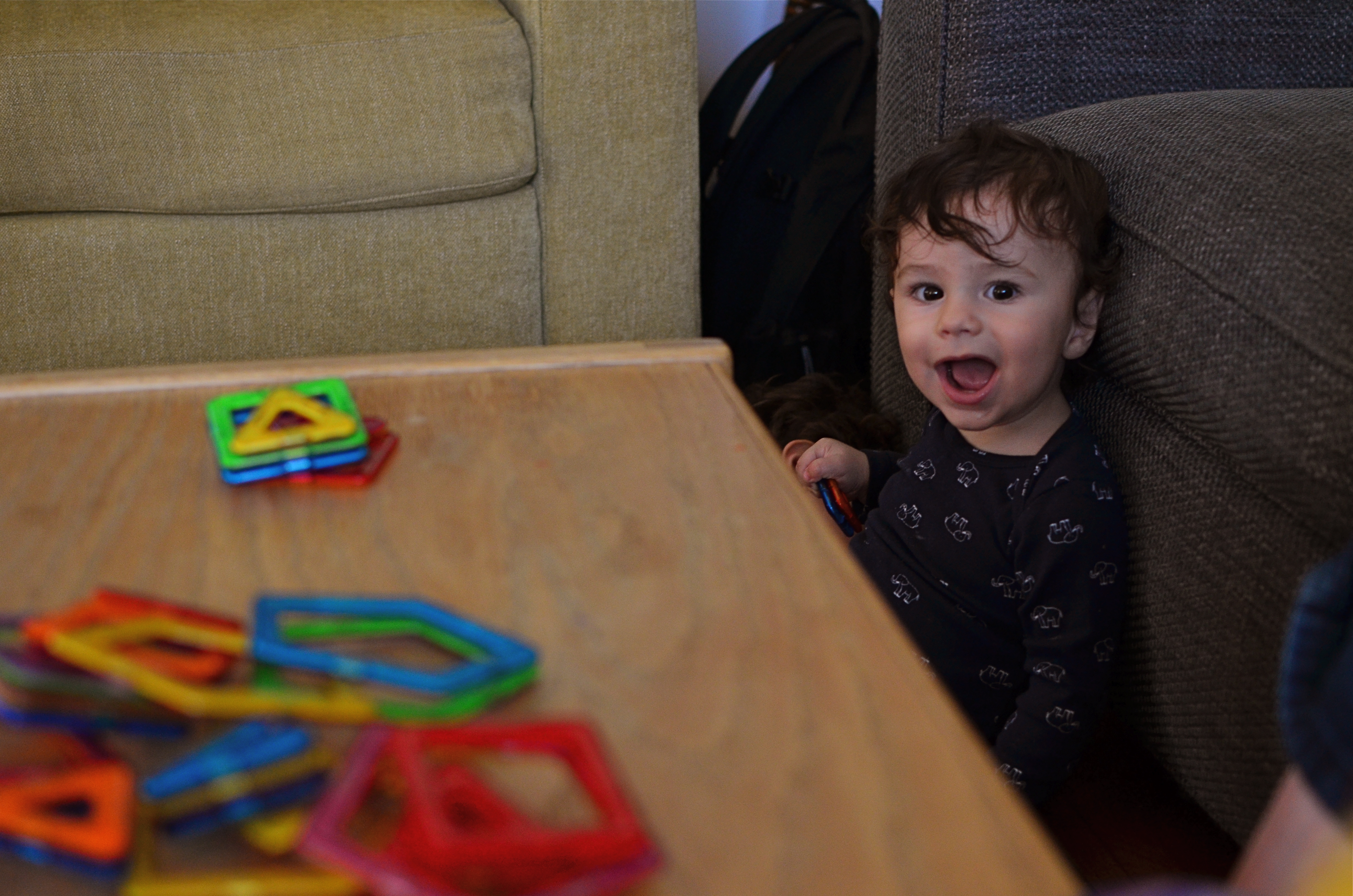
I could pose this rascal all day long, but I can’t create what he can freely give me. 1/40 sec., f/3.2, ISO 500, 35mm.
By MICHAEL PERKINS
IT’S A TITANIC CLICHE, BUT RESOUNDINGLY TRUE: if you want a child to reveal himself to you photographically, get out of his way.
The highly profitable field of child portrait photography is being turned on its head, or more precisely, turned out of the traditional portrait studio, by the democratization of image making. As technical and monetary barriers that once separated the masses from the elite few are vanishing from photography, every aspect of formal studio sittings is being re-examined. And that means that the $7.99 quickie K-Mart kiddie package is going the way of the dodo. And it’s about bloody time.
Making the subject fit the setting, that is, molding someone to the props, lighting or poses that are most convenient to the portraitist seems increasingly ridiculous. Thing is, the “pros” who do portrait work at the highest levels of the photo industry have long since abandoned these polite prisons, with Edward Steichen posing authors, politicians and film stars in real-life settings (including their own homes) as early as the 1920’s, and Richard Avedon pulling models out of the studio and into the street by the late 1940’s. So it’s not the best photographers who insist on perpetuating the restrictive environment of the studio shoot.
No, it’s the mills, the department and discount stores who still wrangle the kiddies into pre-fab backdrops and watch-the-birdie toys, cranking out one bland, safe image after another, and veering the photograph further and further from any genuine document of the child’s true personality. This is what has to change, and what will eventually result in something altogether different when it comes to kid portraiture.
Children cannot convey anything real about themselves if they are taken out of their comfort zones, the real places that they play and explore. I have seen stunning stuff done with kids in their native environment that dwarfs anything the mills can produce, but the old ways die hard, especially since we still think in terms of “official” portraits, as if it’s 1850 and we have a single opportunity to record our existence for posterity. There really need be no “official” portrait of your child. He isn’t U.S. Grant posing for Matthew Brady. He is a living, pulsating creature bent on joy, and guess what? You know more about who and what he is than the hourly clown at Sears.
I believe that, just as adult portraiture has long since moved out of the studio, children need also to be released from the land of balloons and plush toys. You have the ability to work almost endlessly on getting the shots of your children that you want, and better equipment for even basic candids than have existed at any other period in history. Trust yourself, and experiment. Stop saying “cheese”, and get rid of that damned birdie. Don’t pose, place, or position your kids. Witness these little joy generators in the act of living. They’ll give you everything else you need.
YOU’RE GREAT, NOW MOVE, WILLYA?
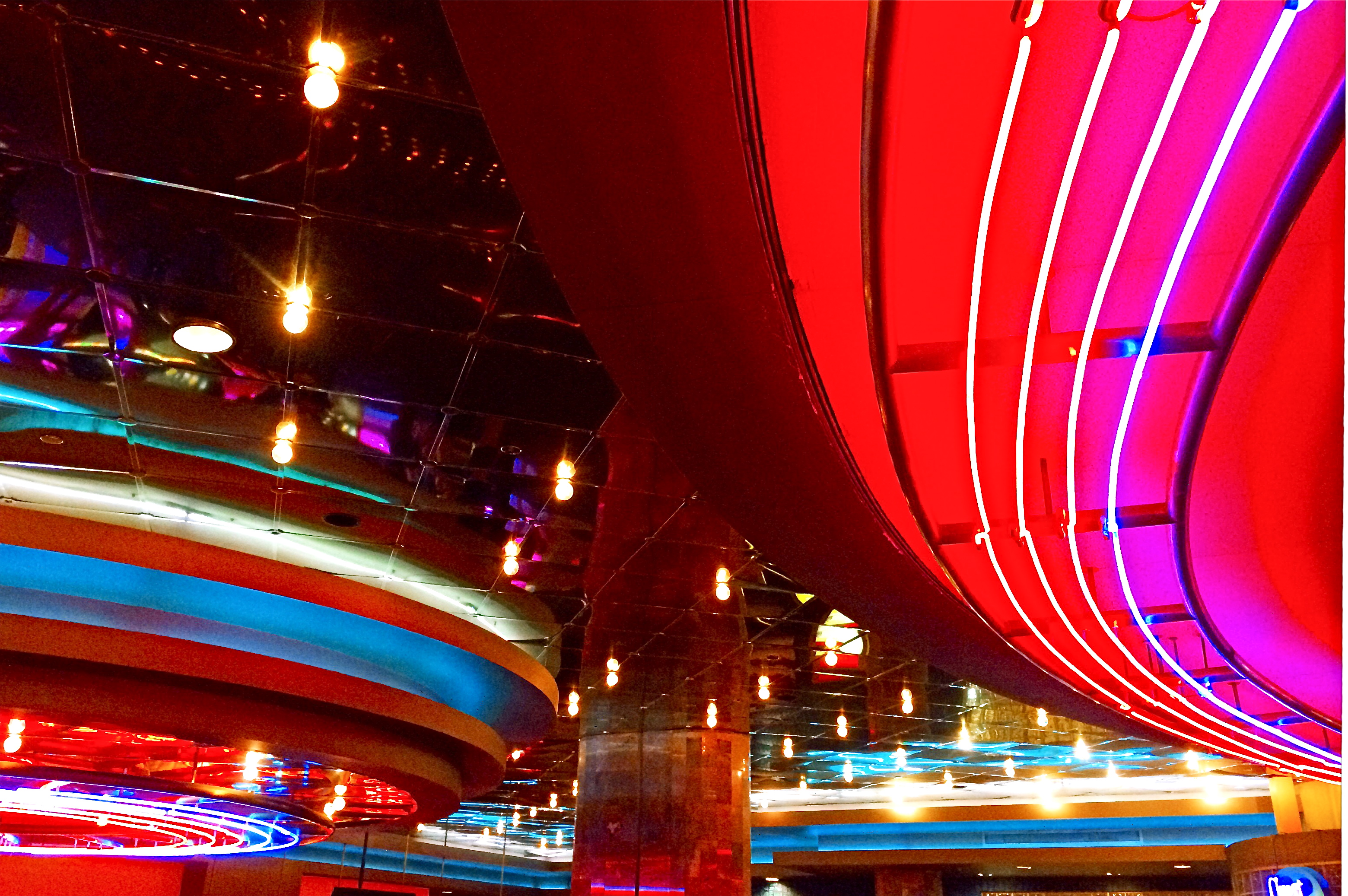
Marquee Marks, 2015. Do I need people in this to suggest urban life?
By MICHAEL PERKINS
ONE OF MY FAVORITE SONGS FROM THE ’40’s, especially when it emanates from the ruby lips of a smoking blonde in a Jessica Rabbit-type evening gown, conveys its entire message in its title: Told Ya I Love Ya, Now Get Out! The hilarious lyrics speak of a woman who acknowledges that, yeah, you’re an okay guy, but don’t get needy. No strings on me, baby. I’ll call you when I want you, doll. Until then, be a pal and take a powder.
I sometimes think of that song when looking for street images. Yes, I’m aware that the entire sweep of human drama is out there, just ripe for the picking. The highs. The lows. Thrill of victory and agony of de feet. But. I always feel as if I’m cheating the world out of all that emotional sturm und drang if I want to make images without, you know, all them people. It’s not that I’m anti-social. It’s just that compelling stuff is happening out there that occasionally only gets compromised or cluttered with humans in the frame.
Scott Kelby, the world’s biggest-selling author of photographic tutorials, spends about a dozen pages in his recent book Photo Recipes showing how to optimize travel photos by either composing around visitors or just waiting until they go away. I don’t know Scott, but his author pic always looks sunny and welcoming, as if he really loves his fellow man. And if he feels it’s cool to occasionally go far from the madding crowd, who am I to argue? There are also dozens of web how-to’s on how to, well, clean up the streets in your favorite neighborhood. All of these people are also, I am sure, decent and loving individuals.
There is some rationality to all this, apart from my basic Scrooginess. Photographically, some absolutes of abstraction or pure design just achieve their objective without using people as props. Another thing to consider is that people establish the scale of things. If you don’t want that scale, or if showing it limits the power of the image, then why have a guy strolling past the main point of interest just to make the picture “human” or, God help us, “approachable”?
Faces can create amazing stories, imparting the marvelous process of being human to complete scenes in unforgettable ways. And, sometimes, a guy walking through your shot is just a guy walking through your shot. Appreciate him. Accommodate him. And always greet him warmly:
Told ya I love ya. Now get out.
STEALTH
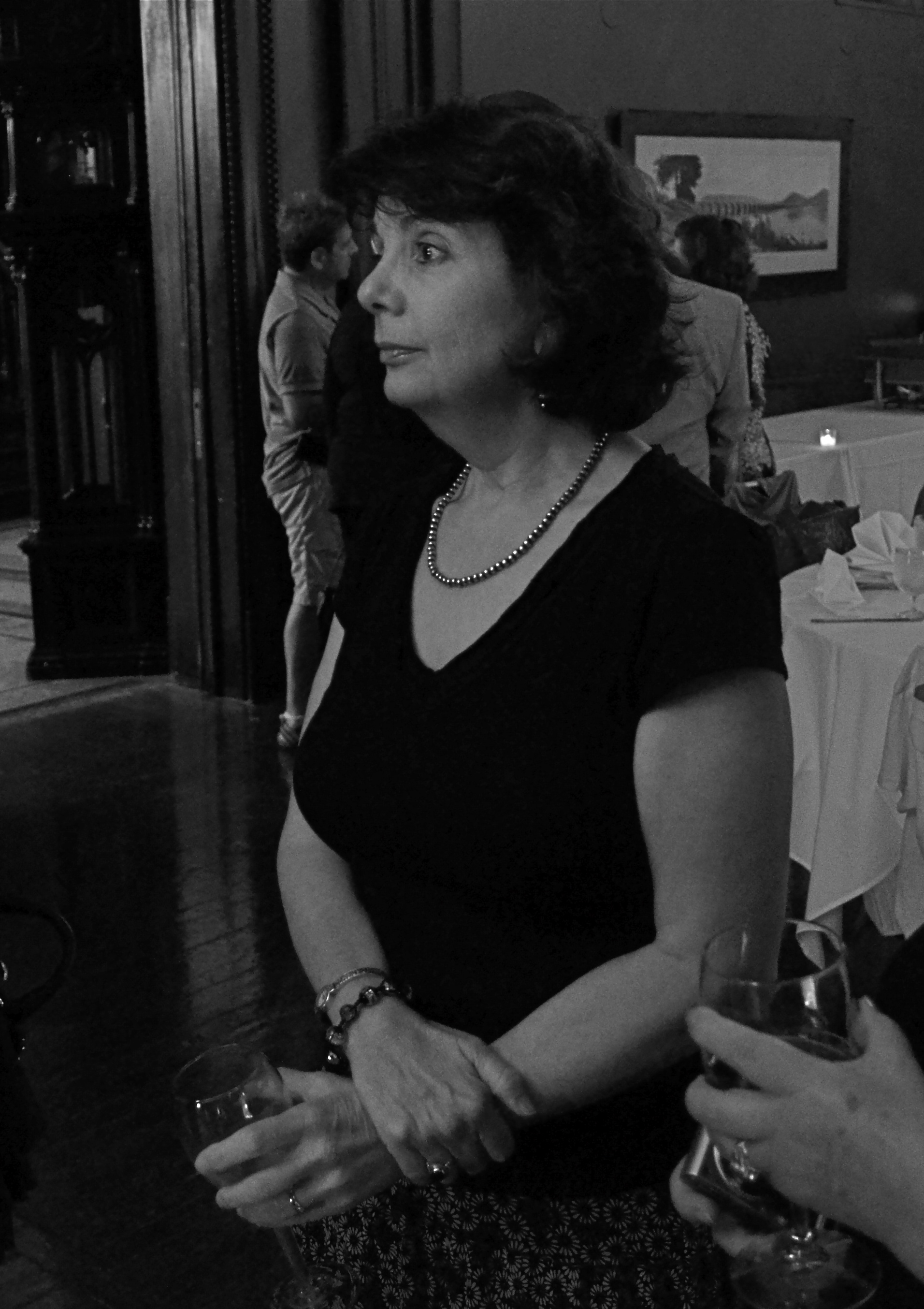
The hostess with the mostest. 1/40 sec., f/3.5, ISO 640, 18mm.
By MICHAEL PERKINS
AT A PARTY, THERE ARE DISTINCT ADVANTAGES TO NOT BEING AN “OFFICIAL” PHOTOGRAPHER. You could probably catalogue many of them yourself with no strain. Chief among the perks of being an amateur (can we get a better word for this?) is that you are the captain of your own fate. You shoot what you want, when you want. Your arrival on the scene is not telegraphed by stacks of accompanying cases, light fixtures, connecting cords or other spontaneity killers that are essential to someone who has been “assigned” to an event. Your very unimportance is your license to fly, your ticket to liberation. Termed honestly (if unkindly), your work just doesn’t matter to anyone else, and so it can mean everything to you. Yay.
One of the supreme kicks I derive from going to events with my wife is that I can make her forget I’m there. I mean, as a guy with a camera. She has the gift of being able to submerge completely into the social dynamics of wherever she is, so she is not thinking about when I may elect to sneak up and snap her. Believe me, when you live with a beautiful woman who also hates to have her picture taken, this is like hitting the trifecta at Del Mar. At 20 to 1.
Free from the constraints of being “on the job”, I enjoy a kind of invisibility at parties, since I use the fastest lenses I can and no flash, ever, ever, ever. I do not call attention to myself. I do not exhort people to smile or arrange them next to people that they may or may not be able to stand. The word “cheese” never leaves my lips. I take what the moment gives me, as that is often richer than anything I might concoct, anyway. Working with a DSLR is a little more conspicuous than the magical invisibility of a phone camera, which people totally ignore, but if I am cagey, I can work with an “official” camera and not be perceived as a threat. Again, with a woman who (a) looks great and (b) doesn’t like how she looks in pictures, this is nirvana.
Candid photography is all about the stealth. It’s not about warning or prepping people that, attention K-Mart shoppers, you’re about to have your picture took. The more you insert yourself into the process (look over here! big smiiiiile!) the more you interrupt the natural rhythm that you set out to capture. So stop working against yourself. Be a happy sneak thief. Like me.
ACCUMULATIONS
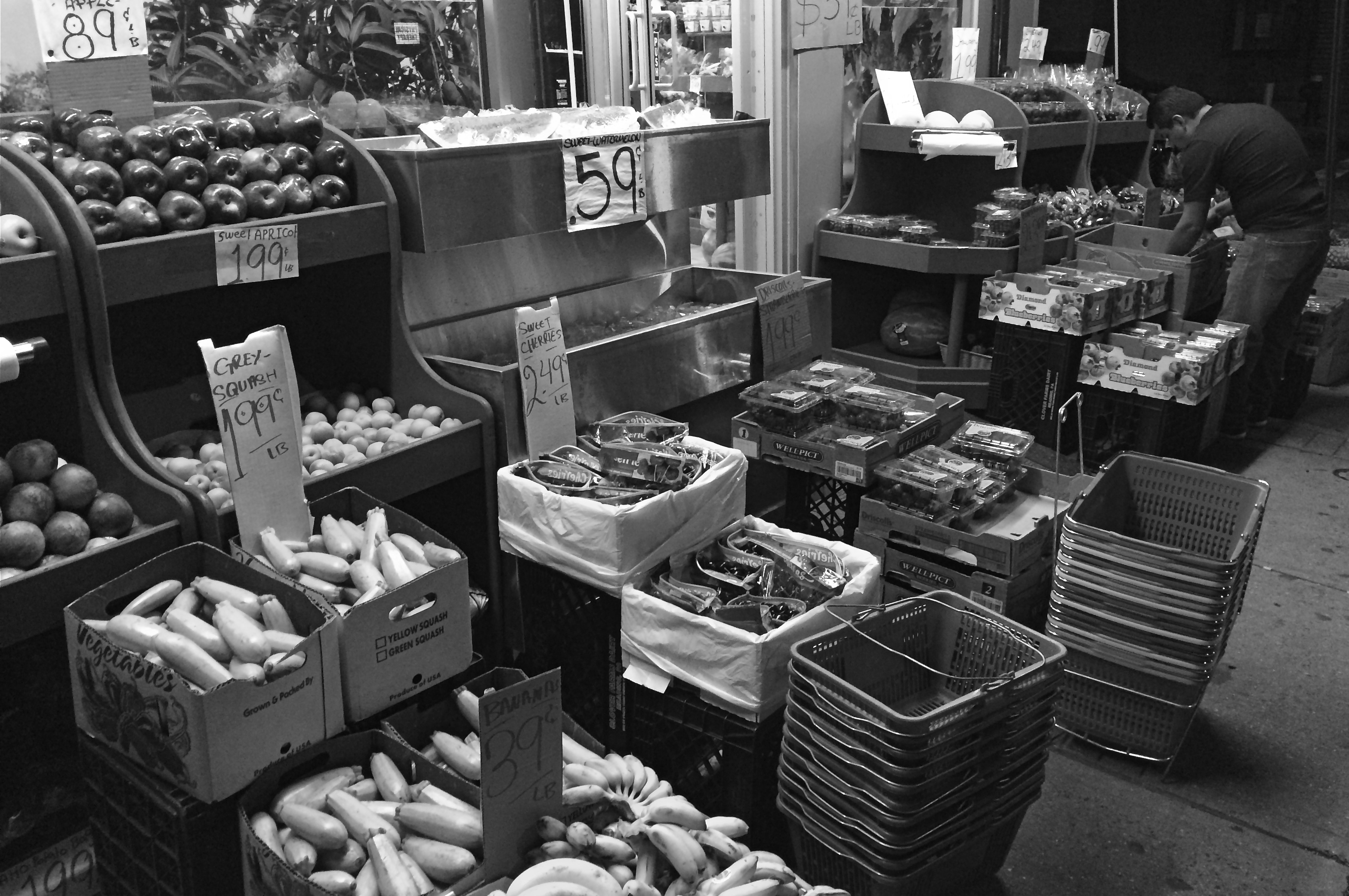
Brooklyn Market, 2014.
By MICHAEL PERKINS
STREET PHOTOGRAPHY CONSISTS MOSTLY OF SHOWING PEOPLE in the full context of their regular worlds.
In terms of portraits or candids, it’s usually sufficient to showcase those we know in controlled environments….family gatherings, special occasions, a studio setting. However, to reveal anything about the millions of strangers we encounter over a lifetime, we only have context to show who they are and what they do. To say something about these fascinating unknowns, we truly need the “props” that define their lives.
I never thought it was that profound to just snap a candid of someone walking down the street. Walking to where? To do what? To meet whom? Granted, a person composed as part of an overall street scene can be a great compositional elements all by him/herself, but to answer the question, who is this person? requires a setting that fixes him in time, in a role or a task. Thus pictures of people doing something, i.e., being in their private universe of tools, objects, and habits…now that can make for an interesting study.
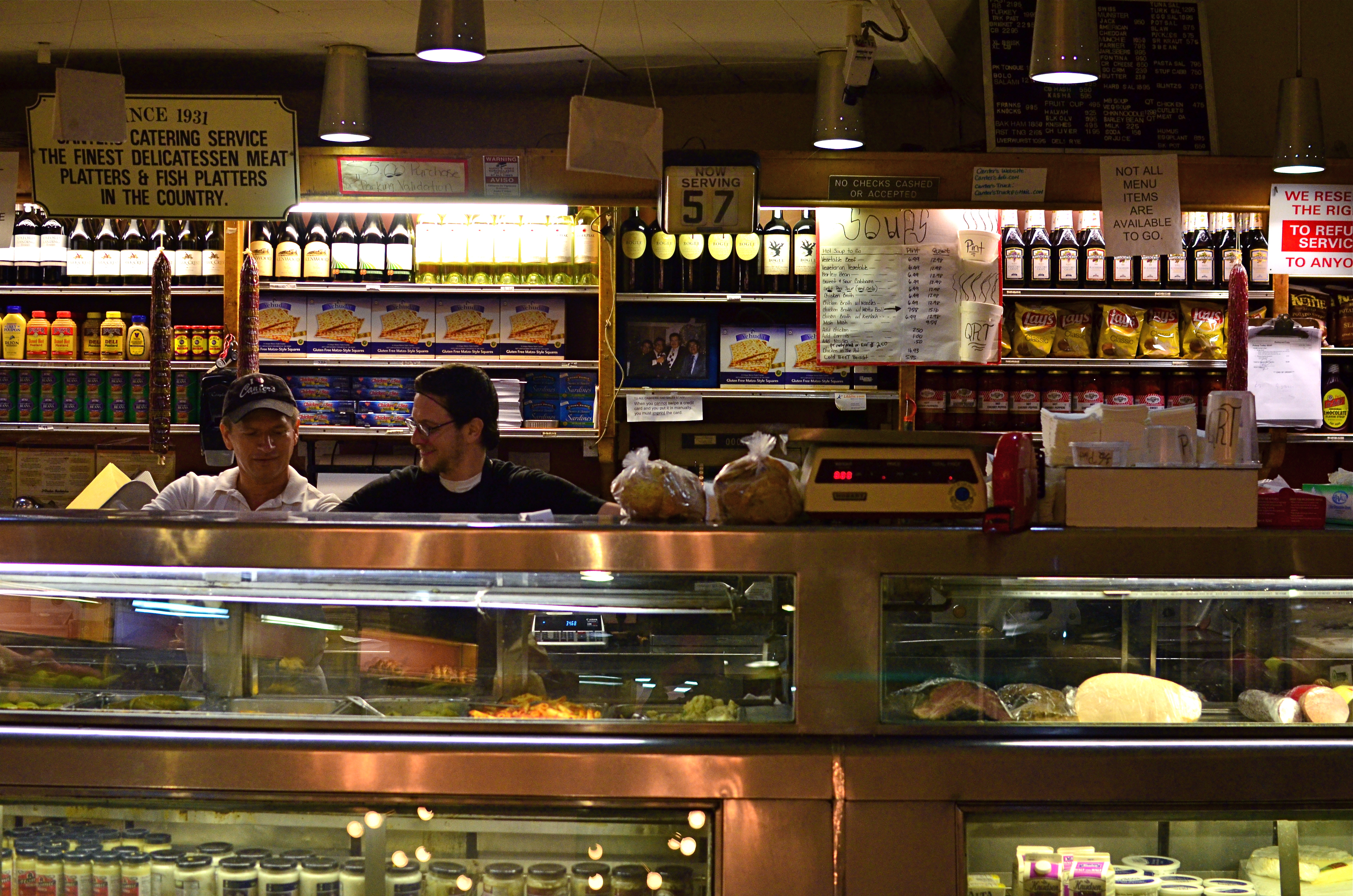
Canter’s Deli, Los Angeles, 2014.
We now have successful reality TV shows like Somebody’s Gotta Do It which focus on just what it’s like to perform other people’s jobs, the jobs we seldom contemplate or tend to take for granted. It satisfies a human curiosity we all share about what else, besides ourselves, is out there. Often we try to gain the answer by sending probes to the other side of the galaxy, but, really, there’s plenty to explore just blocks from wherever we live. Thing is, the people we show make sense only in terms of the accumulations of their lives…the objects and equipment that fill up their hour and frame them in our compositions.
The legendary Lewis Hine made the ironwalkers of Manhattan immortal, depicting them in the work of creating the city’s great skyscrapers. Others froze workers and craftsmen of every kind in the performance of their daily routines. Portraits are often more than faces, and showing people in context is the real soul of street photography.
THE LAST PIECE OF THE PUZZLE
By “available light”, I mean any $%#@ light that’s available. —-Joe McNally, world-renowned master photographer, author of The Moment It Clicks
By MICHAEL PERKINS
ONE OF THE EASIEST THINGS ABOUT ANALYZING THOSE OF OUR SHOTS THAT FAIL is that there is usually a single, crucial element that was missing in the final effort….one tiny little hobnail, without which the entire image simply couldn’t hold together. In a portrait, it could be a wayward turn of face or hint of a smile; in a landscape it could be one element too many, moving the picture from “charming” to “busy”. The secret to greater success, then, must lie in pre-visualizing a photograph to as great a degree as possible, in knowing in advance how many puzzle pieces must click into place to make the result work.
I recently attended an outdoor dance recital, during which I knew photography would be prohibited. I had just resigned myself to spend the night as a mere spectator, and was settling onto my lawn seat when some pre-show stretching exercises by the dancing company presented me with an opportunity. The available natural light in the sky had been wonderfully golden just minutes before, but, by the time the troupe took the stage and started into their poses and positions, it had grown pretty anemic. And then a stage hand gave me back that missing “puzzle piece”.
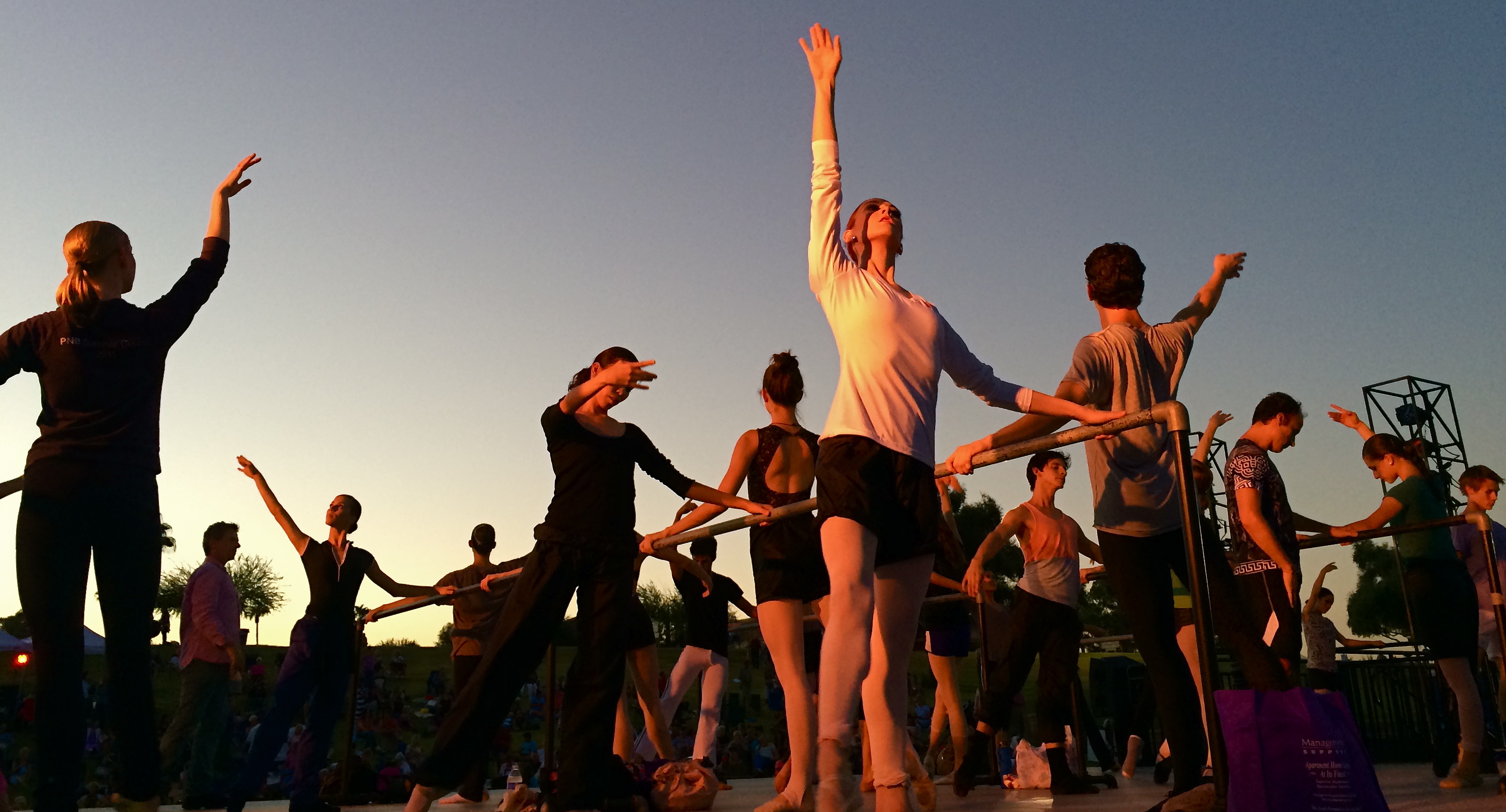
Positions, Please, 2014. One light source at dusk, courtesy of a light tech rehearsing with the rehearsers.
Climbing the gridwork at the right side of the stage, the techie was turning various lights on and off, trying them with gels, arcing them this way or that, devising various ways to illuminate the dancers as their director ran them through their paces. I decided to get off my blanket and hike down to the back edge of the stage, then wait for “my light” to come around in the rotation. Eventually, the stage hand turned on a combination that nearly replicated the golden light that I no longer was getting from the sky. It was single-point light, wrapping around the bodies of some dancers, making a few of them glow brilliantly, and leaving some other swaddled in shadow, reducing them to near-silhouettes.
For a moment, I had everything I needed, more than would be available for the entire rest of the evening. Now the physical elegance of the ballet cast was matched by the temporary drama of the faux-sunset coming from stage left. I moved in as closely as I could and started clicking away. I was shooting at something of an upward slant, so a little sky cropping was needed in the final shots, but, for about thirty seconds, someone else had given me the perfect key light, the missing puzzle piece. If I could find that stage hand, I’d buy her a few rounds. The win really couldn’t have happened without her.
WHAT SIZE STORY?
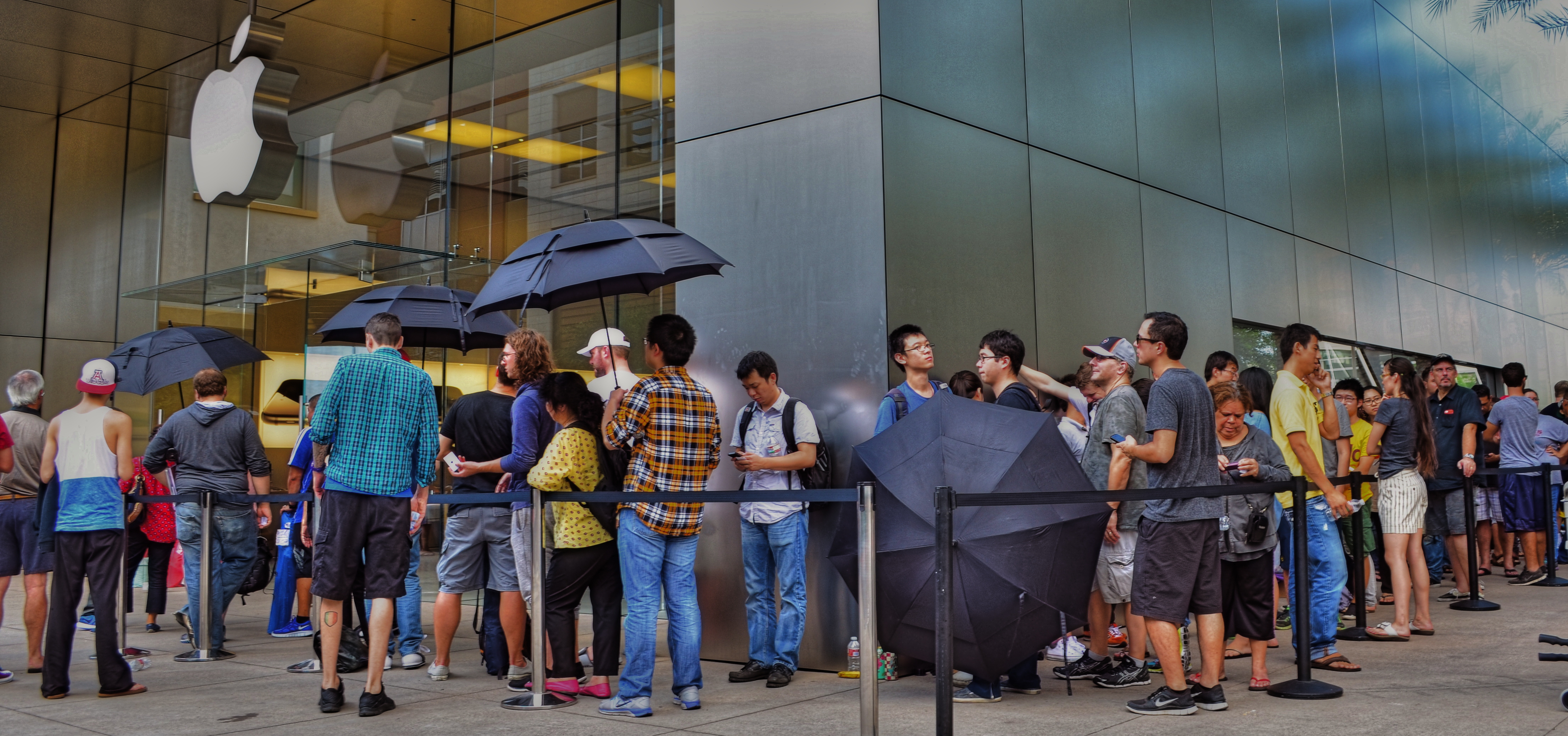
iPhone 6 debut at Apple Store in Scottsdale, Arizona, September 19, 2014. Sometimes the story is “the crowd…”
By MICHAEL PERKINS
IN THE EARLY 1950’s, AS TELEVISION FIRST BLINKED INTO LIFE ACROSS AMERICA, storytelling in film began to divide into two very clearly defined camps. In theatres, desperate to retain some of the rats who were deserting their sinking ships to bathe in cathode rays at home, movie studios went for stories that were too big to be contained by the little screen, and almost too big for theatres. You remember the wider-than-thou days of Cinemascope, VistaVision, Todd-Ao, Cinerama and Super-Panavision, as well as the red-green cardboard glasses of 3-D’s first big surge, and the eye-poking wonders of House Of Wax, Creature From The Black Lagoon and Bwana Devil. Theatres were Smell-O-Vision, True Stereophonic Reproduction and bright choruses of Let’s Go Out To The Lobby sung by dancing hot dogs and gaily tripping soda cups. Theatres was Big.
The other stories, the TV stories, were small, intimate, personal, compact enough to cram into our 9-inch Philcos. Tight two-shots of actors’ heads and cardboard sets in live studios. It was Playhouse 90 and Sylvania Theatre and The Hallmark Hall Of Fame. Minus the 3,000 Roman extras and chariot races, we got Marty, Requiem For A Heavyweight, and On The Waterfront. Little stories of “nobodies” with big impact. Life, zoomed in.
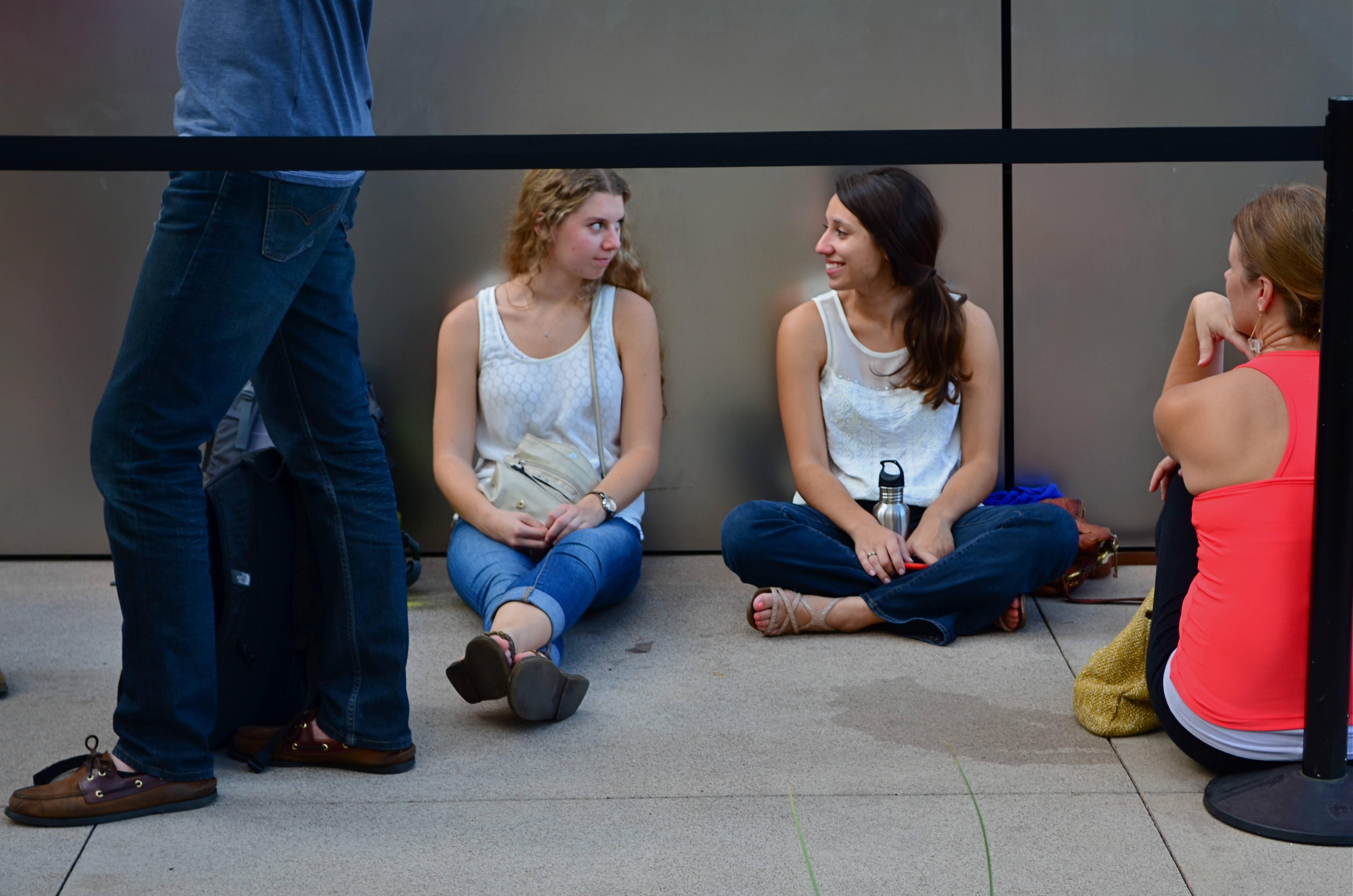
…but, within that crowd, there are “little” stories.
For photographers, pro or no, many stories can be told either in wide-angle or tight shot. Overall effect or personal impact. You can write your own book on whether the entire building ablaze is more compelling than the little girl on the sidewalk hoping her dog got out all right. Immense loads of dead trees have been expended to explore, in print, where the framing should happen in a story to produce shock, awe or a quick smile. I like to shoot everything every way I can think of, especially if the event readily presents more than one angle to me.
The release of the new iPhone 6, which dropped worldwide today, is a big story, of course, but it consists of a lot of little ones strung together. Walk the line of the faithful waiting to show their golden Wonka ticket to gain admission to the Church of Steve and you see a cross-section of humankind represented in the ranks. Big things do that to us; rallies, riots, parties, flashmobs, funerals….the big story happens once a lot of little stories cluster in to comprise it.
Simply pick the story you like.
Remember, just like the phone, they come in two sizes.
THE EYES (DON’T NECESSARILY) HAVE IT
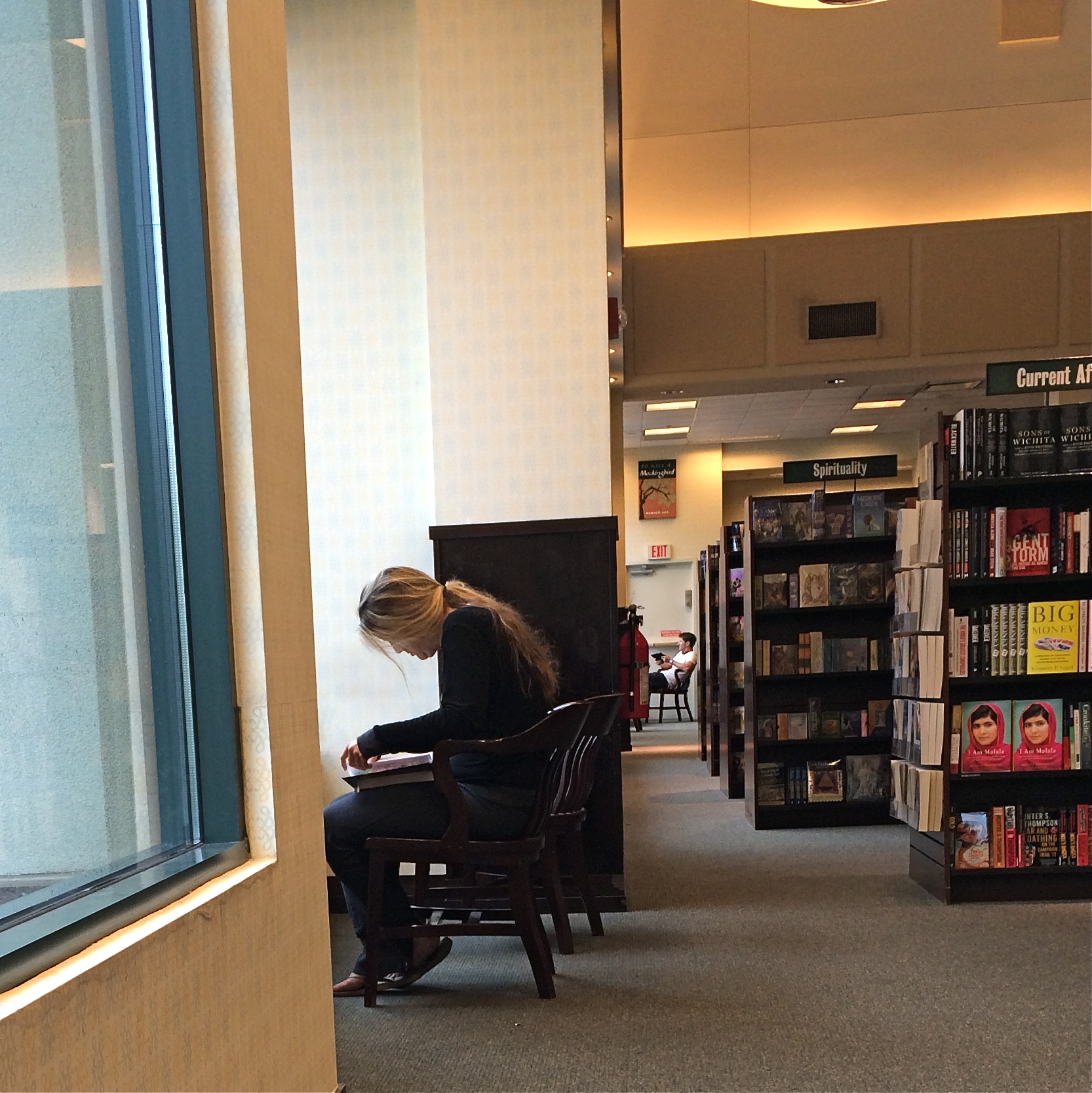
Reverie, 2014.
By MICHAEL PERKINS
A QUICK GOOGLING OF THE PHOTOGRAPHIC UNIVERSE THESE DAYS will turn up a number of sites dedicated to “faceless portraits”, if there can, strictly speaking, be such a thing (and I believe there can). In a recent post entitled Private, Not Impersonal, I explored the phenomenon in which photographers, absent the features that most easily chronicle their subjects’ personalities, imply them, merely through body language, composition, or lighting. At the time I wrote the post, I was unaware how widespread the practice of faceless portraits had become. In fact, it’s something of a rage. Hmm. The very thought that, even by accident, I could be aligned with something hip, is, by turns, both terrifying and hilarious.
Thing is, photographs, as the famous curator John Szarkowki remarked, both conceal and reveal, and there is nothing about the full depiction of a human face that guarantees that you’re learning or knowing anything about the subject in frame. We are all to practiced at maintaining our respective masks for many portraits to be taken, ha ha, at face value. Cast your eye back through history and you will find dozens of compelling portraits, from Edward Steichen’s silhouettes of Rodin to Annie Leibovitz’ blurred dance photos of Diane Keaton, that preserve some precious element of humanity that a formal, face-on sitting cannot deliver. Call it mystery, for lack of a more precise word.
In the above frame, the subject whose face I myself never even saw gave me something wonderfully human, about reading in particular, but about enchantment in general. She is furiously busy discovering another world, a world the rest of us can only guess at, seeping up from her book. Her entire body is an inventory of emotional textures…of relaxation, attentiveness, of both being in the present and so completely someplace else. Framing her to include the negative spaces of the window, the carpet and the wider bookstore isolate her further from us, but not in a negative way. She wants to be apart; she is on a journey.
My “girl with the flaxen hair” was unaware of me, and I shot furtively and quickly to make sure I didn’t break the spell she was under. It was the least I could do in gratitude for a chance to witness her adventure. Looking back, I think she provided more than enough magic without revealing a single fragment of her face. Seeing is selecting, and I had been given all I needed to do both.
Click and be gone.
PRIVATE, NOT IMPERSONAL
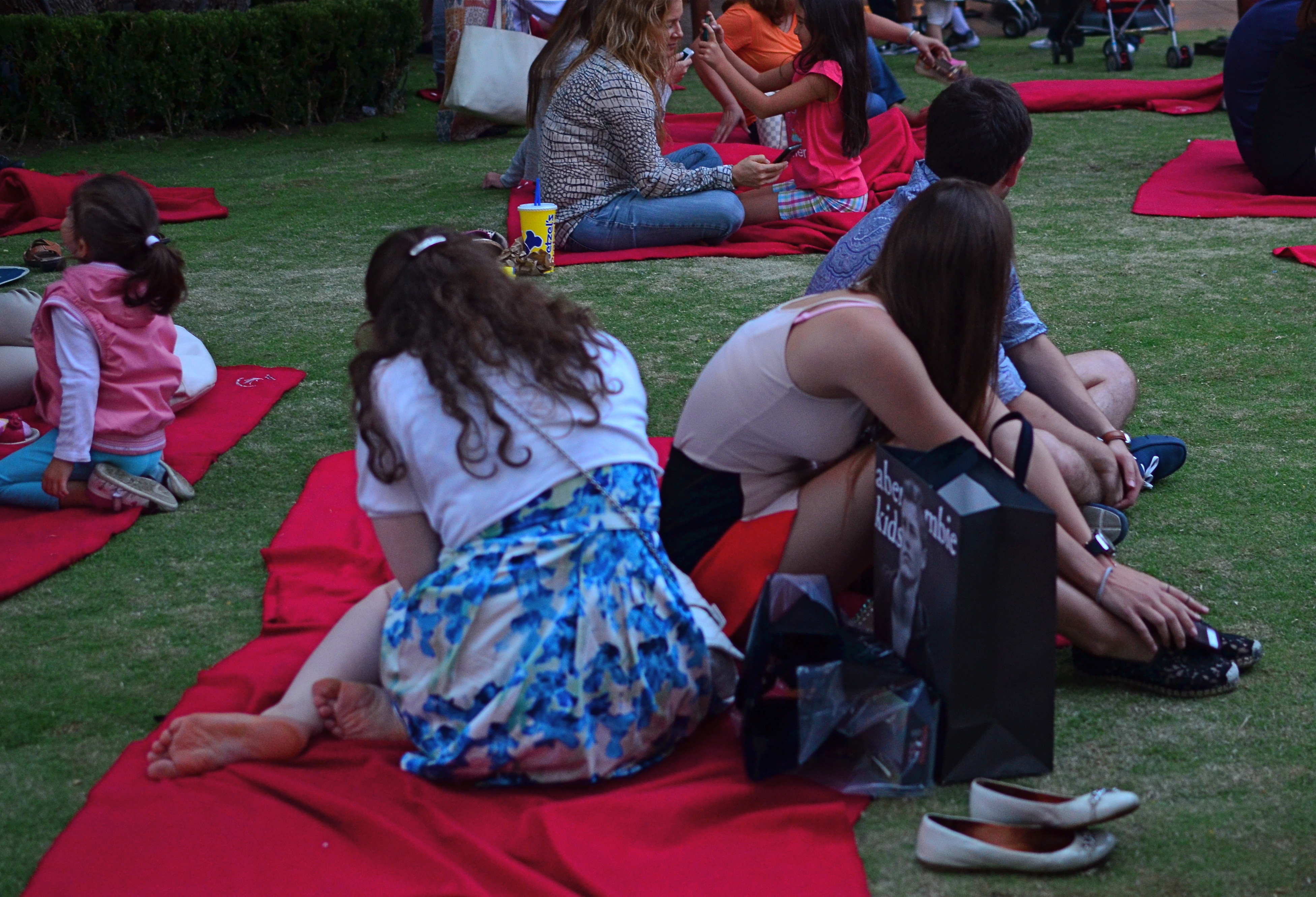
Dusk Concert, 2014. 1/40 sec., f/2.8, ISO 500, 35mm.
By MICHAEL PERKINS
PORTRAITURE IS RATHER NARROWLY DEFINED BY MOST PHOTOGRAPHERS as an interpretation of a person’s face, the place wherein we believe that most of his/her humanity resides. The wry smile. The upturned eyebrow. The sparkling eye. It’s all there in the features, or so we seem to profess by valuing the face over nearly all other physical features.We stipulate that there are notable exceptions where the body carries most of the message, as in crowd scenes, sports action, or combat shots. But for the most part, we let the face hold the floor (and believe me, after a few misspent nights, my face has held the floor plenty of times).
It’s interesting, however, in an age where privacy has become a premiere issue, and in which the camera’s eye never blinks, that we don’t explore the narrative power of bodies as much as we do faces. The body, after all, carries out the intentions of the mind no less than does the face. It executes the physical action that the mind intends, and so creates a space that reveals that intention. Just like a face. And yet, we have a decidedly pro-face bias in our portraiture, to the point that a portrait that does not include a face is thought by some not to be a portrait at all.
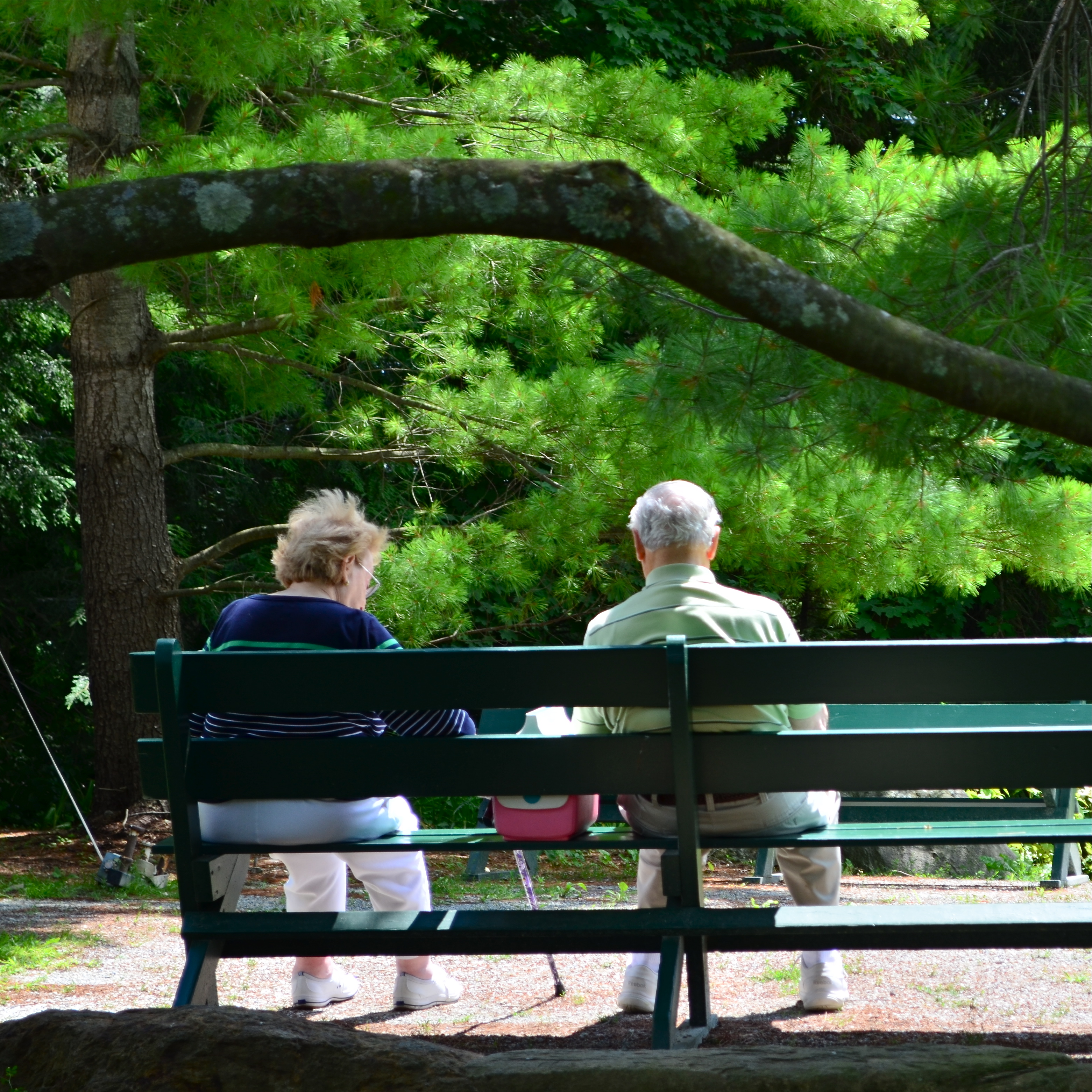
Side By Side, 2014. 1/160 sec., f/5.6, ISO 100, 55mm.
But let’s keep the discussion, and our minds, open, shall we? I love to work with random crowds, and I like nothing better than to immortalizing emotions in a nice face-freeze. However, I strongly maintain that, absent those obvious visual “cues”, a body can carry a storyline all by itself, even enhance the charm or mystery involved in trying to penetrate the personality of our subjects.
Consider for a moment how many amazing nude studies you’ve seen where the subject’s face is completely, even deliberately obscured. Does the resulting image lack in power, or does the power traditionally residing in the face just transfer to the rest of the composition?
Portraits (I insist on calling them that) that are more “private” for being faceless are no more “impersonal” than if the subject was flashing the traditional “cheese!” and beaming their personality directly into the lens.
Photography is not about always getting the vantage point that we want, but maximizing the one we have at hand. And sometimes, taking away a face also strips away a mask. But beyond that, why not actually court mystery, allow ourselves to trust our audiences to supply mentally what we reserve visually?
Ask yourself: what does a photograph of understatement look like?
WHAT IS HIP?
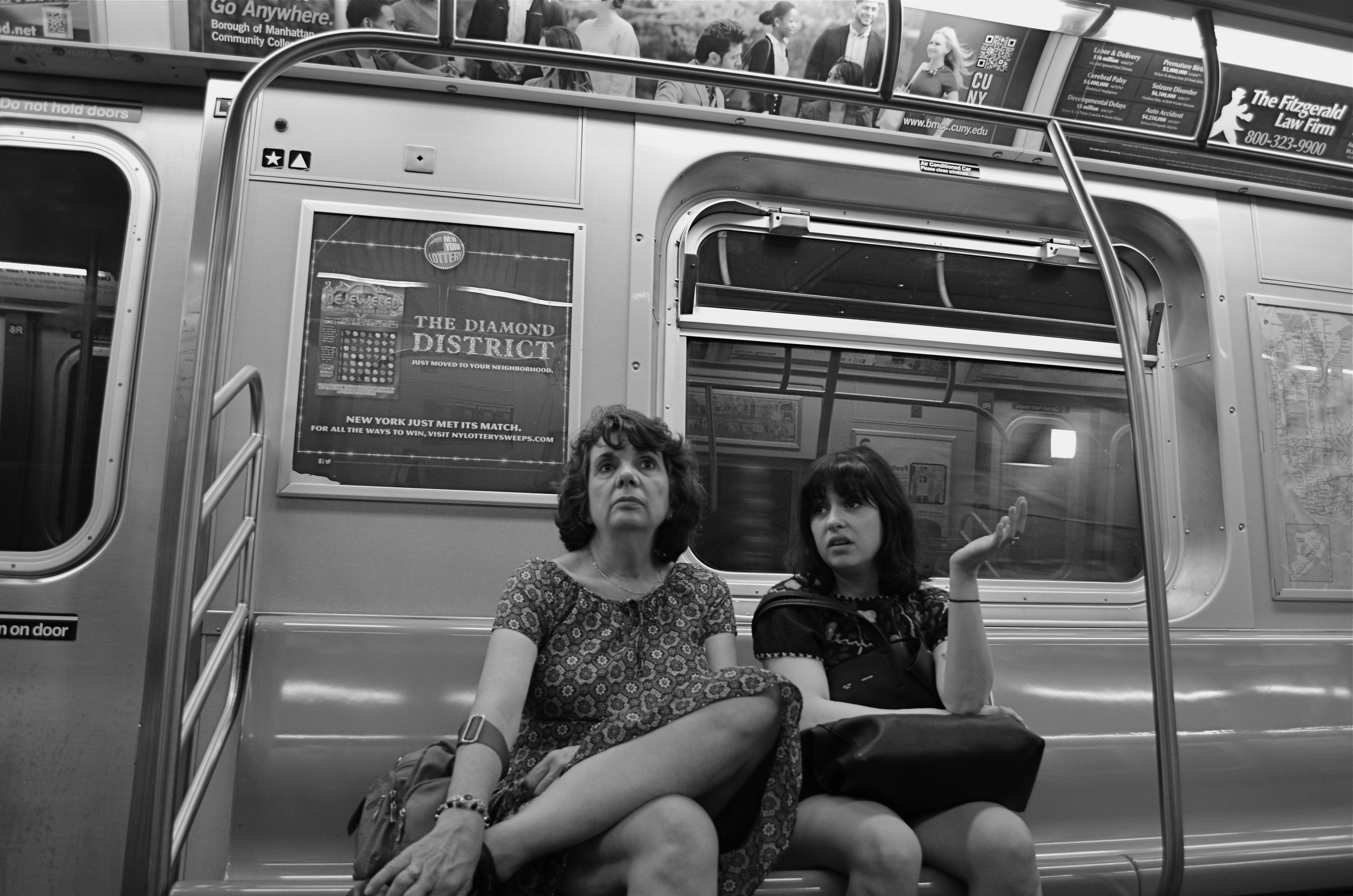
Shooting “from the hip” can be an urban photographer’s secret weapon. 1/40 sec., f/3.5, ISO 500, 18mm.
By MICHAEL PERKINS
WHEN FACED WITH A COMPLETELY DIFFERENT APPROACH TO OUR PHOTOGRAPHY, the crabbier among us are liable to utter one of two responses. Both sound negative, but one could be positive:
Response #1: “I’d never do that!” (Emphatically negative. Discussion over. You will not persuade me.)
Response #2:”Why would I want to do that???” (Possibly as close-minded as response #1, but the person could be asking a legitimate question, as in, ‘show me the benefit in doing it your way, because I can’t imagine a single reason why I should change’.)
When first reading about the street photography technique of “shooting from the hip”, I was a definite response #2. Wasn’t going to slam the door on trying it, but failed to see what I would get out of it. The phrase means just what you’d think it does, referring to people with obvious cameras who do “street” work, shooting with the camera hanging at waist level, never bringing the viewfinder up to their eye. Subjects don’t cringe or lock up because you don’t “seem” to be taking a picture, and thus your images of them are far more unguarded and natural.
Now, suggesting this to a person who has never even owned a camera that didn’t have a viewfinder is a little like asking him to try to take pictures from the inside of a burlap sack. Kinda makes my inner control freak throw a bratrum (a brat tantrum). Think of it from my point of view. If I shoot manually all the time (I do) and if I need my viewfinder like Linus needs his blanket (cause, hey, I’m a tortured and insecure artist), then squeezing off a shot without even knowing if it’s in frame is, to say the least, counter-intuitive (French for “nuts”).
So there you have your honestly expressed Response #2.
Some things that finally made it worth at least trying:
It don’t cost nothin’.
I can practice taking pictures that I don’t care about. I wouldn’t be shooting these things or people even with total control, so what’s to lose?
Did I mention it don’t cost nothin’?
Shooters beware: clicking from the hip is far from easy to master. Get ready to take lots of photos that look like they came from your Urban Outfitter Soviet Union-era Plastic Toy Hipsta Camera. You want rakish tilt? You got it. You like edgy, iffy focus? It’s a given. In other words, you’ll spend a lotta time going through your day’s work like the Joker evaluating Vicki Vale’s portfolio (….”crap….crap….crap….” ). But you might eventually snag a jewel, and it feels so deliciously evil to procure truly candid shots that you may develop an addiction to the affliction. Observe a few basics: shoot as wide as you can, cause 35s, 50s and other primes won’t give you enough scope in composition at close range: go with as fast a shutter speed as the light will allow (in low light, compromise on the ISO): if possible, shoot f/5.6 or smaller: and, finally,learn how to pre-squeeze the autofocus and listen for its quiet little zzzz, then tilt the camera just far enough up to make sure everyone has a head, and go.
At worst, it forces you to re-evaluate the way you “see” a shot, since you have no choice but to accept what the camera could see. At best, you might see fewer bared fangs from people snarling, “hey is that a $&@*! camera?” inches from your nose. And that’s a good thing.
GREAT DAY IN BROOKLYN
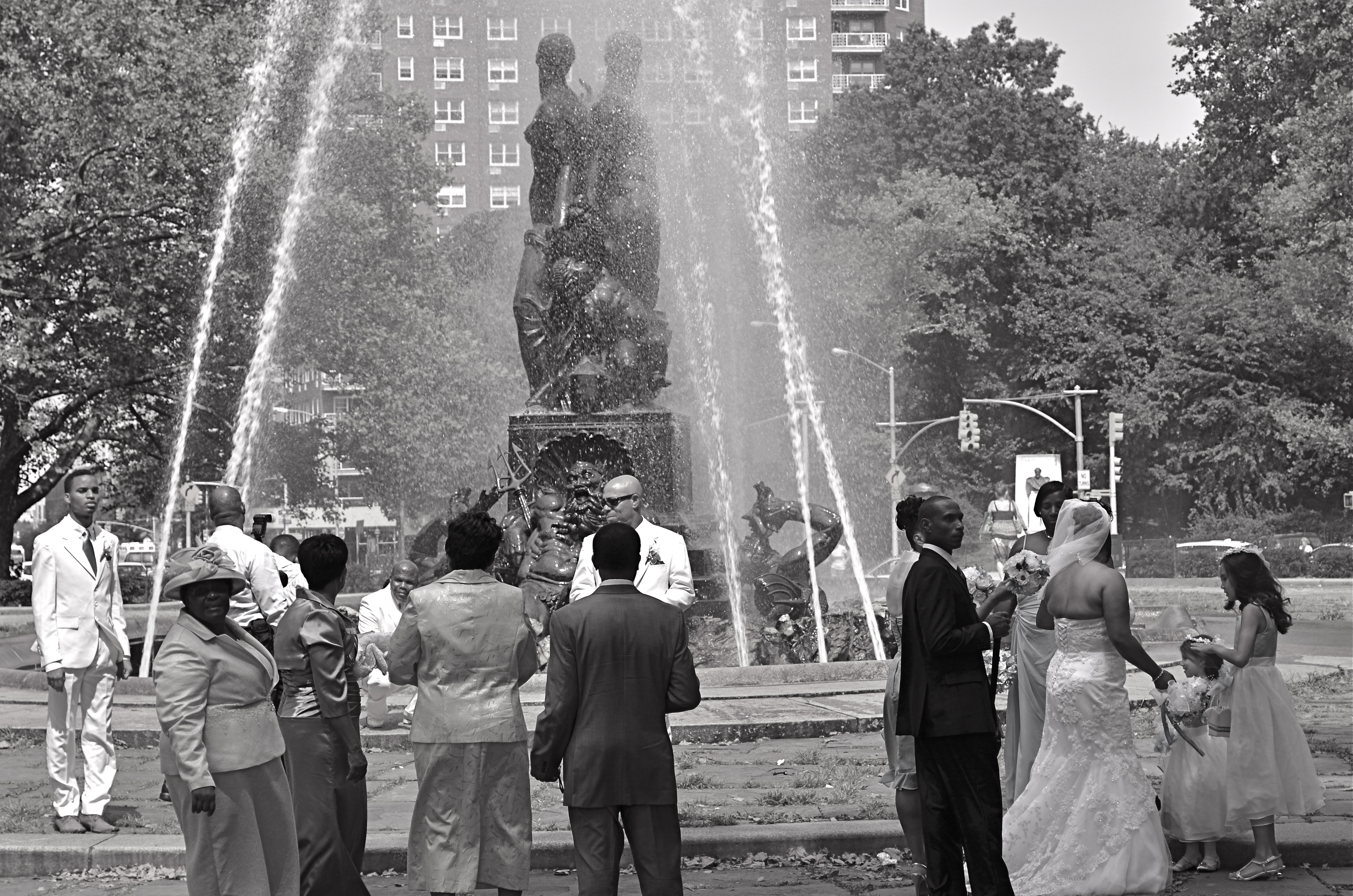
Wedding Party, 2012.
By MICHAEL PERKINS
IT STARTED OFF AS WHAT IS CURRENTLY REFERRED TO AS A FAIL: I was clicking away throughout the park areas in Brooklyn’s Grand Army Plaza, trying to make some kind of epic composition out of the beautiful Bailey Foundation near the war memorial arch. It features several heroic figures standing on the prow of a ship, under which can be seen several mythical denizens of the deep including Neptune himself. It’s a strong piece of sculpture, crowning a plaza that was designed by the great Frederick Law Olmstead, the mastermind behind Manhattan’s Central Park, and I should have been able to do something with it. Something.
Problem with the fountain is the water itself, which, instead of a wonderfully flowing cascade is something between a Jacuzzi shower head and a resort sprinkler system. Its renders the statuary nearly impossible to get in focus, and sends refracted rainbows and hotspots dancing gaily into your lens. Suddenly the impulse of a moment is a day’s work, and, just as I was beginning to check this particular world wonder off my to-do list, in moved the people you see here.
I don’t shoot weddings but the group you see here was, in fact, a shoot of a wedding, something else altogether, since there is a more relaxed dynamic than will ever be present during an actual ceremony. Photographically, rehearsals are more fruitful than actual play performances, and, in that vein, wedding prep holds more pictorial potential, for me, than weddings with a capital W. There is a looser feel, an air of celebration that somehow gets starched out of the final product. Do I stand here? You want me holding the flowers? Shouldn’t the tall people be at the back? Best thing of all, these folks were already taking direction from their “official” photog, so I was the last thing on their mind. There’s no better role at a wedding than that of The Invisible Man.
My glorious fountain had been reduced to a prop, which means the wedding party saw its potential, as I had. The difference is, they gave me what I hadn’t been able to find for myself.
A picture.
EYES WITHOUT A FACE
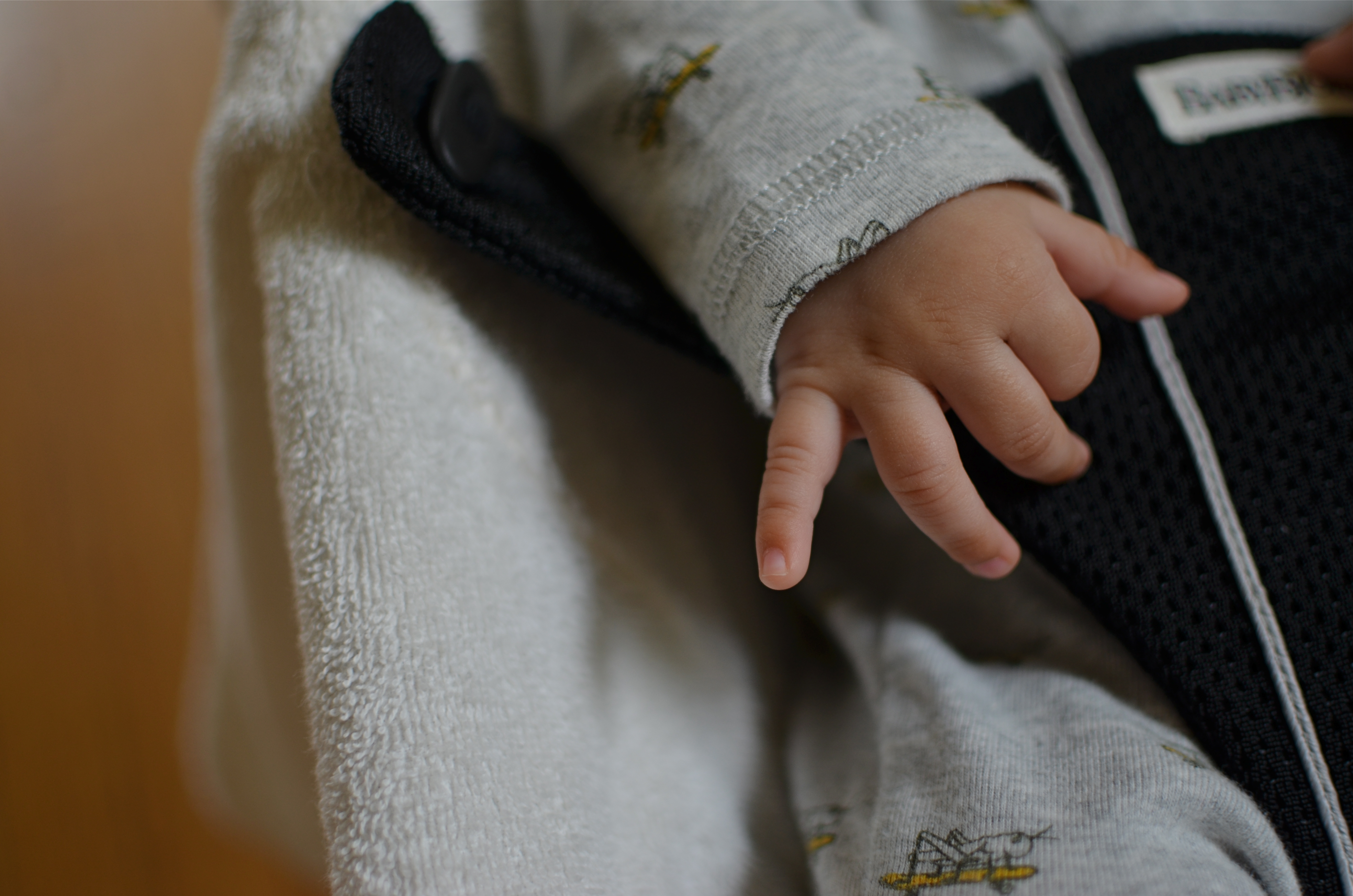
The hand that rocks (in) the cradle rules the world: 1/100 sec., f/1.8, ISO 100, 35mm.
By MICHAEL PERKINS
CHILDREN ARE THE GREATEST DISPLAY SPACES FOR HUMAN EMOTION, if only because they have neither the art nor the inclination to conceal. It isn’t that they are more “honest” than adults are: it’s more like they simply have no experience hiding behind the masks that their elders use with such skill. Since photographs have to be composed within a fixed space or frame, our images are alternatively about revelation and concealment. We choose how much to show, whether to discover or hoard. That means that sometimes we tell stories like adults, and sometimes we tell them like children.
The big temptation with pictures of children is to concentrate solely on their faces, but this default actually narrows our array of storytelling tools. Yes, the eyes are the window to the soul and so forth….but a child is eloquent with everything in his physical makeup. His face is certainly the big, obvious, electric glowing billboard of his feelings, but he speaks in anything he touches, anywhere he runs toward, even the shadows he casts upon the wall. Making pictures of these fragments can produce telling statements about the state of being a child, highlighting the most poignant, and, for us, the most forgotten bits.
Children are all about unrealized potential. Since nothing’s happened yet, everything is possible. Potential and possibility are twin mysteries, and are the common language of kids. Tapping into either one can provide the best element in all of photography, and that is the element of surprise.
ASSISTANTS AND APPROACHES
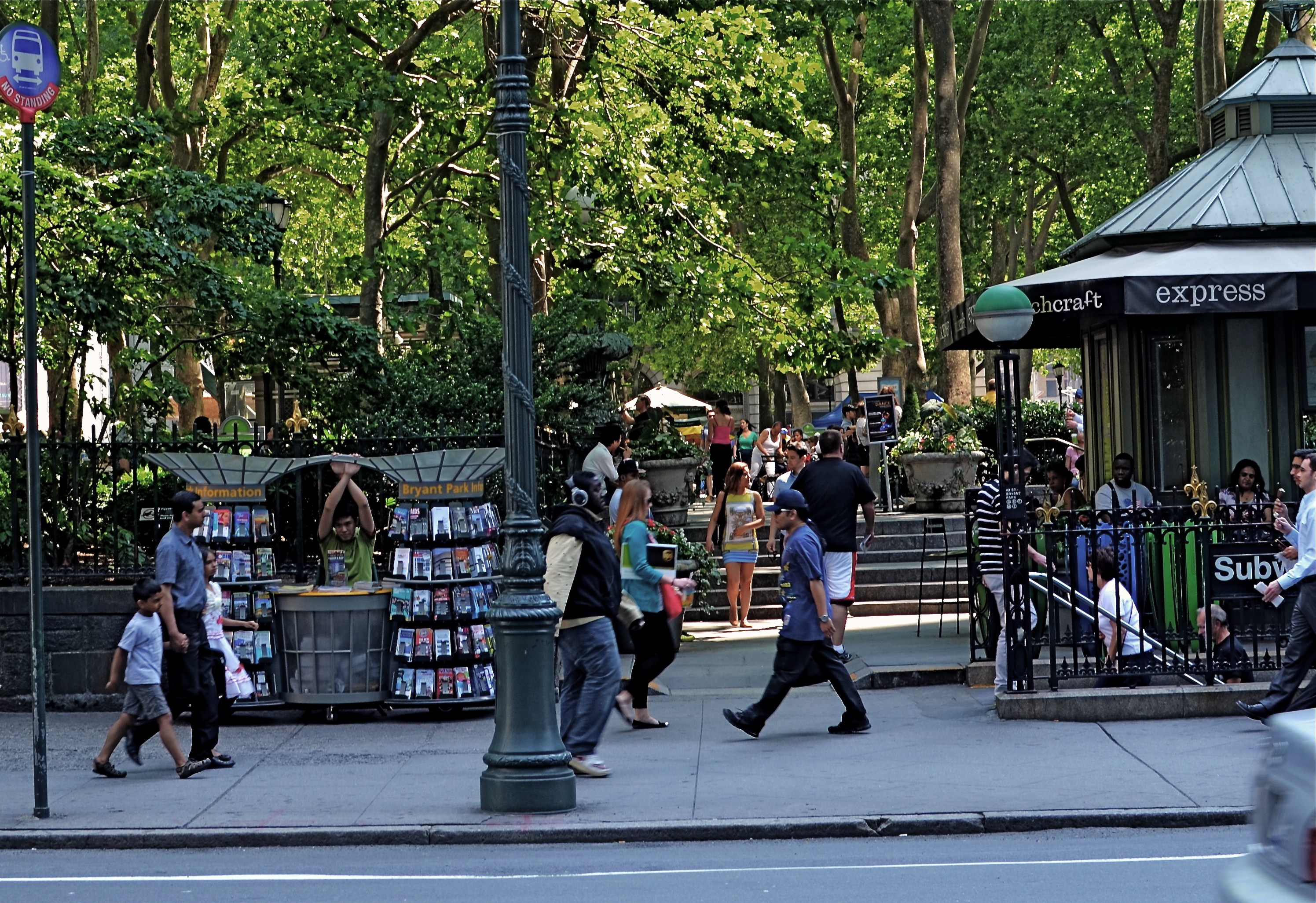
Bryant Park Tableau, 2013. 1/100 sec., f/5.6, ISO 100, 35mm.
By MICHAEL PERKINS
WHO CAN SAY WHY SOMETHING CALLS OUT TO US VISUALLY? I have marveled at millions of moments that someone else has chosen to slice off, isolate, freeze and fixate on, moments that have, amazingly, passed something along to me in their photographic execution that I would never have slowed to see in the actual world. It’s the assist, the approach, if you will, of the photographer that makes the image compelling. It’s the context his or her eye imposes on bits of nature that make them memorable, even unforgettable.
It’s occurred to me more than once that, given the sheer glut of visual information that the current world assaults us with, the greatest thing a photographer can do is at least arrest some of it in its mad flight, slow time enough to make us see a fraction of what is racing out of our reach every second. I don’t honestly know what’s more fascinating; the things we manage to freeze for further consideration, or the monstrous ocean of visual data that is lost, constantly.
There’s a reason photography has become the world’s most loved, hated, trusted, feared, and treasured form of storytelling. For the first time in human history, these last few centuries have afforded us to catch at least a few of the butterflies of our fleeting existence, a finite harvest of the flurrying dust motes of time. It’s both fascinating and frustrating, but, like spellbound suckers at a magic show, we can’t look away, even when the messages are heartbreaking, or horrible.
We are light thieves, plunderers on a boundless treasure ship, witnesses.
Assistants to the seeing eye of the heart.
It’s a pretty good gig.
THE WORLD IN A FACE
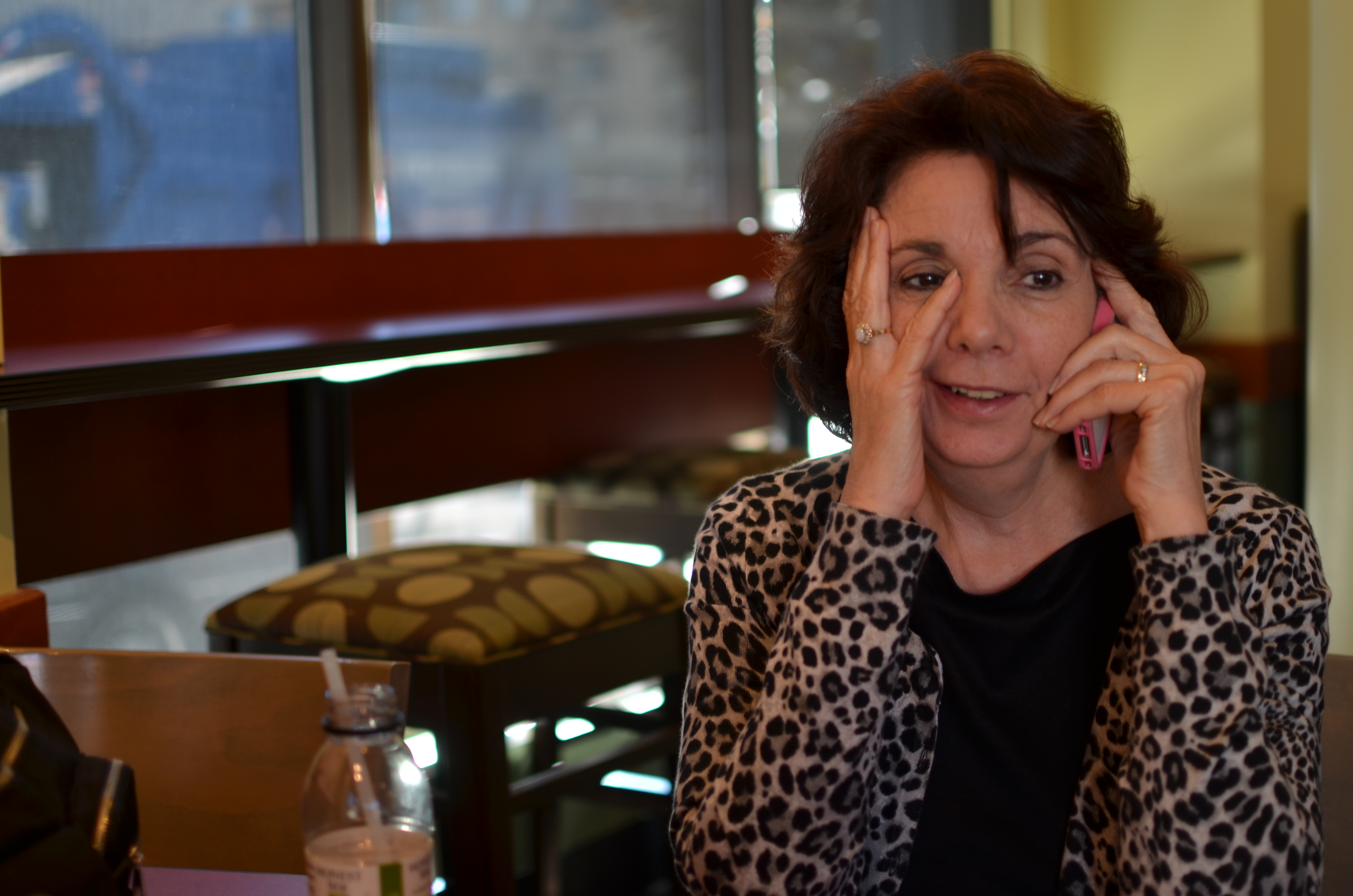
Marian, Los Angeles, November 2013. 1/100 sec., f/1.8, ISO 100, 35mm.
By MICHAEL PERKINS
The mystery isn’t in the technique. It’s in each of us.
THE AMERICAN PHOTOGRAPHER HARRY CALLAHAN , author of the above quotation, knew about the subject of mystery, especially as it regarded women. Make that one woman, namely his wife Eleanor, who posed for Callahan’s camera for sixty-three years in every kind of setting from abstracts to nudes and back again, providing him with his most enduring muse.
Lucky man.
I know exactly how he felt. Because I feel the same way about my own wife, Marian.
Interpreting and re-interpreting a single face over time is one of the best ways I can imagine to train your eye to detect small changes, crucial evolutions in both your subject and your own sense of seeing. And Marian has given me that gift during our time together, as her features seem, to me, to be an inexhaustible source of exploration. It’s a face that is equal parts tenderness and iron resolve, a perfect balance between joy and tragedy, a wellspring of sensations. It is a great face, a great woman’s face, and a fascinating workspace.
Working as I always am to make her relax and forget herself when I am framing her up, I have long since abandoned the practice of announcing that I was going to take her photograph. There is never any posing or sitting. I approach her the way I would a stranger on the street. I wait for the moment when her face is in the act of becoming, than sneak off with whatever I can steal. Sometimes it takes a little more stealth than I am comfortable with, but my motives are simple; I don’t want the mechanics of photography to block what is coming from that face.
Phone conversations are my best friends, as they seem to magically suspend her self-consciousness and her awareness of the schmuck with the camera. And every once in a while, in viewing the results, she bestows my favorite compliment:
“That one’s not too bad…”
For praise like that, I’ll follow a face anywhere. Because the mystery isn’t in the technique.
It’s in all of her.
RISING TO THE OCCASION
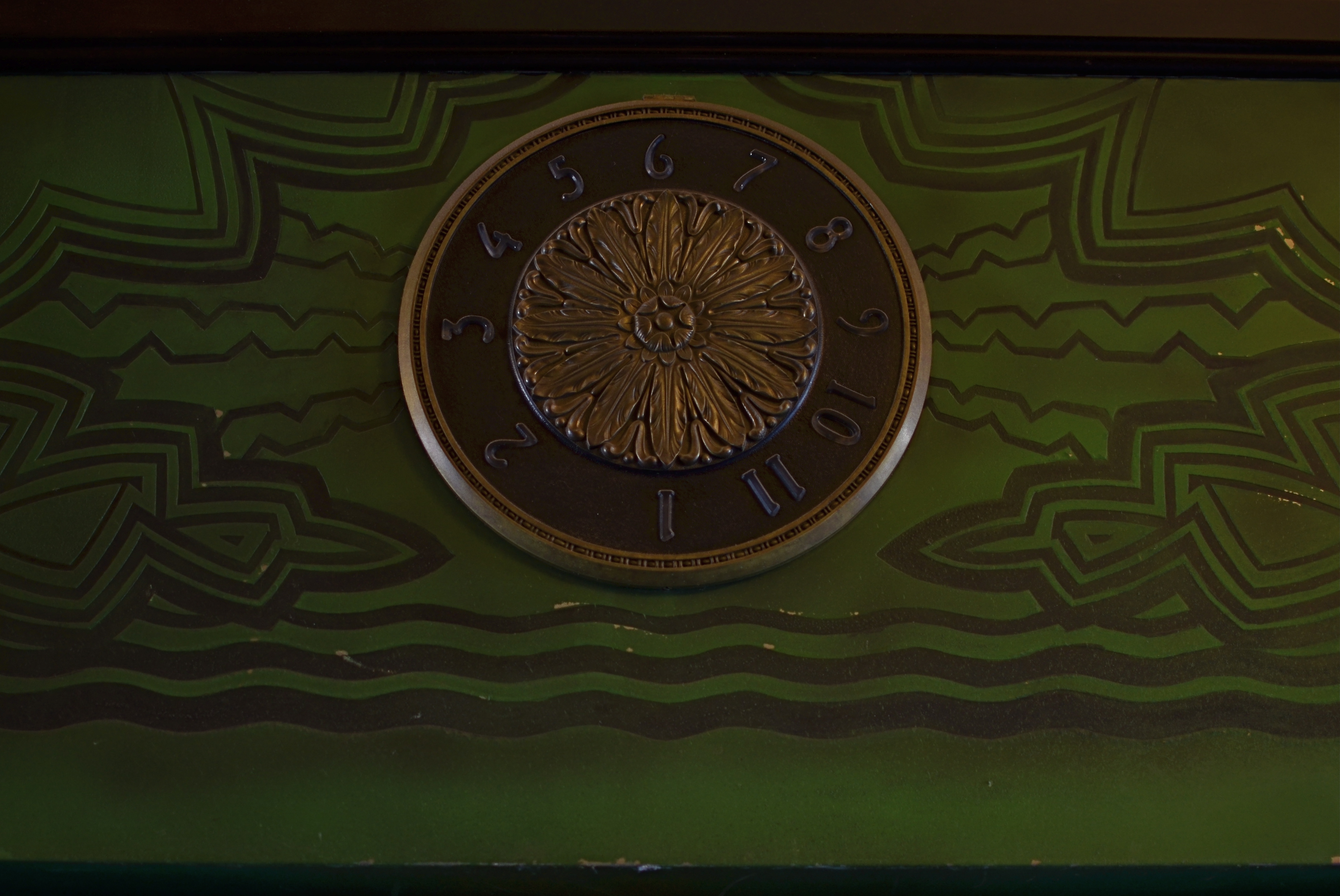
The Desmond building’s elevator floor indicator, circa 1928. 1/40 sec., f/1.8, ISO 100, 35mm.
By MICHAEL PERKINS
LOS ANGELES USED TO BE COMPOSED OF MANY PEOPLE LIKE RUBEN PARDO, the balding, beaming driver of the elevator at the Desmond building at 5500 Wilshire Boulevard. Once upon an urban time long, long, ago there were people who specialized in guiding, in fact, feeling the rise and fall of elevators in cabs they manually controlled. They were the unofficial greeters of their buildings, as familiar with the fortunes of the tenants and clients of their respective towers as the counterman at a diner.
Once, these ascension specialists were turned out in resplendent uniforms befitting their twin duties as both concierge and mechanic. Epaulets. Braided cords. Hats that earned the word “snappy”. Gloves. And always, the inextinguishable smile that Ruben still radiates to all, from the edgy curators of the Desmond’s second floor Gallery “A” to its street level Fed Ex workers to the Deco lovers who float into his lobby to admire his peacock-bedecked elevator doors and the warm mahogany wood of his stately 6×8 foot cab, all original from 1928.
And always, there is the science of measuring the distance between the floors himself, knowing when the car is level, waiting for the right moment to sweep back the flexible cage door that protects his passengers. Watch your step, sir. Turn right and go to the end of the hall, ma’am. Press the button to call me if you finish early, and I’ll come up and get you.
Mr. Pardo has seen Desmond’s descend into the ashes of yesterglory, and now, is still around to see new leases beginning to give the old girl a facelift in one of L.A.’s biggest comeback neighborhoods. Everything old is new again, and, as the crowds start coming back, he is ready.
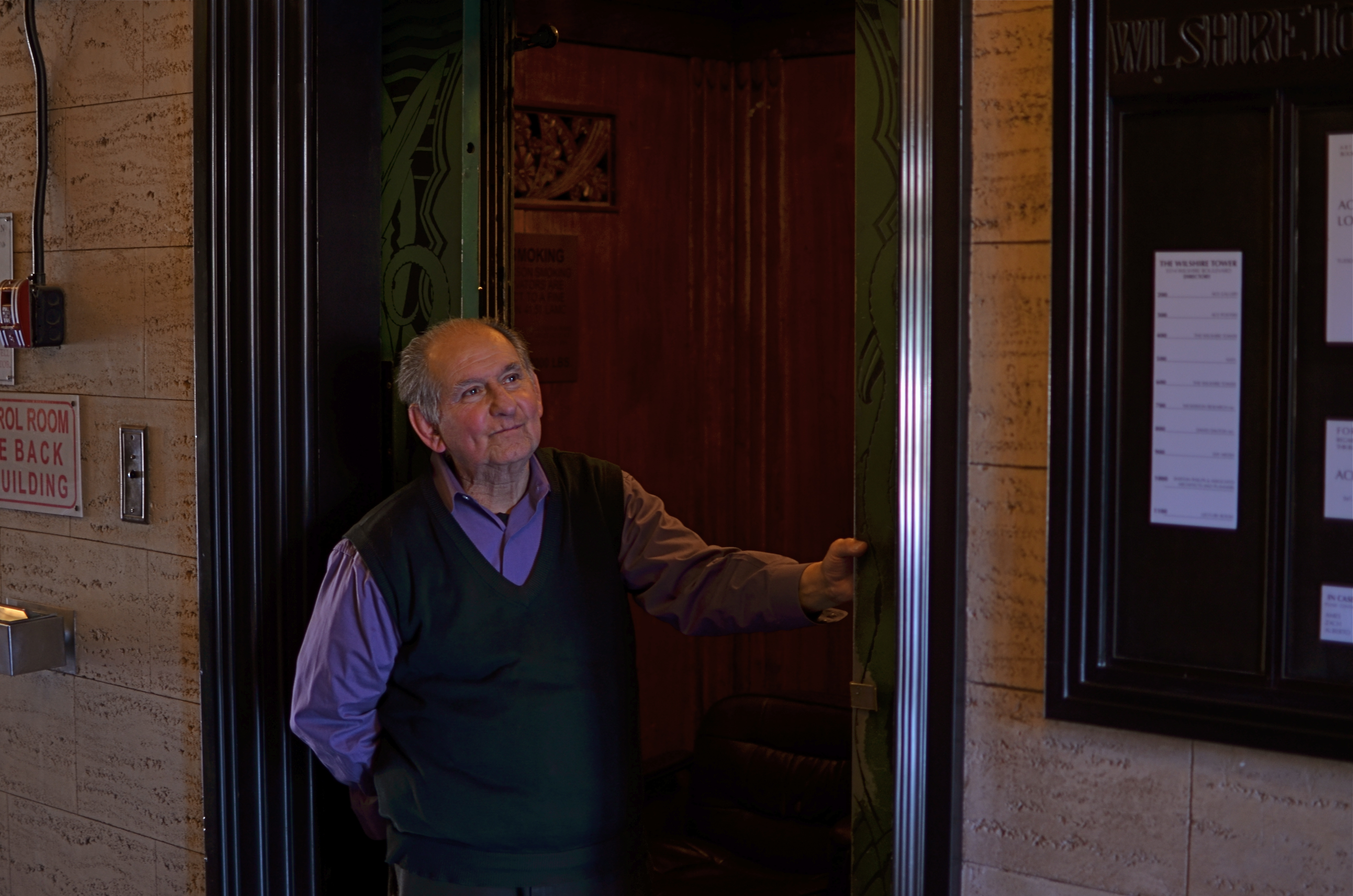
Don’t do the joke about his job having “its ups and downs”: he’s heard it. Ruben Pardo at his post at the Desmond’s elevator. 1/40 sec., f/1.8, ISO 100, 35mm.
I asked Ruben, after thirty-seven years on the job, if he would mind posing for me before his cab. “I’ll just look out toward the street”, he said, and he was right. Mid-morning sun from Wilshire lit his smiling face to perfection as he stood next to his beloved car. It was the look of someone who is doing exactly what he wants to do, a rare thing in a world where we hurry to throw things away, to surge on to we don’t know what. Ruben has earned his little vertical sliver of sky, and he’ll take you up there anytime, himself.
Whenever you’re ready.
 thenormaleye