I MAY HAVE TO WORK LATE
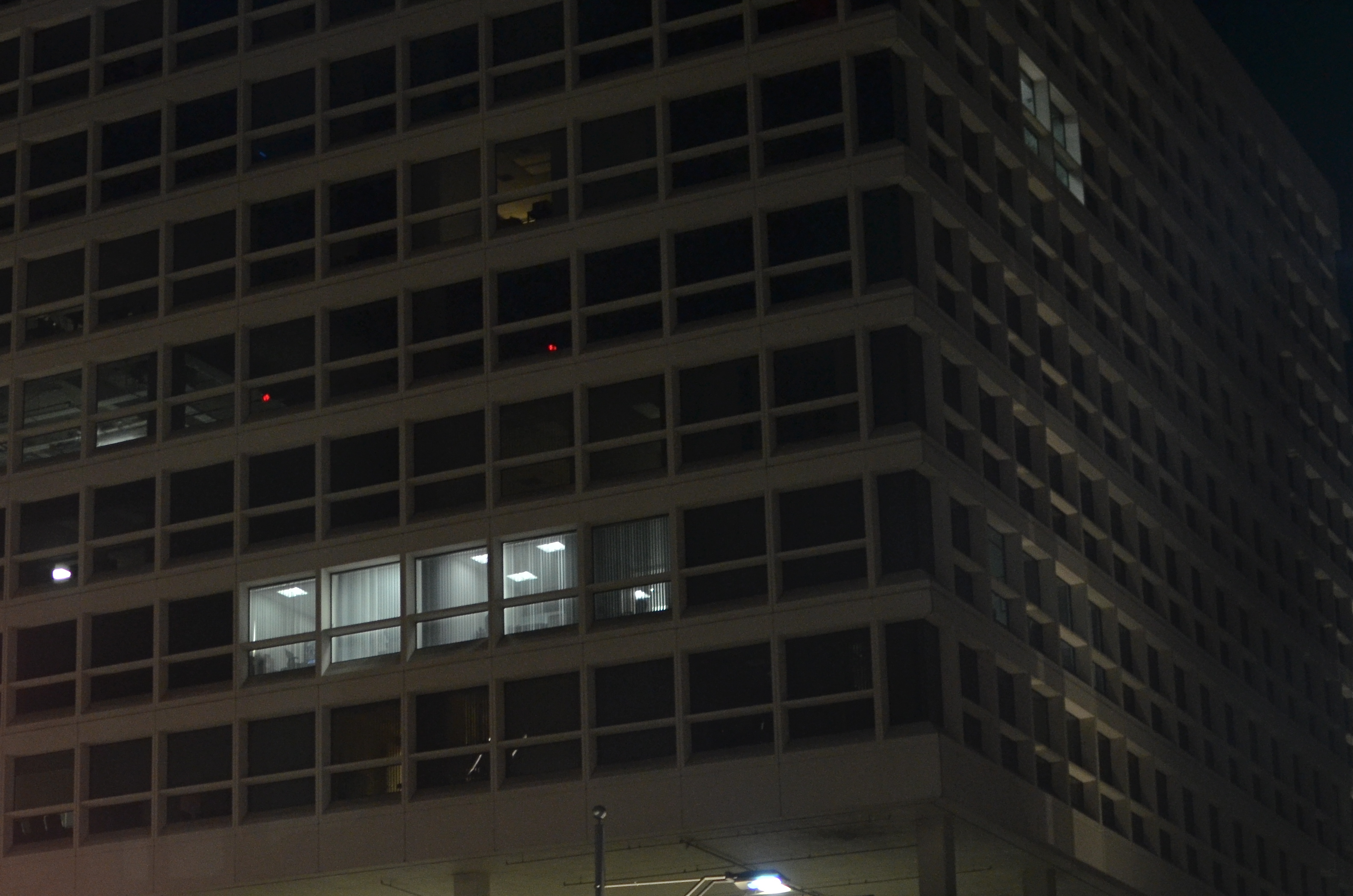
Say Hi To The Cleaning Crew: 1/50 sec., f/1.8, ISO 640, 35mm.
By MICHAEL PERKINS
SOME OF THE BEST HUMAN INTEREST STORIES, EVEN WITH A CAMERA, CAN ONLY BE VIEWED INDIRECTLY. There are many cases in which even the best of us have to merely hint or suggest something about people that we clearly cannot show (or cannot show clearly). Maybe that intractable bit of visual mystery actually bonds us to our audiences, united as we are in speculation about what is beyond that wall or behind that door. The visual tease such photos provide are part of the art of making pictures, in that we are challenged to do more with less, and “show” something beyond the visible.
One of the simplest such stories to capture is very urban in nature: the last remaining nighttime lights in largely dormant buildings. Many of us have been the “last man standing” at the end of an extended work day. Others flee to engagements, family, dinner, but there we sit, chained to our desks until the report/project/research/budget is ready to be put to bed. There’s a readily identifiable feeling of loneliness, plus a little bit of martyr complex, that we can share in the plight of these unknown soldiers of the night.
Whenever I am driving through a city at night, I deliberately seek out those bluish, tube-lit warrens within the cubes and grids of otherwise featureless glass boxes. Who is there? What private eureka or oh, no moments are they experiencing? Which of a million potential dramas are being acted out, and with whom? The uncertainty, even from a photograph with little detail, sparks the imagination, and suddenly our viewers are completing the picture we were forced to deliver unfinished.
It’s the ongoing paradox of photography: what you don’t show is as vital as what you do show.
SUBDIVISIONS
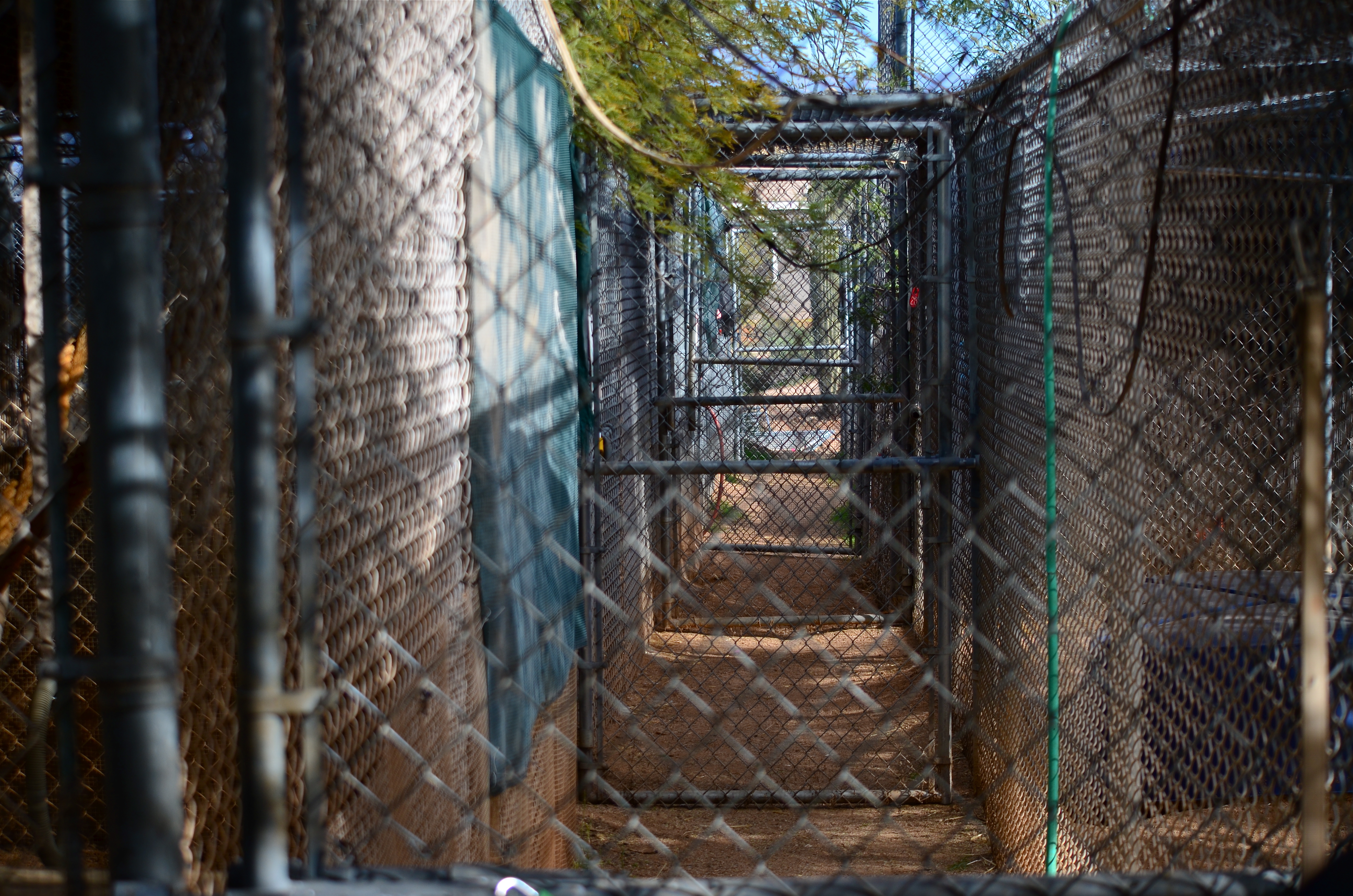
Compartments, 2014.
By MICHAEL PERKINS
SPACE, BY ITSELF, DOESN’T SUGGEST ITSELF AS A PHOTOGRAPHIC SUBJECT, that is, unless it is measured against something else. Walls. Windows. Gates and Fences. Demarcations of any kind that allow you to work space compelling into compositions. Arrangements.
Patterns.
I don’t know why I personally find interesting images in the carving up of the spaces of our modern life, or why these subdivisions are sometimes even more interesting than what is contained inside them. For example, the floor layouts of museums, or their interior design frequently trumps the appeal of the exhibits displayed on its walls. Think about any show you may have seen within Frank Lloyd Wright’s Guggenheim museum, and you will a dramatic contrast between the building itself and nearly anything that has been hung in its galleries.
What I’m arguing for is the arrangement of space as a subject in itself. Certainly, when we photograph the houses of long-departed people, we sense something in the empty rooms they once occupied. There is fullness there inside the emptiness. Likewise, we shoot endless images of ancient ruins like the Roman Coliseum, places where there aren’t even four walls and a roof still standing. And yet the space is arresting.
In a more conventional sense, we often re-organize the space taken up by familiar objects, in our efforts to re-frame or re-contextualize the Empire State, The Eiffel, or the Grand Canyon. We re-order the space priorities to make compositions that are more personal, less popular post card.
And yet all this abstract thinking can make us twitch. We worry, still, that our pictures should be about something, should depict something in the documentary sense. But as painters concluded long ago, there is more to dealing with the world than merely recording its events. And, as photographers, we owe our audiences a chance to share in all the ways we see.
Subdivisions and all.
BLACK IS THE NEW QUIET
By MICHAEL PERKINS
PERHAPS IT’S MY FATHER’S LOVE OF THOREAU AND EMERSON. Maybe it’s a late-in-life turn toward the meditational. It most certainly is due, in part, to a life-long adoration of all things bookish. Whatever the exact mix, I regard library space as far more sacred than the confines of any church or chapel. Many find their faith flanked by stained glass; I get centered in the midst of bookshelves.
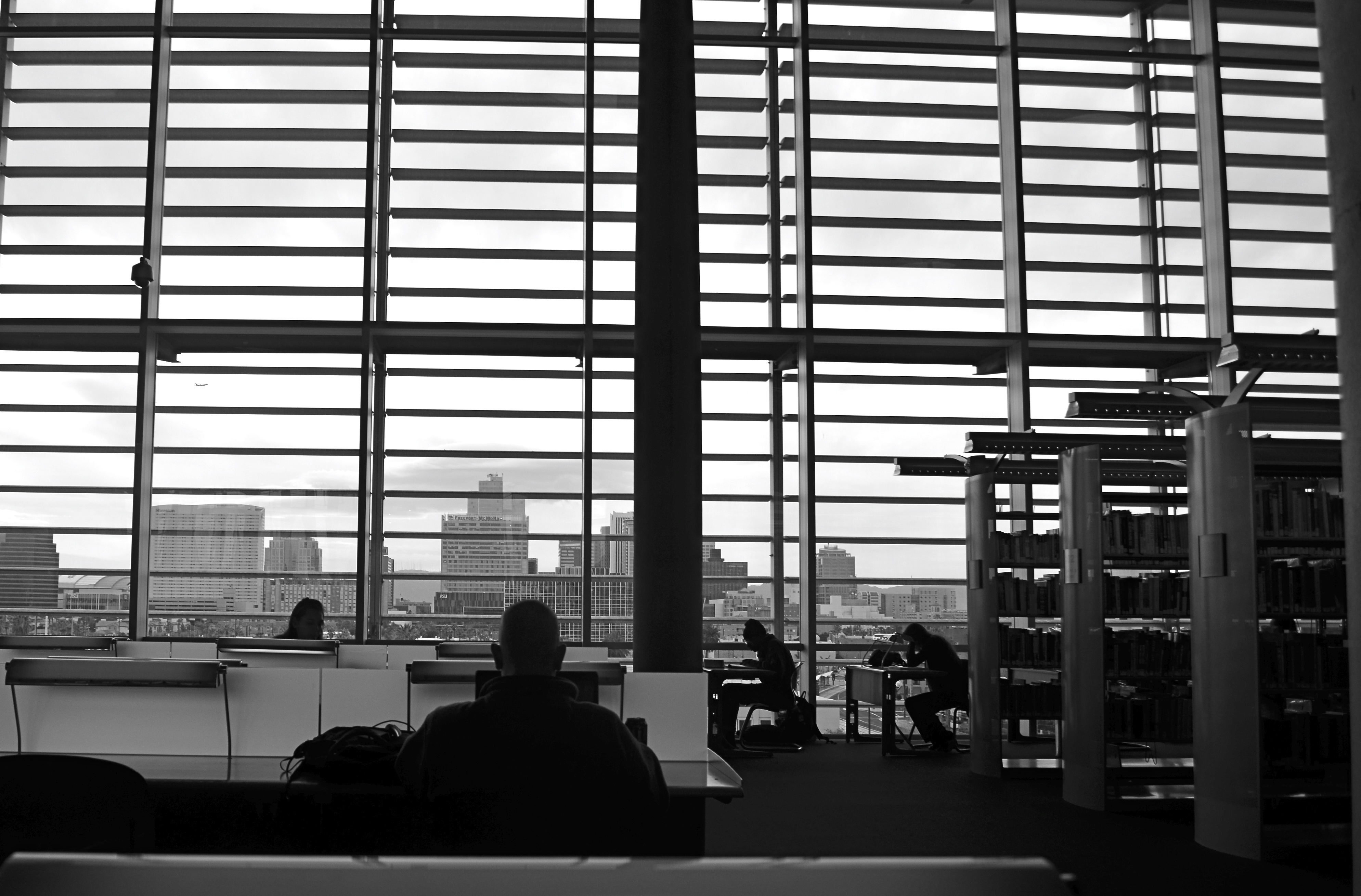
Solitude: An in-camera monochrome at 1/250 sec.,f/5.6, ISO 100, 18mm.
And if libraries are my churches, reading rooms are the sanctuaries, the places within which the mind can be channeled into infinite streams, and where, incidentally, perfect mental quiet can translate into visual quiet. And that, for me, means black and white images. Color can be too loud, proud, and garish, wherein monochrome is the language of privacy, intimacy, and a perfect kind of silence. You might say black is the new quiet.
Inside reading rooms, the faces and clothing of the patrons seems, well, irrelevant to the mood. They have all come seeking the same thing, so compositionally, they are, themselves, all alike, and seeing them in silhouette against the larger details of the room seems to enhance the feeling of reverent quiet. As for composing, letting the room’s massive window take up 3/4 of the frame kept the readers as a small understatement along the bottom baseline of the shot. And, since I was reluctant to ruin the atmosphere of the room, or risk my “invisibility” with more than one audible click to betray me, I chose to go for broke with a single black & white image. I exposed for the cityscape beyond the window, to guarantee that the readers would be rendered as shapes, and that was it.
Having successfully purloined a treasure from within the Church Of The Holy Book, I proceeded to beat it.
Quietly.
JUST ENOUGH
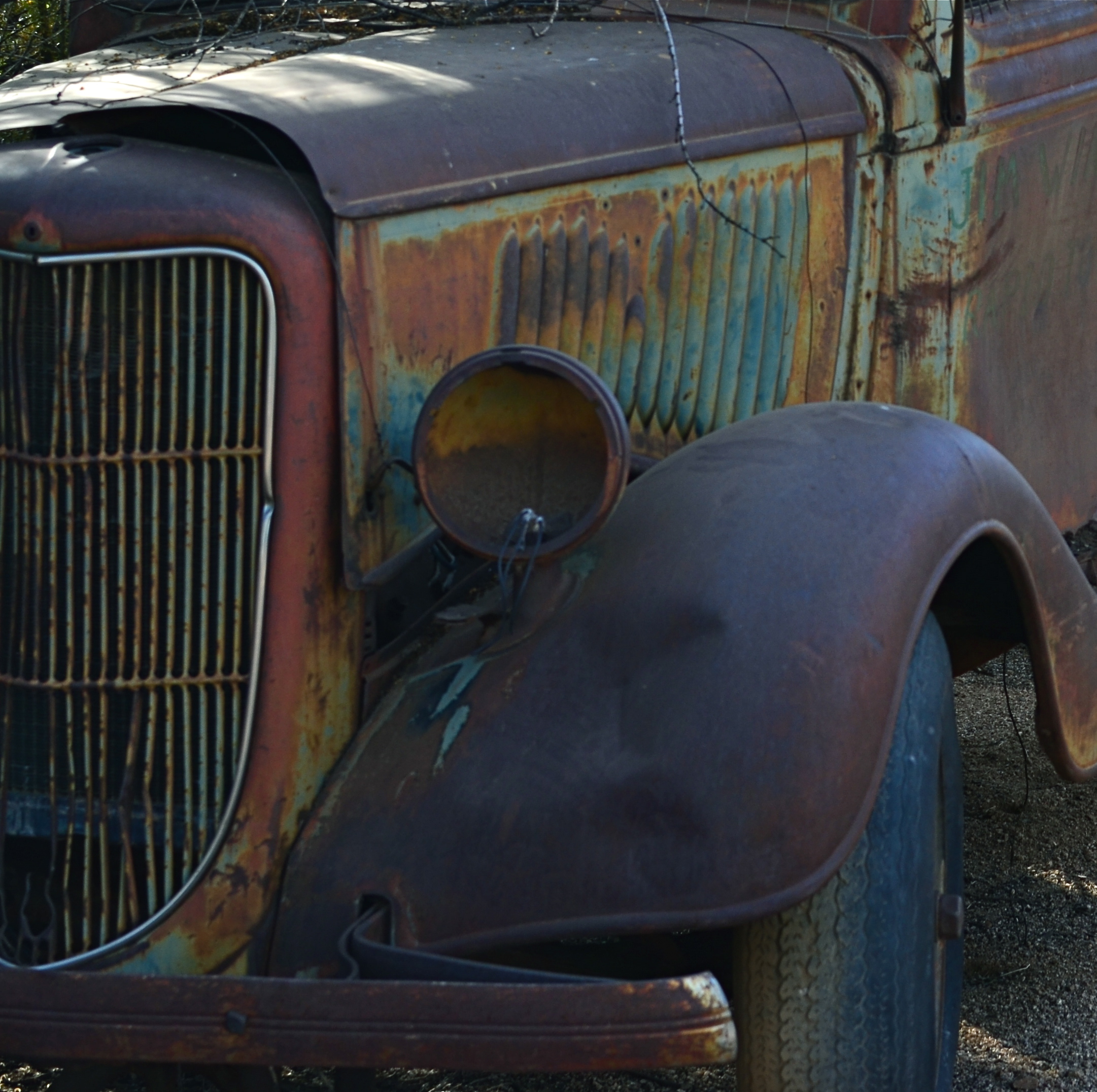
1/250 sec., f/5.6, ISO 100, 35mm.
By MICHAEL PERKINS
I’VE PROBABLY SCRIBBLED MORE WORDS, IN THESE PAGES, ABOUT OVERCROWDED SHOTS than about any other single photographic topic, so if I sound like I’m testifyin’ in the Church-Of-I-Have-Seen-The-Light, bear with me. If any single thing has been a common theme in the last five years of my photography (or a factor in my negligible growth), it’s been the quest to take pictures that tell just enough, then back off before they become cluttered with excess visual junk.
Composing a photograph, when we start out as young budding photogs, seems to be about getting everything possible into the frame. All your friends. All the mountains and trees. Oh, and that cute dog that walked by. And, hey, those clouds, aren’t they something? Then, as we grow grayer of beard and thinner of scalp, the dead opposite seems to be true. We begin looking for things to throw away in the picture. Extra visual detours and distractions that we can pare away and, not only still have a picture, but, ironically, have more of a picture, the less we include. It’s very Zen. Or Buddhist. Or Zen Buddhist. Or something. Hey, I ain’t Depak Chopra. I just get a smidge better, as I age, at not making every image into a Where’s Waldo tapestry.
Especially in an age of visual overload, it’s too easy to make photographs that make your eye wander like a nomad all over the frame, unsure of where to land, of what to fix upon. Unable to detect the central story of the shot. Professionals learn this before any of the rest of us, since they often have to submit their work to editors or other unfeeling strangers outside their family who will tell them where their photos track on the Suck-O-Meter. There’s nothing like having someone that you have to listen to crumple up about 90% of your “masterpieces” and bounce them off your nose. Humility the hard way, and then some. But, even without a cruel dictator screaming in your ear that you ought to abandon photography and take up sewer repair, you can train yourself to take the scissors to a lot of your photos, and thereby improve them.
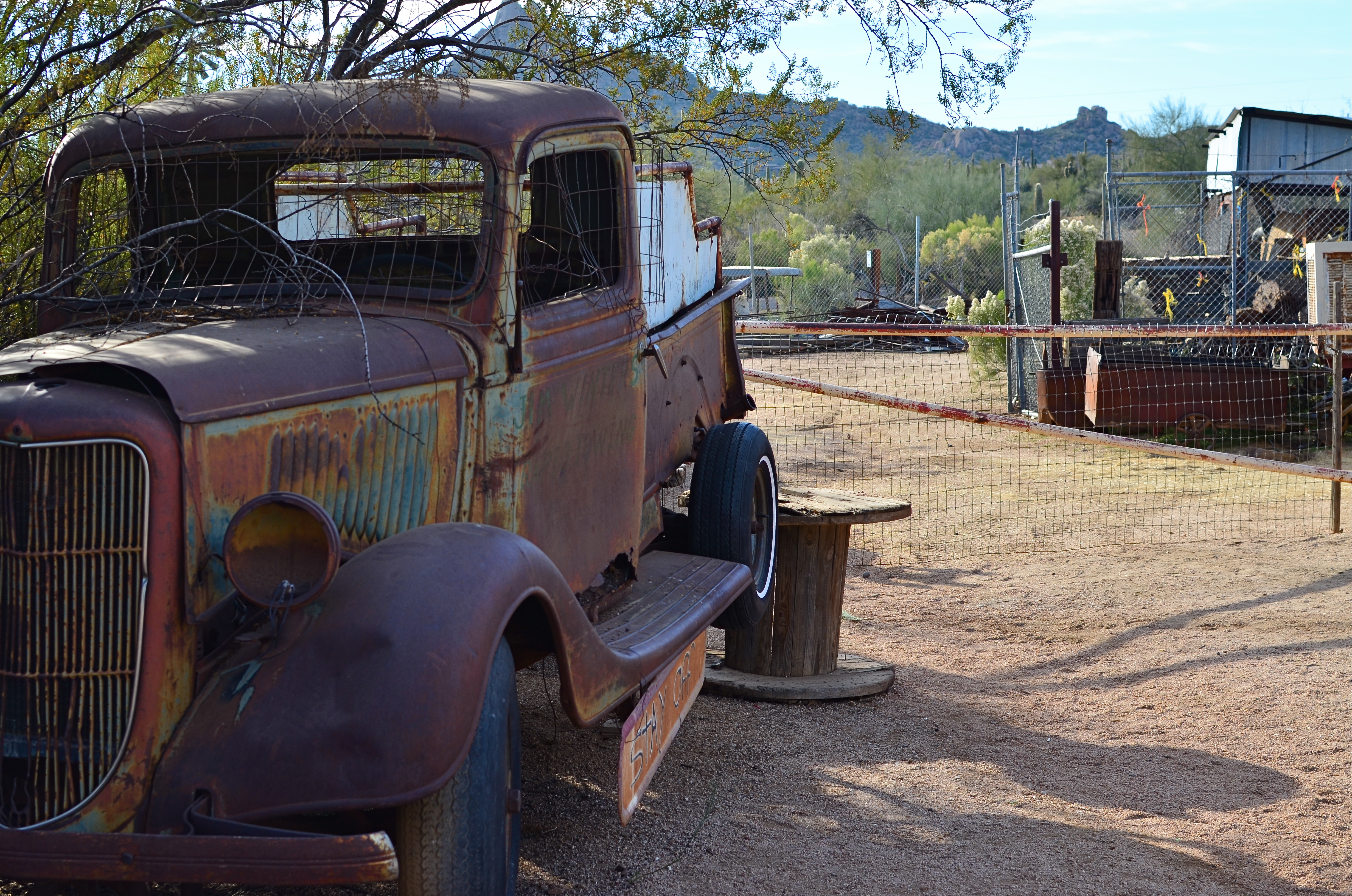
The original shot. Cool truck, but what’s all that lame junk off to the side?
The image up top began with the truck occupying just part of what I hoped would be a balanced composition, showing it in the context of a western desert scene. Only the truck is far more interesting a subject than anything else in the image, so I cropped until the it filled the entire frame. Even then, the grille of the truck was worthy of more attention than the complete vehicle, so I cut the image in half a second time, squaring off the final result and shoving the best part of the subject right up front.
The picture uses its space better now, and, strong subject or weak, at least there is no ambiguity on where you’re supposed to look. Sometimes that’s enough. That’s Zen, too.
I think.
RE-FIXING THE FIX
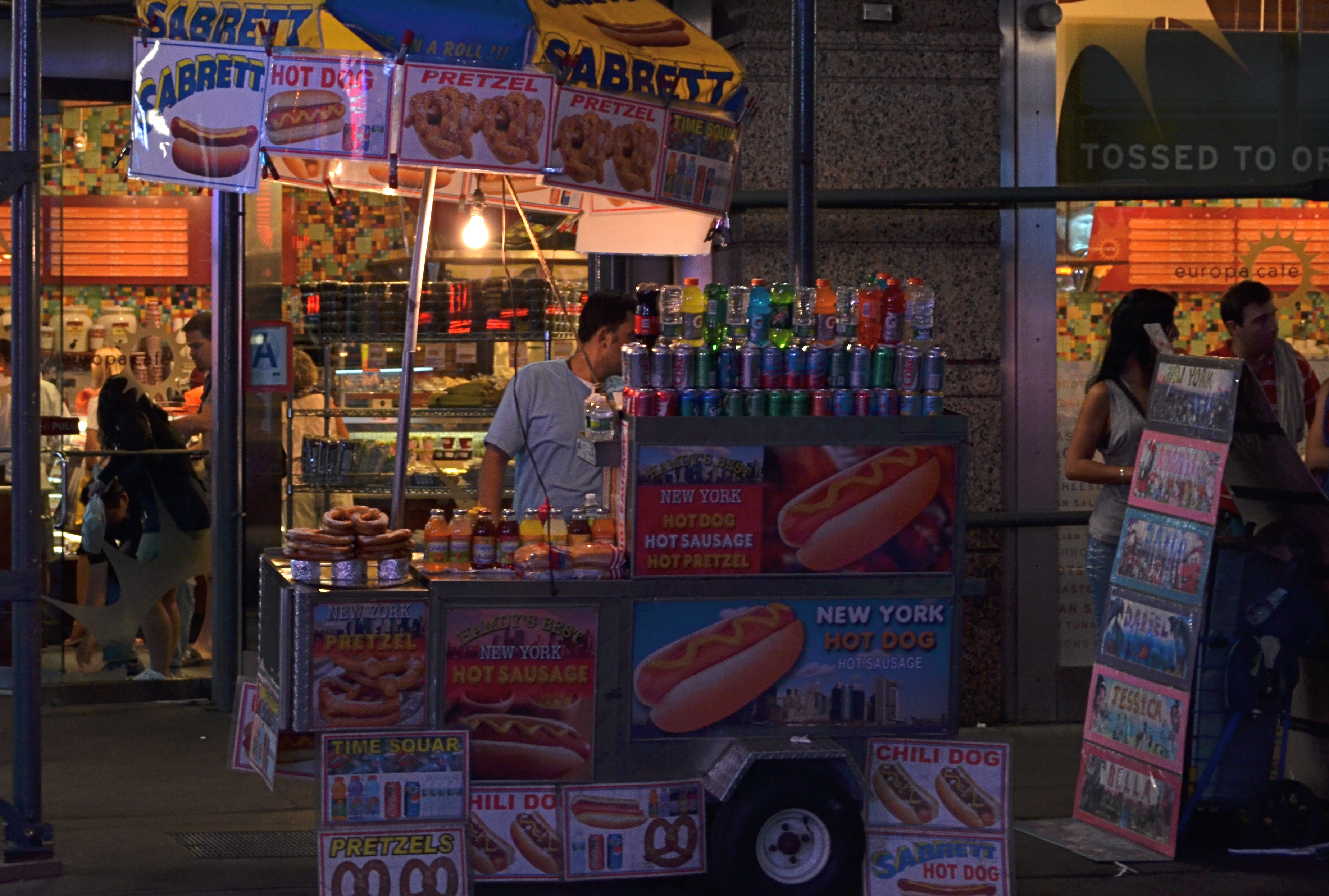
Think this picture’s bad now? Hey, wait til I start messing with it. 1/40 sec., f/8, ISO 320, 55mm.
By MICHAEL PERKINS
I CAN HEAR MY MOTHER NOW: “Don’t pick at it, you’ll get it infected”.
Okay, she usually was referring to a scab on a skinned knee. But often, when I can’t stop interfering needlessly with an image, I could swear she’s talking about photographs.
You know the ones I mean. The near misses that you would swear could be transformed into masterpieces with just one….more…tweak. Or maybe two. Or thirty. They are often the pictures we love most, like bad kids, simply because they had such potential, at least until we snapped the shutter. Then we stick them, flaws and all, on life support and start playing with things. Contrast. Color. Exotic filters. A spoonful of sugar. A pound and a half of good intentions.
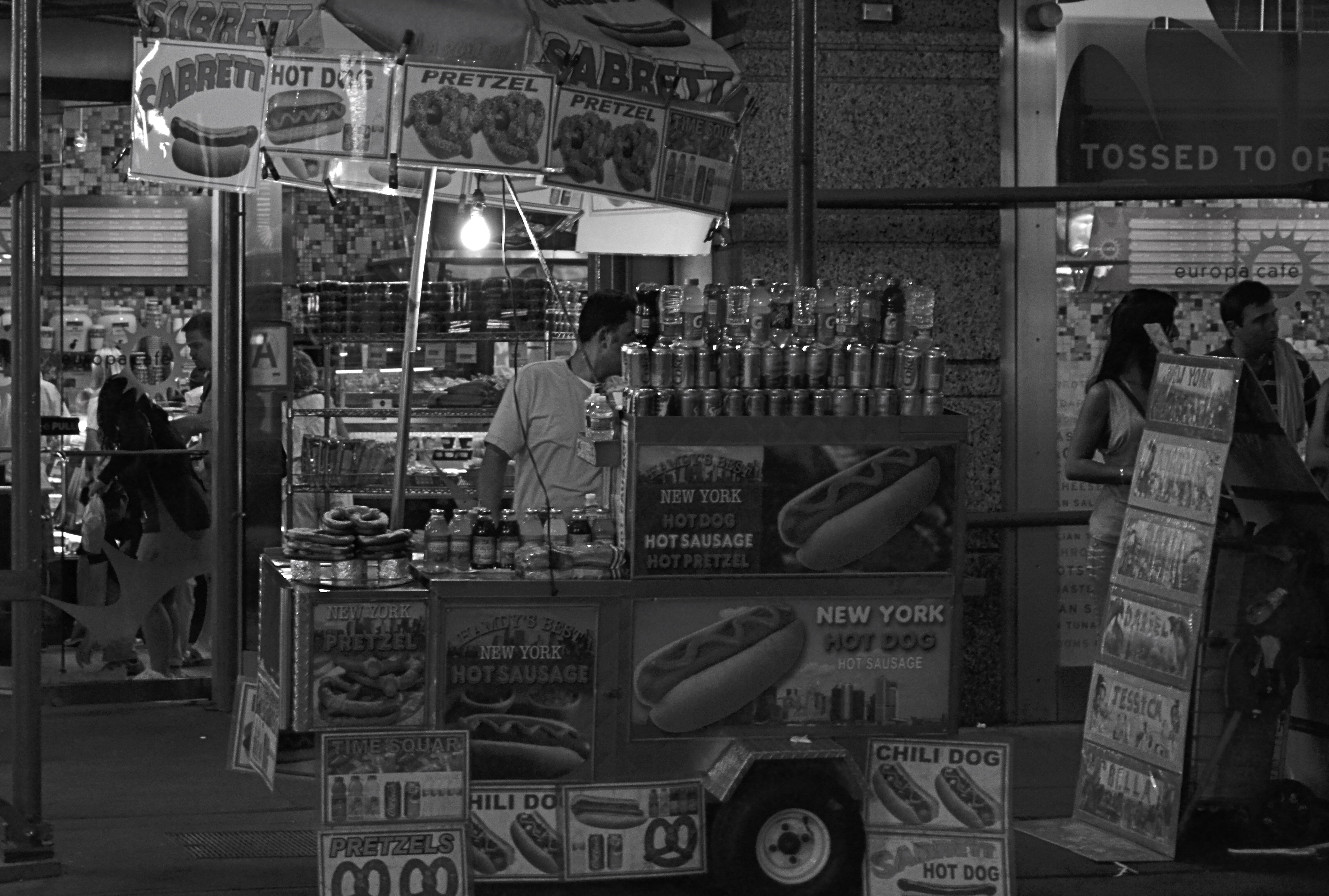
The same shot in monochrome. Yeah, less is sometimes just less.
And, sometimes, by getting our tweak on in a heavy-handed fashion, we make things worse. We render them garish, or glowing, or gooey, and still not what we intended. It’s like tutoring a kid that will never ever make the honor roll. It seems like we ought to be able to do something.
That’s the story of the above color street shot, taken just after sundown in Times Square. All the elements of a good picture are there, but the thing is just all right, nothing more, nothing less. At some point before I first posted it on Flickr, I got the brilliant notion that it would look more “authentic” if desaturated to black and white. Re-examining it more than a year later, I realized “authentic” was code for maybe I can distract people from the fact that I didn’t really bring it home in this shot. Once it was monochromed, the image was actually robbed of whatever minimal punch it might have originally had. All the zippy color of the signage and soda cans was banished, to replaced by….a really dull and narrow range of half-tones. All the depth and presence went out the same exit door as the color, but I went ahead and posted it anyway, trying to convince myself that I had made it much more “street”, when all I had really done was strip out the carnival hues that really said “Broadway”. I had worked against myself, and, worse, I had wasted time on a shot which should have gone in the reject pile from day one.
It’s not a miserable photo, and maybe that’s what really hard to accept. It might have been something. What I should have done, while I was there, was keep trying about ten more frames of this guy and maybe saving the concept. You know, try to get the photo right in the first place. Yeah, I know, how quaint. Thing is, once it was a mediocre picture inside the camera, all I could do was pick the scab.
And then it got infected.
Sorry, Mom.
AMPLIFIER
By MICHAEL PERKINS
EVERY MAJOR CITY AROUND THE WORLD THAT BOASTS BOTANIC GARDENS OR PLANT CONSERVATORIES HAS EXPERIENCED THE STRANGE MIXTURE of biology, art, and science created by the glass installations of Dale Chihuly. Beginning as a starving student in Venice in the late ’60’s, Chihuly has carved out a unique niche for himself as the premier maestro of art glass creations, marked by strange, venous bulbs, eerie tendrils, and massive towers of color, all wrought together in a psychedelic weave of texture and (frequently) enormous scale. If Peter Max blew glass instead of spewing paint, he’d be Dale Chihuly. Like Max, Chihuly has benefited greatly from the ever-hot debate over the permanence or value of his work. And if you don’t like it, he, in the words of Liberace, cries all the way to the bank.
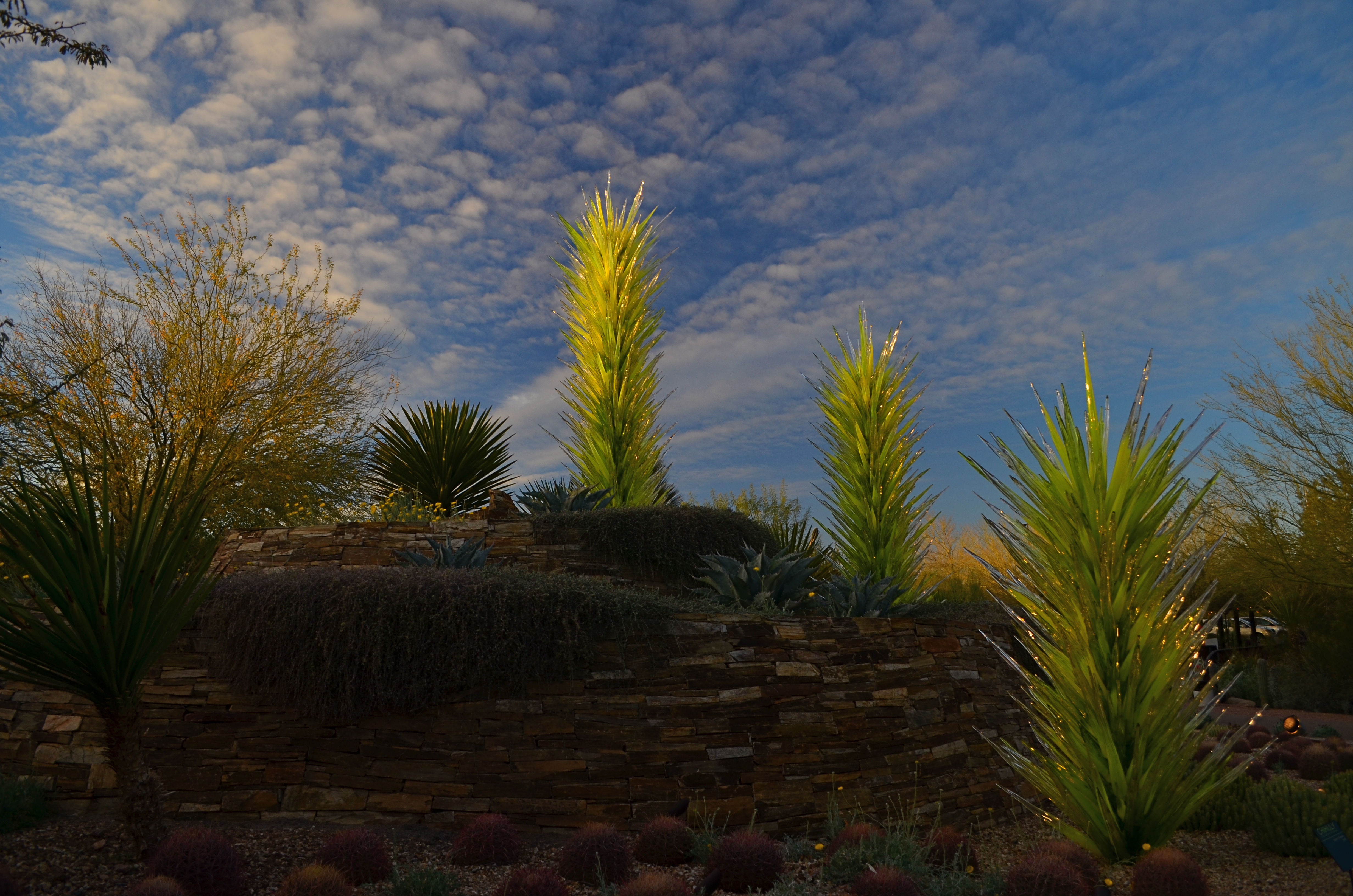
Doubling up on color by combining intense Arizona sunset light with some help from a polarized filter. 1/125 sec., f/5.6, ISO 100, 18mm.
For the botanical denizens of the non-profit universe, however, the Chihuly phenomenon does have one indisputable trait: it puts butts in the seats. Gardens the world over record insane increases in attendance far beyond their normal “fan base” when Dale’s gorgon-like creations hit town and go mano-a-mano with their daisies and daffodils. For photographers, the juxtaposition of the organic and the “alt-ganic” is irresistible, and, here in the southwest, where sun is all, the extreme effects of our desert light give Chihuly’s glassworks a supernatural quality.
The Arizona “golden hour” just before final sunset produces very deep and intense color, and the Chihuly works installed at Phoenix’ Desert Botanical Garden catch it like neon prisms. Go a little further and add, say, a polarizing filter to this natural amplification of color, and the hues go into overdrive. It’s Golden Hour on steroids.
The three glass “bushes” in the above frame, installed permanently at the DBG’s guest arrival area, are high enough above average terrain to act as light blotters for the late afternoon light. The addition of the polarizing filter seems to double the effect, although it will deepen and darken shadows in other parts of the images, and so exposure choices become a mite trickier. In this case, the striated clouds overhead also benefited from the tweak as they stood in sharper contrast against the sky, but, full disclosure, that part was dumb luck.
But hey, even dumb luck can make you a little smarter. And buy you a bigger chunk of “luck” next time. Does Dale do it for me as an artist? Does it even matter? His stuff creates light opportunities, and you can serve me up a plate of that anytime.
DISTORTION AS DESIGN
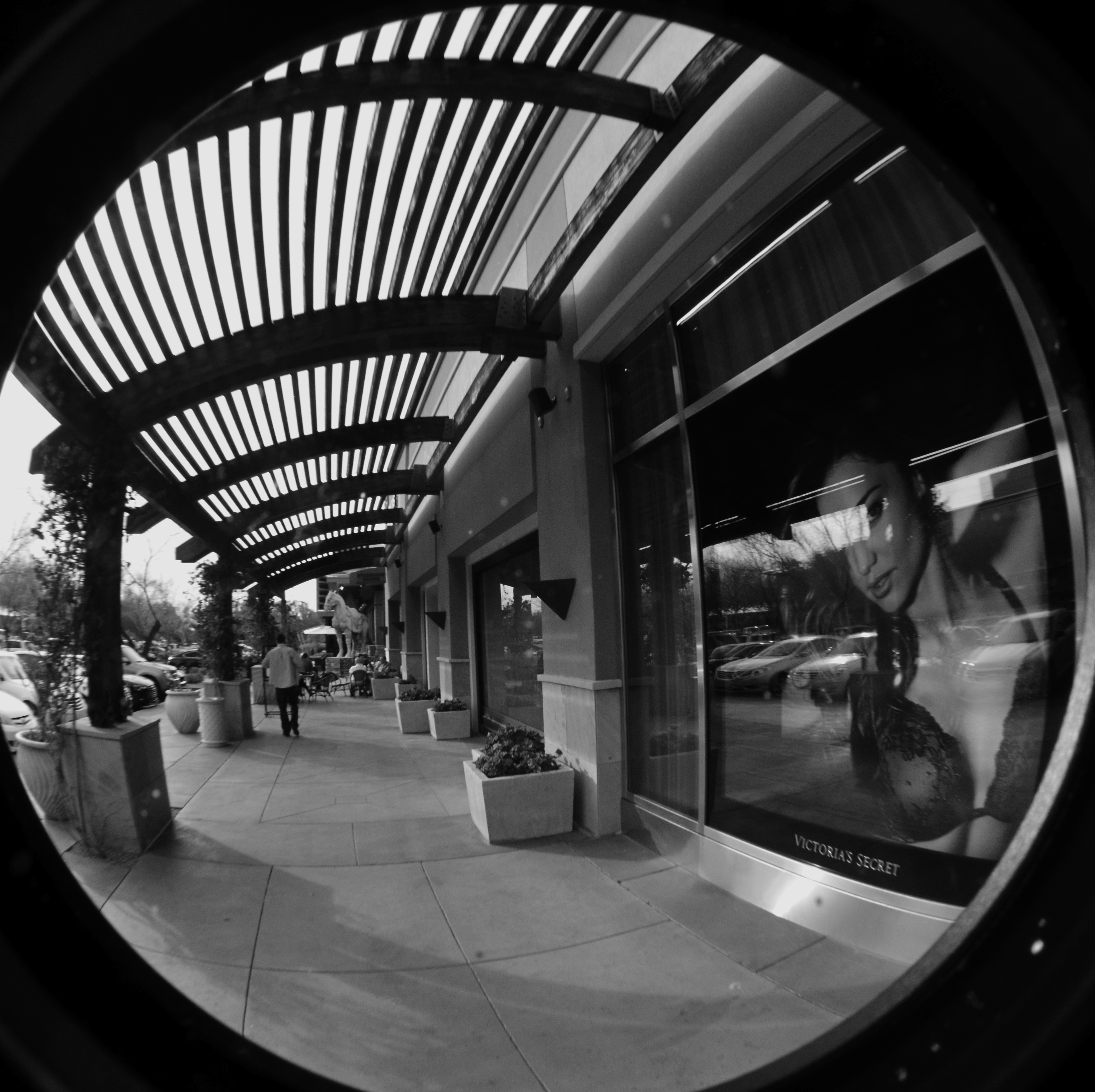
Overhead parallels bent with a fisheye to yank the eye for forcefully into the frame, maybe impose a little claustrophobia. 1/80 sec., f/22. ISO 640, 8mm
By MICHAEL PERKINS
BORN INTO A PAINTER’S WORLD, PHOTOGRAPHY NATURALLY INHERITED THAT DISCIPLINE’S BIAS TOWARD SHOWING THE WORLD “AS IT IS“, and, in fact, the first fifty years of photographic images seem to be in a neck-and-neck race with painting for the best rendering of the world at large. Then the 20th century kind of dope-slapped humanity’s collective sense of “reality”, as a world war, the onrush of science, and the rise of secular thought combined to question what the hell we needed with reality, anyway. The arts were shaken to their foundations, and photography and painting spiraled off onto wild new side roads. All bets for what defined a “picture” were off.
That’s not to say that photography has remained visually unbound through the decades. It almost acts like the flow and ebb of the surf. Photos surge toward pure documentation, then pull back into pure effect. They roll forward into an absolute deconstruction of the real world, then clamber back into the safety of literal pictorialism. One day we’re trying to recreate a wilderness landscape with perfect fidelity; the next day we’re reducing all “subjects” moot, reducing everything to shape and light.
I have had to spend many years getting comfortable with abstractions in my photography. It’s not like I don’t have ideas that wander far from the visual mainstream. If anything, I’ve had to learn to trust those visions, to stop worrying about whether they have “value” versus some rigid, if invisible,standard. While some shooters started with an absolutely open attitude toward the camera, pointing, framing and living completely by whim or instinct (the Instagram and Lomo kids of my Stone Age), I was absolutely, unwaveringly serious about arranging or capturing things as I literally saw them. It was a very clenched approach, even if it did teach me the physics of the medium. I had to learn to hold things very tightly before learning to let anything go.
And it took a very long time.
The great gift of the digital era is that many “accounting” issues (how much film do I have left? where can I go to get these processed? do they sell my kind of film in this end of town?) are just plain gone, and, with them, a little of the constipated approach that they imposed on me. At my age, it no longer matters a damn how long I shoot, how many times I “fail”, or who does or does not choose to anoint the results. There are no teachers or parents left to show off for, no competition with anyone except myself. I am free to use surfaces as straight lines or use distortion as a design element.
The truth speaks with forked tongue: in some ways I am glad that I am no longer young, since I have finally lived long enough to “age” into my photographic niche. And it also makes me sad that I am no longer young, because I really want to run with this ball, and I realize that Time might knock my legs out from underneath me before I make it all the way down the field. Still, we are here, and here is where we have to concentrate our energy. It’s the only control we have. Or, in the words of Edna St.Vincent Millay:
My candle burns at both ends; It will not last the night;
But ah, my foes, and oh, my friends— It gives a lovely light.
DRIVING THE IMAGE
 By MICHAEL PERKINS
YOU CAN FILL A LIBRARY SHELF WITH OPPOSING ARGUMENTS ON LIGHT’S ROLE IN PHOTOGRAPHY, not necessarily a debate on how to capture or measure it, but more a philosophical tussle on whether light is a mere component in a photograph or enough reason, all by itself, for the image to be made, regardless of the subject matter.
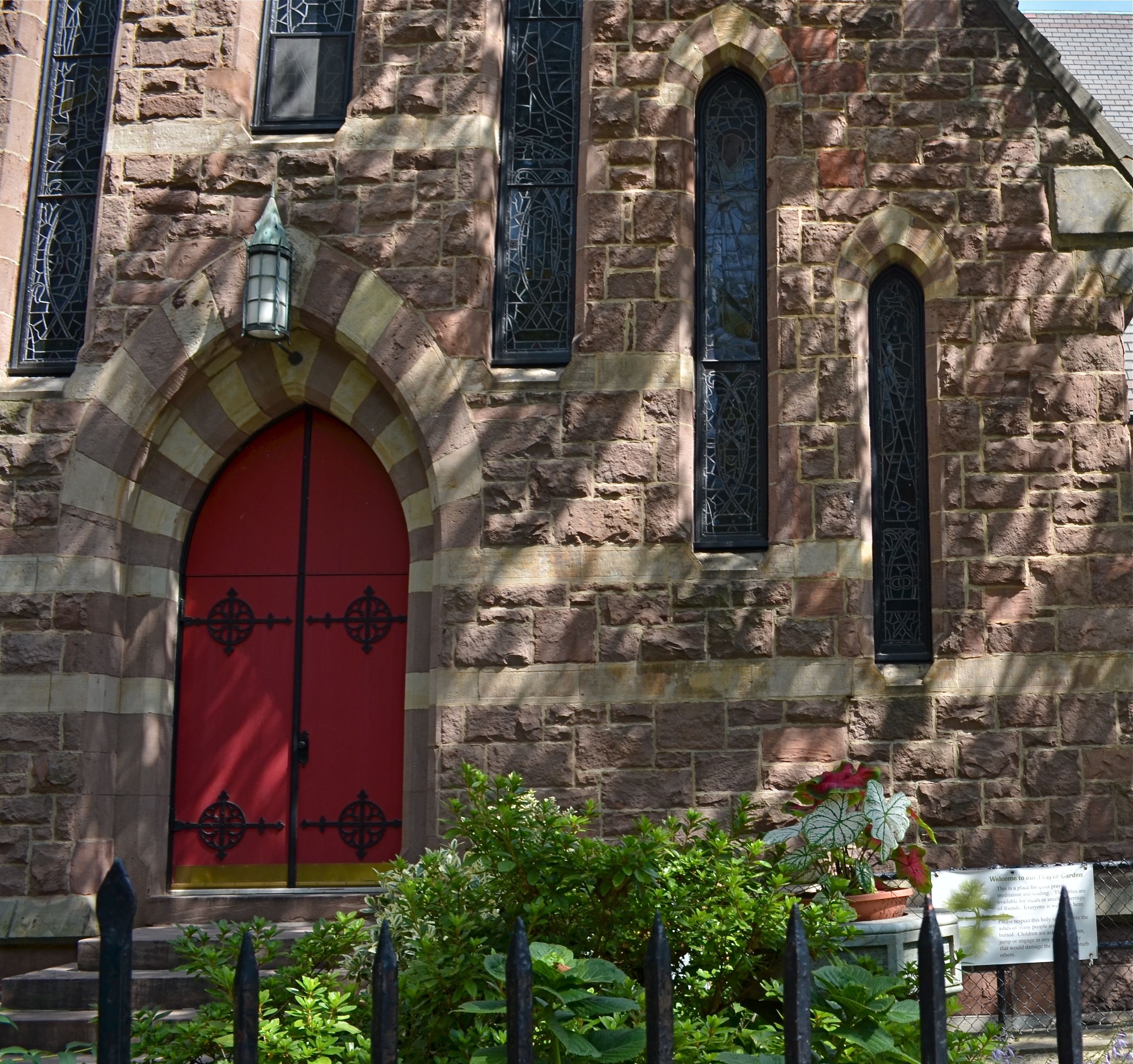
The answer, for me, is different every time, although more often than not I make pictures purely because the light is here right now, and it will not wait. I actually seem to hear a clock beginning to tick from the moment I discover certain conditions, and, from that moment forward, I feel as if I am in a kind of desperate countdown to do something with this finite gift before it drifts, shifts, or otherwise mutates out of my reach. Light is running the conversation, driving the image.
“In the right light, at the right time, everything is extraordinary”, the photographer Aaron Rose famously said, and I live for the chance to ennoble or, if you will, sanctify something by how it models or is embraced by light. Certainly I usually go out looking for things to shoot, but time and time again something shifts in my priorities, forcing me to look for ways to shoot.
The practical world will look at a photograph and ask, understandably, 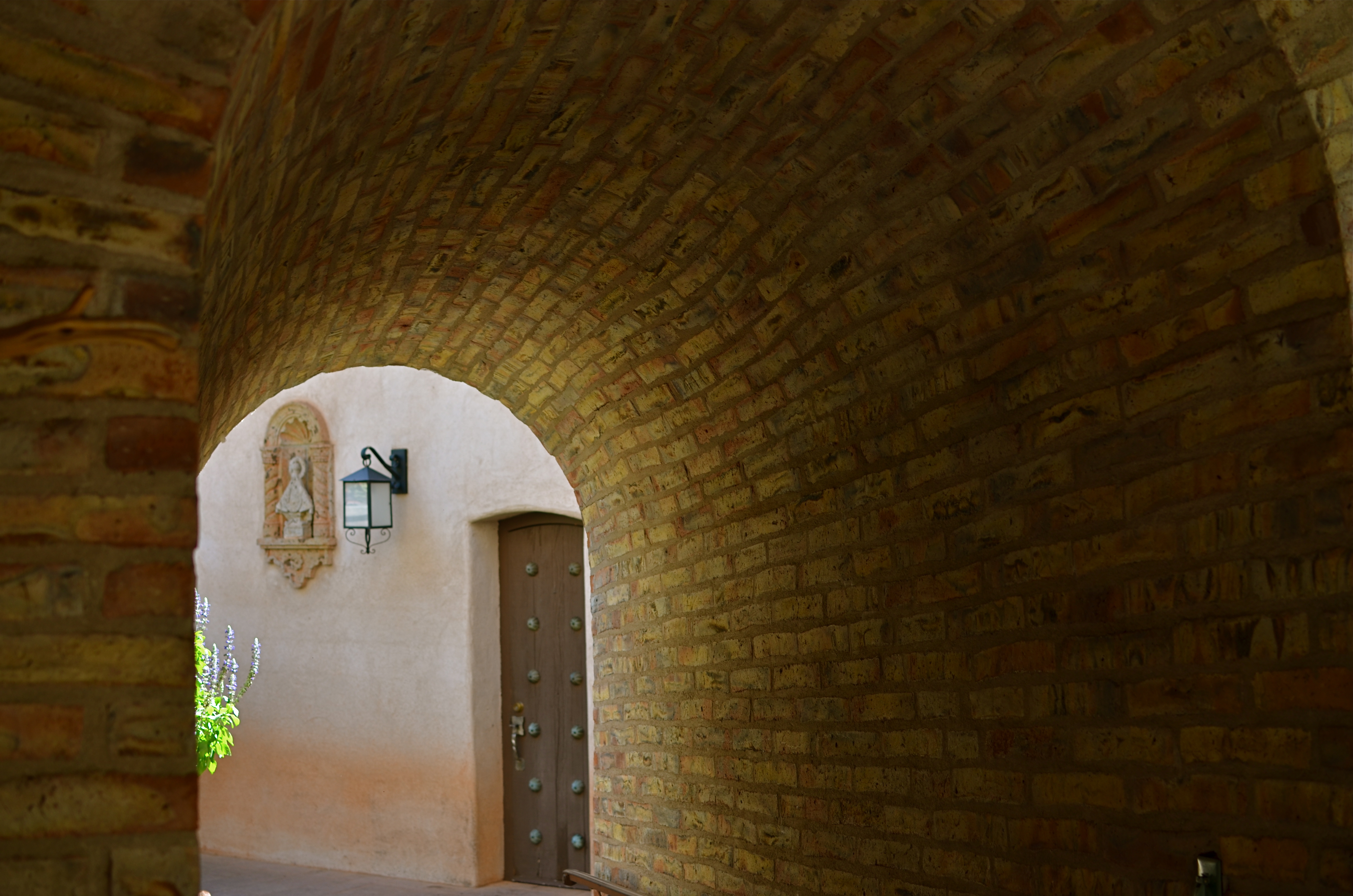 “what is that supposed to be?”, or, more pointedly, “why did you take a picture of that?” This makes for quizzical expressions, awkward conversations and sharp disagreements within gallery walls, since our pragmatic natures demand that there be a point, an objective in all art that is as easily identifiable as going to the hardware for a particular screw. Only life, and the parts of life that inspire, can’t ever function that way.
We often decide to make an important picture of something rather than make a picture of something important. That’s not just artsy double-talk. It’s truly the decision that is placed before us.
Alfred Steiglitz remarked that “wherever there is light, photography is possible”. That’s an unlimited, boundless license to hunt for image-makers. Just give me light, the photographer asks, and I will make something of it.
THE OLD, DARK HOUSE
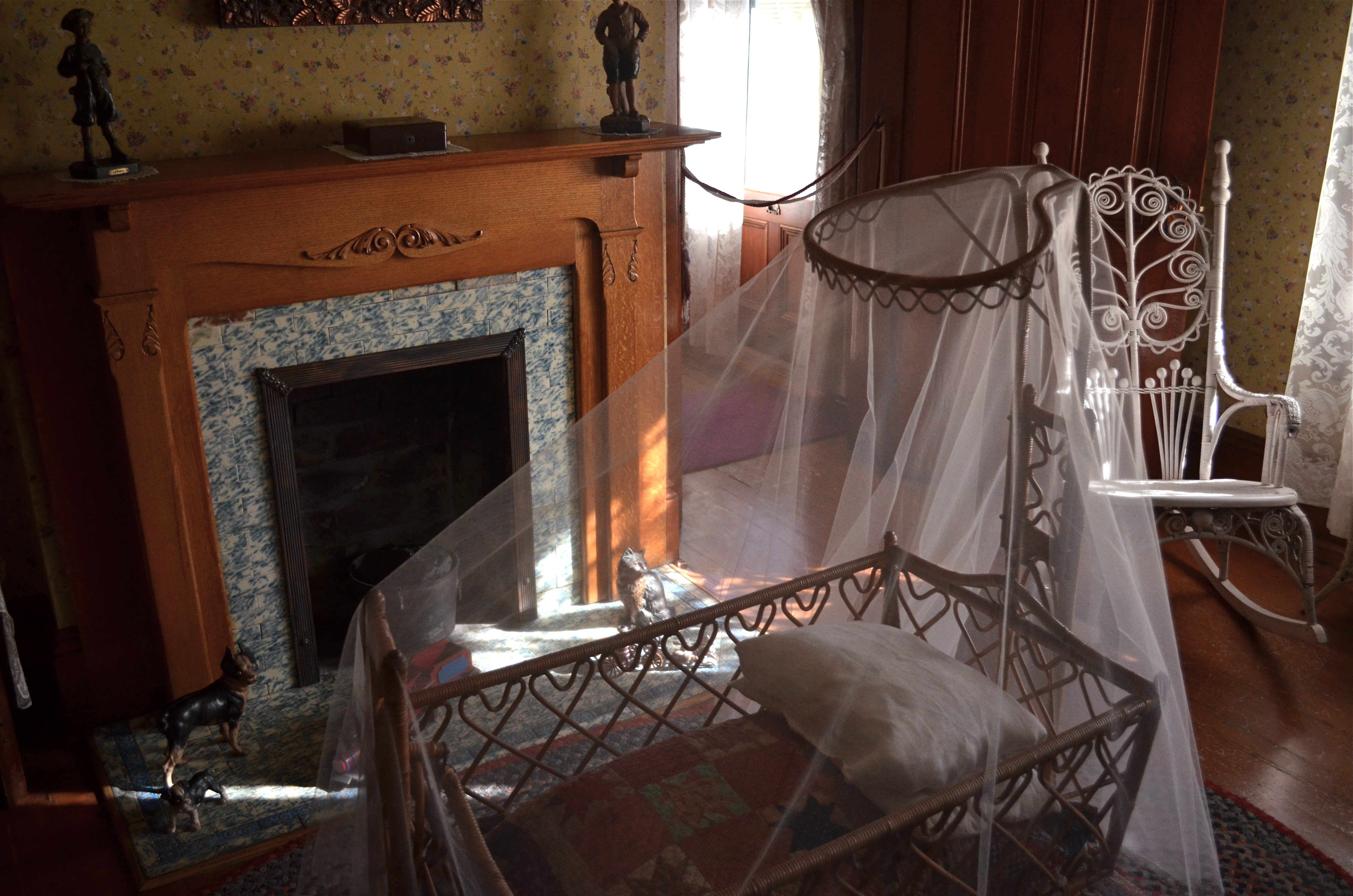
Child’s bedroom, Rosson House Museum, Phoenix, AZ. 1/80 sec., f/3.8, ISO 640, 22mm.
By MICHAEL PERKINS
THE ULTIMATE ADAGE ABOUT OLD HOUSES, I.E.,”THEY SURE DON’T MAKE ‘EM LIKE THIS ANYMORE“, is a sentiment which will haunt the casual photographer at every turn inside an historic home. No, they don’t make them anything like this anymore, especially when it comes to the size of rooms, angles of design, decorative materials, or light flow, and so shooting an antique residence requires a little re-fitting of the brain to insure that you come home with something that you can, you know, bear to look at.
Another cliché that comes to mind, this one about size: “the kitchen was so small, you had to go outside to chew.” Again, it can’t become a cliché unless it’s partially true, and it does apply to many of the rooms in pre-1950’s houses. People were shorter. The concept of personal space, especially in an urban setting, seems claustrophobic to us today. That makes for photos that will also look cramped and tight, so shoot with as wide a lens as you can. This is the place for that 18-55mm kit lens you got with your camera, since it will slightly exaggerate the side-to-side and front-to-back distances within the smaller rooms. It will also allow you to get more in the frame when composing at shorter distances, which, on velvet rope tours, can be reduced to inches.
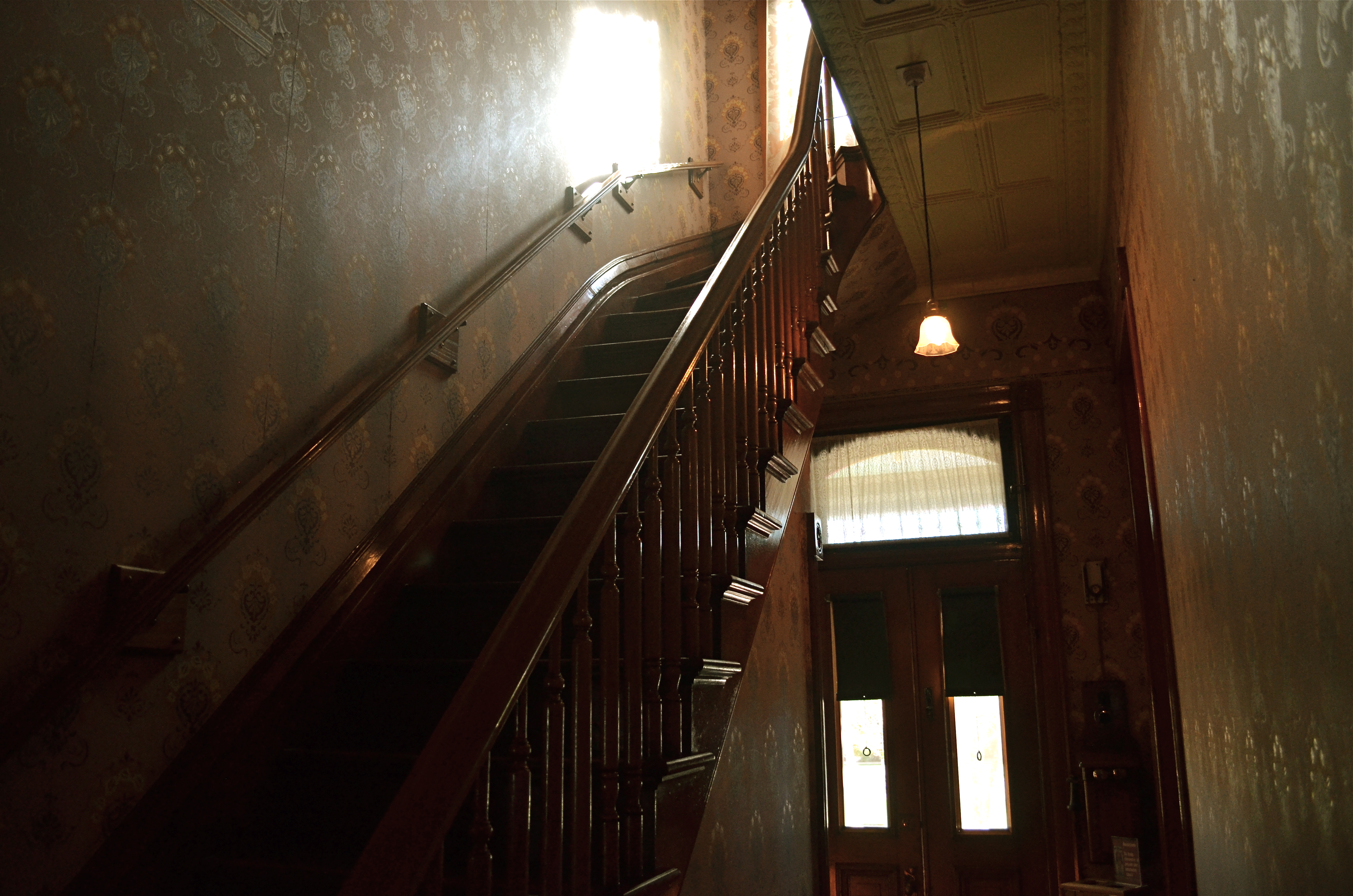
Multiple sources of light can make things tricky. 1/40 sec., f/3.5, ISO 800, 18mm.
One crucial thing to be mindful of is that 90% of the light you get on old house tours will be window light. Highlights will almost certainly be blown out on things like sheer drapes, but you need all the light you can get, since it’s a cinch that flash will be prohibited and the interior wood trims, floors and furnishings will likely be very dark in themselves, acting as light blotters. Learn to live with the extreme contrasts and resulting shadowy areas. Expose for the most important elements in a room. You cannot show everything to perfect advantage. In some interior rooms in older homes, you don’t have a shot at all, unless you ditch the rest of the tour group and have about twenty minutes to yourself to set things up. Unlikely.
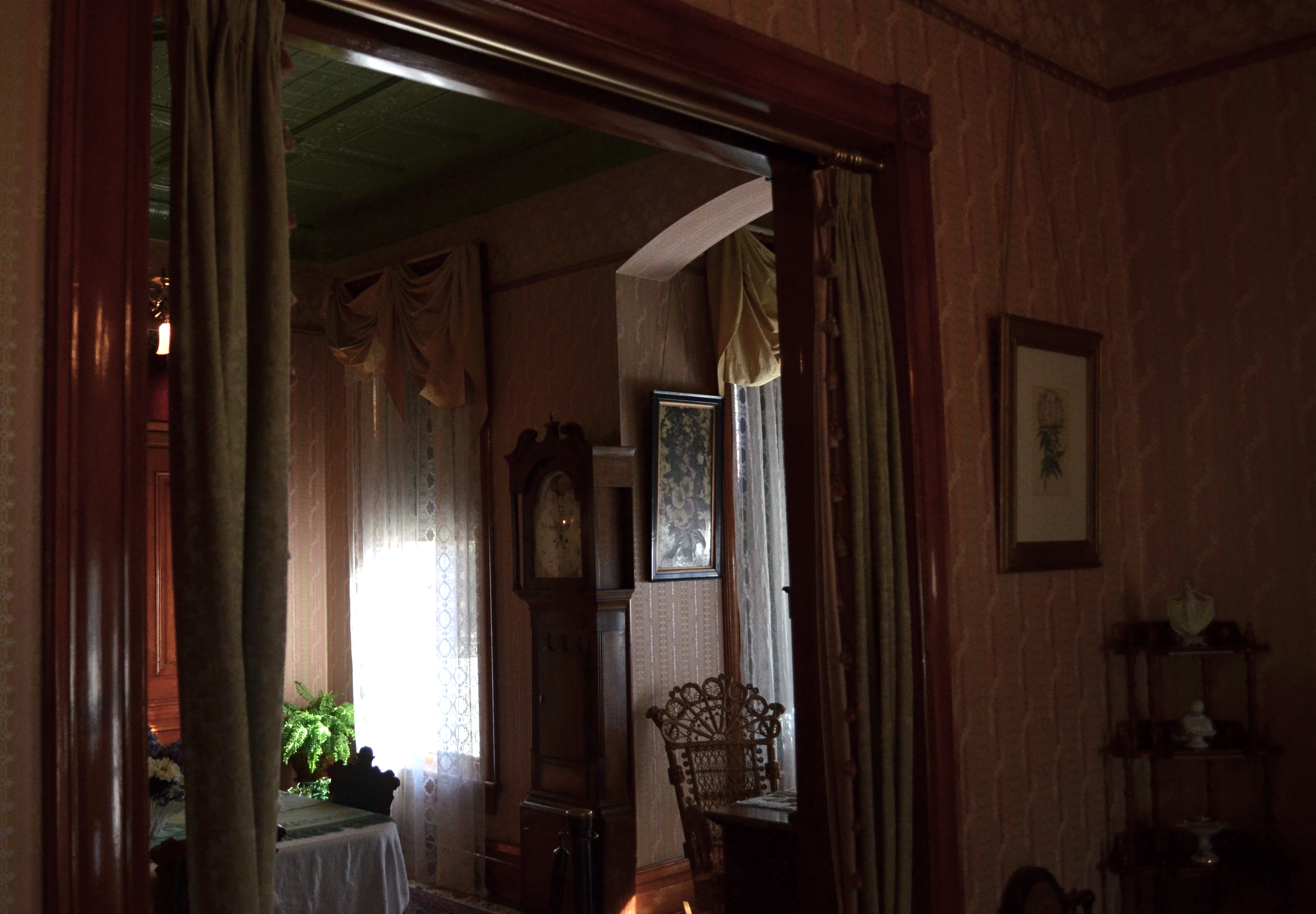
A wide-angle lens helps to open up shallow spaces with an enhanced sensation of depth. 1/50 sec., f/3.5, ISO 800, 18mm.
If you are shooting with a wide-angle, you may not be able to go any further open on aperture than about f/3.5. This means either working rock-solid handheld or cranking up the old ISO. If you do the latter, don’t go back later with an editor and try to rescue the darker areas: you will just show the smudgy noise that you allowed with the higher ISO, so, unless you like the warm look of black mayonnaise, resist.
Again, if shooting wide, remember that you can also zoom in tight enough to isolate clusters of items in charming still life arrangements with basically no effort on your part. Hey, an expert has already been paid to professionally build your composition for you with period bric-a-brac, so it’s easy pickings, right?
Admittedly, shooting in an old house can be like trying to conduct a prize fight inside a shoe box.
Or it can be like coming home.
BRIGHT SMILING LIES
By MICHAEL PERKINS
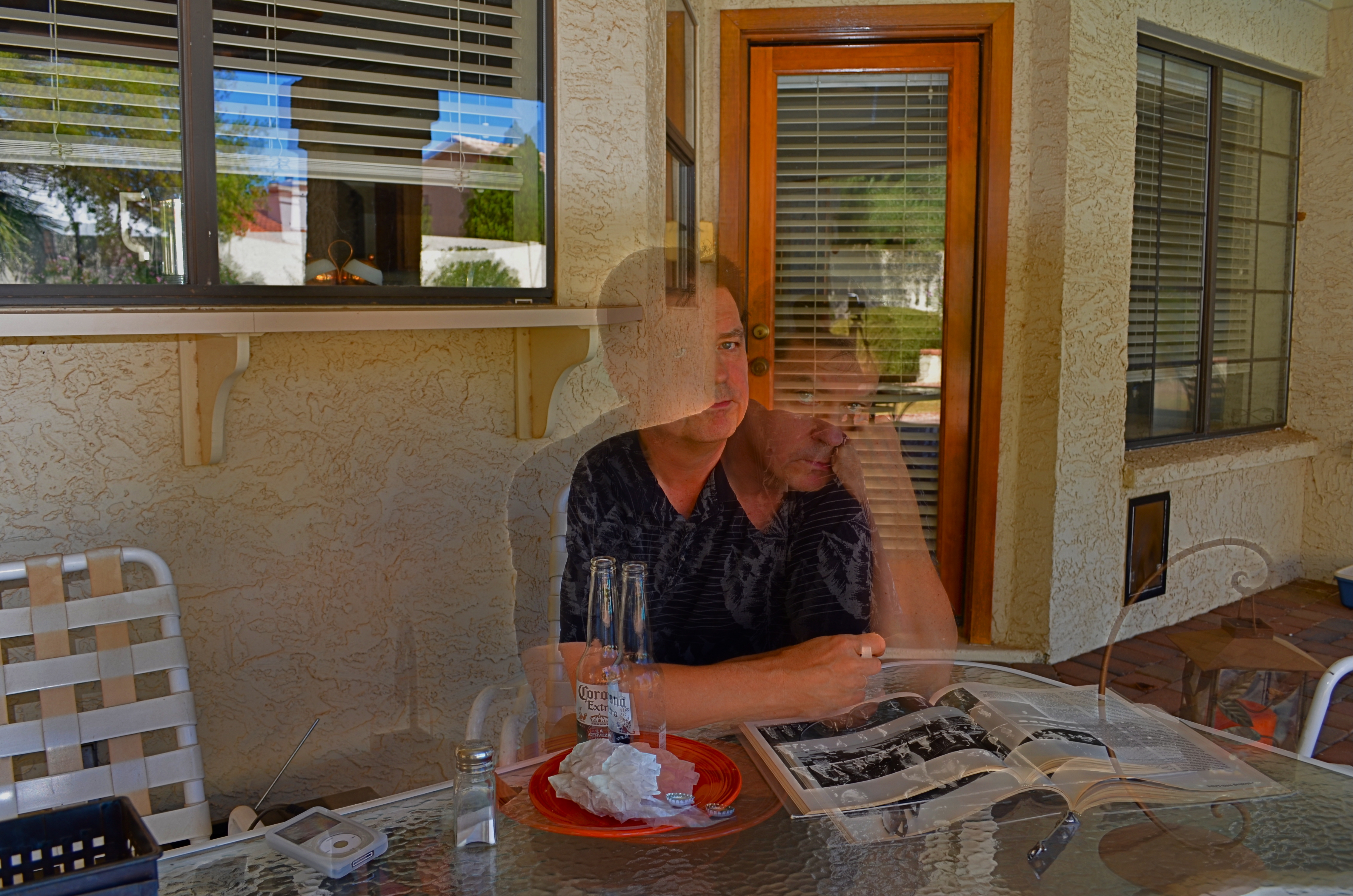
PHOTOGRAPHY HAS PRETTY MUCH INHERITED ITS CONCEPTION OF PORTRAITURE FROM THE TRADITIONS OF PAINTING. A portrait, to us, is something done on purpose, with purpose, deliberation, a plan. There is at least an attempt on the part of the photographer to strip away the studied facades of the modern world and reveal something of the real person within. And there is ample evidence that you can come compellingly close to doing just that.
Turn the camera around toward ourselves, however, and we all become liars. Bright, smiling liars.
This is not a burn per se on the current pandemic of “selfies” that litter the internet like crushed beer cans along the highway, although many of them deserve to be burned because they are banal or technically inept. No, the self-portrait process itself, cool camera or cheapie, invites deception, the creation of a mask designed only for public consumption. It is a license to hide.
Can anyone be so self-aware or confident that they are able (or willing) to present something raw and unvarnished for a camera lens in the same way we would seek that authenticity from another subject? Or will we come to the camera as if to the edge of a stage, our makeup and “serious” aspect pasted on for a performance?
Back for a moment to the tselfie tsunami of our current era, it’s easy to see this torrent of poses as play-acting, images that actually prevent us from understanding or knowing each other. You have to ask, at some point, is this how this person sees himself? Far from inviting the viewer deeper inside, selfies act as digital “Do Not Disturb” signs that, in fact, discourage discovery. And yet, let’s not let our brethren with tripods, studio lighting and stern demeanours escape blame, either, as their work can be just as riddled with artifice as any quickie-in-the-mirror Instagram. It’s said that people who act as their own lawyers have fools for clients, and the same holds for anyone who takes his own picture.
This is not necessarily cause for despair. All of photography is, after all, an interpretation of reality, not a representation of it. We don’t discount black & white simply because it doesn’t show the world “as it is”, nor do we rule out the “truth” of pictures made from a host of other techniques that are all, certainly interpretive in nature. So the self-portrait will always be a tough nut to crack.
There is nothing more penetrating than the idea of a camera. But, in the carapace we construct around our all-too-secret souls, it may have met its match.
HIGH DYNAMIC RAGE
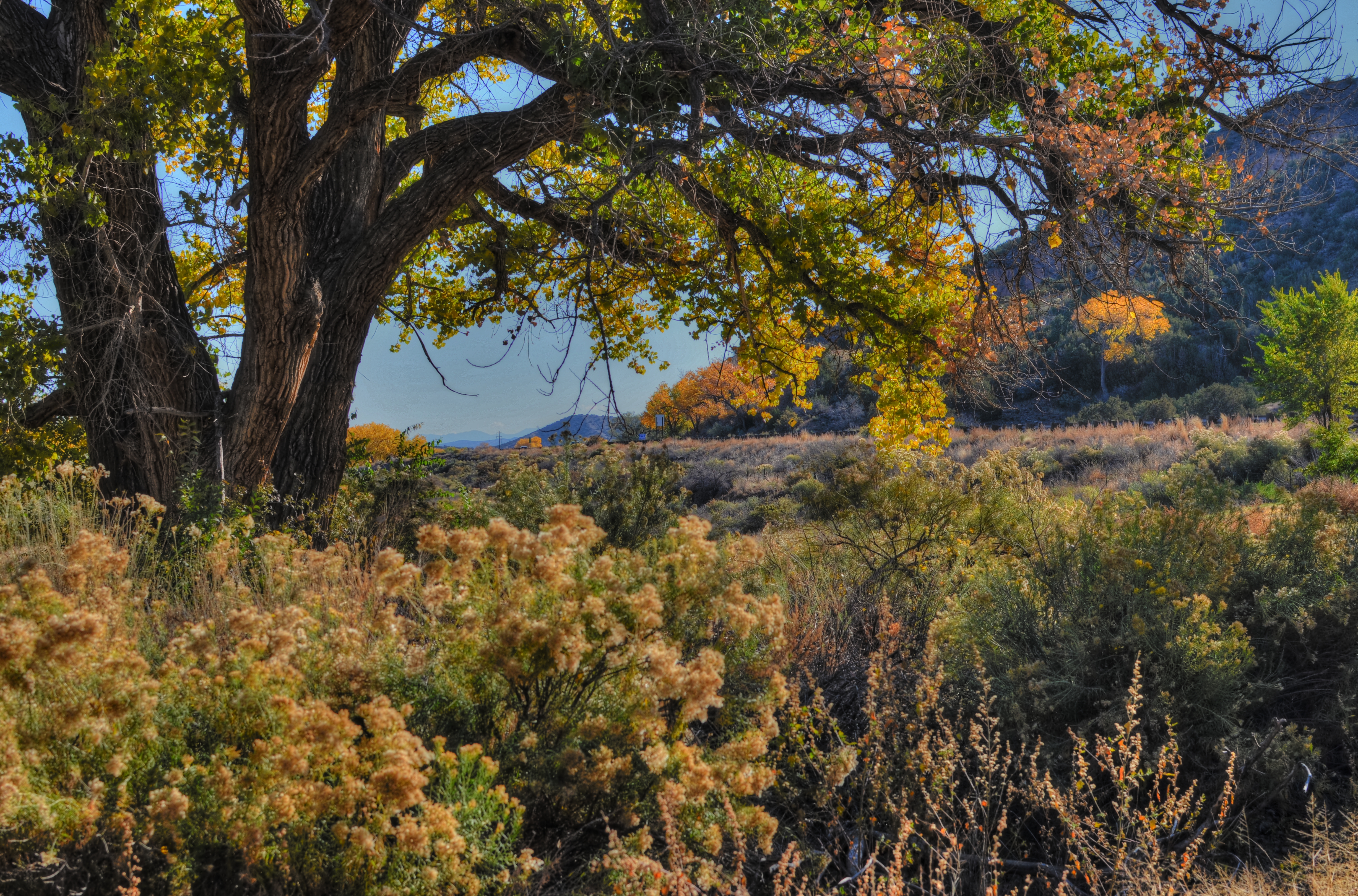
HDR, used here to recover a few dark details in this somewhat contrasty ladnscape. Far from perfect, but I can live with this.
By MICHAEL PERKINS
THE INTERNET HAS A UNIQUE WAY OF TURNING AN IFFY LOOKING MOLE INTO TERMINAL SKIN CANCER, that is, fanning small sparks into raging infernos by squaring and cubing people’s discontents until they appear monumental. In photographic circles, this phenomenon has made the process known as High Dynamic Range, or HDR a hot potato. Whereas just a few years ago this technique sparked input from people who found it “kind of helpful” or “just not for me”, the current intensity of dialogue on the subject now characterizes HDR as either the greatest tragedy since Ben Affleck got cast as Batman or the miraculous equivalent of mother’s milk.
What has made the average shooter feel like they he has to side with either Mommy or Daddy in a custody battle for the soul of picture-taking? Jeez H. Loueeze. HDR, which is actually just a tool, and thus good or bad depending on how it’s used, has become an enormous bone of contention, with both sides of the debate hurling burning tar balls at each other, safe within the knowledge that they alone possess Real Truth.
Uh….okay, fine.
How’s this for Real Truth: processing in the digital age is no different from the burning, dodging, manipulation and filtering of the analog era, and, somehow, photography has survived both the modest and excessive uses of these and countless others for over two centuries. HDR’s original stated purpose was to modulate the tones of extremely contrasty subject matter, rendering a smoother transition between really light and really dark values to produce a picture that seemed to more accurately reflect how the human eye compensates for contrast. It was concocted as a workaround for one of the optical barriers that cameras are always striving to overcome.
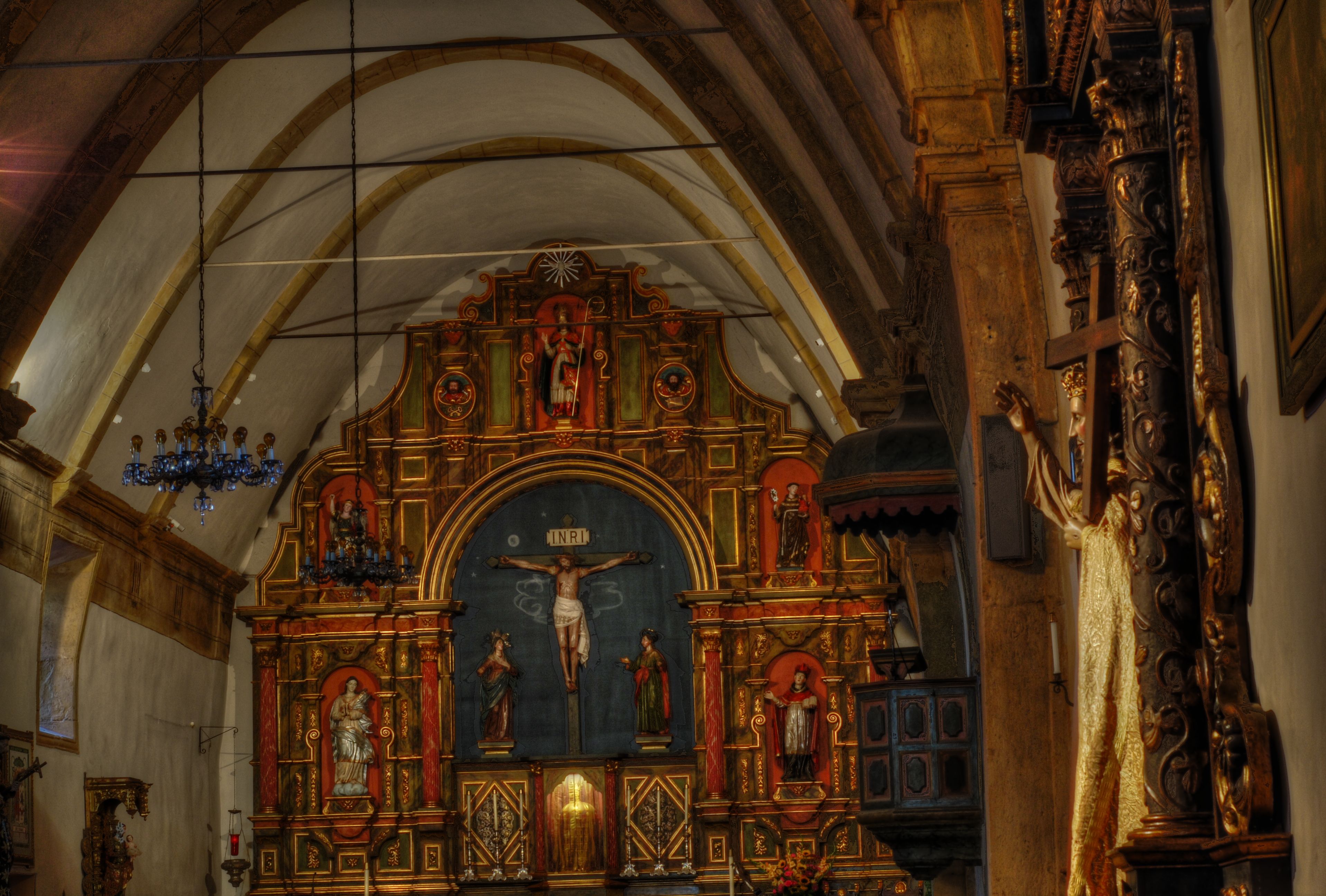
This may have been taken inside a chapel, but not even Jesus could save this one. Gooey and creepy.
So what do you expect humans, always the “X” factor in any art, to do with any new tool? Answer: Anything they damn well please. Of course some people are going to produce beauty while others produce sludge. Of course some will use it to mask or slap a band-aid on badly conceived images. And, of course decent HDR processing platforms will be imitated by cheap apps created in Hacky McHackmore’s Dad’s garage and selling for $1.99.
I have had my own uneasy romance with HDR going back several years. I have found it to be a nice way to tweak color, an intensifier for detail and grain in things like stone and wood, and, yes, a way to dramatize contrasts in superkeen ways. I have also been guilty of slathering it on in the desperate hope that I can “rescue” a shot with it, and have been horrified at the way it makes human skin look like it was hosed down in molten Crayolas. Sometimes I have used it to make things more natural, while, at other times, I have taken advantage of its special talent for making things unearthly. And even when I have made the most inane use of HDR, the planets have, amazingly, continued on their daily orbits. In the words of the not-too-great Bobby Brown, it’s my prerogative.
The intense hater-ama currently being mounted against HDR might better be aimed at what makes its misuse all too predictable: the fact that human judgement is variable, unpredictable, and sometimes, twisted. If there’s a photo process that can eliminate that from the pitcher-taking mix, I’d love to see it. In the meantime, HDR is no more harmful (or salvational) than any other processing platform. If there’s a flaw, it’s inside the skull of the guy pressing the button.
Always has been, always will be.
THREE STEPS TO SOFT
By MICHAEL PERKINS
“But soft! What light through yonder window breaks…?” —Shakespeare
LIGHT IS A RAW RESOURCE, MUCH LIKE IRON ORE OR GOLD NUGGETS. It needs to be refined, alloyed for it to truly be a tool in picture making. For the purpose of photography, what we call “available” light means just that; it’s there, but not in its final form. Making images means becoming an active shaper of light–bouncing it, boosting it, adding or subtracting bits of it, harnessing it if you will. Turning “available” light into usable light is the true alchemy of photography.
That doesn’t mean you can’t benefit greatly from accidents.
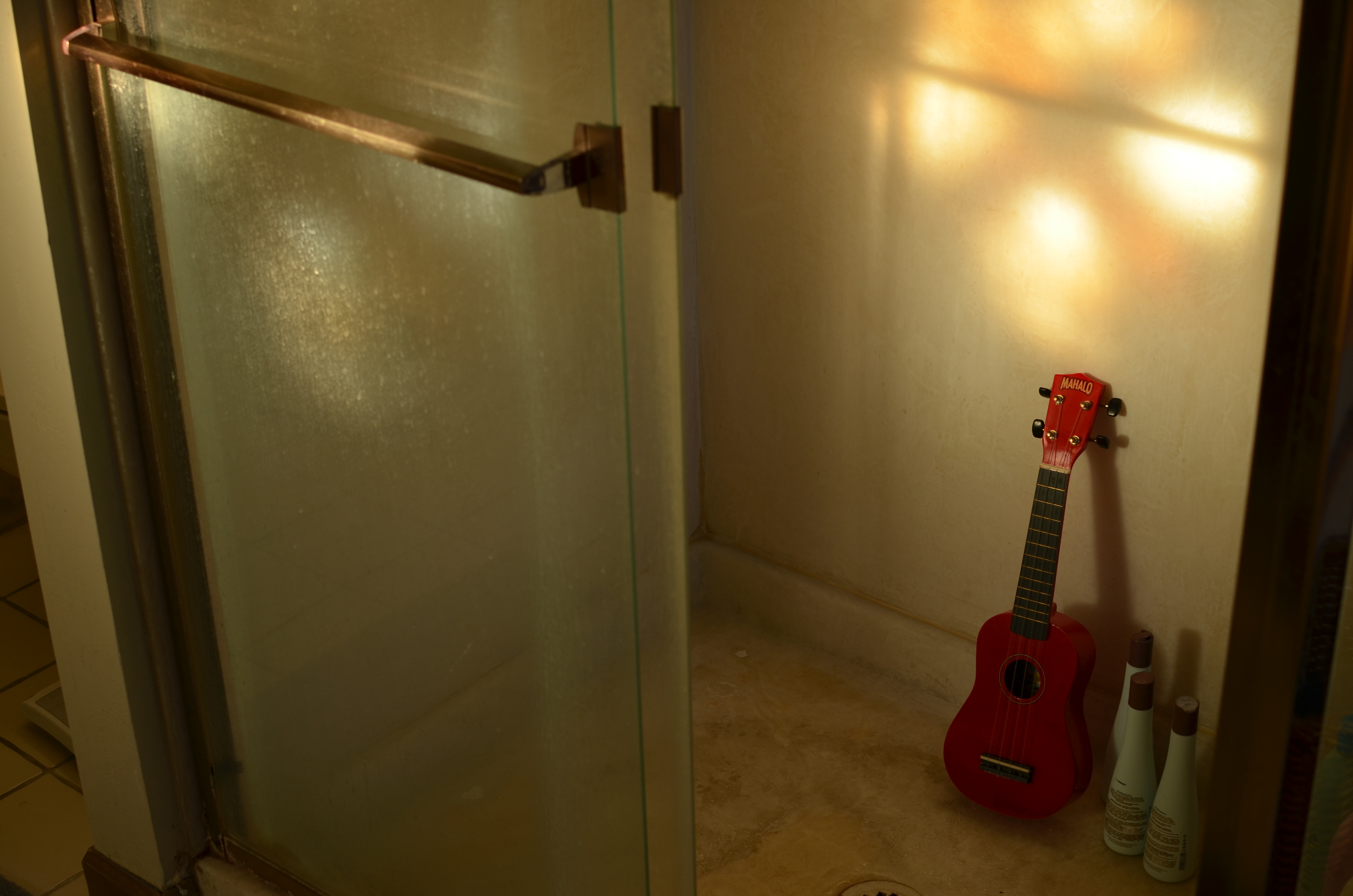
Uke can find good light showering down anywhere. 1/60 sec., f/4.5, ISO 100, 35mm.
The above image was the result of pure seat-of-the-pants whimsy, a momentary impulse to try an idea just to see what happens. However, it was a lucky reworking of available light that drew me to the location before the idea took shape.
I have written volumes on how very harsh the pure midday sunlight is in Arizona, and how it can only be of use if it is filtered or softened in some way. To that end, I have identified various sites around my house which get that done beautifully, depending on where the sun is in the sky during different parts of the day. Some of these sites occur just inside the garage, in the living room, and in a spare bedroom, and shoots will work wonderfully depending on when and where you schedule them. Best of all, the house apparently still holds a few more surprises.
Several days ago, I discovered a new and most unusual site…..a dense art window just to the left of our master bathroom shower stall, which turns out to be a triple softener for late afternoon light, just pre-golden hour. As light streams through the window, it gets softened for the first time, then hits the mirrored closet doors on the opposite wall, where it diffuses some more. Bouncing off the mirror, it then angle-bounces to the back wall of the shower stall, still fairly bright but now really fuzzed out and warm. And that’s where I saw it, as I was walking through the room.
As soon as I spotted the light, I started brainstorming about what kind of object I might stage in this little “studio”, and I hit on the idea of a ukulele, since I always have scads of them around the house, they’re colorful, and it’s kind of an absurd variation on the whole “singing in the shower” cliche. I liked the shot from a purely light effect standpoint, and the unique shaping of the glow in that space will definitely be back for a return engagement.
Maybe a saxophone….
ONE OUT OF FOUR
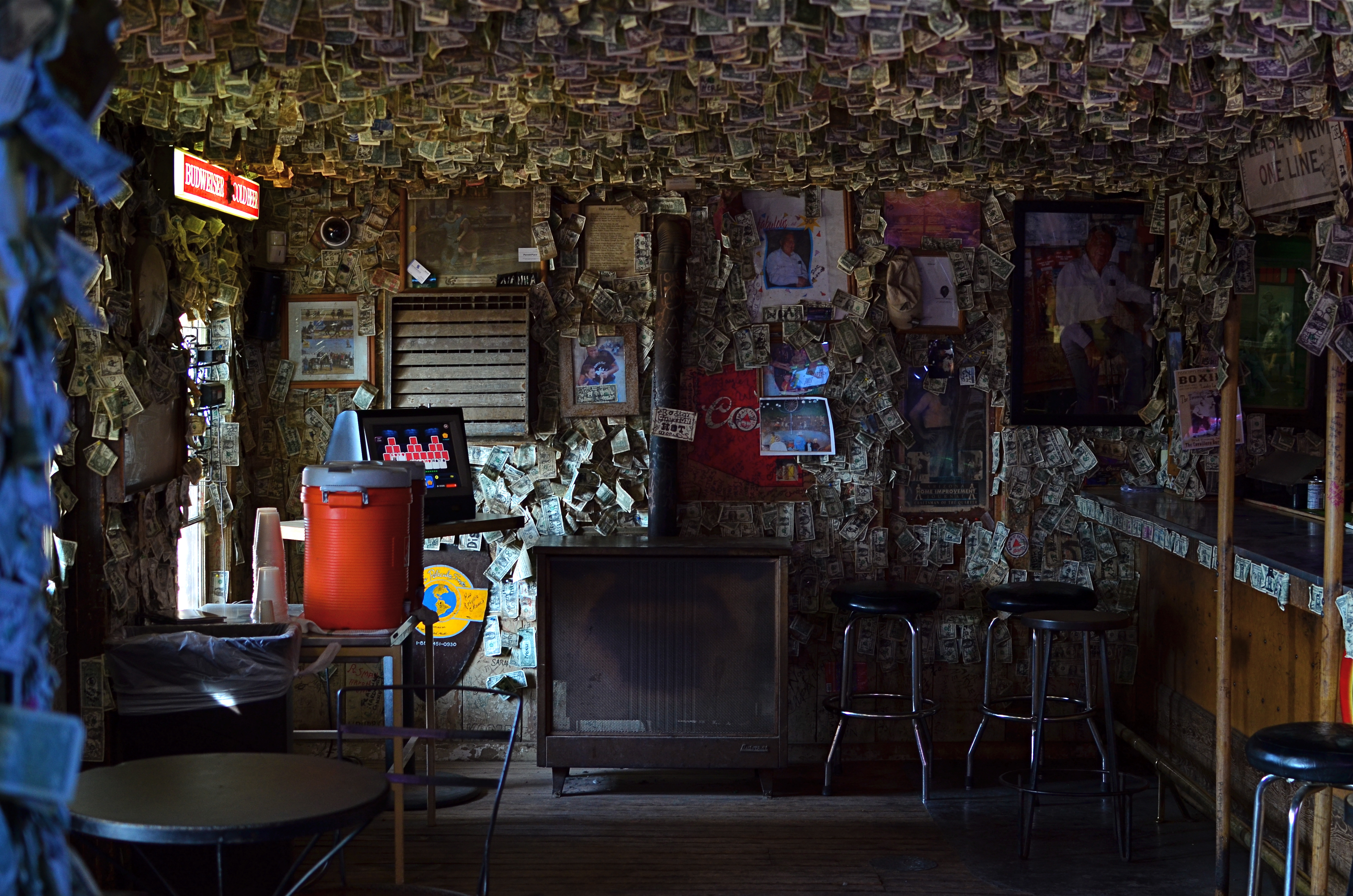
Main bar, Greasewood Flats, Arizona, 1/12/14. 1/30 sec., f/3.5, ISO 250, 35mm.
By MICHAEL PERKINS
IF YOU ARE DEPENDENT ON NATURAL LIGHT FOR YOUR ONLY SOURCE OF ILLUMINATION IN AN IMAGE, you have to take what nature and luck afford you. Making a photograph with what’s available requires flexibility, patience, and, let’s face it, a sizable amount of luck. It means waiting for your moment, hell, maybe your instant of opportunity, and it also means being able to decide quickly that now is the time (perhaps the only time) to press the button.
I recently had such a situation, measured in the space of several seconds in which the light was ready and adequate for a shot. And, as usual, the subject seemed as if it would serve up anything but acceptable conditions. The main bar of the classic western “joint” named Greasewood Flats, just outside of northern Scottsdale, Arizona, is anything but ideal in its supply of available light. Most of the room is a tomb, where customers become blobby silhouettes and fixtures and features are largely cloaked in shadow. I had squeezed off a few shots of customers queued up for bar orders, and they all registered as shifting shadows. The shots were unworkable, and I turned my attention to the fake-cowboy-ersatz-dude-ranch flavor of the grounds outside the bar, figuring that the hunt inside would be fruitless.
Minutes later, I was sent back inside the building to fetch a napkin, and found the bar empty of customers. I’m talking no human presence whatever. In an instant, I realized that the outside window light, which was inadequate to fill a four-sided, three-dimensional space, was perfectly adequate as it spread along just one wall. With crowds out of the way, the rustic detail that made the place charming was suddenly a big still-life, and the whole of that single wall was suddenly a picture. My earlier shots were too constrasty at f/5.6, so I tried f/3.5 and picked up just enough detail to fill the frame with Old West flavor. Click.
All natural light is a gift, but it does what it wants to do, and, to harness it for a successful shot, you need to talk nice, wait your turn, and remember to give thanks. And, in a dark room, be happy with one wall out of four that wants to work with you.
PEELING BACK THE LAYERS
By MICHAEL PERKINS
FAMOUS PLACES DEFY CREATIVE PHOTOGRAPHY. Google an image search for “Eiffel Tower” sometime and marvel at how consistent most of the resulting images of this global landmark seem. Witness how very formalized our visual language for these familiar objects is, how uniform and narrow our images of them have become. Their legendary status, their lore has been nailed into place for generations, sometimes centuries, and airing out these hallowed spaces to let new ideas blow through is tough going indeed. The only novel way to imbue them with any mystery or wonder seems to be in breaking them up into manageable fragments.
Think about it: what is sacred about these spaces? Why do we always have to capture the same floor-to-ceiling recording of them, when, by tightening in on selected floors, doors, windows, or sections of them, we might actually render them new again, freed from their historic context? Now, do a search for the brave photos that show shooters doing exactly this, in photographing the anti-Empire State, or the un-colliseum.
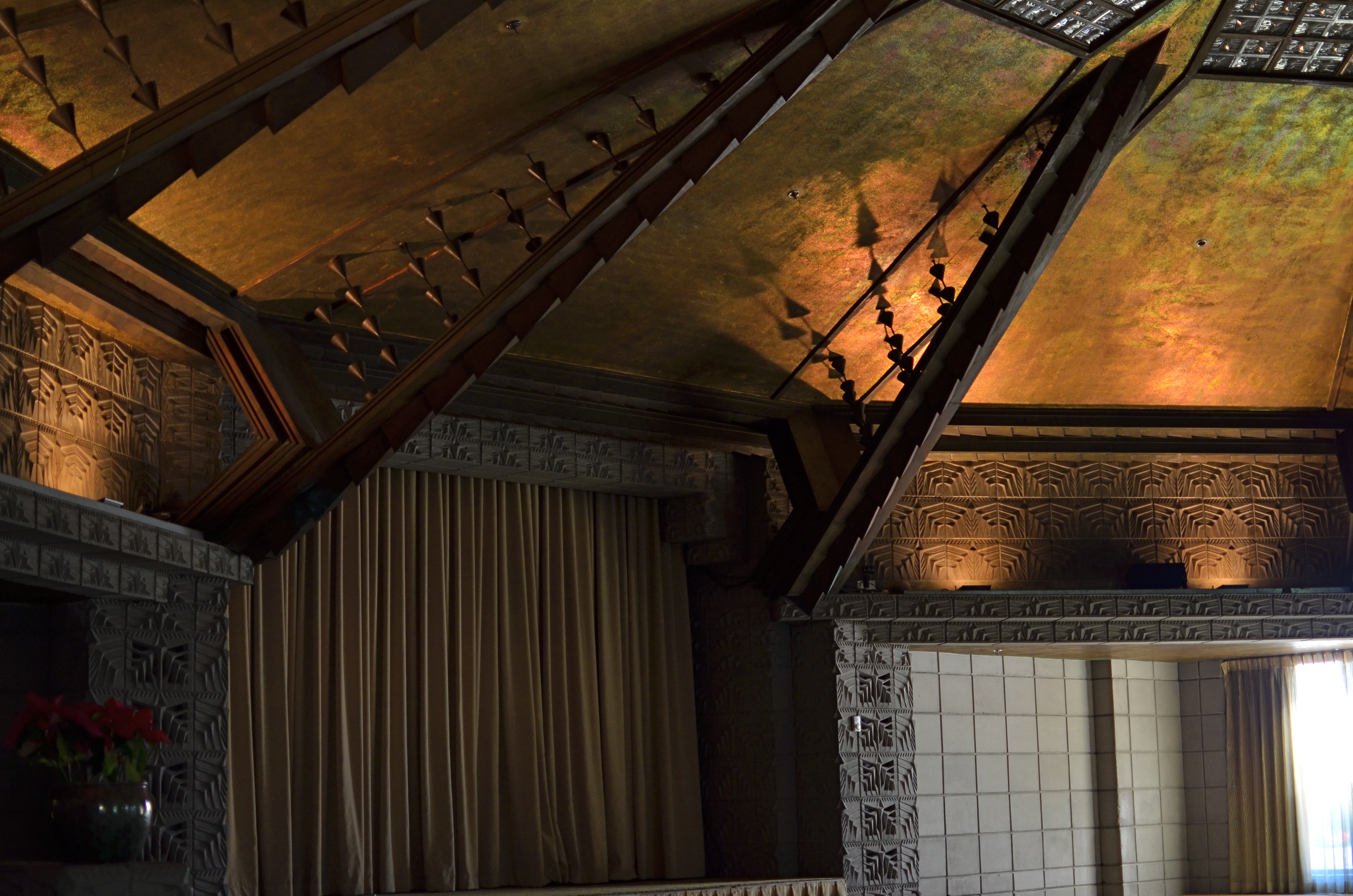
Staging, 2013. 1/80 sec., f/1.8, ISO 320, 35mm.
One thing I love to do is find neglected rooms, closed wings, or unused floors in famous buildings and shoot them as if they are completely unknown objects, as if they have no relation to their renowned hosts. The image shown here is inside one of the most celebrated of “must-see” destinations in all of Phoenix, the Frank Lloyd Wright-influenced Arizona Biltmore resort. Its entrances, lobbies, back yard and restaurants are among the most familiar sights for thousands of annual visitors, but, in fact, there are entire sections of the place that are under-used or dark through most of the year. At any point these “forgotten” spaces might ber pressed into occasional service for a banquet or reception, but, on a daily basis, they are as removed from the Biltmore persona as the gas station down the block. And that makes them interesting.
There was no light in the room in the above frame on the day I happened along, except ambient glow from gauzy window drapes, but that was just fine with me, as every detail was side-lit and sharpened by the prevailing semi-darkness. Suddenly this over-shot landmark had served up a new space, one with no legend or associations attached to it.
I think there are great photographs to be made in many under-loved parts of the places we were sure we knew. Sorting them out is one of the best ways to move beyond tourist snaps, and maybe even see what the designers saw, or dreamed.
To peel back some layers, and see anew.
MORE BOUNCE TO THE OUNCE
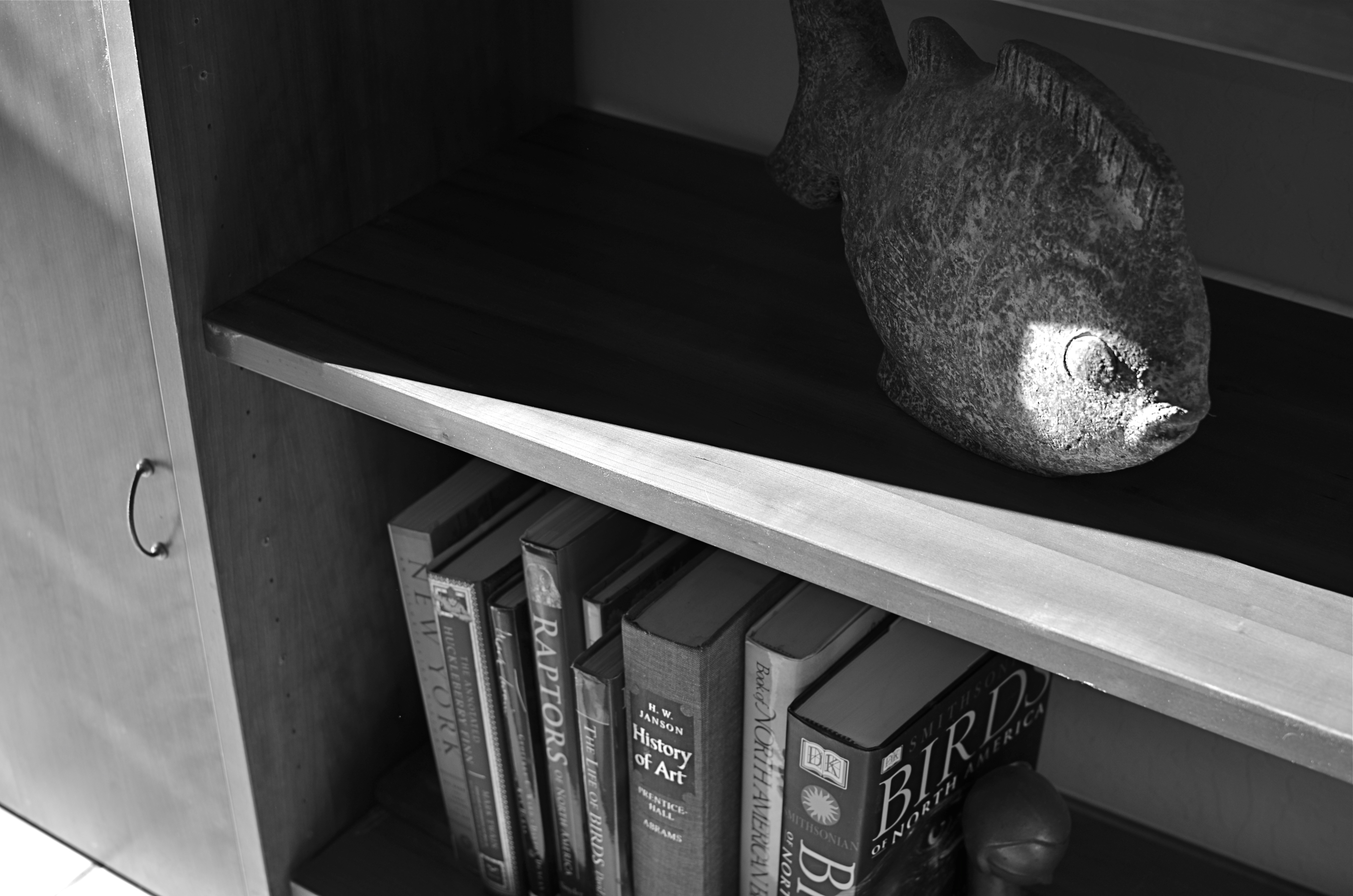
Fish ‘n’Books, 2013. 1/200 sec., f/3.5, ISO 100, 35mm.
By MICHAEL PERKINS
FOR THE MOST PART, THE USE OF ON-CAMERA FLASH SHOULD BE CONSIDERED A CRIME AGAINST HUMANITY. Scott Kelby, the world’s best-selling author of digital photography tutorials, famously remarked that “if you have a grudge against someone, shoot them with your pop-up flash, and it will even the score.” But, to be fair, let’s look at the pros and cons of using on-board illumination:
PROS : Cheap, handy
CONS: Harsh, Weak, Unflattering, Progenitor of Red-eye. Also, Satan kills a puppy every time you use it. Just sayin’.
There are, however, those very occasional situations where supplying a little bit of extra light might give you just the fill you need on a shot that is getting 90% of its light naturally. Even so, you have to employ trickery to harness this cruel blast of ouch-white, and simple bounces are the best way to get at least some of what you want.
In the above situation, I was shooting in a hall fairly flooded with bright mid-morning light, which was extremely hot on the objects it hit squarely but contrasty as an abandoned cave on anything out of its direct path. The fish sculpture in my proposed shot was getting its nose torched pretty good, but in black and white, the remainder of its body fell off sharply, almost to invisibility. I wanted the fish’s entire body in the shot, the better to give a sense of depth to the finished picture, but I obviously couldn’t flash directly into the shelf that overhung it without drenching the rest of the scene in superfluous blow-out. I needed a tiny, attenuated, and cheap fix.
Bending a simple white stationery envelope into a “L”, I popped up my camera’s flash and covered the unit with the corner of the envelope where the two planes intersected. The flash was scooped up by the envelope, then channeled over my shoulder, blowing onto the wall at my back, then bouncing back toward the fish in softened condition near the underside of the shelf, allowing just enough light to allow the figure’s bright nose to taper back gradually into shadow, revealing additional texture, but not over-illuminating the area. It took about five tries to get the thing to look as if the light could have broken that way naturally. Fast, cheap, effective.
The same principle can be done, with some twisting about, to give you a side or ceiling bounce, although, if high reflectivity is not crucial, I frankly recommend using your hand instead of the envelope, since you can twist it around with greater control and achieve a variety of effects.
Of course, the goal with rerouting light is to look as if you did nothing at all, so if you do save a picture with any of these moves, keep it to yourself. Oh, yes, you say modestly, that’s just the look I was going for.
Even as you’re thinking, whew, fooled ’em again.
ASSISTANTS AND APPROACHES
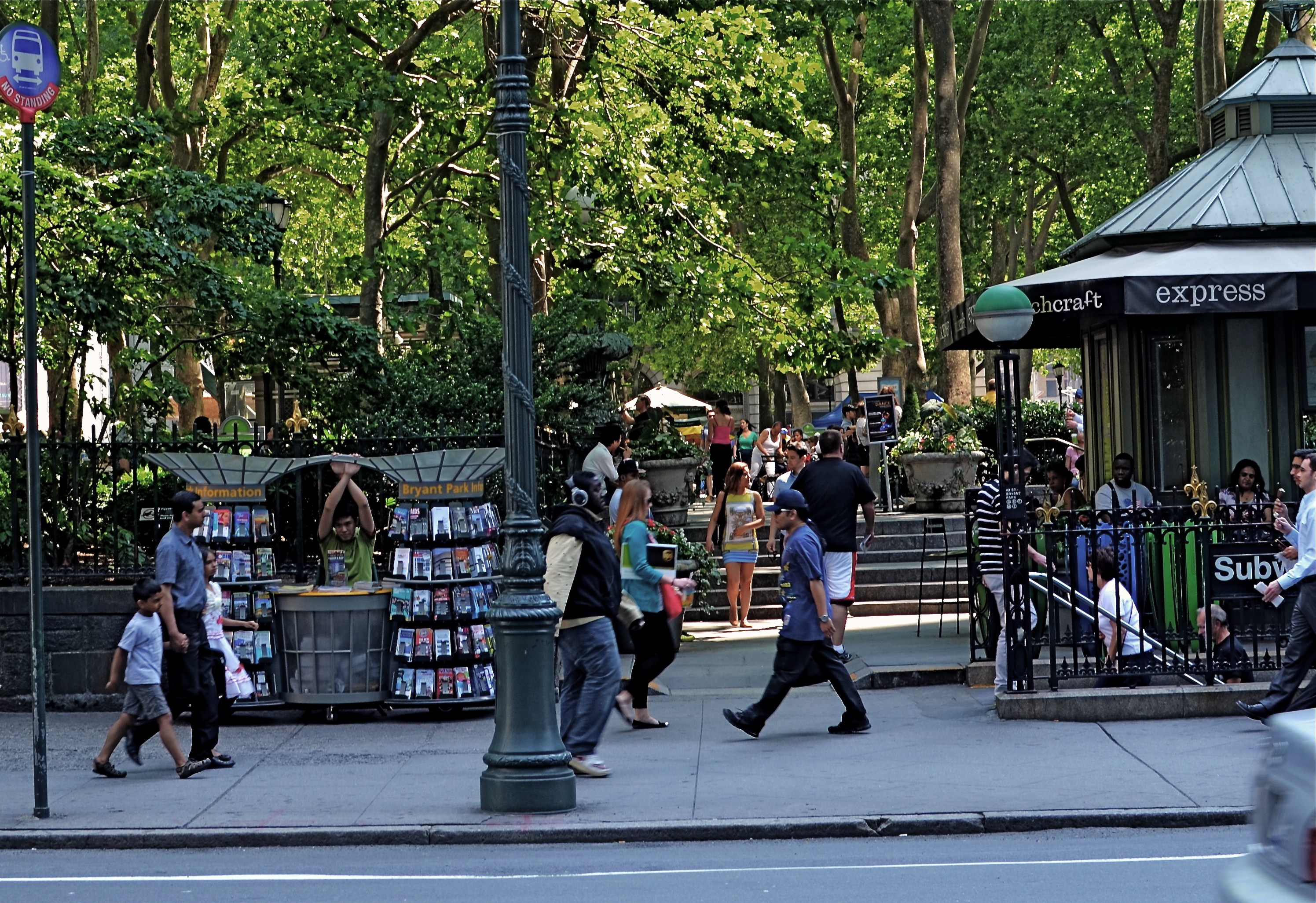
Bryant Park Tableau, 2013. 1/100 sec., f/5.6, ISO 100, 35mm.
By MICHAEL PERKINS
WHO CAN SAY WHY SOMETHING CALLS OUT TO US VISUALLY? I have marveled at millions of moments that someone else has chosen to slice off, isolate, freeze and fixate on, moments that have, amazingly, passed something along to me in their photographic execution that I would never have slowed to see in the actual world. It’s the assist, the approach, if you will, of the photographer that makes the image compelling. It’s the context his or her eye imposes on bits of nature that make them memorable, even unforgettable.
It’s occurred to me more than once that, given the sheer glut of visual information that the current world assaults us with, the greatest thing a photographer can do is at least arrest some of it in its mad flight, slow time enough to make us see a fraction of what is racing out of our reach every second. I don’t honestly know what’s more fascinating; the things we manage to freeze for further consideration, or the monstrous ocean of visual data that is lost, constantly.
There’s a reason photography has become the world’s most loved, hated, trusted, feared, and treasured form of storytelling. For the first time in human history, these last few centuries have afforded us to catch at least a few of the butterflies of our fleeting existence, a finite harvest of the flurrying dust motes of time. It’s both fascinating and frustrating, but, like spellbound suckers at a magic show, we can’t look away, even when the messages are heartbreaking, or horrible.
We are light thieves, plunderers on a boundless treasure ship, witnesses.
Assistants to the seeing eye of the heart.
It’s a pretty good gig.
THE “EITHER/ORs”
By MICHAEL PERKINS
CAMERAS CAN EITHER TAKE CHOICE AWAY OR CHALLENGE YOU TO MASTER IT. If you’re a regular reader of this comic strip, you know all too well that I advocate making images with all manual settings rather than relying on automodes that can only come in a distant second to the human process of decision-making. People take better pictures with a camera than a camera can take alone. Can I get an Amen?
There is, of course, one choice you don’t get to make for any picture you create. You can’t mark a box called “the choice I made guarantees that everything in the image will work out.” Worse, there is always more than one choice being made in the creation of a photograph, and, even if you’re well-practiced and fast, you can’t make all of them perfectly. Choose one option and you are “un-choosing” another. The sum of the effect of all your choices together is what determines the final picture. That’s real work, and it certainly accounts for many people’s preference for automodes, since they obviate all those tough calls.
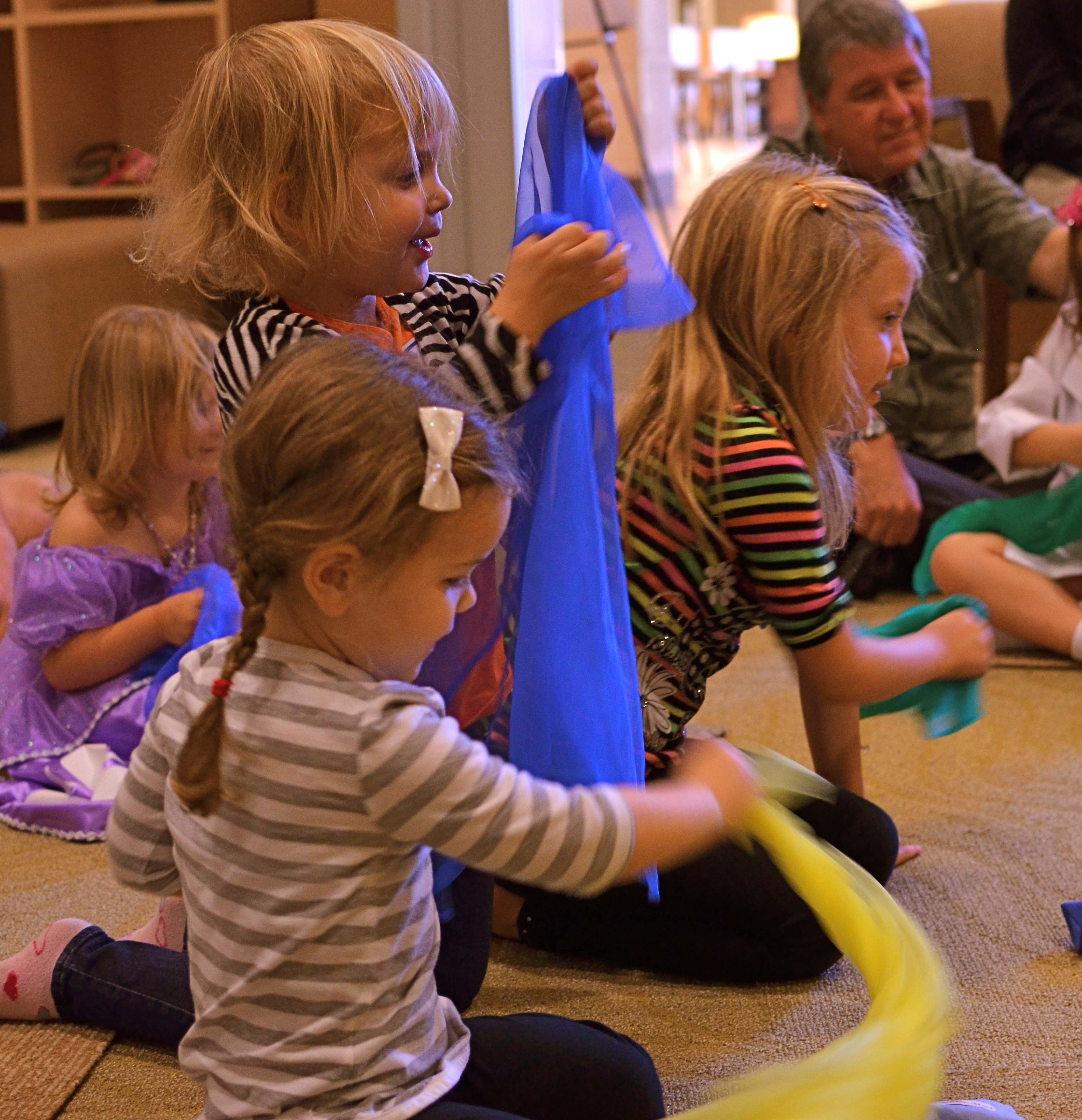
1/60 sec., f/3.5, ISO 640, 35mm.
Nothing will force you to choose lots of options in short order like taking pictures of children at play. The image posted here, taken at a kindergarten playdate, shows a number of fast decisions that may or may not add up to an appealing picture, as lots of things are going on all at once. In the room where this was shot, space was tight, action was swift, white balances were wildly different in various zones within the room, and posing the kids in any way was absolutely impossible, due to their tender age and the fact that I wanted to be as invisible as possible, the better to catch their natural flow. To get pictures under this particular set of conditions, I had to decide how best to frame children who were grouping and ungrouping rapidly, where to get a fairly accurate register of color, customize my shutter speed and ISO with nearly every shot, and, as you see here, make my peace with whether the action implied in the shot outweighed the need for super sharpness.
You simply get into situations with some shots where you are not going to get everything you’d like to have, and you make decisions in the moment based on what each individual image seems to be “about”. Here I went for the joy, the bonding, the surging energy of the girls and let everything else take a back seat. Faced with the same situation seconds later, I might have remixed the elements to create a completely different result, but that is both the thrill and the bane of manual shooting. Automodes guarantee that you will get some kind of image, a very safe, if average, picture that allows you to worry less and possibly enjoy being in the moment to a greater degree….but you are the only factor than can take the photo to another level, to, in fact, take full responsibility for the result. It’s like the difference between taking a picture of Niagara Falls from your hotel room and taking it from a tightrope stretched across the raging waters.
And, ah, that difference is everything.
RESOLVED
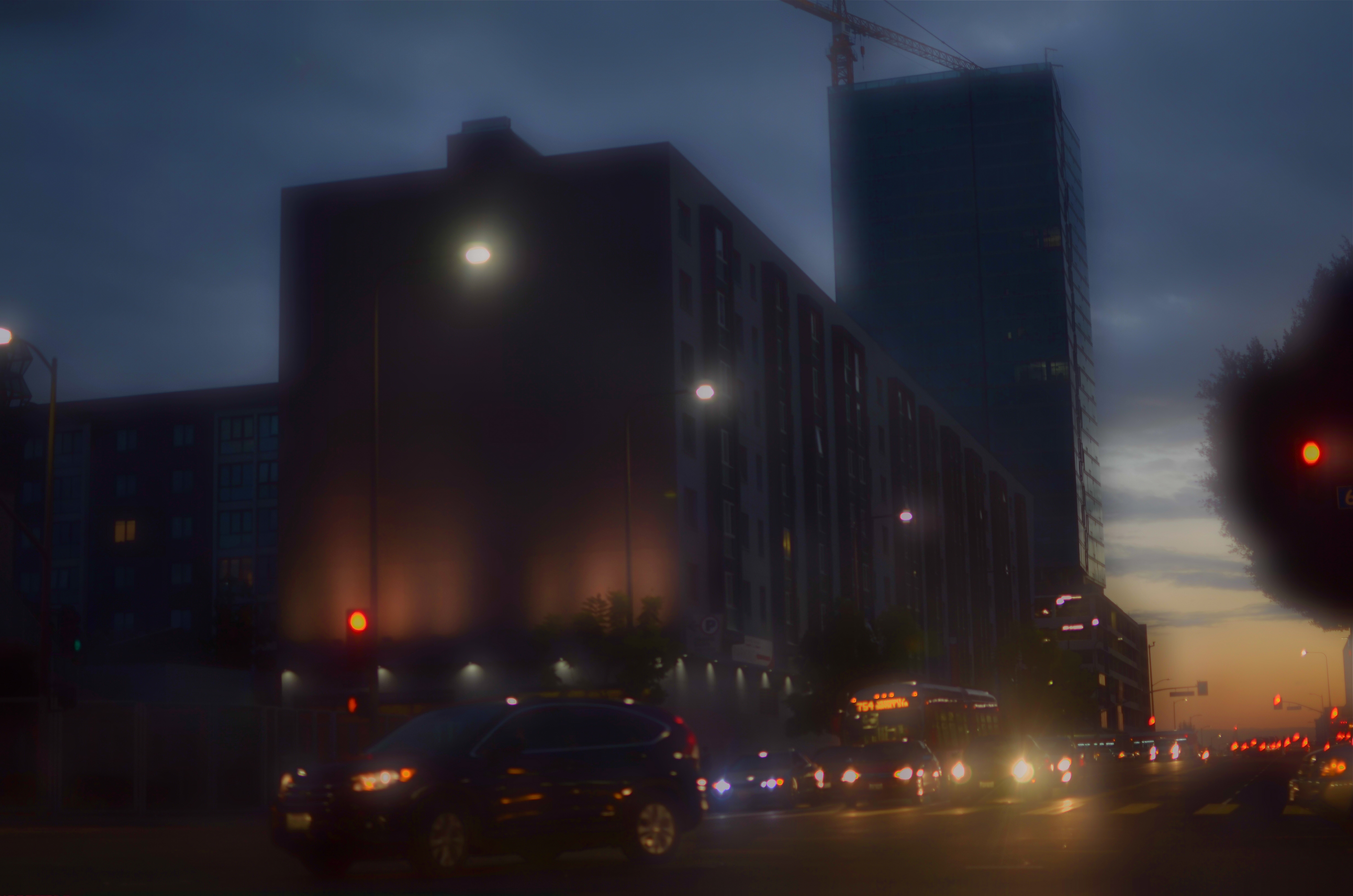
Los Angeles, California, November 22, 2013. 1/100 sec., f/1.8, ISO 160, 35mm.
By MICHAEL PERKINS
THERE IS A DECIDED BIAS IN THE CONCEPT OF THE NEW YEARS’ RESOLUTION TOWARD THE NEGATIVE. Since we often define ourselves in terms of what we haven’t yet perfected in ourselves, many resolutions revolve around losing something (weight), stopping something (binge-watching Ren & Stimpy) or rooting something icky out of our personality or habit structure (insert your own wish list here).
Fair enough. But, in order for us to grow, we also need to resolve to add, to enhance, to amplify the best part of ourselves. And, for photographers, I can’t think of a single more compelling resolution than the pledge to see better and develop our expressive vocabulary in the new year. We already have the toys, God knows. It has never been easier to get your hands on image-making gear or to disseminate the images that you manage to create. Photography has reached its all-time high-water mark for democratization, with 2013 showing us that gasp-inducing, heart-stopping pictures can and will be made by anyone, anywhere. There is no longer an artificial barrier between pro and amateur, just a subtler one between those of us who have practiced eyes and those of us (nearly all of us) that need to tone our seeing muscles a bit tighter.
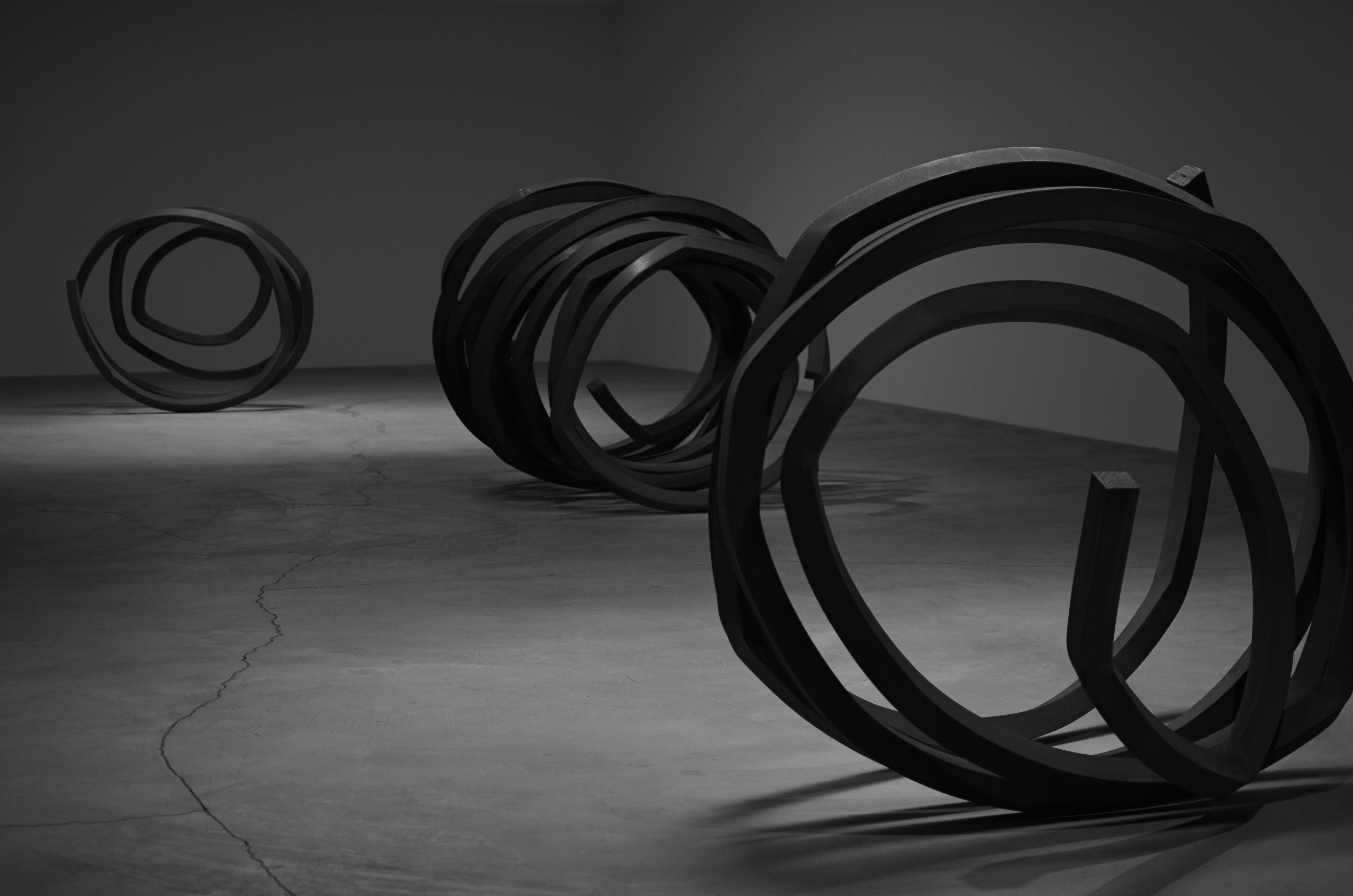
1/250 sec., f/1.8, ISO 100, 35mm.
Photography can obscure or reveal, defining or defying clarity as we choose. A resolution to keep seeing, to open our eyes wider, is more important than resolving to “take more interesting pictures”, “do fewer self-indulgent selfies” or “try all the cool filters on Instagram”, since it goes to the heart of what this marvelous art can do better than any other in the history of mankind. What can be better than promising ourself to always be hungry, always be shooting, always be straining ourselves to the breaking point?
For me, a good year is when I can look back over my shoulder during the last waning moments of December 31st and see at least some small, measurable distance between where I’m standing and where I stood last January 1st. Sometimes the distance is measured in micro-inches, other years in feet or even yards. There are no guarantees, nor can there be: human experience, and what we draw forth from it, is variable, and there will be years of no crops as well as years of bumper harvests.
But let us resolve to see, and see as fearlessly as we can. The Normal Eye has always been about its stated journey from “taking” pictures to “making” them, acknowledging that it’s seldom a straight-line path to perfection, and, in fact, we learn more from our failures than our successes. Happy New Year.
THE RELENTLESS MELT
By MICHAEL PERKINS
THERE ARE PEOPLE YOU PHOTOGRAPH BECAUSE THEY ARE IMPORTANT. Others are chosen because they are elements in a composition. Or because they are interesting. Or horrific. Or dear in some way. Sometimes, however, you just have to photograph people because you like them, and what they represent about the human condition.
That was my simple, solid reaction upon seeing these two gentlemen engaged in conversation at a party. I like them. Their humanity reinforces and redeems mine.
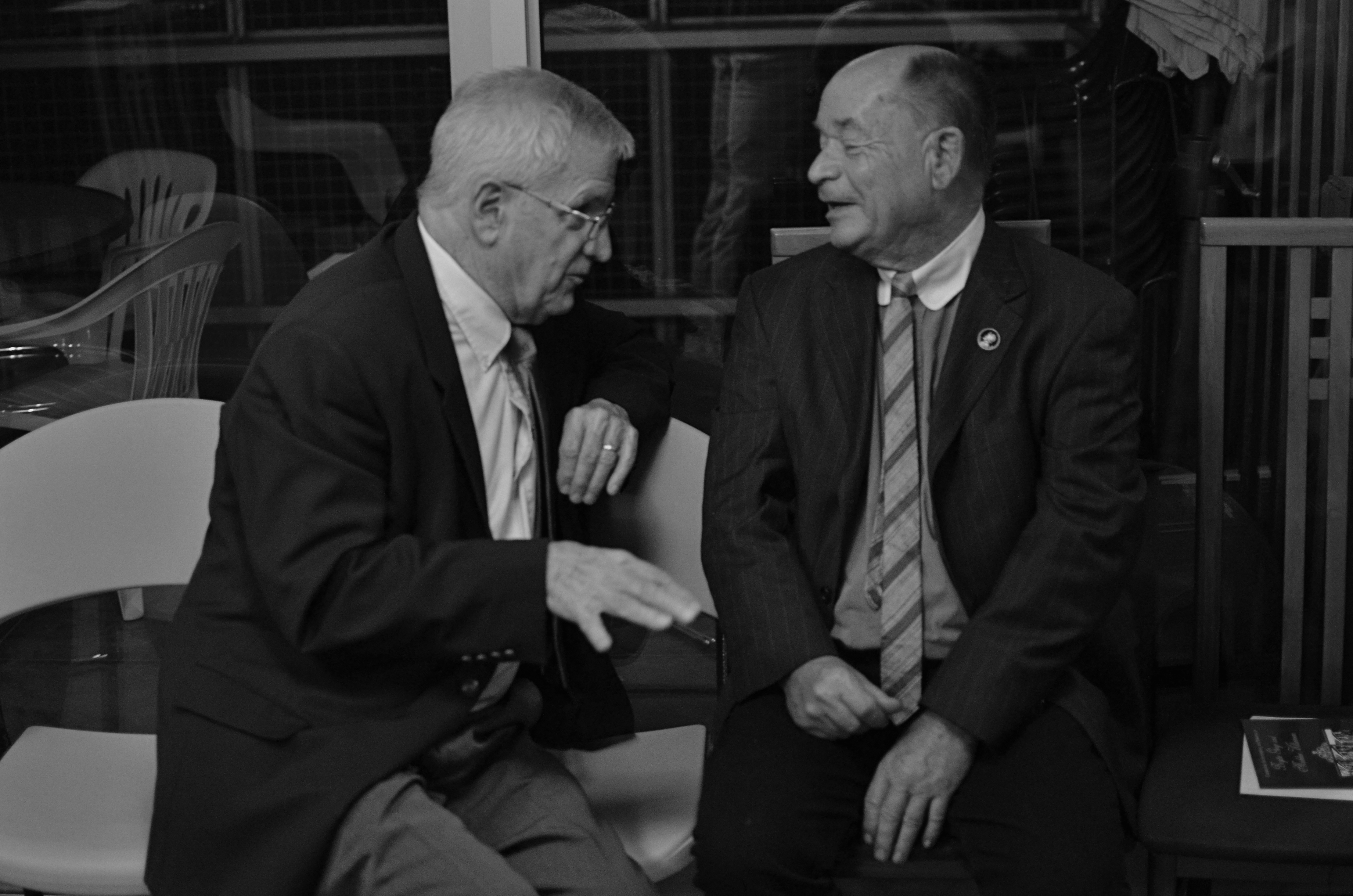
“Old friends sat on a park bench like bookends”: 1/80 sec., f/1.8, ISO 1000, 35mm.
This image is merely one of dozens I cranked out as I wandered through the guests at a recent reception for two of my very dearest friends. Given the distances many of us in the room traveled to be there, it’s unlikely I will ever see most of these people again, nor will I have the honor of knowing them in any other context except the convivial evening that herded us together for a time. Because I was largely eavesdropping on conversations between small groups of people who have known each other for a considerable time, I enjoyed the privilege often denied a photographer, the luxury of being invisible. No one was asked to pose or smile. No attempt was made to “mark the occasion” or make a record of any kind. And it proved to me, once more, that the best thing to relax a portrait subject is……another portrait subject.
I assume from the body language of these two men that they are friends, that is, that they weren’t just introduced on the spot by the hostess. There is history here. Shared somethings. I don’t need to know what specific links they have, or had. I just need to see the echoes of them on their faces. I had to frame and shoot them quickly, mostly to evade discovery, so in squeezing off several fast exposures I sacrificed a little softness, partly due to me, partly due to the animated nature of their conversation. It doesn’t bother me, nor does the little bit of noise suffered by shooting in a dim room at ISO 1000. I might have made a more technically perfect image if I’d had total control. Instead, I had a story in front of me and I wanted to possess it, so….
Susan Sontag, the social essayist whose final life partner was the photographer Annie Liebovitz, spoke wonderfully about the special theft, or what she called the “soft murder” of the photographic portrait when she noted that “to take a photograph is to participate in another person’s mortality, vulnerability, mutability. Precisely by slicing out this moment and freezing it, all photographs testify to time’s relentless melt.”
Melt though it might, time also leaves a mark.
Caught in a box.
Treasured in the heart.
Related articles
- Susan Sontag Musings Where You Least Expect Them (hintmag.com)
THE PARTY’S OVER
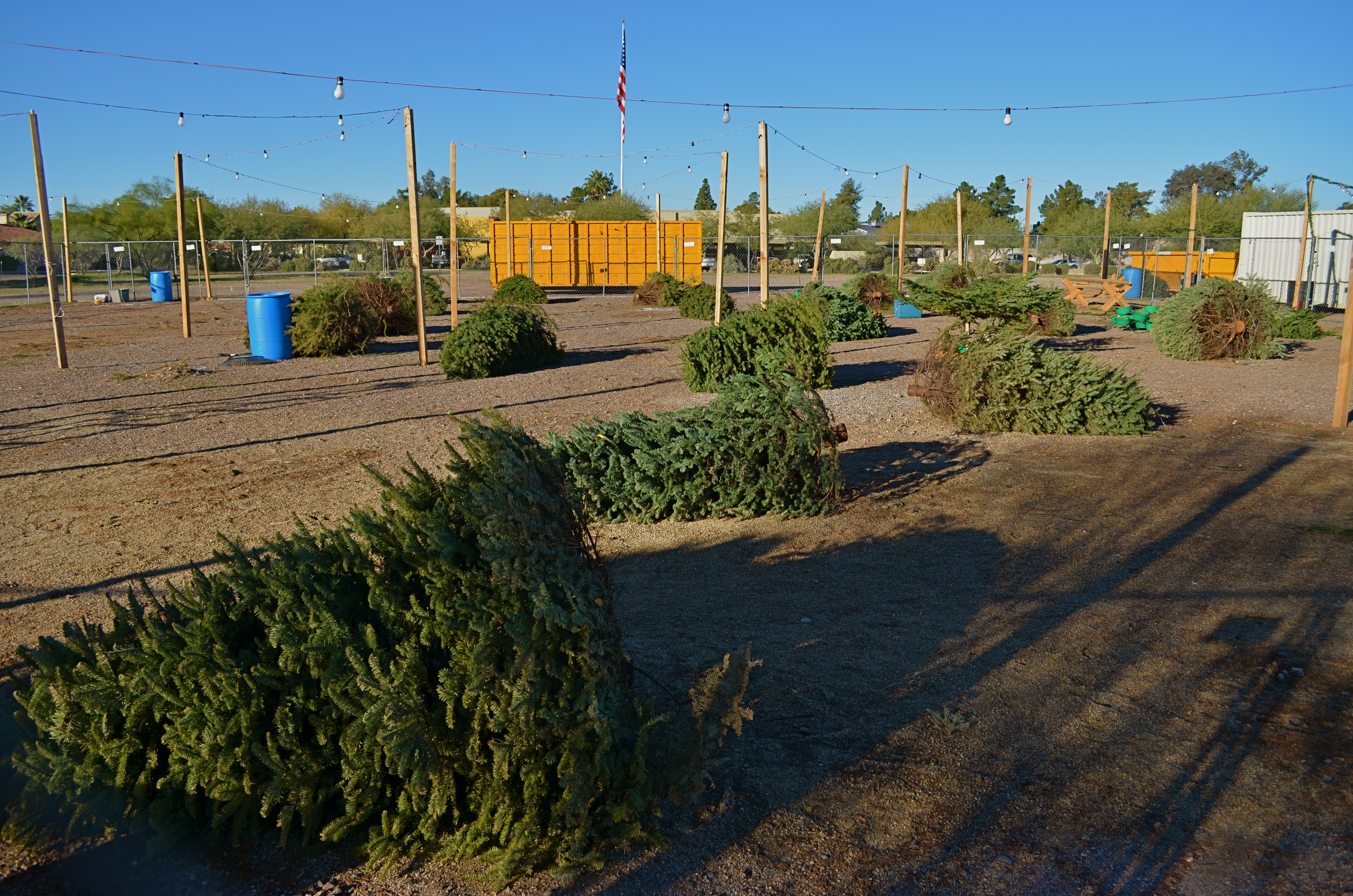
The Leavings: Christmas Tree Lot, Phoenix, AZ, 12/26/13. 1/500 sec., f/5.6, ISO 100, 18mm.
By MICHAEL PERKINS
PHOTOGRAPHY IS THE SCIENCE OF SECONDS. The seconds when the light plays past you. The seconds when the joy explodes. The seconds when maybe the building explodes, or the plane crashes. The micro moments of emotion’s arrivals and departures. Here it comes. There it goes. Click.
We are very good with the comings….the beginnings of babies, the opening of a rose, the blooming of a surprised smile. However, as chroniclers of effect, we often forget to also document the goings of life. The ends of things. The moment when the party’s over.
Christmas is a time of supreme comings and goings, and we have more than a month of ramp-up time each year during which we snap away at what is on the way. The gatherings and the gifts. The approaching joy. But a holiday this big leaves echoes and vacuums when it goes away, and those goings are photo opportunities as well.
This year, on 12/26, the predictably melancholy “morning after” found me driving around completely without pattern or design, looking for something of the magic day that had departed. I spun past the abandoned ruin of one of those temporary Christmas tree lots that sprout in the crevices of every city like gypsy camps for about three weeks out of the year, and something about all its emptiness said picture to me, so I got out and started bargaining with a makeshift cyclone fence for a view of the poles, lights and unloved fir branches left behind.
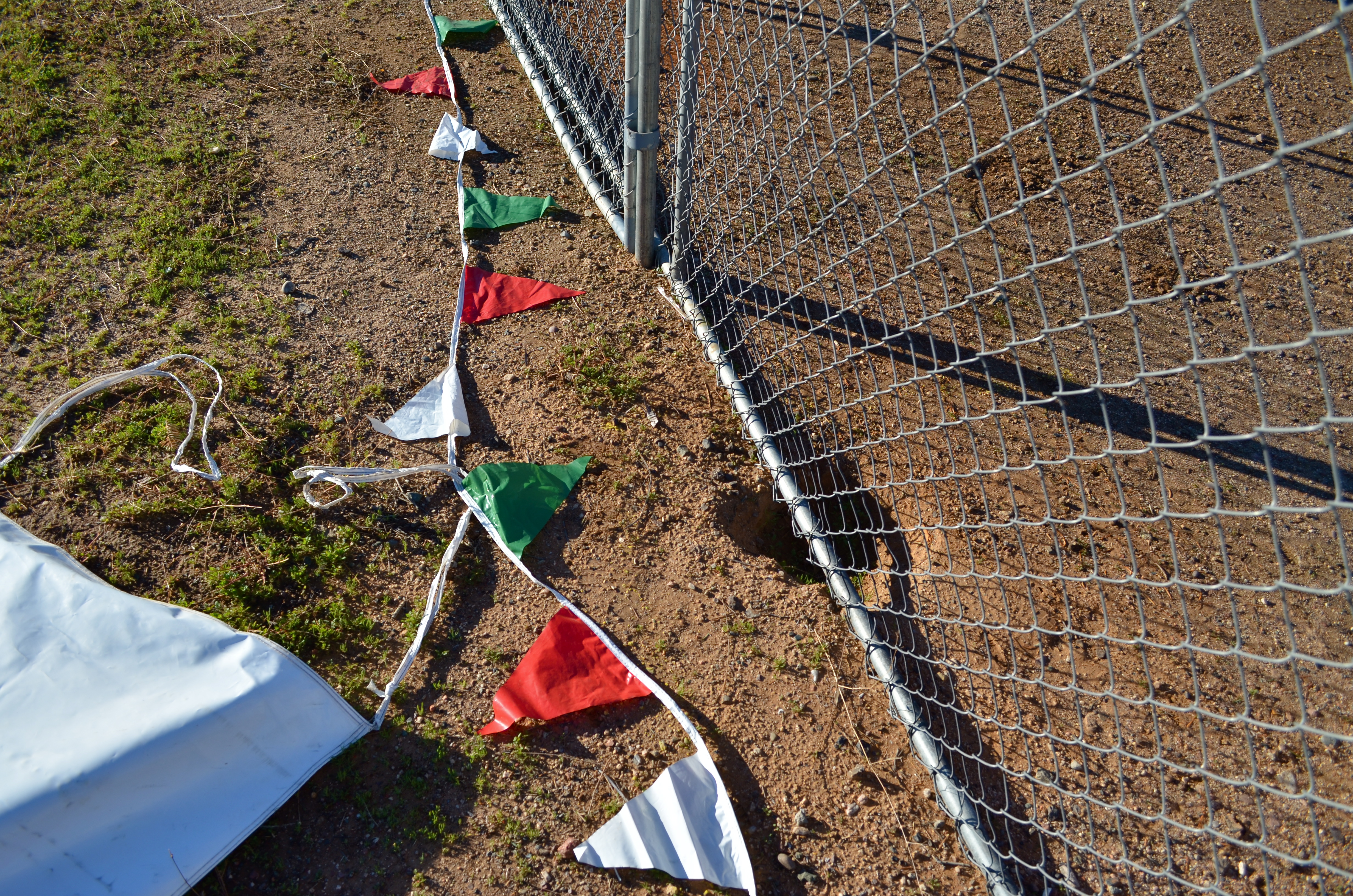
Pack up and get out of town.
The earliness of the hour meant that the light was a little warmer and kinder than would be the case later on in the bleached-out white of an Arizona midday, so the scene was about as nice as it was going to get. But what I was really after was the energy that goes out of things the day the circus drives out of town. The holidays are ripe with that feeling of loss, and, to me, it’s at least as interesting as recording the joy. Without a little tragedy you don’t appreciate triumph, and all that. Christmas trees are just such an obvious measure of that flow: one day you’re selling magic by the foot, the next day you’re packing up trash and trailer and making your exit.
Photographs come when they come, and, unlike us, they aren’t particular about what their message is. They just present chances to see.
Precious chances, as it turns out.
 thenormaleye