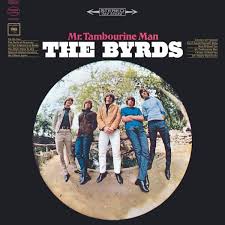
Most of us discovered the effects of fisheye lenses as part of the visual signature of rock’n’roll.
By MICHAEL PERKINS
THE NAME OF THIS BLOG, THE NORMAL EYE, IS A REFERENCE to the old nickname for fixed-focus “prime” lenses, non-zoomable glass like 35 and 50mm, that were once dubbed “normal” since they delivered the sense of space and proportion most closely resembling that of human vision. I’ll leave other combatants to decide whether this renders prime lenses “truer” in any way (those of you who think you know what “truth” is, advance to the fine arts class), but one things seems clear (that is, not cloudy): wide angle lenses, say 24mm or wider, tell a somewhat different truth, and thus create a distinct photographic effect.
Ultra-wides can generate the sensation that both proportion and distances (mostly front-to-back) have been stretched or distorted. They are thus great for shots where you want to “get everything in”, be it vast landscapes or city streets crowded with tall buildings packed into close quarters. They don’t really photograph things as they are, but do serve as great lenses for the deliberate effect of drama. I don’t use super-wides for too many situations, but, when I do, I make up for lost time by going overboard…again, largely as an interpretative effect.
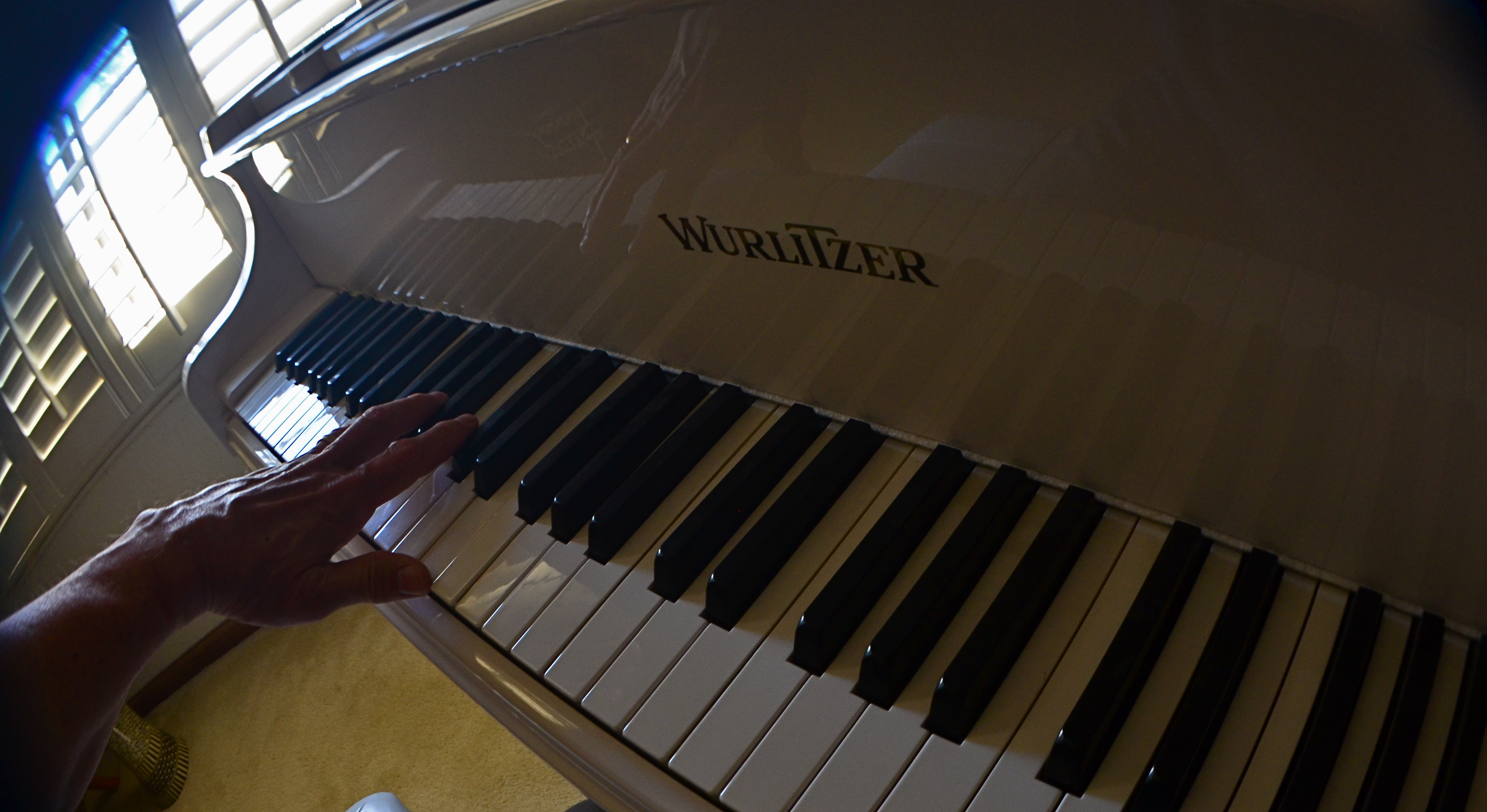
Duets (2017). Rather than “reality”, this is more like a fisheye version of “hallucination-lite”.
Nothing shoots wider than the fabulous fisheye lens, introduced in the 1920’s as a meteorological research tool, and shooting as wide as 8mm with a viewing arc of anywhere from 100 to 180 degrees. Starting in the 1960’s, the fisheye’s unique optics crept into wider commercial use as a kind of funhouse look, the circular image in which all extremes of the rounded frame bend inward, creating the feel of a separate world isolated inside a soap bubble. Some of our most iconic cultural images used this look to suggest a sense of disorientation or dreamlike unreality, with classic album covers like the Byrds’ Mr. Tambourine Man, the Beatles Rubber Soul and Jimi Hendrix’ Are You Experienced? using fishes to simulate the psychedelic experience. Far out, man.
However, used sparingly as simply a more extreme wideangle, the fisheye can create a drama that conforms more to a rectangular composition, especially when the inner core of the image is cropped into a kind of “mailbox” aspect, resulting in an image that is normal-ish but still clearly not “real”. Tilting the lens, along with careful framing, can keep the more extreme artifacts to a minimum, adding just enough exaggeration to generate impact without the overkill of the soap bubble. As with any other effects lens, it’s all a matter of control, of attenuation. A little of the effect goes a long way. I call it lying with a straighter face.
Fisheyes are a specialized tool, and, for most of photography, the optical quality in all but the most expensive ones have kept most of us from tinkering with the look to any significant degree. However, cheaper and optically acceptable substitutes have entered the market in the digital era, along with fisheye-“look” phone apps, allowing the common shooter to at least dip a toe into the pool. Whether that toe will look more like a digit or a fleshy fish hook is, as it always was, a matter of choice.












I’VE JUST SEEN A FACE
Am I this person? Do I know this guy? Am I getting him “right”?
By MICHAEL PERKINS
…..through his nightmare vision, he sees nothing…..blind with the beggar’s mind, he is but a stranger to himself –Winwood/Capaldi
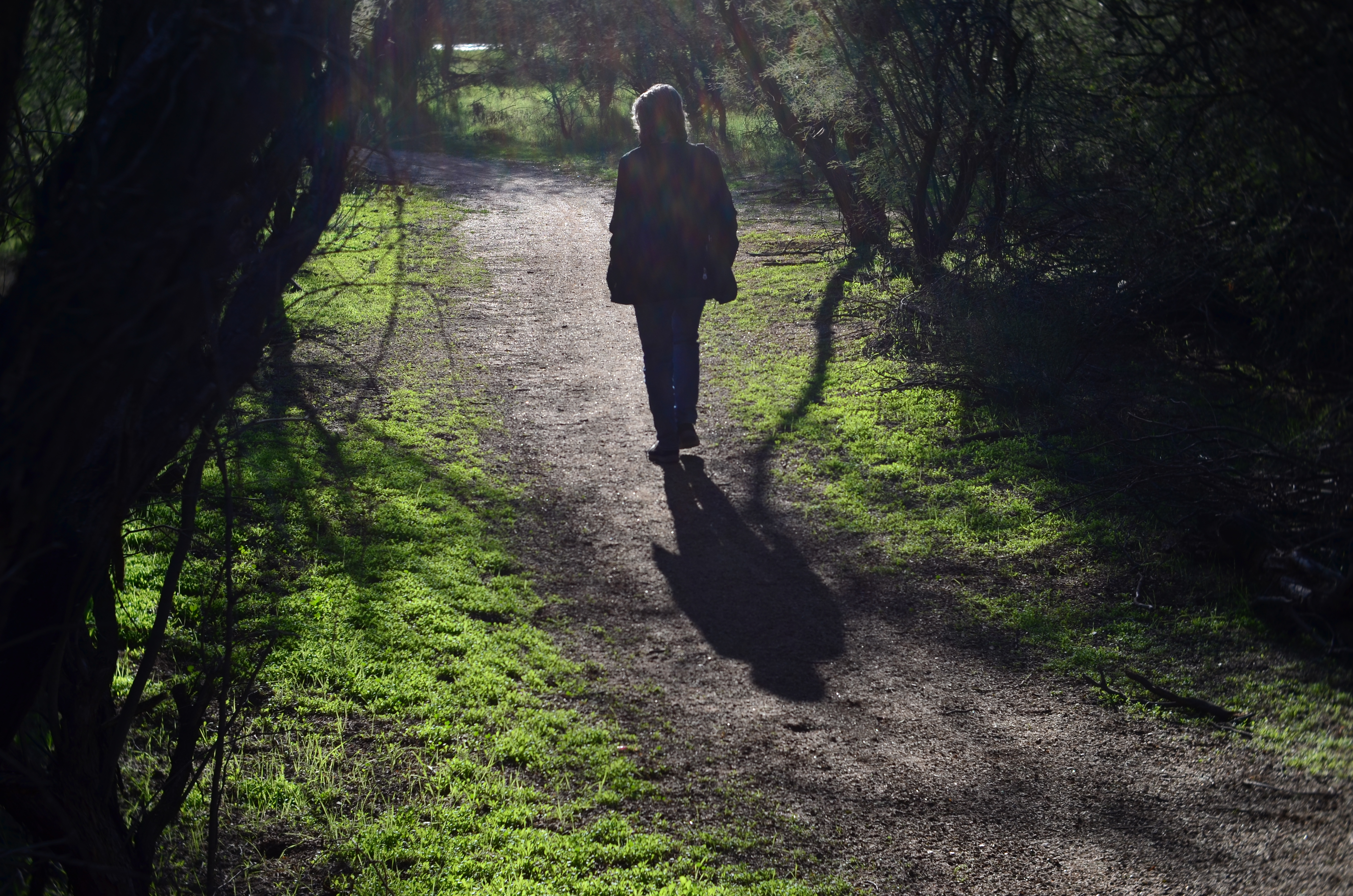
GRINNING, FRIENDLY LIARS: that’s what most of us are when offering up a socially amenable mask for public conception as a photographic portrait. It’s the facial equivalent of “putting your best foot forward”, an official version of someone who possesses our features but is as different from our selves as, to quote Twain, lighting is from the lightning bug. So who should know that genuine person better, or can capture its reality more accurately than we ourselves? Right?
Or not.
We (the ultimate authority on us), are usually among the least trustworthy of narrators on our favorite subject. Many a memoir is merely a selective reconstruction of one’s past, leaking credibility at every seam. So why should our photographic self-portraits be any more reliable? We believe that we can reveal things outsiders can’t see, that our “real” face can only be shown by our own hand….that the others don’t really “get” us. But what actually happens with the insane new flood of selfies washing over the digital shores is that we merely substitute one “correct” face…the one we give to other photographers…for another, no less crafted, no less artificial. We are still trying to concoct an image that we feel is fit for public consumption. And we invariably fail.
This is hardly a new trap. Photographers have been trying to tell their own facial stories for over two centuries, sure that their interpretation of their secret selves will succeed where other chroniclers fall short. But the best self-portraits are still abstractions, momentary samples of our personality, never the personality in full. Ironically, we might make pictures of our selves that we prefer over those others make of us. Perhaps they are technically better, more deliberate, more flattering, and so forth. And maybe we like the selves we shoot better because they actually conceal what we want to remain hidden, whereas the stranger’s eye is, in fact, too penetrating for our comfort.
Contemporary solutions to this legendary conundrum know no limit. Every shooter has his or her own approach to a statement of self in an image, with some choosing to deliberately camouflage or hide themselves, and other concocting very formalized creations that mock the idea of recognition while seeming to be “real”. In Jackie Higgins’ wonderful book on alternative techniques Why It Does Not Have To Be In Focus, she argues that “faces rarely reflect the inner workings of minds”, suggesting that “there is no such thing as the unified self.” The take-home: you can’t get it right, this business of knowing and showing your own face. Does that mean the quest is unattainable? Sure.
Or not.
Share this:
Posted by Michael Perkins | February 13, 2017 | Categories: Conception, Portraits, Self-Portrait | Tags: Abstract, Commentary, Interpretation | Leave a comment