THE OPPOSITE OF OBVIOUS
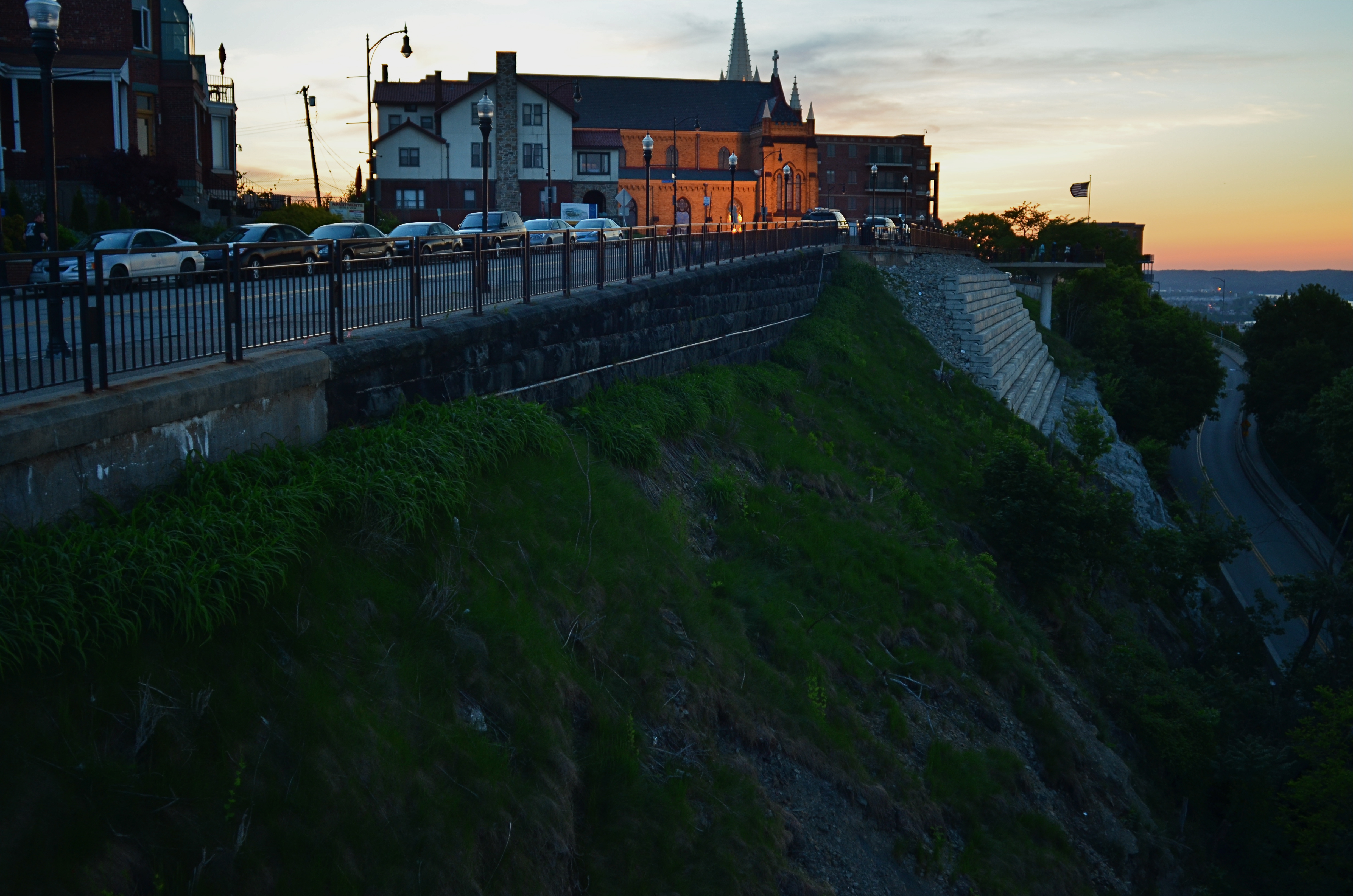
Mount Washington, the urban district that sits on a bluff overlooking downtown Pittsburgh, Pennsylvania. 1/60 sec., f/1.8. ISO 250, 24mm.
By MICHAEL PERKINS
IT GOES BY MANY NAMES: THE MONEY SHOT, THE GOLDEN ANGLE, THE POSTCARD VIEW. Travel enough and you will snap one. The all-roads-lead-to-this-picture, must-shoot frame that defines a town or city. Rattle off the names from Eiffel to Empire State. Drawn like moths to flame, we make the same treks that millions before us have made to capture the classic destination, the local Mecca. Do we truly believe that we, the 400,000,000th visitor to the special site, will capture something that someone else missed? Well, yes, we do. For all the other tourists, it’s just a Kodak moment, but once we focus our lens, boy, it’ll be a moment for the ages. Or not.
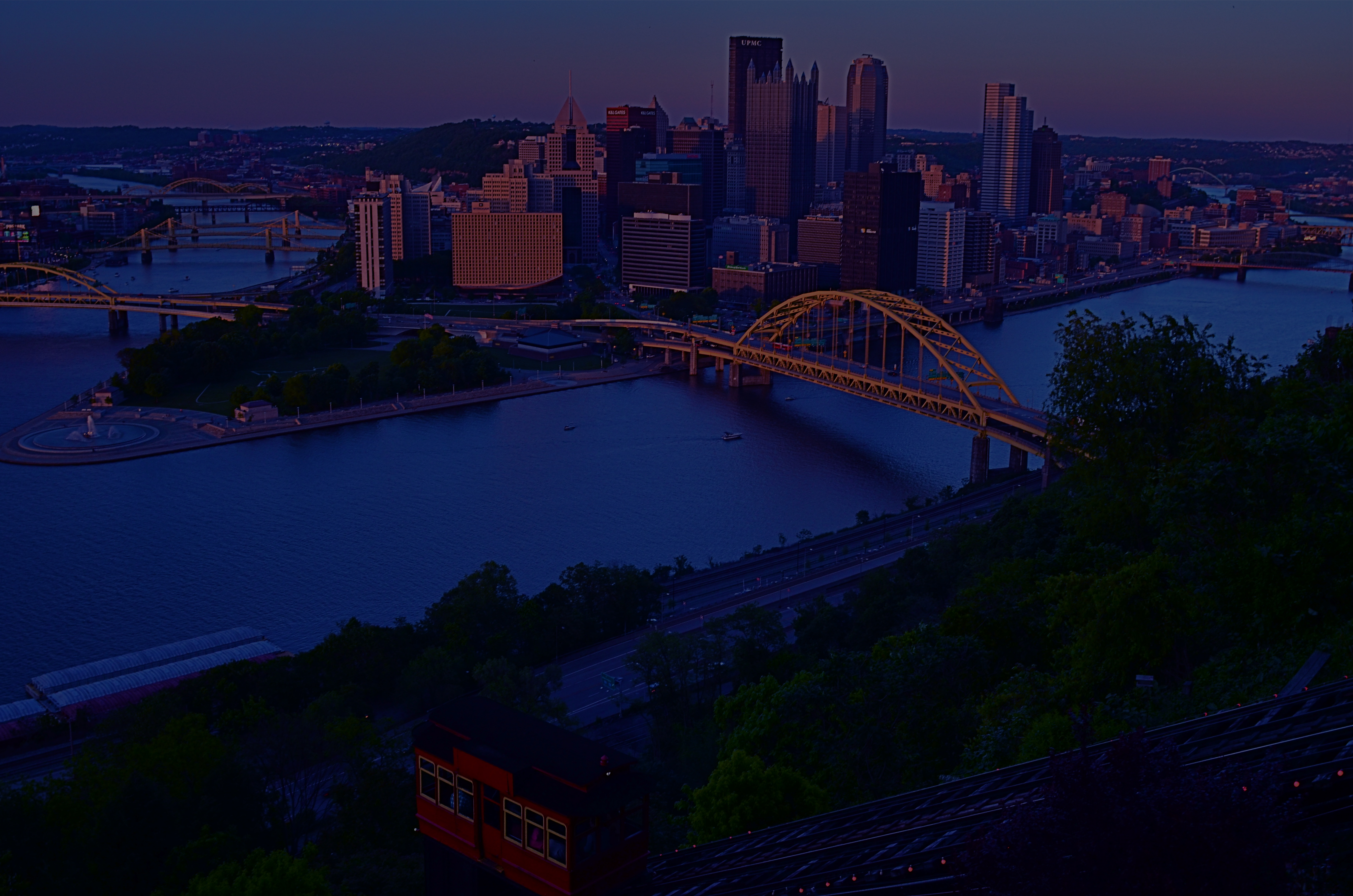
The standard souvenir view of downtown Pittsburgh from the top of Mt. Washington.
But I also believe in the value of the dead opposite of the obvious shot, the image taken 180 degrees away from the holy object we all think we must shoot. The hiding-over-my-shoulder treasure that no one came to take, but which might just qualify as a treasure hidden in plain sight. What’s across the alley from the Alamo? What’s a half a block to the left of Notre Dame? Or, in the case of Pittsburgh, Pennsylvania, what happens when you deliberately turn away from the most desired view in the city?
The iconic downward vista of the Steel City, at precisely the point where the Allegheny and Monongahela Rivers blend at the town’s terminus to form the Ohio, is chiefly shot from atop Mount Washington, a district reached via the romantic, cable-driven incline service that has trucked commuters up the Mount and down for over a century. Add the souvie shop and the walk-out view platforms at the top, and it’s one of the most obvious cases of here, take this picture in all of American tourism.
But the Mount, an old urban neighborhood unto itself, is like a flatland city dropped on top of a lumpy cliff, its streets rising and falling like a stone roller coaster. The sheer suddenness of its drop-offs and the skyward pitches of its roofs lends a zany angularity, its tiered vistas contrasted by the glass and steel of contemporary Pittsburgh just below. Think Rio with Czechs and Germans.
There’s something of a religious pilgrimage quality to taking your shot at a popular attraction, but it takes mere minutes to scout around beyond the crowds to what lies immediately beyond. The opposite of obvious is often a synonym for discovery.
LAST ONES OUT
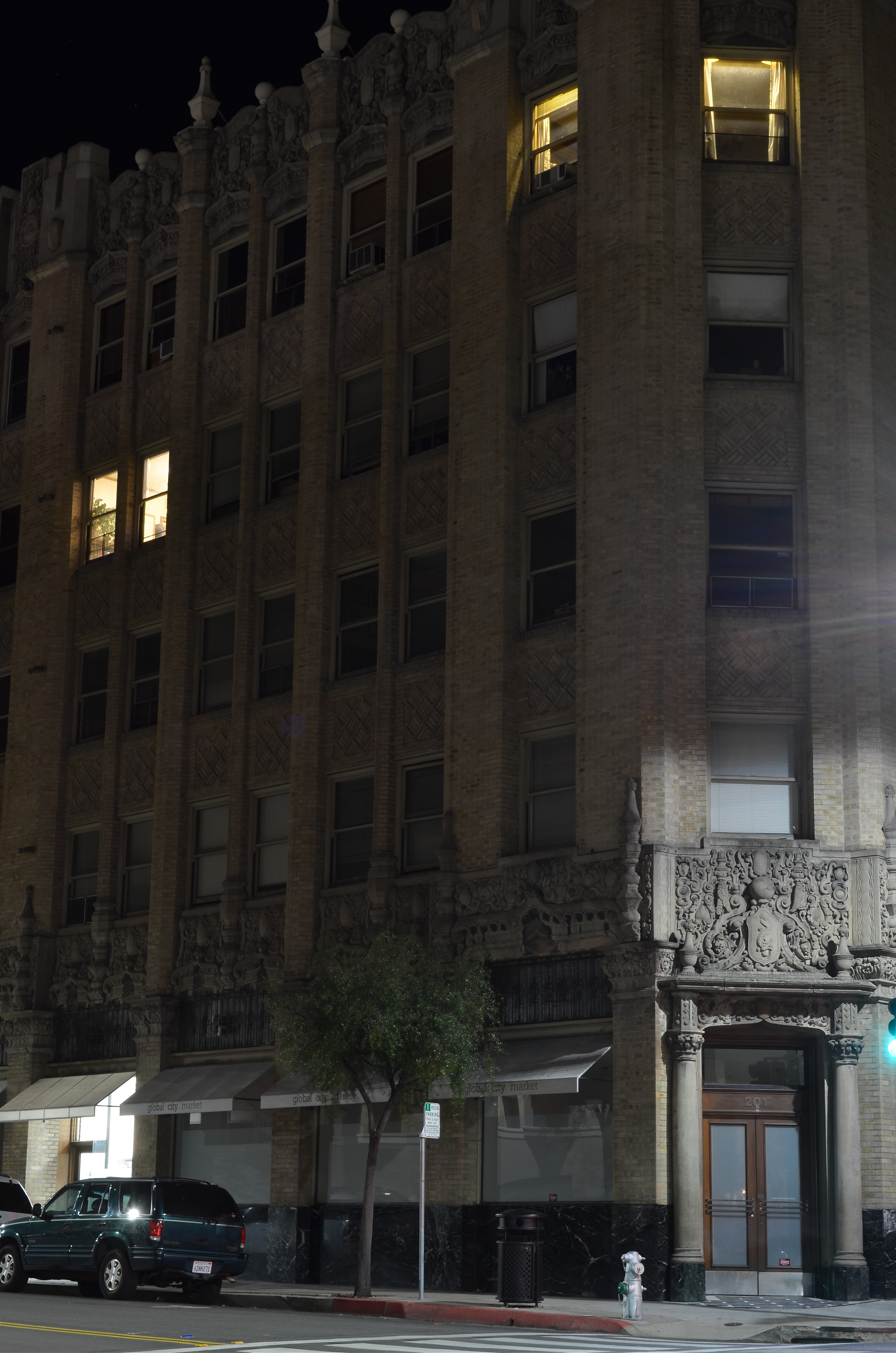
“Yes, I’d like a medium pepperoni sent over to..”
By MICHAEL PERKINS
CITIES NEVER COMPLETELY CLOSE. We prefer to think of the urban workday as a uniform morning-to-afternoon stretch, but in truth, our concrete forests always harbor legions of people at the margins of those arbitrary time boundaries. Someone has to take out the trash, hunker over the overdue report, or merely cringe at the thought of going home to whomever. I never took a nighttime photo of a city building that was completely dark unless it was in the aftermath of a sudden power cut. There are always the little twinkles of activity, the randomly lit windows, here and there, that remain.
And each window is a story.
Mind you, the story may not ever be revealed in full. We seldom know who’s burning the midnight oil, just as we can’t but guess about their motives, dreams, or dreads. But the light created by their presence is enough to shape images with a little mystery, and that is at the soul of urban photography. In the daytime, everything is evenly lit, and the “after hours” people are rendered invisible. After dark, however, their special qualities shine forth, shaping the mood and character of the most mundane building. Or image.
Some lights are on because other lights are on. If Man “A” is staying at his desk way past dinner, then the lights at Diner “B” must remain on as well, ’cause Daddy needs him a sandwich, and yes, just one more cup of coffee. We don’t see those connections, but we know they, and many others, are there, keeping the lights on, keeping the human drama going. A second look at the city after hours allows us to document part of that drama, and, as is usual in photography, that glimpse may be all we need to whip up a little whimsy.
EAVES-EDITING
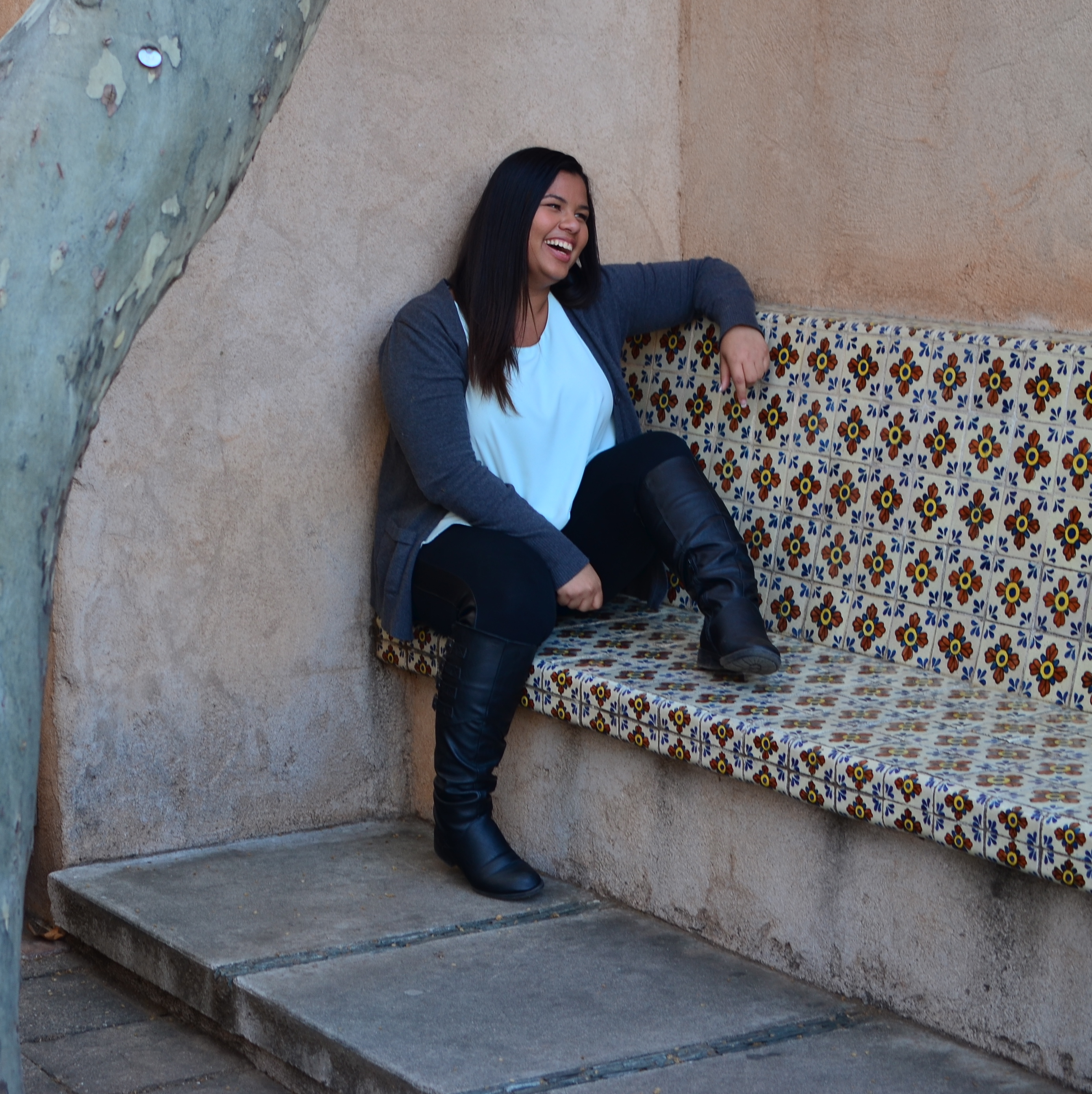
Anatomy Of A Laughing Fit: Going…
by MICHAEL PERKINS
ONE OF THE SIDE BENEFITS OF PHOTOGRAPHY is that you don’t always have to pick your own subject. Sometimes someone else’s idea of a potentially good image can be yours as well. You simply camp yourself right next to where they’re working and pick off your own shots of their project. Assuming that everyone’s polite and there are no issues of neighborly nibbing, it can work. Just ask anyone who’s clicked away at a presidential press conference or the sudden exit of a celebrity through a side entrance.
Of course, when literally dozens of cameras are trained on a single event, its likely that everyone will come away with the same photos, or very nearly. The moment the prime minister points to drive home his main point, click. The instant when the judges place the tiara on the winning Miss Tomato Paste candidate, click. Sometimes, however, you can kind of “eaves-edit” on just one other shooter’s set-up and edit the shots a different way than he does. You’re not running the session, but you could come away with a better result than he does, based on your choices.
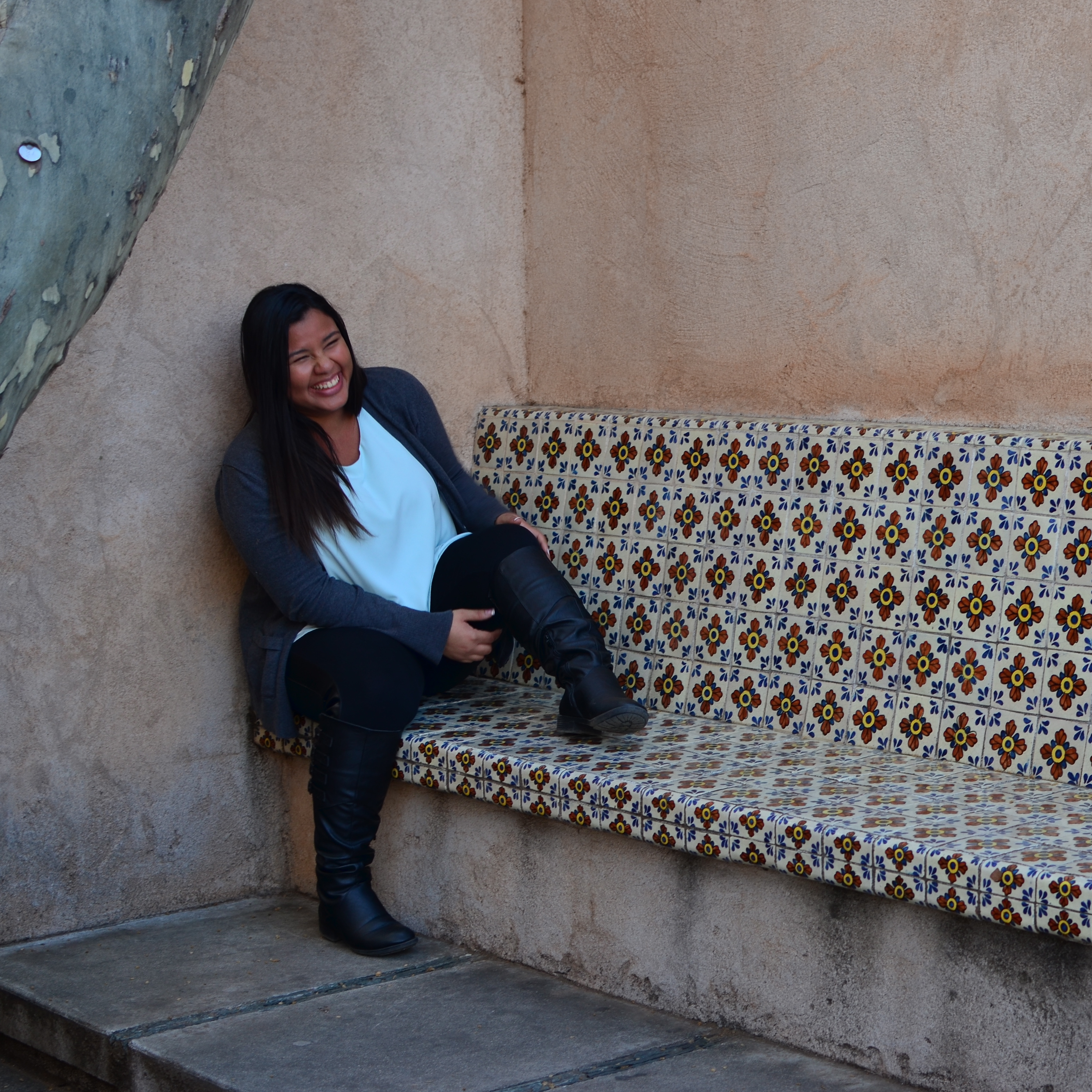
Going….
I recently came upon a man shooting a girl in the streets of a kind of faux-village retail environment in Sedona, Arizona. Obviously, the main feature was the lady’s infectious and natural smile. As I came quietly upon them, however, Mr. Cameraman was having a problem keeping that smile from exploding into a full-blown laughing fit. Ms. Subject, in short, had the mad giggles.
Now, from that point onward, I have no idea of what he went home with in the way of a final result, as I had decided that the crack-ups would make better pictures than a merely sweet set of candids. It just seemed more human to me, so I only shot the moments in which she couldn’t compose herself, and took off from there.
I didn’t want to overstay my welcome, so I snapped my little chunk of Mr. Cameraman’s moment and sneaked off, like fast. As I slinked away, I could still hear Ms. Subject telling him, through fits of laughter, “I am so sorry.” She may have been, but I wasn’t.
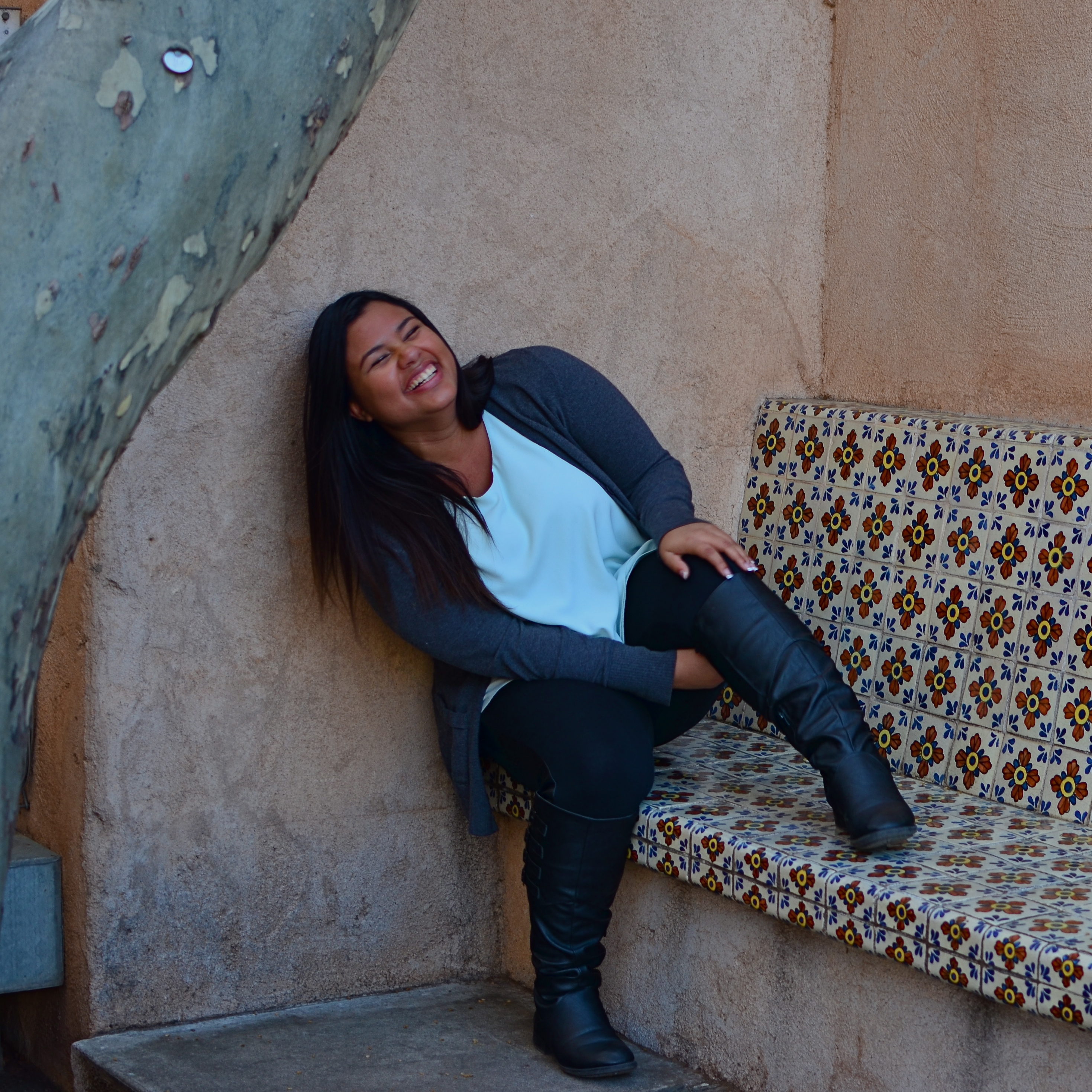
…..Gone.
LET’S ALL GO TO THE LOBBY
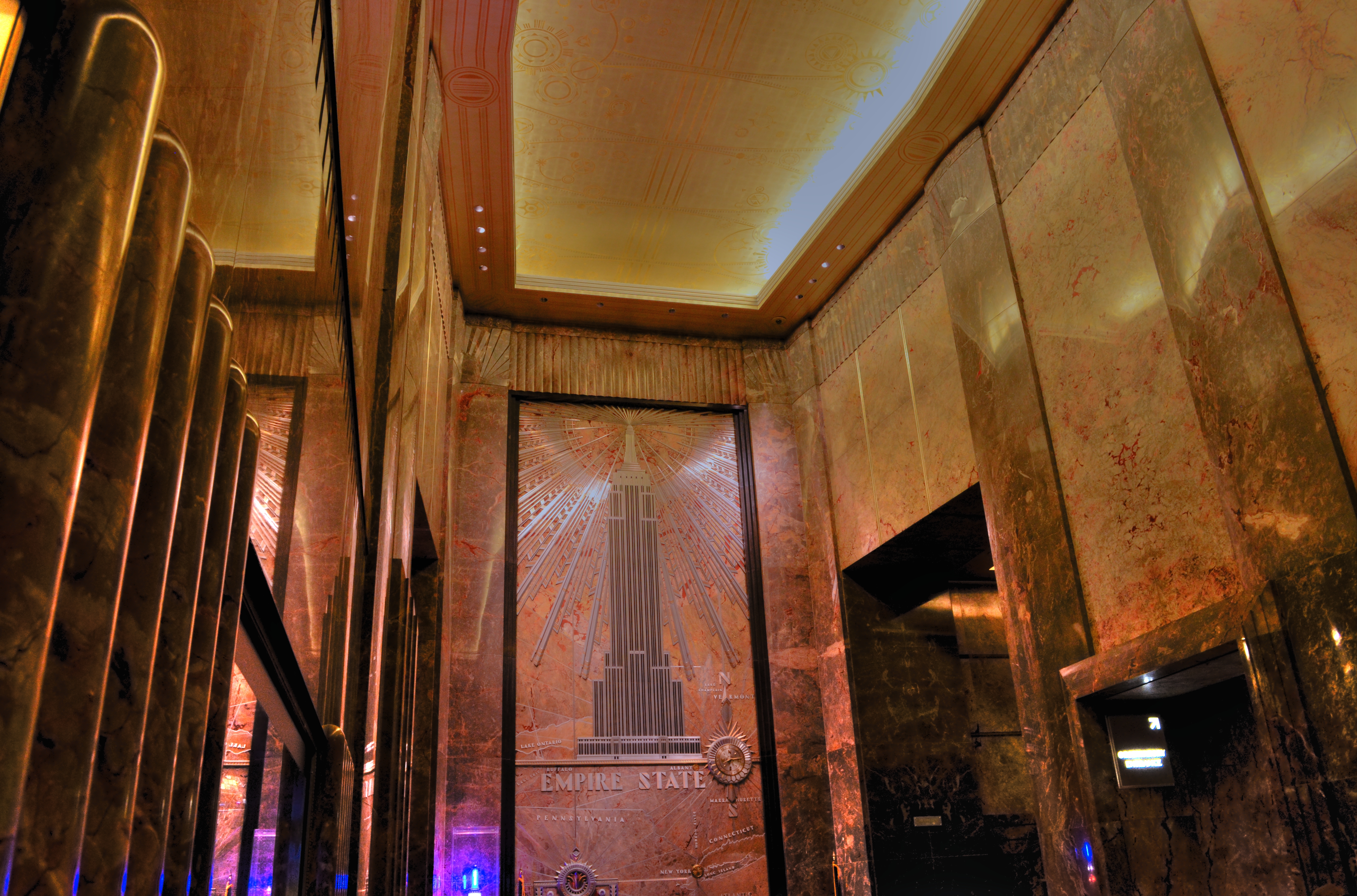
Big Dreams, Big Walls: The elegant lobby of the Empire State Building, NYC.
By MICHAEL PERKINS
THE FIRST GOLDEN AGE OF THE SKYSCRAPER IS TRULY ONE OF THE MOST SUSTAINED PERIODS of garish grandeur in American history, and, for photographers, it’s an embarrassment of riches. However, walking in the country’s towering monuments to self and substance, it’s important to remember that only half the story is told in the sweep and scope of their gaudy exteriors. In many cases, the ego-driven lords of commerce who commissioned these urban headstones wrote their legends just as loudly inside their palaces’ lobbies and vestibules.
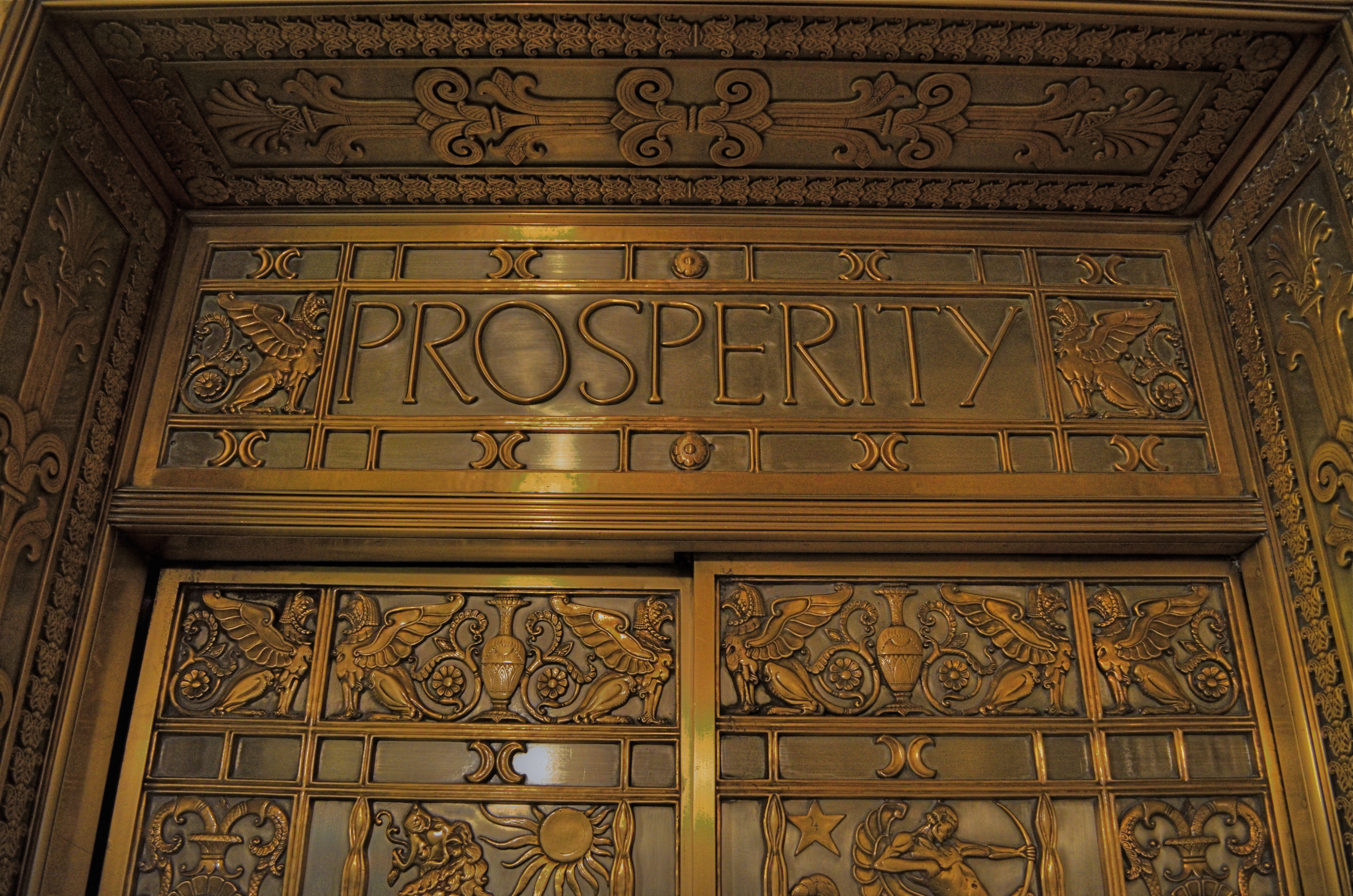
Even the door of this elevator cab in Columbus, Ohio’s Leveque Tower can take on a sense of higher purpose.
Lobbies created during the ‘scraper craze are every bit as extreme as their hosts’ outer skins, but in a more personal way, since they are the common space where actual people live and work. The scale of person-to-building is demonstrated more dramatically than when one views a tall spire from four blocks away. Also, in grand propagandistic style, the ideals of the sponsoring person or company become part of the decor and design, with words like prosperity, integrity, health, industry or happiness gracing crests, plaques, mailboxes and elevator cabs. If the outside of the structure celebrates how beautiful a building can be, the lobbies of those same places celebrate how wonderful a person can become.
Friezes, murals, mozaics, statuary, and custom lighting all make grand lobbies a rich hunting ground for photographers, even as they often pose some real challenges for all but the fastest lenses. Still, the rewards are great, and, as time moves on, the very act of documenting these urban leviathans becomes downright crucial, given the dodgy luck of urban evolution. Today’s taken-for-granted treasure is tomorrow’s pile of salvage (I needed to slide that in on the fiftieth-anniversary of the destruction of New York’s Penn Station, one of the most savage acts of urban desecration in the history of this country).
So, when it comes to great buildings, go ahead and judge a book by the cover. But take the time to leaf through some of the chapters as well.
EMPTY TABLES
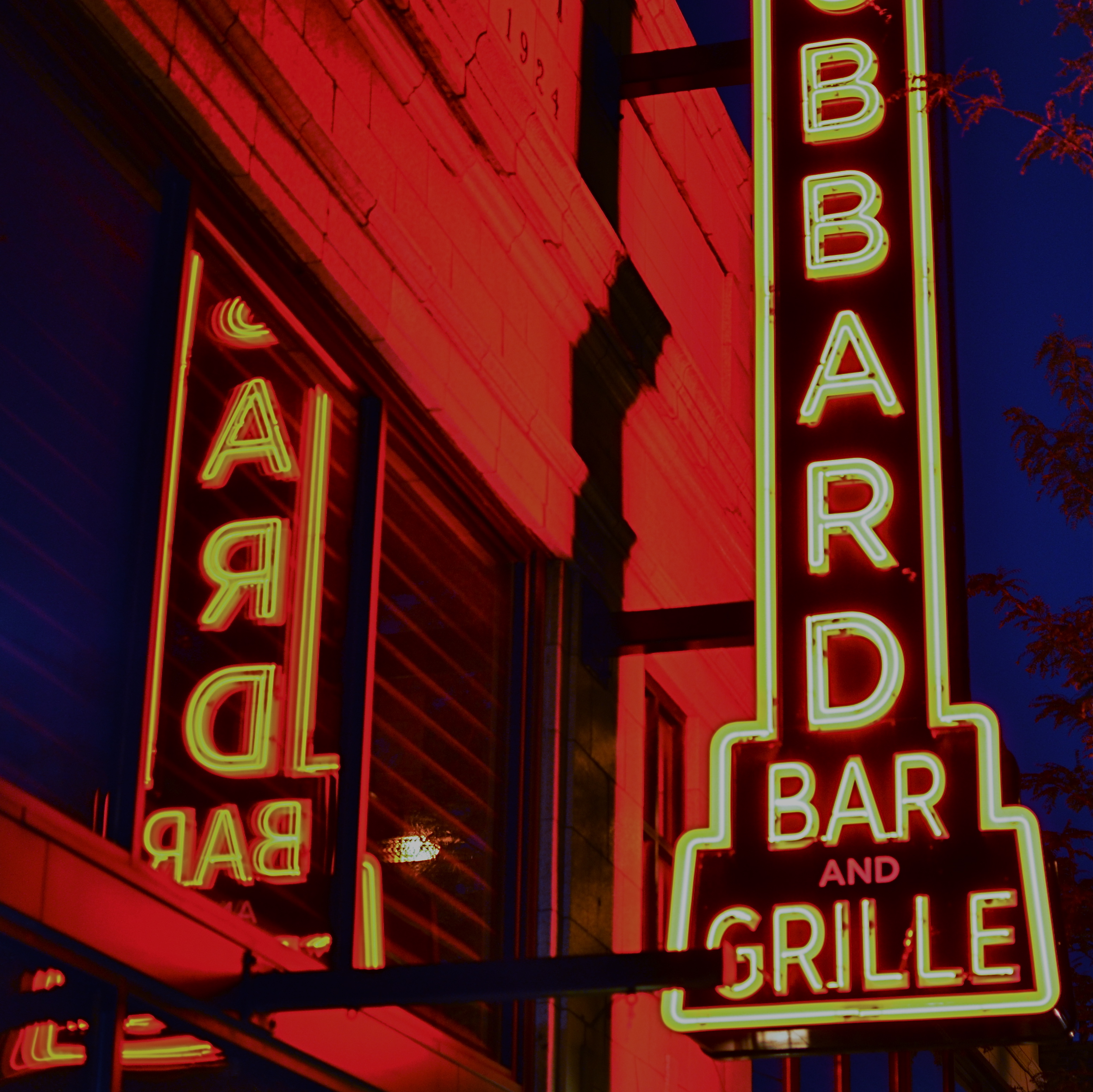
“Each place I go….only the lonely go….”
By MICHAEL PERKINS
FEW OF US CAN CHANNEL FRANK SINATRA’S VOCAL ACUMEN, but we can all relate to the urban movies that he started running in the projection rooms of our minds. For most of his career, The Voice was a very visual actor, shaping sound into virtual landscapes of lonely towns, broken-hearted guys wandering the waterfront, and blue mornings where the sun rises on you and ….nobody else. Frank could smile, swagger, strut and swing, for sure, but he was the original king of desolate all-nighters, our tour guide to the dark center of the soul.
He was also, not coincidentally, a pretty good amateur photographer.
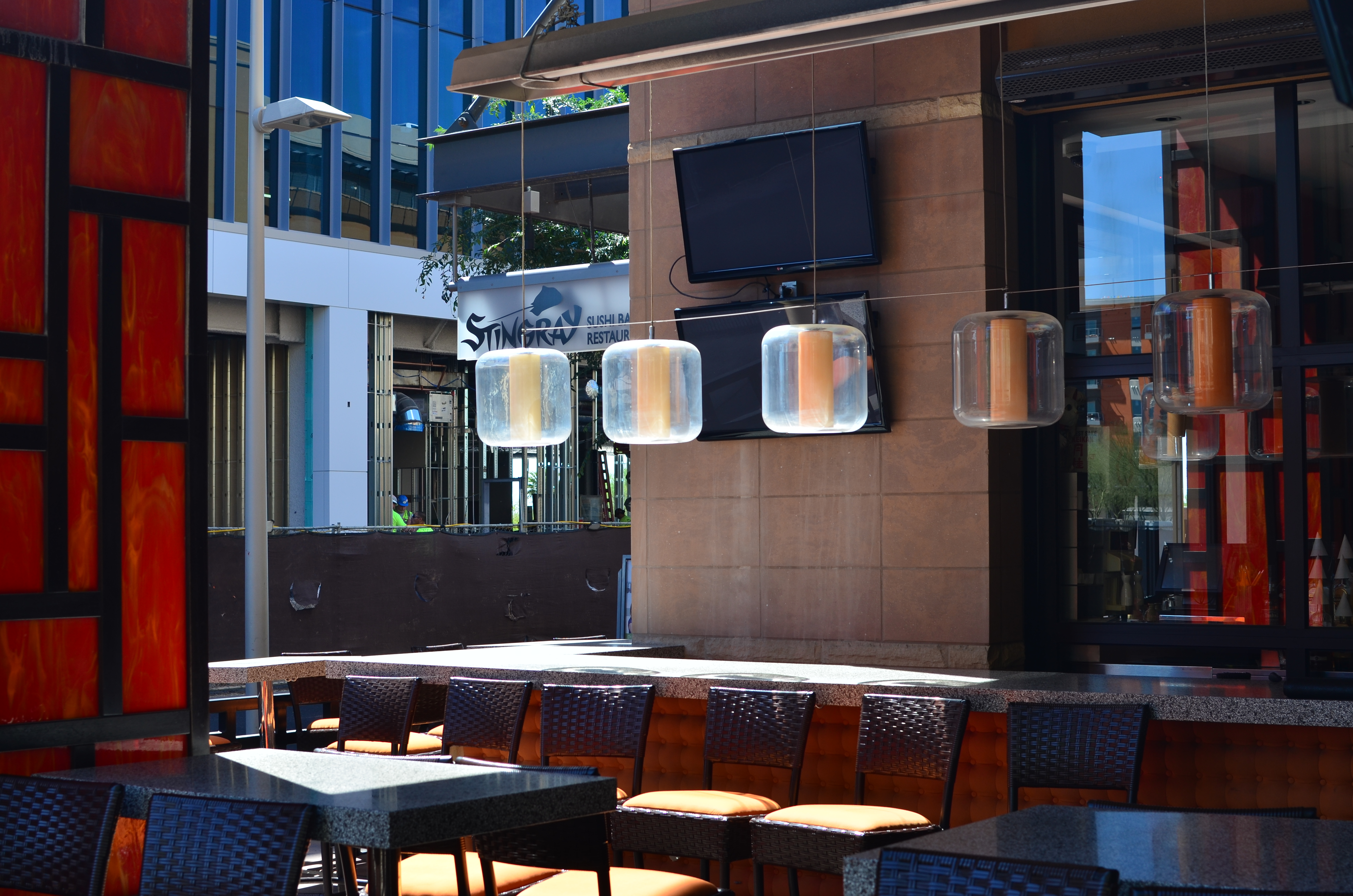
I tend to see restaurants, bars, and city streets in general through the filter of Sinatra’s urban myths. Tables covered with upturned chairs. The bartender giving the counter one more weary wipedown. Dim neon staining rain-soaked brick streets. Curling blue-grey wisps of cigarette smoke. And shadows that cover the forgotten in inky cloaks of protection. Give me eight bars of “One For My Baby” and I’m searching for at least one bar that looks like the last act in a Mamet play.
It becomes a kind of ongoing assignment for photographers. Find the place that strikes the mood. Show “lonely”. Depict “Over”. Do a portrait called “Broken-hearted Loser.” There are a million variations, and yet we all recognize a slice of every one. Like Frank, we’ve all been asked by the host if he can call us a cab. Like Frank, we’ve all wondered, sure, pal, but where do I go now?
It’s not often a pretty picture. But, with luck, it’s sometimes a pretty good picture.
URBAN MIX
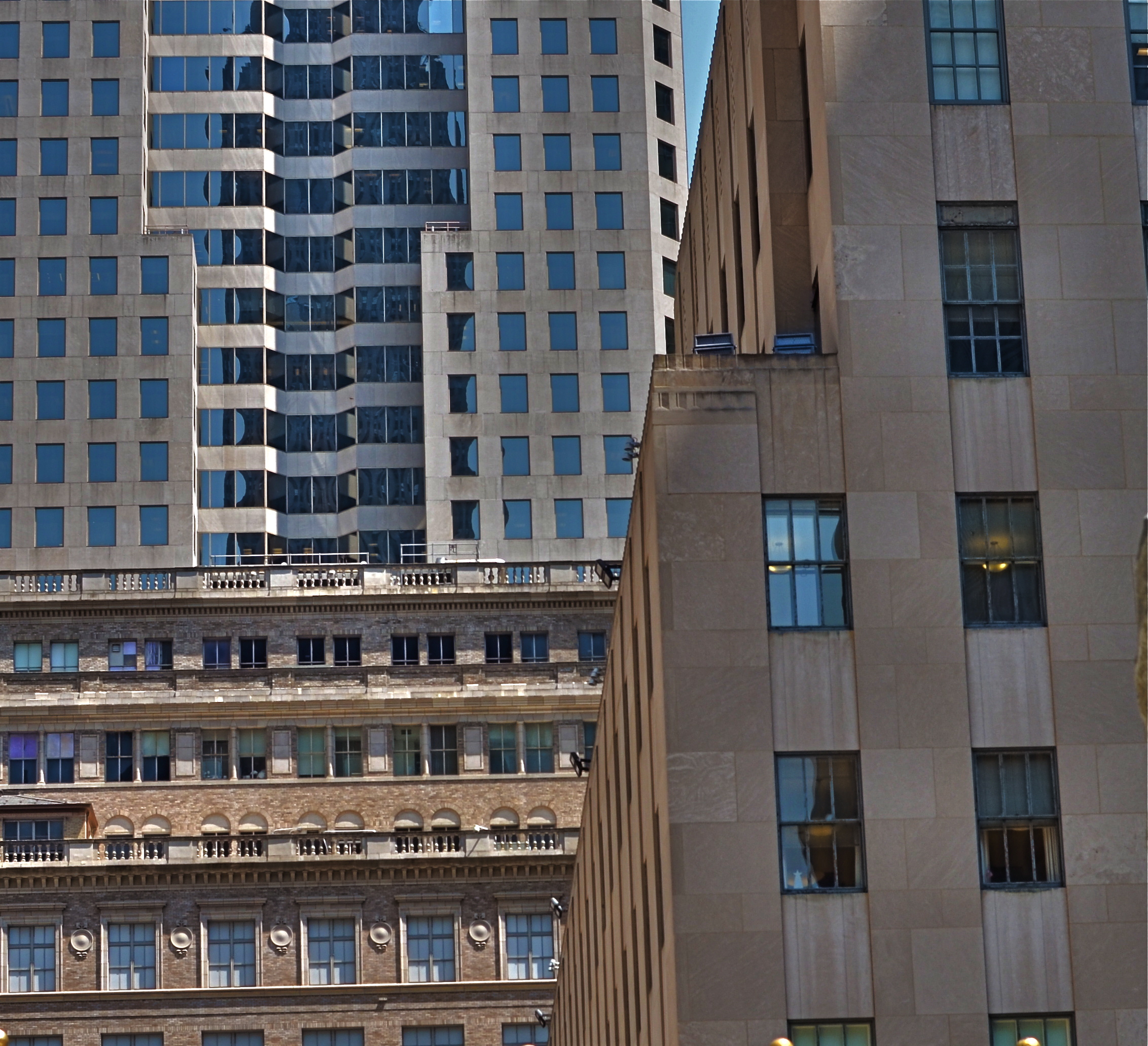
Competing architectural styles establish a natural rhythm of conflict in major cities.
By MICHAEL PERKINS
EACH MAJOR URBAN CENTER HAS ITS PHOTOGRAPHIC SUPERSTARS, those destination attractions that are documented to death by shooters great and small. Name the city and you can rattle off the names of the usual suspects. The landmarks. The legends. The here’s-proof-that-I-was-there vacation pictures. Meanwhile, the rest of the buildings within our super-cities, that is the majority of the remaining structures on most streets everywhere, remain under-photographed and, largely, unknown.
Part of the problem is our photographic viewpoint, which apes our human viewpoint. As drivers or pedestrians, we necessarily focus most our attention at events topping out at just about two stories above street level. This means we will almost certainly n0t see the mashup of architectural styles just outside our peripheral range. We don’t follow the visual line of buildings all the way up, either because we are walking, or because we don’t want to look like some out-of-town rube. But there is real drama in the collision of all those unseen details, and, if you’re interested in showing the city as an abstract design, some real opportunities.
I find that shooting toward the intersection of parts of three or more buildings amplifies the contrast between design eras, with doric columns and oak clusters crashing into International style glass boxes, overlayed with Art Deco zigzags. I shoot them with standard lenses instead of zooms to preserve the intensity of color and contrast, then create the final frame I want in the cropping. Zooms also tend to flatten things out, making buildings that are actually hundreds of feet from each other appear to be in single flat plane. Regular lenses keep the size and distance relationships relatively intact.
Importantly, I don’t shoot entrances, emblems, signage, anything that would specifically identify any one building, and I steer away from places that are recognizable in a touristy way. I’m not really interested in these buildings in their familiar context, but as part of a larger pattern, so I don’t want to “name” things in the image since it will draw away interest from other elements.
The city is a concrete (sorry) thing, but it is also a rich puzzle of design that offers almost infinite variety for the photographer. Best thing is, these compositions are just inches away from where you were bored to death, just a second ago.
OF FOOLS AND TOOLS
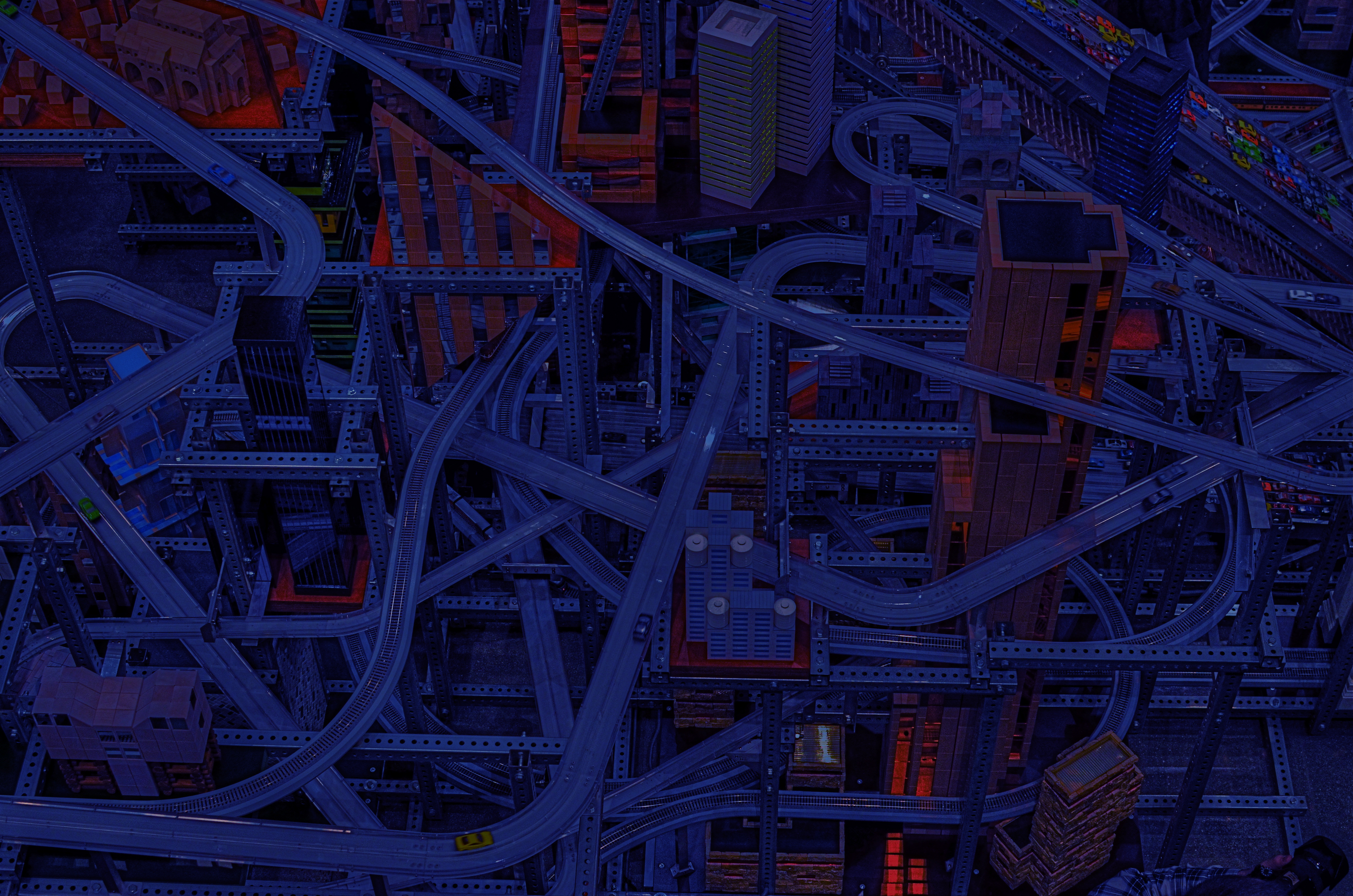
There are many roads to a final image, but only one destination.
By MICHAEL PERKINS
PHOTOGRAPHERS LOVE TO BICKER ENDLESSLY ABOUT WHICH IS THE BEST ROAD TO TRAVEL en route to the making of a picture. I mean they flat-out love it. Here we are entering the third century of a global art that has amply demonstrated that vision, not hardware, is the determinant of excellence, and we are still splitting into warring factions on which camera does this, or which lens or process does that. It’s discouraging because it is wasteful. Put in another context, it’s like arguing whether your marinara won first prize because you stirred it with a spoon instead of a fork.
This ongoing us/them battle over which is the “purer” approach to photography is presently centered on traditional cameras versus mobile devices. Each side calls its star witnesses to testify on a variety of qualifying or disqualifying factors, as if anything matters but the pictures. Can I play that game? Sure, and I’d be lying through my teeth if I said that I had never hurled a bomb or two toward both sides in the skirmish. But when I do that, I’m only serving my own ego….not photography.
I make a distinction between cel phone and conventional cameras based simply on what I want to do in the moment, but such distinctions are never recommended as a universal yardstick. Very generally speaking, if I want the widest number of creative choices before the picture is made, I prefer a DSLR. If I can safely trust my instinct for the greatest part of the picture, adding creative tweaks after the shutter clicks, I am comfortable with a cel. Simple as that. I have made very satisfying images with both kinds of cameras, but my results are purely my own. And that’s really as much as any of us can swear to.
The manufacturers of both kinds of cameras know that different people approach picture-making with priorities, and that’s why they make cameras that have different approaches. Why should this be surprising? Is a Cadillac a better car than a Fiat? Who says so and why? Don’t both accomplish the same baseline task of propelling you from point A to point B? Then they’re, um, cars.
Many pro photographers worship gear the way high priests dig incense and robes, so it’s no wonder that newbies catch the same fever. Looking at their worst pictures, they hate on their gear instead of questioning how they see. You’ve heard the if-only mantras. Maybe you’re mumbled them yourself. If only I had the Big Mama 3000 lens. If only I had a Lightning Bolt BX3 body with a Zeiss diamond cutter attachment! Boy, howdy, then you’d see some pictures. Yeah, well, bull hockey. Develop your eye and your pictures will come out better, whatever kind of camera they come out of. Choose to put yourself on an eternally accelerating learning curve. You’re the real camera, anyway.
Anything else is just a spoon or fork. Stir the pot with what’s at hand and start cooking.
EQUILATERAL
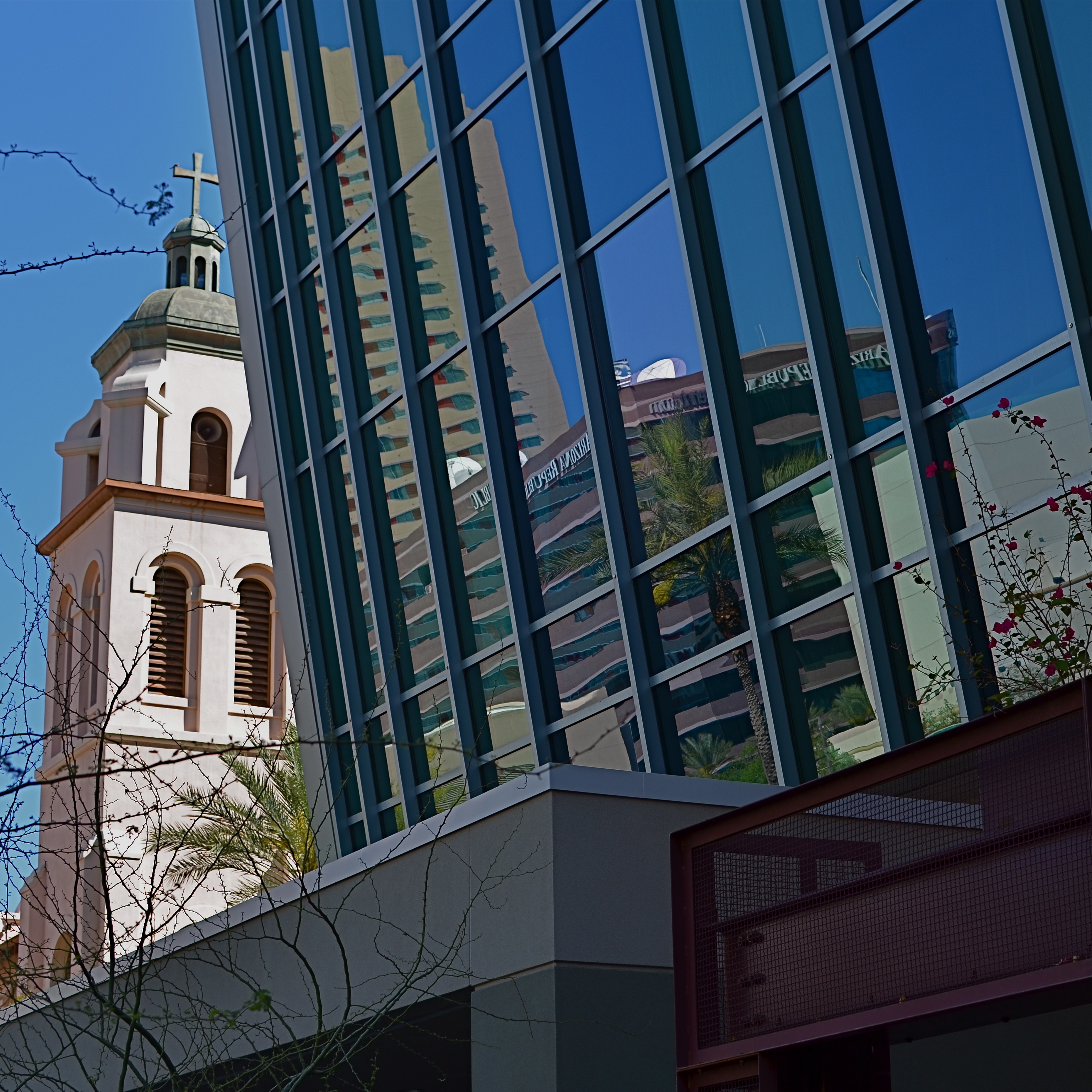
Framing within a square allows for a completely different kind of compositional tension in your shots.
By MICHAEL PERKINS
IT RECENTLY OCCURRED TO ME THAT THERE IS AT LEAST A “MINI-GENERATION” OF YOUNG PHOTOGRAPHERS who have never shot a single picture on a conventional camera. I’m talking 12-20-year-olds that may have created every shot of their relatively young shooting life on a mobile device. This is notable, because the concurrent tsunami of traffic routed to Instagram, Snapchat and other apps means that many of these new shooters have also made a ton of their images in the square format. That in turn means that, unlike many photographers using more traditional gear, they are comfortable framing up the world in this unique fashion, and that presents a creative challenge for everyone else making pictures.
For various reasons spanning most of a century, the square, which spent a long time as the default frame for all of photography, faded for a while from the 60’s through the early 2000’s. Social media and the lo-fi plastic toy camera craze have brought it back, and, with it, a very distinct way of seeing, especially if you’re out of practice with it.
For one example, many photographers are comfortable with locating their biggest point of interest dead center in a square, in a way that they never would be in a landscape frame. Certainly there is the temptation to bring all eyes right to the point of a picture, and symmetry is a great way to do it. I myself “discover” squares in pictures that were executed in wider dimensions, which is to say that I finally saw how little of the original information was really needed to make the point. In other words, a more formalized kind of cropping.
Today’s cel phones encourage people to experiment since the square format can be preselected as well as click-cropped to a perfect square after the fact. For me, it’s returning to a frame that I began with, shooting 620 medium-format square snaps in my youth.It was only after I began shooting movies and slides that I became drunk with power at “all that extra room”, whether I knew what to fill it with or not. Now, having returned to a bit of film work in those older cameras, I am now to the point where I look for a reason to compose in a square, just to see if I can get the narrative impact I want in the more restricted space. It’s like trying to creatively decorate a studio apartment.
If you haven’t worked in the unilateral dimensions of the square in a while, digital-era cameras make it easy to shoot a ton of stuff in a short space of time, speeding your comfort curve, and seeing how this alternate system can shape your sense of composition is great training, faster and cheaper than ever before.
THE REVEAL
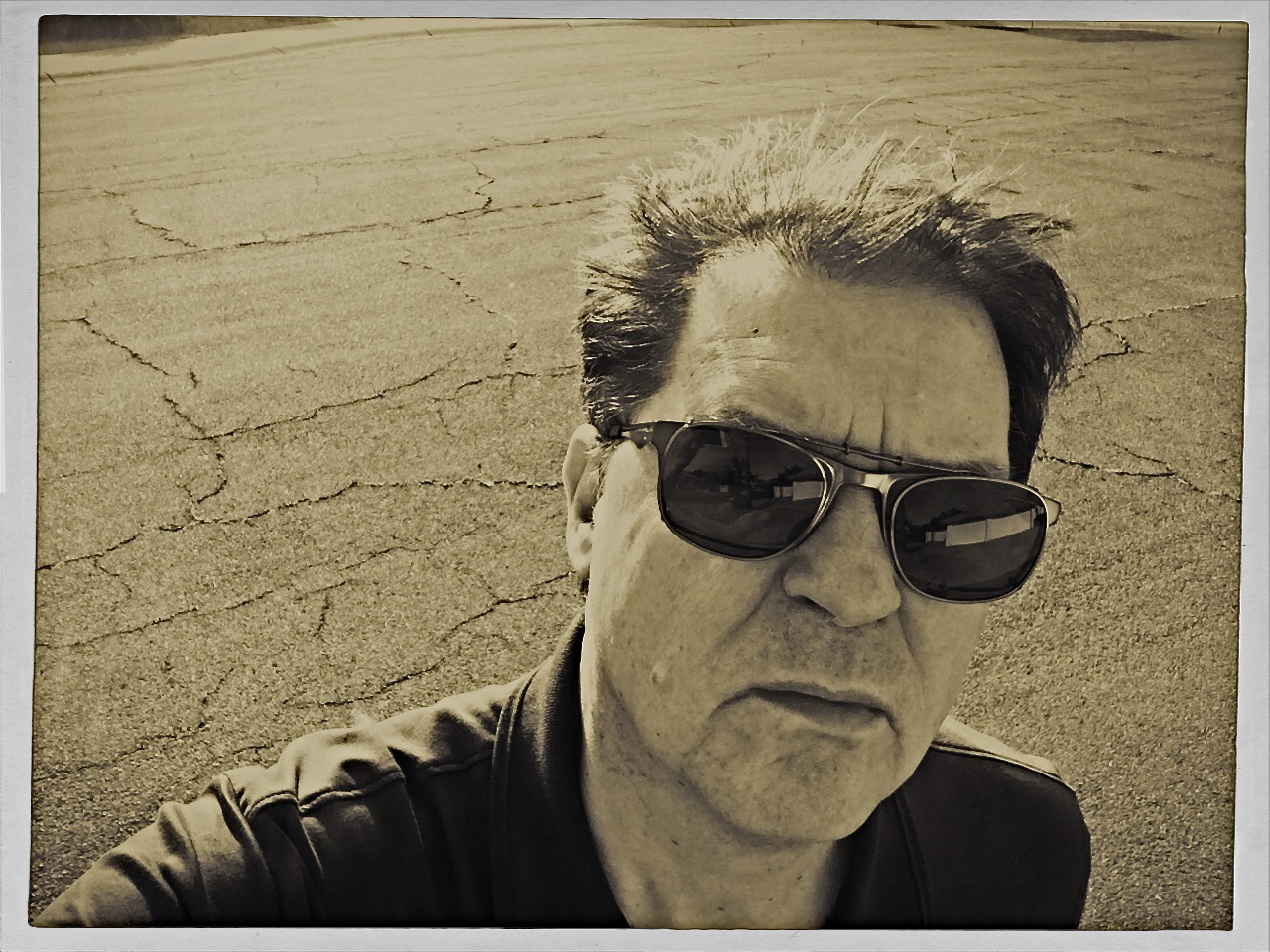
Who is this person? And how do I know? And how do I show it?
By MICHAEL PERKINS
PHOTOGRAPHERS HAVE MANY INSTANCES IN WHICH IT’S HEALTHY TO HAVE A LITTLE HUMILITY, and the biggest one probably is in the decision to depict a human face. It’s the most frequently performed operation in all of photography, and many of us only approach perfection in it a handful of times, if ever. The face is the essence of mystery, and learning how to draw the curtain away from it is the essence of mastery.
Nothing else that we will shoot fights so hard to maintain its inscrutability. It is easier to accurately photograph the microbes that swarm in a drop of water than to penetrate the masks that we manufacture. Even the best portrait artists might never show all of what their subject’s soul really looks like, but sometimes we can catch a fleeting glimpse, and getting even that little peek is enough to keep you behind a camera for a lifetime. It is everything.
Yousuf Karsh, the portraitist who can be said to have made the definitive images of Winston Churchill, Audrey Hepburn, JFK, Ernest Hemingway, and countless other notables, said “within every man and woman. a secret is hidden, and, as a photographer, it is my task to reveal it if I can.” Sounds so simple, and yet decades can go into learning the difference between recording a face and rendering its truths. Sometimes I think it’s impossible to photograph people who are strangers to us. How can that ever happen? Other times I fear that it’s beyond our power to create images of those we know the most intimately. How can we show all?
The human face is a document, a lie, a cipher, a self-created monument, an x-ray. It is the armor we put on in order to do battle with the world. It is the entreaty, the bargain, the arrangement with which we engage with each other. It is a time machine, a testimony, a faith. Photographers need their most exacting wisdom, their most profound knowledge of life, to attempt The Reveal. For many of us, it will always remain that….an attempt. For a fortunate few, there is the chance to freeze something eternal, the chance to certify humanity for everyone else.
Quite a privilege.
Quite a duty.
SPREADING OUT THE SPRAWL
By MICHAEL PERKINS
PANORAMIC PHOTOGRAPHY IS REGARDED BY MANY AS A BIT OF A GIMMICK, an effect confined to the same realm as 3-d, fisheye lenses and faked pictures of cats driving sports cars. As a result, it’s rare that a pano is used for anything serious beyond landscape views, and, although apps have allowed even modest phone cameras to produce a modified panoramic effect, the majority of shots are still of ultra-wide, scenic vistas….the view from the beach to the resort hotel two blocks inland, and so forth.
But panos can be used to convey both scope and scale on subjects that have nothing to do with mountains or shorelines, and it’s encouraging to see more new photographers using the recently evolved technology to take advantage of that storytelling option. To use one example, the whole concept of sprawl–congested cities, vast arrays of clutter, the aftermath of the industrial age—seems custom-made for the panoramic’s less limited space requirements. It can actually open up editorial angles on a whole new range of subject matter.

The Ponderous Pile, 2015. Some subjects benefit from this obvious distortion of perspective.
Panos are great for showing overabundance, the sensory overload of contemporary life. In the above photo, it’s used to show the bulging, burgeoning, out-of-control volume of stuff in a congested antiquarian bookstore. The composition is dictated by the ultra-wide format to a degree, but when it’s married to the right subject matter, the shots can have a singular impact.
As with any other effect, there has to be a bottom-line benefit to the tale you’re trying to tell. It’s not enough to elicit a reaction of “wow, that looks weird”. That just relegates what you’ve shot to mere novelty. The upfront question should be: why are you deciding to distort visual reality or amp up the drama on this particular occasion? The effect has to seem inevitable in the result, with your audience admitting that, certainly, that was the best way to approach the shot and get the story across.
Sometimes photographs are about both process and subject. Panoramics have their place in serious photography, but only in serious hands.
ONE STORY AT A TIME
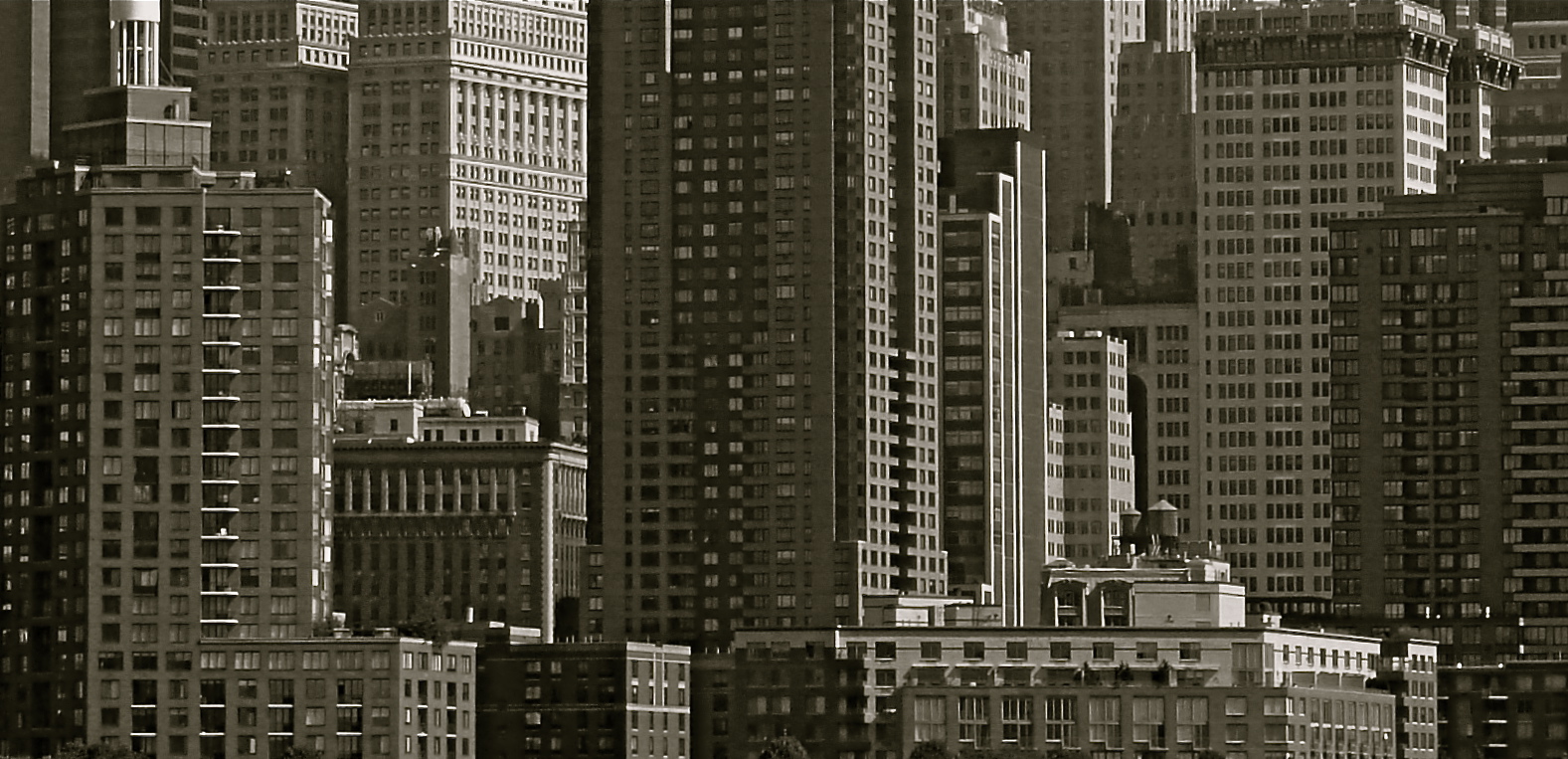
Capital Capitol, 2015. A re-cropped and post-processed remix of a casual 2007 snapshot.
By MICHAEL PERKINS
BEING A MULTI-TASKER IS NO LONGER A MATTER OF CHOICE. We love to pretend that we’re adept at turning off selective parts of the hurricane of sensory input that comprises the whole of our daily life, but, fact is, we cannnot. You might be able to do as few as three things at a time in this world, but only if you struggle against a constant cacophony of sensations.
Unfortunately, creating art sometimes requires quiet, clarity, the ability to edit out unwanted sights and sounds in order to find a clear path toward a coherent vision. And this impacts photography as well as any other creative enterprise.
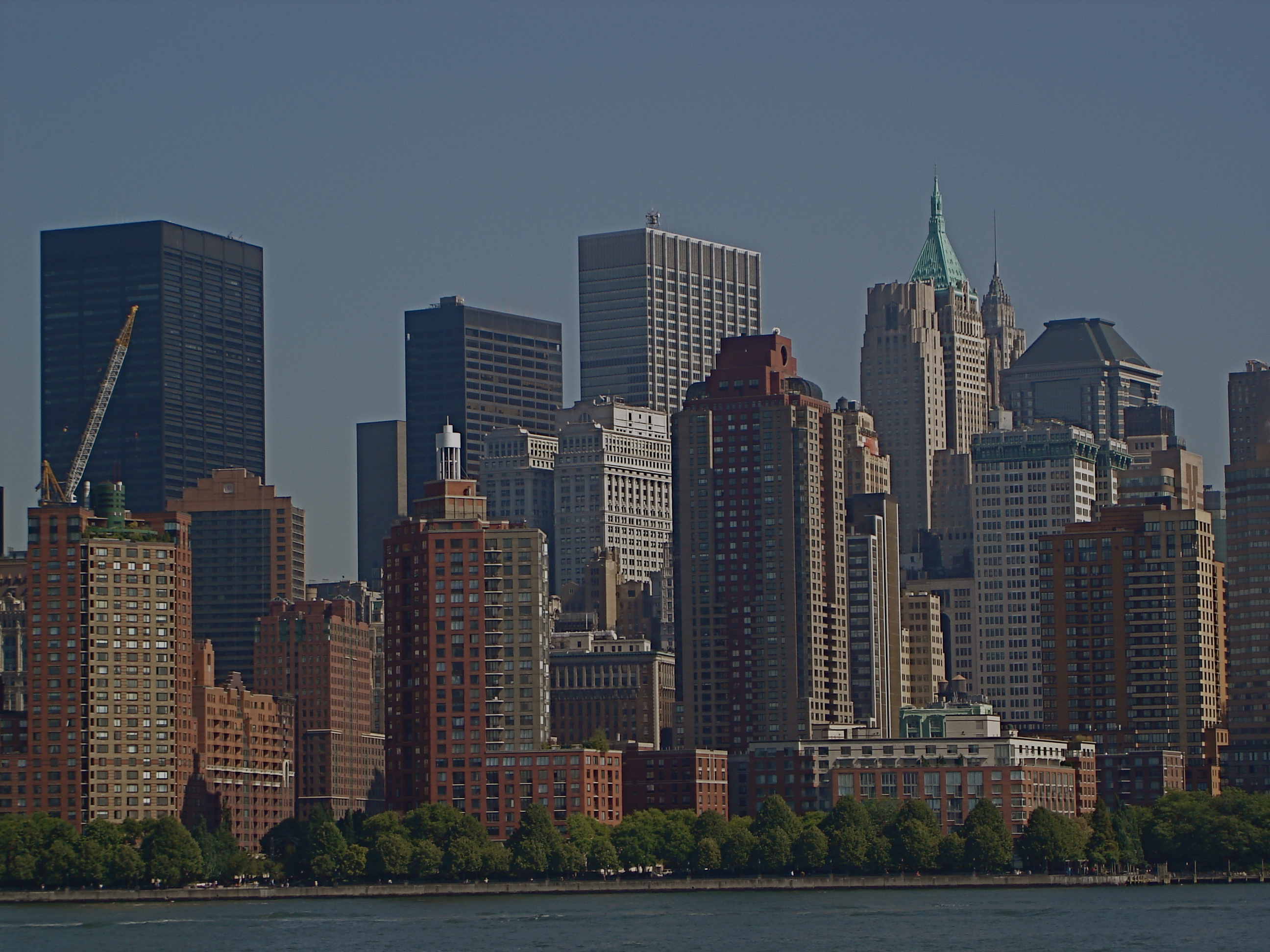
The 2007 original, taken from a NYC Circle Line tour boat.
Urban life presents an especially big challenge to this urge to “get clear”, to untangle conflicting stories and draw out clean, direct messages for our images. Major cities are like 24-hour whistle factories, with thousands of things screaming for our attention. Thing is, there just isn’t enough attention to go around. Often, in poring over old projects, we find that a fourth, a third, even half of the information in a picture can be extracted in the editing process and still leave more than enough data to get our point across. And herein lies a problem.
If it’s getting harder and harder to edit in the moment to boil a photograph down to its essence, the editing phase becomes more crucial than ever before. You either get the best picture in the taking or in the remaking. It can be argued that practice helps the photographer learn to quickly ferret out simple stories within a mass of visual noise, and, of course, the more you shoot, the more you learn what not to shoot. But it seems inevitable that editing, and re-editing, will become a bigger part of the overall task of making pictures.
If the weakest of your photographic skills is post-processing, you might strongly consider upping that particular part of your game. The world isn’t slowing down anytime soon. It’s great to know, in an instant, how to make a strong image. But, as my dad always said, that’s why God put erasers on pencils. Editing can be where acceptable pictures buff up into contenders.
TEMPORARILY ACTUAL
It’s the truth. It’s actual. Everything is satisfactual. –lyrics from the Oscar-winning song Zip-A-Dee-Doo-Dah
By MICHAEL PERKINS
PHOTOGRAPHY WAS ERRONEOUSLY BILLED, EARLY IN ITS DEVELOPMENT, as a mere recording of reality. This was, of course, an attempt to characterize the picture-making process as more bloodless, less artistic than painting, which was an interpretation of the world. What early haters of the camera failed to realize, of course, was that photographers were just as selective in their depiction of life as painters, since their medium too, was an interpretation…..of isolated moments, of preferred angles, of temporary actuality.
If you look at individual frames within a strip of motion picture film, it becomes perfectly clear that each still image is a self-contained world, with no way to intuit what has come before a given moment nor what will come next. Thus, no one frame is “reality” but a select sample of it. In daily photography, our choice of angle, approach, and especially light can allow us to create an infinite number of “realities” that only exist in the precise moment in which we see and freeze them.
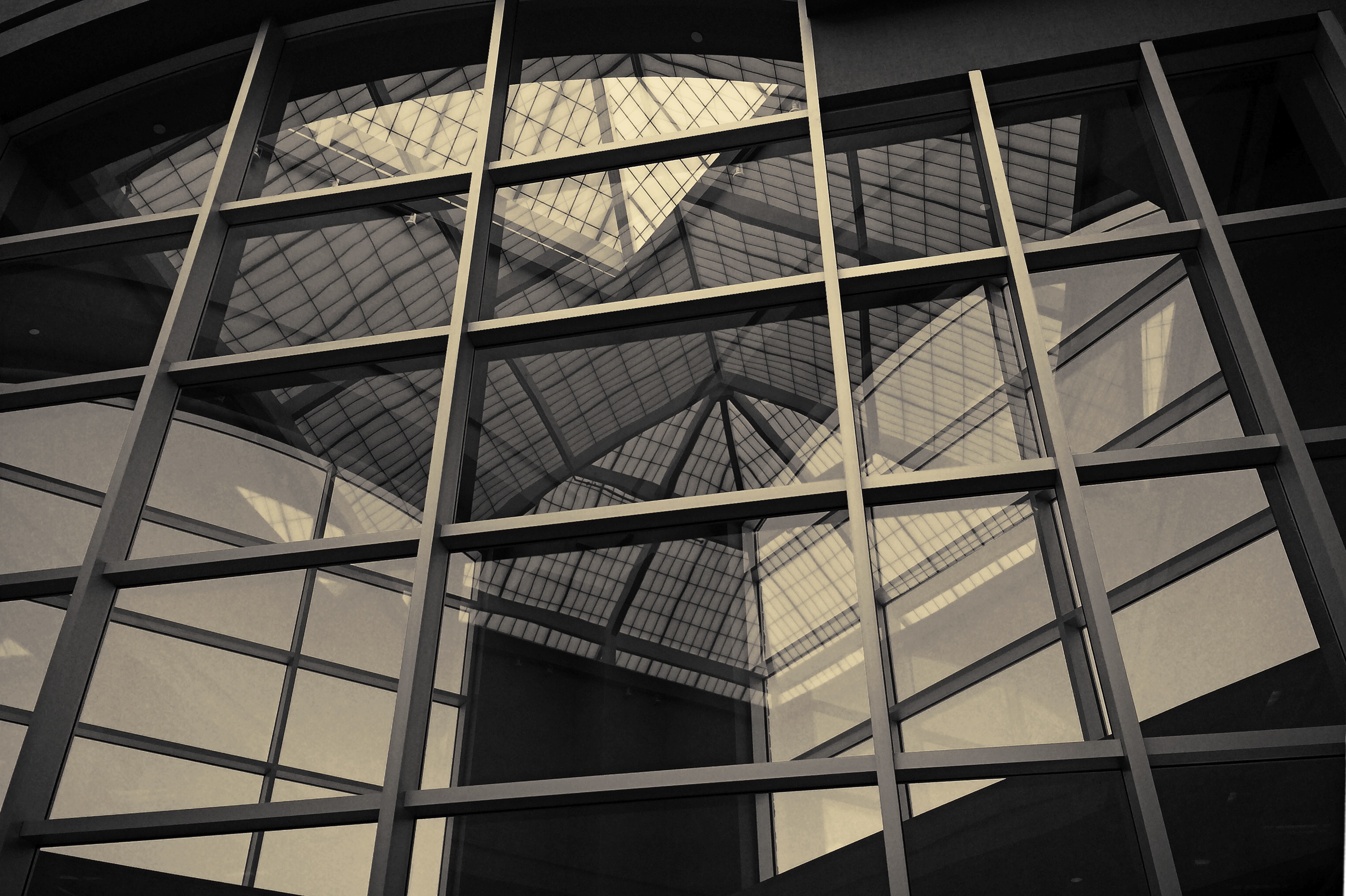
Let’s look specifically at light. As it’s jumbled in multiple reflections, light is particularly precious to the photographer’s eye, since a captured image may recall an effect that even people within inches of the shooter could not see. In the above photo, for example, this mosaic of reflections inside the vestibule of a high-ceilinged building was visible from several specific positions in the foyer. Move yourself three feet either way, however, and this pattern could not be seen at all. In other words, this photographic “reality” came briefly into existence under the most controlled conditions, then was gone.
John Szarkowski, the legendary director of photography for the New York Museum of Modern Art, dedicates an entire section of his essential book The Photographer’s Eye to what he calls “Vantage Point” and its importance to a mastery of the medium. “Pictures (can) reveal not only the clarity but the obscurity of things…and these mysterious and evasive images can also, in their own terms, seem ordered and meaningful.”
Photography is about viewing all of reality and extracting little jewels from within it.
That’s not mere recording.
That’s creation.
BE THE CAMERA. NOW BE BETTER THAN THAT.
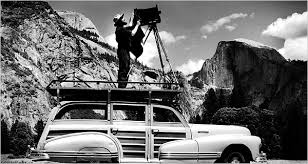
A man, a plan, a woody: Ansel Adams in his element. Yosemite’s Half-Dome is at the right.
By MICHAEL PERKINS
MERELY INVOKING THE NAME OF ANSEL ADAMS is enough to summon forth various hosannas and hallelujahs from anyone from amateur shutterbug to world-renowned photog. He is the saint of saints, the yardstick of yardsticks. He is the photographer was all want to be when (and if) we grow up. His technical prowess is held as the standard for diligence, patience, vision. And yet, even at the moment we revere Adams for his painstaking development of the zone system and his mind-blowing detail, we are still short-changing his greatest achievement.
And it is an achievement that many of us can actually aspire to.
What Ansel Adams did, over a lifetime, was work his equipment way beyond its limits, milking about 2000% out of every lens, camera and film roll, showing us that, to make photographs, we have to constantly reach beyond what we think is possible. Given the slow speed of much of the film stocks and lenses of his era, he, out of the wellspring of his own ingenuity, had to make up the deficit. He had to be smarter, better than his gear. No one piece of equipment could give him everything, so he learned over a lifetime how to anticipate every need. Look at one of many lists he made of things that he might need on a major shoot:
Cameras: One 8 x 10 view camera with 20 film holders and four lenses; 1 Cooke Convertible, 1 ten-inch Wide Field Ektar, 1 nine-inch Dagor, one six and three-quarters-inch Wollensak wide angle. One 7 x 17 special panorama camera with a Protar 13-1/2-inch lens and five holders. One 4 x 5 view camera with six lenses; a twelve-inch Collinear, including an eight-and-a-half Apo Lentar, a nine-and-a-quarter Apo Tessar, 4-inch Wide Field Ektar, Dallmeyer telephoto. One Hasselblad camera outfit with 38, 60, 80, 135, & 200 millimeter lenses. A Koniflex 35 millimeter camera. Two Polaroid cameras. 3 exposure meters (one SEI, two Westons).
Extras: filters for each camera: K1, K2, minus blue, G, X1, A, C5 &B, F, 85B, 85C, light balancing, series 81 and 82. Two tripods: one light, one heavy. Lens brush, stopwatch, level, thermometer, focusing magnifier, focusing cloth, hyperlight strobe portrait outfit, 200 feet of cable, special storage box for film.
Transport: One ancient, eight-passenger Cadillac station wagon with 5 x 9-foot camera platform on top.
However, the magic of Ansel Adams’ work is not in how much equipment he packed. It’s that he knew precisely what tool he needed for every single eventuality. He likewise knew how to tweak gear to its limits and beyond. Most importantly, his exacting command of the elemental science behind photography, which most of us now use with little or no thought, meant that he took complete responsibility for everything he created, from pre-visualization to final print.
And that is what we can actually emulate from the great man, that total approach, that complete immersion. If we use all of ourselves in every picture that we make, we can always be better than our cameras. And, for the sake of our art, we need to be.
GRABBING THE GLOW
By MICHAEL PERKINS
EVERY PHOTOGRAPH YOU TAKE IS OF CONSEQUENCE.
That doesn’t mean that every subject you shoot will “matter”, or that every mood you capture will be important. Far from it. However, every frame you shoot will yield the most positive thing you could hope for in your development. Feedback. This worked. God, this didn’t. Try again with more of this. One more time, but change the angle. The light. The approach. The objective. Nothing that you shoot is time wasted, since the positive and negative information gleaned is all building toward your next ah-ha miracle.
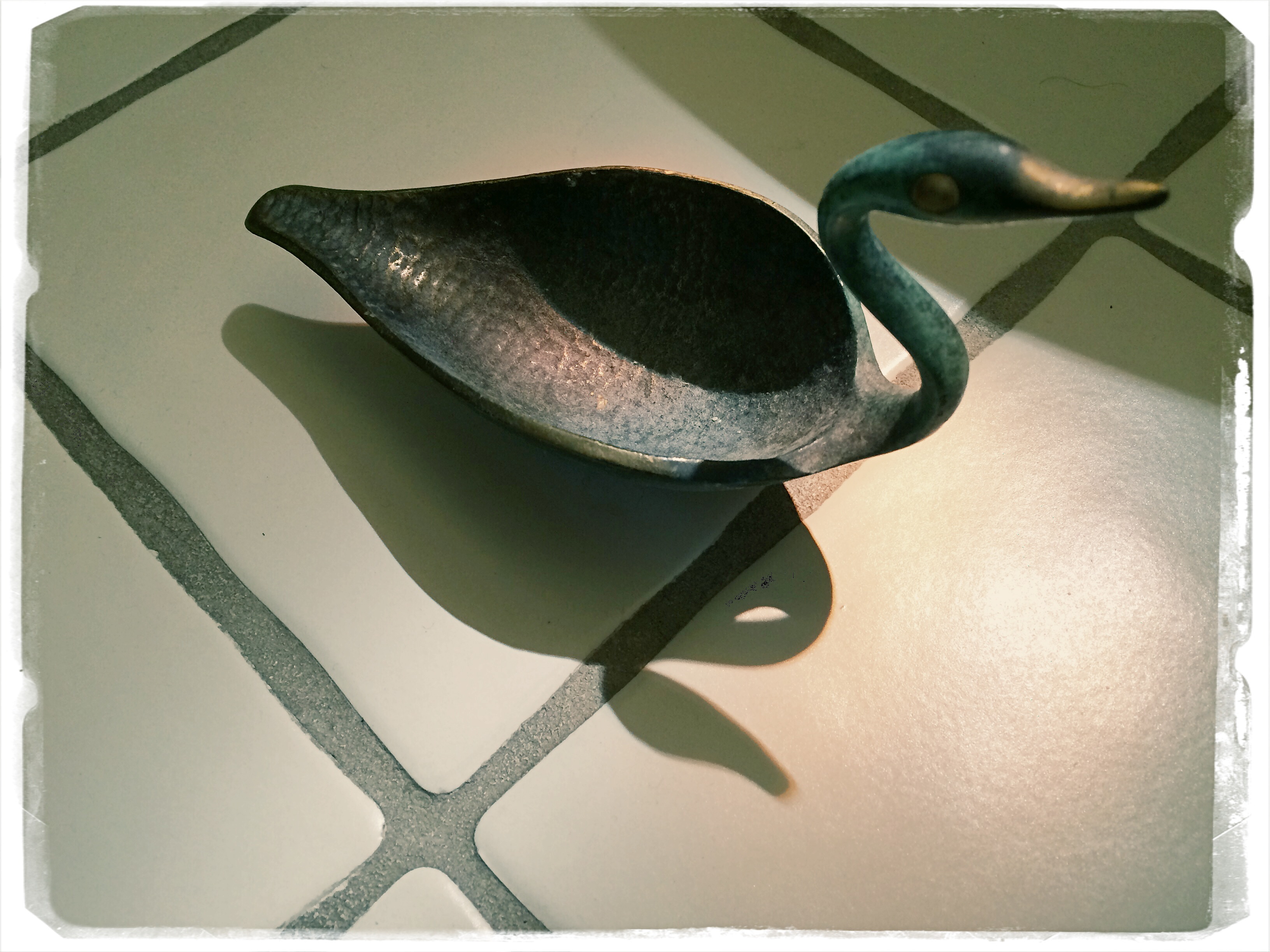 Your greatest work has to come as the total of all the building blocks of all the little details you teach yourself to sweat. And that is why you must, I repeat with religious fervor, Always Be Shooting. Something from a photo that won’t change the world will wind up in the photo that will. The what-the-heck experiment of today’s shot is the foundational bedrock of tomorrow’s. You are always going to be your most important teacher, and you get better faster by giving your muscles lots of exercise.
Light changes, those hundreds of shadows, flickers, hot spots and glows that appear around your house for minutes at a time during every day, are the easiest, fastest way to try something…anything. A window throws a stray ray onto your floor for three minutes. Stick something in it and shoot it. A cloud shifts and bathes your living room in gold for thirty seconds. Place a subject in there to see how the light plays over its contours. Shoot it, move it, shoot it again. Lather, rinse, repeat.
The image at left came when a shaft of late afternoon light shot through my bathroom window for about three minutes. I grabbed the first thing I saw that looked interesting, framed it up, and shot it. Learned a little about shadows in the process. Nothing that will change the world. Still.
Many cheap, simple opportunities for learning get dumped in your lap everyday. Don’t wait for masterpiece subject matter or miracle light. Get incrementally better shooting with what you have on hand. Grab the little glows, and use spare minutes to see what they can do to your pictures. And, on the day when the miracle saunters by, you will be ready.
DIGGING OUT OF THE DRYS
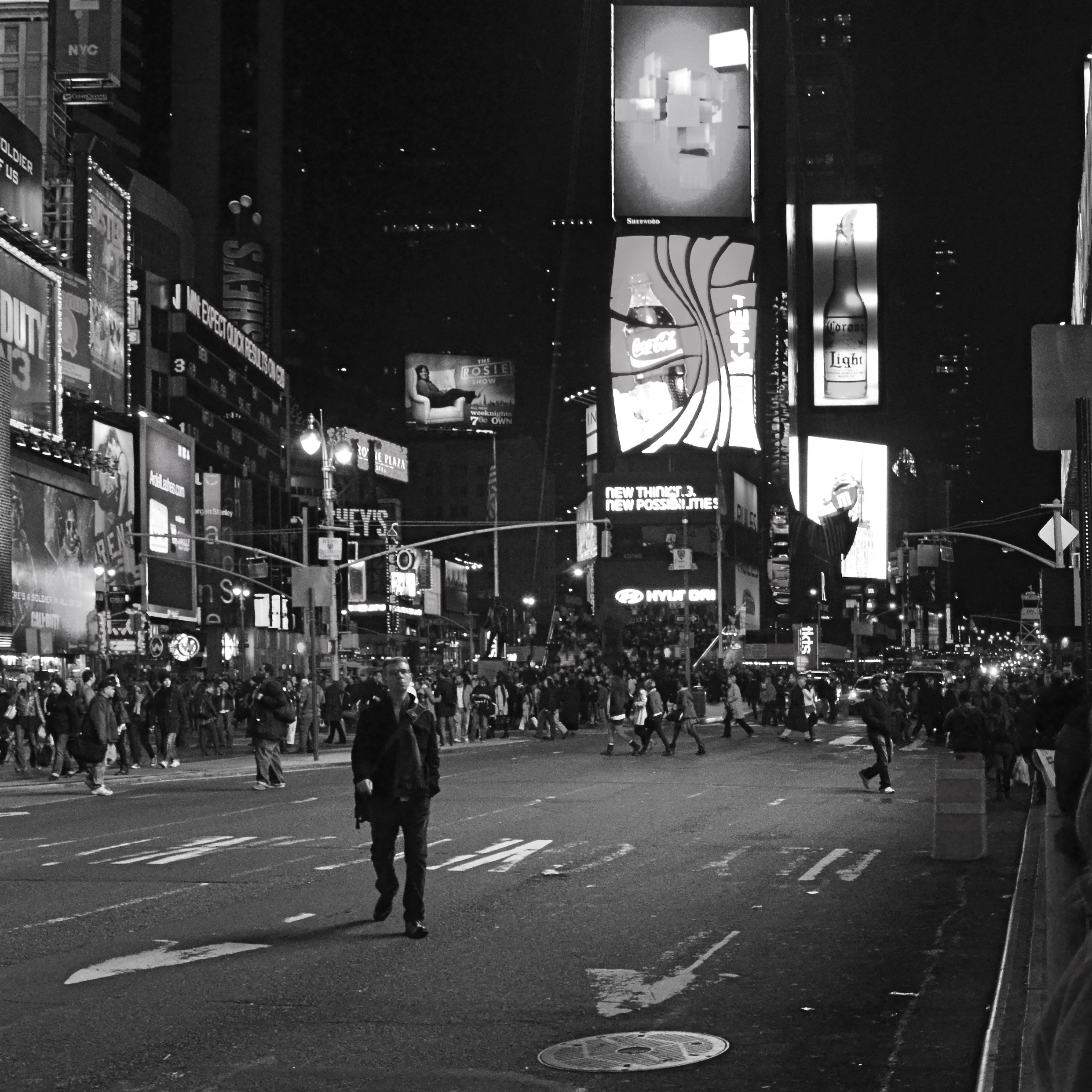
Photography can turn you into a wanderer at times, and not a happy one, either.
By MICHAEL PERKINS
PHOTOGRAPHERS, IN THE NATURAL COURSE OF THEIR CONTINUING DEVELOPMENT, will, at one point or another, get hopelessly lost. Stuck. Stranded on a desert island. Fumbling for the way out of the scary forest. Artistically adrift. Call it a dead spot, a dry spell, or shooter’s cramp, but you can expect to hit a stretch of it at some time. The pictures won’t come. You can’t buy an idea. And, worst of all, you worry that it will last……like forever.
At such times it’s a great idea to turn yourself into a rabid researcher. The answer to how to get unstuck is, really, out there. In your pictures or in someone else’s. Let’s look at both resources.
Your own past photographs are a file folder of both successes and failures. Pore over both. There are specific reasons that some pictures worked, and other’s didn’t. Approach them with a fresh eye, as if a complete stranger had asked you to assess his portfolio. And be both generous and ruthless. You’re looking for truth here, not a security blanket.
Beyond your own stuff, start drilling down to the divinity of your heroes, those legends whose pictures amaze you, and who just might able to kick your butt a little. And, just so we’re being fair, don’t confine yourself to studying just the gold standard guys. Make yourself look at a whole bunch of bad upstarts and find something, even a small thing, that they are doing right that you’re not. Discover a newbie who shoots like an angel, or an Ansel. Empathize with someone who needs even more help than you do. Once you have mercy on someone else’s lack of perfection, it’s a lot easier to forgive it in yourself.
We “artistes” love to believe that all greatness happens in isolation, just our art and us and the great god Inspiration. But even when you shoot alone, you’re in a kind of phantom collaboration with everyone else who ever took a picture. And that’s as it should be. Slumps happen. But the magic will come back. You just need to know how to reboot your mojo.
And smile. It’s photography, after all.
WHAT’S THIS I SEE?
By MICHAEL PERKINS
AS PHOTOGRAPHERS, WE HAVE A LIFETIME OF HEART-TO-HEART TALKS with ourselves, seeking the answer to questions like “what’s this I see?”, or “what do I want to tell?” Tricky thing is, of course, that, as time progresses, you are talking with a variety of conversational partners. As we age, we re-engineer nearly every choice-making process or system of priority. I loved Chef-By-Ar-Dee as an eight-year-old, but the sight of the old boy would probably make me gag at 63. And so it goes with clothing, choice of good reads, and, of course photography.

So many ways for so many people to see.
One of the things it’s prudent to do over the years is to take the temperature of present-day You, to really differentiate what that person wants in an image, versus what seemed essential at other stages in your life. I know that, in my case, my favorite photographers of fifty years ago bear very little resemblance to the ones I see as signposts today.
As a boy, I was in love with technical perfection and a very literal form of storytelling. Coming up in an artist’s household, I saw photos as illustrations, that is, subservient to some kind of text. I chose books for their pictures, yes, but for how well they visualized the writing in those books. The house was chock full of the mass-appeal photo newsmagazines of that day, from Life to Look to National Geographic to the Saturday Evening Post, periodicals that chose pictures for how well they completed the stories they decorated. A picture-maker for me, then, basically a writer’s assistant.
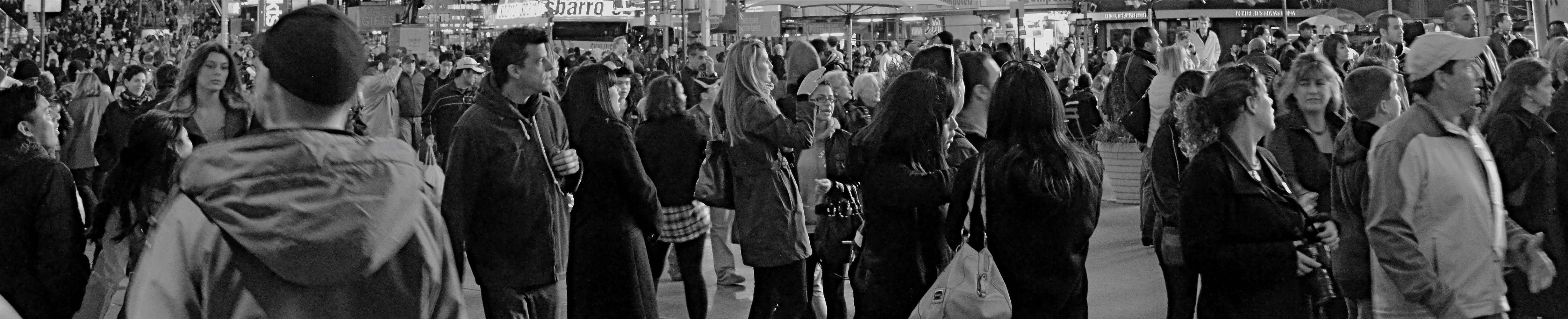
It’s all about journeys, not destinations.
By my later school years, I began, slowly, to see photographs as statements unto themselves, something beyond language. They were no longer merely aids to understanding a writer’s position, but separate, complete entities, needing no intro, outro or context. The pictures didn’t have to be “about” anything, or if they were, it wasn’t a thing that was necessarily literal or narrative. Likewise, the kind of pictures I was interested in making seemed, increasingly, to be unanchored from reference points. Some people began to ask me, “why’d you make a picture of that?” or “why aren’t there any people in there?”
By this time in my life, I sometimes feel myself rebelling against having any kind of signature style at all, since I know that any such choice will eventually be shed like snake-skin in deference to some other thing I’ll deem important. For a while. What this all boils down to is that the journey has become more important than the destination, at least for my photography. What I learn is often more important than what I do about it.
And some days, I actually hope I never get where I’m going.
FINDING AN OPENING
Walking briskly down a city street with wildly varying light conditions, you might not want to stop to fully calculate manual exposure before every shot. In such cases, Aperture Priority may be good fit.
By MICHAEL PERKINS
I KNOW THAT I APPROACH THE IDEA OF SHOOTING ON MANUAL with what must strike some as evangelistic zeal. We’re talking full-on-John-The-Baptist-mad-prophet mode. I do so because I believe that, the further you can go toward overseeing every single facet of your picture taking, that is, the less you delegate to a machine that can’t think, the better. Generally. Most of the time. Almost always.
Except sometimes.
Aperture Priority, the mode that I most agree with after pure manual, can be very valuable in specific conditions, for very specific reasons. In AP (Av for Canon folks), you dial in the aperture you want for everything you’re about to shoot, depending on what depth-of-field you want as a constant. Then it’s the camera’s job to work around you, adjusting the shutter speed to more or less guarantee a proper exposure. Let me interject here that there are millions of great photographers who nearly live on the AP setting, and, like any other strategy, you have to decide whether it will deliver the goods as you define them.
If you are “running and gunning”, that is, shooting a lot of frames quickly, where your light conditions, shot-to-shot, will be changing a great deal, Aperture Priority might keep you from tearing out your hair by eliminating the extra time you’d spend custom-calculating shutter speed in full manual mode. Fashion, news and sports situations are obviously instances where you need to be fully mindful of your composition, cases in which those extra fragments of “figgerin'” time in between clicks might make you miss an opportunity. And no one will have to tell you when you’re in such a situation.
Conversely, if you are shooting more or less at leisure, with time to strategize in-between shots, or with uniform light conditions from one frame to the next, then full manual may work for you. I have shot in manual for so many years that, in all but the most hectic conditions (cattle stampede or worse), I’m fast enough to get what I want even with calculation time factored in. But it doesn’t matter what works for me, does it, since I won’t be taking your pictures (pause here to thank your lucky stars). If you need one less task to hassle with, and AP gives you that one extra smidge of comfort, mazel tov.
One other thing to note about Aperture Priority: it’s not foolproof. Change your central focal spot to different objects within the same composition (say from a tree to the rock next to the tree) snap several frames, and the exposure could be vastly different on each image. Could that happen when you’re on manual? Certainly. You can, of course, fiddle with exposure compensation on AP, essentially overruling the camera, but, to take the time for all that, you’re really not saving much more time than shooting manual anyway. See what you can live with and go.
This blog is a forum, not the Ten Commandments, so I never want to profess that my way is the only way, whether it’s taking photographs or deciding what toppings should go on pizzas. Although, let’s face it, people who put pineapple on them….that’s just warped, am I right?
 thenormaleye