SQUARING UP YOUR SHOT
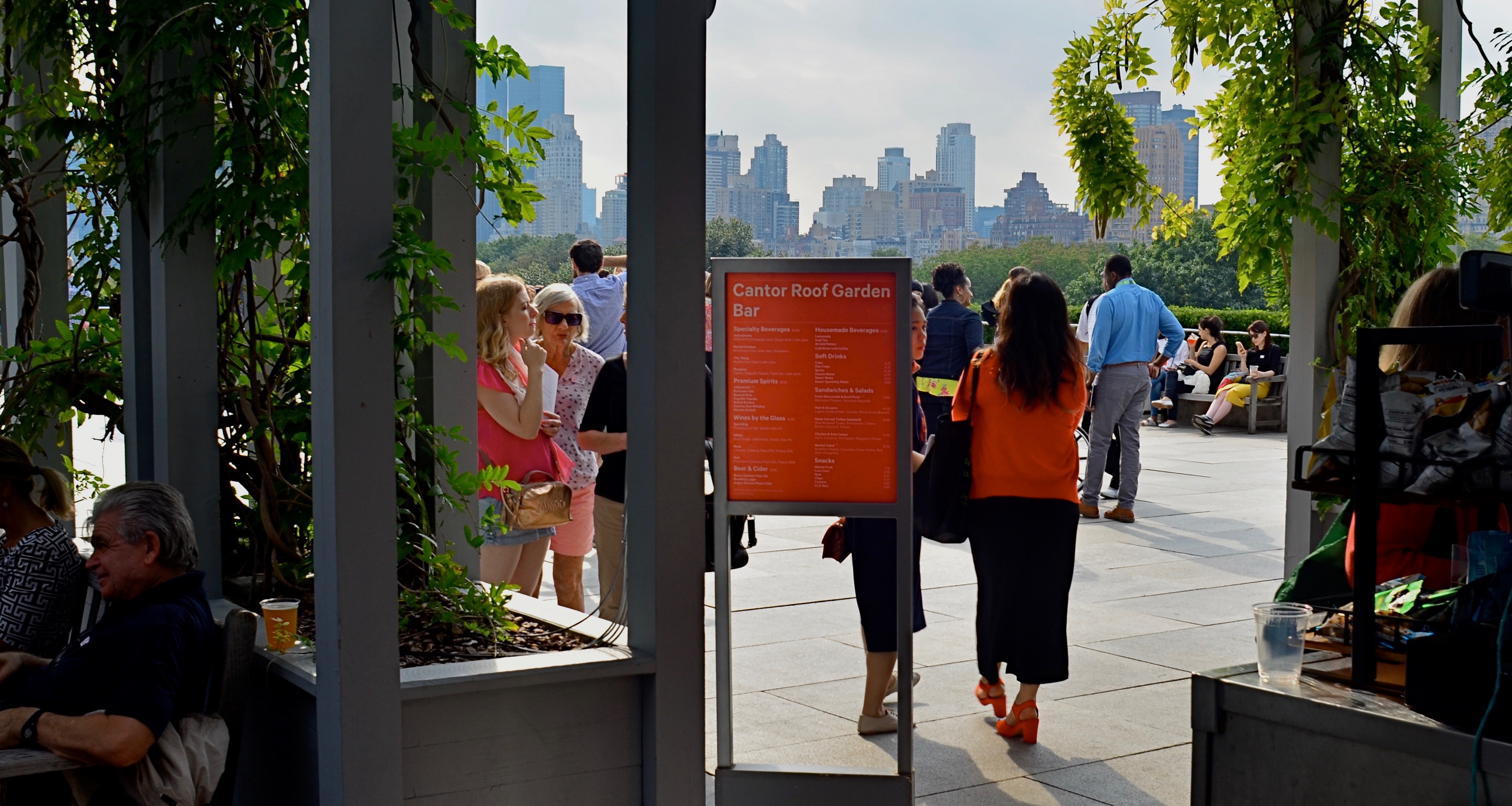
Master shot, taken at the entry to a roof garden atop the Met museum in Manhattan.
By MICHAEL PERKINS
IN THE PRESENT PHOTOGRAPHIC ERA, the default frame for composition is, with some notable exceptions, a rectangle, the 3-to-2 ratio that is the descendant of Oscar Barnack’s first 35mm Leicas of the late 1920’s. Most of us have been taught to automatically compose in this format, a hard-wired habit that informs our entire concept of how to fill a frame. The “notable exceptions” I refer to are the square films that have accompanied the return of instant photography, the lomography movement with its square-framed analog film formats, and, by virtue of a built-in app choice, the mobile phone. Strangely, some of the most sophisticated cameras on the market do not allow you to shoot an original square image: the shot must be captured in a 35mm equivalent and cropped later. But that’s a rant for another day.
The thing is, if you don’t typically investigate square composition, you are robbing yourself of an important tool, or, more specifically, you are allowing yourself to always see subjects in the same “frame” of mind. There are distinct advantages to creating a square composition, not the least of which is that it forces the viewer to take in your picture’s information in a distinct way. While shots that are wider than tall are marvelous for any number of reasons, they do, in effect, invite the viewer to scan an image linearly, that is, to look left to right and back again. By contrast, the square reinforces its equal dimensions, almost forcing the eye into a continuously circular sweep of the contents. I hear people complain that a square just “doesn’t give me enough room to get everything in”: however, I would counter that argument by contending that, in many 3/2 compositions, there is a wealth of visual information that not only is not needed, but actively distracts the eye from the most interesting parts of the photograph. Think of a glass of ice tea that, over time, actually has more volume in it, due to melted ice, than was originally poured into the glass. More liquid, but a greatly diluted flavor.
The problem is not that many square images aren’t being made…far from it. It’s that they are, in many cases, being re-made from rectangular originals, in the editing process. We have to shoot wide and edit square. But therein may lie the best way for us to start seeing what a square composition can do, not merely to define the space of a picture, but to invite the viewer into it more efficiently. And it’s easy and cheap to do it.
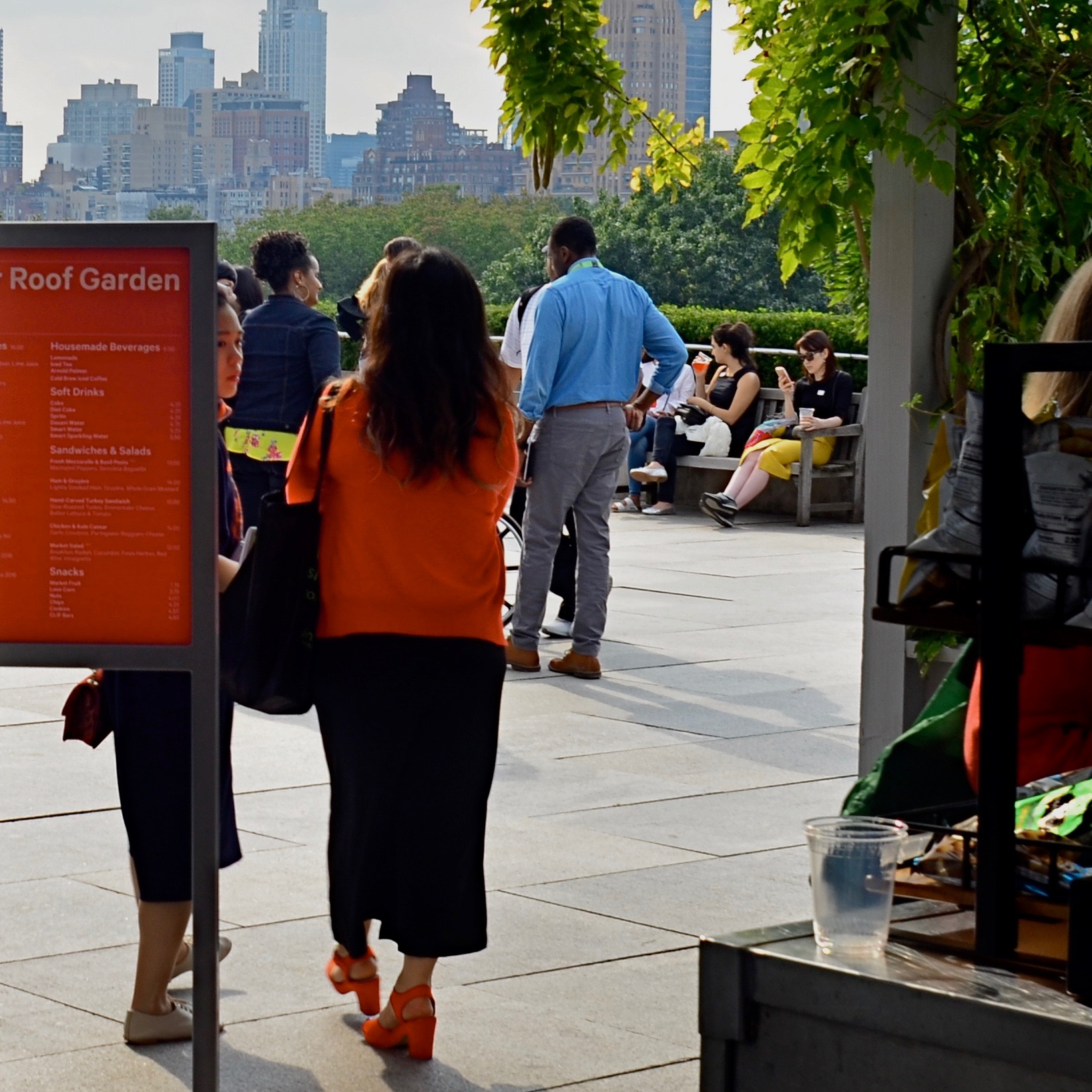
The above image recomposed as a square shot. Net loss or net gain?
Try this: select a series of wide master shots that you feel fairly strongly about, dupe work copies of them, and then crop new compositions within the copies. Junk the ones that don’t work and do as many re-takes as you see fit. Did any of the cropped images emerge as stronger without all that extra stuff you originally felt you had to include? And even if they did not, that’s also a good thing. The mere fact that you’ve begun to intentionally look for pictures within pictures means you’ve entered a new phase of your vision as a photographer. We’re certainly used to thinking of pictures that “came out pretty good’ as final or complete, but it’s a good thing to think of them instead as workable drafts. In the wider shot seen ay top, I successfully conveyed that people were stepping onto the roof of the Met museum in NYC, but I also got a lot of things in the shot that aren’t necessary to the telling of that story. The main tellers in the picture are the two women, who, like us, have just arrived. They are our surrogates or guides. Cropping actually makes the red of the sign in front of one of the women cry for your attention, guiding you to the women even as it partly conceals one of them. Additionally, the same top to bottom space that they occupy also shows part of the skyline that borders Central Park. The front to back scale of the shot says “on the roof, in the city”, at some distance.”
So judge for yourselves, as you would with your own pictures. Did anything I took away in cropping diminish the impact of the picture? Does the lower frame now feel open, cramped, or, in Goldilocks fashion, about right? Is there an appropriate emotional distance from the subject, or a welcome intimacy with it? Is there, in short, an overall net gain for the narrative power of the image once it’s been cropped? And most importantly, even if this experiment fails (with the wider picture still being stronger), haven’t I already begun to see every picture in at least two fundamentally different ways? New ways of seeing are among the most powerful tools in a photographer’s kit. The world of cameras may indeed default to a rectangle, but that doesn’t mean our brains need to follow suit.
LAYING DOWN THE LAW ON STYLE
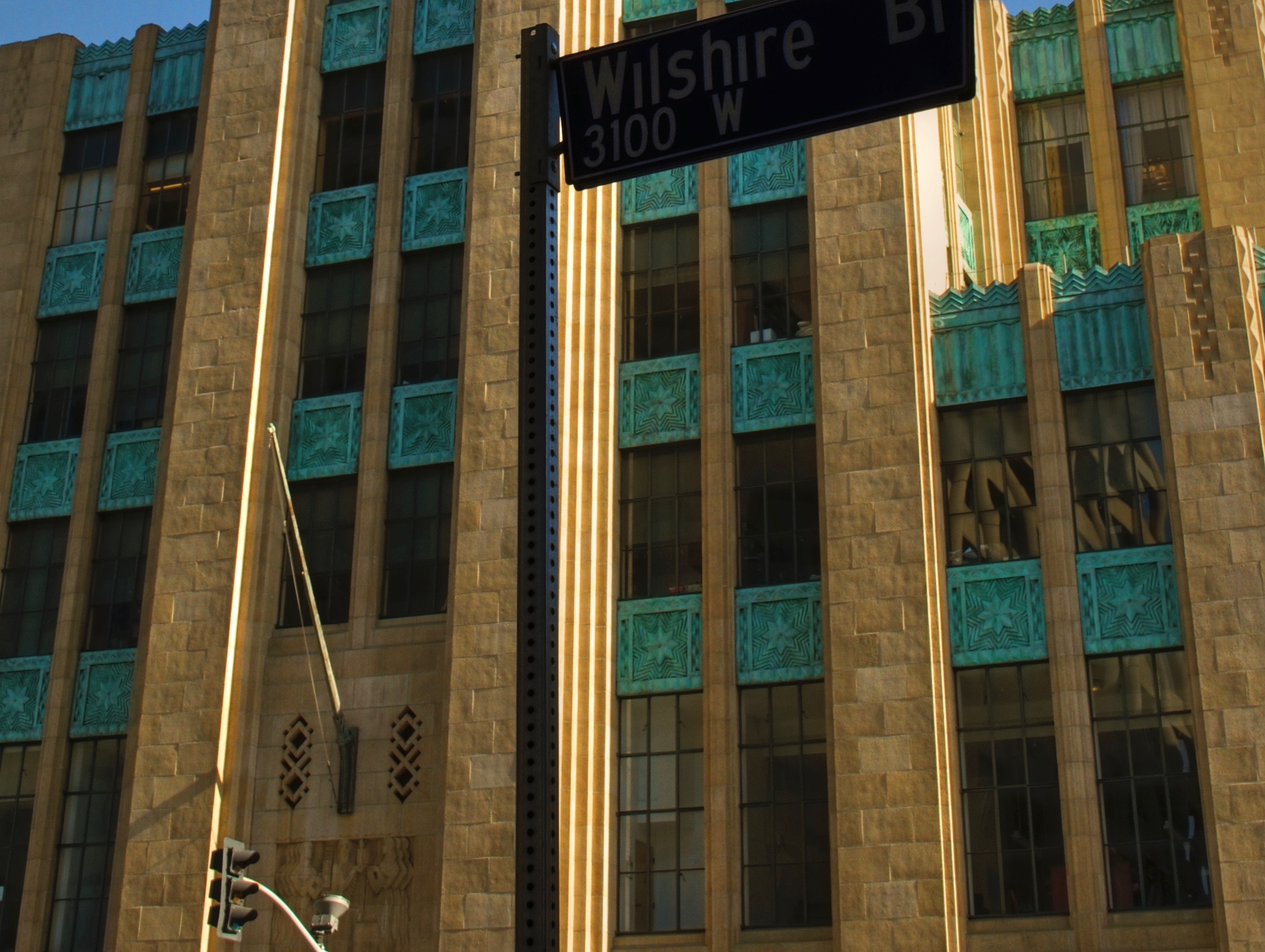
Southwestern Law School in Los Angeles, the current occupants of the city’s historic Bullocks Wilshire department store, opened in 1927.
By MICHAEL PERKINS
FOR JUST ONE DAY A YEAR, Los Angeles’ Southwestern Law School opens its doors to non-students from across the world, hundreds of whom stream through its halls with bulged eyes and gaping mouths. This reaction is not, as you rightly suspect, because the public, in general, is fascinated by endless banks of books on tort reform and intellectual property. It’s primarily due to the fact that the SLS conducts its day-to-day affairs in the shell of what once was, arguably, the most beautiful building in the City of Angels, the storied Bullocks Wilshire department store, opened to grand fanfare and a decidedly upscale clientele in 1927, the same year Warner Brothers brought Al Jolson’s voice to the world in The Jazz Singer.
In the age of Lindbergh, Bullocks’ mid-town location at mid-town 3050 Wilshire Boulevard was considered to be “out in the sticks”, a long trip from central L.A. and hence a substantial business risk (who’s ever gonna come out here?). Bullocks tried the pre-emptive move of capping the structure with an ornate, copper-tipped tower and designing the main entrance to its “cathedral of commerce” at the rear of the store, inviting motorists to enter its sumptuous porte-corchere (car port) for valet parking and a peek, across its ceiling, at Herman Sachs’ modern mural “The Age Of Transportation” featuring a winged Mercury surrounded by luxury liners, locomotives, biplanes, and the Graf Zeppelin. Having thus been so royally deposited on the store’s back porch, customers were ushered into the main showroom, its every case glistening with jewelry, perfumes and cosmetics for milady, its every wood-inlaid elevator door inviting the visitor to rise to floor after sumptuous floor of furnishings, fashions and refreshments.
The Bullocks store, with separate design/color schemes and innovative, elite shops on each of its five retail floors, truly revolutionized the relationship between retailer and customer, in a space where young lovelies modeled fashions in elegant salons for clients and where local polo players were serviced inside a custom saddlery shop. Concerned that your new riding breeches may pinch a bit when you start your next chucker? No worries: the store also featured its own full-sized horse mannequin so you could check your look in the saddle. The Bullocks local customer base typically included Hollywood stars, many of whom, like Mae West, might send their standing orders for lingerie or sports clothes to the store in the care of their… chauffeurs. Others looking to eventually climb the ladder of stardom themselves, such as a young Angela Lansbury, might be found working the Bullocks counters between studio gigs. Most importantly to generations of mothers, daughters, and granddaughters was the linen and white glove service at Bullocks’ fifth floor tea room, equipped with its own anteroom, the Cactus Lounge, where ladies could listen to live pianists as their lunch table was readied. Add to all these wonders the building’s predominantly Art deco appointments and you have, at least in my case, a photographer’s fever dream.
As to that….
Since this blog’s inception, the menu tabs at the top of the pages of The Normal Eye have been reserved for photographic essays too large to be contained within the scope of a single post, and, with the recent completion of my first-ever walk through the Bullocks building earlier this year, I thought it was time to paste together another little daisy chain of images to create a photo story on this most majestic of merchandisers. To view the results, just click the Bullish On Bullocks tab up top, just to the right of the “Blog” tab. Of course, if you haven’t already, feel free to also check out the neighboring tabs, including Small Slices From A Big Apple (street views of NYC), The Wonderful Woolworth (an interior tour of the old five-and-dime chain’s national headquarters), When Lights Are Low (adventures in under-exposure) and Wright Thinking (a visit to one of Frank Lloyd Wright’s final residential designs, created for his son David).
One more thing: the Southwestern Law School, whose exhaustive research and civic-minded sweat helped stabilize and restore the Bullocks Wilshire build to its 1920’s glory, hosts a special page on its site to highlight the beauty of the structure, including a seven-and-a-half minute campus video. Go here to check it out. It’s all hands on Deco (sorry).
W.T.R.?
By MICHAEL PERKINS
THE SHEER DURATION IN TIME REQUIRED TO MAKE A PHOTOGRAPH was, in the earliest days of the camera art, THE prime determinant of good results. Recording media was slow, and conditions had to be exhaustively massaged for a usable picture to be produced at all. Long exposures and other compromises made portraiture difficult and rendered many other subjects simply impracticable. Naturally, the forethought, the planning of an image was a conscious, deliberate process. If you wanted a photo, you had to prepare properly.
The emergence, around 1900, of the first amateur cameras, which made so-called “instantaneous”, hand-held exposures possible, ushered in the age of the “snap shot”, and meant that, suddenly, many millions of pictures were being produced each year. That revolution was later replicated at the dawn of the digital age, in which the time it took a camera to snap and deliver pictures became even shorter. That, in turn, created a secondary wave of mass amateur photography, as defined by the phone camera, creating a blinding hurricane of images produced far faster than a human could plan or pre-construct. In essence, we could take pictures almost quicker than we could think them through. And that, at least for me, is a problem.
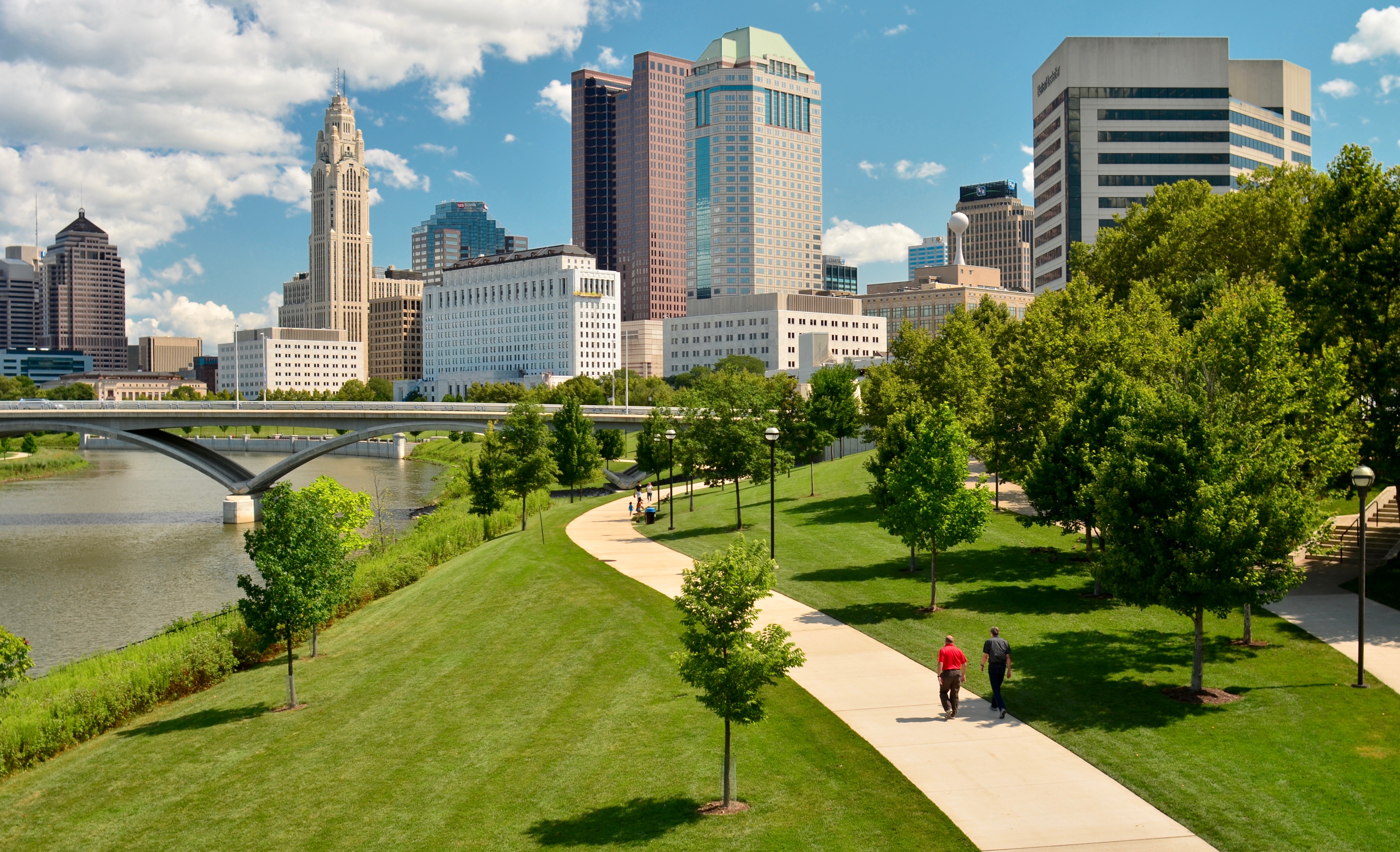
Half-an hour and twenty trial frames later, a postcard “snapshot” of downtown Columbus, Ohio.
The careful, contemplative aspect of photography, which originally had been forced on its earliest practitioners by primitive technology, is, of course, no longer a factor. However, slowing oneself down long enough to produce fewer but better pictures is still valuable, more valuable, in fact, than all our storied gear and toys combined. Walking along on a shoot, I have frequently felt this…. push at the back of my neck, this nagging urge to hurry up and get the picture, which actually means get any picture. And certainly that’s no tough feat, given the rapid response of contemporary cameras. However, a special kind of frustration comes later on, when I realize that, in being too eager to simply record a thing, I did not spend enough time to determine the best way to record it. I let the medium tell me when to click, with the primary emphasis on merely getting something in the can and moving on. Days later, looking at a series of technically adequate but artistically under-explored pictures, I feel a little sick. Turns out, the only thing worse than not being able to photograph something is to have had your chance and let your impulses propel you into mediocre results. In looking at such results, I initially respond with W.T.F. (if you don’t know what that is, Google it), then revise my jargon to W.T.R.(what’s the rush???).
As you no doubt can do with your own shots, I can now look at past photos and recall if I shot them at leisure, that is, with some intention or blueprint, or if I allowed myself to act as if I were on deadline. For instance, the above postcard scene could certainly have happened by happy accident if it were a stand-alone snapshot, but, in fact, it’s one of twenty frames taken on both sides of Columbus, Ohio’s Scioto River over the space of a half hour, since I was certain of my subject but unsure of how best to compose it. The point is that I came back with more choices than I needed on the thing I really came for, rather than shooting as many different things as quickly as I could.
I can’t over-emphasize the gift of time that only we can give ourselves when shooting. “W.T.R.” should always be echoing in our ears as a nagging question, and, if the answer is “no real rush in particular”, then take a beat, take your time, and make your pictures better. The camera can shoot faster than you can think, but that’s mainly because it isn’t troubled with thinking at all.
That’s your job.
THE SHOW STARTS AT THE CURB
By MICHAEL PERKINS
URBAN ARCHITECTURE IN THE EARLY 20th CENTURY convulsed our sense of what a “proper” building should be, with a seismic shift in aesthetics from the staid and respectable design of the Victorian age. It’s no coincidence that this revolution occurred at the very same time that the age of mass media washed over the world, as the dictates of print advertising were supplemented with the promotional energies of movies, radio, and, eventually, television. Cities whose businesses were born in this loud, aggressive crucible of modern advertising would drastically change the way those businesses competed for our attention. Structures from the 19th century sometimes bore advertisements on their exteriors, from signs to posters. Structures in the emerging 20th century were advertisements….their design screaming out their intentions with neon, explosions of color and extremes of design. In a real way, whatever show was inside the stores truly began at the sidewalk.
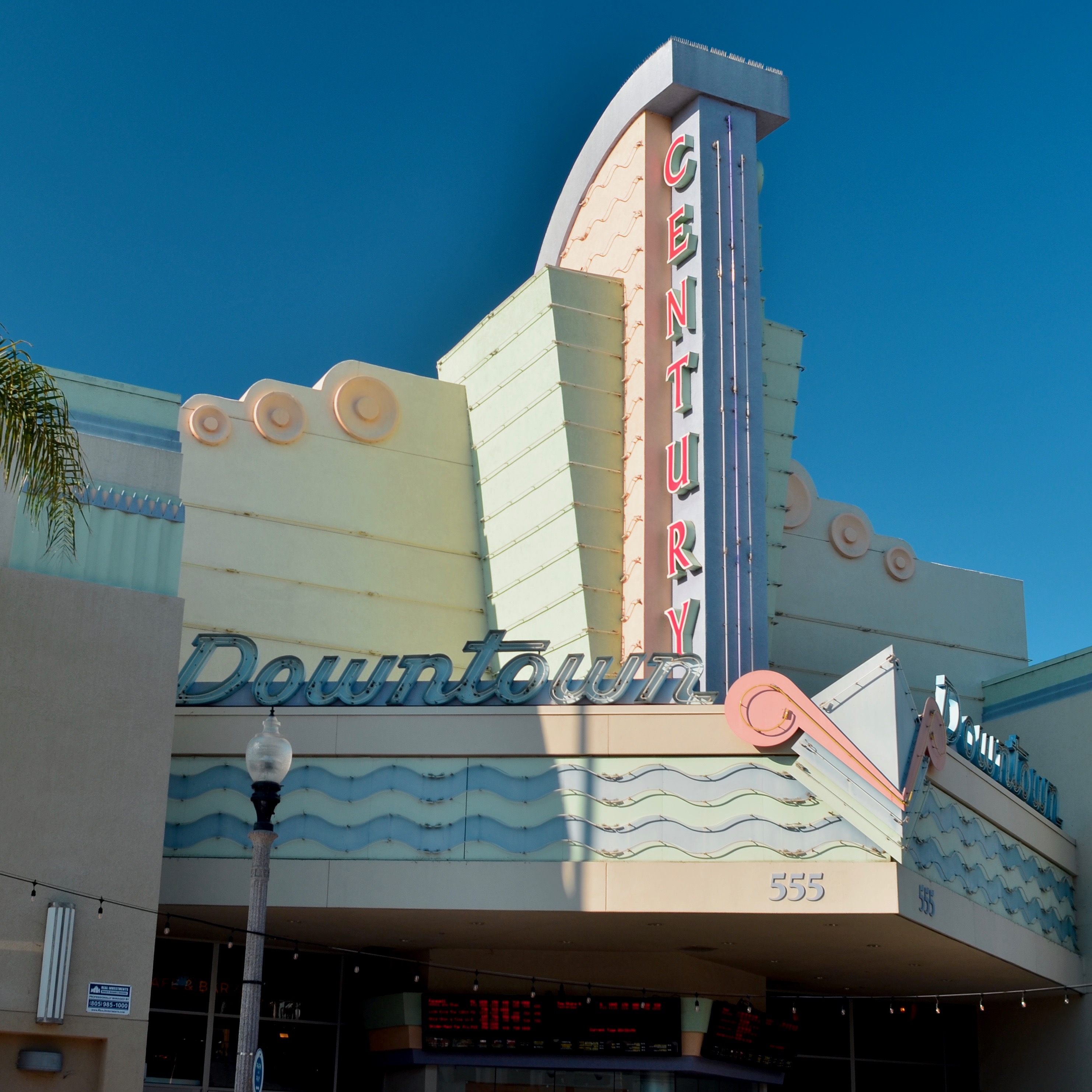
It’s show time. Again.
Photographers are still scrambling to chronicle the vanishing echoes of this design surge, which was most vividly expressed in the streamline, moderne, and Art Deco movements. Function dictated form: a boutique selling hats might actually look like a hat: a photo shop might design its storefront to resemble an enormous camera. Even banks went from the quietly dignified Doric columns and Romanesque scrolls of the Gilded Age to the bizarre Aztec-meets-Moorish-meets-Hollywood mishmashes of the the Jazz Age, with every place of business screaming for your eye. All of this proves catnip to photographers, who now experience pangs of nostalgia for the bold and brassy looks that predate their own lifetimes. Give me a blinking, blaring mass of zigzags and chevrons and I am in some kind of Busby Berkeley fever dream. Especially with theatres.
Many of the world’s old neighborhood bijous have gone down to dust, others converted to street corner churches, antique shops or themed cafes. And of those that do survive, some still actively celebrate their original functions, and thus are among my favorite things to shoot. The image seen here is of downtown Ventura, California’s Century theatre. The structure is particularly delightful, its soft pastels dreamily gleaming in the warm light of this charming seaside town. California as a whole, perhaps because of its direct connection to the film industry, has seemed to have salvaged a greater number of these little jewel boxes than is typical for other parts of the USA, although they, too, have seen many such houses crushed under the heel of what passes for progress. In any event, I can be counted upon to stop, stare, drool and shoot when encountering one of these picture palaces. Because the old theatre program billings, in which features were preceded by cartoons, newsreels, shorts or travelogues, left out an important first step….that “show” that starts at the curb.
ONCE UPON A …….
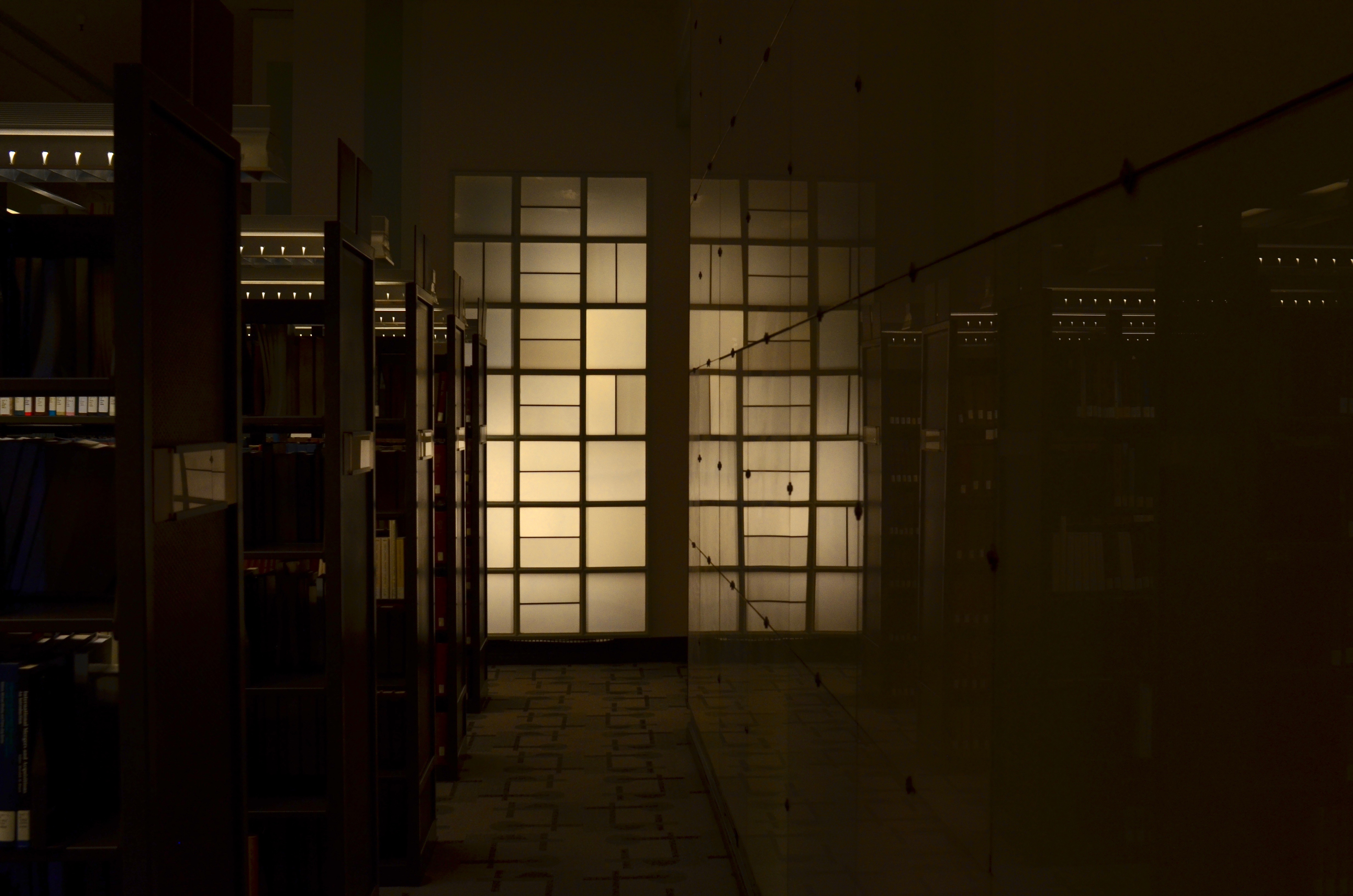
Seldom does a single photograph relate a complete story. And that’s the fun of it.
By MICHAEL PERKINS
THE BASIC STRUCTURE OF A LINEAR STORY IS ENGRAVED into the DNA of our collective minds in what amounts, essentially, to three words: beginning, middle, end. Three distinct phases that indicate the birth, development, and logical terminus of a narrative. You start at the left and end up at the right, like the eye reading a written sentence. That’s storytelling in a nutshell.
But are all three elements present in a photograph?
As a static moment stolen from a million zillion consecutive other moments, a frozen instant plucked out of context, a photo is, almost of necessity, missing some of the standard elements of a narrative. The shooter cannot take us on a complete journey from beginning to end. Instead, he must choose one part of that sequential timeline and make it speak for the entire process. And so we make pictures of things that are just getting under way. We make different pictures of things that are in the process of progressing or changing. We make still others of things that are coming to a close. What we choose to show affects the conversation we are having with our audience. Will they understand what point in the continuum of a story we’ve chosen to display? Does their imagination or memory supply missing information about what’s not shown, through speculation, intuition? Pictures can’t show everything, nor do all pictures even show the same kind of information. However, over generations of transactions between shooter and viewer, there is a kind of understood, if unspoken language of what was meant and what was received.
This exchange is instantaneous and instinctive, but we can step back and analyze it. For example, in the above photo, what information is given, and what is withheld? Are we at the entrance into something, or near the escape out of it? Is this a scene of quiet serenity or dark foreboding? Is there a correct answer? Does there need to be?
You and you alone control the choices, often made in an instant, of what visually makes it into the final edition of a photograph. Some of those choices will be deliberate. Others will be reactive. Photographers can either conceal or reveal, and their editorial decisions, whether done at leisure or in a blink, determine what pictures we regard as memorable, or visceral, or genuine. What I’m getting at here is that storytelling is only partly about equipment, or even conditions, like light or weather. And that only makes sense: it would be foolish, after all, to think of a novel as great merely because of which pencil or keypad the author used, or to judge a musical performance by the piano. And so the most crucial element in photography must, must, must be the eye. Once that is sharpened, storytelling hits full throttle, and, conversely, without that acuity, all we can hope for is the occasional happy accident. No one picture tells the entire story, but we are in charge of what clues make it to the viewer. And that is one amazing superpower.
UP, DOWN, LEFT, RIGHT
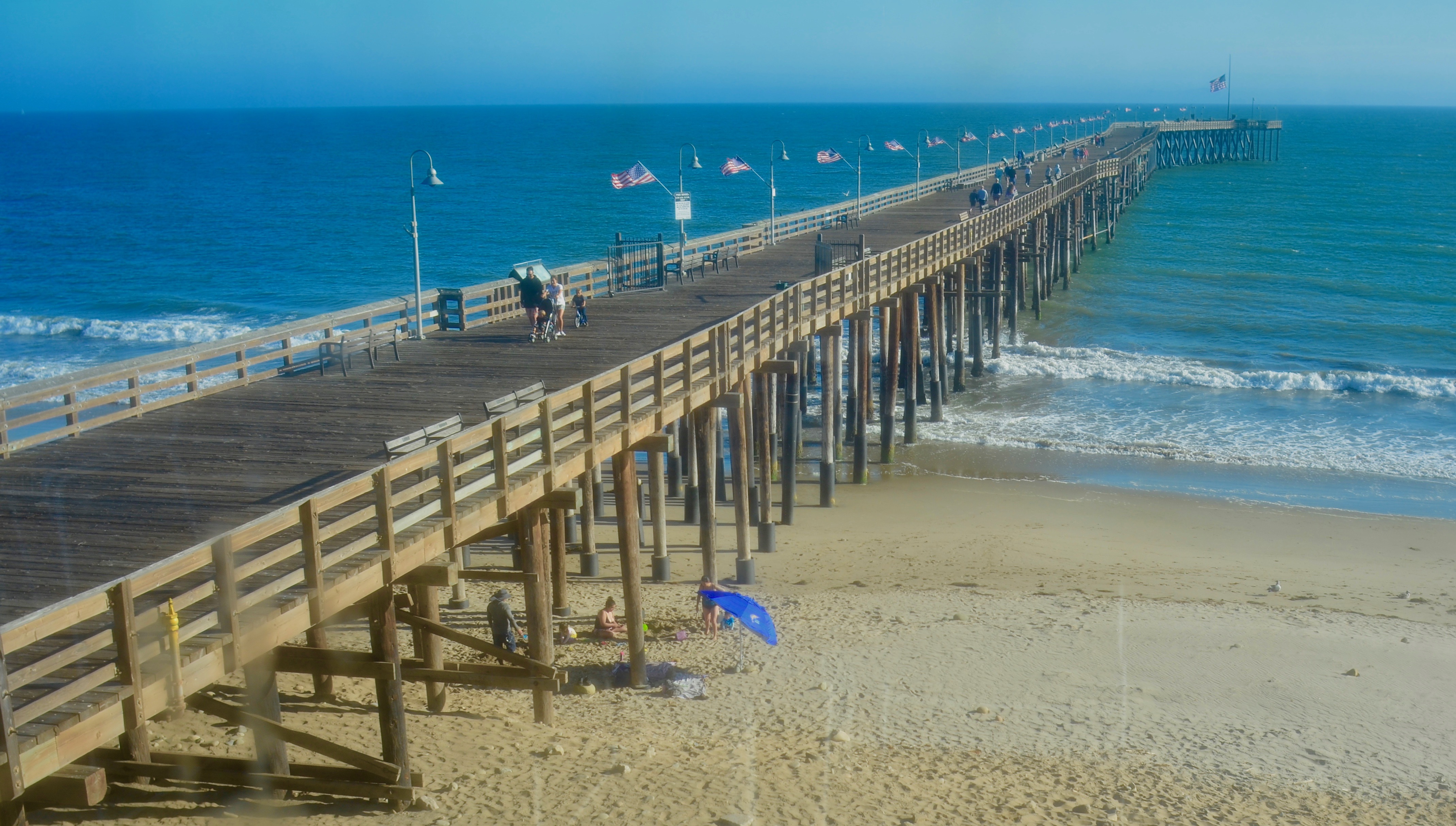
Over And Under, Ventura Beach, California, 2019
By MICHAEL PERKINS
COMPOSITION IN PHOTOGRAPHS IS NOT MERELY A MATTER of getting everything you want into the frame, whether your subject is crowded or stark. It’s about both the arrangement of objects or patterns in a given space and the relationships those things have with each other. It’s a process which often makes photography as frustrating as it is thrilling. Or maybe a more precise way to say it is, composition is the frustration you endure to get to the thrill.
Yeah, I like that a little better.
Part of the method of composition, in what is essentially a flat plane, is the arrangement of your subject in such a manner that it creates the illusion of depth, a kind of invitation to the eye to look further “in”. There have been entire libraries filled with references to these so-called “leading lines” such as the trail-off on the pier you see in this ocean view. Everyone mentions it because, well, goldarn it, for a cheap little trick, it works pretty well. This particular image is about as rudimentary an example of faux depth as you can find, but nailing it involves a lot of little things that are quite variable from one situation to another.
Ansel Adams once half-jokingly said photography was largely about knowing where to stand, and it’s still the best compositional advice I’ve ever heard. Certainly in the case of this photo, where I chose to stand (a decision I changed and re-changed across the space of several minutes) made a huge difference in how the depth effect displayed the picture’s information. I was originally walking toward the pier at beach level, at which angle the front-to-back view of the pier tended to emphasize the information most near at hand, with the rest of the pier dramatically foreshortened or “squished”, like the contracted bellows of an accordion, and objects at the far end of the pier greatly reduced in detail or prominence. Standing beside the pier rendered it as a long left-to-right line reminiscent of a snake or a train. Lots of detail but not much drama, and no practical way to show the entire structure.
Walking to the second-floor landing of a beach restaurant at the head of the pier, however, gave me a sensation of distance that appeared natural and yet was a little more dramatic, the lines of the pier converging as they reached the horizon, just like your ninth-grade mechanical drawing teacher taught you to do. But that’s the process of composition in a nutshell: a combined approach consisting of what to include and how to include it, or like Ansel says, knowing where to stand.
WAITING IN THE WINGS
By MICHAEL PERKINS
PHOTOGRAPHS ARE DOCUMENTS THAT ARE SHAPED BY PERFORMANCES. That sentence, at this point in history, seems so obvious that it seems superfluous to even state. But it wasn’t always seen that way.
The camera, at its creation, was feared and reviled as the very opposite of an art instrument, characterized as a soulless machine that recorded without seeing, without interpreting. Whereas the painter filtered the world through the experiences and emotions coursing through his heart and mind, the photographer just held a box, and the box merely measured light. The box was seen as a cold, lifeless thing could never render a breathing, living world. Could it?
But the box, it turned out, was never merely held, never just pointed, and its eye never merely etched data on a plate. How it was held, what it was pointed at made a crucial, measurable difference. What it framed and what it excluded made other differences. And then there was the eye of the thing. Turned out, even that glassy orb could, in time, be adjusted, made more sensitive, more attentive. In fact, photography was becoming, after the science was scoped out, a performer’s medium, no less than a person holding an instrument called a paintbrush, or striking an instrument called a piano. There was an expectation, an anxiety involved in the act, a desire to get it right. Each single photograph was subtlely different from all others, and the difference was in the nature of the performance.
I go through this meditation (or one like it) whenever I am on the eve of tackling a photographic subject that has eluded me for a long period of time. As you read this, I’m only days away from making a pilgrimage of sorts to such a subject, something that will be hard to re-visit in the future, and for which a lot of very fast, do-or-die decisions will be made in the moment. Well, do-or-die is a little dramatic: there is, after all, nothing really important on the line here. The subject matter doesn’t involve a breaking news event, nor will my success or failure in bringing back the pictures I want have any impact on life as we know it.
I just want to get it right.
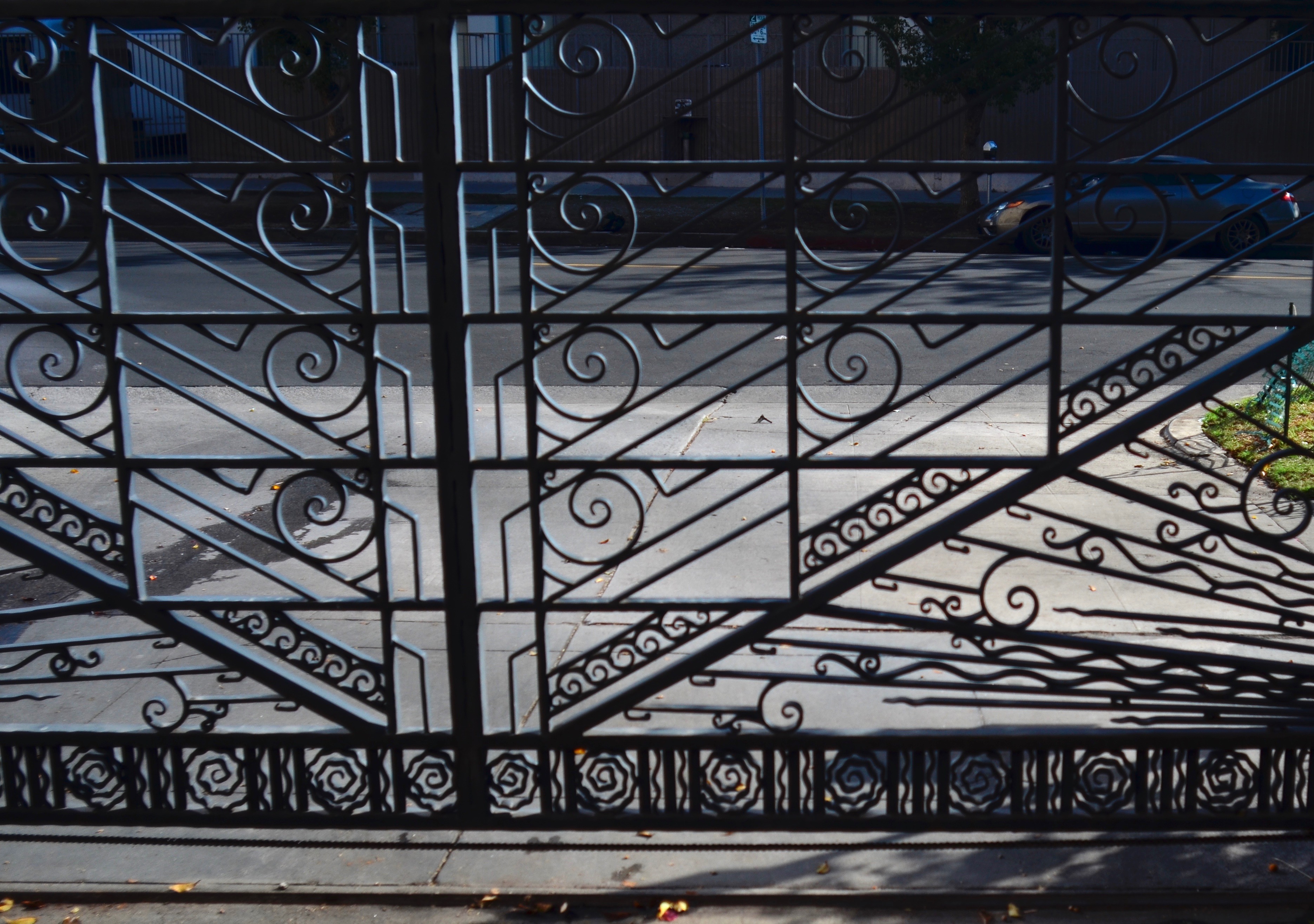
The image seen here is of an access gate that is as close as I have ever gotten to my subject in the past. It is also the least beautiful feature of said subject, hence my annoying case of nerves.
My anxiety, though truly laughable/pathetic, accompanies things that I care about, and maybe that’s a good definition of art….an attempt to make sense of the things we care about. Just pointing a box cannot produce that feeling. But photography has never really been about the box, has it?
THE MANDATORY MASK
By MICHAEL PERKINS
Smiling faces, smiling faces sometimes, they don’t tell the truth —The Undisputed Truth
One can smile and smile, and yet be a villain…..William Shakespeare
 THE GREAT ANNIE LEIBOVITZ, writing in her wonderful treatise on technique, At Work, confesses that she never asks her subjects to smile, leaving their most natural expression to emerge (or even remain hidden) as they choose. I love this idea, since I believe that smiles have forever been the mandatory mask we reflexively profer to the camera in nearly every setting, to the detriment, occasionally, of trustworthiness in our pictures. We smile at birthdays, anniversaries, reunions, weddings, perhaps occasionally even at funerals. We gamely grin our way through every occasion that calls for a photographic record, freezing our faces into rictuses amid toothy recitations of the word “Cheeeeeese“, as if any other response to a lens is incomplete, or, worse, rude. Ironically, when the grimace becomes too strained, we may even urge the shooter to “hurry up and take the picture”, lest our face freeze that way. Nevertheless, smiles are the social default, the unspoken civil grammar of portraiture.
And yet, consider how many astounding, revelatory portraits are virtually smile-less, or how we can sometimes view an image with outright suspicion if the smiles within it strike us as forced or contrived. More importantly, we might ask ourselves, what the hell is everyone so happy about? The urge to smile, darn you, smile in photographs is certainly a deeply rooted one. Perhaps the first person to beam for the camera was also the first person who didn’t have to pose stock-still for a full minute just to be recorded by the slow media of the 1800’s, a rod jacked up his back to keep his head immobilized. Who knows? But whatever the original motivation was to “look pleasant” (as early shooters often instructed), it stuck, and is now, in the age of the social-media-fed fueled selfie, practically an article of faith. We’re all so damned overjoyed to be here. Just take the picture, willya?
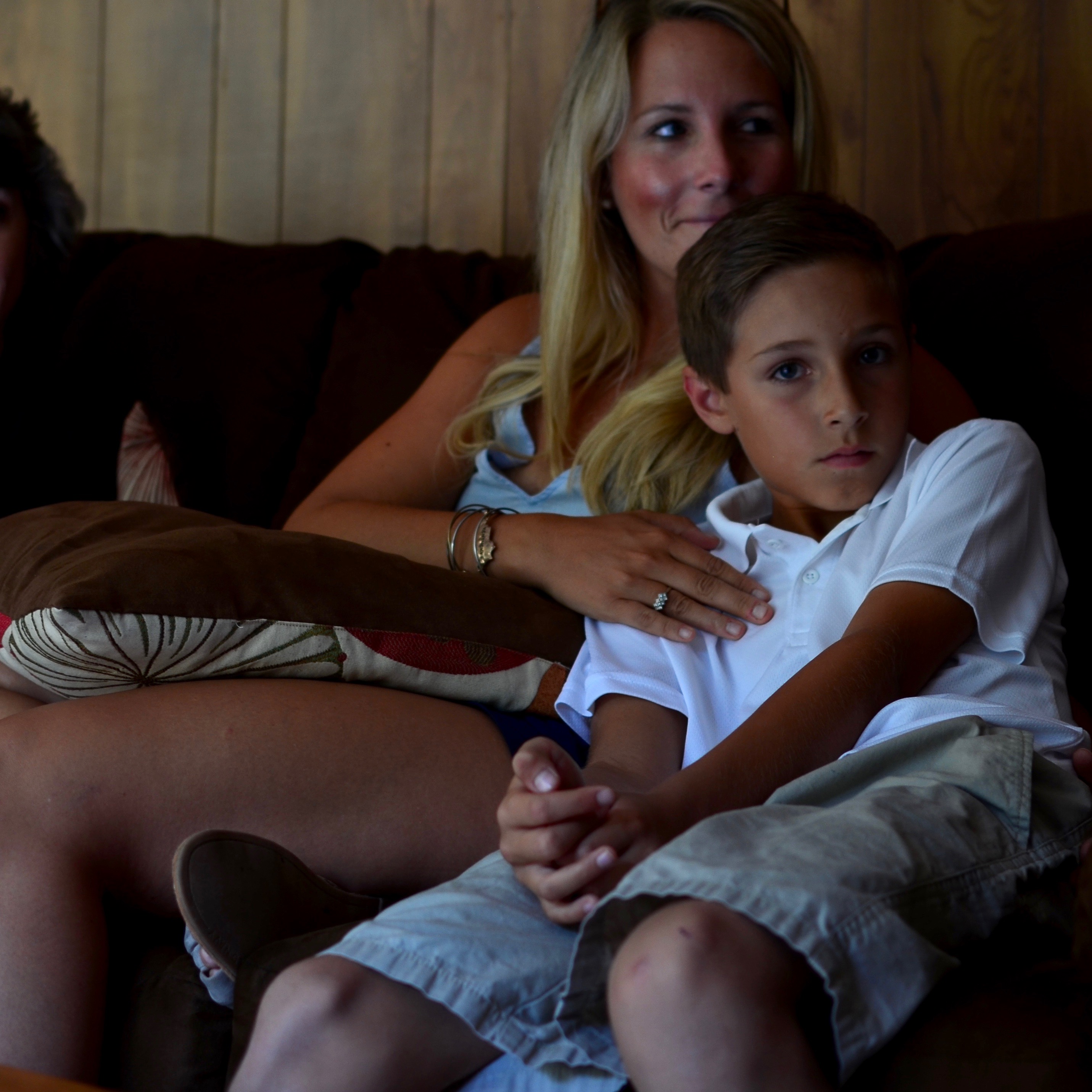
Have we all become slaves to the mandatory mask? Dare we have our picture taken when it’s not “a beautiful day in the neighborhood”? Are we doomed to endlessly emulate Alfred E. Neuman’s “what, me worry?” smirk? Can’t there be more to a portrait than just a simulation of jollity? Certainly we need not consistently present ourselves as dour grumps before the camera, but there must be some kind of happy (content? beneficient? neutral?) medium. Is the boy in the shot seen here any less “real” or interesting just because he forgot to say the “c” word? Or did we happen upon something closer to his real self that the mandatory mask might have concealed?
Every portrait is different, since every person’s face is a different and unique set of stories. Might it not take more than a mere smile to get all those stories told in an authentic way? Without a doubt, happiness, real happiness, is an experience that every photographer aspires to capture. But, emotionally, happiness is not the only arrow in the shooter’s quiver. If we’re really about truth-telling in our pictures, we have to get comfortable when something other than the mask shows up in the final product.
IN THE AGGREGATE
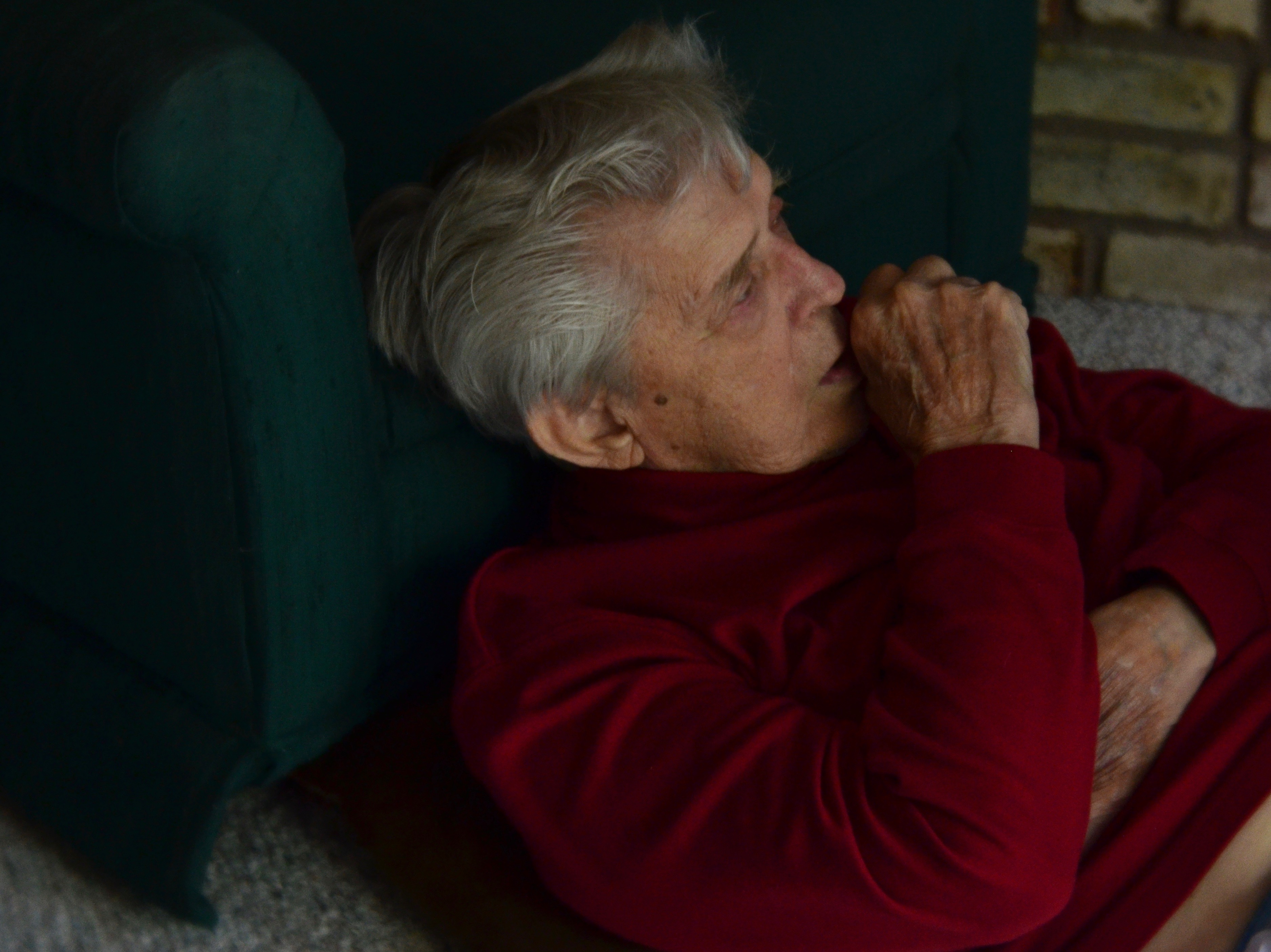
My father, born 4/23/29.
By MICHAEL PERKINS
FACES ARE A LOT LIKE SKIES ON A DAY OF WIND-DRIVEN OVERCAST, with emotions sweeping swiftly across their features, alternatively lightening, darkening, producing bursts of color and dusks of shadow, all in the space of a few seconds. The mood changes that play upon our faces from moment to moment are so far-reaching that, in a static medium like still photography, we often feel we cannot create a single image that “tells all” about even the most familiar people in our lives. There are times when more than one feeling is layered over others, with only one state of mind captured in a single frame.
Or so I used to believe.
As stated in previous pages of this small-town newspaper, my parents have had both the great good luck and the jarring challenge of living very close to the century mark. With geography separating us from each other most of the time, the ticking of the clock adds a fearful urgency to my attempts to photograph them in what is essentially their ninth inning. As to how I can shoot them, formal sittings are largely a thing of the past: both are well beyond forced posing, having said “cheese” more times than the entire population of Wisconsin, leaving me to maintain a constant vigil for the unguarded, and potentially revelatory, moment. And that’s where a latter-day gift of sorts has burst onto the scene. Far from the emotionally simple “happy Dad”, “sad Mom” pictures that were emblematic of their earlier years, I now see their faces as aggregations, multi-level combinations of several emotions all registering in the same moment. It’s as if their features have become one of those plexiglass “how it’s made” models of a complex airplane that shows all of the craft’s inner workings at once, or, in simpler terms, as if my camera had been transformed into a CT scanner.
One very effective ignition point for seeing this layering in my father, for example, comes when he is consuming what we will lightly call The News Of The Day. One need not comment on specific issues to recognize that the present world is a very complicated place, and that, when you are ninety, it’s tough not to filter everything through decades of comparable experiences. In watching Dad watch the world these days, I can simultaneously see the many versions of him that I’ve learned to recognize throughout the years. Curiosity? Certainly, but also consternation, hope, bewilderment, sadness, wisdom, and, to a greater and greater degree, resignation. The world is racing forward, not quite yet without him on board, but certainly nowhere near the front of the parade. And since I trail him in age by twenty-three years, I have not yet seen all that he has seen, but I certainly feel a version of his own feelings of accumulation, even from my more limited lookout point above life’s battlefield. The sheer weight of all those feelings is fully one-third stronger in him than in me, but my own legacy of sensations has taught me to detect (and hopefully capture in my box) stories that say much more about his inner mind than just “happy” or “sad”. His face, and that of my mother’s as well, is now more than just familiar: it’s prophetic. I try to see what he and she are teaching…..a very strange, elegant and sometimes terrifying tapestry. Still, even though the view is often obscured by tears, I will never blink or look away. This is a premium seat I occupy now, and I have paid handsomely for the privilege of sitting here.
THE DREYFUS REFLEX
By MICHAEL PERKINS
This is important. This means something….
Roy Neary, Close Encounters Of The Third Kind
I HAVE NEVER TRIED TO SCULPT THE MASHED POTATOES FROM OUR NIGHTLY DINNER into a replica of Devil’s Tower, but, as a photographer, I have experienced plenty of Roy Neary “a-ha” moments, marveling as a seemingly bland tableau pops into something very, very different in my mind’s eye. It’s the transformational moment that, when it occurs, justifies all of the sit-and-wait and close-but-no-cigar moments associated with making pictures. It is so invigorating that it re-enlists the weariest of us for yet one more tour of duty. Even the chance for experiencing a Roy Neary moment, what I call the Dreyfus Reflex, will shore up our courage and refresh our dedication. Hey, magic happened that one other time, we say. It might happen again.
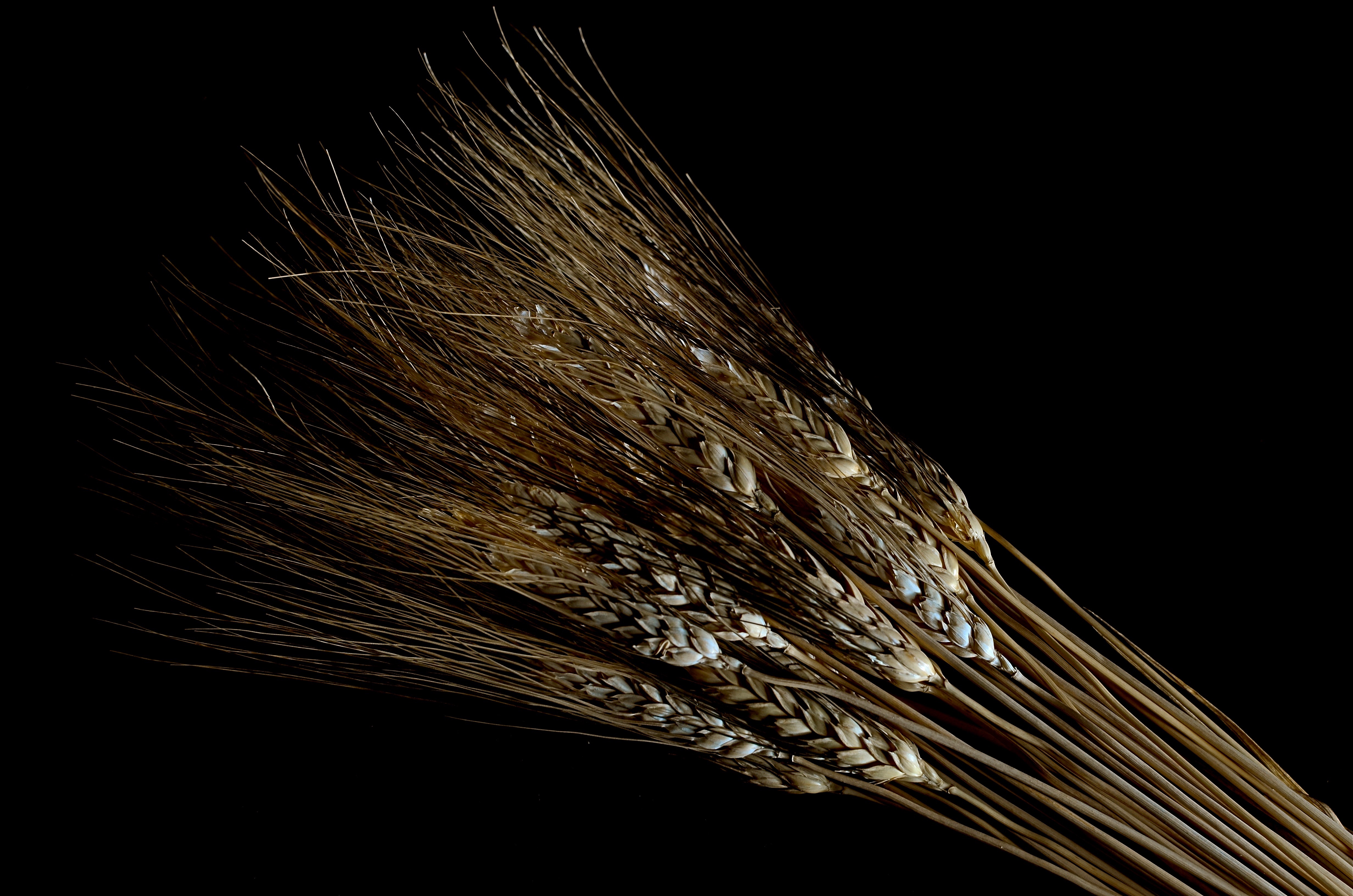
Sheaf, 2016
But learning to see creatively is not merely a matter of being willing to receive a visual message from the great beyond. Seeing is an exercise, no less than a push-up or a jumping jack. It’s a matter of perfecting yourself as a receptacle, as a kind of pipe through which ideas can flow freely. The pipe has to be constantly widened and re-opened, and the exercise of learning to see ensures that, once an idea is at the entry point to the pipe, its path is unobstructed. Thus, the photographic concept is not coming from you so much as it is flowing through you. Learning to see photographically means, then, being “open” to a perception that, without practice, might never become apparent, but which, having become so, urges a photograph.
It means, in a sense, getting out of your own way.
Going back to our Close Encounters metaphor, Roy doesn’t start out thinking his dinner spuds resemble a mountain top. He gradually learns to accommodate ideas that are so un-obvious to everyone else that he seems crazy. Effectively, Roy has become an artist, in that he can look at one thing and see something beyond its mere surface appearance. In that moment, he is every poet, every novelist, every painter, and, yes, every photographer who ever lived. Similarly, any subject matter, such as the stalk of wheat seen here, can take on endless new identities, once we’ve become comfortable with it being more than one thing, or one version of a thing.
I once had a friend tell me that his favorite compliment as a photographer occurred when he was comparing pictures that he and a friend had taken from the very same trip, passing by identical sites and locations. “Where did you see that??” his companion remarked, indicating that while the two men’s sets of eyes were physically pointed in many of the same directions. they had come away with vastly different impressions. Does this process make one set of pictures “better” than another? Certainly not. But it does illustrate that there is more than one level of seeing, so that, even if my friend were to visit all those places alone, on different days, very different things would emerge in the pictures from varying shoots. What accounts for this variance? The light and the subject could be made to match: the gear and its settings could be replicated: even the precise time of day could be re-created, and yet the pictures of the same things by the same person would probably contrast noticeably with each other. And knowing all of that, when you set out as a photographer, means you’re aware of, and eager to exploit, the Dreyfus Reflex. What you see is just the first step of the journey: how you see it determines where the journey will eventually lead.
ROAD SCARS
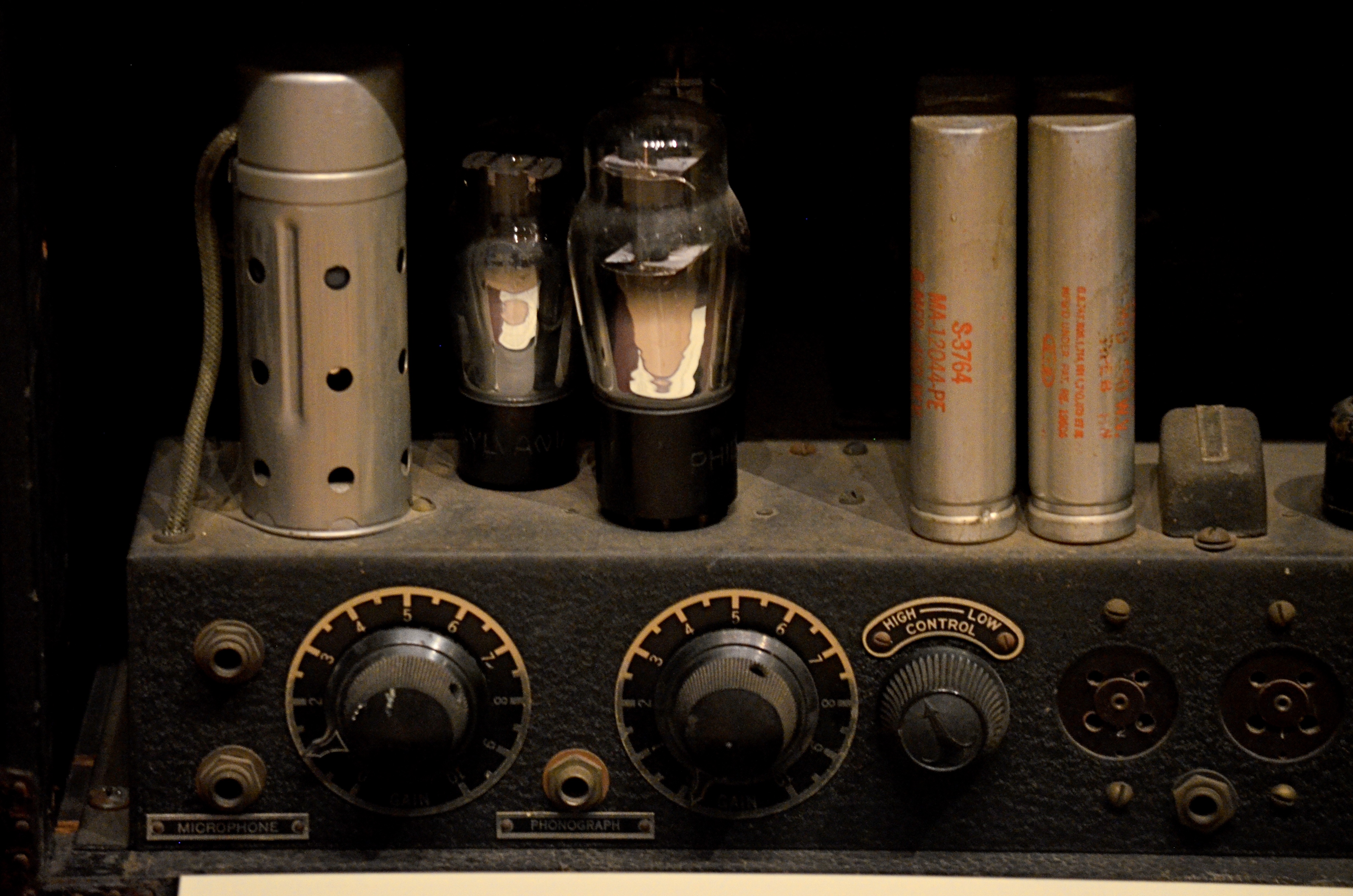
Let’s crank this bad boy up…
By MICHAEL PERKINS
THE MUSICAL INSTRUMENT MUSEUM IN PHOENIX, ARIZONA is possibly the largest collection of musical artifacts in the world, a stunning array of everyday instruments from nearly every people nation on the planet. Opened in 2000, MIM is not merely a house of refined and rare instruments: it boasts as many humble skin drums and clay flutes as it does Steinways and Strads. Its simple mission is to show the linkage, the commonality between how all races express themselves through music, and to promote understanding by showing how those expressions have spilled over cultural lines, physical borders, and tribal traditions. The museum shows that everyone who picks, strums, blows or strikes to weave sound into soulfulness is really in the same big band, an idea which is a gold mine for photographers.
One of the museum’s greatest strengths is in showcasing not only the instruments themselves but the context of their use, from native costumes and ritual regalia to the cases and support equipment used to house or protect everything from horns to harmonicas. Indeed, a very large part of MIM’s collection is actually composed of cases, boxes, and stage gear, since they, too, are part of the instruments’ journeys. One very twentieth-century element of this, as regards the museum’s astonishing collection of guitars, can be seen in the first generation of devices created to amplify sound following the birth of electric instruments. In both traveling and permanent exhibits, the Musical Instrument Museum affords equal status to both the killer axes of rock and jazz legend and the amps and cases that accompanied them on their storied gigs. In essence, the first amplifiers were instruments in their own right, since they not only made things louder but shaped and sculpted the performances that flowed through them.
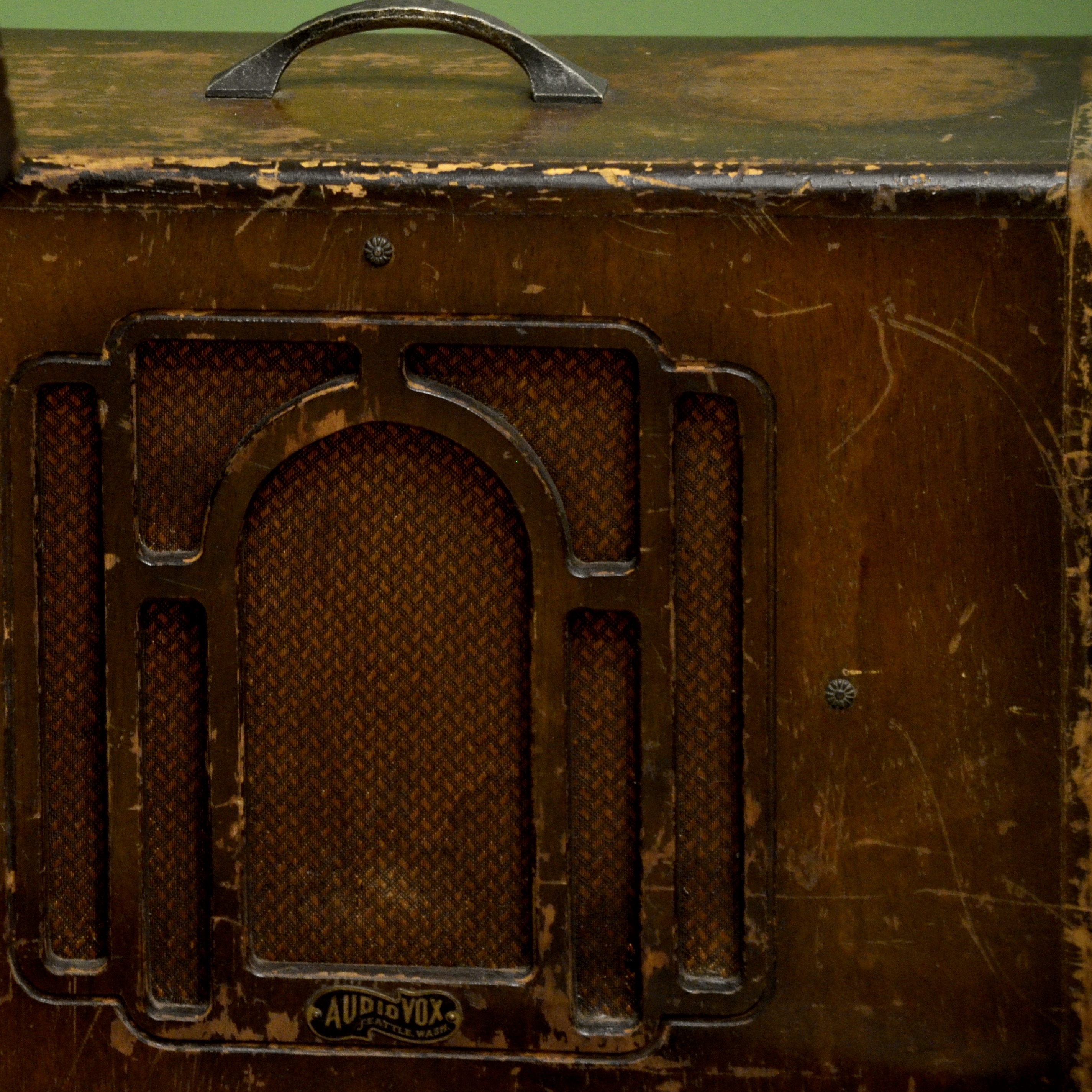
Careful with that amp, boys
Leather and chrome, speaker cones and vacuum tubes, arcane logos and legendary trademarks….the “support” elements of electric music are often as familiar as the guitars with which they shared stages. All that texture. All those scars, bumps, and tears, with stories to accompany each ding and dent. Instruments in the 20th and now 21st century are so transitory in design that one era’s state-of-the-art quickly becomes the next era’s isn’t-that-quaint, models rocketing from cutting edge to old-guard within a generation. That spells obsolescence, which in turn calls for a photographic record of things which are fading out of fashion with greater and greater speed. In essence, museums dealing in fairly recent artifacts can be completists, since they can showcase both objects and the cultural trappings that accompanied them. By contrast, in studying relics from the ancient world, parts of the story are lost: we may have the flutes that were buried with Tut, but no way of knowing how their scales or melodies were constituted.
In another 4,000 years, who knows? All of the Les Paul Gibsons in the world may have become extinct, with only an occasional case to mark their passing. Funny to think of someone looking into the empty box and musing, “I wonder how they played this thing…”
THE RELUCTANT WITNESS
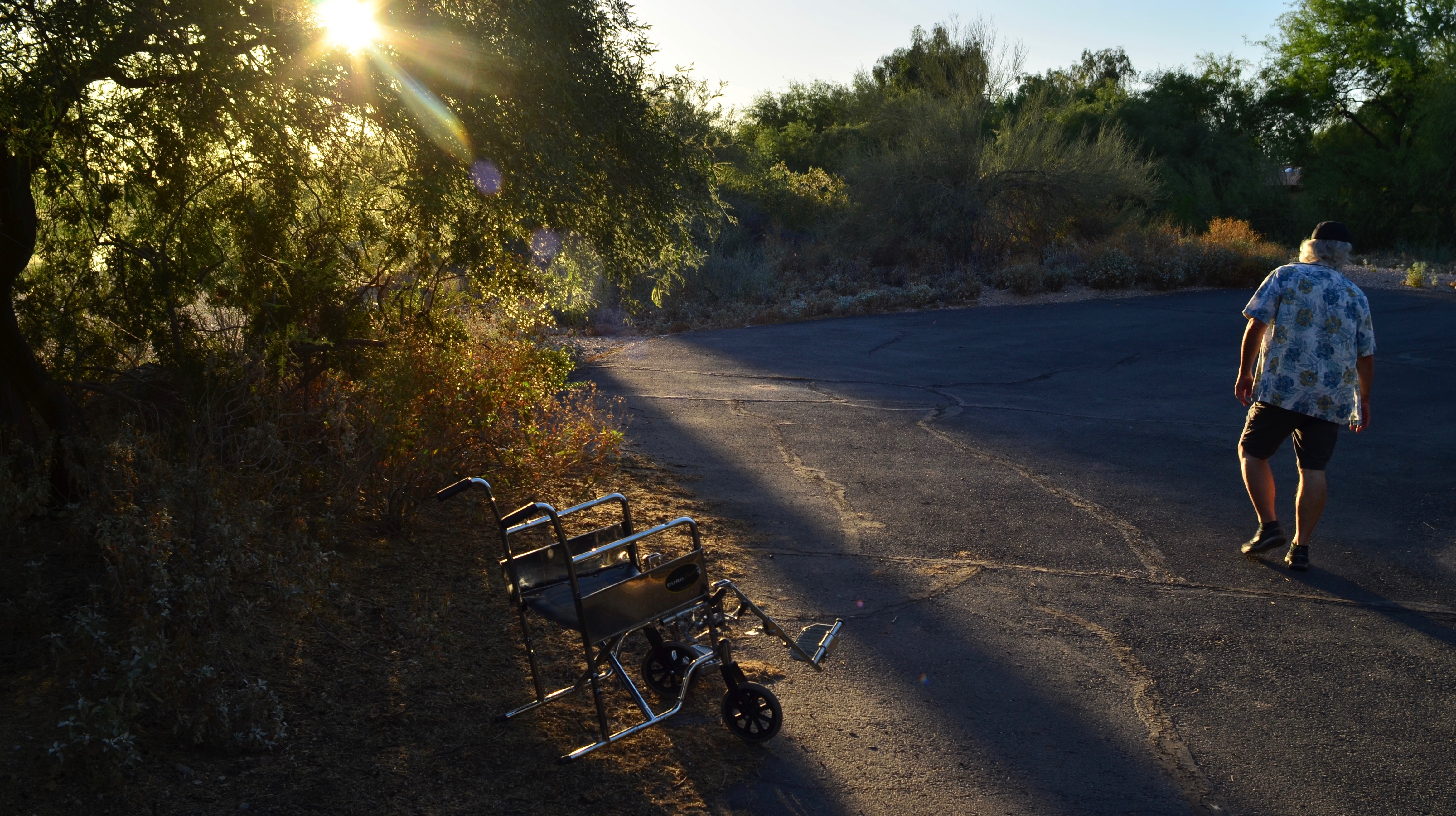
Two Strollers, 2019
By MICHAEL PERKINS
PHOTOGRAPHERS PASS A VERY IMPORTANT MILEPOST when they first learn that pictures can be both reliable and unreliable narrators. As neophytes, we assume that the camera doesn’t lie, that it is a trustworthy tool for capturing the truth, a kind of optically-based lie detector. Later, we learn that, in certain hands, the camera can also distort, mislead, and, certainly, lie. It’s a heartbreaking moment for some, while it’s almost freeing for others.
Bearing witness with a camera is a noble calling, but, even among the most ethical or clear-minded image-makers, there are visual stories that can’t be plainly told, tableaux in which the scene itself is a reluctant witness. Call them pictures without ample evidence.
Shooters can certainly use their interpretive skills to play connect-the-dots in many a photo, but what can be done when there aren’t enough dots to connect? In such cases, merely starting a conversation is the best one can hope for.
I simply had to record the scene you find here. I was walking with some friends toward an urban sewer tunnel from which thousands of bats were guaranteed to emerge at sundown, when, with one of our party nearing the rendezvous, I spotted the abandoned wheelchair you see at left. Clearly this was a case in which no photograph could be expected to “explain” anything, but which was visually irresistible nonetheless. The mixture of object and place equals…what? Why would someone bring a wheelchair to a semi-remote location, and then just leave it? Did someone experience a miracle cure that obviated any further use for the device? If so, why go to the trouble of dumping it out in the sticks? How does one dispose of an unwanted wheelchair? Had someone upgraded to a better model, and thus turned their previous unit into roadside litter? Was some semi-ambulatory adventurer off on a brief stroll in the area, eventually returning to the chair to rest in before heading home? Would someone seeing a picture of my friend walking away from the chair assume he had been its occupant? If so, what would they assume happened? And, of course, was I being dishonest for even including him and the chair in the same frame?
You can see where this is all going. The frame is hardly a “gag” or “gimmick” shot, and it’s not unique among photographs (mine or others) in posing more questions than it can possibly answer. Moreover, I certainly don’t have any explanation for the chair’s appearance that makes any sense, at least to me. And yet, I wouldn’t dream of not shooting the picture, as it’s too much of an “A” example of what happens when the photo itself is a reluctant, even hostile, witness.
Seeing may indeed be believing, even if you can’t actually decide what it is you’re being asked to believe.
THAT’S ONE SMALL APERTURE FOR MAN……
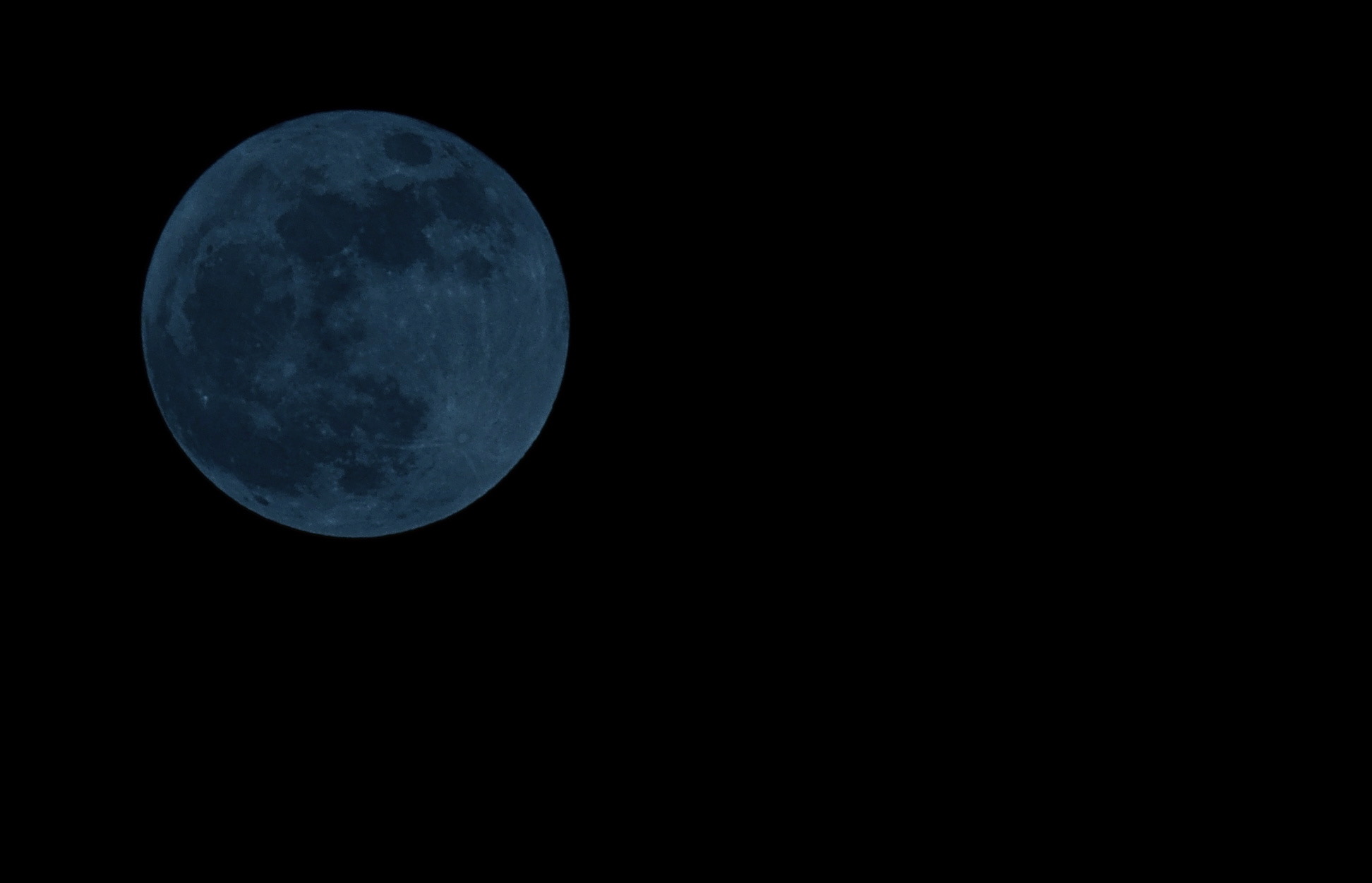
Blue Moon, 2012
By MICHAEL PERKINS
THIS MONTH’S 50th ANNIVERSARY OBSERVANCE (in July of 2019) of the first lunar landing in 1969 is, first and foremost, a celebration of the indomitability of the human spirit, recalling an era in which mankind’s potential was limited only by the scope of its imagination. In addition, for photographers, it is also a story of technical ingenuity and king-hell problem-solving skills. We have lived for a half-century with the crisp, iconic images that were brought back from the surface of the moon, but the larger story of what it took to capture them remains largely untold.
A modified Hasselblad 500-C camera, similar to the ones taken to the moon during the Apollo missions.
And a great story it is.
NASA’s eventual selection of which camera would go to the moon was influenced in the early days of the space race by Mercury astronaut Wally Schirra, himself an amateur photographer. Given that the earliest cameras aboard space flights had proved a technical disappointment, Schirra suggested that a version of his f/2.8, 80mm Hasselblad 500C be modified to document future missions. The legendary Swiss optics company was brought in by NASA to consult on the complete re-engineering of its consumer camera, which, over time, involved stripping off its cosmetic leatherette trim as well as removing the unit’s viewfinder, auxiliary shutter and reflex mirror. While most modifications were made to reduce the weight of the units or to improve their performance under extreme temperatures, others were made purely to ensure the simplest possible operation under once-in-a-lifetime shooting opportunities. The first NASA-modified Hasselblads were used by Schirra himself during his Mercury 8 orbital mission, and in the capture of Ed White’s historic space walk aboard Gemini IV, with more sophisticated changes effectively turning one of the most sophisticated cameras on the planet into little more than a high-end point-and-shoot by the time the Apollo missions got underway in the late 1960’s.
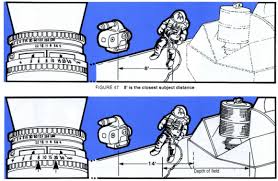
A sample page from Hasselblad’s lunar user manual shows the right distance to allow between yourself and any spacemen in the vicinity for correct depth-of-field.
Shutter speed for the lunar Hasselblads was fixed, but a selrction of apertures could be chosen by the astronauts to ensure sharp depth-of-field in a variety of situations. Surface images were taken by what came to be called a Hasselblad Data Camera (a re-jiggered 500C), while a separate HEC, or Hasselblad Electric Camera, would be pointed at the surface from inside the lunar landing module. Like Hasselblad, Kodak was engaged by NASA to re-engineer its domestic product, chiefly its premium films for the missions, both by widening frame size from 35 to 70mm and reducing the thickness of the celluloid sheeting to allow 70 shots per camera roll instead of the earthbound 12. The problem of cranking the camera from frame to frame was obviated by specially mounted exterior cartridges that automatically advanced the film after each click. Kodak also formulated several different speeds of film in both monochrome and color. Finally, to make the whole process even more fool-proof, Hasselblad generated special visual operator manuals for the astronauts (shown at left), while the entire camera assembly was permanently attached to the center of an astronaut’s lunar suit (in the case of Apollo 11, “first man” Neil Armstrong) freeing up the spaceman’s hands for NASA’s immense grocery list of surface experiments.
Success in space travel is measured in inches, and also in ounces. And, being keenly aware of how much the mission’s newly collected specimens (such as space rocks) would add to Apollo’s total weight upon its return flight, the crews knew that a calculated swap-out was necessary, and so a total of twelve Hasselblad bodies were left on the moon, after their film packs were detached and loaded on the lunar module. The prospect of free (if pragmatically unattainable) cameras has never been so tantalizing. But as we say down here on earth, the picture, and not the gear, is what’s important, something you can see for yourself in any of the 8,400 Apollo-era images that have recently been uploaded to Flickr. Merry Christmas.
So if a single picture is worth a thousand words, then…..well, you do the math, with a calculator that, today, easily exceeds the computing power of the entire Apollo 11 spacecraft. Technology is the end product of curiosity, and the nerdish odyssey of the Hassies of the moon serve as a good reminder that all the best photography is about exploration, of the vast space either inside or outside the shooter’s imagination.
COME TO THE DARK SIDE
By MICHAEL PERKINS
MY FATHER, SENSING THAT, AS A CHILD, I WAS ANXIOUS about turning out the lights at bedtime, explained calmly to me that there wasn’t anything in my darkened room that wasn’t there in the daytime as well.
It was a reasonable enough argument that I stopped thinking of my bed as a backstage repository for monsters. Still not sure about the inside of the closet, though.
Later, however, I was to realize that, in a sense, Dad was dead wrong in photographic terms, since all we really have to paint scenes with is light, a commodity which is drastically different before and after sundown.
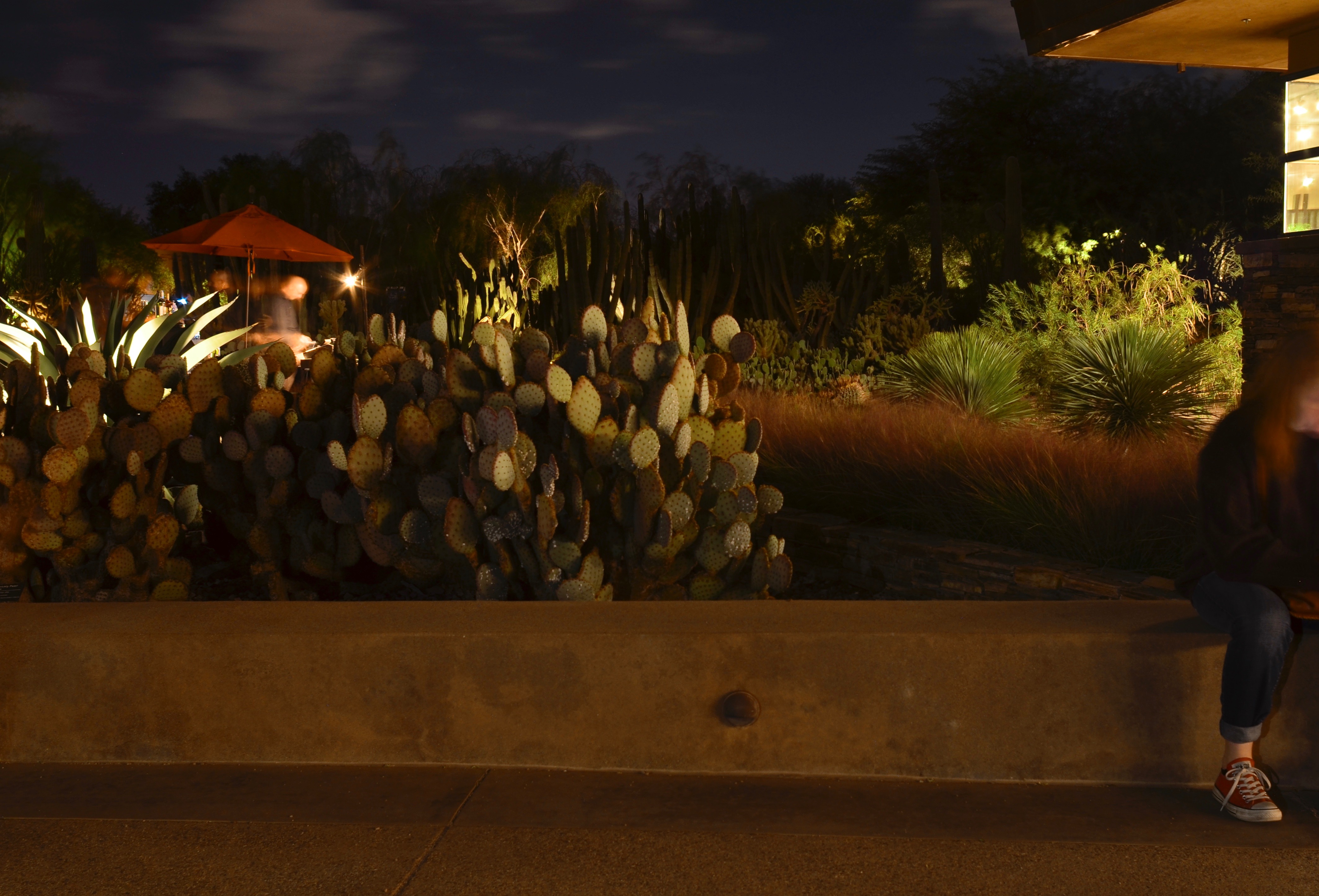
One of the reasons I still take out the old tripod to bother with long night-time exposures is that the color relationships, and thus how we interpret the arrangement of light, are so very different than those seen in the day. We’re not just talking about the difference between lots of light and not much light. The way the colors fit with each other is vastly different when comparing night versus day. Imagine lighting your very favorite food until it takes on a hue so unnatural that you can no longer eat it. Consider pink peas, green steak, brown water….you get the idea. Now compare the daytime value of a color under natural light to its night-time equivalent, lit by either dying daylight or artificial illumination or some strange combination of both. I think the value of making comparative photos of objects over a variety of hours will stun you if you make the time for the exercise. It will also give you an amazing number of alternative choices for how you wish to render color, and under what circumstances.
We’ve all see those essays in which a photographer stays in one position along the rim of the Grand Canyon for many consecutive hours, interpreting the color and light shifts in the gorge over the course of a single day. But you don’t have schedule a vacation in Arizona to make your own demonstration of this idea. Anything that you think you know about, or know the “best” way to photograph, will make a good test subject. As a matter of fact, the more ordinary the scene, the better, since your evaluation of the results will force you to concentrate on just the light values alone, without excess distraction. For an example, the image seen here is of a desert botanical garden in the American southwest an hour after sunset. The sky as seen here is not brilliantly blue, but neither is it absolutely black. The concrete wall in front, beige during the day, is feeding off the sodium lights from the gift shoppe at right and registers as orange. The greens in the agaves and succulents are not the same tepid hue that they’d “read” in the afternoon, becoming something a bit more emerald-ish, while the shrubs are a more pronounced gold than they’d register at noon. More interestingly, all of the colors, transformed from the familiar, are now in a different dialogue with each other. Their relationships seem off, lending a slight surreality to the scene. I only wish I had thought ahead to take several more images spaced over an entire day to better demonstrate my point, although I know, from having done so in the past, that the contrasts can be quite dramatic.
Of course, the picture is not, in and of itself, anything to boast about, but it gives me a test pattern for similar shots in the future, shots for which I will really want to achieve a particular look. This also fits into my overall view of photography, which is that every shot is, in a sense, a rehearsal for another shot. So it sometimes seems that we take a lot of pictures that believe “don’t matter” to get the ones that do, only, paradoxically, if one photograph is a sketch for a later one, then indeed they all matter anyway.
I think.
GRABS AND GOs
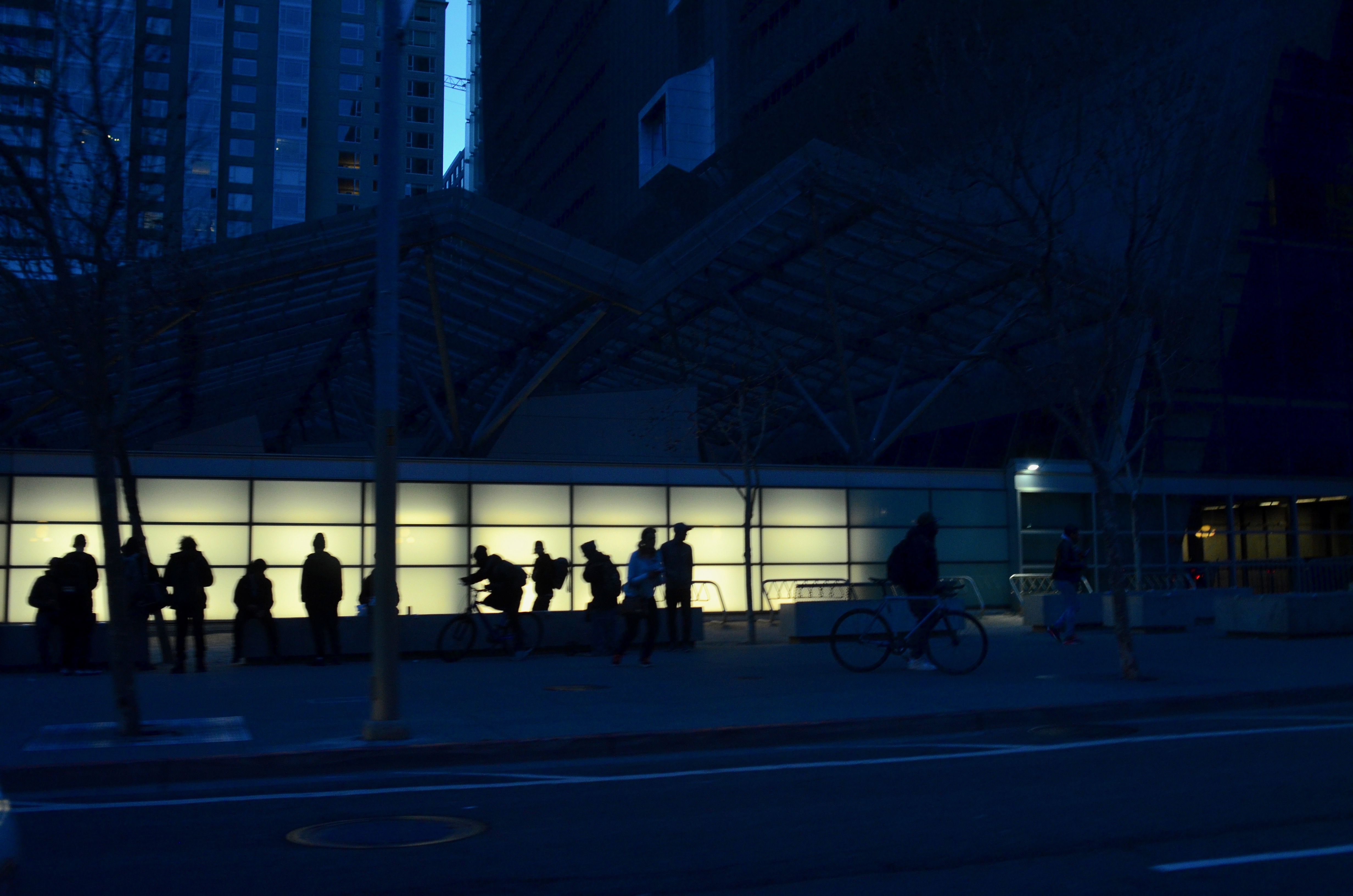
A little out-the-window urban spy work en route to the airport.
By MICHAEL PERKINS
I CALL IT “WINDOW SHOPPING“, the strange practice of taking random photographs while being driven through urban neighborhoods, usually in the back seat of an Uber, usually to or from a hotel or an airport. For any shooter who likes to engineer as much control as possible in their image-making (as is my own bias), cranking off shots out the side window of the back seat of a ride-share is the closest thing to complete chaos, and yet surprisingly exhilarating. It’s also good exercise for those occasional planned shoots in which you will need to react quickly, and hopefully with effect, under rapidly changing conditions.
The whole thing began for me several years ago with one of many trips I’ve made to and from New York, a place that, for a photographer, embraces both formal technique and shoot-from-the-hip spontaneity. I’ve had to teach myself to be more comfortable with the latter than the former, and so I have to regularly place myself in situations in which I’m forced to mentally shoot with, if you like, one hand tied behind my back. I have to make myself shoot looser and with less of a fear of loss-of-control situations. At some point, a boring cab ride to JFK gave me the perfect jumping-off point for such a project.
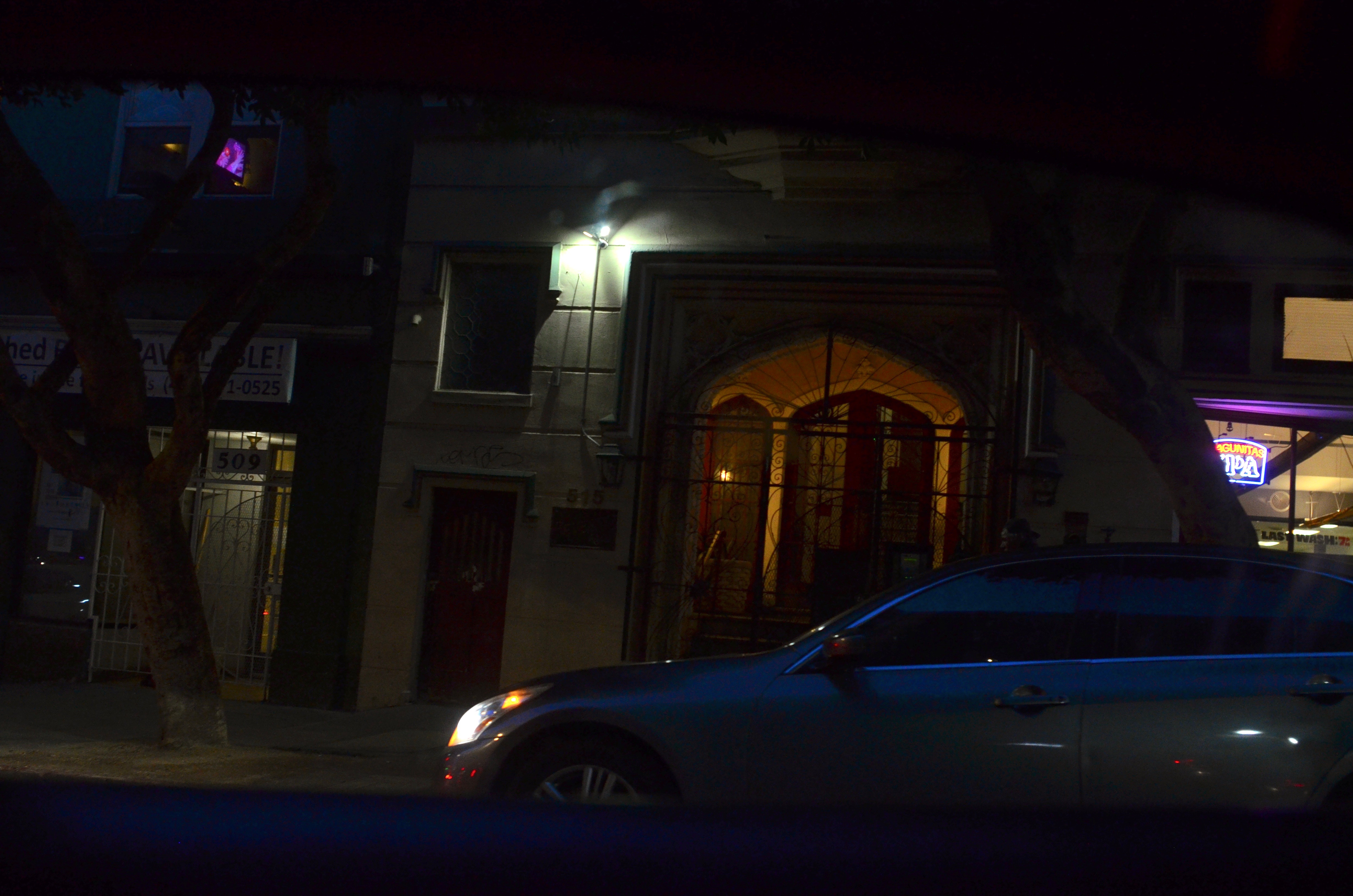
Stolen moments can be sweetest. Or just dark and murky.
Think for a moment about how little I have to say about the conditions of this kind of shoot. The driver is taking me through neighborhoods I often know little about, so I can’t anticipate or plan. The speed of the vehicle, the smoothness of the ride, whether the “good stuff” is to the left or right of the car, and, certainly, when I’m about to behold anything with any potential all guarantee a kind of randomness. There are no warnings, no forecasts. Add to this that I will probably be shooting at full manual, meaning that, in addition to reacting in the moment to my subject and shooting conditions, I’m also throwing hundreds of frame-to-frame calculations about how to capture anything of value into the equation.
Not surprisingly, my yield is often 90% garbage, something that is also great for maintaining a sense of humility. However, the images that do work would never have been made at all had I not placed my precious precision in jeopardy. Thinking back to when I started, I, like many young photographers, disliked most of my pictures because there was always something I hadn’t understood, hadn’t planned for, didn’t yet know how to do. The paradox of this kind of machine-based expression is that you have to learn all the rules and then decide which ones you have no interest in following going forward. I often suspect that many younger shooters actually begin their careers at the opposite end of that continuum, starting at “what the hell” and eventually growing into more formalized technique. Doesn’t really matter. The important thing to remember is that both control and chaos can be useful, but they can both be imposters as well. A picture isn’t guaranteed to be wonderful because you cared and planned “enough”, and it certainly isn’t fated to be brilliant just because you cared so little. All roads don’t lead to Rome, but all roads also don’t lead away from it. From a window with shaky hands and a lousy Uber driver, or on solid, tripod-secure ground, you can be both the hero or the goat, given what’s happening between your ears.
STORM WITHIN A SURGE
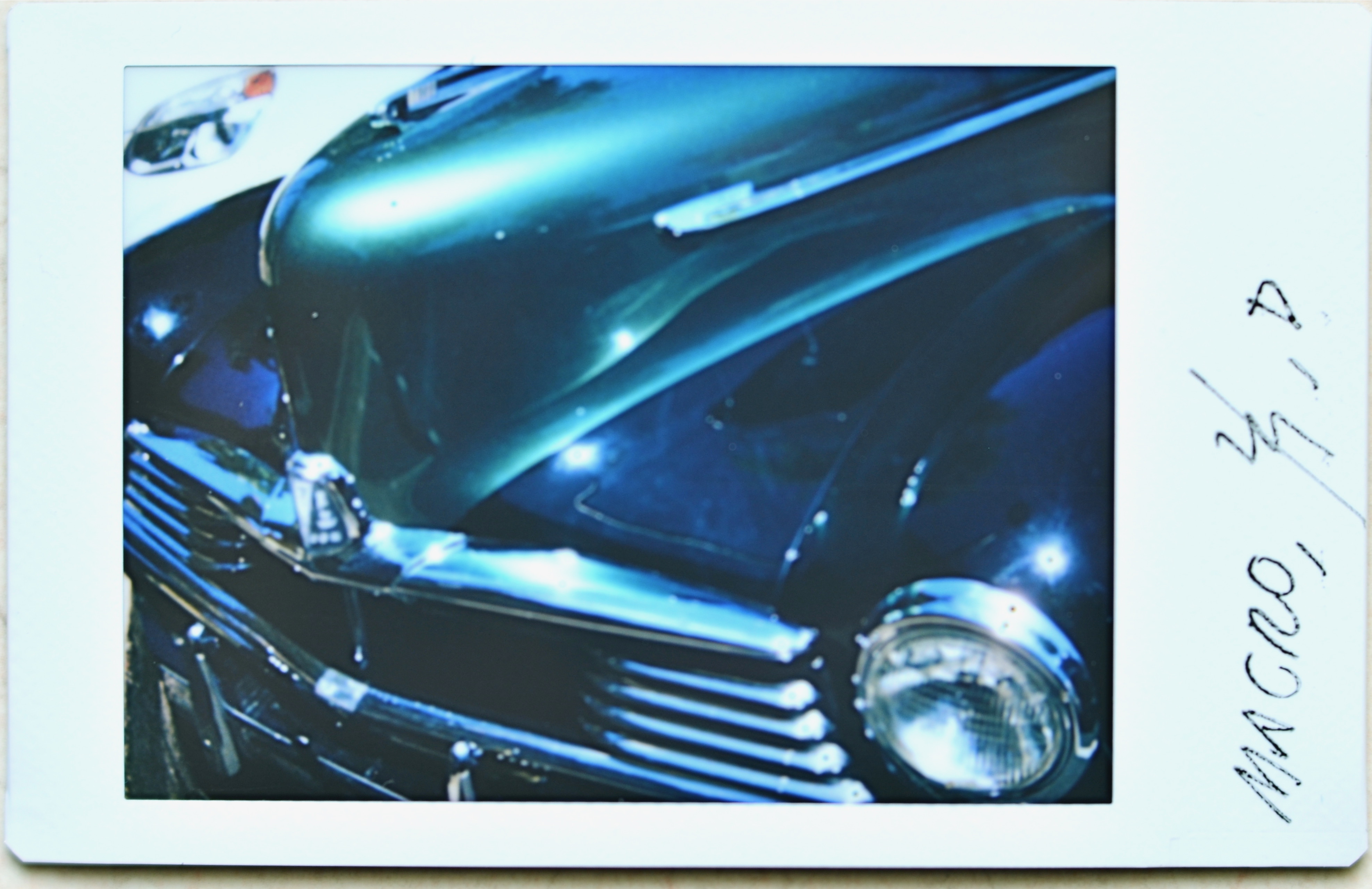
Fuji’s Instax Mini is better film than I-type Polaroid Originals film. But not by much.
By MICHAEL PERKINS
THE RECENT RESURGENCE OF INSTANT CAMERAS AND FILM IS NOT A REVOLUTION: it’s more like a symptom. I mean, eventually everything in the history of photography is a symptom of something larger in human development, innit? One year it’s a certain hot piece of gear, another it’s a trend in technique. The medium is a barometer of sorts on who we are and what we value. And now, for a while (again), it’s the stage for a kind of return to an imagined wonderful yesteryear.
It’s not hard to see how the youngest generation of shooters (the biggest demographic chunk of new instant pix users) has embraced a revisitation of the golden age of Polaroid. Making generally flawless images by the zillions in the digital age has, for some, sparked the question is any of this stuff designed to last? Are any of the thousands of pictures you squeezed off with your phone “keepers” as to memory, emotional resonance, uniqueness? And can an analog picture designed to be an unrepeatable original, tangibly printed out in the hand, promote the production of photos that are more special, more warmly personal? In short, is Polaroid Originals film (or Fuji/Instax film, for that matter) the next vinyl LP?
Scan through the most ecstatic raves about the instant photography experience and you’ll see lots of references to emotion, shared fun, even a kind of nostalgic pang for pictures that are, well, as crappy as most Polaroids were before the original company shuttered (sorry) in 2001. In fact, many of the most enthusiastic supporters of instanting readily admit to the technical clunkiness of their favorite cameras and the so-lousy-it’s-cool aesthetic of the prints, as if making technically inferior pictures is some badge of either spontaneity or authenticity. It should be noted that both the revival of plastic, Soviet-era toy cameras by the Lomography crowd a few years back and the re-emergence of Polaroid were spearheaded by European art school hipsters, both espousing how “real” random or uneven results are, as opposed to the bloodless precision of digital imaging. Here, however, as I see it, are the real constants of both the revived Polaroid brand and its (slightly) superior cousins at Fuji /Instax:
Most everybody’s instant film renders colors horribly.
Films formats like Instax mini (waay smaller than Polaroid) are virtually useless for complex compositions: the images are just too teeny.
All instant film is too damned expensive, making some prints cost out at $1.00 or more apiece.
Polaroid Originals (the new guardians of Polaroid’s old intellectual properties) brought back the emotional sensation of instant pix, but all of its problems as well…including crummy resolution, low contrast, and meh optics.
And, most importantly, there are, at this writing, almost no mid-line price instant cameras that afford a broad array of hands-on settings. This means almost no control at the low end (less than $75) and exorbitant prices on the high-end (over $700 in many cases). It also means you can either take cheap/bad pictures with no creative override whatsoever or sink a fortune into a camera with a huge learning curve that still may pump out technically inferior pictures. That cost a lot.
**********************************************
Certainly the “cool” value of instants is an emotional by-product of the digital age. Unlike the thousands of images residing on your phone, many of which may never be seen or shared even hours after they’re created, you can physically hold and pass around a Polaroid-esque print. And there may even be an ancillary benefit for serious photographers as well: since your resources are limited and expensive, you will likely spend more time planning shots, editing on the fly, even rejecting bad ideas before they’re even committed to film. Or, you could be chosen the winner on The Bachelor, in which the sky’s the limit. In a way, instants impose the same restraint on a shooter that all film does, the same thing that happens to digital shooters that are ten shots away from battery death, or stuck shooting everything with one mediocre lens on a given day. When you’re forced to slow down and plan, different pictures happen.
So…. Instant Photography, Part II, The Sequel presents a real challenge for its current avatars. Several standout models aside, Dr. Edwin Land, the inventor of Polaroid, did not bring great cameras to the masses, nor did he ever create a world-beating film or amazing optics. He did give a world bent on instant gratification a fun toy to serve that sensation up on demand (and at a premium price). But while his heirs may eventually succeed where he failed, generating both the tools and the medium for great photographic work, right now, instant photography feels like the first three Star Wars prequels. And if you think that’s a compliment, then I have a Jar-Jar Binks tee-shirt I’d like to sell you.
ALL MY LOVE’S IN VEIN
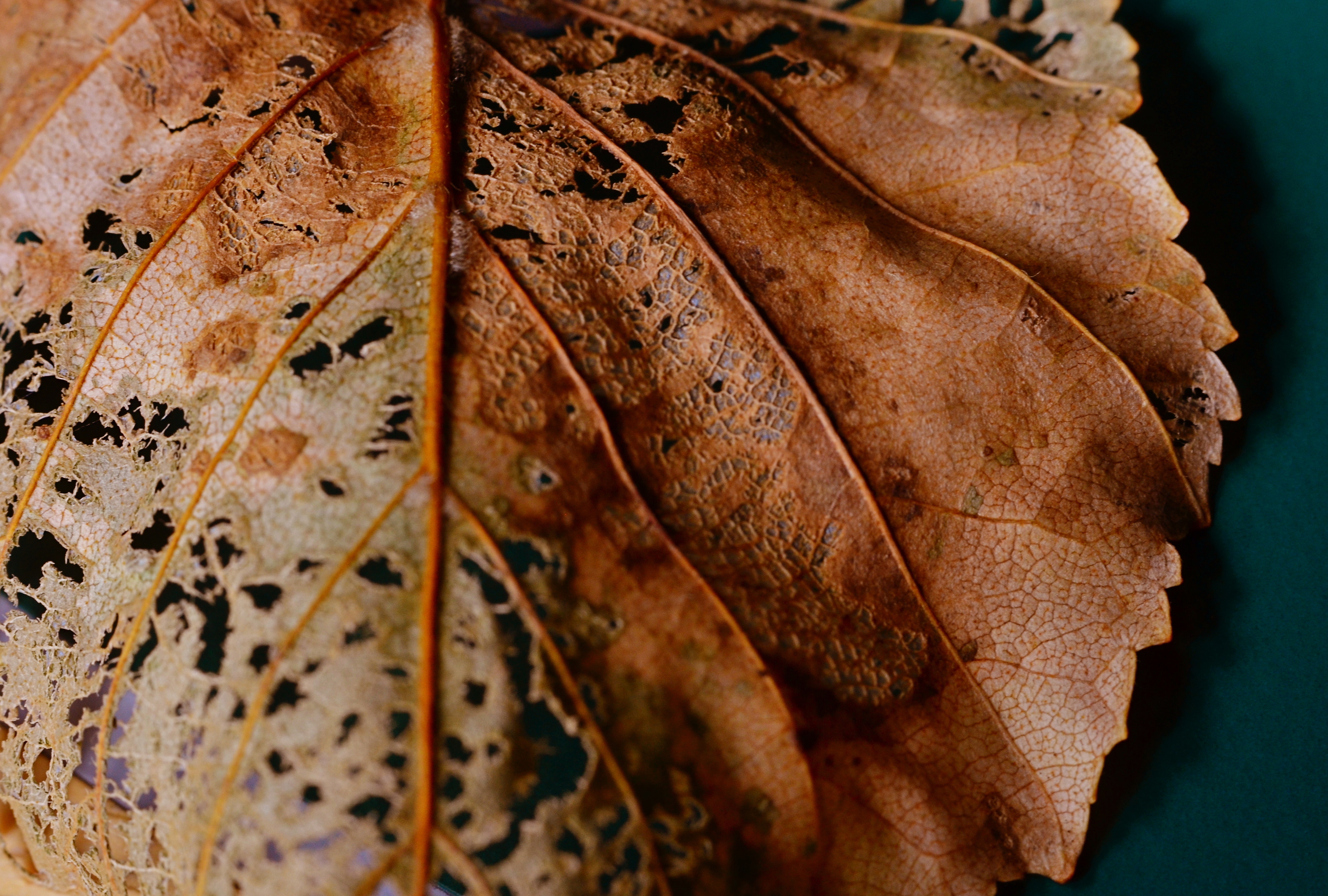
Phytomorphology 33
By MICHAEL PERKINS
SOONER OR LATER, EVERY PHOTOGRAPHER, sifting through subject matter that is largely invisible to passersby, will elicit the question, “what are you looking at?” I seldom have a good answer for such queries, which usually come when I’m crawling on the ground, squinting at the sky, or otherwise peering at, well, you name it. The reason I tend to reply “oh, nothing” is that the answer won’t make sense to anyone else anyway. I mean, why am I staring at random pile of roadside rocks? Why do I find a rusty gate hinge fascinating at the moment? It’s actually easier to be assumed by people in the area to be the town idiot, because, the faster people write me off as mad, the sooner I can get back to what I’m doing, which is trying to make a picture. The process is seldom logical and always appears odd from the outside.
Hell, it appears odd from the inside. Like, of my head.
In one such instance, people see me staring at leaves. Dead or dying leaves. Wet ones. Half rotted ones. Leaves that are placed first on this side, then on that one, then directly in light, then cloaked in shadow. My interest in them isn’t botanical, since I often know next to nothing of the objects I’m photographing (not scientifically, anyway), and so I can’t even invent some great story about why I have chosen one over the other. They are just abstract texture to me, texture that almost always varies wildly from leaf to leaf. If I see anything symbolic at all in them, I probably see the human hand, specifically the aging human hand. In recent years I’ve taken a number of images of my ninety-year-old father’s hands, which are, at this point in his life, almost as telling about his history as the lines on his face. In turn, I began to study my own hands, which are twenty-three years behind his, but well on the path toward “wizened” status. It was at some point that leaves, which sport their own age spots, wrinkles, scars and discolorations, starting to talk a bit louder to me.
Over the past several years, my Phytomorphology series (which merely takes its name from the term for the study of plants’ external structures) has sported no other captions instead of randomly assigned numbers, a signal that, even though the collected pictures might look like part of a larger study, they are no such thing. And while I could have called them “big leaf”, “green leaf” or “dead leaf”, the arcane fakery of pretending I’m on some kind of academic mission amuses me, so….Phytomorphology 23, Phytomorphology 67, and so forth. So now we return to the sight of me randomly scanning the ground (with no particular purpose in mind), an activity that makes outsiders ask what I’m looking at. Now, I could improvise a great little comment about the veinous textures or the play of light on irregular surfaces or any other number of statements that would make me sound more like a “real” photographer, but, in truth, the leaves are merely a whim, perhaps more so than any other subject I’ve ever shot. I keep coming back to a quote from comedian Lenny Bruce, who was asked by a reporter why he chose this phrase or that structure for a given monologue. His answer: I just do it, that’s all.
In photography, as in any other form of personal expression, sometimes a thing just is, and there’s no point in being fussy about the why of it. I’m not clever enough to have a formalized reason for everything I shoot. Sometimes you just know, and you go. One more anecdote to close out: a farmer is working with his herd of cattle near the edge of a country road. Some city slicker who’s fascinated by this slows his car, asking, “excuse me, are those Guernseys or Herefords?”. “Heck”, says the farmer, “I just call ’em moo-cows.”
Maybe that’s my answer, the next time someone catches me in a meadow looking at leaves. “Gee, I guess I got some wrong information. They told me there were moo-cows around here…”
UNREQUITED LOVE (OR LIKE)
By MICHAEL PERKINS
ANYONE WHO TAKES PHOTOGRAPHS TO BE LOVED already has a headful of problems, none of which can be adequately dealt with in this space. Social media has, inarguably, made many of us slaves to the Dreaded Like Monster, that faceless, shapeless judgy universe of people who render some kind of…what, verdict? on one’s humble images merely by twitching their thumbs. I’m already on record in these pages as saying that the need for such faux validation can make a slave out of an artist, and promote the very worst (or at least the most mediocre) in photography. With all that in mind, however, we are, still, human, and the online embrace or rejection of a given photo can sometimes make us wonder about our choices. Was the picture that good? That bad? And who, really, is the arbiter of those terms?
You can’t help it: you sometimes fall in love with one of your pictures, even though, in a public forum, you can’t seem to give it away, much less make people fall in love with it. Really, though, how can it be otherwise? No one knows your instincts or intentions better than you do, let alone appreciate what technically went into the making of your work. That said, no one besides yourself can measure exactly how near or far from the mark your final effort has turned out. Of course, the argument is often made that we, as artists, are too close to the process, that, having sweated over a picture from start to finish, we can’t possibly be objective……an argument to which my reply might prove unfit for a family newspaper.
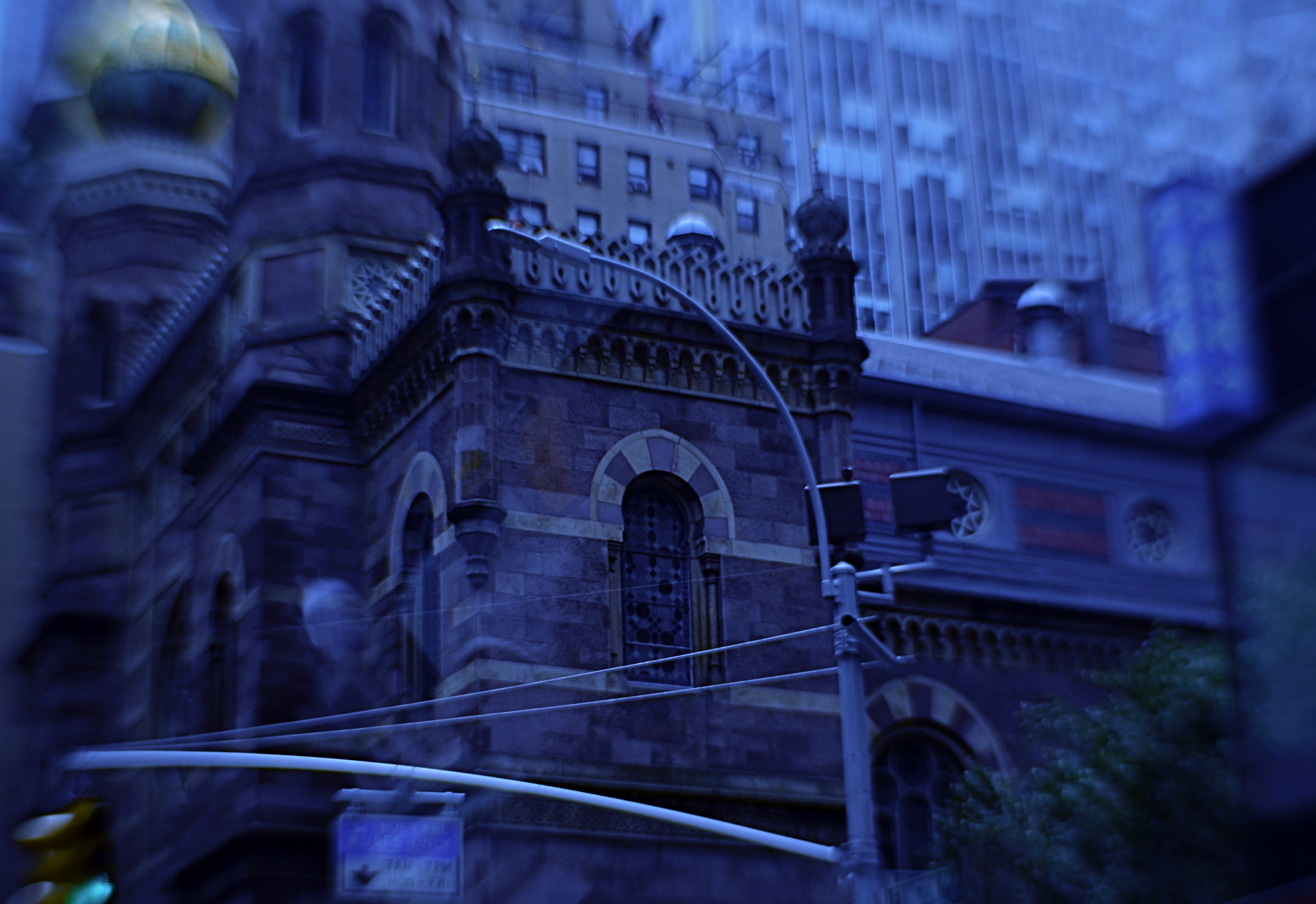
House Of The Holy, 2018
What are we saying? That the invisible mob, with a flick of its wrist and a stab of its “like” button knows more about your work than you do? Ridiculous. Now this is not to say that some people aren’t seriously flawed in their evaluation of their own stuff…with both a tendency to be too generous, and too critical. A truly balanced talent for self-editing is like a well-toned muscle: it only comes with uncompromising work and time. But there will always be those images that you feel you nailed, or at least came damned close on, but which do not connect with anyone but you. The temptation will be to react like a promoter trying to bring a product to market, which means regarding certain pictures as “failures”. However, this is a trap. Photography for the masses should be governed by popular taste if you’re doing product shots of cheese in order to up the sales of the Dairy Council. But when it’s a tool for selling your ideas, you can’t succumb to the temptation to make everything about gorgeous flowers and cute kitties. Creativity is not a commodity.
Full disclosure: the image seen here is one of my least “liked” images, if you’re measuring by the regular approval yardsticks of social media. I have many such photographs, pictures which are just plain invisible to others but, for a number of reasons, favorites with me. Given my intention for this photo, I can’t really apologize for it, since I don’t know any other honest way I could have made it, based on what I was going after. Notice, in that previous sentence, all the personal pronouns: if the picture doesn’t work for me, there is no way it can connect to anyone else. Art may sometimes be an inefficient delivery system for one’s visions, but it is never, ever served by a lie. Doing pictures so that they will please an audience is essentially fraudulent, and is really the only way your photographs can “fail”. If you believe an idea, chances are better that you will find someone who genuinely gets what you were after. Ignore those who echo the empty maxim that you have to “give the people what they want”. Figure out what you want, and either wait for others to follow, or get comfortable with standing alone. You’ll find that alone and honest is less lonely in the long run.
SIGNS OF WHAT TIMES?
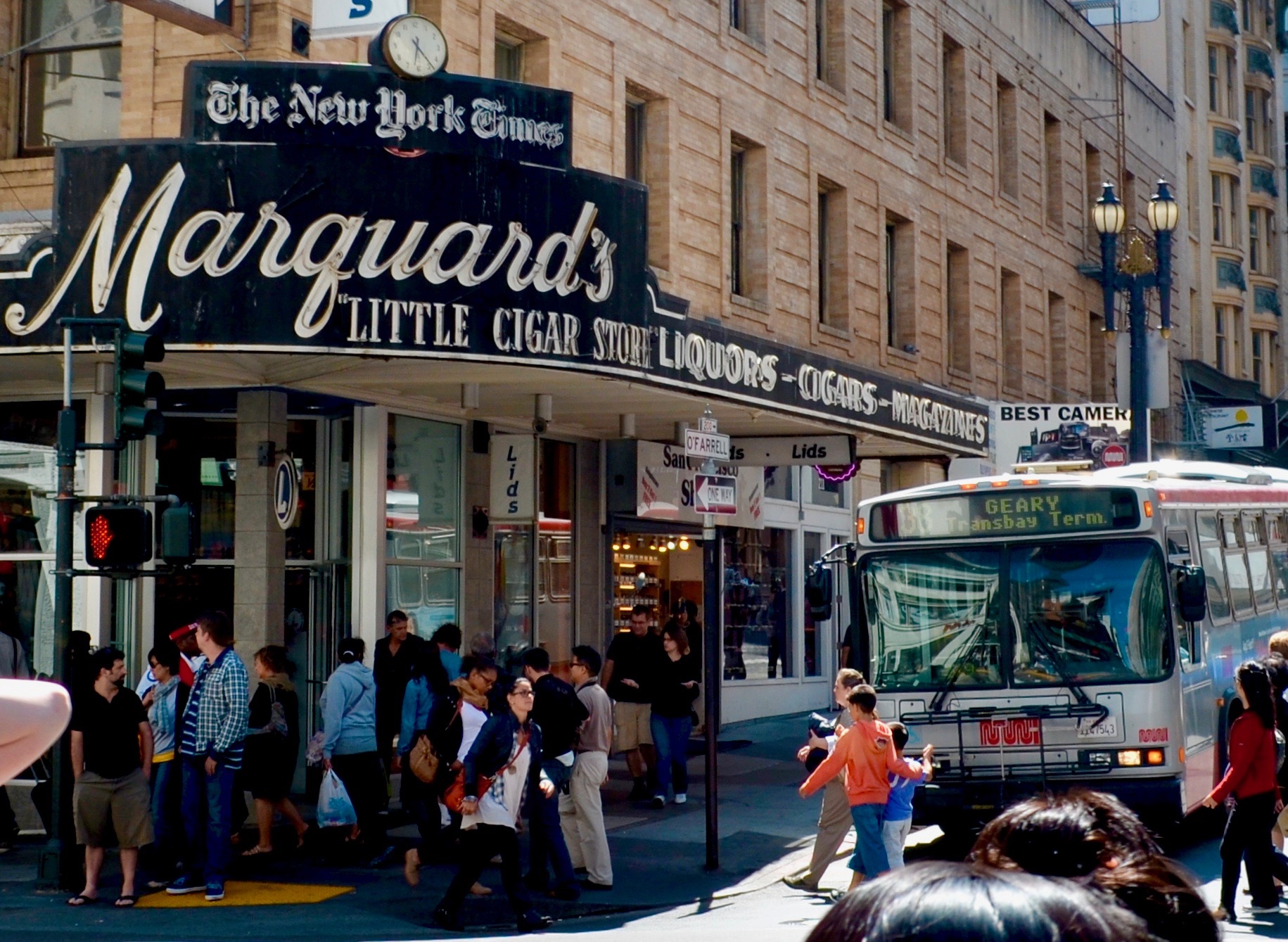
Close, but no cigars: the historic Marquard’s Smoke Shop sign in San Francisco has outlasted the shop itself.
By MICHAEL PERKINS
EVEN IN A WORLD BENT UPON WORSHIP OF THE NEW, not all of the past is erased all at once. The destruction of the old may indeed seem inevitable, but sometimes it is gradual, even incomplete. And when the inexorable crush of progress is even partially slowed, photography gains entry to the process of change, and can bear witness.
Neighborhoods come and go: businesses close: eras end. Still, the architectural and aesthetic footprint of fashions and trends can linger long after their original animus has faded. What’s left in view are signs, buildings, old faces in new places, strange survivors left alone on blighted blocks. On this site will soon stand…..
The old ways are debated by civic groups and historical societies, with the value of what we were weighed against the forward surge of new needs. What deserves to be preserved? What should already have been dismantled? Opportunities for the photographer are obvious. We make a record. We give testimony. And when things must depart, we prevent their being forgotten, at least not for lack of evidence.
For nearly 100 years, San Franciscans in the heart of the Bay City’s business and tourist energy stopped at Marquard’s Little Cigar Store at the corner of O’Farrell and Powell for their morning paper, a bottle of spirits, or a pack of smokes. The neon sign announcing these delights was erected sometime in the ’20’s and stayed until Danny Ortega, who first climbed a ladder behind the counter to wait on customers while in early grade school, finally threw in the towel in 2005. At that point, the demolition of the store’s wraparound entrance seemed like a foregone conclusion. But local preservationists, eager to preserve the look, if not the function, of the old neighborhood, managed to get landmark status for at least the sign. What would henceforth happen beneath it would be up to the new leaseholders….in this case, a hat store whose smaller “LIDS” announcement can be seen in the 2012 image seen here. Several more years later, the neon tubing visible in this shot was also removed, still leaving most of the gloriously garish Marquard’s overhang intact, including its very West Coast promotion of the New York Times. This kind of half-a-loaf solution is becoming far more common in American cities, many of which are laden with buildings that can continue to cosmetically charm or educate, even as their original functions are either obviated or re-tooled. Movie theatres become live performance venues. Department stores become law schools. And cigar stores become landmarks, reminders of who we were just a few scant minutes ago.
I always feel privileged to photograph places that have been even partially saved from the wrecking ball. First, because it’s as close as I’ll ever get to the original local energy that birthed them. But more importantly, because, without the testimony of photographs, yesterdays become obliterated at ever greater speeds. Certainly taking just a little more time to properly say our goodbyes takes work. But as with any bittersweet task, there’s a little smile accompanying the tears.


THE NEW LONELY
By MICHAEL PERKINS
IF, AS A PHOTOGRAPHER, you wish to depict humanity as your mind would arrange and design it, then a formal sitting or a studio setting would seem to be the place where you could exercise the most creative control. If, on the other hand, you wish to capture humanity in the act of just, well, being, then street work is probably better. This means taking what you get from people, behavior-wise, and noticing how those behaviors shift and evolve.
Street work is truly a barometer on what’s important to people, from the fashions they wear to the conveyances that take them around to what they prize most about daily life. And, in this part of the twenty-first century, that means how they interact with cellular phones.
The ubiquity and non-stop use of these devices is now simply a part of the visual vocabulary of street photography. It has become, in a very short space of time, nearly impossible to take a candid scene without recording someone on their phone….consulting it, catching up with it, charging it, using it for social connectivity. This has become a real challenge for me, since I believe that the best social pictures come from evidence of inter-action between people in real time, in real physical places. What I have to work with, instead, is a crop of one-sided interactions. There may be some human drama in such images (imagine outrage, surprise, delight playing out on phoners’ faces), but I frequently just chuck many of these frames from a street batch because I, personally, can’t extract any kind of story from them.
Of course, isolation as an urban condition is not new, nor is it even novel in the street shooter’s experience. Seventy-year old photos of commuters crammed on the subway, each mesmerized by his or her own personal newspaper, reflects just as much loneliness as a present-day scene of crowds all separately entranced by their mobiles. And yet the cellphone has produced a new kind of lonely, with greater numbers of us showing a more complete pulling away from each other. I find this sad, and, while that feeling, by itself, can also produce a good picture, I still, typically, put such images in my “pass” pile.
This one registered a little differently with me.
I really had no interest in the two people in the frame other than their ability to take up compositional space and account for a wide range of light contrast, something I always like to practice with. So I must be honest and report that, in the actual taking of the picture, their “story” was not on my radar. Moreover, given how many hundreds of other “phoners” I’ve accidentally recorded, usually concluding that there was “no picture there”, I think I can be forgiven a certain dismissiveness in snapping the photo. It was only later that the completeness of their isolation struck me. Not only are they facing away from the somewhat scenic, bright view out the window, but they are completely isolated from each other. As it happens, they are in a Manhattan museum which, even if you were to completely eschew the contents of the exhibits, offers any number of stunning skyline scenes out the windows, including several high-rise walk-out platforms. But none of that matters to this pair, any more than they matter to each other, or whether a live, nude performance of King Lear would matter, were it just inches away from them. Their place in the present world does not matter…..only their proximity to a wall outlet. This, to me, is beyond isolation. This is self-banishment, and, in this case, the image I accidentally snapped of the condition shows, at least in miniature, the crux of the dilemma: the fact that we have become one international village of strangers.
But if we completely ignore this phenomenon, of what are we to craft street images that are accurate testimony of our age? Are there deeper stories behind this tsunami of blank faces, stories that are worth pursuing? Or do we, as photographers, just turn away from those who have turned away?
I really wish I knew.
Share this:
August 28, 2019 | Categories: Americana, Available Light, celphone cameras | Tags: Commentary, editorial photography, Street Photography | Leave a comment