REDEMPTION, ONE FRAME AT A TIME
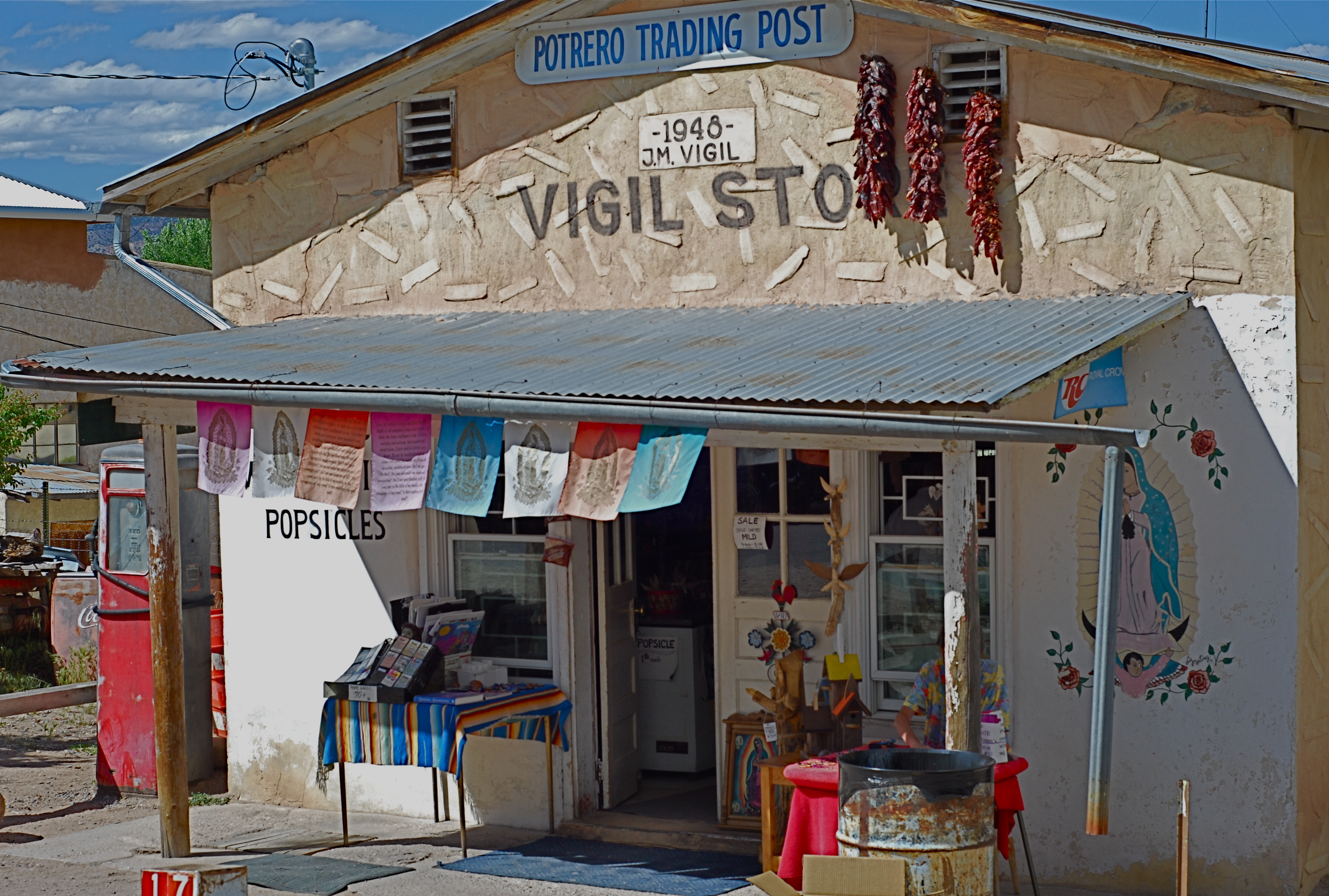
Vigil Variety, 2010. 1/320 sec., f/8, ISO 200, 50mm.
By MICHAEL PERKINS
AS YOU READ THIS, I AM AVAILING MYSELF OF ONE OF THE MOST SPLENDID BENEFITS KNOWN TO A PHOTOGRAPHER: THE DO-OVER. Ahhh. Feels good just saying it. Do-over; the artistic equivalent of doing penance, of setting things right. Returning to the locales of your earlier misbegotten attempts at a subject, with just the chance that you’ve learned a few new tricks since your last try.
Redemption.
Maybe it’s just that possibility which thrills….that, and the hope of exorcising those little demons which jab you with pitchforks every time you look at shots from bygone outings. In my case, I’m trying to banish the Ghosts Of New Mexico Trips Past. It’s my third trip to the regions between Alberquerque and Abiquiu, which includes Santa Fe. It’s an odd mix of terrain, economic strata, art, superstition, spectacular vistas and harsh romance. Anything you want to shoot is there to be seen, some of it invisible and needing to be brought froth for the naked eye.
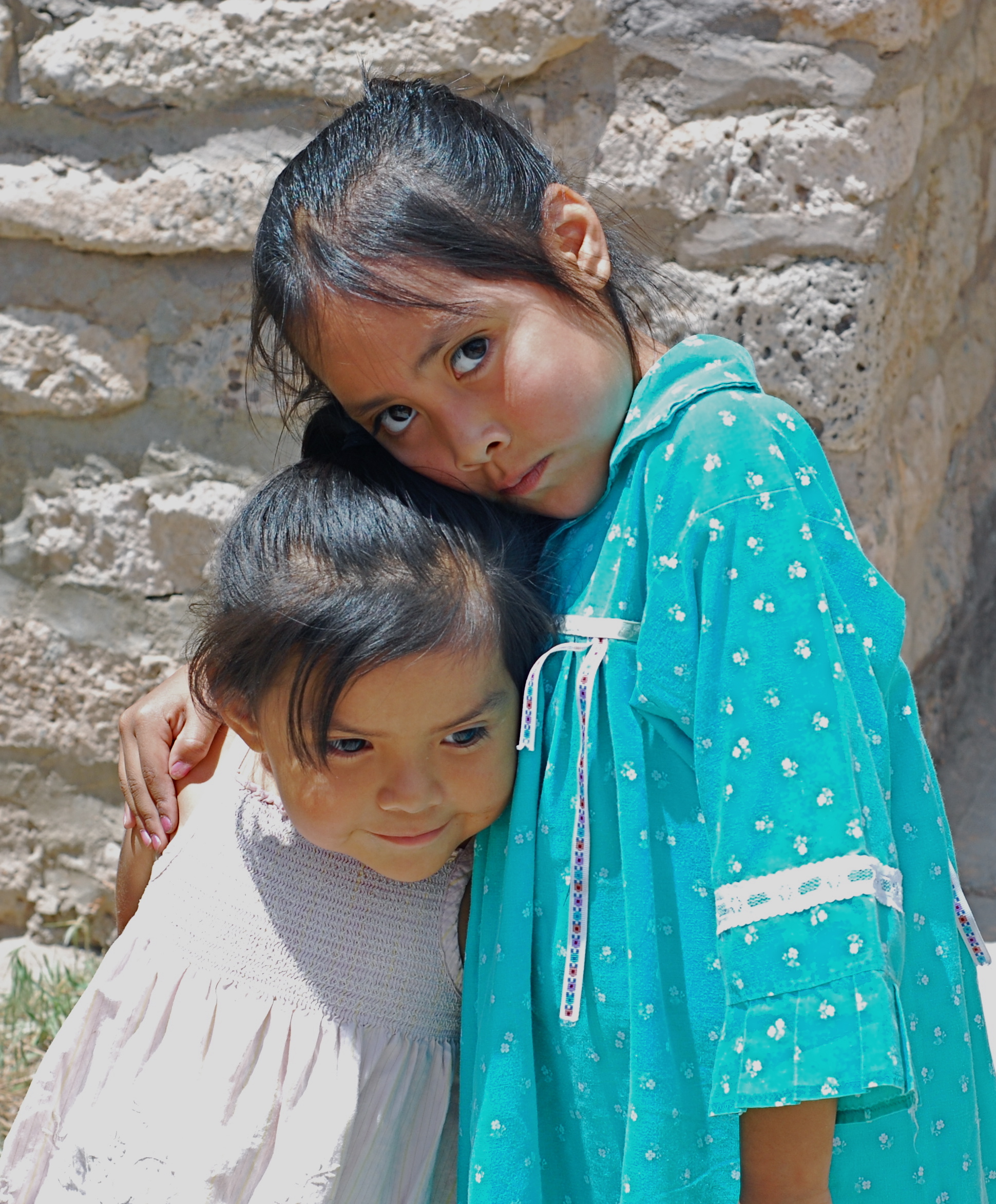
Sisters, 2010. 1/320 sec., f/8, ISO 200. 50mm.
It’s not hard to see why painter Georgia O’Keeffe, banishing herself from the concrete canyons of Manhattan, decided to stage her own do-over in this mysterious land in 1929. O’Keefe had been a photographer’s wife, and painters and photogs are often twin kids of different mothers, so I emotionally understand what she saw in New Mexico, but far more than I have been able to intellectually convey.
So far.
It’s been nearly a decade from my first visit to my third, so I now have a little backlog of what will and won’t work, maybe even an inkling of what I’m trying to show going forward. I didn’t come back from the first two trips empty-handed, but I didn’t come back with the motherlode, either. Since the only real barriers to most photo do-overs are geographic, i.e., the means to return to the scene of the crime, I am really blessed at being able to get another at-bat at this incredible place.
Two strikes, three balls.
I plan to swing for the fences.
Follow Michael Perkins on Twitter @MPnormaleye.
Related articles
- It seems to be my mission in life to wait on a dog (Georgia O’Keeffe) (upmostimpawtance.wordpress.com)
QUICK STUDY
Don’t think you’re paying me a compliment to say that this “looks like a painting”. Or a cabbage. Or a hammer. It’s a picture.
By MICHAEL PERKINS
THE INCREASINGLY COMMON USE OF THE WORD “PAINTERLY” AS A GENERIC COMMENT ON CERTAIN KINDS OF PHOTOGRAPHIC IMAGES has got me grinding my teeth, as it perpetuates the use of a term that is absolutely meaningless. Almost as meaningless as noting, or caring, at this late date, whether elements of painting are present in photos. This argument goes back so far that I feel compelled to provide the following “Cliff’s Notes” in order to compress 150 years of bickering into a compact format. Presenting:
A COMPLETE CHRONOLOGY OF PHOTOGRAPHIC “TRUTH”
a) We are just as good as painting.
b) No seriously, we are.
c) Who said that? We are so not like painting, which is old and tired.
d) Well, we’re a little bit like it, but we kinda feel weird about it.
e) Wow, I’d love to photograph that painting.
f) Man, I’d love to layer paint on that photograph.
g) Hey, I found a way to make my photographs look like paintings!
Enough already. We never praise a painting by saying it looks “Photo-ish”, so why make the opposite comment? What visual flavor makes any image fall on either side of an arbitrary line, and who the $%#&! cares? The only comment that could possibly matter is to remark that something is “a great picture”, but even that is superfluous. Does it speak? Did it work? Is there something there? Was anything amplified, simplified, defined, revealed in said picture?
This kind of semantic drift persists because, amazingly, some people don’t think photography is miraculous enough without being laden with little linguistic Christmas ornaments that display their acumen and intellect. These are the same people who fret that processing is “cheating” and that expensive cameras make better pictures than cheap ones, and it’s a disservice to any authentic discussion, like the fact that those who wield brushes and those who wield Nikons can both exalt, or denigrate, the human experience.
You don’t have to paint me a picture. You just have to tell me a story.
Related articles
- Blending painterly elements with photography (flickr.net)
THE GREAT RIDDLE
By MICHAEL PERKINS
IT’S FORTUNATE THAT NONE OF US HAS ANY IDEA WHAT APPEALS TO OUR VIEWERS, or else everything we do would revert to a dull formula. If it was possible to predict which of our creations would establish a connection with other hearts and minds, wouldn’t our human nature tempt us to churn out clumsy duplicates of that creation again and again? You see this at craft shows where “artists” hawk dozens of copies of the same image to anyone who passes by, customizing only the frames and enlargement sizes. The first version of the idea was “art”; the cannily repackaged remakes are merely marketing.
With this in mind, the act of putting photographs on the web via various sharing sites is often a puzzling process, since I have no way of knowing whether anything I regard as “successful” will total even one view, and since the pictures I regard as merely “all right” may resonate in a fashion that I never foresaw. Again, I have no control over any of this, which makes it both gratifying and, well, stupefying.
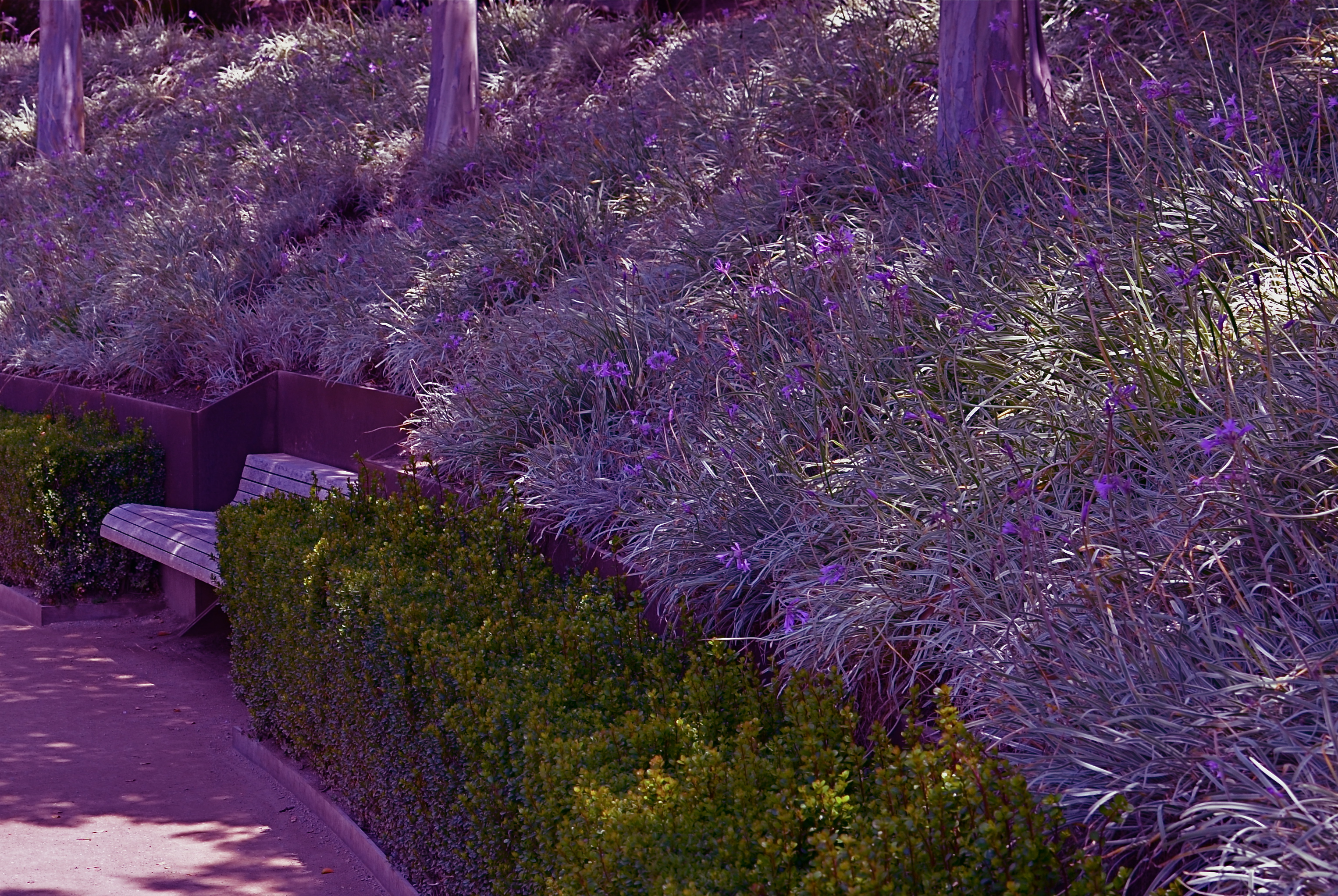
Dream Gardens, Los Angeles (2013). 1/250 sec., f/5.6, ISO 100, 35mm.
You’re looking at the runaway champ photo for total views in my entire Flickr photostream. To me, it’s a bit of whimsy at best, and, if I am totally truthful, an attempt at a partial “save” on what started out to be a rejected image. Backstory: the massive and visually busy central gardens at Los Angeles’ Getty art campus are wonderful to walk through, irresistible to shoot, and a nightmare to capture. If you do the cliché overhead “master shot” of the entire area from, say, two stories in the air, you get something which generally work. However, trying to get a sense of the densely landscaped details at ground level is a fool’s errand. This shot represents a kind of surrender, as it was an attempt to create a quiet composition along one of the more sparse sections of one footpath. Even so, what you’re seeing here is a paring-away of more than half the original frame. There was just too much visual information to work with.
The psychedelic rework on the color is yet another sign that I am not truly comfortable with what I am doing, but it at least represents an attempt to create an “otherness” with the image, to take it out of the normal world. This strategy gave me a picture I could live with, but hardly one I would point to with pride. The verdict from every one else? 5,000 % more eye traffic than the next most popular picture I’ve ever posted on the web, and no sign of slowing. And yet, I know that if I intentionally take another picture like this, it won’t become part of a “series” or a “school of thought”, merely me trying to cash in on a great riddle.
We use our photography to make a case for our various visions to an unknown jury, but, in most cases, we sort of “get” what worked about a picture. But when mysteries like these occur, we can merely
a) be grateful
b) say goodnight, Gracie.
I am reminded about an old bit where Billy Crystal “imitated” famous people by cutting out the mouths of big posters of various icons, then sticking his own lips where theirs should be and “speaking” for them. I fell on the floor as he took his place behind a huge image of Albert Einstein, and in his best Catskills accent, kept repeating, “WHO KNEW? WHAT DID WE KNOW??”
What, indeed.
Follow Michael Perkins on Twitter @MPnormaleye.
PLEASE PLAY WITH YOUR FOOD

Verdant, 2013. 1/60 sec., f/5.6, ISO 500, 35mm.
By MICHAEL PERKINS
PHOTOGRAPHIC STILL-LIFES ARE THE POOR MAN’S PRACTICE LAB. All the necessary elements for self-taught imaging are plentiful, nearby, and generally cheap. As has been demonstrated perpetually across the history of photography, the subjects themselves are only of secondary importance. What’s being practiced are the twin arts of exposure and composition, so it doesn’t matter a pig whistle whether you’re assembling a basket of oranges or throwing together a pile of old broken Barbie dolls. It’s not about depicting a thing so much as it is about finding new ways to see a thing.
That’s why an entire class of shooters can cluster around the same randomly chosen subject and produce vastly different viewing experiences. And why one of the most commonly “seen” things in our world, for example, food, can become so intriguingly alien when subjected to the photographer’s eye.
Shooting food for still-life purposes provides remarkably different results from the professional shots taken to illustrate articles and cookbooks. “Recipe” shots are really a way of documenting what your cooking result should resemble. But other still-life shots with food quickly become a quest to show something as no one else has ever shown it. It’s not a record of a cabbage; it’s a record of what you thought about a cabbage on a given day.
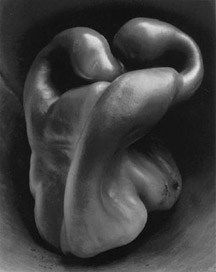
Edward Weston, Pepper # 30 (1930).
Many books over the years have re-printed Edward Weston’s famous black-and-white shots of peppers, in which some people “saw” things ranging from mountain terrain to abstract nudes. These remarkable shots are famous not for what they show, but for what they make it possible to see. Food’s various signature textures, under the photographer’s hand, suggest an infinite number of mental associations, once you visually unchain the source materials from the most common perception of their features.
As the head chef around my house, I often pick certain cooking days where I will factor in extra time, beyond what it takes to actually prepare whatever meal I’m planning. That additional time is reserved so I can throw food elements that interest me into patterns…..on plates, towels, counters, whatever, in an effort to answer the eternal photog question, is this anything? If it is, I snap it. If it’s not, I eat it (destroying the evidence, as it were).
Either way, I get what I call “seeing practice”, and, someday, when a rutabaga starts to look like a ballerina, I might be ready. Or maybe I should just lie down until the feeling passes.
Follow Michael Perkins on Twitter @MPnormaleye.
Related articles
- Is Food Art: Notes from a Food Photographer (okramagazine.org)
GOING OFF-MENU
By MICHAEL PERKINS
I AM ALREADY ON RECORD AS A CHAMPION OF THE ODD, THE OFF-KILTER, AND THE JOYFULLY STRANGE IN AMERICAN RETAIL. As a photographer, I often weep over the endangered status of the individual entrepreneur, the shopkeeper who strikes out in search of a culturally different vibe, some visual antidote to the tsunami of national chains and marts that threatens to drown out our national soul. Sameness and uniformity is a menace to society and a buzzkill of biblical proportions for photography. Art, like nature, abhors a vacuum.
It is, of course, possible that someone might have created a deathless masterpiece of image-making using a Denny’s or a Kohl’s as a subject, and, if so, I would be ecstatic to see the results, but I feel that the photog’s eye is more immediately rewarded by the freak start-ups, the stubborn outliers in retail, and nowhere is this in better evidence than in eateries. Restaurants are like big sleeves for their creators to wear their hearts on.
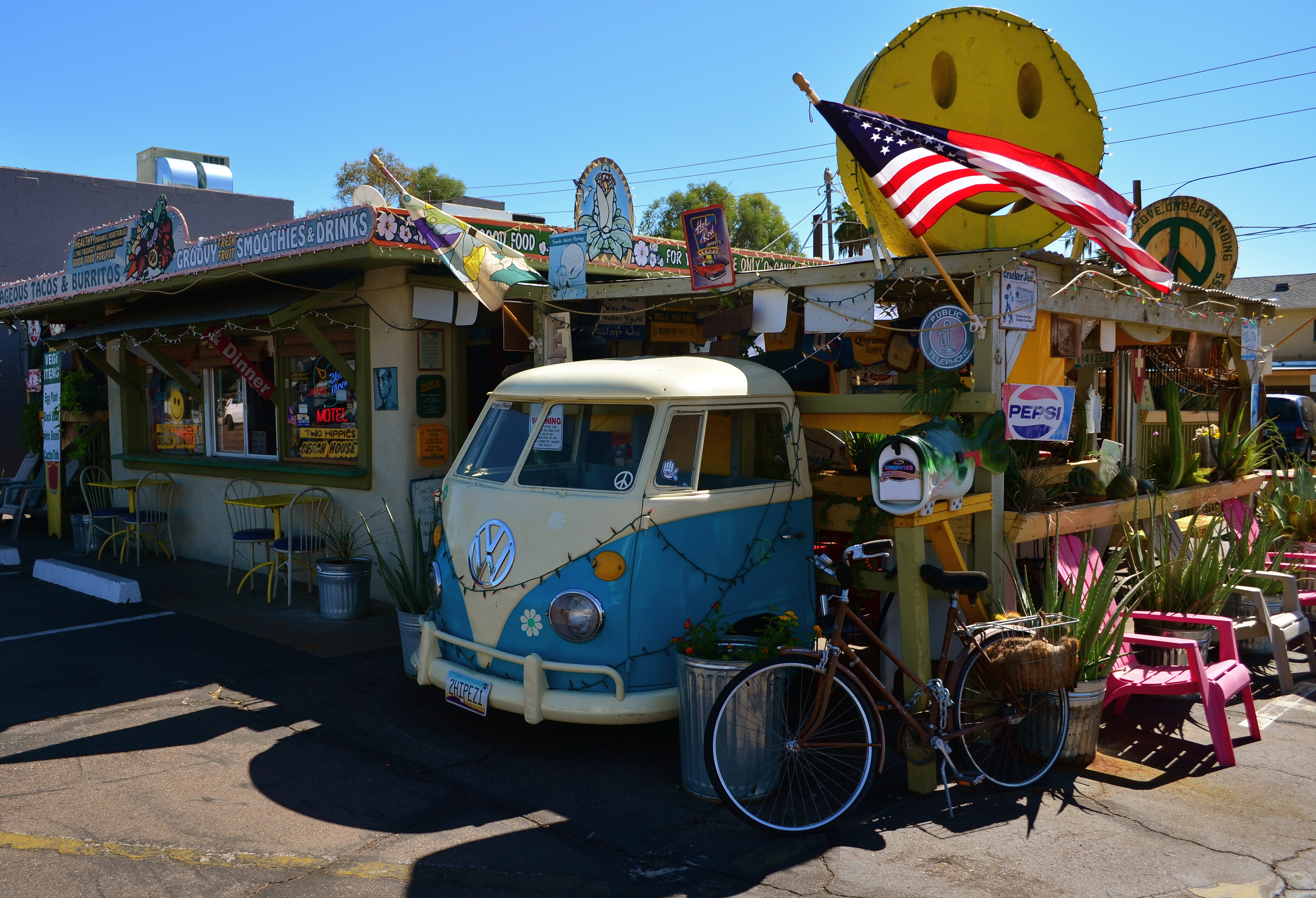
The surf is seldom “up” at the Two Hippies’ Beach House Restaurant in Phoenix, AZ, but the joint is “awash” in mood. 1/640 sec., f/5.6, ISO 100, 18mm.
That’s why this divinely misfit toy of a diner, which was hidden in plain sight on one of the main drags in central Phoenix, has given me such a smile lately. I have never eaten at the swelegant Two Hippies’ Beach House, but I have visually feasted on its unabashed quirkiness. And if the grub is half as interesting as the layout, it must be the taste equivalent of the Summer of Love.
Even if the food’s lousy, well, everyone still gets a B+ anyway for hooking whoever is induced to walk in the door.
On the day I shot this, the midday sun was (and is) harsh, given that it’s, duh, Arizona, so I was tempted to use post-processing to even out the rather wide-ranging contrast. Finally, though, I decided to show the place just as I discovered it. Amping up the colors or textures would have been overkill, as the joint’s pallette of colors is already cranked up to 11, so I left it alone. I did shoot as wide as I could to get most of the layout in a single frame, but other than that, the image is pretty much hands-off.
Whatever my own limited skill in capturing the restaurant, I thank the photo gods for, as the old blues song goes, “sending me someone to love.”
Trippy, man.
Follow Michael Perkins on Twitter @MPnormaleye.
TAKE WHAT YOU NEED AND LEAVE THE REST
By MICHAEL PERKINS
LOOKING OVER MY LIFETIME “FAIL” PHOTOGRAPHS, FROM EARLIEST TO LATEST, it’s pretty easy to make a short list of the three main problems with nearly all of them, to wit:
Too Busy.
Too Much Stuff Going On.
I Don’t Know Where I’m Supposed To Be Looking.
Okay, you got me. It’s the same problem re-worded three ways. And that’s the point, not only with my snafus but with nearly other picture that fails to connect with anybody, anywhere. As salesmen do, photographers are always “asking for the order”, or, in this case, the attention of the viewer. Often we can’t be there when our most earnest work is seen by others. If the images don’t effectively say, this is the point of the picture, then we haven’t closed the deal.
It’s not simple, but, yeah, it is that simple.
If we don’t properly direct people to the main focus of our story, then we leave our audiences wandering in the woods, looking for a way out. Is it this path? Or this one?
In our present era, where it’s possible to properly expose nearly everything in the frame, we sometimes lose a connection to the darkness, as a way to cloak the unimportant, to minimize distraction, to force the view into a succinct part of the image. Nothing says don’t look here like a big patch of black, and if we spend too much time trying to show everything in full illumination, we could be throwing away our simplest and best prop.
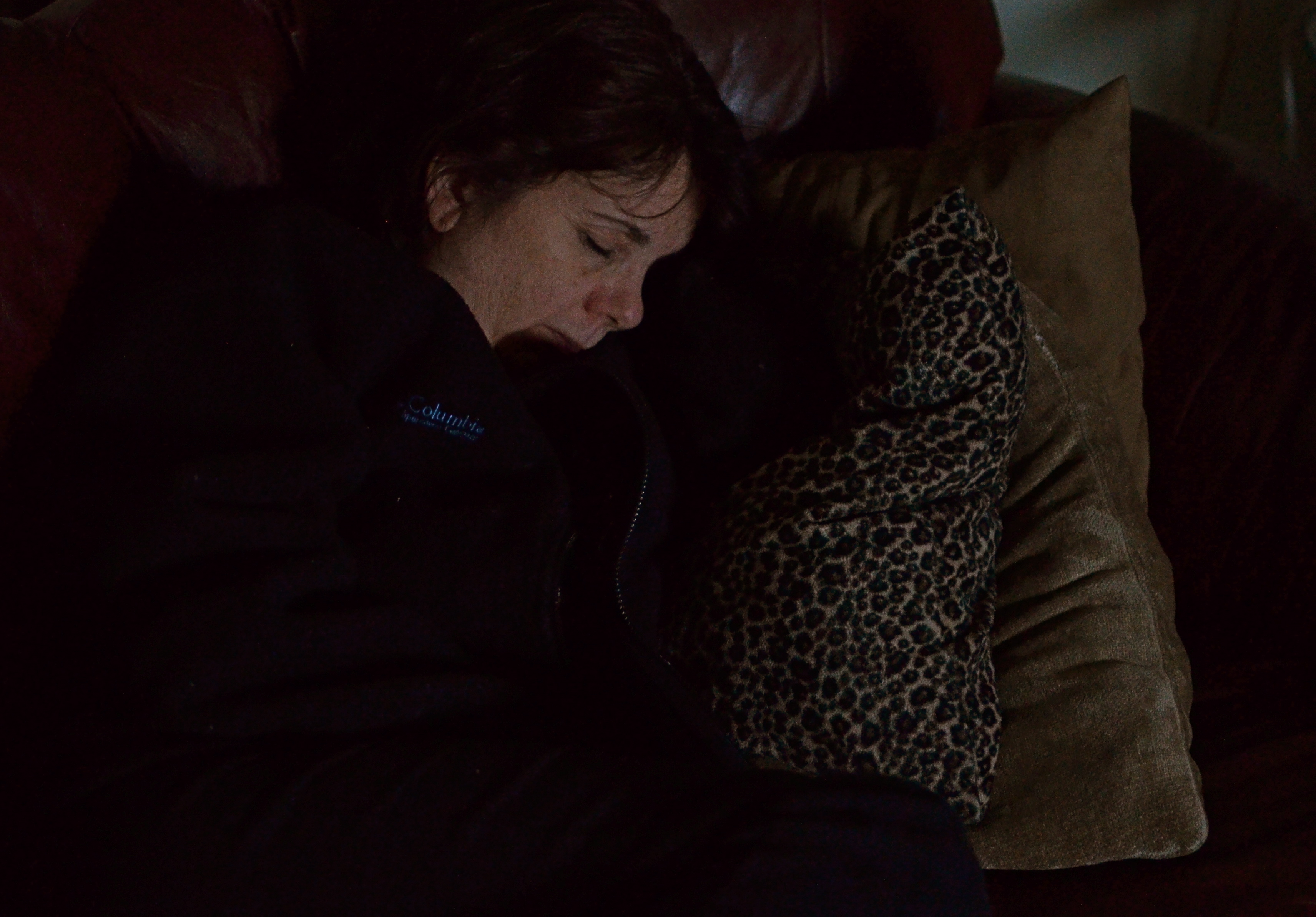
Let sleeping wives lie. Work the darkness like any other tool. 1/40 sec., f/1.8, ISO 1250 (the edge of pain), 35mm.
In the above picture of my beautiful Marian, I had one simple mission, really. Show that soft sleeping face. A little texture from the nearby pillows works all right, but I’m just going to waste time and spontaneity rigging up a tripod to expose long enough to show extra detail in the chair she’s on, her sweatshirt, or any other surrounding stuff, and for what? Main point to consider: she’s sleeping, and (trust me) sleeping lightly, so one extra click might be just enough to end her catnap (hint: reject this option). Other point: taking extra trial-and-error shots just to show other elements in the room will give nothing to the picture. Make it a snapshot, jack up the ISO enough to get her face, and live with the extra digital noise. Click and done.
For better or worse.
Composition-wise, that’s often the choice. If you can’t make it better, for #%$&!’s sake don’t make it worse.
Follow Michael Perkins on Twitter @MPnormaleye.
THE INVISIBLE ARMIES
By MICHAEL PERKINS
WE LEARN, OVER A LIFETIME, NOT TO SEE THEM. The sweepers, the washers, those who clean up, clear away and reassemble our daily environment. They are hidden in plain sight, these silent crews of keepers and caretakers. They are the reason there are towels in the restrooms, liners in the trash bins, forks on the table. A silent machine of constantly moving gears readies our way in so many unseen ways each days, tended by the invisible armies of our cities.
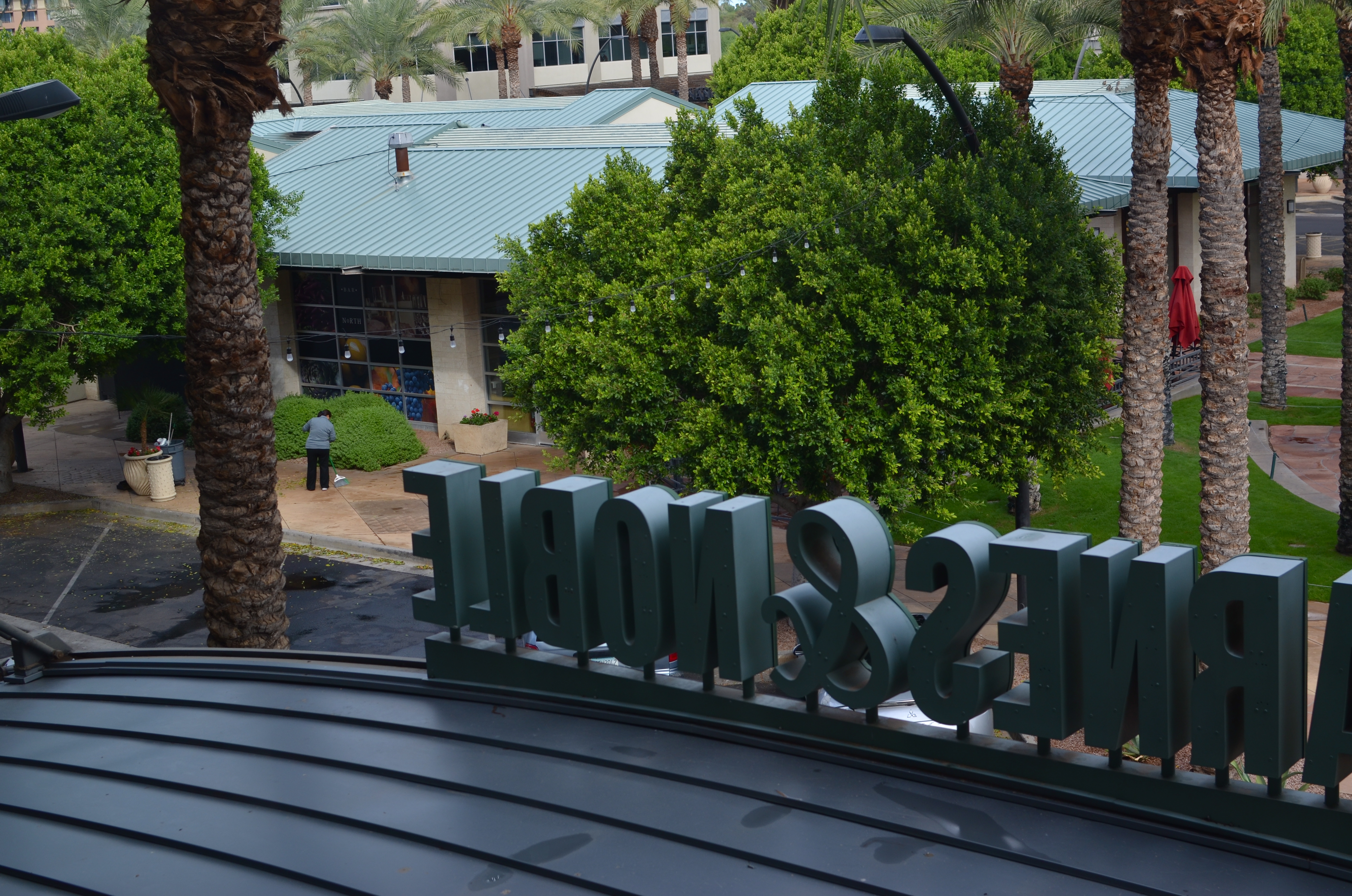
Morning Rounds. 1/125 sec., f/5.6, ISO 100, 35mm.
They start early, finish late, glide by silently, and move on to the next task. Busy as we are, once we first hold a camera, they are stories dying to be revealed, wondered at, worried over.
The unnamed lady at the broom in the above image came into my view just because I had chosen, at a particular moment, to cross the window side of the second floor of a bookstore. Framed naturally between a giant rooftop sign and a tree, she was served up as a ready-made subject for me, and would have been completely unseen had I not visited the store at the very moment it opened.
The invisible armies roll in and out, like some silent tide, and their work is usually done before we crank up our day. Their world and ours can dovetail briefly, but in large part we occupy difference spaces in time. I love catching people in the act of prepping the morning.
The best images are the ones you dig for a bit.
Follow Michael Perkins on Twitter @MPnormaleye.
BLACKTOP GYPSIES
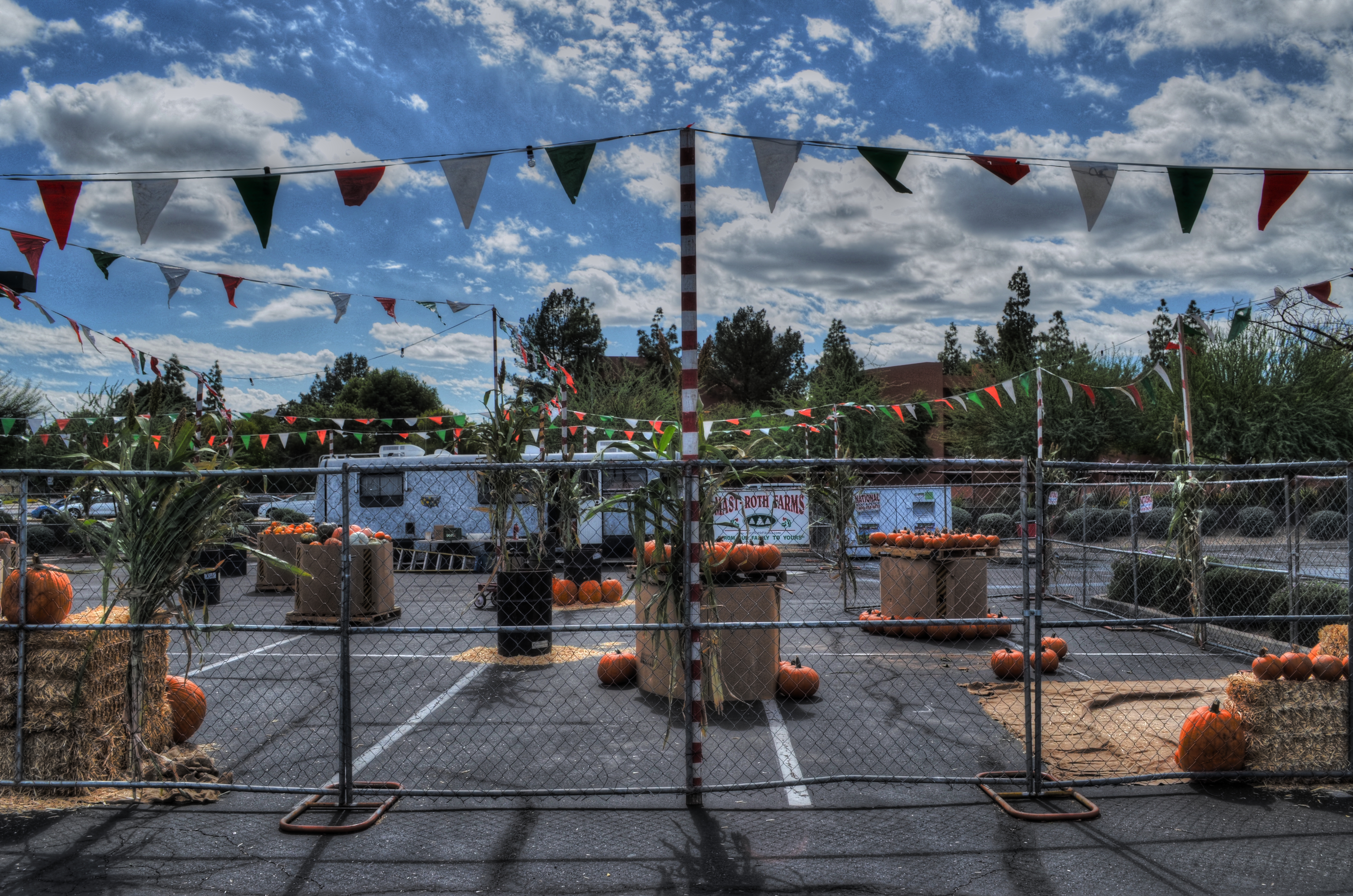
Low overhead? Hey, we invented it. A parking lot, some pumpkins, and opportunity. For the merchants and you.
By MICHAEL PERKINS
RETAIL CHAINS ARE STARVATION FOR A PHOTOGRAPHER, a barren field where nothing grows, at least visually. America used to be a place where, in our business doings, our petticoat showed a bit; a certain raw vitality showed through our saggy banners, our improvised displays, our homespun marketing. It’s no wonder that the photojournalists of the Great Depression or the choniclers of the Lower East Side of the early 1900’s made poetry out of our back-of-the-truck veggie stands, our horse-drawn pushcarts, our roadside tag sales. There was texture there. There was the real drama of struggle, and it was a pictorial gold mine.
Of course it’s not all gone, and we are not, uniformly, Wal-Mart Nation. Not yet.
As picture makers, we have so much more to work with looking at the human, the risky, the uncertain in our do-it-yourself capitalism. There are stories in it. There are real people on the front lines of the culture to watch and capture. It’s also a hell of a lot more fun than trying to find drama in the grand opening of, say, Kwikie Mart # 3425.
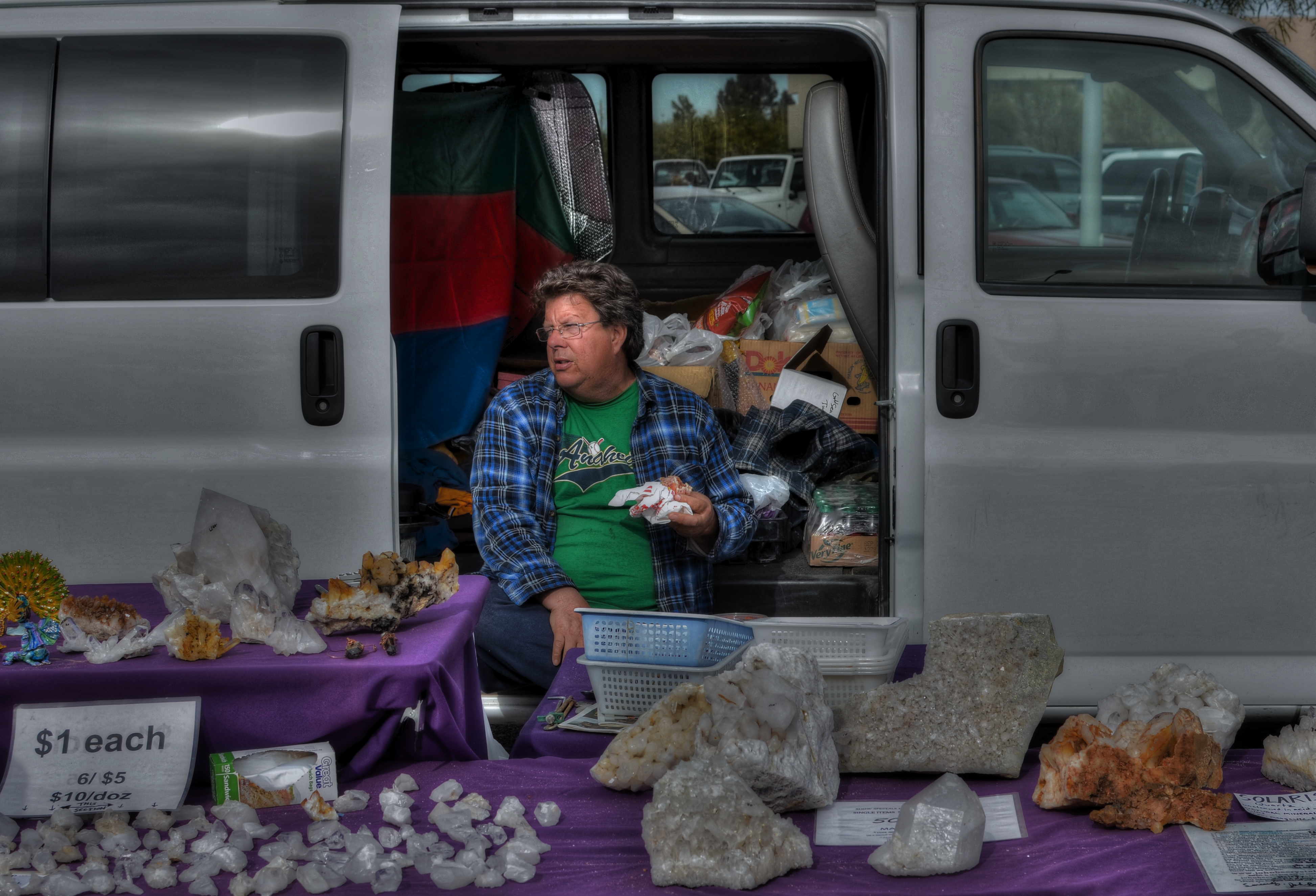
Look Around, See If You Like Anything, I’m Almost Done With My Lunch….
And picture opportunities, created by the blacktop gypsies of our time, are still setting up shop across the country…..six days in a Target parking lot to sell fireworks, four hours in a church driveway to hawk cakes and pies, three weeks in a vacant lot to peddle Christmas trees. And then there are the fairs, the craft shows, and the garage sales, those stubborn little machines of mercantile faith. You can’t not grab gold in these fields.
There may be a great epic just waiting to be shot inside a massive wholesale warehouse, but I prefer my drama smaller, and a little more on the human side. Show me a guy trying to make a buck against all odds and I’ll show you a picture.
Or make you one.
MAKING THE MIRACLES MUNDANE
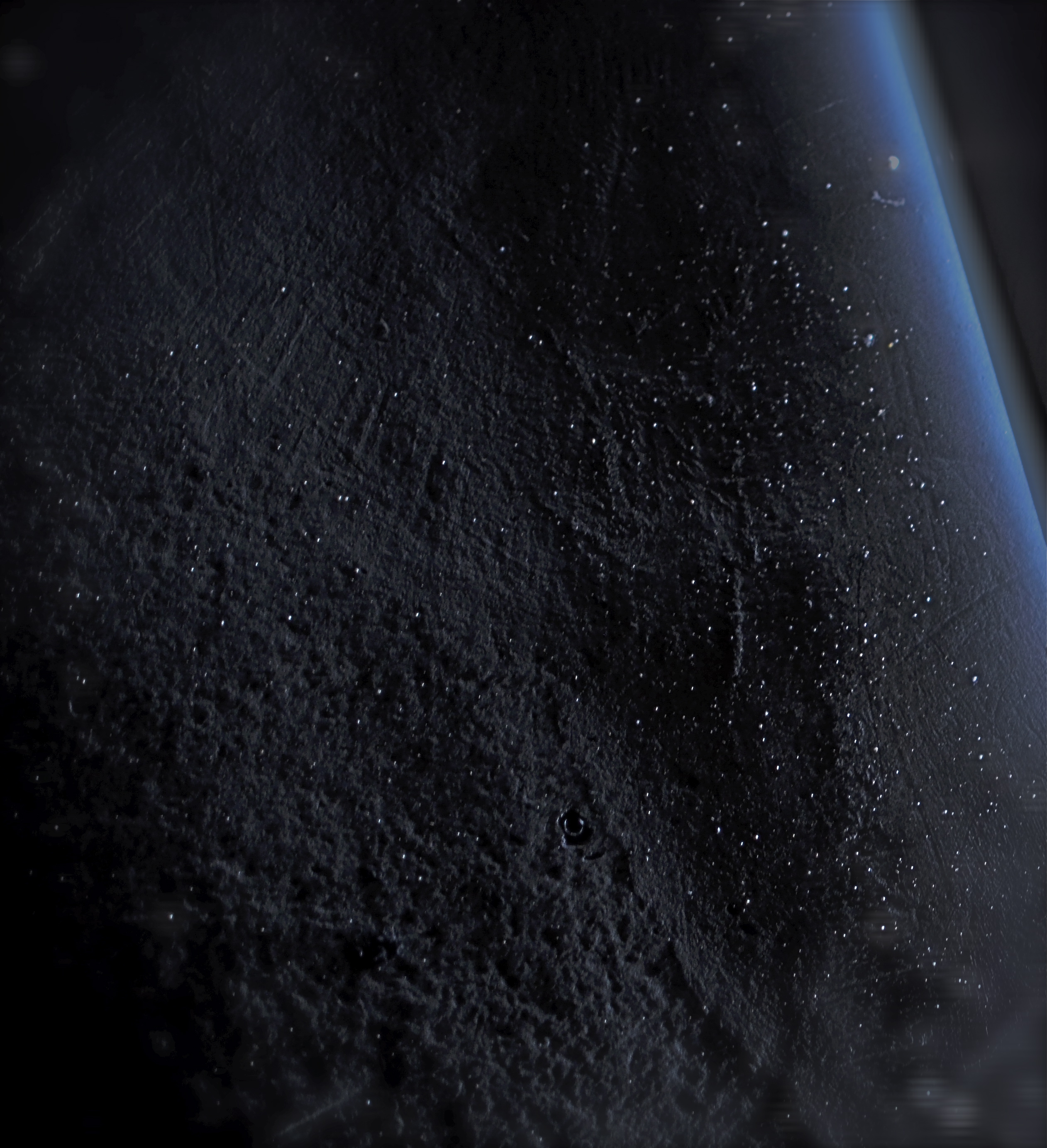
Connection outranks context.
By MICHAEL PERKINS
GIVEN OUR USUAL HUMAN PROPENSITY FOR USING PHOTOGRAPHY AS A LITERAL RECORDING MEDIUM, most of our pictures will require no explanation. They will be “about” something. They will look like an object or a person we have learned to expect. They will not be ambiguous.
The rest, however, will be mysteries…..big, uncertain, ill-defined, maddening, miraculous mysteries. Stemming either from their conception or their execution, they may not immediately tell anyone anything. They may ring no familiar bells. They may fail to resemble most of what has gone before. These shots are both our successes and failures, since they present a struggle for both our audiences and for ourselves. We desperately want to be understood, and so it follows that we also want our brainchildren to be understood as well. Understood…and embraced.
It cannot always be, and it should not always be.
No amount of explanatory captioning, “backstory” or rationalization can make clear what our images don’t. It sounds very ooky-spooky and pyramid- power to say it, but, chances are, if a picture worked for you, it will also work for someone else. Art is not science, and we can’t just replicate a set of coordinates and techniques and get a uniform result.
There is risk in making something wonderful….the risk of not managing to hit your mark. It isn’t fatal and it should not be feared. Artistic failure is the easiest of all failures to survive, albeit a painful kick in the ego. I’m not saying that there should never be captions or contextual remarks attached to any image. I’m saying that all the verbal gymnastics and alibis in the world won’t make a space ship out of a train wreck.
The above image is an example. If this picture does anything for you at all, believe me, my explanation of how it was created will not, repeat, not enhance your enjoyment of it one particle. Conversely, if what I tried is a swing and a miss, in your estimation, I will not be able to spin you a big enough tale to see magic where there is none. I like what I attempted in this picture, and I am surprisingly fond of what it almost became along the way. That said, I am perfectly fine with you shrugging your shoulders and moving on to the next item on the program.
Everything is not for everybody. So when someone sniffs around one of your photographs and asks (brace for it), “What’s that supposed to be?”, just smile.
And keep taking pictures.
Follow Michael Perkins on Twitter @MPnormaleye.
Related articles
- Weakness as Potential Strength (munchow.wordpress.com)
- Hidden Surprises in the Mundane (piconomy.wordpress.com)
ON THE ROAD TO FINDOUT
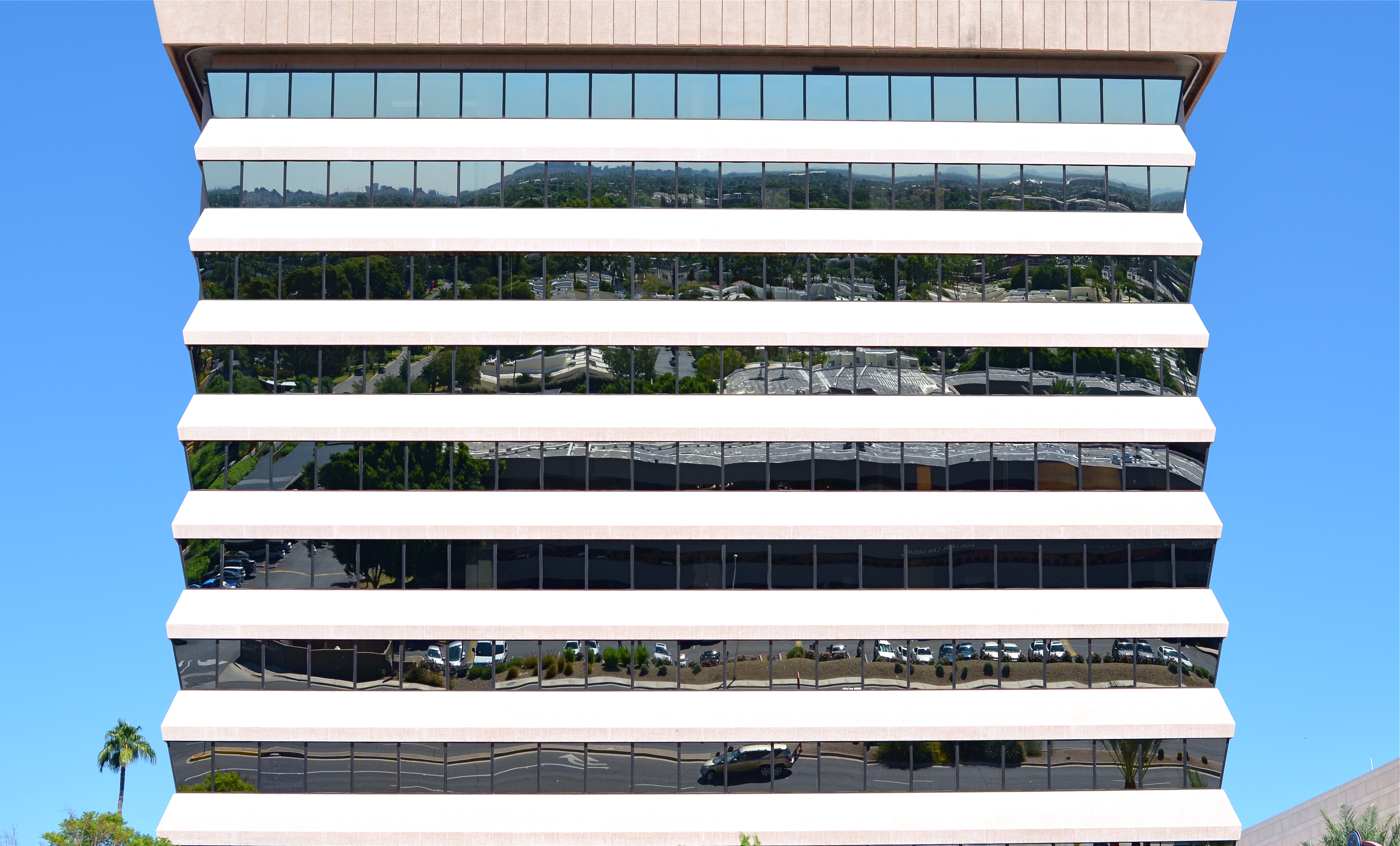
A box of mirrors: 1/500 sec., f/5.6, ISO 100, 35mm.
By MICHAEL PERKINS
LATELY I’VE TAKEN TO GRABBING LYRICS OR TITLES FROM POP SONGS TO SUM UP WHAT I WANT TO SAY IN A GIVEN POST, and apparently I haven’t yet kicked the habit. Like the searcher in Cat Stevens’ early ’70’s tune, I am sure that (a) I don’t really know where I’m going most of the time, and (b) the place I’m eventually going to will explain all, eventually. Pretty sunny outlook for a burned out old flower child, I’ll admit, but, especially in photography, the journey is the quest. What we encounter “on the road to findout” is worth the price of the trip.
That’s a fancy-pants way of saying that, frequently when I’m on a photo walkabout, I only think I know what I’m looking for. Sometimes I actually snag the object of the expedition, then find that it’s as disappointing as winning that cheap plush toy that looked so wonderful behind the carnival barker’s counter. Such a thing happened this week, when I drove five miles out of my way to revisit a building that had grabbed my attention several months prior. Short term result: mission accomplished…building located and shot. Long term result: what did I think that was going to be? Ugh.
I was walking off my mild disappointment, heading back to my car, and then the mundane act of stowing my camera forced me to rotate my gaze just far enough to see what the midday light was doing to the building across the street. It’s masses of glass looks rather flat and dull by morning, but, near noon, it becomes a slatted mirror, kind of a giant venetian blind, reflecting the entire street scene below and across from itself. The temporary light tilt transforms the place into a surreal display space for about thirty minutes a day, and, had I not been standing exactly where I was across the street at that moment, I would have missed it, and missed the building as a subject for the next, oh, 1,000 years.
Kurt Vonnegut had a dear friend from Europe who always parted from him by hoping that they would meet again in the future if the fates allowed. Only the idiom got crumpled a little in translation, coming out as “if the accident will”. Vonnegut loved that, and so do I.
On the road to findout, we may take wonderful pictures.
If the accident will.
Follow Michael Perkins on Twitter @MPnormaleye.
CUE THE CUMULUS
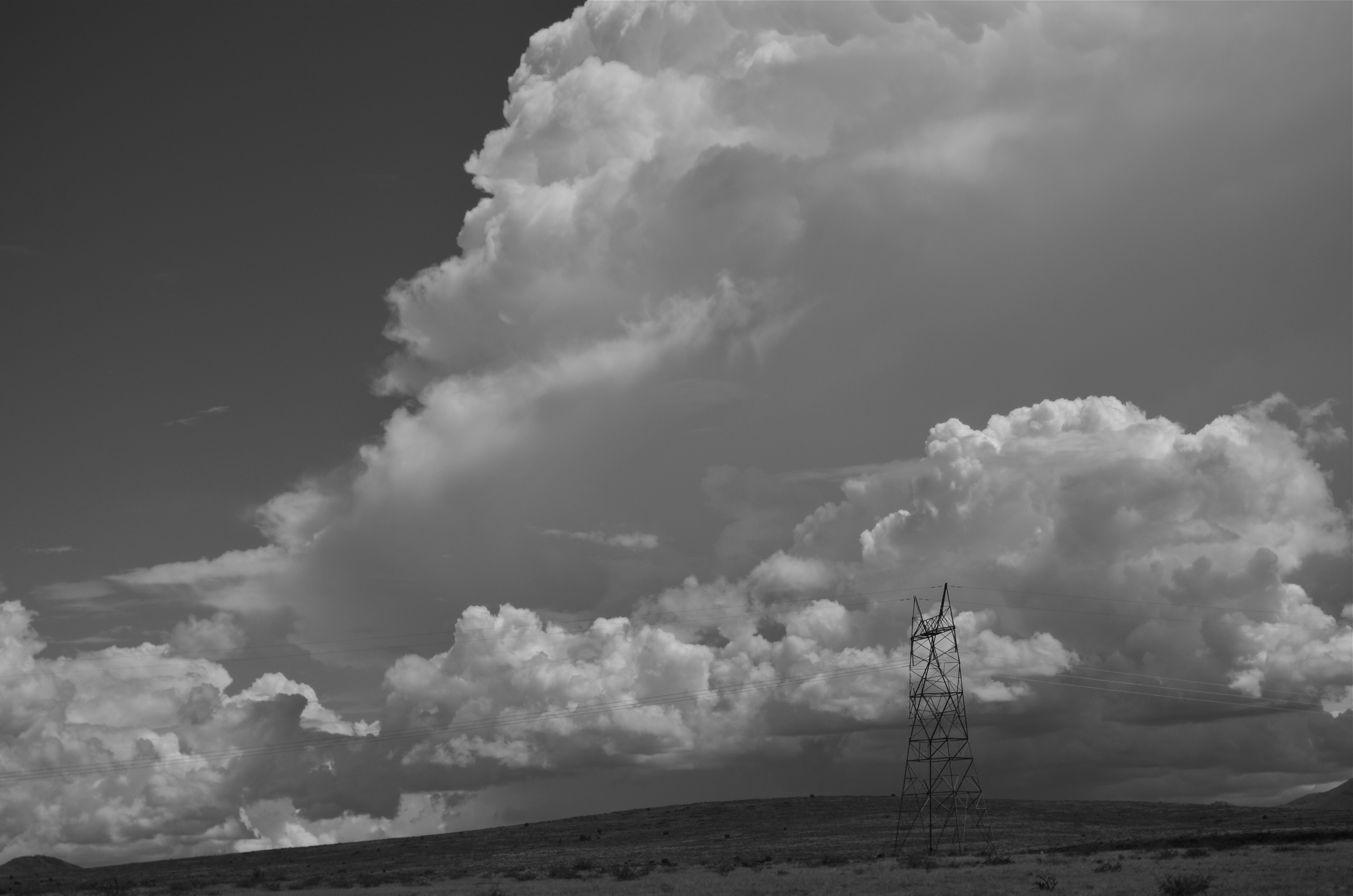
“Relay”, Black Canyon City, Arizona, 2013. 1/500 sec., f/8, ISO 100, 55mm.
By MICHAEL PERKINS
AMERICA’S SOUTHWESTERN STATES COME EQUIPPED WITH SOME OF THE MOST SPECTACULAR SCENERY TO BE HAD ANYWHERE ON EARTH; jutting crags, yawning canyons, vast valleys, and more sky than you’ve ever seen anywhere. Photographically, the mountains, mesas and arroyos deliver on drama pretty much year-round, while the sky can be an endless expanse of, well, not much, really. Compositionally, this means rolling the horizon line in your framing pretty far toward the top, crowding out a fairly unbroken and featureless ocean of blue….except for more humid summer months, when cloud formations truly steal the scene.
It’s true: as the storm season (sometimes called the “monsoon”, for reasons that escape me) accompanies the year’s highest temperatures in desert regions, rolling, boiling billows of clouds add texture, drama, even a sense of scale to skies in Arizona, Utah, New Mexico, and California. It’s like getting free props for whatever photographic theatre you care to stage, and it often makes sense to rotate your horizon line back toward the bottom of the frame to give the sky show top billing.
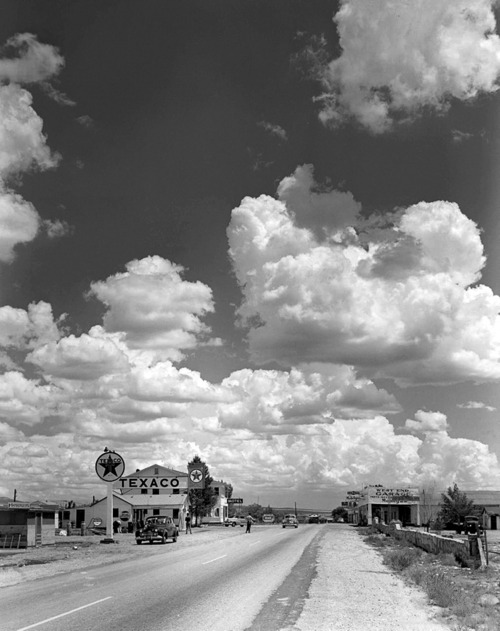
Andreas Feininger’s masterful staging of Arizona skies for Life Magazine. Copyrighted image.
Early photographers often augmented the skies in their seascapes and mountain views by layering multiple glass negatives, one containing ground features, the other crammed with “decorator” clouds. The same effect was later achieved in the darkroom during the film era. Hey, any way you get to the finish line. Suffice it to say that the harvest of mile-high cloud banks is particularly high in the desert states’ summer seasons, and can fill the frame with enough impact to render everything else as filler.
I still marvel at the monochrome masterpiece by Life magazine’s Andreas Feininger, Texaco Station, Route 66, Seligman, Arizona, 1947, which allows the sky overhead to dwarf the photo’s actual subject, creating a marvelous feeling of both space and scale. I first saw this photo as a boy, and am not surprised to see it re-printed over the decades in every major anthology of Life’s all-time greatest images. It’s a one-image classroom, as all the best pictures always are. For more on Feininger’s singular gift for composition, click the “related articles” link below.
Big Sky country yields drama all along the America southwest. And all you really have to do is point.
Follow Michael Perkins on Twitter @MPnormaleye.
Related articles
- Photography Monograph (conordoylephoto.wordpress.com)
AND, I QUOTE:
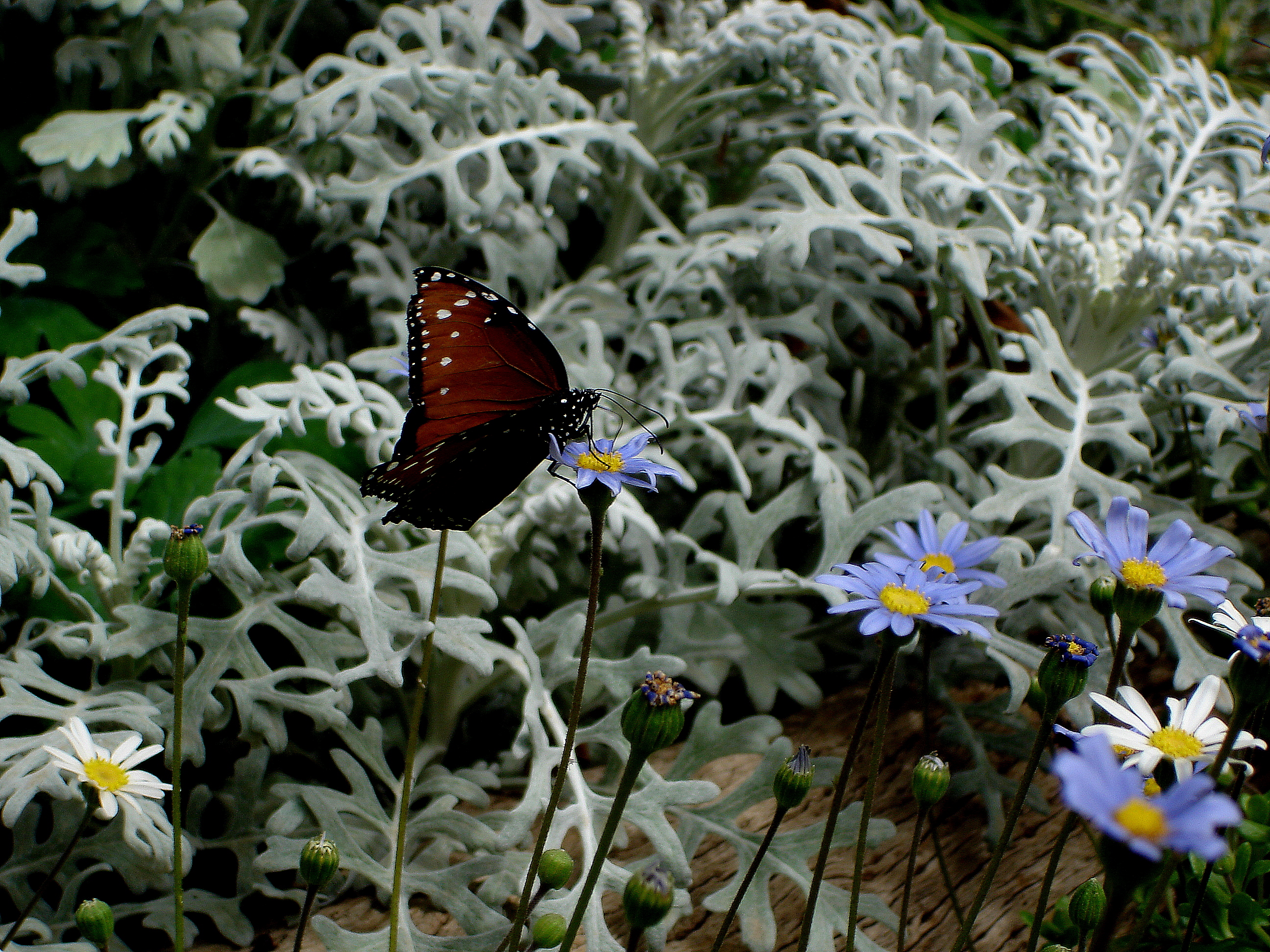
“Sticking The Landing”, cover image for my first book, Juxtapositions (2007). 1/160 sec., f/5.2, ISO 100, 24mm.
By MICHAEL PERKINS
MY FIRST TRY AT ANTHOLOGIZING SOME OF MY PHOTOGRAPHS INTO A BOOK, done about half a dozen years ago, wound up looking like the jokey definition of a camel as “a horse built by committee”. That is to say, it was an exuberant mess, crammed with about ten times too many stylistic flourishes and, I can admit now, a complete lack of editorial judgement. Entitled Juxtapositions, it was an attempt to write a book about photography while also feeling I had nothing important to impart on the subject.
How’s that again?
Looking to spark thought about the eternal truths or universal experiences of making pictures, I passed on the idea of explaining or even captioning any of my own images, relying for text solely on quotations from the greats in the field, from Ansel Adams to DIane Arbus and back again. I was fascinated by how many of the same problems and experiences were common across the entire two centuries of photographic experience, and I hoped I had chosen shots that illustrated just how common those sensations really were, even in the work of an admitted amateur. I still like the idea of the book, but I’d like to find the gee-whiz geek who designed it (me) and slap him around for a while. It would make it easier to thumb through the wretched thing now.
There still may be a way to take the concept again and do it up properly, and at some time I may strap my Icarus wings back on to do it, this time flying a little farther away from the sun. In the meantime, however, I continue to collect the quotes themselves, and to compare the experience of picture-making as it’s seen and felt across various minds and times.
Errol Morris, the Oscar-winning director of the documentary Fog Of War, recently made a great addition to the literature on photography with his wonderful book Believing Is Seeing. It’s an intelligent examination of the visual biases we bring to the act of picture viewing, adding our own mental filters to what the photographer is trying to convey. However, the best quote in this very excellent work comes not from Morris himself, but from a somewhat obscure museum curator named Helmut Gernsheim, who has uttered, in just 59 words, precisely the sentiment that drives me to celebrate photography and to spend many, many more words trying to explain why.
Behold a jewel:
Neither camera, nor lens, nor film determine the quality of pictures; its is the visual perception of the man behind the mechanism which brings them to life. Art contains the allied ideas of making and begetting, of being master of one’s craft and able to create. Without these properties no art exists and photographic art can come into being. —Helmut Gernsheim, 1942, curator
There is a reason we are all here on these pages, a sweet madness that drives us forward from here to make something true. We don’t always bag our prize. But, somewhere deep inside ourselves, we really do understand what that prize is.
Follow Michael Perkins on Twitter @MPnormaleye.
Related articles
- Photography Quotes by Photographers (sarapoyfairphotography.com)
TAKING / BRINGING
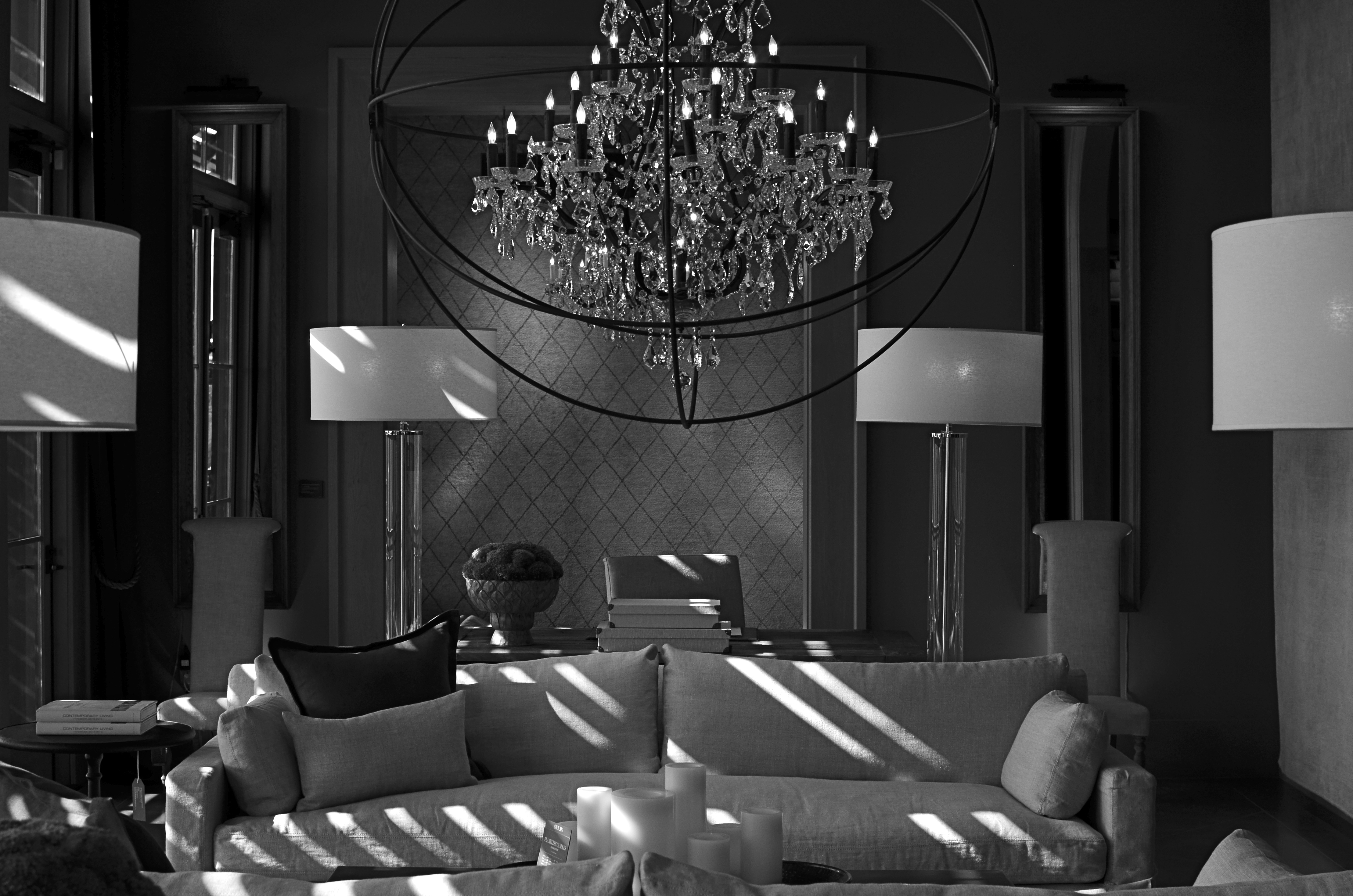
The Room Where Nothing Happens. Or Not. 1/100 sec., f/5.6, ISO 160, 35mm.
By MICHAEL PERKINS
INTELLECTUALLY, I KNOW THAT PHOTOGRAPHS DON’T NECESSARILY HAVE TO BE “ABOUT”, well, anything, but that doesn’t stop the 12-year-old photo newbie deep inside me from trying to produce images with “meaning” (yawn). Some reason to look. A subject. A story line. A deliberate arrangement of things for the purpose of communicating…something. Itchy and twitchy within my artist’s skin as I always am, I am never more out of my element than when I make a picture that is pure composition and form, a picture that has no reason to exist except that I wish it to.
As I get older, I get looser (no G.I. tract jokes about the elderly, please), and thus making what you might call “absolute” images gets easier. I just had to learn to give myself permission to do them. Unlike Atget, Brassai, and half a dozen early pioneering photographers, I don’t have to take pictures to earn my bread, so, if I capture something that no one else “gets” or likes, my children will not starve. Still, the act of making photographs that carry no narrative is far from native to me, and, if I live to be 125, I’ll probably learn to relax and really do something okay by about 93.
The process can be a head-scratcher.
The above image is an “absolute” of sorts, since I have no emotional investment whatever in the subject matter, and have nothing to reveal about it to anyone else. The arbitrary and somewhat sterile symmetry of this room, discovered during a random walk through a furniture store, just struck me, and I still cannot say why. Nor can I explain why it scores more views on Flickr over some of my more emotional work by a margin of roughly 500 to 1. A whole lot of people are seeing something in this frame, but I suspect that they are all experiencing something different. They each are likely taking vastly varied things from it, and maybe they are bringing something to it as well. Who knows what it is? Sense memory, a fondness for form or tone, maybe even a mystery that is vaguely posed and totally unresolved.
“Even though there are recognizable objects making up the arrangement, the result is completely abstract.There isn’t a “human” story to tell here, since this room has never been inhabited by humans, except for wandering browsers. It has no history; nothing wonderful or dreadful ever happened here. In fact, nothing of any kind ever happened here. It has to be form for its own sake; it has no context.
I liked what happened with the very huge amount of soft window light (just out of frame), and I thought it was best to render the room’s already muted tones in monochrome (it wasn’t a big leap). Other than that, it would be stupid to caption or explain anything within it. It is for bringers and takers, bless them, to confer meaning on it, if they can. As I said earlier, it’s always a little scary for me to let go of my overbrain when making a picture.
Then I remember this is supposed to be about feeling as well as thinking.
***Deep breath***
Next.
Follow Michael Perkins on Twitter @MPnormaleye.
Related articles
- First Critique (cohensrphotography.wordpress.com)
NOTHING IS REVEALED
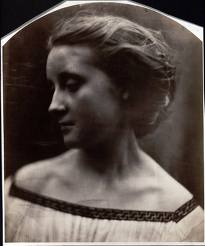
Julia Margaret Cameron, 19th-century self-portrait pioneer, currently on exhibit at the Metropolitan Museum Of Art.
By MICHAEL PERKINS
THE TITLE OF THIS POST IS ONE OF MY FAVORITE LINES IN ALL OF BOB DYLAN’S PRODIGIOUS OUTPUT, coming from The Ballad Of Frankie Lee And Judas Priest, on the John Wesley Harding album. I often pop the phrase into casual conversations where it’s clear that more heat, rather than light, has been generated. Nothing to see here, folks. No new ground has been broken. No fresh truth has been unearthed.
Nothing is revealed.
This phrase came back to me a while back when looking at the raw statistics for Instagram, which indicates that, currently, over 90,000,000 images on the foto-share service currently bear the hashtag “#me”. Call them selfies, call them an epidemic of narcissism, call them banal.
But don’t, for the love of God, call them portraits.
How has it come to this? How can merely pointing a phone camera back at your own punim, and saturating it with distortion and over-amped flash, pass for a telling testament to who you are, what you dream, what you represent in the world?
Of course, the tselfie tsunami does none of these things. It actually puts distance, if not actual barriers, between your real self and the world, by creating some lifeless avatar to ward off true discovery of yourself by, well, anyone. By comparison, even the four-for-a-quarter snaps of antique photo booths are searing documents of truth.
Photography’s evolution is illuminated by the great masters who stepped in front of their own cameras
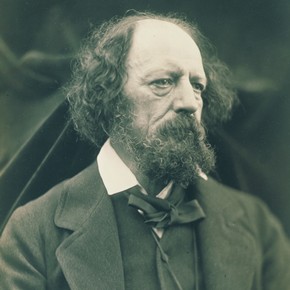
Julia Margaret Cameron, Portrait Of Alfred Lord Tennyson
to try to give testimony, recording innovative, penetrating evidence of who they were. Currently, a show featuring one of the medium’s greatest pioneers in this area, Julia Margaret Cameron, is packing them in at New York’s Metropolitan Museum of Art, and with good reason. Cameron’s attempts to capture herself in not only natural but fantastic settings led the way for interpretive portraitists from Richard Avedon to Annie Liebowitz. Along the way, she learned what to look for, and immortalize, in the faces of others, including Alfred Lord Tennyson, Charles Darwin, Robert Browning, and other bright lights of the 19th century.
Oddly, none of her work was done by crooking her arm 90 degrees back toward her booze-flushed face at a kegger and saying “cheese.”
I’ve written before, in these pages, of the real value of self-portraits as a teaching tool and experimental lab for photographic technique. By contrast, “Selfies” are false faces created to keep the world away, not invite it in. And they remind us, courtesy of Bobby D., of the three worse words of insult that can ever be aimed at any photograph, anywhere:
Nothing is revealed.
Follow Michael Perkins on Twitter @mpnormaleye.
Related articles
- Portraits by Julia Margaret Cameron, One of Photography’s Early Masters, on Display at the Met (muirhousepubs.wordpress.com)
- Julia Margaret Cameron: Pioneer of Modern Glamour Photography? (bigthink.com)
LEAVE THEM WANTING MORE
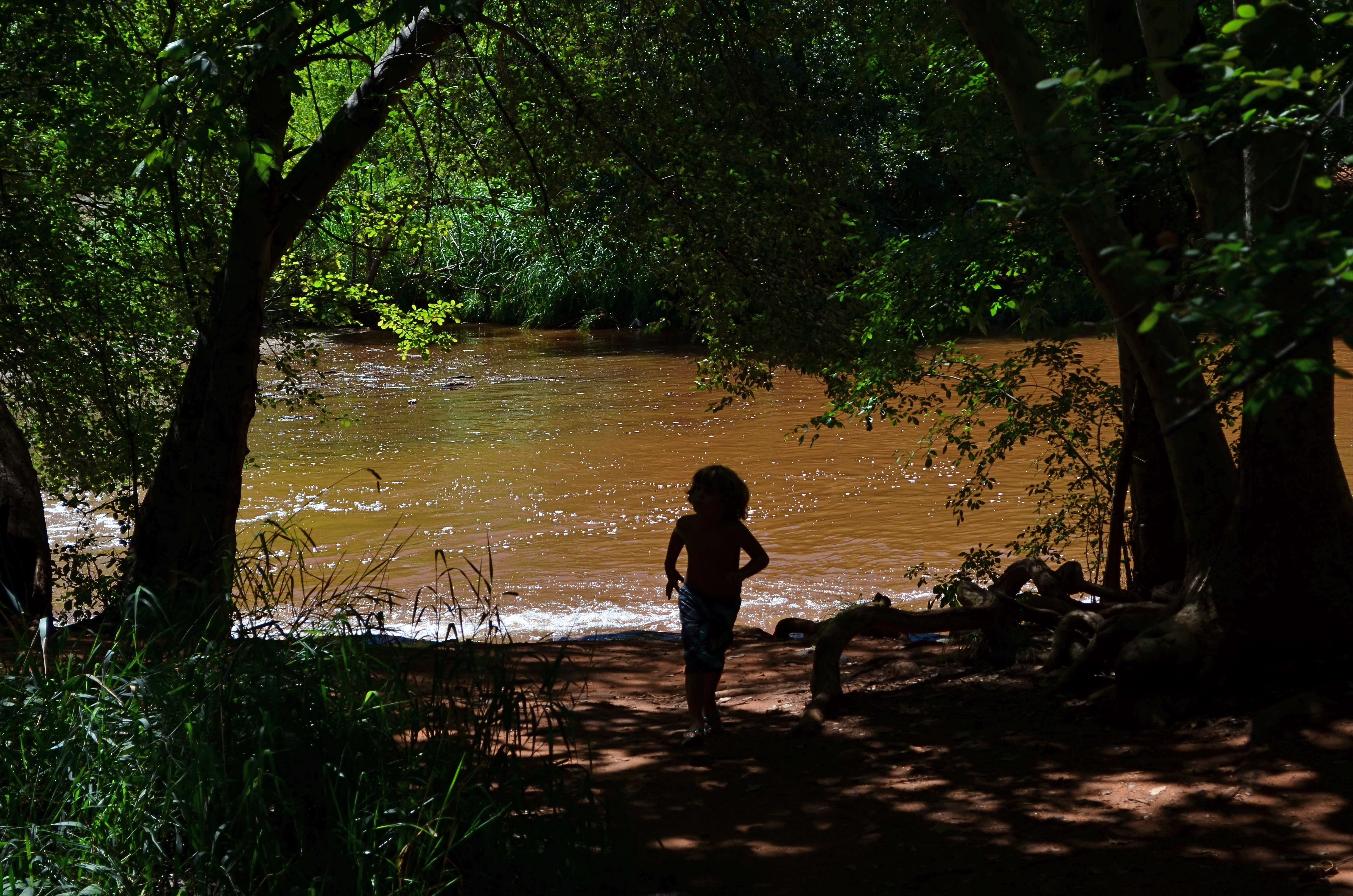
Huck Finn Sneaks Ashore. 1/400 sec., f/8, ISO 100, 55mm.
By MICHAEL PERKINS
PAINTERS INSTINCTIVELY KNOW WHEN IT’S TIME TO REVEAL, AND WHEN IT’S BEST TO CONCEAL. Dark passages or hidden detail within a painting are accepted as part of the storytelling process. That is, what you don’t see can be as valuable a visual element as what you’ve chosen to show. By contrast, many photographers seem to come to this conclusion late , if ever. That is, we’re a little twitchy at not being able to illuminate every corner of our frame, to accurately report all the detail we see.
We try to show everything, and, in so doing, we defeat mystery, denying the viewer his own investigative journey. We insist on making everything obvious. Unlike painters, we don’t trust the darkness. We never “leave them wanting more”.
Fortunately, fate occasionally forces our hand.
The image at the top of this post started out as an attempt to capture the activity of an entire family that was walking their dog near a break in the dense trees that line the creek at Red Rocks Crossing in Sedona, Arizona. The contrast between the truly dark walking paths beneath the trees and the hyper-lit creek and surrounding hardpan is like night and day. The red rocks and anything near them, especially in the noonday sun, reflect back an intense amount of glare, so if your shots are going to include both shady foliage and sunlit areas, you’re going to have to expose for either one or the other. You might be able to get a wider range of tones by bracketing exposures to be combined later in post-processing, but for a handheld shot of moving people, your choices are limited.
I was trying to come to terms with this “either/or” decision when nearly everyone in the family moved away from the creek and into the dense foliage, leaving only one small boy idling at creekside. Feeling my chance of capturing anything draining away, I exposed for the creek, rendering the boy as a silhouette just as he made a break into the woods to rejoin his family. No chance to show detail in his face or figure: he would just be a dark shape against a backdrop of color. The decision to “make things more complicated” had already been taken away from me.
I had what I had.
Turns out that I could not have said “little boy” any better with twice the options. The picture says what it needs to say and does so quietly. No need to over-explain or over-decorate the thing. Darkness had asserted itself as part of the image, and did a better storytelling job all by itself.
I had much more time to calculate many other shots that day, but few of my “plans” panned out as well as the image where I relinquished control completely.
Hmmm….
Follow Michael Perkins on Twitter #MPnormaleye
Related articles
- Red Rock Love (missfunshine.wordpress.com)
A CHANGE IN PRESCRIPTION
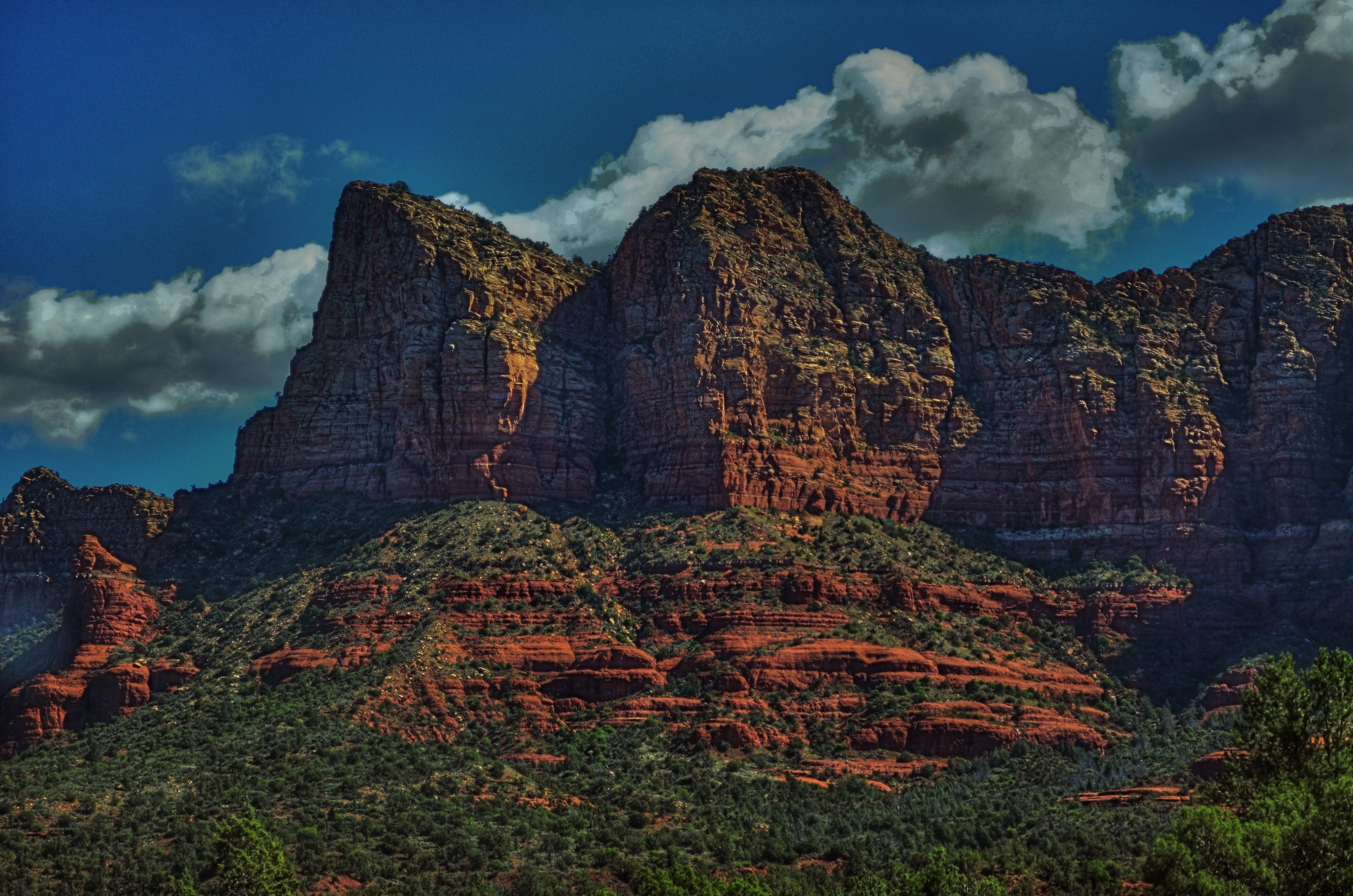
Sedona Bluffs, 2013. HDR can be your best friend when rescuing detail and shadow on subjects like this. But it will make your Aunt Hilda look like the Portrait of Dorian Gray.
By MICHAEL PERKINS
THERE IS AN OLD STORY ABOUT AN IRISHMAN WHO FINDS AND RUBS A MAGIC LAMP. Upon emerging from said lamp, the genie tells the boyo that he can have three wishes. For his first, he asks for an everlasting pint, a beer glass that will endlessly refill every time he drains it, forever. “Try it out”, says the genie, whereupon the lad gulps down several draughts, each one replenished in an instant. “This is grand!” he shouts. “All right, now”, reminds the genie, “what about your other wishes?” “Oh, that’s easy”, says the Irishman, “just give me two more of these.”
High Dynamic Range, or HDR processing is a little like those two unused wishes. You can fall in love with the effect of using it without pausing to see if it makes sense to use it, or see what else is out there on the horizon.
HDR can be the photographic equivalent of a crack habit, especially when you first test-drive it. Rescuing information from shadows, accenting detail to ever-crisper levels, tweaking colors to Peter Max-imums…..it’s all pretty stunning, and, like the 98-pound weakling in the Charles Atlas ads, the drama is best seen in “before and after” comparisons. And then there follows The Great Period Of Overcompensation, that heady phase in which you turn everything you shoot into a psychedelic fever dream. It’s garish, sometimes cartoonish, but eventually you get to a point where you want to throttle back and just use HDR as a tool instead of a magic paint box. It can’t be a style all by itself, but it can amplify your own style, extend your reach. Ground Control To Major Tom….
This blog has always been a discussion of why we do things rather than a tutorial on how to do them. It’s the decisions that we make with technology that matter, more than the technology itself, so we talk about judgements, motivations, intentions. In that vein, I’ve updated the HDR gallery tab of the blog with all new images, in an attempt to chronicle where I am with this process today. I originally intended the galleries to do this….to be a visual track on what I thought important to try in a given period. We are,literally, different photographers every day we wake up, so it’s absurd to think that any technique, approach, or magic wish will work for us equally well forever. The patient still has needs, but he requires a periodic change in prescription.
So settle back with an endless pint and give us a look.
The pictures may not work for you, but, hey, if the beer’s cold, it’s not a total loss.
Follow Michael Perkins on Twitter @Mpnormaleye.
Related articles
- HDR Photography: craze or crazy? (homesandlandofmontreal.wordpress.com)
THE BOOK OF KODAK
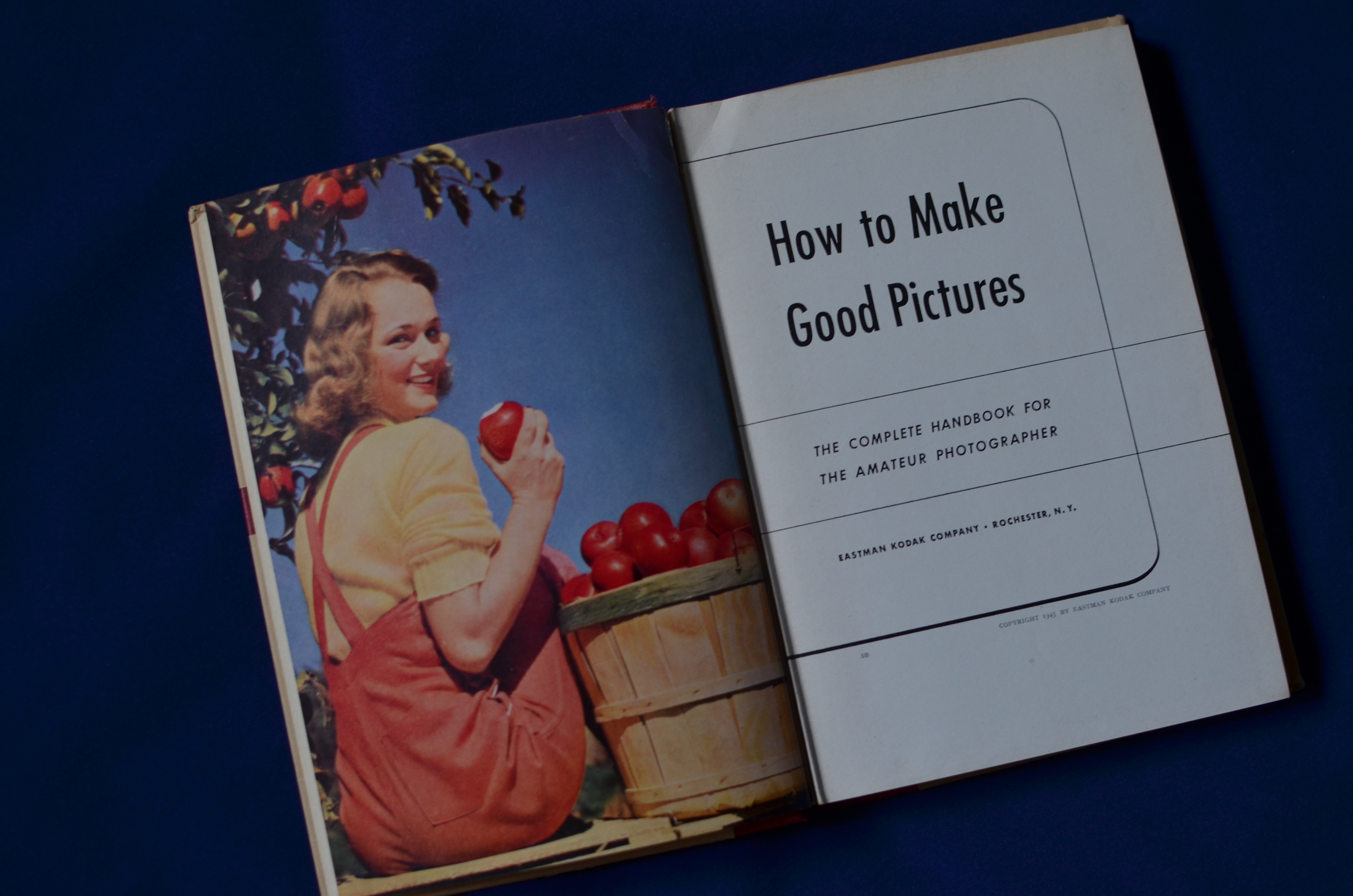
The Long-Distance Runner: The Most Successful Photography Instruction Series In History, Eastman Kodak’s How To Make Good Pictures (28th Edition,1943-47). From the collection of the author.
By MICHAEL PERKINS
KODAK’S SAD AND WOBBLY RE-EMERGENCE FROM BANKRUPTCY, announced this week, finalizes the process of “saving” a famous name, while annihilating the legacy of innovation that made that name great for over a century. Having already said goodbye to Kodachrome, most of its other trademark films, and camera production itself, Kodak will now concentrate on “imaging products”, which, for, most of us, means “printers”. Most of the news coverage of this corporate resurrection will “focus” (sorry) on what the new company stock will be worth, who goes, who stays, and a few scant mentions of the company’s original role as camera producer to the world.
That will leave a significant part of the story untold.
Certainly, George Eastman’s genius for marketing helped develop the first flexible roll films, then ingeniously created a market for them by putting a basic, usable camera in the hands of the Everyman. Nearly everyone has heard the slogan Kodak created to demonstrate how truly effortless its products had made photography: you press the button and we do the rest. But none of that would have guaranteed the company’s growth if Kodak has not also decided to become photography’s first great mass teacher, creating pro-active education programs to guarantee that, not only could Uncle Clem snap a photo easily, he could snap a good photo easily. What had once been a dark art for a select cabal of techno-wizards became, under Kodak’s outreach, something that could anybody could do.
And Kodak was going to show you how to do it.
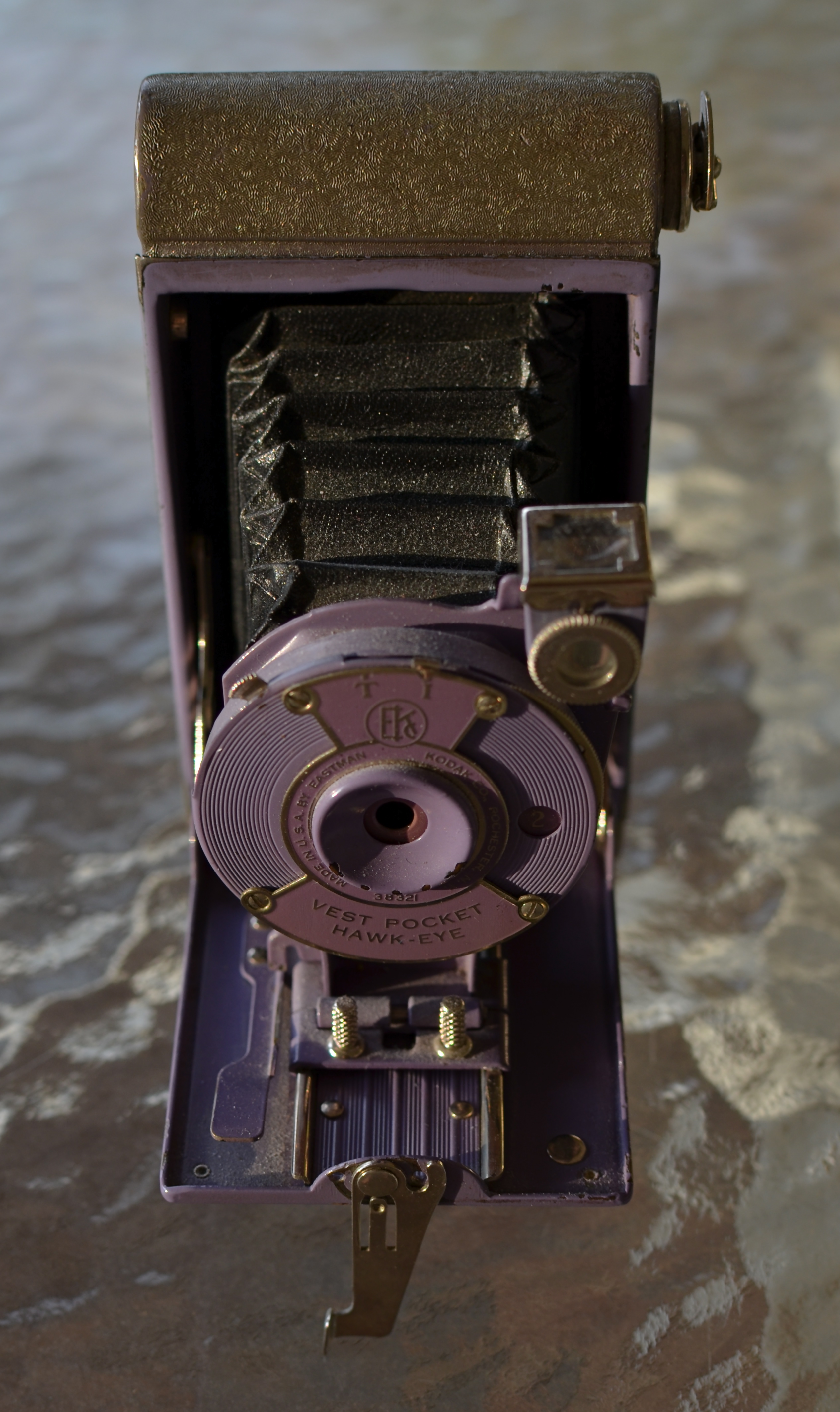
There was a time when this Kodak Vest-Pocket Hawkeye was truly intimidating. How To Make Good Pictures made it your friend.
Beginning before the end of the Victorian era, the company began to publish the first of an endless stream of practical guides on technique and simple theory aimed at the average shutterbug. Starting in 1898 with Picture Taking And Picture Making (115 pages of tips in a cardboard cover for fifty cents!), Eastman Kodak moved to 1905’s The Modern Way In Picture Making, and, finally, to the most successful photo instruction series in history, How To Make Good Pictures, introduced in 1912 and revised continually until finishing up with its 37th edition, in 1995. Over the years the “make” in the title had been changed to “take”, and its 1890’s essays on bromide paper, collodion matte, and ground-glass focusing had evolved, over the decades, to instructions on the use of flash, color, drop-in film cartridges, and “how to tell a picture story” with your Kodacolor slides. Hundreds of printings and millions of sales later, How To Make Good Pictures forged an ironclad link between consumer and company in a way no corporation before or since has done.
To everything there is a season. Kodak’s (now historically) tragic failure to see digital photography as a viable consumer revolution, until it was too late, is a matter of raw record. The company that taught the world to see had a blind spot, a fatal one, and the irony that nearly all of the rest of the industry developed digital technology by applying processes originated (and patented) by Kodak makes the story even sadder.
But, once upon a time, the Eastman Kodak Company not only knew what the future of photography was going to look like, it wrote a handy dandy little book that told everyone how to master that future.
Follow Michael Perkins on Twitter @MPnormaleye
Related articles
- Kodak moments are just a memory as company exits bankruptcy (kansascity.com)
FAREWELL, THING 1 AND THING 2
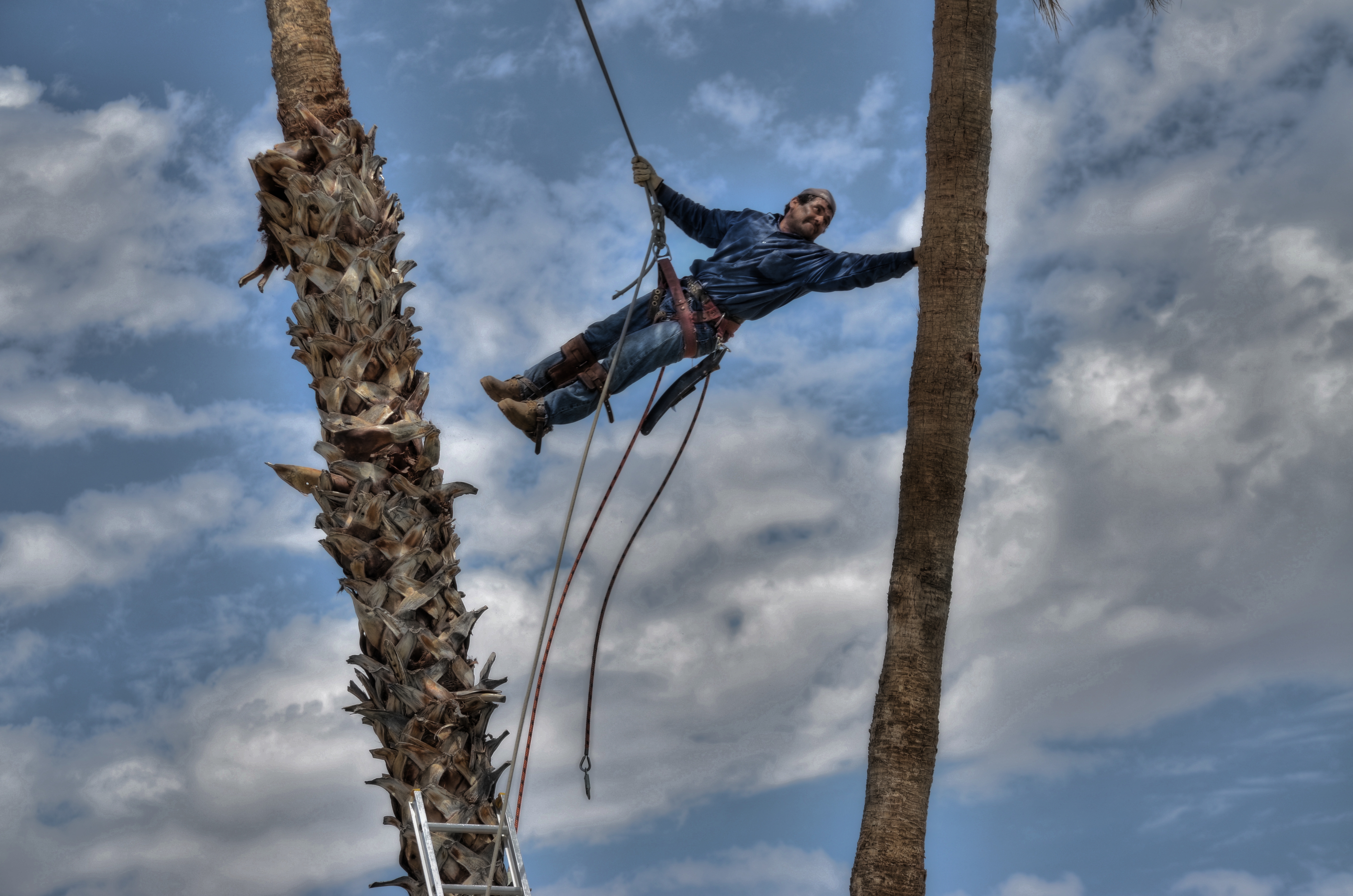
Sunshine Superman: Our landscaper floats with the greatest of ease between our now departed palm trees. 1/400 sec., f/8, ISO 100, 86mm.
By MICHAEL PERKINS
BETTER MINDS THAN MINE have already taken note of the fact that 2013 marks the 100th anniversary of the penning of Joyce Kilmer’s poem Trees, a short bit of cozy verse which is either beloved sentiment or dreadful dreck, depending on which literary camp you pitch your tent in. I would have to confess that I find Kilmer’s ditty too cute by half, sort of the rhyming equivalent of a Thomas Kinkade painting, but, that said, faced with either the specious cause of “progress” or the faith it takes to plant trees, I side with the trees.
Every time.
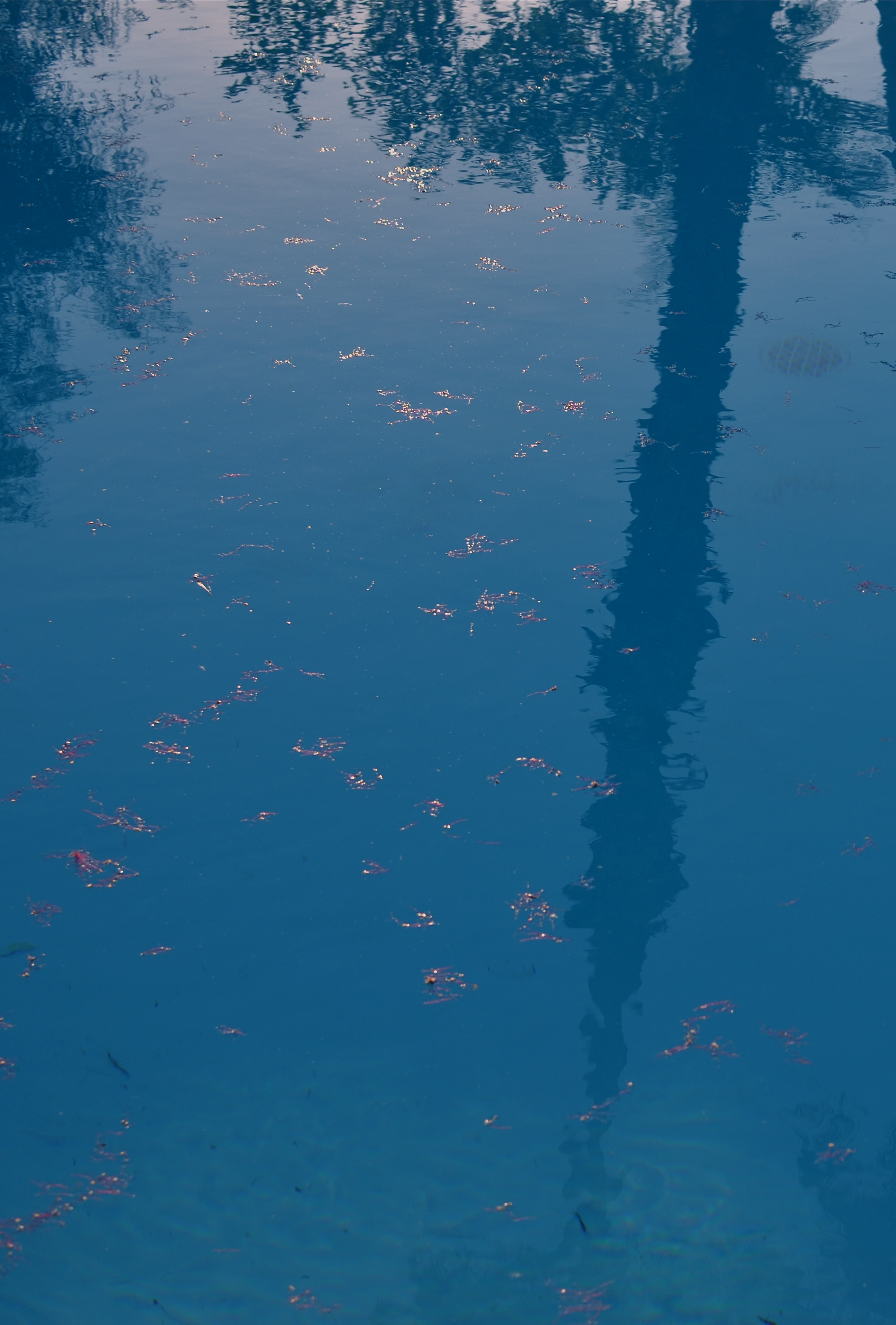
Sunset Shade: 1/500 sec, f/5.6, ISO 100, 35mm.
This particular better angel of my nature comes from observing
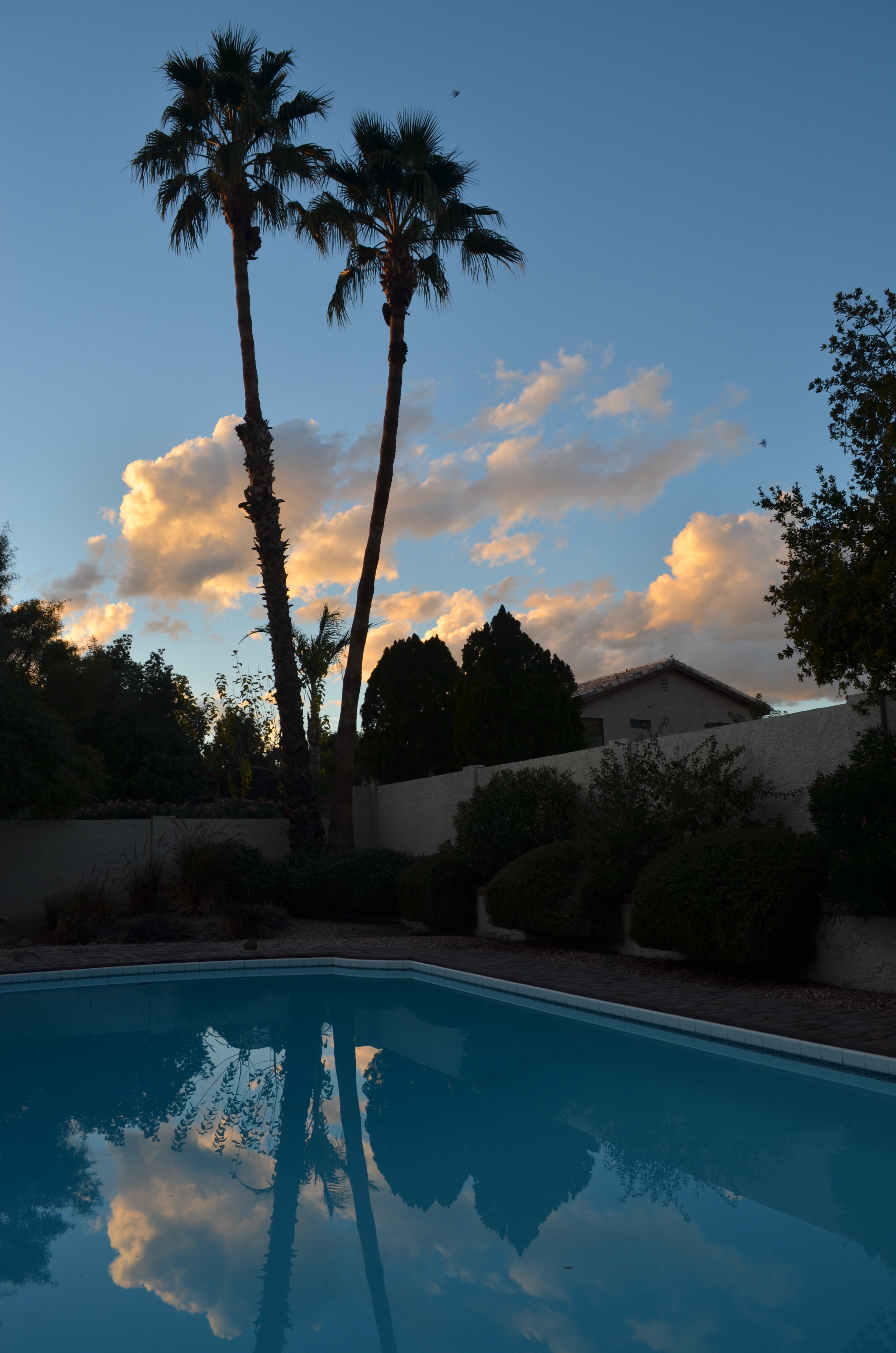
Coral & Azure: 1/100 sec., f/8, ISO 100, 18mm.
my father, to whom a connection between the soil and the soul is palpably real. If he were to assemble his version of The Avengers, he would sub out Whitman, Emerson, Thoreau and St. Francis for Iron Man, Thor, The Hulk, and Cap America. To watch him will twigs to vigorous life, or summon forth roses from wishes over the decades is to truly “get it”. He was Earth Day before Earth Day was cool. He was Rachel Carson in reverse drag.
So I have to pause for just a post’s-worth of mourning at the recent loss of two enormous palm trees from our place in Phoenix. These were not important trees in any grand sense; they afforded no shade, bore no fruit, marked no key battlefield. No children’s swings ever hung from their heights, and, as for sheltering purposes, they were little more than a beak sharpener for the neighborhood’s woodpecker.
Still.
The palms’ annual shower of spring litter had become a sore point between our team and the next neighbor over. What had, at lesser heights, been at least decorative additions to the yard had become, twenty years on, a pain in the astroturf. So down Thing One and Thing Two went, and, with them, one of my favorite visual elements in that part of the property. Going back through the foto files in the depths of the Perk Cave recently, I saw them taking a star turn, again and again, most notably as a skybound workout for our daring landscaper. He was part of the crew that eventually sliced, diced, and hauled them away, and with respect and admiration, his lofty Olympic feat is featured here.
So, even though I will never exactly be the Lorax, and even though I think Kilmer was a hack, I myself seldom see a “poem lovely as a tree”, and I still peer quizzically when its old hunk of skyspace seems deserted somehow.
I suddenly feel like planting something.
Follow Michael Perkins on Twitter @MPnormaleye.
Related articles
- “I think that I shall never see…”: Joyce Kilmer as War Poet (pietistschoolman.com)
THE COLORS OF DREAMS
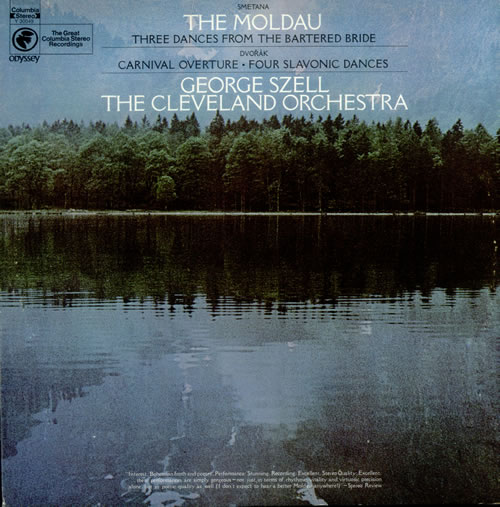
I will never know the name of the stock photographer at Columbia Records who shaped me with this image. But I know his genius.
By MICHAEL PERKINS
ONE OF THE TRICKIER PARTS OF BEING MY AGE is that I have been carrying around certain creative influences inside my skull for so many consecutive decades that their origins often blur. Who said it? Where did I brush up against that angle, that idea? Where did I see it? Book? Movie? Conversation? Who brought me into contact with this treasure? Inspiring mentor? Loving teacher? Teaching lover?
Of course, it can be argued that what you walked through the door to discover matters more than the door itself.
Maybe. But for me, the door and the room it leads to are two halves of one whole.
For most of my life, I have been fascinated by the intentional “un-realing” of color, the hypnotic spell of hues that weren’t “that way in nature”, but, through interpretation, could add drama and impact, even magic to the final version of an image. About a week ago, I was reminded of one important reason why I feel that way.
Researching composer Bedrich Smetana’s gorgeous musical love poem to his homeland, The Moldau, I set eyes on an image that I had not seen for over forty years; the cover photograph for a recording of Moldau by George Szell and the Cleveland Orchestra that I purchased in the 1970’s. My own copy of the original LP is long gone, but I still own a reissue of the performance, music that afforded my teenage self a serenity, a dream quality, a magic that travels within me to this day. In true “multi-media” fashion, I never listened to the original album without its cover within clear sight, its blue-green image of a soft-focus lake and forest quieting my nerves, inducing the music’s spell again and again.
One one level I knew that the colors in the photograph were not “natural” in the strictest sense, but they were nonetheless hypnotic. Through them, I saw Smetana’s homeland, its villagers, its folks rituals, and the beautiful river Vlatava. For me, the picture was the music, and the music was the picture. Energy flowed seamlessly from one conception of beauty to the other.
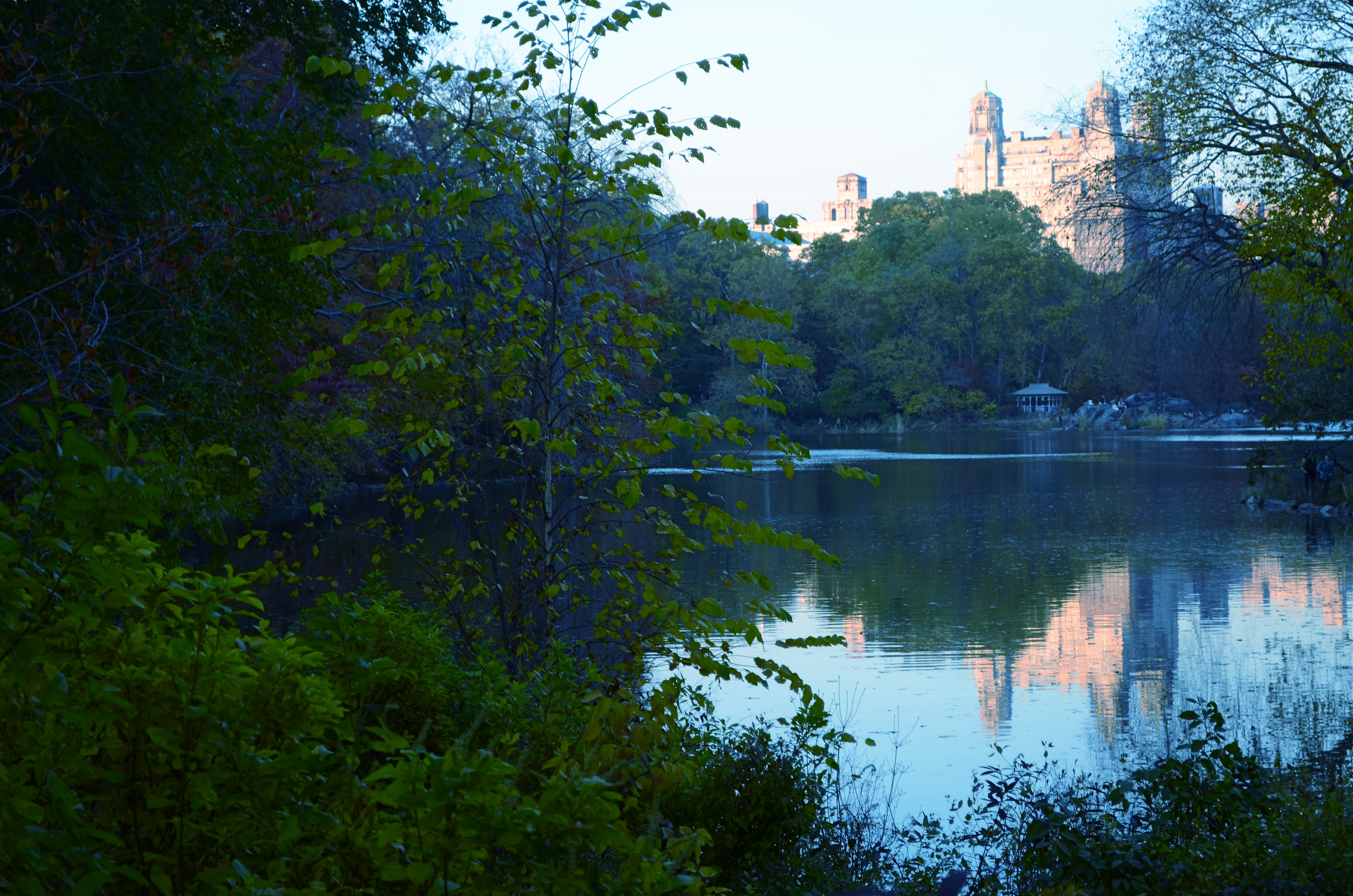
The Lake, Central Park West, NYC., 2011. 1/80 sec., f/5.6, ISO 160, 50mm.
Some of my own work, naturally, strives for this quality, the ability of a photograph to unchain the mind, to allow feelings to flow, to allow color to be abstracted, just like language or music. Some will call it influence, others imitation. I prefer to think of it as respect. And while I will never know the name of the stock photographer whose image was probably slapped onto The Moldau’s album cover as a clerical afterthought, I love it when I see his work leak through my fingers, if only a little.
Shade your dreams however you like.
And let the music surrender its colors.
Follow Michael Perkins on Twitter @MPnormaleye.
THREE STRIKES AND YOU’RE…IN?
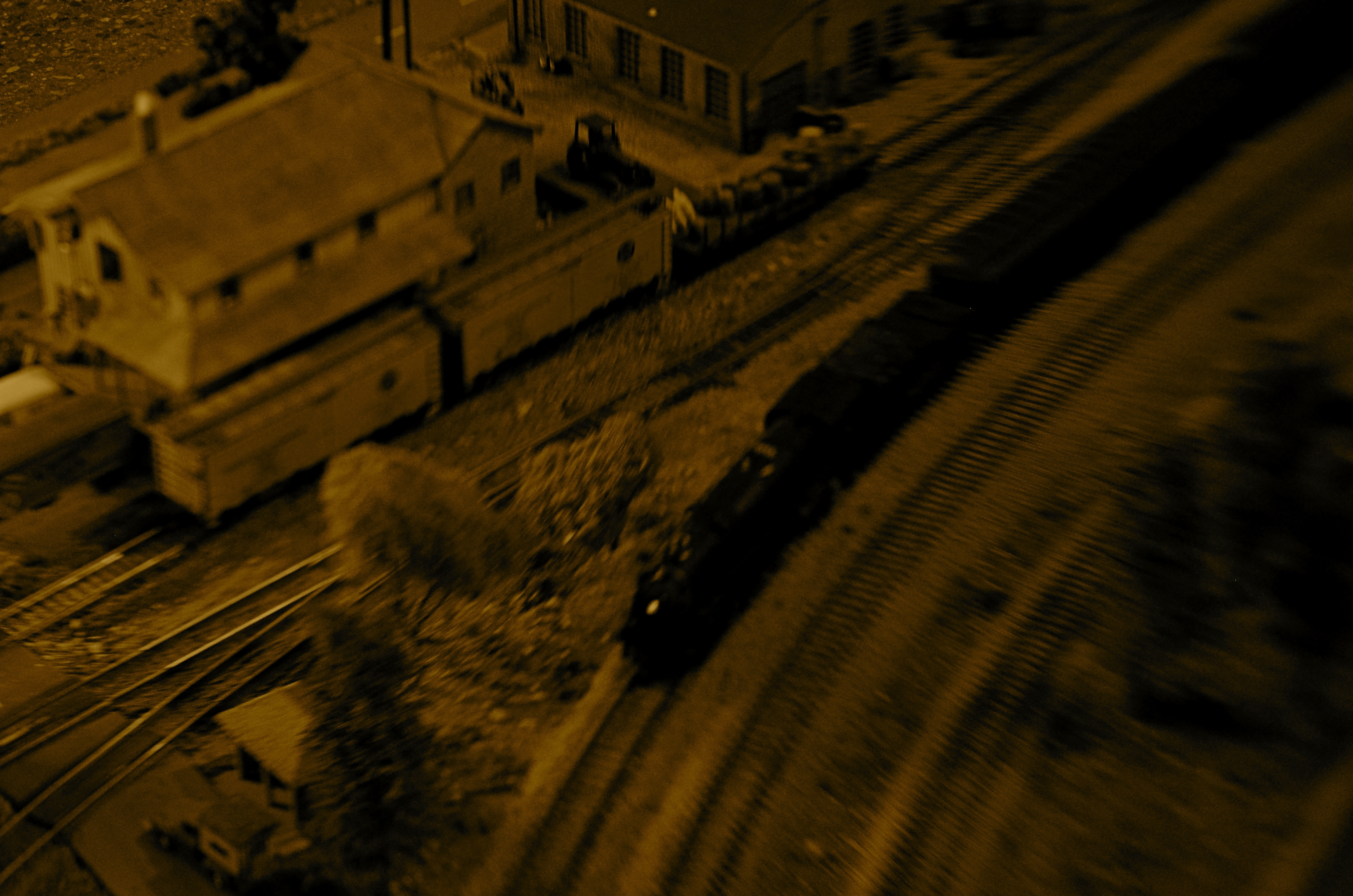
“Wreck Of The Old ’87”. Wreck is right. 1/80 sec., variable depth of field created with a Lensbaby attachment, ISO jacked to 640, 35mm.
By MICHAEL PERKINS
WHEN SORTING MY IMAGES INTO KEEPERS AND CLUNKERS, I ALWAYS SUFFER THE SAME BIAS. Whereas some people might be too eager to find reasons why a picture should be inducted into the former group, I nearly always search for reasons to toss them into the latter one. I always know right away what I’ve failed to achieve in a given frame, and its flaws glow like safety orange in my brain to the point where I not only can’t credit myself for the photo’s stronger elements, I can no longer even see them. I therefore consign many pictures to the rubbish heap, a few of them prematurely.
Usually, however my first call is the right one. I very seldom revisit a picture I initially disliked and find something to redeem it. So it was kind of headline news when I recently “saved” a photo I had originally (and wisely) savaged. Hell, I’m still ambivalent, at best, about it, but I can’t truly classify it as an outright Lost Child anymore.
It came from a random day of practice I had undertaken with a Lensbaby, one of those effects lenses designed to give you the ability to manually throw parts of your image out of sharp focus, in fact to rotate around and create various “sweet spots” of sharpness wherever you want to. I don’t use the thing a lot, since it seems, on some level, damned silly to put defects into your pictures on purpose just to convince yourself you are, ahem, an artiste. But, all work and no play, etc. etc., so I was clicking away inside a dimly lit building at a railway museum in which a huge layout of miniature train dioramas is a regular attraction. I seemed to be going out of my way to create a picture that would normally be “three strikes and you’re out”…..that is:
poorly lit, and loving it
poorly focused, otherwise known as, sure, I meant to do that, and
a half-baked attempt to make something fake appear real.
Only one of the shots sparked my interest at all, purely because it seemed to contain a sort of… mystery. So many dark corners. So many unexplained details. A very disorienting, dreamlike quality that had to have jumped into the camera without any help from me. It looked both hyper-real and utterly false, simultaneously fearsome and fascinating. Again, this all happened in spite of, not because of, any action on my part. I added no post-processing to the shot, except to desaturate it and slather on a layer of sepia. Other than that, I left it in its original sloppy, random state.
And then I decided it was still junk and forgot about it for a few months.
Just why I have, in recent days, tried to rehabilitate my thinking about it is anyone’s guess. Like I sad at the top, I look for reasons to reject my work, not excuse it. This has little to do with modesty. It’s just an admission that control is so much a part of my make-up that I recoil from images where I seem to have absolutely relinquished that control. They scare me a little.
But they thrill me a little too. And, as Vonnegut says, so it goes.
Perhaps the best thing is to maintain the Keepers and Clunkers piles, but add a third, labeled “Not Really Sure”.
Follow Michael Perkins on Twitter @mpnormaleye.
Related articles
- Peering Through a Shaft of Light (johnbee.ca)
 thenormaleye