By MICHAEL PERKINS
WHEN USING WIDE-ANGLE LENSES, we believe that we are revealing more “reality”. That is, we began to think that a narrower aspect ratio is somehow “hiding” or clipping off visual information, whereas a wide allows us to “see everything”. But once you’ve shot with a wide-angle for a while, you realize that it’s, at best, a trade-off. The lens giveth and the lens taketh away.
Wide-angles do, certainly, increase the view from left to right, but, in so doing, they add their own little quirks, such as softer resolution along the edges, chromatic aberration, barrel distortion (that feeling that straight lines are bending outward at the sides of the frame), and an exaggeration of the distance between the front and back of the shot.
Bearing all this in mind, I feel that, since a pretty wide lens, the 18-55mm, is now included with nearly every DSLR camera kit, it’s important to see wides as both an aid to showing reality and an effective tool for interpreting or altering it. Think of your wides as art glass, as effects lenses, and you open up your mind to how it can not only record, but comment on your subject matter.
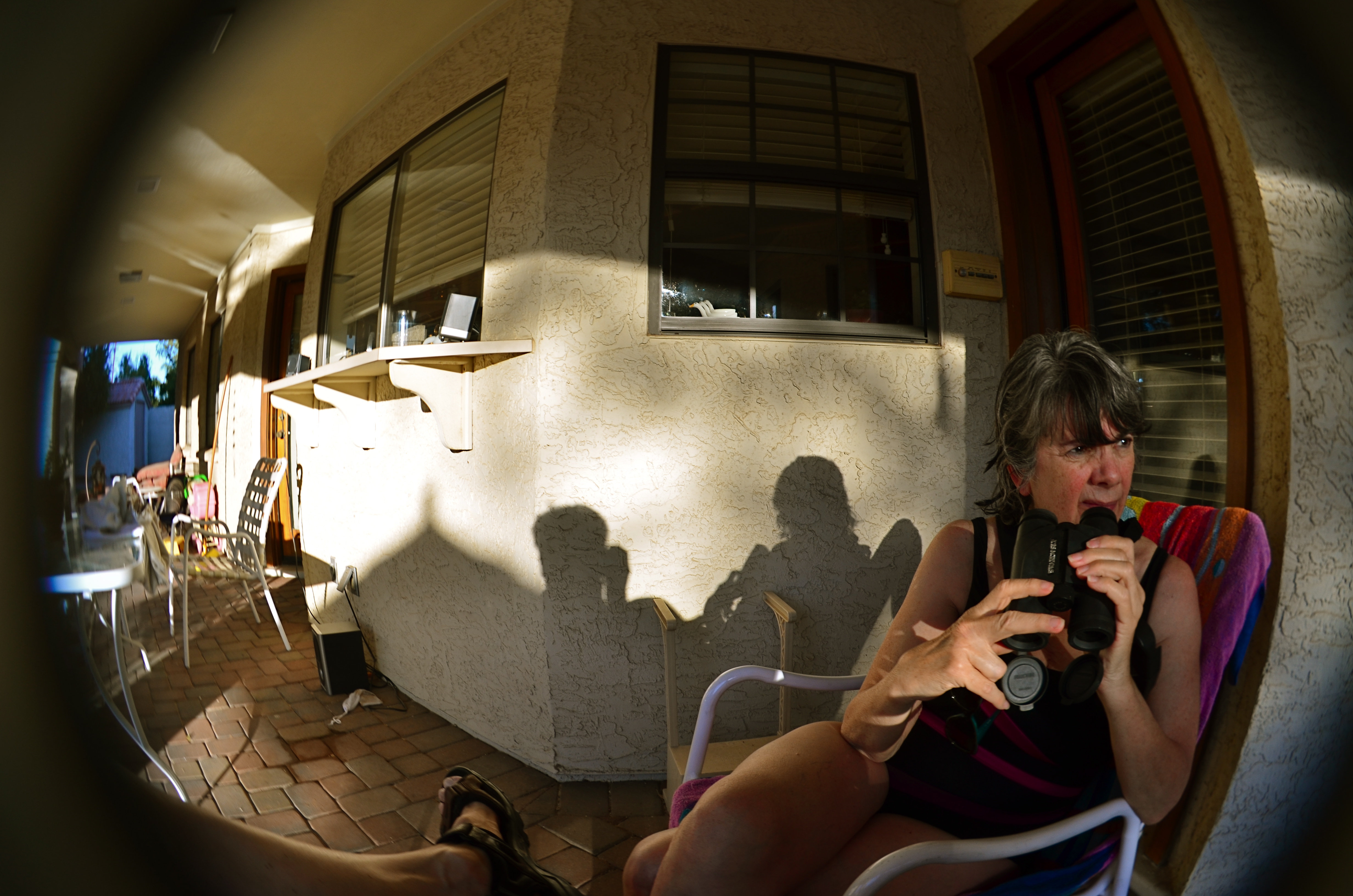
Fisheye lenses demonstrate what all wide-angles do: create an unreal look that can be managed and massaged to fit your ends.
And, let’s take it a step further, as in when wides become ultra-wides, as in the 8 to 12mm range, where the lens becomes a true fisheye. Now we’re consciously aware that we’re using an effects lens, something that is designed specifically for a freakish or distorted look. And now we have to challenge ourselves in a different way.
The standard fisheye shot is a self-contained orb, a separate universe, within which everything radiates distortion outward from the center concentrically, like a kaleidoscope or a paper snowflake. But a fisheye frame can also be composed to combine all the left-right, back-front information of a standard wide-angle (more narrative space) while also playing to the surreal look of something designed to challenge our visual biases of what’s “real”. The effect can also, as in the above image, forcefully direct the viewer’s eye to see along very precise channels. In this picture, the action of the shot begins at the right front, and tracks diagonally backwards to the left year, with the focus softening as you look from “important” to less “important”. The drama in the woman’s face is also abetted by the unnatural dimensions of the image, like one part of a nightmare serving to stage another part.
Wide-angle lenses can conceal and interpret, not just reveal. They allow us to see more from left to right, but there is a lot of wiggle room in how we show it. You have to accept the idea that all optics are distortions of reality to some degree, and make the bias of your particular glass serve your narrative goals.



A QUESTION OF BALANCE
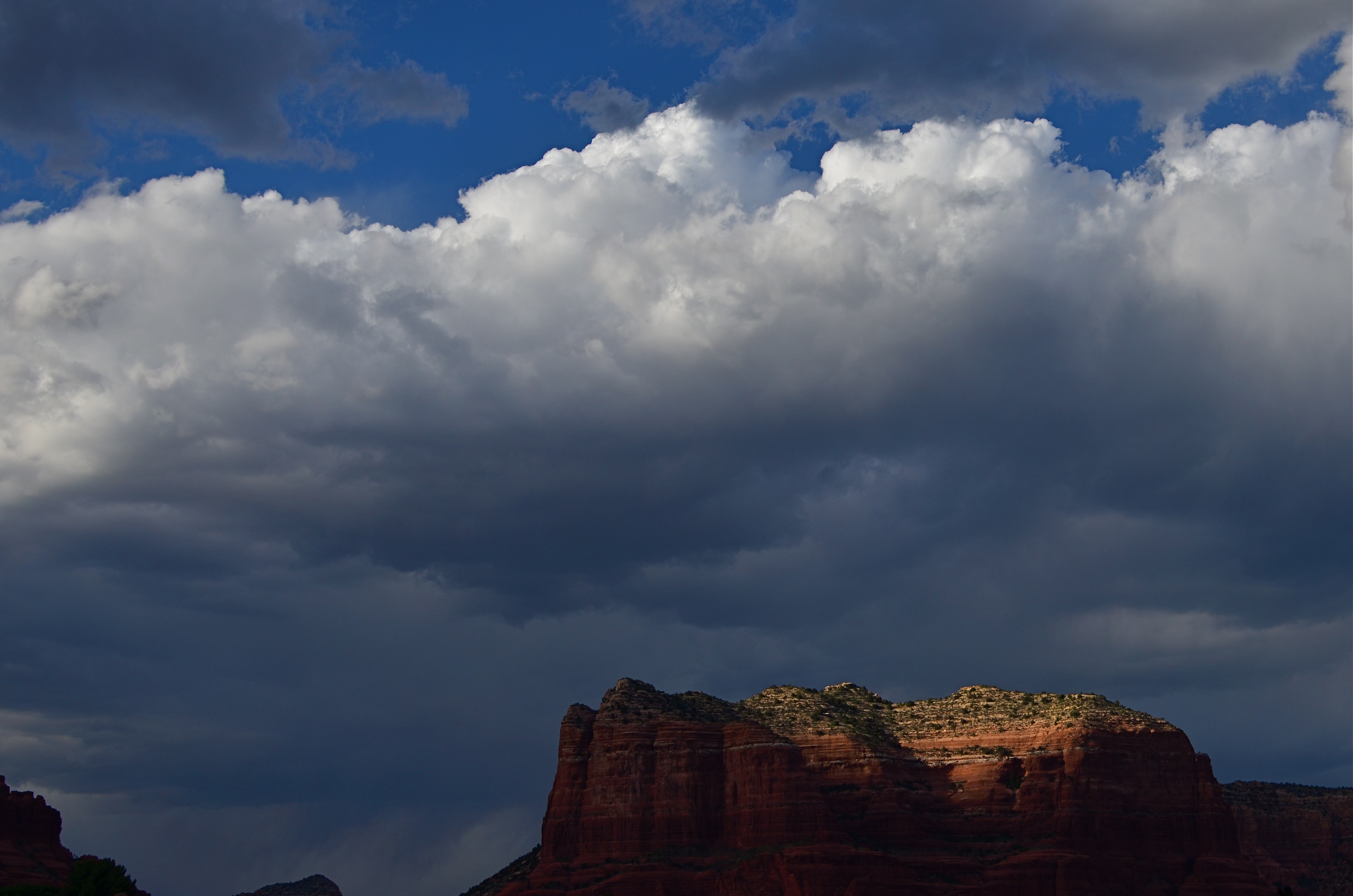
Reporting that beauty exists is also a kind of “journalism”.
By MICHAEL PERKINS
WITH PAINTING AS ITS INITIAL INFLUENCE, THE YOUNG ART OF PHOTOGRAPHY spent its first years trying to record transcendent scenes of the world, from landscapes to portraits, in much the same elegant, poetic way that such subjects were translated to the canvas. Partly due to the limits of early exposure media, the task of making a picture was slower in those first years, almost a contemplative act. And so, in pace and mood, the strange new machine seemed intent on imitating its painterly elder, at least in part to make the argument that even a machine could be imbued with an artist’s eye.
Then came faster film and faster events. The images of war and the advancing grind of city life coincided with the introduction of more responsive films. The snapshot, the ability to catch an accelerating world on the fly, became commonplace. Photography took on a new role as reporter’s tool, a way to visually testify to human problems and their impacts. Photojournalism, in turn, gave way to commerce, which created an image bias in news coverage that persists to the present day. Photos take their tone from the needs of the marketplace. Tragedy outsells beauty. If it bleeds, it leads. Pulitzer prizes aren’t awarded to people who make pictures of daffodils.
And yet, there is a greater need for pictorial beauty than ever before, simply so that our visual diet doesn’t consist solely of red meat and blood. Certainly, the sensational holds tremendous sway over what gets published, re-printed, re-tweeted. The images that stamp themselves on our brains hold many traumas and dramas. Admittedly, some have sparked outrage, which in turn spurs action, and that can be a good thing. But photography can make us hard and jaded as well, and we dare not squeeze beauty into the margins of our consumption. Pictures shape feelings, and they can also condition us to feel less and less about more and more.
From Lewis Hine’s harrowing pictures of children in cotton mills to present-day iPhone dispatches from the latest repressions or riots, photographs are the seismograph of our collective consciences. But just as man cannot live on bread alone, he cannot subsist solely on nightmares. Beauty, harmony, aspiration, hope….we need to capture all these as well, lest, under the barrage of the shell and the bullet, the butterfly is blasted into extinction.
It’s a question of balance.
Share this:
Posted by Michael Perkins | June 17, 2016 | Categories: Commentary, Conception, Photojournalism | Tags: culture, editorial, Essay, Philosophy, Viewpoint | Leave a comment