HOW DARE HUE
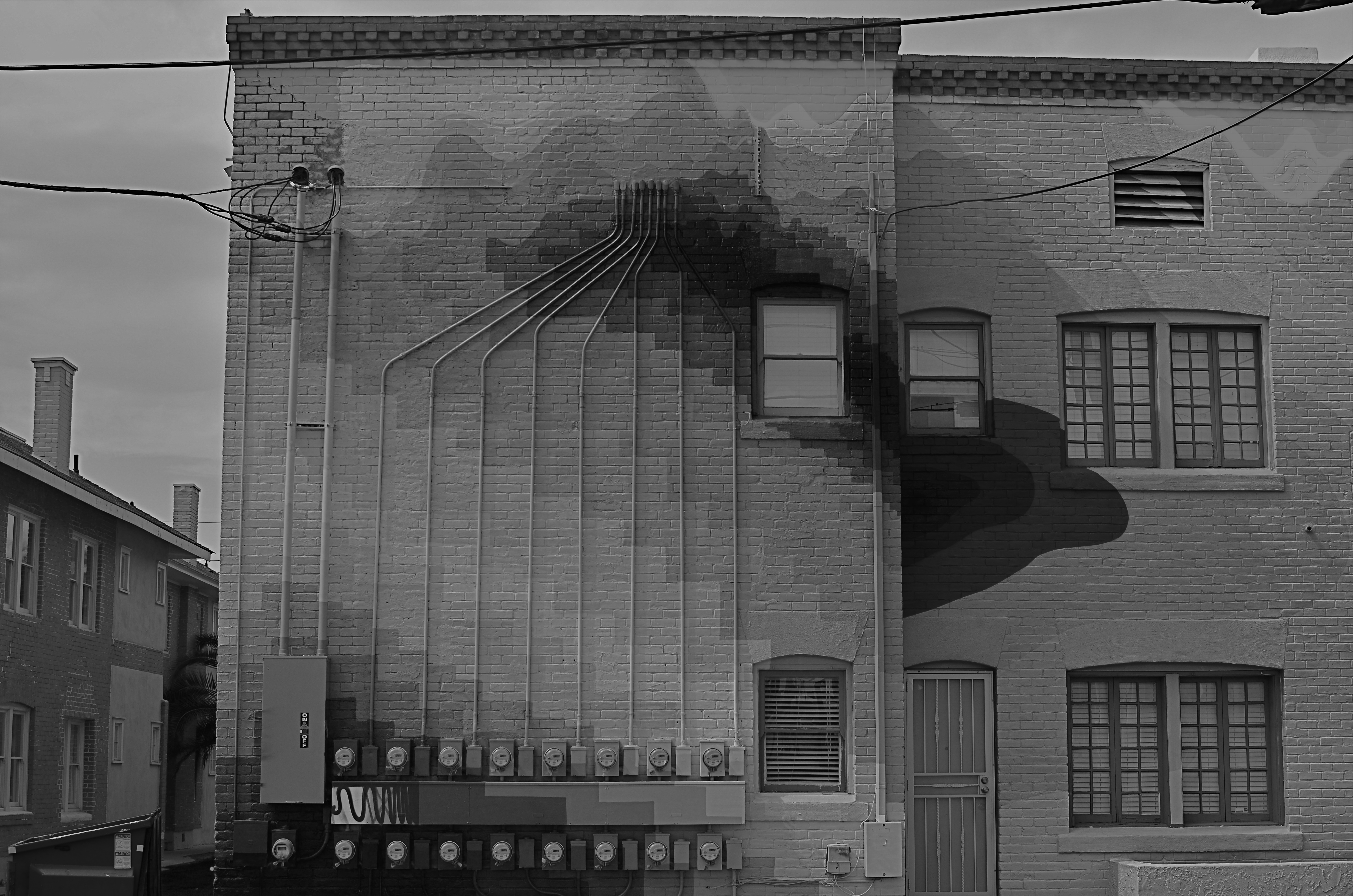
Terminus, 2014. 1/250 sec., f/5.6, ISO 100, 35mm. Desaturated copy.
By MICHAEL PERKINS
IT’S TRULY AMAZING TO CONSIDER THAT, AS RECENTLY AS THE LATE 1940’s, many serious photographers were, at best, indifferent to color, and at worst, antagonistic toward its use in their work. And we’re talking Edward Weston, Ansel Adams and many other big-shoulders guys, who regarded color with the same anxiety that movie producer experienced when silent segued to sound. We’re talking substantial blood pressure issues here.
Part of the problem was that black and white, since it was not a technical representation of the full range of hues in nature, was already assumed to be an interpretation, not a recording, of life. The terms between the artist and the audience were clear: what you are seeing is not real: it is our artistic comment on real. Color was thought, by contrast, to be “merely” real, that is to say limiting, since an apple must always be red and a blueberry must always be blue. In other words, for certain shooters, the party was over.
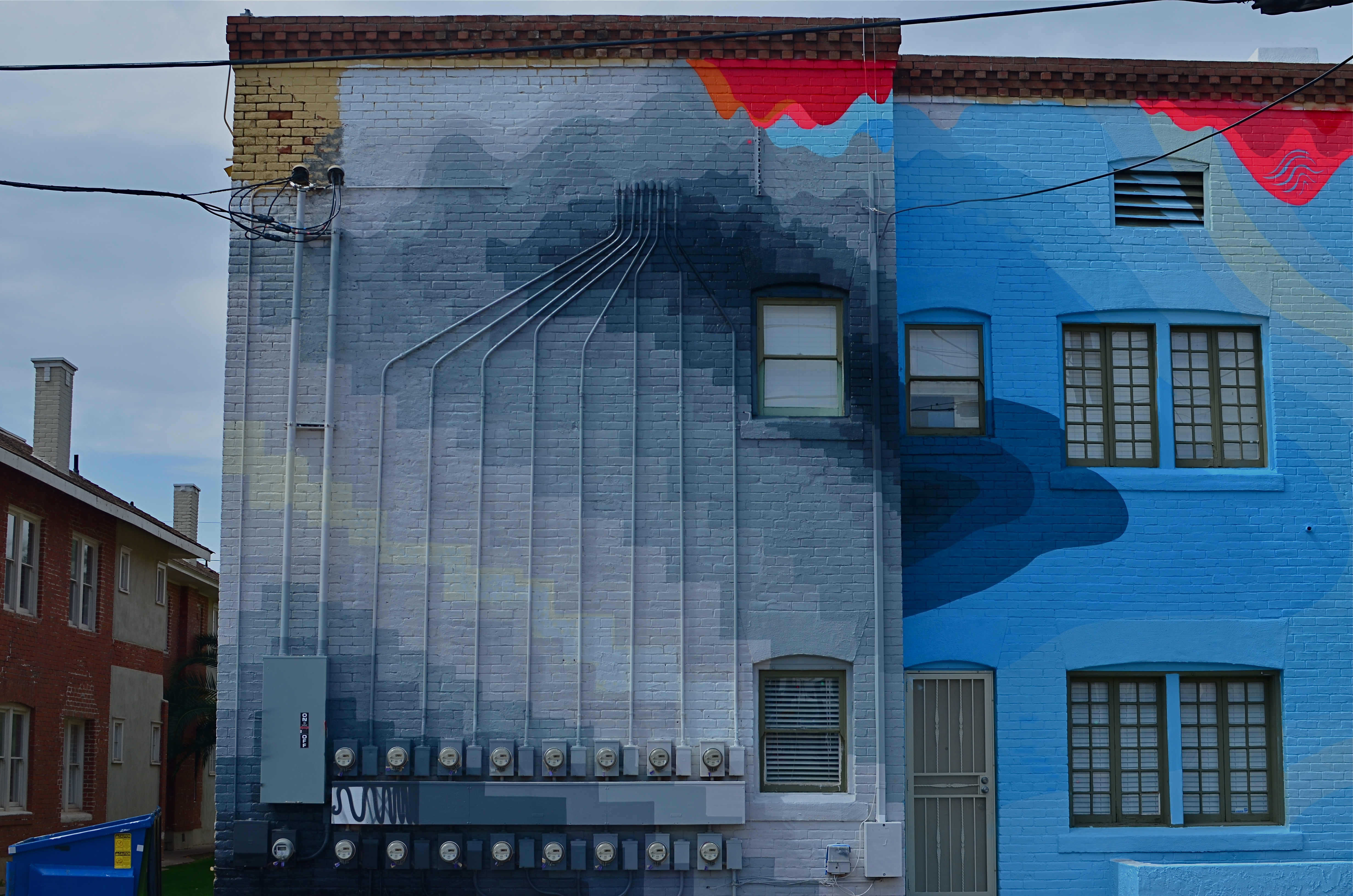
The color original. A little too Peter Max-y.
There were also technical arguments against color, or at least the look of color as seen in the printing processes of the early 20th century. Mass-appeal magazines like Look, Life, and National Geographic had made, in the view of their readers, massive strides in the fidelity of the color they put on newsstands. For Adams, these advances were baby steps, and pathetic ones at that, leading him and others to keep their color assignments to a bare minimum. In Adams’ case in particular, color jobs paid the bills that financed the black and white work he thought to be more important, so, if Kodak came calling, he reluctantly returned their calls. He then castigated his own color work as “aesthetically inconsequential but technically remarkable.”
Look where we are today, making color/not color choices in the moment, without changing films in mid-stream, deciding to convert or de-saturate shots in camera, in post processing, or even further down the road, based on our evolving view of our own work.
There are times when I still prefer monochrome as more “trustworthy” to convey a story with a bit more grit or to focus attention on textures instead of hues. In the above shot, I decided that the spare old building and its spidery network of power meters simply had more impact without the pretty colors from its creative makeover. However, one of my color frames was stronger compositionally than the black and white, so I desaturated it after the fact. Fortunately, I had shot with a polarizing filter, so at least the tonal range survived the transition.
The miracle of now is that we can make such microscopic tweaks in our original intention right on the spot. And that’s good, since, when it comes to color, nothing is ever black and white (sorry).
SOME OF MY BEST FRIENDS ARE (NOT) PHOTOGRAPHERS
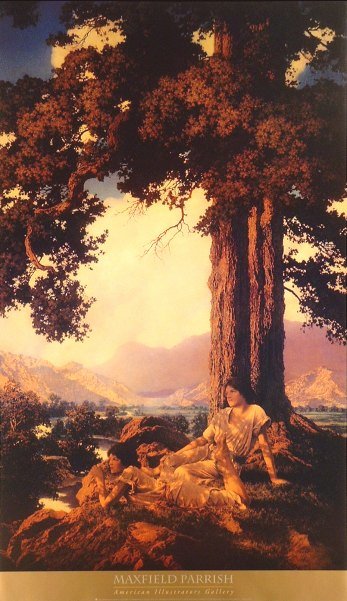
Beyond reality: the mood lighting of magazine illustrator par excellence Maxfield Parrish.
By MICHAEL PERKINS
THERE WAS A BRIEF MOMENT, WHEN PHOTOGRAPHY WAS A NOVELTY, when it was thought to be in some kind of winner-take-all death match with painting. That fake war lasted but a moment, and the two arts have fed (and fed upon) each other to varying degrees ever since. Both painting and photography have passed through phases where they were consciously or unconsciously emulating each other, and I dare say that all photographers have at least a few painter’s genes in their DNA. The two traditions just have too much to offer to live apart.
One of my favorite examples of “light sculpting”, the artistic manipulation of illumination for maximum mood, came to me not from a photographer, but from one of the finest illustrators of the early twentieth century. Maxfield Parrish (1870-1966) began his career as a painter/illustrator for fanciful fiction from Mother Goose to The Arabian Nights. Then, as color processes for periodicals became more sophisticated after 1900, he seamlessly morphed into one of the era’s premier magazine artists, working mostly for ad agencies, and most famously for his series of magnificently warm light fantasies for Edison Mazda light bulbs.
Parrish’s Mazda ads are dazzling arrangements of pastel blues, golden earth tones, dusky oranges, and hot yellows, all punched up to their most electrically fantastic limits. Years before photographers began to write about “golden hours” as the prime source of natural light, Parrish was showing us what nature seldom could, somehow making his inventions seem a genuine part of that nature. The stuff is mesmerizing. See more of his best at: http://www.parrish.artpassions.net/
During a recent trip to the high walking paths that crown Griffith Park in Los Angeles, I saw the trees and hills, at near sunset, form the perfect radiated glow of one of Parrish’s dusks. Timing was crucial: I was almost too late to catch the full effect, as shadows were lengthening and the overhanging tree near my cliffside lookout were beginning to get too shadowy. I hoped tha,t by stepping back just beyond the effective range of my on-board flash, I could fill in the front of the fence, allowing the light to decay and darken as it went back toward the tree. Too close and it would be a total blowout. Too far back, and everything near at hand would be too dark to complement the color of the sky and the hills.
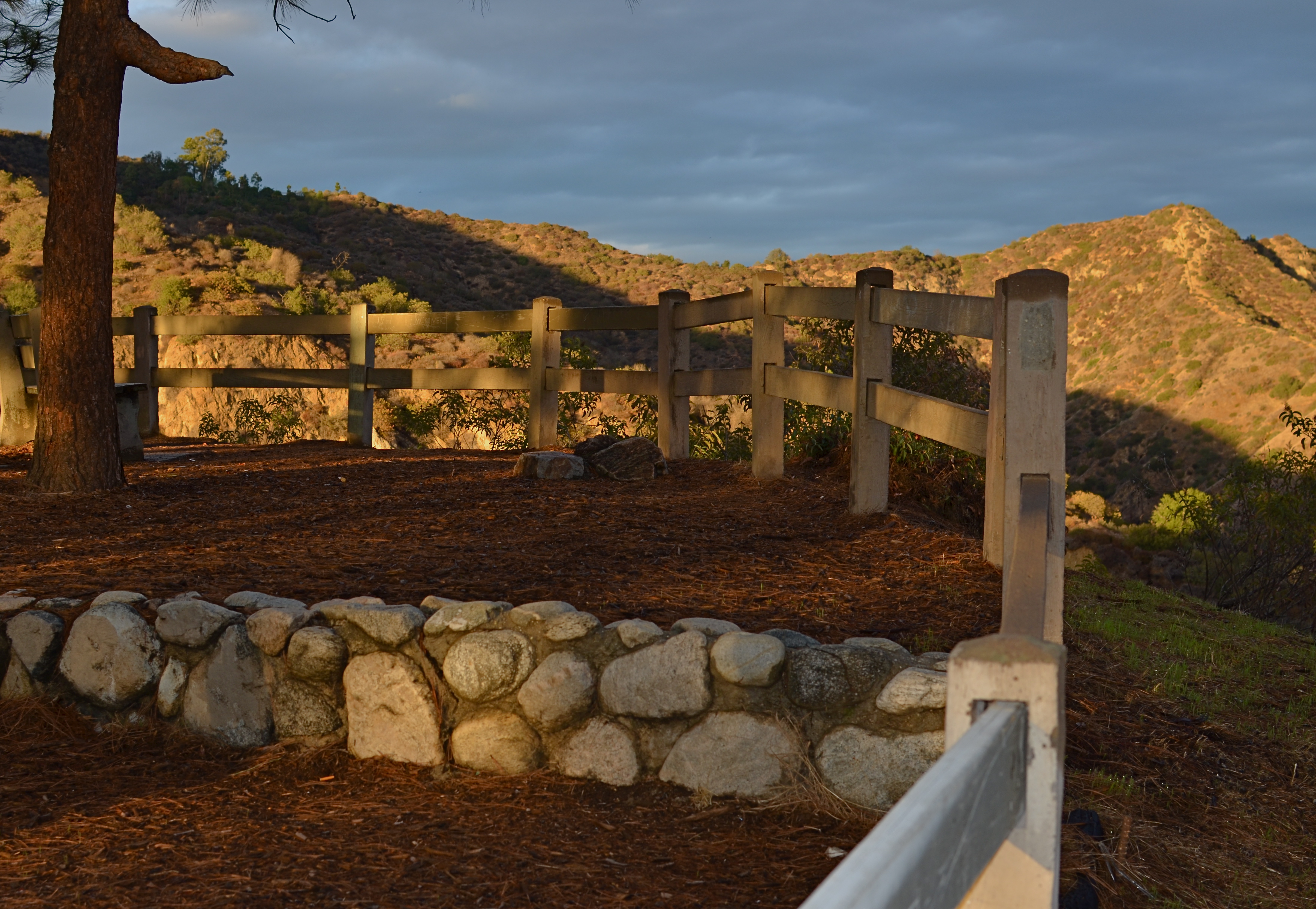
Faux-Parrish with a little help from fill flash. 1/160 sec., f/5.6, ISO 100, 35mm.
After a few quick adjustments, I had popped enough color back into the foreground to make a nice authentic fake. For a moment, I was on one of Parrish’s mountain vistas, lacking only the goddesses and vestal virgins to make the scene complete. You’d think that, this close to Hollywood, you could get Central Casting to send over a few extras. In togas.
Next time.
BALLET OF HORROR
By MICHAEL PERKINS
THERE USED TO BE A MOVEMENT IN FINE ARTS CALLED THE “ASHCAN SCHOOL”, WHICH SOUGHT TO SHOW POWER AND BEAUTY in banal or even repellent urban realities. It posed a question that continues to stoke debate within photography to this day: how much should art engage with things that are horrible? Is the creative act vital when it shows us ugliness? More importantly, is it vital because it shows us these things? And, if we choose to depict beauty to the exclusion of the ugly, is our art somehow less authentic?
The whole matter may come down to whether you see photography as a constructed interpretation of the world, kind of a visual poem, or as a sort of journalism. Of course, the medium has been shown to be wide enough for either approach, and perhaps the best work comes from struggling to straddle both camps. A world of gumdrops and lollipops can be just as pretentious and empty as a world constructed exclusively of the grisly, and I think each image has to be defined or justified as a separate case. That said, finding a ying/yang balance between both views within a single image is rare.
Falling, as I did, under the influence of landscape photographers at a really early age, I have had to learn to search for a kind of rough ballet in things that I find disturbing. I’m not saying that it’s hampered my work: far from it. Look at it another way: as a missionary, you can plant crops and build hospitals for your village, but you still have to address the area’s cholera and dysentery. It’s just a part of its life.
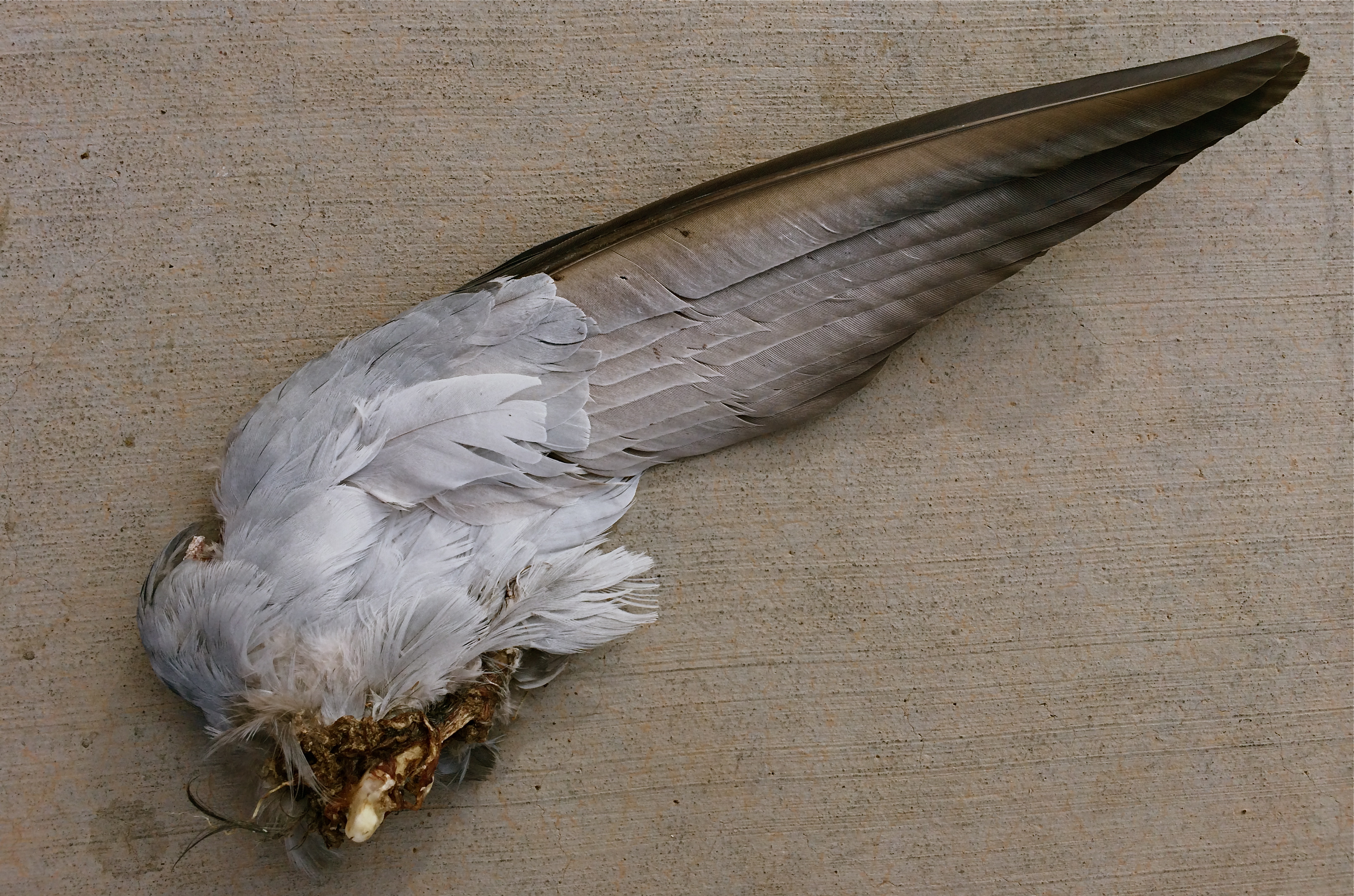
Death On The Wing: 1/900 sec., f/2.2, ISO 32, 4.12mm
The image above was pretty much placed right in my path the other day as I walked to enter an urban drugstore, and, as horrified as I was by the likely origin of this savage souvenir, I had to also acknowledge it as a Darwinian study of beauty and design. The virtually intact nature of the wing, contrasted with the brutal evidence of its detachment from its owner, made for an unusual transition from poetry to chaos within a single image. Many might ask, how could you make that picture? And it’s a hard question to answer. Another question that would be just as difficult to answer: how could I not?
Certainly, I won’t be entering this in Audubon magazine’s annual photo contest: it’s also no one’s idea of cutest kitty or beautiful baby. But it is one of the most unique combinations of sensation I have ever seen, and I did not want to forget it, nightmares and all. Because we live, and take pictures in, the world at large.
Not just the world we want.
DESTROY IT TO SAVE IT
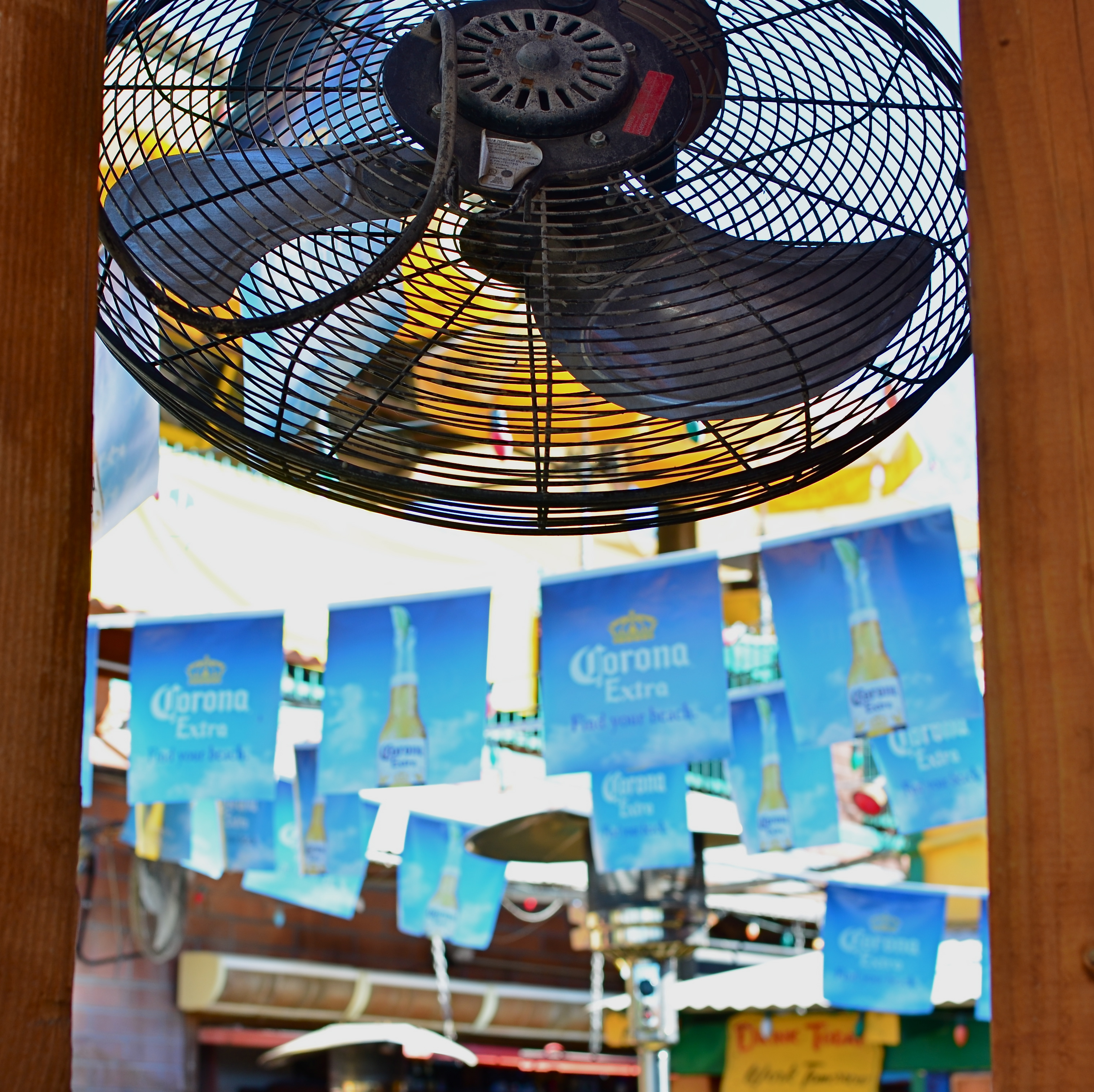
Fan photo: 1/80 sec., ISO 100, 35mm.
By MICHAEL PERKINS
THERE ARE TIMES WHEN THE RAW VISUAL FLOOD OF INTENSE COLOR IS THE MOST INTOXICATING DRUG ON THE PLANET, at least for photographers. Sometimes you are so overcome with what’s possible from a loud riot of hues that you just assume you are going to be able to extract a coherent image from it. It happens the most, I find, with large, sprawling events: festivals, open restaurants, street fairs, carnivals, anywhere your eyeballs just go into overload. Of course there must be a great picture in all this, you promise yourself.
And there may be. But some days you just can’t find it in the sheer “Where’s Waldo”-ness of the moment. Instead, you often wind up with a grand collection of clutter and no obvious clues as to where your viewer should direct his gaze. The technical term for this is “a mess”.
I stepped in a great one the other day. It’s a local college-crowd bar in Scottsdale, Arizona, where 99% of the customers sit outside on makeshift benches, shielded from the desert sun by garish Corona umbrellas, warmed by patio heaters, and flanked by loud pennants, strings of aerial lightbulbs and neon booze ads. The place radiates fun, and, even during the daylight hours before it opens, it just screams party. The pictures should take themselves, right?
Well, maybe it would have been better if they had. As in, “leave me out of it”. As in, “someone get me a machete so I can hack away half of this junk and maybe find an image.” Try as I might, I just could not frame a simple shot: there was just too much stuff to give me a clean win in any frame. In desperation, I shot through a window to make a large cooling fan a foreground feature against some bright pennants, and accidentally did what I should have done first. I set the shot so quickly that the autofocus locked on the fan, blurring everything else in the background into abstract color. It worked. The idea of a party place had survived, but in destroying my original plan as to how to shoot it, I had saved it, sorta.
I have since gone back to the conventional shots I was trying to make, and they are still a vibrant, colorful mess. There are big opportunities in big, colorful scenes where showing “everything in sight” actually works. When it doesn’t, you gotta be satisfied with the little stories. We’re supposed to be interpreters, so let’s interpret already.
POST No. 200: LET’S SEE WHAT HAPPENS
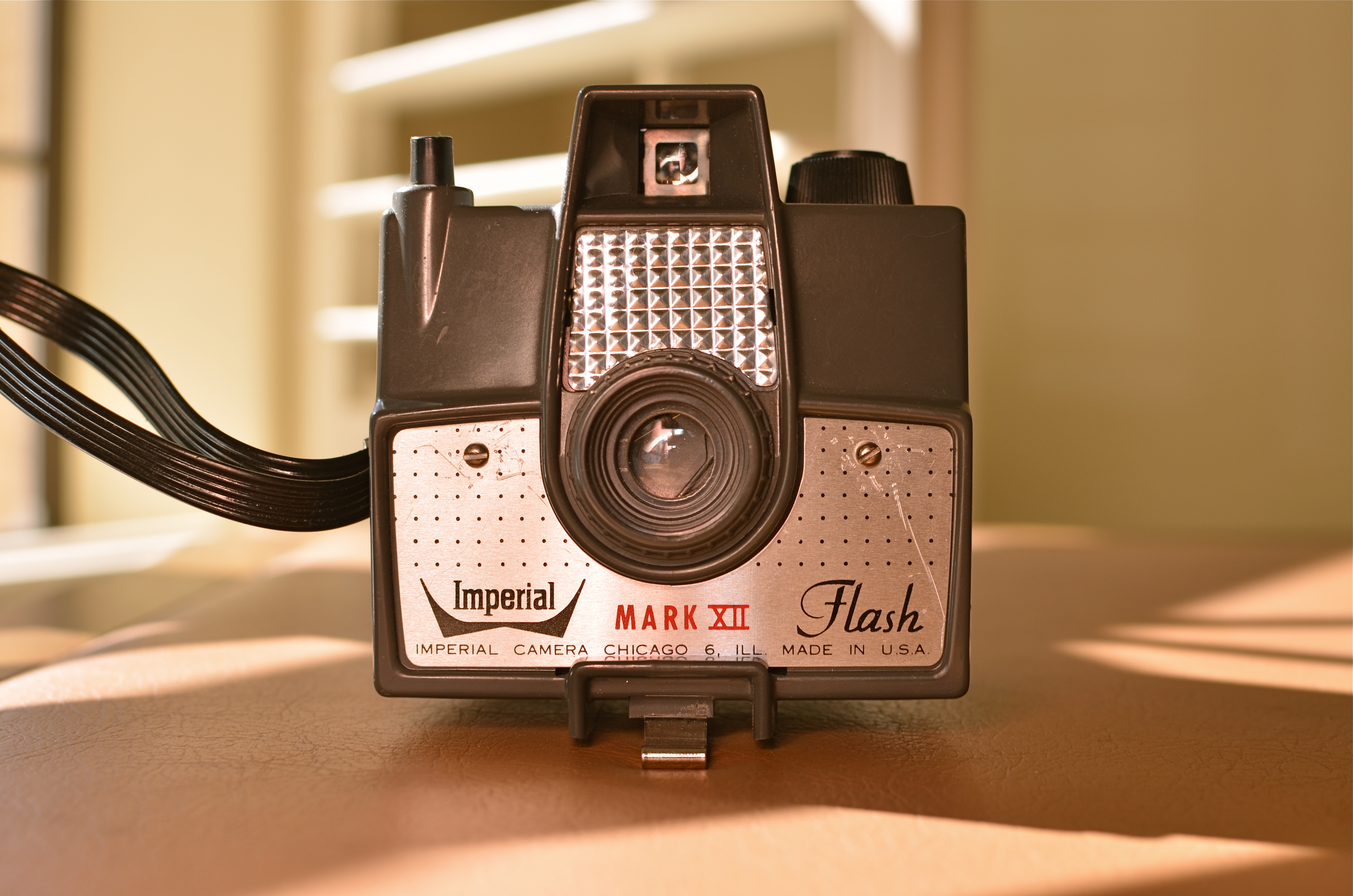
Let There Be (A Way To Catch) Light: The Imperial Mark XII, my first camera. 1/200 sec., f/5.6, ISO 125, 35mm.
By MICHAEL PERKINS
TIME, AT MY LOCATION IN LIFE, NOW PROCEEDS LIKE A CRUISE MISSILE, OR FASTER. Some days the signposts are zipping by so quickly that I seem to be inside a blender going full tilt puree.
I began THE NORMAL EYE as a kind of “let’s see what happens” project in 2012. Back at the starting line, 200 posts ago today, I wondered if I could even get to 200 words. Then a lucky accident occurred. Photography, which, over a lifetime has been an unfailing miracle of discovery for me, willed that passion onto my pages. Maybe it’s the kind of writing that is available to me, to all of us, as a unique feature of the present world. Maybe I had to live this long to become a chronicler for my eye and the soul that stands behind it.
As a broadcaster, I made my living for over thirty years writing advertising copy, news features, presentations, columns and tutorial material, but always for someone else, always to other agendas beyond my own. But, even while I was working for everyone else but myself, photography served as one of the very few constants in my life, and one of its principal sources of joy. Happy problem: I feel like I need another whole life to try to realize what I can now visualize. If I have any regret, it is that I learn everything the hard way, the slow way, experientially. If I could conceptualize the finer points of the art of imaging without running it personally through my own fingers, I would. It would save time, a premium item at any age, but beyond price from where I stand now.
When I first began clicking away as a kid with a kamera, I knew nothing but that I wanted to make pictures. I was divinely unaware of how truly ignorant I was and keen for the fray. My father, being a graphic artist, subscribed to Life magazine when it was still the premier photo newsmagazine in the world, tearing out the images in every issue and organizing them into a morgue file. There was the world in our garage, alphabetized as a ready reference on any subject. Want to know how to draw a giraffe? Look in the G folder.
But something else was happening as well. I was getting a crash course from the leading photographers on the planet as to how to see, how to show what you saw, how to make others see. I had my own version of the twelve apostles in the works of Alfred Eisenstadt, Gordon Parks, Larry Burrows, Richard Avedon, Otto Karsh, Margaret Bourke-White, and a half dozen others. Inside this special Bible I studied chapters and verses from the books of Aperture, F-stop, Exposure, Tri-Pan X, Graphlex. Praise the Lord and pass the polarizing filter.
As photographers, we all know that our favorite picture is the one we haven’t taken yet, since therein lies the potential for everything. I have to approach this blog the same way. Your input and my impatience have both fueled the fun and the fury of THE NORMAL EYE, and I hope to continue the affair as far as it will take us. I can’t focus for infinity, since I don’t know how far away that is. But, with your help, I can definitely manage 200 words at a time.
Thanks for coming here.
“EFFECT” VS. “EFFECTIVE”
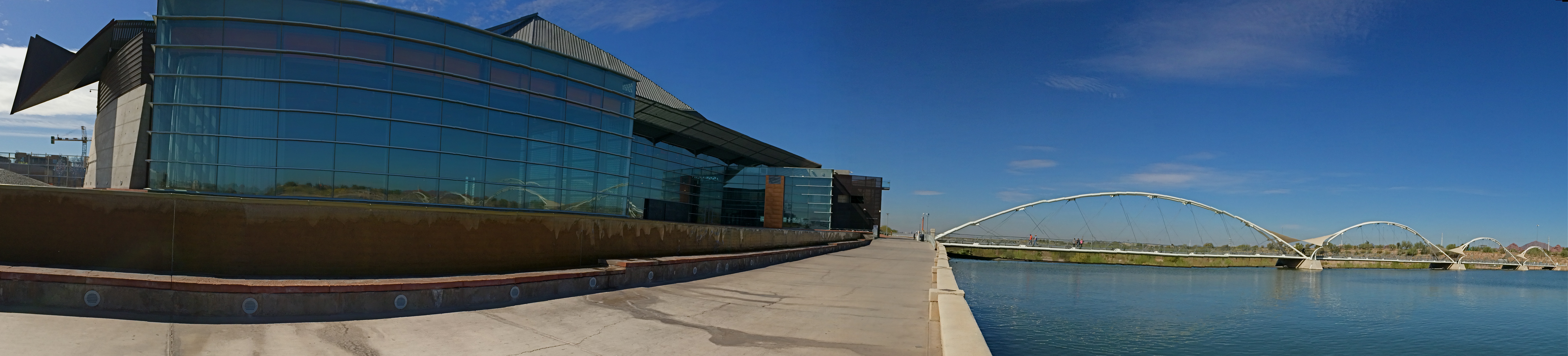
Panoramic shots like this are no longer a three-day lab project, but an in-camera click. But what is being said in the picture?
By MICHAEL PERKINS
THERE ISN’T ANYTHING EMPTIER THAN THE PERFECT EXECUTION OF A FLAWED IDEA. And in the present effects-drenched photographic arena, where nearly any texture, color, or conception can be at least technically realized, we need, always, to be making one crucial distinction: separating what we can do from what we should do.
The basic “fixes” which come natively loaded in even the most basic cameras (filters, effects, nostalgic slathers of antique colors) suggest a broad palette of choices for the photographer looking to extend his reach through what is basically an instantaneous short cut. Fine and dandy, so far. Who, after all, wants to labor for hours to augment a shot with a particular look if that effect can be achieved at the touch of a button? Certainly no one gets into photography anymore with the understanding that they will also have to act as a chemist, and creativity need not be the exclusive playground of the scientifically elite. We all agree that the aim of photography always has and always should be the placing of all tools in as many hands as possible, etc., etc.
But waita seccint. Did I say the world tool? ……(will the recorder read that last part back….?……”placing of all tools in as many…”)… yep, tool. Ya see, that word has meaning. It does not mean an end unto itself. A fake fisheye doth not a picture make. Nor doth a quickie panorama app, a cheesy sepia filter, nor (let’s face it) the snotty habit of saying “doth”. These things are supposed to supplement the creative moment, not be a substitute for it. They are aids, not “fixes”.
This comes back to the earlier point. Of course we can simulate,imitate, or re-create certain visual conditions. But what are we actually saying in the picture? Did we use the effect to put a firm period at the end of a strong sentence, or did we use it as a smoke bomb to allow us to exit the stage before the audience gets wise to the fakery?
One of the original objections to photography, as stated by painters, was that we were handing off the actual act of visual artistry to a (gasp!) machine. A little hysterical, to be sure, but a concern is still worth addressing.
There is a soul in that machine, to be sure.
But only if we supply it.
TERMS OF ENGAGEMENT
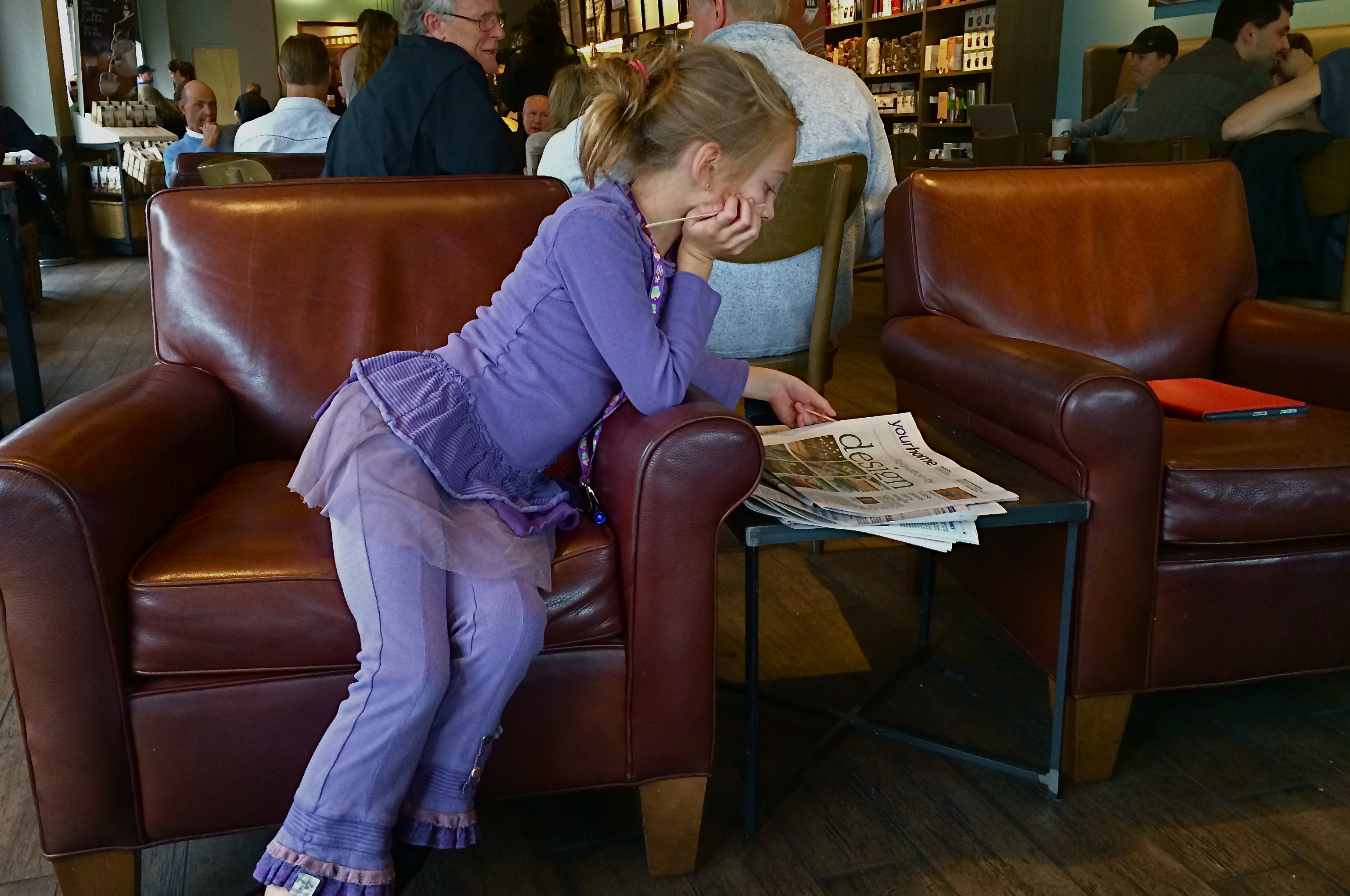
Images that require little in the way of tweaking are good candidates for mobil phone cams. 1/30 sec., f/2.2, ISO 200, 4mm.
By MICHAEL PERKINS
OVER A HUNDRED YEARS AGO, WHEN EASTMAN KODAK’S AIM WAS TO PUT A CAMERA INTO THE HANDS OF THE AVERAGE EVERYMAN, their slogan, “You press the button, and we do the rest” was meant as an enticement. Not only had Kodak so simplified the processing of taking a snap as to make it irresistible, but they covered everything that happened next, allowing you to ship the camera, film inside, to them, at their cost, have them sweat the processing and printing, and ship back your photos, having also pre-loaded a fresh roll into your camera. You were covered at all ends, and this was a good thing. It was also an immensely successful thing for Kodak, which was, after all, not in the camera business, but in the film business (so shoot lots of it, hint hint).
Today’s camera phones are essentially the Kodak Brownies of the 21st century, with many refinements. Unlike the Brownie, the iPhone can intuit what you need in the way of light and aperture and supply it without troubling you with why or how it happens. Much like the box Kodaks of the Victorian era, today’s cameras are also bent on saving you the hassle of negotiating most decisions and choices. Again, this is a tremendously successful business plan, since it is safe to assume that most people would rather take the picture than think about how to take the picture.
But it is this very convenience that is a kind of strait jacket for photographers who were weaned on Pentaxes, Nikons and Canons, since, for us, the rules of engagement are lopsided. The camera is not meeting us in the middle as a co-creator or partner, but jamming us into a far corner, relegating us to the role of “the guy who hits the shutter”. Giving up all that active control can be freeing for some, but suffocating for others, and it speaks to the love-hate relationships many photogs have with their phones. On the one hand, Holy Hanna, looka these optics and ready-made tricks. On the other hand, you can feel that you’re just riding shotgun instead of steering.
With this in mind, I use an iPhone for the kind of street stuff where the concept or story is almost totally complete in itself, where I would only lose the moment or fiddle needlessly if carrying a more complex camera, or where the presence of a more obvious, “serious” camera would attract too much unwelcome attention. Damn ’em, phone cameras do buy you some invisibility and stealth, which is crazy, since much greater harm has been done by these ubiquitous little snoopercams than by all the “pro” cameras ever manufactured. Go figure.
When you take all the worry out of making a picture, you take all the responsibility and some of the joy out of it, too. My opinion, from my perch in the land of the dinosaurs. Cameras are not artists: they are tools, and when you give up the final say-so in what a picture will eventually be to a device, you get the recording of information, not the documentation of a soul.
NIGHT GALLERY
By MICHAEL PERKINS
I RECENTLY READ AN INTRIGUING STATEMENT ON THE DIFFERENCE BETWEEN PAINTING AND PHOTOGRAPHY to the effect that painters start with nothing, and add information until the image is created, whereas photographers start with total information and work to selectively remove things until their pictures are made. Of course, there are times when both artists borrow the approach of the other, and the practice of “light painting” is one place where photogs can actually wield a kind of brush, beginning in pure darkness and then adding illumination, literally by hand, until a picture, layer by layer, emerges.
Bascially, you’re going down two potential paths with light painting. One is the depiction of fantasy, a custom light creation that is the central subject of the image, rather than an augmentation of something else. Visit the tutorial link below to view some of these visions, as they are truly fascinating (not to mention work-intensive): the flaming fireball dancing across the lake, the geometric noodlings hanging in mid-air, the angel wings growing out of your girlfriend’s back, and so on. The other approach is to amplify the impact of a subject which has either no illumination at night or a lighting scheme that is counter to the mood you’re going for. In this case, your flashlight, LED or light coil is creating the visual reality that you wish existed. It’s “reality-plus”, rather than a complete fantasy. This is the avenue I have tended to favor.
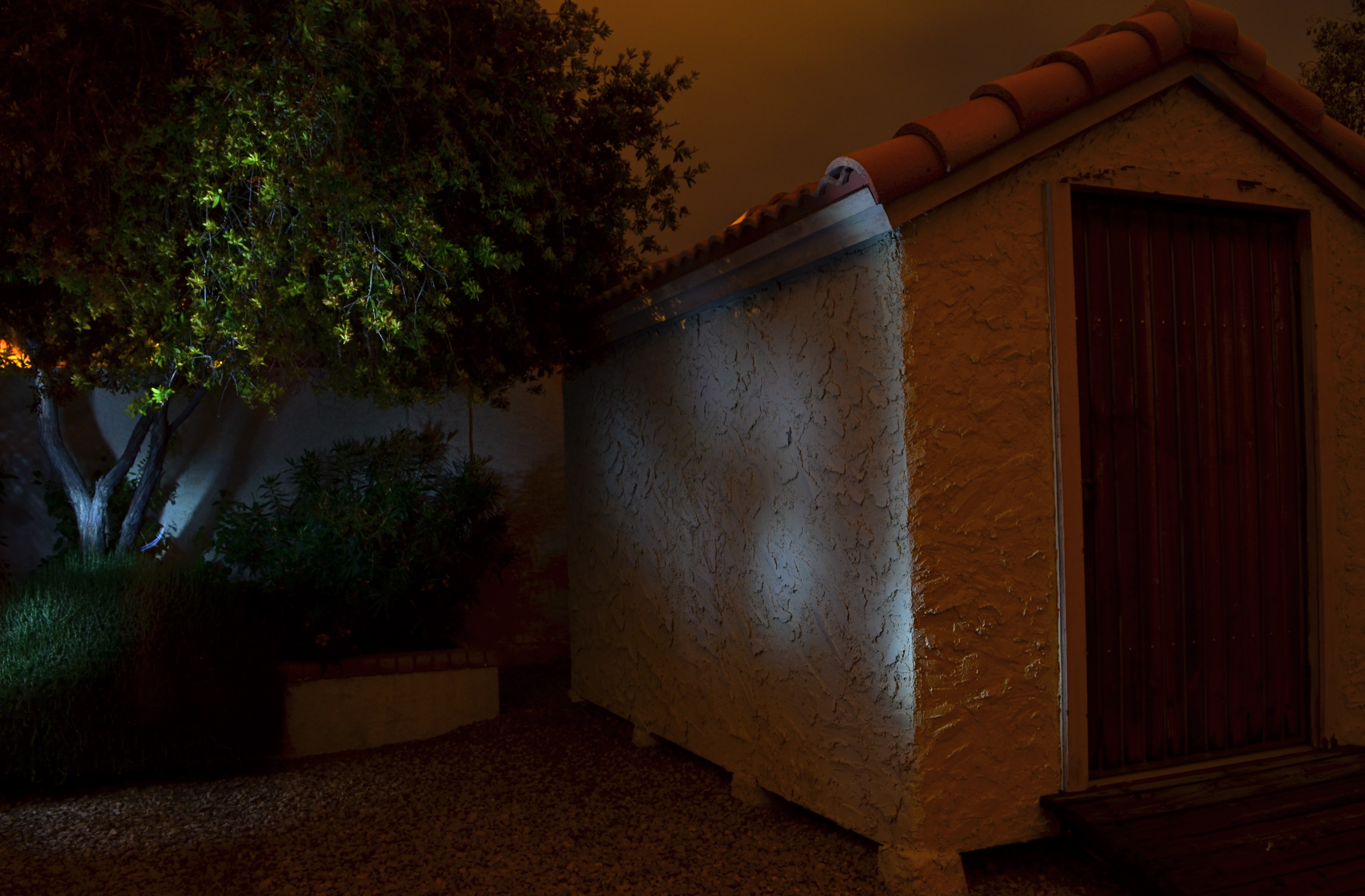
No lighting in the back yard, unless you “paint” it on: 30 sec., f/8, ISO 100, 18mm.
After a year away from light painting, I have started to slink back into it, moving from tabletop arrangements, where control is less of an issue, to exterior locales, which are, frankly, the very definition of trial-and-error.With the camera locked onto its tripod and with a pre-determined exposure and aperture, the responsibility for whether the magic happens is literally in your hands, hands that need real-world training in this technique.
As for lighting: these days, even dollar-store LEDs provide a pretty intense white light in darkness but they don’t throw it very far, and they are also pretty narrowly focused, so, if you want to paint the side of, say, a barn, it’s really hard to do so evenly. Best thing is to avoid the bargain lights: get yourself a powerful torch with a variable focus, something that can shoot both soft and wide. It’ll save you lots of time trying to guess about coverage on larger surfaces. Also, within a single exposure, you can still change off to the pencil-thin lights for special detailing, since, in complete darkness, your shutter will be open long enough for you to switch lights on and off, change position, and touch things up.
The above image was done in a yard with no landscape lighting on hand, other than the light I am applying during a thirty-second exposure. Not a perfect execution, but a quick example of how you can impart night mood to objects that are duller than dishwater in daylight. Lighting is all about setting the terms of view, and hand-painting the light allows you to control that mood, almost as completely as you would with oil, brush or canvas.
More to look at:
WORK AT A DISADVANTAGE
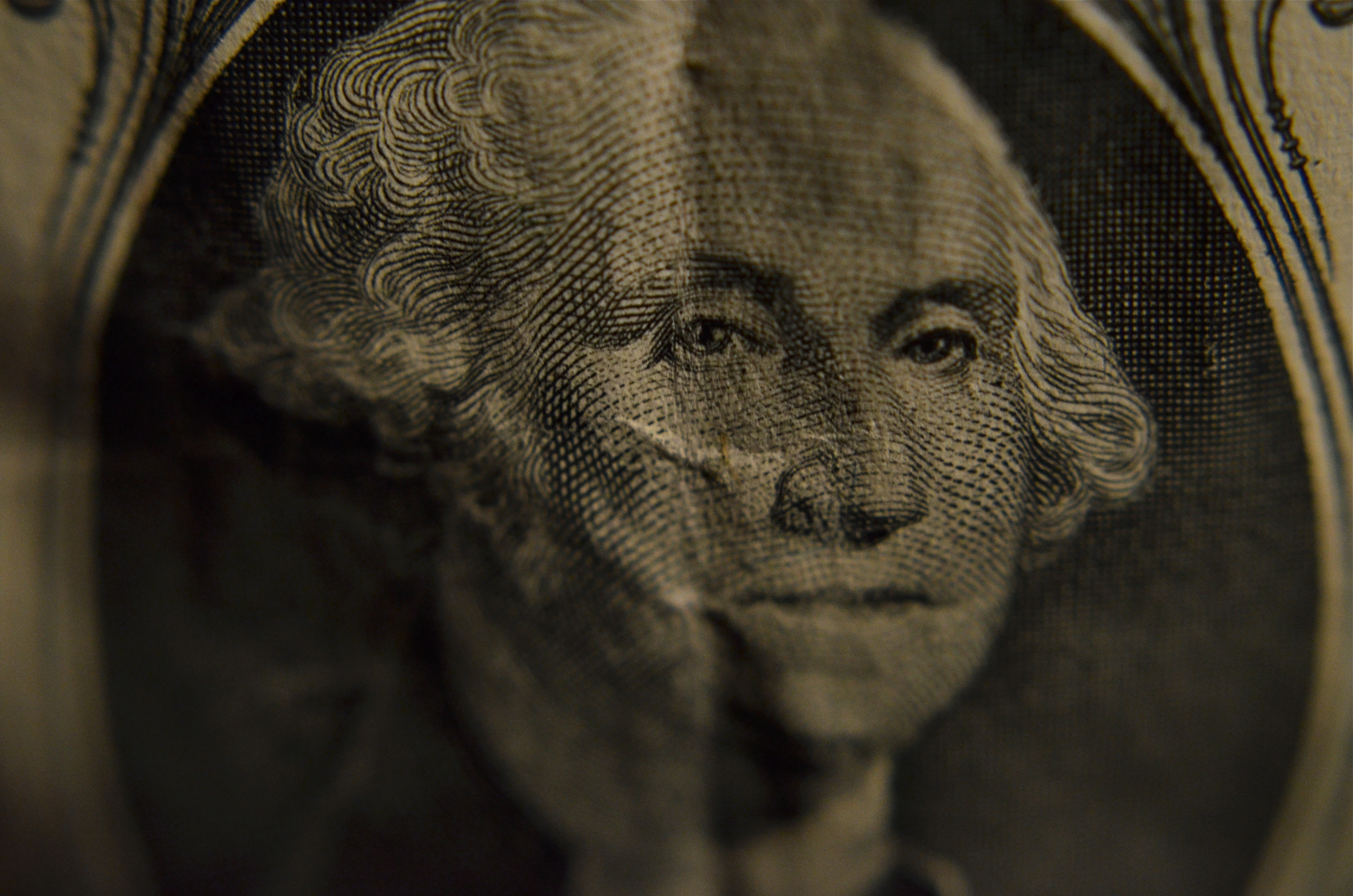
Focus. Scale. Context. Everything’s on the table when you’re trolling for ideas. 1/100 sec., f/5.6, ISO 800, 35mm.
By MICHAEL PERKINS
“IS THERE NO ONE ON THIS PLANET TO EVEN CHALLENGE ME??“, shouts a frustrated General Zod in Superman II as he realizes that not one person on Earth (okay, maybe one guy) can give him a fair run for his money. Zod is facing a crisis in personal growth. He is master of his domain (http://www.Ismashedtheworld.com), and it’s a dead bore. No new worlds to conquer. No flexing beyond his comfort zone. Except, you know, for that Kryptonian upstart.
Zod would have related to the average photographer, who also asks if there is “anyone on the planet to challenge him”. Hey, we all walk through the Valley Of The Shadow Of ‘My Mojo’s Gone’. Thing is, you can’t cure a dead patch by waiting for a guy in blue tights to come along and tweak your nose. You have to provide your own tweak, forcing yourself back into the golden mindset you enjoyed back when you were a dumb amateur. You remember, that golden age when your uncertainly actually keened up your awareness, and made you embrace risk. When you did what you could since you didn’t know what you could do.
You gotta put yourself at a disadvantage. Tie one hand behind your back. Wear a blindfold. Or, better yet, make up a “no ideas” list of things that will kick you out of the hammock and make you feel, again, like a beginner. Some ways to go:
1.Shoot with a camera or lens you hate and would rather avoid. 2.Do a complete shoot forcing yourself to make all the images with a single lens, convenient or not. 3.Use someone else’s camera. 4.Choose a subject that you’ve already covered extensively and dare yourself to show something different in it. 5.Produce a beautiful or compelling image of a subject you loathe. 6.Change the visual context of an overly familiar object (famous building, landmark, etc.) and force your viewer to see it completely differently. 7.Shoot everything in manual. 8.Make something great from a sloppy exposure or an imprecise focus. 9.Go for an entire week straight out of the camera. 10.Shoot naked.
Put yourself behind the…. oh, you get the idea.
Okay, that last one was to make sure you’re still awake. Of course, if nudity gets your creative motor running, then by all means, check local ordinances and let your freak flag fly. The point is, Zod didn’t have to wait for Superman. A little self-directed tough love would have got him out of his rut. Comfort is the dread foe of creativity. I’m not saying you have to go all Van Gogh and hack off your ear. But you’d better bleed just a little, or else get used to imitating instead of innovating, repeating instead of re-imagining.
MAGNIFICENT RUIN

Clay pre-firings and molds for bronze bells at Paolo Soleri’s COSANTI studios in Paradise Valley, Arizona. 1/20 sec., f/5.6, ISO 100, 35mm.
by MICHAEL PERKINS
IN 1956, ARCHITECT PAOLO SOLERI BEGAN THE FIRST MINIATURE DEMONSTRATION OF WHAT WOULD BECOME HIS LIFE’S WORK, an experimental, self-contained, sustainable community he called Cosanti. Erecting a humble home just miles from his teacher Frank Lloyd Wright’s compound at Taliesin West, in what was then the wide-open desert town of Paradise Valley, Arizona, he started sand-casting enormous concrete domes to serve as the initial building blocks of a new kind of ecological architecture. And, over the next half-century, even as Soleri would call Paradise Valley his home, he would construct bigger versions of his dream city, now renamed Arcosanti, on a vast patch of desert between Phoenix and Flagstaff.
The project, which at his death in 2013 was still unrealized, was funded over the years by the sales of Soleri’s custom fired bronze and clay wind bells, which became prized by Arizona visitors from all over the world. At present, his early dwellings still stand, as do the twisting, psychedelic paths and concrete arches that house his smelting forges, his kilns, the Cosanti visitor center, and a strange spirit of both wonder and dashed dreams. It is a magnificent ruin, a mad and irresistible mixture of textures for photographers.
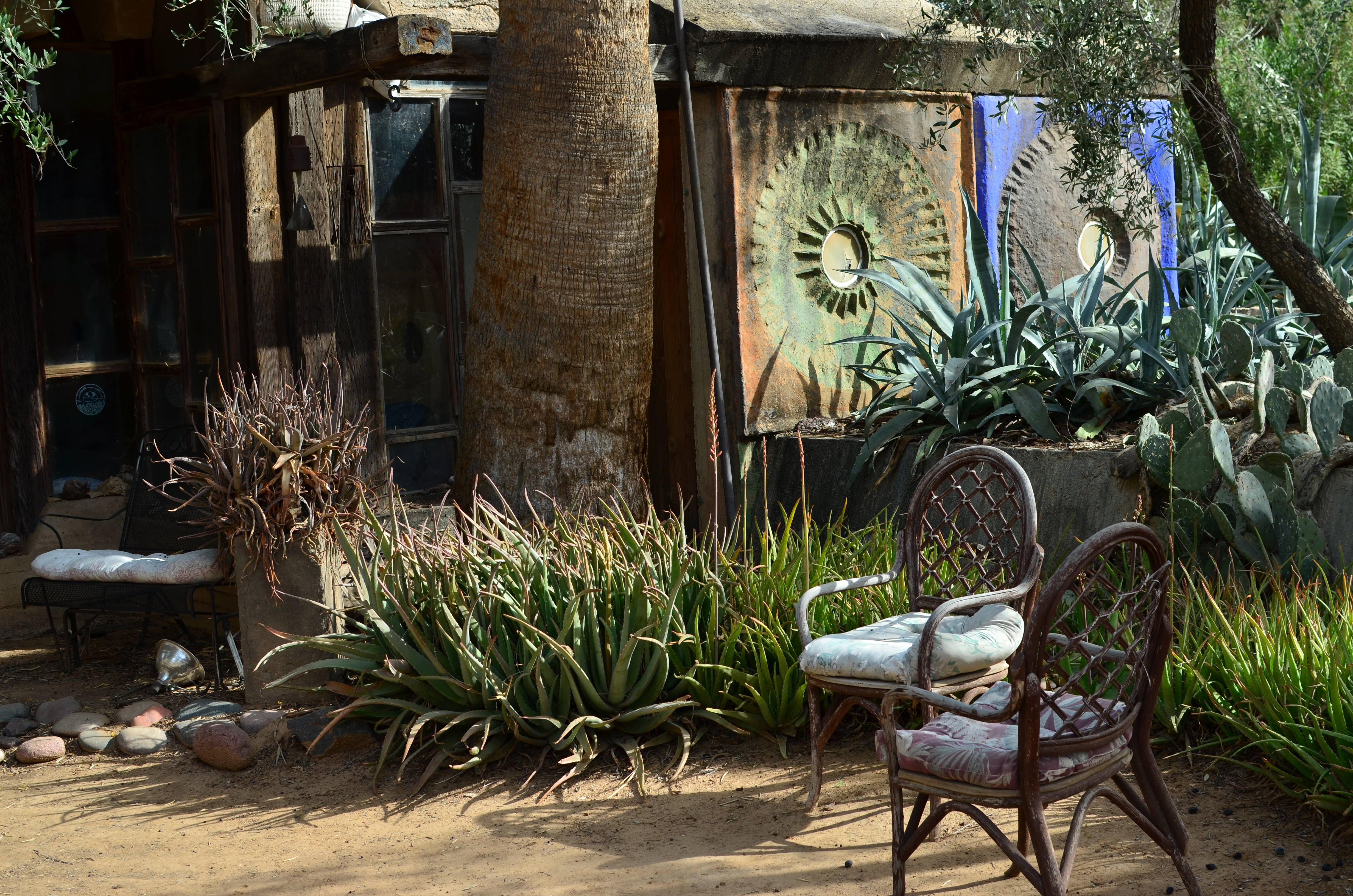
One of COSANTI’s bizarre dwellings, scattered amongst the compound’s forges and kilns. 1/400 sec., f/5.6, ISO 100, 35mm.
Name the kind of light…….brilliant sun, partial shade, catacomb-like shadows, and you’ve got it. Name the material, from wood to stone to concrete to stained glass, and it’s there. The terrain of the place, even though it’s now surrounded by multi-million dollar mansions, still bears the lunar look of a far-flung outpost. It’s Frank Lloyd Wright in The Shire. It’s Fred Flintstone meets Dune. It continues to be a bell factory, and a working architectural foundation. And it’s one of my favorite playgrounds for testing lenses, flexing my muscles, trying stuff. It always acts as a reboot on my frozen brain muscles, a place to un-stall myself.
Here’s to mad dreamers, and the contagion of their dreams.
DARKNESS AS SCULPTOR
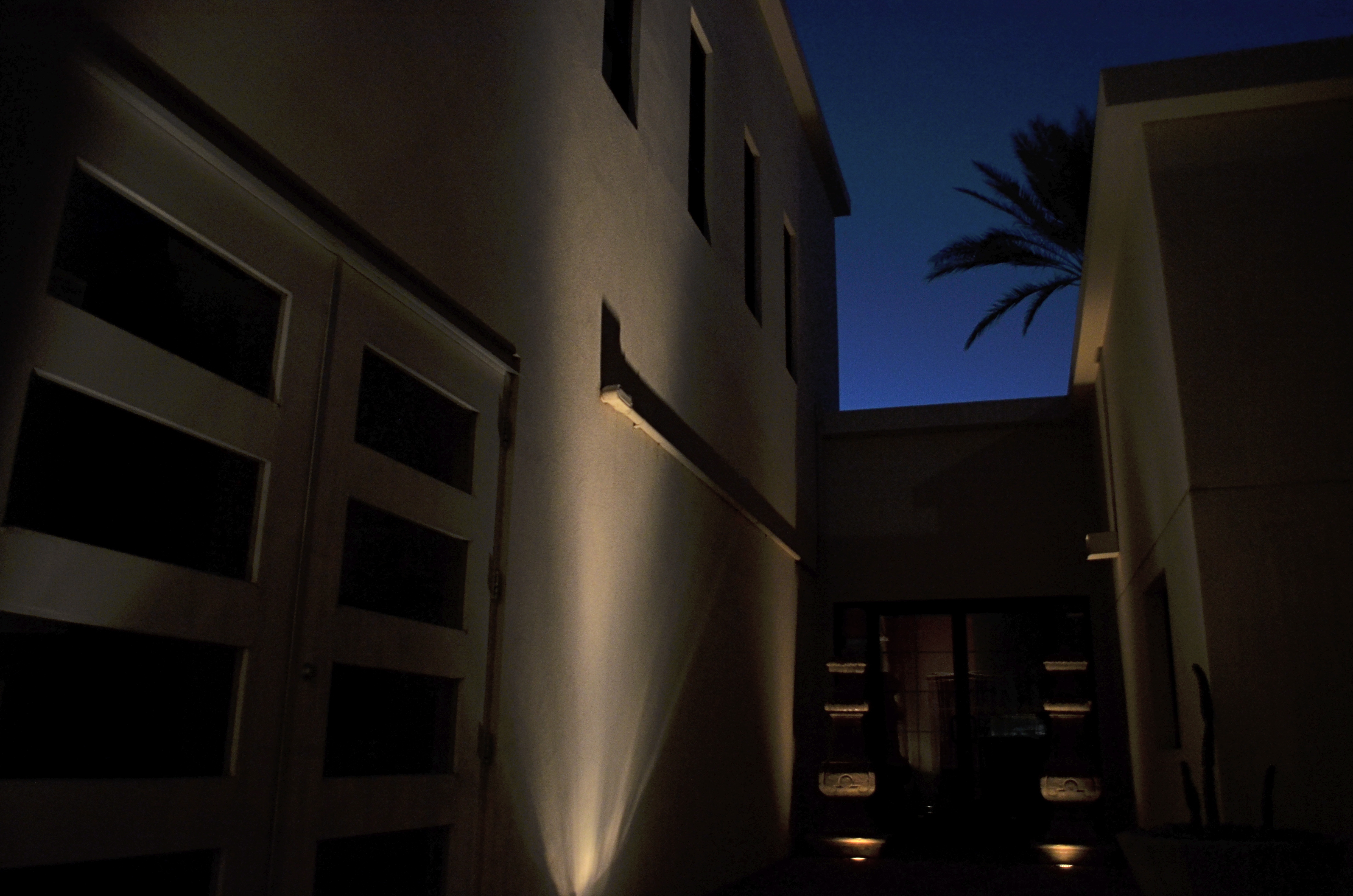
A dead end? Not once the sun goes down. 1/10 sec., f/3.5, ISO 500, 18mm
By MICHAEL PERKINS
IN DAYLIGHT PHOTOGRAPHY, THE DEFAULT ACTION TENDS TO BE TO SHOW EVERYTHING. Shadows in day scenes are a kind of negative reference to the illuminated objects in the frame, but it is those objects, and not the darkness, that defines space. In this way shady areas are a kind of decor, an aid to recognition of scale and depth.
At night, however, the darkness truly plays a defining role, reversing its daylight relationship to light. Dark becomes the stuff that night photos are sculpted from, creating areas that can remain undefined or concealed, giving images a sense of understatement, even mystery. Not only does this create compelling compositions of things that are less than fascinating in the daytime, it allows you to play “light director” to selectively decide how much information is provided to the viewer. In some ways, it is a more pro-active way of making a picture.
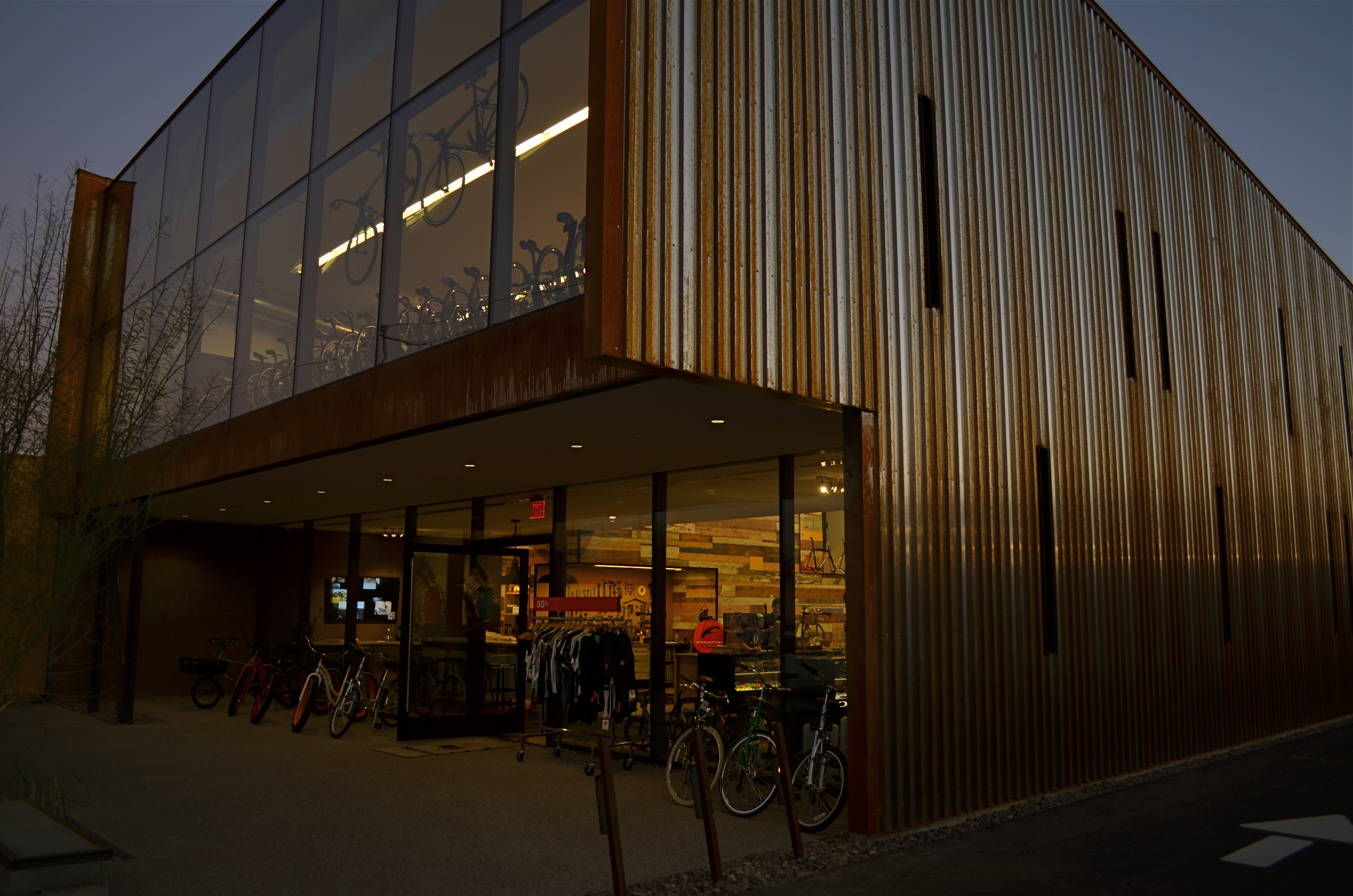
This bike shop took on drastically different qualities as the sun set. 1/40 sec., f/3.5, ISO 100, 18mm.
I strongly recommend walkabout shoots that span the complete transition from dusk to post-sunset to absolute night. Not only will the quickly changing quality of light force you to make decisions very much in-the-moment, it allows for a vast variance in the visual power of your subjects that is starkly easy to measure. It’s a great practice lab for shooting completely on manual, and, depending on the speed of your chosen lens (and greater ISO flexibility in recent cameras), makes relatively noise -free, stable handheld shots possible that were unthinkable just a few years ago. One British writer I follow recently remarked, concerning ISO, that “1600 is the new 400”, and he’s very nearly right.
So wander around in the dark. The variable results force you to shoot a lot, rethink a lot, and experiment a lot. Even one evening can accelerate your learning curve by weeks. And when darkness is the primary sculptor of a shot, lovely things (wait for the bad pun) can come to light (sorry).
SOFT EDGES, HARD TRUTHS
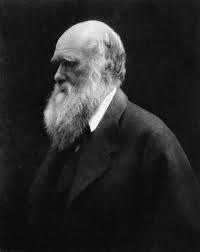
Charles Darwin sits for Julia Margaret Cameron. What she sacrificed in sharpness she gained in naturalness.
By MICHAEL PERKINS
WHATEVER MARVELS CURRENT TECHNOLOGY ALLOW US TO ACHIEVE IN PHOTOGRAPHY, there is one thing that it can never, ever afford us: the ability to be “present at the creation”, actively engaged at the dawn of an art in which nearly all of its practitioners are doing something fundamental for the very first time. The nineteenth century now shines forth as the most open, experimental and instinctive period within all of photography, peopled with pioneers who achieved things because there was no tradition to discourage them, mapping out the first roads that are now our well-worn highways. It is an amazing, matchless time of magic, risk, and invention.
Much of it was largely mechanical in nature, with the 1800’s marked by rapidly changing technical means for making images, for finding faster recording media and sharper lenses. The true thrill of early photography comes, however, from those who conjured ways of seeing and interpreting the world, rather than merely making a record of it. In some ways, creating a camera
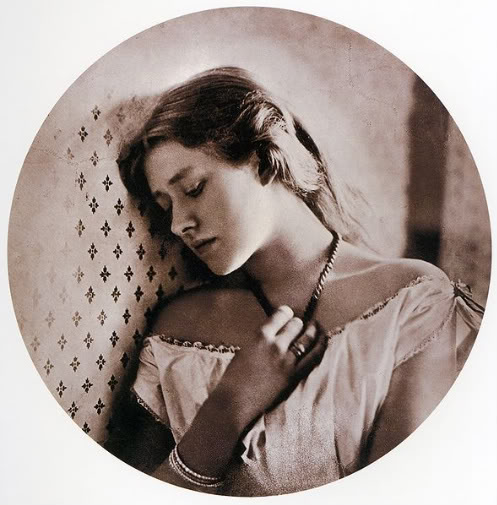
Most 19th photographers could barely capture people as objects: Cameron transformed them into subjects.
facile enough to fix portraits on glass was easy. compared with the evolving philosophy of how to portray a person, what part of the subject to capture within the frame. And it was in this latter wizardry that Julia Margaret Cameron entered the pantheon of genuine genius.
Born to courtly British comfort in India in 1815, Cameron, largely a hobbyist, was one of the first photographers to move beyond the rigid, lifeless portraits of the era to generate works of investigation into the human spirit. She was technically bound by the same long exposures that made sitting for a picture such torture at the time, but, somehow, even though she endlessly posed, cajoled, and even bullied her subjects into position, she nonetheless achieved an intimacy in her work that the finest studio pros of the early 19th century could not approximate. Far from being put off by the softness that resulted from long exposures, Cameron embraced it, imbuing her shots with a gauzy, ethereal quality, a human look that made most other portraits look like staged lies.
In many cases, Julia Margaret Cameron’s eye has become the eye of history, since many who sat for her, like Charles Darwin, seldom or ever sat again for anyone else, making her view of their greatness the official view. And while she only practiced her craft for a scant fifteen years, no one who hopes to illuminate a personality in a photographic frame can be free of her heavenly mix of soft edges and hard truths.
Extra Credit: for more samples of JMC’s work, take this link to the Metropolitan Museum of Art’s Cameron exhibition page:
http://www.metmuseum.org/exhibitions/listings/2013/julia-margaret-cameron
ORPHANS
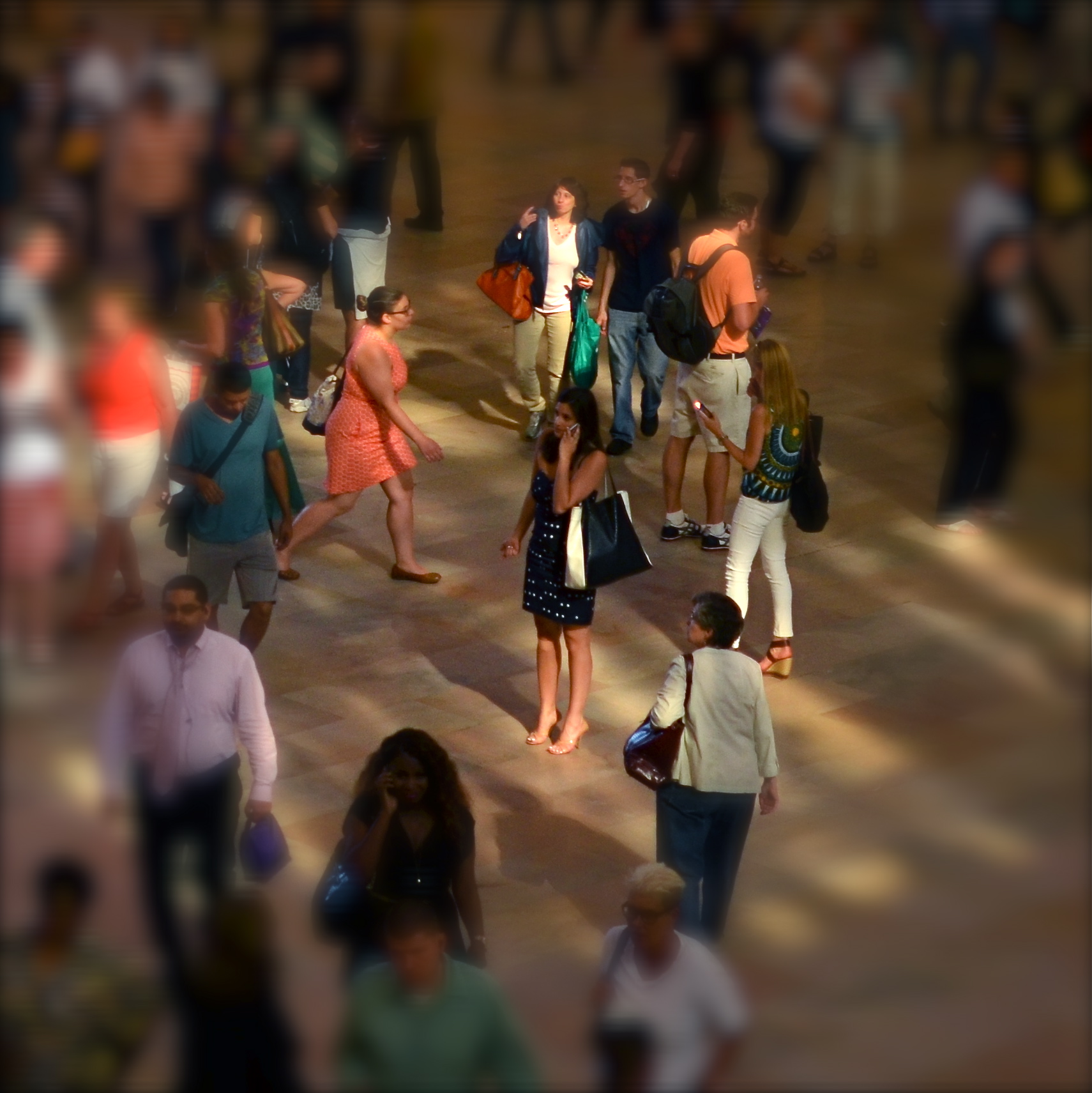
Grand Central, 2013. 1/160 sec., f/1.8, ISO 250, 35mm.
By MICHAEL PERKINS
IF YOU SHOOT ALL THE TIME, NEARLY EVERY DAY, THE SHEER TONNAGE of what you bring home guarantees that you will inevitably lose track of a large portion of your total output. Being that your alloted daily attention span is a finite number, you will literally run out of time before you can lavish affection on everything you’ve captured, on any occasion. Some shots will jump into your car like eager puppies, panting “take me home”, while others will be orphaned, tossed into the vast digital shoebox marked “someday”, many never seeing the light of day again.
The cure for this, oddly, lies in the days when no ideas emerge and no pictures are taken…the dreaded “drys”, those horrible, slow periods when you can’t buy an inspiration to save your life. In those null times, the intellectual equivalent of a snow day, you may find it useful to revisit the shoebox, to rescue at least a shot or two formerly consigned to the shadows.
Using your paralysis periods for reflection may get you off the creative dime (and it may not), but it will, at least, allow you to approach old experiments with a fresh eye, one seasoned by time and experience. Maybe you overlooked a jewel in your haste. You almost certainly left free lessons on either technique or humility by the wayside, wisdom that can be harvested now, since you’re currently watching your camera mock you from across the room (okay, mock is harsh).
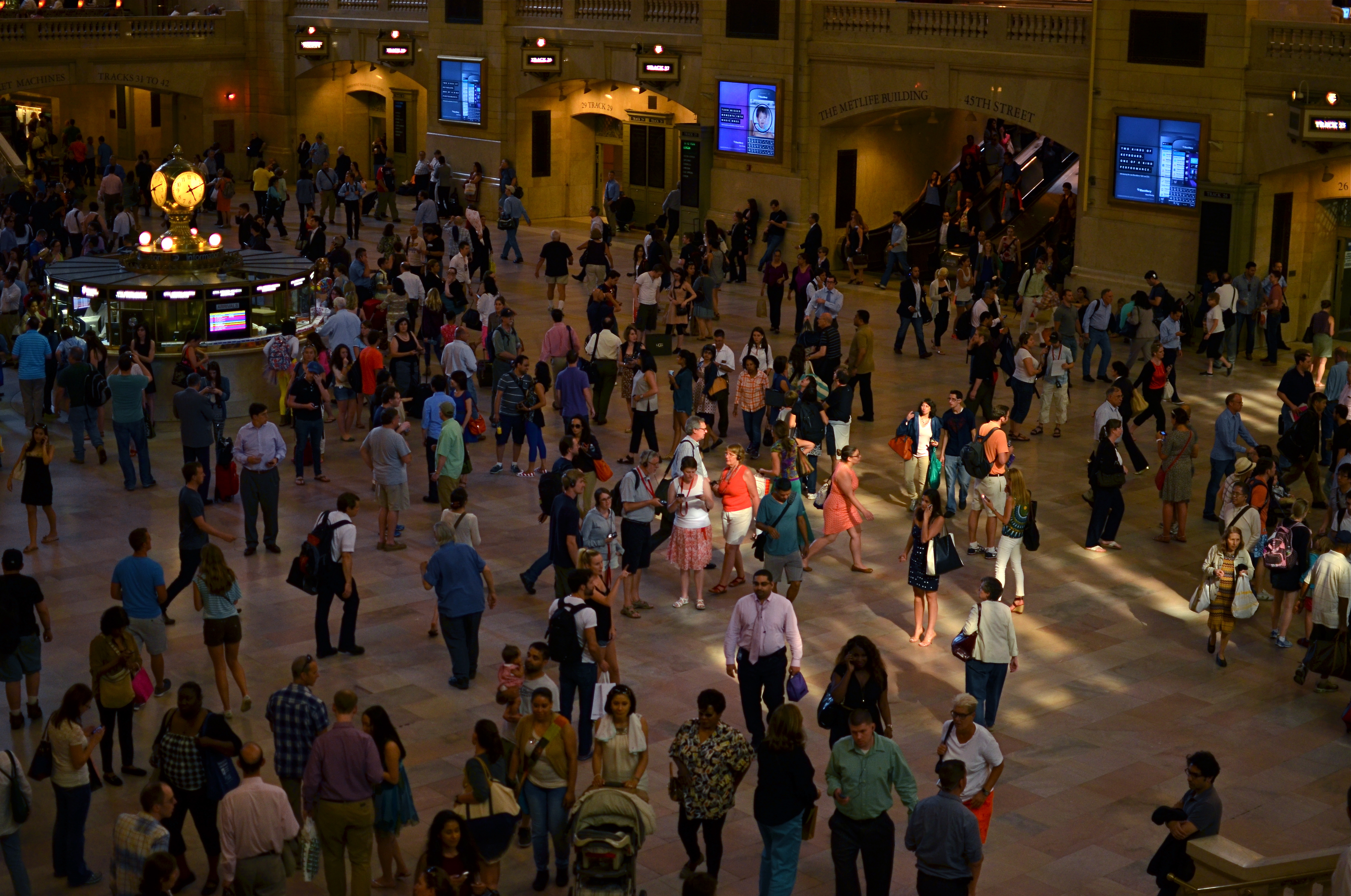
The master shot, before cropping.
During my last visit to Manhattan, I was determined to explore the limits of natural light streaming from the gigantic windows of the main terminal floor at Grand Central, and, for the most part, I framed the place’s architectural features in such a way as to dwarf the scurrying humanity heading to their various destinations. I did shoot a few floor shots as “crowd pieces”, but, upon editing, I failed to look within those big groupings for any kind of individual story or drama. I chose the gigundo-windows master shot I wanted, and left all the other frames in the dust.
Recently hitting a dead spot of several days’ duration, I decided to wander through The Ghosts Of Photo Attempts Past, and I saw a mix of bodies and light within the smallest 1/3 of a larger crowd shot that seemed worth re-framing, with a little softening effect to help the story along. Still not a masterpiece, but, since I was lucky enough to isolate it within a “Where’s Waldo” frame crammed with detail, it was something of a gift to salvage a chunk of it that I could actually care about.
Another orphan finds a home.
GOING (GENTLY) OFF-ROAD
By MICHAEL PERKINS
WHEN YOU’RE BEHIND THE WHEEL, SOME PHOTOGRAPHS NAG THEIR WAY INTO YOUR CAMERA. They will not be denied, and they will not be silenced, fairly glowing at you from the sides of roads, inches away from intersections, in unexplored corners near stop signs, inches from your car. Take two seconds and grab me, they insist, or, if you’re inside my head, it sounds more like, whatya need, an engraved invitation? Indeed, these images-in-waiting can create a violent itch, a rage to be resolved. Park the car already and take it.
Relief is just a shutter away, so to speak.
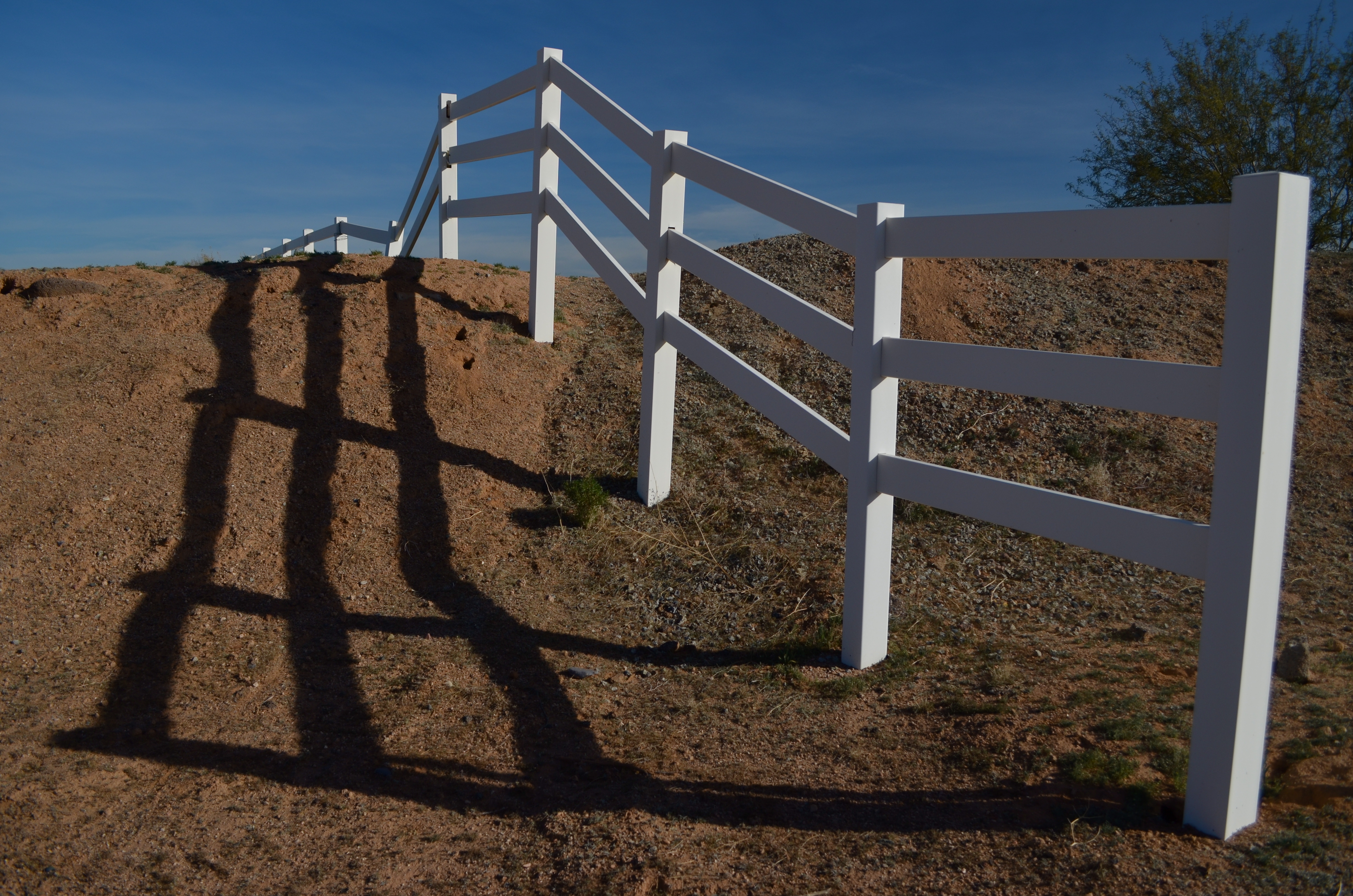
Wait too long and the light will break: 1/800 sec., f/5.6, ISO 100, 18mm.
The vanishing upward arc and sinuous mid-morning shadows of this bit of rural fencing has been needling me for weeks, but its one optimal daily balance of light and shadow was so brief that, after first seeing the effect in its perfection, I drove past the scene another half dozen times when everything was too bright, too soft, too dim, too harsh, etc., etc. There was always a rational reason to drive on.
Until this morning.
It’s nothing but pure form; that is, there is nothing special about this fence in this place except how light carves a design around it, so I wanted to eliminate all extraneous context and scenery. I shot wide and moved in close to ensure that nothing else made it into the frame. At 18mm, the backward “fade” of the fence is further dramatized, artificially distorting the sense of front-to-back distance. I shot with a polarizing filter to boost the sky and make the white in the wood pop a little, then also shot it in monochrome, still with the filter, but this time to render the sky with a little more mood. In either case, the filter helped deliver the hard, clear shadows, whose wavy quality contrasts sharply with the hard, straight angles of the fence boards.
I had finally scratched the itch.
For the moment….
STOP AT “YES”
By MICHAEL PERKINS
THERE SEEMS TO BE A PROPENSITY, WITHIN THE DNA OF EVERY PHOTOGRAPHER, to “show it all”, to flood the frame with as much visual information as humanly possible in an attempt to faithfully render a story. Some of this may track back to the first days of the art, when the world was a vast, unexplored panorama, a wilderness to be mapped and recorded. Early shutterbugs risked their fortunes and their lives to document immense vistas, mountain ranges, raging cataracts, daunting cliffs. There was a continent to conquer, an immense openness to capture. The objectives were big, and the resultant pictures were epic in scale.
Seemingly, intimacy, the ability to select things, to zero in on small stories, came later. And for some of us, it never comes. Accordingly, the world is flooded with pictures that talk too loudly and too much, including, strangely, subjects shot at fairly close range. The urge is strong to gather, rather than edit, to include rather than to pare away. But there are times when you’re just trying to get the picture to “yes”, the point at which nothing else is required to get the image right, which is also the point at which, if something extra is added, the impact of the image is actually diminished. I, especially, have had to labor long and hard to just get to “yes”….and stop.
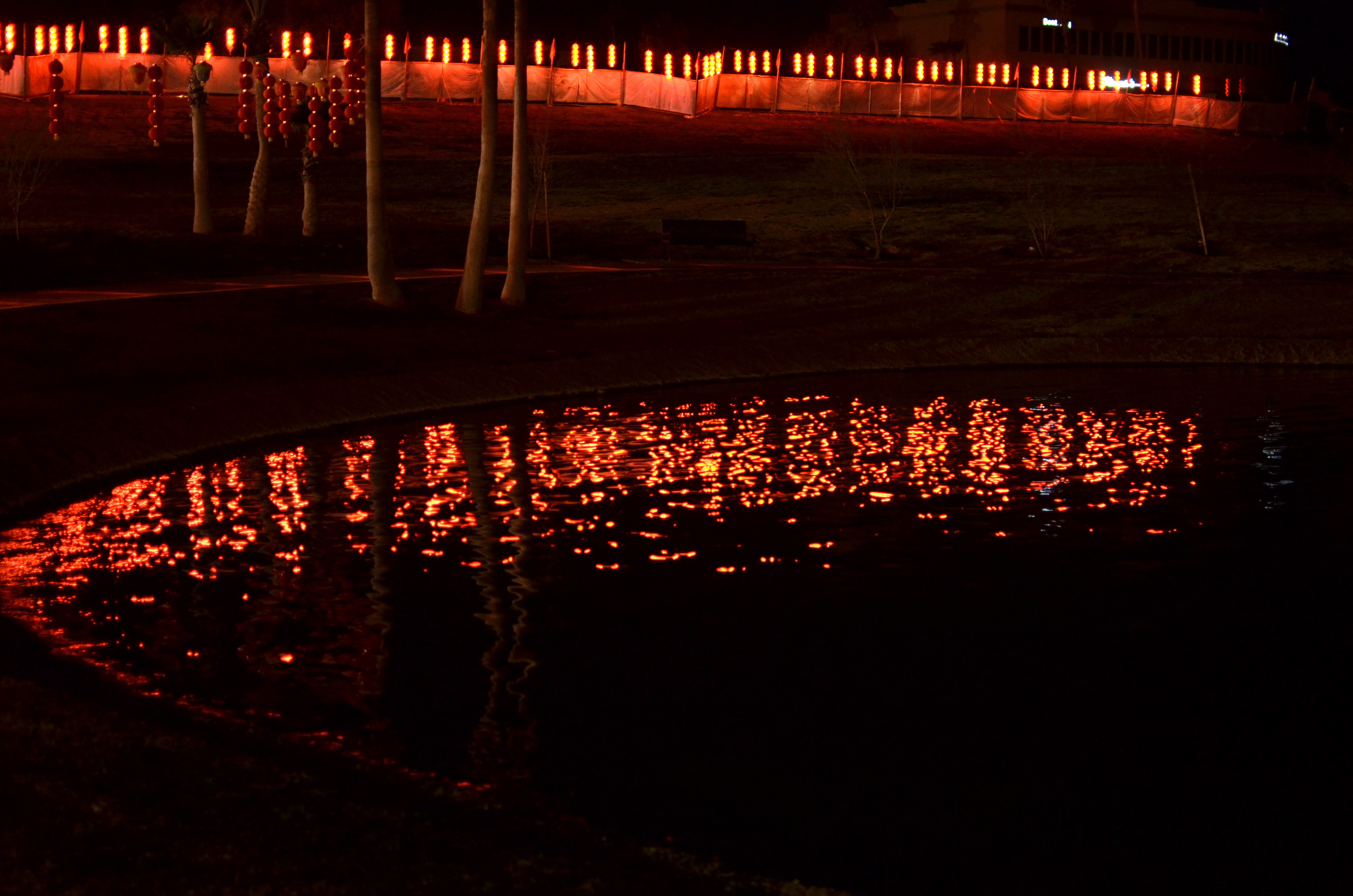
“Don’t overthink this”, say the Photo Phates. 1/25 sec., f/1.8, ISO 640, 35mm.
In the above image, there are only two elements that matter: the border of brightly lit paper lanterns at the edge of a Chinese New Year festival and the small pond that reflects back that light. If I were to exhaust myself trying to also extract more detail from the surrounding grounds or the fence, I would accomplish nothing further in the making of the picture. As a matter of fact, adding even one more piece of information can only lessen the force of the composition. I mention this because I can definitely recall occasions when I would whack away at the problem, perhaps with a longer exposure, to show everything in more or less equal illumination. And I would have been wrong.
Even with this picture, I had to make myself accept that a picture I like this much required so little sweat. Less can actually be more, but we have to learn to get out of our own way….to stop at “yes”.
NEAR MISS/NEAR SAVES
By MICHAEL PERKINS
THE PICTORIAL POTENTIAL OF SOME EVENTS, PHOTOGRAPHICALLY, TURNS OUT SOMEWHAT LESS MIRACULOUS THAN ADVERTISED. That is to say, a few of the things that you assume will certainly yield stunning image opportunities come off, in reality, with the majesty of, well, a flea circus. Sometimes, you think you’ll come home with the Seven Wonders Of The World inside your camera. Other times, you have to fight a strong urge to give up all this “pitcher-takin'” nonsense and take up honest work, like bank robbing, where you can at least set your own hours.
We’ve all been there.
Fairs, festivals, commemorations, parades…..these are all happenings which are ripe with potential, for which we have all camped out on the perimeter of what we hope and pray will be the Next Big Thing, only to come home with crumbs. Leavings. And the best thing to do when an event becomes a near-miss is to seek out what I call the “near saves”. That is, when the story at a given event is disappointingly small, go smaller….toward the intimate detail, the human component, the pertinent bit of texture or atmosphere. The overall panorama may fail, but a single face, a structural element, a series of shadows may deliver where the overall scene fails.
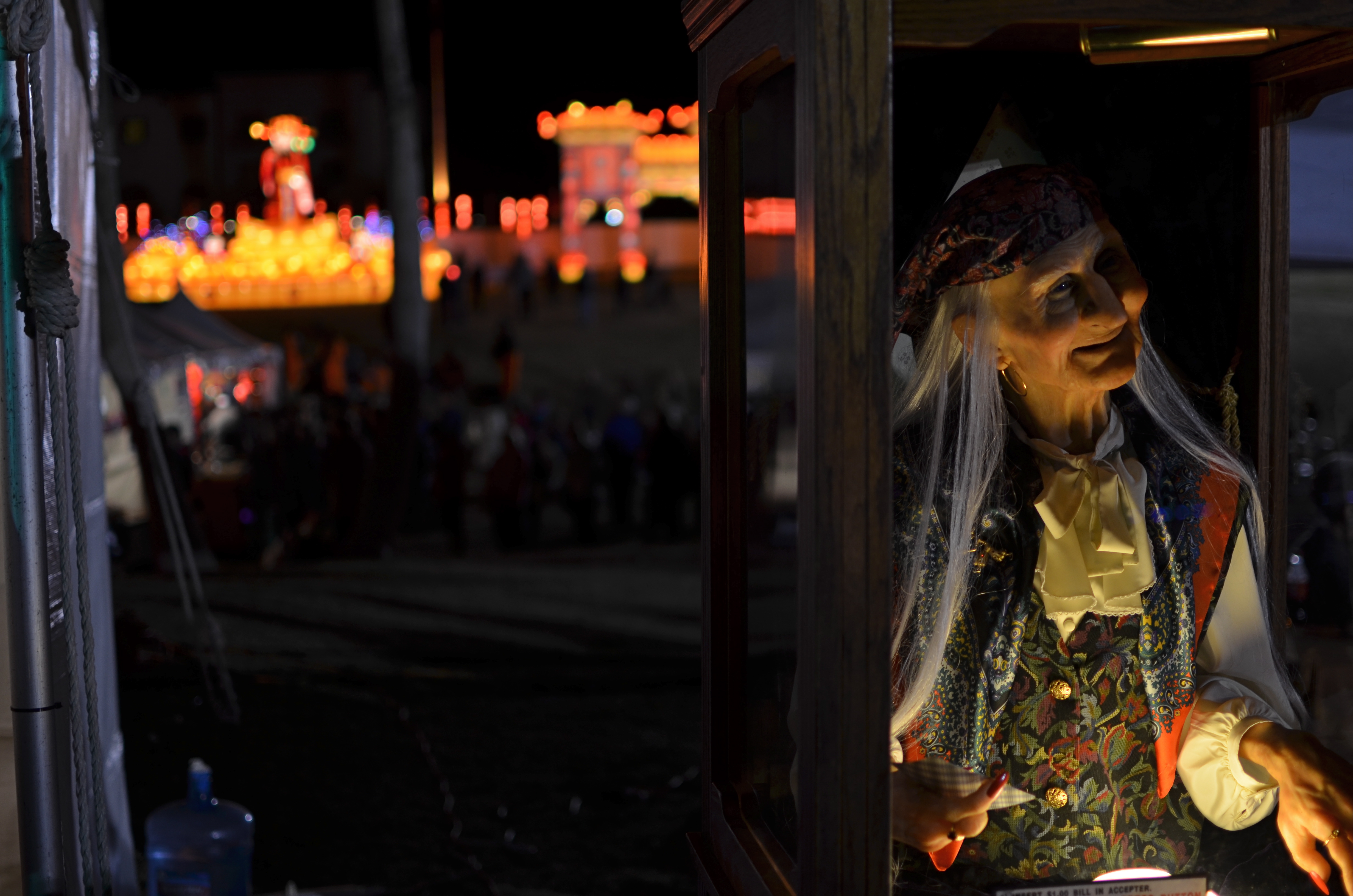
“Went To See The Gypsy…” 1/40 sec., f/1.8, ISO 100, 35mm.
The above image happened almost by accident. Around early sunset, I rushed into an over-hyped cultural festival which failed to achieve full wonderfullness (trust me), and, hours after sunset, I was leaving in defeat, when, near the exit, I spotted a genuine, weirdo-beardo-freak-yourself-out gypsy fortune-telling machine, right out of Tom Hanks’ Big, wonderfully lit by ambient neon on the midway and the device’s own built-in “spook light”. The deepening dark of night was suddenly my best friend, boosting the mystery with oodles of deep shadow. With a 35mm prime lens, I could open clear up to f/1.8, keeping my ISO low at 100 and allowing me to get plenty of light at 1/40 of a second. I was amazed that I had walked right past this treasure when I entered the festival, but I was grateful for a second chance. Snap and done.
Thus,my best shots from the night were of anything but the main “attractions” of the event. Going small meant going beyond the obvious, the difference between a near miss and a near save.
The difference.
PASS GO, COLLECT $200
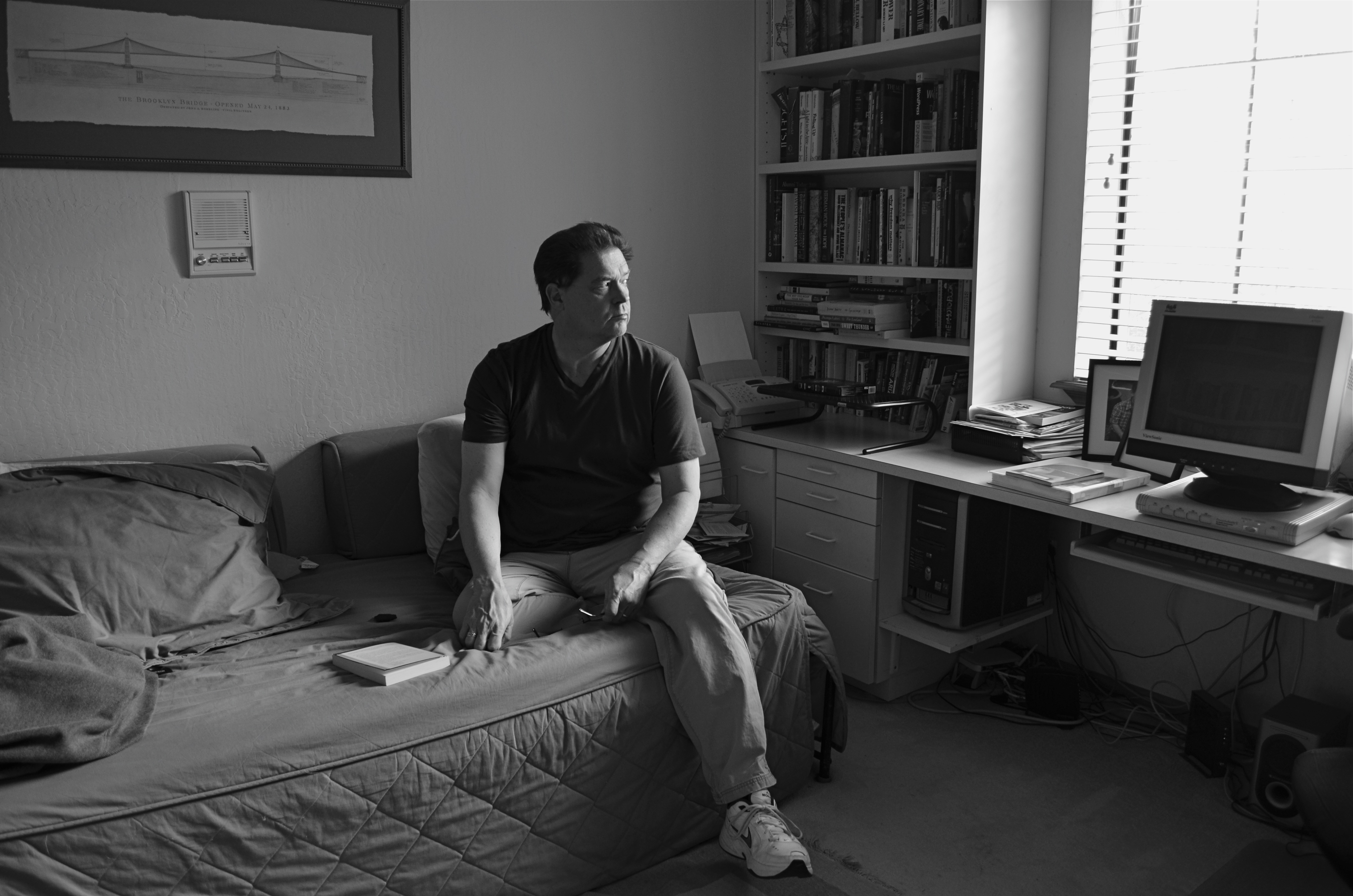
The Birthday Boy, February, 2014. 1/10 sec., f/5.6, ISO 200, 18mm.
By MICHAEL PERKINS
BIRTHDAYS HAVE BECOME SOMETHING OF A CONUNDRUM AT MY AGE. The annual ritual of looking yourself over, and thereby taking some kind of critical inventory of personality debits and credits, has become a little like finding an old favorite shirt in a drawer. On one hand, it’s horribly out of fashion, and may not fit so well anymore. On the other hand, you had some great times in it, and it was really well made….I mean look at the quality in the fabric…….
And so, after a few loving looks, back in the drawer it goes.
There are so many yardsticks to apply to a life, so many ways to mark distance run. You can produce either smiles or sighs with any of them. Of course, I’d like to weigh less. Of course, I’d like to know more. And when it comes to photography, of course I’d like to be able to invoke a thirty-year mortality extension clause, in the hope that maybe, just maybe, I’d eventually learn to see as I should, before shuffling off to The Undiscovered Country.
In recent years, I’ve used self-portraits as some kind of mile marker on myself, either as an index of technique, or maybe just a detailed document of wear and tear. It’s somewhat related to the annual torture that used to be School Picture Day, except that there’s no creepy guy to give me a lame nickname and hand me a plastic pocket comb. Another key difference is that I can keep shooting until my eyes are open and my cowlick behaves.
So, anyway, tomorrow, I’ll waddle my way past “GO” and collect my $200. Someone will once again stick something with a lit candle in front of me, and, once again, I will experience that all too human mix between gratitude and regret that makes humanity the ultimate sweet-and-sour entrée. I’ve been around from Brownies to Instamatics to Polaroids to iPhones, and it’s been a privilege to behold it all. And, if I’ve produced even one visual document to suggest to anyone else how marvelously grand the world is, then it’s been a pretty good run. It’s nice to be around.
Hey, did they take taxes out of this $200????
I MAY HAVE TO WORK LATE
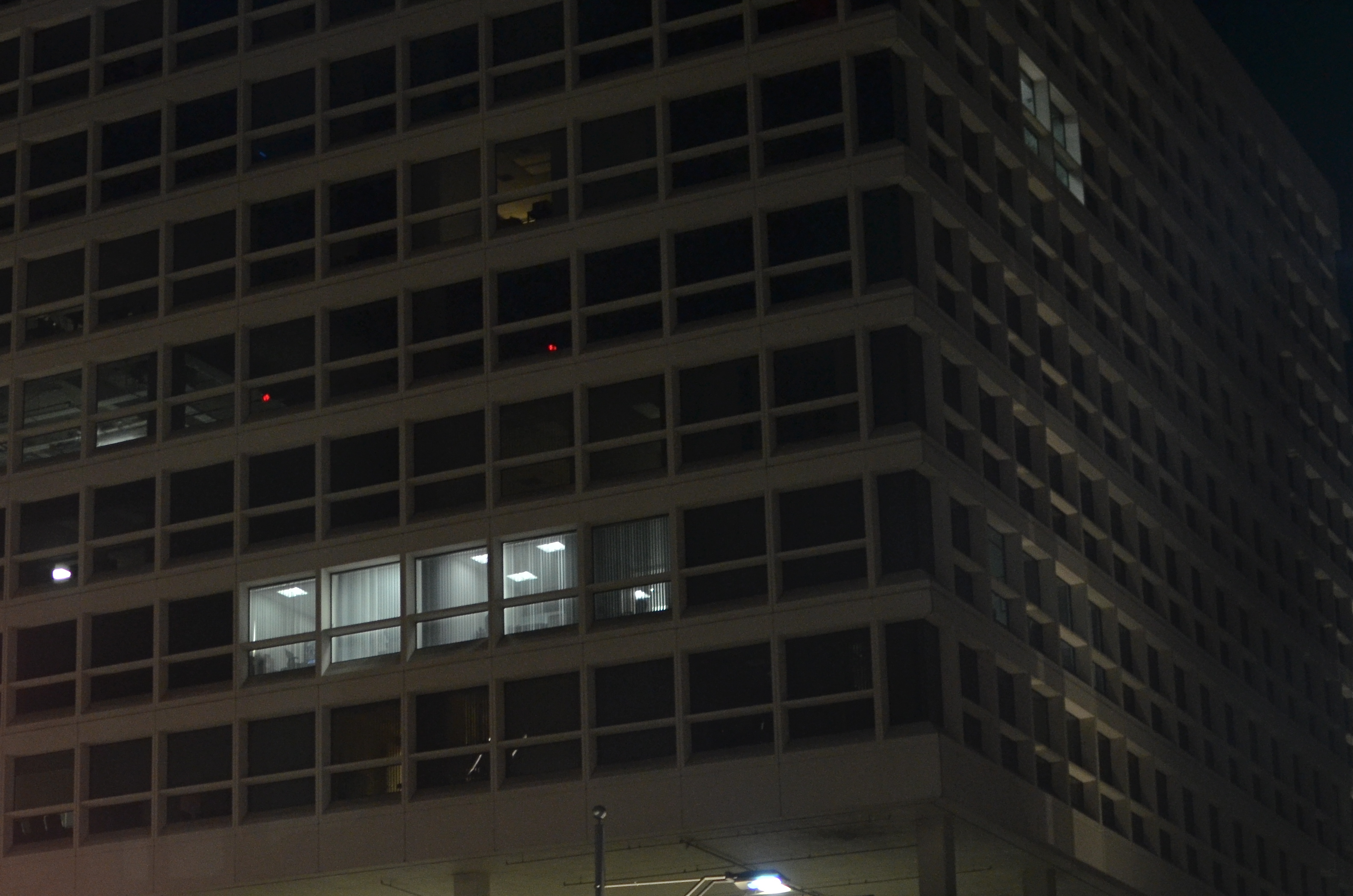
Say Hi To The Cleaning Crew: 1/50 sec., f/1.8, ISO 640, 35mm.
By MICHAEL PERKINS
SOME OF THE BEST HUMAN INTEREST STORIES, EVEN WITH A CAMERA, CAN ONLY BE VIEWED INDIRECTLY. There are many cases in which even the best of us have to merely hint or suggest something about people that we clearly cannot show (or cannot show clearly). Maybe that intractable bit of visual mystery actually bonds us to our audiences, united as we are in speculation about what is beyond that wall or behind that door. The visual tease such photos provide are part of the art of making pictures, in that we are challenged to do more with less, and “show” something beyond the visible.
One of the simplest such stories to capture is very urban in nature: the last remaining nighttime lights in largely dormant buildings. Many of us have been the “last man standing” at the end of an extended work day. Others flee to engagements, family, dinner, but there we sit, chained to our desks until the report/project/research/budget is ready to be put to bed. There’s a readily identifiable feeling of loneliness, plus a little bit of martyr complex, that we can share in the plight of these unknown soldiers of the night.
Whenever I am driving through a city at night, I deliberately seek out those bluish, tube-lit warrens within the cubes and grids of otherwise featureless glass boxes. Who is there? What private eureka or oh, no moments are they experiencing? Which of a million potential dramas are being acted out, and with whom? The uncertainty, even from a photograph with little detail, sparks the imagination, and suddenly our viewers are completing the picture we were forced to deliver unfinished.
It’s the ongoing paradox of photography: what you don’t show is as vital as what you do show.
SUBDIVISIONS
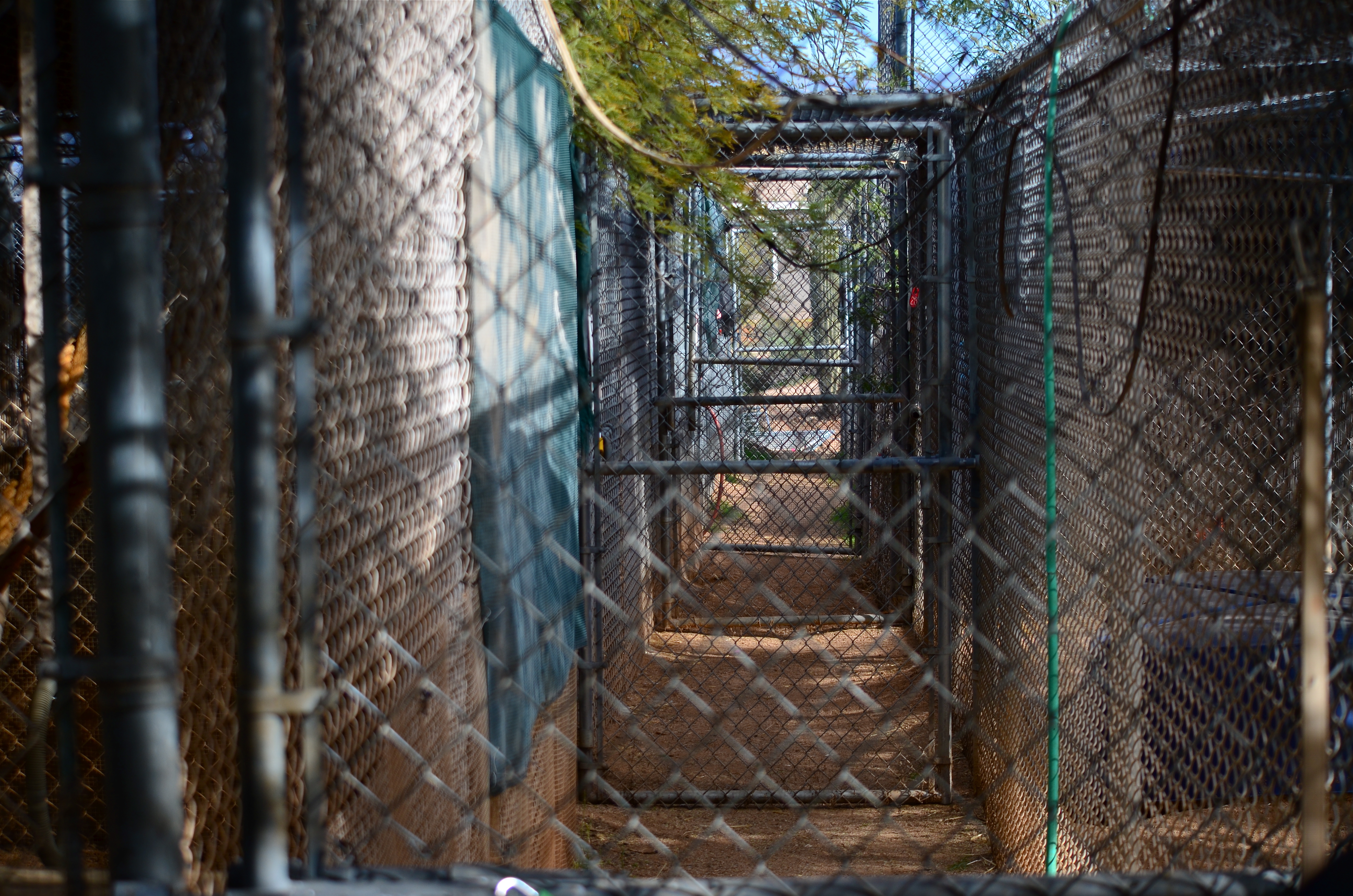
Compartments, 2014.
By MICHAEL PERKINS
SPACE, BY ITSELF, DOESN’T SUGGEST ITSELF AS A PHOTOGRAPHIC SUBJECT, that is, unless it is measured against something else. Walls. Windows. Gates and Fences. Demarcations of any kind that allow you to work space compelling into compositions. Arrangements.
Patterns.
I don’t know why I personally find interesting images in the carving up of the spaces of our modern life, or why these subdivisions are sometimes even more interesting than what is contained inside them. For example, the floor layouts of museums, or their interior design frequently trumps the appeal of the exhibits displayed on its walls. Think about any show you may have seen within Frank Lloyd Wright’s Guggenheim museum, and you will a dramatic contrast between the building itself and nearly anything that has been hung in its galleries.
What I’m arguing for is the arrangement of space as a subject in itself. Certainly, when we photograph the houses of long-departed people, we sense something in the empty rooms they once occupied. There is fullness there inside the emptiness. Likewise, we shoot endless images of ancient ruins like the Roman Coliseum, places where there aren’t even four walls and a roof still standing. And yet the space is arresting.
In a more conventional sense, we often re-organize the space taken up by familiar objects, in our efforts to re-frame or re-contextualize the Empire State, The Eiffel, or the Grand Canyon. We re-order the space priorities to make compositions that are more personal, less popular post card.
And yet all this abstract thinking can make us twitch. We worry, still, that our pictures should be about something, should depict something in the documentary sense. But as painters concluded long ago, there is more to dealing with the world than merely recording its events. And, as photographers, we owe our audiences a chance to share in all the ways we see.
Subdivisions and all.
BLACK IS THE NEW QUIET
By MICHAEL PERKINS
PERHAPS IT’S MY FATHER’S LOVE OF THOREAU AND EMERSON. Maybe it’s a late-in-life turn toward the meditational. It most certainly is due, in part, to a life-long adoration of all things bookish. Whatever the exact mix, I regard library space as far more sacred than the confines of any church or chapel. Many find their faith flanked by stained glass; I get centered in the midst of bookshelves.
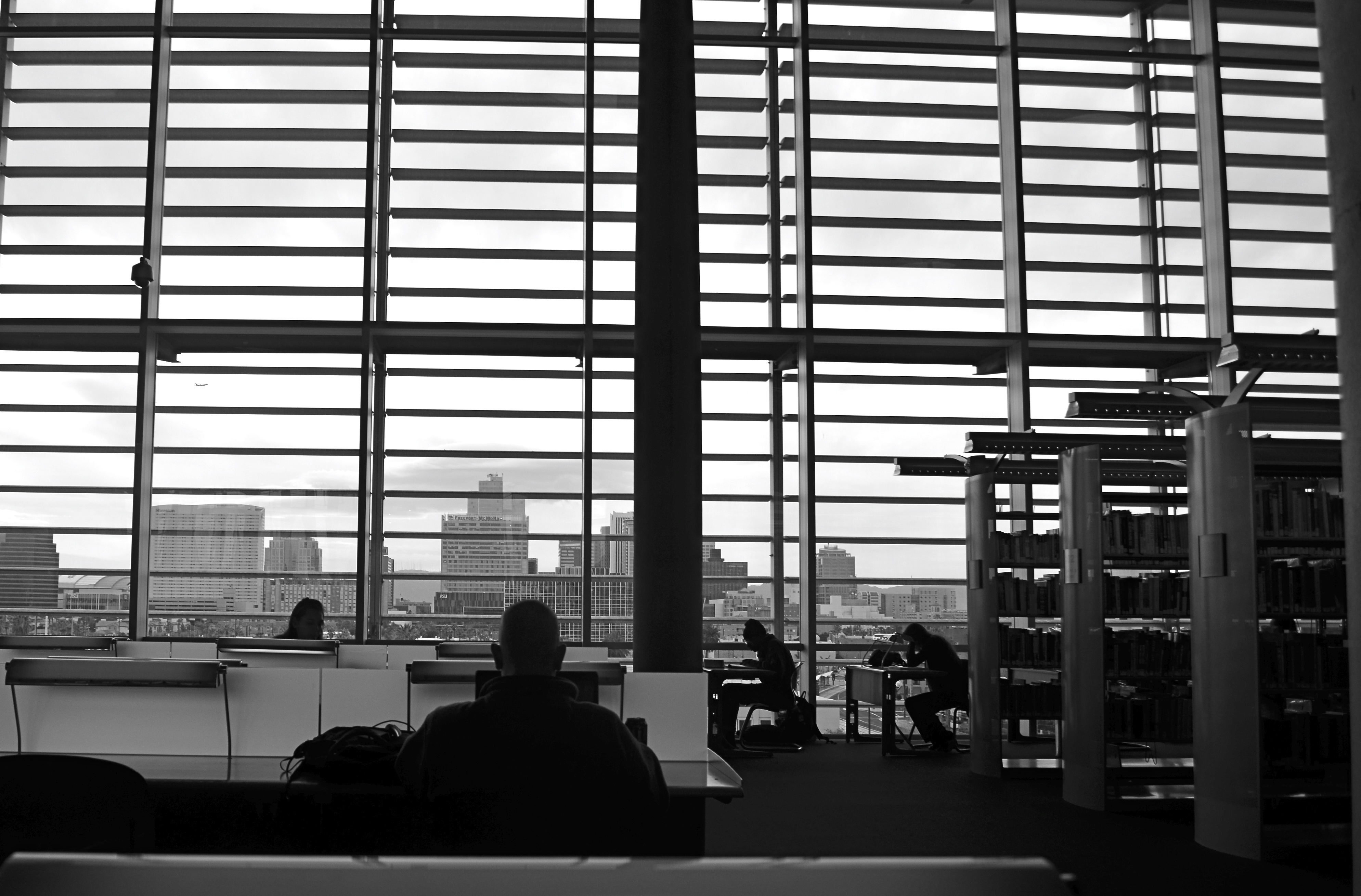
Solitude: An in-camera monochrome at 1/250 sec.,f/5.6, ISO 100, 18mm.
And if libraries are my churches, reading rooms are the sanctuaries, the places within which the mind can be channeled into infinite streams, and where, incidentally, perfect mental quiet can translate into visual quiet. And that, for me, means black and white images. Color can be too loud, proud, and garish, wherein monochrome is the language of privacy, intimacy, and a perfect kind of silence. You might say black is the new quiet.
Inside reading rooms, the faces and clothing of the patrons seems, well, irrelevant to the mood. They have all come seeking the same thing, so compositionally, they are, themselves, all alike, and seeing them in silhouette against the larger details of the room seems to enhance the feeling of reverent quiet. As for composing, letting the room’s massive window take up 3/4 of the frame kept the readers as a small understatement along the bottom baseline of the shot. And, since I was reluctant to ruin the atmosphere of the room, or risk my “invisibility” with more than one audible click to betray me, I chose to go for broke with a single black & white image. I exposed for the cityscape beyond the window, to guarantee that the readers would be rendered as shapes, and that was it.
Having successfully purloined a treasure from within the Church Of The Holy Book, I proceeded to beat it.
Quietly.

