THE UNKNOWN FAMILIAR
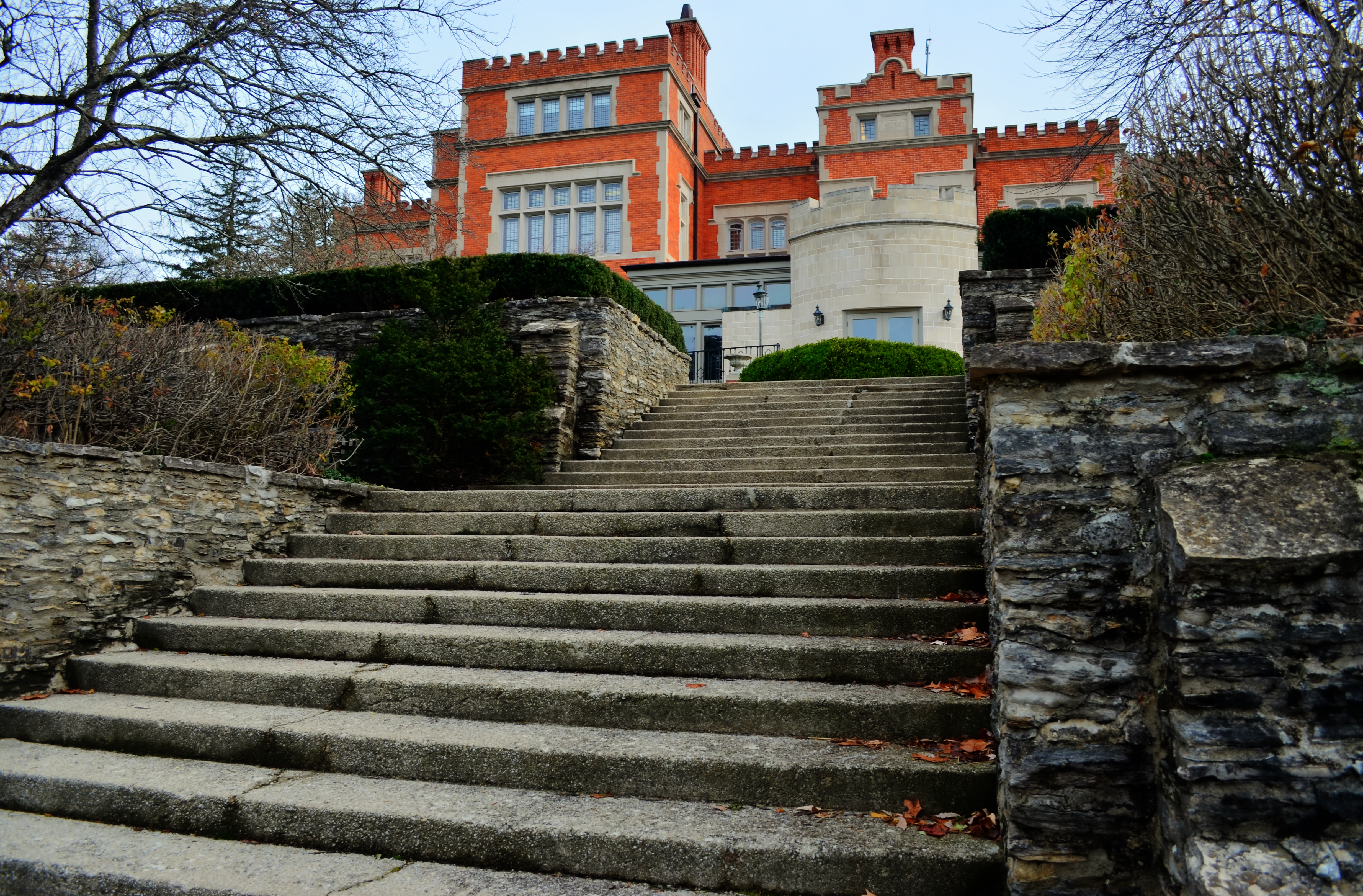
I first photographed Jeffrey Mansion in Bexley, Ohio in the late 1960’s. I look for, and see, very different things in it now. An infusion of three exposures from 1/60-1/160 sec., all f/5.6, ISO 100, 18mm.
By MICHAEL PERKINS
YEARS AGO, RONALD REAGAN, UPON VISITING HIS OLD ELEMENTARY SCHOOL for a presidential photo opportunity, famously asked the local administrators how they managed to shrink the desks in the classrooms. Of course he was joking, but the remark was a telling one; when we return to the scenes of our earliest dramas and farces, we tend to believe that some other outside force sneaked into the place, before our arrival, and somehow re-ordered reality. We laugh at Reagan’s quip because we can see ourselves saying the same thing. It’s all about us.
Just as we are pleasantly shocked to view the graduated pencil marks on our old kitchen wall that logged our increasing height at different ages, we marvel when we take cameras back to the same places where we took cameras in the past. We think we are measuring time in what we shoot, but we are actually measuring ourselves in how we shoot. A recent trip to my hometown afforded me time to roll around to a number of places where I have repeatedly returned over a lifetime, each time approaching photography, and myself, a little differently. In some cases, the first frames I ever shot of these sites go back over forty years, and, good pictures or bad, the results are a few universes away from those first efforts.
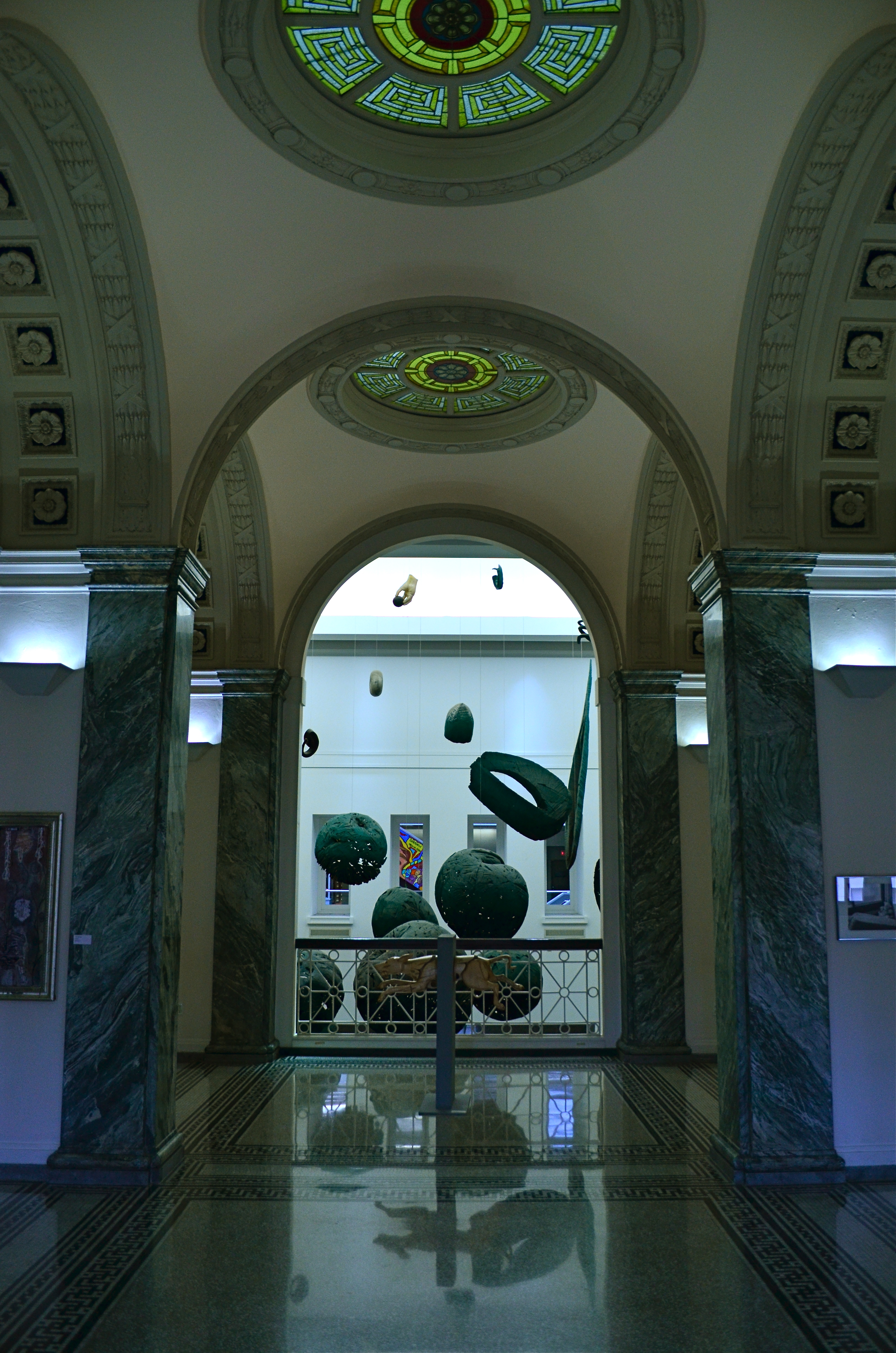
Inside Columbus, Ohio’s Carnegie Library, where I first became a researcher.
How can it be otherwise? I don’t see the same way. I don’t look to see in the same way. Years ago, I was still enthralled with the idea of capturing an image in the box….any image. Hey, it worked. It’s not a stretch to say that, when I first learned to load and wind film or squint into a viewfinder, I was still amazed by the process alone, the idea of freezing time being an inexplicable miracle to me. Beyond hungering to produce my own miracles, I had no concept as to what I should be seeking, or saying.
One thing that has changed over the years is that I no longer try to stop the world with, you know, The Image. There is no “the” anymore, only “the next”. The thing I need to learn to make the picture will come, in time, if I spend long enough thinking or feeling my way through the problem. The photograph, I now know, is already in there, someplace. I just have to carve and peel until it emerges. In the images you see here, I have finally, decades hence, become ready to register the unknown in a familiar place.
To my amazement, I can actually pre-imagine a shot now, with a reasonable hope of eventually making my hand cash the check my eye has written. Back when I started, every picture was an accident….sometimes happy, often frustrating. Now, as I point my lens toward locales that are old friends, I know that they, largely, are constant. It is I who has moved. There’s some comfort, and lots of possibility, in realizing that the desks didn’t really shrink.
I just learned to stand up.
THE GEOMETRY OF VIEW
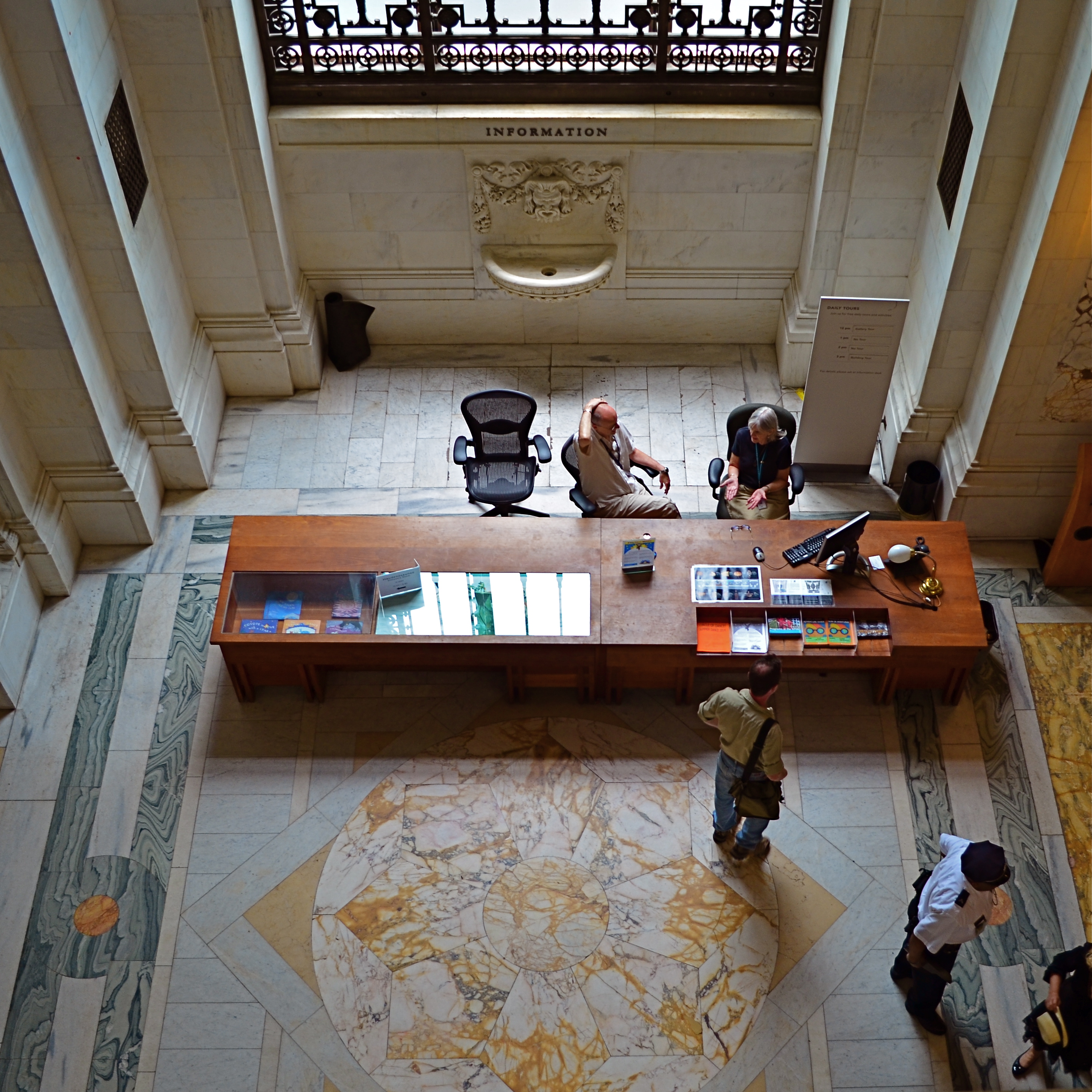
Information, Please, 2014. 1/60 sec., f/3.5, ISO 160, 18mm.
By MICHAEL PERKINS
ONE OF THE BEST WAYS TO APPREHEND THE OVERALL DESIGN OF A SPACE, be it a midtown skyscraper or a suburban cathedral, is to see it the way the designer originally envisioned it; as a logical arrangement of spaces and shapes. Sometimes, viewing the layout of floors, lobbies, or courtyards from the top-down, or “bird’s-eye” view of the original design sketches is especially helpful, since it takes our eye far enough away from a thing to appreciate its overall conception. It’s also not a bad thing for a photographer to do when trying to capture common spaces in a new way. Move your camera, change your view, change the outcome of your images.
The overarching vision for a place can be lost at ground, or “worker bee” level, in the horizontal plane along which we walk and arrange our viewpoint. Processing our understanding of architecture laterally can only take us so far, but it almost seems too simple to suggest that we shift that processing just by changing where we stand. And yet you will invariably learn something compositionally different just by forcing yourself to visualize your subjects from another vantage point.
I’m not suggesting that the only way to shake up your way of seeing big things is to climb to the top floor and look down. Or descend to the basement and look up, for that matter. Sometimes it just means shooting a familiar thing from a fresh angle that effectively renders it unfamiliar, and therefore reinvents it to your eye. It can happen with a different lens, a change in the weather, a different time of day. The important thing is that we always ask ourselves, almost as a reflex, whether we have explored every conceivable way to interpret a given space.
Each fresh view of something re-orders its geometry in some way, and we have to resist the temptation to make much the same photographs of a thing that everyone else with a camera has always done. We’re not in the postcard business, so we’re not supposed to be in the business of assuring people with safe depictions of things, either. Photography is about developing a vision, then ripping it up, taping it back together out-of-order, shredding that, and assembling it anew, again and again. In a visual medium, any other approach will just make us lazy and make our art flat and dull.
WHEN TEXTURE IS THE TALE
By MICHAEL PERKINS
THOSE WHO BELIEVE THAT SUBJECT MATTER IS KING IN PHOTOGRAPHY ARE FACED OFF in an endless tennis match with those who believe that only impressions, not subjects, are the heart of the art. Go away for fifty or sixty years and they are still volleying: WAP! a photograph without an objective is a waste of time! WAP! who needs an object to tell a story? Emotional impact is everything! And so on. Pick your side, pick your battle, the argument isn’t going anywhere.
Thing is, my assertion is that you don’t actually have to choose a side. Just let the assignment at hand dictate whether subject or interpretation is your objective. There are times when the object itself provides the story, from a venerable cathedral to an eloquently silent forest. And there are times when mere color, light patterns, or texture are more than enough to tell your tale.

Set Your Face Like Flint, 2014. Shot wide at 18mm, cropped to square format. 1/100 sec., f/5.6, ISO 100.
I find, for example, that texture is one of my best friends when it comes to conveying a number of important things. The passage and impact of time. The feel and contour of materials, as well as the endless combinations and patterns they achieve through aging and weathering. A way to completely redefine an object by getting close enough to value its component parts instead of viewing it as a whole. This is especially true as I try to refine my approach to images of buildings. I find that breaking the overall structure into smaller, more manageable sections helps to amplify texture, to make it louder and prouder than it might be if a larger scene just included the entire building among other visual elements. Change the distance from your story and you change the story itself.
This Massachusetts barn has tons of character whether seen near or far, but if I frame it to eliminate anything but the raw feel of the wood, it demands attention in a completely different way. It asks for re-evaluation.Contrast the rough-sawn wood with the hard red of the windows,and, again, you’ve boosted the effect of the coarser texture. Opposing textures create a kind of rudimentary tug-of-war in a picture, and the more stark the contrasts, the more dramatic the impact.
Traditional, subject-driven story telling will dictate that you show the entire barn, maybe with surrounding trees and a rolling hill or two. Abstracting it a little in terms of color, distance and texture just tell the story in a distinct way. Your camera, your choice.
THE UNSEEN GEOMETRY
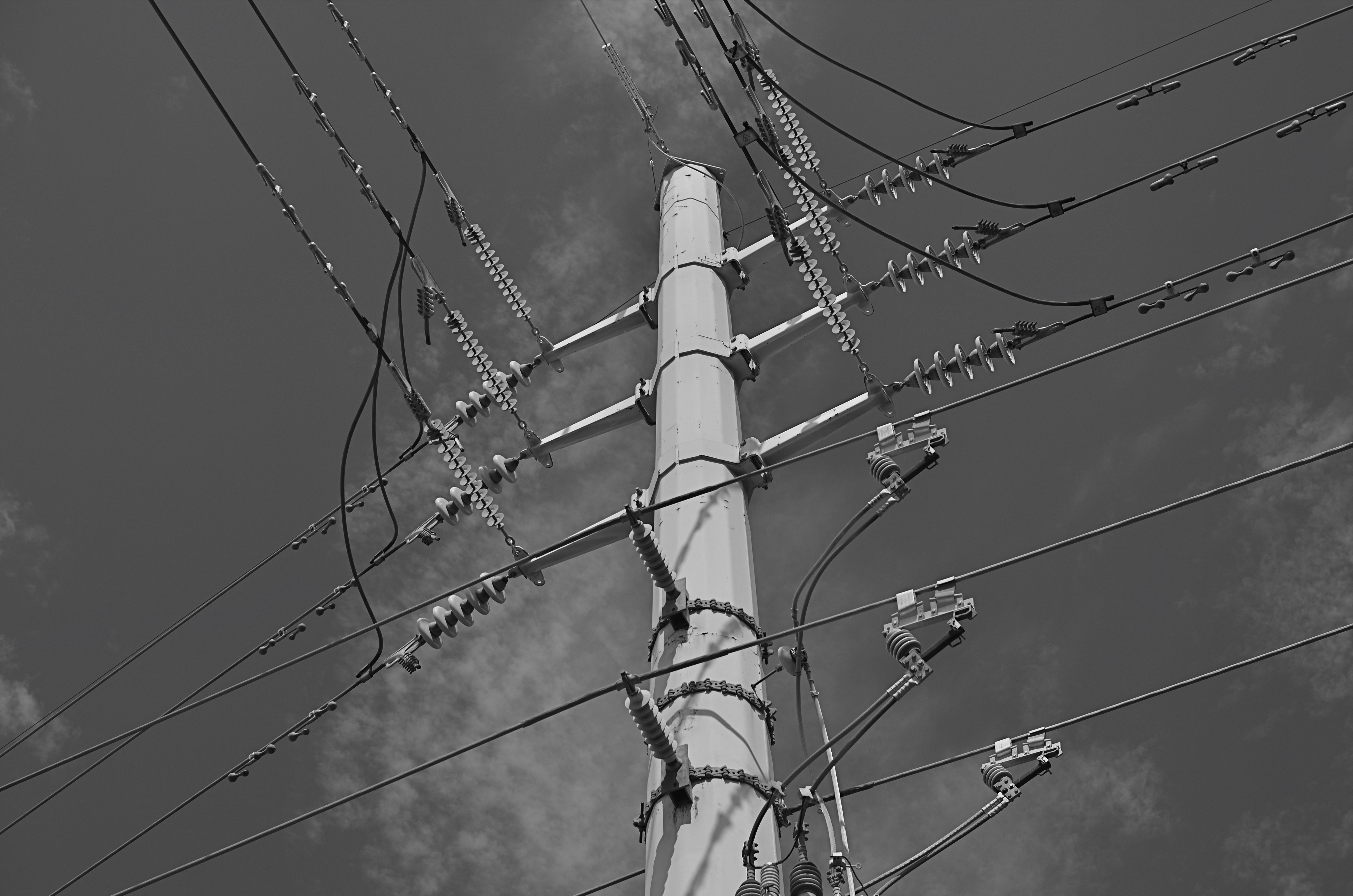
Overhead and out of sight. 1/400 sec., f/5.6, ISO 100, 35mm.
By MICHAEL PERKINS
THERE ARE MANY PHOTO SITES THAT SUGGEST SHOOTS CALLED “WALKABOUTS“, informal outings intended to force photographers to shoot whatever comes to hand with as fresh an eye as possible. Some walkabouts are severe, in that they are confined to the hyper-familiar surroundings of your own local neighborhood; others are about dropping yourself into a completely random location and making images out of either the nothing of the area or the something of what you can train yourself to see.
Walks can startle you or bore you to tears (both on some days), but they will sharpen your approach to picture-making, since what you do is far more important than what you’re pointing to. And the discipline is sound: you can’t hardly miss taking shots of cute cats or July 4 fireworks, but neither will you learn very much that is new. Forcing yourself to abandon flashier or more obvious subjects teaches you to imbue anything with meaning or impact, a skill which is, over a lifetime, beyond price.
One of the things I try to keep in mind is how much of our everyday environment is designed to be “invisible”, or at least harder to see. Urban infrastructure is all around us, but its fixtures and connections tend to be what I call the unseen geometry, networks of service and connectivity to which we simply pay no attention, thus rendering them unseeable even to our photographer’s eye. And yet infrastructure has its own visual grammar, giving up patterns, even poetry when placed into a context of pure design.
The above power tower, located in a neighborhood which, trust me, is not brimming with beauty, gave me the look of an aerial superhighway, given the sheer intricacy of its connective grid. The daylight on the day I was shooting softened and prettied the rig to too great a degree, so I shot it in monochrome and applied a polarizing filter to make the tower pop a little bit from the sky behind it. A little contrast adjustment and a few experimental framing to increase the drama of the capture angle, and I was just about where I wanted to be.
I had to look up beyond eye (and street) level to recognize that something strong, even eloquent was just inches away from me. But that’s what a walkabout is for. Unseen geometry, untold stories.
THE TORQUOISE TIME TRAVELER
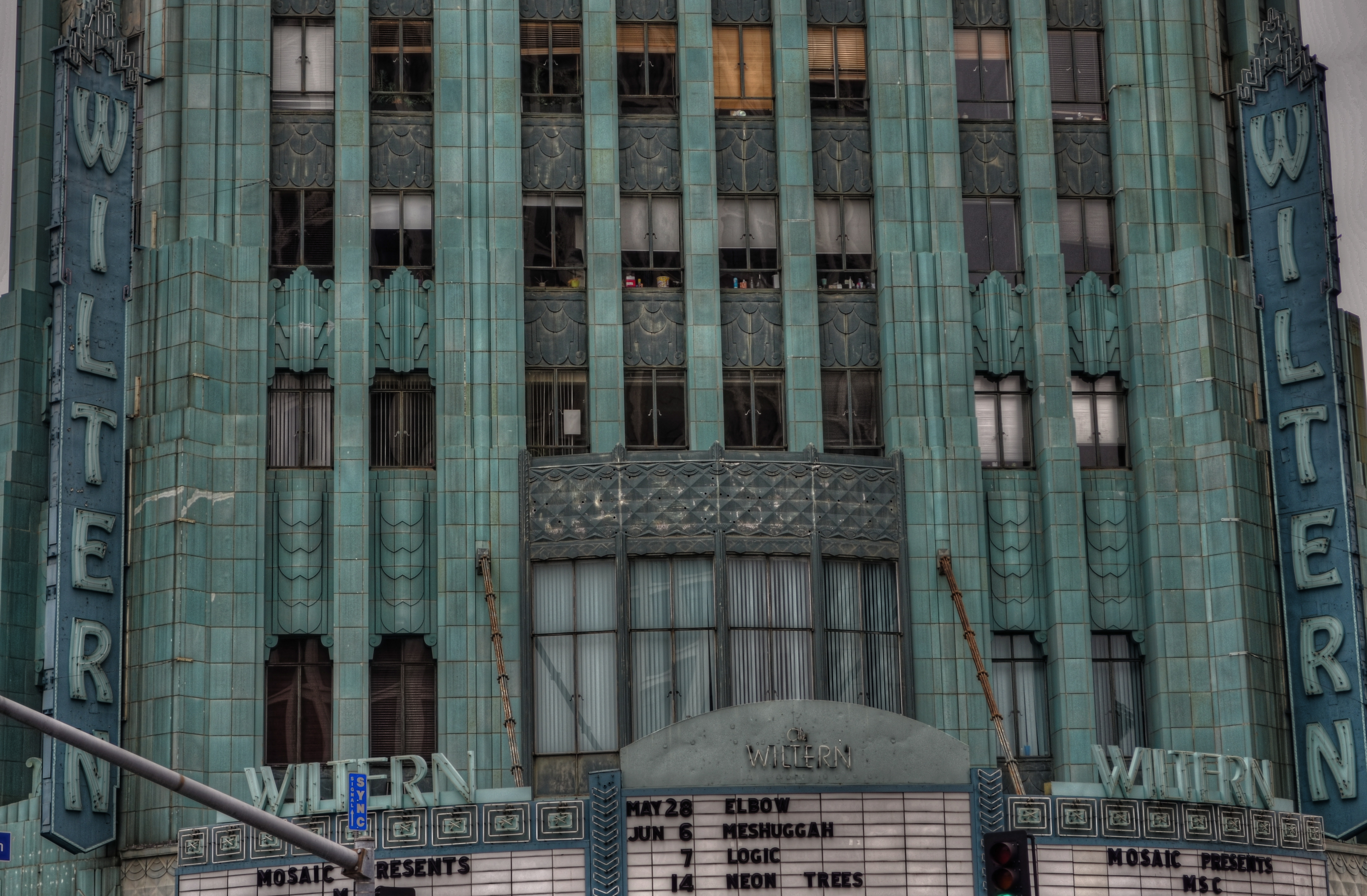
The wondrous Wiltern Theatre in Los Angeles. A three-exposure HDR to amplify time’s toll on the building’s exterior.
by MICHAEL PERKINS
SHE HAS WITHSTOOD THE GREAT DEPRESSION, A WORLD WAR, DECADES OF ECONOMIC UPS & DOWNS, and half a dozen owners (some visionaries and some bums), and still, the sleek green/blue terra-cotta wedge that is the Wiltern Theatre is one of the most arresting sights in midtown Los Angeles. From her 83-year old perch at the intersection of Western Avenue and Wilshire Boulevard, the jewel in the lower half of the old Pelissier building still commands attention, and, for lovers of live music, a kind of creaky respect. The old girl isn’t what she used to be, but she is still standing, as the same house that once hosted film premieres in the days of Cagney and Bogart now hosts alternative and edge, with pride.
And she still makes a pretty picture, lined face and all.
Opened in 1931 as a combination vaudeville house and flagship for Warner Brothers’ national chain of film theatres, The Warner Western, as it was originally named, folded up within a few years, re-opening in mid-Depression L.A. as the Wiltern (for Wilshire and Western) operating virtually non-stop until about 1956. As a vintage movie house, it had been equipped with one of the most elegant pipe organs in town, and enthusiasts of the instrument built a small following for the place for a while with recitals featuring the instrument. By the 1970’s, however, economies for larger-than-life flicker palaces were at an all-time low, and the Wiltern’s owners tried twice themselves to apply for permission to blow her down. Preservationists got mad, then got busy.
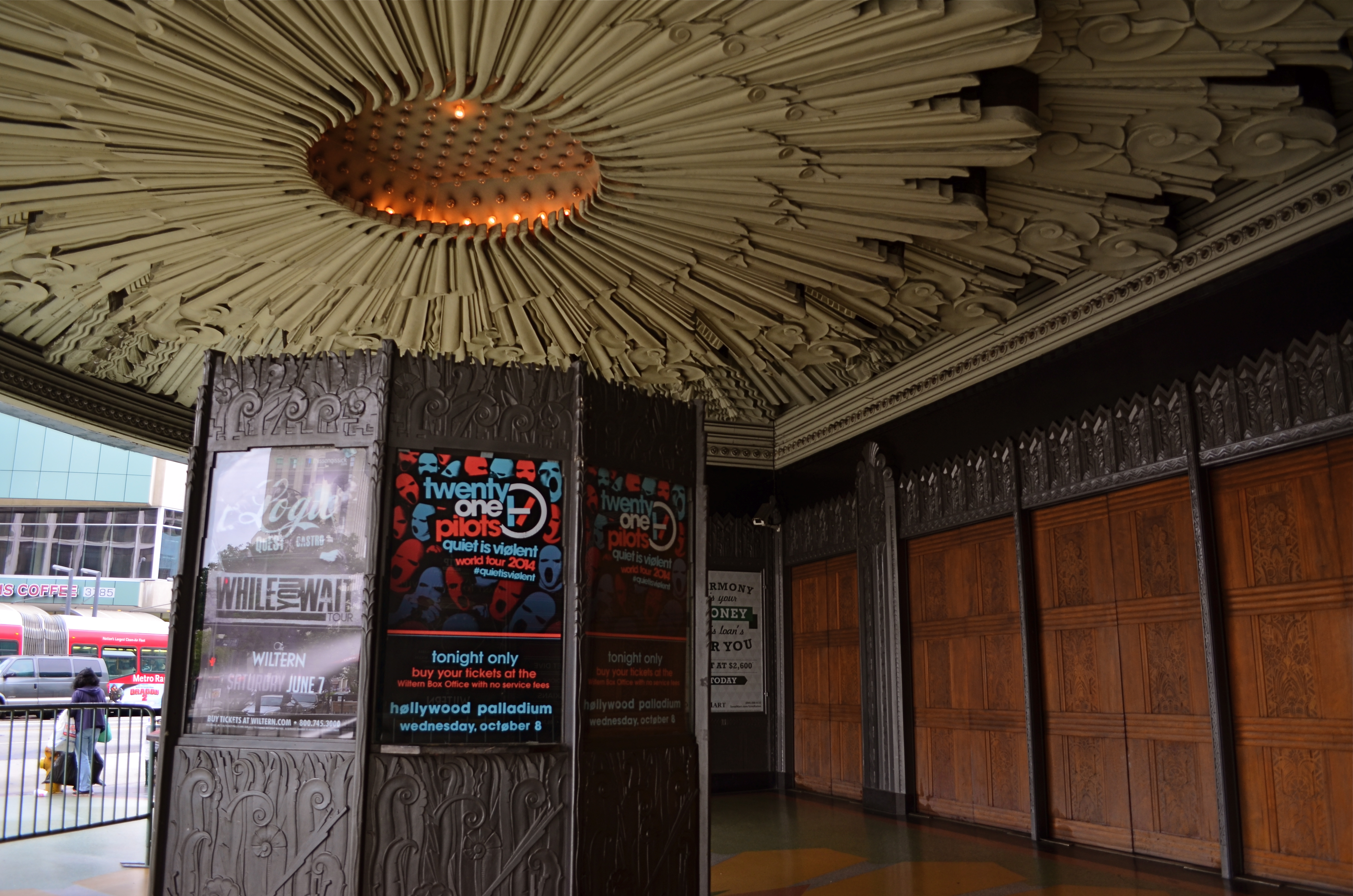
The Wiltern’s ticket kiosk sits under a plaster canopy of Deco sunrays. 1/40 sec., f/3.5, ISO 100, 18mm.
Restoration began in the 1980’s on the Pelissier building in general, but the Wiltern, with its ornate plaster reliefs and murals, had been so neglected over the years that its turnaround was slower. It was finally reborn in 1985 as a live performance theatre, losing some seat room but newly able to stage everything from brain-blaster garage rock to Broadway road productions and ballet.
I shot the Wiltern with three HDR frame, all f/5.6, with exposure times of 1/60, 1/100. and 1/160, and blended the final image in Photomatix to really show the wear and tear on the exterior. HDR is great for amplifying every flaw in building materials, as well as highlighting the uneven color that is an artifact of time and weather. I wanted to show the theatre as a stubborn survivor rather than a flawless fantasy, and the process also helped call attention to the building’s French Deco zigzags and chevrons. For an extra angle, I also made some studies of the glorious sunburst plaster ceiling over the outside ticket kiosk. It was great to meet the old girl at last, and on her own terms.
THE FULLNESS OF EMPTY
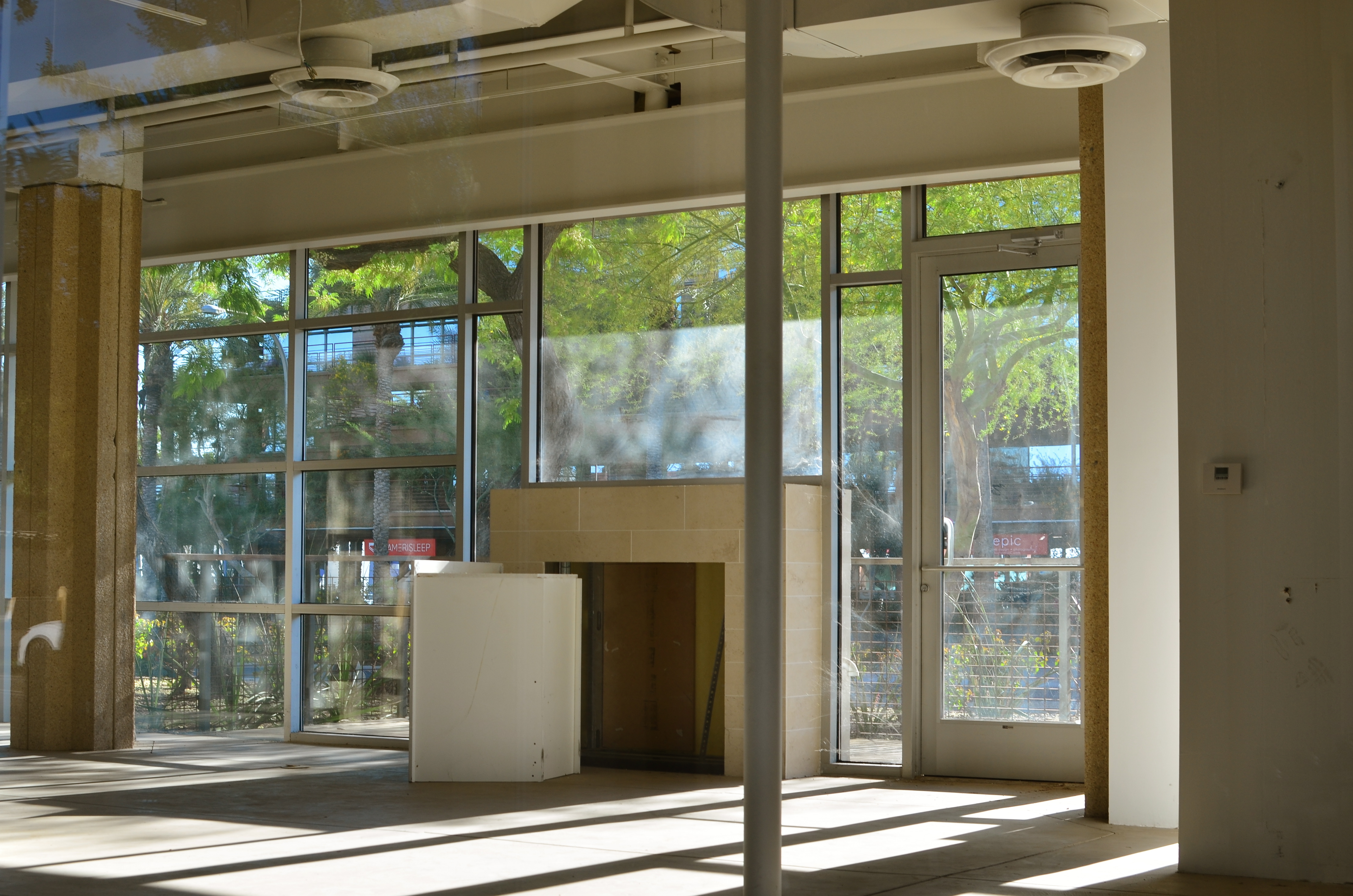
1/125 sec., f/5.6, ISO 100, 35mm.
By MICHAEL PERKINS SCIENCE TELLS US THAT SOME HUSBANDS HEAR THE QUESTION, “DID YOU TAKE THE TRASH OUT?” more often than any other phrase over the course of their married life. If you are an intrepid road warrior, you may hear more of something like “do you know where you’re going?” or “why don’t you just stop and ask for directions?”. If you’re a less than optimum companion, the most frequently heard statement might be along the lines of “and just where have you been?”. For me, at least when I have a camera in my hands, it’s always been “why don’t you ever take pictures of people?”
Why, indeed.
Of course, I contend that, if you were to take a random sample of any 100 of my photographs, there would be a fair representation of the human animal within that swatch of work. Not 85% percent, certainly, but you wouldn’t think you were watching snapshots from I Am Legend. However, I can’t deny that I have always seen stories in empty spaces or building faces, stories that may or may not resonate with everyone. It’s a definite bias, but it’s one of the closest things to a style or a vision that I have.
I think that absent people, as measured in their after-echoes in the places where they have been, speak quite clearly, and I am not alone in this view. Putting a person that I don’t even know into an image, just to demonstrate scope or scale, can be, to me, more dehumanizing than taking a picture without a person in it. My people-less photos don’t strike me as lonely, and I don’t feel that there is anything “missing” in such compositions. I can see these folks even when they are not there, and, if I do my job, so can those who view the results later.
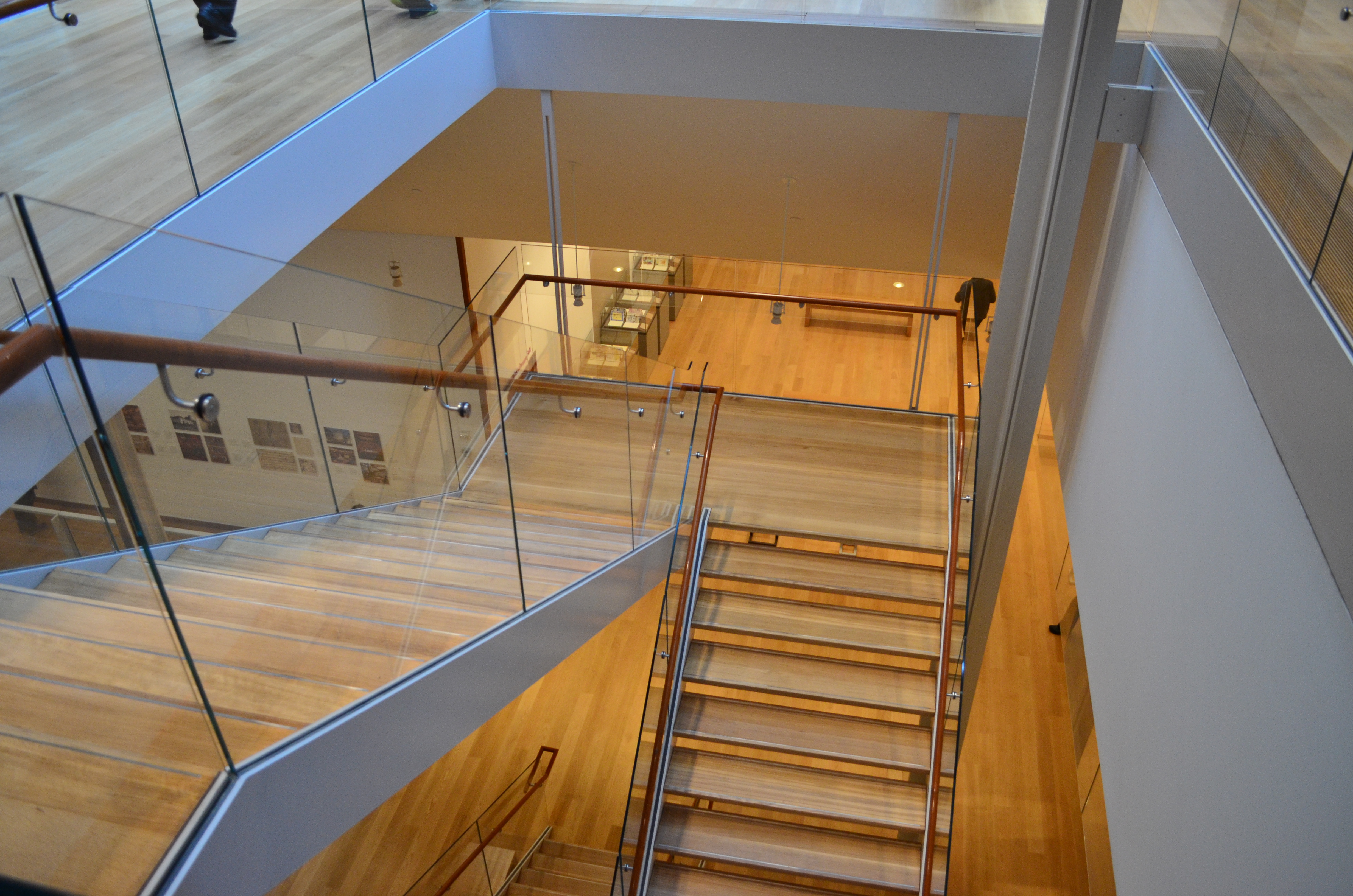
1/50 sec., f/3.5, ISO 650, 18mm.
Are such photographs “sad”, or merely a commentary on the transitory nature of things? Can’t you photograph a house where someone no longer lives and conjure an essence of the energy that once dwelt within those walls? Can’t a grave marker evoke a person as well as a wallet photo of them in happier times? I ask myself these questions, along with other crucial queries like, “what time is the game on?” or, “what do you have to do to get a beer in this place?” Some answers come quicker than others.
I can’t account for what amounts to “sad” or “lonely” when someone else looks at a picture. I try to take responsibility for the pictures I make, but people, while a key part of each photographic decision, sometimes do not need to serve as the decisive visual component in them. The moment will dictate. So, my answer to one of life’s most persistent questions is a polite, “why, dear, I do take pictures of people.”
Just not always.
THINGS ARE LOOKING DOWN
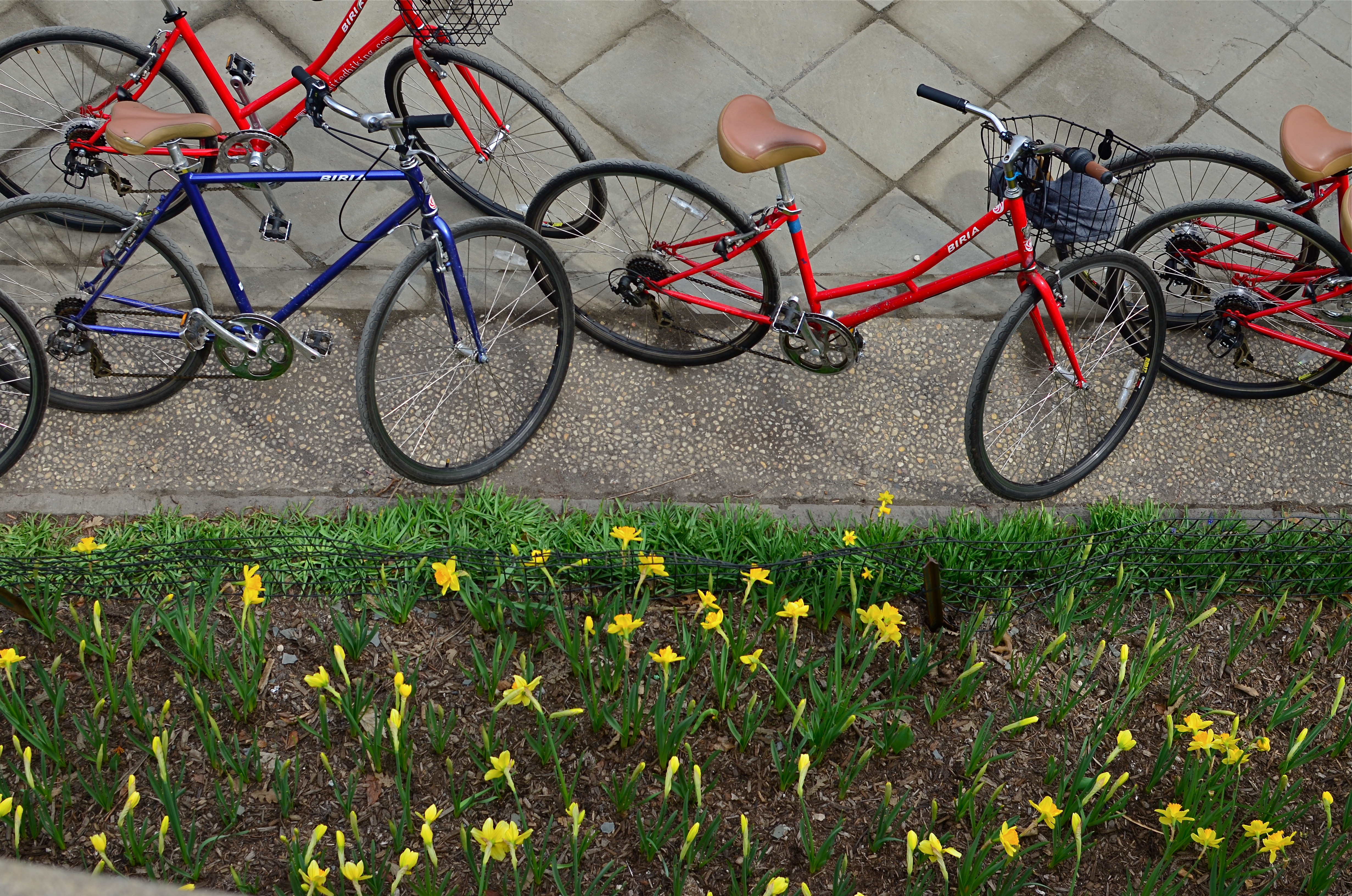
Central Park, April 2014. 1/320 sec., f/5.6, ISO 100, 35mm.
By MICHAEL PERKINS
PHOTOGRAPHY, AND THE HABITS WE FORM IN ITS PRACTICE, BECOME A HUGE MORGUE FILE OF FOLDERS marked “sometimes this works” or “occasionally try this”, tricks or approaches that aren’t good for everything but which have their place, given what we have to work with in the moment.
Compositionally, I find that just changing my vantage point is a kind of mental refresher. Simply standing someplace different forces me to re-consider my subject, especially if it’s a place I can’t normally get to. That means, whenever I can do something easy, like just standing or climbing ten feet higher than ground level, I include it in my shooting scheme, since it always surprises me.
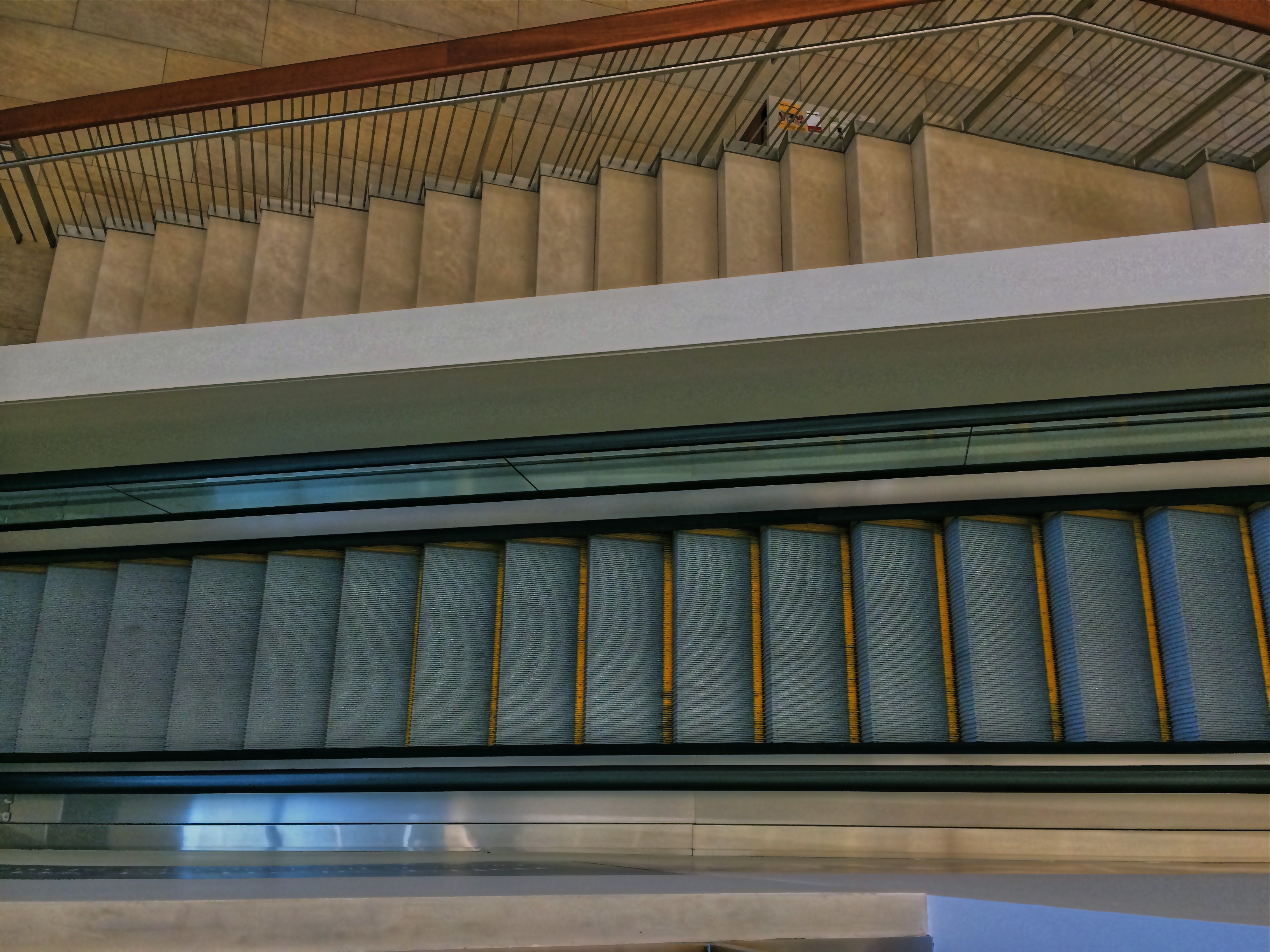
Walk Or Ride, 2014. 1/30 sec., f/2.2, ISO 50, 4.11mm
For one thing, looking straight down on objects changes their depth relationship, since you’re not looking across a horizon but at a perpendicular angle to it. That flattens things and abstracts them as shapes in a frame, at the same time that it’s exposing aspects of them not typically seen. You’ve done a very basic thing, and yet created a really different “face” for the objects. You’re actually forced to visualize them in a different way.
Everyone has been startled by the city shots taken from forty stories above the pavement, but you can really re-orient yourself to subjects at much more modest distances….a footbridge, a step-ladder, a short rooftop, anything to remove yourself from your customary perspective. It’s a little thing, but then we’re in the business of little things, since they sometimes make big pictures.
OH, IT’S HIDEOUS. I LOVE IT.
By MICHAEL PERKINS
THERE MAY BE NO RULES LEFT TO BREAK IN PHOTOGRAPHY, in that everybody is comfortable doing absolutely anything….compositionally, conceptually, technologically…to get the picture they want. Maybe that’s always the way it’s been, seeing as the art of image-making, like the science of breeding apple trees, has always grown faster and stronger through cloning and grafting. Hacks. Improvisations. “Gee-What-If”s.
Shots in the dark.
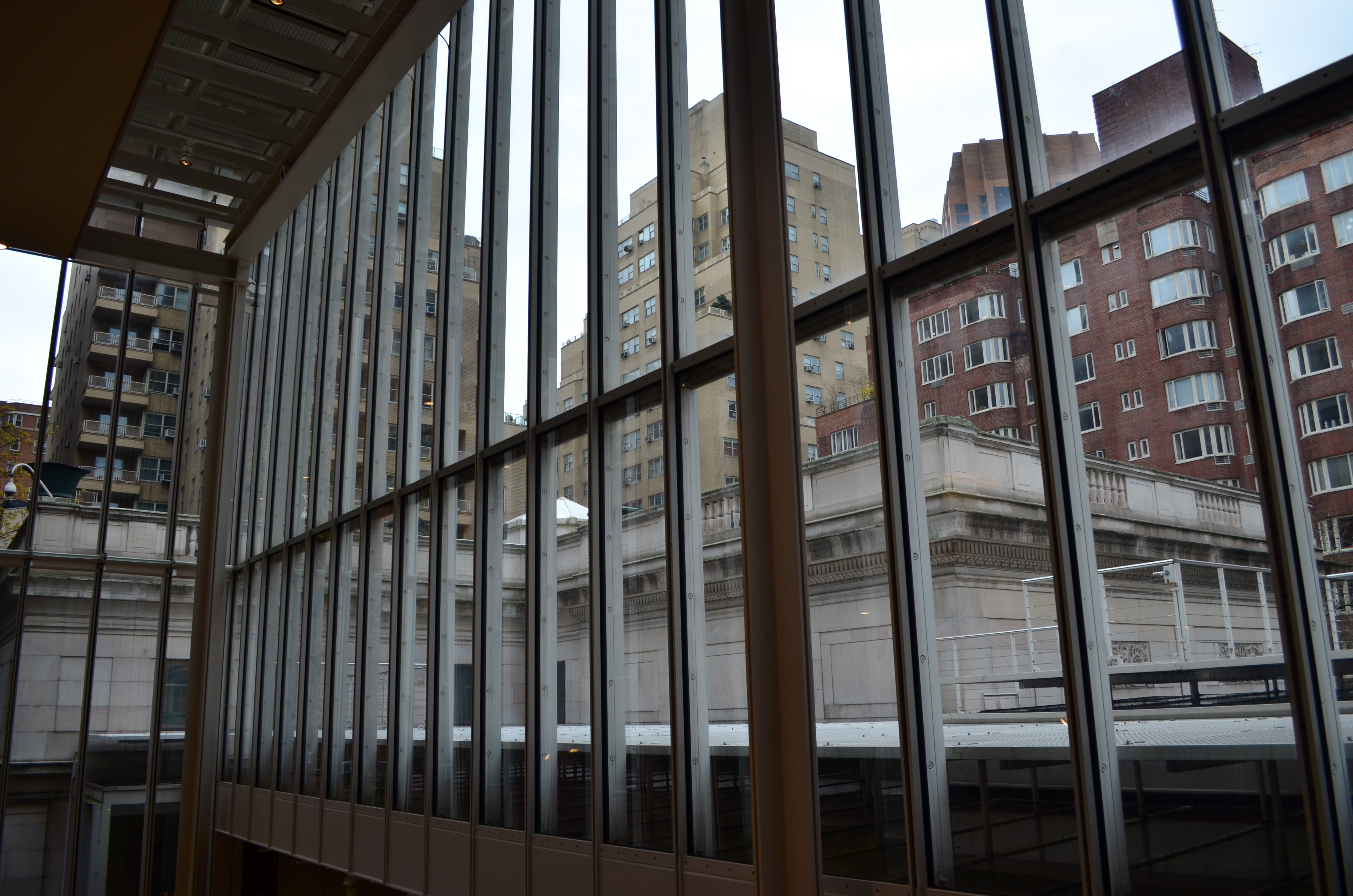
Not a bad starting point, but either too pretty, or not ugly enough…or something.
Recently I walked out into the gigantic atrium that connects all of the original buildings of the Morgan Library complex in NYC to get a good look at the surrounding neighborhood of big-shouldered buildings. I was fascinated by the way my wide-angle lens seemed to line up the horizontal grid lines of the atrium with the receding lines of the towers and boxes down the block. Only one thing bothered me about the result: the color, or rather, the measly quality of it.
A rainy day in Manhattan is perhaps the final word on rainy days. Some colors, like the patented screaming yellow of a New York cab, or the loud neon reds of bodegas, are intensified into a romantic wash when the drops start. This view, however, was just a bland mash of near-color. If the neighborhood was going to look dour anyway, I wanted it to be dour-plus-one. Thing is, I made this, ahem, “artistic” decision after I had already traveled 3,000 miles back home. In the words of Rick Perry, whoops.
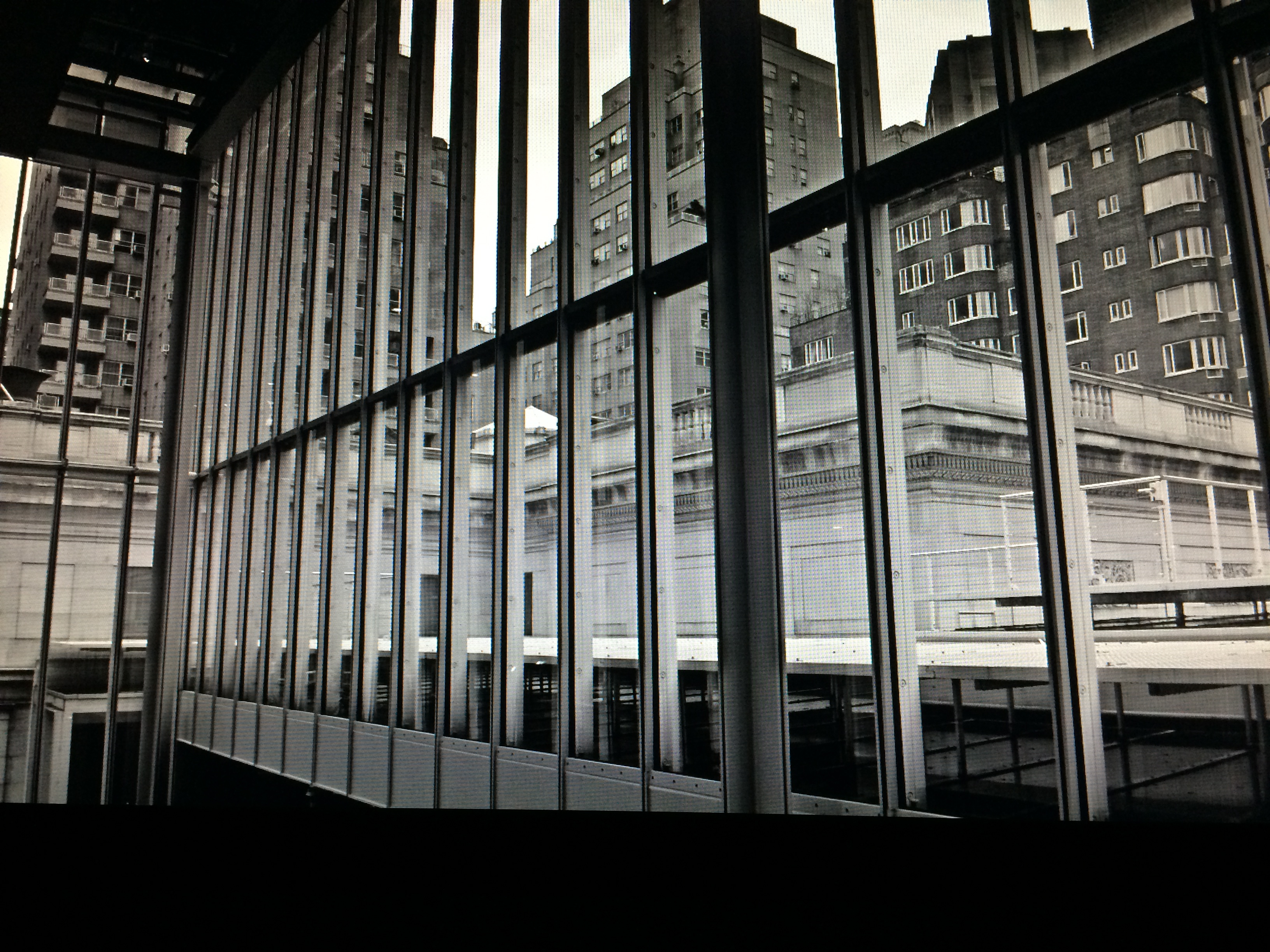
Time to hack my way to freedom. I remembered liking the look of old Agfa AP-X film in a filter on my iPhone, so I filled the screen of my Mac with the bland-o image, shot the screen with the phone, applied the filter, uploaded the result back into the Mac again, and twisted the knobs on the new cheese-grater texture I had gained along the way. At least now it looked like an ugly day….but ugly on my terms. Now I had the kind of rain-soaked grayscale newspaper tones I wanted, and the overall effect helped to better meld the geometry of the atrium and the skyline.
No rules? Sure, there’s still at least one.
Get the shot.
IF YOU SEE IT, IT MATTERS
1/320 sec., f/5.6, ISO 100, 35mm.
By MICHAEL PERKINS
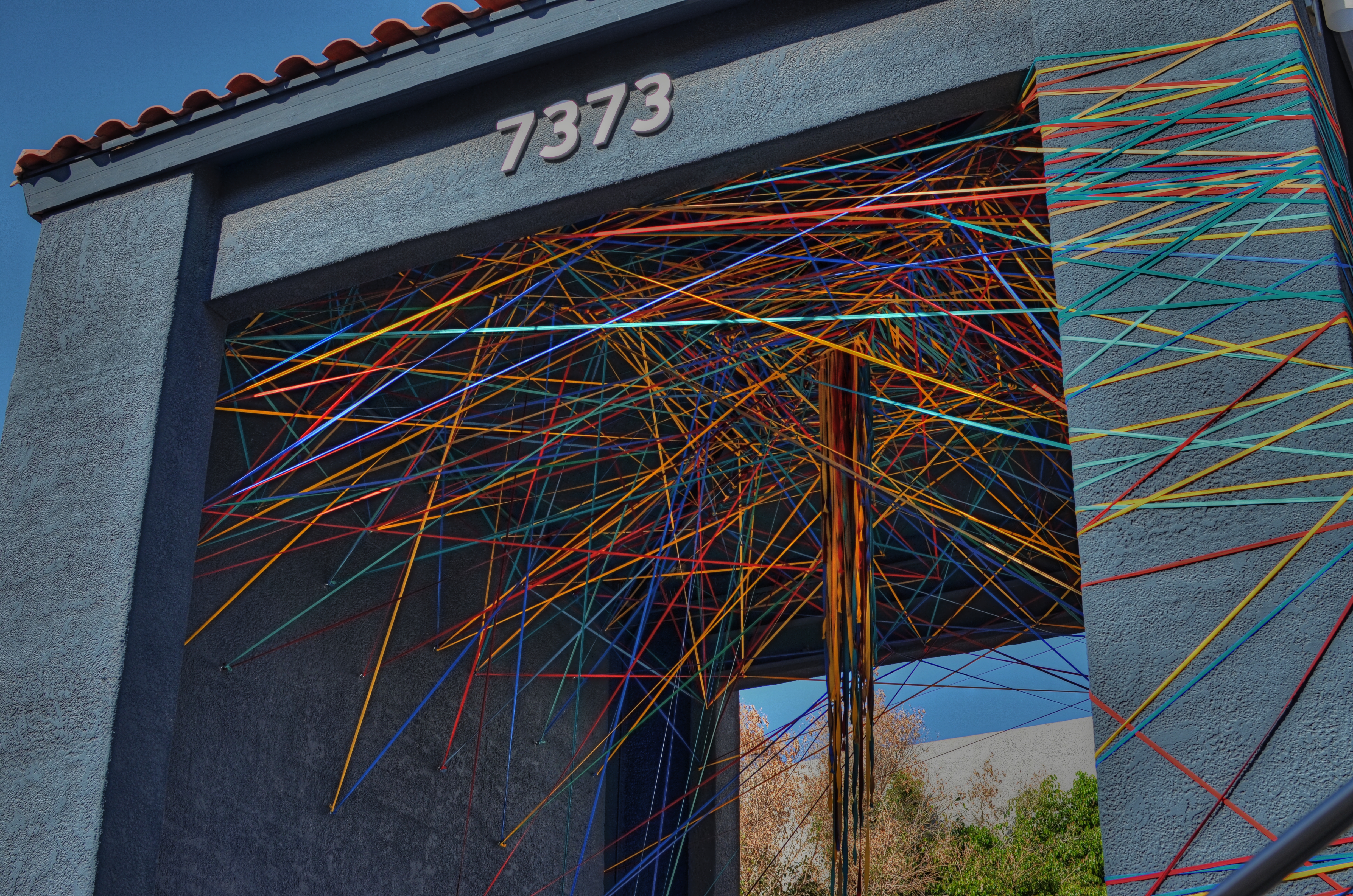
TOO MUCH OF THE TIME, WE ARE SHOOTING PHOTOGRAPHS TO NOT ONLY BE SEEN BUT “APPRECIATED“. This can become an emotional and artistic trap, since art is not designed to be juried. We’d all like the world to “get” what we do, but it’s all too easy to bend the arc of what we create until it matches the trajectory of what the world will approve.
Think for a moment about how such a tactic can cripple you as a photographer. I mean, stop you in your tracks.
Consider: many photographers will logically move, over time, from showing the world fairly literally to suggesting a special viewpoint, seeing it in a more abstract fashion. They learn to tell more by showing less, by being selective. This is a perfectly logical part of their development, but as a consequence, some of their pictures will inevitably leave some viewers behind. Suddenly, their images are “arty”, or “intellectual”, or whatever other word can be hurled at them to dismiss what they are doing.
But that’s okay. I’m not saying that you should live your life eating worms and striving to be a tortured genius. I just mean to suggest that your vision belongs to you. It’s validity cannot be diminished, unless you do it yourself. Here’s one of my favorite quotes from Life and Look magazine photographer Elliot Erwitt on this :
To me, photography is an art of observation. It’s about finding something interesting in an ordinary place… I’ve found it has little to do with the things you see and everything to do with the way you see them.
What a great concept. The thing you are shooting is not content. The way you shoot it is. That means viewpoint and personal interpretation must be more important that objects or subjects. If they are not, there’s no way in hell to make photography be about anything but recording. If they are, thought, ah, then, anything’s possible.
Bottom line, if you aren’t true to your vision, it’s a cinch that no one else ever will be, either.
So there.
WORK AT A DISADVANTAGE
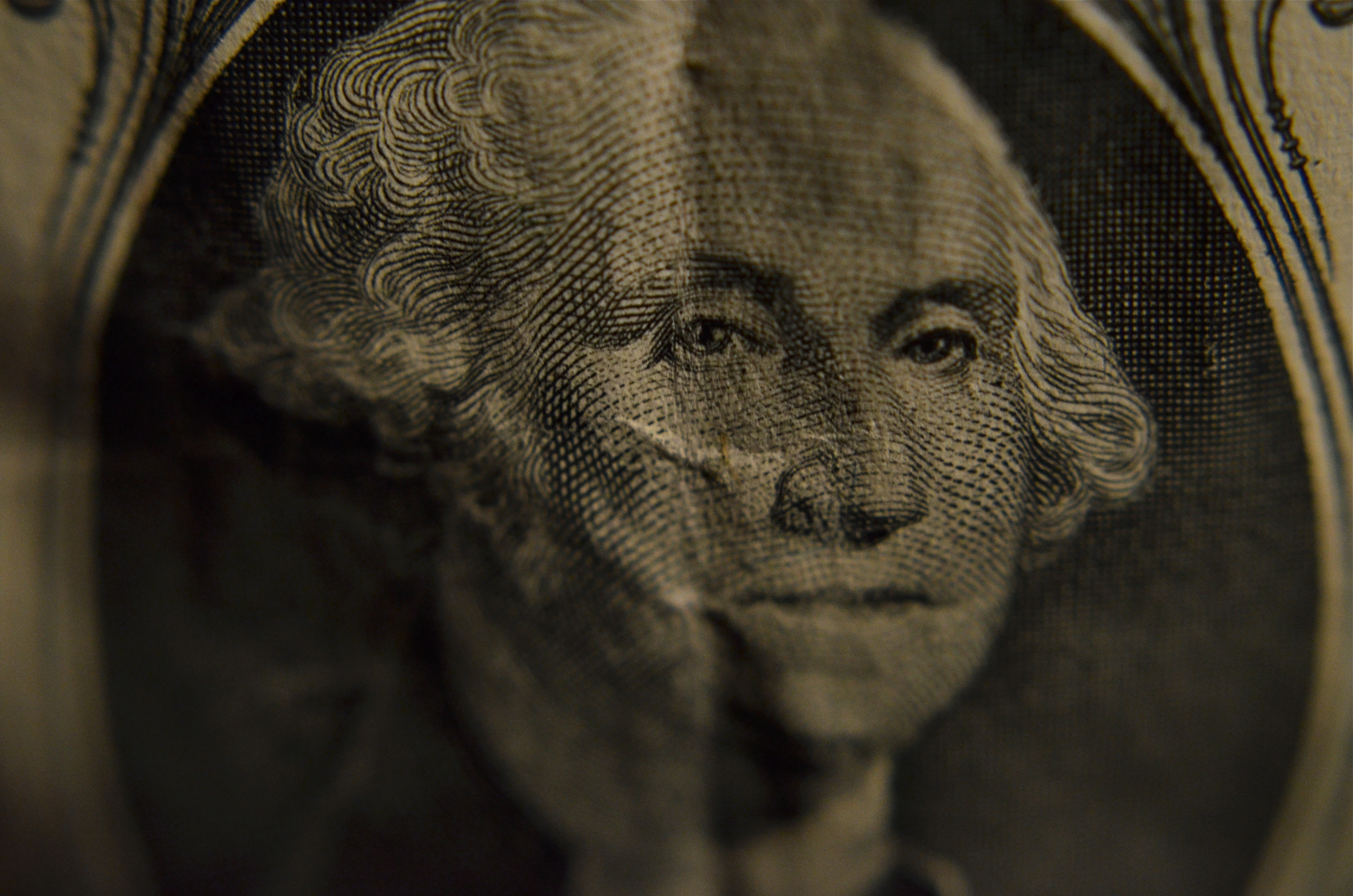
Focus. Scale. Context. Everything’s on the table when you’re trolling for ideas. 1/100 sec., f/5.6, ISO 800, 35mm.
By MICHAEL PERKINS
“IS THERE NO ONE ON THIS PLANET TO EVEN CHALLENGE ME??“, shouts a frustrated General Zod in Superman II as he realizes that not one person on Earth (okay, maybe one guy) can give him a fair run for his money. Zod is facing a crisis in personal growth. He is master of his domain (http://www.Ismashedtheworld.com), and it’s a dead bore. No new worlds to conquer. No flexing beyond his comfort zone. Except, you know, for that Kryptonian upstart.
Zod would have related to the average photographer, who also asks if there is “anyone on the planet to challenge him”. Hey, we all walk through the Valley Of The Shadow Of ‘My Mojo’s Gone’. Thing is, you can’t cure a dead patch by waiting for a guy in blue tights to come along and tweak your nose. You have to provide your own tweak, forcing yourself back into the golden mindset you enjoyed back when you were a dumb amateur. You remember, that golden age when your uncertainly actually keened up your awareness, and made you embrace risk. When you did what you could since you didn’t know what you could do.
You gotta put yourself at a disadvantage. Tie one hand behind your back. Wear a blindfold. Or, better yet, make up a “no ideas” list of things that will kick you out of the hammock and make you feel, again, like a beginner. Some ways to go:
1.Shoot with a camera or lens you hate and would rather avoid. 2.Do a complete shoot forcing yourself to make all the images with a single lens, convenient or not. 3.Use someone else’s camera. 4.Choose a subject that you’ve already covered extensively and dare yourself to show something different in it. 5.Produce a beautiful or compelling image of a subject you loathe. 6.Change the visual context of an overly familiar object (famous building, landmark, etc.) and force your viewer to see it completely differently. 7.Shoot everything in manual. 8.Make something great from a sloppy exposure or an imprecise focus. 9.Go for an entire week straight out of the camera. 10.Shoot naked.
Put yourself behind the…. oh, you get the idea.
Okay, that last one was to make sure you’re still awake. Of course, if nudity gets your creative motor running, then by all means, check local ordinances and let your freak flag fly. The point is, Zod didn’t have to wait for Superman. A little self-directed tough love would have got him out of his rut. Comfort is the dread foe of creativity. I’m not saying you have to go all Van Gogh and hack off your ear. But you’d better bleed just a little, or else get used to imitating instead of innovating, repeating instead of re-imagining.
GOING (GENTLY) OFF-ROAD
By MICHAEL PERKINS
WHEN YOU’RE BEHIND THE WHEEL, SOME PHOTOGRAPHS NAG THEIR WAY INTO YOUR CAMERA. They will not be denied, and they will not be silenced, fairly glowing at you from the sides of roads, inches away from intersections, in unexplored corners near stop signs, inches from your car. Take two seconds and grab me, they insist, or, if you’re inside my head, it sounds more like, whatya need, an engraved invitation? Indeed, these images-in-waiting can create a violent itch, a rage to be resolved. Park the car already and take it.
Relief is just a shutter away, so to speak.
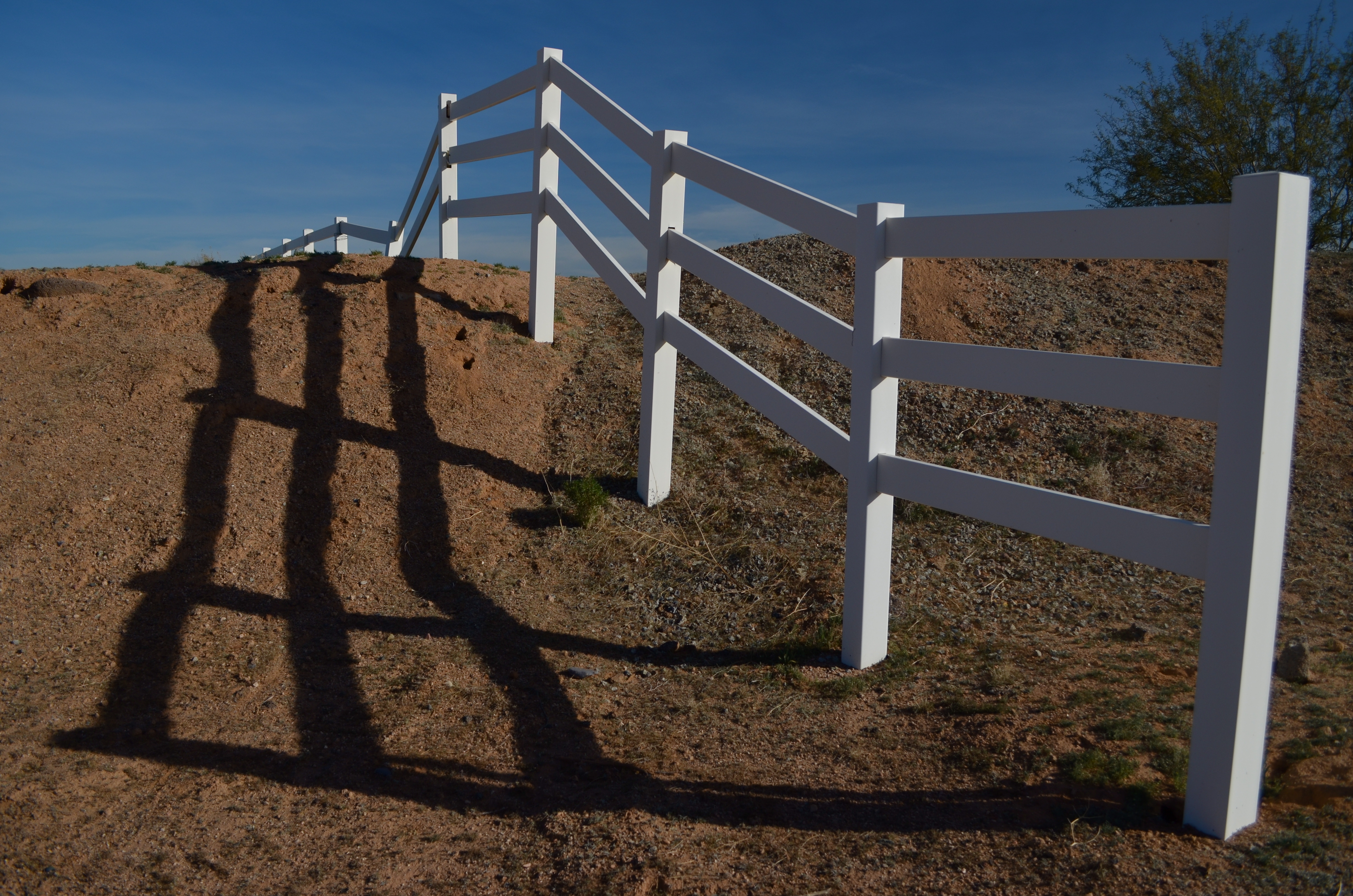
Wait too long and the light will break: 1/800 sec., f/5.6, ISO 100, 18mm.
The vanishing upward arc and sinuous mid-morning shadows of this bit of rural fencing has been needling me for weeks, but its one optimal daily balance of light and shadow was so brief that, after first seeing the effect in its perfection, I drove past the scene another half dozen times when everything was too bright, too soft, too dim, too harsh, etc., etc. There was always a rational reason to drive on.
Until this morning.
It’s nothing but pure form; that is, there is nothing special about this fence in this place except how light carves a design around it, so I wanted to eliminate all extraneous context and scenery. I shot wide and moved in close to ensure that nothing else made it into the frame. At 18mm, the backward “fade” of the fence is further dramatized, artificially distorting the sense of front-to-back distance. I shot with a polarizing filter to boost the sky and make the white in the wood pop a little, then also shot it in monochrome, still with the filter, but this time to render the sky with a little more mood. In either case, the filter helped deliver the hard, clear shadows, whose wavy quality contrasts sharply with the hard, straight angles of the fence boards.
I had finally scratched the itch.
For the moment….
DISTORTION AS DESIGN
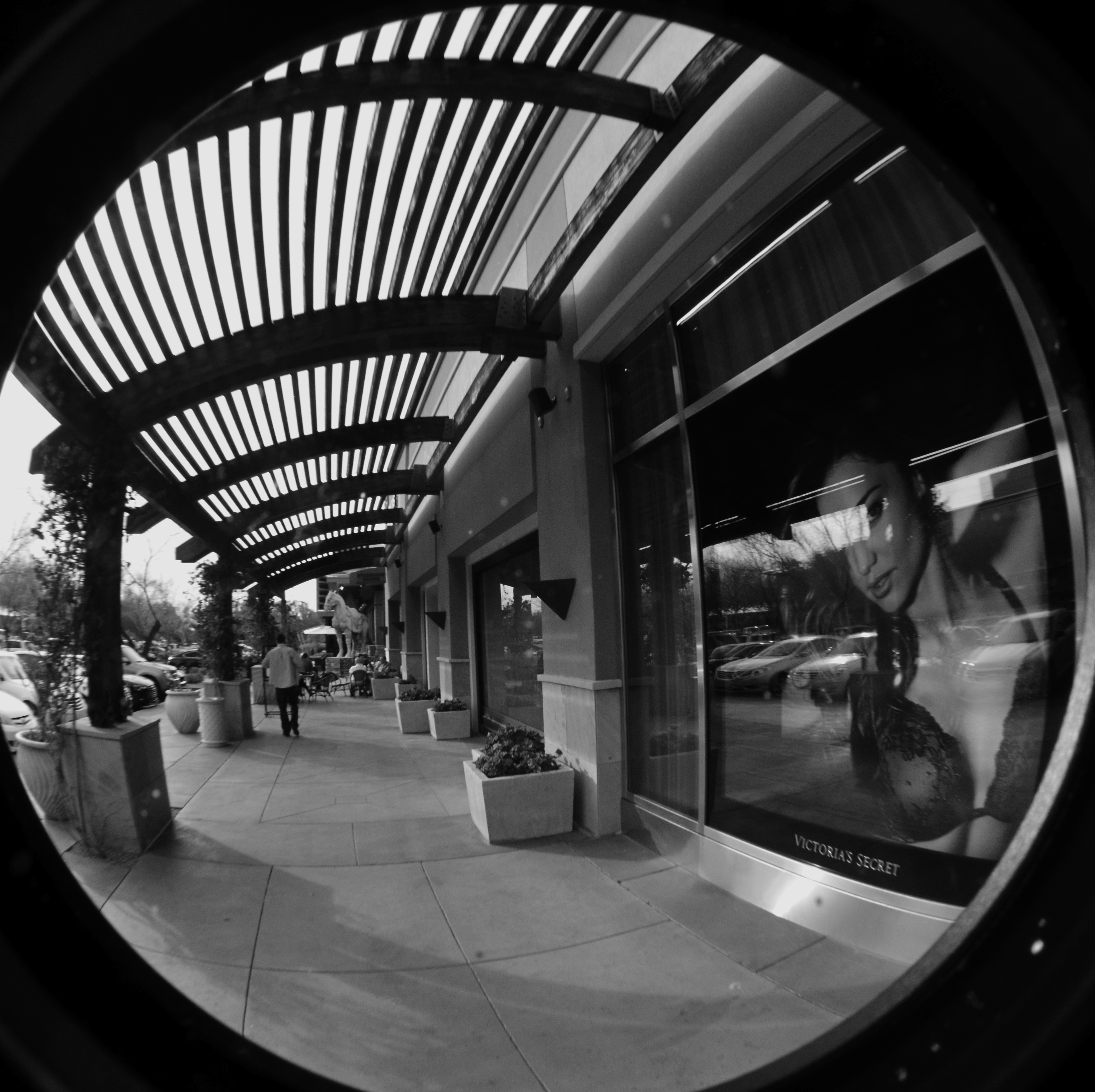
Overhead parallels bent with a fisheye to yank the eye for forcefully into the frame, maybe impose a little claustrophobia. 1/80 sec., f/22. ISO 640, 8mm
By MICHAEL PERKINS
BORN INTO A PAINTER’S WORLD, PHOTOGRAPHY NATURALLY INHERITED THAT DISCIPLINE’S BIAS TOWARD SHOWING THE WORLD “AS IT IS“, and, in fact, the first fifty years of photographic images seem to be in a neck-and-neck race with painting for the best rendering of the world at large. Then the 20th century kind of dope-slapped humanity’s collective sense of “reality”, as a world war, the onrush of science, and the rise of secular thought combined to question what the hell we needed with reality, anyway. The arts were shaken to their foundations, and photography and painting spiraled off onto wild new side roads. All bets for what defined a “picture” were off.
That’s not to say that photography has remained visually unbound through the decades. It almost acts like the flow and ebb of the surf. Photos surge toward pure documentation, then pull back into pure effect. They roll forward into an absolute deconstruction of the real world, then clamber back into the safety of literal pictorialism. One day we’re trying to recreate a wilderness landscape with perfect fidelity; the next day we’re reducing all “subjects” moot, reducing everything to shape and light.
I have had to spend many years getting comfortable with abstractions in my photography. It’s not like I don’t have ideas that wander far from the visual mainstream. If anything, I’ve had to learn to trust those visions, to stop worrying about whether they have “value” versus some rigid, if invisible,standard. While some shooters started with an absolutely open attitude toward the camera, pointing, framing and living completely by whim or instinct (the Instagram and Lomo kids of my Stone Age), I was absolutely, unwaveringly serious about arranging or capturing things as I literally saw them. It was a very clenched approach, even if it did teach me the physics of the medium. I had to learn to hold things very tightly before learning to let anything go.
And it took a very long time.
The great gift of the digital era is that many “accounting” issues (how much film do I have left? where can I go to get these processed? do they sell my kind of film in this end of town?) are just plain gone, and, with them, a little of the constipated approach that they imposed on me. At my age, it no longer matters a damn how long I shoot, how many times I “fail”, or who does or does not choose to anoint the results. There are no teachers or parents left to show off for, no competition with anyone except myself. I am free to use surfaces as straight lines or use distortion as a design element.
The truth speaks with forked tongue: in some ways I am glad that I am no longer young, since I have finally lived long enough to “age” into my photographic niche. And it also makes me sad that I am no longer young, because I really want to run with this ball, and I realize that Time might knock my legs out from underneath me before I make it all the way down the field. Still, we are here, and here is where we have to concentrate our energy. It’s the only control we have. Or, in the words of Edna St.Vincent Millay:
My candle burns at both ends; It will not last the night;
But ah, my foes, and oh, my friends— It gives a lovely light.
THE GLORY OF THE INVISIBLE
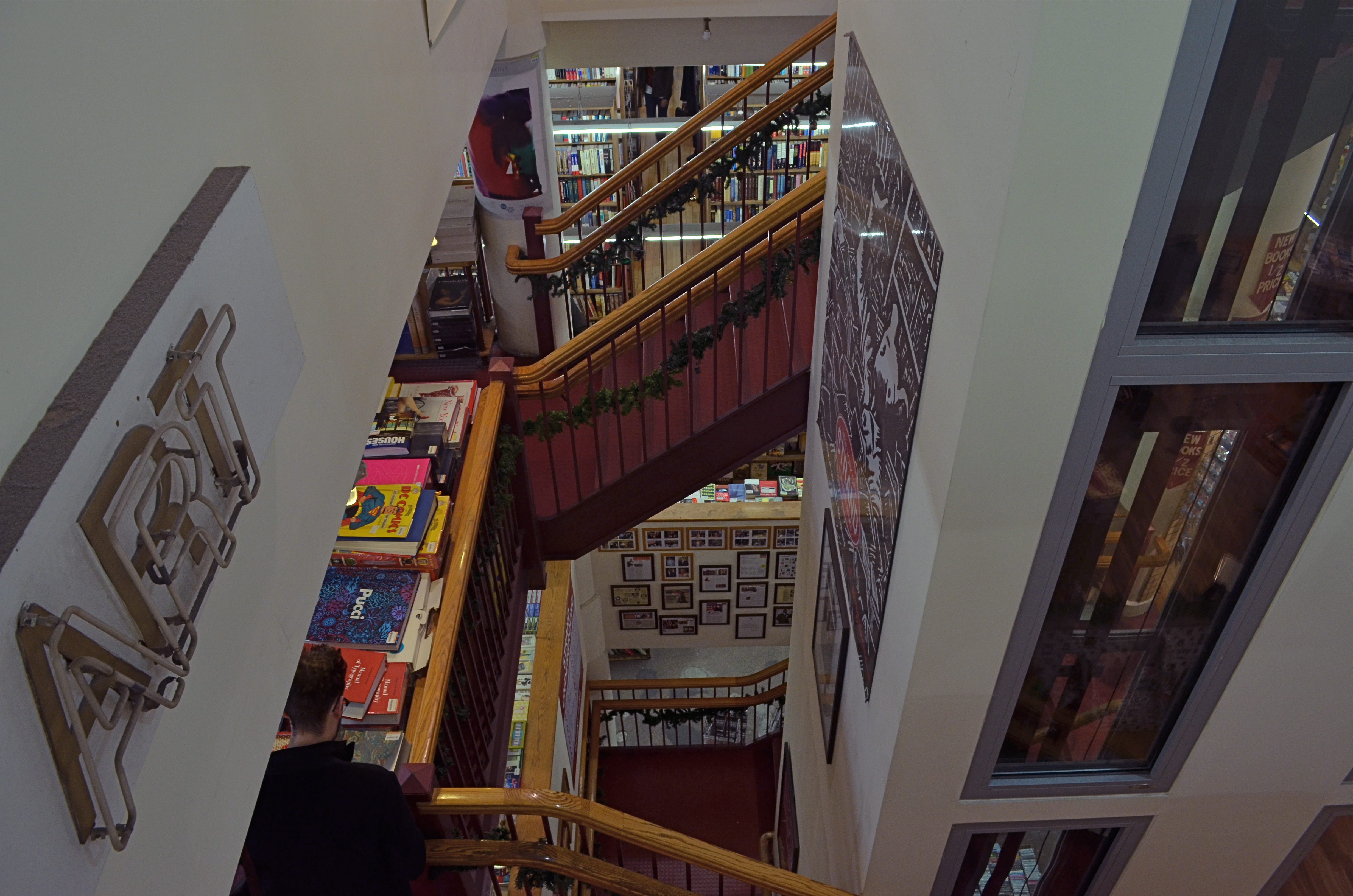
I thought of trying to capture the vastness of Manhattan’s Strand Bookstore in a single wide shot, but finally preferred this view, which suggests the complexity and size of the store’s labyrinthine layout. 1/40 sec., F/7.1, ISO 500 at 18mm.
THE FRAME OF AN IMAGE is the greatest instrument of control in the photographer’s kit bag, more critical than any lens, light or sensor. In deciding what will or won’t be populated inside that space, a shooter decides what a personal, finite universe will consist of. He is creating an “other” world by defining what is worthwhile to view, and he also creates interest and tension by letting the view contemplate what he chose to exclude. What finally lies beyond the frame is always implied by what lies inside it, and it is the glory of the invisible that invites his audiences inside his vision, ironically by asking them to consider what is unseen….in a visual medium.
Each choice of what to “look at” has, inherent in it, a decision on what to pare away. It is thus within the power of the photographer to make a small detail speak for a larger reality, rendering the bigger scene either vitally important or completely irrelevant based on his whim. Often the best rendition of the frame is arrived at only after several alternate realities have been explored or rejected.
Over a lifetime, I have often been reluctant to show less, or to choose tiny stories within larger tapestries. In much pictorial photography, “big” seems to serve as its own end. “More” looks like it should be speaking in a louder voice. However, by opting to keep some items out of the discussion, to, in fact, select a picture rather than merely record it, what is left in the frame may speak more distinctly without the additional noise of visual chatter.
“If I’d had more time”, goes the old joke, “I’d have written you a shorter letter”. Indeed, as I get older, I find it easier to try and define the frame with an editor’s eye, not to limit what is shown, but to enhance it. Sometimes, the entire beach is stunning.But, in other instances,a few grains of sand may more eloquently imply the beach, and so enable us to remember what amazing details combine in our apprehension of the world.
Thoughts?
 thenormaleye