YOU’RE IN MY SHOT
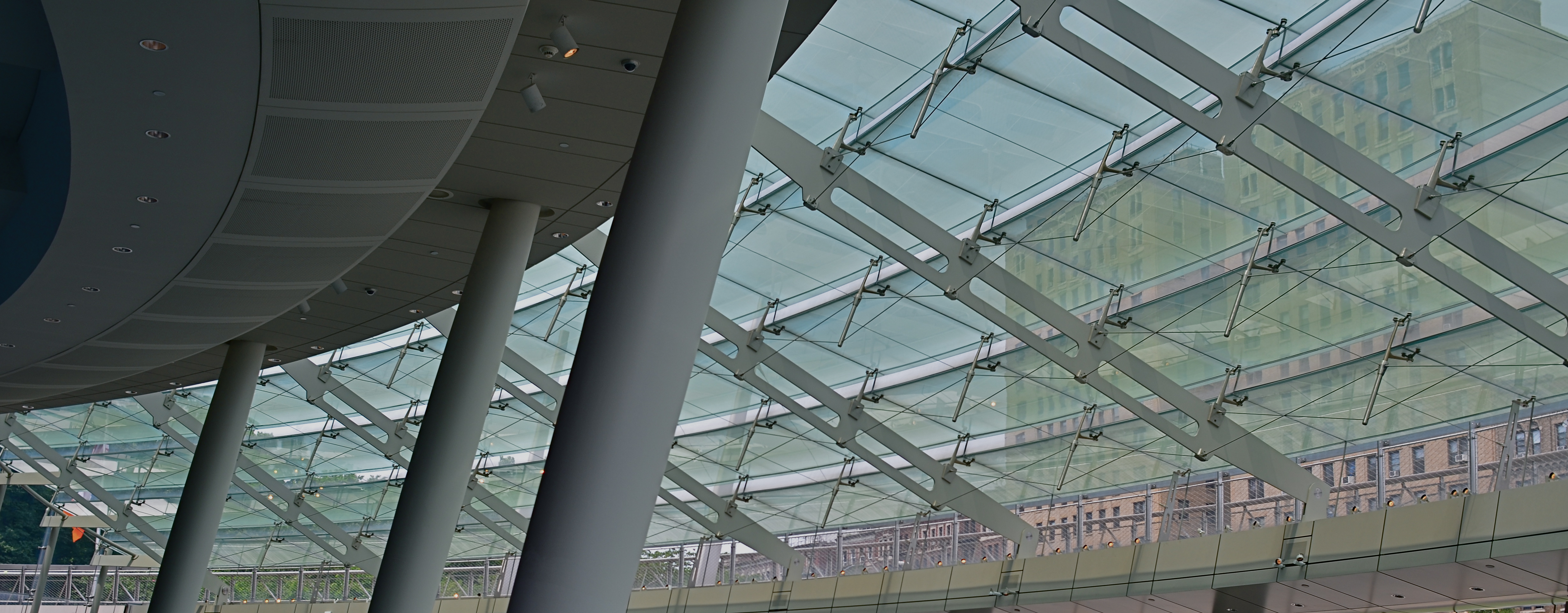
The Brooklyn Museum, 2015. Framing around tourists at attractions means compromising what you want to capture in a given frame. Sometimes it works, and sometimes……
By MICHAEL PERKINS
THE MOST CONSISTENT CRITICISM I’VE CAUGHT ABOUT MY URBAN PHOTOGRAPHY over a lifetime is that it’s a little, well, clinical. Now, it’s true that I like to feature urban spaces in their purest form, or, as near the architect or planner’s original vision as possible. Certainly, the urban dwellings I shoot were designed to serve people, but I can’t resist occasionally showing these spaces as absolute designs, minus the visitors. I realize that, for some, this can render things a little antiseptic, but I don’t mean anything personal (impersonal?) by it.
Comparing notes with other shooters, I find that they, too, occasionally like to just show things that were designed for humans, only without…the humans. And I believe that parks, libraries, and museums can actually increase their profit by accommodating photographers in the same way that they might for their own marketing efforts.
Universally, when it’s time to do a photo feature on an historic site, the first thing that curators do is chase all the peasants off the property and give a photographer exclusive access to the place. You’ll see this to a lesser degree when people shoot real estate listings, and it makes perfect sense. The shooter has time to plan and experiment, without working around an endless supply of kids with Slurpees and moms with strollers. It’s not anti-human, it’s pro-photo.
So here’s the idea: why not dedicate a set amount of an attraction’s weekly tour schedule solely to solo photography tours? Calculate your place’s slow earning days and book those times in, say, half-hour increments, chunks in which the only persons inside the joint would be one employee and one photographer. I know many shooters who would gladly pay a bump of up to 100% of the going tour rate just to ensure privacy, and be allowed to effectively prepare shots.
Parks like Yellowstone, along with a growing list of museums and monuments have already crafted private tour options for photographers. It’s all found money,since all attractions have their dead seasons, weeks or months out of the year when they could throw a bowling ball across the place without hitting anything. Why not use those off-days as moneymakers? I love people, but if I’m visiting a place to have my one shot at capturing a magnificent structure, I hate settling for what I can frame around, versus what I could do if I just had the same access as National Geographic. Just once.
THROUGH A FUZZY CRYSTAL
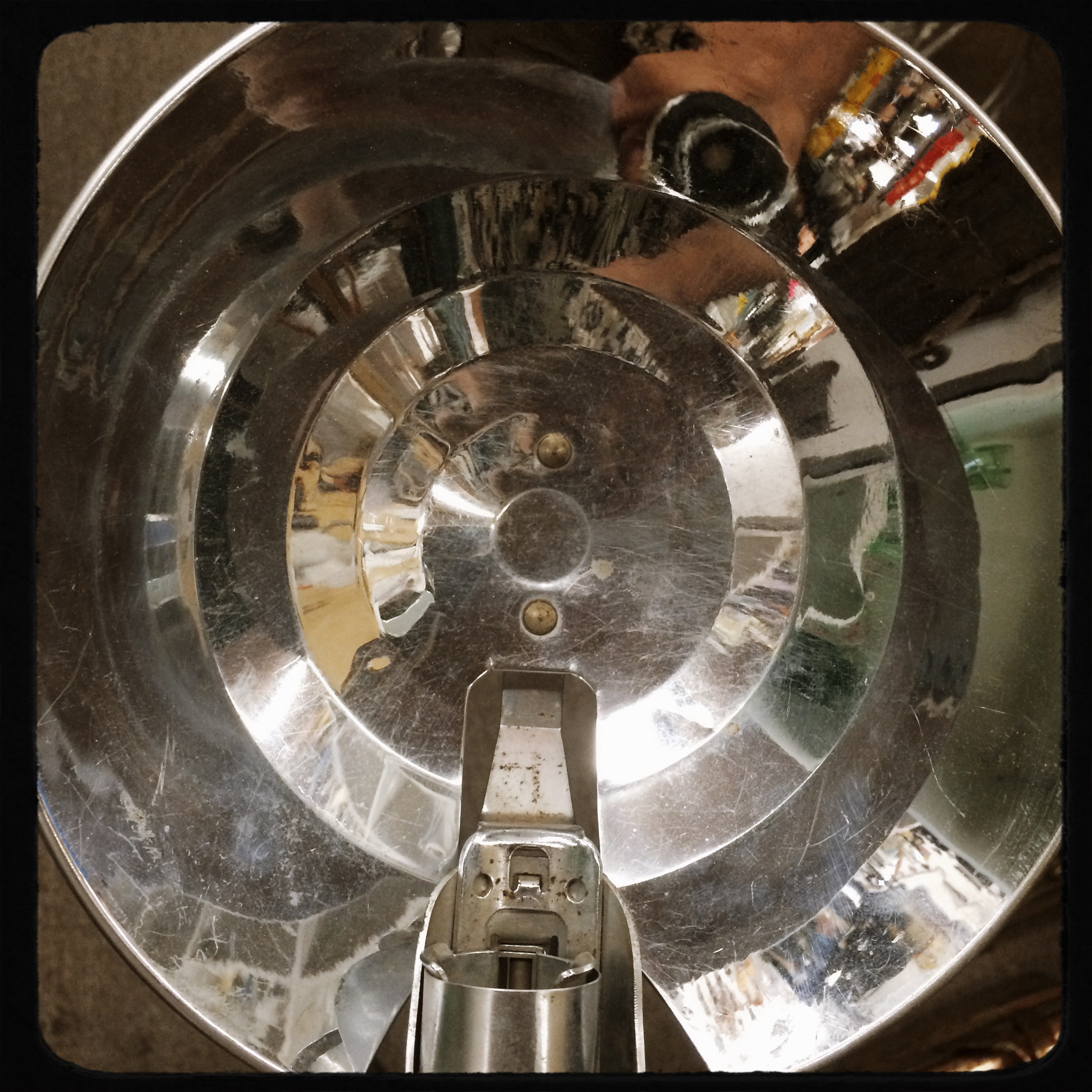
Naysayers about the future of smartphone cameras are due for a major news flash.
By MICHAEL PERKINS
I GENERALLY STAY OUT OF THE PREDICTION BUSINESS, and with good reason. Anyone who sets himself up in the prophecy business had better keep his day job, a truth which has been demonstrated time and again by any number of junior league wizards who believe they know how to read the tea leaves in Tomorrowland. That’s why I have always kept the pages of The Normal Eye pretty free of excess doses of prognostication on what’s next or what’s inevitable regarding photography.
However, even though it’s foolish to cite specific equipment or inventions as “proof” that a new day has arrived, it’s often obvious when something of a tipping point is coming that will transform the entire process of making pictures. And I feel confident that we are now at one of those points as the latest smartphone cameras begin the blurring, if not the erasure, of difference between photography in mobile devices and photography from traditional gear, especially, for the first time, DSLRs.
The main gist of this tipping point is the ability of mobiles, finally, to allow for manual override of many camera functions that were, in earlier years, completely automated. Phone cameras in their original iteration were an all-or-nothing proposition, in that you clicked and hoped that the device’s auto settings would serve up an acceptable image. As for any kind of artistic control, you had to try to intervene after the shutter snap, via apps. It was the opposite of the personal control that was baked into DLSRs, and many photographers rightly balked at abandoning their Nikons and Canons for what was essentially a compact point-and-shoot.
But we are suddenly in very different territory now. The newest models by a variety of smartphone manufacturers will not only offer shooting apertures as wide as f/1.8, drastically increasing the flow of light to the camera’s sensors, but will also give shooters the option to either tap-customize a variety of shooting settings on-screen, or merely leave the device on full auto. The ability to override factory defaults is what separates the camera men from the camera boys, so this, in the words of Joe Biden, is a big &%$#ing deal. It means that many photographers who never even considered doing their “serious” shooting on a smartphone might at least mull over the option of leaving their full-function DSLRs at home, at least occasionally.
It would be foolish to predict the wholesale desertion of capital “C” Cameras by the shooting public, since such changes never come about for everyone at one time. Plenty of people continued to ride horses after the first flivvers rattled out of the factory. But there is certainly a major debate on the horizon about how much, and what kind of camera allows you to get the shot, easier and more of the time.
And getting the shot, as we know, is all that has ever mattered. All the rest is cheek music.
SHOOT (AND THINK) BIG
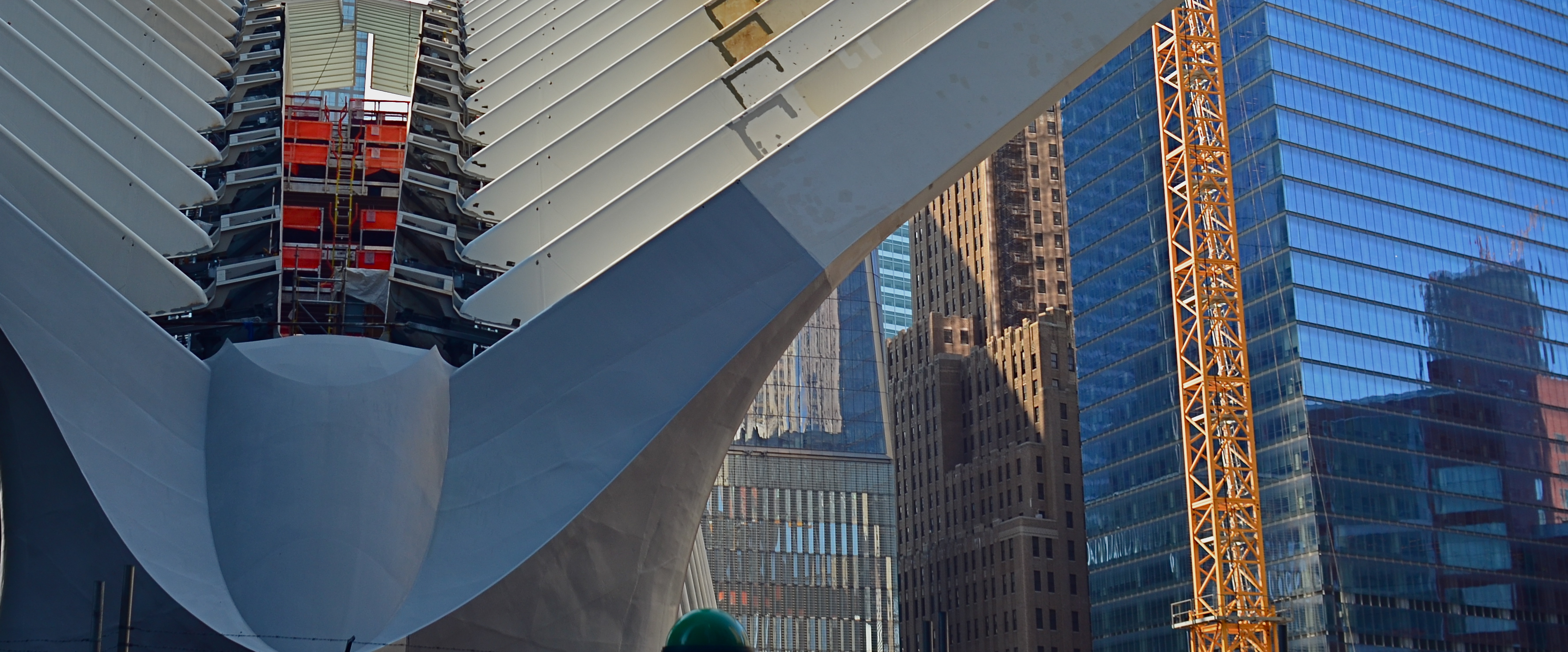
The Nexus Of Resurrection, 2015. Image cropped from 4928 x 3264 pixels to 3550 x 1477, leaving enough density for a printable enlargement.
By MICHAEL PERKINS
BY NOW MOST OF US PROBABLY REALIZE THAT THERE IS NO REAL ADVANTAGE to “budgeting” shots in digital media the way we used to do in film. Harking back to the time of 24-exposure limits on one’s photographic fun, shooters maintained a running total in their heads of shots taken versus shots remaining, a cautious way of allocating frames on the fly, the idea being to finish the film roll and your tour stops at about the same time. Some kept notebooks; some doled out shots on a priority basis (one image of the waterfall, three of the ruins, four of the kids on the rides), and some, I suppose, were tempted to count on their fingers and/or toes. You had to be careful not to run out of frames.
Jump to the digital now, where we realize that, in all but the rarest cases, our shutter finger will crack and fall off before we “run out” of shots on even the most meager memory card. However, I still run into people who believe they are being prudent and providential by taking images at lower resolutions to “save space”, a false economy that is not only needless, but actually limits your options in the later process of editing.
Big files mean image density (lots o’ pixels) and therefore higher resolution. High resolution, in turn, means that you can crop substantial parts of a photo as needed and still have enough density for the image to hang together, even when printed out. Now, if you look at your work solely on a computer screen, protecting the integrity of a cropped image is less crucial, but if you’re lucky enough to create something you want to enlarge and frame, then you should begin with the fattest file you can get.
Review a few of your images that were, let’s say, less than compositionally sublime coming right out of the camera. Look at the pixel count on the same images after they were cropped to your liking. You’ll arrive at your own preference on what minimum resolution you’ll accept from the cropped versions. Thing is, the bigger you start, the more wiggle room you’ll have in editing.
As I say, most people already shoot at the largest file size possible. I merely send along this note to remind us all that we do it because it makes sense, and affords us real flexibility. It’s one of the amazing by-products of digital; we can, generally, shoot as much as we want for as long as we want.
REVERSAL OF FORTUNE
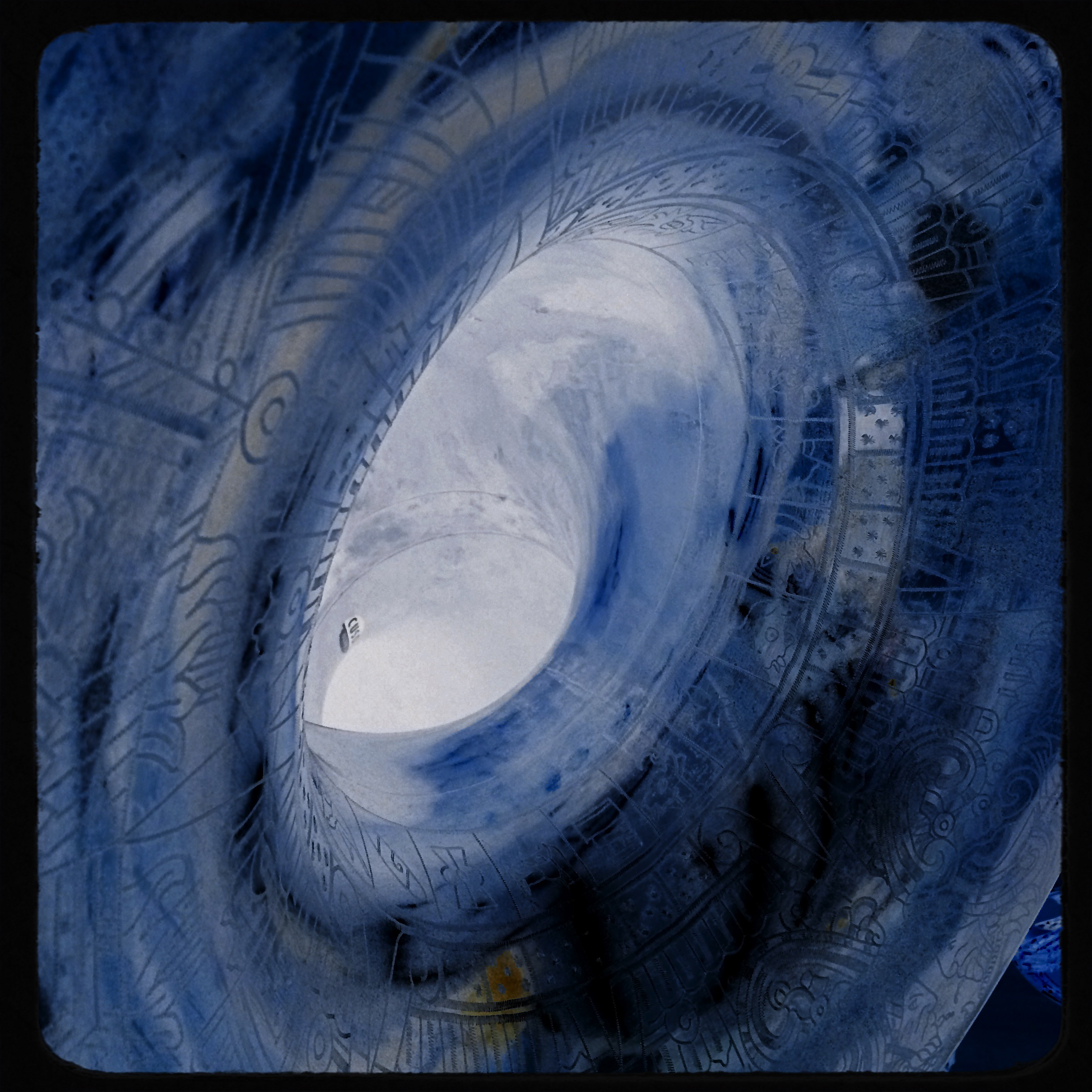
The bell of an engraved sousaphone, converted into a negative and color-boosted to resemble a faux vortex.
By MICHAEL PERKINS
FOR THOSE OF US WHO SWEATED IN LITERAL DARKROOMS (as opposed to digital ones), there has always been a fascination with the print photographer’s equivalent for “RAW” files, the celluloid negative. Manipulated properly, one neg could yield an almost endless variety of print results, as the sciences of burning, dodging and pure imagination were applied to coax subtle tonal changes and modulations out of either color or monochrome images. Ansel Adams’ frequently quoted remark that the negative was the score and the print was the performance was born out in his own visual “symphonies” along with those of millions of others.
But the negative need not merely be the understudy for the “final” version of a picture, but the final itself. And as we’re freed to experiment via new digital apps, we are more frequently re-imagining shots with reversed tones, often creating dramatically more effective results than the “positive” originals. Again, apps are speeding the time of practice and development in a way that chemically-based, film-based manipulation never could. Tap and you’re done. Tap, tap, and the result is either sent to the keeper pile or re-done in an instant. It’s pretty irresistible.
There have always been amazing examples of artists who made their negatives the “official” version of their pictures, although the neg is traditionally thought of as a step in a process, not an art form it itself. I remember being thrilled when, as a teen, I first saw F.W. Murnau’s silent masterpiece Nosferatu, which includes a thrilling, eerie scene with a ghostly, horse-drawn carriage on its way to Count Orlok’s castle, deliberately printed in negative to boost the creepy drama of the sequence. And with new phone-based apps, it’s easy and fast to get a basic version of this effect, albeit with some limits.
The app I use, called Negative Me, is a very basic (and free) tap-on layer. Choose a file photo, apply the effect, and you’re done. It’s also possible to shoot new pictures directly through the app. Yes, it’s frustrating that you can’t attenuate the tone or the intensity in any way, but, you can always take the extra step of feeding the first negative image into additional apps or editing suites where more precise processing can be added. It’s still easier than any process that was available in the film era, and, while it merely adds strangeness to many photographs, it allows some to be reborn as abstractions that are unearthly and dramatic.
Producing a negative variation on certain shots is just another way to re-interpret a shot, no less useful than any other color filter or post-processing tool. Like anything else, it’s the impact of the result, not the effect itself, that makes the shot.
THE PUSH AND THE PULL
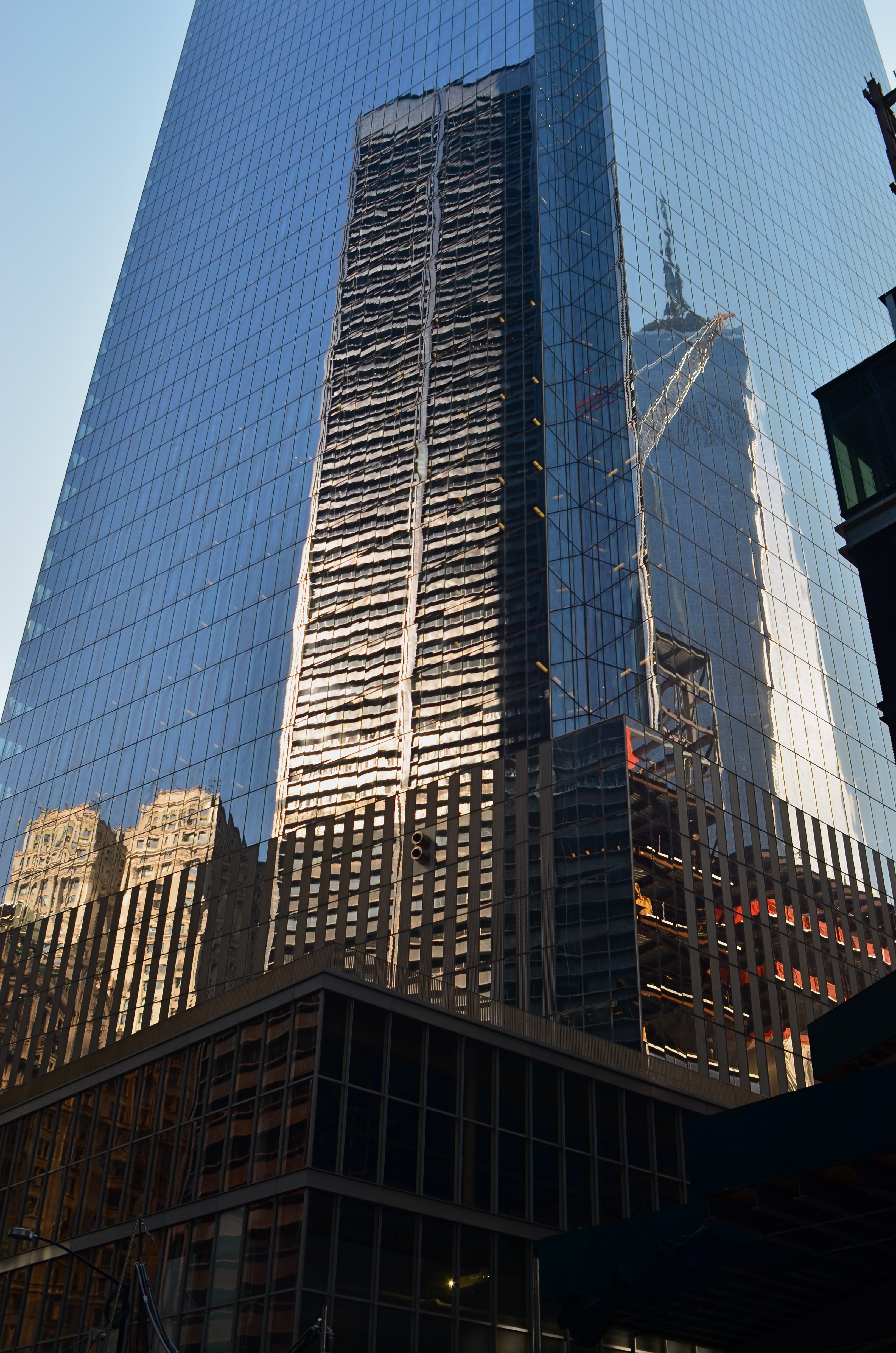
NYC: pictures of impressions of visions of dreams.
By MICHAEL PERKINS
NEW YORK CITY IS A VERY IRONIC CANVAS. Artists who set brush upon that canvas may think they are attempting to depict something outside themselves, but what they show actually reveals very personal things. There are more stories than all the storytellers in the world can ever hope to render…in paint, in print, or through the lens of a camera, and while some of us entertain the notion that we are adding this commentary objectively, that, plainly, is impossible.
From handheld luggage to emotional baggage, everyone brings something to New York, layering their own dreams and dreads onto the multi-story sandwich of human experience that makes it the world’s most unique social laboratory. Hard as it is on the artistic ego, one can’t make the statement that defines the city. Wiser minds from Walt Whitman to Langston Hughes to Bob Dylan have tried, and they have all contributed their versions….wonderful versions. But the story can never be completed. New York won’t be contained by mere words and images. It is, like the song says, a state of mind.
Still, trying to scale the mountain can be fun. So, with this post, The Normal Eye has added a new gallery tab at the top of the page to share a few recent takes on my own ongoing love affair with the Apple. The title, I’ll Take Manhattan, is hardly original, but it is easy to remember. I have done essays on NYC before, but, this time out, I strove to focus as much on the rhythm of people as on the staggering scope of the skyline. New York is, finally, its people, that perpetually fresh infusion of rigor, rage, talent and terror that adds ever-new coats of paint to the neighborhoods, and this batch of pictures tries, in 2015, to show the town as it is used, by its daily caretakers. The push. The pull. The gamut of sensations from sky to gutter.
So have a look if you will and weigh these impressions against those you’ve discovered through others or developed within yourself. Taking on a photographic task that can never be finished is either frustrating or freeing, depending on your artistic viewpoint. In the meantime, what a ride.
RETURN OF THE POD PEOPLE
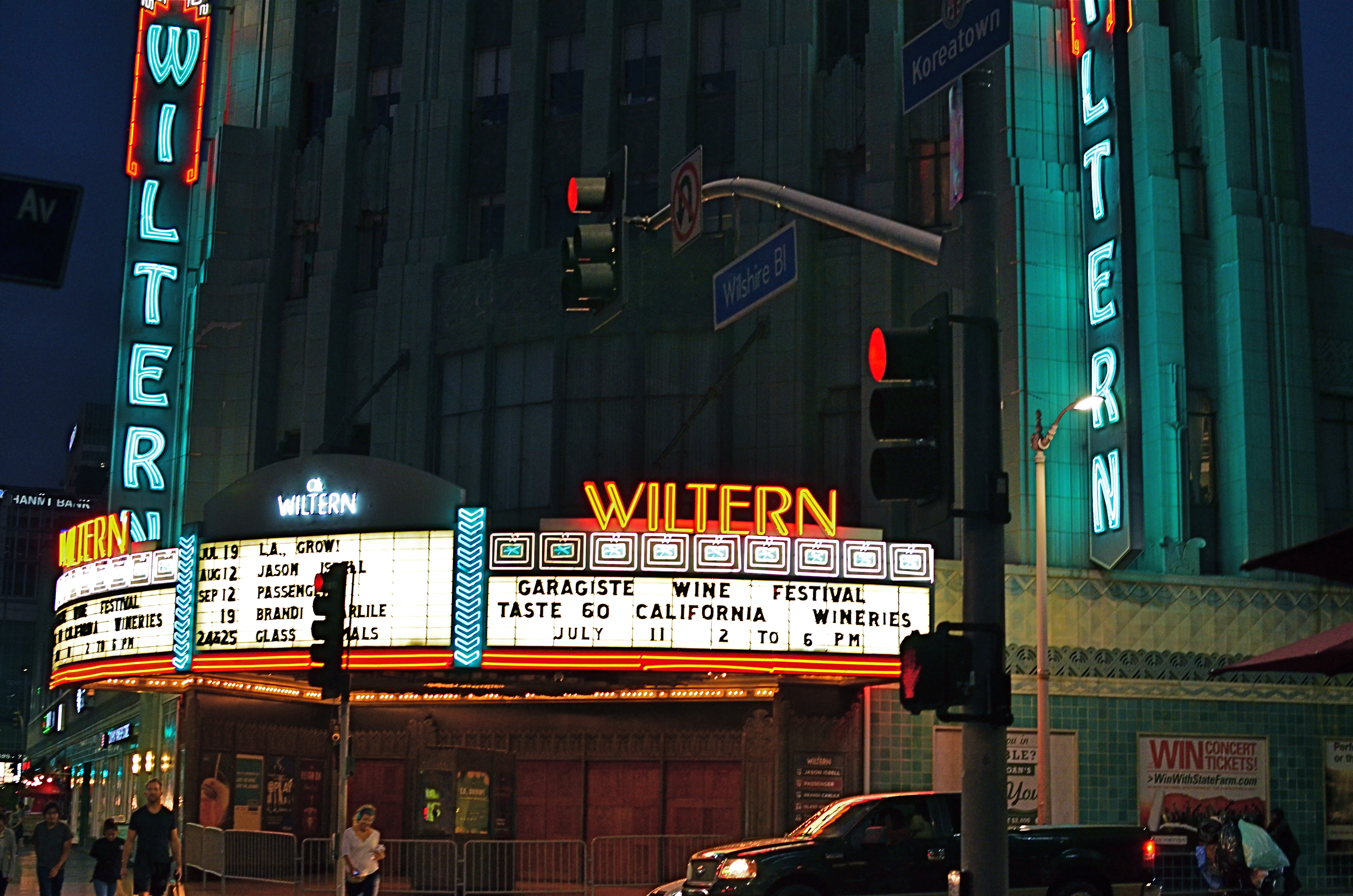
Wiltern On Wilshire, 2015. At f/3.5 and an ISO of 1000, this is an acceptably sharp hand-held exposure. Want the lights to be sharper? Might have to go tripod.
By MICHAEL PERKINS
I HAVE OCCASIONALLY SOUNDED WHAT, I ADMIT, IS A PREMATURE FUNERAL DIRGE for the lowly tripod, that balky, bulky, creaky throwback to the 19th century that continues to linger as an occasional, if fading, tool of the 21st. Part of this stems from the pure aggravation involved in trucking the things around, getting them locked and level, and praying that nothing from a stiff wind to an enraged gopher to a power-tripping mall cop will intervene to undo the entire rickety works. Hey, I’m not a hater, just a very reluctant fan.
One of the reasons I’ve mostly weaned myself from the pod is the ever-evolving speed of lenses and sensors in the digital era. This means scenes with less and less light can be captured with greater sharpness in short, hand-held exposures, albeit with a little more visual noise or grain. You can now shoot on a dark street at night, if your lens opens wide enough to keep your ISO as low as possible and if you can maintain a rock-steady grip on your camera at shutter speeds around 1/20 or so. And, for many cases, the results from this setup will be quite satisfactory.
However, we ain’t just about being satisfied, are we, mmmm?
Problem with a wide exposure and bright highlights (like the theatre marquee in the above shot) is that those elements will burn in and become diffuse, even in fast exposures, especially since your ISO setting is instructing your sensor to suck light like a maniac. As a result, instead of being sharp pinpoints of light, they will often turn soft and globby. If you can live with that, then go in peace and sin no more, my son.
However, if you really need to get those lights as sharp as you see them with your own eye, you might try doing a longer exposure at a smaller aperture, and that can mean dragging the pod down from the attic and doing it old-school. Good news is that you can now crank your ISO back down to minimum, so, yay, no noise atall, atall. You also might pick up some more contrast and detail within bright objects, like the horizontal lines on the above marquee. Bad news is, duh, you’re using a tripod. Hey, is that a mall cop I see running over here?
7/4/15: OH, SAY, CAN YOU SEE?
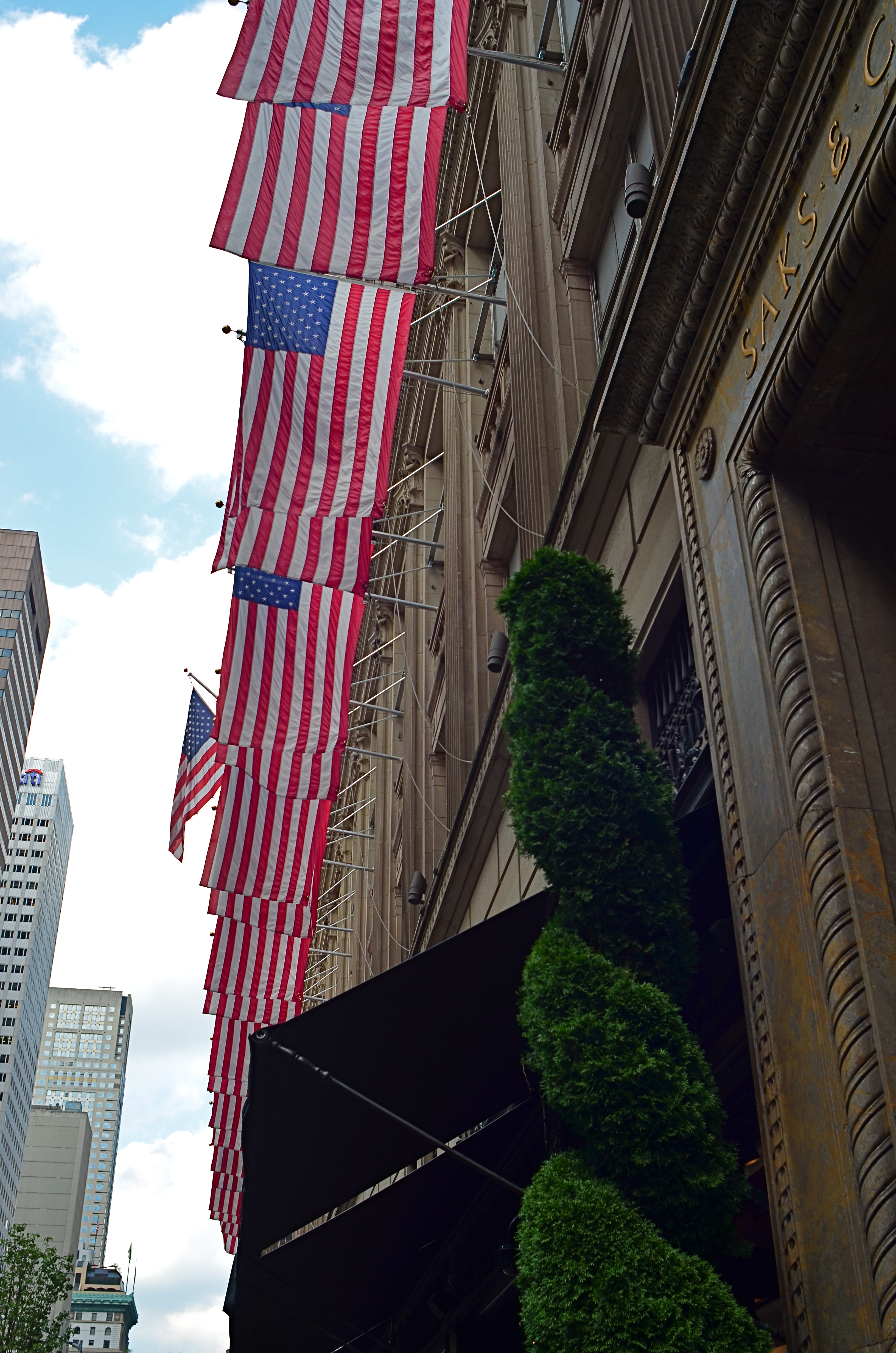
Honor Guard, 2015. 1/50 sec., f/5.6, ISO 100, 24mm.
By MICHAEL PERKINS
FOR AS LONG AS THERE HAS BEEN PHOTOGRAPHY, the United States of America has flown some version of the Stars and Stripes, a banner that has symbolized, in cloth and thread, what we profess and hope for ourselves as one of the world’s experiments in self-government. That argues for the flag being one of the most photographed objects in history, and, therefore, one of the most artistically problematic. Those things that are visualized most, by most of us, endure the widest extremes in interpretation, as all symbols must, and observing that phenomenon as it applies to the flag is both fascinating and frustrating.
Fascinating, because the flag can embody or evoke any emotion, any association, any memory, providing a gold mine for photographers who always must look beyond the mere recording of things to their underlying essences. Frustrating, because that task can never be complete, in that there can be no definitive or final statement about a thing that resonates so intensely, so personally with a diverse nation. Photographing the flag is always new, or, more precisely, it can always be made new.
The problem with fresh photographic approaches to the flag is really within ourselves. The banner is so constantly present, on public buildings, in pop culture, even as commentary, that it can become subliminal, nearly invisible to our eye. Case in point: the image at left of the front facade to Saks’ in Manhattan. The building is festooned in flags across its entire Fifth Avenue side, which is, being across the street from Rockefeller, a fairly well-trafficked local. And yet, in showing this photo to several people from the city, I have heard variations on “where did you take that?” or “I never noticed that before” even though the display is now several years old.
And that’s the point. Saks’ flags have now become as essential a part of the building as its brick and mortar, so that, at this point, the only way the building would look “wrong” or “different” is if the flags were suddenly removed. Training one’s eye to see afresh what’s just been a given in their world is the hardest kind of visual re-training, and the American flag, visually inexhaustible as a source of artistic interpretation, can only be blunted by how much we’ve forgotten to see it.
Photography has found a cure for sharpness, clarity, exposure, even time itself. But it can’t compensate for blindness. That one’s on us.
UNKNOWN KNOWNS
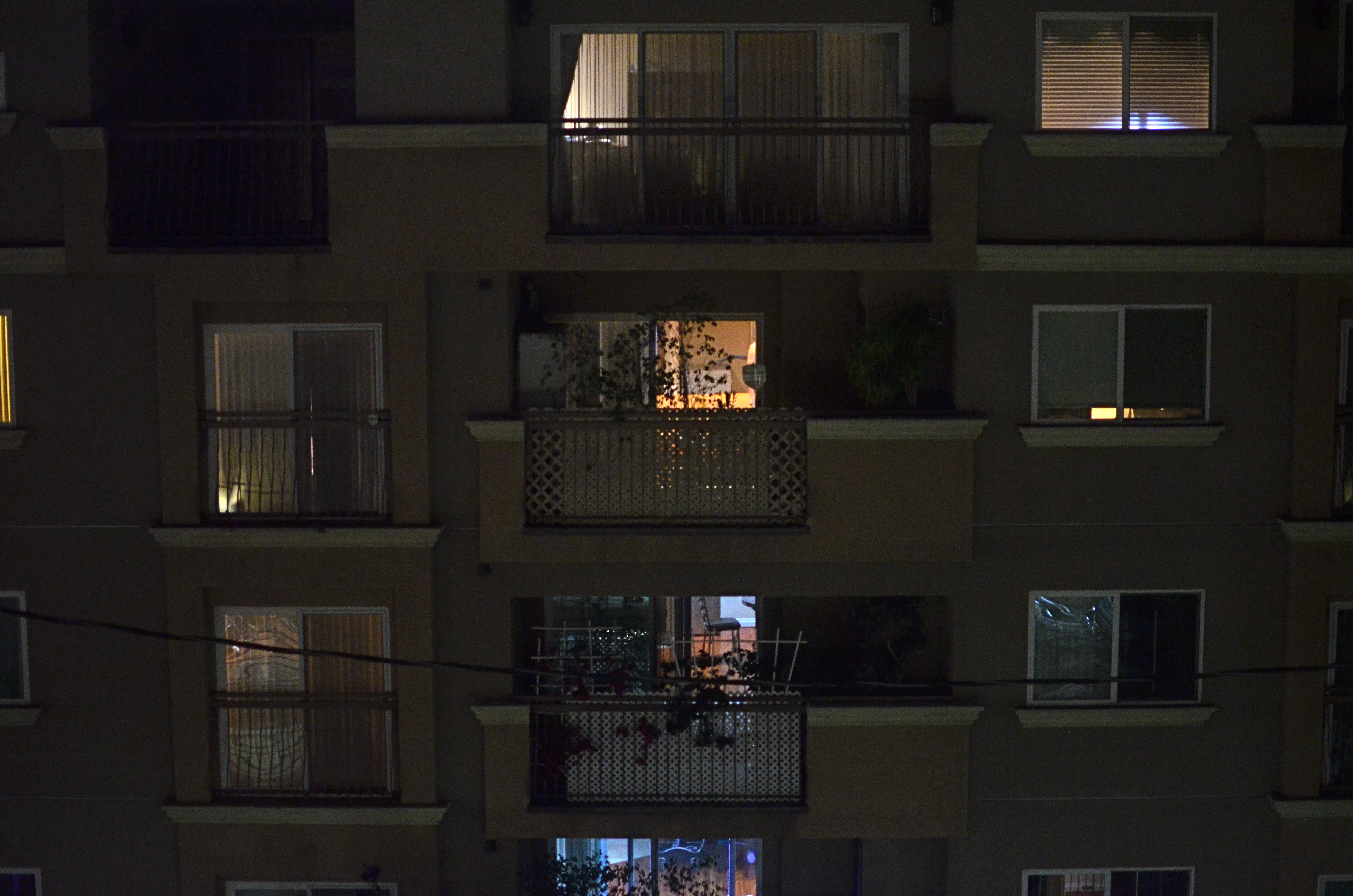
1/15 sec., f/1.8, ISO 1000, 35mm.
By MICHAEL PERKINS
ALFRED HITCHCOCK’S CLASSIC REAR WINDOW IS THE ULTIMATE GUILTY PLEASURE, and not just because the Master of Suspense is at the peak of his edge-of-your-seat powers in the telling of its thrilling murder story. No, the massive, full-sized set of James Stewart’s Manhattan neighborhood, with all its apartment-dwellers’ secrets open to the most casual snoop, is the creepy, giddy candy at the center of this cinematic confection. In making it temporarily okay to be, in effect, peeping toms, Hitchcock is making us complicit in his hero’s unsavory curiosity. All these dramas. All these secrets that we have no right in knowing. And, of course, we can’t look away.
Photographing the intersection of living spaces in city settings is far often more subtle than Hitch’s feat of shaving the back wall off an entire community, and that makes for a lot more mystery, most of us beyond solution. Look too little, and a slab of brick is more like a beehive than a collection of stories. Look too deeply, and the truths you unearth can feel stolen, like an invasion done purely for prurient entertainment. What’s most interesting is to imply much but reveal little, and hitting that balance is tough.
I recently killed off the last fifteen minutes of a generally unproductive night of street shooting by gazing out the window of my nondescript hotel at an equally nondescript apartment building across the way. The last vestiges of dusk offered scant details on the outside wall, and the warm yellow hum of electrical light had already begun to flicker on in the various cubicles. I thought of Rear Window and how you could look at the fully visible doings of people, yet still know virtually nothing of their lives. Here the lighting was random, undefined, with little real information on the life throbbing within the individual spaces….the dead opposite of Hitchcock’s deliberate staging.
I couldn’t see a face, a hand, an activity. All I had was the mere suggestion of human presence. What were they reading, watching, wishing, enduring, enjoying, hating? I couldn’t know and I couldn’t show it, but I could show the mystery itself. I could share, if you will, the sensation of not being able to know. And so I made a photograph of that lack of information.
Some photographs are about things, obvious things that you’re able to freeze in time. Other images are about the idea of something, a kind of unsatisfied anticipation. Both kinds of pictures have their own narrative code, and learning how to manage these special languages is great practice for the idea, and the mind back of it.
PUT YOURSELF OUT THERE
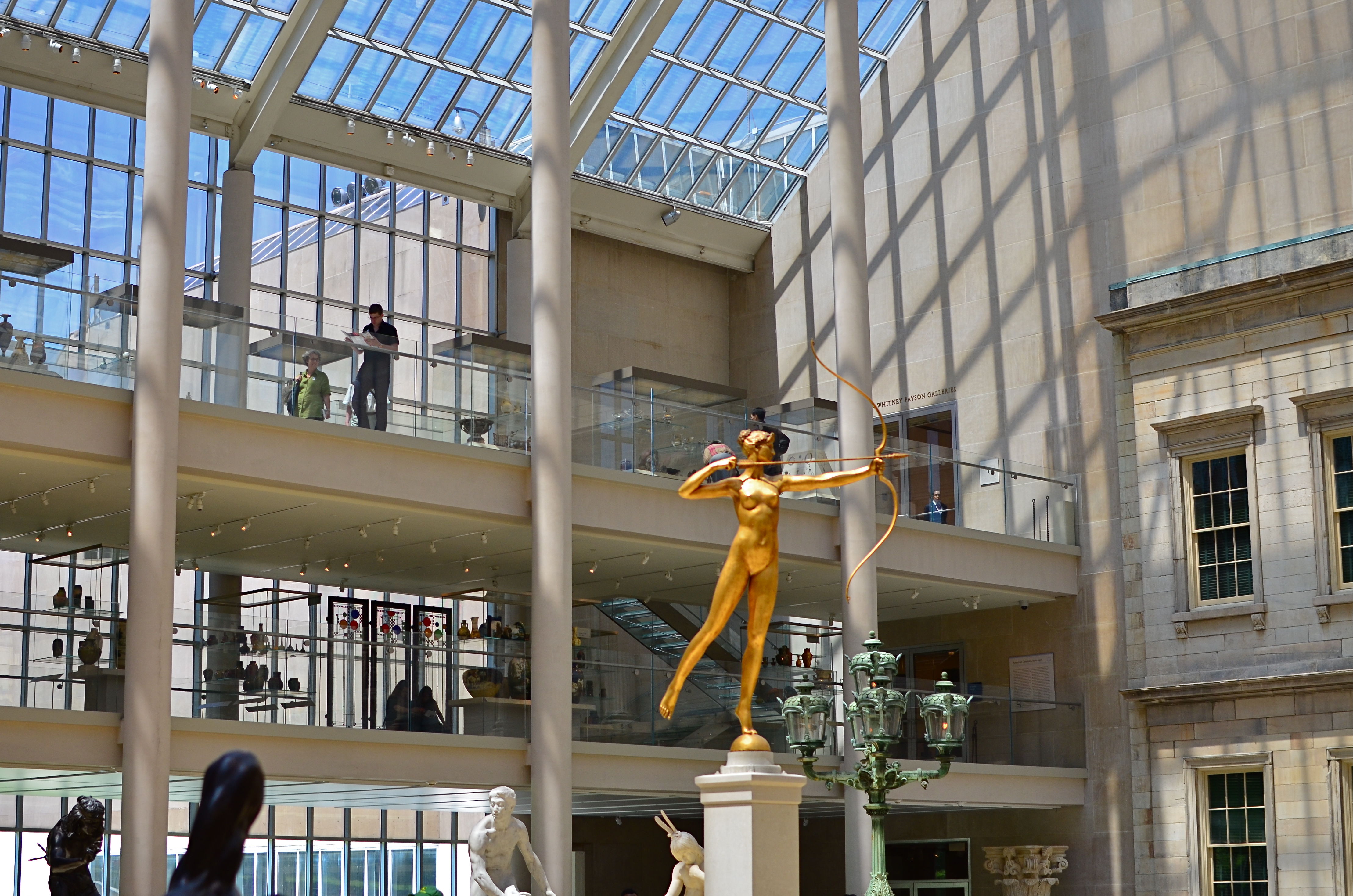
Miles from home, I either had to shoot this with the “wrong” lens, or miss the moment. Hey, I lived.
By MICHAEL PERKINS
PHOTOGRAPHY, IF IT TRULY IS AN ART (and I’m assuming you believe it is), can never get to a place where it’s “done”. There is no Finished, there ain’t no Clock Out, and there shouldn’t be any Good Enough. There is only where you are and the measurable distance between there and where you want to be. And, once you get there, the chains get moved down the field to the next first down, and the whole drill starts over again.
That means that, as photographers, we are always just about to find ourselves uncomfortable, or need to try to make ourselves that way. Standing still equals stale, which, in turn, equals “why bother?” Sure, the first step toward a new plateau always feels like walking off a cliff, but it needs to, if we’re to improve. If your work feels like something you’ve done before, chances are it is. And if a new assignment or challenge doesn’t come from outside yourself, then you’ve got to do something to put the risk back in the process.
You can write your own prescription. Shoot all day with a limited camera. Do everything in b&w. Make yourself compose shots that are the dead opposite of what you believe looks “right”. Use the “wrong” lens for the assignment at hand. Force yourself to do an entire day’s work in the same aperture, shutter speed, or white balance. Just throw some kind of monkey wrench into your routine, before the routine becomes the regular rhythm (spelled “rut”) of your work. The words comfort and create don’t fit comfortably in the same sentence. Be okay with that.
We can’t always count on crazed bosses, tight deadlines or visionary mentors to nudge us toward the next best version of ourselves. Learn how to kick yourself in the butt and you’ll always be in problem-solving mode. That means more mistakes, which in turn means a speedier learning curve. You never learn anything repeating your past successes, so don’t curl up next to them like some comfortable chair. Put it all out there. Make the imperfect day work for you, and pray that there’s another one waiting after that.
TELL YOU WHAT’S BETTER….
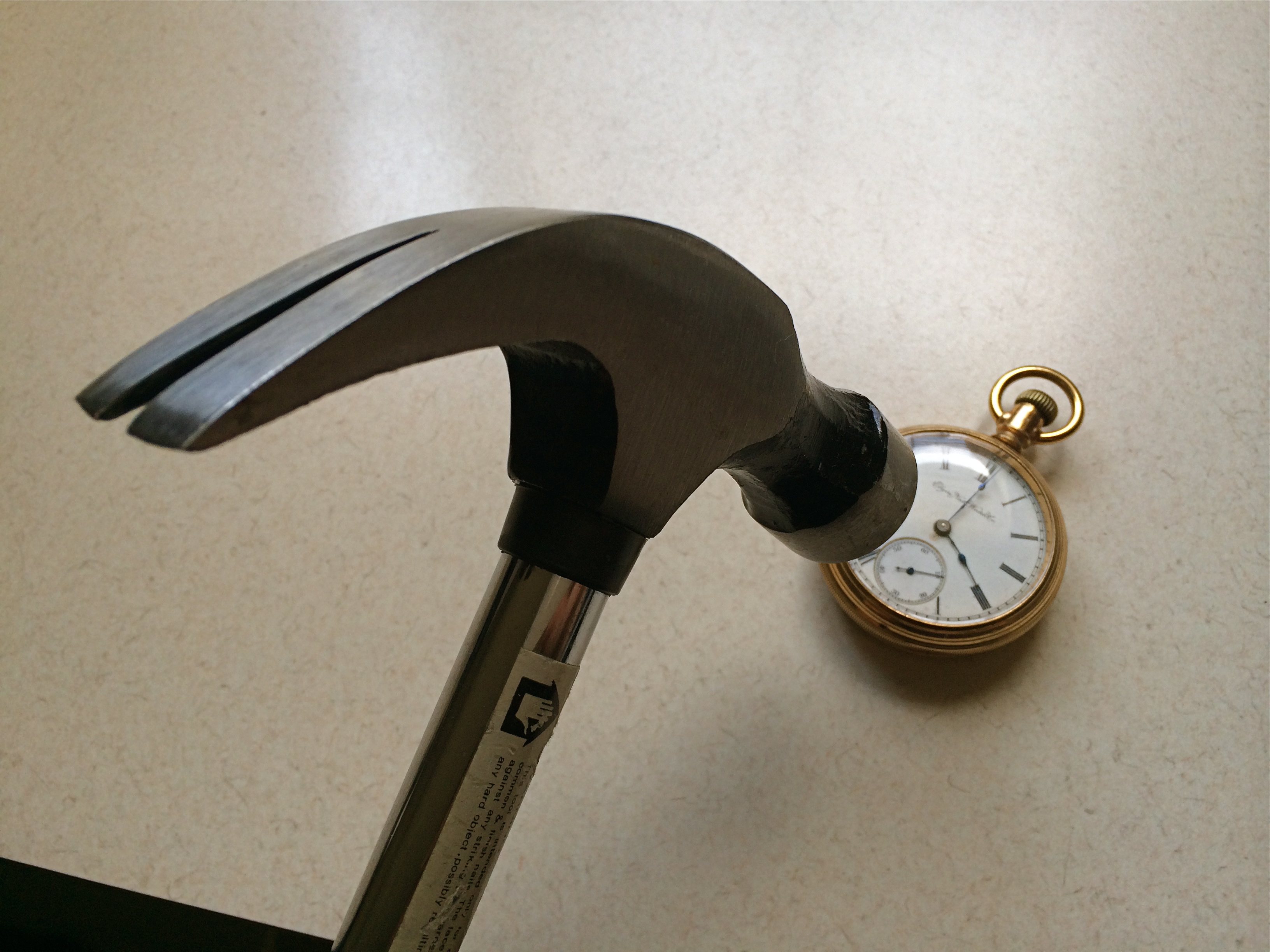
Photo processing should be a surgically precise tool, not a blunt instrument.
By MICHAEL PERKINS
THE AIM OF PHOTOGRAPHIC PROCESSING has shifted drastically in the post-digital age, and not necessarily in a good direction. Those of us old enough to remember mastadons, horse-drawn carriages and analog film were certainly aware that images could be edited or enhanced after the fact, conjuring up, say, memories of airbrush artists smoothing away chicken-pox scars from the shoulders of Miss January. We knew some of the magic happened in the lab.
Likewise, we knew that even the top masters did lots of tweaking in the darkroom prior to publication. The emphasis, however, was largely on perfecting an essentially strong picture, to make a good thing better/great. However, that emphasis is now placed, far too often, on trying to “save” images that were executed poorly in the first place, bringing marginal work up to some kind of baseline par of acceptability. That’s like the difference between polishing a Steinway and repainting a toy piano.
So, here’s my plea to those laboring to rescue their misbegotten babies in editing programs: Don’t repair. Re-shoot.
A good deal of the quick-fix buttons on editing programs should be marked with glowing red asterisks, with the following disclaimer at the bottom of the screen: WARNING: By using this change, you will fix your first proplem and create a different one somewhere else within your photograph. Let’s face it, no corrective action in editing happens in isolation. It must create a ripple effect, major or minor, in the final look of the image.
Use the “straighten” button for your misaligned shots, and they will lose sharpness. Suck out the darker shadows and your picture could lose dynamic range. Oversharpen your pictures and they will look harsh, with an unnatural transition between light and dark values. Reduce the noise in the image and it may appear flat, like pastel paint slathered on blotting paper.
Or here’s a radical notion: do all your thinking and planning before the shutter snaps. Yes, I know, I sound like some old schoolmarm scold, but please, can we at least consider the idea that there are no true shortcuts, that there can be no magical substitute for knowing your gear, developing an eye, and putting in the practice time required to make a photograph?
We once believed that patience was a virtue, that skill and mastery were more important than instant gratification. Know what? All of the greatest photographers still believe those things. And their work shows it.
THE FEEDBACK CURVE
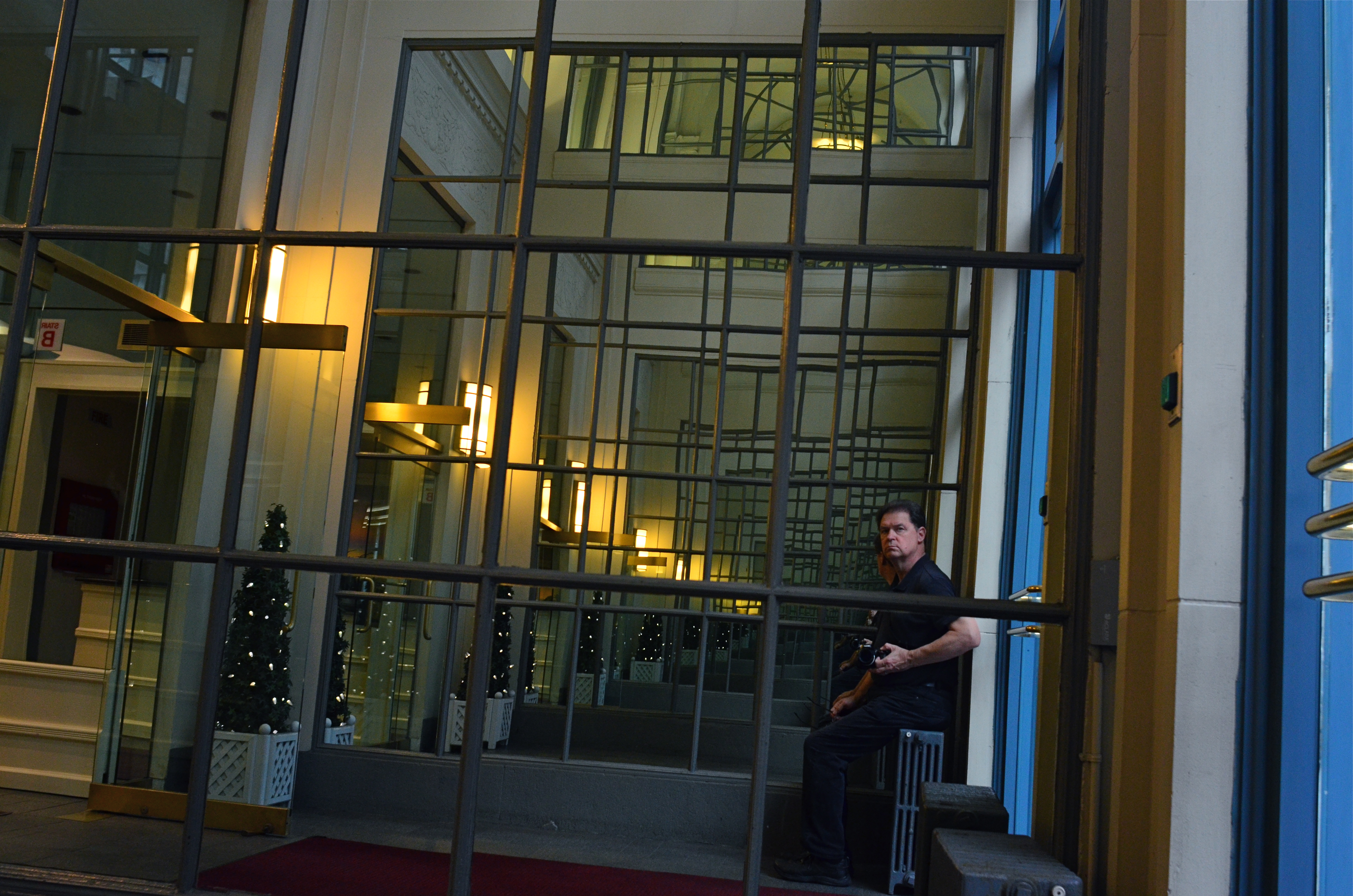
Everything you shoot is reflective of your own view. That’s the good part, and the risky part as well.
By MICHAEL PERKINS
DIGITAL PHOTOGRAPHY, AND THE SPEED, ECONOMY AND EASE IT HAS BROUGHT TO NEARLY EVERYONE, has allowed an incredible acceleration of the learning curve for shooters, a temporal shortcut that has effectively enabled people to master in years what used to take a lifetime (not to say a personal fortune). Without the lag time and cost baked into the film medium, photographers can shoot a lot. Like, a lot.
Problem is, this skyrocketing learning curve for shooting skill has not been accompanied by an accompanying curve in editing skill. As a matter of fact, the two skills are going in opposite directions. And that is a bad, bad thing.
In the film era, there was limited admission to the “photographer’s club” at the pro level, and all pros had some way of winnowing out their weaker work. They had editors, publishers, or some kind of independent eye to separate the wheat from the chaff. Only the best work was printed or displayed. Not everyone made the cut. Some of us had to admit that we didn’t have “it”. There was more to photography than the mere flick of our shutter fingers.
Now enter the digital age, and, with it, the ersatz democracy of the internet age. Suddenly, all of everyone’s photos are equal, or so we have come to think. All images go to the infinite shoebox of the web: the good stuff, the not-so-good stuff, the what-the-hell stuff, all of it. Accounts on Flickr and Instagram allow posters a massive amount of upload space, and there are few, if any strictures on content or quality. But here’s the ugly truth: if all of our photos are special, then none of them are.
You can take most of the formalized schools on photography and sink them in the nearest bog with no damage to any of us, with one singular exception: those tutorials which teach us how to objectively evaluate our own work. Knowing how to wield the scissors on one’s own “babies” is the most important skill in all of photography, because, without that judgement, no amount of technical acumen matters.
If you don’t learn what is good and how close or far you, yourself have come to that mark, then how can anything become exceptional, or excellent? If your work has never had to face real critical heat, there is no incentive for you to change or evolve. This is increasingly important for the millions of self-publishing shooters and scribblers like me who presume to pronounce on what photography is. Just cause we’re in print don’t mean we’re right, or even honest.
Art cannot grow in a vacuum, and so, I say again, if we can’t self-edit, we can’t claim to be photographers, not in any real way. The curve of honest self-evaluation must soar alongside the curve of technical acuity, or the whole thing’s a joke.
WORKING THE BLINDS
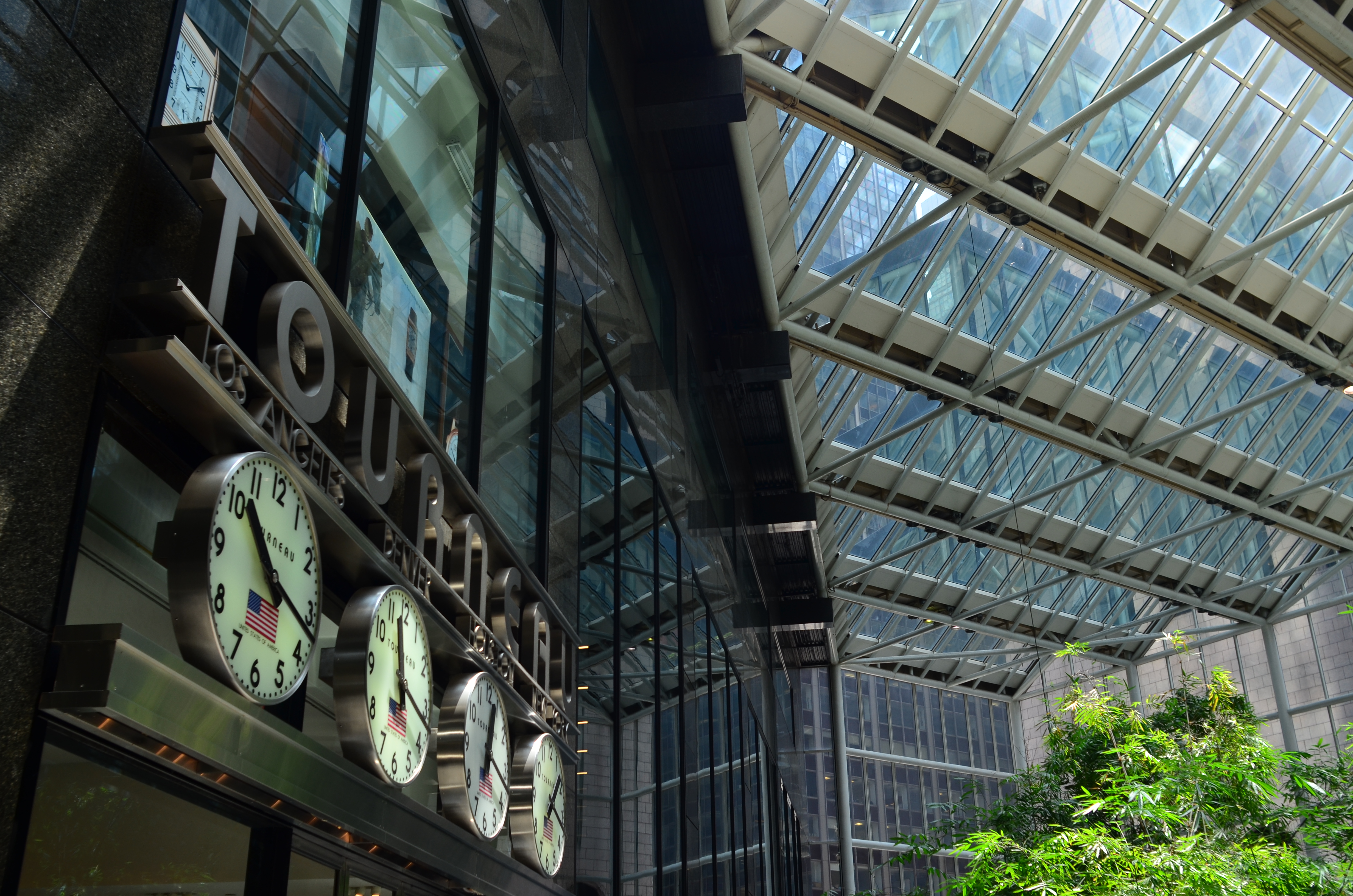
I love this building, but the real star of this image is light; where it hides, bounces, conceals, and reveals.
By MICHAEL PERKINS
ONE OF THE MOST CHALLENGING ASPECTS OF URBAN PHOTOGRAPHY, versus shooting in rural settings, is the constant variability of light. On its way to the streets of a dense city, light is refracted, reflected, broken, interrupted, bounced and just plain blocked in ways that sunshine on a meadow can never be. As a result, shooting in cities deals with direct light only intermittently: it’s always light plus, light in spite of, light over here, but not over there. And it’s a challenge for all but the most patient photographers. Almost every frame must be planned somewhat differently from its neighbors, for there can be no “standard” exposure strategy.
I often think of city streets as big window sills sitting below a massive set of venetian blinds, with every slat tilted a little differently. And I personally greet this condition as an opportunity rather than a deficit, since the unique patterns of abstraction mean that even mundane scenes can be draped in drama at any given moment. That’s why, as I age, I’ve come to highly value selective lighting, for mood, since I’m convinced that perfectly even lighting on an object can severely limit that selfsame drama.
I’m also reminded of the old Dutch masters painters, who realized that a partially dark face contains a kind of mystery. Conversely, a street scene that contains no dropouts of detail or light makes everything register just about the same with the eye, and can keep your images from having a prominent point of interest. Darkness, by contrast, asks your imagination to supply what’s missing. Even light is a kind of full disclosure, and it can rob your pictures of their main argument, or the “look over here” cue that’s needed to make a photograph really connect.
Back to street photography. Given that glass and metal surfaces, the main ingredients in urban structures, can run a little to silver and blue, I may actually take an unevenly lit scene and either modify it toward those colors with a filter, or simply under-expose by a half-stop to see how much extra mood I can wring out of the situation, as in the above image of an atrium in midtown Manhattan. Think of it as “working” those big venetian blinds. Cities both reveal and conceal, and your images, based on your approach, can serve both those ends.
NOT AS ULTRA
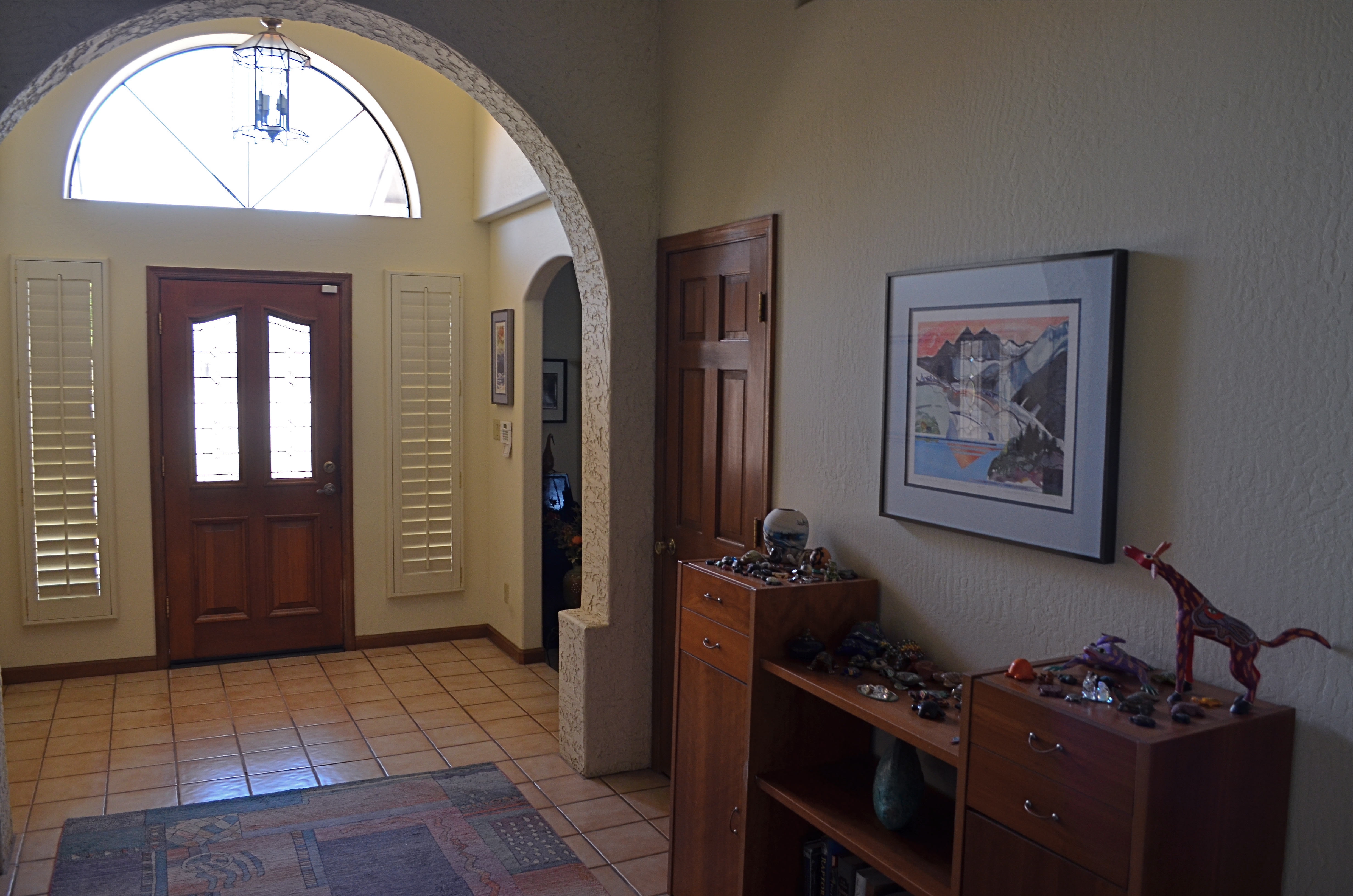
At its widest (18mm) setting, an 18-55 lens exaggerates front-to-back distances and slightly distorts the shapes of objects.
By MICHAEL PERKINS
SINCE THE 1990’s, THE MOST COMMON BASIC HUNK OF PHOTOGRAPHIC GLASS for new DSLRs has been the 18-55mm wide-angle, dubbed the “kit lens”. It allows beginners to move from landscape-friendly wides to moderate zooms without switching lenses. Depending on how much a given shooter experiments, the kit can allow for a lot of nuanced compositional options between the lens’ range.
If you find yourself shooting at the widest angle most of the time, then you are really using an effects lens, since, at 18mm, the lens is more than wide enough to distort angles and distances in ways that, while dramatic, don’t reflect the way your eyes actually see. This makes for expansive vistas in crowded urban streets and a little extra elbow room for mountain views, but is substantially more exaggerated than focal ranges from 35-50mm, which produce proportions more like human eyesight. However, the focal length you eventually choose has to be dictated by what you care to create; there can’t be any yardstick than that, all people’s opinions off to the side.
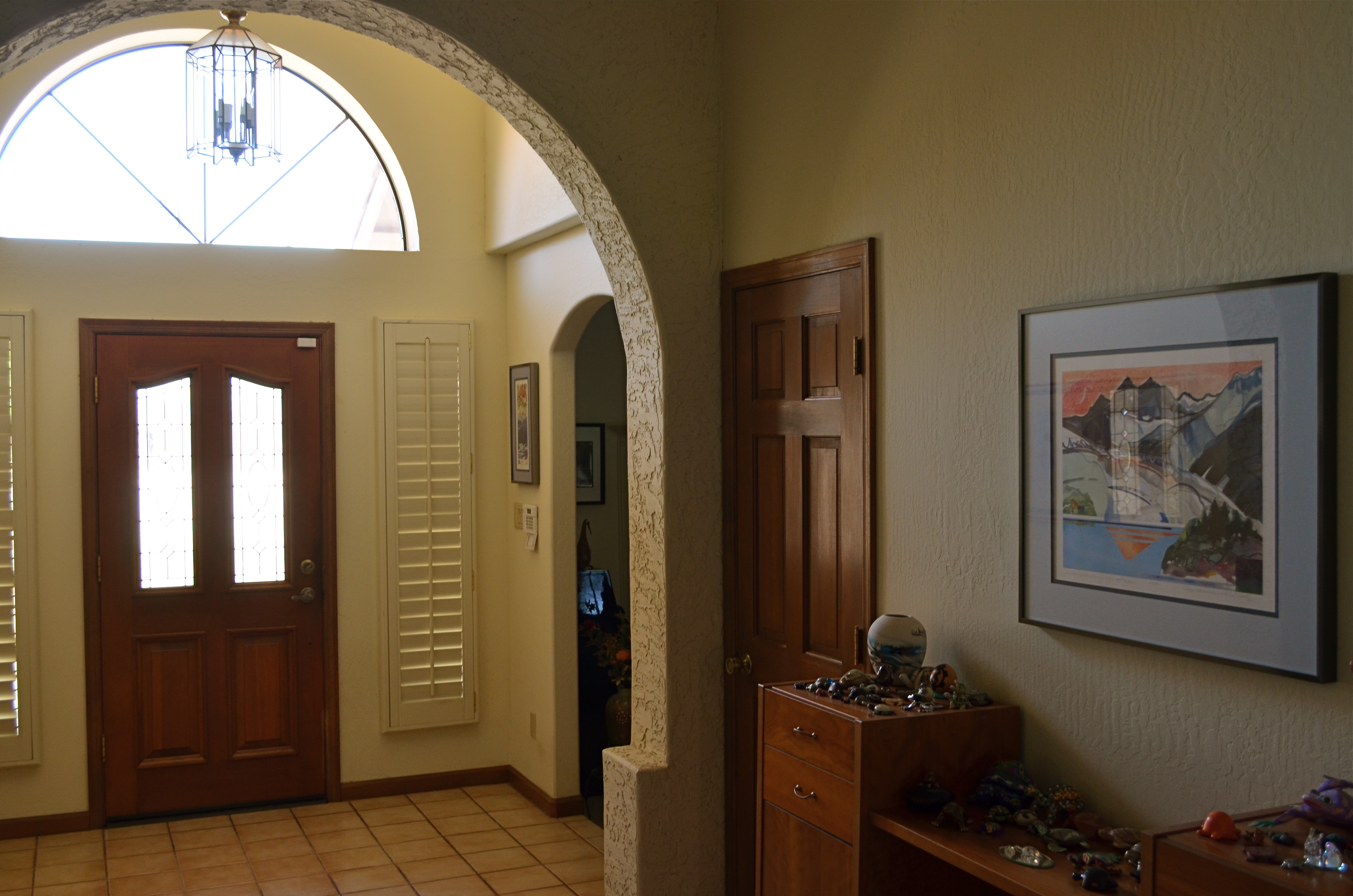
The same scene, taken from the same location at 24mm. Still plenty wide but displaying more normal space and perspective.
I have found a personal sweet spot by going a tad narrower, back to 24mm, and I also work with a dedicated prime lens that will only work at that exact focal length. By trimming back from 18mm, I find the distances from front to back in an image are a little more natural to my eye, and that I still have a yard of room from side to side without ushering in that Batman-type bending of perspective.
For comparison, I have re-shot subjects that I’d photographed at 18mm and found, at 24, no loss in impact. In the images in this post you can see the difference in how the two settings frame up. The composition in the 24 is a little tighter, but, if that’s not wide enough for you, you can simply step back a bit and there’s the same composition you saw in the 18, albeit with a little more normal proportion.
The most important thing with a variable focal length lens is to give yourself the flexibility of being able to get good results all through the focal range, simply to avoid getting too comfortable, i.e., sliding into a rut from always doing everything in the same way. Putting yourself into unfamiliar territory is always a good route to growth, and playing with your gear long enough to know everything it has to give you is the best way to periodically refresh your enjoyment.
When Grandma serves broccoli, you don’t gotta eat and pound-and-a-half of it, but heck, try it. You might like it.
NOTHING MEANS EVERYTHING
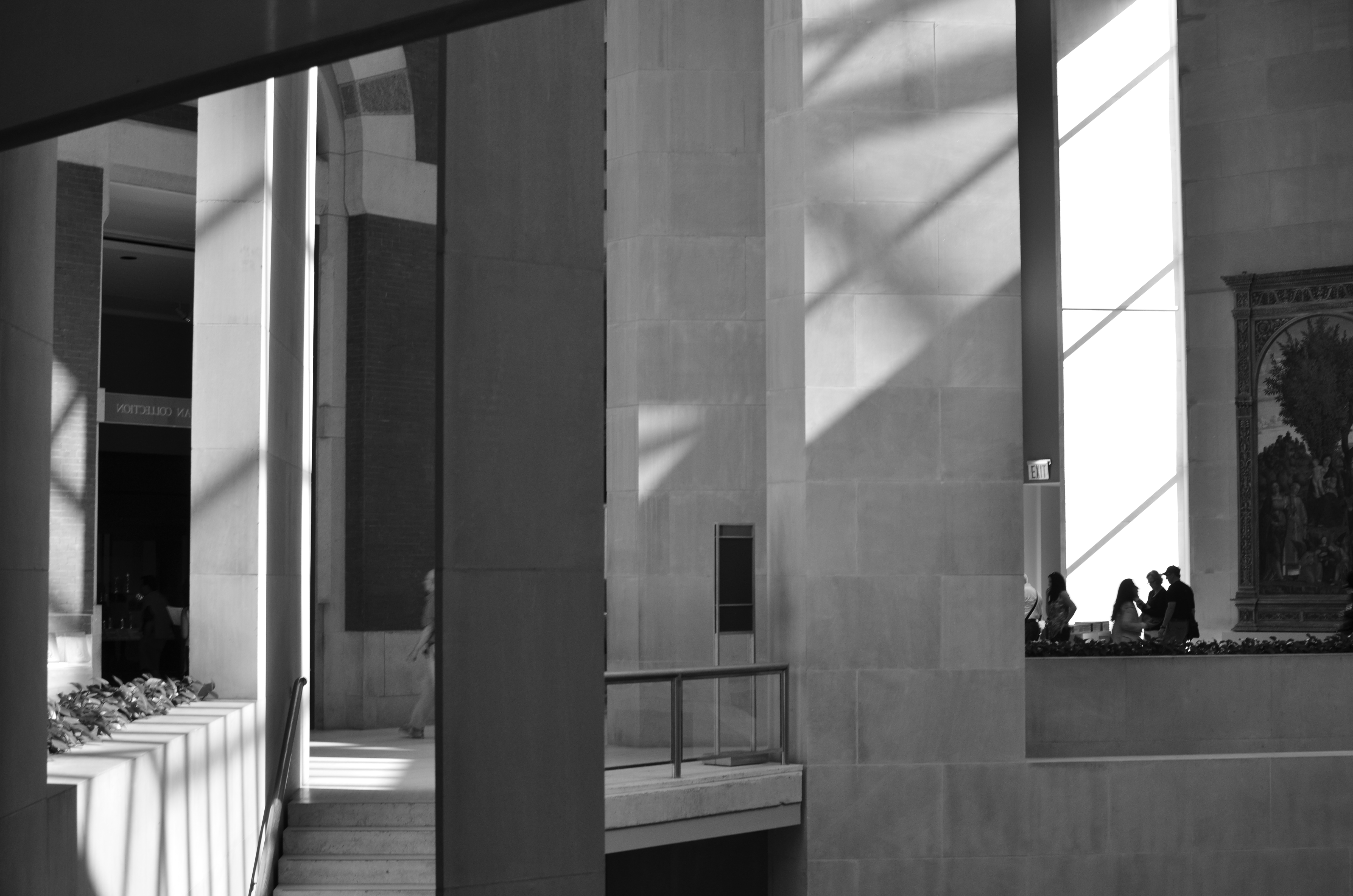
On days when you have nothing to shoot, trying to turn that “nothing” into something can be productive. 1/20 sec., f/5.6, ISO 250, 35mm.
By MICHAEL PERKINS
SOME OF YOUR MOST FORWARD-THINKING DEVELOPMENT AS A PHOTOGRAPHER CAN OFTEN OCCUR on days when you’ve planned exactly…nothing. You may have noticed that you produce an occasional masterpiece in situations where there was “nothing to shoot” or you “didn’t have anywhere special to go.” Phrases like I was just wandering around are sometimes used by people describing how their favorite images wound up inside the camera.
What I’m saying is that, if making something out of nothing is the classic definition of creativity, go find yourself some nothing.. and shoot it.
There’s a strange paradox at play here. When you are photographing something that truly “matters”, your concentration is on the subject, not your technique, almost as if the thing will record itself if you just faithfully point the camera. Kids’ birthday parties or a view of El Capitan come “ready to eat” in a way, and you don’t fester about doing anything bold on your side of the equation. The task becomes, basically, not to screw up….hardly a recipe for excellence. When the subject matter is incomplete, however, or, more importantly, meaningless to you, the work is much harder and more mindful. Say what?
The emphasis shifts to how do I make something out of this, which whips you into a more deliberately creative mode. Suddenly there are things to overcome, from lighting to lousy composition. There are things to improve, since the subject isn’t supplying its own drama or beauty and needs you to shape it. It’s strange. The things that matter most can cause you to take the most lax approach to recording them, while the junk you shot just because it was there can get your juices going.
More importantly, since the “meaningless” is generally unknown to you, you don’t bring any biases to it. You don’t have a usual or traditional way of seeing it (you don’t care about it, remember?) , so you don’t fall into lazy habits or a usual way of photographing it. Its newness makes you innovate, makes you work harder to (here comes the chorus) make something out of nothing.
It’s when you have the most organic, most open attitude toward what you’re shooting that you feel relaxed enough to experiment, which speeds up your learning curve and deepens your involvement. And that means better pictures, since you take yourself, as well as the camera, off automode.
THAT’S YOUR QUEUE
By MICHAEL PERKINS
AS CONVENIENT AND SIMPLE AS MANY PANORAMIC APPS AND TECHNIQUES HAVE BECOME OF LATE, there are many ways to accent a wide linear line of photo information within a standard camera frame. With images shot in very large file sizes these days, (even without shooting in RAW), plenty can be cropped from a photograph to produce the illusion of a wide composition with no loss in quality. It’s the pano look without the pano gear, and it’s a pretty interesting way to do exposition on crowds.
I first started noodling with this in an effort to save images that were crammed with too much non-essential information, most of them random streets shots that were a little busy or just lacking a central “point”. One such image was an across-the-street view of the area around the Chinese Theatre in Hollywood. Lots of building detail, lots of wandering tourists, and too much for a coherent story. Lopping off the top two-thirds of the frame gave me just the passing crowd, an ultra-wide illusion which forced the viewer to review the shot the way you’d “read” a panel in a comic strip, from left to right.
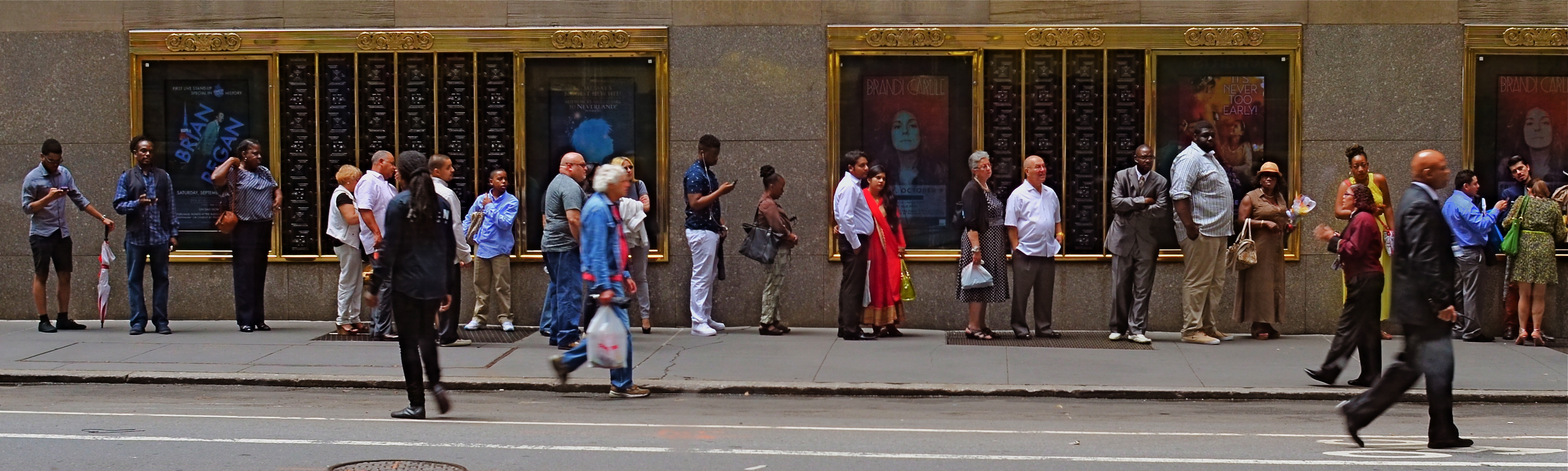
Tickets, Please, New York City, 2015.
Lately, I’ve been looking for a purer version of that crowd, with more space between each person, allowing for a more distinct comparison between individuals. That is, short guy followed by tall woman followed by little kid followed by….you get the idea. Then, last week, I happened upon the ideal situation while shooting randomly through a window that looked out on the 51st street side of New York’s Radio City Music Hall: a long line of folks waiting to pre-purchase event tickets. The space between them and the street rhythm shown by a few out-of-focus passersby was all the composition I needed, so in the editing process I once again aced the top two-thirds of the picture, which had been taken without zoom. A bit of light was lost in shooting through the window, so I added a little color boost and texturizing in Photomatix (not HDR but Tone Compression settings) and there was my pseudo-pano.
It’s a small bit of cropping choreography, but worth trying with your own street shots. As as is the case with many images, you might gain actually strength for your pictures the more ruthlessly you wield the scissors. Some crowd shots benefit by extra context, while others do fine without it. You’ll know what balance you’ll need.
THE LOOK OF SILENCE
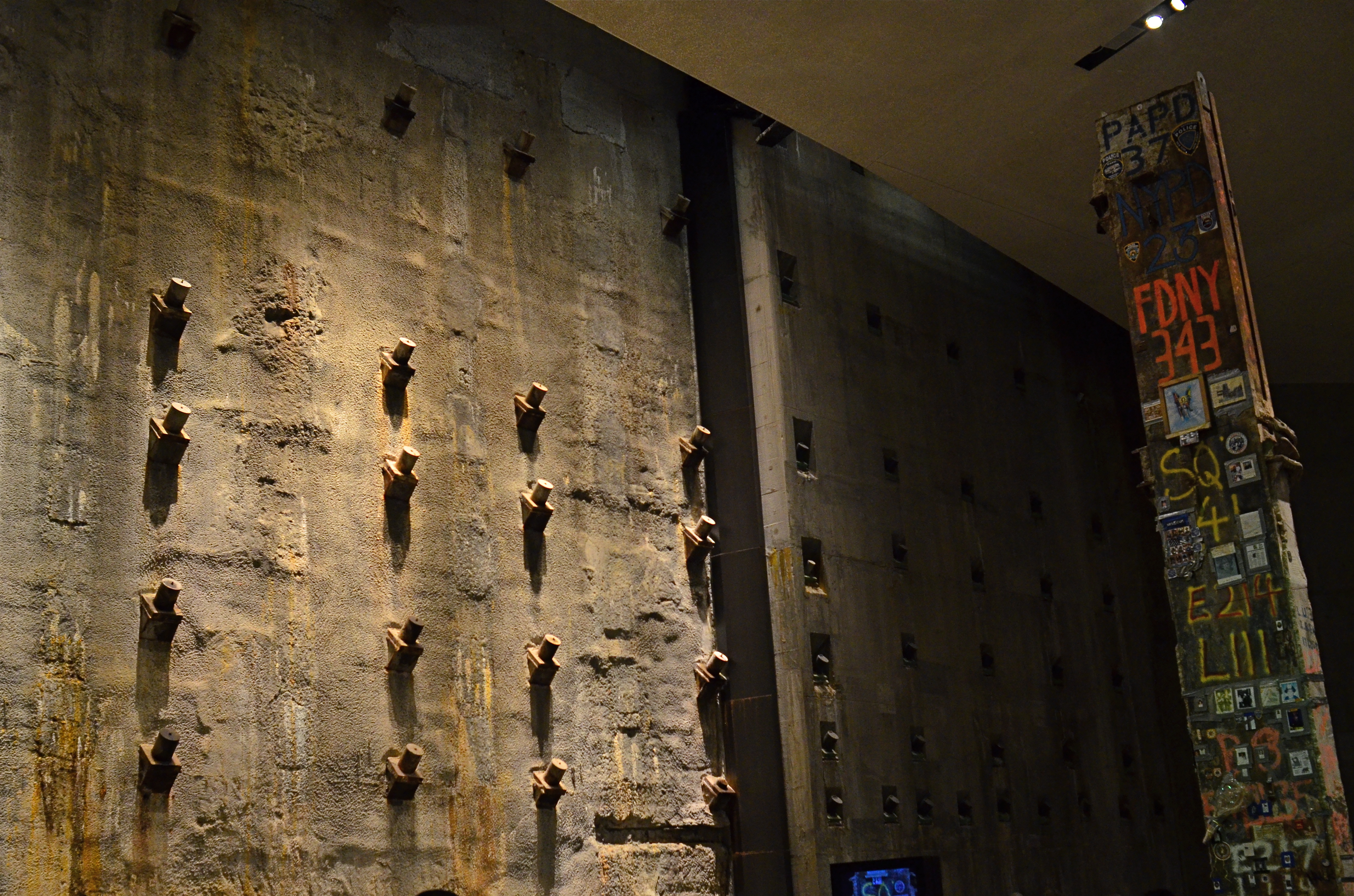
Slurry Wall And Hero’s Girder, 2015. The 9/11 Memorial Museum in New York is a cathedral of grim silence.
By MICHAEL PERKINS
AS THE MOST PHOTO-DOCUMENTED EVENT IN HUMAN HISTORY, the attacks of September 11, 2001 have spawned images that can never be unseen. Images that tear at you, slam you in the back of the head, wring tears and rage from you, stun you mute.
As the keeper and curator of many of the most powerful of these images, the 9/11 Memorial Museum in lower Manhattan has achieved a tough but fair balance of emotion and academia. Given the staggering number of people whose personal stake in this space covers every human motive and perspective, the making of this part-exhibit-part-shrine may have been one of the most thankless jobs imaginable.
And yet the job has been done, with eloquence and a spare, stark restraint that is poetic. Visiting the museum is no easy task. As Shakespeare said, if you have tears to shed, prepare to shed them now. But visit you should, and, yes, there is something that a camera can capture there without being crass or irreverent. The designers have seen to it.
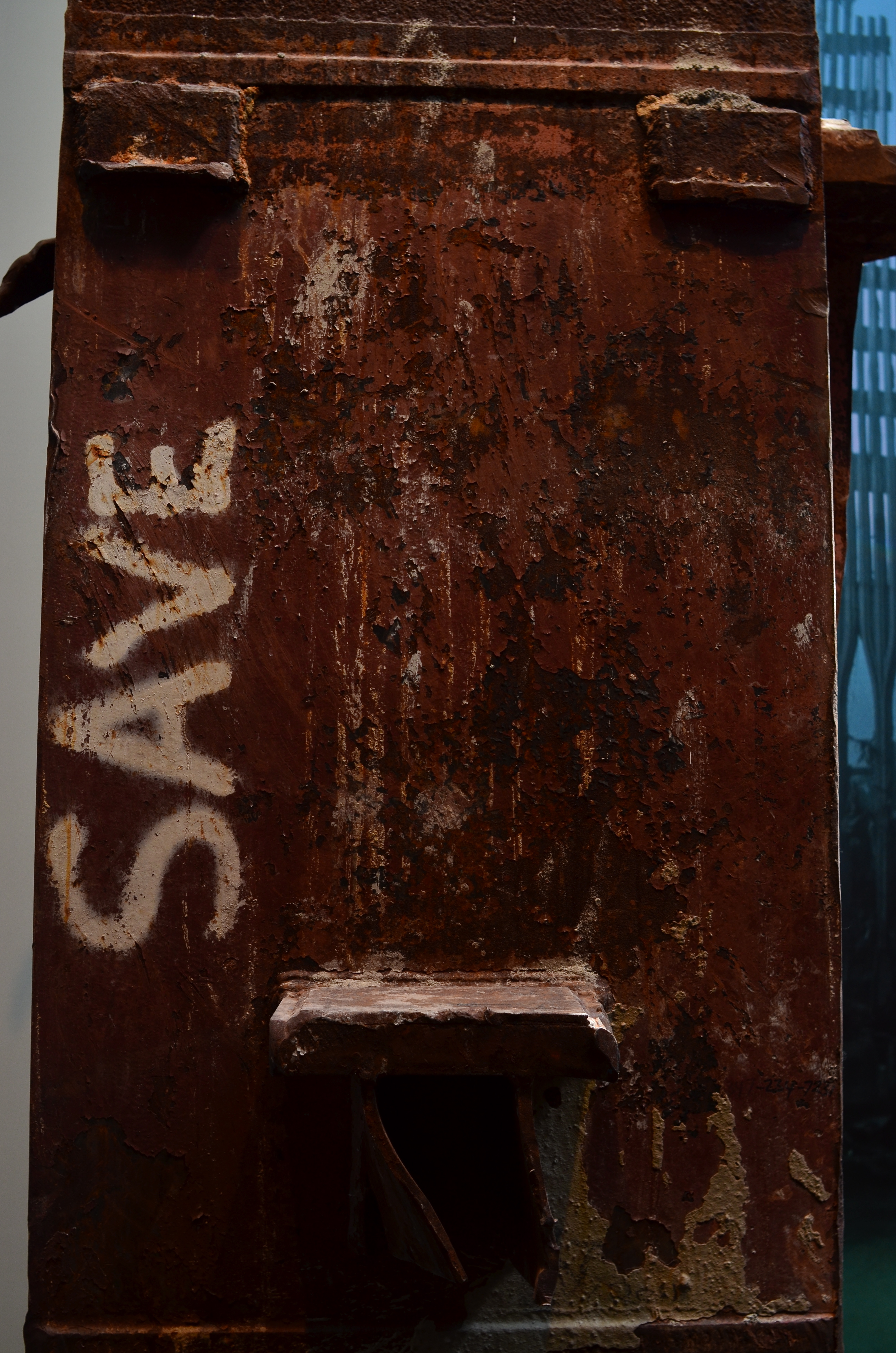 Firstly, they have guaranteed that the main central exhibits of debris, personal documents, voice messages and news video are completely off-limits to any kind of photography. Walk in there, and you’ll know why. Those who accidentally caught this epic horror in the moment of its occurrence will never be equaled or surpassed by anyone taking a casual snap on a smartphone anyway, and trying to do so would be like setting off sparklers at a requiem mass.
No, the real photographic opportunities are in the dark, cavernous spaces under the surface of the street, dim caves that make you feel as if you yourself, are, for a moment, trapped, running out of light and time. The enormous foundation known as the slurry wall, which, in surviving the titanic forces of the towers’ collapse, kept the Hudson River from flooding all of lower Manhattan. The rusted girder that, like a day-glo-autographed tombstone, bears the signature of every working company of first responders that slaved away at Ground Zero, first as rescuers, next as salvagers, always as heroes.
It is here, in the quiet arrangement of these incredibly scaled spaces, that the 9/11 Memorial Museum becomes more spiritual than any hour you will ever pass in church. It is in these dark, harrowing parts of the hall that you fully sense what a slender thread we all hang from, and understand that light and darkness struggle for the same real estate, now as then.
“GEE”-EYE JOE
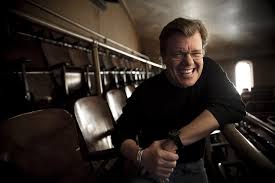
Joe McNally, the artist, the legend, the Irish street kid.
By MICHAEL PERKINS
IT’S NOT UNFAIR TO ARGUE THAT MOST MAJOR PHOTOGRAPHERS ARE FAR MORE ELOQUENT with their lenses than with their tongues. The fact that their eyes speak volumes is what distinguishes them as artists, not whatever quick quips they may toss off about why they do what they do. There are a few shooters per generation, however, who really add to the art by sharing the motivations that accompany the making of it. Joe McNally is one such photographer.
Joe, whose work ranges from National Geographic, Life, and Sports Illustrated to his groundbreaking Faces Of Ground Zero, speaks not as a pristine philosopher, but as the grizzled, hard-boiled, run-and-gun, reality-anchored pro that he is. He knows deadlines. He knows the cigar-chomping breath of hate-crazed editors. He know what moves, both emotionally and commercially. And he has written two of the era’s best books (The Moment It Clicks and Hotshoe Diaries) on the real struggles that arise for the professional in the field. No esoteric essays. Just straight-from-the-shoulder truths from the world. A few Joe-isms to treasure forever:
No matter how much crap you gotta plow through to stay alive as a photographer, no matter how many bad assignments, bad days, bad clients, snotty subjects, obnoxious handlers, wigged-out art directors, technical disasters, failures of the mind, body, and will, all the shouldas, couldas, and wouldas that befuddle our brains and creep into our dreams, always remember to make room to shoot what you love. It’s the only way to keep your heart beating as a photographer.
or: I can’t tell you how many pictures I’ve missed, ignored, trampled, or otherwise lost just ‘cause I’ve been so hell bent on getting the shot I think I want.
This is the voice of a guy who’s been stomped on, crowded out, smashed up and beaten silly in the cause of a picture. This is a go-to guy when you want to learn about how to make tough calls and hard choices. And it’s the indefatigable spirit of photography telling you that, however you go out, don’t come back in without the picture. That means to always be looking, and to always be ready, and willing to:
Put it to your eye. You never know. There are lots of reasons, some of them even good, to just leave it on your shoulder or in your bag. Wrong lens. Wrong light. Aaahhh, it’s not that great, what am I gonna do with it anyway? I’ll have to put my coffee down. I’ll just delete it later, why bother? Lots of reasons not to take the dive into the eyepiece and once again try to sort out the world into an effective rectangle. It’s almost always worth it to take a look.
And how does he shoot? Twice as good as he talks. Photographers need, always, to reject comfort, familiarity, habit, ease. Joe’s “Gee” eye reminds us to stay hungry.
And stay on the job.
TAKE ME OUT TO THE “ALL” GAME
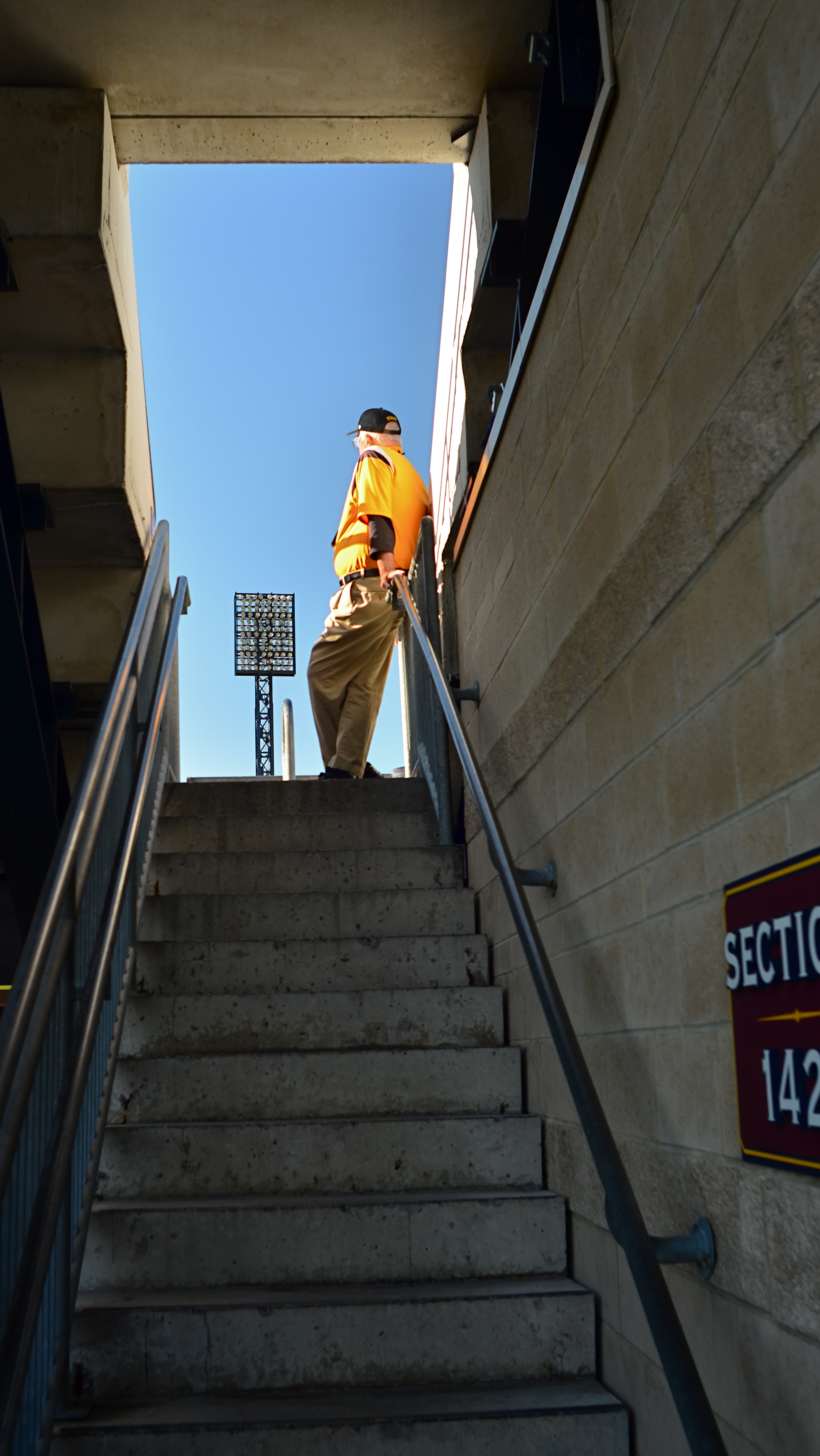
Baseball is a game about anticipation. Photos of it should show that feeling as well.
By MICHAEL PERKINS
YOU SEE RIDICULOUS ARTICLES FROM TIME TO TIME claiming that baseball has been replaced as America’s Pastime. Such spurious scribblings invariably point to game attendance, TV ratings, or some other series of metrics that prove that football, basketball, and, who knows, strip Scrabble have reduced baseball to some quaint state of irrelevancy. All such notions are mental birdpoop for one salient reason. No one is giving due attention to the word pastime.
Not “passion”. Not “madness”. Not even “loyalty”. Pastime. A way of letting the day go by at a leisurely pace. A way to gradually unfurl afternoons like comfy quilts. People-watching. Memory. Sentiment. Baseball is for watchers, not viewers, something that television consistently fails to realize. It’s the stuff that happens in the pauses, of which the game has plenty. Enjoying baseball, and photographing it as an experience, is about what happens in the cracks.
Images are waiting to be harvested in the dead spots between pitching changes. The wayward treks of the beer guys. The soft silence of anticipatory space just before the crack of a well-connected pitch. TV insists on jamming every second of screen time-baseball with replays, stat tsunamis, and analysis. Meanwhile, “live”, in the stadium, the game itself is only part of the entertainment. Sometimes, it actually drops back to a distant second.
Only a small percentage of my baseball pictures are action shots from the field: most are sideways glances at the people who bring their delight, their dreams, and their drama to the game. For me, that’s where the premium stories are. your mileage may vary. Sometimes it’s what’s about to happen that’s exciting. Sometimes it’s the games you remember while watching this one. There are a lot of human factors in the game, and only some of them happen between the guys in uniform.
Photography, as a pastime, affords a great opportunity to show a pastime. America’s first, best pastime.
It’s not just a ballgame. It’s an “all” game.
Root, root, root.
I’LL JUST HAVE A LIGHT SANDWICH
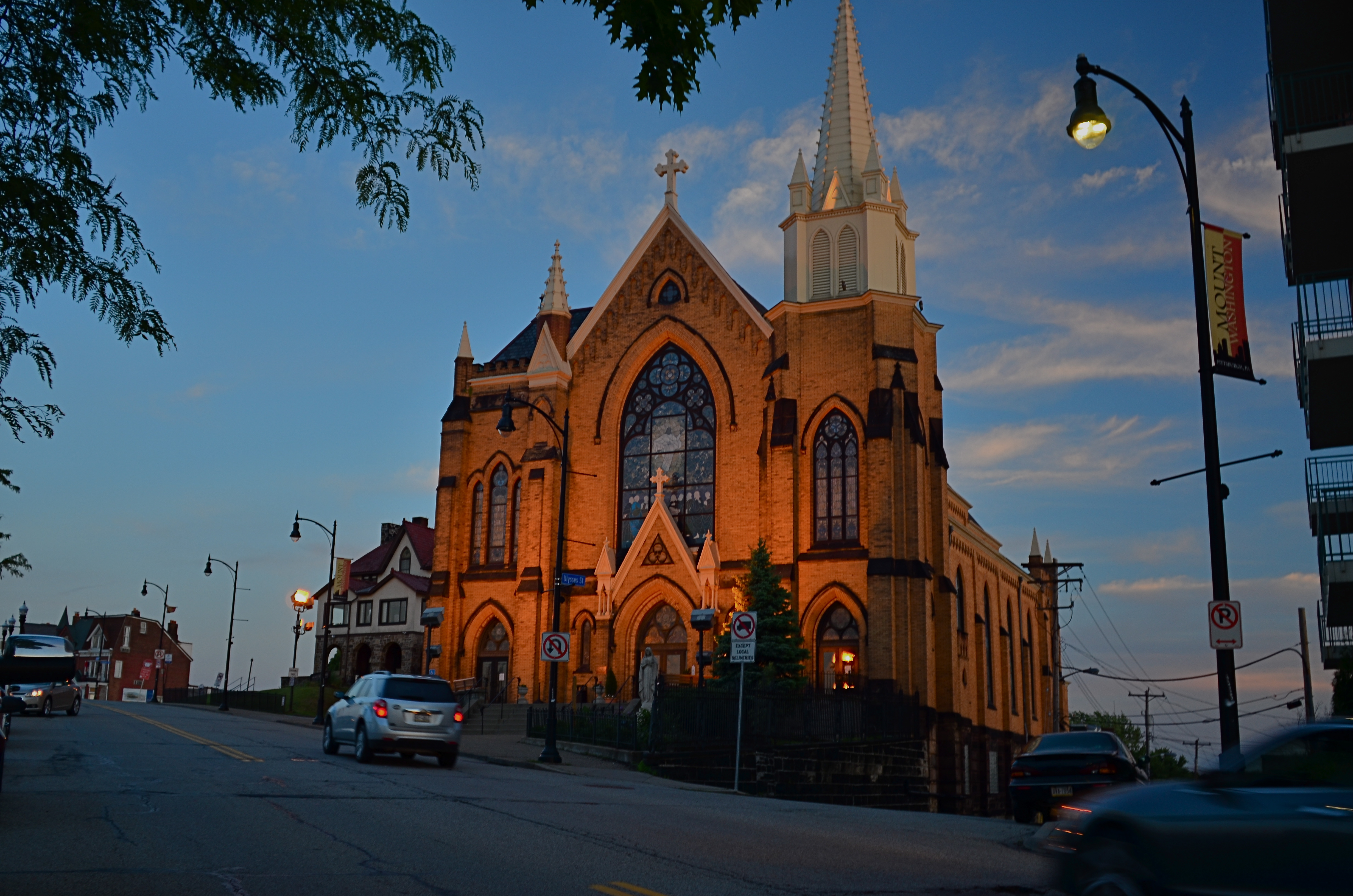
Learning to dissect your “happy accidents” might allow you to start doing better stuff on purpose.
By MICHAEL PERKINS
SOMETIMES FACING OUR OWN PHOTOGRAPHIC WORK is less like dredging up memory and more like staring into the face of a complete stranger. Even seconds after the shutter snaps, a real distance widens between what we did in the moment and what we hold in our hands. Who did this? What were we thinking? Why did this work (or, in many cases, not work)?
Shooting quickly on the street worsens this feeling of alienation. We might not have even been so mindful of all the factors at work in a picture while it was being made, which makes learning from both the duds and the keepers that much more difficult. Learning to completely deconstruct a shot is, therefore, one of the most valuable skills for any photographer. It’s not always an easy thing.
In the above shot, there are a number of contributing factors at work, not all of them in play for any other single shot taken on the afternoon I made it. For starters, I was lucky enough to be about 200 feet above average terrain, so the golden light of early dusk is hitting the face of the church pretty hard, as well as adding to the deepening blue of the sky. Secondly, I am shooting with my camera set on “vivid”, building even more saturation into the shot. At the same time, I am shooting through a polarizing filter, which, while not working fully at this late hour of the day, is also deepening the sky. Finally, the church, which is already glowing from the sunset light, is also being floodlit with sodium lamps, amping up the orange tones and contrasting even harder against the sky.
The effect is a kind of “light sandwich” four layers deep, a combo that only works for this particular shot. One or two shots later in the same sequence, these same conditions rendered the colors over-rich and pretty unreal in appearance. Sadly, I can’t even take credit for having deliberately planned the shot in this way, since, if I had, I probably would have chosen a slightly faster shutter speed and avoided the softness in the passing cars. Still, as I dissect it after the fact, it’s good practice to be able to do a post-Sherlock to see exactly what happened, in case I ever do want to manipulate a photo in this general way.
Ot I could just say, “cool” and move on.
And, sure, I’ve done that too.
HEADSTONES
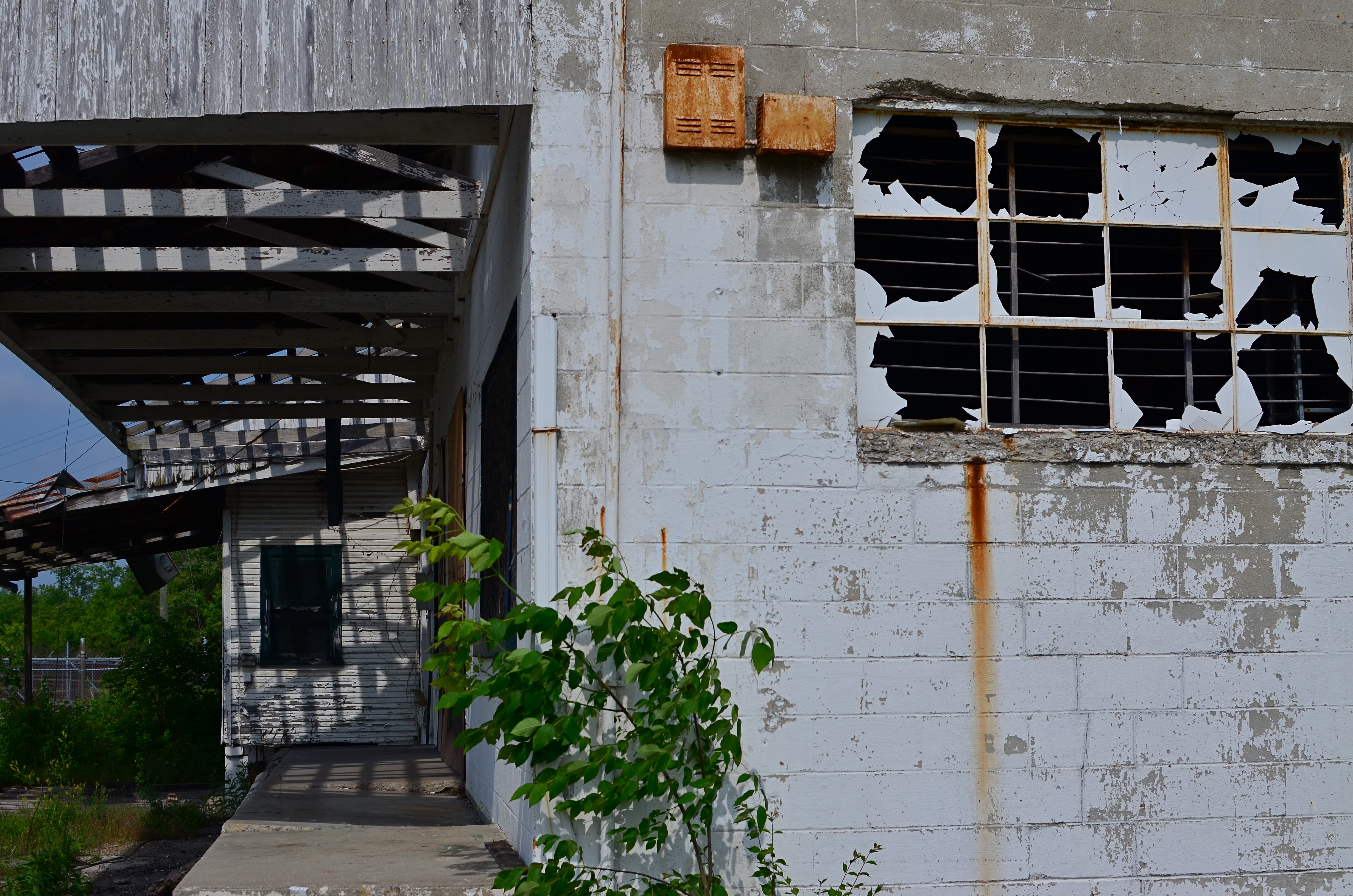
This hulk was once someone’s idea of progress and prosperity.
By MICHAEL PERKINS
IF ARCHITECTURAL PROJECTS, AT THEIR BIRTHS, REPRESENT A KIND OF FAITH, then the demise of buildings likewise signals a sort of death, a loss of belief, an admission of failure. Our new societies break ground on developments in one generation only to see them wither to silence in the next, a cycle of boom and bust that somehow has become the rhythm of modern life.
Viewing the ruins that result from all our once-bright industrial dreams through the lens of a camera creates a peculiar kind of commentary, less specific but more emotionally immediate than a written editorial or essay. The first uses of photography as chronicles of urban life were largely neutral, merely recording city vistas, monuments, cathedrals, scenic wonders. It took the aftermath of World War One and the Great Depression to infuse architectural photos with the sting of commentary, as if the photographer was asking, what have we done? What is all this for?
In the 1930’s, there was a quick segue from the New Deal’s programs for documenting relief programs to a new breed of socially activist shooters like Walker Evans and Margaret Bourke-White, who showed us both the human and architectural faces of despair. Suddenly closed businesses, shabby tenements, and collapsed infrastructures became testimony on what we were doing wrong, of the horrific gap between our dreams and our deeds.
In every town across America, photographers continue to search for the headstones of our lost hopes, the factories, foundries, and dashed ventures that define who we hoped to be, and how things went wrong. It’s not a photography of hopelessness, however, but a dutiful reminder that actions have consequences, for good or ill. Turning our eyes, and lenses, to the stories left behind by the earlier versions of ourselves is a way of measuring, of keeping score on what kind of world we desire. The headstones bear clear inscriptions. Deciphering them is the soul of photography.
 thenormaleye