TAKING YOUR TEMPERATURE
By MICHAEL PERKINS
AMERICANS LOVE TO CELEBRATE A WINNER, and they also like to clearly identify who most definitely did not win. We score-keep on everything from fantasy football to number of days on the job without accidental amputations, and we love, love, love to declare someone the champ…in anything. This either/or, winner/loser habit of the western mind, when applied to photography, leads people to argue over which is better…traditional cameras or those imbedded in mobiles, as if such a judgement is possible. Or as if it matters. So, as you rifle through these humble pages, I hope I make it abundantly clear that, from my standpoint, it’s all about the pictures.
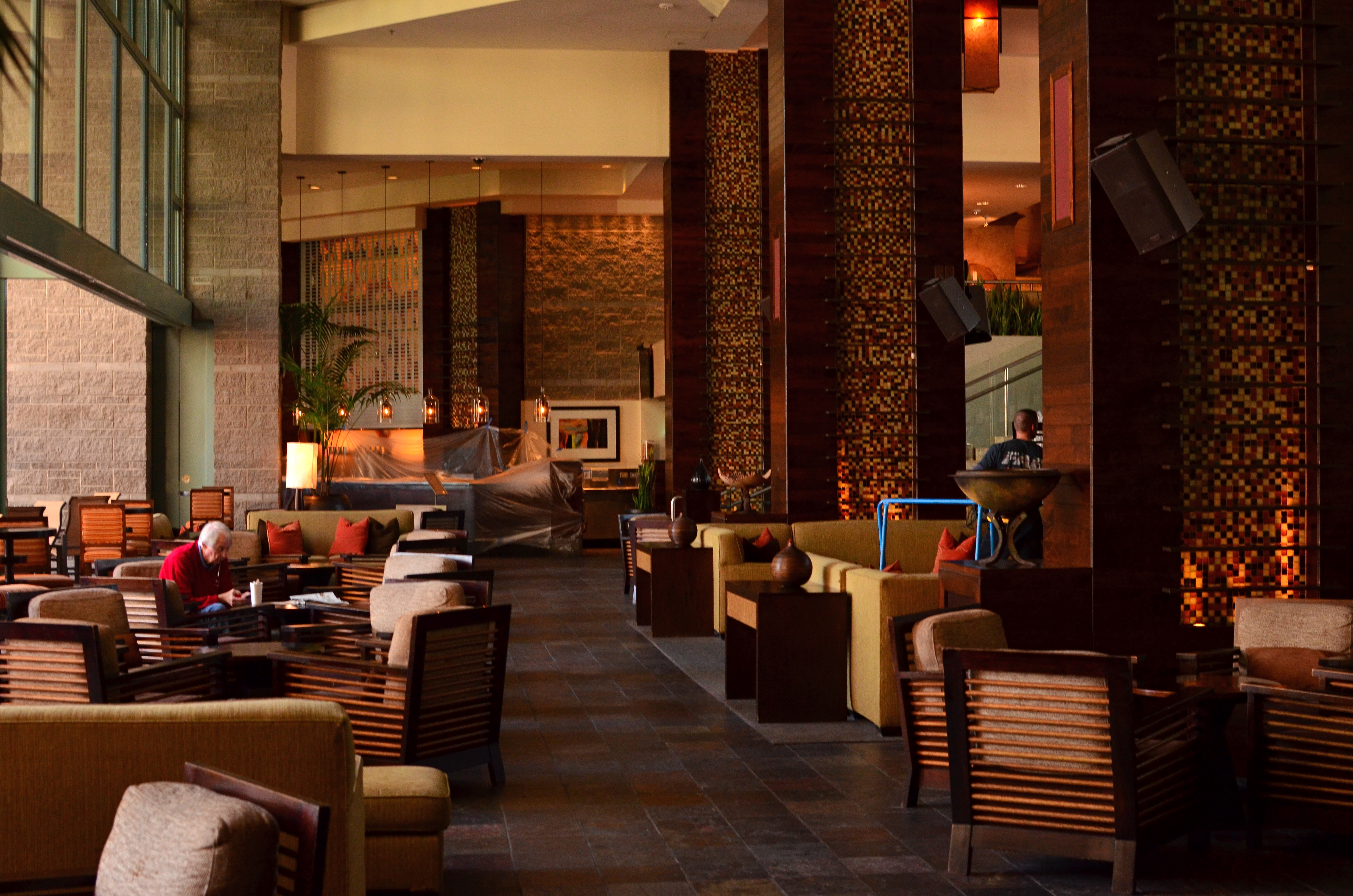
Changing the white balance from auto to shade warmed up the colors in this nearly-outdoor shot. 1/25 sec., f/5.6, ISO 800, 35mm.
The principle difference between, say, DSLRs and phone cameras, to me, is one of method, or how they approach the job of making an image. In full-function cameras, the emphasis can be on how to use the device’s controls and settings to set the terms of your picture before the click. In cellphone cameras, it’s all about how you can massage what the camera was able to give you after the fact, be it with in-phone apps or computer software. You simply can’t impose your will on an iPhone camera until after the picture is taken, and that’s an important distinction. Notice that I did not say better/worse, great/horrible. You just have to decide what’s important to you in a given situation.
Take a very simple choice that is available in even basic point-and-shoot “camera-cameras”, like white balance. Your camera has the option of deciding, for you, how colors should register based on the temperature of the light, or you can over-ride that function and customize it to your heart’s delight, something that, at this point in time, cannot be done on a cellphone camera. Even easier, menus reduce all your white balance options to visual icons (sunburst, house in shade, electric light bulb, etc) depending on how warm you want your pictures. You can even tweak for the precise kind of artificial light you’re working with, from incandescent to flourescent.
As an example, in the above shot, the morning light in the hotel lobby was, on automatic white balance, coming off blue, especially in the shadows. The entire effect of the golden period just after sunrise was being subverted by the camera. Easy fix: just dial it up for a shade setting, bump up the exposure a tad (slower shutter, higher ISO), and the warmth came back, but not so deep that everything went bad-suntan-bronze. And, yes, I could have got this shot with an iPhone, but the adjustment would have had to have been made after I got the shot wrong, then searched around for a fix. Again, there’s no good or bad.
You just have take your own temperature and decide what treatment you need.
THE CENTER HOLDS

Do you need either the entire tree or the entire hammock to sell the idea in this picture?
By MICHAEL PERKINS
ONE OF THE MOST FASCINATING PARTS OF THE LEGEND of Henri Cartier-Bresson, the artist who is the world’s model for street photography, is the oft-repeated story that he never cropped a shot over the many decades of his remarkable career. Thus the man who originated the phrase “the decisive moment” to indicate that there was but one ideal instant to capture something perfectly in the camera is also credited with creating flawless on-the-spot compositions, image after image, year after year. Yeah, well….
I love HCB, and I personally can’t find a single one of his images that I could improve upon, no matter where I was to wield my magic scissors. But just as the writer in me believes that great novels aren’t written, but re-written, I believe that many great photo compositions emerge after much additional consideration, long after the shutter snaps. It’s not that one shouldn’t strive to get things as perfect as possible in the moment. In fact, there is overwhelming evidence that many photographers do exactly that, nearly all the time.
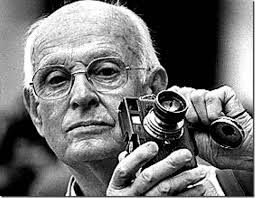
The Maestro.
It’s that “nearly”, however, that describes most photos, something which might be converted to “definitely” in the cropping process. In fact, I am starting to feel that the very first thing to be done with a picture in post-production is to just start paring away, only stopping when the center of the idea has been reached. It’s gut-wrenching, since we usually fall in love with our pictures at first sight (and in their first versions). But even if God decided to make one of us, say Cartier-Bresson, the messenger of his divine eye, he certainly didn’t make that trait as common as, say, green eyes or freckles. For most of us, most of the time, we need to eliminate everything that diverts the eye anywhere but where the main message is. As an example, the hammock image above is the result of cutting away nearly 2/3 of the original photograph.
There are a few times when an image comes full-born out of the camera, all muscle and no fat. However, in the digital age, re-thinking one’s realization of a concept is easier than it’s ever been, and there is no downside to doing so. If there is a narrative ground-zero to your photo, don’t worry. The center will hold.
EATS
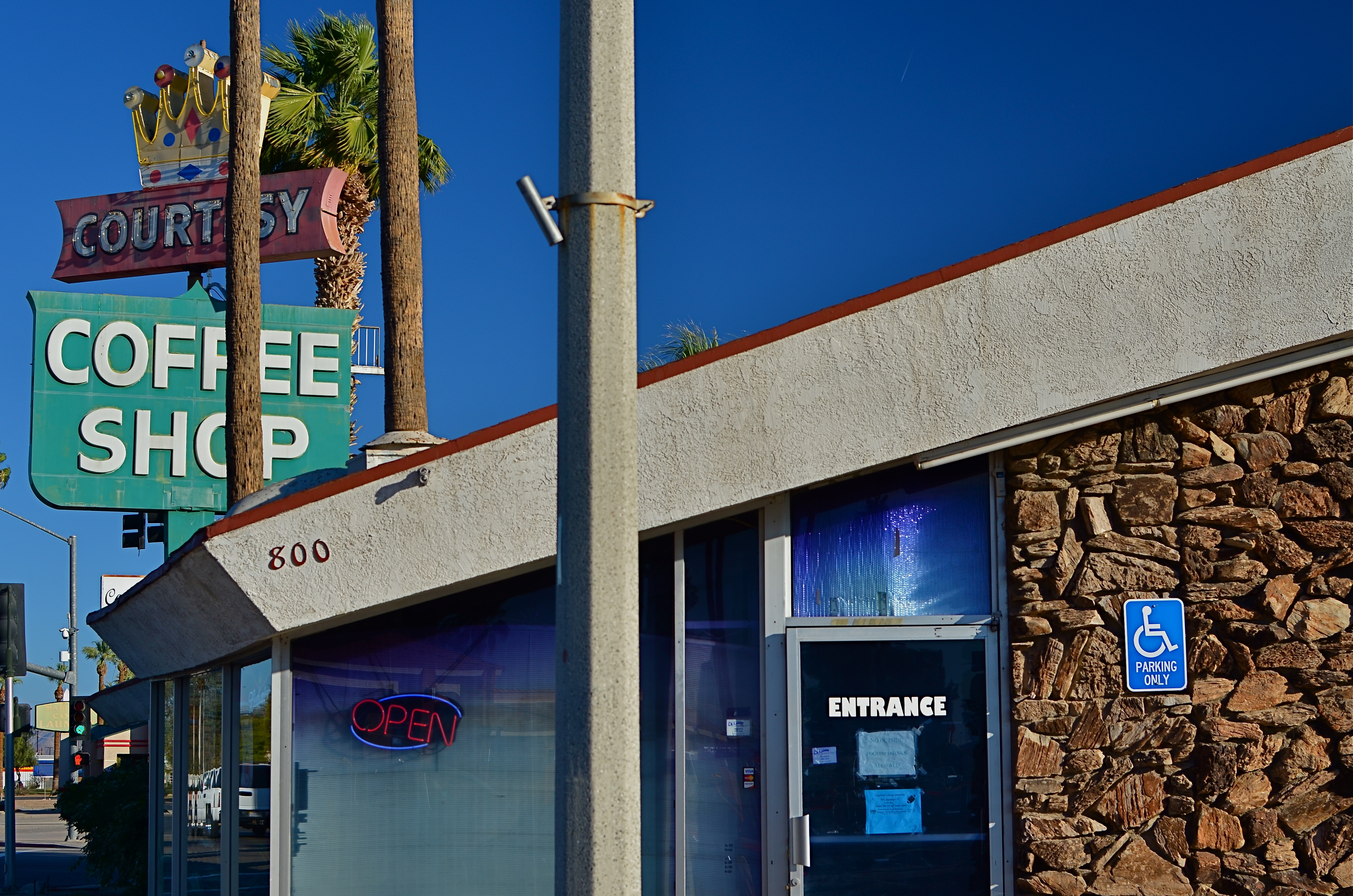
You want fries with that? Blythe, California’s Courtesy Coffee Shop. 1/320 sec., f/5.6, ISO 100, 35mm.
By MICHAEL PERKINS
IN HIS WONDERFUL 1960 ROAD JOURNAL, TRAVELS WITH CHARLEY, John Steinbeck, author of The Grapes Of Wrath, Of Mice And Men and other essential American novels, laments the passing of a kind of America in much the same way that a roving photographer might. “I wonder”, he wrote as he motored through one vanishing frontier after another, “why progress looks so much like destruction.” That’s a sentiment that many a shooter has experienced as he pans his viewfinder over the various fading scenes of a constantly changing nation. Steinbeck sang his ode to these vaporized hopes on the printed page. We freeze their vanishings in a box.
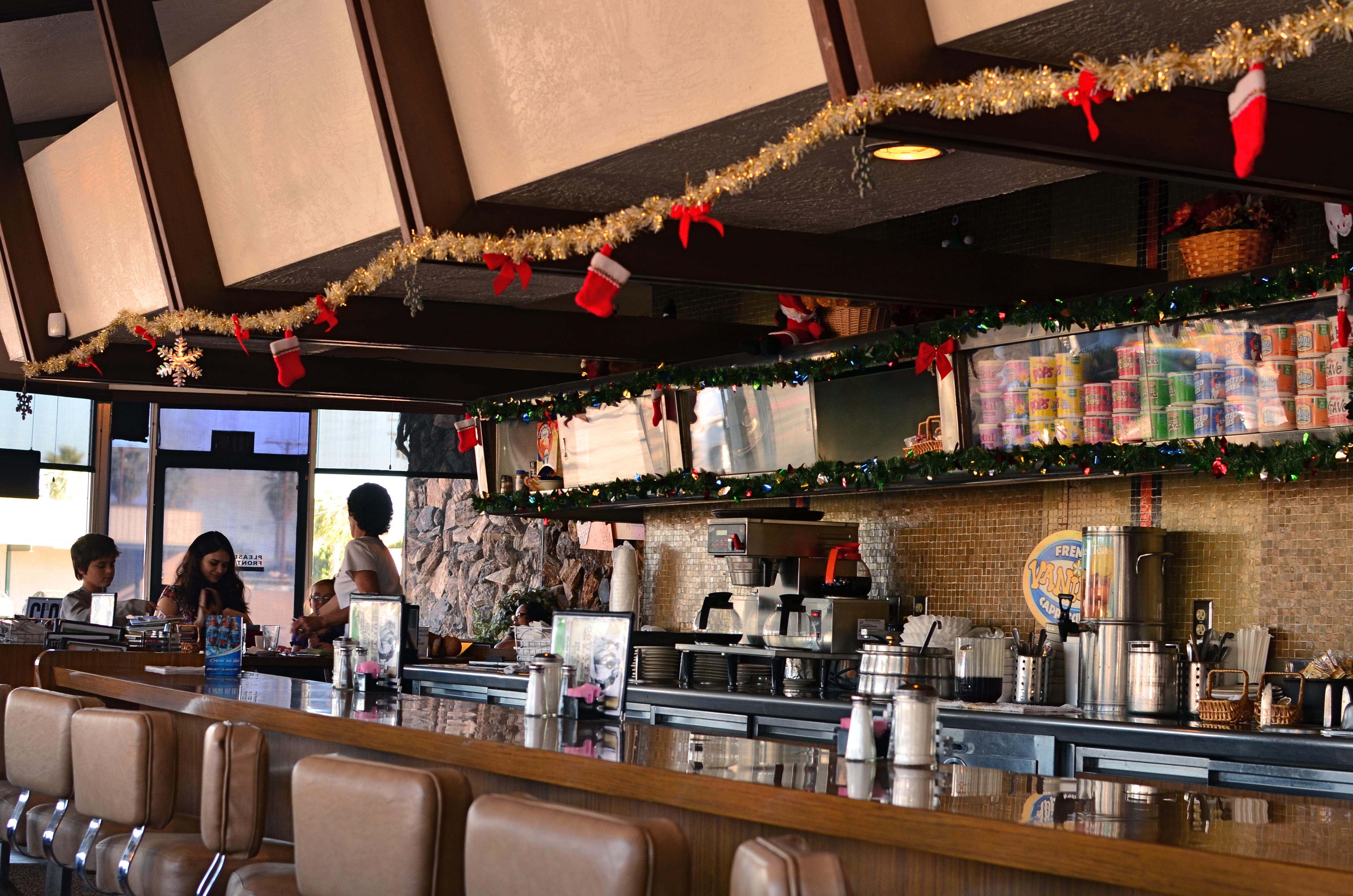
Counter Culture: 1/40 sec., f/4.5, ISO 200, 35mm.
However, capturing changes in a rambling big hulk of a country encompasses more than merely mourning the loss of a forest or the paving of a paradise. Photographic testimony needs to be made on the evolution of even the America we feel is vulgar, or ugly, or strange, as well as on the disappearance of the buffalo. There can be a visual poignancy in seeing even our strangest, most misbegotten features dissolving away, and great picture opportunities exist in both the beautiful and the tawdry.
One of the strangest visual cultures that we see cracking and peeling away across the USA is the culture of eating. The last hundred years have seen the first marriage between just taking a meal and deliberately creating architecture that is aimed at marketing that process. Neon signs, giant Big Boys shouldering burgers, garish arrows pointing the way to the drive-through….it’s crude and strange and wonderful, all at the same time, and even more so as its various icons start to fall by the wayside.
The Courtesy Coffee Shop, baking in the desert sun just beyond the Arizona border in Blythe, California, is one such odd rest stop. Its mid-century design, so edgy at the start of space ships and family station wagons, creaks now with age, a museum to cheeseburgers and onion rings of yesteryear. Its waitresses look like refugees from an episode of Alice. It recalls the glory days of flagstone and formica. And they’ve been doing the bottomless coffee cup thing there since the Eisenhower administration.
Steinbeck, were he on the road again today, might not give a jot about the passing of the Courtesy into history, but restaurants can be interesting mile markers on the history trail just as much as mountains and lakes. Besides, when’s the last time a mountain whipped up a Denver omelet for you?
DETAILS, DETAILS
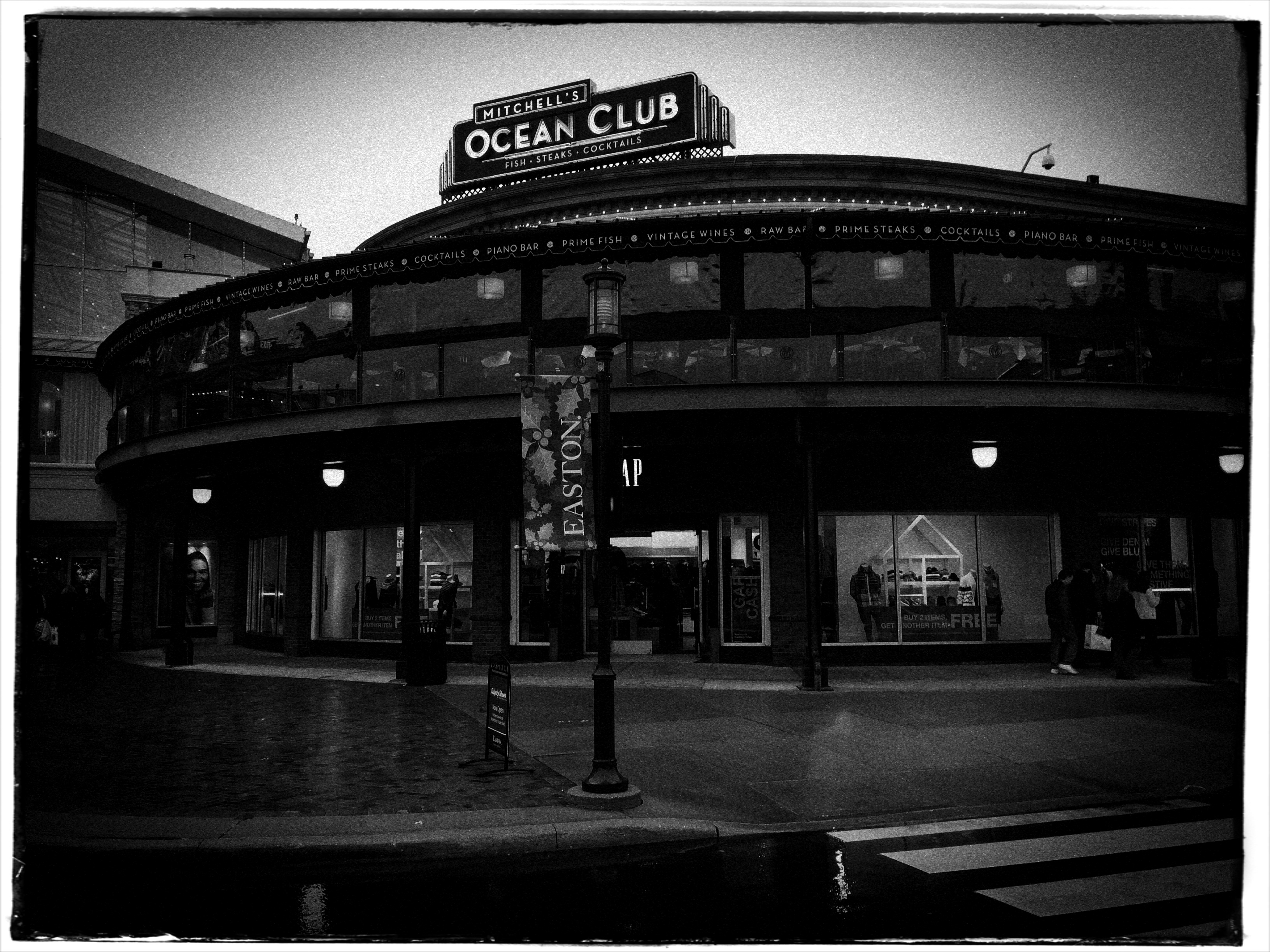
Moody, but still a bit too tidy. Black and white by itself wasn’t enough to create the atmosphere I wanted.
By MICHAEL PERKINS
EVEN THOUGH MOST GREAT PHOTOGRAPHERS PROCLAIM that any “rules” in their medium exist only to be broken, it’s often tough to chuck out regulations that have served you well over a lifetime of work. Once you get used to producing decent images through the repetition of habit, it takes extra nerve to take yourself outside your comfort zone, even if it means adding impact to your shots. You tend not to think of rules as arbitrary or confining, but as structural pillars that keep the roof from falling in.
That’s why it’s a good exercise to force yourself to do something that you feel is a bad fit for your style, lest your approach to everything go from being solid to, well, fossilized. If you hate black and white, make yourself shoot only monochrome for a week. If you feel cramped by square framing, make yourself work exclusively in that compositional format, as if your camera were incapable of landscape or portrait orientations. In my own case, I have to pry my brain away from an instinctual reliance on pinsharp focus, something which part of me fears will lead to chaos in my images. However, as I occasionally force myself to admit, sharp ain’t everything, and there may even be some times when it will kill, or at least dull, a picture.
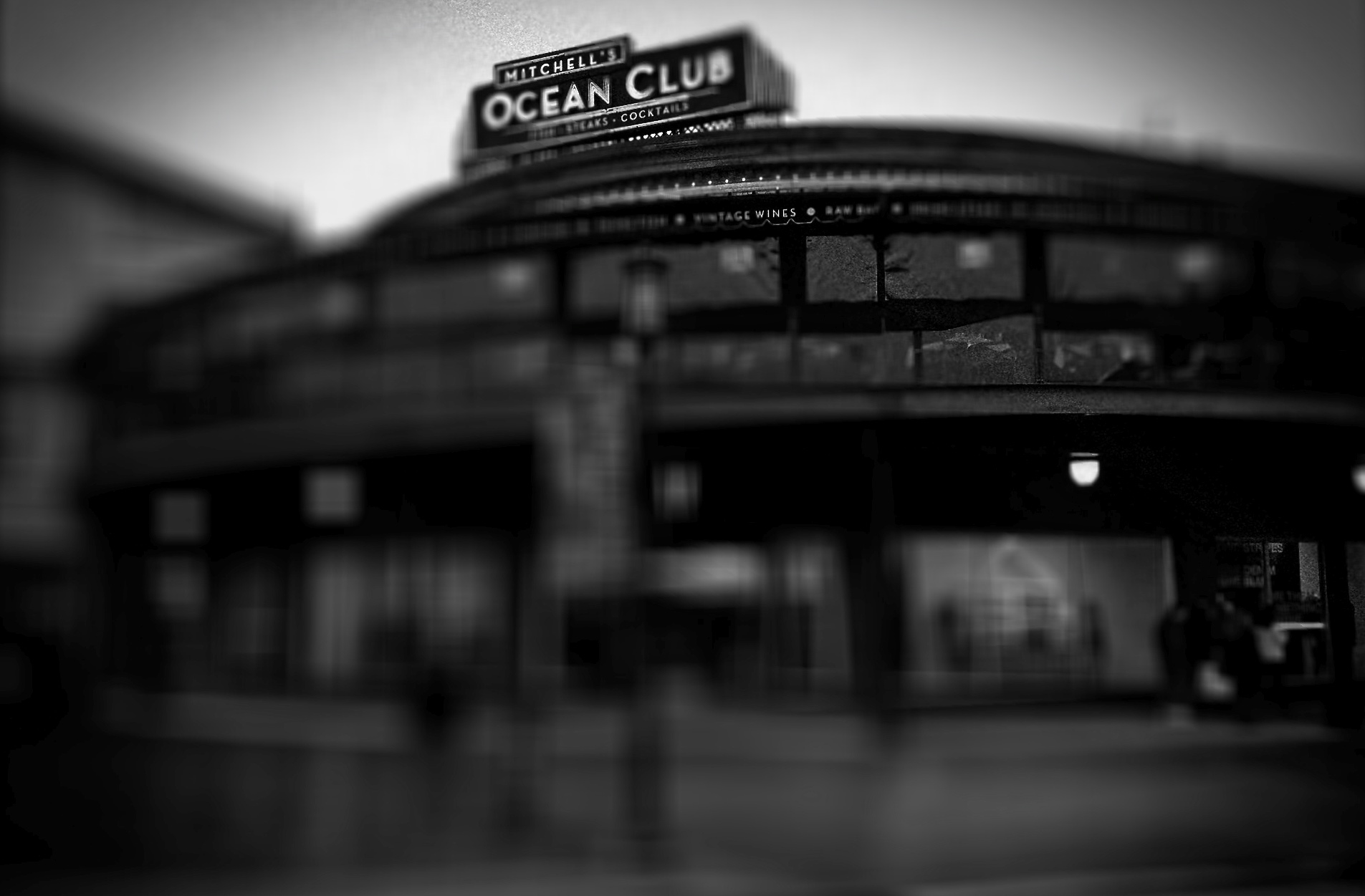
Sharpness just where it’s needed, and nowhere else.
With post-processing such an instantaneous, cheap, and largely effortless option these days, there really isn’t any reason to not at least try various modes of partial focus just to see where it will lead. Take what you believe will work in terms of the original shot, and experiment with alternate ways of interpreting what you started with.
In the shot at the top of this post, I tried to create mood in a uniquely shaped fish house with monochrome and a dour exposure on a nearly colorless day. Thing is, the image carried too much detail to be effectively atmospheric. The place still looked like a fairly new, fairly spiffy eatery located in an open-air shopping district. I wanted it to look like a worn, weathered joint, a marginal hangout that haunted the wharf that its seafood theme and design suggested. I needed to add more mood and mystery to it, and merely shooting in black & white wasn’t going to get me there, so I ran the shot through an app that created a tilt-shift focus effect, localizing the sharpness to the rooftop sign only and letting the rest of the structure melt into murk.
It shouldn’t be hard to skate around a rule in search of an image that comes closer to what you see in your mind, and yet it can require a leap of faith. Hard to say why trying new things spikes the blood pressure. We’re not heart surgeons, after all, and no one dies if we make a mistake.Anyway, you are never more than one click away from your next best picture.
FRAGMENTS AND SHARDS
By MICHAEL PERKINS
GLASS SURFACES REPRESENT A SERIES OF CHOICES FOR PHOTOGRAPHERS, an endless variety of effects based on the fact that they are both windows and mirrors, bouncing, amplifying or channeling light no less than any other subject in your frame. No two shooters approach the use (or avoidance) of glass as a compositional component in quite the same way. To some, it’s a barrier that they have to get past to present a clear view of their subject. To others, its fragments and shards of angle and light are part of the picture, adding their own commentary or irony.
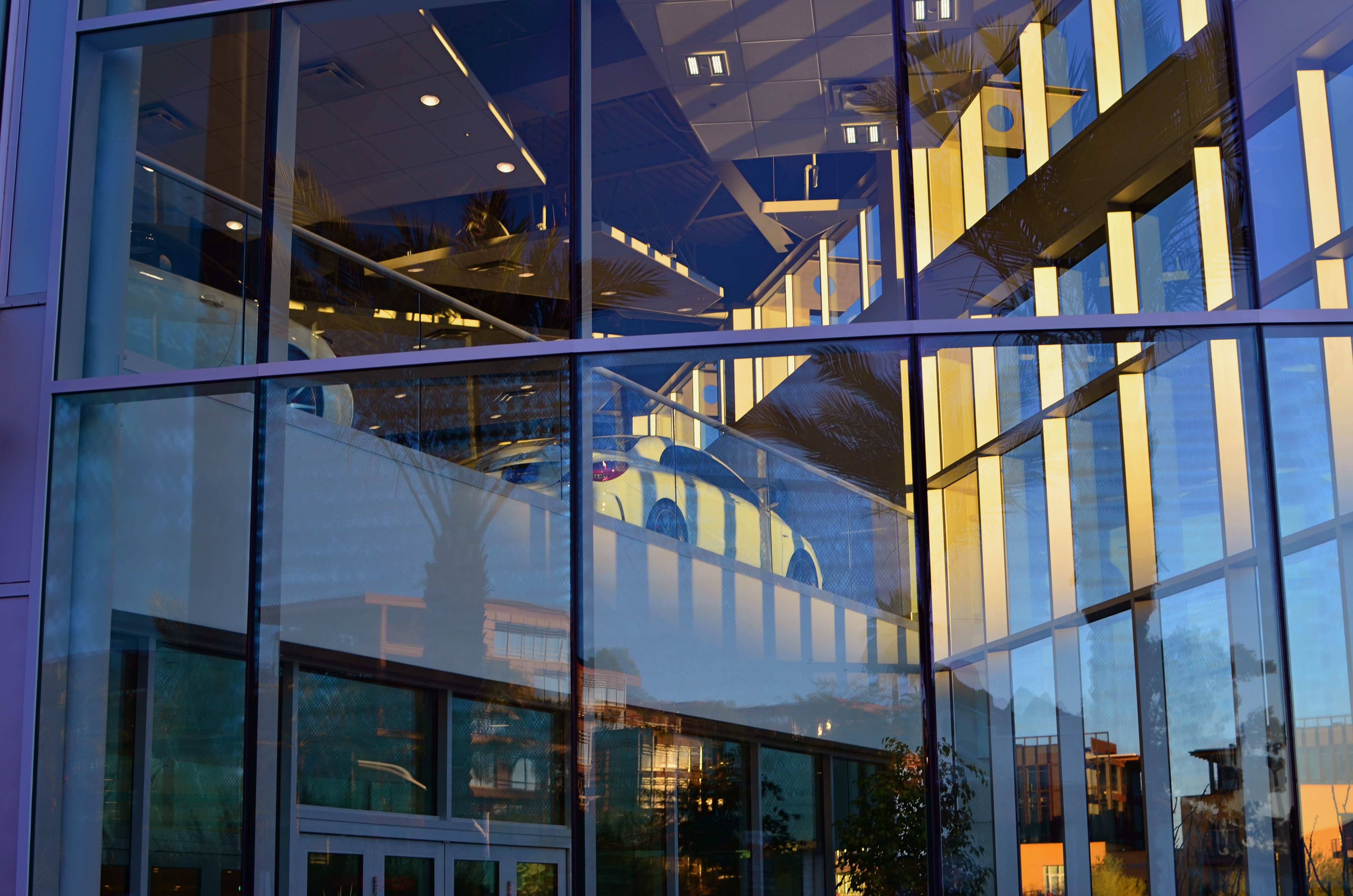
That’s The Way The Light Benz, 2015. 1/50 sec., f/5.6, ISO 100, 35mm.
I usually judge glass’ value in a photograph by two basic qualifiers: context and structure. First, context: suppose you are focused on something that lies just beyond a storefront window. What visual information is outside the scope of the viewer, say something over your shoulder or across the street, that might provide additional impact or context if reflected in the glass that is in direct view? It goes without saying that all reflections are not equal, so automatically factoring them into your photo may add dimension, or merely clutter things up.
The other qualifier is the structure of the glass itself. How does the glass break up, distort, or re-color light within an enclosure? In the above image, for example, I was fascinated by the complex patterns of glass in an auto showroom, especially in the way it reassigned hues once the sun began to set. I had a lot of golden light fighting for dominance with the darker colors of the lit surfaces within the building, making for a kind of cubist effect. No color was trustworthy or natural , and yet everything could be rendered “as is” and regarded by the eye as “real”. The glass was part of the composition, in this instance, and at this precise moment. Midday or morning light would render a completely different effect, perhaps an unwelcome one.
Great artists from Eugene Atget to Robert Frank have created compelling images using glass as a kind character actor in their shots. It’s an easy way to deepen the impact of your shots. Let the shards and fragments act like tiles to assemble your own mosaics.
LOOK DEEP INTO MY EYES
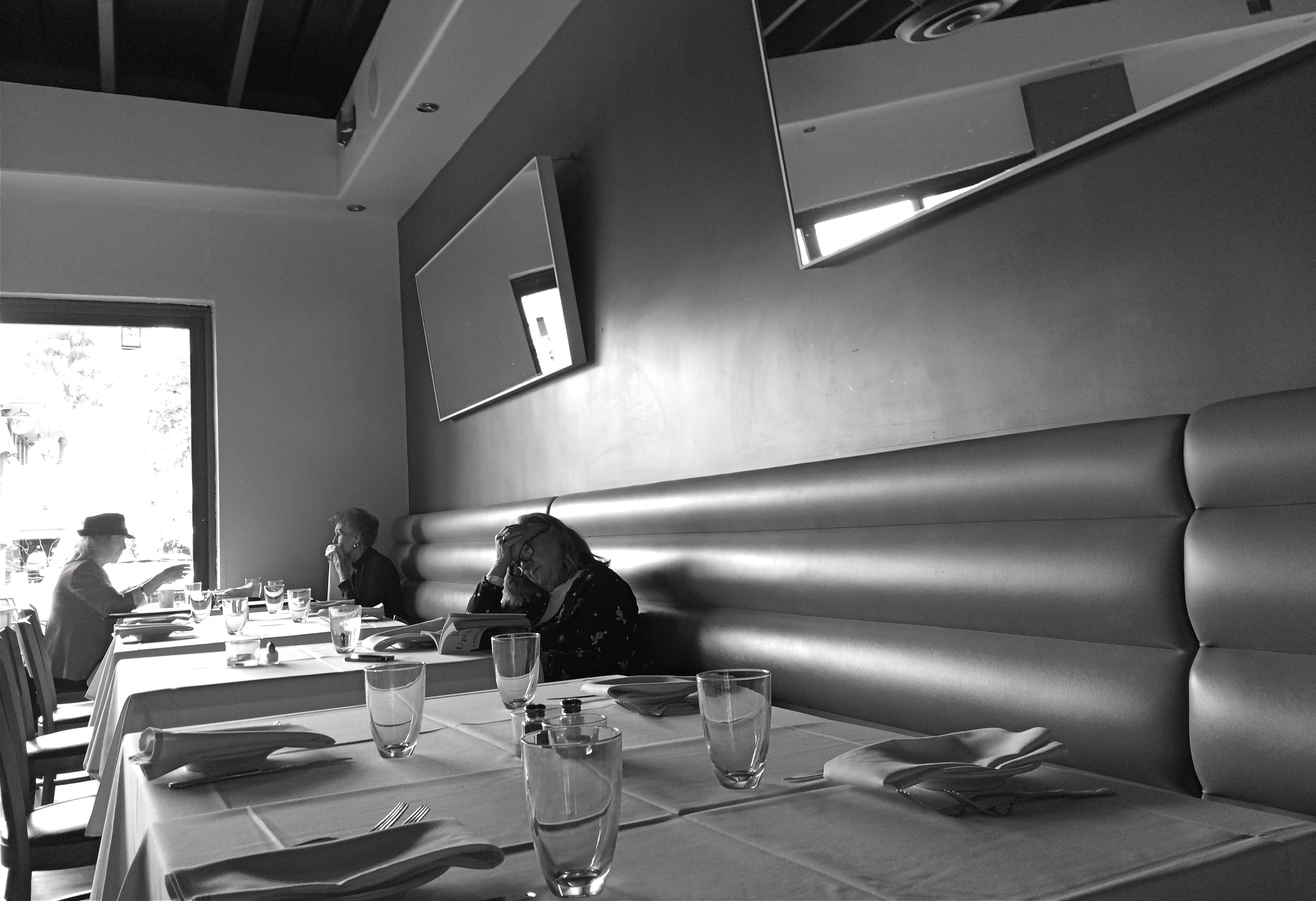
Literature For Lunch, 2016
By MICHAEL PERKINS
3-D PHOTOGRAPHY SEEMS DOOMED TO FOREVER RESIDE ON THE PERIPHERY OF THE MEDIUM AT LARGE, a part of the art that is regarded with mild derision, a card trick, a circus illusion. My own experience in it, from simple stereoscopic point-and-shoots to high-end pro-sumer devices like the Realist or View-Master cameras, has met with a lot of frustration at the unavoidable technical barriers that keep it from being a truly sharable kind of photography. It’s rife with specialized viewers, odd goggles, and cumbrous projection systems. It calls attention to effect to the detriment of content. It is the performing seal of photography.
That said, the learning curve needed to compose for stereo effect is equally valuable for overall “flat” composition, since you must always be mindful of building layers of information from front to back, the better to draw your viewer’s eye deep into your subject. Some will meet this challenge with a simple selective depth of field, as if to say: only pay attention to the stuff that is sharp. The front/back/sides don’t matter…I’ll tell you where to look. Others decide to arrange the front-to-back space all in the same focus, forcing the eye to travel in a straight line. Depends on what you need to say.
DSLRs allow you to elect for the former strategy, while iPhone photography, at least at this point in history, pretty much forces you to adopt the latter. You just don’t have the fine control needed for selective focus in a smartphone, any more than you have a choice shutter speed or how wide you shoot. With few exceptions, the iPhone and its cousins are marvelously adroit point-and-shoots, so your composition options lie chiefly in how you frame things up. Quickly.
This “think fast” mentality works to your benefit in the stealthier parts of street photography. The quicker you click, the harder it is to be detected, which means fewer “hey, what are you doing” issues with reluctant subjects. Even so, you have to be composing consciously if you want to establish a strong line to maximize the illusion of depth. It means deciding where the main drama in a shot resides and composing in reference to it. In the above shot, the woman lost in her John Updike novel is the main interest, but the steep diagonal of the wall leads you to her, then, as a second stage, to the lighter pair of friends in back. Framed in this manner, depth can be accentuated.
There are happy accidents and there are random luck-outs in photography, to be sure, but to create a particular sensation in your pictures, you must craft them. In advance. On purpose.
A FORWARD STEP BACK
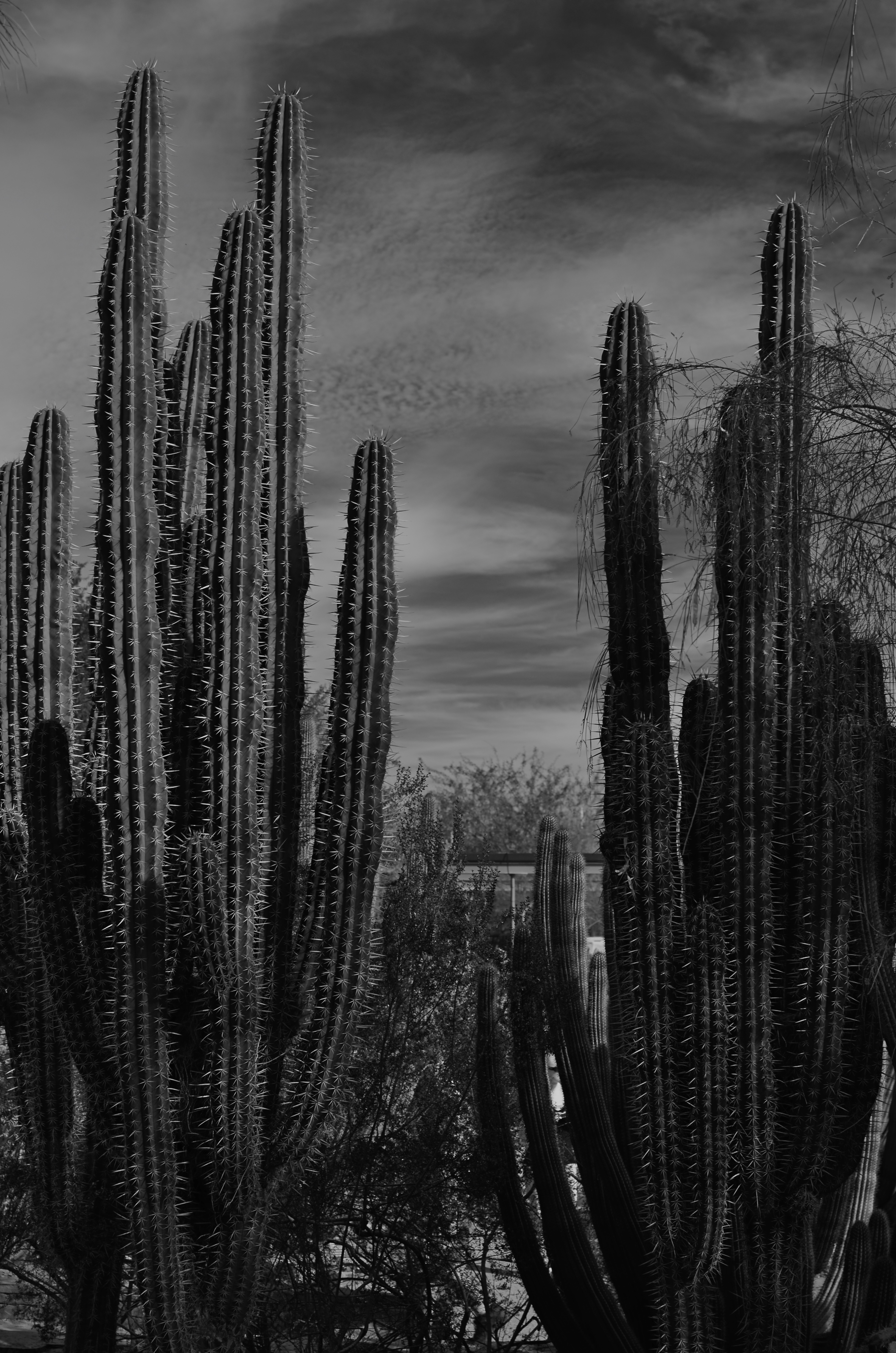
Skies which appear wispy in color can pick up some drama in black & white with the use of a red filter.
By MICHAEL PERKINS
SOME CHOICES IN LIFE ARE BINARY, EITHER YES OR NO. The light switch is either all “on” or all “off”. Photographic choices have never been binary, since there are only a few real rules about how to achieve the image you want and more than a million reasons why those rules have to be jettisoned, because they actually stand in the way of that image.
When digital photography arrived, there was a tendency to assert that everything associated with film photography was as obsolete as a roll of Kodachrome 64. In fact, the further we proceed into the digital age, the more we realize that there are many good practices from the days of emulsions and negatives that have solid application in the age of zeroes and ones. It would be ridiculous to say categorically that every tool of one era must be abandoned in the image-making of the next. Lenses, exposure, lighting basics, and many more elements of film-based creativity have equivalents in digital. None of them are good all the time, and none of them should be ruled out without exception.
The use of filters is one such element. Many film-based photogs worth their salt have used filters as a matter of course, and, despite the amazing in-camera and post-production fixes of the present day, these little bits of accent glass still produce dazzling effects with a minimum of investment, and help shooters maintain a close, hands-on control of their images in the moment. And one of my favorites here in the American southwest, land of endless, often blistering sun, is the red 25 filter.
Used to punch up contrast and accentuate detail for black and white, the red 25 renders even the lightest skies into near blackness, throwing foreground objects into bold relief and making shadows iron sharp. On a day when fluffy clouds seem to blend too much into the sky, the red 25 makes them pop, adding additional textural detail and a near-dimensional feel to your compositions. Additionally, the filter dramatically cuts haze, adding clear, even tones to the darkened skies. Caution here: the red 25 could cost you several stops of light, so adjust your technique accordingly.
Many whose style has developed in the digital age might prefer to shoot in color, then desaturate their shots later, simulating this look purely through software, but I prefer to make my own adjustments to the scene I’m shooting while I am shooting it. I wouldn’t paint a canvas in one place and then fix my choice of colors a week later, hundreds of miles away from my dream sunset. Filters are from a world where you conceive and shoot now. The immediate feedback of digital gives you the part of that equation that was absent in film days, that is, the ability to also fix it, now. Photography can’t afford to cut itself off from its own history by declaring tools from any part of that history obsolete. A forward step, back is often the deftest dance move.
THE VANISHED NORMAL
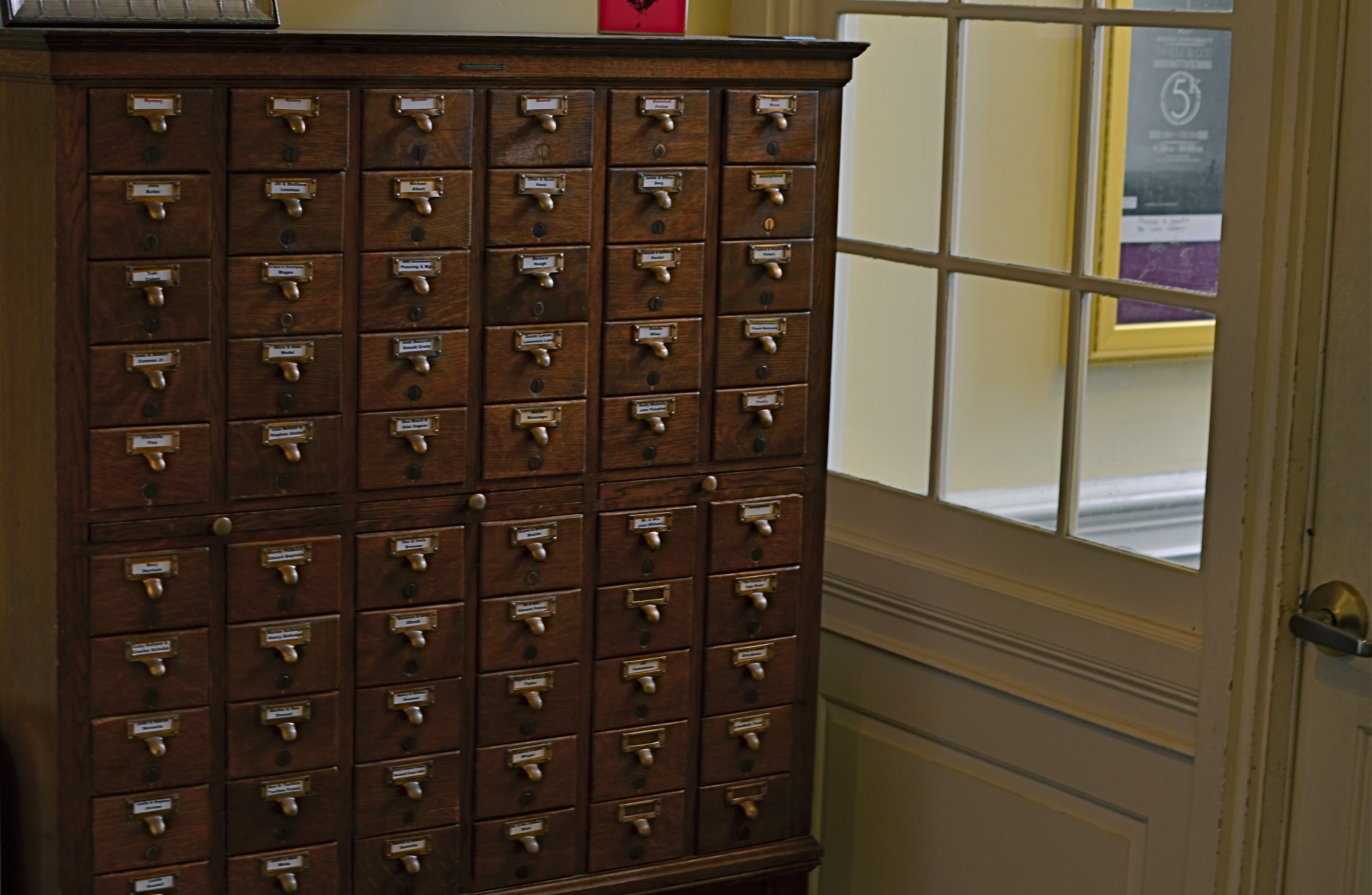
Dewey love card catalogs? Well, we used to. 1/30 sec., f/2.8, ISO 100, 35mm
By MICHAEL PERKINS
THE FUTURE DOESN’T ARRIVE ALL AT ONCE, just as the past doesn’t immediately vanish completely. In terms of technology, that means that eras kinds of smear across each other in a gradual “dissolve”. Consider the dial telephone, which persisted in various outposts for many years after the introduction of touch-tone pads, or, more specifically, Superman’s closet, the phone booth, which stubbornly overstayed its welcome long past the arrival of the cel. The “present” is always a mishmosh of things that have just arrived and things that are going away. They sort of pass each other, like workers at change of shift.
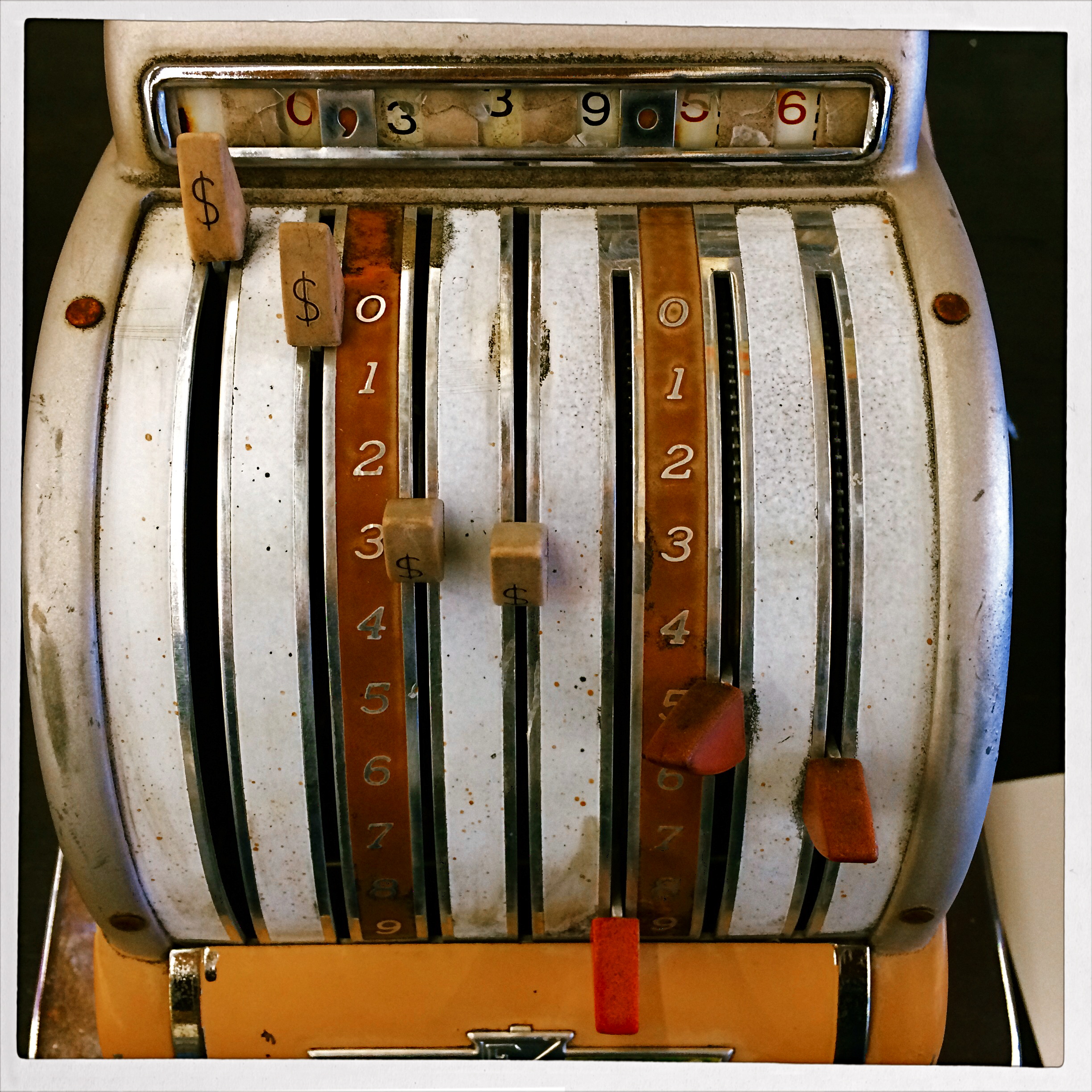
Visually, even the obsolete can be re-purposed.
Photographically, this means that there are always relics of earlier eras that persist past their sell-by date. They provide context to life as part of a kind of ever-flowing visual history. It also means that you need to seize on these relics lest they, and their symbolic power, are lost to you forever. Everything that enjoys a brief moment as an “everyday object” will eventually recede in use to such a degree that younger generations couldn’t even visually identify it or place it in its proper time order (a toaster from 1900 today resembles a Victorian space heater more than it does a kitchen appliance).
Ironically, this is a double win for photographers. You can either shoot an object to conjure up a bygone era, or you can approach it completely without context, as a pure design element. You can produce substantial work either way.
Some of the best still life photography either denies an object its original associations or isolates it so that it is just a compositional component. The thing is to visually re-purpose things whose original purpose is no longer. Photography isn’t really about what things look like. It’s more about what you can make them look like.
UNBOUND BY REALITY
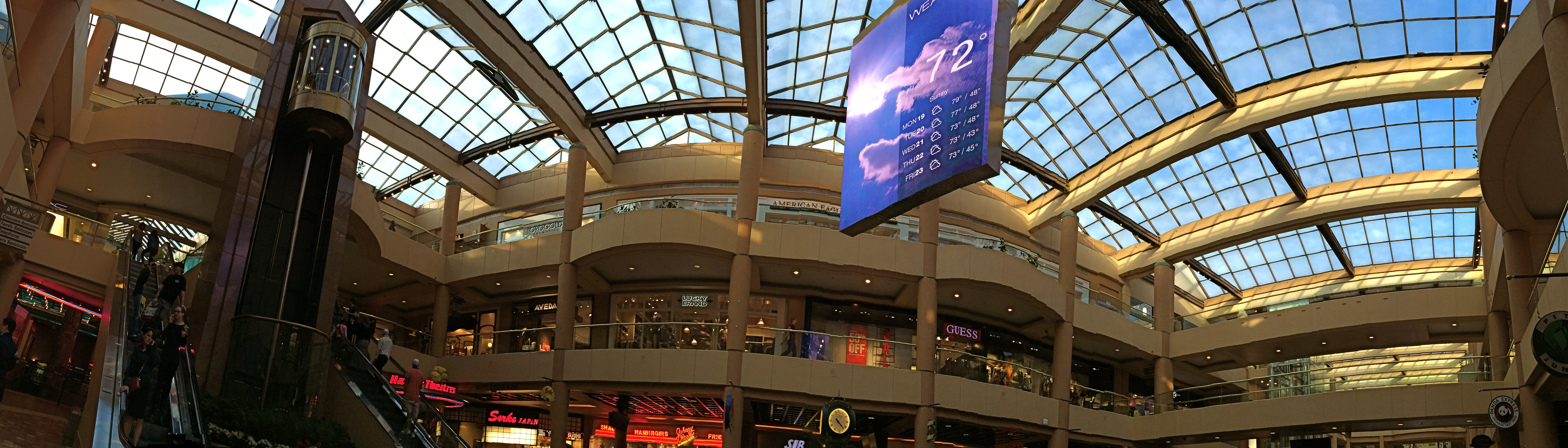
It’s A Mall World, After All: iPhone panoramics make good design tools, but they ain’t about realism.
By MICHAEL PERKINS
PANORAMAS WERE DEVELOPED IN PAINTING, AND LATER IN PHOTOGRAPHY, to alter, not capture, reality. This is one of those man-over-nature struggles that thrilled 19th-century brainiacs. Consider: both mediums are hemmed in by physical limits. The frame can only be so big. The wall can only go so wide. Sadder still, there are limits to the width of human vision, which is why our neck swivels from side to side, giving us the ability to tilt our head attentively when our wives whisper something pertinent to us during the third act of The Barber Of Seville.
So, panos were a fascinating fakery from the start, an attempt to compensate for our limited senses and the cramped confines of the frame, providing no less a warp of reality than a kaleidoscope or 3-d. They were great for showing the broad sweep of the Battle of Gettyburg or the entire breadth of the Coney Island Boardwalk, but the emphasis, historically, was always on closely simulating reality, in that objects were photographed in their natural proportions from left to right and focus was always pinsharp from near objects to the horizon. In other words, “real” phoniness instead of exaggerated phoniness (huh?).
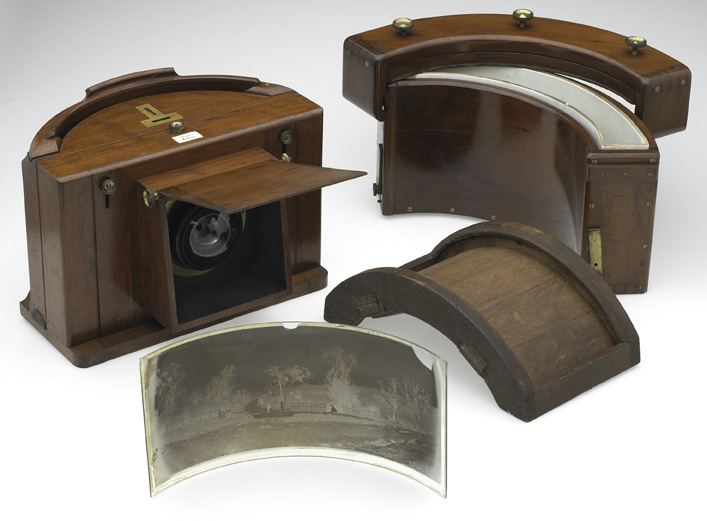
Old school: a panoramic plate camera from the 1800’s.
Now, however, with self-stitching panoramic software in phone cameras, we have a process that actually accentuates unreality, and that can be interesting. Ideally, to take a pano, you must sweep the camera slowly from left to right during the exposure. Now, this would result in a “realistic” perspective, if you could maintain constantly smooth motion and a uniform distance from your subject all the way across, which is impossible unless you’re seated on a dolly and being pushed along a track by four of your friends. So much for reality.
So, what you’re forced to do instead is to twist your body left, remain standing in one place, and be the central pivot point while you pan across yourself until you get all the way to the right. Imagine your body to be a hinge and your arms to be a swinging gate.This creates a crazy amount of spatial distortion not unlike a fisheye effect, and that is my point. Play to that weakness and make it a strength. Leave reality behind and look for patterns, your own abstract designs, in other words, improvements on reality. Panoramas aren’t tools for map-makers. You’re not going to hang your images like tapestries across the east wall of the capitol rotunda. So have some fun doing what reality won’t allow.
THE REVISION DRAFT
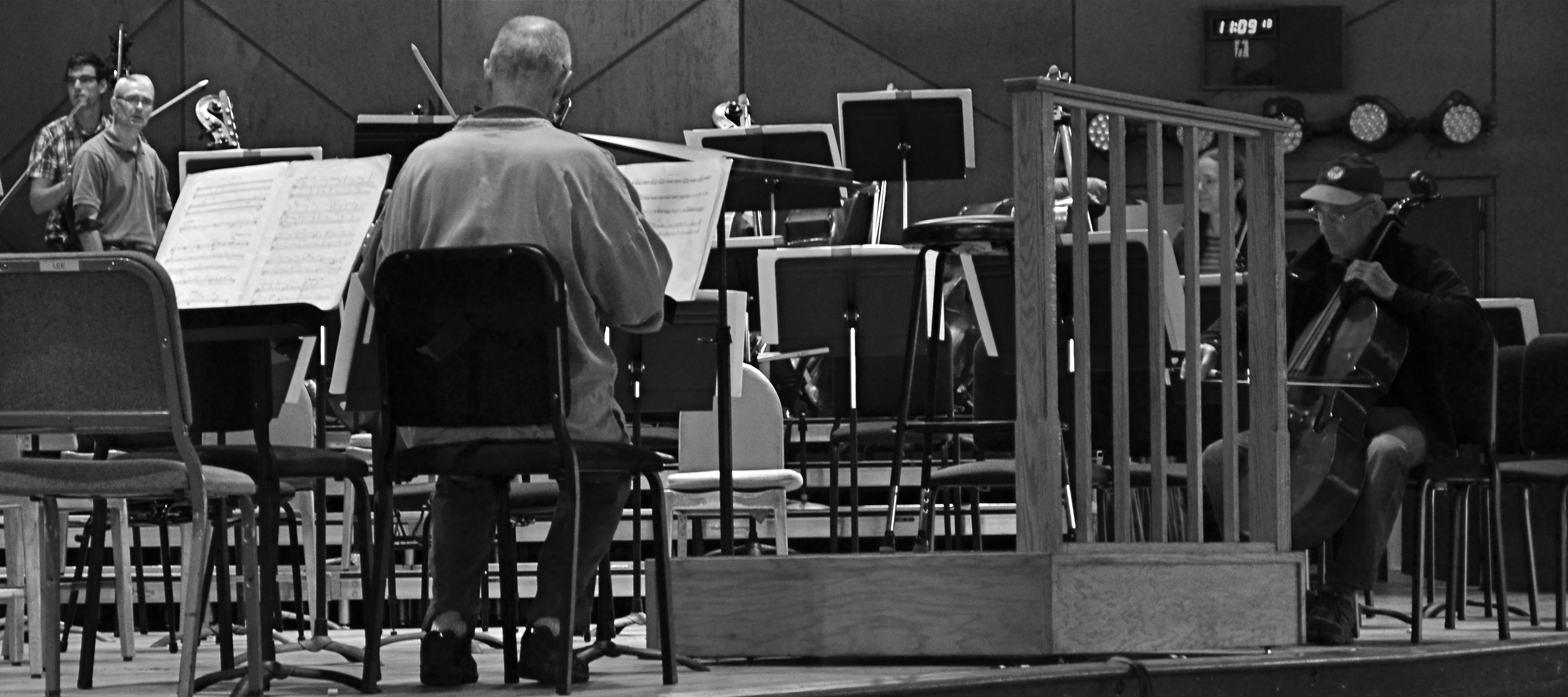
Reducing is remixing: this Tanglewood rehearsal photo was at least 2/3rds bigger in the original, but a severe crop highlights a relationship between these players that the bigger image buried.
By MICHAEL PERKINS
HERE’S A SENTENCE YOU’RE NOT GOING TO HEAR ANYWHERE ELSE THIS WEEK: Being a club DJ can actually give you a fresh viewpoint on your photography.
I’ll let that sink in.
I know what you you’re thinkin’: did he drink six shots or only five? But I’m kind of sober, and rather serious. In a club setting, the mix is often more important than the song, or, more correctly, it allows the song to have an infinite number of alternative lives, depending on what you do with the turntables. Record companies recognized this in the heyday of disco, remixing hit tracks for more thump and bump, longer edits, brass overdubs, etc. As time went on, DJs interspersed their own random elements in the moment to create their own signature blends.
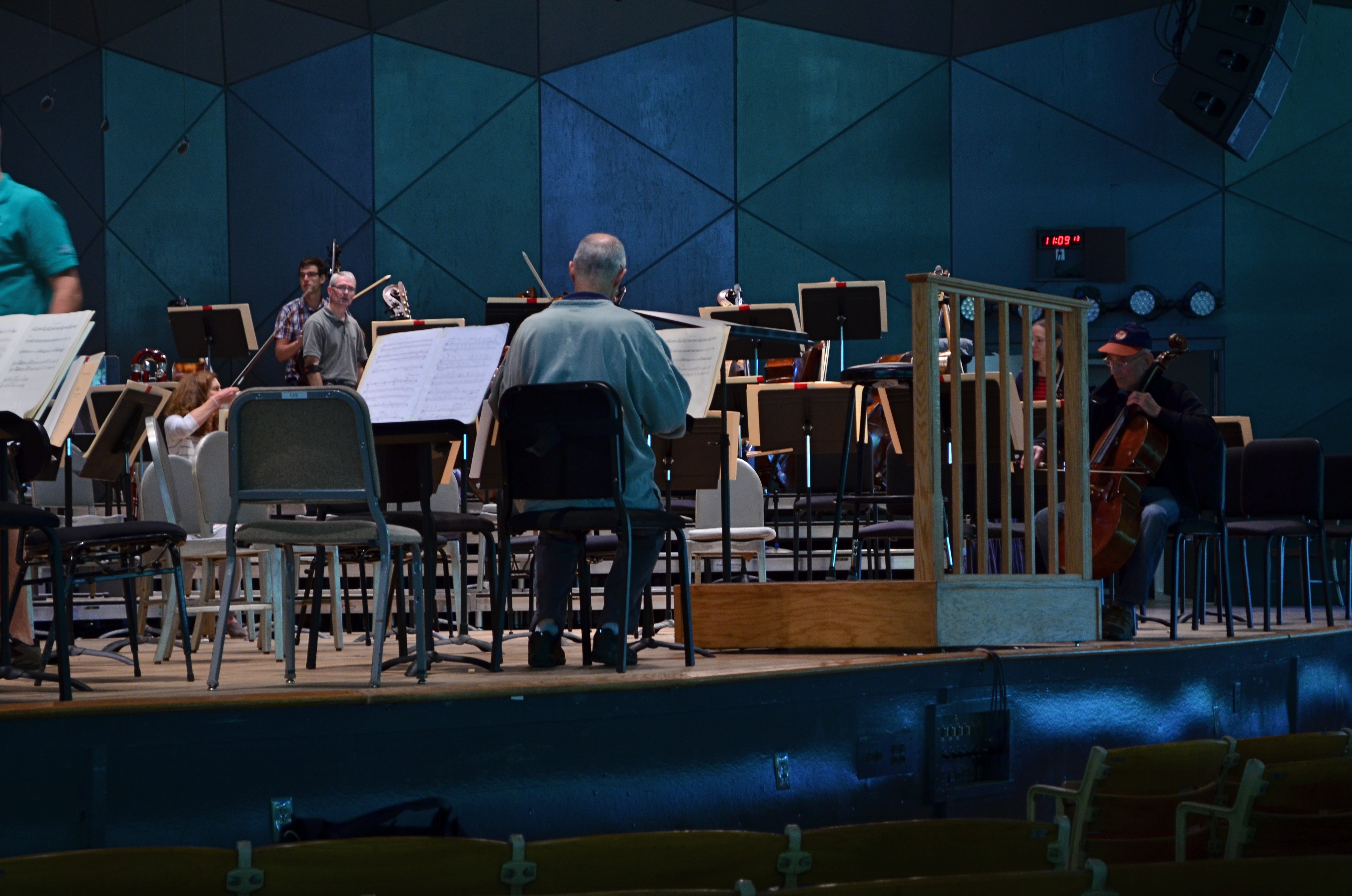
The original.
So what does this have to do with photography? Pretty much everything. In the digital era, post-production software is nearly half of some shooters’ workflow. So much emphasis is placed on what you can fix after the shutter is clicked that, for many, actually planning and taking the picture is the least important part of the process. Let’s lay aside the fact that I personally believe that this can get out of hand…..the point is, by allowing yourself the flexibility to revisit and remix a photo many times over its lifetime means you are not limiting yourself to one interpretation of what you originally created.
However, don’t keep merely to a reprocessing of the exposure or tone elements in the picture, that is, boosting color, adding filters, converting to monochrome. Think of compositional space as a remix element as well. Did you need all the real estate taken up in the original picture? Would that landscape shot work more effectively in portrait or square format? Did you originally include information in the frame that just adds clutter, sending your viewer’s eye wandering around aimlessly? In short, does your first reading of the “idea” of the picture still seem valid?
See the “after” picture at the top of the page and its “before” equivalent to the left. Did the picture gain or lose from the changes?
Another musical musing: George Gershwin personally played Rhapsody In Blue like a snappy jazz piece, not the stately symphonic standard that’s re-created by most modern performers. Does one rendition sound better or worse? Who knows? Who cares? What matters is that the process reveals different traits within the core music with every new mix. Your photographs will benefit in the same way. Just trust yourself to tinker.
YOU’RE GREAT, NOW MOVE, WILLYA?
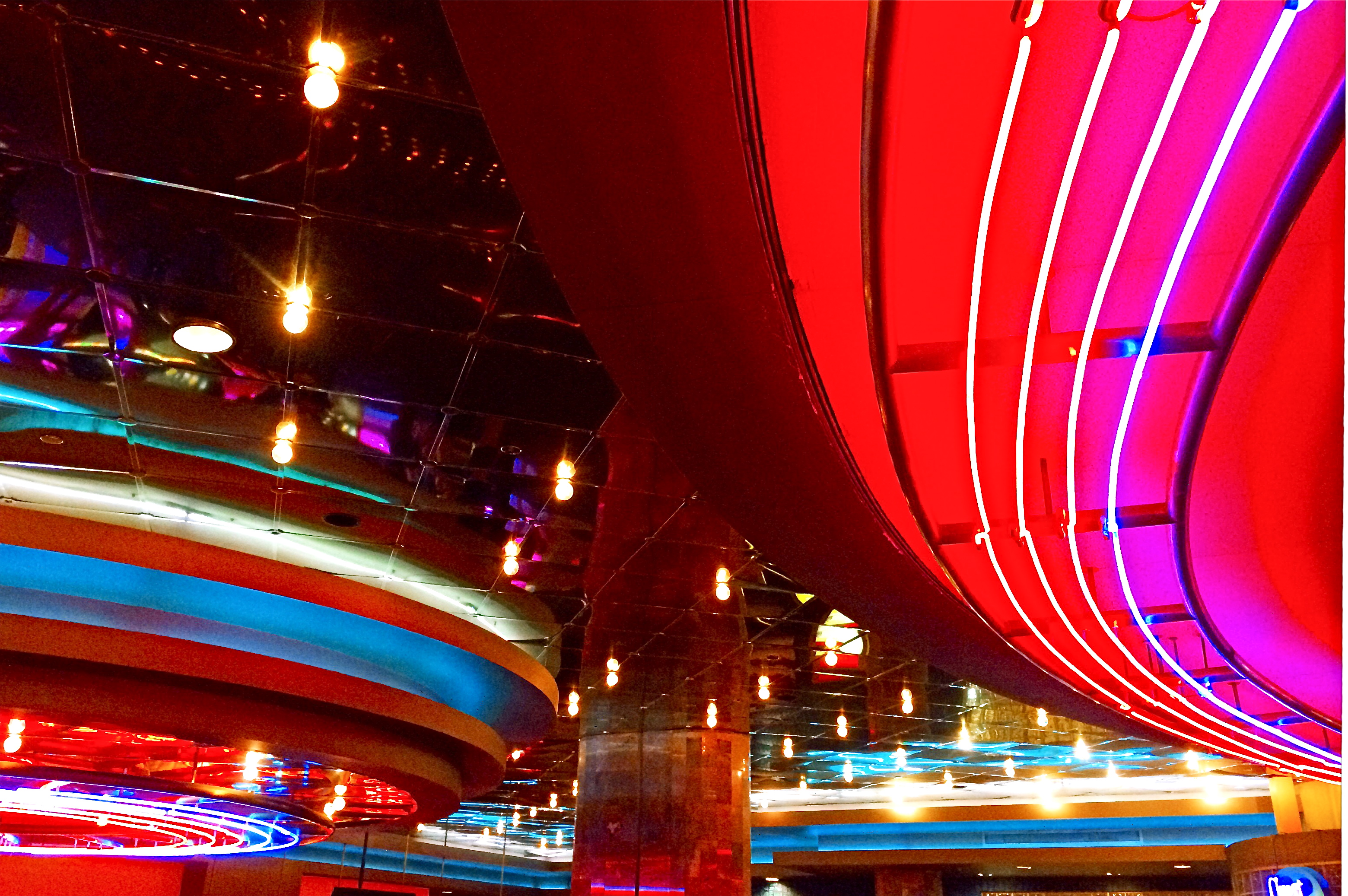
Marquee Marks, 2015. Do I need people in this to suggest urban life?
By MICHAEL PERKINS
ONE OF MY FAVORITE SONGS FROM THE ’40’s, especially when it emanates from the ruby lips of a smoking blonde in a Jessica Rabbit-type evening gown, conveys its entire message in its title: Told Ya I Love Ya, Now Get Out! The hilarious lyrics speak of a woman who acknowledges that, yeah, you’re an okay guy, but don’t get needy. No strings on me, baby. I’ll call you when I want you, doll. Until then, be a pal and take a powder.
I sometimes think of that song when looking for street images. Yes, I’m aware that the entire sweep of human drama is out there, just ripe for the picking. The highs. The lows. Thrill of victory and agony of de feet. But. I always feel as if I’m cheating the world out of all that emotional sturm und drang if I want to make images without, you know, all them people. It’s not that I’m anti-social. It’s just that compelling stuff is happening out there that occasionally only gets compromised or cluttered with humans in the frame.
Scott Kelby, the world’s biggest-selling author of photographic tutorials, spends about a dozen pages in his recent book Photo Recipes showing how to optimize travel photos by either composing around visitors or just waiting until they go away. I don’t know Scott, but his author pic always looks sunny and welcoming, as if he really loves his fellow man. And if he feels it’s cool to occasionally go far from the madding crowd, who am I to argue? There are also dozens of web how-to’s on how to, well, clean up the streets in your favorite neighborhood. All of these people are also, I am sure, decent and loving individuals.
There is some rationality to all this, apart from my basic Scrooginess. Photographically, some absolutes of abstraction or pure design just achieve their objective without using people as props. Another thing to consider is that people establish the scale of things. If you don’t want that scale, or if showing it limits the power of the image, then why have a guy strolling past the main point of interest just to make the picture “human” or, God help us, “approachable”?
Faces can create amazing stories, imparting the marvelous process of being human to complete scenes in unforgettable ways. And, sometimes, a guy walking through your shot is just a guy walking through your shot. Appreciate him. Accommodate him. And always greet him warmly:
Told ya I love ya. Now get out.
LOW-TECH LOW LIGHT
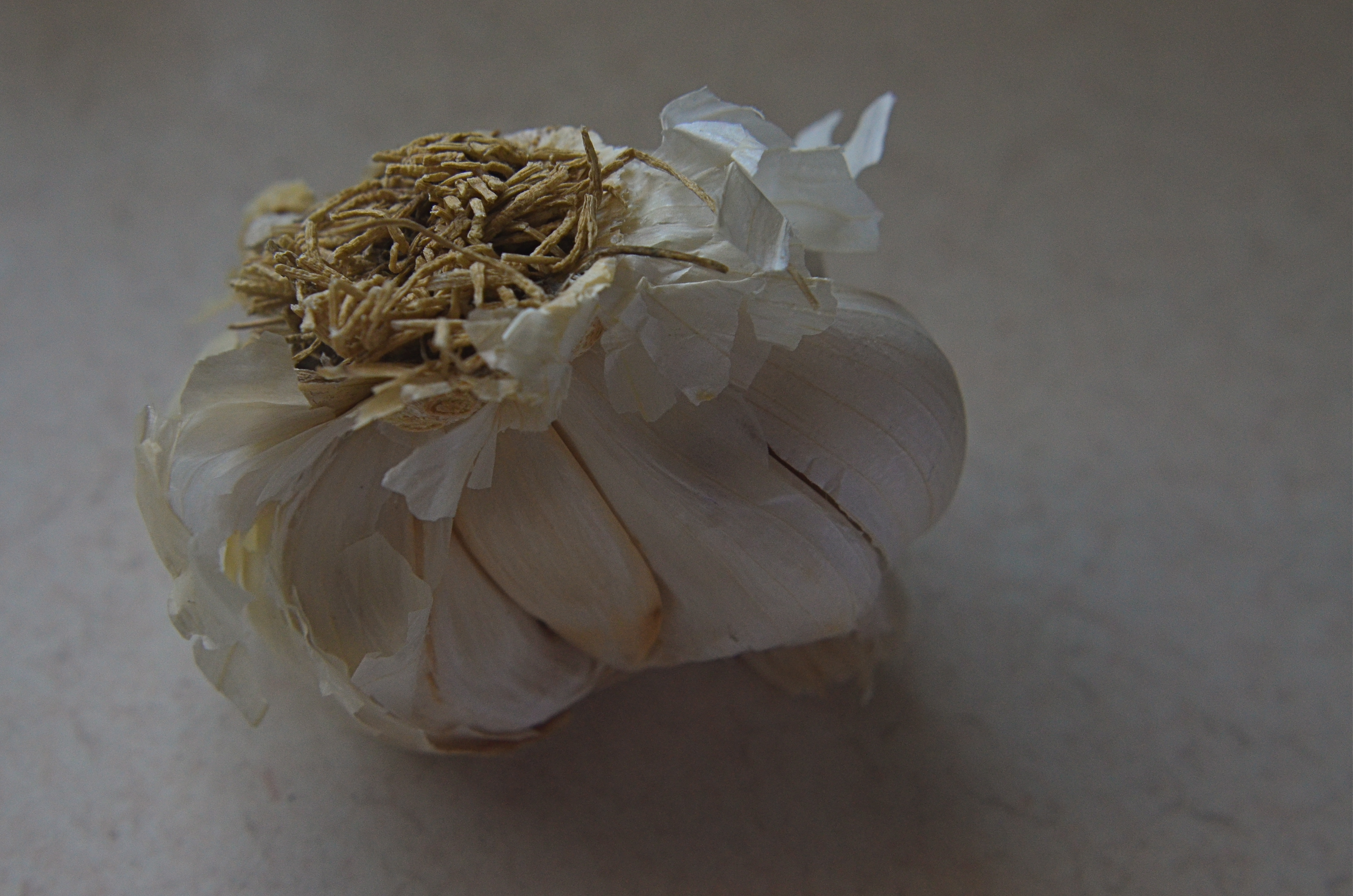
Passion Flower, 2015. Budget macro with magnifying diopters ahead of a 35mm lens. 1/50 sec., f/7.1, ISO 100.
By MICHAEL PERKINS
LIGHT IS THE PRINCIPAL FUEL OF PHOTOGRAPHY, but it needs refinement, just as crude oil needs to be industrially altered before it’s ready for consumer use. It isn’t just enough to record light in its natural form; it has to be corralled, directed, harnessed so that it enhances a photograph in such a way that, ironically, makes it look like you did nothing at all but press the shutter. So, right at the start, making images is a bit of a con job. Good thing is, it’s only dishonorable when you get caught.
Doing macro on the cheap with the use of screw-on magnifying diopters ahead of your regular lens is one of the situations that can create special lighting challenges. There is an incredibly shallow depth of field in these lenses, but if you compensate for it in the camera, by, say, f/8 or higher, you lose light like crazy. Slow down your shutter to compensate, and you’re on a tripod, since the slightest tremor in a hand-held shot looks like 7.8 on the Richter scale. Keep the shorter shutter speed, though, and you’re jacking ISO up, inviting excessive noise. Flood the shot with constant light, and you might alter the color relationships in a naturally lit object, effecting, well, everything that might appeal in a macro shot.
Best thing is, since you’re shooting such a small object, you don’t need all that much of a fix. In the above shot, for example, the garlic bulb was on a counter about two feet from a window which is pretty softened to start with. That gave me the illumination I needed on the top and back of the bulb, but the side facing me was in nearly complete shadow. I just needed the smallest bit of slight light to retrieve some detail and make the light seem to “wrap” around the bulb.
Cheap fix; half a sheet of blank typing paper from my printer’s feed tray, which was right next door. Camera in right hand, paper in left hand, catching just enough window light to bounce back onto the front of the garlic. A few tries to get the light where I wanted it without any flares. The paper’s flat finish gave me even more softening of the already quiet window light, so the result looked reasonably natural.
Again, in photography, we’re shoving light around all the time, acting as if we just walked into perfect conditions by dumb luck. Yeah, it’s fakery, but, as I say, just don’t get caught.
LEFTOVERS
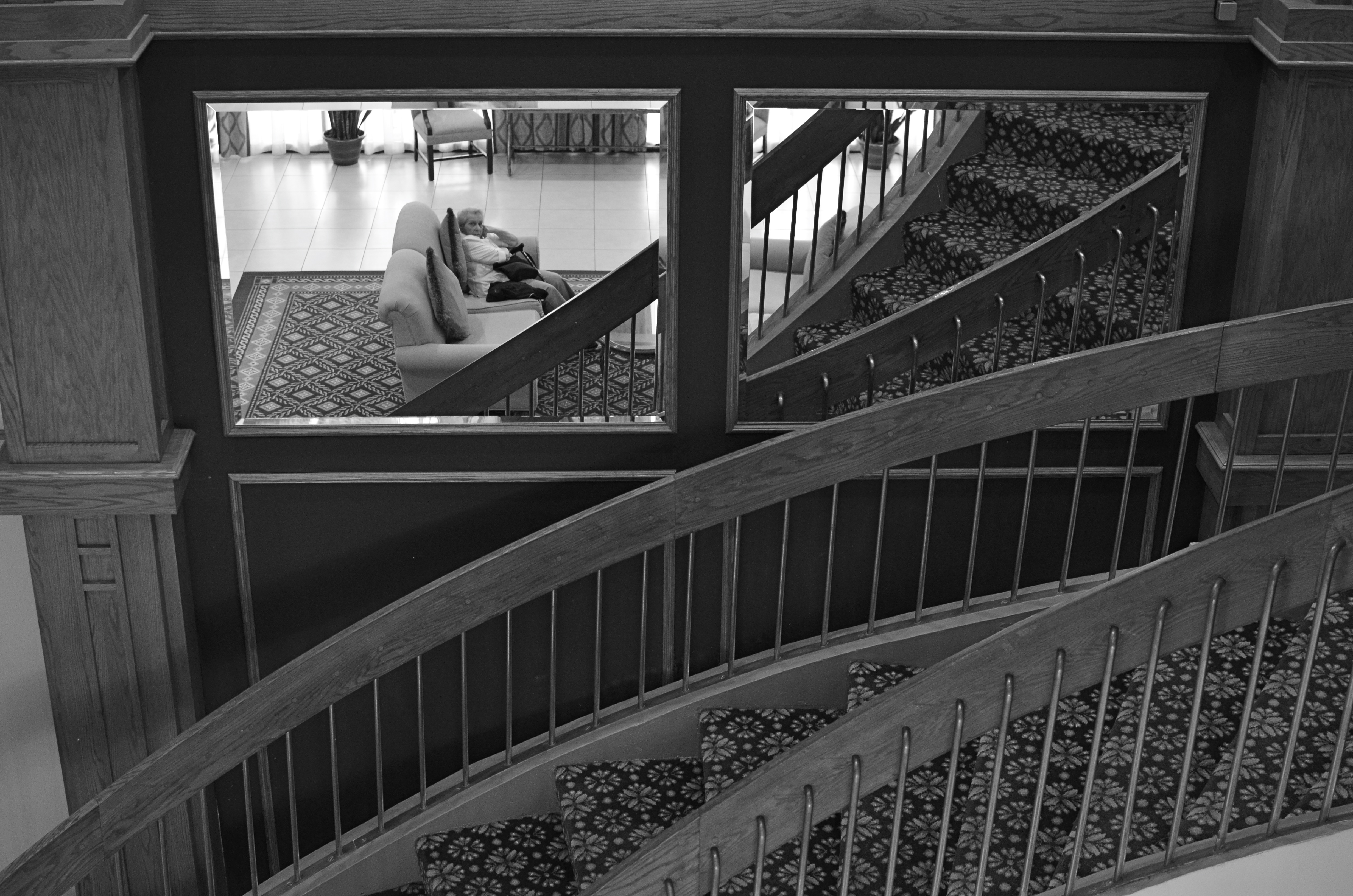
Upstairs, Downstairs, 2014. Conceived and planned as a monochrome image.
By MICHAEL PERKINS
FAR BE IT FROM ME TO DO A HATER NUMBER on photographic post-processing. We often pretend that the act of photo manipulation began at the dawn of the pixel age, when, of course, people have been futzing with their images since the first shutter snapped. We love the idea of “straight out of the camera” as an ideal, but it’s just that…an ideal. Eventually, it’s the way processing is executed in a specific instance which either justifies or condemns its use.
With that in mind, I do find that too many of us use faux b&w, or the desaturation of color images, long after they’re snapped, as a kind of last-ditch attempt to save pictures that didn’t have enough force or impact in the first place. Have I resorted to this myself? Oh, well, yeah, maybe. Which means, freaking certainly. Have I managed to “save” many images in this way? Not so much. Usually, I feel like I’m serving leftovers and trying to pawn them off as a fresh meal.
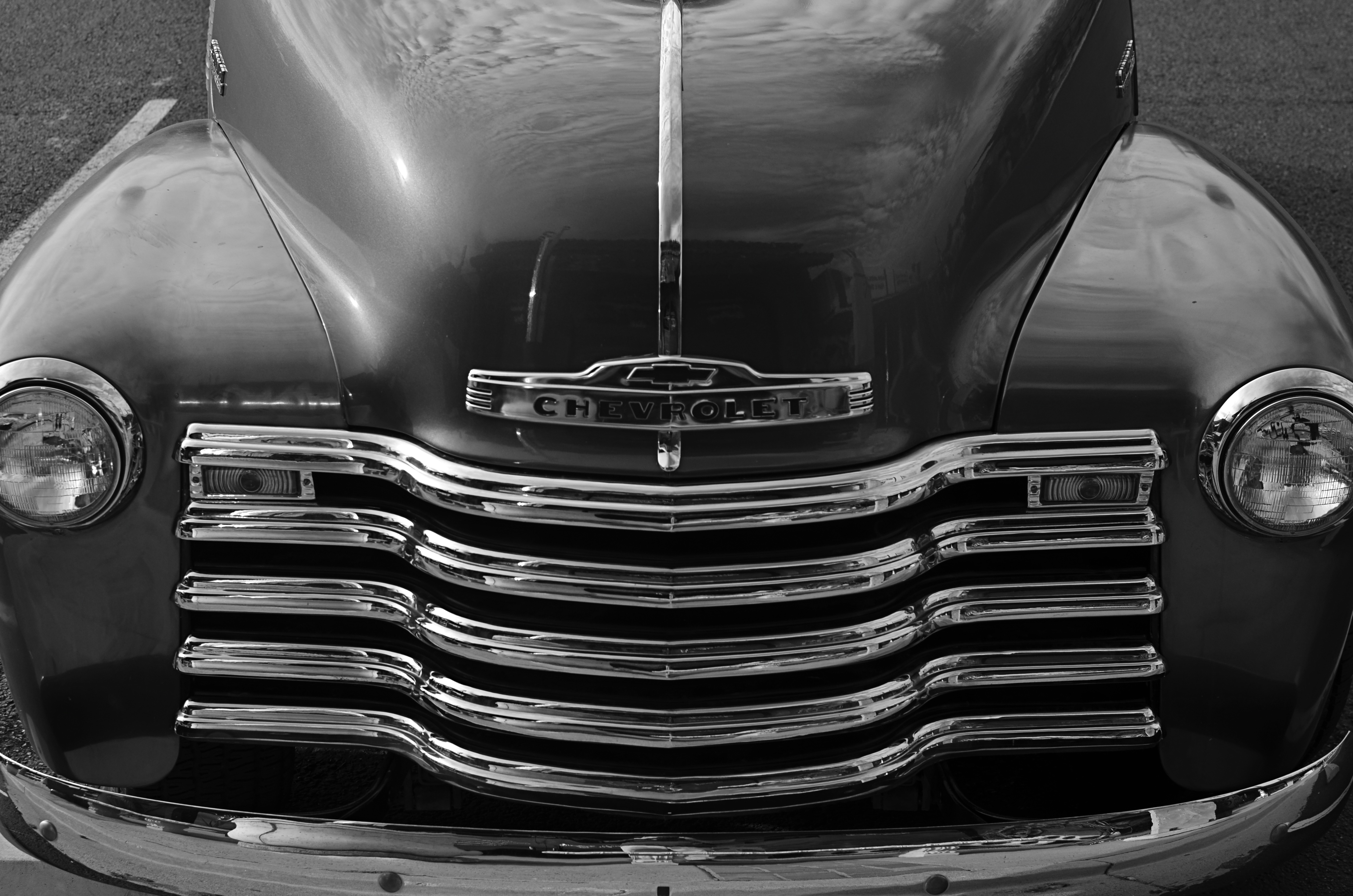
Up In Your Grille, 2015. A mere b&w conversion from color would have flattened out many of this image’s tones.
The further along I lope through life, however,the more I tend to believe that the best way to make a black and white image is to set out to intentionally do just that. An act of planning, pre-visualization, deliberation. It means looking at your subject in terms of how a color object will register over the entire tonal range of greys and whites. Also, texture, as it is accentuated by light, is particularly powerful in monochrome, so that part needs to be planned as well. Exposure, as it’s effected by polarizers or colored filters also must be planned, as values in sky, stone or foliage must be anticipated. And, always, there is the use of contrast as drama, something black and white does to great effect.
You might be able to convert a color shot into an even more appealing b&w shot in your kerputer, but the most direct route, that is, making monochrome in the moment, is still the best, since it gives you so many more options while you’re managing every other aspect of the shot in real time. It all comes down to a major philosophical point about photography, which is that the more control you can wield ahead of the click, especially with today’s shoot-it-check-it-shoot-it-again technology, the better your results will be.
THE TRIANGLE
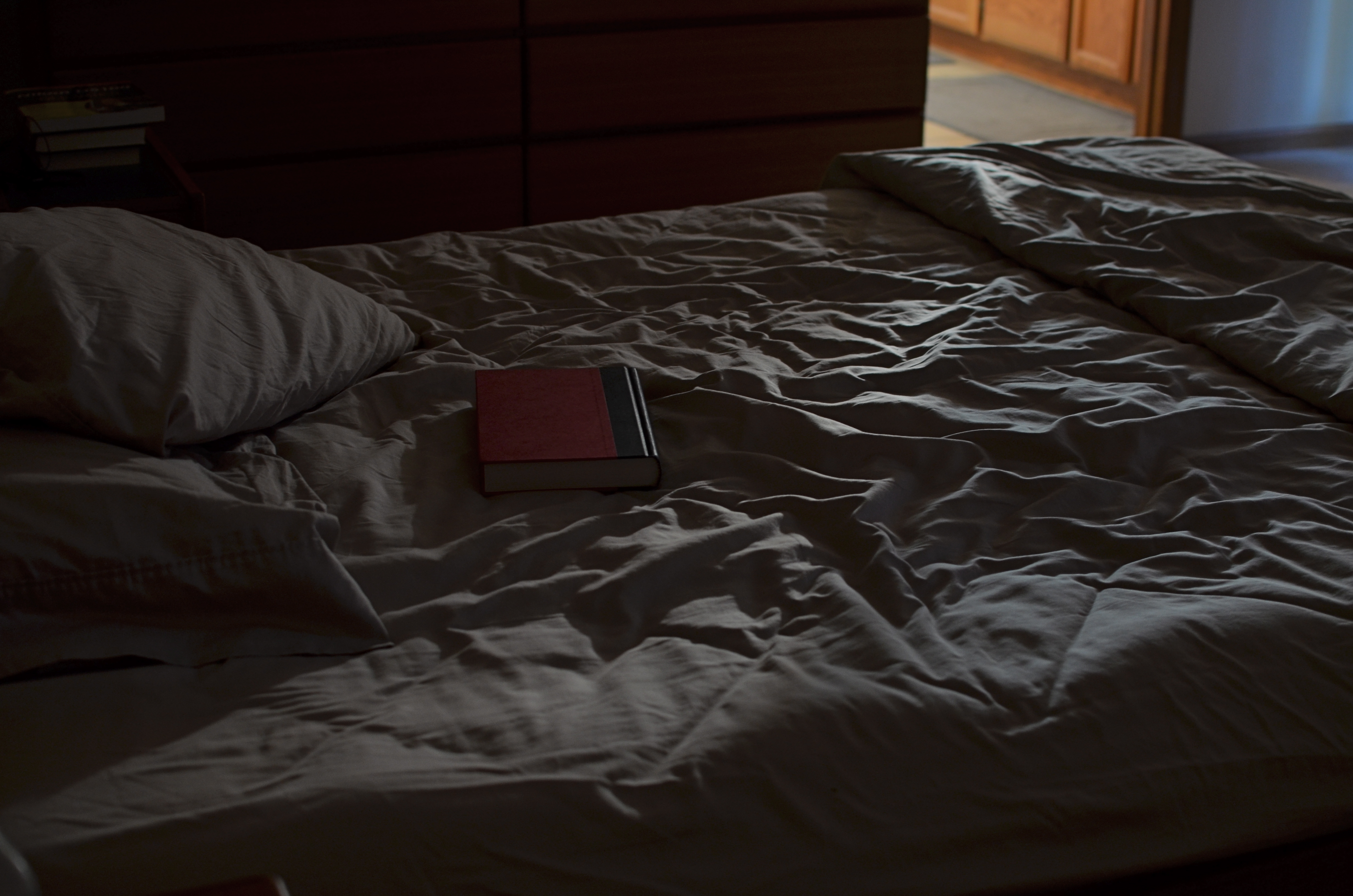
Dark days, dark thoughts.
By MICHAEL PERKINS
WINTER IS A TIME OF MUTED COLORS, DIMINISHED SUNLIGHT and inner struggle. I’ve heard people refer to the leaner, darker months as the feeling of being shut up inside a box, almost like having yourself placed in storage. I would lop one side off of that polygon and say that, to me, it feels more like being locked in a triangle.
As a photographer, I feel as if, in winter, I sustain three distinct emotional “hits” about my work, forming the three sides of the triangle, all three pressing up against, and balancing, each other. These sides can be described as:
Not enough new or compelling ideas coming into my brain. A case of the “drys”.
Too much re-evaluation of all of my images that failed, along with a big fat dose of recrimination.
A near-crippling sadness over the photographic opportunities, many tied to people now departed, that I simply didn’t act upon, and which are now lost to me forever.
The first side of the triangle really isn’t unique to winter-time. I experience  fallow periods throughout the year. They just ache more when amplified by slate-gray skies and dead trees. The second is to be expected, since spending more time indoors means rifling through old boxes of prints and slides, asking myself what the hell I was thinking when I chose this exposure or that subject, and ending the entire process by pitching some of those boxes into the incinerator. A needed exercise, but hardly anyone’s idea of a fun time.
No, it’s the third side of the triangle which is the real killer, since the photos that haunt you the worst are always the ones you didn’t take. Friendships pour additional salt into this particular wound, since, somehow, you never recorded quite enough of the faces which once were the common features of your world, and which time has, one by one, erased.
Your own personal list of pals-not-present grows steadily over the years, and the thought that you could have shot one less sunset to capture just one more portrait of some of them hurts. It’s not as if your emotional souvenirs of them aren’t burned into your mind’s eye. It’s not even that you might have done something magical or singular with their faces beyond another birthday candid. It’s simply that once you could, and now you can’t.
The triangle isn’t all torture. Breaking out of it means taking arms against ghosts, and (as Shakespeare said), by opposing, ending them. You not only have to keep shooting, but keep shooting mindfully. Because when all of this that we call reality finally drains through our fingers, the scraps of it that we leave behind really can matter. Even with triangles, there’s always one more side to the story.
GO TO YOUR GO-TO
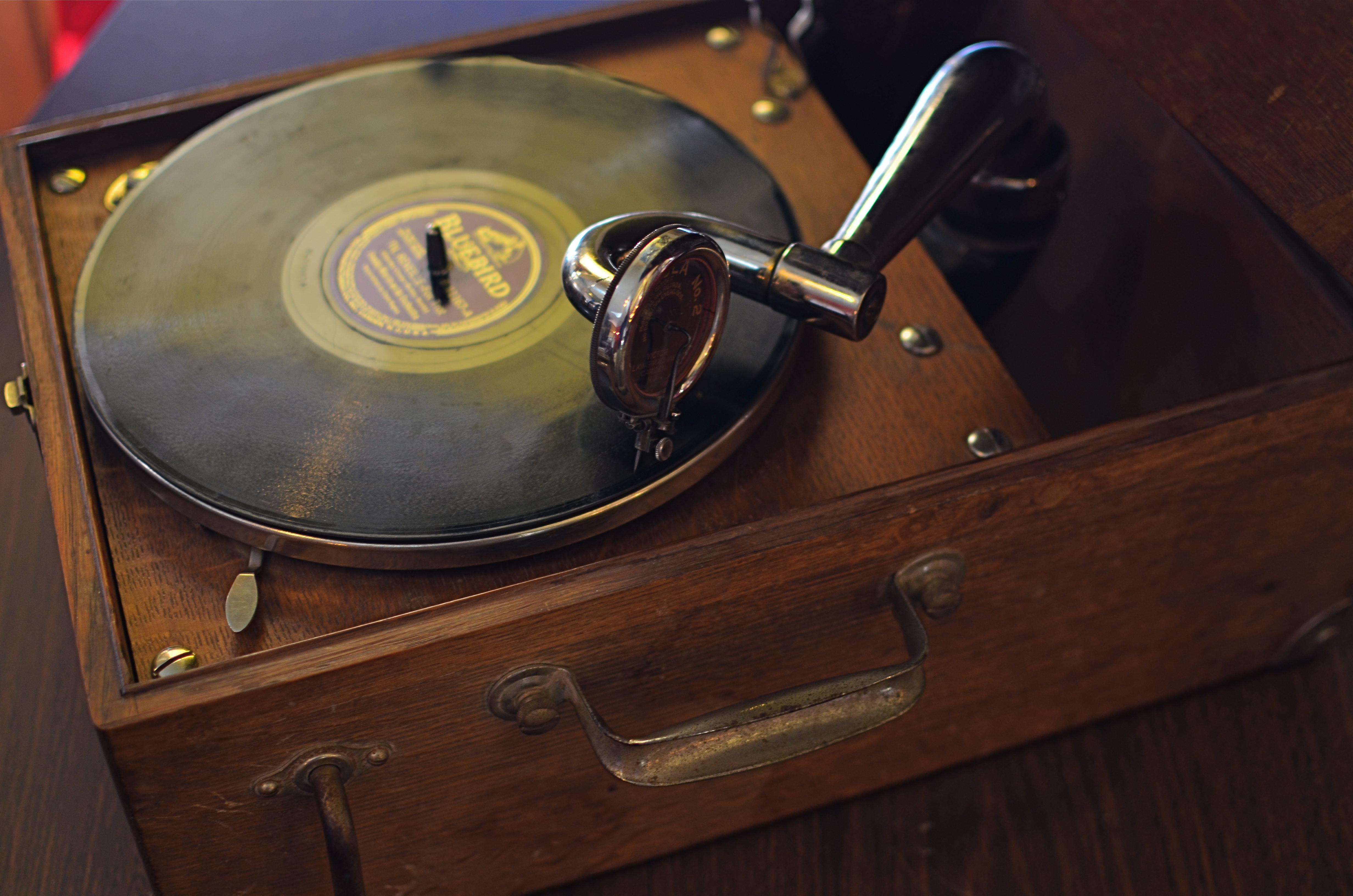
Simple tools are often best, like the 35mm f/1.8 prime lens used here.
By MICHAEL PERKINS
THE EVOLUTION OF ART IS SOMETIMES ABOUT SUBTRACTION RATHER THAN ADDITION. We reflexively feel that the more elements we add to our creative projects…equipment, verbiage, mental baggage…the better the result will be. I believe that, as art progresses, it actually becomes more streamlined, more pure. It becomes a process of doing the most work with the simplest, and fewest, tools.
That’s why I am a big fan of the idea of a “go-to” lens, that hunk of glass that, whatever its specific properties, answers most of your needs most of the time. Again, it doesn’t matter whether it’s a prime or a zoom or a fisheye. If it delivers more of what you need in nearly any shooting situation, then there’s little reason to keep seeking happiness by lugging extraneous gear and spending extra time swapping lenses. And, after you have been shooting and editing for a while, you will know what that piece of glass is. As a personal example, the 35mm prime lens used in the above image, which can shoot everything from moderate macro to portraits to landscapes, stays on my camera 95% of the time.
Mikey’s Golden Rule # 3,456: The more you know your equipment, the less of it you need.
Consider several advantages of becoming a go-to kind of guy/gal:
Working consistently with the same lens makes it easier to pre-visualize your shots. I believe that, the more of your picture you can see in your mind before the click of the shutter, the more of your concept will translate into the physical record. Knowing what your lens can do allows you to plan a picture that you can actually execute.
You start to see shooting opportunities that you instinctually know will play to your lens’ strengths. You can even plan a shot that you know is beyond those strengths, depending on the effect you want to achieve. Whatever your choices, you will know, concretely, what you can and can’t do.
You escape the dire addiction known as G.A.S., or Gear Acquisition Syndrome. Using the same lens for every kind of shot means you don’t have to eat your heart out about the “next big thing”, the new toy that will magically make your photography suck less. Once you and your go-to are joined at the hip, you can never be conned by the new toy myth again. Ever.
Finally, without the stop-switch-adjust cycle of lens changing, you can shoot faster. Sounds ridiculous, but the ability to just get on with it means you shoot more, speed up your learning curve, and get better. Delays in taking the pictures you want also delay everything else in your development.
There are always reasons for picking specific lenses for specific needs. But, once you maximize your ability to create great things with a particular lens, you may find that you prefer to bolt that sucker in place and leave it there. In photography as with so much else in life, informed choices are inevitably easier choices.
EVERYTHING IN ITS PLACE. OR NOT.
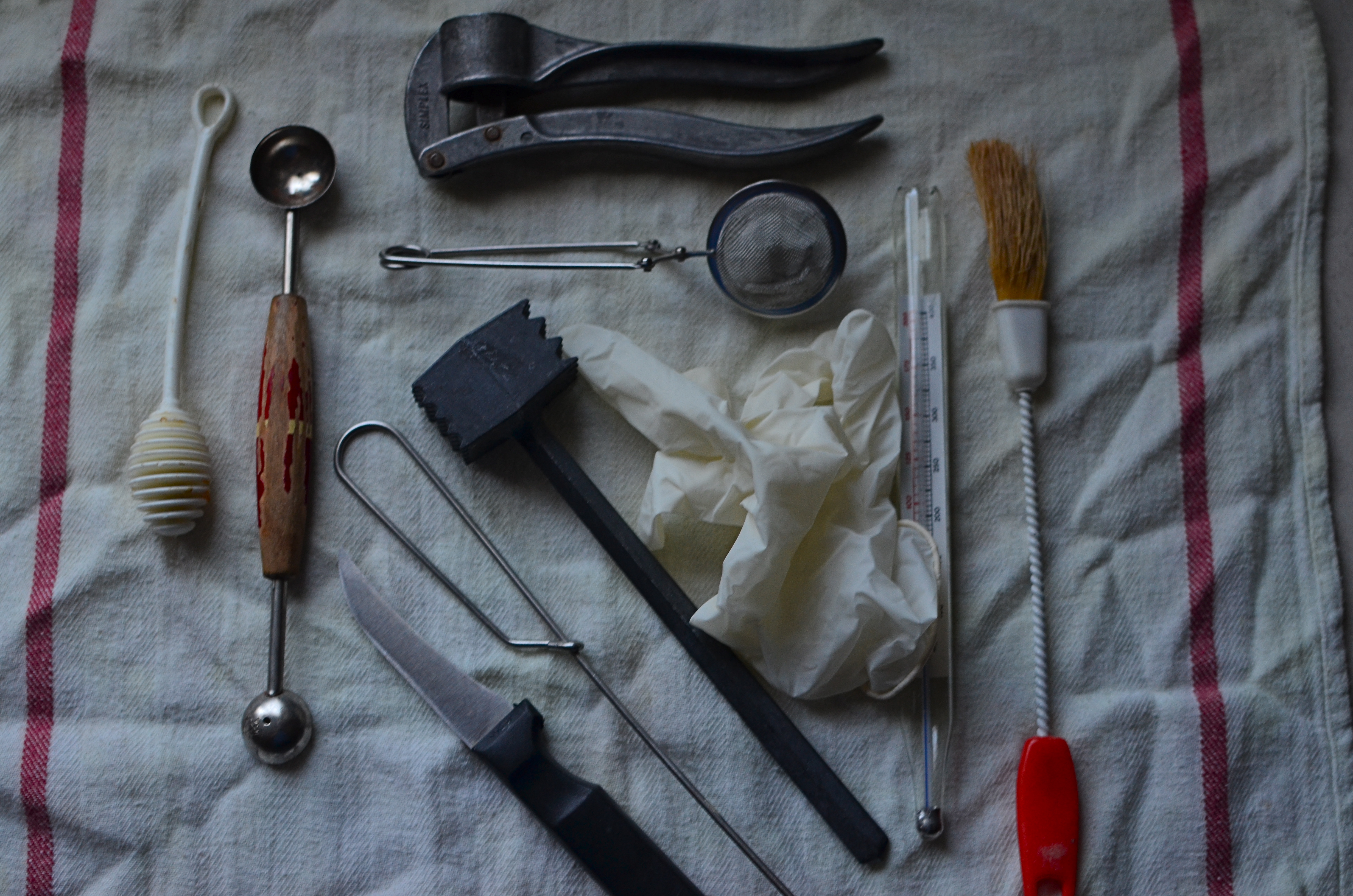
The Instrument Tray, 2015. Surgical equipment or foodie fantasy?
By MICHAEL PERKINS
PART OF THIS BUSINESS OF PHOTOGRAPHY is rifling through the accumulated habits and techniques of a still young art form and trying to not regard any of it as holy law. Relatively speaking, measured against the sprawling annals of painting and sculpture, photography has been on the planet for about a minute and a half, so it’s still not even in its adolescence. Hardly the amount of tradition that designates rules as “essential” or “unbreakable”.
This comes to mind a lot whenever I put together what I call “arrangements” but which others might refer to as “still lifes”. I get into a definition problem in referring to just any combination of inanimate things as a “still life”, since I tend to associate that term with a collection of items that suggest, you, know, a life caught in a “still”……some activity that is suggested just by looking at the objects associated with that activity.
It’s pretty obvious stuff: put together a duck decoy, a hunter’s cap, and a shotgun, and you can almost smell the marshlands where the mallards run. Shove a rubber ball, a doll and a set of blocks up against each other, and it’s “a day in the life of a child”. You don’t show the thrill of a baseball game; instead you suggest it with an antique bubble gum card, a torn stadium ticket, and a weathered ball. It’s Photography 101. When all else fails, throw three pieces of fruit in a bowl and park them next to a hunk of cheese. Inspirational.

Ho bloody hum.
By contrast, I don’t really think of what I assemble in a shot to be suggestive of a narrative in the traditional way. In fact, I have more fun shoving things up together which fight each other a little bit in terms of “why are these objects all here?” I’d rather ask the viewer to supply his/her own idea of what it’s all about instead of doing a Norman Rockwell number that leads them to an obvious association. In fact, every time I take a “typical” still life, I feel like I am making the props, instead of the photograph, supply the needed interest. It feels like set decoration.
In the above image, just as an example, I decided, for my own weird purposes, to do an alternate take on the typical surgical instrument tray, only using kitchen implements. In taking a look at the medical tools of just a century ago, many of them appear as if they are intended to peel or core instead of heal, anyway, and, similarly, some of the gimmicks in your kitchen drawer look as if they could inflict real pain. Strange? Probably. But, hey, I’m old, my mind wanders, and I’m sick of almost everything on TV. Except for that bit with Lucy and Ethel in the candy factory. Now that’s entertainment.
But I digress. Thing is,”still life” is too restrictive a term (or discipline) for lots of arrangements that you might find fascinating. Just pile stuff up and see what happens. Now, if you’ll excuse me, this composition I’ve been working on with the baby grand piano is nearly complete.
If I can just get my hands on two quarts of motor oil and a kumquat.
SEEING THROUGH THE STORM
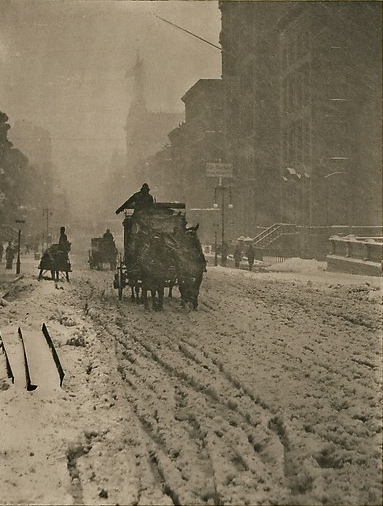
At the time of its initial publication in 1893, this image by Alfred Stieglitz was deemed a failure.
By MICHAEL PERKINS
LOOK CAREFULLY AT THE PHOTOGRAPH TO YOUR LEFT. It was, at one time, judged by contemporary critics as a grand failure. Alfred Stieglitz, the father of modern photography, and the first to advocate for its status as a legitimate art form, made this image after standing for three hours in the miserable blizzard that had buried the New York of 1893 in mounds of cottony snow.
The coachman and his horses are rendered in a soft haze due to the density of the wind-driven snow, and by the primitive slowness of the photographic plates in use at the time. There was, for photographers, no real option for “freezing the action” (unwitting pun) or rendering the kind of razor sharpness that is now child’s play for the simplest cameras, and so a certain amount of blur was kind of baked into Stieglitz’ project. But look at the dark, moody power of this image! This is a photograph that must live outside the bounds of what we consider “correct”.
More importantly, a technically flawless rendering of this scene would have drained it of half its impact.
Of course, at the time it was created, Stieglitz’ friends encouraged him to throw the “blizzard picture” away. Their simple verdict was that the lack of sharpness had “spoiled” the image. Being imperfect, it was regarded as unworthy. Stieglitz, who would soon edit Camera Work, the world’s first great photographic magazine, and organize the Photo-Secession, America’s first collective of artists for promotion of the photo medium, had already decided that photographs must be more than the mere technical recording of events. They could emphasize drama, create mood, evoke passions, and force the imagination every bit as effectively as did the best paintings.
Within a few years of the making of this image, the members of the Photo-Secession began to tweak and mold their images to actually emulate painting. The movement, called Pictorialism, did not last long, as the young turks of the early 20th century would soon demand an approach to picture-making that matched the modern age. The important thing, however, is that Stieglitz fought for his vision, insisted that there be more than one way to make a picture. That example needs to be followed today more than ever. When you make an image, you must become its champion. This doesn’t mean over-explaining or asking for understanding. It means shooting what you must, honing your craft, and fighting for your vision in the way you bring it to life.
THE CHOICE
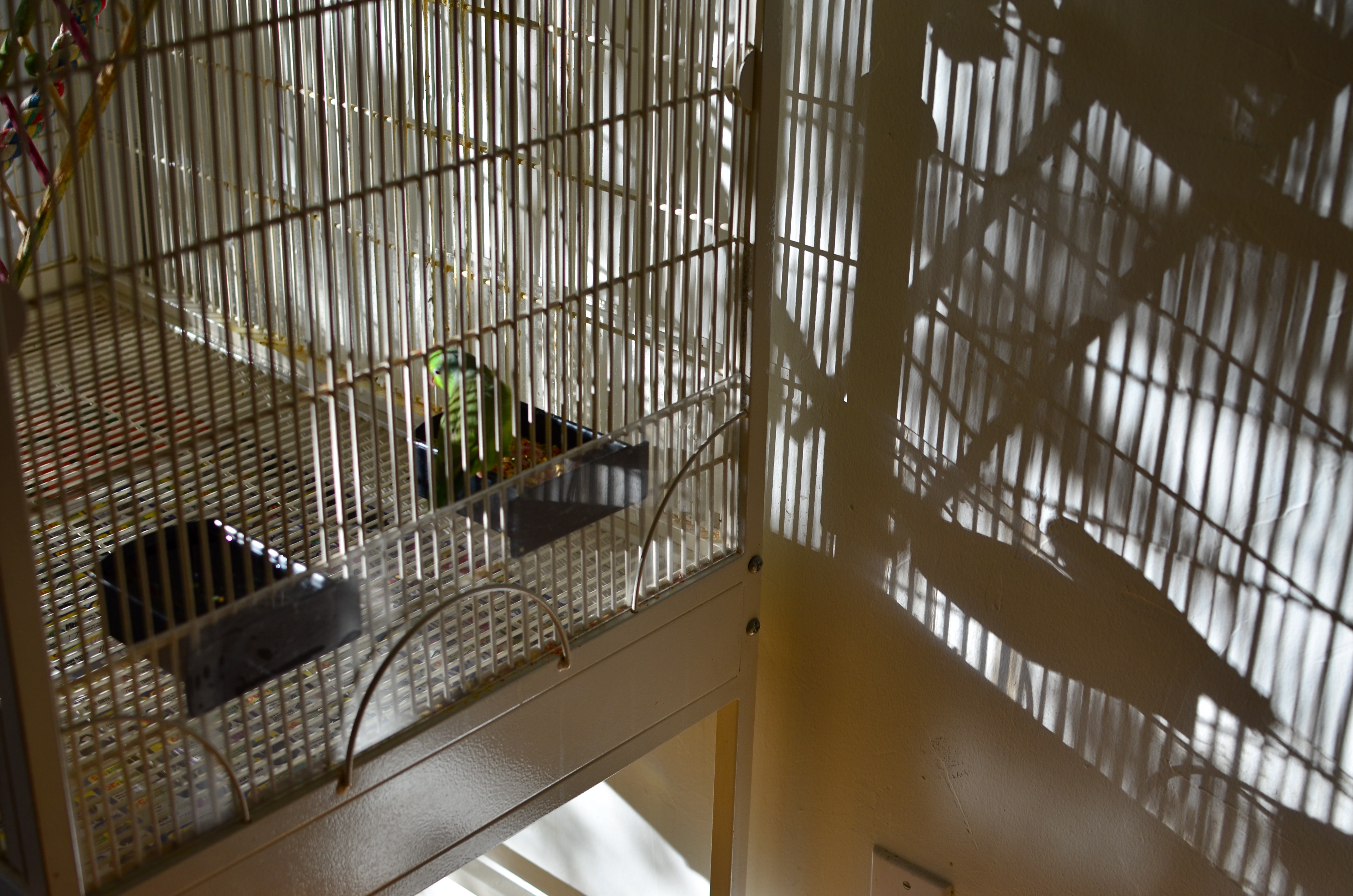
Does the structure of your photography protect you, or contain you?
By MICHAEL PERKINS
ANYONE WHO REGULARLY VISITS THESE PAGES already knows that I advocate of doing as much of your photography in as personal and direct a way as possible. While I am completely astonished by the number of convenience items and automatic settings offered to the casual photographer in today’s cameras, I believe that many of these same features can also delay the process by which people take true hands-on control of their image-making. I regard anything that gets in between the shooter and the shutter as a potential distraction, even a drag on one’s evolution.
Tools are not technique. Here are two parallel truths of photography: (1) some people with every gizmo in the toy store take lousy pictures. (2) some people with no technical options whatsoever create pictures that stun the world.
From my view, you can either subscribe to the statement, “I can’t believe what this camera can do!” or to one which says, “I wonder what I can make my camera do for me!” The very controls built into cameras to make things convenient for newcomers are the first things that must be abandoned once you are ready to move beyond newcomer status. At some point, you learn that there is no way any camera can ever contain enough magic buttons to give you uniformly excellent results without your active participation. You simply cannot engineer a device that will always deliver perfection and perpetually protect you from your own human limits.
Innovators never innovate by surrounding themselves with the comfortable and the familiar. For photographers, that means making decisions with your pictures and living with the uneven results in the name of self-improvement. This is a challenge because manufacturers seductively argue that such decisions can be made painlessly by the camera acting alone. But guess what. If you don’t actively care about your photos, no one else will either. There may not be anything technically wrong with your camera’s “choices”. But they are not your choices, and eventually, you will want more. The structure that at first made you feel safe will, in time, start to feel more like a cage.
Tools are not technique.
THE DAY THE UNIVERSE CHANGED
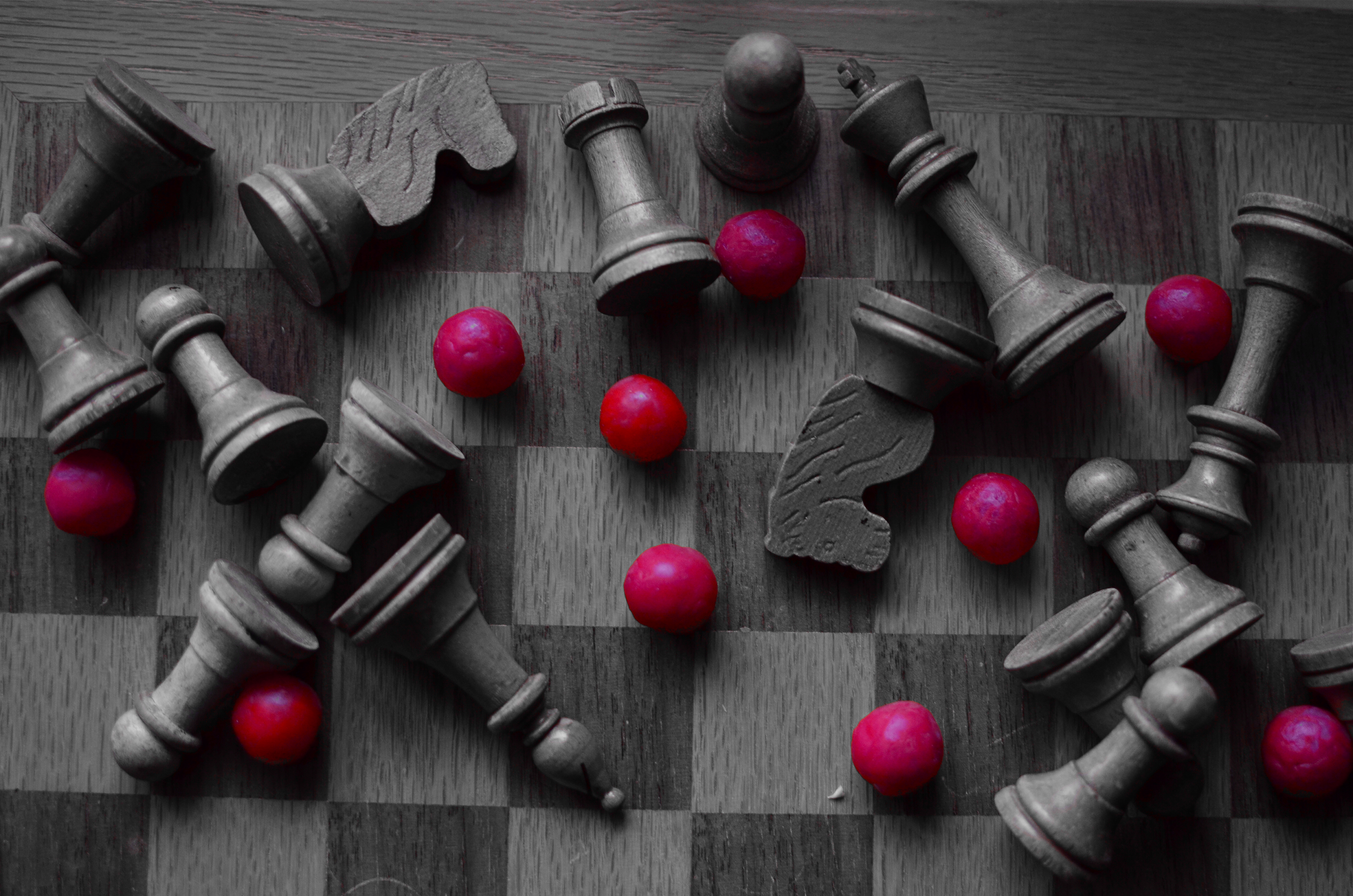
Outgunned, 2015. 1/30 sec., f/2.8, ISO 400, 35mm. Copy of color original desaturated with Nikon’s “selective color” in-camera touch-up option.
By MICHAEL PERKINS
IT WAS NEARLY A GENERATION AGO that Professor James Burke was the most admired media “explainer” of history and culture on both sides of the Atlantic, largely as a result of video adaptations of his hit books Connections and The Day The Universe Changed. Burke, trained at Jesus College in Oxford, was spectacularly talented at showing the interlocking linkages of events and human development, demonstrating the way they meshed together to act endlessly upon history, like gears locked in one large rotation. The result for viewers on PBS and the BBC was better than an ah, ha moment. It was more like an of course moment. Oh, yes, I see now. Of course.
In Universe especially, he examined the specific moments when everything we “knew” was altered forever. For example, we all “knew” the earth was flat, until we knew the exact opposite. We all “knew” that the sun rotated around the Earth, right up until that belief was turned on its ear. Our ideas of truth have always been like Phoenix birds, flaming out of existence only to rise, reconfigured, out of their own ashes. Burke sifted the ashes and set our imaginations ablaze.
As photographers, we have amazing opportunities to depict these transformative moments. In the 1800’s, the nation’s industrial sprawl across the continent was frozen in time with photo essays on the dams, highways, railroads and settlements that were rendering one reality moot while promising another. In the early 1900’s we made images of the shift between eras as the horrors of World War One rendered the Victorian world, along with our innocence, obsolete.
I love exploring these instants of transformation by way of still-life compositions that represent change, the juncture of was and will be. Like the above arrangement, in which some kind of abstract artillery seems to have un-horsed the quaint army of a chess set, I am interested in staging worlds that are about to go out of fashion. Sometimes it takes the form of a loving portrait of bygone technology, such as a preciously irrelevant old camera. Other times you have to create a miniature of the universe you are about to warp out of shape. Either way, it makes for an amazing exercise in re-visualizing the familiar, and reminds us, as Professor Burke did so well, that truth is both more, and less, than we know.
HAPPY OLD YEAR
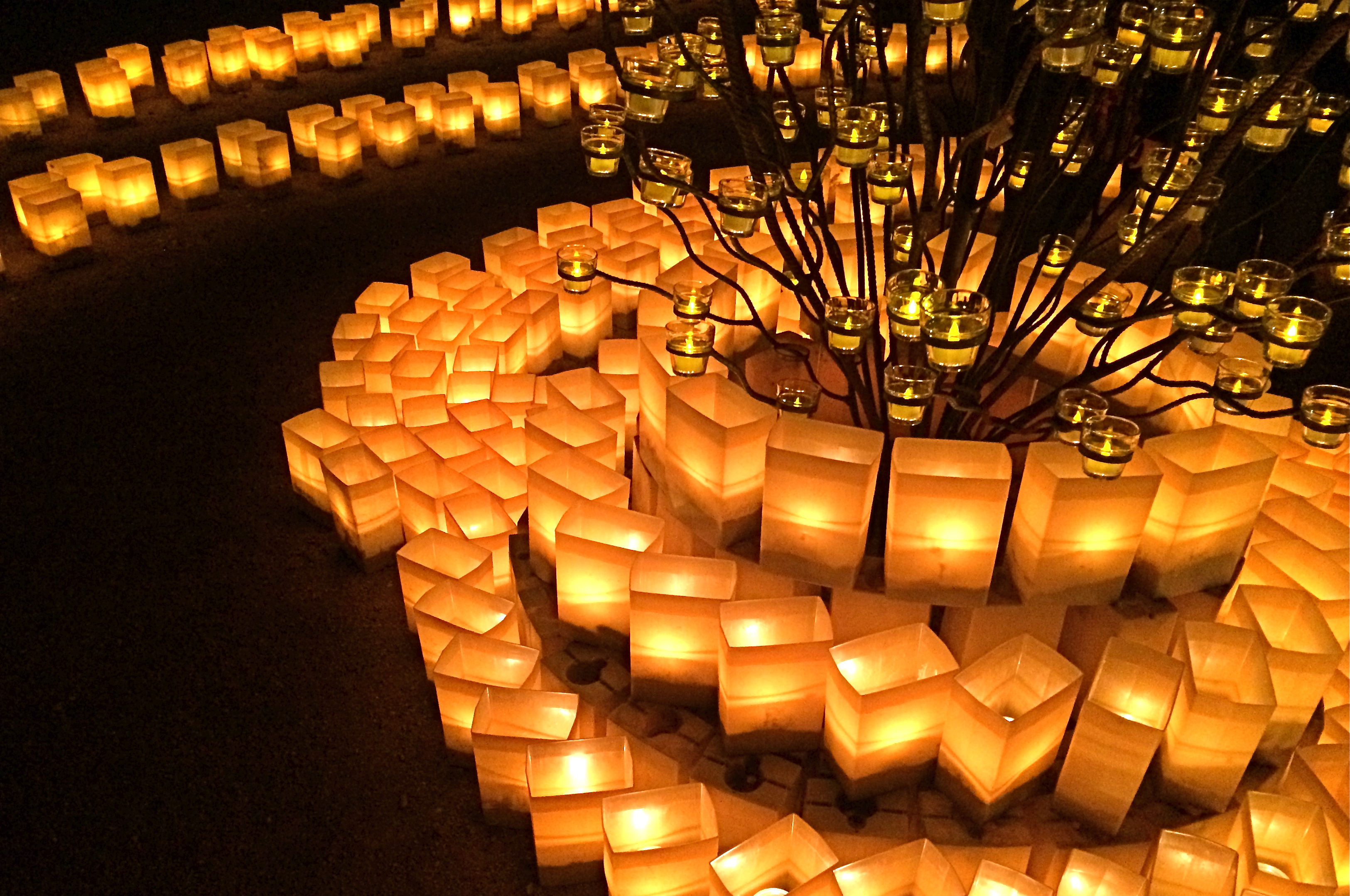
2014. Another year spent chasing the light.
By MICHAEL PERKINS
The White Rabbit put on his spectacles. ‘Where shall I begin, please your Majesty?’ he asked. ‘Begin at the beginning,’ the King said gravely, ‘and go on till you come to the end: then stop.’
IN A SIMPLER WORLD, THE KING OF HEARTS, quoted above in Lewis Carroll’s Alice’s Adventures in Wonderland, would be perfectly correct. All things being equal, the beginning would be the best place to begin. But, in photography, as in all of life, we are always coming upon a series of beginnings. Learning an art is like making a lap in Monopoly. Just when we think we are approaching our destination, we pass “Go” again, and find that one man’s finish line is another man’s starting gate. Photography is all about re-defining where we are and where we need to be. We always begin, and we never finish.
As 2014 comes to an intersection (I can’t really say ‘a close’ after all that, can I?), it’s normal to review what might be either constant, or changed, about one’s approach to making pictures. That, after all, is the stated aim of this blog, making The Normal Eye more about journey than destination. And so, all I can do in reviewing the last twelve months of opportunities or accidents is to try to identify the areas of photography that most define me at this particular juncture, and to reflect on the work that best represents those areas. This is not to say I’ve gained mastery, but rather that I’m gaining on it. If my legs hold out, I may get there yet. But don’t count on it.
The number twelve has become, then, the structure for the blog page we launch today, called (how does he think of these things?) 12 for 14. You’ll notice it as the newest gallery tab at the top of the screen. There is nothing magical about the number by itself, but I think forcing myself to edit, then edit again, until the thousands of images taken this year are winnowed down to some kind of essence is a useful, if ego-bruising, exercise. I just wanted to have one picture for each facet of photography that I find essentially important, at least in my own work, so twelve it is.
Light painting, landscape, HDR, mobile, natural light, mixed focus, portraiture, abstract composition, all these and others show up as repeating motifs in what I love in others’ images, and what I seek in my own. They are products of both random opportunity and obsessive design, divine accident and carefully executed planning. Some are narrative, others are “absolute” in that they have no formalized storytelling function. In other words, they are a year in the life of just another person who hopes to harness light, perfect his vision, and occasionally snag something magical.
So here we are at the finish line, er, the starting gate, or….well, on to the next picture. Happy New Year.
 thenormaleye