IT’S UNNATURAL, NATURALLY
By MICHAEL PERKINS
ONE OF THE MOST FREEING PARTS OF PICTURE MAKING IS RELEASING YOURSELF FROM THE RIGIDITY OF REALITY. Wait. What is he babbling about? Don’t photographers specialize in reality?
Well, yeah, the photographers who work at the DMV, the city jail and immigration do. Also the guy in Wal-mart HR who made your first employee badge. Other than that, everyone is pretty much rendering the world the way they see it right this minute, with more revisions or re-thinks coming tomorrow. And beyond.
Color processing, once the sole domain of the “photo finishers” has now been taken back in-house by pretty much everyone, and, even before you snap the shutter, there are fat stacks of options you can exercise to recast the world in your own image.
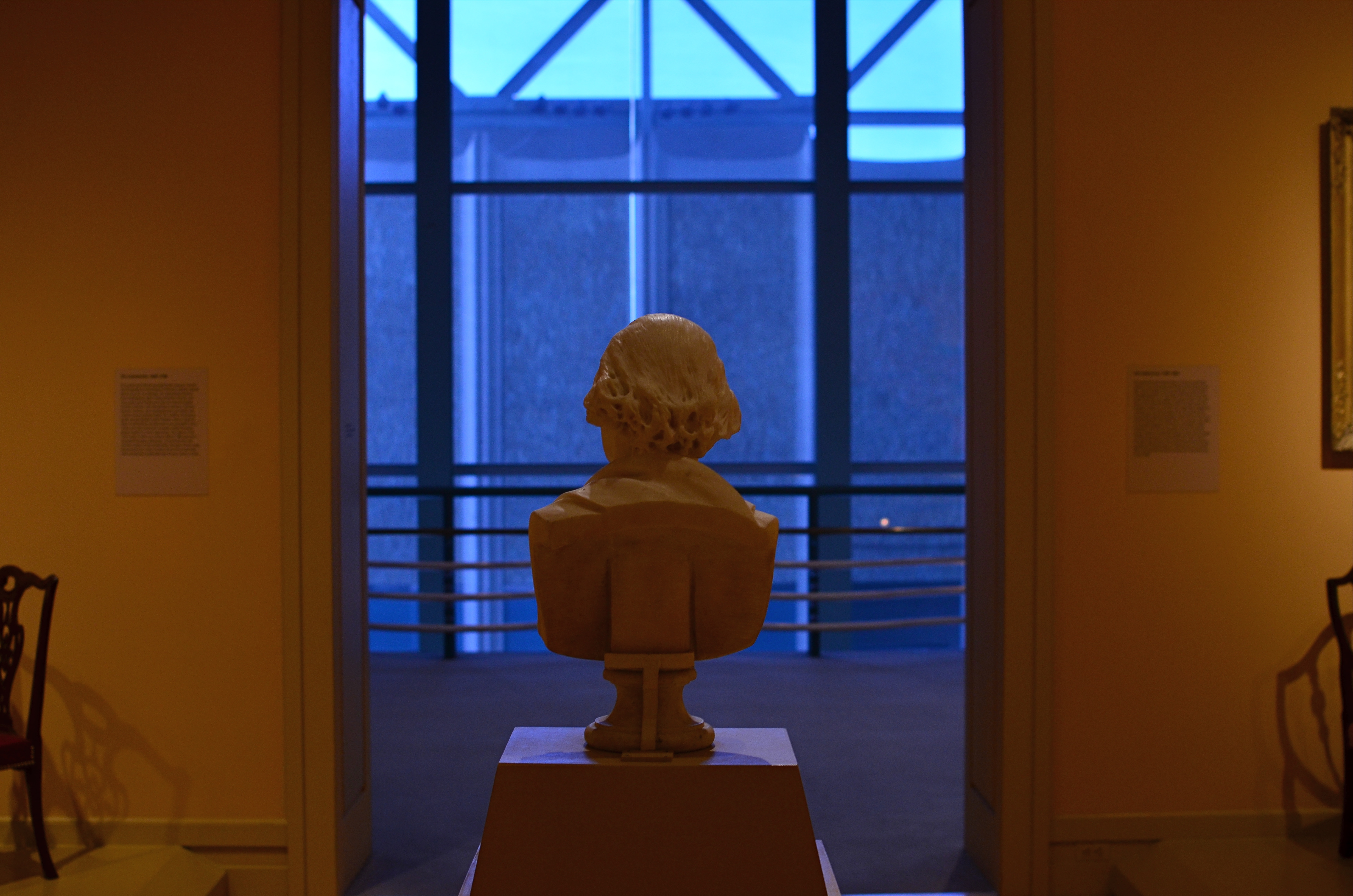
1/60 sec., f/3.5, ISO 320, 35mm. White Balance set for tungsten.
The practice of bracketing shots has made a bit of a comeback since the advent of High Dynamic Range, or HDR processing. You know the drill: shoot any number of shots of the same subject with varying exposure times, then blend them together. But bracketing has been a “best practice” among shooters for decades, especially in the days of film, where you took a variety of exposures of the same scene so you had coverage, or the increased chance that at least one of the frames was The One. Today, it still makes sense to give yourself a series of color choices by the simple act of taking multiple shots with varying white balances. You can already adjust WB to compensate for the color variances of brilliant sun, incandescent bulbs, tube lights, or shade for a more “natural” look. But using white balance settings counter-intuitively, that is, against “nature”, can give your shots a variety of tonal shifts that can be dramatic in their own right.
In the image above, the normal color balance of the gallery entrance would have rendered the bust off-white and the outer vestibule a light grey. Shooting on a tungsten setting when the prevailing light was incandescent gave the interior room a creamy orange look and amped the vestibule into deep blue, setting the two areas sharply off against each other and creating a kind of “end of day” aspect. I shot this scene with about five different white balances and kept the one I liked. Best of all, a comparison of all my choices could be reviewed in a minute and finished by the time the shutter clicked. Holy instant gratification, Batman.
COMPETING WORLDS
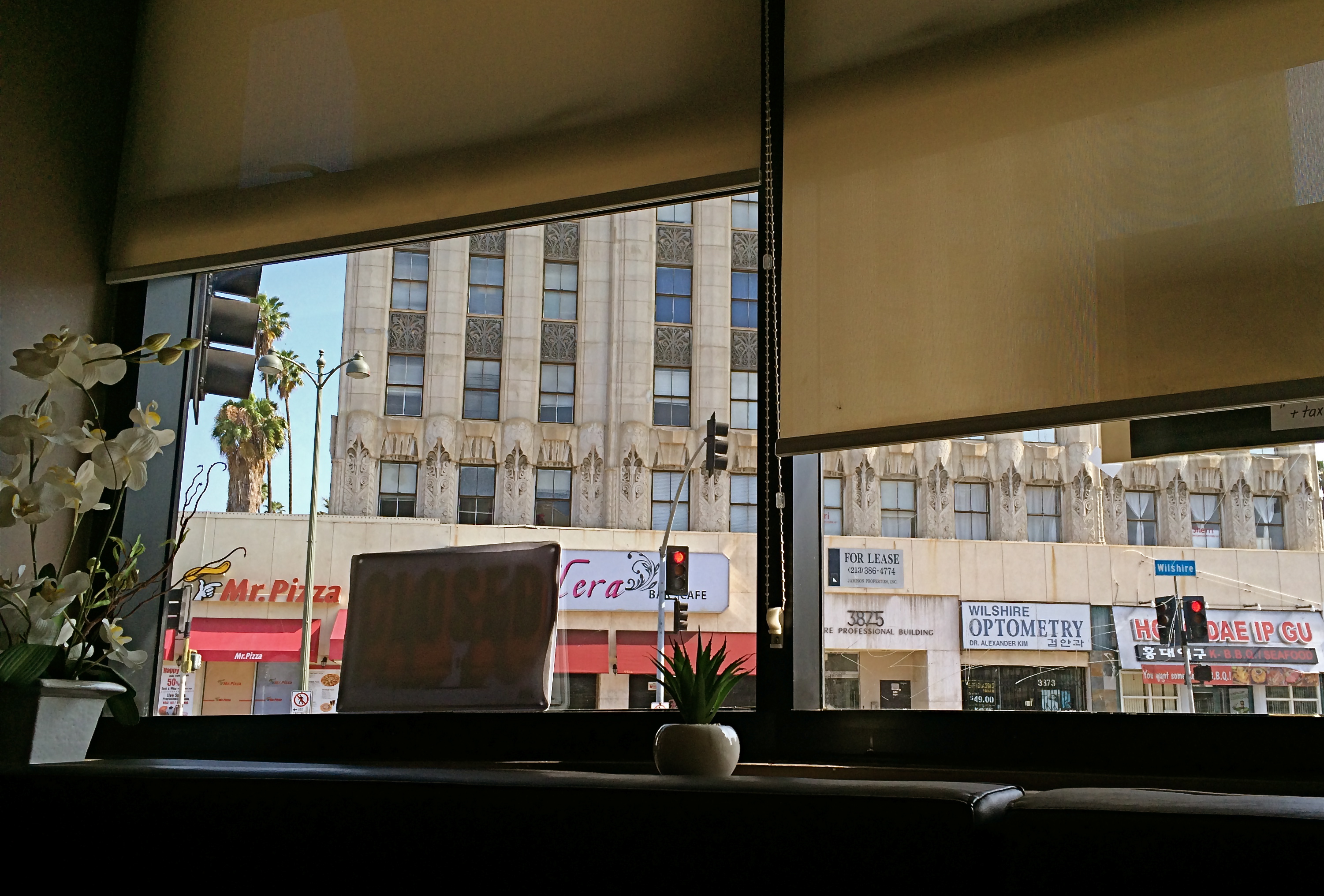
Using interior details as a customized “frame” for your shots of outside subjects can make your pictures less “pre-cropped”.
By MICHAEL PERKINS
I HAVE ALWAYS LIKED THE PHOTOGRAPHIC HIGH-WIRE ACT THAT RESULTS when shooters try to create balances between interior and exterior detail. It’s easy to shoot through a window, either looking in or looking out. And, in composing our subject, we often try to eliminate the framing created by the window itself, thinking of this as extraneous information, a natural cropping guide. Trim, if you will. And sometimes that is the best possible decision.
However, there are situations when a framing that melds inside and outside elements actually makes the shot, and the fun comes when you decide to compose a shot comprised of both kinds of information. Evenness of exposure becomes a significant problem, since there is usually a strong contrast between the two planes. Looking out a window, you have no big sweat exposing for the back yard, but, if you are also going to include the children looking longingly out at that yard from inside a room, challenges will arise.
In recent years, HDR has allowed photographers to shoot a bracketed series of shots with different exposure rates, blending them into a composite that at least allows detail and natural color in all areas of the frame. The look can quickly veer into surreal fantasy, however, so, if your goal is not to call attention to your technique (that is, appear as if you did nothing special at all) you may have to craft another solution.
If the contrasts between your inside world and your outside world are not too severe, you may be amazed at how automode shots on DSLRs and mobiles will deliver a fairly balanced exposure. This allows for more saved “on the fly” photos shot in the moment. If you have more advance time to prepare, you can invent your own lighting scheme and tweak things further. The thing to consider combining the competing worlds of in and out. It allows you to further customize the viewing experience, getting a fuller sense of a total scene, or even programming in some selective mystery.
And, hey, push comes to shove, you can always crop it later.
THROUGH THE LOOKING GLASS
By MICHAEL PERKINS
PHOTOGRAPHY IS THE LATEST THING.
PHOTOGRAPHY IS OBSOLETE.
PHOTOGRAPHY IS DEAD.
PHOTOGRAPHY IS JUST BEING BORN.
All these statements are true.
Art cannot hide from the world, nor can it sequester itself away from change. There cannot be one “final” or “permanent” way to create a painting, one lasting method for bringing forth a face from a block of marble, one eternal way to capture and shape light. It’s more than obvious that, like most arts, photography has been in a constant state of metamorphosis since its inception, something which should comfort those for whom things seem to be, at present, “moving too fast”. Comfort, however, is not in the offing for many of us.
The sense that nothing is “permanent” anymore in the making of pictures is especially keen in recent years, since the shift from film-based imaging to digital has been such a convulsive and comprehensive break with the past. But, even though we’ve been using film for over a hundred years, the kind of film we use has always been in transition. We feel a little less solid right now because the technical means for photography are changing on a much more fundamental level. And we’re just getting started.
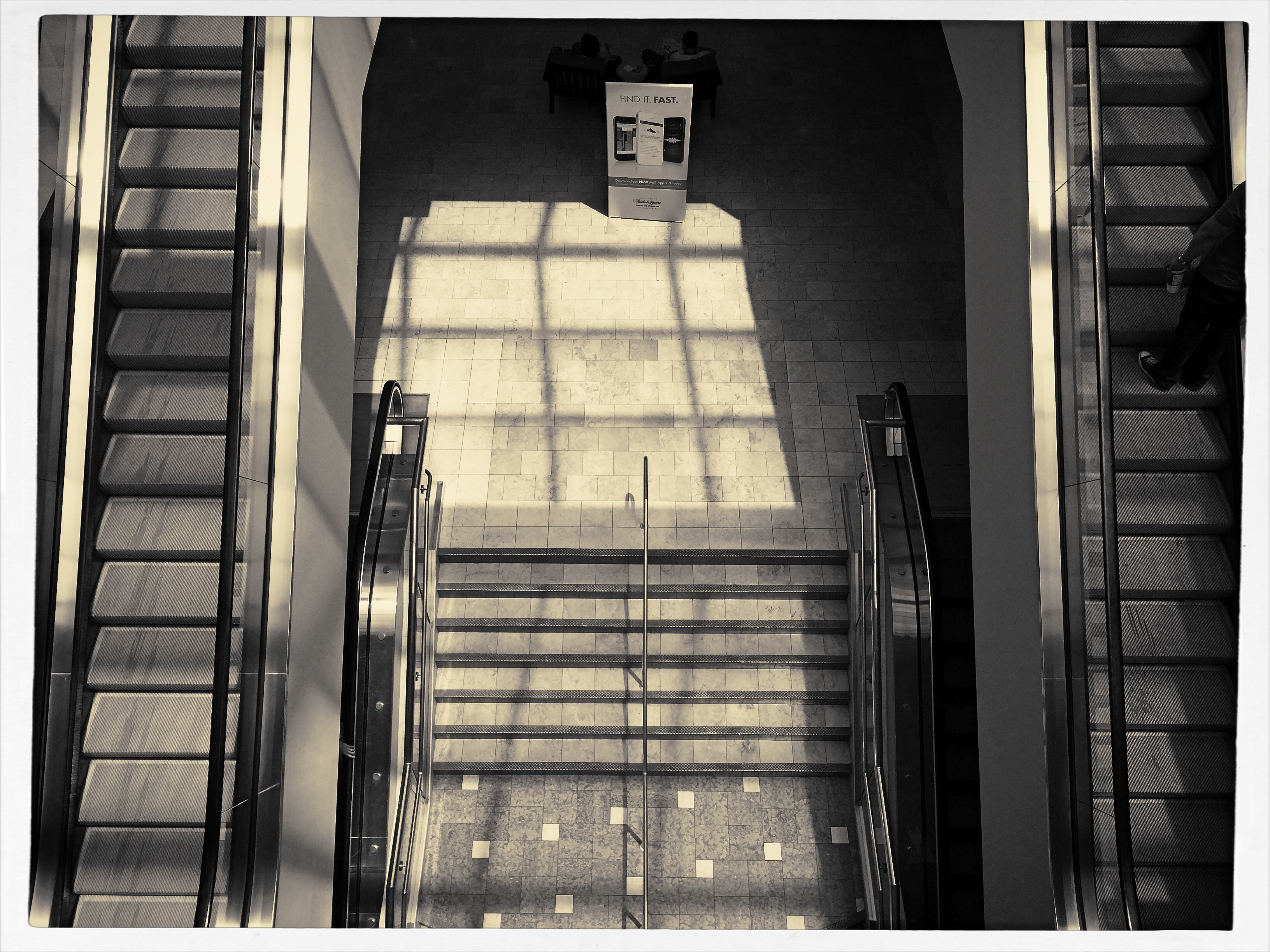
Shooting and processing this image in the film era would have been the work of hours, maybe days. With an iPhone app, I have it within two minutes.
The explosion of the post-processing photo app, itself a product of the ongoing evolution of the telephone, is changing the terms of engagement for everyone who takes pictures. Everyone. Okay, you don’t have a smartphone and don’t want one. I get it. That doesn’t change the fact that the essential means for capturing and shaping an image is shifting into overdrive. More than ever before, anyone can take a picture…..anywhere, anytime, instantly, and under damn near any circumstances. The walls of experience, privilege, and access between pro and amateur are dissolving faster than Splenda in a non-fat latte. Techniques which used to be the exclusive domain of the learned, the elite, are now available to the peasantry. There are no more secrets. The Bastille has fallen.
Apps are leading all this, making any kind of effect, tint, re-focus, re-balance and re-do feasible for anyone. The tsunami of new images flooding into the internet on any given day is the output of people whose vision can now be acted upon, without exhaustive expense, without years of slaving in a newspaper bullpen, without decades of chemical-stained fingers and dingy diligence in darkrooms. If you don’t have a good eye for what makes a good picture, then that one factor can keep you from greatness. But access to tools is no longer, and can never again be, a disqualifier.
Apps are already raising the question of whether bulkier cameras with costly lenses are even needed, and the next step is for apps to answer that question with shortcuts that will, at the very least, render whole classes of cameras superfluous, and, eventually, remove all but the most basic functions of traditional lenses themselves. Custom-made “glass” is one of the remaining barriers to complete photographic democracy: it costs too much and requires too steep a learning curve for today’s ADD universe. It will have to go.
And here’s where you decide whether, in your own case, that’s a positive or negative thing. The bad news is, everything is changing. The good news is, everything is changing.
You pays your money and you takes your choice.
EYES WITHOUT A FACE
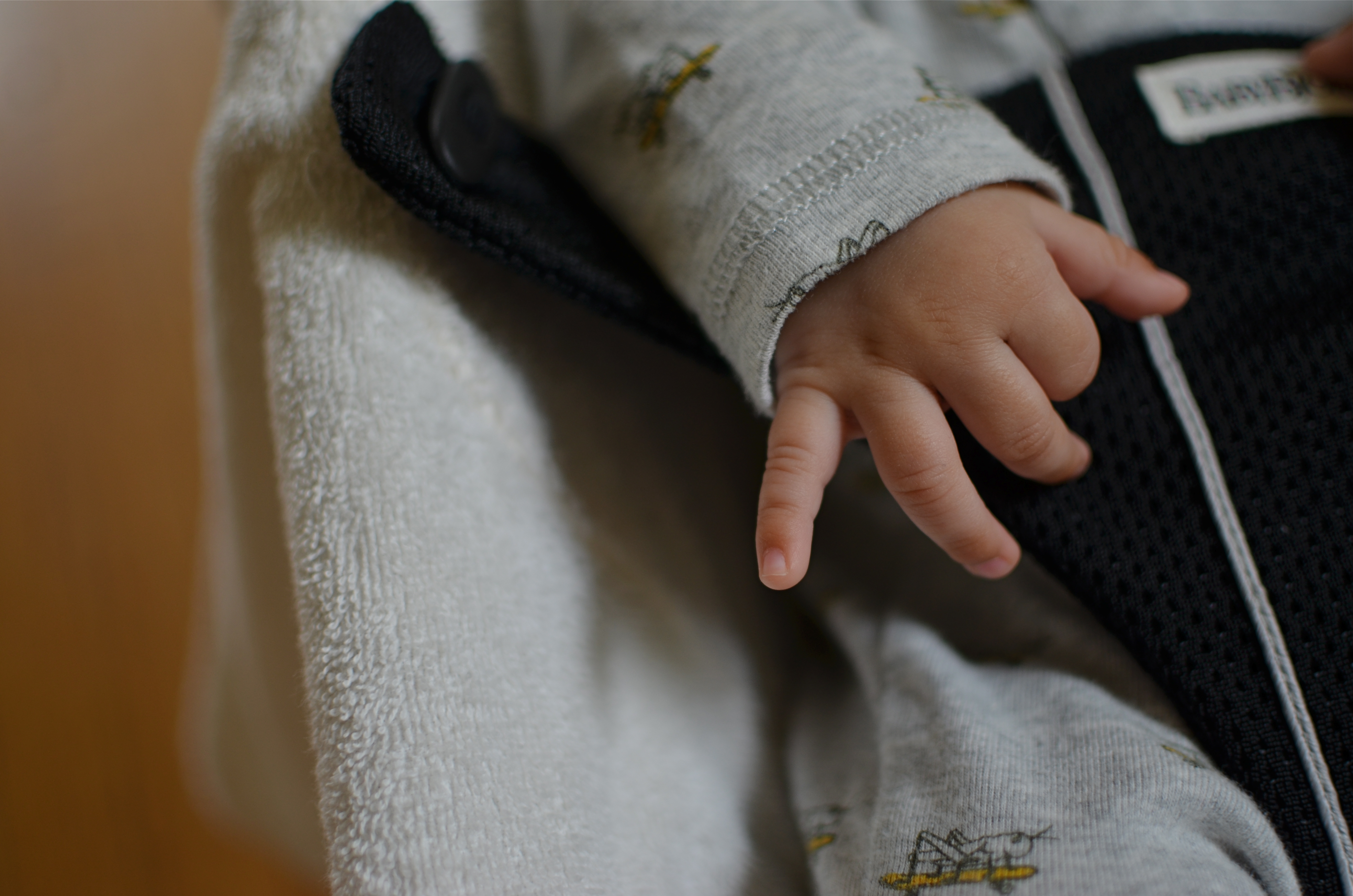
The hand that rocks (in) the cradle rules the world: 1/100 sec., f/1.8, ISO 100, 35mm.
By MICHAEL PERKINS
CHILDREN ARE THE GREATEST DISPLAY SPACES FOR HUMAN EMOTION, if only because they have neither the art nor the inclination to conceal. It isn’t that they are more “honest” than adults are: it’s more like they simply have no experience hiding behind the masks that their elders use with such skill. Since photographs have to be composed within a fixed space or frame, our images are alternatively about revelation and concealment. We choose how much to show, whether to discover or hoard. That means that sometimes we tell stories like adults, and sometimes we tell them like children.
The big temptation with pictures of children is to concentrate solely on their faces, but this default actually narrows our array of storytelling tools. Yes, the eyes are the window to the soul and so forth….but a child is eloquent with everything in his physical makeup. His face is certainly the big, obvious, electric glowing billboard of his feelings, but he speaks in anything he touches, anywhere he runs toward, even the shadows he casts upon the wall. Making pictures of these fragments can produce telling statements about the state of being a child, highlighting the most poignant, and, for us, the most forgotten bits.
Children are all about unrealized potential. Since nothing’s happened yet, everything is possible. Potential and possibility are twin mysteries, and are the common language of kids. Tapping into either one can provide the best element in all of photography, and that is the element of surprise.
THE LITTLE WALLS
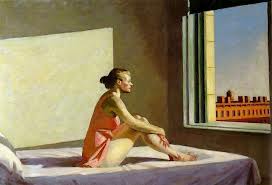
Edward Hopper, Morning Sun, 1952
By MICHAEL PERKINS
THE PAINTER EDWARD HOPPER, ONE OF THE GREATEST CHRONICLERS OF THE ALIENATION OF MAN FROM HIS ENVIRONMENT, would have made an amazing street photographer. That he captured the essential loneliness of modern life with invented or arranged scenes makes his pictures no less real than if he had happened upon them naturally, armed with a camera. In fact, his work has been a stronger influence on my approach to making images of people than many actual photographers.
“Maybe I am not very human”, Hopper remarked, “what I wanted to do was to paint sunlight on the side of a house.” Indeed, many of his canvasses fairly glow with eerily golden colors, but, meanwhile, the interiors within which his actors reside could be defined by deep shadows, stark furnishings, and lost individuals who gaze out of windows at….what? The cities in his paintings are wide open, but his subjects invariably seem like prisoners. They are sealed in, sequestered away from each other, locked by little walls apart from every other little wall.
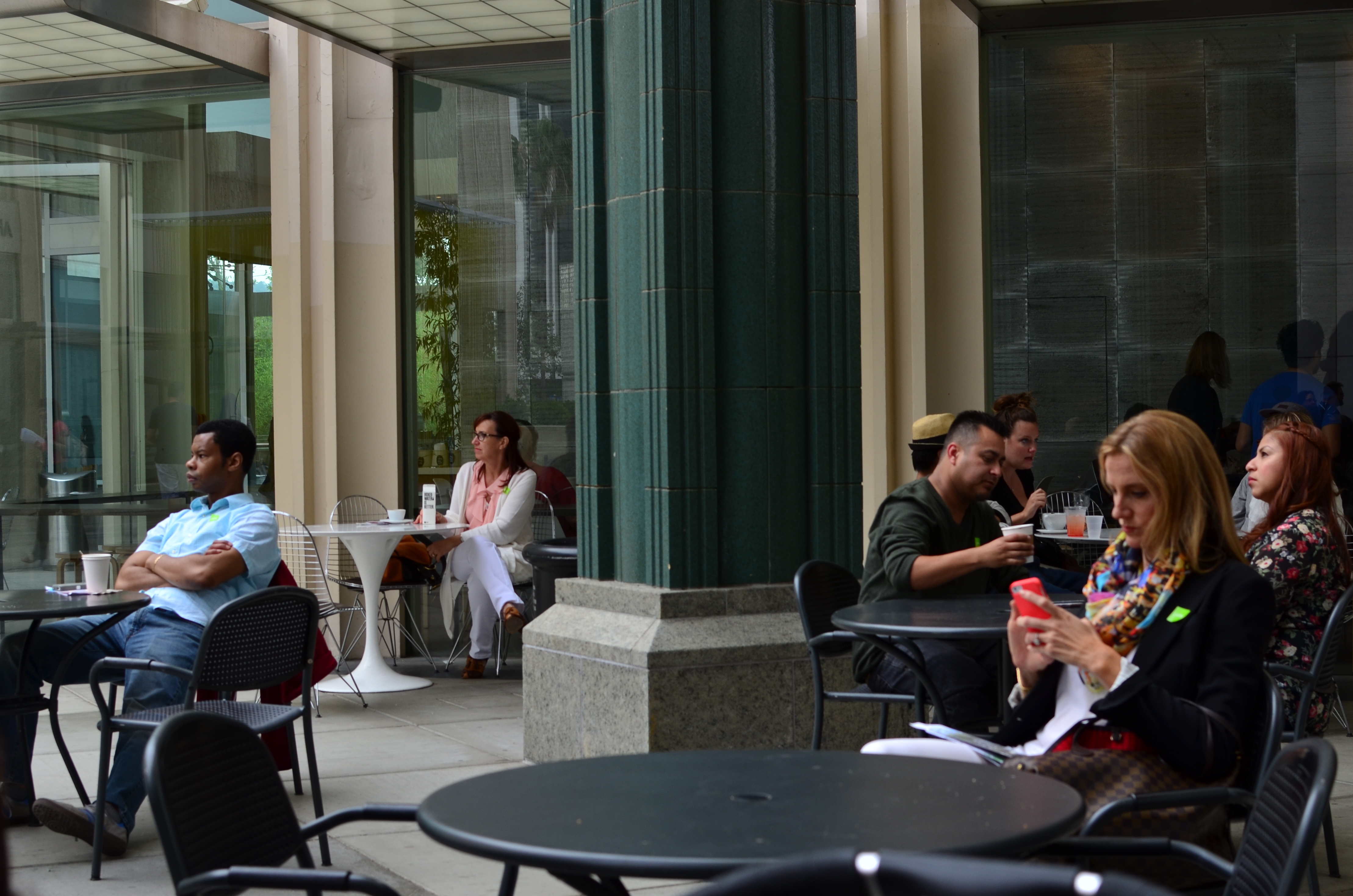
Marking Time, 2014. 1/125 sec., F/5.6, ISO 100, 35mm.
I occasionally see arrangements of people that suggest Hopper’s world to me. Recently, I was spending the day at an art museum which features a large food court. The area is open, breathable, inviting, and nothing like the group of people in the above image. For some reason, in this place, at this moment, this distinct group of people appear as a complete universe unto themselves, separate from the whole rest of humanity, related to each other not because they know each other but because they are such absolute strangers to each other, and maybe to themselves. I don’t understand why their world drew my eye. I only knew that I could not resist making a picture of this world, and I hoped I could transmit something of what I was seeing and feeling.
I don’t know if I got there, but it was a journey worth taking. I started out, like Hopper, merely chasing the light, but lingered, to try to articulate something very different.
Or as Hopper himself said, “It you could say it in words, there would be no reason to paint”.
THE TORQUOISE TIME TRAVELER
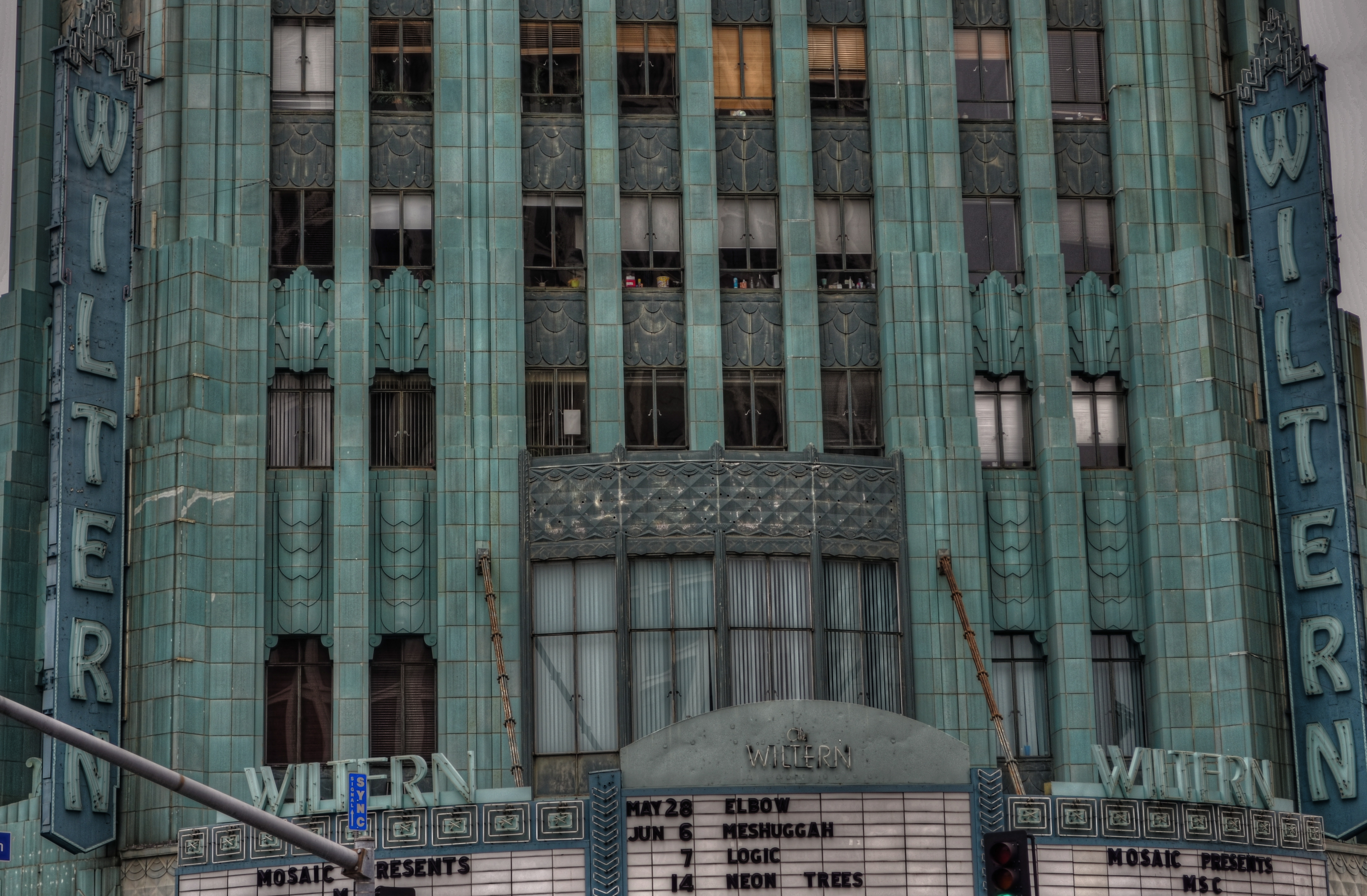
The wondrous Wiltern Theatre in Los Angeles. A three-exposure HDR to amplify time’s toll on the building’s exterior.
by MICHAEL PERKINS
SHE HAS WITHSTOOD THE GREAT DEPRESSION, A WORLD WAR, DECADES OF ECONOMIC UPS & DOWNS, and half a dozen owners (some visionaries and some bums), and still, the sleek green/blue terra-cotta wedge that is the Wiltern Theatre is one of the most arresting sights in midtown Los Angeles. From her 83-year old perch at the intersection of Western Avenue and Wilshire Boulevard, the jewel in the lower half of the old Pelissier building still commands attention, and, for lovers of live music, a kind of creaky respect. The old girl isn’t what she used to be, but she is still standing, as the same house that once hosted film premieres in the days of Cagney and Bogart now hosts alternative and edge, with pride.
And she still makes a pretty picture, lined face and all.
Opened in 1931 as a combination vaudeville house and flagship for Warner Brothers’ national chain of film theatres, The Warner Western, as it was originally named, folded up within a few years, re-opening in mid-Depression L.A. as the Wiltern (for Wilshire and Western) operating virtually non-stop until about 1956. As a vintage movie house, it had been equipped with one of the most elegant pipe organs in town, and enthusiasts of the instrument built a small following for the place for a while with recitals featuring the instrument. By the 1970’s, however, economies for larger-than-life flicker palaces were at an all-time low, and the Wiltern’s owners tried twice themselves to apply for permission to blow her down. Preservationists got mad, then got busy.
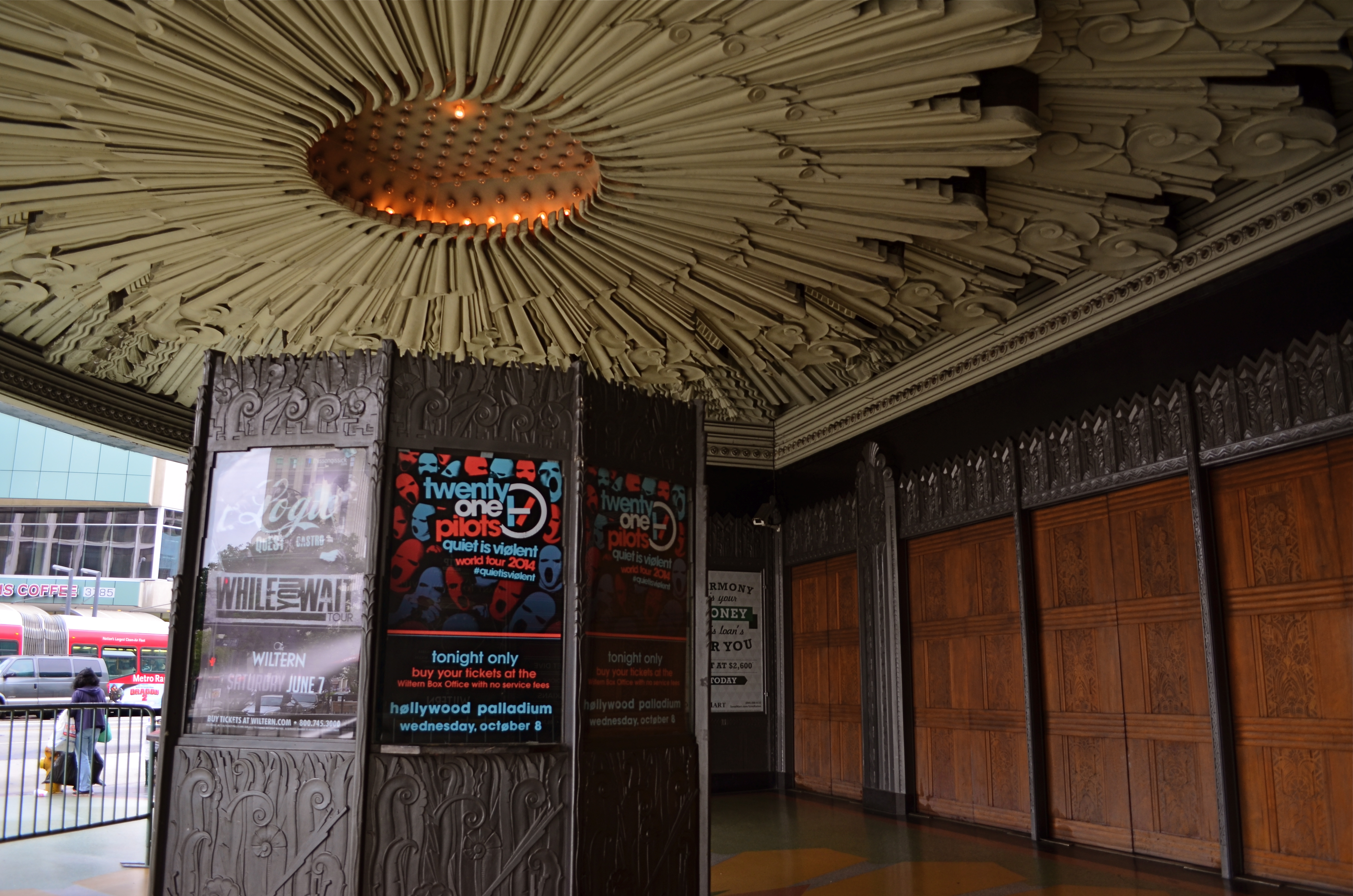
The Wiltern’s ticket kiosk sits under a plaster canopy of Deco sunrays. 1/40 sec., f/3.5, ISO 100, 18mm.
Restoration began in the 1980’s on the Pelissier building in general, but the Wiltern, with its ornate plaster reliefs and murals, had been so neglected over the years that its turnaround was slower. It was finally reborn in 1985 as a live performance theatre, losing some seat room but newly able to stage everything from brain-blaster garage rock to Broadway road productions and ballet.
I shot the Wiltern with three HDR frame, all f/5.6, with exposure times of 1/60, 1/100. and 1/160, and blended the final image in Photomatix to really show the wear and tear on the exterior. HDR is great for amplifying every flaw in building materials, as well as highlighting the uneven color that is an artifact of time and weather. I wanted to show the theatre as a stubborn survivor rather than a flawless fantasy, and the process also helped call attention to the building’s French Deco zigzags and chevrons. For an extra angle, I also made some studies of the glorious sunburst plaster ceiling over the outside ticket kiosk. It was great to meet the old girl at last, and on her own terms.
BRING BACK THE SHOE BOX?
By MICHAEL PERKINS
AS WITH MOST REVOLUTIONS, THE FAIRLY RECENT ROCKET RIDE INTO THE DIGITAL DOMAIN has created a few casualties. There simply is no way to completely transform the very act of photography without also unleashing ripples into how we view and value the images we’ve created. One of the most frequently lamented losses along these lines has to do with holding a “hard copy” picture in your hand, of having a defined physical space in which they can be easily catalogued and viewed by all. In speaking with various people about this, I sense a real emotional disconnect, a pang that can’t be satisfied by knowing that the pictures are “somewhere out there” in cyberspace. We tossed away the old family photo shoe box in all its chaos, but a key human experience was also sacrificed along the way.
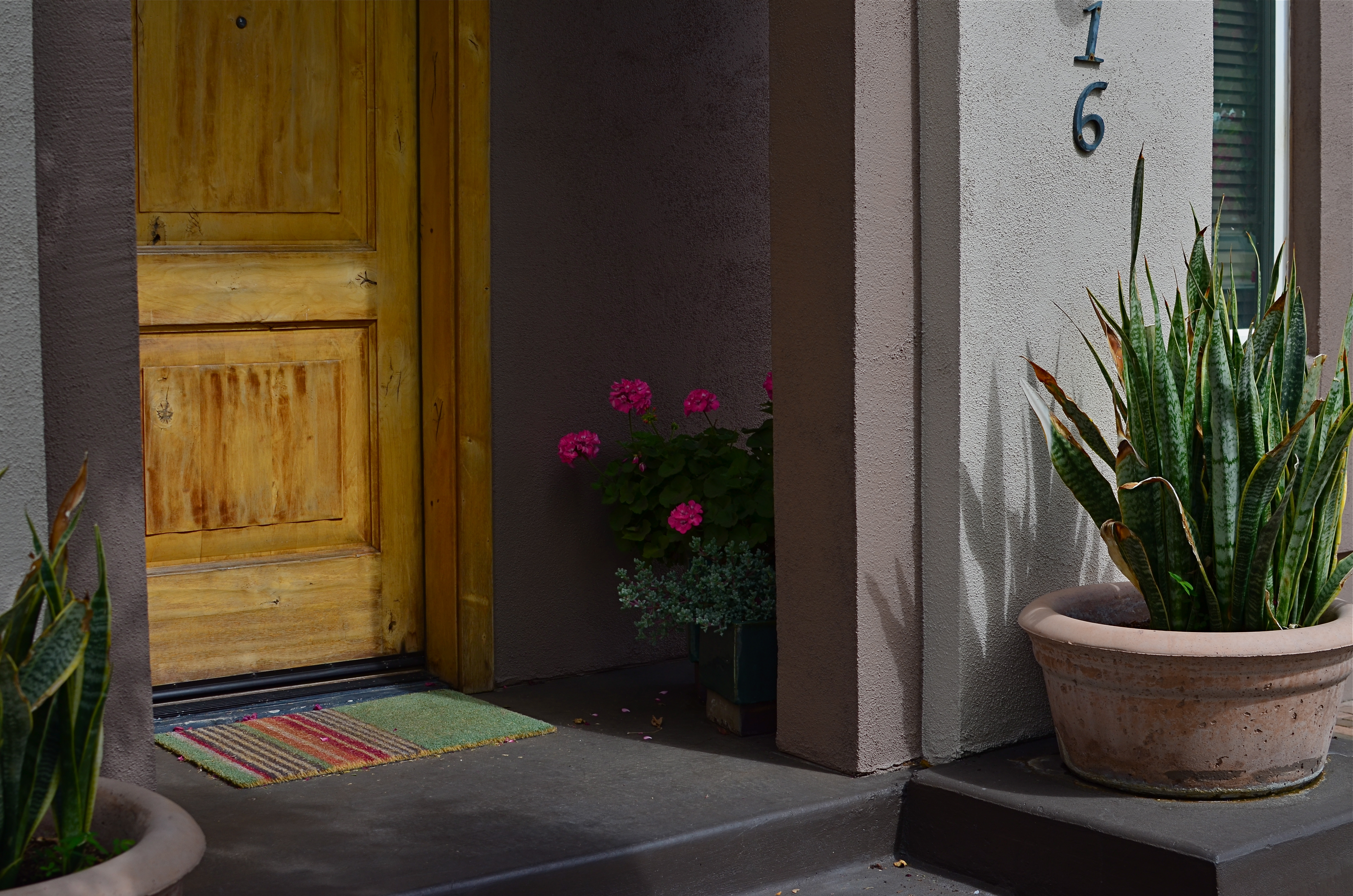
If you never take the time to review the thousands of images you shoot, you lose the joy of the occasional jewels and the lessons of the near misses.
One of the consequences of the end of film is the complete banishment of numerical barriers that used to keep our photographic output at a more controllable size. A roll of film held you to 24, maybe 36 exposures. You had to budget your shots. There were no instant do-overs, no chance to shoot bursts of 60 shots of Bobby kicking the soccer ball. Now we have an overabundance of choices in shooting, which, ironically, can be a little intimidating. We can produce so many thousands of pictures in a given year that our senses simply become overwhelmed with the task of sorting, editing, or prioritizing them. Gazillions of photos go into the cloud, many unseen past the first day they are uploaded. Our ability to organize our images in any comprehensible way has not kept pace with the technology used to capture them.
I truly feel that we have to work harder than ever, not on the taking of pictures, which has become nearly intuitive in its technical ease, but on the curating of what we’ve produced. For every five hours we spend shooting, I feel that fully half that time should be spent on the careful review of everything we’ve shot, not merely the quick “like/don’t like” card shuffle many of us perform when zipping through a large batch of captures. And this is not just for we ourselves. Think about it: how can our families and friends think of our photography as a visual legacy in the way we once regarded that shoe box if they have no real appreciation of what all is even in the new, virtual equivalent of that box? If it takes us months after we do a shoot to have even a rough idea of what resulted, we are missing the occasional jewel as well as the instructive power of the many near misses. That’s having an experience without availing yourself of any idea of what it meant, and that is crazy.
There is a reason that McDonald’s only offers Coke in three serving sizes. As consumers, we really crash into paralysis when presented with too many choices. We think we want a selection consisting of, well, everything, but we seldom make use of such overwhelming sensory input. I’m a huge fan of being able to shoot as many images as you need to get what will become your precious few “keepers”. But trying to keep everything without separating the wheat from the chaff isn’t art. It isn’t even collecting.
It’s just hoarding.
TERRA INCOGNITA
By MICHAEL PERKINS RANDOMNESS HAS STUBBORNLY ASSERTED ITSELF AS ONE OF THE MOST DECISIVE FORCES IN ALL OF PHOTOGRAPHY.One of the eternal struggles in our craft has been between our intense attempts to reduce the recording of light to a predictable science, and nature’s insistent pushback, allowing things that just happen to shape our results. I think most of our work as individuals is a constant wrestling between these two forces. One moment we fancy ourselves mastering all the variables that create images, and in the next we celebrate the wilding potential of just letting go, and actually celebrating the random effect. I find myself careening between the comfort of all the techniques I have accumulated over a lifetime, the so-called “guarantees” that I’ll capture what I’m looking for, and the giddy discovery that accidentals, or artifacts, somehow found themselves in my pictures despite my best efforts. The problem, for me, is learning to celebrate something wonderful that happened without my consciously causing it.
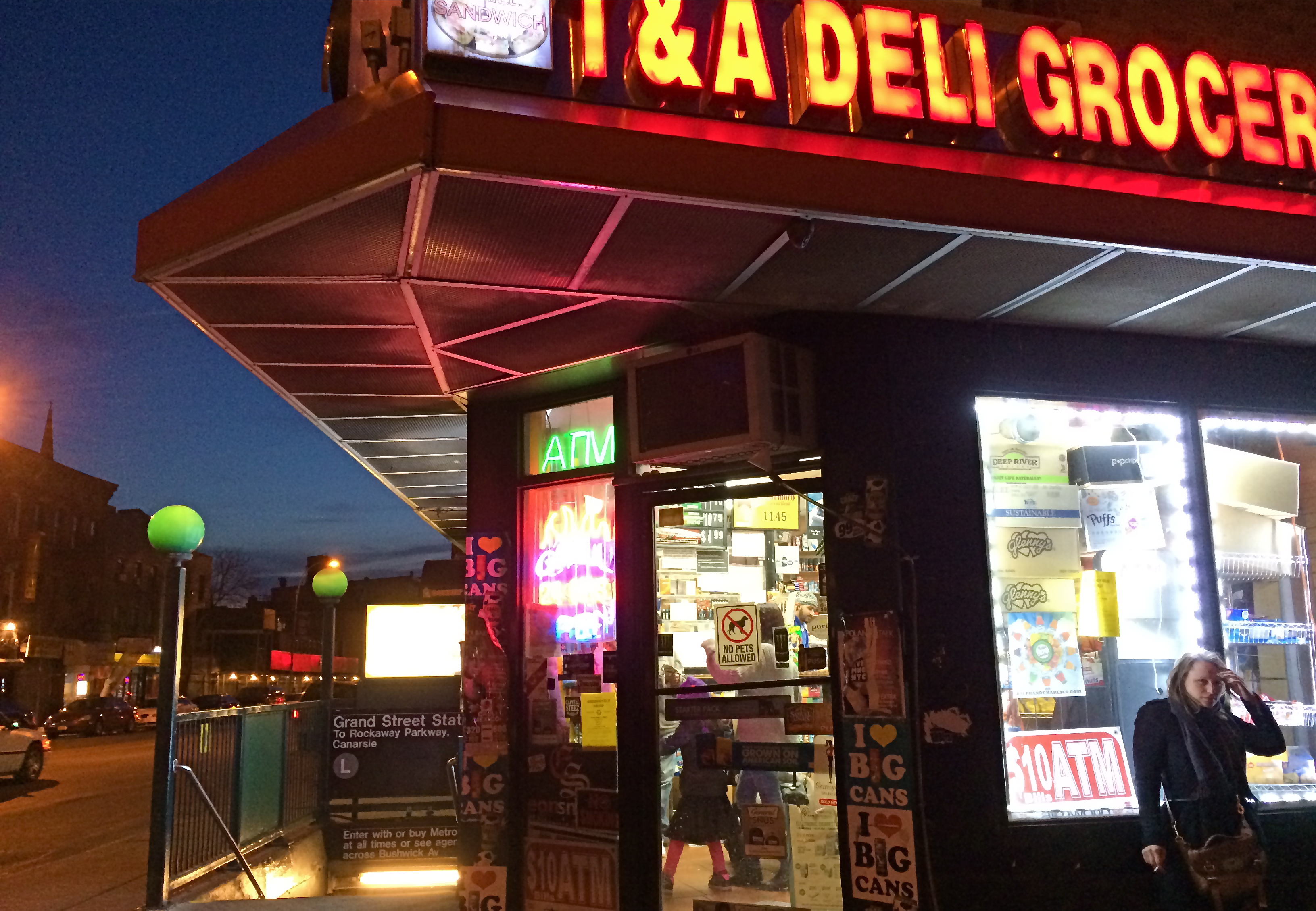
Brooklyn Bodega, 2014.
Phone cameras are forcing me to accept a little less control, since, even at their best, they can’t be managed in the way that standard DSLRs can. That leaves a certain number of results to chance, or, more exactly, to a display of the camera’s limits. One one hand, I’m grateful for the shots that I can “save” by using a mobile, since there will always be times that other types camera will be blocked, forbidden, or inconvenient. On the other hand, the results always make me wonder what else might have been possible if I had been completely at the helm in the making of the images. Some of the things I get “on the fly” with a phone camera are actually a bit magical, so that I actually love the things that are “wrong” with the picture. I’m sure this is part of the enjoyment that the lomography crowd derive from working with plastic toy cameras which create totally unpredictable results purely as a result of the camera’s shortcomings. In the above image, the garish register of nearly every color by my iPhone works well with the bizarre collision of dusk, neon, urban textures, even the overblown mystery of what’s going on inside the crazed little bodega shown here. The extreme wide-angle bias of the iPhone also has stretched things into exotic exaggerations of perspective, and the camera’s auto-boosted ISO produces a high level of noise. Does it all work? Yeah, pretty much. I don’t surrender control easily, but I’ve seen enough of the fortunate accidents of photographers from all over the world not to welcome nature’s interventions. I mean, after all, the idea that we’re actually in control is, at best, a pleasant illusion. We don’t really understand lightning, and yet, somehow, we’ve been given the ability to capture it in a box. Strange.
CHECK, CHECK, AND CHECK
By MICHAEL PERKINS
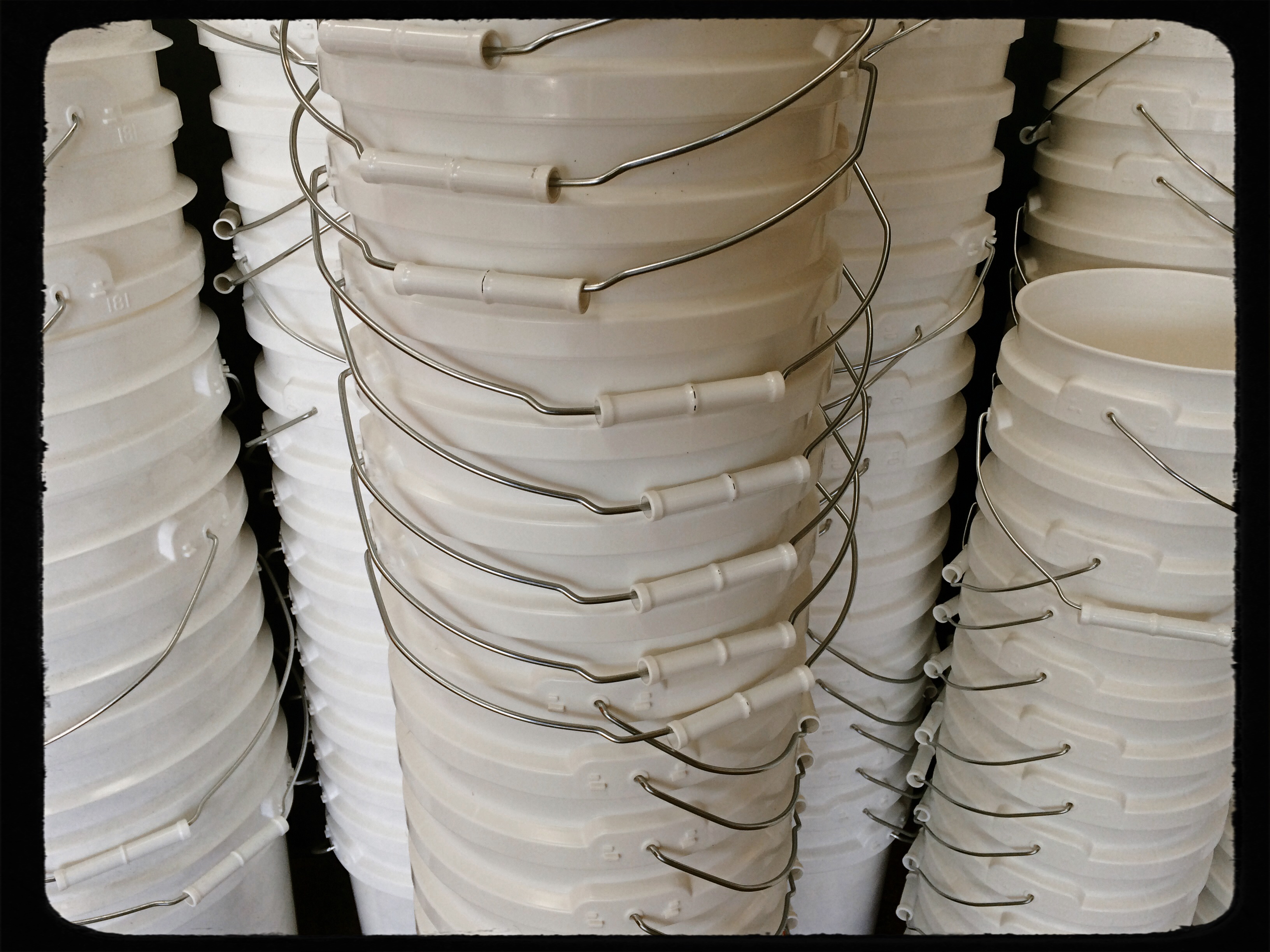
MOST OF US HAVE A MENTAL ROSTER OF UNFINISHED TASKS, a rolling inventory of things not yet achieved. The popular film featuring Jack Nicholson and Morgan Freeman as a pair of terminally ill men who devote their remaining time to their “someday” projects illustrates that we all have items, big or small, that we need to check off. However, when it comes to photographers, the roster gets a little more focused, since we all have dozens of unshot shots, if you will, swimming around in our heads. And the images we have yet to make are, let’s say, a little obsessively detailed in our minds. In that spirit, here’s what you might find in the notebooks of your favorite shutterbug, on any given day….to wit, a literal
BUCKET LIST
Points to consider for shoot
1. What kind of bucket? Zinc? Plastic?
2. Would adding a mop and brush make a stronger composition?
3. The light is hitting the left side of the bucket a little hot. Underexpose by a third of a stop.
4. What does the bucket say about us all as human beings? That we’re empty? All wet?
5. Patina vs. rust: make a decision.
6. Won’t be able to shoot the bucket in France as planned. Just shoot it on a cracked sidewalk in a rainstorm instead.
7. Just found out Steichen did a series on pails in 1937. Dammit!
8. If the bucket has bait in it, should I shoot the bait in RAW (sorry, it’s late)??
9. Just saw the first 400 frames. 83 and 367 are okay. The rest just look like pictures of a bucket.
10.Funny, my front door key doesn’t seem to work. Probably should call my wife…..
Of course, if the bucket deal works out, there’s another project I’ve always wanted to try. How about a photo essay on all of my “things to get at the grocery store” notes from over the years?
That’s right, a “list” list.
Say goodnight, Gracie.
THE MAIN POINT
By MICHAEL PERKINS
MAKING PICTURES, FOR ME, IS LIKE MAKING TAFFY. The only good results I get are from stretching and twisting between two extremes. Push and pull. Yank and compress. Stray and stay. Say everything or speak one single word.
This is all about composition, the editing function of what to put in or leave out. In my head, it’s a constant and perpetually churning debate over what finally resides within the frame. No, that needs something more. No, that’s way too much. Cut it. Add it. I love it, it’s complete chaos. I love it, it’s stark and lonely.
Can’t settle the matter, and maybe that’s the point. How can your eye always do the same kind of seeing? How can your heart or mind ever be satisfied with one type of poem or story? Just can’t, that’s all.
But I do have a kind of mental default setting I return to, to keep my tiny little squirrel brain from exploding.
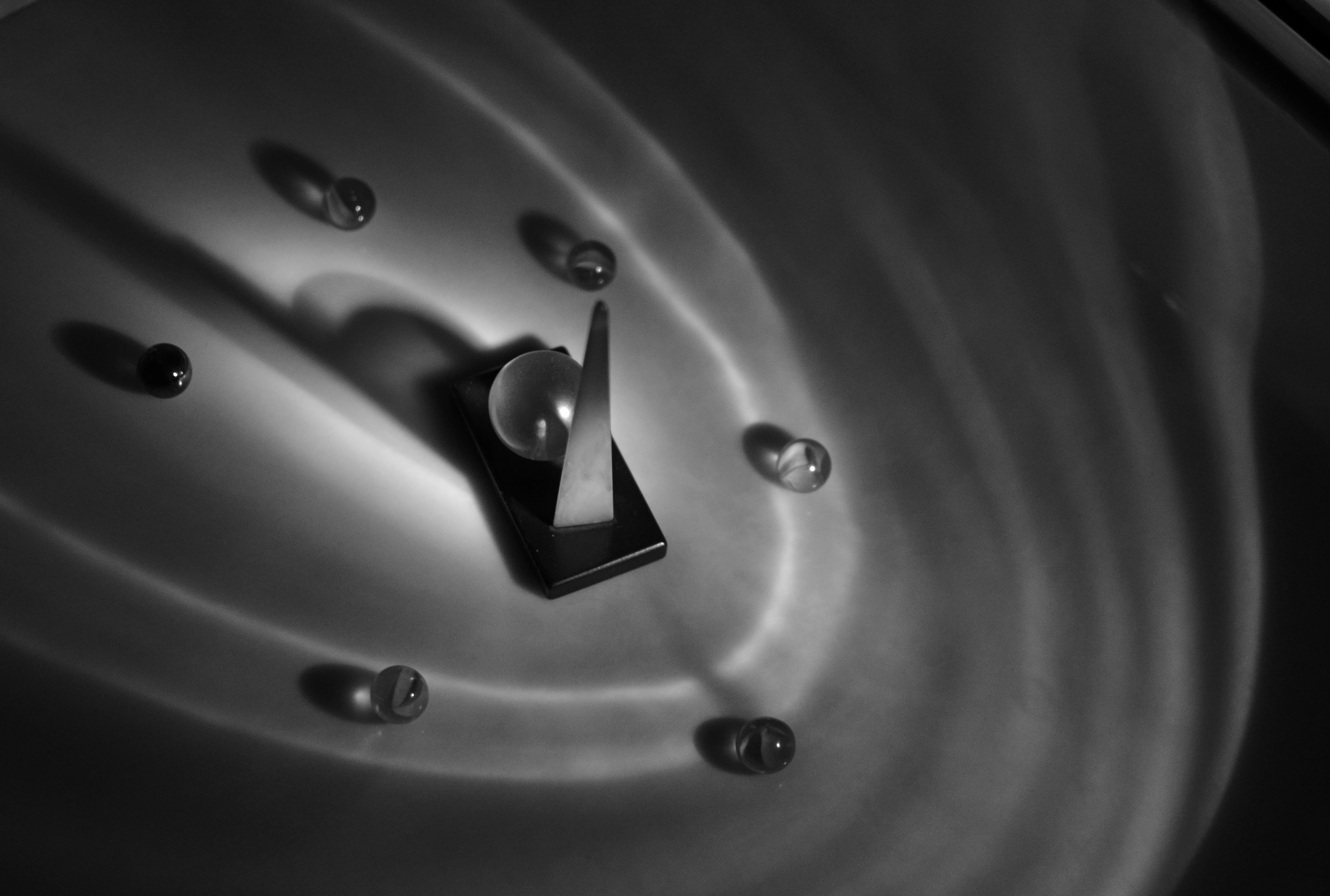
Cat’s Eye Vortex, 2014.1/50 sec., f/2.2, ISO 800, 35mm.
When I need to clean out the pipes, I tend to gravitate to the simplest compositions imaginable, a back-to-basics approach that forces me to see things with the fewest possible elements, then to begin layering little extras back in, hoping I’ll know when to stop. In the case of the above image, I was shooting inside a darkened room with only an old 1939 World’s Fair paperweight for a subject, and holding an ordinary cheap flashlight overhead with one hand as I framed and focused, handheld, with the other hand. I didn’t know what I wanted. It was a fishing expedition, plain and simple. What I soon decided, however, was that, instead of one element, I was actually working with two.
Basic flashlights have no diffusers, and so they project harsh concentric circles as a pattern. Shifting the position of the flashlight seemed to make the paperweight appear to be ringed by eddying waves, orbit trails if you will. Suddenly the mission had changed. I now had something I could use as the center of a little solar system, so, now,for a third element, I needed “satellites” for that realm. Back to the junk drawer for a few cat’s eye marbles. What, you don’t have a bag of marbles in the same drawer with your shaving razor and toothpaste? What kinda weirdo are you?
Shifting the position of the marbles to suggest eccentric orbits, and tilting the light to create the most dramatic shadow ellipses possible gave me what I was looking for….a strange, dreamlike little tabletop galaxy. Snap and done.
Sometimes going back to a place where there are no destinations and no rules help me refocus my eye. Or provides me with the delusion that I’m in charge of some kind of process.
THE ENNOBLING GOLD
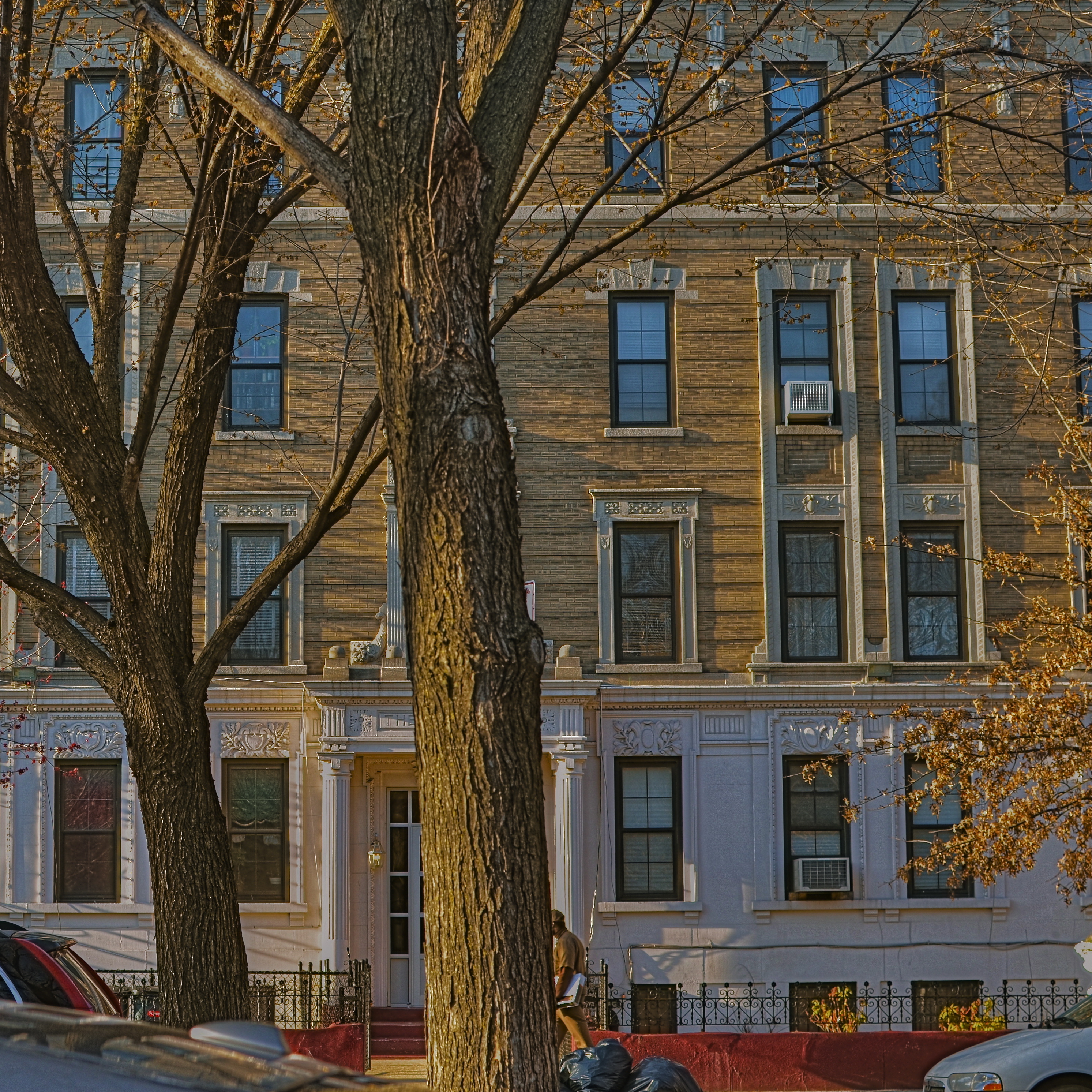
Brooklyn Block, 2014. No, this building isn’t this pretty in “reality”. And that’s the entire point. 1/100 sec., f/5.6, ISO 100, 35mm.
By MICHAEL PERKINS
LIGHT IS THE ULTIMATE MAKE-UP ARTIST, the cosmetic balm that paints warmth, softness, even a kind of forgiveness, or dignity onto the world. Photographers use light in a different way than painters, since a canvas, beginning as a complete blank, allows the dauber to create any kind of light scheme he desires. It’s a very God-like, “let there be light” position the painter finds himself in, whereas the photographer is more or less at light’s mercy, if you will. He has to channel, harness, or manage whatever the situation has provided him with, to wrangle light into an acceptable balance.
No complaints about this, by the way. There’s nothing passive about this process: real decisions are being made, and both painters and photographers are judged by how they temper and combine all the elements they use in their assembly processes. Just because a shooter works with light as he finds it, rather than brushing it into being, doesn’t make him/her any less in charge of the result. It’s just a different way to get there.
Light always has the power to transform objects into, if you will, better versions of themselves. I call it the “ennobling gold”, since I find that the yellow range of light is kindest to a wider range of subjects. Stone or brick, urban crush or rural hush, light produces a calming, charming effect on nearly anything, which is what makes managing light so irresistible to the photographer. He just knows that there is beauty to be extracted when the light is kind. And he can’t wait to grab all he can.
“Light makes photography”, George Eastman famously wrote. “Light makes photography. Embrace light. Admire it. Love it. But, above all, know light. Know it for all you are worth, and you will know the key to photography.”
Yeah, what he said.
THE RIGHT WAGON
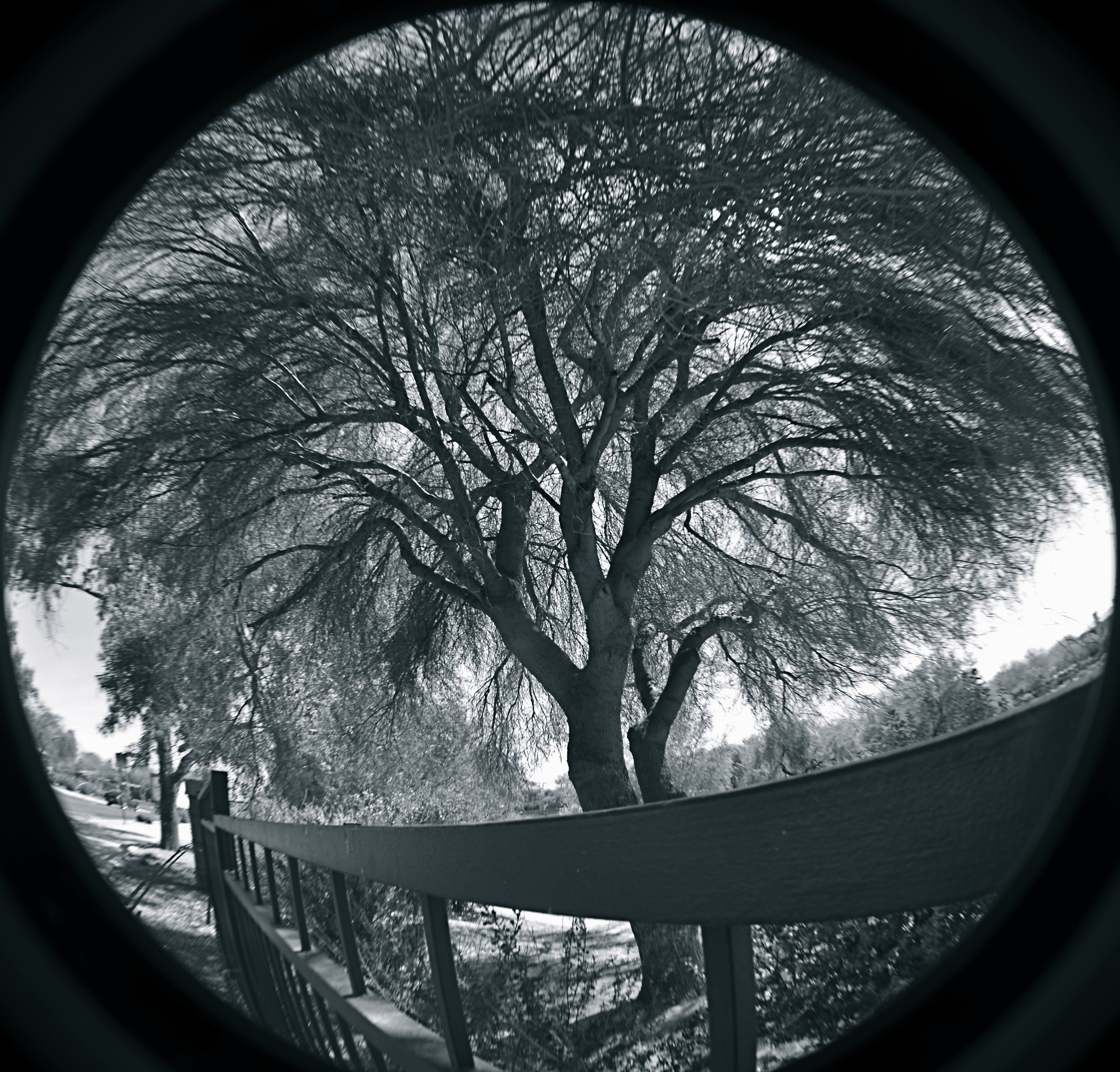
Cheap fisheye adaptors are a mixed bag optically, but they can convey a mood. 1/40 sec., f/11, ISO 100, 18mm.
By MICHAEL PERKINS
I ONCE HEARD AN OLD PHOTOGRAPHER SPEAK OF CREATIVE CHOICES AS “picking the right wagon to haul your goods to market”. By that, he meant that format, film, frame size, lens type or aperture were all just means to an end. If one wouldn’t take your wagon all the way to a finished picture, use another. He had no special sentiment or ironclad loyalty to any one tool, since there was, and is, only one real goal in any of photography: get the image you came to get.
It’s often hard to remember that simple rule, since we tend to associate the success of certain pictures with our pet camera, our sweet spot aperture, our favorite hunk of glass. But there’s also a knack to knowing when a particular tool that is wrong, wrong, wrong for almost anything might, for the project at hand, be just perfect.
I have one such tool, and, on rare occasions, the very properties that make me generally curse it as a cheap chunk of junk can make me praise it as just what the doctor ordered. It’s an Opteka 0.35, a screw-on lens adapter that simulates (to put it kindly) at least the dimensions of a true fisheye, without the enormous layout of dough, or, sadly, the optical precision of a true dedicated lens. It’s fuzzy at the edges, regardless of your aperture. It sprays chromatic shmears all over those edges, and so you can’t even dream of sharpness beyond the third of the image that’s in the dead center of the lens. It was, let’s be honest, a cheap toy bought by a cheap photographer (me) as a shortcut. For 99% of any ulta-wide imaging, it’s akin to taking a picture through a jellyfish bladder.
But.
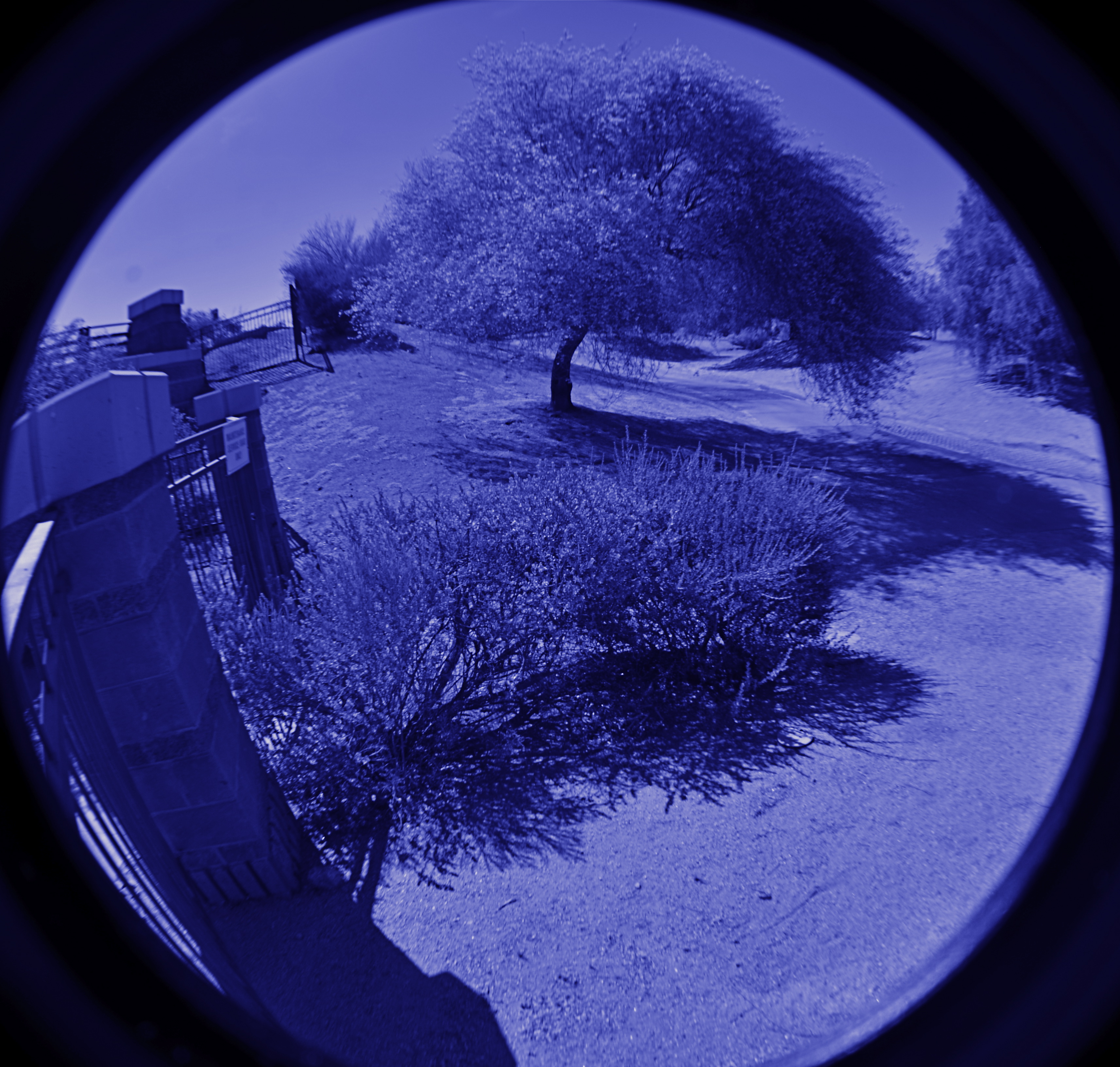
Mood over reality. 1/125 sec., f/11, ISO 100, 18mm.
Since the very essence of fisheye photography is as a distortion of reality, the Opteka can be a helping hand toward a fantasy look. Overall sharpness in a fisheye shot can certainly be a desired effect, but, given your subject matter, it need not be a deal breaker.
In the case of some recent monochrome studies of trees I’ve been undertaking, for example, the slightly supernatural effect I’m after isn’t dependent on a “real” look, and running the Opteka in black and white with a little detail boost on the back end gives me the unreal appearance that is right for what I want to convey about the elusive, even magical elements of trees. The attachment is all kinds of wrong for most other kinds of images, but, again, the idea is to get the feel you’re looking for…in that composition, on that day, under those circumstances.
I’ve love to get to the day when one lens will do everything in all instances, but I won’t live that long, and, chances are, neither will you. Meanwhile, I gotta get my goods to market, and for the slightly daft look of magickal trees, the Opteka is my Leica.
For now.
STUPIDLY WISE
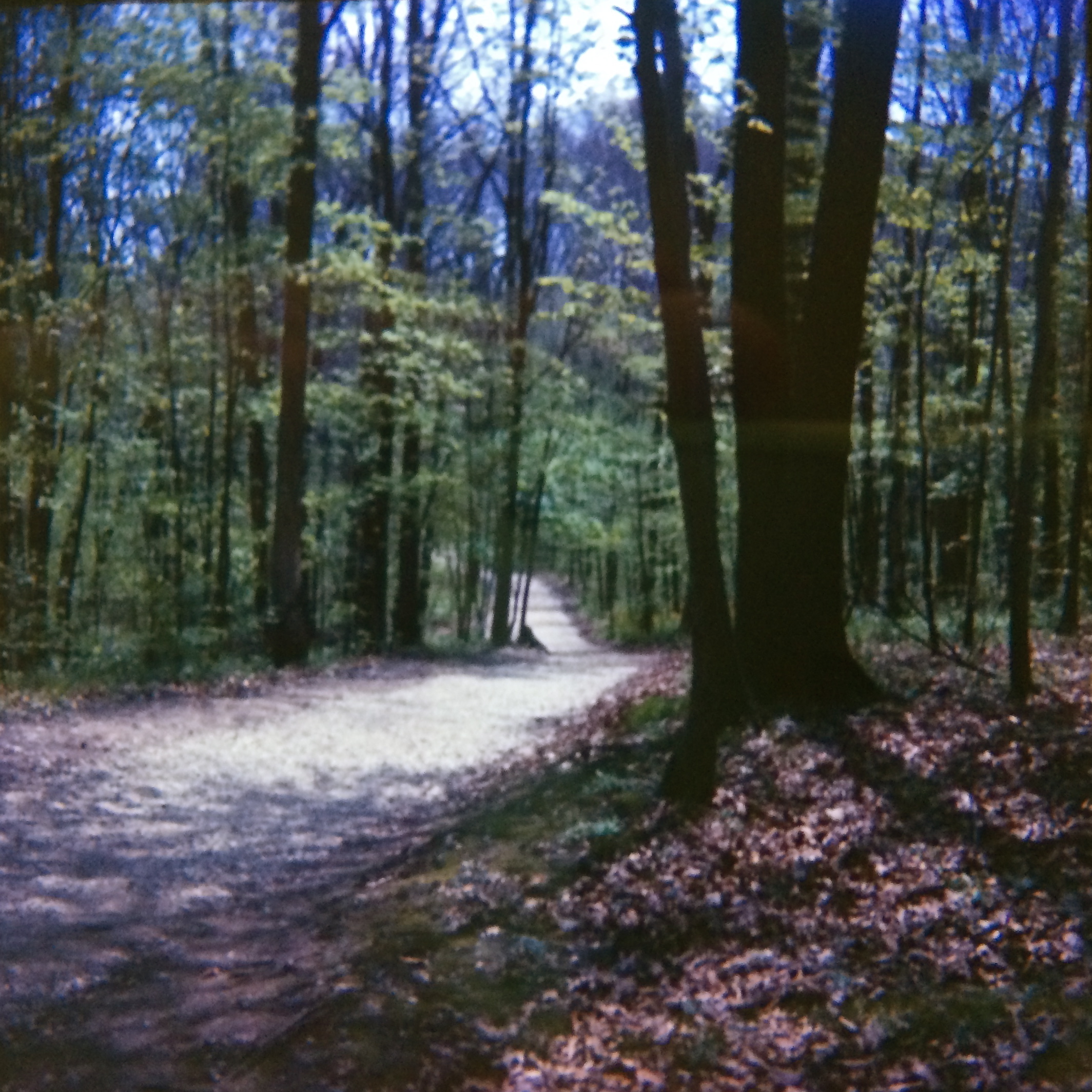
Blendon Woods, Columbus, Ohio, 1966. I usually had to shoot an entire roll of film to even come this close to making a useable shot.
By MICHAEL PERKINS
IGNORANCE, IN PHOTOGRAPHY, CERTAINLY IS NOT BLISS. However, exposure to that selfsame know-nothing-ness can lead to a kind of bliss, since it can eventually lead you to excellence, or at least improvement. Here and now, I am going to tell you that all the photographic tutorials and classes in history cannot teach you one millionth as much as your own rotten pictures. Period.
Trick is, you have to keep your misbegotten photographic children, and keep them close. Love them. Treasure the hidden reservoir of warnings and no-nos they contain and mine that treasure for all it’s worth. Of course, doing this takes real courage, since your first human instinct, understandingly, will be to do a Norman Bates on them: stab them to death in the shower and bury their car in the swamp out back.
But don’t.
I have purposely kept the results of the first five rolls of film I ever shot for over forty years now. They are almost all miserable failures, and I mean that with no aw-shucks false modesty whatever. I am not exaggerating when I tell you that these images are the Fort Knox of ignorance, an ignorance taller than most minor mountain ranges, an ignorance that, if it was used like some garbage to create energy, could light Europe for a year. We’re talking lousy.
But mine was a divine kind of ignorance. At the age of fourteen, I not only knew nothing, I could not even guess at how much nothing I knew. It’s obvious, as you troll through these Kodak-yellow boxes of Ektachrome slides, that I knew nothing of the limits of film, or exposure, or my own cave-dweller-level camera. Indeed, I remember being completely mystified when I got my first look at my slides as they returned from the processor (an agonizing wait of about three days back then), only to find, time after time, that nothing of what I had seen in my mind had made it into the final image. It wasn’t that dark! It wasn’t that color! It wasn’t…..working. And it wasn’t a question of, “what was I thinking?”, since I always had a clear vision of what I thought the picture should be. It was more like, “why didn’t that work?“, which, at that stage of my development, was as easy to answer as, say, “why don’t I have a Batmobile?” or “why can’t I make food out of peat moss?”
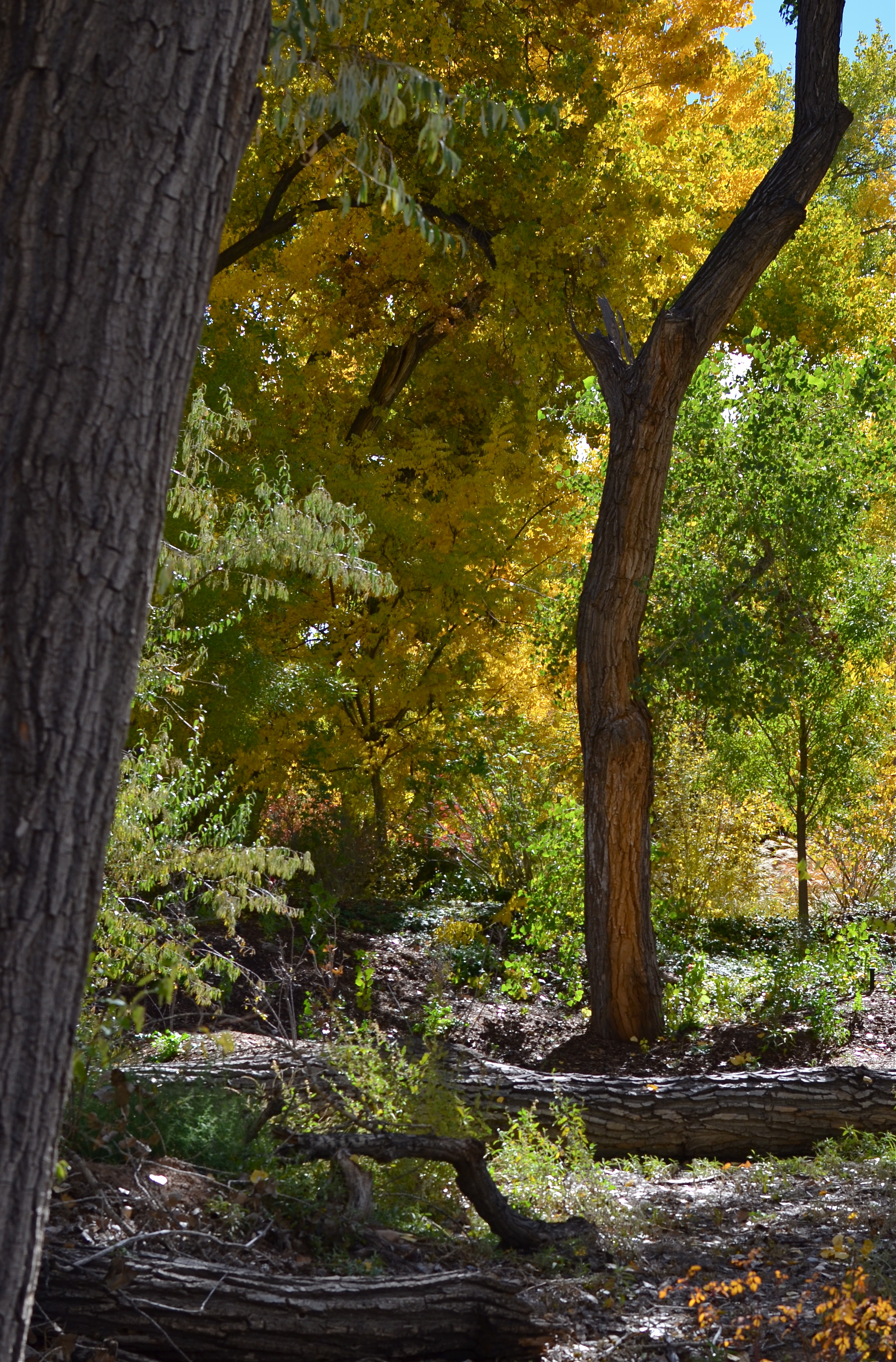
Different woods, different life. But you can’t get here without all the mistakes it builds on. 1/400 sec., f/5.6, ISO 100, 35mm.
But holding onto the slides over the years paid off. I gradually learned enough to match up Lousy Slide “A” with Solution”B”, as I learned what to ask of myself and a camera, how to make the box do my bidding, how to build on the foundation of all that failure. And the best thing about keeping all of the fizzles in those old cartons was that I also kept the few slides that actually worked, in spite of a fixed-focus, plastic lens, light-leaky box camera and my own glorious stupidity. Because, since I didn’t know what I could do, I tried everything, and, on a few miraculous occasions, I either guessed right, or God was celebrating Throw A Mortal A Bone Day.
Thing is, I was reaching beyond what I knew, what I could hope to accomplish. Out of that sheer zeal, you can eventually learn to make photographs. But you have to keep growing beyond your cameras. It’s easy when it’s a plastic hunk of garbage, not so easy later on. But you have to keep calling on that nervy, ignorant fourteen-year-old, and giving him the steering wheel. It’s the only way things get better.
You can’t learn from your mistakes until you room with them for a semester or two. And then they can teach you better than anyone or anything you will ever encounter, anywhere.
SUBMERGED IN BEING
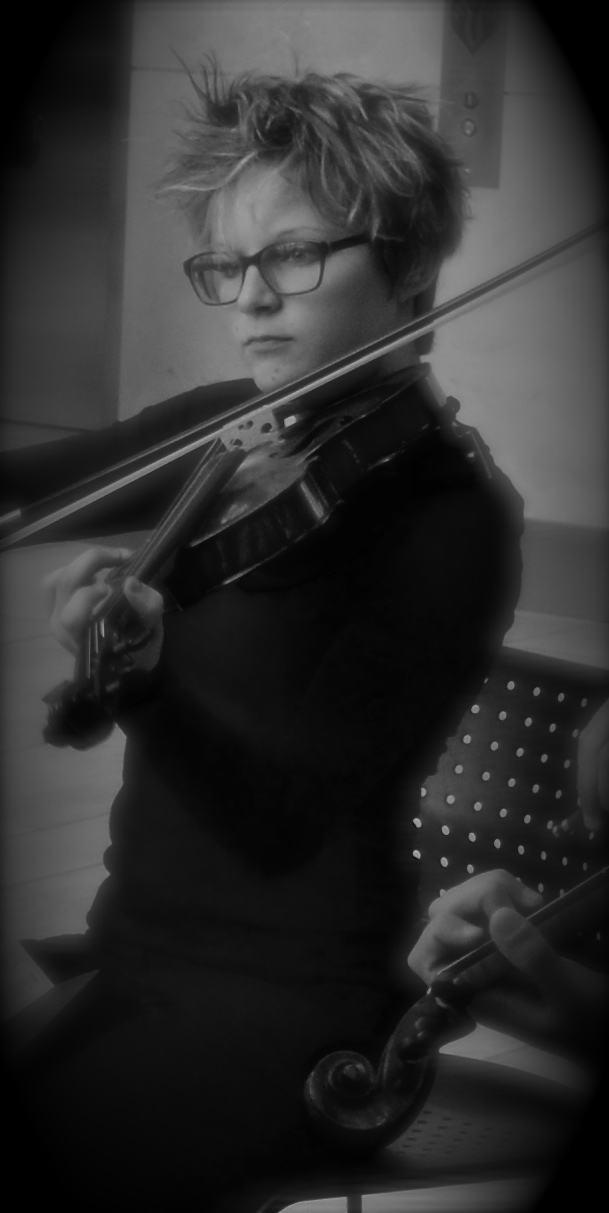
Cropped and enhanced from a group shot. I could sit this young woman in a studio for a thousand years and not get this expression.
By MICHAEL PERKINS
CANDID PORTRAITURE IS VOLATILE, THE DEAD OPPOSITE OF A FORMAL SITTING, and therefore a little scarier for some photographers. We tell ourselves that we gain more control over the results of a staged portrait, since we are dictating so many terms within it…the setting, the light, the choice of props, etc. However, can’t all that control also drain the life out of our subjects by injecting self-consciousness ? Why do you think there are so many tutorials written about how to put your subjects at ease, encourage them to be themselves, persuade them to unclench their teeth? Getting someone to sit where we tell them, do what we tell them, and yet “act naturally” involves a skill set that many photographers must learn over time, since they have to act as life-coach, father-confessor, camp counselor, and seducer, all at once. Also helps if you hand out lollipops.
Then again, shooting on the fly with the hope of capturing something essential about a person who is paying you zero attention is also fraught with risk, since you could crank off fifty frames and still go home without that person revealing anything real within the given time-frame. As with most issues photographic, there is no solution that works all of the time. I do find that one particular class of person affords you a slight edge in candid work, and that is performers. Catch a piece of them in the act of playing, singing, dancing, becoming, and you get as close to the heart of their essence that you, as an outsider, are ever going to get. If they are submerged in being, you might be lucky enough to witness something supernatural.
The more people lose themselves in a quest for the perfect sonata, the ultimate tap step, or the big money note, the less they are trying to give you a “version” of themselves, or worse yet, the rendition of themselves that they think plays well for the camera. As for you, candids work like any other kind of street photography. It’s on you to sense the moment as it arrives and grab it. It’s anything but easy, but better, when it works, then sitting someone amidst props and hoping they won’t freeze up on you.
There are two ways to catch magic in a box when it comes to portraits. One is to have a tremendous relationship with the person who is sitting for you, and the other is to be the best spy in the world when plucking an instant from a real life that is playing out in front of you. You have to know which tack to take, and where the best image can be extracted.
ON SECOND THOUGHT…OR THIRD
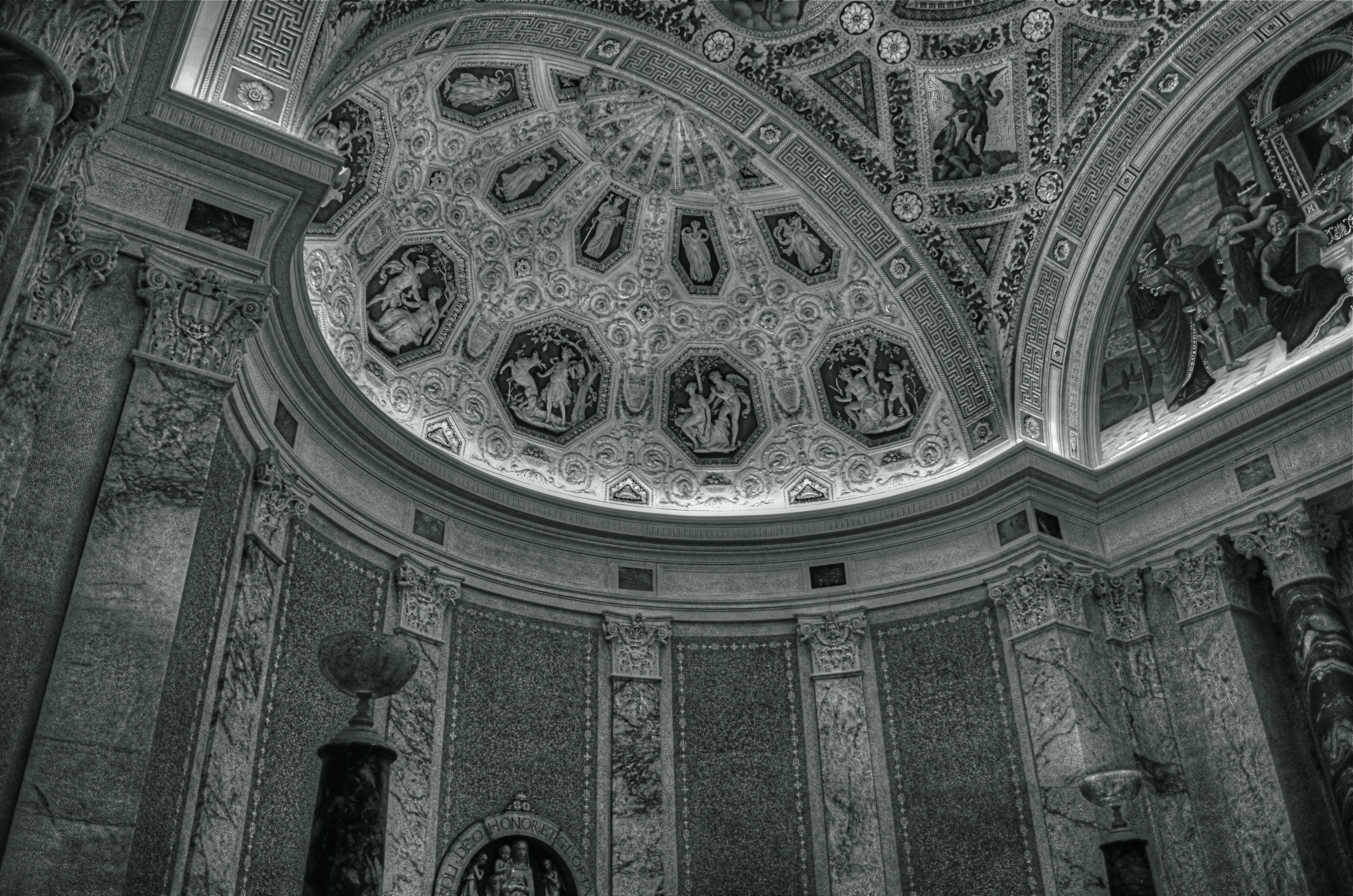
I really preferred this as the color shot it originally was. Until I didn’t. Changing my mind took seconds.
By MICHAEL PERKINS
ONE OF THE MOST AMAZING BY-PRODUCTS OF DIGITAL PHOTOGRAPHY, a trend still evolving across both amateur and professional ranks, is a kind of tidal return to black-and-white imaging. The sheer volume of processing choices, both in-and-out-of-camera, have made at least dabbling in monochrome all but inevitable for nearly everyone, reversing a global trend toward near exclusive use of color that was decades in the making. At one point, to be sure, we chose black and white out of necessity. Then we embraced color and relegated B&W to the dustbin of history. Now, we elect to use it again, and increasing numbers, simply because everything technical is within our reach, cheaply and easily.
Looking back, it’s amazing how long it took for color to take hold on a mass scale. Following decades of wildly uneven experimentation and dozens of processes from Victorian hand-tinting to the Autochromes of the early 1900’s, stable and affordable color film came to most of us by the end of the 1930’s. However, there was a reluctance, bearing on tantrum, among “serious” photographers to embrace it for several more decades. This article from the Life magazine Library of Photography, a history-tutorial series from the 1970’s, discusses what can only be called photography’s original anti-color bias:
Although publishers and advertisers enhanced their messages with pictures in color during the first few decades of the color era, most influential critics and museum curators persisted in regarding color photographs as “calendar art”. Color, they felt, was, at best, merely decorative, suitable, perhaps, for exotic or picturesque subjects, but a gaudy distraction in any work with “serious” artistic goals.
Of course, for years, color printing and processing was also unwieldy and expensive, scaring away even those few artists who wanted to take it on. Still, can you imagine, today, anyone holding the belief that any kind of processing was a “gaudy distraction” rather than just one more way to envision an image? Color was once seen by serious photographers as an element of the commercial world, therefore somehow..suspect. Fashion and celebrity photography had not yet been seen as legitimate members of the photo family, and their explosive use of color was almost thought of as a carnival effect. Cheap and vulgar.
Of course, once color became truly ubiquitous, sales of monochromatic film plummeted, and, for a time, black-and-white found itself on the bottom bunk, minimized as somehow less than color. In other words, we took the same blinkered blindness and just turned it on its head. Dumb times two.
Jump to today, where you can shoot, process and show images in nearly one continuous flow of energy. There are no daunting learning curves, no prohibitive expenses, no chemically charred fingertips to slow us down, or segregate one kind of photography from all others. What an amazing time to be jumping into this vast ocean of possibilities, when images get a second life, upon second thought.
Or third.
IN STEICHEN’S SHADOW
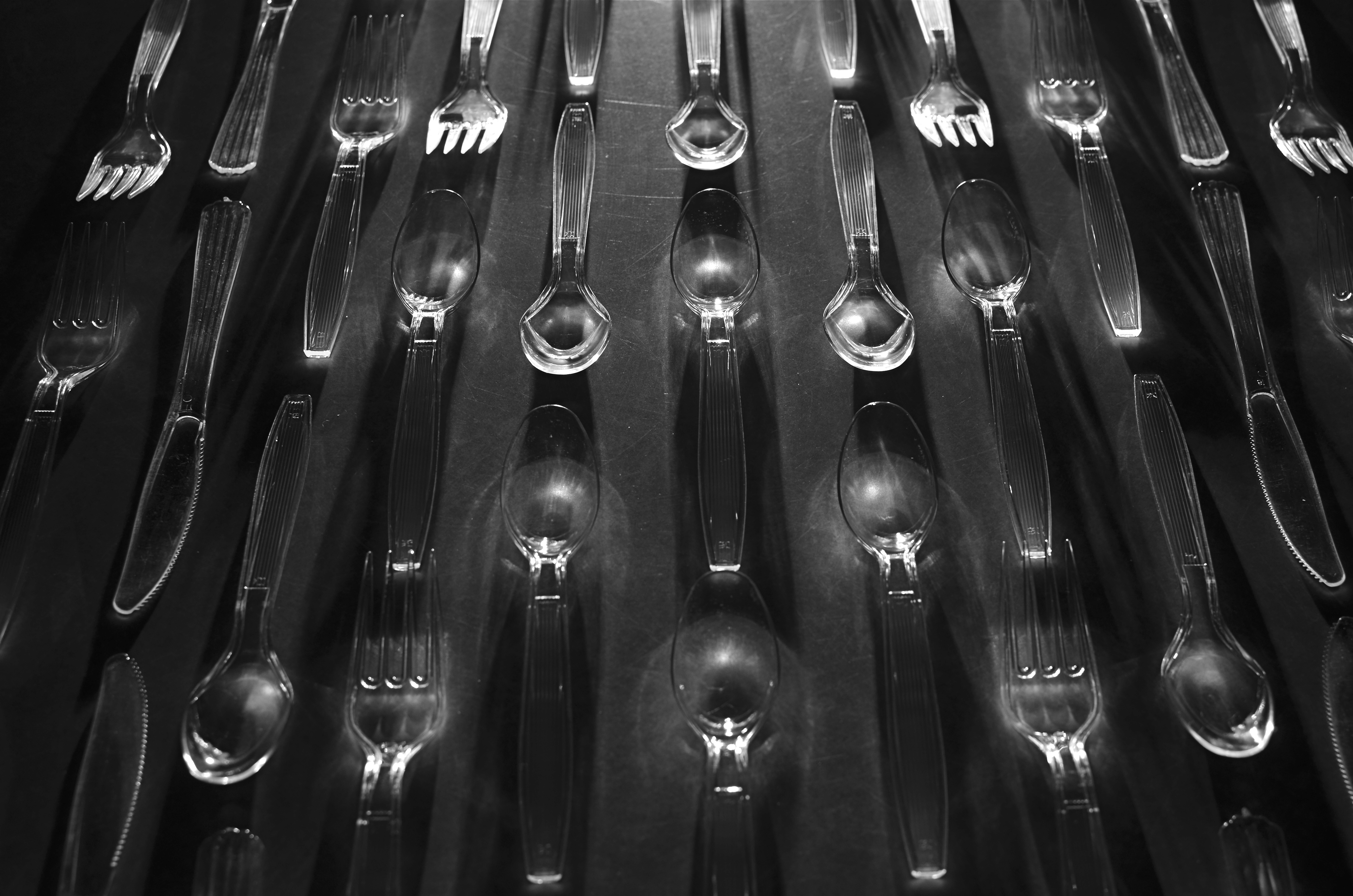
“Le Regiment Plastique”. Shot in a dark room and light-painted from the top edge of the composition. 5 seconds, f/5.6, ISO 100, 35mm.
By MICHAEL PERKINS
I’VE POSTED SEVERAL PIECES HERE ON “LIGHT-PAINTING”, or the practice of manually applying light to selective areas of objects during long exposures in the dark. The ability to “paint” additional colors, highlights and shadows “onto” even the most mundane materials can transform the whole light-to-dark ratio of the familiar and render it in new, if unpredictable ways. It’s kind of random and a lot of hands-on fun.
Some of the greatest transformations of ordinary objects ever seen in photography were obtained by Edward Steichen, arguably the greatest shooter in any style over the entire 20th century. Working for advertising agency J.Walter Thompson in the 1930’s, Steichen managed to romanticize everything from perfume bottles to kitchen matches to cutlery by arranging visually original ballets not only of these everyday items, but, through multiple source lighting, creating geometrically intricate patterns of shadows. His success in morphing the most common elements of our lives into fascinating abstractions remains the final word on this kind of lighting, and it’s fun to use light painting to pay tribute to it.
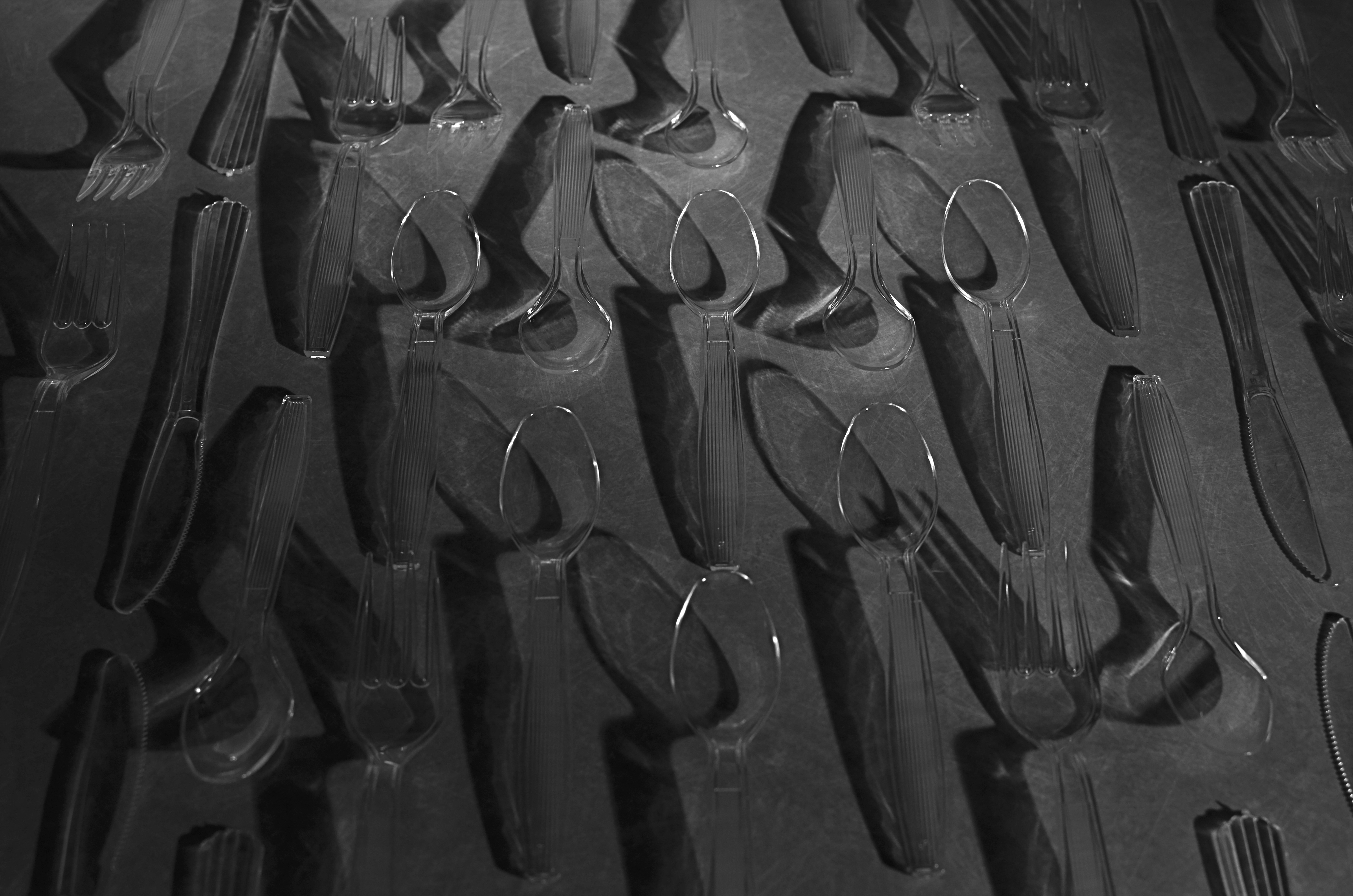
Same composition, but lit diagonally from right bottom. 5 seconds, f/5.6, ISO 100, 35mm.
For my own tabletop arrangement of spoons, knives and forks, seen here, I am using clear plastic cutlery instead of silver (fashions change, alas), but that actually allows any light I paint into the scene to make the utensils fairly glow with clear definition. You can’t really paint onto or across the items, since they will pick up too much hot glare after even a few seconds, but you can light from the edge of the table underneath them, giving them plenty of shadow-casting power without whiting out. I took over 25 frames of this arrangement from various angles, since light painting is all about the randomness of effect achieved with just a few inches’ deviation in approach, and, as with all photography, the more editing choices at the end, the better.
The whole thing is really just an exercise in forced re-imagining, in making yourself consider the objects as visually new. Think of it as a puff of fresh air blowing the cobwebs out of your perception of what you “know”. Emulating even a small part of Steichen’s vast output is like me flapping my wings and trying to become a bald eagle, so let’s call it a tribute.
Or envy embodied in action.
Or both.
AVOIDING THE BURN
 By MICHAEL PERKINS
AS A PHOTOGRAPHER, YOU CAN EMPATHIZE WITH THAT FAMOUS MOTH AND HIS FATAL FASCINATION with a candle flame….especially if you’ve ever flirted too close to the edge of a blowout with window light. You want to gobble up as much of that golden illumination as possible without singeing your image with a complete white-hot loss of detail. Too much of a good thing and all that.
However, a window glowing with light is one of the most irresistible of candies for a shooter, and you can fill up a notebook with attempted end-arounds and tricks to harvest it without getting burned. Here’s one cheap and easy way:
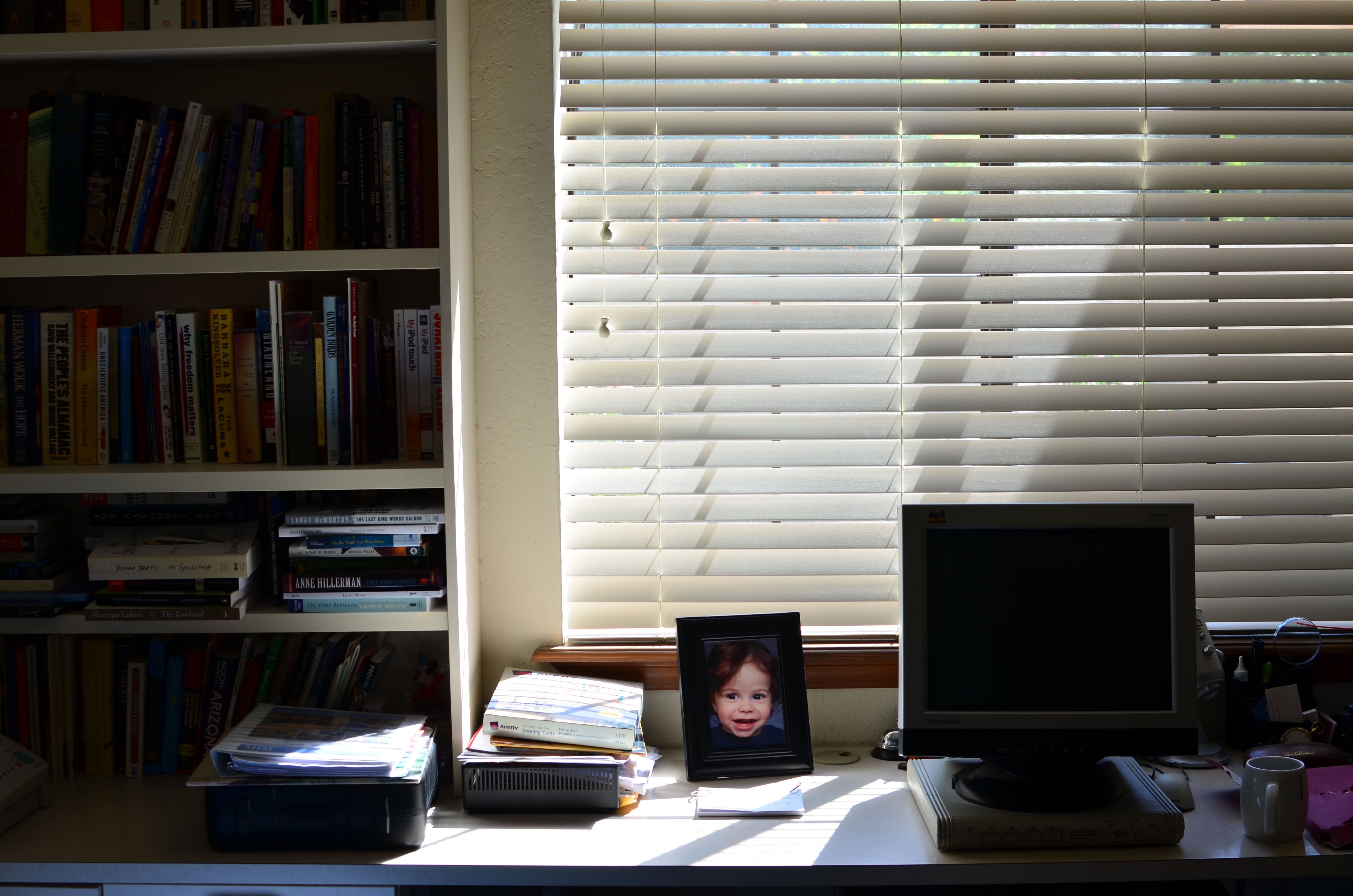
In this first attempt to capture the early morning shadows and scattered rays in my office at 1/100 sec., f/5.6, ISO 100, you’ll see that the window is a little too hot, and that nearly everything ahead of the window is rendered into a silhouette. And that’s a shame, since the picture, to me, should be not only about the window light, but also its role in partially lighting a dark room. I don’t want to make an HDR here, since that will completely over-detail the stuff in the dark and look un-natural. All I really need is a hint of room light, as if a small extra bit of detail has been illuminated by the window, but just that….a small bit.
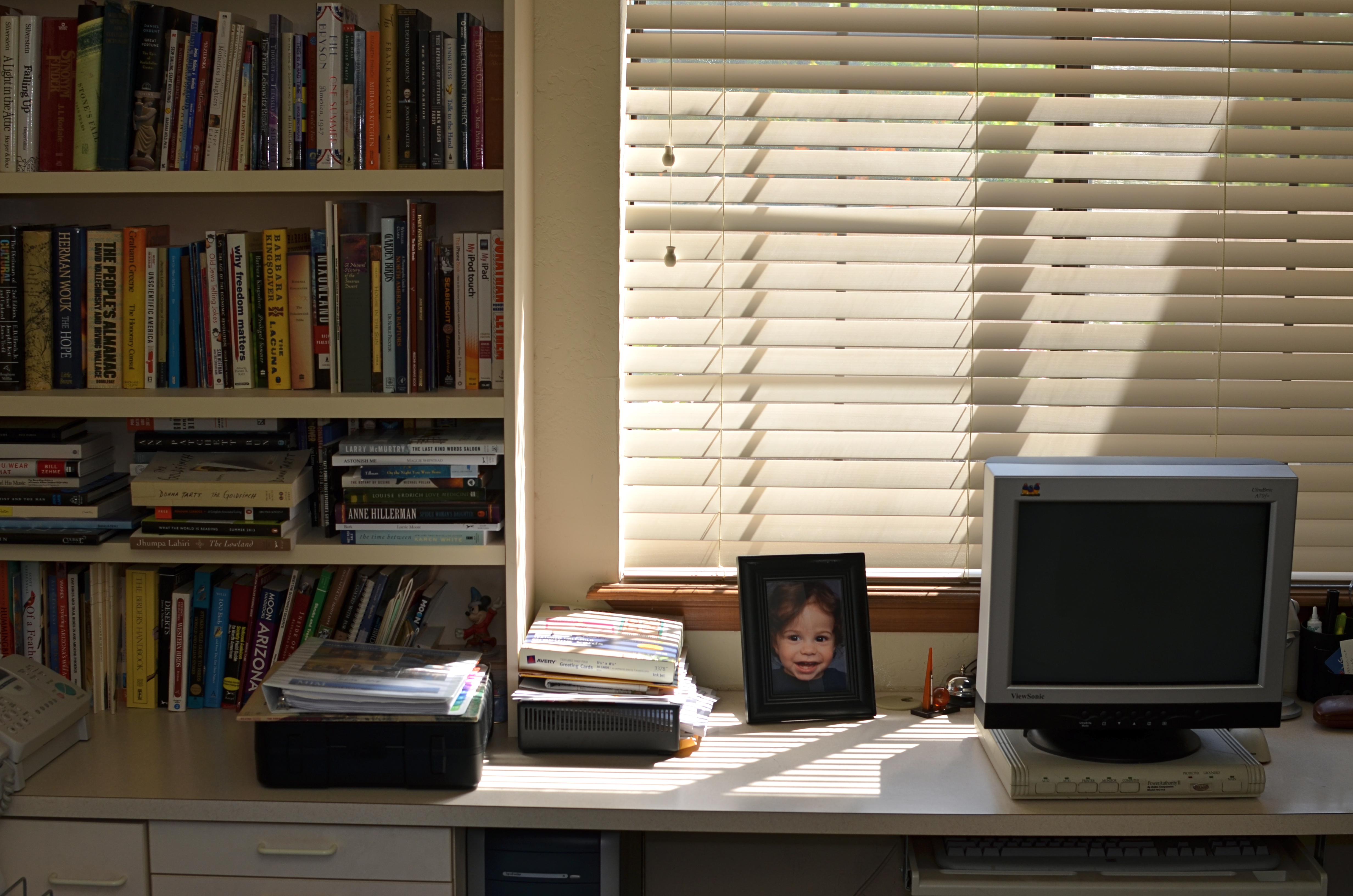
The interior still isn’t floodlit, but now it does seem to “borrow” some detail from the window.
In the second attempt, I have actually halved the shutter speed to 1/200 to underexpose the window, but have also used my on-camera flash with a bounce card to ricochet a little light off the ceiling. I am almost too far away for the flash to be of any real strength, but that’s exactly what I’m looking for: I want just a trace of it to trail down the bookshelf, giving me some really mild color and allowing a few book titles to be readable. The bounce plus the distance has weakened the flash to the point that it plausibly looks as if the illumination is a result of the window light. And since I’ve underexposed the window, even the wee bit of flash hasn’t blown out the slat detail from the blinds.
Overall, this is a cheap and easy fix, happens in-camera, and doesn’t call attention to itself as a technique. There are two kinds of light: the light that is natural and the light that can be made to appear natural. If you can make the two work smoothly together, you can fly close to the flame while avoiding the burn.
THE FULLNESS OF EMPTY
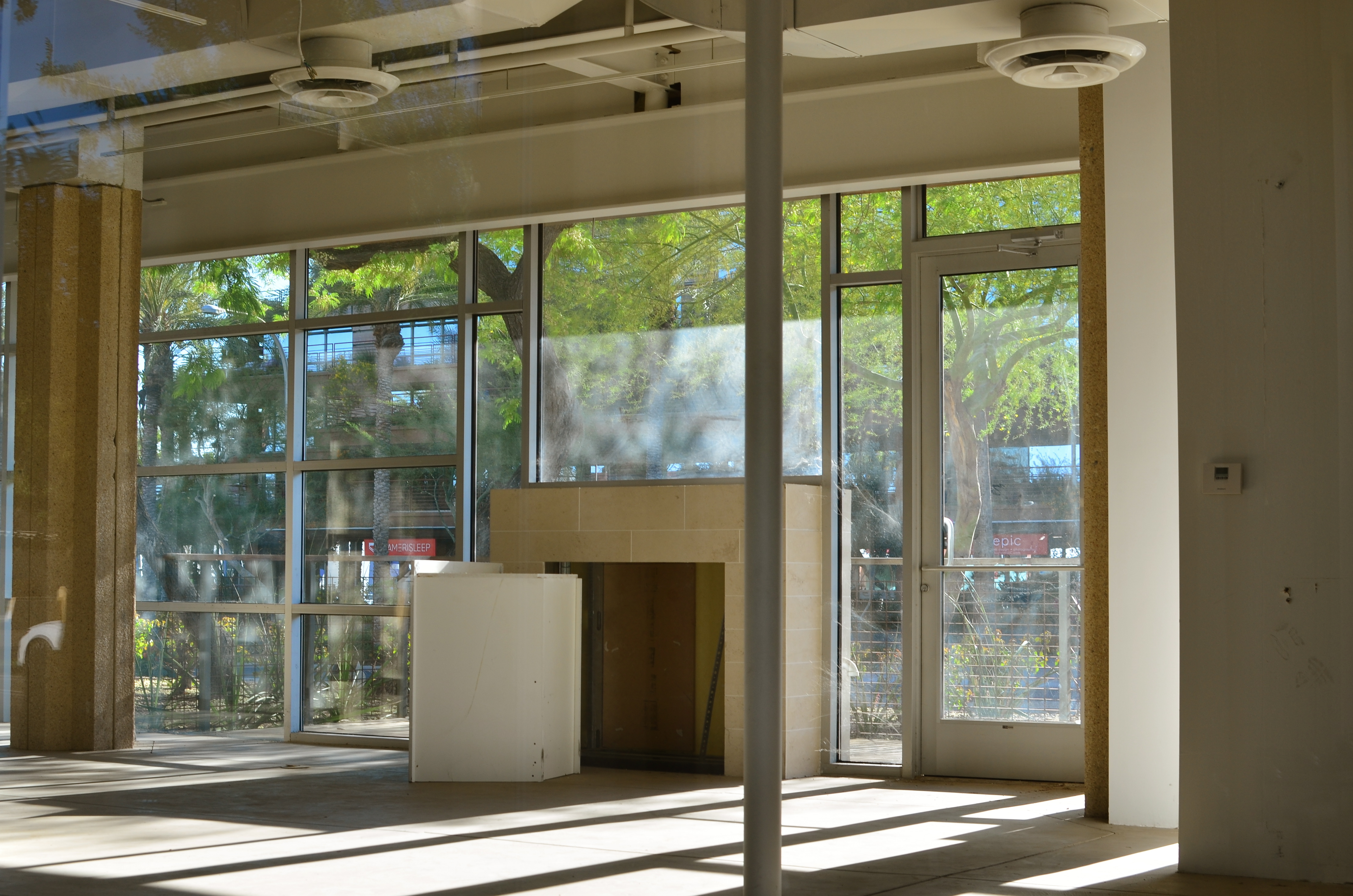
1/125 sec., f/5.6, ISO 100, 35mm.
By MICHAEL PERKINS SCIENCE TELLS US THAT SOME HUSBANDS HEAR THE QUESTION, “DID YOU TAKE THE TRASH OUT?” more often than any other phrase over the course of their married life. If you are an intrepid road warrior, you may hear more of something like “do you know where you’re going?” or “why don’t you just stop and ask for directions?”. If you’re a less than optimum companion, the most frequently heard statement might be along the lines of “and just where have you been?”. For me, at least when I have a camera in my hands, it’s always been “why don’t you ever take pictures of people?”
Why, indeed.
Of course, I contend that, if you were to take a random sample of any 100 of my photographs, there would be a fair representation of the human animal within that swatch of work. Not 85% percent, certainly, but you wouldn’t think you were watching snapshots from I Am Legend. However, I can’t deny that I have always seen stories in empty spaces or building faces, stories that may or may not resonate with everyone. It’s a definite bias, but it’s one of the closest things to a style or a vision that I have.
I think that absent people, as measured in their after-echoes in the places where they have been, speak quite clearly, and I am not alone in this view. Putting a person that I don’t even know into an image, just to demonstrate scope or scale, can be, to me, more dehumanizing than taking a picture without a person in it. My people-less photos don’t strike me as lonely, and I don’t feel that there is anything “missing” in such compositions. I can see these folks even when they are not there, and, if I do my job, so can those who view the results later.
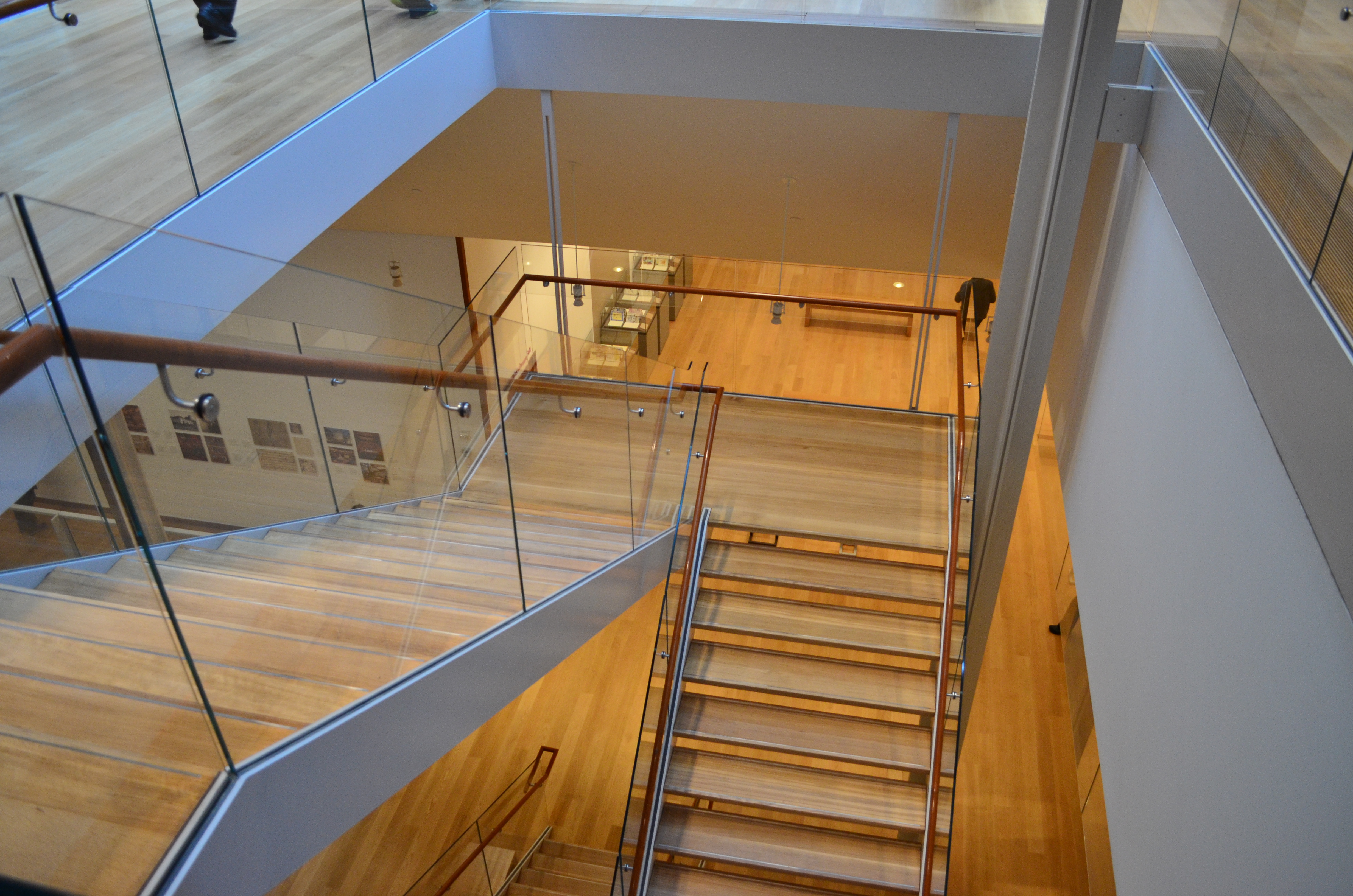
1/50 sec., f/3.5, ISO 650, 18mm.
Are such photographs “sad”, or merely a commentary on the transitory nature of things? Can’t you photograph a house where someone no longer lives and conjure an essence of the energy that once dwelt within those walls? Can’t a grave marker evoke a person as well as a wallet photo of them in happier times? I ask myself these questions, along with other crucial queries like, “what time is the game on?” or, “what do you have to do to get a beer in this place?” Some answers come quicker than others.
I can’t account for what amounts to “sad” or “lonely” when someone else looks at a picture. I try to take responsibility for the pictures I make, but people, while a key part of each photographic decision, sometimes do not need to serve as the decisive visual component in them. The moment will dictate. So, my answer to one of life’s most persistent questions is a polite, “why, dear, I do take pictures of people.”
Just not always.
THINGS ARE LOOKING DOWN
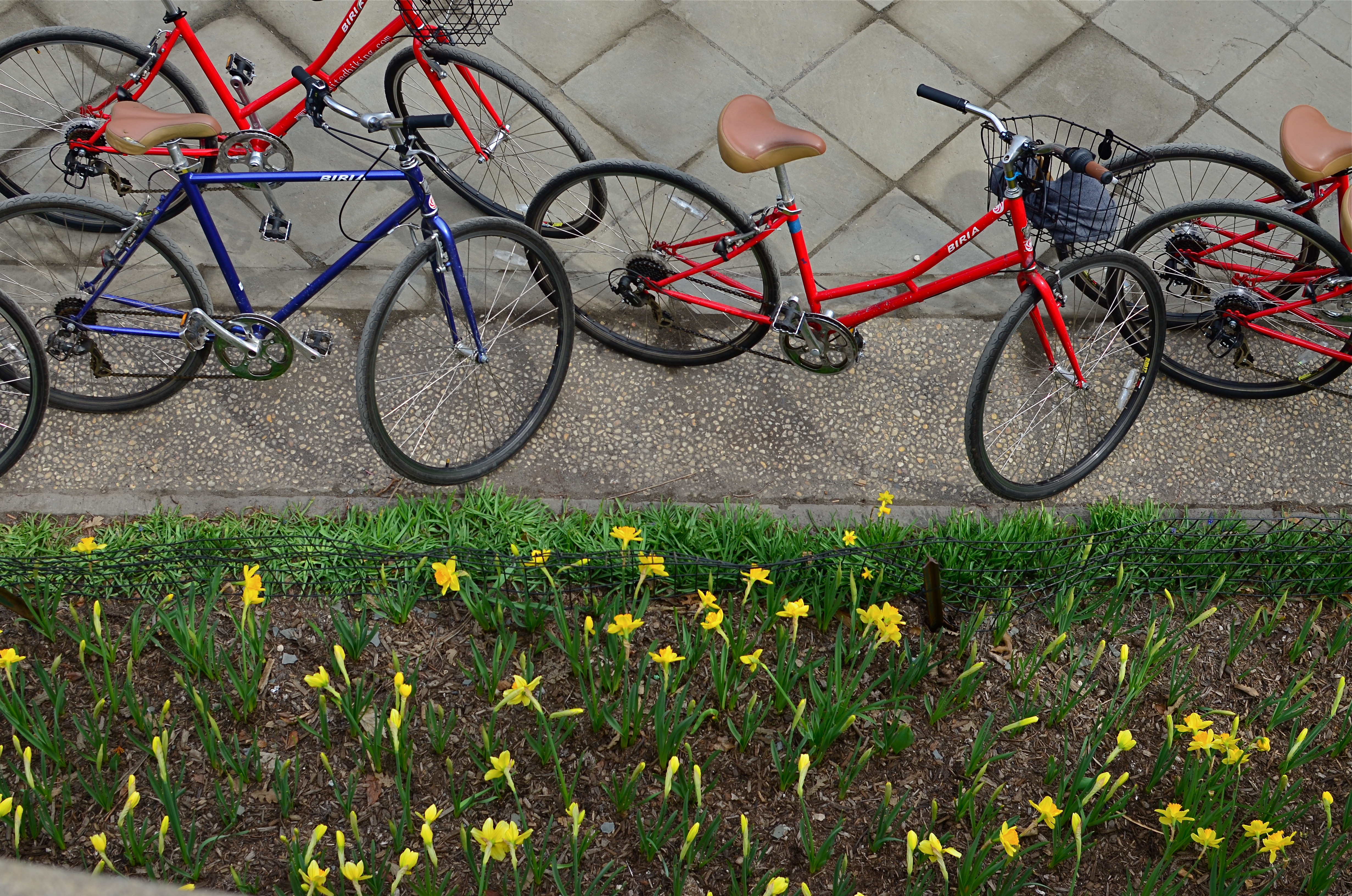
Central Park, April 2014. 1/320 sec., f/5.6, ISO 100, 35mm.
By MICHAEL PERKINS
PHOTOGRAPHY, AND THE HABITS WE FORM IN ITS PRACTICE, BECOME A HUGE MORGUE FILE OF FOLDERS marked “sometimes this works” or “occasionally try this”, tricks or approaches that aren’t good for everything but which have their place, given what we have to work with in the moment.
Compositionally, I find that just changing my vantage point is a kind of mental refresher. Simply standing someplace different forces me to re-consider my subject, especially if it’s a place I can’t normally get to. That means, whenever I can do something easy, like just standing or climbing ten feet higher than ground level, I include it in my shooting scheme, since it always surprises me.
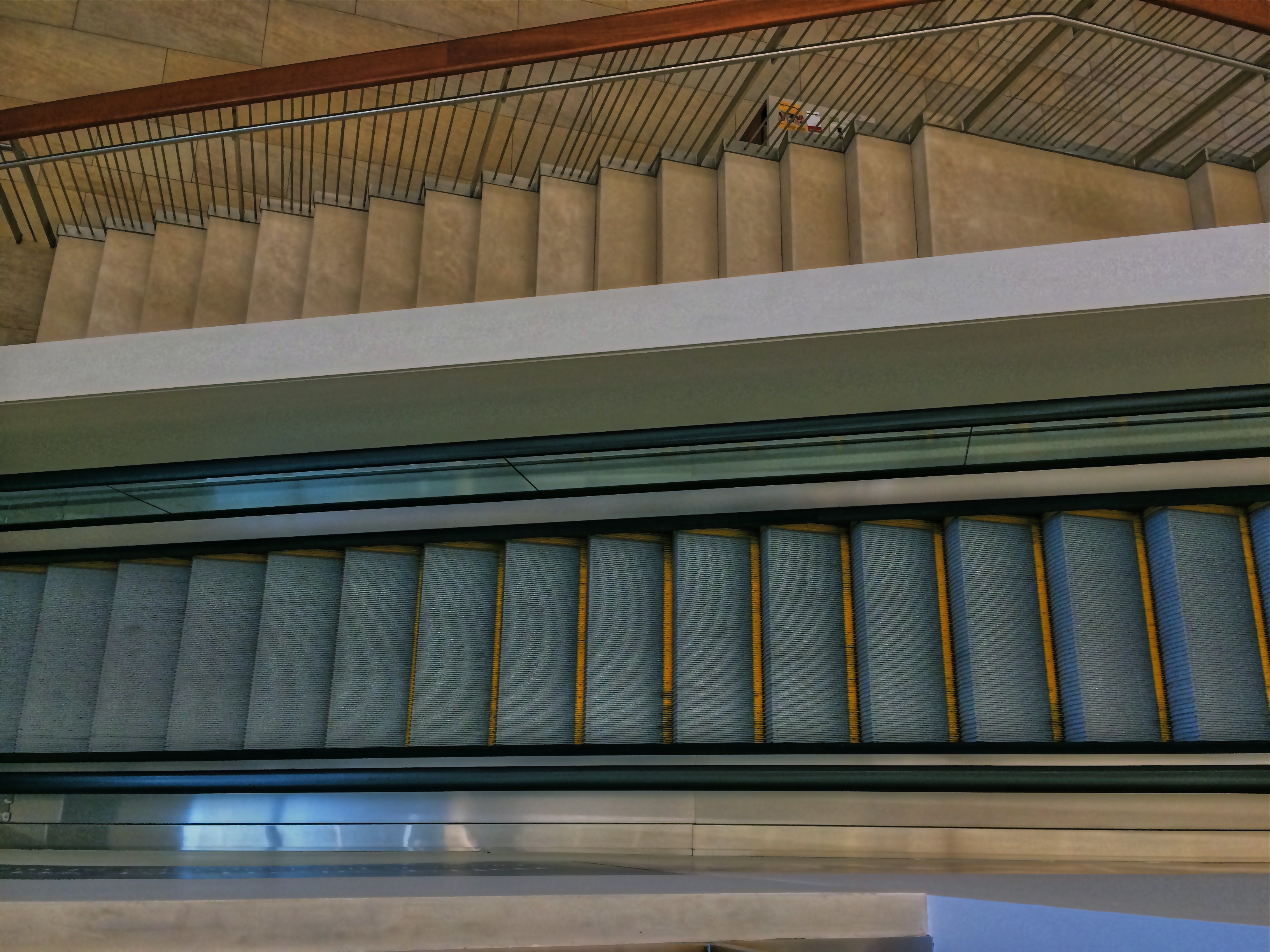
Walk Or Ride, 2014. 1/30 sec., f/2.2, ISO 50, 4.11mm
For one thing, looking straight down on objects changes their depth relationship, since you’re not looking across a horizon but at a perpendicular angle to it. That flattens things and abstracts them as shapes in a frame, at the same time that it’s exposing aspects of them not typically seen. You’ve done a very basic thing, and yet created a really different “face” for the objects. You’re actually forced to visualize them in a different way.
Everyone has been startled by the city shots taken from forty stories above the pavement, but you can really re-orient yourself to subjects at much more modest distances….a footbridge, a step-ladder, a short rooftop, anything to remove yourself from your customary perspective. It’s a little thing, but then we’re in the business of little things, since they sometimes make big pictures.
THE (LATENT) BLUES
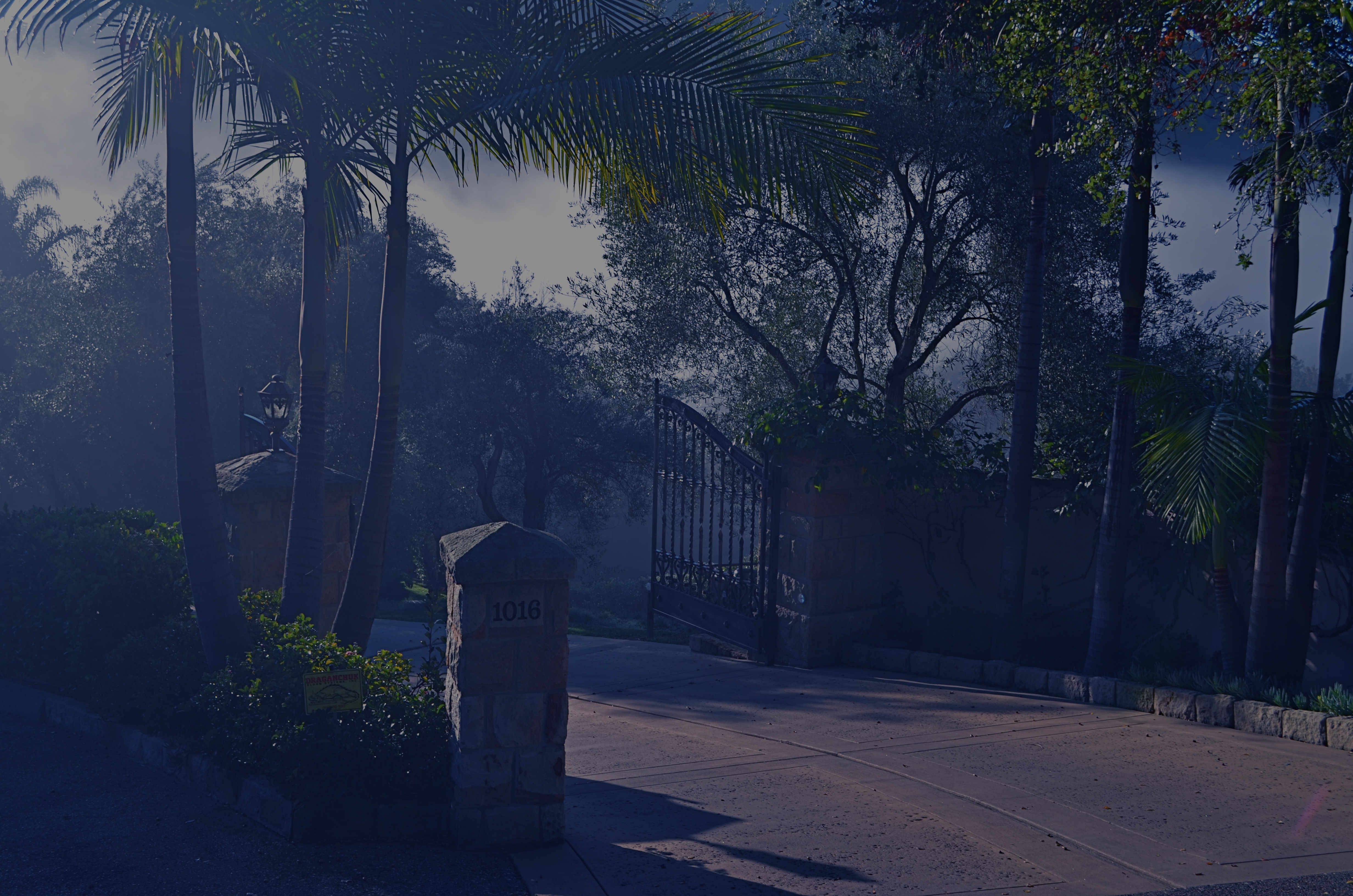
A dawn exposure takes on the look of early evening.
By MICHAEL PERKINS
WE HAVE CONTROL OVER NEARLY EVERY PART OF THE PHOTOGRAPHIC PROCESS BUT… ACCESS. We can learn to master aperture, exposure, composition, and many other basics of picture making, but we can’t help the fact that we are typically at our shooting location for one time of day only.
Whatever “right now” may be….morning, afternoon, evening….it usually includes one distinct period in the day: the pier at sunset, the garden at break of dawn. Unless we have arranged to spend an extended stretch of time on a shoot, say, chasing the sun and shadows across a daylong period from one location at the Grand Canyon or some such, we don’t tend to spend all day in one place. That means we get but one aspect of a place…however it’s lit, whoever is standing about, whatever temporal events are native to that time of day.
The original morning exposure.
Many locations that are easily shot by day are either unavailable or technically more complex after sundown. That’s why the so-called “day for night” effect appeals to me. As I had written sometime back, the name comes from the practice Hollywood has used for over a hundred years to save time and ensure even exposure by shooting in daylight and either processing or compensating in the camera to make the scene approximate early night.
In the case of the image you see up top, I have created an illusion of night through the re-contrasting and color re-assignment of a shot that I originally made as a simple daylight exposure. In such cases, the mood of the image is completely changed, since the light cues which tell us whether something is bright or mysterious are deliberately subverted. Light is the single largest determinant of mood, and, when you twist it around, it reconfigures the way you read an image. I call these faux-night remakes “latent blues”, as they generally look the way the sky photographs just after sunset.
This effect is certainly not designed to help me avoid doing true night-time exposures, but it can amplify the effect of images that were essentially solid but in need of a little atmospheric boost. Just because you can’t hang around ’til midnight, you shouldn’t have to do without a little midnight mood.
 thenormaleye