WHERE THE RUBBER MEETS THE ROAD
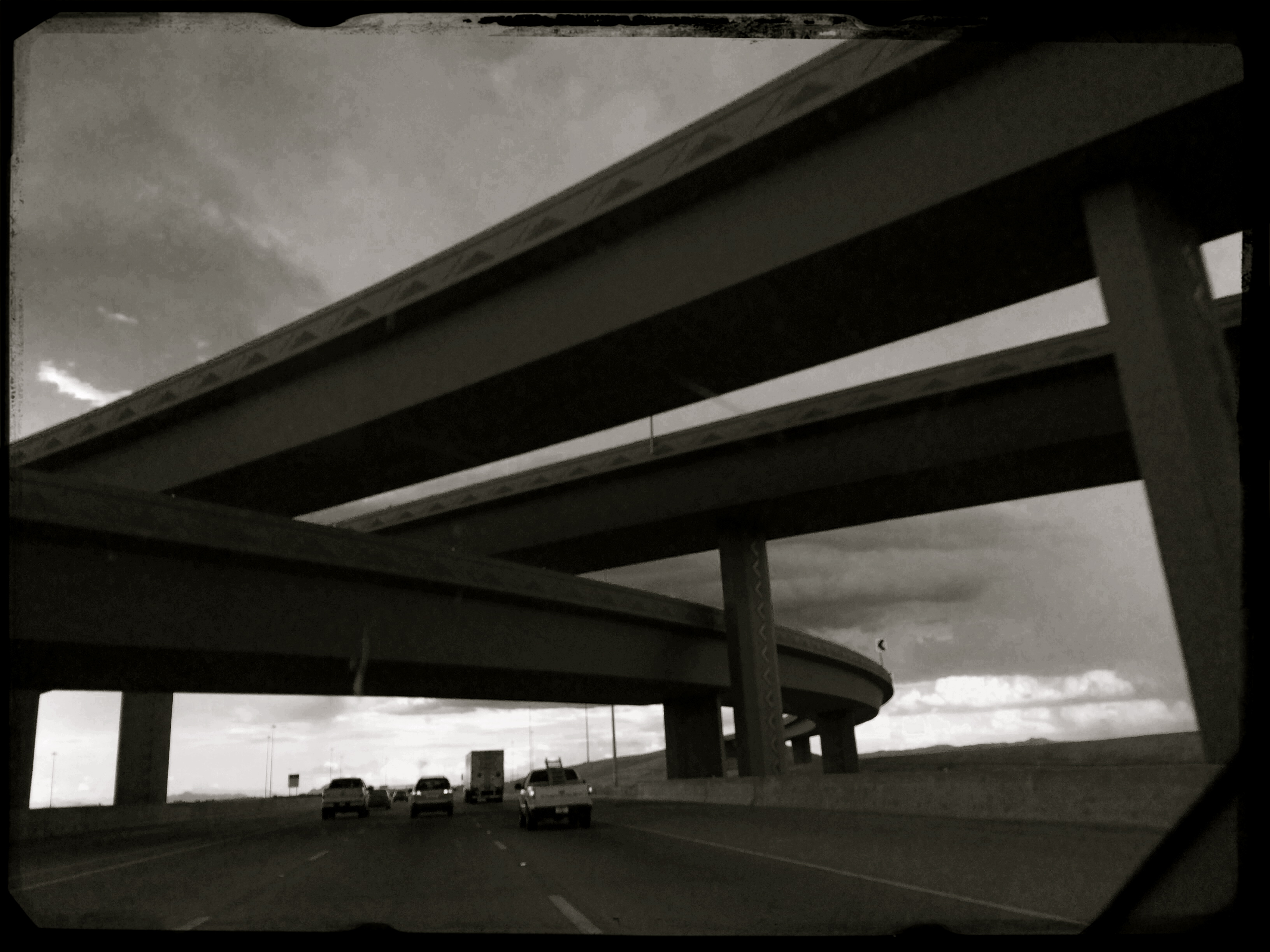
Convergences, 2015. A through-the-window iPhone quickie. Grainy, noisy, fun.
By MICHAEL PERKINS
MY WIFE AND I HAVE REACHED A REASONABLE DIVISION OF LABOR as regards road trips, with her taking on the nation’s freeways like an original cast member of The Road Warrior and me decoding various navigational vectors, from AAA maps to iPhones, as well as uber-producing the in-car tune mix. Everybody to their strengths and all that. This arrangement also frees me up to pursue the mythical goal of Immortal Photograph I Shot Out A Car Window, which will also be the title of my Pulitzer Prize acceptance speech.
Any day now.
Most of these potential world-beater images have been attempted through the front windshield, where it is at least a little easier to control blur, even glass reflection. Additionally, the majority of them, more and more, are done on mobile phones, which is not the greatest for resolution, but gives you that nice exaggeration on dimensions and depth that comes with a default wide-angle lens, which, in some cases, shoots broader vistas than even the kit lens on your “real” camera.
If you find yourself doing the same thing, you have no doubt noticed that you must get really, really close to your subject before even mountains look like molehills, as the lens dramatically stretches the front-to-back distances. You might also practice a bit to avoid having 10,000 shots that feature your dashboard and that somewhat embarassing Deadhead sticker you slapped on the windshield in 1985.
So, to recap: Shoot looking forward. Use a mobile for that nice cheap arty widescreen look. Frame so your dash-mounted hula girl is not included in your vistas (okay, she does set off that volcano nicely..). And wait until you’re almost on top of (or directly underneath) the object of your affection.
And keep an ear out for important travel inquries from your partner, such as: “are you gonna play this entire Smiths CD?”
Sorry, my dear. Joan Baez coming right up.
THE GENESIS OF REAL
By MICHAEL PERKINS
“(the book is) flawed by meaningless blur, grain, muddy exposure, drunken horizons, and general sloppiness, (showing) a contempt for quality and technique…” –Popular Photography, in its 1958 review of The Americans
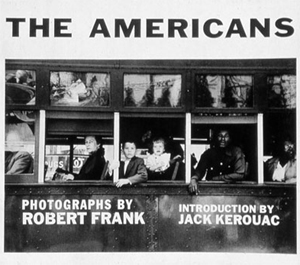 THOSE WORDS OF DISDAIN, designed to consign its subject to the ash heap of history, are now forever attached to the photographic work that, instead of vanishing in disgrace, almost single-handedly re-invented the way the world saw itself through the eye of a camera. For to thumb through Robert Frank’s 1958 collection of road images, The Americans, is to have one’s sense of what is visually important transformed. Forever.
In the mid-1950’s, mass-market photojournalist magazines from Life to Look regularly ran “essays” of images that were arranged and edited to illustrate story text, resulting in features that told readers what to see, which sequence to see it in, and what conclusions to draw from the experience. Editors assiduously guided contract photographers in what shots were required for such assignments, and they had final say on how those pictures were to be presented. Robert Frank, born in 1924 in Switzerland, had, by mid-century, already toiled in these formal gardens at mags that included Harper’s Bazaar and Vogue, and was ready for something else, a something else where instinct took preference over niceties of technique that dominated even fine-art photography.
Making off for months alone in a 1950 Ford and armed only with a 35mm Leica and a modest Guggenheim grant, Frank drove across much of the United States shooting whenever and wherever the spirit moved him. He worked quickly, intrusively, and without regard for the ettiquette of formal photography, showing people, places, and entire sub-cultures that much of the country had either marginalized or forgotten. He wasn’t polite about it. He didn’t ask people to say cheese. He shot through the windshield, directly into streetlights. He didn’t worry about level horizons, under-or-over exposure, the limits of light, or even focal sharpness, so much as he obsessed about capturing crucial moments, unguarded seconds in which beauty, ugliness, importance and banality all collided in a single second. Not even the saintly photojournalists of the New Deal, with their grim portraits of Dust Bowl refugees, had ever captured anything this immediate, this raw.
Frank escaped a baker’s dozen of angry confrontations with his reluctant subjects, even spending a few hours in local jails as he clicked his way across the country. The terms of engagement were not friendly. If America at large didn’t want to see his stories, his targets were equally reluctant to be bugs under Frank’s microscope. When it was all finished, the book found a home with the outlaw publishers at Grove Press, the scrappy upstart that had first published many of the emerging poets of the Beat movement. The traditional photographic world reacted either with a dismissive yawn or a snarling sneer. This wasn’t photography: this was some kind of amateurish assault on form and decency. Sales-wise, The Americans sank like a stone.
Around the edges of the photo colony, however, were fierce apostles of what Frank had seen, along with a slowly growing recognition that he had made a new kind of art emerge from the wreckage of a rapidly vanishing formalism. One of the earliest converts was the King of the Beats Himself, no less than Jack Kerouac, who, in the book’s introduction said Frank had “sucked a sad poem right out of America and onto film.”
Today, when asked about influences, I unhesitatingly recommend The Americans as an essential experience for anyone trying to train himself to see, or report upon, the human condition. Because photography isn’t merely about order, or narration, or even truth. It’s about constantly changing, and re-charging, the conversation. Robert Frank set the modern tone for that conversation, even if he first had to render us all speechless.
UNTRUE-TO-LIFE
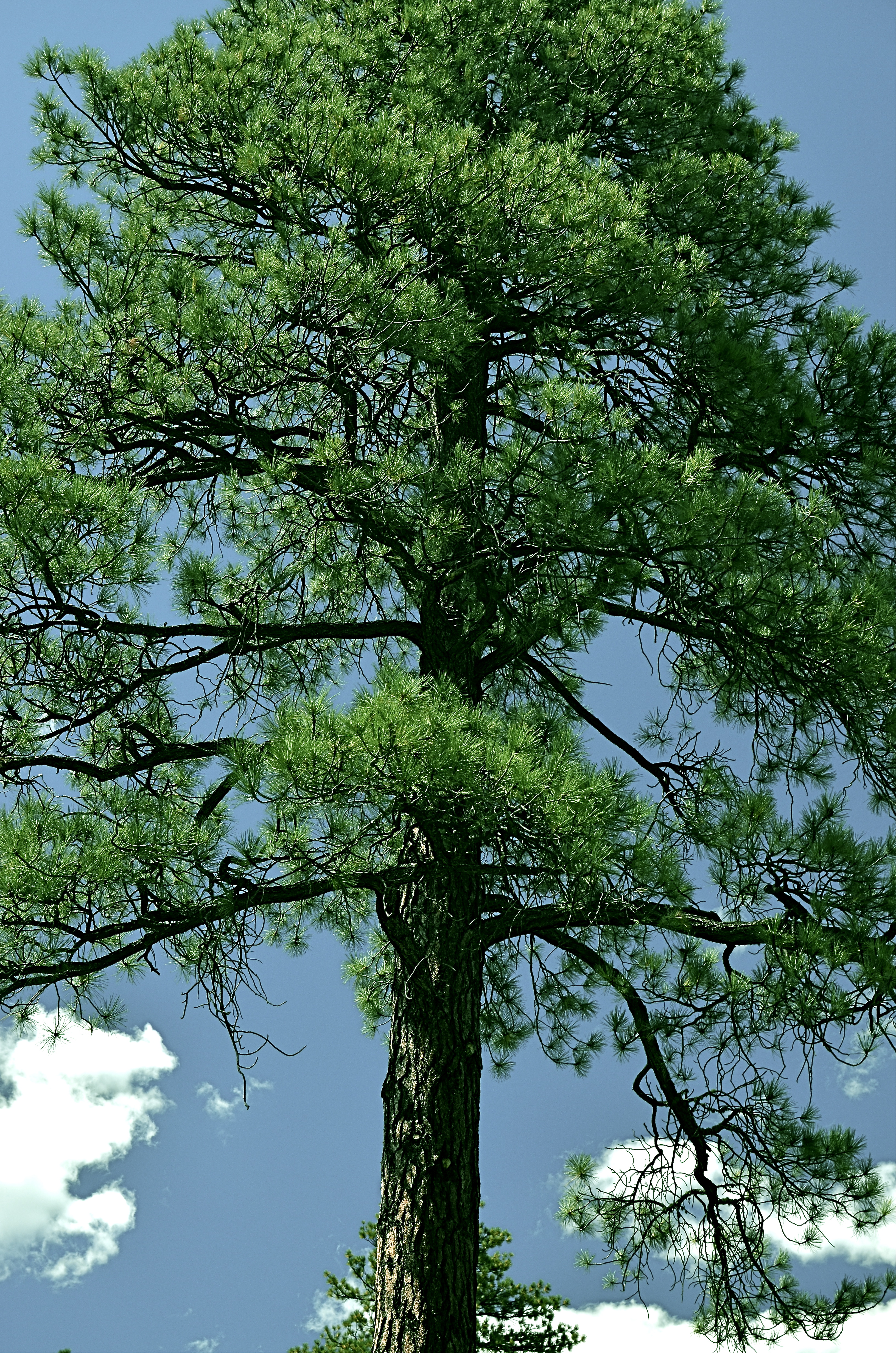
Go Green: A Flagstaff pine with all the brown values tuned out.
By MICHAEL PERKINS
I VOLUNTEER AT A MUSEUM WHICH SERVES, IN LARGE PART, SCHOOL TOURS. And, in trying to explain the color choices made by varying cultures on the depiction of everything, from flowers to animals, I frequently ask my groups if anyone has ever colored something with a “different” crayon. Not “the wrong color”, just a different crayon, a choice resulting in a purple squirrel or a brown rose. I usually get at least a few “yeses” on the question, and, when I probe further as to what went into their decision, I almost always get one child who says, simply, “I just like it that way.”
At this point, I realize that at least one person in every mob will always be thinking of color as a choice, rather than as a right/wrong answer. In my early school days, teacher often handed out the same mimeographed picture to all thirty of us, expecting all thirty to produce precisely the same results: green grass, blue skies, yellow honeybees. Strangely, we kind of expected the same of ourselves. It was comforting to hand in a “correct” piece of art, something guaranteed to please, a safe shortcut to a gold star.
In photography, we start as witnesses to color, but should never remain slaves to it. The present generation of shooters, born and bred in iPhone Land, know that changing your mind and your thinking on color is just an app away, and why not? The same force that has finally democratized photography worldwide is also legitimizing any and every kind of artistic choice. With billions of uploads each day, uniformity of style is worse than a lifelong gig as a worker ant, and as uninteresting.
Color is as big a determinant in interpretation as any other choice that a photographer makes, and can result in subtle shaping of the mood of your work. The above tree was originally captured in natural color, but I thought the overall design of the tree was served by one tone fewer, so I reworked everything into three values….blue, green, and black. I believe that the central trunk hits with more impact as light and dark shades of emerald, and the conversion of the pine needles to a more severe shade gives me some of the directness of monochrome. Of course, you might reach a completely different conclusion, but we’re beyond right or wrong here, aren’t we?
The mimeograph is dead, and with it, solid notions of color assignment. Fewer rules means fewer obvious signposts, but that’s why there’s more than one crayon in the box, innit?
DON’T MESS WITH MR. IN-BETWEEN
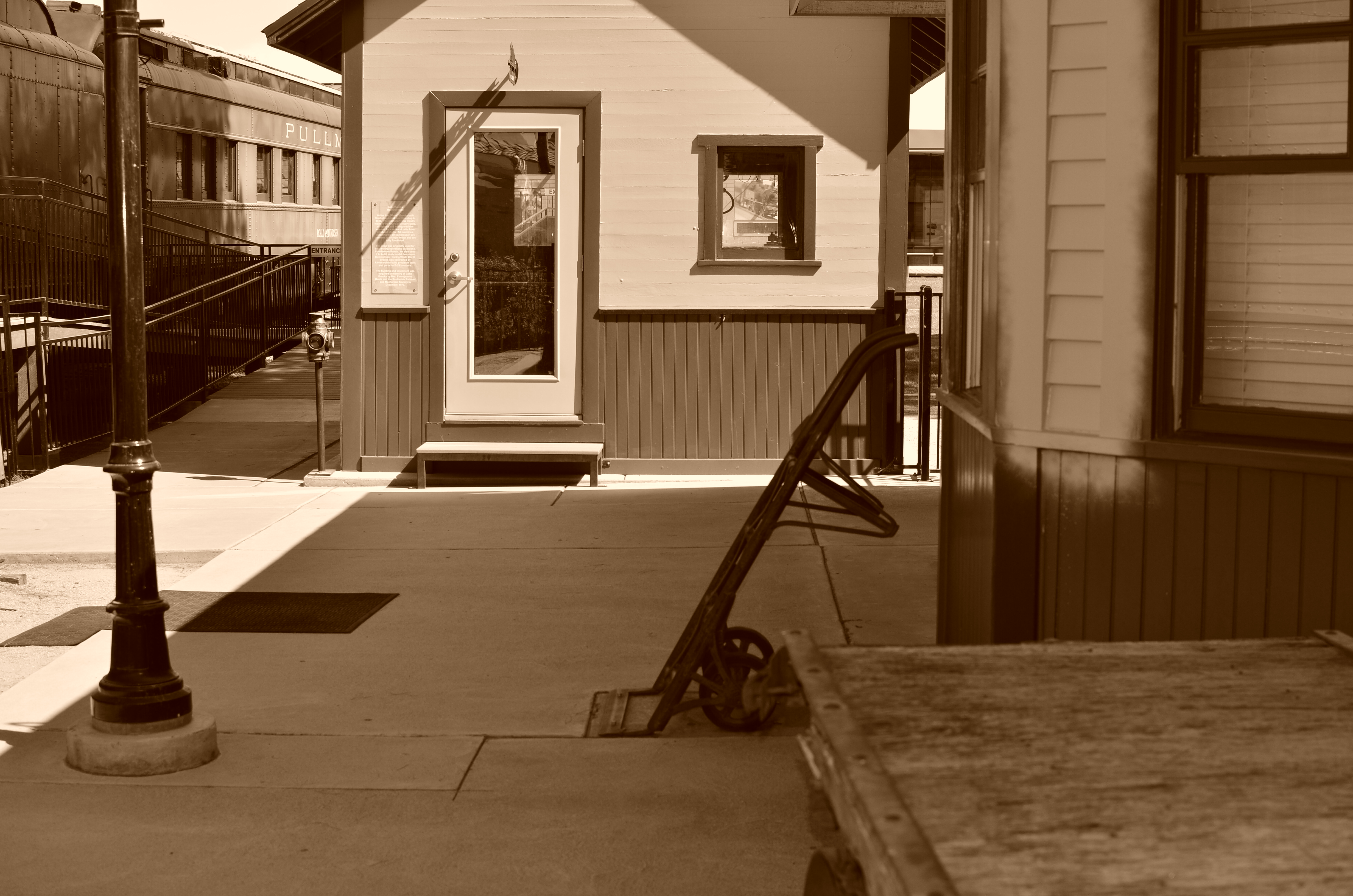
The light on this railroad depot was not as harsh or contrasty as seen here: I merely liked it better that way.
By MICHAEL PERKINS
PHOTOGRAPHY ALWAYS SEEMS TO BE ABOUT TWO THINGS THAT ARE POLAR OPPOSITES. On one hand, we have labored mightily for nearly two hundred years to make our little boxes reproduce as full a representation of the range of tone in nature as possible, to ape the eye to a clinical certainty. On the other hand, we love to distort that reality for specific purposes…..call it abstraction, minimalism, or your own favorite buzz word. We extol the natural look and revere the unnatural in nearly the same breath.
Originally, there wasn’t much in the way of attenuation between light and dark in photographs. Black was blackblackblack and white was whitewhitewhite (yes, I read a lot of e.e. cummings as a child). Better films eventually led to a greater variance in shades and nuances, and pioneering work by Uncle Ansel and other Big Saints produced exhaustive studies on precisely how many shades of grey could be delivered in a carefully crafted photograph. But even as we can now easily produce images with great variances in light and dark, some pictures are still served better by going back to clean, simple boundaries for values.
Hard, high-contrast blacks and whites are killers of texture but they are great modelers of dimension. A cube with stark differences between its light and dark sides takes on the more tangible feel of a solid object occupying space, and that extra degree of dimensionality helps in the success of certain compositions.
The above image was originally far more nuanced than the altered version you see here, but, as a very basic arrangement of shapes in space, I like the picture better without too much midrange value. It helps the faux nostalgia feel of the subject matter as well, even though it might be altogether wrong for a million other subjects. The unscientific answer is, you know it when you see it.
One thing is for sure. Even when we look for the ring of truth in our images, turn out that there’s more than one ring tone. Decide what you need for a specific image. Maximized selection of tools is the most single important part of making a picture.
POINTERS
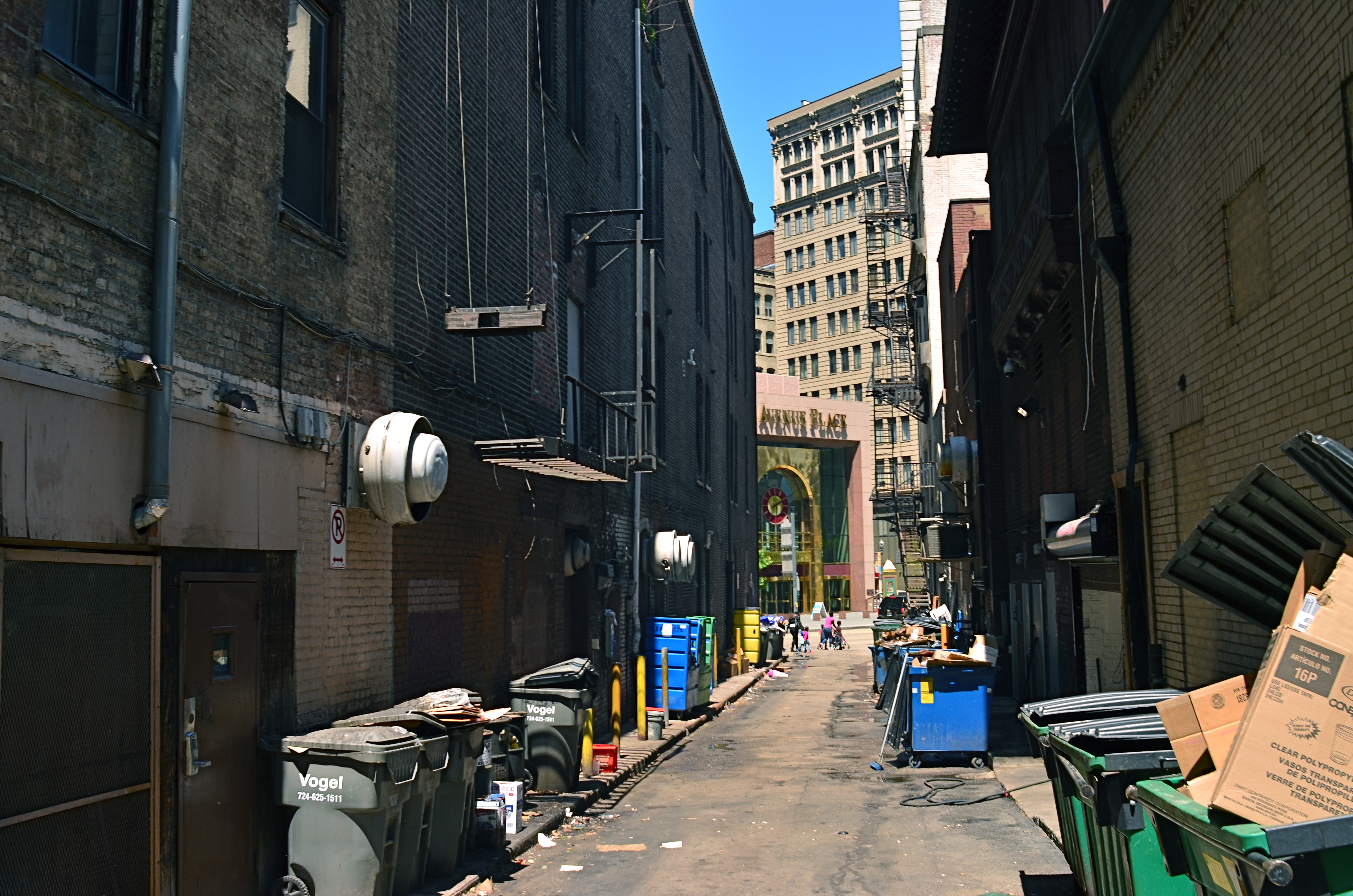
A traditional wide-angle approach to the suggestion of depth.
By MICHAEL PERKINS
WE ALL WENT THROUGH THAT OLD PERSPECTIVE EXERCISE IN ART 101. You know, the one where we draw the train tracks trailing away to an imaginary horizon, compressing the distance between the tracks as they “recede” to suggest depth, or a simulation of the way our eyes perceive it. It’s a lesson that dances somewhere back in our lizard brain whenever we compose a shot to suggest three dimensions on a flat plane (film or sensor) that only possesses two. Ongoing challenge, etc., etc.
In composing a photograph, it’s pretty easy to decide which factors in the picture actually aid that illusion, creating a big fat neon arrow to the thing we’re want to draw attention to. And some ways are better than others at selling that idea. One of the strong myths about these kinds of shots is that you need a wide-angle to make the argument for depth. Of course, that’s like a lot of “rules” in photography. It’s always true, except in those cases when it’s kinda…not.
In the top image, shot with a 24mm lens, the building at the back of the shot is lit better than the two alley walls that lead to it….a basic no-brainer of a composition. Moving left or right a bit can put the major emphasis on one wall or the other to be the arrow pointing to that object, or you can make the shot even more compact, although no less effective, in the cropping process.
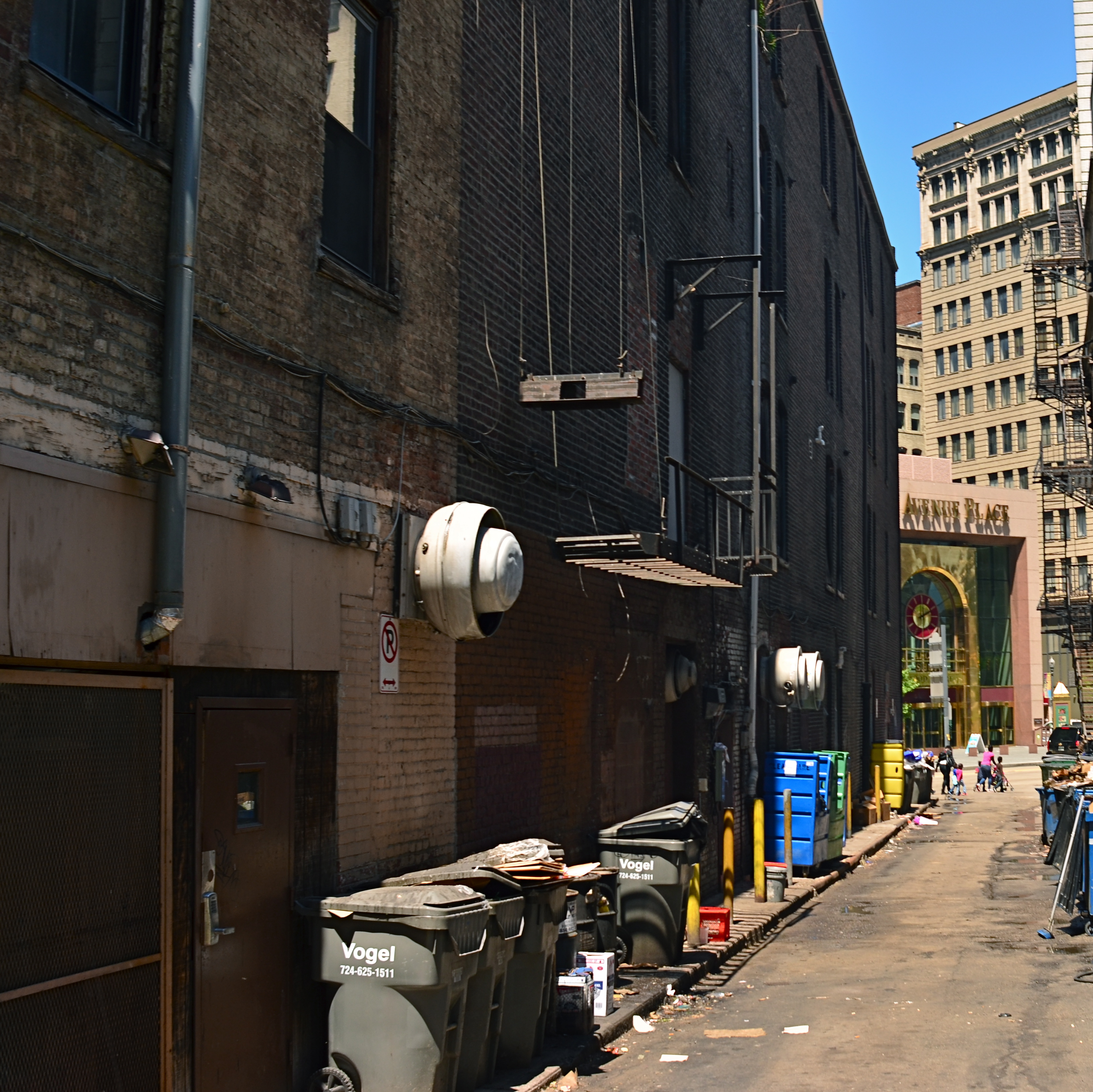
Instead of two leading lines heading for the building at the back, let’s try just one.
Of the two walls, the rows of trash cans and receding lines of windows on the left seem, at least to me, to lead more powerfully to the back building than the right, where detail is darker and objects that could act as a leading line are a little more angled and compressed. Just for kicks, I cropped the shot to a square you see just above, reframing the back building as the end of a straight, single diagonal along the left wall, making the instruction to the eye a lot more streamlined.
It’s not that the fuller frame is “wrong” per se, but I always believe that inside many shots just might be a better shot waiting to get out. Some photographs are full-born in-camera, while others emerge during what I call the “on second thought” phase.
Now to try this idea out at a railroad crossing….
FOR A LIMITED TIME ONLY
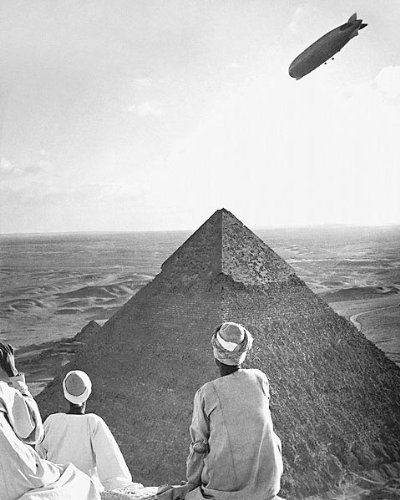
When Worlds Collide: The Graf Zeppelin cruises over the great pyramids at Giza, 1931.
BY MICHAEL PERKINS
ONCE WE WERE ABLE TO CAPTURE LIGHT IN A BOX, in the earliest days of photography, there seemed to be a worldwide obsession with recording things before they could vanish. Painters might linger in a wistful sunset over a craggy shoreline, and certainly that was part of the photographer’s prerogative as well, but, immediately following the introduction of the first semi-portable cameras, there was a concurrent surge in the recording of the ancient world…temples, churches, monuments, pyramids, waterfalls, Africa, Asia, empires new and old.
The nineteenth century saw an explosion in the number of world tours available to at least the wealthy, as seen in The Innocents Abroad, Mark Twain’s chronicling of a global excursion of Americans to the venerable ports of the old world. Cartes-de-visites (later post cards), stereoscopic views and leather-bound books of armchair photo anthologies sold in the millions, and the first great urban photographers like Eugene Atget began to “preserve” the vanishing elements of their world, from Paris to Athens, for posterity and, quite often, for profit.
This first-generation fever among shooters carried forth through two World Wars, the Great Depression, and into the journalistic coverage of revolutions and disasters seen in the present day. The photographer is aware that this is all going away, and that bearing witness to its disappearance is important. We can’t help but realize that the commonplace is on its way to becoming the rare, and eventually the extinct. We can’t know what things we regard as banal will eventually assume the importance of the contents of the pharaoh’s tombs. Ramses’ everyday toilet items become our priceless treasures. Now, however, instead of sealing up pieces of the world in pyramids, we imprison the light patterns of it, with history alone to judge its value.
Making pictures is taking measure of our world. It is our voice preserved for another time. This is what we looked like. This is what we thought was important. This shows the distance of our journey. New worlds are always crowding out old ones. Photography slows that process so we can see where one curtain comes down and another rises.
WRITE YOUR OWN STORY
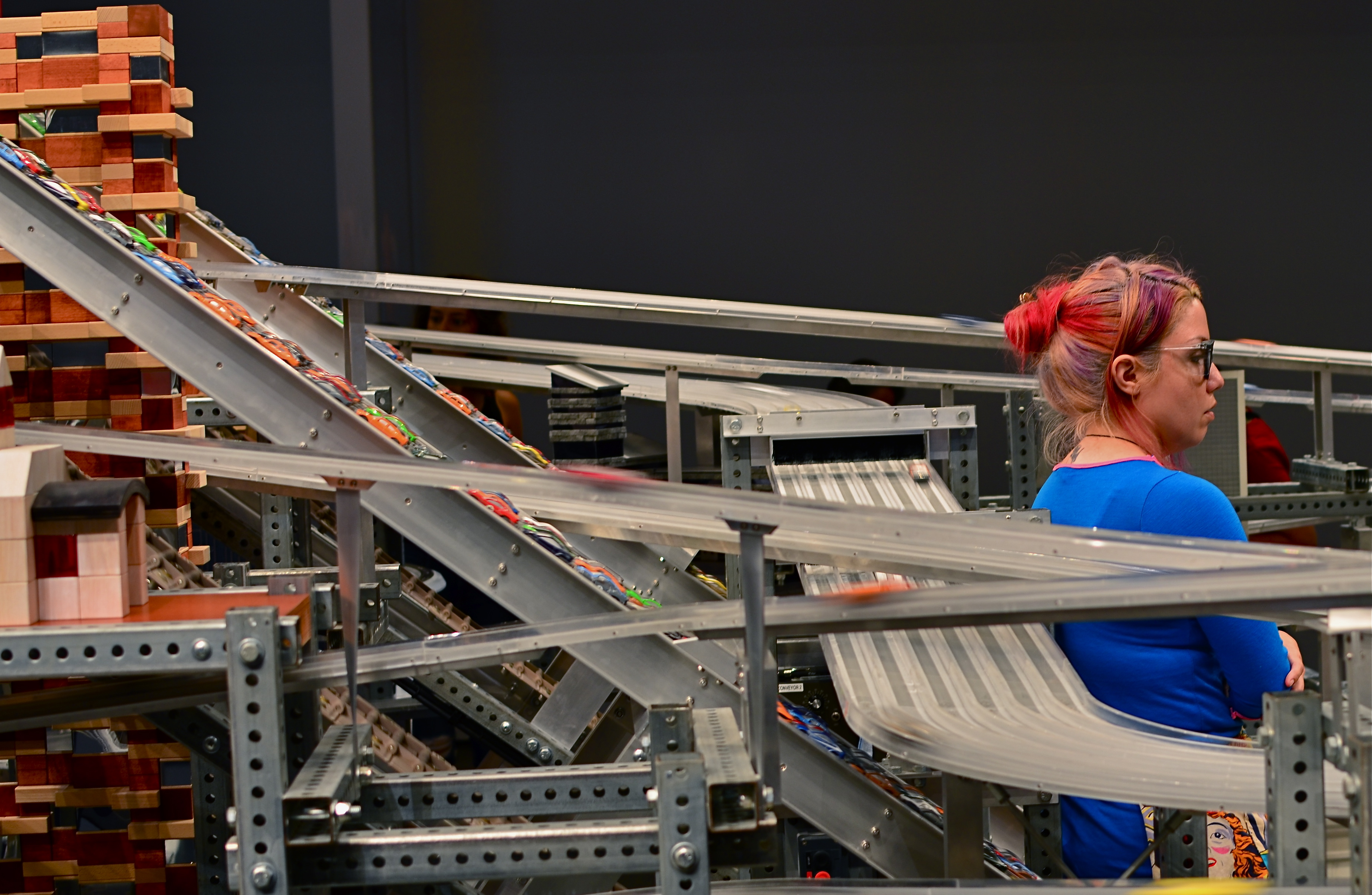
On Stand-By, 2015. 1/25 sec., f/3.5, ISO 100, 35mm.
By MICHAEL PERKINS
THE OLDEST CONSISTENT ROLE OF PHOTOGRAPHY IS AS NARRATIVE, its storytelling ability borrowed from painting but later freed, as painting would also be, from representations of mere reality. Before the beginning of the 20th century, photographs held moments, chronicled events, froze people in time. Over the next hundred tumultuous years, every part of the narrative process for all arts would be challenged, shattered and reassembled several times over. We pretend there are still rules that always apply to what an image says to us, but that is really only sentiment. Some photographs simply are.
What they are is, of course, both fun and infuriating for creator and audience alike. We wonder sometimes what we are supposed to think about a picture. We take comfort in being led a certain way, or in a set sequence. Look here first, then here, then here, and draw such-and-such a conclusion. But just as music need not relate a story in traditional terms (and often does not) the photograph should never merely present reality as a finished arrangement. The answer to the question, “what should I think about this?” can only be, whatever you find, whatever you yourself see.
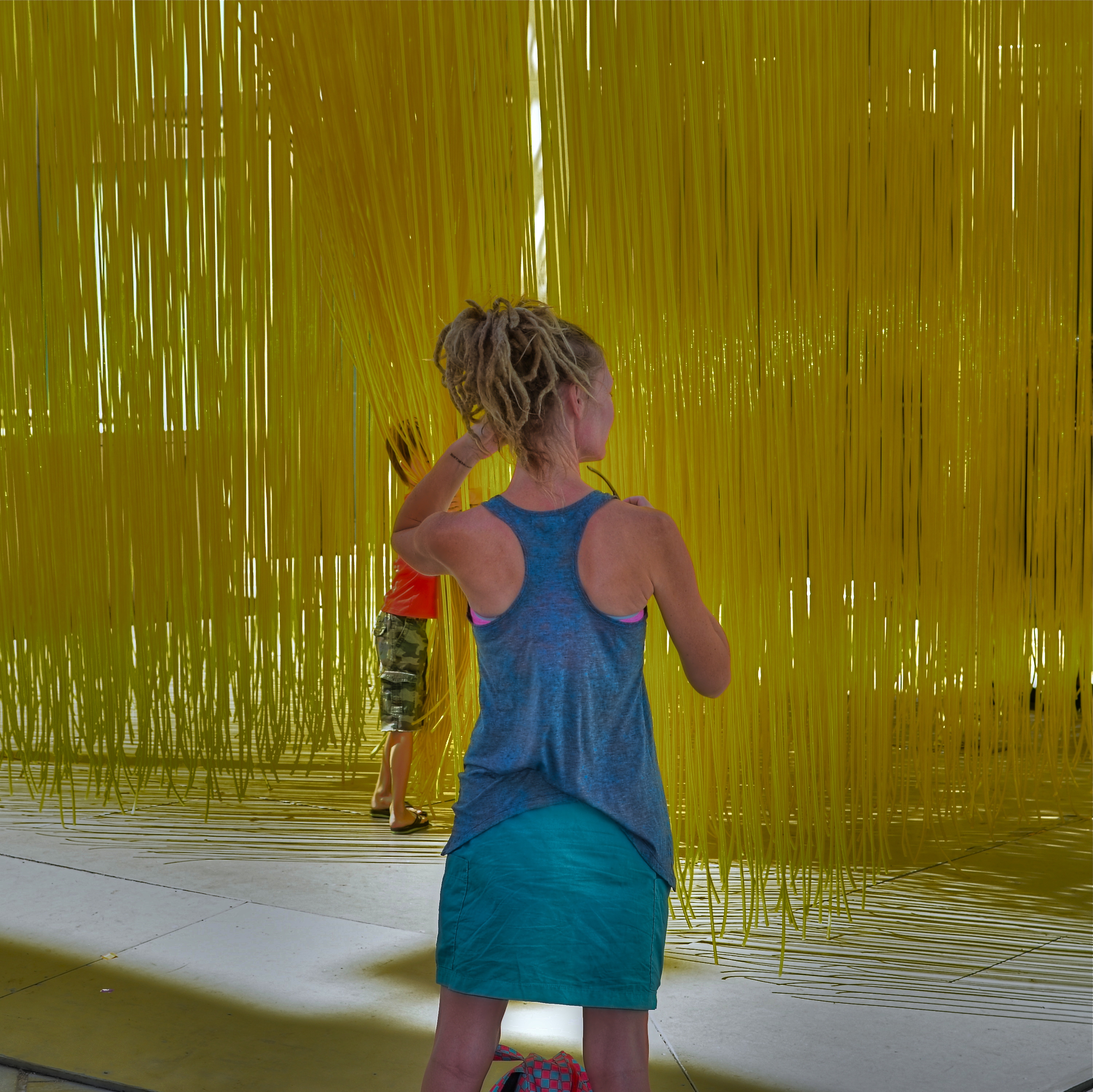
Strands, 2015. 1/200 sec., f/5.6, ISO 100,35mm.
I love having a clear purpose in a picture, especially pictures of people, and it has taken me years to make such images without the benefit of a deliberate road map. To arrange people as merely elements in a scene, then trust someone else to see what I myself cannot even verbalize, has forced me to relax my grip, to be less controlling, to have confidence in instincts that I can’t readily spell out in 25 words or less.
What are these people doing? What does their presence reveal beyond the obvious? Is there anything “obvious” about the picture at all? Just as a still life is not a commentary on fruit or a critique of flowers, some photographed people are not to be used in the service of a story. They can, in the imaginations of viewers, provide much more than that. Photography is most interesting when it’s a conversation. Sometimes that discussion takes place in strange languages.
A GAME OF INCHES
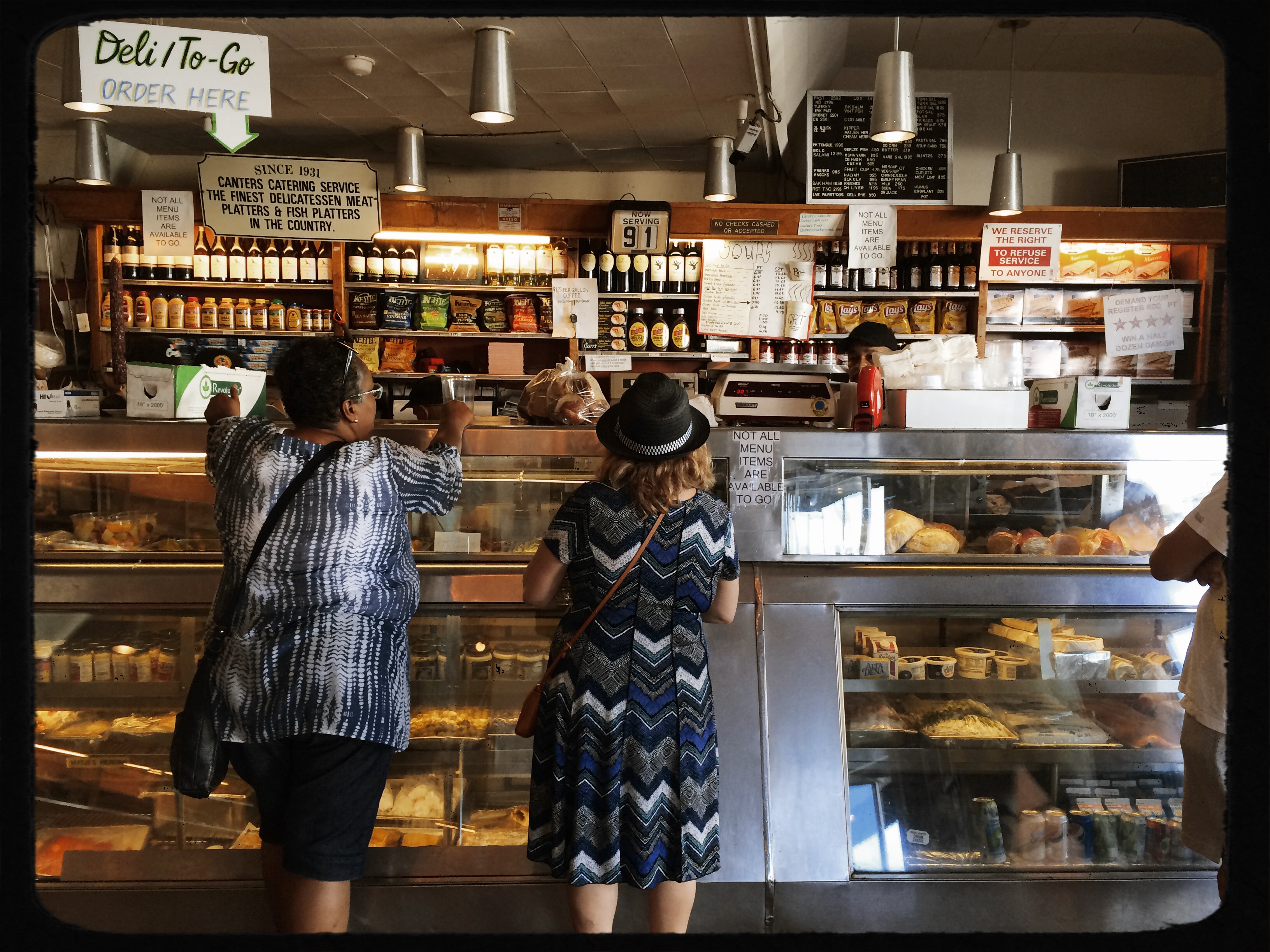
Carry-Out At Canter’s, 2015. One generous hunk of window light can be all you need, even on a cel phone.
By MICHAEL PERKINS
WINDOW LIGHT IS A BOY PHOTOGRAPHER’S BEST FRIEND. The glass usually acts like a diffuser, softening and warming the rays as they enter, making for intimate portrait and street shots. Window light tends to wrap around the objects in its path, adding a look of depth and solidity to furniture and people. It’s also uncomplicated, universally available, and free. And that’s great for cell phone cameras.
At this writing, Apple’s next iPhone will soon up the ante on both resolution and light sensitivity, meaning that more and more shots will be saved that just a few years ago would have been lost, as the mobile wars give us more features, more control, and more decision-making options that recently belonged only to DSLRs and other upper-end product. That will mean that the cameras will perform better with less light than ever before, over-coming a key weakness of early mobiles.
That weakness centered on how the camera would deal with low-light situations, which was to open to its widest aperture and jack up the ISO, often resulting is grungy, smudgy images. Turn too many inches away from prime light (say a generous window in daytime) and, yes, you would get a picture, but, boy, was it ever dirty, the noise destroying the subtle gradation of tones from light to dark and often compromising sharpness. Those days are about to end, and when they do, people will have to seriously ask if they even need to lug traditional imaging gear with them, when Little Big Boy in their back pocket is bringing the “A” game with greater consistency.
As this new age dawns, experiment with single-point window light to see how clean an image it will deliver on a cel phone. Pivot away from the light by a few inches or feet, and compare the quality of the images as you veer deeper into shadow. You will soon know just how far you can push your particular device before the noise starts creeping in, and having that limit in your head will help you assess a scenario and shoot faster, with better results. Camera phones, at least at their present state of development, will only do so much, but you may be surprised at just how high their top end actually is. You need not miss a great shot just because you left your Leica in your other pants. As usual, the answer is, Always Be Shooting.
SEISMOGRAPHY
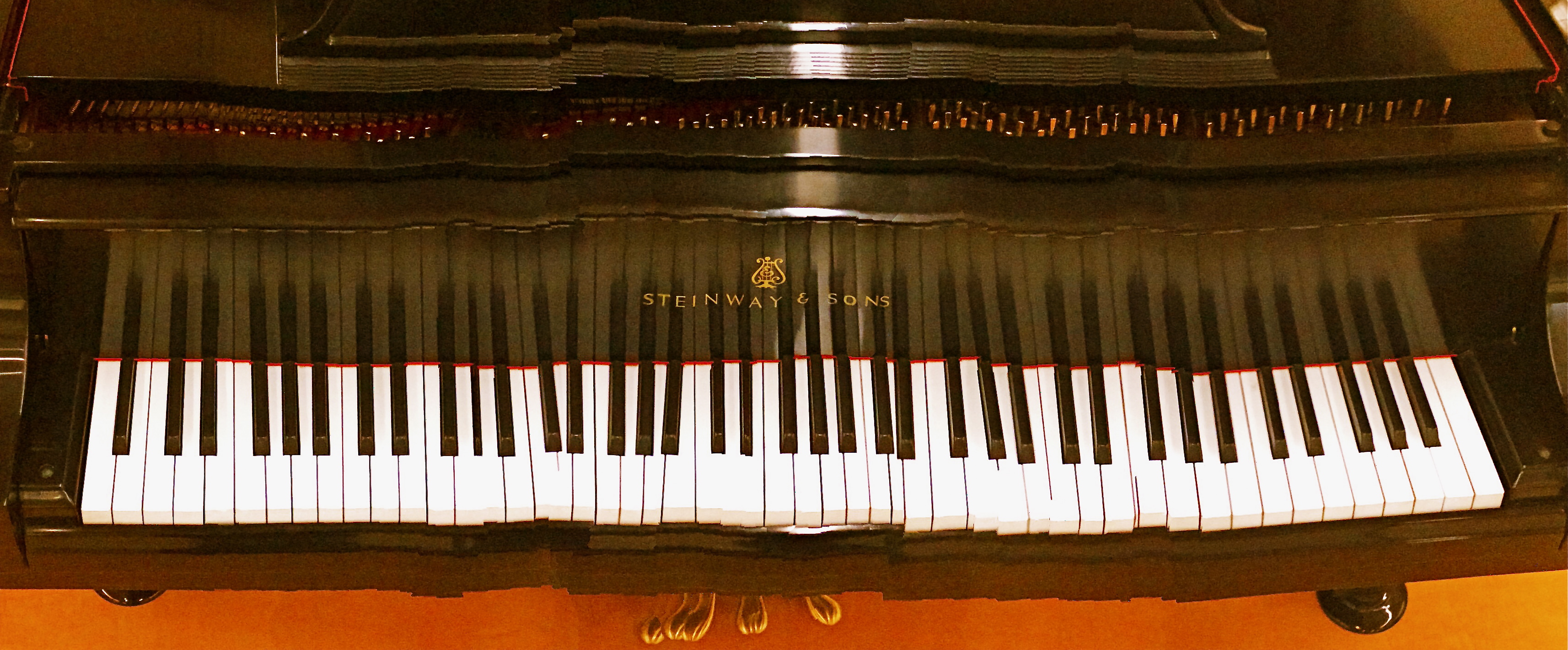
Symphonie Kinetique, 2015. Handheld in-camera manipulation, in real time, of the iPhone’s on-board pano app.
By MICHAEL PERKINS
I THINK THAT, FOR YOUNG AND EMERGING PHOTOGRAPHERS, there’s a greater natural comfort in coloring outside the lines, bending or breaking rules of the medium just to see what happens, regardless of the warnings of user’s manuals or procedurals. This is completely normal, and is, in fact, healthy for the art overall, as every age’s young turks shake the process up and keep us more hidebound shooters from imprisoning photography in a crust of habit.
Phone-based apps play directly to this “what the hell, let’s try it” tendency in the newbie. By their very nature, apps allow people to achieve in a second what used to take years of formal training and painstaking darkroom effort to achieve. This creates the feeling that anything is possible, and that, with the instantaneous feedback loop of digital, there is nothing to be risked or lost by trying.
Whenever I get a new app, I try to figure out what it can produce when used completely counter-intuitively, that is, by going in the direct opposite of its “correct” use. Call it a procedural hack if you will, taking one of the most available effects, the iPhone’s on-board panorama app, as a prime example. Now we all know how the app is supposed to work. You pan evenly and slowly from left to right across a scene and a lot of separate vertical “planks”, all of which are individual exposures, are stitched together by the software to give the appearance of a continuous image. You are instructed by the app when to slow down, and given a guide arrow as you pan that keeps you pretty much on an even horizon. And that’s all you’re supposed to be able to do.
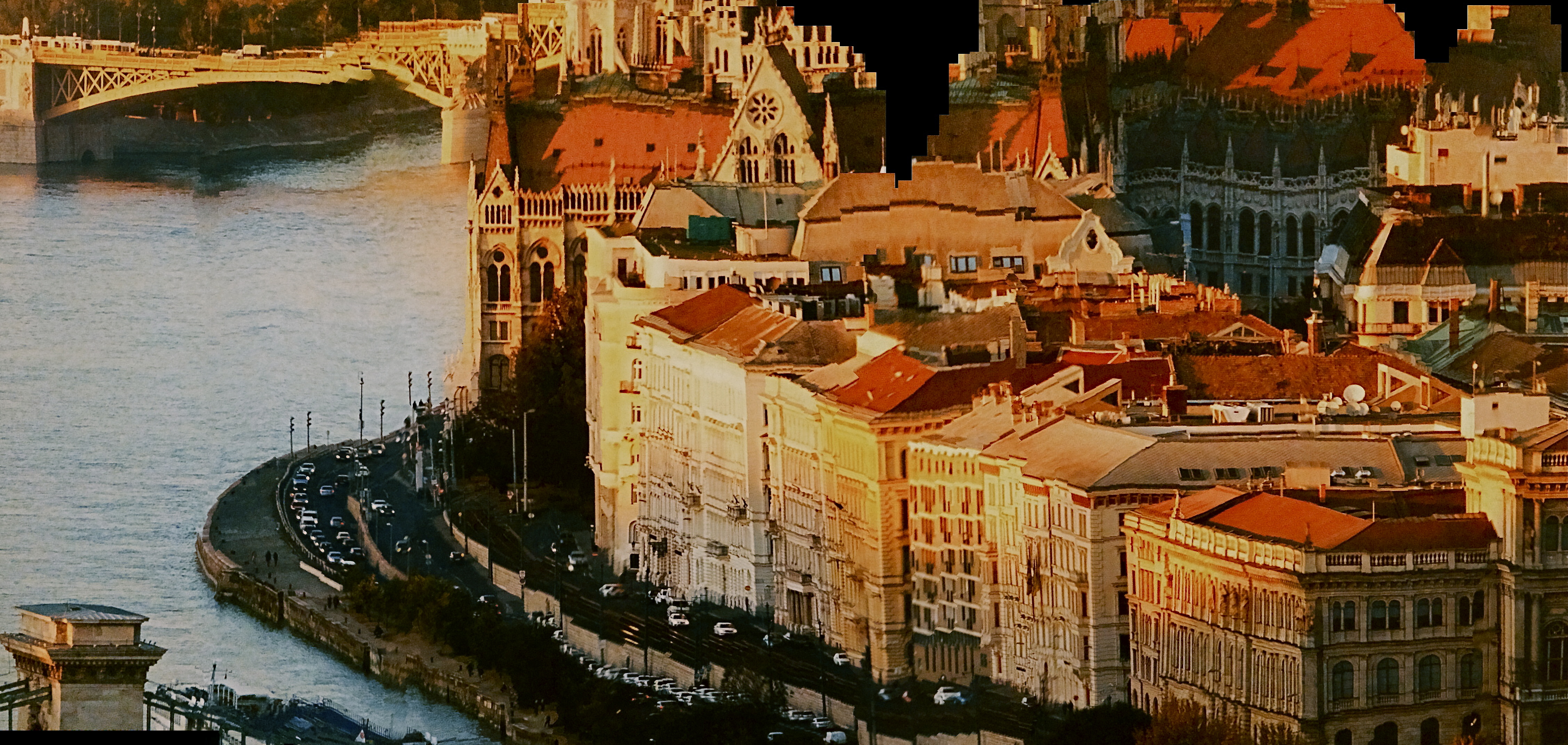
The Fall Of Europe, 2015. Same technique applied to a wall-mounted photo mural.
Of course things can go wrong, and watching how they go wrong is what started me on an experiment. If, for example, someone walks through your shot while you are panning, he may appear in only a few of the “planks”, as a warped, disembodied sliver of his leg or arm, or be stretched like taffy across part of the frame. Thing is, this gives you a neat interpretational option for panos that you want to appear surreal. The idea is to deliberately throw those individual planks out of alignment.
Here’s how it works: as you pan, shift your up-down axis either side of that arrow’s horizon guideline. Go gently if you want things to undulate in a smooth wave. Jerk it around a bit of you want to create a seismographic effect, with sharp high-low spikes in your subject. I should note here that this requires a lot of experimentation to get the overall look that you want.
In the top image, I wanted to suggest the kinetic energy of musical dynamics in a static image, so I warped the piano keys out of alignment with each other, as if Salvador Dali had painted the keyboard. In the second image, I used the camera to scan a mounted mall mural, allowing me to work with a still image that I could tweak to suggest a collapsing building or an earthquake. Either of these images are easy to do with nothing more than your iPhone’s pano tool, and the effects can be dramatic. So love your apps, but love them enough to imagine what fun it can be to make them misbehave.
UP CLOSE AND POISONAL
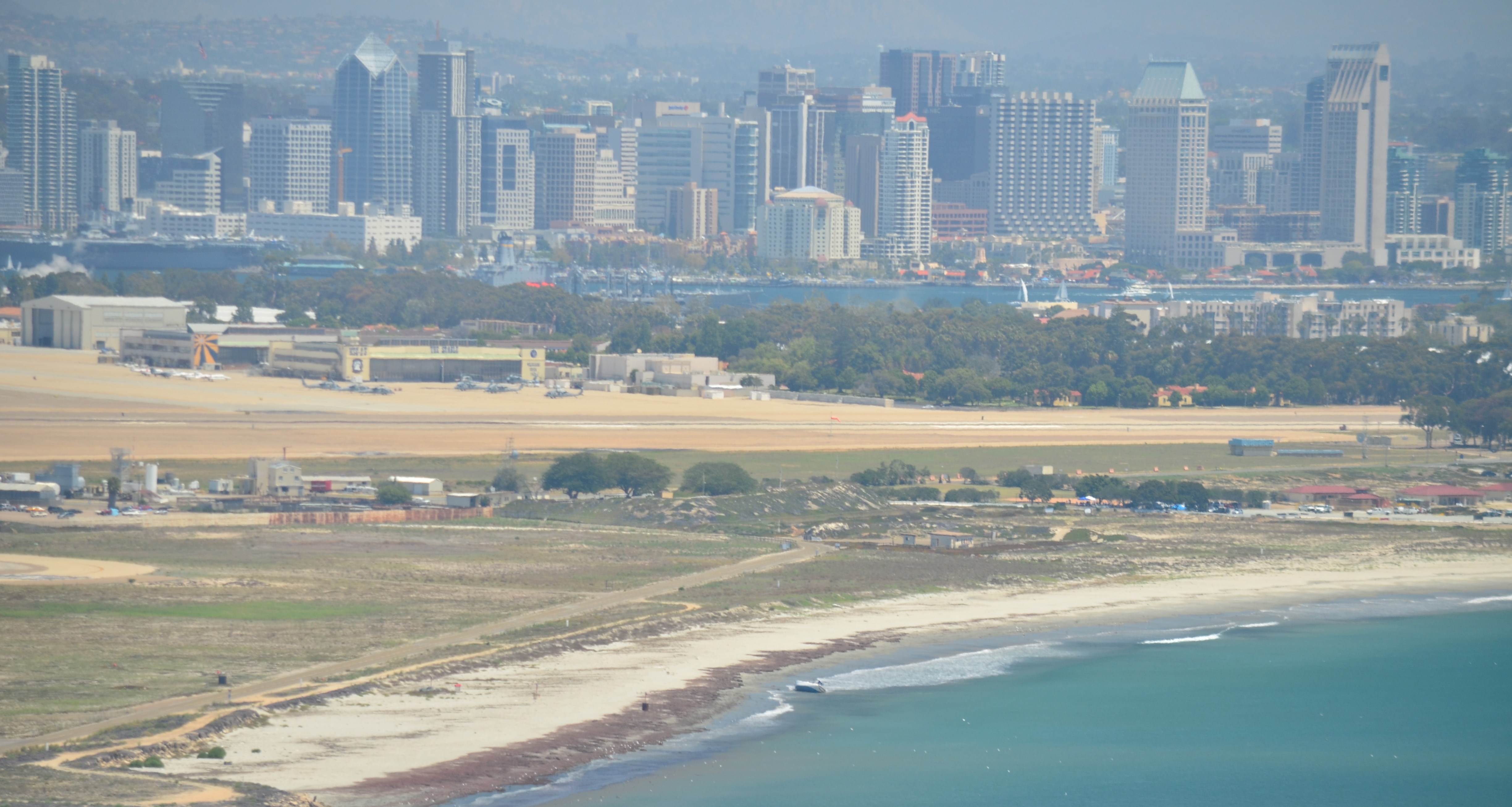
Gee, this 300mm telephoto shot has it all. Terminal mushiness, hazy washout, crappy contrast. Who could ask for anything more? You could.
By MICHAEL PERKINS
THERE MAY BE A STATISTICAL TABLE SOMEWHERE that breaks down the percentage of photographers who use telephoto lenses consistently versus those who only strap one on for special occasions, but I have never seen one. Of course, I’ve never seen a three-toed sloth either, and I’m sure they exist. Fact is, there are always enough telephoto newbies (or “occasional-bies”) out there to guarantee that many of us make some pretty elemental mistakes with them, and come home with fewer jewels than we hoped for. I should know, since I have produced many such “C-minus” frames, like the image seen above. For a better understanding of everything I did wrong here, read on.
If telephotos just had to deliver magnification, and otherwise worked the same as standard lenses, they wouldn’t produce so many problems. In fact, though, they need to be used in several very different ways. For one thing, zooming in exponentially increases not only the chance of camera shake but the visible results of camera shake. A little bit of tremble at 35mm may go undetected, with little discernible effect on sharpness, while the very same amount of shake at 300mm or above creates a mathematically greater amount of instability, rendering everything soft and mushy.
This means that handheld shots at the longer focal lengths are fundamentally harder to do. Solutions can include faster shutter speeds, but that cuts light at apertures of f/3.5 and smaller, where light is already diminished. You might get around that with a higher ISO, which may not produce acceptable noise on a brightly lit day, but you must experiment to see. If you simply must have longer exposures, you’re pretty much onto a tripod, and, if workable, a cable release or wireless remote to guarantee that even your finger on the shutter doesn’t create a tremor. Remember, you’re talking about very minor amounts of movement, but they’re all magnified many times by the lens.
Some people even believe that a DSLR’s process of swinging its internal mirror out of the way before the shutter fires can create enough vibration to ruin a shot at 400mm or further out. In such case, many cameras allow you to move the mirror a little earlier, so that it’s stopped twitching by the time the shutter opens. Lots of trial and error and home-bred calculus here.
One of the factors fouling many of my own telephoto shots comes from shooting at midday near major cities, adding both glare and pollution to the garbage your lens is trying to see through. Colors get washed out, lines get warped, sharpness goes bye-bye. For this, you might try shooting earlier, taking off your haze filters (’cause they cut light) and seeing if things come out clearer and prettier.
Telephotos are a fabulous tool, but like anything else you park in front of your camera, they introduce their own technical limits and challenges into the mix. Seldom can you get results by just swinging your subject into view and hitting the shutter. Get comfortable with that fact and you will find yourself taking home more keepers per batch.
9/11/15: THE NEW, NEW COLLUSSUS
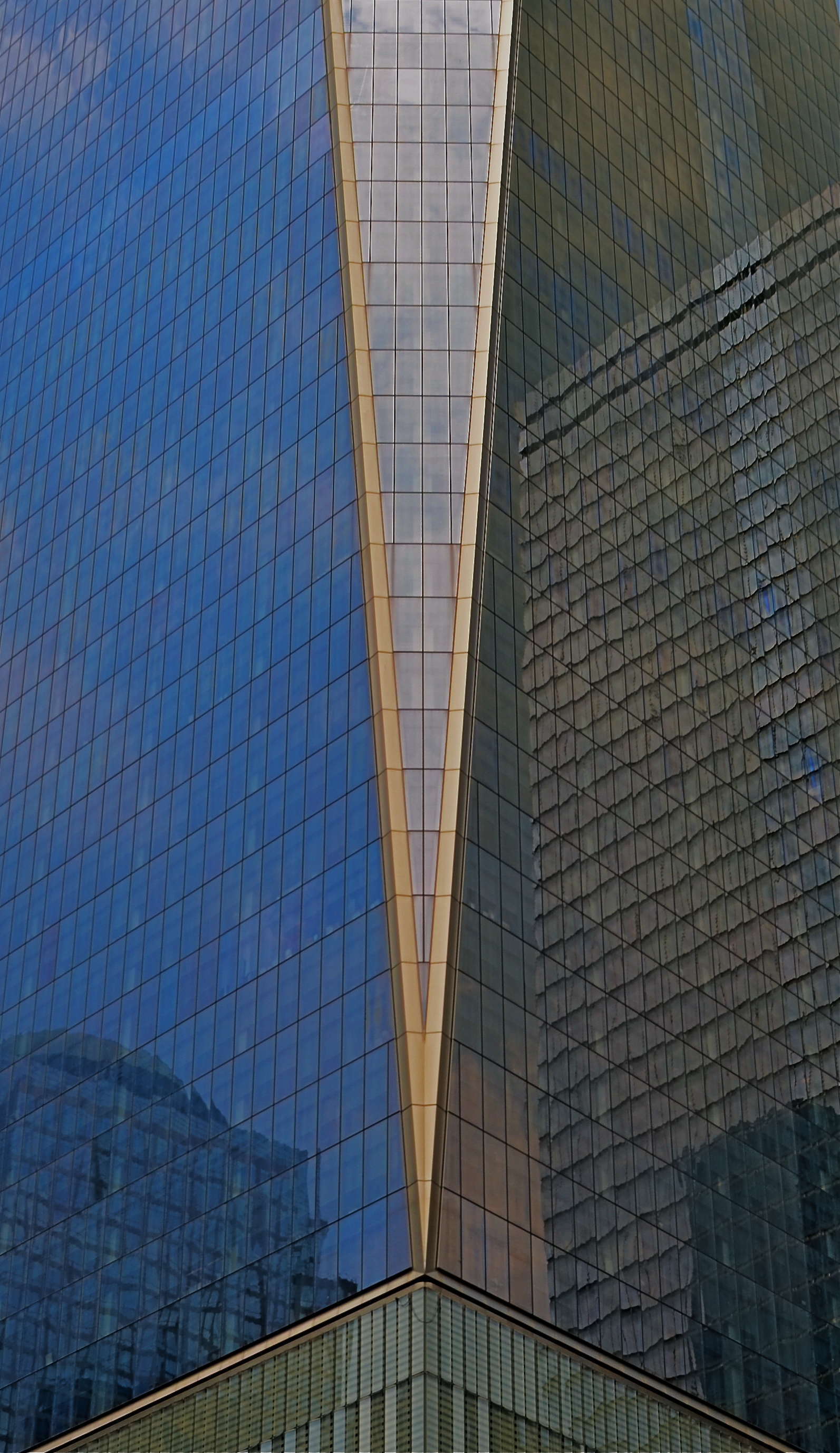
Icoceles, 2015. Up close or far away, the World Trade Center is a show unto itself.
By MICHAEL PERKINS
THE SKYLINE OF NEW YORK CITY, if you think about it a bit, is almost like a bar graph in steel and stone.
Just as higher and lower bars on a business graph chart the successes and failures of a company or stock, so do the vertical surgings above Manhattan island track the ebb and flow of energy, of the life flow of the most amazing metropolis on earth. And for photographers, the Apple’s skyline is always news. Someone is moving up. Someone else is moving down, or over. There’s always a new kid on the block, and that means that the photographic story of New York must be re-imagined yet again.
New York buildings create context for themselves and for the city at large, as the fresh arrivals jostle in and try to mingle with their more historically landed neighbors. That process is always exciting, but the rebirth of the part of lower Manhattan scarred and scorched by the hateful events of 9/11/01 brings more than just a new crop of jutting profiles. It brings one of the most powerful symbols of resurrection in the modern age. To paraphrase the song lyric, America proved, on that most battered of battlegrounds, that, if we could make it there, we could make it anywhere, and the nation at large stood a little taller with the arrival of the new World Trade Center.
Cameras now idealize that which is already miraculous, and WTC One, visible from anywhere in the city, will create its own photographic history, or, rather, make it irresistible for photographers to try to write it themselves. Postcard views, neighborhood contrasts, abstractions, souvenir snaps…all will be the story and none will be the story, at least not the whole story. New York is always ready for her close-up, but the challenge is always, are you good enough to shoot her best side?
Photographers visit New York to size themselves up in their own bar graph of pass/fail/maybe. Like everyone who ever stepped off a Port Authority bus fresh off the farm, they ask themselves: am I good? According to whom? Compared to what? Can I make something last as I create images of a city that not only never sleeps, but never even slows down?
“Autumn in New York. It’s good to live it again….”
WITHOUT A LEG TO STAND ON
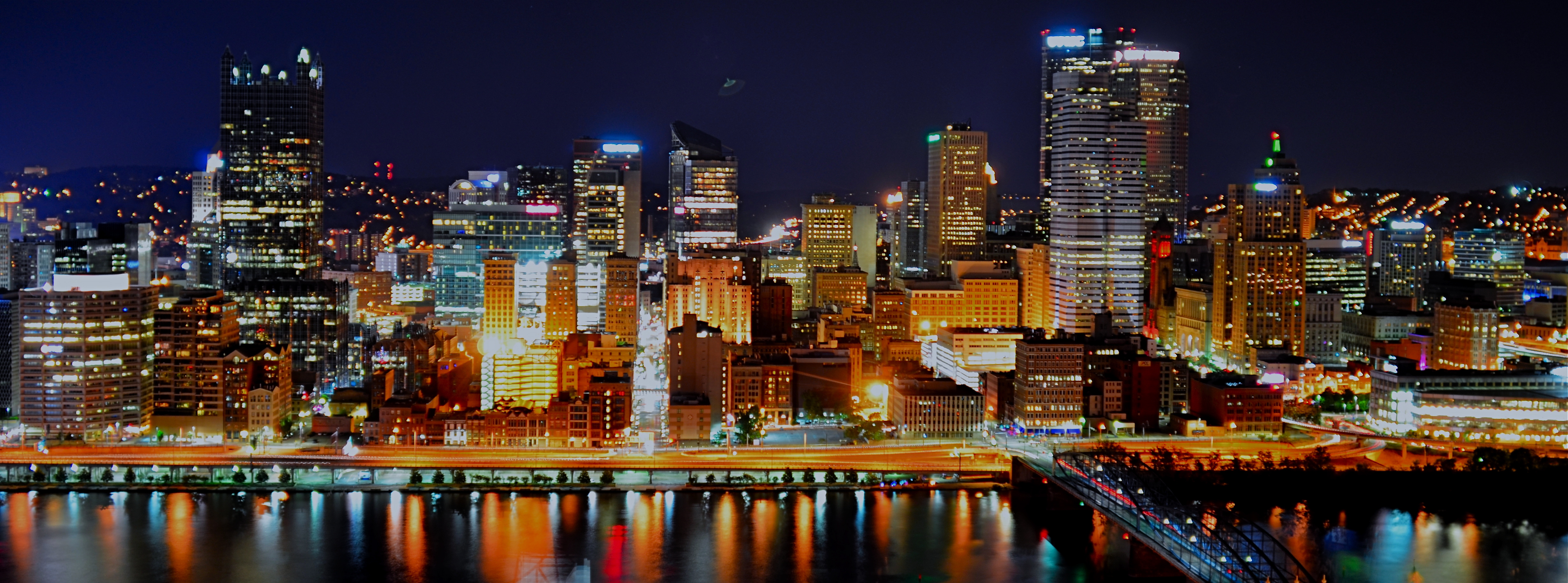
A tripod night exposure that could have been a contender, had I truly been prepared.
By MICHAEL PERKINS
SHOOTING ON A TRIPOD IS OFTEN RECOMMENDED as the way to afford yourself the most stability in a long exposure. After all, few of us are robotic enough to hold a camera stock-still for anything below a third of a second, so it’s a no-brainer to park your camera on something that’s too inhuman to flinch. You can also take amazing stuff hand-held on shorter night exposures, so long as you (a) have a lens that will shoot around f/1.8 or wider and (b) you can live with the noise a higher ISO will engender.
So, yeah, tripods have their place, but they are not the only determinants in the success of a night-time shoot. And those other x-factors can severely compromise your results. There is the stability of the tripod itself, which isn’t a big sweat if you shelled out $900 for a carbon-fiber Gitzo Pan/Tilt GK, but might generate heartburn if you got something closer to a set of metallic popsicle sticks for $29 at Office Max. The shot above was taken using my own modest (cheap) rig atop Mount Washington across from downtown Pittsburgh, and a few of the healthier gusts threatened to take it and me on a quick lap around the riverfront. Some people buy sandbags. Some believe in the power of prayer. Your choice.
Another x-factor for ‘pod shots is the actual weather you’re shooting in, which will, let’s say, shape your enthusiasm for staying out long enough to get the perfect shot. The smaller your aperture, the longer the exposure. The more long exposures you take, the longer you, yourself, are “exposed”…to snow, sleet, and all that other stuff that mailmen laugh at. Again, referencing the above image, I was contending with freezing drizzle and a windbreaker that was way too thin for heroics. Did I cut my session short? i confess that I did.
I could also mention the nagging catcalls of the other people in my party, who wanted me to, in their profound words, “just take the damned picture” so they could partake of (a)a warm bar, (b) a cold beer, (c) a hot waitress. Result: a less than perfect capture of a fairly good skyline. A little over-exposed, washing out the color. A little mushy, since the selfsame over-exposure allowed the building lights to burn in, rendering them glow-y instead of pin sharp. I was able to fix some of the color deficiencies later, but this is not a “greatest hits” image by any stretch.
Tripods can be lifesavers, but you must learn to maximize their effectiveness just like any other piece of camera equipment. If you’re going to go to a buncha trouble to get a shot, the final result should reflect all that effort, quality-wise.
THE FUTURE’S SO BRIGHT, I GOTTA WEAR SHADES
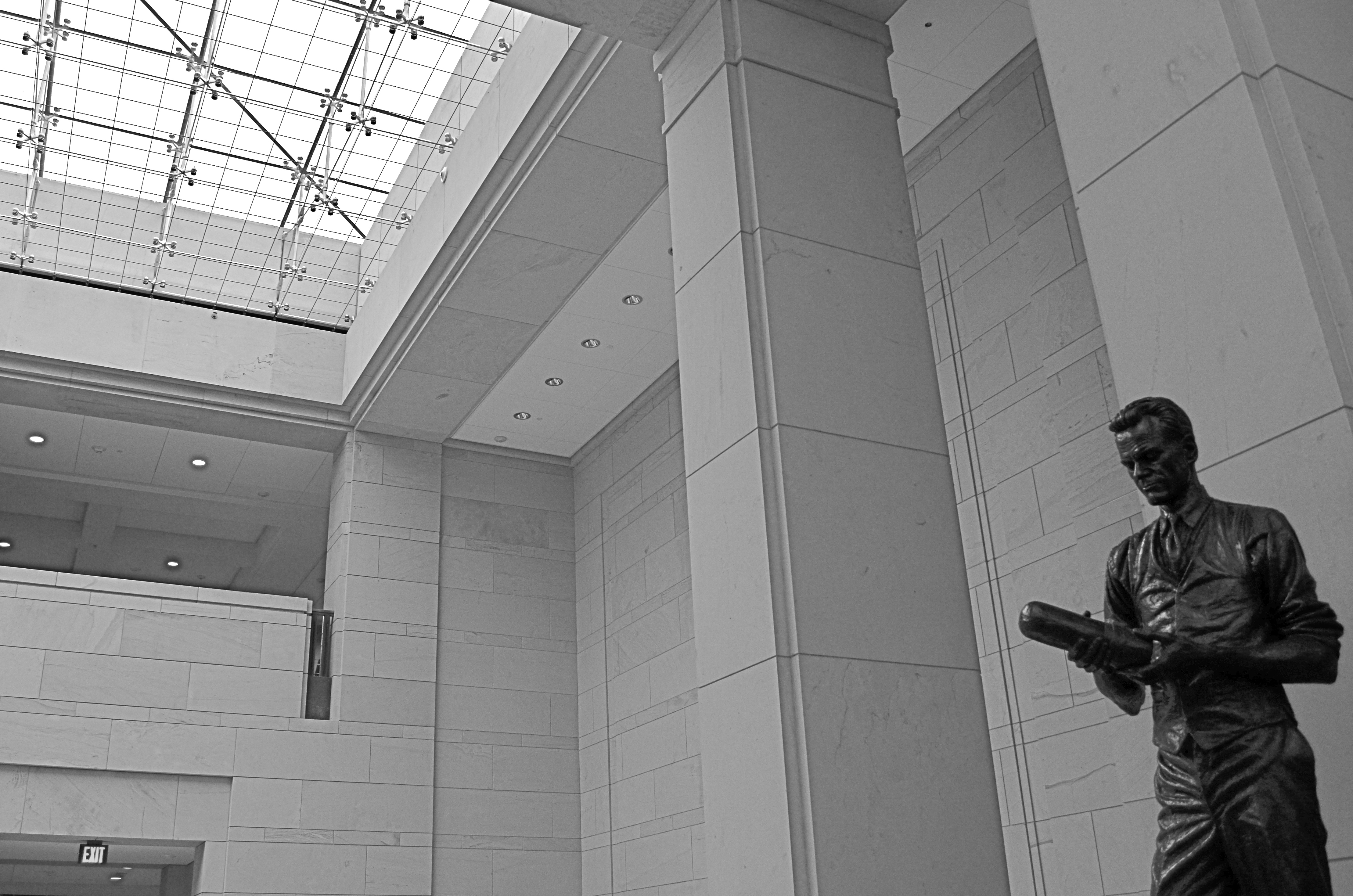
This shot is a snap (sorry) with available light and today’s digital sensors. 1/100 sec., f/5.6, ISO 250, 20mm.
By MICHAEL PERKINS
THERE IS A GLOBAL RACE, ACCELERATING RAPIDLY SINCE THE DAWN OF THE DIGITAL AGE, toward better, faster image sensors in cameras great and small, as we wage the eternal photographic battle against the limits of light. It’s one more reason why this is the best time in the medium’s history to be making pictures.
It’s hard to express what a huge game-changer this is. Film-based photography advanced the science of gathering light in slow fits and starts for more than a century, with even some of the most popular consumer films rated at very slow speeds (Kodachrome) or, if faster, extraordinarily high grain (Tri-X). Suddenly, the world’s shadowy interiors, from stadiums to basements, give up their secrets to even bargain-priced cameras as ISO ratings for sensors climb and noise/grain abatement gets better and better.
The above image, taken inside the U.S. Capitol building in Washington, would have, in film terms, required either a full-open aperture (making a consistent depth of field from front to back tricky), a slow exposure (hard to go handheld when you’re on a tour) or a film rated at 400 or above. Plus luck.
By contrast, in digital, it’s a casual snap. The f/5.6 aperture keeps things sharp from front to back, and the ISO rating of 250 results in noise that’s so low that it’s visually negligible. The statue of television pioneer Philo Farnsworth is dark bronze, and so a little re-contrasting of the image was needed in post-editing to lighten up the deeper details, but again, the noise is so low that it’s really only visible in color. As it happens, I actually like the contrast between the dark statue and the bright room better in monochrome anyway, so everyone wins.
The message here is: push your camera. Given today’s technology, it will give you some amazing things, and the better you understand it the more magic it will produce. We are just on the cusp of a time when we can effectively stow the flash in the closet except in very narrow situations and capture stuff we only used to dream about. Get out there and start swinging for the fences.
YESTERGRUBBING
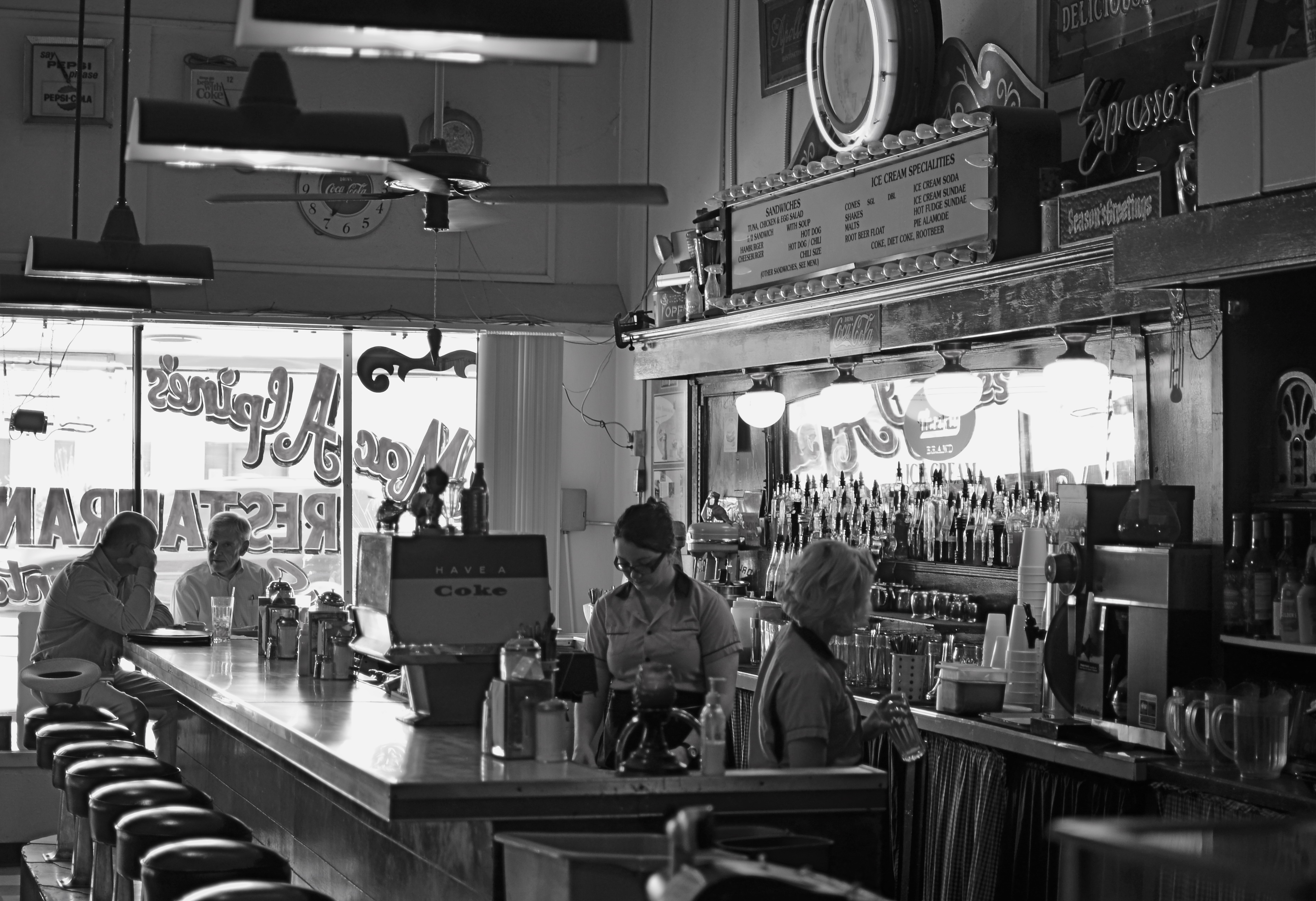
Remember when the heaviest decision of your day was what flavor syrup you wanted in your Coke?
By MICHAEL PERKINS
I ALWAYS SCRATCH MY HEAD WHEN I SEE AN EATERY sporting a sign that boasts “American Cuisine”, and often have to suppress an urge to step inside such joints to ask the proprietor to explain just what that is. If there is one thing about this sprawling broad nation that can’t be conveniently corralled and branded, it’s the act of eating. Riff through a short stack of Instagrams to see the immense variety of foodstuffs that make people say yum. And as for the places where we decide to stoke up….what they look like, how they serve us, how they feel….well, that’s a never-ending task, and joy, for the everyday photographer.
Eating is, of course, more than mere nourishment for the gut; it’s also a repast for the spirit, and, as such, it’s an ongoing human drama, constantly being shuffled and re-shuffled as we mix, mingle, disperse, adjourn and regroup in everything from white linen temples of taste to gutbucket cafes occupying speck of turf on endless highways. It’s odd that there’s been such an explosion of late in the photographing of food per se, when it’s the places where it’s plated up that hold the real stories. It’s all American, and it’s always a new story.
I particularly love to chronicle the diners and dives that are on the verge of winking out of existence, since they possess a very personalized history, especially when compared with the super-chains and cookie-cutter quick stops. I look for restaurants with “specialities of the house”, with furniture that’s so old that nobody on staff can remember when it wasn’t there. Click. I yearn for signage that calls from the dark vault of collective memory. Bring on the Dad’s Root Beer. Click. I relish places where the dominant light comes through grimy windows that give directly out onto the street. Click. I want to see what you can find to eat at the “last chance for food, next 25 mi.” Click. I listen for stories from ladies who still scratch your order down with a stubby pencil and a makeshift pad. Click. Click. Click.
In America, it’s never just “something to eat”. It’s “something to eat” along with all the non-food side dishes mixed in. And, sure, you might find a whiff of such visual adventure in Denny’s #4,658. Hey, it can happen. But some places serve up a smorgasbord of sensory information piping hot and ready to jump into your camera, and that’s the kind of gourmet trip I seek.
PUT ‘ER IN REVERSE
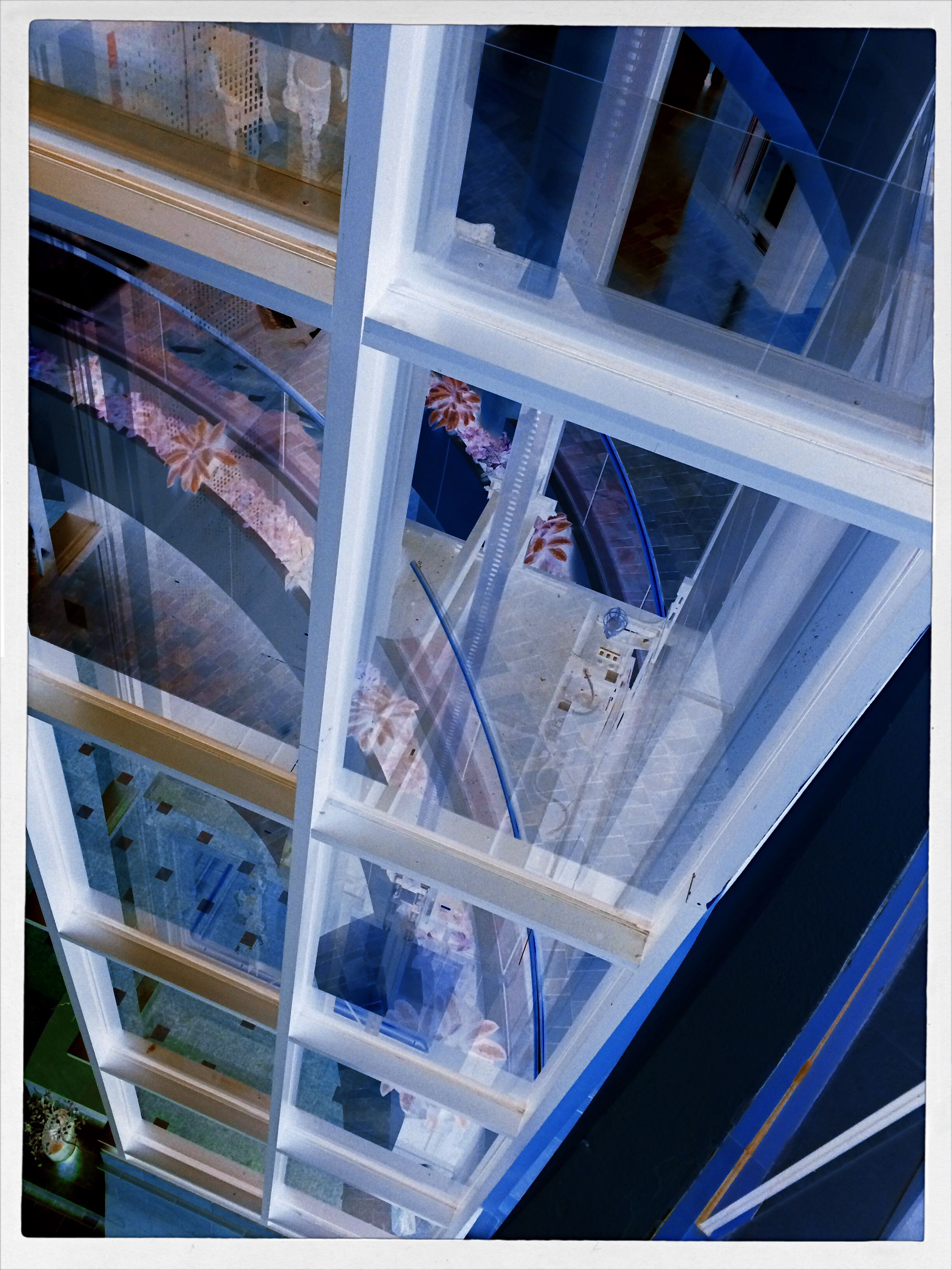
A glass elevator at a shopping mall, converted to a negative, then a fake Technicolor filter in a matters of seconds, via the phone app Negative Me.
By MICHAEL PERKINS
THERE ARE MANY WAYS TO FORCE YOUR AUDIENCE TO SEE THINGS ANEW, to strip away their familiar contexts as everyday objects and create a completely different visual effect. The first, and most obvious form of abstraction we all learned in our cradle, that of rendering a subject in black and white. Some early photographers spent so many years in monochrome, in fact, that they actually regarded early color with suspicion, as is it was somehow less real. The moral of the story is: the photograph demonstrates the world that you dictate, shown strictly on your own terms.
Abstraction also comes about with the use of lenses that distort distances or dimensions, with re-assignment of color (green radishes, anyone?), and by compositions that extract subjects from their natural surroundings. Isolate one gear from a machine and it becomes a different object. Magnify it, light it differently, or show just a small portion of it, and you are taking it beyond its original purpose, and into abstraction. Your viewer is then free to re-interpret how he sees, or thinks, about that thing.
One swift gift of the post-digital world that I find interesting is the ability, through apps, to render a negative of any image with a click or swipe, then modifying it with the same color filters that you might apply to a positive photo. This affords an incredible amount of trial-and-error in a remarkably short space of time, and better yet, you’re out in the world rather than in the lab. Of course, negatives have always been manipulated, often to spectacular effect, but always after it was too late to re-take the original picture. Adjustments could be made, certainly, but the subject matter, by that time, was long gone, and that is half the game.
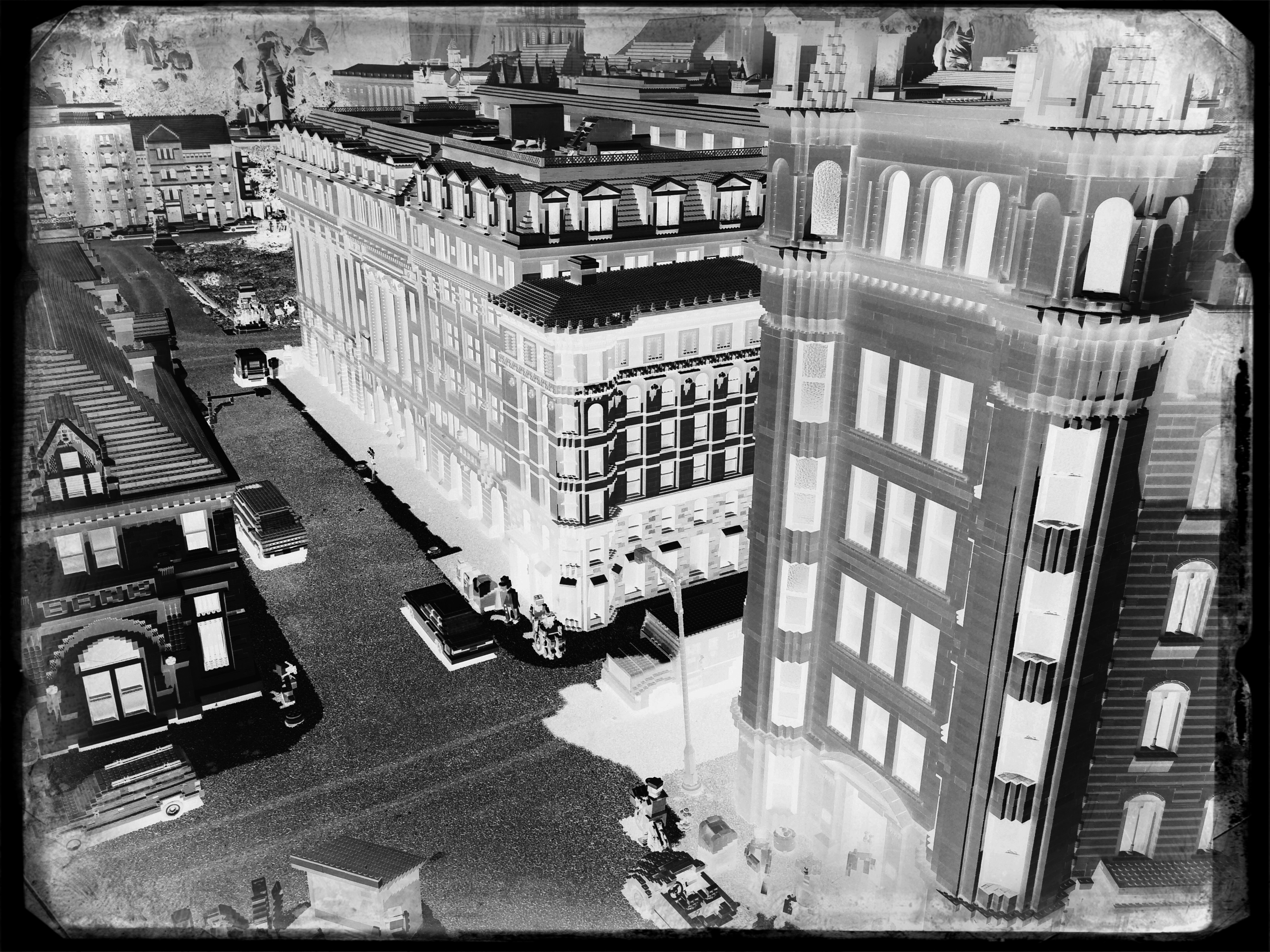
The eerie look of a an aerial reconnaissance photo, here applied to a city model at Legoland.
Reversing the color values in a photograph is no mere novelty. Sometimes a shadow value can create a stunning design when “promoted” to a lead value with a strong color. Sometimes the original range of contrast in the negative can be made more dramatic. And, occasionally, the reversal process renders some translucent or shiny surfaces with an x-ray or ghostly quality. And, of course, as with any effect, it can just register as a stupid novelty. Hey, it’s a gimmick, not a guarantee.
“Going negative”, as they say in the political world, is now an instantaneous process, allowing you the most flexibility for re-takes and multiple “mixes” as you combine the neg with everything from toy camera effects to simulated Technicolor. And while purists might rage that we are draining the medium of its mystery, I respectfully submit that photographers have always opted for fixes that they can make while they are in the field. And now, if you don’t like the direction you’re driving, you can put ‘er in reverse, and go down a different road.
ABSOLUTES
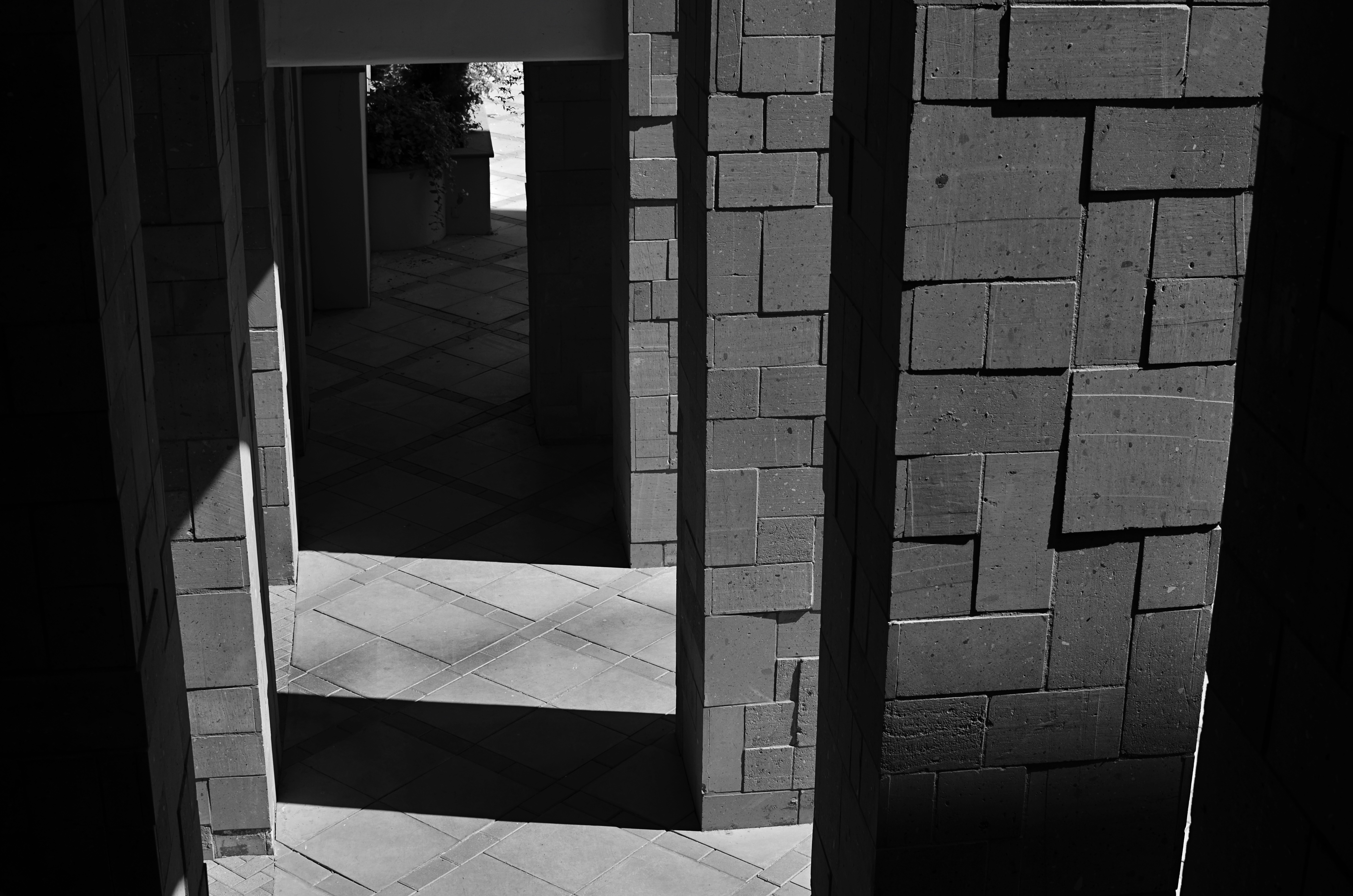
This image isn’t “about” anything except what it suggests as pure light and shape. But that’s enough. 1/250 sec., f/5.6, ISO 100, 35mm.
By MICHAEL PERKINS
THE POPULARLY-HELD VIEW OF THE HISTORY OF PHOTOGRAPHY makes the claim that, just as video killed the radio star, camera killed the canvas. This creaky old story generally floats the idea that painters, unable to compete with the impeccable recording machinery of the shutter, collectively abandoned realistic treatment of subjects and plunged the world into abstraction. It’s a great fairy tale, but a fairy tale nonetheless.
There just is no way that artists can be regimented into uniformly making the same sharp left turn at the same tick of the clock, and the idea of every dauber on the planet getting the same memo that read, alright guys, time to cede all realism to those camera jerks, after which they all started painting women with both eyes on the same side of their nose. As Theo Kojak used to say, “nevva happennnned…”
History is a little more, er, complex. Photography did indeed diddle about for decades trying to get its literal basics right, from better lenses to faster film to various schemes for lighting and effects. But it wasn’t really that long before shooters realized that their medium could both record and interpret reality, that there was, in fact, no such simple thing as “real” in the first place. Once we got hip to the fact that the camera was both truth teller and fantasy machine, photographers entered just as many quirky doors as did our painterly brothers, from dadaism to abstraction, surrealism to minimalism. And we evolved from amateurs gathering the family on the front lawn to dreamers without limit.
I love literal storytelling when a situation dictates that approach, but I also love pure, absolute arrangements of shape and light that have no story whatever to tell. As wonderful as a literal capture of subjects can be, I never shy away from making an image just because I can’t readily verbalize what it’s “about”. All of us have photos that say something to us, and, sometimes, that has to be enough. We aren’t always one thing or the other. Art can show absolutes, but it can’t be one.
There is always one more question to ask, one more stone to turn.
CHANGE YOUR ATTITUDE
By MICHAEL PERKINS
PHOTOGRAPHY IS OFTEN A GAME OF INCHES, a struggle in which outcomes vary wildly based on small, rather than large issues. Early photographers learned this the hard way, since their limited gear forced them to innovate composition and exposure with tiny tweaks that slowly but gradually added more refined skill to their work and better performance from their equipment. Ernest Haas’ great quote that a wide-angle lens is just as close as taking three steps backward still holds true. What has changed is that we have a greater tendency to think that we need more tech to make better pictures. That concept, simply, is poppycock.
For years, the option of a zoom lens was out of the question for the average photographer. The consumer-level zooms that existed were often optically inferior to standard or wide-angle glass (as testified to by Annie Leibowitz and other heavyweights), and so composition was acquired by physically closing or widening the actual distance between yourself and your subject. This is not to say that zooms didn’t eventually prove amazing tools, because they have. However, they demonstrate and instance in which tech has automated, and thus eliminated, an extra step of mindful concentration that used to reside solely in the photographer’s brain. This can lead, over time to an over-reliance on the gear to bring everything home, something it cannot ever do.
Learning to simply maximize the effect of whatever you have up front of the shutter is the easiest, and yet most overlooked aspect of many people’s work. We’d spend a lot less time lugging and swapping lenses if we knew how far we could push whatever we’ve got attached at the moment, and, indeed, masters like Scott Kelby, author of the best-selling Digital Photography Book series, has several “why change lenses? hunks of glass like the 18-200mm that can get him through an entire day without a swap. This works because he works a little harder at exploiting everything his gear can do.
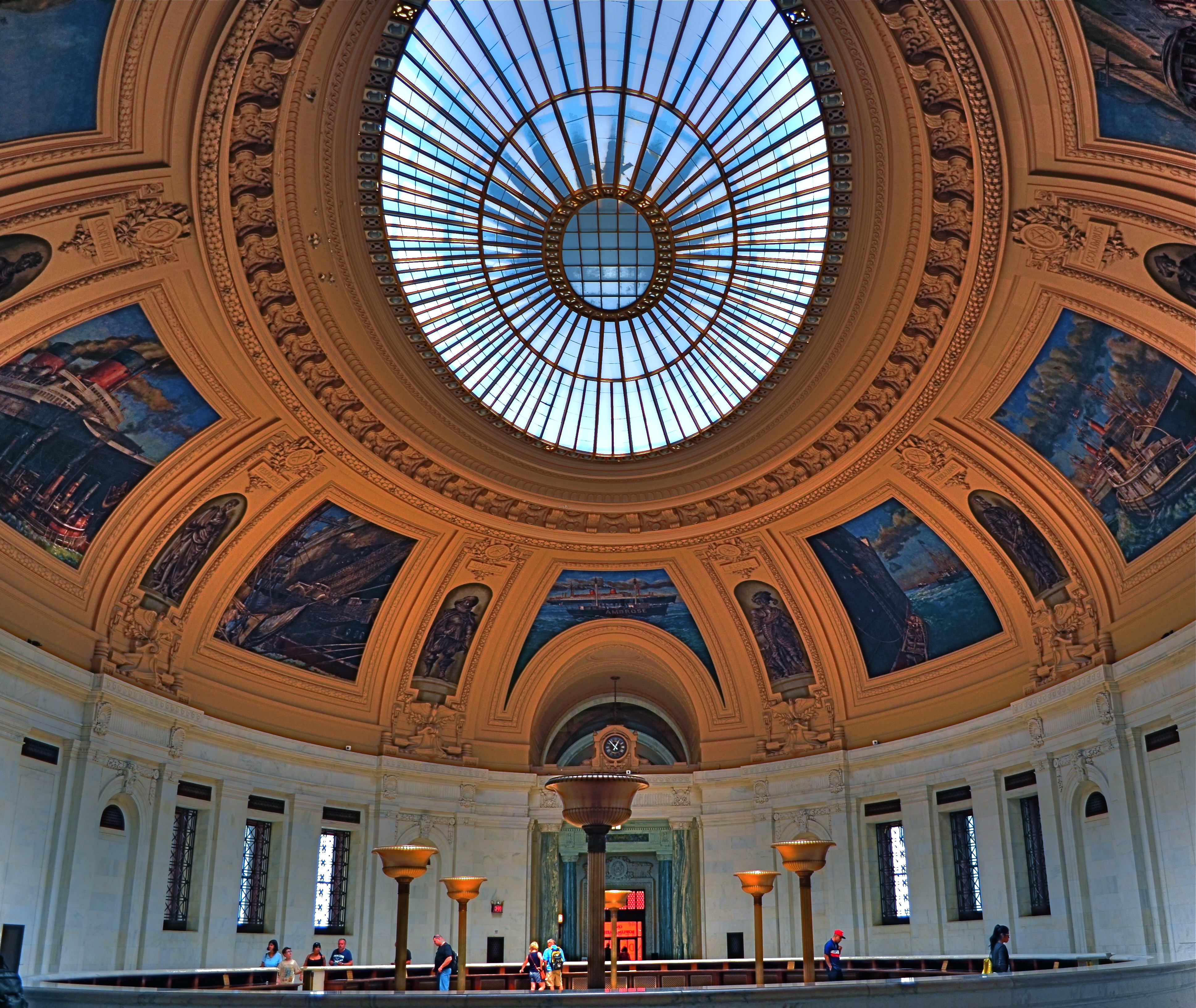
Wide-angle lenses deliver a variety of effects beyond just width.
Consider the above image. It’s taken at 18mm, but, because I arched the shot upwards, instead of maintaining a level horizon line, I forced the lens to do a little more of what it was originally designed to do….exaggerate dimensions and distances. The development of wide-angle lenses was, after all, pursued by shooters who wanted an enhancement, an interpretation, and not a recording, of reality. As such, the wide-angle in this shot over-accentuates the most prominent feature of this room within the old U.S. Customs building in Manhattan…its amazing murals. It also creates an illusion of vastness, front-to-back, in a room that is already pretty huge. And this is all done by pivoting my head upward about 30 degrees.
The game of inches is the great equalizer in photography between pro and amateur, because it gives the advantage to those who plan the best, see the most, and think the widest. And you don’t need a closet full of geegaws to do that.
OH, SNAP
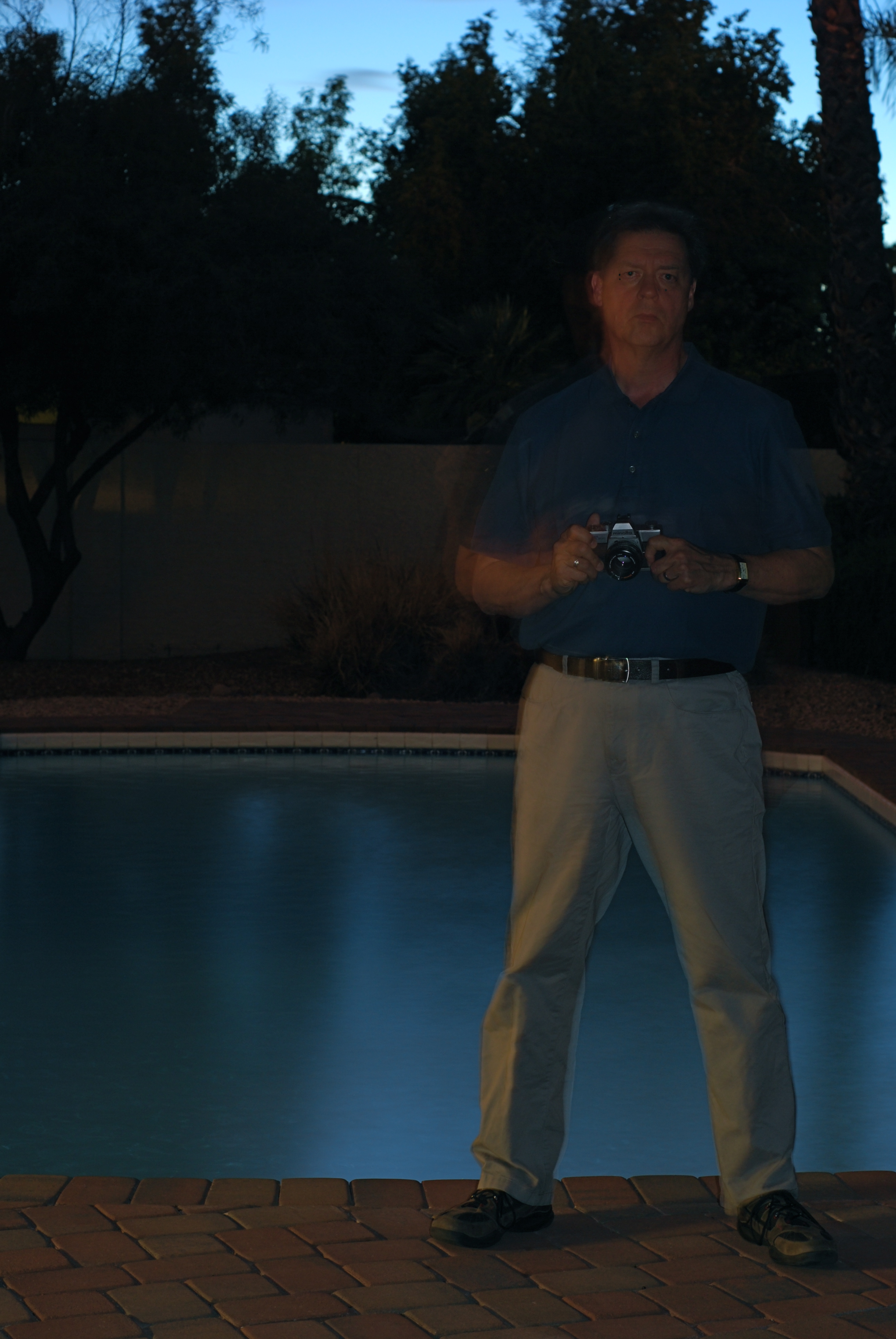
When we drift from the things most familiar to us, does our photography diminish or grow?
By MICHAEL PERKINS
MOST OF US ENTER PHOTOGRAPHY WITH THE SAME AIM, that is, to arrest the flight of something precious with the trick effect of having frozen time. Someone or something is passing through our life all too quickly, and we use our cameras to isolate small pieces of those passages like a butterfly inside an amber cube. That means that our first work is our most personal, and, while we may later graduate to more general, more abstract recordings of light, subject, and shape, we all begin by chronicling events of the most intimate nature.
And as we grow into more interpretative, less reportorial imaging, we also grow away from the clear, focused aim of that earlier work. Be it a triptych of a birthday, an anniversary, a wake or a christening, we understand clearly what a snap is for, what it was after. Its purpose and its message are unmistakable, something that cannot always be said for other kinds of photographs. Indeed, looking back on some of our own output at the distance of just a few years, we can actually be at a loss to explain what we were going after in a given photograph, what we were trying to say. This doesn’t happen with the snap. Its subject matter, and the degree to which we correctly captured it, is readily visible.
This may speak to why photographers are often asked why they don’t take “more pictures of people”, or, more specifically, why did you take a picture of this person? Do you know him? No? Then why……..?? It isn’t that a connection between yourself and people who are strangers to you can’t be made in a photograph. It’s that it’s a lot harder to effectively tell that story. it requires less from the camera and more from you.
You need to fill in a lot more blanks in a tale in which fewer elements are pre-provided. You can convey something universal about the human condition with a picture of something outside your own experience, certainly. It’s just that it’s easier to make the link that exists between you, your mother, her birthday, and her surrounding gang of friends than between yourself and someone who is essentially alien to you, or to the rest of us. Of course, on the other side of the ledger, you can also shoot a bajillion pictures of those closest to you, and still manage to convey nothing of their true selves. Mere technical acuity is not intimacy, or vision.
Still, in general terms, the snap deserves a lot more respect than it gets, simply because there is, in these personal images, a near-perfect match alignment of shooter, subject and clarity of purpose. By contrast, when we venture out into the greater world, trying to tell equally effective stories with much less information is hard. Not impossible, but, man, really hard.
THE SINGLE BULLET THEORY
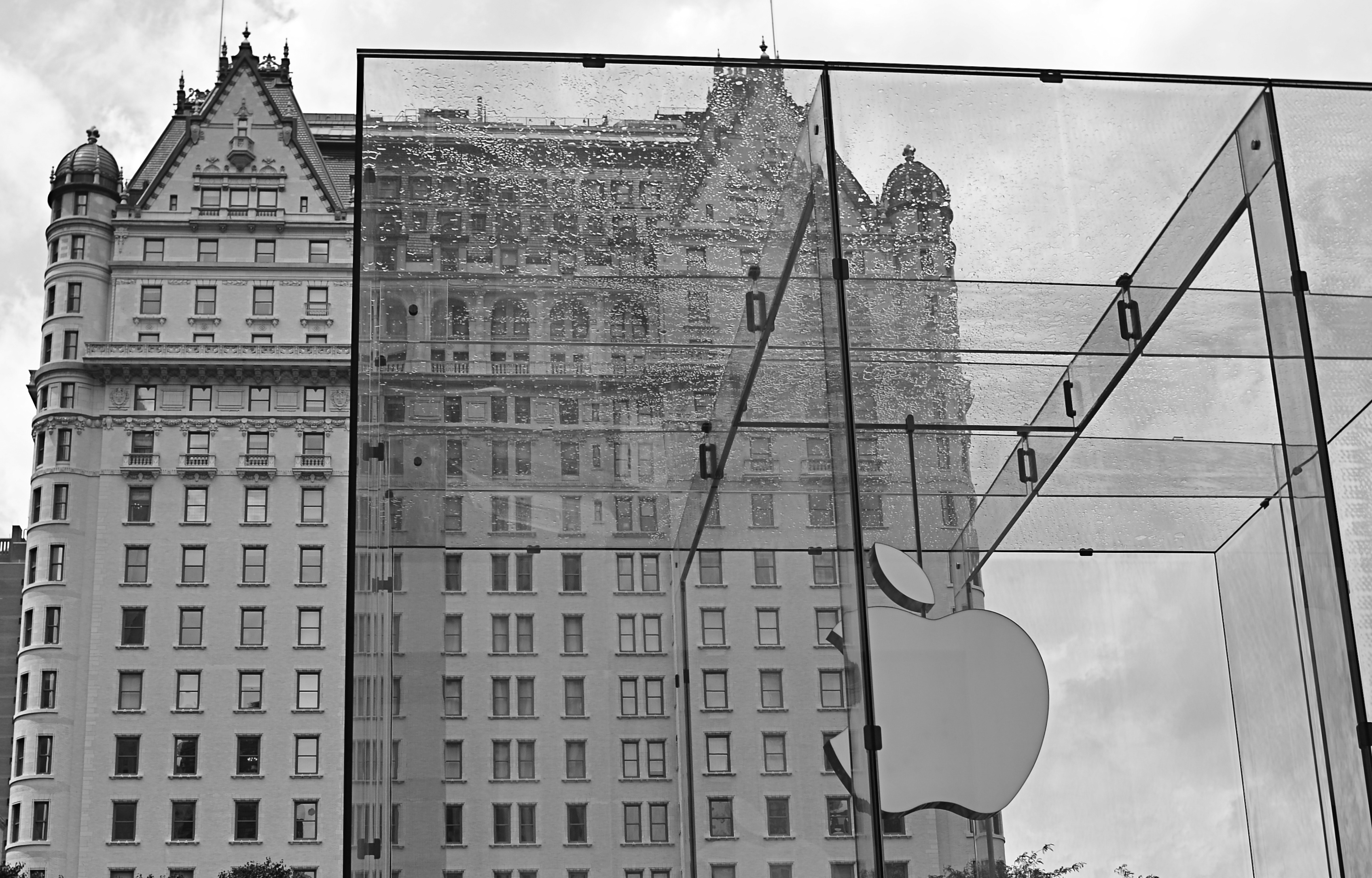
Many of your own best pictures are single-take, all-or-nothing shots. There’s a reason for that.
By MICHAEL PERKINS
Okay, Wang, I think that’s enough pictures of the parking lot. —Rodney Dangerfield, Caddyshack
IF YOU WERE TO EXPRESS TODAY’S PHOTOGRAPHIC FREEDOM IN TERMS OF FIREPOWER, it would be fair to say that many of us have come to shoot in a somewhat scatter-shot fashion, like someone sweeping a machine gun. Indeed, digital allows us to overshoot everything to such a degree that doing so becomes our default action, because why would you take one picture of your child digging into birthday cake when fifty will do just as well?
Some over-shooting is really what pro photogs used to call “coverage” and is actually beneficial for particularly hard subjects. Awe-inspiring sunsets. A stag at bay. The fiery burst from a Hawaiian volcano. Such subjects actually warrant a just-one-more approach to make sure you’ve thought through every possible take on something that can be interpreted in a variety of ways, or which may be vanishing presently. But that’s a lot different from cranking off four dozen clicks of the visitor’s center at Wally World.
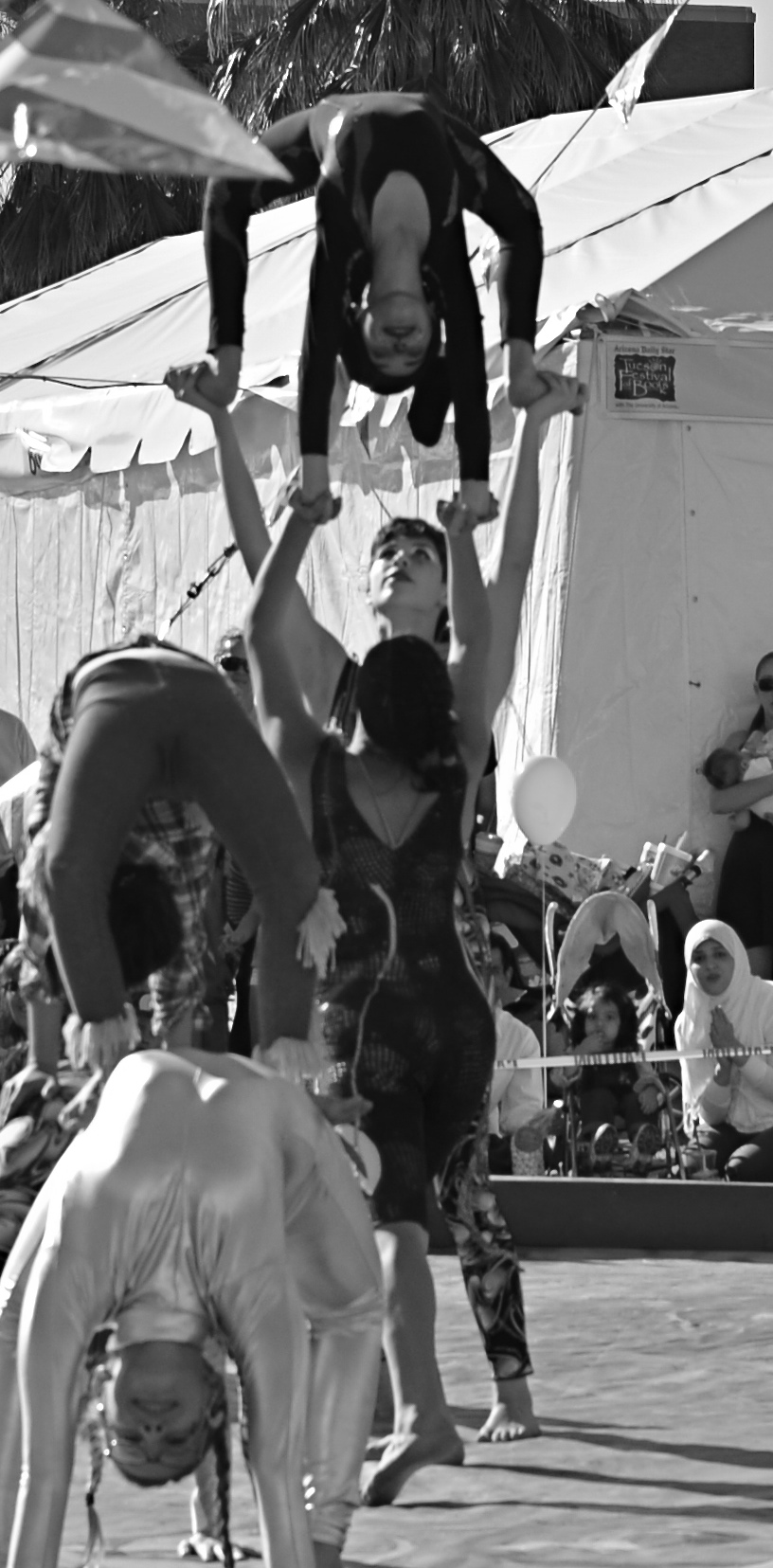
Shoot things reactively.
Shooting better isn’t always assured by merely shooting more. Instead of the machine gun technique, we might actually improve our eye, as well as our ability to strategize a shot, by limiting how many total tries we make at capturing an image. My point is that there are different “budgets” for different subject matter, and that blowing out tons of takes is not a guarantee that Ze Beeg Keeper is lurking there somewhere in the herd.
So put aside the photographic spray-down technique from time to time and opt for the single bullet theory. For you film veterans, this actually should be easy, since you remember what it was like to have to budget a finite number of frames, depending on how many rolls you packed in. Try giving yourself five frames max to capture something you care about, then three, then one. Then go an entire day taking a single crack at things and evaluate the results.
If you’ve ever spent the entire day with a single focal length lens, or fought severe time constraints, or shot only on manual, you’re already accustomed to taking a beat, getting your thinking right, and then shooting. That’s all single-take photography is; an exercise in deliberation, or in mindfulness, if you dig guru-speak. Try it on your own stuff, and, better yet, use the web to view the work of others doing the same thing. Seek out subjects that offer limited access. Shoot before your walk light goes on at an intersection. Frame out a window. Pretend an impatient car-full of relatives is waiting for you with murder in their hearts. Part of the evolution of our photography is learning how to do more with less.
That’s not only convenient, in terms of editing. It’s the very soul of artistry.
 thenormaleye
ANTHROPOGRAPHY
Tuning up: a fiddler runs a few practice riffs before a barn dance in Flagstaff, Arizona.
By MICHAEL PERKINS
WRITING CLICHE NUMBER 5,218 STATES THAT YOU SHOULD WRITE about what you know. Mine your own experience. Use your memories and dreams as a kickoff point for the Great American Novel, or, at least, the Okay American E-book. But while the “know-it-do-it” school of technique offers writers a pretty sound foundation for scribblers, photographers need to learn how to leave their native nests and fly into unknown country. The best pictures sometimes are where you, comfortably, aren’t.
Caperin’ up a storm, by golly.
Shooting an event or lifestyle that is completely outside yourself confers an instantaneous objectivity of sorts to your pictures, since you don’t have any direct experience with the things you’re trying to capture. You’re forced to pretty much go instinctive, since you can’t draw on your memory banks. This is certainly true of combat photographers or people dropped down into the middle of fresh disasters, but it also works with anything that’s new to you.
Take square-dancing. No, I mean it. You take square-dancing, as in, I’d rather be covered in honey and hornets than try to master something that defines “socially awkward” for yours truly. I can’t deny that, on the few occasions that I’ve observed this ritual up close, it obviously holds infinite enjoyment for anyone who isn’t, well, me. But being me is the essential problem. I not only possess the requisite two left feet, I am lucky, on some occasions to even be ambulatory if the agenda calls for anything but a rote sequence of left-right-left. Again, I concede that square-dancers seem almost superhumanly happy whenever doing their do-si-doing, and all props to them. Personally, however, I can cause a lot less damage and humiliation for all concerned if I bring a camera to the dance instead of a partner.
Shooting something you don’t particularly fancy yourself is actually something of an advantage for a photographer. It allows you to just dissect the activity’s elements, using the storytelling techniques you do know to show how the whole thing works. You’re using the camera to blow apart an engine and see its working parts independently from each other.
In either writing or shooting, clinging to what you know will keep your approach and your outcomes fairly predictable. But when photography meets anthropology, you can inch toward a little personal growth. You may even say “yes” when someone asks you if you care to dance.
Or you could just continue to maintain your death grip on your camera.
Yeah, let’s go with that.
Share this:
September 25, 2015 | Categories: Americana, Black & White, Candid, Conception, iPhone, Musical Instruments | Tags: Composition, crowds, Entertainment, Music, social commentary | Leave a comment