TELLING THE TRUTH
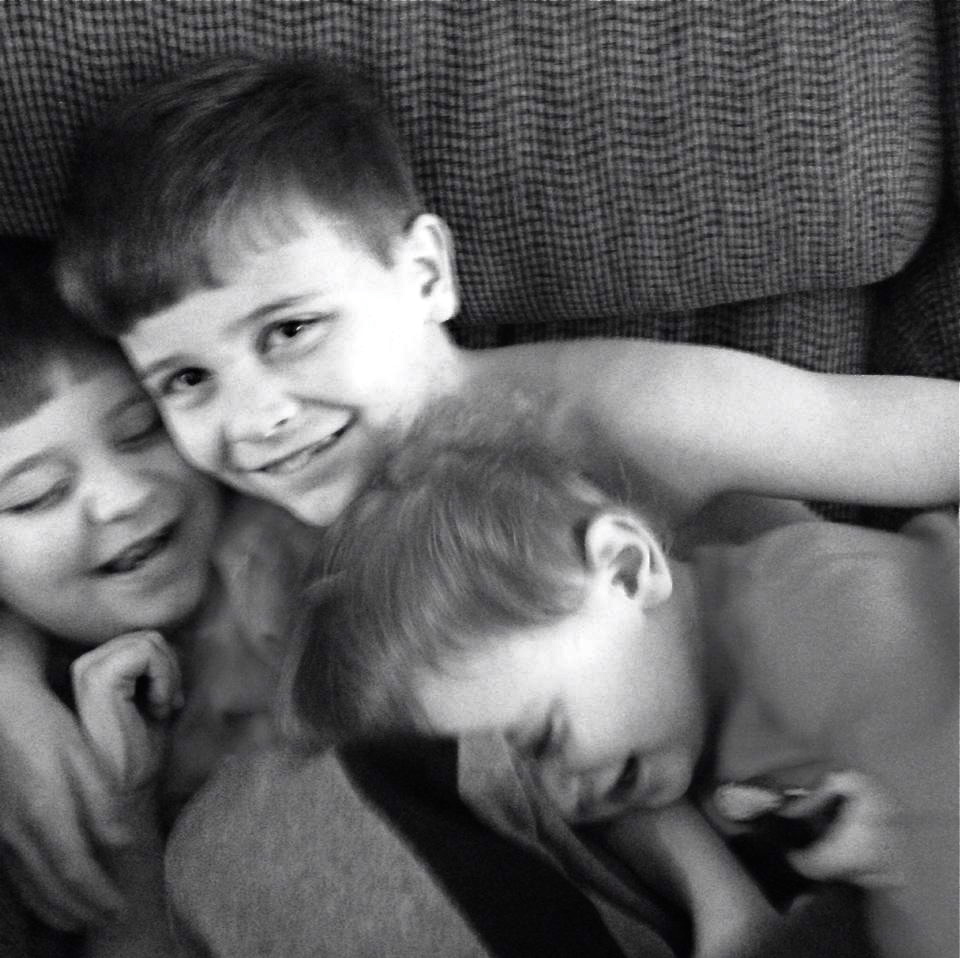
Three Brothers by Joni Gauthier, 2014. The joy jumps out at you.
By MICHAEL PERKINS
PICK ANY PHOTOGRAPHIC ERA YOU LIKE, and most of the available wisdom (or literature) will concentrate on honoring some arbitrary list of rules for “successful” pictures. On balance, however, relatively few tutorials mention the needful option of breaking said rules, of making a picture without strict adherence to whatever commandments the photo gods have handed down from the mountain. It’s my contention that an art form defined narrowly by mere obedience is bucking for obsolescence.
It’d be one thing if minding your manners and coloring inside the lines guaranteed amazing images. But it doesn’t, any more than the flawless use of grammar guarantees that you’ll churn out the great American novel. Photography was created by rebels and outlaws, not academics and accountants. Hew too close to the golden rules of focus, exposure, composition or subject, and you may inadvertently gut the medium of its real power, the power to capture and communicate some kind of visual verity.
A photograph is a story, and when it’s told honestly, all the technical niceties of technique take a back seat to that story’s raw impact. The above shot is a great example of this, although the masters of pure form could take points off of it for one technical reason or another. My niece snapped this marvelous image of her three young sons, and it knocked me over to the point that I asked her permission to make it the centerpiece of this article. Here, in an instant, she has managed to seize what we all chase: joy, love, simplicity, and yes, truth. Her boys’ faces retain all the explosive energy of youth as they share something only the three of them understand, but which they also share with anyone who has ever been a boy. This image happens at the speed of life.
I’ve seen many a marvelous camera produce mundane pictures, and I’ve seen five-dollar cardboard FunSavers bring home shots that remind us all of why we love to do this. Some images are great because we obeyed all the laws. Some are great because we threw the rule book out the window for a moment and just concentrated on telling the truth.
You couldn’t make this picture more real with a thousand Leicas. And what else are we really trying to do?
STEALTH
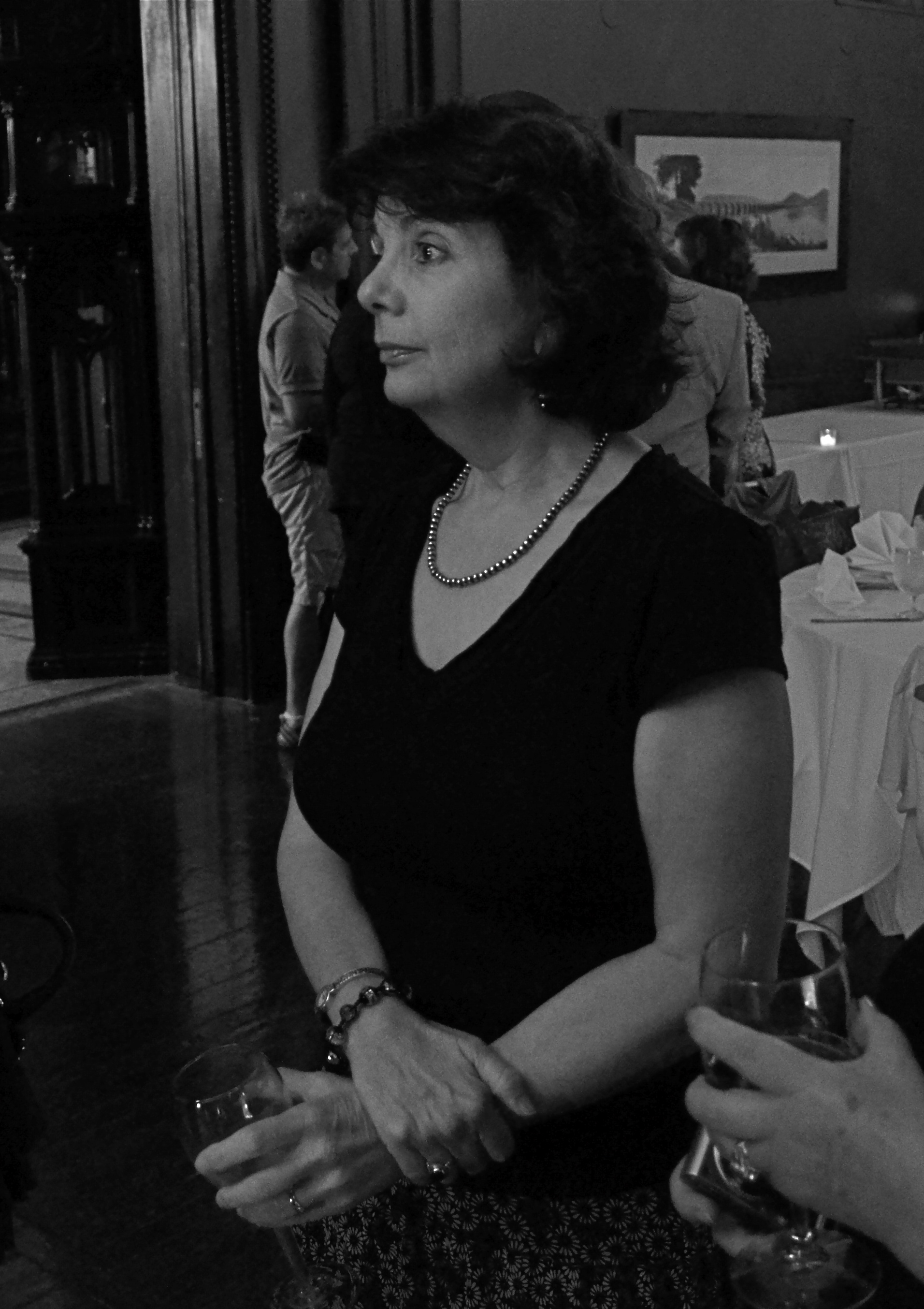
The hostess with the mostest. 1/40 sec., f/3.5, ISO 640, 18mm.
By MICHAEL PERKINS
AT A PARTY, THERE ARE DISTINCT ADVANTAGES TO NOT BEING AN “OFFICIAL” PHOTOGRAPHER. You could probably catalogue many of them yourself with no strain. Chief among the perks of being an amateur (can we get a better word for this?) is that you are the captain of your own fate. You shoot what you want, when you want. Your arrival on the scene is not telegraphed by stacks of accompanying cases, light fixtures, connecting cords or other spontaneity killers that are essential to someone who has been “assigned” to an event. Your very unimportance is your license to fly, your ticket to liberation. Termed honestly (if unkindly), your work just doesn’t matter to anyone else, and so it can mean everything to you. Yay.
One of the supreme kicks I derive from going to events with my wife is that I can make her forget I’m there. I mean, as a guy with a camera. She has the gift of being able to submerge completely into the social dynamics of wherever she is, so she is not thinking about when I may elect to sneak up and snap her. Believe me, when you live with a beautiful woman who also hates to have her picture taken, this is like hitting the trifecta at Del Mar. At 20 to 1.
Free from the constraints of being “on the job”, I enjoy a kind of invisibility at parties, since I use the fastest lenses I can and no flash, ever, ever, ever. I do not call attention to myself. I do not exhort people to smile or arrange them next to people that they may or may not be able to stand. The word “cheese” never leaves my lips. I take what the moment gives me, as that is often richer than anything I might concoct, anyway. Working with a DSLR is a little more conspicuous than the magical invisibility of a phone camera, which people totally ignore, but if I am cagey, I can work with an “official” camera and not be perceived as a threat. Again, with a woman who (a) looks great and (b) doesn’t like how she looks in pictures, this is nirvana.
Candid photography is all about the stealth. It’s not about warning or prepping people that, attention K-Mart shoppers, you’re about to have your picture took. The more you insert yourself into the process (look over here! big smiiiiile!) the more you interrupt the natural rhythm that you set out to capture. So stop working against yourself. Be a happy sneak thief. Like me.
PRESERVING THE PERCEPTION
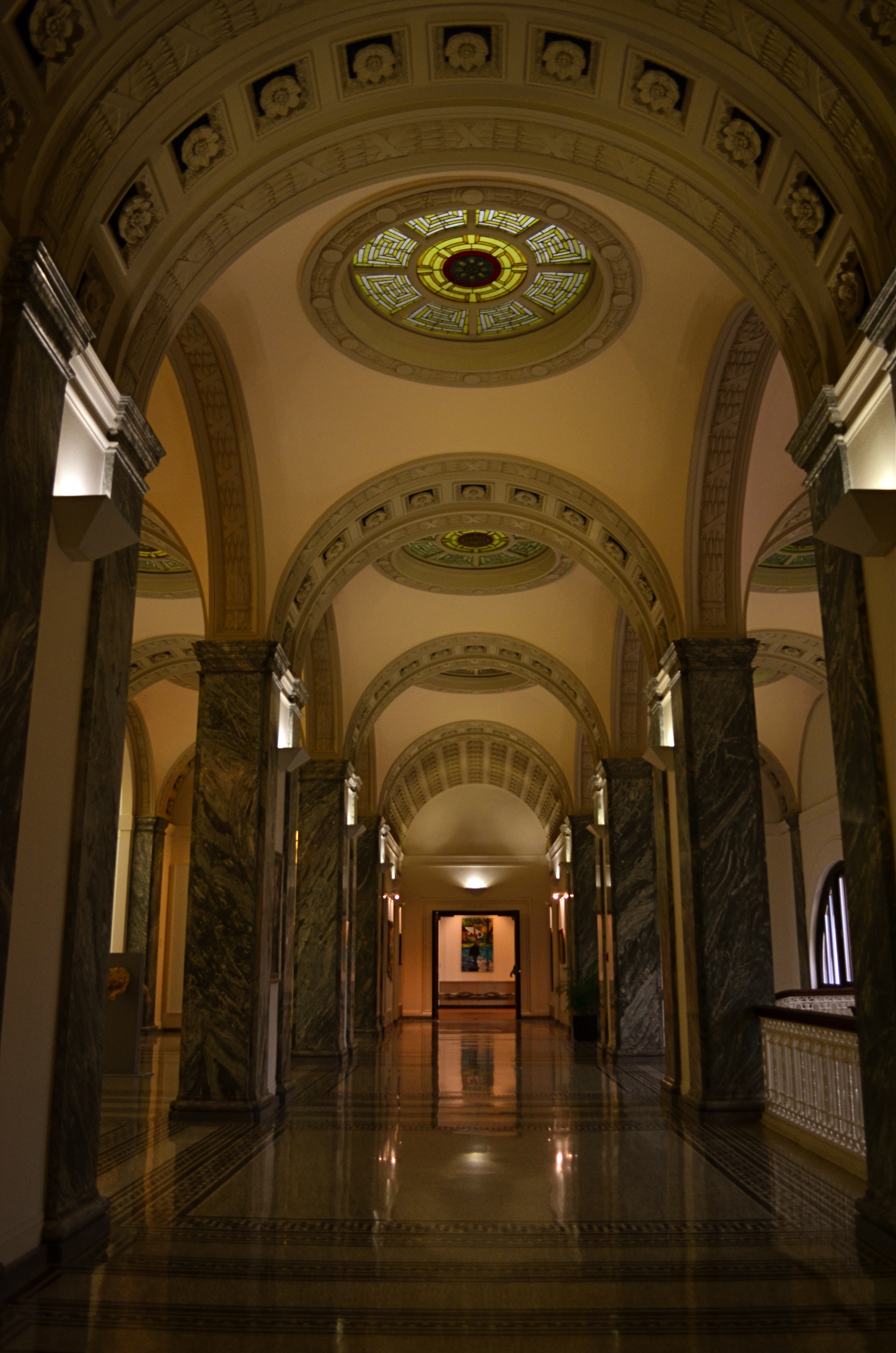
Your memory tells you that this space is more like a “library” than a “drug store”, unless you live in a much nicer neighborhood than mine.
By MICHAEL PERKINS
THERE IS AN OLD ADVERTISING MAXIM that the first person to introduce a product to market becomes the “face” of all versions of that product forever, no matter who else enters as a competitor. Under this thinking, all soda generically becomes a Coke; all facial tissues are Kleenexes: and no matter who made your office copier, you use it to make…Xeroxes. The first way we encounter something often becomes the way we “see” it, maybe forever.
Photography is shorthand for what takes much longer to explain verbally, and sometimes the first way we visually present something “sticks” in our head, becoming the default image that “means” that thing. Architecture seems to send that signal with certain businesses, certainly. When I give you Doric columns and gargoyles, you are a lot likelier to think courthouse than doghouse. If I show you panes of reflective glass, large open spaces and stark light fixtures, you might sift through your memory for art gallery sooner than you would for hardware store. It’s just the mind’s convenient filing system for quickly identifying previous files, and it can be a great tool for your photography as well.
As a shooter, you can sell the idea of a type of space based on what your viewer expects it to look like, and that could mean that you shoot an understated or even tightly composed, partial view of it, secure in the knowledge that people’s collective memory will provide any missing data. Being sensitive to what the universally accepted icons of a thing are means you can abbreviate or abstract its presentation without worrying about losing impact.
Photography can be at its most effective when you can say more and more with less and less. You just have to know how much to pare away and still preserve the perception.
ACCUMULATIONS
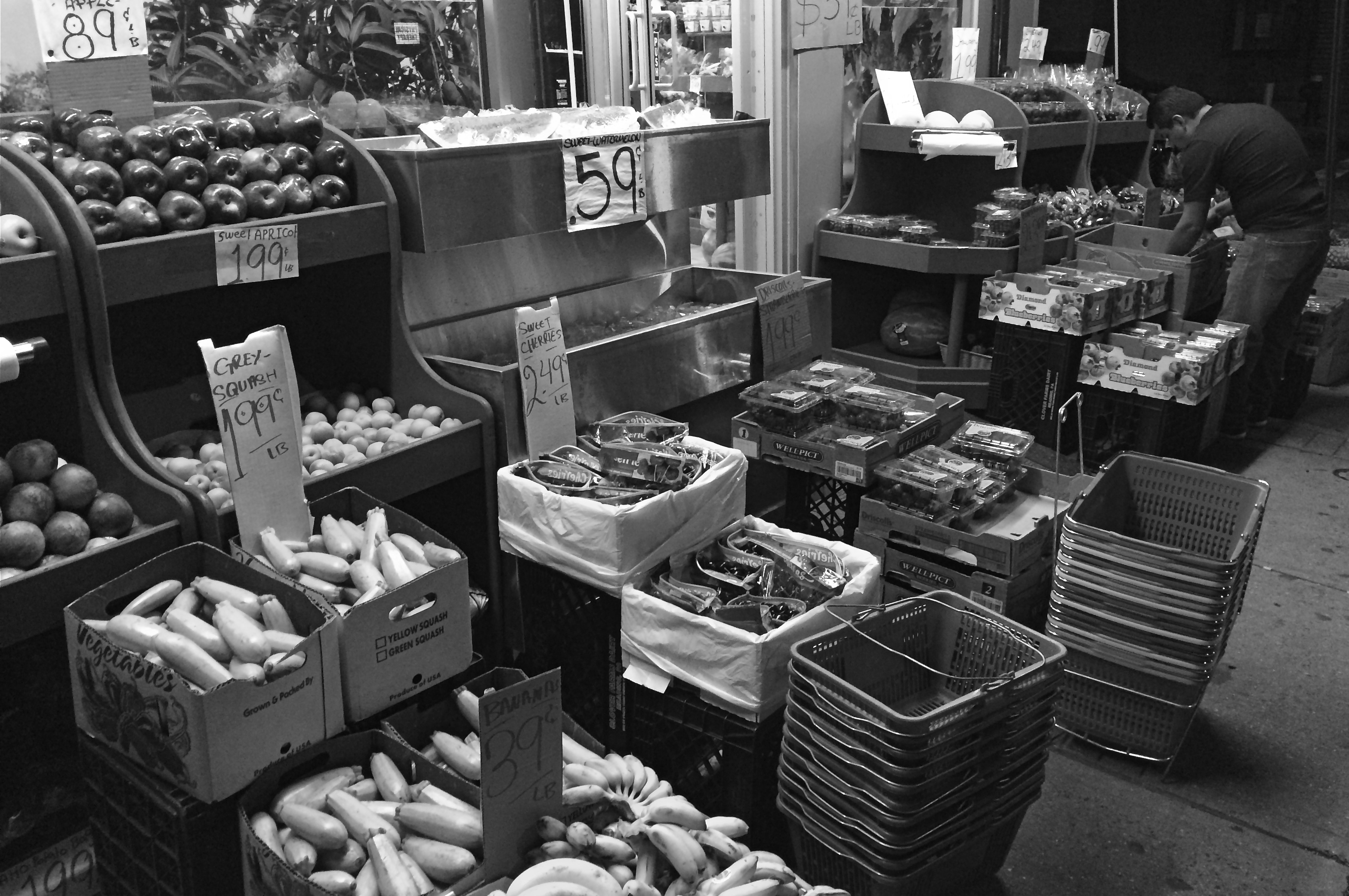
Brooklyn Market, 2014.
By MICHAEL PERKINS
STREET PHOTOGRAPHY CONSISTS MOSTLY OF SHOWING PEOPLE in the full context of their regular worlds.
In terms of portraits or candids, it’s usually sufficient to showcase those we know in controlled environments….family gatherings, special occasions, a studio setting. However, to reveal anything about the millions of strangers we encounter over a lifetime, we only have context to show who they are and what they do. To say something about these fascinating unknowns, we truly need the “props” that define their lives.
I never thought it was that profound to just snap a candid of someone walking down the street. Walking to where? To do what? To meet whom? Granted, a person composed as part of an overall street scene can be a great compositional elements all by him/herself, but to answer the question, who is this person? requires a setting that fixes him in time, in a role or a task. Thus pictures of people doing something, i.e., being in their private universe of tools, objects, and habits…now that can make for an interesting study.
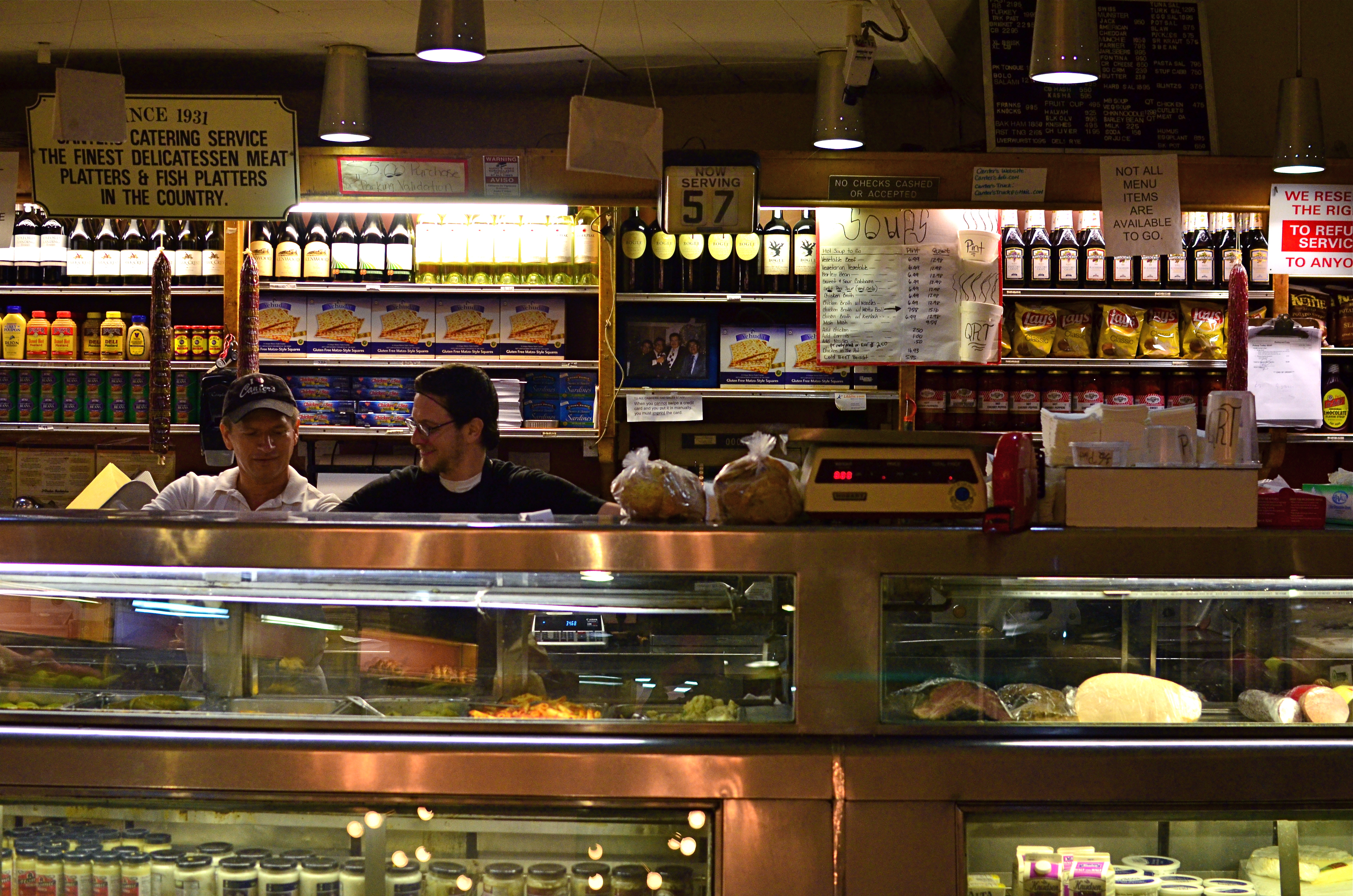
Canter’s Deli, Los Angeles, 2014.
We now have successful reality TV shows like Somebody’s Gotta Do It which focus on just what it’s like to perform other people’s jobs, the jobs we seldom contemplate or tend to take for granted. It satisfies a human curiosity we all share about what else, besides ourselves, is out there. Often we try to gain the answer by sending probes to the other side of the galaxy, but, really, there’s plenty to explore just blocks from wherever we live. Thing is, the people we show make sense only in terms of the accumulations of their lives…the objects and equipment that fill up their hour and frame them in our compositions.
The legendary Lewis Hine made the ironwalkers of Manhattan immortal, depicting them in the work of creating the city’s great skyscrapers. Others froze workers and craftsmen of every kind in the performance of their daily routines. Portraits are often more than faces, and showing people in context is the real soul of street photography.
TESTIMONY
By MICHAEL PERKINS
PHOTOGRAPHY WAS IN ITS INFANCY WHEN IT WAS FIRST PRESSED INTO SERVICE as a reportorial tool, a way of bearing witness to wars, disasters, and the passing parade of human folly and fashion. Since that time, at least a part of its role has been as a means of editorial commentary, a light shone on crisis, crime, or social ills. The great urban reformer Jacob Riis used it to chronicle the horrific gulf between poor and rich in the legendary photo essay How The Other Half Lives. Arthur Rothstein, Dorothea Lange and Lewis Hine, among many others, turned their cameras on the desperate need and changing landscape of America’s Great Depression. And now is the time for another great awakening in photography. It’s time to show where our cities need to go next.
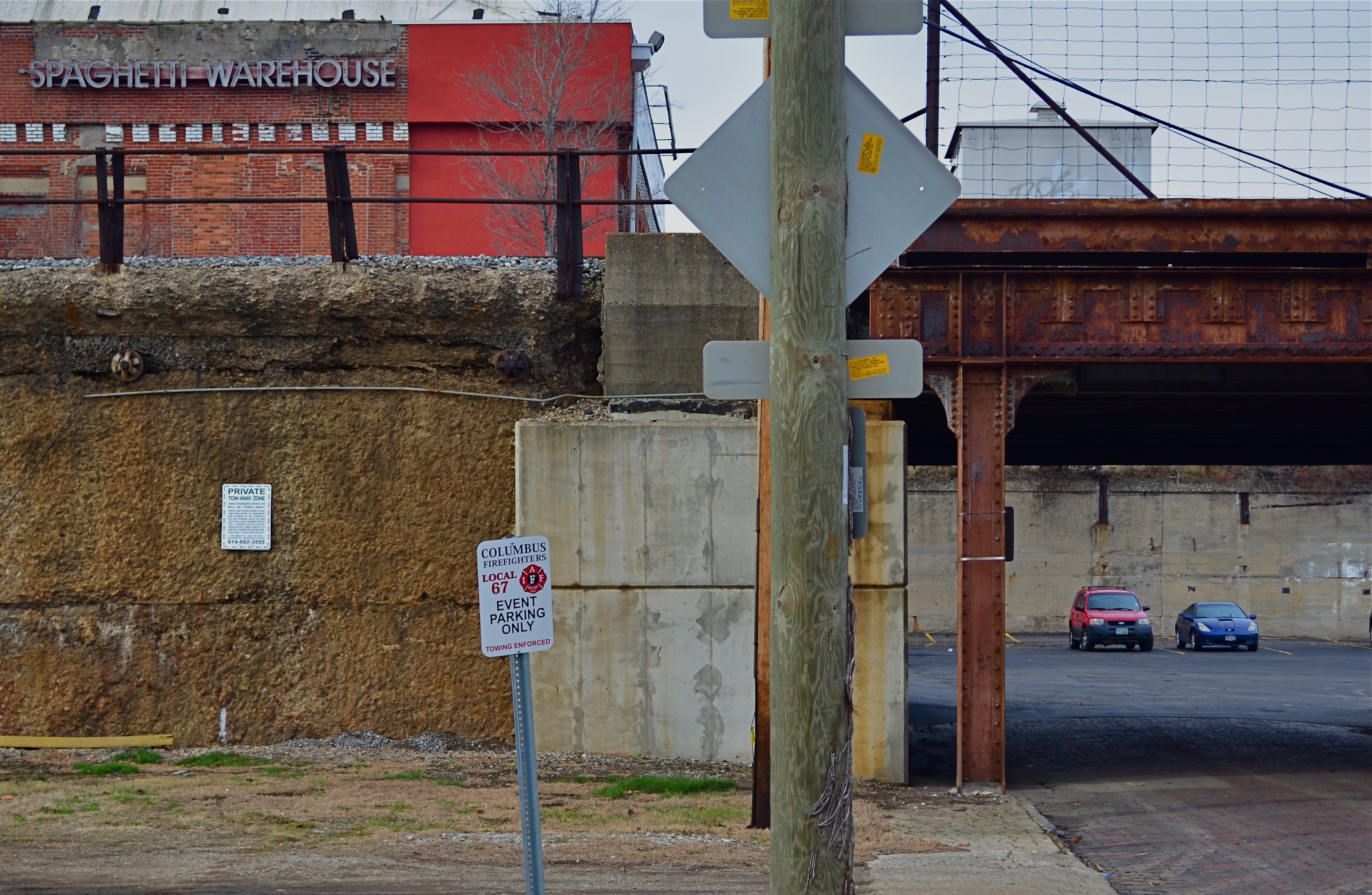
America’s infrastructure is at a crossroads. And that means that photographers are, as well.
Politics aside, the rotting state of our urban infrastructures is an emergency crying out for the visual testimony that photographers brought so eloquently to bear on poverty and war in ages past. The magnifying glass needs to be turned on the neglect that is rapidly turning America’s urban glory into rust and ruin. And no one can tell this story better than the camera.
We can fine-tune all the arguments about how to act, what to fund, and how to proceed. That’s all open to interpretation and policy. But the camera reveals the truths that are beyond abstraction and opinion. The underpinnings of one of the world’s great nations are rapidly dissolving into exposed rebar and pie-crust pavement. If part of photography’s mission is to report the news, then the decline of our infrastructure is one of the most neglected stories in the world’s visual portfolio. Photographers can entice the mind into action, and have done so for nearly two centuries. They have peeled back the protective cover of politeness to reveal mankind at its worst, and things have changed because of it. Agencies have been formed. Action has been accelerated. Lives have been changed. Jobs have been created.
It didn’t used to be an “extra credit” question on the exam of life just to maintain what amazing things we have. Photographers are citizens, and citizens move the world. Not political parties. Not kings or emperors. History is created from the ground up, and the camera is one of the most potent storytelling tools used in shaping that history. The story of why our world is being allowed to disintegrate is one well worth telling. Capturing it in our boxes just might be a way to shake up the conversation.
Again.
THE UNKNOWN FAMILIAR
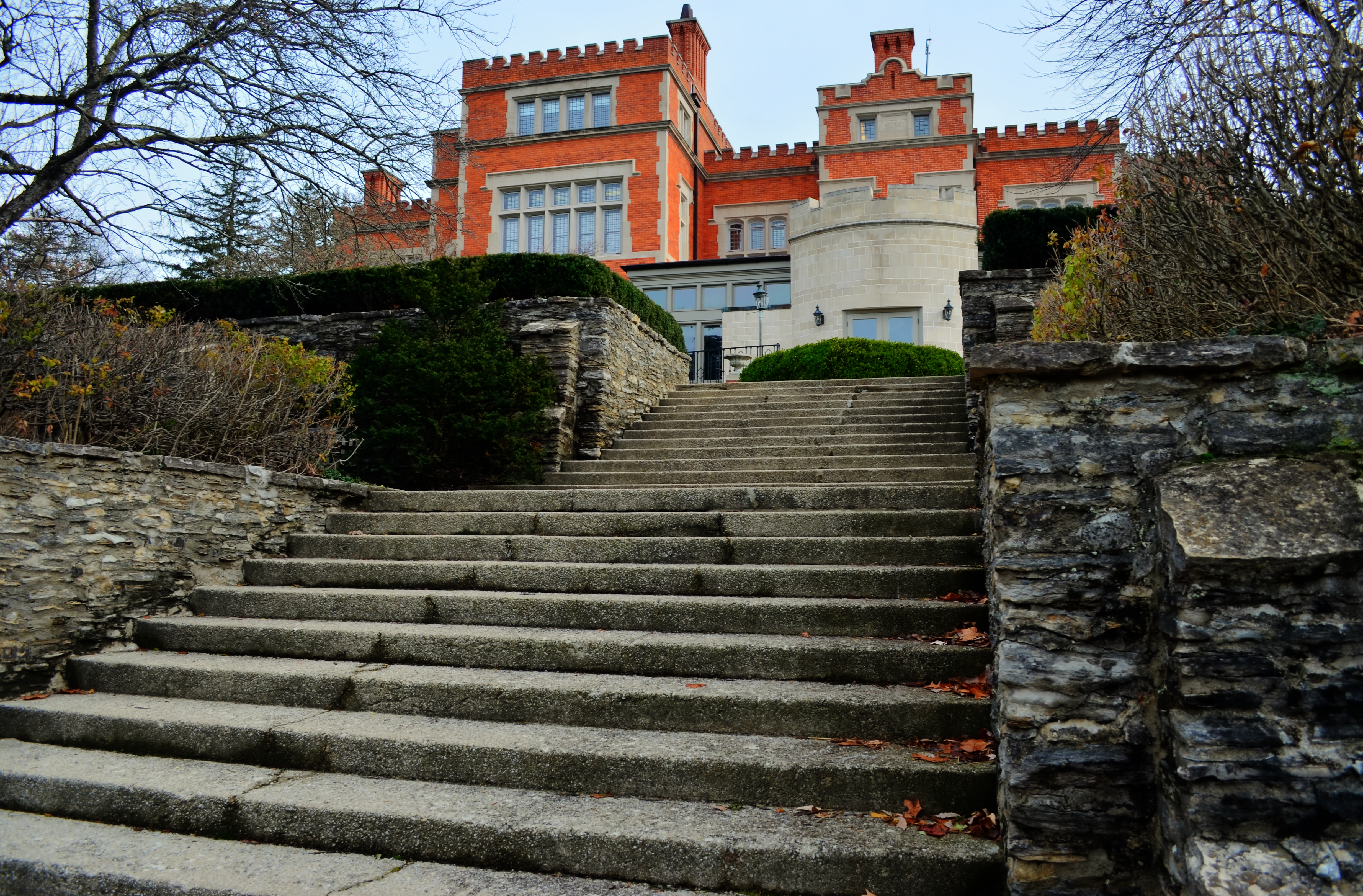
I first photographed Jeffrey Mansion in Bexley, Ohio in the late 1960’s. I look for, and see, very different things in it now. An infusion of three exposures from 1/60-1/160 sec., all f/5.6, ISO 100, 18mm.
By MICHAEL PERKINS
YEARS AGO, RONALD REAGAN, UPON VISITING HIS OLD ELEMENTARY SCHOOL for a presidential photo opportunity, famously asked the local administrators how they managed to shrink the desks in the classrooms. Of course he was joking, but the remark was a telling one; when we return to the scenes of our earliest dramas and farces, we tend to believe that some other outside force sneaked into the place, before our arrival, and somehow re-ordered reality. We laugh at Reagan’s quip because we can see ourselves saying the same thing. It’s all about us.
Just as we are pleasantly shocked to view the graduated pencil marks on our old kitchen wall that logged our increasing height at different ages, we marvel when we take cameras back to the same places where we took cameras in the past. We think we are measuring time in what we shoot, but we are actually measuring ourselves in how we shoot. A recent trip to my hometown afforded me time to roll around to a number of places where I have repeatedly returned over a lifetime, each time approaching photography, and myself, a little differently. In some cases, the first frames I ever shot of these sites go back over forty years, and, good pictures or bad, the results are a few universes away from those first efforts.
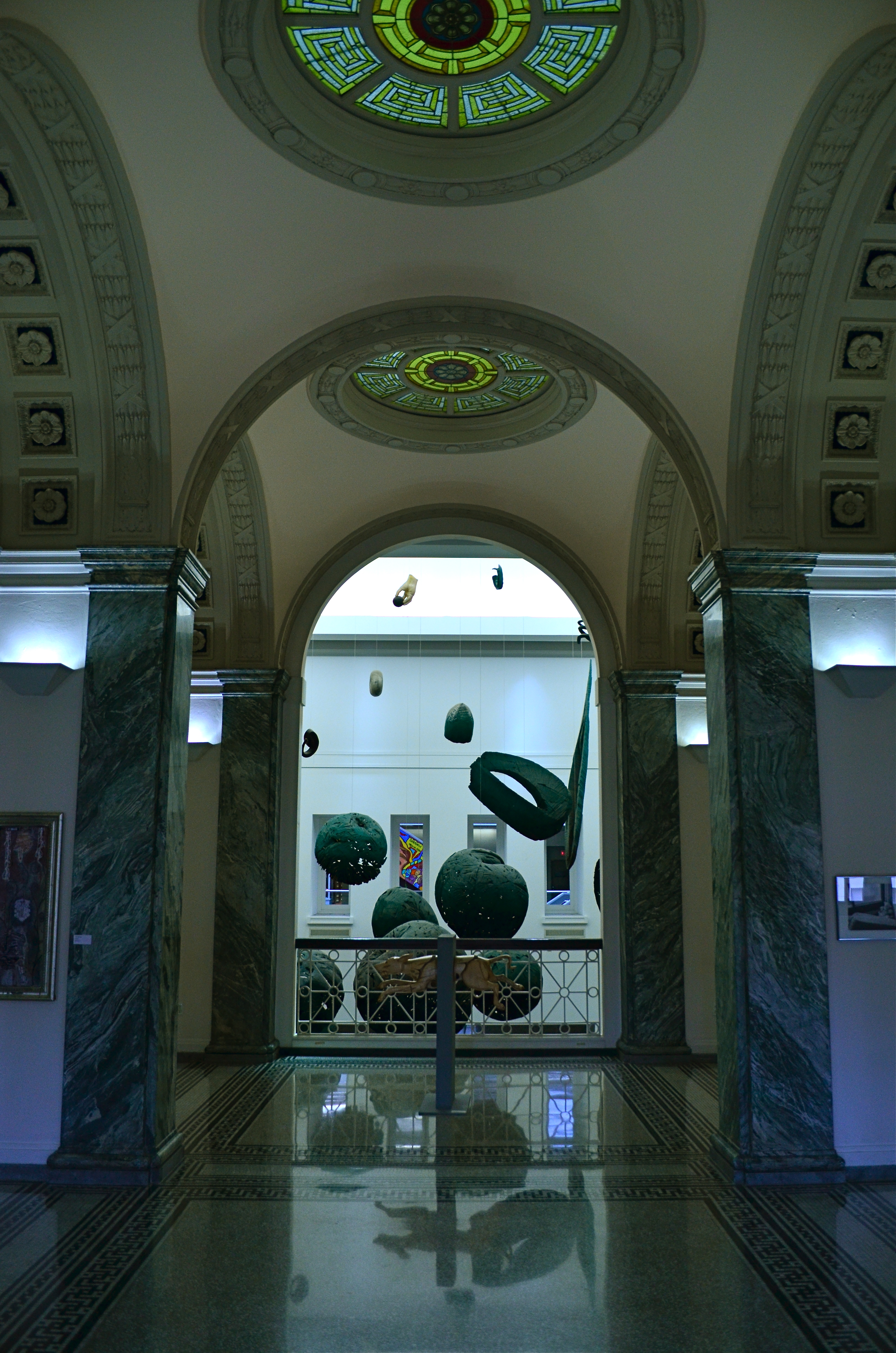
Inside Columbus, Ohio’s Carnegie Library, where I first became a researcher.
How can it be otherwise? I don’t see the same way. I don’t look to see in the same way. Years ago, I was still enthralled with the idea of capturing an image in the box….any image. Hey, it worked. It’s not a stretch to say that, when I first learned to load and wind film or squint into a viewfinder, I was still amazed by the process alone, the idea of freezing time being an inexplicable miracle to me. Beyond hungering to produce my own miracles, I had no concept as to what I should be seeking, or saying.
One thing that has changed over the years is that I no longer try to stop the world with, you know, The Image. There is no “the” anymore, only “the next”. The thing I need to learn to make the picture will come, in time, if I spend long enough thinking or feeling my way through the problem. The photograph, I now know, is already in there, someplace. I just have to carve and peel until it emerges. In the images you see here, I have finally, decades hence, become ready to register the unknown in a familiar place.
To my amazement, I can actually pre-imagine a shot now, with a reasonable hope of eventually making my hand cash the check my eye has written. Back when I started, every picture was an accident….sometimes happy, often frustrating. Now, as I point my lens toward locales that are old friends, I know that they, largely, are constant. It is I who has moved. There’s some comfort, and lots of possibility, in realizing that the desks didn’t really shrink.
I just learned to stand up.
QUICK, NOBODY POSE
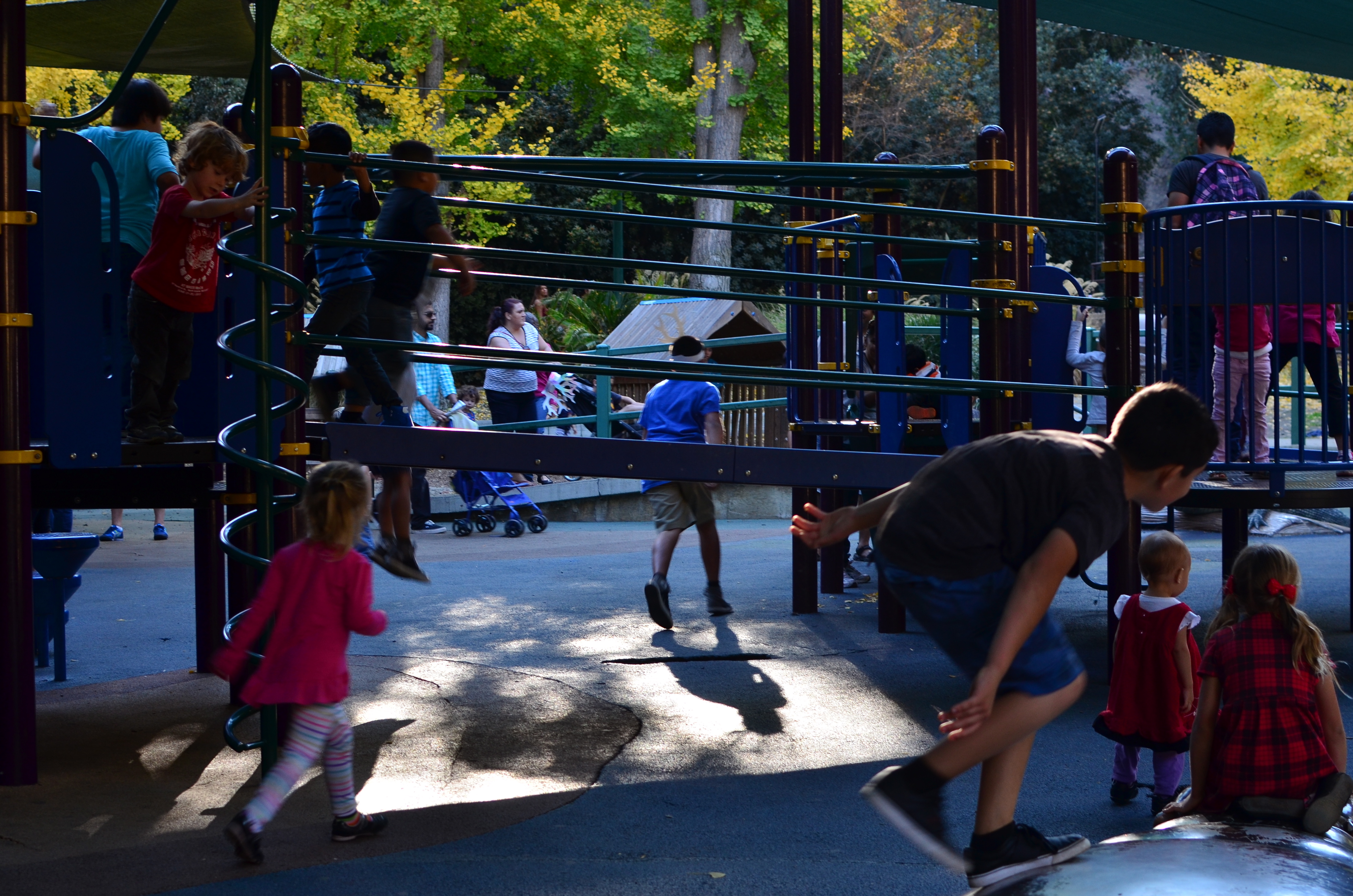
Even at the Los Angeles Zoo, the most interesting animals are on the opposite side of the bars. 1/80 sec., f/4, ISO 200, 35mm.
By MICHAEL PERKINS
FOR PHOTOGRAPHERS, HARNESSING THE NATURAL ENERGY OF A CHILD is a little like flying a kite during a thunderstorm was for Ben Franklin. You might tap into a miraculous force of nature, but what are you going to do with it? Of course, there’s big money in artificially arranging light and props for formalized (or rather, idealized) portraits of kids. It’s a specialty art with specific rules and systems, and for proud parents, it’s a steady market. We all want our urchins “promoted” to angel status, albeit briefly. However, in terms of photographic gold, you can’t, for my money, beat the controlled chaos of children at play. It’s street photography with an overlay of comedy and wonder.
However, attempting to extract a miracle while watching kids be kids is like trying to capture either sports or combat, in that it has a completely different dynamic from second to second, so much so that you should be prepared to shoot a lot, shifting your focus and framing on the fly, since the center of the action will shift rapidly. I don’t necessarily believe that there is one decisive moment which will explain all aspects of childhood since the creation of the world, but I do think that some moments have a better balance between sizes, shapes, and story elements than others, although you will be shooting instinctively for much of the time, separating the wheat from the chaff later upon review of the results.
As with the aforementioned combat and sports categories, the spirit that is caught in a shot supersedes technical perfection. I’m not saying you should throw sharpness or composition to the wind, but I think the immediacy of some images trumps the controlled environment of the studio or a formal sitting. Some artifacts of blur, inconsistent lighting, or imprecise composition can be overlooked if the overall effect of the shot is truthful, visceral. The very nature of candid photography renders all arbitrary rules rather useless. The results justify themselves regardless of their raggedness, whereas a technically flawless shot that is also bloodless can never be justified on any grounds.
Work the moment; trust it to develop naturally; hitch a ride on the wave of the instantaneous.
FIVE-DECKER SANDWICH
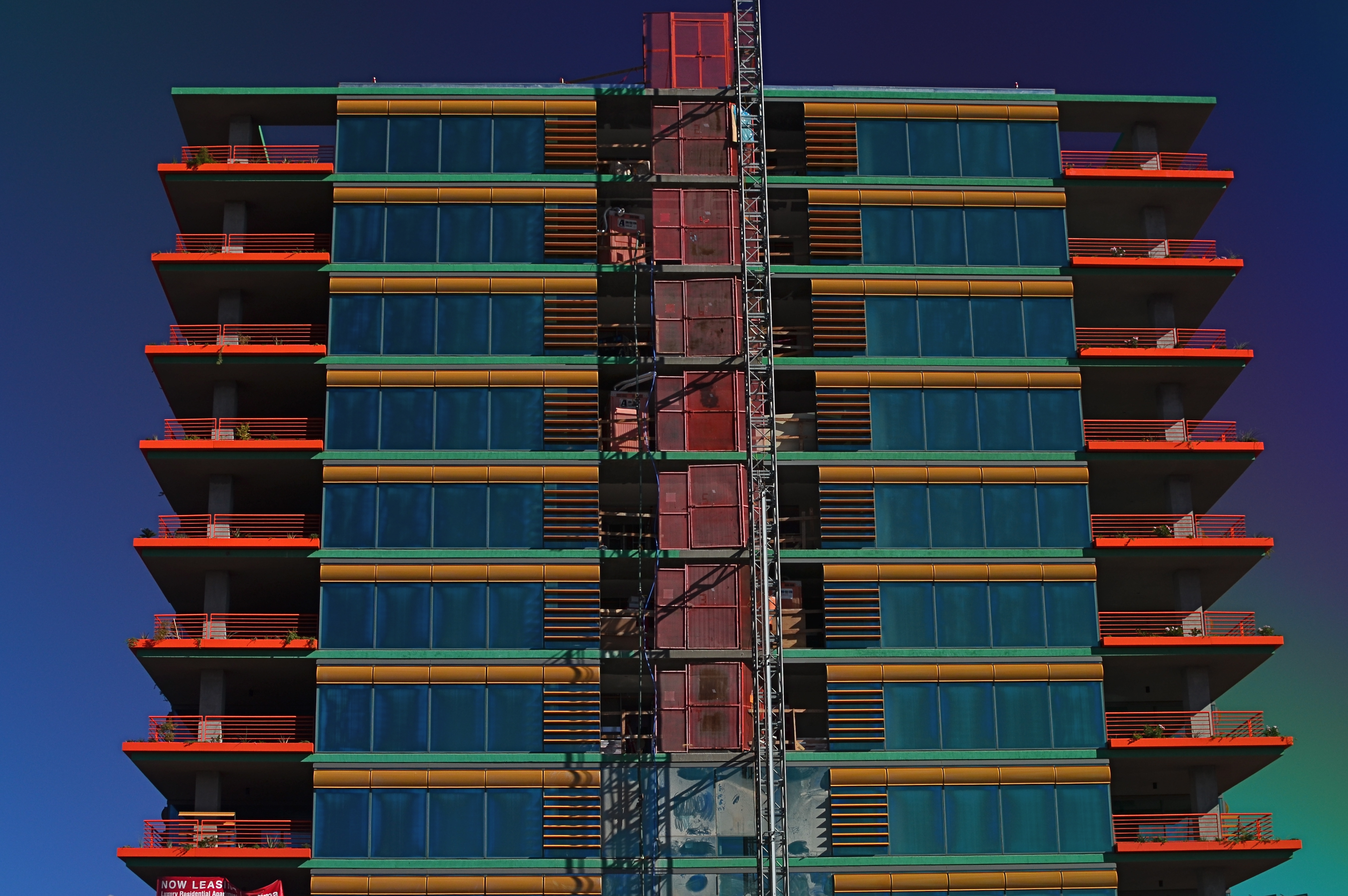
On This Site Will Rise, 2014. 1/320 sec., f/5.6, ISO 100, 35mm.
By MICHAEL PERKINS
MY PHOTOGRAPHY IS OCCASIONALLY AKIN TO MY GRANDMOTHER’S COOKING METHOD, which produced culinary miracles without a trace of written recipes or cookbooks. Her approach was completely additive; she merely kept throwing things into the pot until it looked “about right”. I was aware of the difference, in her hands, between portions that were labeled “smidges”, “tastes”, “pinches” and even “tads” (as in, “this is a tad too bitter. Give me the salt.) I never questioned her results: I merely scarfed them down and eagerly asked for seconds.
Picture making can also be a matter of adding enough pinches and tads to create just the right mix of factors for the image you need. It’s frequently as instinctual a process as Gram’s, but sometimes you have to analyze what worked by thinking the shot backwards after the fact. In the case of the above image, what you see, although it was shot very quickly, is actually the convergence of several different ingredients, the combination of which would be all wrong for some photos, but which actually served this subject fairly well.
The five-decker sandwich of factors in the shot begins with the building, which is quite intense in color all by itself, yet not quite contrasty enough to suit me in this specific instance. So let’s see all the hoops the camera had to jump through to get this particular image:
First, it was taken during the so-called “golden hour”, just before sunset, in late fall in Arizona. That guarantees at least one boost of the building’s native intensity. The next factor is the camera’s own color settings, which are set to “vibrant.” Level three comes from a polarizing filter, which is juicing the sky from its hazy southwestern “normal” to a deep blue. For the fourth element, I am also adding a second filtering component by shooting through a heavily tinted car window (there’s no other kind in Arizona), which presents here as the gradation of sky from blue at the top of the frame to a near aqua near the bottom. And finally, I am way under-exposing the shot at 1/320, deepening the colors yet one more time.
The fun of this is that it all happens ahead of the click, and keeps your fingers off the Photoshop trigger. Grandma may not have spent any more time laboring over a photo than a quick snap of a box Brownie, but she knew how to take stew meat and morph it into filet. And, as with the making of a picture, you just keep adding stuff until the mixture in the pot looks “about right.”
PUBLIC INTIMACY
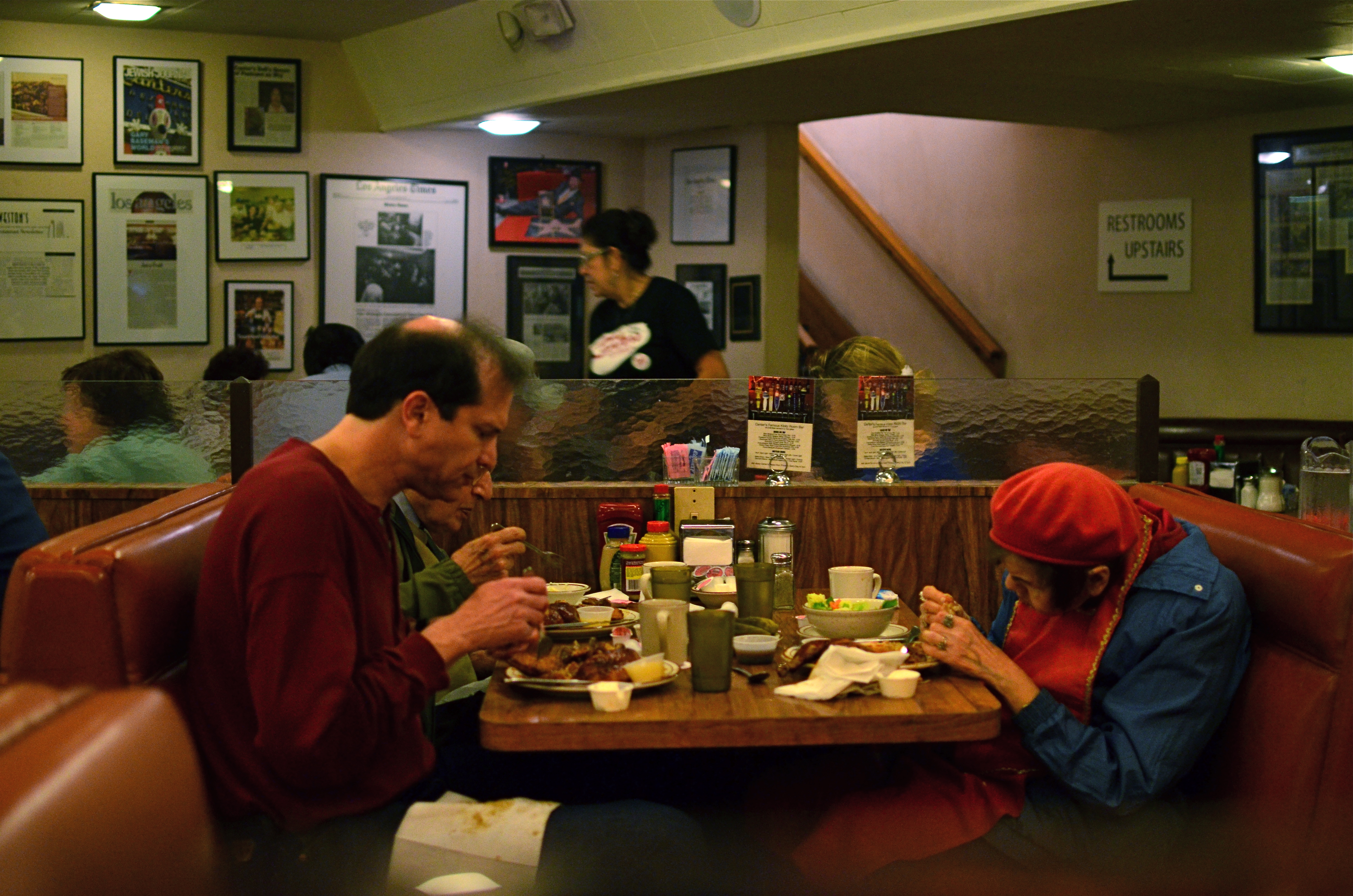
Late Dinner on Fairfax, 2014. 1/40 sec., f/2, ISO 1000, 35mm.
By MICHAEL PERKINS
OKAY, I JUST REALIZED HOW GROSSLY MISLEADING THE TITLE OF THIS POST COULD SEEM, but, trust me, I never meant it the way it sounds. I was just struggling to find a phrase for the kind of photograph in which a person is as private as possible while on full display to the world at large. There are behaviors that are intensely personal and astonishingly public at the same time, and such events in a human being’s life are rife, for the photographer, with a very singular kind of drama.
We like to think of ourselves as sufficiently camouflaged behind the carefully crafted mask that we present for the public’s consumption, all the better to preserve our sense of privacy. But there are always cracks in the mask, fleeting signals at the raw life underneath. Learning to detect those cracks is the talent of the street photographer, whose eye is always trained beyond the obvious.
Mourning, Joy, Discovery…all these things provide a teeter-totter balance between public display and private truth. The primal basics of life bring that juggling act into view, and, as a photographer, I am often surprised how much of them is in evidence in the simple act of nourishing ourselves. Dining would seem, on the surface, to be all about simple survival. Eating to live, and all that. But meals are laden with ritual and habit, the most hard-wired parts of one’s personality. Food gathers people for so much more than mere sustenance. It is memory, community, religion, friendship, negotiation, reassurance, replenishment. It is a symbol for life (and its passing), a trigger for shared experience, a talisman, a consecration.
Case in point: the man and woman in the above image were seen in a Los Angeles restaurant late on a Saturday night. Their relationship would seem to be that of mother and son, but it could be grandmother and nephew, son-in-law and mother-in-law, or a dozen other arrangements. A sharp contrast is provided by their comparative ages and physicality. One sits upright, while the other sits as well as she can. There is no eye contact….but does that necessarily mean that they do not want to see each other? There is no conversation. Has everything already been said? Are they grateful to still be there for each other after all these years, or is this the fulfillment of an obligation, a visitation occasioned by guilt?
Eating is a microcosmic examination of everything that it means to be human. So much for a single photographic frame to try to capture. So many ways of looking into the publicness of privacy.
PRIME OPPORTUNITY
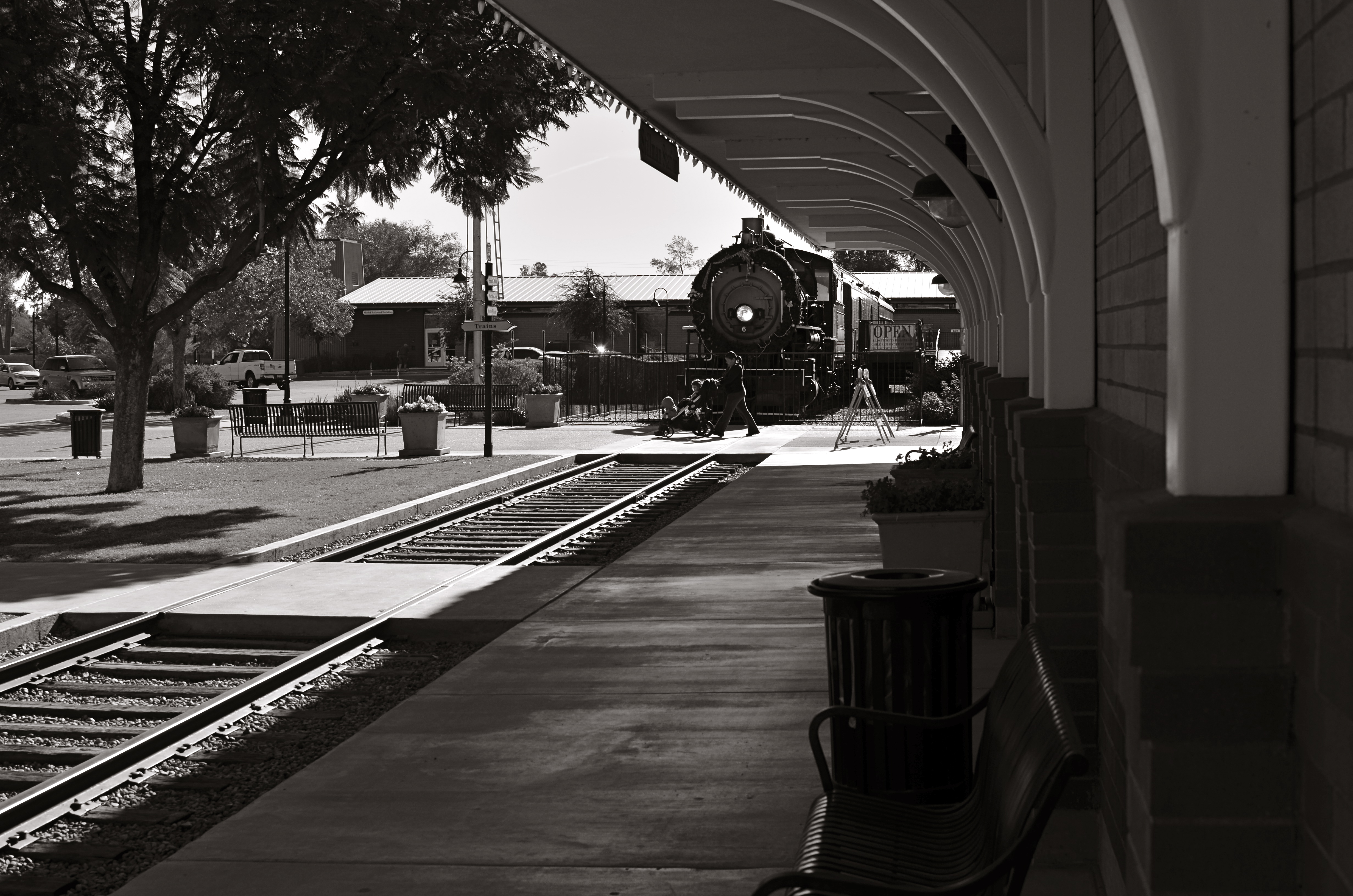
It’s wide. It’s sharp.Its proportions are natural. What else do I need in this image, shot with a 35mm prime lens, that dictates shooting it with a wideangle zoom?
By MICHAEL PERKINS
SOMEWHERE BETWEEN THE END OF THE FILM ERA AND THE DAWN OF THE DIGITAL AGE IN PHOTOGRAPHY, there was a profound change in what camera manufacturers defined as a “starter” lens for new owners. Many shooters, including your humble scribbler, have wondered just why an 18-55 “kit lens” zoom became the glass that was included with the purchase of a digital SLR, when the baseline lens for film shooters had most typically been a 35mm prime. This is especially puzzling since the kit lenses sold by many makers are optically inferior to a prime in several key respects.
Primes, or “normal” lenses, have one focal length only, and so cannot zoom at all, but they out-perform many of today’s zooms on sharpness, clarity, speed, aesthetic blur (or “bokeh”), and portability. Their proportions are more similar to those seen by the human eye (thus the “normal” tag) and so do not create distortion at, say 24mm, a range at which some banding creeps into a zoom at the same focal length. They also will not exaggerate front-to-back distances as seen in a super wide-angle, meaning that an 8×10 room does not resemble a bowling alley.
So what does a wide-angle zoom bring to the party? Not much, beyond the convenience afforded by zooming out with the twist of a barrel, filling your frame in seconds but, ironically, making you less mindful of the composition of your shot. The few extra seconds needed to compose on a lens that can’t zoom means that you act more purposefully, more consciously in the making of an image. You, and not the lens, are responsible for what’s included or cut.
But let’s assume that you want the kit lens for its wide-angle. This is also no problem for a prime lens. Yes, it’s as wide as it will ever be at a single focal length, but you can change what it sees by just stepping backwards. A 35mm prime is plenty wide depending on where you stand. It’s not like you can’t capture a large field of view from left to right. Just place yourself in the right place and shoot.
Yes, there are times when physical restrictions dictate “jumping the fence” by using your zoom to take you where your legs won’t go, but you can count those occasions on half the toes of a frostbitten foot. Look at the above shot. What else do you need in the shot that would require a wide-angle zoom to capture? And if the zoom can only open to f/3.5 at its widest aperture, why not use the prime and gain the ability to go all the way to f/1.8 if needed?
Here’s the deal: if you can walk to your shot and use a better, less expensive piece of glass once you get there, why use a zoom? If you can avail yourself of remarkable sharpness and fill your frame with everything you need, free of distortion, and gain extra speed, why use the wideangle? Huh? Huh? Riddle me that, Batman.
THE OOOOH FACTOR
By MICHAEL PERKINS
YOU LONG TO HEAR IT. The audible gasp, the sustained, breathless, collective “oooooh” 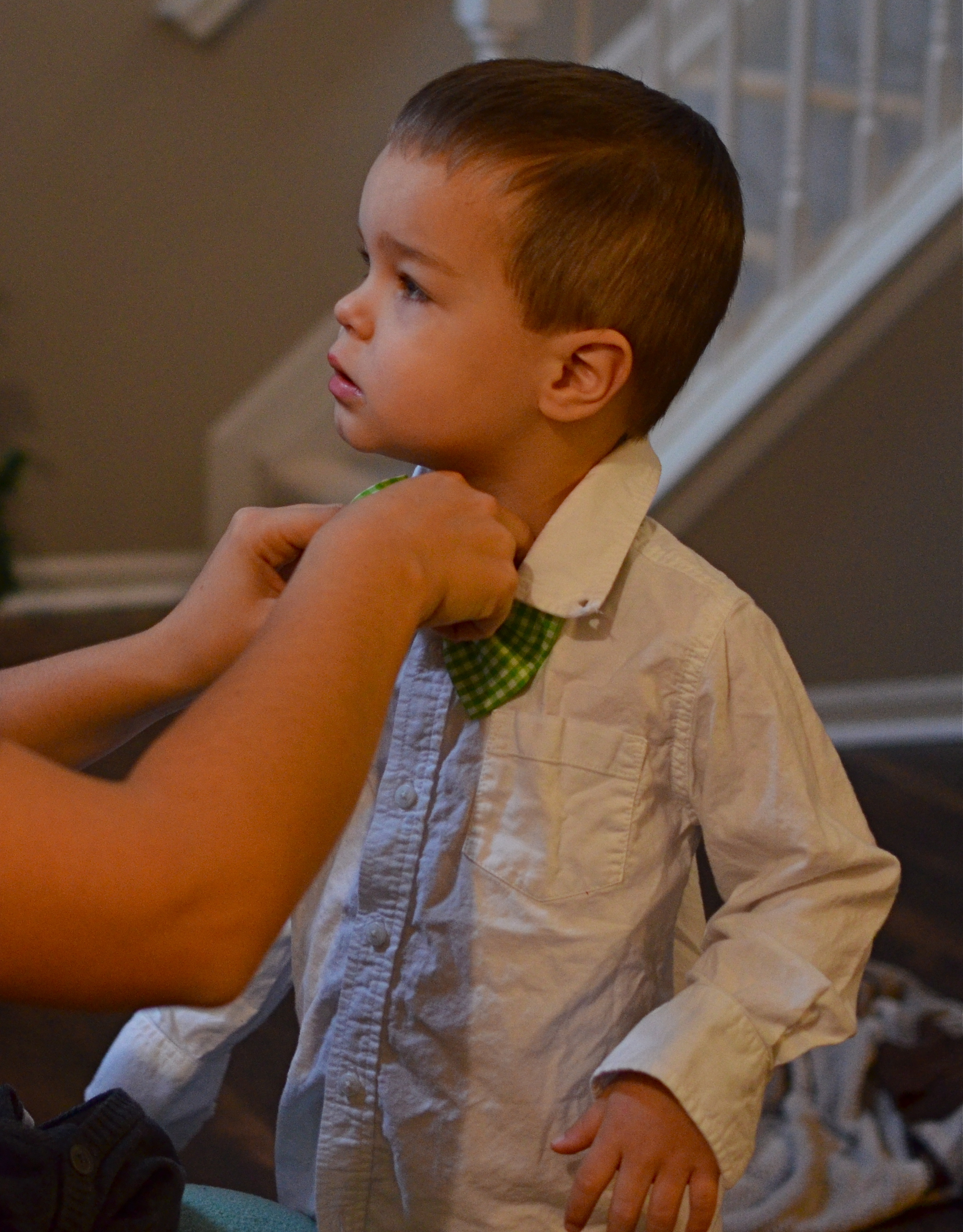 from the crowd when the house lights are doused and the holiday tree glows into life in the darkened room. It’s a sonic sample of the extra dimension of emotional engagement that occurs at this time of year, imbuing your photographs with additional firepower. Call it wonder, magic, enchantment, or what you will, but it is there, in greater supply during the season, a tangible thing amidst the bustle and the endless lists of errands.
Children are the best barometers of this heightened awareness, since so many of their experiences are first-time experiences. Regular routines become magically unpredictable. Ordinary things take on the golden warmth of tradition. People that are normally on looser orbits circle closer to them for a time. Time expands and contracts. And their faces register it all, from confusion to anticipation. Reading the wonder in a child’s face is truly easy pickings at times like this, but I’m a big believer in catching them while they live their lives, not queueing up for rehearsed smiles or official sittings. Those are important, but the real Santa stuff, the magic fairy dust, gets into the camera when you eavesdrop on something organic.
The wonderful thing is, it’s not big feat to keep a kid distracted during the holidays. They are in a constant state of sensory overload, and so extremely unaware of you that all you have to do is keep it that way. Get reactions to, not re-creations of, their joy. Be a witness, not a choreographer. Stealth is your best friend for seasonal images, and it’s never easier to pull off, so bask a bit in your anonymity.
And, to further feed your own wonder, stay aware of how fleeting all of it is. You are chronicling things that can never, in this exact way, be again. That is, you’re at the very core of why you took photography up in the first place, a way to reboot your enthusiasm.
And it that’s not magic, then I will never know what is…..
THOU SHALT….
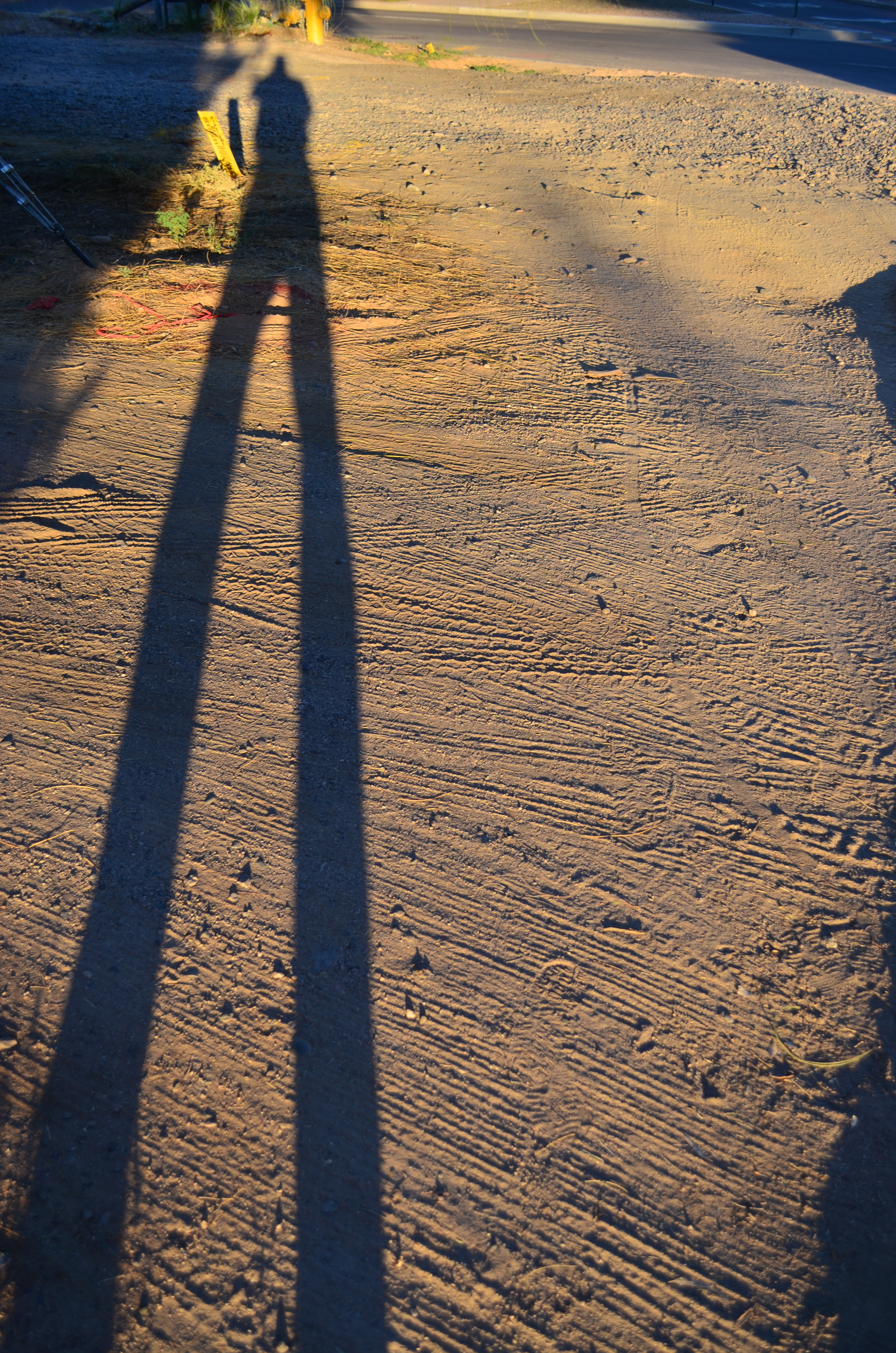
If you don’t have something of yourself in your shots, it’s all just craft, yes?
By MICHAEL PERKINS
BOY HOWDY, DO WE LOVE LISTS. Classifications. Stratifications. Ranks. Pecking Orders. Best Of. Worst Of.
Books you need to read before you die (how could you read them otherwise?). The Ten Biggest Errors in The Phantom Menace (not counting the error in making it in the first place). Guinness Records. Pillsbury Bake-Off Finalists. The number of times Burt Ward said “Holy”-something in Batman. And, for photographers, the inevitable (and ubiquitous) lists of Most Common Photographic Mistakes.
You’ve read ’em. I’ve read ’em. We both probably have actually learned something from one or another of them. And yet, I find something strangely consistent in most of these lists; they nearly all address technical issues only. Everything from selecting the perfect depth-of-field to a kindly reminder to remove your lens cap, but very, very little about the deciding factor in all great photographs, namely, having something to say. Tech tutorials are constantly torturing themselves into tabulated commandments, all the “thou shalts”, but it is rare that the aesthetic issues, the “why shoot?” arguments, are given equal billing. This impoverishes the literature of an art that should be more about intentions and outcomes than gear or settings.
If there has been any one bonanza from the democratization of photography (through smart phones, lomography, etc), it’s been the stunning reminder that your camera doesn’t matter as much as what you can wring out of it. Eventually we’ll be able to interface with our own senses, literally taking a picture in the wink of an eye (or the sniff of a nose, if you prefer), and, with every other device used before that to freeze time, it will rise or fall with the input of the photographer’s mind/heart. If equipment was the only factor that could confer photographic greatness then only rich people would be photographers, but that is obviously not the case.
With that in mind, lists of do’s and don’ts for photographers that only focus on the technical are (1) sending the erroneous message that only the mastery of technology is necessary for great pictures, and (2) ignoring the x-factor in the human spirit that truly makes the pictures come forth. If you can obey all the “thou shalts” and still make lousy images (and you can), then you know there is something else missing.
APP-Y HOLIDAYS

You can convert a color shot through the “old Kodachrome” filter on the AltPhoto app…..
By MICHAEL PERKINS
THE HOLIDAY SEASON MAY OFTEN SEEM TO HAVE “OFFICIAL” COLORS, (red, green, etc.) but its unofficial colors reside primarily, and gloriously, in memory. Given how many iterations of photography span most of our lives, our minds tend to twist and tweak colors into highly individualized chromatic channels. Are your most treasured moments in ’50’s Black and White? ’60’s Kodachrome? In the time-tinted magentas of snaps from the 70’s? In blue-green Super 8 Ektachrome or expired Lomo film? Or do you dream in Photoshop?
This is personal stuff, very personal. It seems like we ought to agree universally on the “correct” colors of the season, but, given that our most precious holiday moments are preserved on various archival media, it might be our memory of seeing these events “played back” that is stronger than our actual remembrance of them. As Paul Simon says, everything looks worse in black and white, or in this case, what really happened pales in comparison to our print, Polaroid, movie and slide souvenirs.
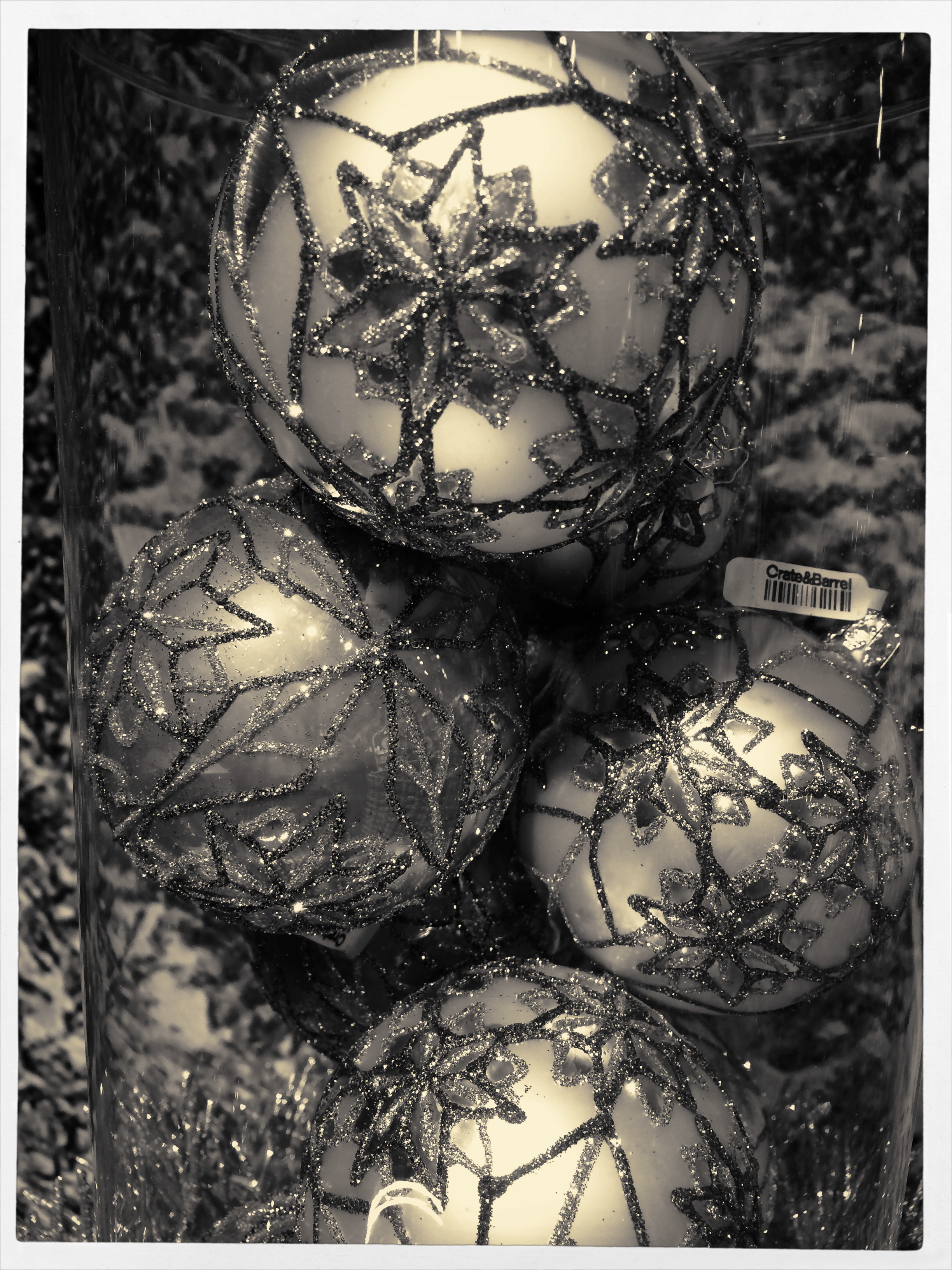
..or you can whip up this warm platinum print simulation.
This means that there are a million subliminal color “cues” that trigger memory, and not all of them come from “correctly” exposed images. Color is mood, and seasonal pictures can benefit greatly from the astounding range of processing tools suddenly available to everyone. Not all photographs benefit from apps and digital darkroom massages, for sure, but their use is perhaps more seductive, in this mental mid-point between reality and memory than at other times of the year. Fantasy is in play here, after all, and fantasy has no “right” hue. Dreams are too vast a realm to be confined to the basics, so ’tis the season to dip into a wider paintbox.
Memory needs room to breathe, and the photographs that help them fully fill their lungs become the gifts that keep on giving.
BOUNTY
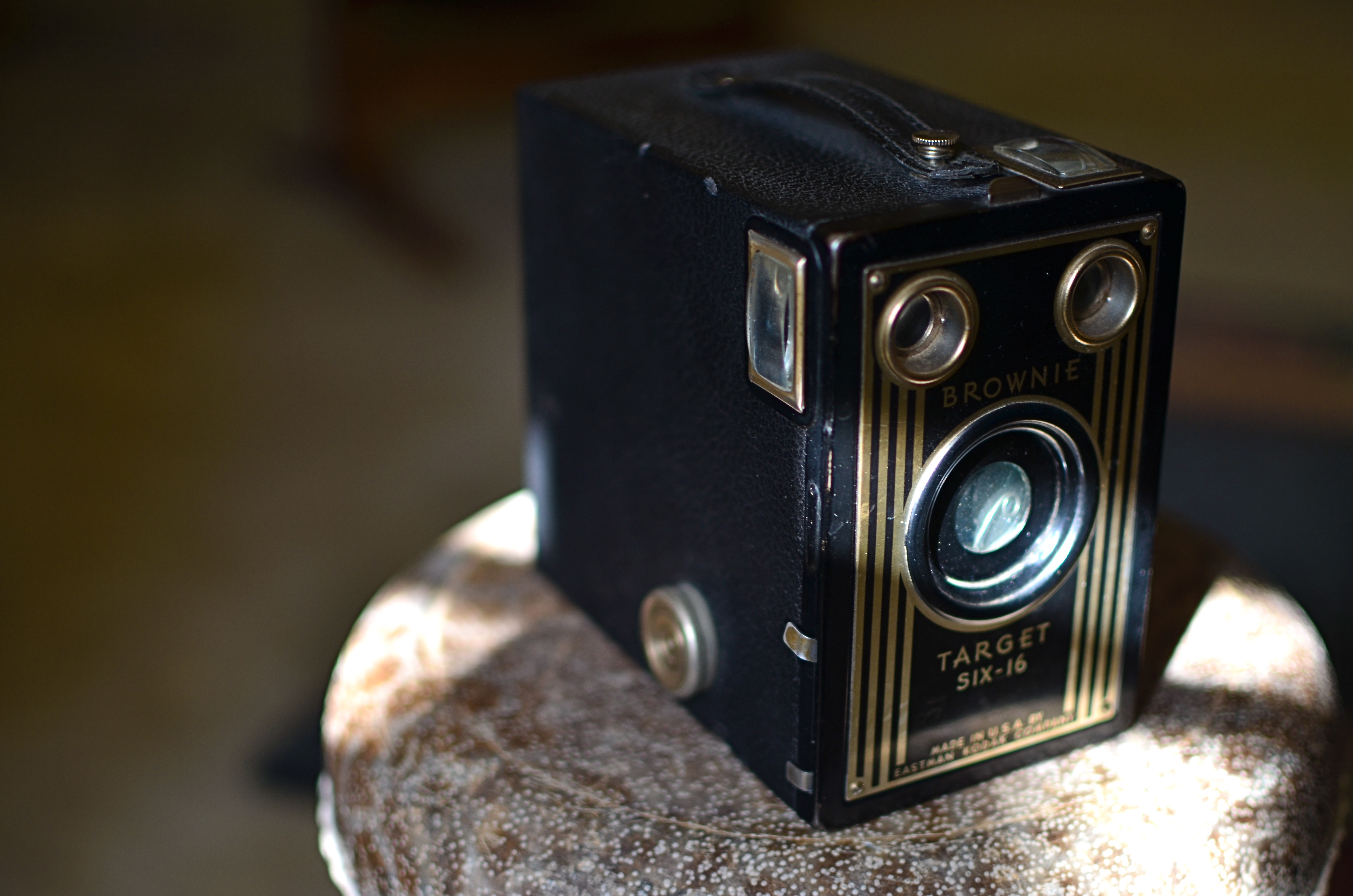
Words to grow by, from those who taught us how to capture lightning in a box.
By MICHAEL PERKINS
ALONG WITH DARK MEAT, CRANBERRY SAUCE, AND THE PERFECT YAM, I find unending Thanksgiving nourishment from the words of every photographer who has gone before me. And if this week marks our annual listing of gifts and gratitude, I would offer, as no less important than family and friends, the collected Wisdom Of Shooters Past as a hearty, ten-course meal for amateurs and professionals alike to feast on. It’s nice to remember that we are all trying to learn to see, and see well, and is an encouraging reminder that, behind all great lenses, there are great minds. The thought precedes the image, and, indeed, without that spark, we are all just mechanics.
Therefore, without further ado, ten noble sentiments on the fine art of harnessing light, for this day of thanks:
It is more important to click with people than to click the shutter.—-Alfred Eisenstaedt
Photographing a culture in the here and now often means photographing the intersection of the present with the past.–David Duchemin
A photograph is a secret about a secret. The more it tells you the less you know.—-Diane Arbus
One should really use the camera as though tomorrow you’d be stricken blind.–Dorothea Lange
A portrait is not made in the camera but on either side of it.–Edward Steichen
To me, photography is an art of observation. It’s about finding something interesting in an ordinary place… I’ve found it has little to do with the things you see and everything to do with the way you see them.—Elliot Erwitt
Your first 10,000 photographs are your worst.–Henri Cartier-Bresson
The eye should learn to listen before it looks.—Robert Frank
If the photographer is interested in the people in front of his lens, and if he is compassionate, that’s already a lot. The instrument is not the camera but the photographer.—Eve Arnold
Don’t pack up your camera until you’ve left the location.–Joe McNally
Happy Thanksgiving.
Stay hungry.
Always be seeing.
Always be shooting.
THE UNRESOLVED RIDDLE
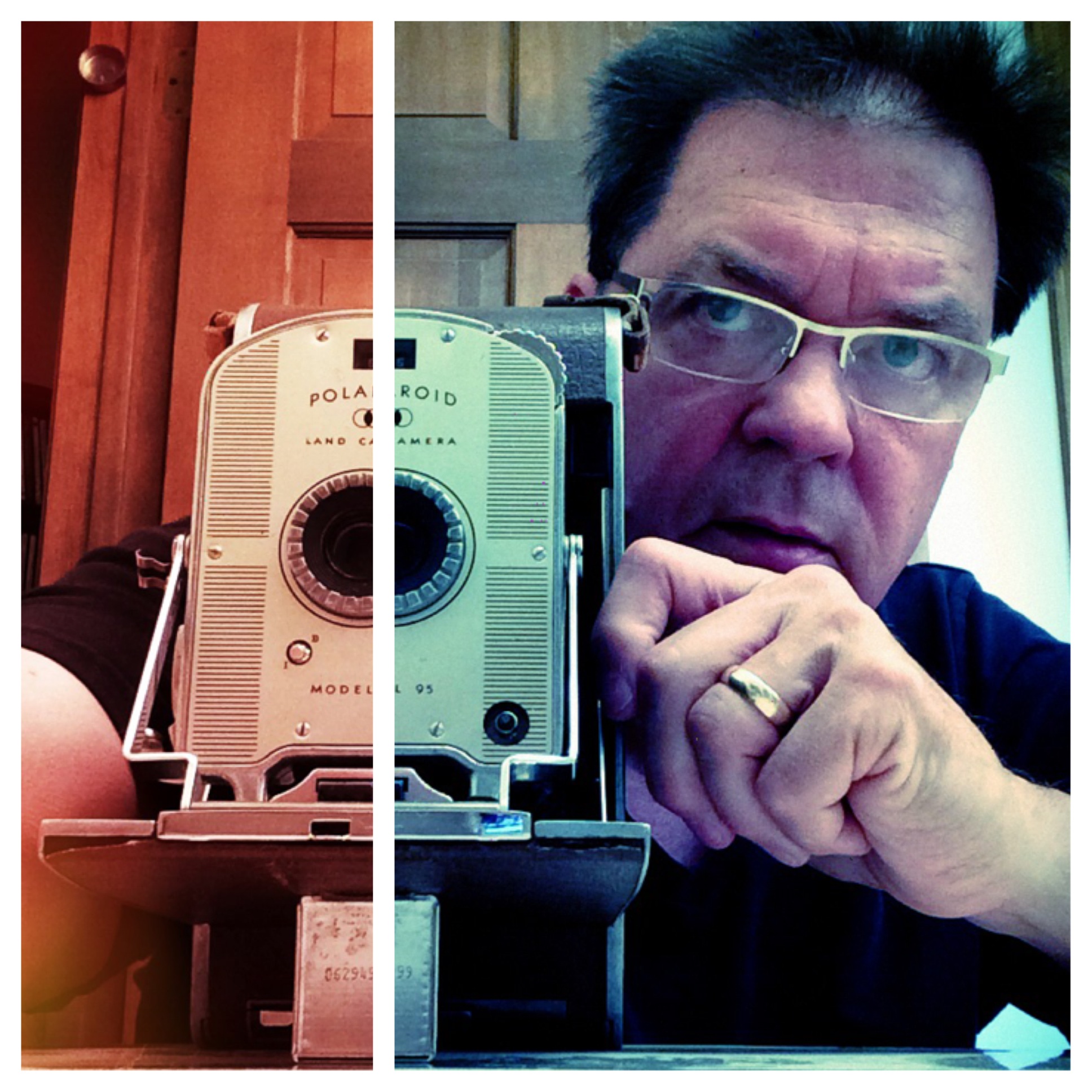
I can’t really say I know this guy, at least not yet.
By MICHAEL PERKINS
A RECENT PIECE BY TIMOTHY EGAN IN THE NEW YORK TIMES decried the latest innovation in Instagram etiquette, a device called a “selfie stick”. As the name implies, the stick is designed to hold one’s smartphone at a modest distance from its subject (me!) allowing oneself to be better framed against larger scenes, such as landscapes, local sights, etc. Egan mostly ranted against the additional invasion of public peace by armies of narcissistic simps who couldn’t be persuaded to merely be in the moment, unless they could also be in the picture. It struck him as a fresh assault on “real” experience, another example, as if we needed one, of our sadly self-absorbed age.
I agree with most of Egan’s epistle, but I think the real tragedy is that the selfie stick allows us to take more, more, more pictures, and reveal less, less, less of the people that we truly are. Selfies are more than emotionally stunted; most of them are also lies, or, more properly, masks. They are not “portraits” any more than they are steam shovels, as they merely replicate our favorite way of distancing ourselves from discovery… the patented camera smile. Frame after frame, day after endless day, the tselfie tsunami pushes any genuine depiction of humanity farther away, substituting toothpaste grins for authentic faces. Photographs can plumb the depths of the spirit, or they can put up an impenetrable barrier to its discovery, like the endless string of forced “I was here” shots that we now endure in every public place.
There’s a reason that the best portraits begin with not one lucky snap but dozens of “maybes”, as subject and photographer perform a kind of dance with each other, a slow wrestling match between artifice and exposition. Let’s be clear: just because it is easier,mechanically, to capture some kind of image of ourselves doesn’t mean we are getting any closer to the people we camouflage beneath carefully crafted personae. Indeed, if a person who acts as his own lawyer “has a fool for a client”, then most of us have a liar in charge of telling the truth about ourselves. Merely larding on additional technology (say, a stick on a selfie) just allows a larger portion of our false selves to fit into the picture, while the puzzle of who that person is, smirking into the camera, remains, all too often, an unresolved riddle.
FADE TO (ALMOST) BLACK
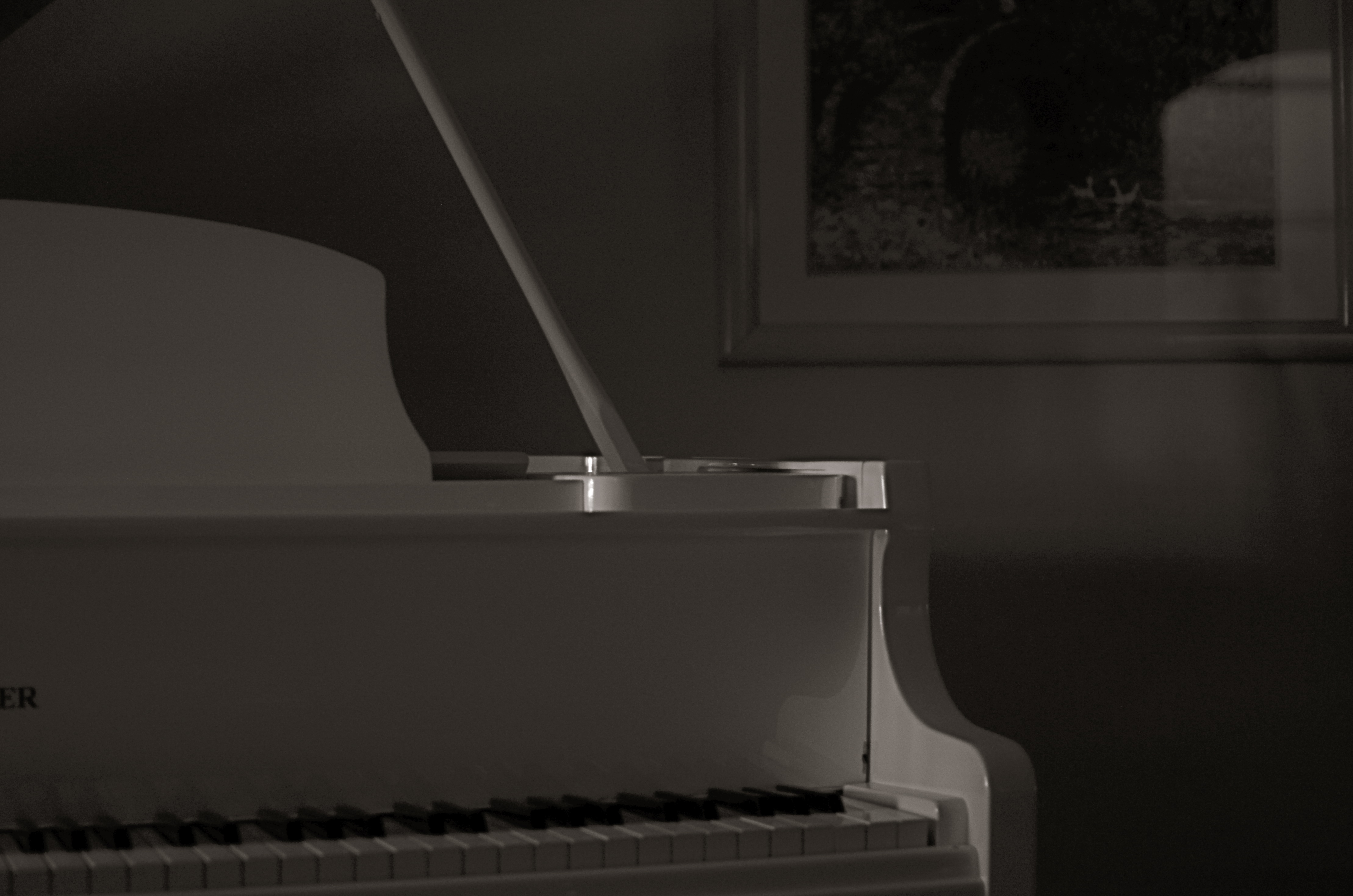
Sometimes a change in the technical approach to a shot is the only way to freshen an old subject. 1/40 sec., f/1.8, ISO 250, 35mm.
By MICHAEL PERKINS
I KNOW MANY PHOTOGRAPHERS WHO SUBJECT THEMSELVES TO THE DELICIOUS TORTURE, known to authors everywhere,as “publish or perish”, or, in visual terms, the tyranny of shooting something every single day of their lives. There are lots of theories afloat as to whether this artificially imposed discipline speeds one’s development, or somehow pumps their imagination into the bulky heft of an overworked bicep. You must decide, o seekers of truth, what merit any of this has. I myself have tried to maintain this kind of terrifying homework assignment, and during some periods I actually manage it, for a while at least. But there are roadblocks, and one of the chief barriers to doing shot-a-day photography is subject matter, or rather the lack of it.
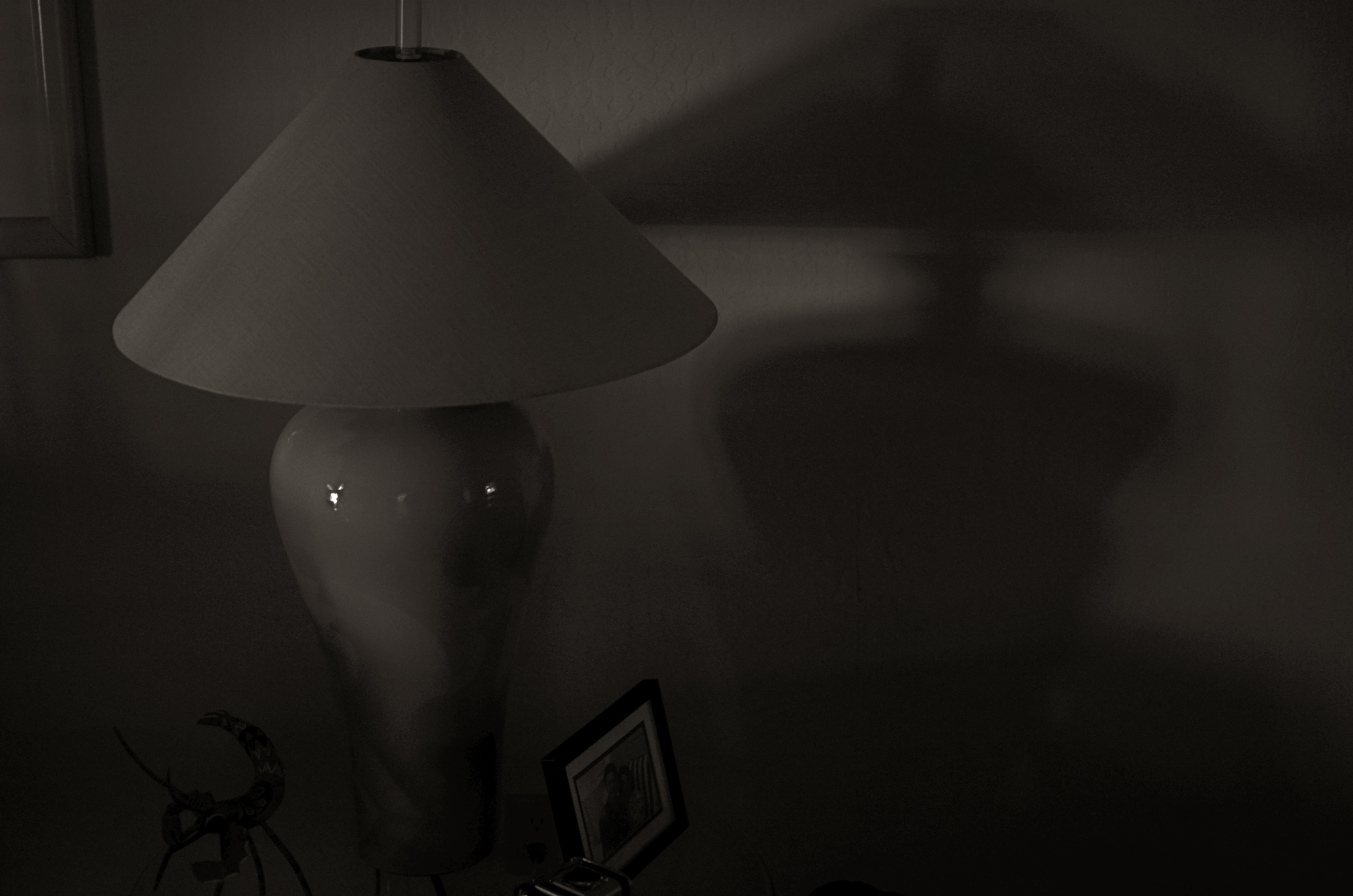
I’ve shot in this space for years, and therein lies the challenge. 1/40 sec., f/2.2, ISO 250, 35mm.
Let’s face it: even if you live one canyon away from the most breathtaking view on earth or walk the streets of the mightiest metropolis, you will occasionally look upon your immediate environs as a bad rerun of Gilligan’s Island, something you just can’t bear to look at without having a wastebasket handy. Familiarity breeds contempt for some subjects that you’ve visited and re-visited, and so, for me, the only way to re-mix old material is to re-imagine my technical approach to it. This is still a poor substitute for a truly fresh challenge, but it can teach you a lot about interpretation, which has transformed more than a few mundane subjects for me over a lifetime of shuttering (and shuddering).
As an example, a corner of my living room has been one of the most trampled-over crime scenes of my photographic life. The louvered shades which flank my piano can create, over the course of a day, almost any kind of light, allowing me to use the space for quick table-top macros, abstract arrangements of shadows, or still lifes of furnishings. And yet, on rainy /boring days, I still turn to this corner of the house to try something new with the admittedly over-worked material. Lately I have under-exposed compositions in black and white, coming as near a total blackout as I can to try to reduce any objects to fundamental arrangements of light and shadow. In fact, damn near the entire frame is shadow, something which works better in monochrome. Color simply prettifies things too much, inviting the wrong kind of distracted eye wandering in areas of the shot that I don’t think of as essential.
I crank the aperture wide open (or nearly) to keep a narrow depth of field, which renders most of the image pretty soft. I pinch down the window light until there is almost no illumination on anything, and allow the ISO to float around at least 250. I get a filmic, grainy, gauzy look which is really just shapes and light. It’s very minimalistic, but it allows me to milk something fresh out of objects that I’ve really over-photographed. If you believe that context is everything, then taking a new technical approach to an old subject can, in fact, create new context. Fading almost to black is one thing to try when you’re stuck in the house on a rainy day.
Especially if there’s nothing on TV except Gilligan.
ON THE SOFT SIDE
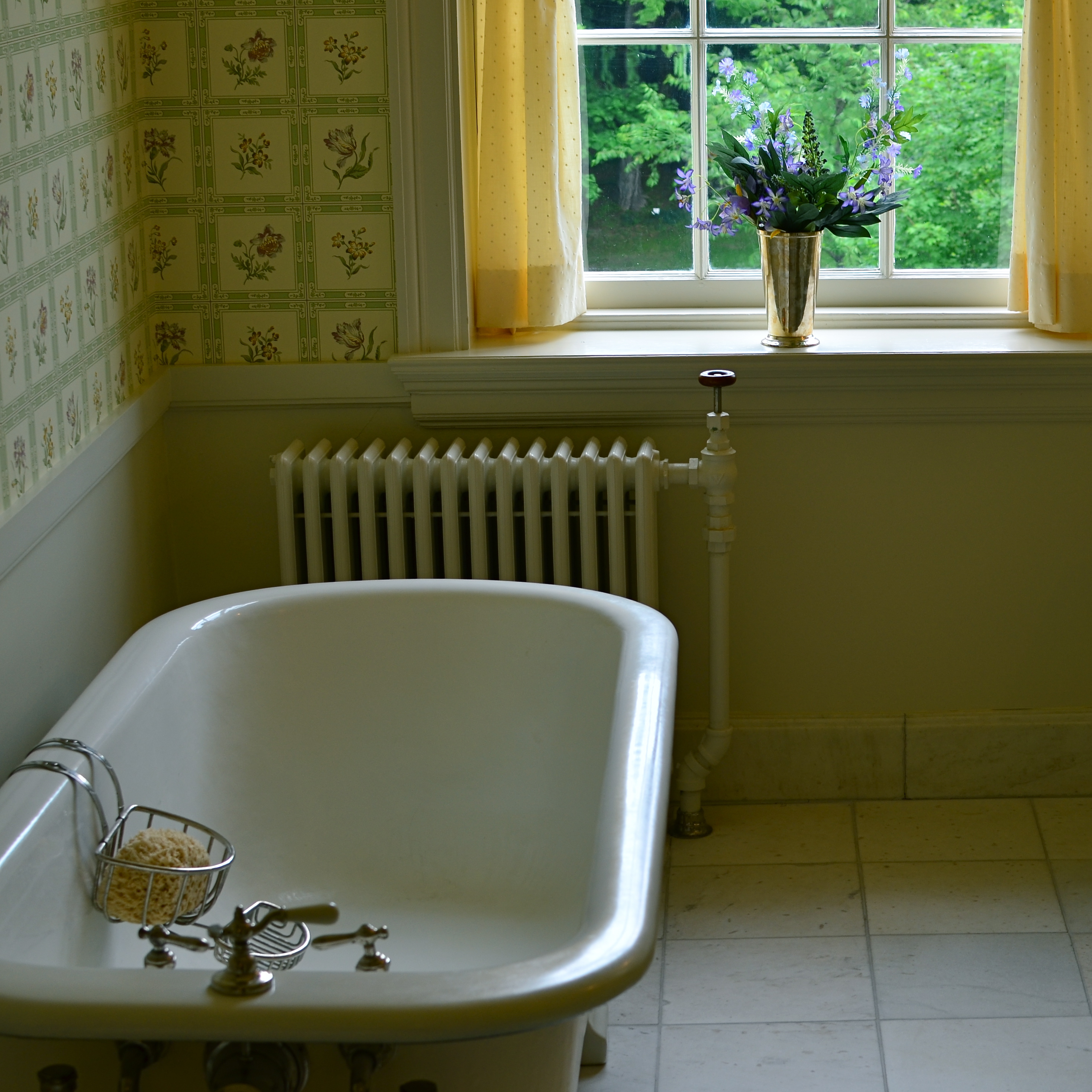
Light can set the mood for an individual object or an entire room. 1/40 sec., f/5.6, ISO 100, 35mm.
By MICHAEL PERKINS
THE WORLD’S FIRST MOVIE STUDIO WAS A TARPAPER SHACK ON A TURNTABLE. Dubbed by Thomas Edison’s techies as “The Black Maria” (as ambulances were grimly named back at the time), the structure rotated to take advantage of wherever sunlight was available in the California sky, thus allowing the film crew to extend its daily shooting schedule by more than half in the era of extremely slow film stocks. Eventually artificial light of sufficient strength was developed for the movies, and actors no longer had to brave motion sickness just to rescue fair damsels. So it goes.
More than a century hence, some photographers actually have to be reminded to use natural light, specifically window light, as a better alternative to studio lights or flash units. Certainly anyone who has shot portraits for a while has already learned that window light is softer and more diffuse than anything you can plug in, thus making it far more flattering to faces (as well as forgiving of , er, flaws). It’s also good to remember that it can lend a warming effect to an entire room, on those occasions where the room itself is a kind of still life subject.
Your window light source can be harsher if the sun is arching over the roof of your building toward the window (east to west), so a window that receives light at a right angle from the crossing sun is better, since it’s already been buffered a bit. This also allows you to expose so that the details outside the window (trees, scenery, etc.) aren’t blown out, assuming that you want them to be prominent in the picture. For inside the window, set your initial exposure for the brightest objects inside the room. If they aren’t white-hot, there is less severe contrast between light and dark objects, and the shot looks more balanced.
I like a look that suggests that just enough light has crept into the room to gently illuminate everything in it from front to back. You’ll have to arrive at your own preferred look, deciding how much, if any, of the light you want to “drop off” to drape selective parts of the frame in shadow. Your vision, your choice. Point is, natural light is so wonderfully workable for a variety of looks that, once you start to develop your use of it, you might reach for artificial light less and less.
Turns out, that Edison guy was pretty clever.
YOU ARE PHOTOSHOP
By MICHAEL PERKINS
EVER SINCE THE ARRIVAL OF THE DIGITAL DARKROOM and its attendant legion of post-production fixes, the world of photography has been pretty evenly divided into “befores” and “afters”, those who prefer to do most of their picture making in-camera and those who prefer to “fix” things after the shutter clicks. Most amateur photography, in the film era, was heavily weighted in favor of the “befores”, since a lot of traditional touch-up technology was economically beyond the reach of many. In the Photoshop era, however, the economic barrier to post-production was shattered, resulting in a more even balance between the two philosophies.
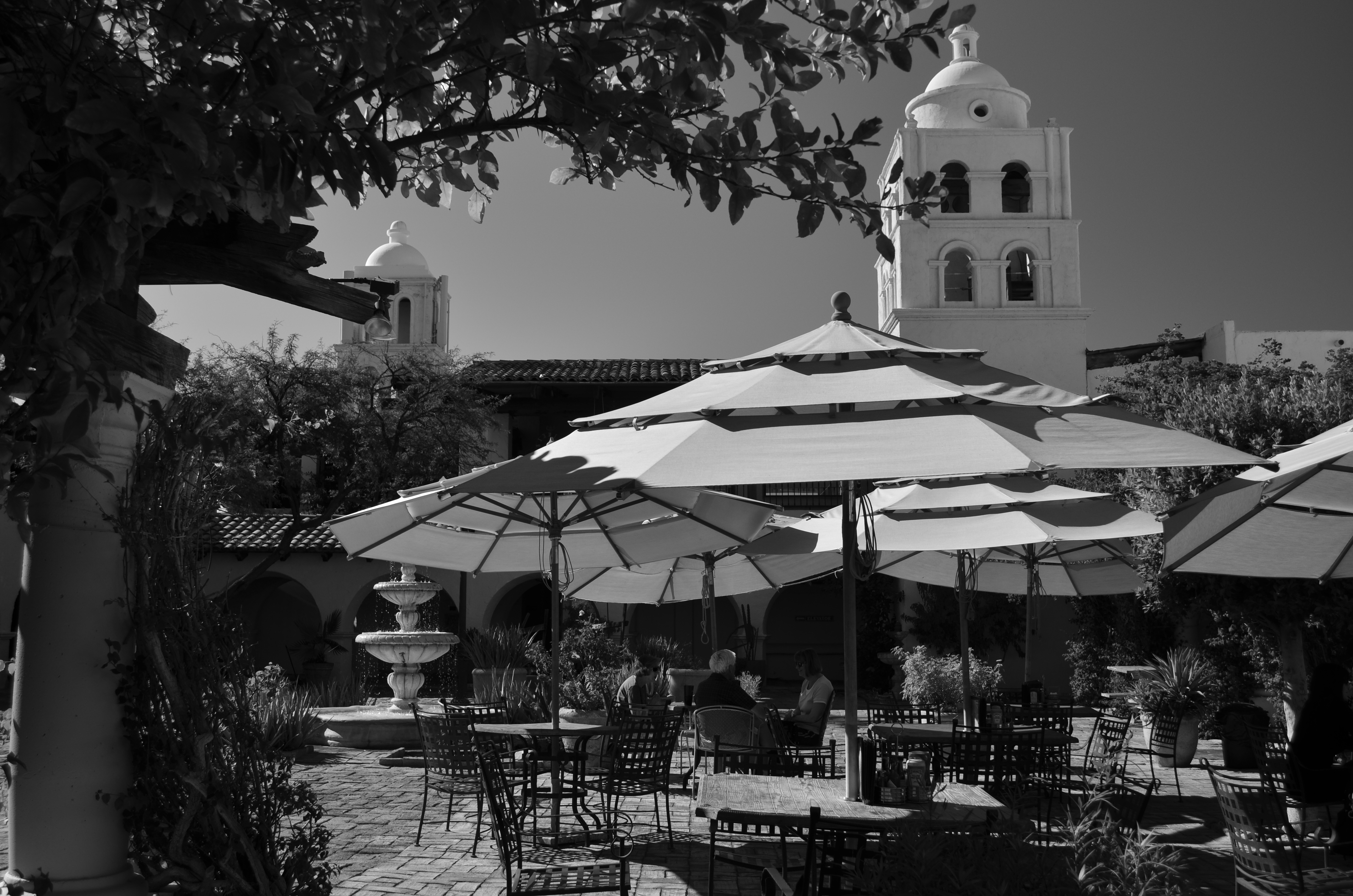
Shoot your black and white images as black and white images, not color shots drained of hue after the fact.
I really see this quarrel as very sharply defined when it comes to black and white photography, with many shooters making most, if not all of their monochromes from shots that were originally color, then desaturated or otherwise manipulated as an afterthought. I prefer to shoot b&ws in-camera, however, for the very simple reason that it gets you thinking in black and white terms, from lighting to composition. It also allows you to benefit from digital’s immediate feedback/playback strengths to shape your shot in the moment. If you’ve worked in mono for a while, and especially if you’ve ever shot on b&w film stock, you are used to seeing the 50 shades of gray that subtly shape the power of an image. More importantly, you realize that black and white is much more than color with the hues sucked out. It’s not a novelty or a gimmick, but a distinct way of seeing.
When you conceive a shot in color, you are shooting according to what serves color well. That means that not all color shots will translate well into grayscale. Fans of the old Superman tv show will recall that, during the series’ early b&w days, George Reeves’ uniform had to be made in various shades of brown so it would “read” correctly in monochrome to viewers who “knew” the suit was red and blue. Cameramen had to plan what would happen when one set of values was used to suggest another. Tones that give a certain punch to an image may look absolutely dead flat if you simply desaturate for mock-mono from a color shot. And, anyway, there are plenty of ways to pre-program many cameras to adjust the contrast and intensity of a b&w master image, as well as the use of filters (polarizers for instance) that do 90% of the tasks you’d typically try to achieve in Photoshop anyway.
The mid-point compromise would seem to be to take both color and black and white shots of your subjects in-camera, allowing you the option of custom processing at least one image afterward. However, knowing what tonal impact you want before you click the shutter is just easier, and usually more productive. Do your shooting with purpose, on purpose. Making a b&w “version” of a color shot after the fact will likely bake up as half a loaf.
MILE MARKER
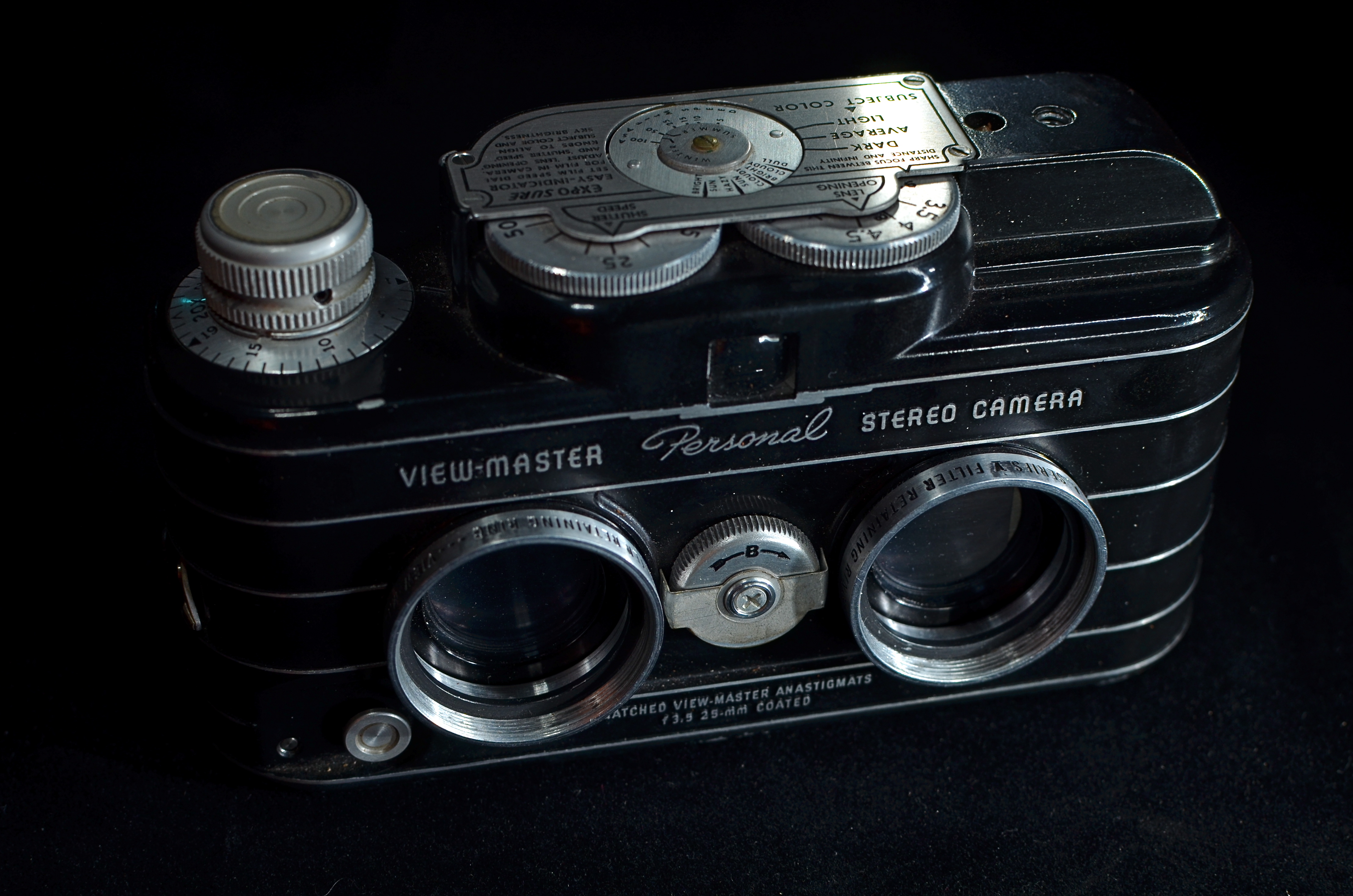
Sawyer’s mid-50’s View-Master Personal Stereo, the only consumer camera able to produce those eye-popping 3-d reels. 15 sec., f/5.6, ISO 100, 35mm.
BY MICHAEL PERKINS
THIS WEEK, THE NORMAL EYE REACHES A LITTLE BASE CAMP OF SORTS, with the welcome arrival of our 1,000th blog follower. A few thoughts before we climb to the next ledge:
I never wanted this forum to be a mere photo diary, a refrigerator on which to tack up my pet pic of the day, because, despite the fact that my photography illustrates the blog, it’s not really about,”look what I did”, so much as it’s about “look at one thing you can try”. It also was never supposed to be a purely technical tutorial, although we do offer a few simple step-by-steps on emerging methods. My thought, then as now, is that there are many, many master technicians in the trade whose command of the pure science is so much stronger than mine, that I’d be better off talking about the part we all understand….the millions of little miracle moments and motivations that shape our visual decisions in the making of images.
Accordingly, your most typical responses to The Normal Eye have been along the lines of “I’ve been there”, or “I came to the same conclusion” or “I never thought of it that way before.” That has sparked dialogue, which was my principal aim in creating TNE in the first place. I use my images to illustrate my ideas because they’re the closest visual equivalent of what’s rattling around in my skull, but not because they’re the ne plus ultra of anything.
From my years as an illustrator, I also love the idea of designing a page, and I try to vary the visual arrangement of the blog to incorporate useful links, historical figures, and, as we go forward, gifs and other tools. I liken it to the front of a newspaper, which, other than the masthead and the familiar type faces, has to be completely new every day. It’s more interesting to make, and, I hope, more fun to read, but it’s still in its infancy.
The most amazing part of this venture has been seeing the numbers change, to realize, day by day, that many of you have chosen, on-purpose, to bring these conversations into your day on a regular basis. I truly appreciate that choice, and am gratified if any of these chicken scratchings have a positive impact, for anyone. Sometimes, online writing is like throwing a pebble down a dark well and listening for at least a splash. Sometimes it’s like waking up to a roomful of birthday presents. So, to everyone who has kept faith or at least sampled The Normal Eye thus far, my sincere thanks. As I’ve stressed before, although solo sermons are often inspiring, this forum only works as a conversation.
Your turn.
THE BOY IN THE BALL CAP
By MICHAEL PERKINS
MORE SHOTS, MORE CHOICES: Photography really is as simple as that. The point has been hammered home by expert and amateur alike since before we could say “Kodak moment”: over-shooting, snapping more coverage from more vantage points, results in a wider ranger of results, which, editorially, can lead to finding that one bit of micro-mood, that miraculous mixture of factors that really does nail the assignment. Editors traditionally know this, and send staffers out to shoot 120 exposures to get four that are worthy of publication. It really, ofttimes, is a numbers game.
For those of us down here in the foot soldier ranks, it’s rare to see instances of creative over-shoot. We step up to the mountain or monument, and wham, bam, there’s your picture. We tend to shoot visual souvenirs: see, I was there, too. Fortunately, one of the times we do shoot dozens upon dozens of frames is in the chronicling of our families, especially the day-to-day development of our children. And that’s vital, since, unlike the unchanging national monument we record on holiday, a child’s face, especially in its earlier years, is a very dynamic subject, revealing vastly different features literally from frame to frame. As a result, we are left with a greater selection of editing choices after those faces dissolve into other faces, after which they are gone in a thrilling and heartbreaking way.
One humbling thing about shooting kids is that, after they have been around a while, you realize that you might have caught something essential, months or years ago, during an event at which you just felt like you were reacting, racing to catch your quarry, get him/her in focus, etc. A feeling of always trying to catch up. It’s one of the only times in our own lives that we shoot like paparazzi. This might be something, better get it. I’ll sort it out later. The process is so frenetic that some images may only reveal their gold several miles down the road.
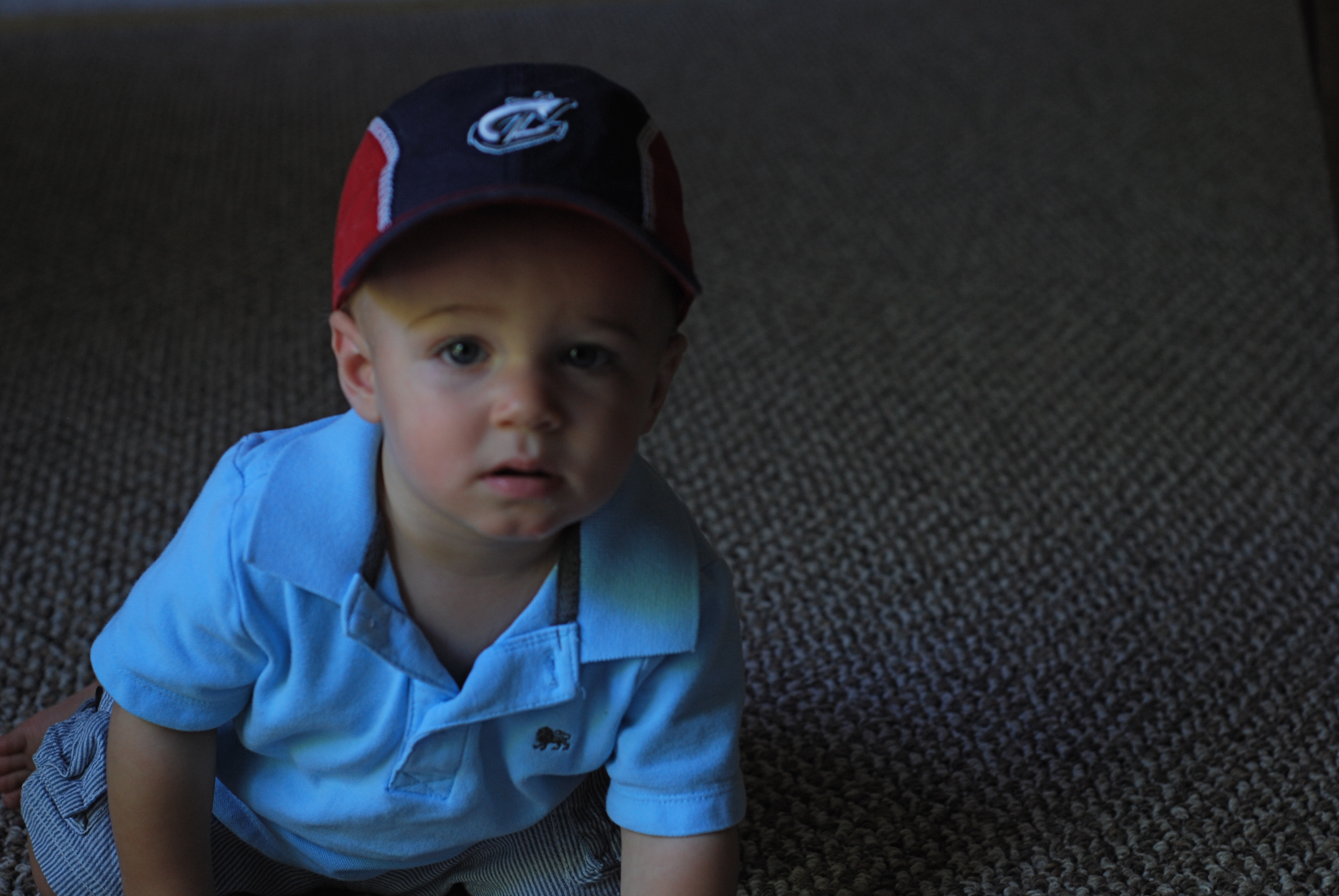
Not the sharpest image I ever shot, but look at that face. Slow shutter to compensate for the dim light. 1/40 sec., f/3.2, ISO 200, 35mm.
My grandson is now entering kindergarten. He’s reading. He’s a compact miniature of his eventual, total self. And, in recently riffing through images of him from early five years ago (and yes, I was sniffling), I found an image where he literally previews the person I now know him to be. This image was always one of my favorite pictures of him, but it is more so now. In it, I see his studious, serious nature, and his intense focus, along with his divine vulnerability and innocence. Technically, the shot is far from perfect, as I was both racing around to catch him during one of his impulse-driven adventures and trying to master a very new lens. As a result, his face is a little soft here, but I don’t know if that’s so bad, now that I view it with new eyes. The light in the room was itself pretty anemic, leaking through a window from a dim day, and running wide open on a 50mm f/1.8 lens at a slow 1/40 was the only way I was going to get anything without flash, so I risked misreading the shallow depth of field, which I kinda did. However, I’ll take this face over the other shots I took that day. Whatever I was lacking as a photographer, Henry more than compensated for as a subject.
Final box score: the boy in the ball cap hit it out of the park.
Thanks, Hank.

